Start Up: catching the GIF-tweeter, hacking tractors, the 2038 problem, that laptop ban, and more


Looks good – OK, let’s go and DDOS somewhere. Photo by sunrisesoup on Flickr.

You can now sign up to receive each day’s Start Up post by email. You’ll need to click a confirmation link, so no spam.

A selection of 12 links for you. Use them wisely. I’m @charlesarthur on Twitter. Observations and links welcome.

New Clips app hints at Apple’s augmented reality ambitions • FT

Tim Bradshaw:

»

Apple has launched a new app for adding filters and special effects to photos and videos that could act as a launch pad for its ambitions to become a significant player in the emerging field of augmented reality.

Clips, a free app, is only available on Apple’s iPhones and iPads. It is the latest example of how the smartphone camera has become a new battleground for tech companies, with Snap describing itself as a “camera company” and Google using artificial intelligence to enhance photos taken on its Pixel handset.

With its comic-book styles and playful animations such as speech bubbles, Clips’ simple editing tools recall Snapchat’s selfie “lenses”, Instagram’s filters and the artistic effects of Prisma, which manipulates photos so that they look as if they had been painted by Van Gogh or Picasso. Videos can be up to 60 minutes long, incorporating music from iTunes, emoji and captions automatically generated from a user’s voice.

«

Just me, or are people seeing AR in absolutely anything Apple does?
link to this extract


What’s attacking the web? A security camera in a Colorado laundromat • WSJ

Drew Fitzgerald:

»

While Bea Lowick’s customers were busy folding clothes last year, the security system at her Carbondale, Colo., laundromat was also hard at work.

Though she didn’t know it, Ms. Lowick’s Digital ID View video recorder was scanning the internet for places to spread a strain of malicious software called Mirai, a computer virus that took root in more than 600,000 devices last year.

Ms. Lowick, 59 years old, said she wasn’t aware the device was doing anything other than acting up. Her remote-viewing app kept disconnecting. She was able to reconnect it by restarting the digital video recorder.

“I would have to go in and unplug and plug in the DVR” to fix it, Ms. Lowick said, adding that she didn’t know that unwanted software was to blame…

…Bill Knapp, who installed the laundromat’s surveillance system, said he learned of the virus after being notified by a reporter.

“One of the hardest parts of this business is that everyone loses their passwords,” said Mr. Knapp, owner of Security Solutions LLC. When Ms. Lowick forgot her password, he said, Digital ID View would reset the DVR to its default password, “123456”—a weak but common option that opens the door to attackers. Compulan Center Inc., which does business as Digital ID View, said it was investigating the situation but didn’t believe its product was responsible for the problem.

«

link to this extract


FBI Complaint and Affidavit for Search Warrant, re: John Rivello in Kurt Eichenwald GIF-tweeting case • DocumentCloud

This is a scan of the document; you’ll have to read it. The perpetrator used a burner phone to create the account – but used his old SIM in it. And his SIM was associated with a smartphone…
link to this extract


Why American farmers are hacking their tractors with Ukrainian firmware • Motherboard

Jason Koebler:

»

A license agreement John Deere required farmers to sign in October forbids nearly all repair and modification to farming equipment, and prevents farmers from suing for “crop loss, lost profits, loss of goodwill, loss of use of equipment … arising from the performance or non-performance of any aspect of the software.” The agreement applies to anyone who turns the key or otherwise uses a John Deere tractor with embedded software. It means that only John Deere dealerships and “authorized” repair shops can work on newer tractors.

“If a farmer bought the tractor, he should be able to do whatever he wants with it,” Kevin Kenney, a farmer and right-to-repair advocate in Nebraska, told me. “You want to replace a transmission and you take it to an independent mechanic—he can put in the new transmission but the tractor can’t drive out of the shop. Deere charges $230, plus $130 an hour for a technician to drive out and plug a connector into their USB port to authorize the part.”

“What you’ve got is technicians running around here with cracked Ukrainian John Deere software that they bought off the black market,” he added.

Kenney and Kluthe have been pushing for right-to-repair legislation in Nebraska that would invalidate John Deere’s license agreement (seven other states are considering similar bills). In the meantime, farmers have started hacking their machines because even simple repairs are made impossible by the embedded software within the tractor. John Deere is one of the staunchest opponents of this legislation.

«

link to this extract


2038: only 21 years away [LWN.net]

Jonathan Corbet:

»

Sometimes it seems that things have gone relatively quiet on the year-2038 front. But time keeps moving forward, and the point in early 2038 when 32-bit time_t values can no longer represent times correctly is now less than 21 years away. That may seem like a long time, but the relatively long life cycle of many embedded systems means that some systems deployed today will still be in service when that deadline hits. One of the developers leading the effort to address this problem is Arnd Bergmann; at Linaro Connect 2017 he gave an update on where that work stands.

«

And it’s going to be cars that we’ll probably have to worry about. And all the embedded systems put together a while back.
link to this extract


You think it’s a Muslim laptop ban? This picture suggests it’s really a terrorist ban • The Overspill

By me:

»

when the governments of not one but two countries impose sudden bans on the transport of potentially explosive things, you might think that people would take it seriously. There was one occasion when a would-be mass murderer ignited a bomb on the passenger deck of a plane out of Somalia – after apparently being handed the explosives by a ground worker. In a fabulous demonstration of karma, he was sucked out of the hole he’d made in the fuselage, and the plane landed safely. Subsequently, 20 ground staff in Somalia were arrested.

There are suggestions that this latest ban has been under discussion for a couple of weeks, in fact. That’s how intelligence works: gather data, consider risks, act.

The number of people complaining that “it’s just another version of the [Trump] Muslim ban” can’t be thinking clearly. The original “Muslim ban”, as a reminder, included Syria, Yemen, Iran, Iraq, Sudan, Somalia and Yemen.

It didn’t include the ones in the US ban: UAE (which includes Dubai), Turkey, Egypt, Jordan, Saudi Arabia, Qatar, Kuwait, or Morocco. The UK ban includes Tunisia too.

It should be pretty obvious, even if you think Trump is a fool, that this isn’t his idea. It has come from intelligence agencies who are worried about the possibility of a mid-air explosion.

«

link to this extract


Onboard battery fires underscore need for meaningful action • Runway Girl

John Walton:

»

This week, a battery caught fire in the overhead bins on a KLM 777, Qantas became the third airline to refuse freight carriage of lithium battery shipments, and Air France’s new safety video has started warning passengers not to move their seat if they lose their phone between the cushions. It’s time to talk about lithium batteries in PEDs [personal electronic devices].

With images and video circulating from yet another battery fire in an airline cabin — this time on board KLM 876 from Amsterdam to Bangkok — air safety regulators don’t seem to be on top of the problem. A compounding factor: the cabin crew actions in the video are not entirely in accordance with IATA safety guidelines.

Answers to an in-depth series of questions from Runway Girl Network to the US Federal Aviation Administration (FAA), UK Civil Aviation Authority (CAA) and European Aviation Safety Administration (EASA), as well as to the International Air Transport Association (IATA) and the International Civil Aviation Organization (ICAO), provoked more concerns than they resolved.

«

link to this extract


To censor or not to censor? YouTube’s double bind • The Guardian

Alex Hern:

»

[Regarding ads on hate speech] YouTube’s parent company Google has apologised, and promised a raft of changes to appease the big spenders, from better categorisation of hate speech to simpler, more powerful controls for advertisers. It’s also promised to hire “significant numbers of people”, on top of the thousands who already do the work, to review questionable content.

At the same time, in a very different community, YouTube creators are lambasting the site after the discovery that its “restricted mode”, a feature intended to let schools, parents and libraries filter out content not appropriate for children, also removed a vast amount of LGBT content. Some videos from pop duo Tegan and Sara, who are gay, were hidden from view, as were videos from bisexual YouTuber NeonFiona – but only those which talked about her sexuality.

YouTube has apologised there too. Initially, it argued that “LGBTQ+ videos are available in Restricted Mode, but videos that discuss more sensitive issues may not be”. That defence was torpedoed, however, as the community continued to experiment with what was getting blocked: a video titled “GAY flag and me petting my cat to see if youtube blocks this” – showing just that – was blocked on restricted mode. The company now admits that the system sometimes “makes mistakes in understanding context and nuances when it assesses which videos to make available in Restricted Mode”, and as a result many videos were wrongly blocked.

In other words, YouTube is currently being attacked by advertisers for not censoring enough and by creators for censoring too much. It’s almost enough to make you feel sorry for them.

Not quite, though. Because really, the two problems are the same: YouTube sucks at categorising videos, and the larger the site gets, the more serious the ramifications.

«

That’s it, in a nutshell. Plus it benefits Google to ignore the difference between children aged 13 and those aged one day under 18, since then it can just advertise to them all. For most of its life it hasn’t had to care about how bad it is.
link to this extract


Google’s stock rating downgraded as YouTube ad boycott contagion goes global • The Register

Andrew Orlowski:

»

The boycott has rapidly gone global [paywalled]. The UK is Google’s second largest market after the USA, bringing in 9% of Alphabet’s revenue, and the only territory where Google breaks out revenue in its financial statements.

Pivotal’s Brian Wieser explained he’d taken the decision because Google wasn’t taking the problem seriously, and accused it of “attempting to minimize the problem rather than eliminating it, which is the standard we think that many large brand advertisers expect”.

It’s four years since Google’s Theo Bertram promised to “drain the swamp”. What’s in the latest evacuation?

In a post titled ‘Expanded safeguards for advertisers’, Philipp Schindler, Google’s chief business officer, reiterated a commitment to give spenders more control over where their ads appear. Schindler euphemistically refers to “higher risk content”.

Promises include a pledge to tighten up the threshold for “acceptable content” and make exclusions easier.

«

Promising to drain the swamp and then not doing so seems to be in fashion these days.
link to this extract


Battery Status not included: assessing privacy in W3C web standards • Security, Privacy and Tech

Lukasz Olejnik (again – we’ve had him recently):

»

In 2016, Englehardt and Narayanan published a report (Online Tracking: A 1-million-site Measurement and Analysis) that has validated my previous work – they have identified the misuse of this API in the wild. Together with the fact that battery information may bring second-order privacy risks due to price discrimination (based on Uber study – and by the way, Uber is collecting battery ) it became clear that the matter had to be addressed.

Browser vendors reacted in a number of ways. In October 2016, Mozilla decided to remove Battery Status API from Firefox; I previously wrote about this. WebKit did the same, which means that Safari browser will not enable the API (although it has never did so). Yandex Browser has decided to offer the API in an opt-in manner – the user needs to explicitly enable the API. In March 2017, Firefox has shipped with the API removed, an unprecedented move in the history of the web; for the first time, an entire API has been purged citing privacy concerns.

«

It’s good that this pressure is getting W3C to recognise that there is more to life than making everything available to every site that wants to snarf the data on your device. Olejnik points to two companies whose widely-used scripts have been used to track peoples’ use and which sites they viewed.
link to this extract


Unicode domains are bad, and you should feel bad for supporting them • VGRsec

Valentine Reid:

»

I’m going to begin by caveating my opening statement by saying unicode domains improve accessibility to the internet, and that’s a good thing, just unicode is so broad, there are many opportunities for lookalike domain spoofing, and that’s bad.

I discovered during a discussion with @jaredhaight that unicode domains were a thing. We immediately joked about how bad this was, so I went about registering some test domains and ran some test cases to determine how well they were supported across various ecosystems. The following is an exploration of unicode domain names and how they’re interpreted across various platforms as of Feb 2017.

«

Guess what? He registered Gmail.com (with a weird “m”). Google rejected his emails, but other mail organisations didn’t. Dangerous.
link to this extract


Huawei Watch 2 review: Why? • Android Police

David Ruddock:

»

In the world of technology, it’s rare that a successor product is actually worse than the one that preceded it.

Today is a rare day.

The Huawei Watch 2 is a step backward – multiple steps, even – from the original, even if it does claw back some of that lost ground with new features. The Huawei Watch 2 adds NFC, GPS, LTE, and Android Wear 2.0 to its repertoire, which all sounds well and good. Alas, it all feels for naught when it comes down to the final product experience. What it takes away is almost everything that made the original the de facto champion of the Android Wear world.

The screen is [much] smaller, having shrunk nearly two tenths of an inch, which is very considerable when we’re talking about something the size of a watchface. There’s a giant, raised bezel that makes actually using this touchscreen a major frustration, too, harkening back to some of the earlier round Wear devices. Wear 2.0’s intense reliance on gestures makes this a considerably greater frustration, though, and there’s no rotating crown to fall back on, unlike the new LG Watch Sport and Watch Style.

The Huawei Watch 2 is such a bizarre series of product and design decisions that I’m unsure how the company that built the original could have come up with… this. It’s kind of sad.

«

Ruddock really doesn’t like the design, doesn’t like the Android Pay implementation, and doesn’t like Android Wear 2.0. Apart from that, Mrs Lincoln, how was the play?

In fact, Ruddock seems disappointed with stuff coming out of the Android ecosystem. He tears into the HTC Ultra, essentially saying that HTC has wasted its own and any buyer’s money.
link to this extract


Errata, corrigenda and ai no corrida: none notified

Start Up: Google faces the advertisers, crowdsourced e-ink iPhone flops, Rubin rebuffed, and more


Lego does augmented reality – will Apple follow? Photo by antjerevena on Flickr.

You can now sign up to receive each day’s Start Up post by email. You’ll need to click a confirmation link, so no spam.

A selection of 11 links for you. Use them wisely. I’m @charlesarthur on Twitter. Observations and links welcome.

Popslate, the company putting an E Ink display on your iPhone, is shutting down • The Verge

Andrew Liptak:

»

A couple of years ago, Popslate developed a case for an iPhone that added an E Ink display to the back of the phone, designed as a way for users who check their phones often to conserve their batteries. We found the first version to be a bit limited, but an intriguing idea. The company later announced a follow-up device, the Popslate 2, which would act as a battery charger and come with a better screen.

The company raised raised over $1.1m to manufacture the Popslate 2 through Indiegogo, which it intended to deliver to customers by July 2016. Now, in an update to its backers, the company announced that it has “entered into the legal process for dissolution of the company,” and that backers would not receive their orders or be refunded.

The reason, according to CEO Yashar Behzadi and CMO Greg Moon, is financial. The company spent a considerable amount of money preparing to manufacture the device, and ran into some technical problems with its design. Last year, the company announced that it was pushing back shipping to October, noting that initial prototypes weren’t sufficient. Furthermore, when Apple announced the iPhone 7, it prompted Popslate to explore redesigning the device so that it would fit both the iPhone 6 and iPhone 7, only to backtrack when it discovered that a hybrid wouldn’t comply with Apple’s Made For iPhone program.

«

Spent a million bucks to discover their phone case blocked the signal. Uh-huh.
link to this extract


The fake freedom of American health care • The New York Times

Anu Partanen, an exported Finn, on the madness of US healthcare funding:

»

Overall, Americans spend far more of their hard-earned money on health care than citizens of any other country, by a very wide margin. This means that it is in fact Americans who are getting a raw deal. Americans pay much more than people in other countries but do not get significantly better results.

The trouble with a free-market approach is that health care is an immensely complicated and expensive industry, in which the individual rarely has much actual market power. It is not like buying a consumer product, where choosing not to buy will not endanger one’s life. It’s also not like buying some other service tailored to individual demands, because for the most part we can’t predict our future health care needs.

«

It’s the latter point which is key. Will you get cancer? You don’t know. If you do, will it be easy or difficult to treat? Same answer. How much healthcare will you need in the future? None of us knows for sure. But if you spread the cost over the widest possible group, by funding it from taxes and then providing it as needed, you can make broadly accurate estimates about healthcare needs. The only problem is delivery. The US system is so far from optimal that it’s a testament to the power of ideology that it is retained.
link to this extract


Brexit Britain is suddenly debating trade – but it’s the wrong talking point • The Guardian

Larry Elliott is the Guardian’s economics editor:

»

Pascal Lamy spent some of the best years of his life struggling to polish off the Doha round of trade liberalisation and an overspill room was needed to hear what he had to say about Britain’s likely post-Brexit deal.

Battle-scarred as he is, Lamy has no illusions about the difficulties of the negotiations that will follow the triggering of article 50 by the government later this month. He had a nice metaphor for the likely complexity of the talks: separating an egg from an omelette. And a warning born of experience: it won’t be achieved within two years.

Lamy divided the issues facing the negotiators into three categories: things that will be simple; things that will be more complex; and things that will be really complex.

In what might come as a surprise to the UK’s new army of trade experts, Lamy said the creation of a free trade deal would be simple. It was a “no brainer” that there would be zero tariffs so that integrated supply chains did not suffer. It would also be easy enough for the UK to keep the trade with countries that have signed bilateral agreements with the EU. Fishing could also turn out to be less difficult than expected if the EU and the UK maintained mutual access for their fleets.

Lamy then outlined a few of the more complex issues.

«

And boy, are they complex. The news about the integrated supply chains is good; but things indeed get very complex over VAT, state support, environmental standards, and particularly intellectual property rights. Those could take up to six years, he suggested.
link to this extract


Google algorithms are targeting offensive, upsetting, inaccurate & hateful search results • Search Engine Roundtable

Barry Schwartz:

»

Paul Haahr, a lead search engineer at Google who celebrated his 15th year at the company, told us that Google has been working on algorithms to combat web pages that are offensive, upsetting, inaccurate and hateful in their search results. He said it only impacts about 0.1% of the queries but it is an important problem.

With that, they want to make sure their algorithms are doing a good job. So that is why they have updated their quality raters guidelines so that they can test to make sure the search results reflect their algorithms. If they don’t that data goes back to the engineers where they can tweak things or make new algorithms or machine learning techniques to weed out even more of the content Google doesn’t want in their search results.

Paul Haahr explained that there are times where people specifically want to find hateful or inaccurate information. Maybe on the inaccurate side, they like satire sites or maybe on the hate side, they hate people. Google should not prevent people from finding content that they want, Paul said. And the quality raters guidelines explains with key examples on how raters should rate such pages.
But overall, ever since the elections, Google, Facebook and others have been under fire to do something about facts and hate and more. They released fact checking schema for news stories. They supposedly banned AdSense publishers. They removed certain classes of hate and inaccurate results from the search results. And they tweaked the top stories algorithm to show more accurate and authoritative results.

Google has been working on this and they want to continue working on this. The quality raters will help make sure what the engineers are doing, does translate into proper search results. At the same time, as you all mostly know, quality raters have no power to remove search results or adjust rankings, they just rate the search results and that data goes back to the Google engineers to use.

«

link to this extract


SoftBank drops $100m investment in iPhone rival • WSJ

Rolfe Winkler:

»

The episode is a window into the unpredictable investing style of SoftBank Chief Executive Masayoshi Son, who is set to enhance his position as one of the tech industry’s most powerful investors with his $100bn tech-focused Vision Fund. That mammoth fund is expected to launch as early as this month, according to a person familiar with the matter.

As part of the proposed deal with Essential, Mr. Son had promised that SoftBank’s telecom subsidiary in Japan would provide a big marketing push for the release of [Android founder Andy Rubin’s] Essential’s high-end smartphone, scheduled for this spring, the people said, ahead of Apple’s expected fall release of its 10th anniversary iPhone.

In January, Apple agreed to commit $1bn to the Vision Fund. Though Apple didn’t block the Essential deal, according to the people, its investment complicated SoftBank’s interest in a competing smartphone company. In February, after months of negotiations and when final investment contracts were being drawn up, Mr. Son backed out of the deal.

«

Just a reminder: the Rubin scheme is for a sort of smart modular smartphone. Nobody makes those. For good reason: ask LG about sale of the modular G5.
link to this extract


Ad agencies and accountability • Stratechery

Ben Thompson on the Google-UK government-Havas-extremist-videos shenanigans:

»

there are reasonable debates that can be had about hate speech being on Google and Facebook’s platforms at all; what is indisputable, though, is that the logistics of policing this content are mind-boggling.

Take YouTube as the most obvious example: there are 400 hours of video uploaded to YouTube every minute; that’s 24,000 hours an hour, 576,000 hours a day, over 4 million hours a week, and over 210 billion hours a year — and the rate is accelerating. To watch every minute of every video uploaded in a week would require over 100,000 people working full-time (40 hours). The exact same logistical problem applies to ads served by DoubleClick as well as the massive amount of content uploaded to Facebook’s various properties; when both companies state they are working on using machine learning to police content it’s not an excuse: it’s the only viable approach.

Don’t tell that to the ad agencies though.

«

Let’s consider for a moment how Google (and Facebook) can hope to solve this with ML. They’ll need to pick out a load of extremist videos, train a network against it, and set it loose on all of YouTube. It notes the videos that it thinks are “extremist” (or “extreme”?) or somewhere in the shades of extremity. Because it must be a spectrum, correct?

Imagine how that is going to play out.
link to this extract


Matt Brittin on how Google plans to tackle its YouTube brand safety problem • Business Insider

Lara O’Reilly:

»

Google’s EMEA chief Matt Brittin said on Monday the issue of brand ads appearing next to questionable — and sometimes extremist — content on YouTube is affecting “pennies, not pounds” of their spend, but promised an announcement about how the company plans to tackle the issue in “the coming days.”

A growing number of brands in the UK — including the government, L’Oreal, McDonald’s UK, HSBC, and ad agency Havas UK on behalf of all of its clients — suspended their advertising from YouTube and Google this week over fears their ads were appearing next to questionable content and funding their creators.

Google’s executives were summoned to appear in front of the UK government last week after ads for taxpayer-funded services were found next to extremist videos, following an investigation by The Times newspaper. Google must return later this week with a timetable for the work it is doing to prevent the issue from occurring again.

«

“Pennies not pounds” does feel like a way of saying “your outrage isn’t big enough to interest us”, though that’s not what he meant.
link to this extract


Apple’s next big thing: augmented reality • Bloomberg

Mark Gurman: Hundreds of engineers are now devoted to the cause [of building augmented reality capability at Apple]

»

, including some on the iPhone camera team who are working on AR-related features for the iPhone, according to one of the people. One of the features Apple is exploring is the ability to take a picture and then change the depth of the photograph or the depth of specific objects in the picture later; another would isolate an object in the image, such as a person’s head, and allow it to be tilted 180 degrees. A different feature in development would use augmented reality to place virtual effects and objects on a person, much the way Snapchat works. The iPhone camera features would probably rely on a technology known as depth sensing and use algorithms created by PrimeSense, an Israeli company acquired in 2013. Apple may choose to not roll out these features, but such additions are an up-and-coming trend in the phone business.

The AR-enhanced glasses are further down the road, the people say. Getting the product right will be key, of course. Wearables are hard. Apple’s first stab at the category, the Watch, has failed to become a mainstream hit. And no one has forgotten Google Glass, the much-derided headset that bombed in 2014. Still, time and again, Apple has waited for others to go first and then gone on to dominate the market. “To be successful in AR, there is the hardware piece, but you have to do other stuff too: from maps to social to payments,” [Loup Ventures founder and former starry-eyed ‘Apple is making a TV’ analyst Gene] Munster says. “Apple is one of the only companies that will be able to pull it off.”

«

The Watch might not yet be a mainstream hit, but it took the iPhone and iPod a few years on the market to break through. (Three years at least for both.)

Meanwhile, how is what Gurman describes about the changing depth in a picture an AR feature? I’ve seen it in a Huawei system, where it’s just part of the dual-lens setup. (And rather neat.) Adding elements, a la Snapchat, isn’t AR either to my understanding. As for the glasses idea, it’s clear in the story that he has no idea whether Apple has even prototyped this. It’s a thin story bolstered only by details about the targeted acquisitions Apple has made in the field. I’m sure it’s doing something in AR, but I’d hope it’s aiming higher than tweaking focus.
link to this extract


Bixby: a new way to interact with your phone • Samsung Newsroom

InJong Rhee (of Samsung):

»

Samsung has a conceptually new philosophy to the problem:  instead of humans learning how the machine interacts with the world (a reflection of the abilities of designers), it is the machine that needs to learn and adapt to us.  The interface must be natural and intuitive enough to flatten the learning curve regardless of the number of functions being added. With this new approach, Samsung has employed artificial intelligence, reinforcing deep learning concepts to the core of our user interface designs. Bixby is the ongoing result of this effort.

Bixby will be a new intelligent interface on our devices. Fundamentally different from other voice agents or assistants in the market, Bixby offers a deeper experience thanks to proficiency in these three properties:

«

Those being “completeness”, “context awareness” and “cognitive tolerance” – the latter being “how do you ask it to do X?” On this, Rhee promises that

»

“Bixby will be smart enough to understand commands with incomplete information and execute the commanded task to the best of its knowledge, and then will prompt users to provide more information and take the execution of the task in piecemeal. This makes the interface much more natural and easier to use.”

«

I think “wait and see” is the correct approach there. Bixby will also have a dedicated button. Notable how Samsung is pushing this out ahead of the S8 launch itself. It’s a piecemeal rollout in which it’s always going to be playing catchup to all the other major rivals.
link to this extract


Uber president Jeff Jones is quitting, citing differences over ‘beliefs and approach to leadership’ • Recode

Kara Swisher and Johana Bhuiyan:

»

Jeff Jones, the president of Uber, is quitting the car-hailing company after less than a year. The move by the No. 2 exec, said sources, is directly related to the multiple controversies there, including explosive charges of sexism and sexual harassment.

(UPDATE: Uber confirmed the departure, saying in a statement: “We want to thank Jeff for his six months at the company and wish him all the best.” And, in a note to staff, Uber CEO Travis Kalanick said: “After we announced our intention to hire a COO, Jeff came to the tough decision that he doesn’t see his future at Uber. It is unfortunate that this was announced through the press but I thought it was important to send all of you an email before providing comment publicly.)

(UPDATE: Jones also confirmed the departure with a blistering assessment of the company. “It is now clear, however, that the beliefs and approach to leadership that have guided my career are inconsistent with what I saw and experienced at Uber, and I can no longer continue as president of the ride sharing business,” he said in a statement to Recode.)

Jones, said sources, determined that this was not the situation he signed on for, especially after Uber CEO Travis Kalanick announced a search for a new COO to help him right the very troubled ship.

«

Also departing: Uber’s head of maps Brian McClendon, who is heading off to do politics; Mike Isaac totted up the body count:

»

The departures add to the executive exodus from Uber this year. Raffi Krikorian, a well-regarded director in Uber’s self-driving division, left the company last week, while Gary Marcus, who joined Uber in December after Uber acquired his company, left this month. Uber also asked for the resignation of Amit Singhal, a top engineer who failed to disclose a sexual harassment claim against him at his previous employer, Google, before joining Uber. And Ed Baker, another senior executive, left this month as well.

«

This is going to leave Scruffy the Janitor helping out Travis Kalanick until a new chief operating officer is appointed.
link to this extract


Meet the man whose site Mark Zuckerberg reads every day • BuzzFeed News

Charlie Warzel profiles Gabe Rivera:

»

Techmeme may be a niche site compared to the Facebooks and the YouTubes of the world, but the tech-news aggregator influences the people who make the Facebooks and the YouTubes of the world: Mark Zuckerberg and Sundar Pichai are both confessed readers, as are LinkedIn’s Jeff Weiner, former PayPal exec and current Facebook Messenger head David Marcus, former Twitter CEO Dick Costolo, and Microsoft’s Satya Nadella.

Hunter Walk, a former product manager at YouTube turned seed-stage venture capitalist, told me he checks the site three to five times daily. “It’s one of my first morning sites,” he told me over email. “My perception is that lots of us [in Silicon Valley] use it.” That includes journalists: Rivera’s taste in that day’s news often dictates what stories are followed and chased by newsrooms across the country. Without writing a word himself, Rivera is shaping tech’s story for the legion of reporters and editors tasked to tell it.

Techmeme, then, wields tremendous power over a tremendously powerful group of people. And as its founder, Rivera has been quietly defining Silicon Valley’s narrative for the industry’s power brokers for more than a decade. But Rivera is uncomfortable — or unwilling — to reckon with how his influence has affected one of the most important and powerful industries in the world. The result is that Rivera can cast himself both as a gimlet-eyed insider with a powerful readership and as a mostly anonymous entrepreneur running a niche link blog from the comfort of his home. It’s a convenient cognitive dissonance.

«

Personally in my newswriting time I never relied on Techmeme as anything but a lagging indicator – it didn’t tell you what was going to be written, it told you what had been written. (Questions about how it deals with video and audio content are separate.) I can see why executives might dial into it a lot, but the reality, as I think Rivera is attuned to, is that very few people outside the rarified tech bubble read it.

It’s significant too that Techmeme barely linked to stories about Theranos – because that’s “medical technology”. Take too narrow a view of what “technology” is, and you miss the forest because you’re arguing about what constitutes a tree.
link to this extract


Errata, corrigenda and ai no corrida: none notified
Start Up: Samsung’s watch race, why iMessage apps?, Uber’s stop-start autonomy, future GMOs, and more


Guess who the money comes from? Advertisers. But what if it’s an extremist video which the advertiser doesn’t support? Photo by believekevin on Flickr.

You can now sign up to receive each day’s Start Up post by email. You’ll need to click a confirmation link, so no spam.

A selection of 11 links for you. Use them wisely. I’m @charlesarthur on Twitter. Observations and links welcome.

How Samsung’s Simband tried to preempt the Apple Watch (and why it didn’t work) • Fast Company

Mark Sullivan:

»

Rumors that Apple might build a smartwatch started way back in 2011, giving Samsung plenty of time to think about the competitive implications. The company’s top brass at headquarters in Seoul were indeed worried about the Apple Watch, but perhaps for the wrong reasons.

Those executives feared that Apple could immediately jump way ahead in the smartwatch race by releasing a device with advanced, clinical-grade biosensors, a source with knowledge of the situation told me. The Apple Watch’s sensors, the executives believed, might take health measurements that were far more meaningful than the step counters seen in wearables so far. They thought the Apple Watch’s sensors might be able to deliver highly accurate measurements of things like blood pressure or blood oxygen levels.

In typical Samsung fashion, sources say, the executives in Korea wanted Samsung to beat Apple to the market with its own advanced health wearable. “They especially wanted to get a product announced before the Apple Watch was announced,” one engineer told me.

The one current Samsung executive I spoke to for this story, Francis Ho, vice president at the Samsung Innovation and Strategy Center (SSIC), denies that Simband was a defensive act against Apple, at least from his vantage point in Silicon Valley. “No one really knew what they were going to do, to begin with,” Ho told me. “So we were much more interested in playing offense than defense.”

«

More interested in getting out in front than actually focussing, perhaps? The article is very detailed – Sullivan has really gone into the Samsung corporate culture, which sounds like an utter mess at times.
link to this extract


Is the iMessage App Store dying or already dead? • Medium

Adam Howell:

»

I love the idea of the iMessage App Store. I love Apple’s focus on privacy. I love building on top of an app I use all day everyday. But not only is the iMessage App Store dying —I’m afraid it might already be dead.

Five months in, normal people still have no idea where the iMessage App Store is, how to access it, or how to use it.

Stickers, apps, and store are deeply, excruciatingly buried in iMessage’s confusing UI…

…Using the App Store icon to access the iMessage app drawer doesn’t make sense. I’m guessing Apple did it to highlight the fact that the iMessage App Store was new? But tapping it doesn’t take you to the store — it takes you to either the “Recents” list or to the iMessage sticker or app you most recently used. It’s confused everyone I’ve ever shown it to.

«

iMessage App Store, TV App Store, Watch App Store – the trick doesn’t necessarily repeat. The Mac App Store works, but no developer is calling it a raging success.
link to this extract


Internal metrics show how often Uber’s self-driving cars need human help • BuzzFeed News

Priya Anand:

»

Human drivers were forced to take control of Uber’s self-driving cars about once per mile driven in early March during testing in Arizona, according to an internal performance report obtained by BuzzFeed News. The report reveals for the first time how Uber’s self-driving car program is performing, using a key metric for evaluating progress toward fully autonomous vehicles.

Human drivers take manual control of autonomous vehicles during testing for a number of reasons — for example, to address a technical issue or avoid a traffic violation or collision. The self-driving car industry refers to such events as “disengagements,” though Uber uses the term “intervention” in the performance report reviewed by BuzzFeed News. During a series of autonomous tests the week of March 5, Uber saw disengagement rates greater than those publicly reported by some of its rivals in the self-driving car space.

«

Once per mile. Never enough let you relax. Sure to improve, but what is the “safe” amount?
link to this extract


Extremists made £250,000 from ads for UK brands on Google, say experts • The Guardian

Rupert Neate:

»

Extremists and hate preachers are estimated by marketing experts to have made at least $318,000 (£250,000) from adverts for household brands and government departments placed alongside their YouTube videos.

Google, which owns YouTube, is estimated by internet analysts to have taken a cut of $149,000 from advertisers for its role placing the ads against the content, even though brands did not want their names associated with the hate speech.

Wagdi Ghoneim, an Egyptian-Qatari Salafi Muslim preacher who has been banned from entering the UK due to concerns he is seeking to “provoke others to commit terrorist acts”, is estimated to have made $78,000 from adverts placed in anti-western propaganda videos.

Adverts placed against Ghoneim’s videos include campaigns by the BBC, Boots and Channel 4. Ghoneim’s YouTube channel, Wagdy0000, is the most popular of the online extremists found by the Times to be benefiting from Google’s programmatic advertising system, which uses algorithms to place brand adverts against any videos.

«

link to this extract


YouTube advertising backlash gathers pace as Havas pulls spending • FT

NAMES:

»

Havas, the French media agency, has joined the British government in pulling all of its digital ad spending from Google and YouTube in the UK, after it was revealed that government and corporate advertisements were being displayed alongside videos that advocate extremism. 

Havas, one of the world’s largest marketing groups, spends about £175m on digital advertising in the UK annually. It said it was also considering a global freeze on YouTube and Google ads. 

The UK government has also stopped its YouTube spending, which is part of a £60m annual budget for digital advertising, until the problem is resolved.

«

This is far from a new problem: in 2012 I edited a piece on precisely this topic at The Guardian. But it didn’t have the same resonance at the time, perhaps because “extremism” didn’t seem like such a problem. Things are changing now.
link to this extract


Google injected an ad in to Google Home and all hell broke loose • @ReadMultiplex

Brian Roemmele harks back to Free-PC, which proposed to offer super-cheap PCs in 1999 by subsidising them with ads which constantly ran along the side of the screen:

»

As I presented in my 1989 Voice Manifesto and many articles,  the concept of a system based universal adverting system would be repugnant to a vast majority of users. This test [by Google of an ad in Google Home] confirmed the accuracy today as the internet exploded with outrage. Twitter has Google Home trending with over 11,000 negative tweets by 6pm.

Ironic how similar issues in advertising played out over a quarter century ago informs the new Voice First revolution. Although Amazon was very successful in injecting advertising on a subsidized version of the Kindle eBook reader, this was a far less interference into the use case.

Injecting any form of direct advertising into the base system functions of a Voice OS will statically always be met with the same response history has demonstrated in the past. And thus it was not surprising to observe the rebellion from Google Home users and observers.

Simply put, the bandwidth of a Voice First device is the Voice. Anything presented takes over the entire channel of the bandwidth.  It is equivalent to taking over the entire screen of a computer or device with 30 seconds of lock out. At the root OS level this not only annoys but signals anger. And today with just a wee bit of a pinky toe in the water Google empirically discovered something I understood before GoTo and Free-PC.com was thought of.

I have surfaced over 50 modalities for monetization of Voice First systems. General advertising in the manner Google presented, even when targeted correctly, will cause the response we saw today. I wrote an article in Forbes that addressed this quagmire for Google in 2016.

«

Bill Gross came up with the idea for Free-PC; he also came up with the idea of ads beside search queries. You may be able to think of a company which does that. Oddly, it’s the same one which is now trying to mimic the Free-PC idea. Is Google just recapitulating all Gross’s ideas?
link to this extract


Exclusive: China’s LeEco, Tesla wannabe, to sell Silicon Valley site amid cash crunch – sources • Reuters

Sijia Jiang:

»

Chinese technology conglomerate LeEco is looking to sell a 49-acre Silicon Valley property less than a year after buying it from Yahoo Inc, sources said, in what is the latest effort by the firm to ride out a cash crunch.

LeEco, one of China’s most ambitious companies that grew from a Netflix-like video website to a business empire spanning consumer electronics to cars within 13 years, is struggling to support its goals that include beating Elon Musk’s Tesla Motors in premium electric vehicle making.

LeEco’s billionaire founder and CEO Jia Yueting admitted in a letter to staff in November that the firm was facing a “big company disease” and battling a cash crunch after expanding at an unprecedented rate.

But less than a month prior to the letter, amid much fanfare at LeEco’s official US launch at the Palace of Fine Arts in San Francisco, Jia had outlined plans to build its North America headquarters at the Silicon Valley site.

“This property will be an EcoCity that houses 12,000 employees,” Jia said at the time.

«

Live fast, leave a good-looking property portfolio.
link to this extract


Five biotech products US regulators aren’t ready for • MIT Technology Review

Emily Mullin:

»

Lab-made meat. Hornless cattle. Designer bacteria. Dozens of futuristic-sounding products are being developed using new tools like CRISPR and synthetic biology. As companies seek to commercialize more of these products, one big question lingers: Who will regulate them?

A new report issued by the National Academy of Sciences says US regulatory agencies need to prepare for new plants, animals, and microbes that will be hitting the market in the next five to 10 years. The new products, the report says, could overwhelm regulatory agencies like the US Department of Agriculture and Food and Drug Administration.

“All of these products have the potential to be beneficial, but the question to me is, how do they compare to the alternative?” says Jennifer Kuzma, co-director of the Genetic Engineering and Society Center at North Carolina State University and a member of the National Academy of Sciences committee that prepared the report.

Here are some products scientists are already working on that US regulatory agencies aren’t ready for.

«

Most of these look harmless, but the one involving the release of gene-edited animals or insects looks particularly risky. People overplay the risks from GMOs because it suits them; most changes are self-limiting and harmless. And GMO crops or foods can’t, in themselves, harm you.
link to this extract


Training customers to be stupid • Terence Eden’s Blog

»

Companies face a complicated choice. Make things easy for the customers, or make things secure for them.

Convenience seems to take priority most of the time. This forces companies to get their customers to risk their own security.

In this example, we see Verizon Wireless asking their customers to type their passwords into Twitter for everyone to see!

This is dangerous. It is likely that many of their customers recycle their passwords. Does the average customer know that their “billing” password is different from their account password?
Is it safe for people to post their phone numbers in public like that?

All a scammer has to do is ring the number, say “Hello Mrs Example, I’m calling from Verizon about your billing problem – let me take you through security…”

Some companies ask for the information via Direct Message. This is also problematic.

«

He’ll explain why. And show you people putting everything out there.
link to this extract


Bloke cuffed after ‘You deserve a seizure’ GIF tweet gave epileptic a fit • The Register

Iain Thomson:

»

In December, Kurt Eichenwald, a Newsweek journalist who has written about living with epilepsy, appeared on the US Fox News show Tucker Carlson Tonight to discuss his claims that the then-President-elect Donald Trump had spent time in a mental institution.

That evening, Eichenwald received a tweet from pseudo-anonymous Twitter user jew_goldstein that contained a strobing image and the words: “You deserve a seizure.” The image, we’re told, induced an epileptic fit in Eichenwald, who lives with his family in Dallas, Texas. His wife later called the police when she pieced together what had happened.

On Friday morning this week, cops and federal agents arrested in Maryland a 29-year-old bloke who is thought to have sent the life-threatening tweet. John Rivello, from Salisbury, Maryland, was due in court today on charges of cyberstalking.

According to the US Department of Justice, investigators obtained a search warrant for Rivello’s computers and found direct messages in his Twitter account to other people including the phrases “I hope this sends him into a seizure,” “Spammed this at [victim] let’s see if he dies,” and “I know he has epilepsy.”

They also got access to Rivello’s iCloud account and found a screenshot of Eichenwald’s Wikipedia page which had been altered to show a fake obituary with the date of death listed as December 2016. Also found were screenshots from the epilepsy.com website with a list of commonly reported seizure triggers.

«

You think that’s all. But here’s the kicker (apart from the FBI investigating 40 people who subsequently sent strobes to Eichenwald):

»

Epileptic seizures can be fatal; your humble hack lost a fellow journalist and friend to the condition. You may joke to your mates that a flashing light or strobing animation gave you epilepsy. For tens of millions of people, a GIF could be the last thing they ever see.

«

One for the lawyers: there is “speech” that can kill directly. What price “free speech”?
link to this extract


What the numbers say about refugees • Nature News & Comment

Declan Butler:

»

Growing concerns over an ‘invasion’ of refugees and migrants helped to elect Donald Trump and sway Brexit voters. Yet the data suggest that the situation is very different from how it is often portrayed.

Researchers warn that misleading reports about the magnitude of flows into Europe and the United States are creating unjustified fears about refugees. That is undermining efforts to manage the massive humanitarian problems faced by those fleeing Syria and other hotspots.


SOURCE: UNHCR
“The alleged increase in migration and forced displacement tells us more about the moral panic on migration than the reality,” says Nando Sigona, a social scientist at the University of Birmingham, UK.

The number of refugees and migrants entering the European Union is low compared with the bloc’s population. Nations in Africa and Asia are absorbing many more. “The number of refugees in Europe is a classic example of perception versus reality,” says geographer Nikola Sander at the University of Groningen in the Netherlands.

«

Nature, if you aren’t familiar with it, is one of the premier peer-reviewed science journals. There’s also a PDF infographic you can download with more detail.
link to this extract


Errata, corrigenda and ai no corrida: none notified
Start Up: Google Home goes ad-mad, Swatch thinks smart, Guardian kills Google ads, Apple’s endless doom, and more


Your browser’s APIs might give away all sorts of clues about you and your surroundings. Photo by Caden Crawford on Flickr.

You can now sign up to receive each day’s Start Up post by email. You’ll need to click a confirmation link, so no spam.

A selection of 11 links for you. Use them wisely. I’m @charlesarthur on Twitter. Observations and links welcome.

Google Home is playing audio ads for Beauty and the Beast • The Verge

Chris Welch:

»

Today some Google Home owners are hearing something extra when they ask for a summary of the day ahead from the smart speaker: an advertisement for the opening of Beauty and the Beast. Several users on Reddit have noticed the audio ad and Bryson Meunier posted a clip to Twitter. Some Android users are also getting the ad through Google Assistant on mobile.

The ad is delivered using the regular Google Assistant voice, so it blends in seamlessly with the other information — but some people still aren’t happy about it. It doesn’t seem directly targeted based on search interest in the movie…

…When contacted by The Verge for more information, Google denied that the audio snippet is in fact an ad, providing this rather strange statement: “This isn’t an ad; the beauty in the Assistant is that it invites our partners to be our guest and share their tales.”

«

It’s an ad, and Google is reverting to its nature. If this happens more, then Amazon has a home run. Trying to force advertising into every interstice of life seems to be the American way; except so many of them are choosing services like ad-free Netflix, because they don’t want ads. (Google later told Danny Sullivan that “This wasn’t intended to be an ad. What’s circulating online was a part of our My Day feature, where after providing helpful information about your day, we sometimes call out timely content”. This is still nonsense; they should get it read out by the White House press secretary so we’d know it wasn’t true.
link to this extract


Swatch to launch Swiss smartwatch operating system by 2018 | Reuters

Silke Koltrowitz:

»

Nick Hayek said the biggest problems facing competitors’ smartwatches related to energy consumption and privacy. Swatch Group, whose brands include Omega, said last month it was working with Swiss research institute CSEM to launch an “ecosystem” for connected objects by the end of 2018.

Swatch said this would offer absolute data protection and ultra-low energy consumption and would not need regular updates.

“I don’t want to become the industry standard for smartwatches,” Nick Hayek said on Thursday, adding it would be dangerous if everybody depended on just one or two dominant operating systems.

“But in Switzerland we have a lot of expertise when it comes to creating something that is smaller, consumes much less energy, is independent and more cost-efficient and can go into little objects,” he said.

Swatch had many requests from small US startups looking for flexible open-source systems and would serve these customers while also using the system in its own watches, he said.

«

Won’t need regular updates? Uh huh. And those bozos at Apple and Google. What do they know about privacy or battery life? Though I don’t think a developer ecosystem is that important for a watch compared to a phone.
link to this extract


AT&T quietly drops Lumia phones from online store • FierceWireless

Colin Gibbs:

»

AT&T no longer sells Lumia phones through its website as Microsoft’s presence in the worldwide handset market continues to disappear.

Wave7 Research noted the absence of Lumia devices this week in a research note sent to subscribers, observing that no Microsoft hardware is listed among the 29 devices available through ATT.com. Further checks revealed that Lumia devices also aren’t being sold through the websites of T-Mobile or Sprint, and Verizon offers only one Lumia phone online: the Lumia 735, which was released in September 2014.

It isn’t clear whether AT&T still sells any Lumia phones through its physical stores, and a carrier representative was unable to comment on the situation immediately. Wave7 said AT&T’s Cricket brand continues to sell two Lumia phones through its site, but Microsoft phones weren’t available through the sites of Boost, MetroPCS or Straight Talk, according to the research firm.

«

It’s.. dead, Jim?
link to this extract


Guardian pulls ads from Google after they were placed next to extremist material • The Guardian

Jane Martinson:

»

The Guardian has withdrawn all its online advertising from Google and YouTube after it emerged that its ads were being inadvertently placed next to extremist material.

Ads for the Guardian’s membership scheme are understood to have been placed alongside a range of extremist material after an agency acting on the media group’s behalf used Google’s AdX ad exchange.

David Pemsel, the Guardian’s chief executive, wrote to Google to say that it was “completely unacceptable” for its advertising to be misused in this way.

He said the Guardian would be withdrawing its advertising until Google can “provide guarantees that this ad misplacement via Google and YouTube will not happen in the future”.

The content included YouTube videos of American white nationalists, a hate preacher banned in the UK and a controversial Islamist preacher.

«

Pemsel is urging other brands to do the same until there are guarantees. I rather doubt Google can give those guarantees.
link to this extract


Versatile mobile devices are expected to grow in a declining personal computing devices market • IDC

»

Western European personal computing devices (PCDs), including traditional PCs (a combination of desktop, notebook, and workstations) and tablets (slates and detachables), will total 76.4 million shipments in 2017, a 6.1% YoY decline, according to International Data Corporation (IDC). However, some product categories, such as convertibles, ultraslims, and detachables, will continue to expand and will undergo 19.1% growth in 2017, with convertibles being the smallest in volumes but catching up the fastest (31.3% YoY growth). This outlines a stark shift in consumer and enterprise preferences from traditional solutions to thinner, lighter, and more versatile mobile solutions. In 2017, the traditional PC market will contract by 9.0%, while tablets will experience a 2.2% decline. Traditional solutions will continue to retain the majority of share thanks to their affordability and ability to address price-sensitive customers. More evolved and flexible solutions are gaining traction, representing an opportunity to reach market stabilization.

«

A 9% decline in the traditional PC market? That’s going to hurt the small companies which can’t compete in the detachable market. It has taken a long time for the lightweight laptop market to take off – it was all the talk back in 2011 or so (remember Intel’s Ultrabook campaign? They used will.i.am to push it, bless them.)
link to this extract


Uber, it’s time to get real over that $69bn price tag • Bloomberg Gadfly

Leila Abboud:

»

Politicians and regulators, especially in Europe where governments need labor taxes to pay for social benefits, are agonizing about the “gig economy” depleting the public purse. One British lawmaker recently grilled Uber and Amazon.com Inc. executives on why taxpayers should prop up the cheap costs of internet giants.

Indeed, how Uber drivers are classified – as employees or independent contractors – is the biggest risk to its $69bn paper valuation. While Uber revenues are growing rapidly, on track to reach $5.5bn in 2016, it remains deeply unprofitable, according to Bloomberg News. In the first nine months of last year, it lost $2.2bn on sales of $3.8bn.

And this crazy cash burn is Uber operating with the cheapest labor costs it will ever know. (At least until it invents robot cars.)

The losses come largely from subsidizing drivers during periods when customer discounts mean fares don’t cover costs. But maybe it’s time to devote cash to a more sustainable way of keeping workers happy. Uber often tells us that its “driver partners” love their independence and flexibility, so why not prove that by offering true employment to those who want it? The drivers who genuinely prefer their freedom would get to keep it, while the disgruntled lot who keep taking Uber to court could join the staff.

«

A couple of those points are very salient: that Uber wants to get everyone else to pay the social costs of the people it exploits (it doesn’t pay tax, so doesn’t pay for the roads its services exploit, hospitals that any crashes end up in, and schools people learn in); and that its losses are at a time when its labour costs could not be lower.

As labour costs rise and governments get antsy, Uber’s margins will get squeezed.
link to this extract


The blockchain could help advertisers lock up our attention • The Conversation

Eric Lim and Chee-Wee Tan:

»

Advertising in the age of blockchains and smart contracts will be something more like an ecosystem. Information and value will flow and be captured in numerous directions. Using smart contracts, many different entities and data streams will be brought together.

Let’s imagine Jane sees an advertisement for a pair of shoes on her smartphone. The advertiser asks that, in exchange for Bitcoin, she reveal her identity by turning on her camera and taking a selfie. She must also allow the advertiser to access her SIM and verify with the phone company that it is indeed Jane who owns the phone. The advertiser would also like to know where Jane is located using the Google Maps application on her phone.

Individually, none of these actions are new. What will be new is having a smart contract to tie it all together.

«

The authors are a senior lecturer in information systems and a professor in IT management. I can only imagine they don’t get out much. The scenario they describe sounds more like a hostage negotiation than the offering of a desirable product or service. Jane won’t want to go through all that crap.

The effectiveness of putting a billboard beside the road (which Lim and Tan rail against) is hard to measure, but it has one great benefit: it’s very easy to engage with if you want to, and great advertising should make you want to engage with the product, not call in an airstrike.
link to this extract


Privacy analysis of Ambient Light Sensors • Lukasz Olejnik

Olejnik pointed out the risks in making light sensor data available last October. Now the W3C wants to make it standard:

»

Smartphones are equipped with a sensor letting the device to detect the brightness levels in their environment (modern sensors are even capable to measure the intensity of green, red and blue lights). The simplest application of the sensor is to adjust the screen’s brightness in accordance with the environment.

Soon, every web browser will allow a web site to access Ambient Light Sensors of a device. This will be facilitated via the W3C Ambient Light Sensors API. Web designers will be enabled to unleash their creativity. The readout is provided in lux unit.

Ambient Light information is currently provided in modern smartphones, tablets and notebooks (such as MacBook Pro) on a number of web browsers.

Ambient Light Sensor is very interesting from privacy point of view and offers a lot of information, so let’s have a look from the privacy engineering perspective.

In this note, I am also introducing my project SensorsPrivacy, which will be covering issues around security and privacy of web and sensors mechanisms. It also has a research angle.

«

Sounds crazily esoteric, but you can distinguish all sorts of things about people and their exact machines (since you already know their browser) from this. There’s too much headlong rushing into making sensor data available, too little about considering the drawbacks of doing so.
link to this extract


Gravity • Asymco

Horace Dediu:

»

In the modern, industrial era there are very few corporations that survived over a century and the Fortune 500 shows a turnover in inhabitants that resembles that of a plague-infested medieval inner-city. In contrast to their conservative, geriatric organic owners, synthetic companies are more likely to behave like live-fast, die-young punk rockers.

So it’s no surprise that Apple, at age 43, is seen as being well past its sell-by date. And yet it seems to be saying, somewhat faintly, “I’m not dead yet”. By generating more cash that can be comprehended by human observers and by controlling assets that are well beyond the means of many countries, they (it?) is confusing us with its persistence.

The confusion is exhibited in the following graph which shows the crises in confidence by that wonderful reflector of human perception–the stock market. By voting millions of times a day, the market shows us with great precision the totality of human emotion with regard to an asset. That emotion turns rapidly negative on Apple with surprising frequency.

«

I recently did an analysis of how the Fortune 50 (the top 50 US stock market-listed companies, listed by revenue) has changed over time since 1956 to 2016. Only eight companies – General Motors, Ford, Exxon Mobil, AT&T, Boeing, United Technologies, Proctor & Gamble and General Electric – were still there.

Of course the stock market is a guesstimate about the total future profitability of a company; revenues are, well, sales right now.
link to this extract


Former Yahoo exec: lawyer ‘took the hit’ for Marissa Mayer • CNBC

Anita Balakrishnan:

»

After unprecedented cyberattacks rocked Yahoo, one former Yahoo executive told CNBC that a company lawyer, Ronald Bell, “took the hit” for boss Marissa Mayer.

“It’s shocking that a … beloved lawyer took the hit for the CEO given all the departments involved,” said the former executive, who spoke on condition of anonymity.

Bell resigned March 1, after the board of directors concluded that Yahoo’s legal team did not sufficiently pursue information about the hacks.

Communications, mail, engineering and legal reported directly to Mayer, the former executive said. Indeed, Yahoo Mail was Mayer’s “one big product focus,” the former executive said. “How is she not responsible?”

Yahoo disclosed two separate data breaches last year, both among the biggest in history. A 2013 attack revealed in December affected more than 1 billion user accounts. In a separate 2014 attack, disclosed in September, information was stolen from at least 500 million user accounts.

Mayer said she worked with various teams to disclose the hacks to users and government officials.

«

link to this extract


Smartphone brand stories in China • Tech.pinions

Ben Bajarin with a ton of data about smartphone use in China:

»

Perhaps the biggest storyline to me is Samsung’s decline in China. Before the smartphone era, and even into the beginning of it, Samsung was a dominant brand in China. Local brands becoming dominant in China is a relatively new phenomenon because, for a long time, Chinese consumers felt Chinese brands were not up to the quality of foreign brands and no one wanted to risk spending their hard earned money on a brand that could be lower quality. For this reason, Chinese consumers tended to purchase brands they were familiar with and knew were quality. Samsung was in that class. The other point to note here on Samsung is while their brand was viewed as reliable and high quality, it was also not playing in the high-end in China but competed with much more affordable, somewhat low-end devices on the price spectrum. This, I believe is the singular reason for their decline.

Apple has never competed on price in China. It kept them in a class unto themselves from a brand standpoint. Samsung’s strategy to compete on price and be affordable for a majority of Chinese consumers left them vulnerable once Chinese brands gained in recognition and were the same price or lower than Samsung. Perhaps a law of consumer electronics has emerged. Start by competing on price, and you will always compete on price.

«

Plenty more about Apple, Huawei and others such as OPPO, vivo and Xiaomi. (Paid-for.)
link to this extract


Errata, corrigenda and ai no corrida: none notified
Start Up: Yahoo hack charges, death on the reef, Office v Google Docs, 32-bit iOS apps face death, and more


Could Google’s DeepMind run the National Grid more efficiently? How would it get paid, if so? Photo by greensnapper2015 on Flickr.

You can now sign up to receive each day’s Start Up post by email. You’ll need to click a confirmation link, so no spam.

A selection of 11 links for you. None from 2005. I’m @charlesarthur on Twitter. Observations and links welcome.

Two Russian spies charged in massive Yahoo hack • WSJ

Aruna Viswanatha and Robert Mcmillan:

»

The men used unauthorized access to Yahoo’s systems to steal information from about at least 500 million Yahoo accounts, starting in January 2014, according to the indictment. They then used some of that stolen information to obtain unauthorized access to the contents of accounts at Yahoo, Google and other webmail providers, including accounts of Russian journalists, U.S. and Russian government officials and private-sector employees of financial, transportation and other companies, the Justice Department said in a statement Wednesday.

Other personal accounts belonged to employees of commercial entities, such as a Russian investment banking firm, a French transportation company, U.S. financial services and private equity firms, a Swiss bitcoin wallet and banking firm and a U.S. airline, the Justice Department said.

«

State hacking. Figures: Yahoo accounts are essentially worthless in themselves, and so not really that attractive to commercial hackers, who would rather hit companies which hold useful credit card details.
link to this extract


The curious state of Apple product pricing • Above Avalon

Neil Cybart:

»

AirPods and Apple Watch pricing doesn’t reflect a new strategy designed to juice iPhone sales. Instead, Apple has actually been traveling down this pricing path for years. Apple’s decision to unveil the initial iPad at $499 in 2010, and then come out with a $329 iPad mini just two years later, marked a sea change in the way Apple approached product pricing. 

In the mid-1990s, Apple made a series of strategic mistakes related to the Mac. Instead of trying to grow market share, management chased profit. Apple introduced a variety of high-priced Macs targeting existing Mac users. Apple was having difficulty targeting new users in the face of the strengthening Windows empire. Apple was doubling down on niche instead of chasing mass market. 

Apple took a completely different strategy with iPad. With iPad, Apple cared much more about grabbing market share. This attitude was born from motivation to not repeat Apple’s dark days from the 1990s. Up until last year, there was thought to be one major caveat to Apple’s market share ambition. Apple was interested in initially grabbing share in the premium segment of the market and then gradually working its way down market. There is evidence to suggest this attitude is now changing a bit as Apple is selling wearables.

«

link to this extract


Large sections of Australia’s great reef are now dead, scientists find • The New York Times

Damien Cave and Justin Gillis:

»

Huge sections of the Great Barrier Reef, stretching across hundreds of miles of its most pristine northern sector, were recently found to be dead, killed last year by overheated seawater. More southerly sections around the middle of the reef that barely escaped then are bleaching now, a potential precursor to another die-off that could rob some of the reef’s most visited areas of color and life.

“We didn’t expect to see this level of destruction to the Great Barrier Reef for another 30 years,” said Terry P. Hughes, director of a government-funded center for coral reef studies at James Cook University in Australia and the lead author of a paper on the reef that is being published Thursday as the cover article of the journal Nature. “In the north, I saw hundreds of reefs — literally two-thirds of the reefs were dying and are now dead.”

The damage to the Great Barrier Reef, one of the world’s largest living structures, is part of a global calamity that has been unfolding intermittently for nearly two decades and seems to be intensifying. In the paper, dozens of scientists described the recent disaster as the third worldwide mass bleaching of coral reefs since 1998, but by far the most widespread and damaging.

«

link to this extract


Complexity and strategy • Hackernoon

Terry Crowley worked at Microsoft leading Office development for ten years:

»

Anyone that follows the tales of disruption in the technology industry is well-attuned to the fact that asymmetric business model attacks enabled by new technology advances is one of the most effective strategies a competitor can take.

One thing that was clear to us was that the cloud/browser development strategy did not offer a breakthrough in the constraints of essential complexity like I am discussing here. In fact, the performance challenges with running large amounts of code or large data models in the browser and managing the high relative latency between the front and back end of your application generally make it harder to build complex applications in a web-based environment. Hyper-ventilation by journalists and analysts about the pace of Google App’s innovation generally ignored the fact that the applications remained relatively simple. Prior to joining Microsoft, I had built a highly functional multimedia document editor which included word-processing, spreadsheets, image, graphics, email and real-time conferencing with a couple other developers. I knew the pace of innovation that was possible when functionality was still relatively low (“highly functional” but still small N compared to the Office apps) and nothing I saw as Google Apps evolved challenged that.

In fact, several areas that demonstrate real cross-cutting complexity challenges is where Google’s slower pace is especially relevant. Google Apps have been announcing some variant of offline editing for almost 8 years now and it is still semi-functional. The other “real soon now” promise is “better compatibility with Office”. This has the flavor of the laundry detergent claims of “now with blue crystals”.

«

link to this extract


Seven things you can do to overcome VR motion sickness • UploadVR

Spencer Fawcett:

»

Motion sickness: it’s far from the flashiest aspect of VR, but it’s a real problem for some people when they put on a headset and enter a virtual world. VR motion sickness happens when your eyes tell your brain you’re moving around in a VR environment, but your body feels like it’s sitting in a chair or standing still. If you’re prone to the problem, these conflicting inputs cause you to feel miserable. Specifically, you might experience sensations like nausea, dizziness, headaches, sweating, excessive salivating, or all of the above. Even worse, these symptoms can continue for hours after you take off the headset and compound together.

«

Ooh, you make it sound enthralling. Oddly, none of the seven is “don’t use VR”.
link to this extract


Parable of the Polygons – a playable post on the shape of society

Neat visualisation by Vi Hart and Nicky Case: a playable system which shows what happens to a society when people are only a tiny bit racist – sorry, shapist.
link to this extract


How Donald Trump’s enemies fell for a billion-dollar hoax • BuzzFeed News

Ken Bensinger, Jason Leopold and Craig Silverman:

»

Since Trump’s election, a spate of people, often with financial motives, have been peddling dirt on the president. One anonymous tipster, for example, asked $15,000 for “credible” videos of women telling “erotic” tales of Trump at nightclubs in various countries. A high-profile private investigator in Los Angeles wanted $2m in “funding” for what he described as “game-changing information” about Trump and his wife, Melania. In both cases, BuzzFeed News rejected the offers. An Israeli startup, meanwhile, tried to convince reporters that portions of Trump’s inauguration speech had been plagiarized using its software, a claim that appears to be untrue.

Although Ariel acknowledges paying for the alleged Exxon documents, neither he nor others who helped circulate them asked for compensation from journalists; instead, they argued passionately that the documents appeared authentic and demanded attention for what they saw as the good of democracy. But however noble their intentions may have been, had they succeeded in persuading journalists of the documents’ authenticity, they could have further muddled the waters in an era increasingly defined by the spread of disinformation.

«

The detail of how the document is fake are terrific.
link to this extract


Google Fiber was doomed from the start • Medium

Susan Crawford is a professor of law at Harvard Law School:

»

We’re systematically leaving behind minorities, less-educated people, poorer people, people living in urban areas, and anyone who simply doesn’t want to pay the inexplicably high rates these unregulated giant companies command for what feels like a utility. The costs to our future are incalculable; we’re failing to provide opportunities to scrappy Americans.

But Google Fiber did several things that, in hindsight, were helpful:
• The initial 2010 competition awakened cities across the country, unleashing a demand for fiber—and for change and choice—that has only grown since then.
• The company discovered how important it is to be on the ground, working with cities to simplify and rationalize creaky permitting structures and obsolete, status quo-protecting rules about wonky things like poles and conduit. Google Fiber’s 2014 city-readiness checklist provides guidance that’s broadly applicable to any fiber installation.
• Where Google threatened to go, incumbent cable guys suddenly found it in their power to lower their prices. This showed that competition matters and the margins enjoyed by the existing monopolies are huge.
• The company inadvertently made plain the problem of treating internet access like any other demand-prompted product, when its Kansas City installations failed to cross into historically redlined parts of the city. A utility serving everyone fairly doesn’t ask for payment and interest up front.
• On the most basic level, lighting up Kansas City sparked imaginations around the country and made other mayors jealous.

The fundamental lesson of Google Fiber is that, in the end, its business model was just like that of another cable actor. It was playing within the existing sandbox, using the right technology but the wrong business model…

…Don’t be distracted by talk about wireless. Saying Americans can rely on wireless alone is like saying, “Who needs airports? We have airplanes!” All those wireless connections will require fiber deep into neighborhoods, homes, and businesses; only fiber will be capable of carrying the tsunami of data we’d like to be producing over our devices.

«

Her point: fibre is infrastructure; infrastructure is a long-term investment policy. Companies aren’t good at 20-year investment policies. It needs to be done by local governments.
link to this extract


Nearly 200,000 current apps could be incompatible with iOS 11 • Sensor Tower

Oliver Yeh is a founder at the analytics company:

»

Early last month, iOS developers working with the beta version of iOS 10.3 discovered a warning dialog stating that apps not written to take advantage of the 64-bit processors found in every new iPhone since the iPhone 5S “will not work with future versions of iOS”. This led developers to assume that Apple would be dropping support for 32-bit apps in iOS 11, expected this fall, and Sensor Tower to investigate just how many apps might be affected by this change if it comes to fruition.

Based on App Intelligence data, our analysis of currently active apps that have ranked in either the top free, paid, or grossing charts at some point since their release shows that this number stands at approximately 187,000 or about 8% of the roughly 2.4 million apps on the App Store worldwide.

«

Games are the largest by number, though probably not proportion; productivity (5,122) will likely be hit hardest. However, in most cases they’re probably just abandonware.
link to this extract


DeepMind in talks with National Grid to reduce UK energy use by 10% • Ars Technica UK

Sebastian Anthony:

»

it is the National Grid’s job to balance supply and demand across the network, so that the AC frequency that arrives at your house is always within ±1% of 50Hz. Energy demands are usually quite predictable, in that they closely align with standard human behaviour (waking and sleeping hours) and the weather. Energy supply, however, is much less reliable, especially as the UK adds more wind and solar power to the mix.
While the UK has about 13 gigawatts of installed wind power capacity—the nation’s average power draw is only about 35 gigawatts, incidentally—a lack of wind can cause major issues. Back in November 2015, the last time we had a major power shortfall in the UK, all those wind turbines only produced about 400 megawatts. (You should read that story if you want more information about how the National Grid works, and how it uses short-term reserves to balance supply and demand.)

Ingesting data, predicting trends, and suggesting solutions is almost perfectly suited to DeepMind’s neural network expertise. While the National Grid is surely aware of some potential optimisations, a more rigorous investigation by a DeepMind AI may uncover solutions that the grid’s human operators have never considered. One thing’s for certain: a system as large as the UK grid has millions of inefficiencies. The biggest losses come from long-distance power transmission and voltage transformers, but it all adds up.

«

DeepMind (and Google) claim happily that they reduced power usage in Google data centres by 40%. That’s a lot. The National Grid, though, is a much more complex beast, and the challenge is variability. Maybe a system that can incorporate localised weather forecasts (wind and sun), plus industrial production, plus what’s on TV.. maybe that will cope.

Also, how will Google be paid? Incentive? Percentage of energy saved (but how will that be determined)?
link to this extract


US$10bn-worth of smartwatches to ship in 2017 as traditional watchmakers feel the pressure • Canalys

»

“Connected watches appeal to buyers who want a watch first and a basic band second. With fewer people wanting to buy traditional watches, connected watches with limited functionality risk ending up like basic bands: being taken over by smartwatches by 2018,” said Canalys Analyst Jason Low. “Watchmakers yet to take action need to switch their focus to smartwatches for long-term growth.”

Fossil Group, for example, has seen its traditional watch market shrink, and wearables quickly become the growth driver. “Basic bands have been eroding the low-end watch market and, despite being a nascent market, smartwatches have negatively affected the high-end mechanical watch segment,” said Jason Low. “Global watch conglomerates, such as Swatch Group and LVMH, echoed similar sentiments. But companies such as Swatch are still slow to react to the change, and have yet to take the next major step into smartwatch territory. Watchmakers’ survival will depend on creating competitive smartwatches.” This requires watchmakers’ full attention as the approach to making and selling a smartwatch is different from that for a traditional watch. It is a fight to change a business culture, but the watch industry must adapt to survive. “Forming partnerships with technology companies will be the first step. A well-formulated strategy to sell a watch will play a larger role as watchmakers have to appeal not only to watch fans, but consumers who are yet to buy a wearable,” said Jason Low.

«

Forecasts 28.5m units will ship this year, 18% growth. If they bring in $10bn, the ASP is $350. Which is notably more than the full price of a new Apple Watch. Not sure about Canalys’s maths here – unless the implication is that Android Wear is going to continue to struggle.
link to this extract


Errata, corrigenda and ai no corrida: none notified
Start Up: stop being smart, the trust problem, iPhishers ahoy!, Google kills Android botnet, and more


Watch out – it could be a scam looking to empty your (virtual) wallet. Photo by golanlevin on Flickr.

You can now sign up to receive each day’s Start Up post by email. You’ll need to click a confirmation link, so no spam.

A selection of 8 links for you. Octolink. I’m @charlesarthur on Twitter. Observations and links welcome.

QR code scams highlight security weaknesses in China’s wallet apps • Tech In Asia

Eva Xiao:

»

The QR code rules supreme in China. You can pay for almost anything with it: street food, toilet paper, a lobster dinner, a foot massage. You can even use it to socialize. At networking sessions, it’s not uncommon to scan someone’s WeChat QR code instead of giving them your business card.

But after an incident last week involving fraudulent QR codes and US$13 million of stolen money, the security of China’s most popular offline-to-online tool is coming under fresh scrutiny.

“Some criminals paste their own QR codes over the original ones to illicitly obtain money, as ordinary consumers simply cannot tell the difference,” wrote China Daily, a state-owned English media site, in an op-ed.

“That is why we are powerless to prevent QR codes from being used for fraudulent activities, and that is precisely why the enterprises using QR codes should assume their share of the responsibility for protection.”

This isn’t the first time that QR codes have been used for malicious purposes in China. Essentially a link, QR codes can be used to infect smartphones with viruses, which then let the fraudster steal money from a victim’s mobile wallet, such as Alipay. Methods are sometimes even more direct – unsuspecting victims, expecting the payment to go to a shopkeeper or a service provider, will be tricked into transferring money via QR code.

More recently, a spate of scams have been linked to the country’s bike-sharing craze. Users normally can scan a code to unlock rental bikes; by attaching their own QR code to the bike, fraudsters can fool bike riders into transferring US$43 – the same amount as Mobike’s required deposit – to their account.

«

Surprised this hasn’t happened more widely. Seems like an obvious scam.
link to this extract


Systems smart enough to know when they’re not smart enough • Big Medium

Josh Clark:

»

Speed is a competitive advantage, and time is considered the enemy in most interfaces. That’s reflected in our industry’s fascination with download and rendering speeds, though those metrics are merely offshoots of the underlying user imperative, help me get this job done quickly. “Performance isn’t the speed of the page,” says Gerry McGovern. “It’s the speed of the answer.”

But it has to be the right answer. While this approach works a treat for simple facts like weather, dates, or addresses, it starts to get hairy in more ambitious topics—particularly when those topics are contentious.

The reasonable desire for speed has to be tempered by higher-order concerns of fact and accuracy. Every data-driven service has a threshold where confidence in the data gives way to a damaging risk of being wrong. That’s the threshold where the service can no longer offer “one true answer.” Designers have to be vigilant and honest about where that tipping point lies.

«

It’s more complex than that. Outside certain topics which are clearly bounded (weather; maths; biographical details), it’s really risky to try to give answers: the potential damage to reputation is serious.
link to this extract


Economics and democracy: The hounding of Owen Jones • The Economist

“Buttonwood” on Owen Jones’s decision to quit social media after receiving endless, irrational hate over his change of stance over Corbyn; a key element is (as he says) peoples’ unwillingness to deal in good faith:

»

as Tim Harford wrote in the Financial Times this weekend, a big problem is that facts are no longer accepted as evidence. This makes economic debate all the harder, as Sean Spicer, Mr Trump’s secretary, showed on March 10th, saying that jobs data were phony under Obama but true under the new president. In other words, he implied the people who produced the official statistics were doctoring the numbers. The right of the Congressional Budget Office to assess the new health-care plan has also been challenged. If society continues down that route, rational debate becomes impossible.

But there is an even bigger problem. If we think the motives of others are suspect, then we can have no trust. And trust is the glue that ties international relations, and the global economy, together. It is what makes international supply chains, money transfers, trade treaties, and lots of other things work. Economists have shown conclusively that societies where trust is low perform poorly (read Daron Acemoglu and James Robinson’s book, for example). 

A world where nationalists take power is a world where disputes flare easily, and governments are reluctant to back down because this makes them look weak. Indeed, they may relish confrontation as burnishing their populist credentials.

«

This is an excellent distillation of what feels like a growing problem.

link to this extract


If your iPhone is stolen, these guys may try to iPhish you • Krebs on Security

Brian Krebs:

»

Recently, I heard from a security professional whose close friend received a targeted attempt to phish his Apple iCloud credentials. The phishing attack came several months after the friend’s child lost his phone at a public park in Virginia. The phish arrived via text message and claimed to have been sent from Apple. It said the device tied to his son’s phone number had been found, and that its precise location could be seen for the next 24 hours by clicking a link embedded in the text message.

That security professional source — referred to as “John” for simplicity’s sake — declined to be named or credited in this story because some of the actions he took to gain the knowledge presented here may run afoul of U.S. computer fraud and abuse laws.

John said his friend clicked on the link in the text message he received about his son’s missing phone and was presented with a fake iCloud login page: appleid-applemx[dot]us. A lookup on that domain indicates it is hosted on a server in Russia that is or was shared by at least 140 other domains — mostly other apparent iCloud phishing sites — such as accounticloud[dot]site; apple-appleid[dot]store; apple-devicefound[dot]org; and so on.

While the phishing server may be hosted in Russia, its core users appear to be in a completely different part of the world.

«

Basically, John went gently a-hackin’, and he wound up finding a crim so dim he’d hacked his own phone and stored selfies on his iCloud account and left “Find my iPhone” on.
link to this extract


Detecting and eliminating Chamois, a fraud botnet on Android • Android Developers Blog

Bernhard Grill, Megan Ruthven, and Xin Zhao (security software engineers):

»

Chamois is an Android PHA [malware – “potentially harmful application”] family capable of:

• Generating invalid traffic through ad pop ups having deceptive graphics inside the ad
• Performing artificial app promotion by automatically installing apps in the background
• Performing telephony fraud by sending premium text messages
• Downloading and executing additional plugins
• Interference with the ads ecosystem

We detected Chamois during a routine ad traffic quality evaluation. We analyzed malicious apps based on Chamois, and found that they employed several methods to avoid detection and tried to trick users into clicking ads by displaying deceptive graphics. This sometimes resulted in downloading of other apps that commit SMS fraud. So we blocked the Chamois app family using Verify Apps and also kicked out bad actors who were trying to game our ad systems.

Our previous experience with ad fraud apps like this one enabled our teams to swiftly take action to protect both our advertisers and Android users. Because the malicious app didn’t appear in the device’s app list, most users wouldn’t have seen or known to uninstall the unwanted app. This is why Google’s Verify Apps is so valuable, as it helps users discover PHAs and delete them.

Chamois was one of the largest PHA families seen on Android to date and distributed through multiple channels. To the best of our knowledge Google is the first to publicly identify and track Chamois.

«

Notable what Google isn’t saying: how many apps had this; how many developers were involved; how many downloads there had been (of apps which contained this malware); how long it had been going on; how many people have been affected.

One other note:

»

“Our security teams sifted through more than 100K lines of sophisticated code written by seemingly professional developers. Due to the sheer size of the APK, it took some time to understand Chamois in detail.”

«

“Seemingly professional”? Anyone who writes that amount of code isn’t doing it for laughs, and if they evaded Google for as long as they clearly did, they’re at least “professional”.
link to this extract


Face-off between MPs and social media giants over online hate speech • The Guardian

Alan Travis:

»

During heated exchanges at the Commons home affairs committee one Labour MP went as far as accusing internet company executives of “commercial prostitution” and demanding to know whether they had any shame.

Yvette Cooper, the chair of the committee, told social media executives that they had “a terrible reputation” among their users for failing to act on reports of hate speech and other offensive material online.

She prepared for the evidence session on Tuesday by sending Google links to three YouTube videos posted by neo-Nazis including the US white supremacist, David Duke, and National Action, a banned organisation in Britain.

Other MPs on the committee questioned why they could find hate speech material online “within seconds” on social media sites and how Islamic State supporters and neo-Nazi groups could earn advertising revenue through the videos they posted on YouTube.

The social media companies defended their current monitoring arrangements but said they had to rely on their users on a “notify and take down” basis to tackle the problem of online hate. The tech companies’ sheer scale meant it was impossible for them to conduct proactive searches for such material although they were trying to develop technology, including artificial intelligence, that could improve their response to the problem.

But Cooper told the companies their responses were unconvincing and they were not enforcing their own published community standards despite having millions of users in Britain and making billions of pounds from them…

…Peter Barron, Google Europe’s vice-president for communications and public affairs, said two of the three Youtube videos reported by the committee had been removed. But a fourth, a David Duke video entitled “Jews admit organising white genocide” had not been removed despite being described by Cooper as antisemitic and shocking.

Barron said while many Duke videos had been removed this particular one “did not cross the line into hate speech even though it was shocking and offensive in its nature”.

«

The problem is: how do you take action against these companies, especially when they blithely tell you things like this? There’s clearly no incentive for Google and others to take down this sort of content, because it isn’t reducing engagement. (It’s possible they see data that suggests it increases engagement. Please leak that data to me if you’ve seen it…)
link to this extract


The Uber bombshell about to drop • Daniel With Music

Daniel Compton:

»

In the last few weeks Alphabet filed a lawsuit against Uber. Alphabet and Waymo (Alphabet’s self-driving car company) allege that Anthony Levandowski, an ex-Waymo manager, stole confidential and proprietary information from Waymo, then used it in his own self-driving truck startup, Otto. Uber acquired Otto in August 2016, so the suit was filed against Uber, not Otto.

This alone is a fairly explosive claim, but the subtext of Alphabet’s filing is an even bigger bombshell. Reading between the lines, (in my opinion) Alphabet is implying that Mr Levandowski arranged with Uber to:

• Steal LiDAR and other self-driving component designs from Waymo
• Start Otto as a plausible corporate vehicle for developing the self-driving technology
• Acquire Otto for $680 million
• Below, I’ll present the timeline of events, my interpretation, and some speculation on a possible (bad) outcome for Uber.

«

It’s quite an interpretation. (Also, legal things tend not to go with bombshells. They’re more like super-slow burners.) One suspect it isn’t going to be that bad, but Uber could find itself a few years behind rivals if things go badly. Still, it has a ton of money which it can use to get through the hard times.
link to this extract


Old nemesis spam becoming significant way for attackers to subvert data • Network World

Michael Cooney:

»

“The ongoing expansion of domain name choices has added another instrument to the spammer’s toolbox: enticing recipients to click through to malicious sites, ultimately allowing attackers to infiltrate their networks,” wrote Ralf Iffert, Manager, X-Force Content Security in a blog about the spam findings. “More than 35% of the URLs found in spam sent in 2016 used traditional, generic top-level domains (gTLD) .com and .info. Surprisingly, over 20% of the URLs used the .ru country code top-level domain (ccTLD), helped mainly by the large number of spam emails containing the .ru ccTLD.”

Iffert continued: Even the lesser known domains are already well-established in spammers’ business model. Of the top 20 TLDs used in spam emails, X-Force observed seven new gTLDs in the top 10 ranks of the overall list: .click, .top, .xyz, .link, .club, .space and .site.

The new, generic top-level domains let spammers vary their domain URLs and thus bypass spam filters and some new gTLDs can cost as little as $1 to register, making them more lucrative to spammers who can automate the registration of hundreds of domains a day, Iffert wrote.

«

So at least that will gladden the hearts of the registrars of gTLDs. Though one could imagine that companies might start setting up filters to block out non-standard gTLDs.
link to this extract


Errata, corrigenda and ai no corrida: none notified
Start Up: Vertu sold for £50m, your Facebook data selfie, the tiny workstation market, and more


Then again, “passwört” might make a good password if hackers only use English dictionaries. Photo by Joachim S Müller on Flickr.

You can now sign up to receive each day’s Start Up post by email. You’ll need to click a confirmation link, so no spam.

A selection of 11 links for you. Use them wisely. I’m @charlesarthur on Twitter. Observations and links welcome.

Turkish exile snaps up smartphone maker Vertu for £50m • Daily Telegraph

Christopher Williams:

»

The scion of an exiled and secretive Turkish business dynasty has bought the British smartphone maker Vertu, which targets the wealthy buyers with handsets costing up to £40,000.

The Daily Telegraph can reveal that Baferton Ltd, a Cyprus-registered vehicle funded by Hakan Uzan, has paid around £50m to acquire the Hampshire manufacturer from its Chinese owners Godin Holdings.

Mr Uzan is part of one of Turkey’s most controversial families and was once found in contempt of court in Britain. He has tangled in court with the current President of the United States and Nokia, the mobile giant that created Vertu in the first place.

Nokia built Vertu in the late 1990s to carve out a niche for handmade devices based on expensive materials including sapphire screens, ostrich leather casing and titanium frames.

«

Read the story for how he got into a row with Nokia. I don’t think Vertu is long for this world.
link to this extract


Password rules are bullshit • Coding Horror

Jeff Atwood:

»

If you examine the data, this also turns into an argument in favor of password length. Note that only 5 of the top 25 passwords are 10 characters, so if we require 10 character passwords, we’ve already reduced our exposure to the most common passwords by 80%. I saw this originally when I gathered millions and millions of leaked passwords for Discourse research, then filtered the list down to just those passwords reflecting our new minimum requirement of 10 characters or more.

It suddenly became a tiny list. (If you’ve done similar common password research, please do share your results in the comments.)

«

This is a terrific rant by Atwood, but it also contains lots of good points about passwords.
link to this extract


What does my Facebook data say about me? I found out using Data Selfie • This Is Not a Sociology Blog

Christopher Harpertill:

»

What is most interesting is not so much what [social networks] do know about us but rather what they want to know about us and how they go about categorising us. As the philosopher of science Ian Hacking has pointed out, the categorisation of people is not a neutral act. When we create “human kinds” (categories or types of people) this has a “looping effect”. He suggests that:

To create new ways of classifying people is also to change how we can think of ourselves, to change our sense of self-worth, even how we remember our own past. This in turn generates a looping effect because people of the kind behave differently and so are different.

The problem with the kind of categorisation which Data Selfie reveals is that we are not aware of the classifications which are produced by social networks but our experiences are shaped by them anyway. The adverts and news articles we see online are chosen for us by the kinds the kind of analysis I’ve discussed here. More worryingly social media data (and the classifications they produce) are used to identify potential terrorists and in China to feed into an all purpose “social credit system” which will determine peoples’ access to services and act as a tool of “social management”.  Tools such as Data Selfie are really valuable for highlighting how opaque systems are being used to analyse us but we also have to think very carefully about how these might be used.

«

As a way of finding out what Facebook thinks of you, it’s quite effective. Of course, Facebook is wrong about you.

link to this extract


Workstation market shipment increased 20% in fourth quarter • GraphicSpeak

Randall Newton:

»

The workstation market is thriving. In 2Q16, Jon Peddie Research reported results as inspiring. 3Q16 results were even better, record-setting. 4Q16 results require a new level of superlatives. If a mature market like this one can be said to have a “blowout” quarter, this would be it.

With total shipments of around 1.23 million units, the worldwide market for workstations grew at 20.1% year over year (with revenue close behind at 18.6%).

«

And that’s a record shipment figure. I never knew the workstation market was so tiny. Unless most of those in use are actually assembled from motherboards. And it’s split between HP and Dell (38%, 35%) with Lenovo in third place with 14%.

So that’s 0.47m units for HP in its record quarter.
link to this extract


Glitch • Fog Creek Software

A new web offering from the Fog Creek bunch:

»

Glitch is the friendly community where you’ll build the app of your dreams

With working example apps to remix, a code editor to modify them, instant hosting and deployment – anybody can build a web app on Glitch, for free.

«

The idea is that it’s collaborative coding, rather like Google Docs is for writing on the web. Worth a look if that’s your thing.
link to this extract


Why international first class is slowly disappearing from airlines • Skift

Brian Sumers:

»

As recently as a decade ago, passengers on most airlines who wanted a flat-bed often had one option — international first class. In business class, airlines usually had a cradle-style seat, or an angled flat-seat. Both are comfortable, but neither is as conducive to a good-night’s rest as a flat seat.

Now, nearly every international airline has an adequate flat bed in business class. Most have some drawbacks — they’re usually not as wide or as long as first class beds, and they often don’t have as much room for storage or a passenger’s feet as flyers would like — but they are sufficient. And business class seats, even the most generous ones, take up less space than first class, so carriers can sell more of them.

Over time, even the most flush companies started requiring executives to fly in business class. Now, airlines with first class are chasing a small segment of passengers who see value in a larger seat with more personalized service. From some destinations, like Tokyo, New York, Los Angeles, London, Dubai, and Hong Kong, enough customers exist. But on others, few passengers will pay a premium.

Keeping an industry-leading first class can be expensive. With the gap in seat quality narrowing, airlines often make up the difference by offering over-the-top amenities passengers don’t need. Many serve caviar and expensive champagne, even though the New York Times recently noted that $100 (or more) per bottle champagne doesn’t taste great at altitude.

Some airlines, like Lufthansa, have dedicated first class lounges and car services that whisk passengers from one gate to another, so they need not walk through the terminal. Others, like Emirates and Etihad, have onboard showers.

«

Those showers are the ones which have Jennifer Aniston installed, right? Odd though how the elite elements of air travel are being whittled away: first Concorde, now first class.
link to this extract


Trump supporters protest The Man In The High Castle’s anti-Nazi radio station • The A.V. Club

Sean O’Neal:

»

As part of an ad campaign for its original series The Man In The High Castle, Amazon recently launched Resistance Radio, a streaming station set, like the Philip K. Dick adaptation itself, in an alternate 1962 America run by fascists. The pre-recorded program features “bootleg songs” alongside interstitials where underground DJs talk about standing up to Nazis, urging listeners to keep the fight alive in a nation that’s been overrun by fear, oppression, and authoritarian rule. For whatever reason, some conservatives have interpreted this as being about Donald Trump. And faced with what appears to be such a strong anti-Nazi statement, and a call for people who still believe in American ideals to stand up against the country’s destruction, naturally these patriots have rushed to loudly denounce it.

As io9 reported, a dystopian satire of the kind even Dick could not have imagined has played out today under Twitter’s #ResistanceRadio hashtag, which shot to the top of the site’s trending list thanks to a clearly demarcated paid promotion (or, as some have suggested, Twitter’s obvious liberal conspiracy). There, loyalists with as many as two American flag emojis in their usernames have been bravely standing up to this stupid, leftist, “don’t be a Nazi” claptrap, sneering generally at the prospect of anyone “resisting” anything, and laughing at all those idiots who just don’t get it.

«

So hard to think why these conservatives would think something anti-Nazi could be about Donald Trump and his minions. 🤔
link to this extract


Pandora has to face the music • Bloomberg Gadfly

Tara Lachapelle:

»

Here’s the predicament: Given Pandora’s strapped finances and inferior competitive position, the company should sell itself. But there’s really only one suitor out there, and that’s Sirius XM Holdings Inc., by way of Liberty Media Corp., Sirius’s current majority owner and potentially its future 100% owner.

[Greg] Maffei is chairman of Sirius and CEO of Liberty Media, while dealmaking titan John Malone is chairman of Liberty. They’ve made their interest in Pandora no secret, but there’s a wide gap between what they’d be willing to pay and what Pandora founder and CEO Tim Westergren will accept.

Asked about a deal at an investor conference last week, Maffei stirred the pot:

»

I would buy Pandora if it were not $13. Do you want to sell it for $10? We probably will buy it. They aren’t selling for $10.

«

In fact, $13 might not even cut it. Sirius reportedly made an offer of as high as $15 a share in 2016 that was rejected by Pandora’s board. But Westergren is a member of the board who happens to be up for reelection in a couple of months. And the company’s second-largest shareholder is activist hedge fund Corvex Management, which has been pressuring Pandora to sell itself.

«

Pandora’s IPO price was $16 in 2011. But it burnt through $241m in cash in 2016. It’s going to need a buyer. SoundCloud, Tidal, Pandora – 2017 is going to be brutal in the streaming music business, just like 2016 was. Meanwhile Westergren says Pandora will be profitable this year. I’ll bet against that one.
link to this extract


The Commuter trucker jacket is a connected piece of apparel from Levi’s and Google • Digital Trends

Lulu Chang:

»

Why have a wearable on your wrist when you can have it all over your torso? Two years after first teasing us with its line of connected clothing, Google and Levi’s have put us out of our misery. The first piece to come out of Project Jacquard is the Commuter Trucker jacket, and as a reward for waiting so long, you’ll have to pay $350 for the garment.

The key to the Commuter is the fabric of the jacket’s left sleeve. While technically powered by a rechargeable tag that’s found on the inside of the sleeve, the very material of the jacket is itself smart. Indeed, its comprised of a conductive yarn that could theoretically be woven into any fabric, and as a result, any sort of clothing. From there, you could just touch your clothing as you would a touchscreen in order to activate certain functionalities, like playing music.

As it stands, Google is trying to figure out how third-party developers can contribute to the platform, which means that for the time being, the Commuter will only be able to manipulate the core functionality of your smartphone, like answering the phone, reading texts, or managing your Calendar and figuring out Maps. And because this is a Google product, it probably won’t work so well with your iPhone.

«

I detect a certain amount of sarcasm in the “as a reward for waiting so long” bit. It’s pretty clear already that this is the Google Glass of whenever it arrives.
link to this extract


Gordmans Stores files for bankruptcy with plan to liquidate • Bloomberg

Andrew Dunn:

»

Omaha, Nebraska-based Gordmans, which operates over 100 stores in 22 states and employs about 5,100 people, is the latest victim in a retail industry suffering from sluggish mall traffic and a move by shoppers to the internet. 

The shift has been especially rough on department stores, including regional chains like Gordmans that once enjoyed strong customer loyalty, but even national concerns like Sears Holdings Corp. and Macy’s Inc. have had to close hundreds of locations to cope with the slump.

Gordmans traces its roots to 1915, when Russian immigrant Sam Richman opened a clothing shop in Omaha. He later teamed up with a former Bloomingdale’s executive, Dan Gordman, whose car broke down in Omaha en route to California. Gordman met Richman’s daughter while he was waiting for his car to be repaired and decided to stick around. The two later married.

Private equity firm Sun Capital Partners bought the business in 2008 and took it public two years later. Funds managed by Sun Capital hold about 49.6% of Gordmans’ equity, according to a court filing.

«

This feels like a squeeze of the little by the niche, the giant and the online. There isn’t much room in between.
link to this extract


Rogue Twitter accounts fight to preserve the voice of government science • The Intercept

Alleen Brown:

»

The Alt_BLM account is one of dozens of “alt” and “rogue” federal agency accounts that launched shortly after Trump’s inauguration, operating under names like altEPA and Rogue POTUS Staff. A number of the accounts are administered by actual federal employees, including three that provided information to the Intercept indicating they work for the Environmental Protection Agency, the Department of Labor, and the Interior Department. Others are run by a cast of characters that includes a former military analyst who worked for the NSA, a union employee, an art student, and a Boeing employee. Most of them declined to be named out of fear of workplace retaliation and pressure to shut down their accounts.

The alt-accounts’ activism is premised on the assumption that their key participants cannot be identified for fear of workplace retaliation, and though their primary act of rebellion is simply tweeting the truth, it’s a setup in many ways primed for exploitation by scammers. In the case of alt-accounts that have used their massive following to sell merchandise, noble motives are virtually unverifiable for followers.

«

Very notable that she doesn’t mention @RoguePOTUSstaff – which claims to be inside the White House. I expect she tried and got nowhere, so focussed on the science (and labour) ones.
link to this extract


Errata, corrigenda and ai no corrida: First: a wine expert who also knows about the restaurant where Tim Cook and Sundar Pichai were pictured tells me that there were wine glasses on the table, and “the staff don’t leave them there if they aren’t used”. So Cook and/or Pichai had some wine.

Second: the .xyz TLD is owned by XYZ, not Google. The security company BlueCoat isn’t impressed by those who hang out at .xyz domains, though they make an exception for Google of course.

Start Up: the really world wide web, new gTLDs in trouble, voice’s uncanny valley, Pixel problems, and more


Some of Soundcloud’s money went on its rooftop tiles. How much would you pay for them – and the company? Photo by unfolded on Flickr.

You can now sign up to receive each day’s Start Up post by email. You’ll need to click a confirmation link, so no spam.

A selection of 13 links for you. Perfectly shaped. I’m @charlesarthur on Twitter. Observations and links welcome.

World wide web, not wealthy western web (part 1) • Smashing Magazine

Bruce Lawson:

»

Take Ignighter, a dating website set up by three Jewish guys in the US, with a culturally targeted model: Instead of a boy and girl going out on a date, 10 guys and 10 girls would go out together on organized group dates.

Ignighter got 50,000 registrations, but it wasn’t enough to reach critical mass, and the founders considered abandoning their business. Then, they noticed they were getting as many sign-ups a week from India as they did in a year in the USA.

Perhaps the group-dating model that they anticipated for Jewish families really resonated with conservative Muslim, Hindu and Sikh families in India, Singapore and Malaysia, so they rebranded as Stepout, relocated to Mumbai and became India’s biggest dating website.

I’d bet that if you had asked them when they set up Ignighter, “What’s your India strategy?,” they would have said something like, “We don’t have one. We don’t care. We are focusing on middle-class New York Jewish people.” It’s also worth noting that if Ignighter had been an iOS app, they would not have been able to pivot their business, because iOS use in subcontinental Asia is very low. The product was discovered by their new customers precisely because they were on the web, accessible to everybody, regardless of device, operating system or network conditions.

You can’t predict the unpredictable, but, like, whatever, now I’m making a prediction: Many of your next customers will come from the area circled below, if only because there are more human beings alive in this circle than in the world outside the circle.

«

link to this extract


Voice and the uncanny valley of AI • Benedict Evans

On the topic of voice:

»

when I said that voice input ‘works’, what this means is that you can now use an audio wave-form to fill in a dialogue box – you can turn sound into text and text (from audio or, of course, from chatbots, which were last year’s Next Big Thing) into a structured query, and you can work out where to send that query. The problem is that you might not actually have anywhere to send it. You can use voice to fill in a dialogue box, but the dialogue box has to exist – you need to have built it first. You have to build a flight-booking system, and a restaurant booking system, and a scheduling system, and a concert booking system – and anything else a user might want to do, before you can connect voice to them. Otherwise, if the user asks for any of those, you will accurately turn their voice into text, but not be able to do anything with it – all you have is a transcription system. And hence the problem – how many of these queries can you build? How many do you need? Can you just dump them to a web search or do you need (much) more?

…fundamentally, you can’t create answers to all possible questions that any human might ever ask by hand, and we have no way to do it by machine. If we did, we would have general AI, pretty much by definition, and that’s decades away.

In other words, the trap that some voice UIs fall into is that you pretend the users are talking to HAL 9000 when actually, you’ve just built a better IVR, and have no idea how to get from the IVR to HAL.

Given that you cannot answer any question, there is a second scaling problem – does the user know what they can ask? I suspect that the ideal number of functions for a voice UI actually follows a U-shaped curve: one command is great and is ten probably OK, but 50 or 100 is terrible, because you still can’t ask anything but can’t remember what you can ask.

«

This captures the problem with voice services that so many are getting excited about in the home: Alexa and Google Home can do a couple of things. But without heroic measures, they’re not things you couldn’t just do yourself anyway, and probably faster.
link to this extract


Google’s Android close to surpassing Microsoft as top OS for internet usage • TheStreet

Natalie Walters:

»

The Android operating system from Alphabet’s Google is inching extremely close to passing Microsoft (MSFT) as the most popular operating system (OS) for Internet usage, according to February 2017 data collected by StatCounter from usage across desktop, laptop, tablet and mobile.

“This is hugely significant for Microsoft,” StatCounter CEO Aodhan Cullen told TheStreet. “It’s coming close to the end of an era with Microsoft no longer having the dominant operating system. It took the lead from Apple in the 80s and has held that title ever since.” This new development is coming after Google’s Chrome browser has already beat out Microsoft’s Internet Explorer and Edge, he added. 

According to last month’s data, Windows took 38.6% of the OS market share worldwide, vs. a close 37.4% grabbed by Android. This numbers are significant considering Windows held 82% of the global Internet usage share in 2012, vs. a measly 2.2% held by Android.

«

Sign o’ the times.
link to this extract


SoundCloud needs more money, or it may sell at a fire-sale price • Recode

Peter Kafka:

»

SoundCloud’s stall has been out in the open for some time. Investors pegged its value at $700m in 2014, and since then it has raised money twice — including last year’s $70m Twitter investment — at the same valuation.

The service says it has 175 million monthly unique users, but it hasn’t updated that number since 2014, either.

A SoundCloud spokesperson would only say the company is talking to potential investors and strategic partners. The spokesperson added that the conversations, led by new CFO Holly Lim, “reflect the market interest in our differentiated platform, unmatched user reach and strong outlook for 2017 and beyond.”

Meanwhile, efforts to boost revenue by adding a paid subscription model to its free, core service, don’t seem to have generated much traction.

«

What do we think – end of the year? Can’t quite see Spotify wanting to buy it, because of the price; it isn’t that flush. Apple wouldn’t quite want it; the fit isn’t good with its down-the-line aim at the full commercial business. That’s a problem.
link to this extract


Alaska’s big problem with warmer winters • Bloomberg

Christopher Flavelle:

»

The wind that comes off the mountains across Cook Inlet in southern Alaska still feels plenty cold in February. But lately it’s not quite cold enough. From 1932 to 2017, the daily minimum temperature in Homer, a city on the eastern shore of the inlet, averaged 19F in February. Narrow that to the past 10 years and the average rises to 21F; for the past five years, 25F. Last February, Homer’s daily low averaged 30F—just two degrees colder than in Washington, D.C., 1,200 miles closer to the Equator.

As warmer winters arrive in Alaska, this city of 5,000 offers a glimpse of the challenges to come. Precipitation that used to fall as snow lands as rain, eroding the coastal bluffs and threatening the only road out of town. Less snow means less drinking water in Homer’s reservoir; it also means shallower, warmer streams, threatening the salmon that support Cook Inlet’s billion-dollar fishing industry.

Heavier storm surges are eating away at Homer’s sea wall, which no insurance company will cover and which the city says it couldn’t pay to replace. Warmer water has also increased toxic phytoplankton blooms that leach into oysters and clams. When eaten by humans, the toxins can cause amnesia, extreme diarrhea, paralysis, and death.

«

Loss of permafrost in some cases means loss of roads and houses. Yet:

»

Alaska was once at the vanguard of states trying to deal with global warming. In 2007, then-Governor Sarah Palin established a climate change subcabinet to study the effects of warmer weather and find policies to cope with them. Over three years, the legislature provided about $26 million in funding. But Palin’s successor, Republican Sean Parnell, disbanded the group in 2011. That year, Alaska withdrew from a federal program that provides funds for coastal management because of concern the program might restrict offshore oil extraction. Since then, lower oil prices, combined with dwindling production, have left the state with a budget crisis that’s among the worst in the U.S. Just when climate change is having real impact, Alaska has less and less capacity to deal with it.

«

I remain convinced that the US is slowly committing a form of hari-kiri through its leaders’ disbelief in inconvenient scientific reality.
link to this extract


Schilling: big price increases needed to keep new gTLDs alive • Domain Incite

Kevin Murphy:

»

Uniregistry is to massively increase the price of some of its under-performing new gTLDs in an effort to keep them afloat.

Sixteen TLDs from the company’s portfolio of 27 will see price increases of up to 3,000% starting September 8, CEO Frank Schilling confirmed to DI today.

“We need more revenue from these strings, especially the low volume ones, without question,” he said. “We can’t push on a string and stoke demand overnight. So in order for that string to survive as a standalone it has to be profitable.”

While domainers have taken to new gTLDs in greater numbers than Schilling anticipated, demand among worldwide consumers has been slower than expected, Schilling said.

“If you have a space with only 5,000 registrations, you need to have a higher price point to justify its existence, just because running a TLD isn’t free,” he said.

The alternative to repricing would be to sell the TLD in question to a competitor, which in turn would then be forced to reprice anyway, he said.

«

This needs, as they say, some unpacking. gTLDs are global top-level domains: a huge number of them went live back in October 2013 (here’s a list of those purchased). They’re domain suffixes such as “.xyz” (operated by Google) or “.win” or “.wang”.

But who wants those? People just want good old dot-coms, or dot-their-country. So the registrars, who have stumped up huge amounts, had to get a return on investment. When nobody new is entering the market, you have to put up rents.

Oddly, data shows that it’s Google’s .xyz which is the busiest new gTLD, with more than 6m registrations, giving it 23% share. It falls off pretty fast after that. Expect more stories like this at the next domain registrar dinner party you go to.
link to this extract


Some Google Pixel owners are reporting failing microphones, warranty replacement may be the only fix • 9to5Google

Ben Schoon:

»

The Google Pixel and Pixel XL easily became our picks for the best smartphones of 2016, but they’ve not been without faults ─ and a lot of them. Since release, Google has been dealing with issues such as battery hiccups, speaker popping, camera bugs, and much more. Now, some Pixel owners are reporting a new issue with their microphones.

This issue is apparently affecting both Pixel and Pixel XL owners and causes the microphone to completely stop working, at least at certain times. It seems like audio tends to work and then not work depending on the conditions affecting the phone, but regardless, this is a pretty serious issue for Pixel owners, especially those who need to make regular phone calls.

A massive thread is going on Google’s support forums regarding this issue…

…One Google employee, Brian Rakowski, offered up a possible cause for the issue. He explains:

»

The most common problem is a hairline crack in the solder connection on the audio codec. This will affect all three mics and may result in other issues with audio processing. This problem tends to be transient because of the nature of the crack. Based on temperature changes or the way you hold the phone, the connection may be temporarily restored and the problems may go away. This is especially frustrating as a user because, just when you think you’ve got it fixed, the problem randomly comes back. We believe this problem is occurring << 1% of phones and often happens after a few months of use (it could be triggered by dropping the phone that may not cause any visible external damage).

«

«

OK, it may be a tiny proportion of phones – but add to those other problems people have reported? That doesn’t seem good.
link to this extract


Nearly 48 million Twitter accounts could be bots, says study • CNBC

Michael Newberg:

»

A big chunk of those “likes,” “retweets,” and “followers” lighting up your Twitter account may not be coming from human hands. According to new research from the University of Southern California and Indiana University, up to 15% of Twitter accounts are in fact bots rather than people.

The research could be troubling news for Twitter, which has struggled to grow its user base in the face of growing competition from Facebook, Instagram, Snapchat and others.

Researchers at USC used more than one thousand features to identify bot accounts on Twitter, in categories including friends, tweet content and sentiment, and time between tweets. Using that framework, researchers wrote that “our estimates suggest that between 9% and 15% of active Twitter accounts are bots.”

Since Twitter currently has 319 million monthly active users, that translates to nearly 48 million bot accounts, using USC’s high-end estimate.

«

This isn’t necessarily bad; lots of accounts simply tweet links to formal organisations, or notice things. It’s the humans who add value. The “how many users?” factor fails to recognise is how much value the human users generate, or derive, from that.
link to this extract


MAC randomization: A massive failure that leaves iPhones, Android mobes open to tracking • The Register

Thomas Claburn:

»

stores can buy Wi-Fi equipment that logs smartphones’ MAC addresses, so that shoppers are recognized by their handheld when they next walk in, or walk into affiliate shop with the same creepy system present. This could be used to alert assistants, or to follow people from department to department, store to store, and then sell that data to marketers and ad companies.

Public wireless hotspots can do the same. Transport for London in the UK, for instance, used these techniques to study Tube passengers.

Regularly changing a device’s MAC address is supposed to defeat this tracking.

But it turns out to be completely worthless, due to a combination of implementation flaws and vulnerabilities. That and the fact that MAC address randomization is not enabled on the majority of Android phones.

In a paper published on Wednesday, US Naval Academy researchers report that they were able to “track 100% of devices using randomization, regardless of manufacturer, by exploiting a previously unknown flaw in the way existing wireless chipsets handle low-level control frames.”

Beyond this one vulnerability, an active RTS (Request to Send) attack, the researchers also identify several alternative deanonymization techniques that work against certain types of devices.

«

It isn’t enabled on about 70% of Android phones (including most Samsung devices). And Apple broke it (if you know where and how to look) in iOS 10, having enabled it well before, possibly for HomeKit compatibility.
link to this extract


Caption contest: What are Tim Cook and Sundar Pichai discussing in this image? • 9to5Google

»

While often made out to be fierce competitors, Apple CEO Tim Cook and Google CEO Sundar Pichai recently shared dinner and a conversation together in Sillicon Valley. Images of the meal were shared on Facebook and discovered on MacGeneration.

The TMZ-like spy shot shows Cook and Pichai talking to one another over dinner, but not much else is known about the conversation. The two powerful executives have traded blows in the past, with Tim Cook calling Android a “toxic hell stew” and Pichai responding by saying Android is just a more popular operating system than iOS.

«

Some suggest Cook is drinking wine; I don’t think so. Looks like water to me. I wonder if they’re discussing something to do with Trump and the immigration ban: they have common cause there, and it’s a current topic which affects a lot of their staff.

link to this extract


March security update for Nexus 6 pulled after breaking Android Pay for many • 9to5Google

Stephen Hall:

»

This all started with reports across the web that the update was breaking Android Pay for users, including a handful in the Nexus 6 subreddit. The real situation here, though, is that the update seems to be breaking SafetyNet, which is software that makes sure that unlocked or otherwise modified phones aren’t able to run certain apps with sensitive data — like Android Pay.

In response, Google has been replying to plenty of Nexus 6 owners on Twitter saying that they’re “aware of this issue and our team is investigating.” The update has also been pulled from Google’s factory image website and the OTA website.

If you’re a Nexus 6 owner and your Android Pay app recently broke, this is probably why.

«

The Nexus 6, released in 2014, but which was still on sale in 2015? The stunning part here is that an update to a Google phone could kill core functionality. This doesn’t speak well to the narrative of Google’s awesome l33t s0ftwar3 ski11z.
link to this extract


Google’s reCAPTCHA turns “invisible,” will separate bots from people without challenges • Ars Technica

Ron Amadeo:

»

Google’s reCAPTCHA is the leading CAPTCHA service (that’s “Completely Automated Public Turing test to tell Computers and Humans Apart”) on the Web. You’ve probably seen CAPTCHAs a million times on sign-up pages across the Web; to separate humans from spam bots, a challenge will pop up asking you to decipher a picture of words or numbers, pick out objects in a grid of pictures, or just click a checkbox. Now, though, you’re going to be seeing CAPTCHAs less and less, not because Google is getting rid of them but because Google is making them invisible.

The old reCAPTCHA system was pretty easy—just a simple “I’m not a robot” checkbox would get people through your sign-up page. The new version is even simpler, and it doesn’t use a challenge or checkbox. It works invisibly in the background, somehow, to identify bots from humans. Google doesn’t go into much detail on how it works, only saying that the system uses “a combination of machine learning and advanced risk analysis that adapts to new and emerging threats.” More detailed information on how the system works would probably also help bot-makers crack it, so don’t expect details to pop up any time soon.

«

OK then. So we’ll have robots watching us to make sure that we aren’t robots, and when it thinks it sees a robot the robot will challenge the robot, or perhaps human, to prove they’re aren’t a robot, but a human.
link to this extract


Media the enemy? Trump sure is an insatiable consumer • AP News

Jonathan Lemire:

»

the power of Trump’s media diet is so potent that White House staffers have, to varying degrees of success, tried to limit his television watching and control some of what he reads.

The president’s cable TV menu fluctuates. Fox News is a constant, and he also frequently watches CNN despite deriding it as “fake news.” Though he used to watch “Morning Joe,” a Trump aide said the president has grown frustrated with his coverage on the MSNBC program and has largely stopped.

For Trump, watching cable is often an interactive experience. More than dozen times since his election, he has tweeted about what he saw on TV just minutes before.

On Nov. 29, he posted about instituting potentially unconstitutional penalties for burning the American flag 30 minutes after Fox ran a segment on the subject. On Jan. 24, he threatened to “send in the Feds!” to Chicago a short time after watching a CNN segment on violence in the city. On Feb. 6, after CNN reported about a “Saturday Night Live” skit on the increasing power of the president’s advisers, Trump just 11 minutes later tweeted, “I call my own shots, largely based on an accumulation of data, and everyone knows it!”

On Tuesday, Trump tweeted five different times about the news of the day being discussed on his preferred morning show, “Fox & Friends.”

MSNBC’s Rachel Maddow, a frequent Trump critic, told The Associated Press that she finds it “unsettling” that Trump “may be getting most of his understanding of the world based on whatever he stumbles upon on cable.”

«

That first sentence is concerning, though. They know it’s crap. They just can’t persuade him of the fact.
link to this extract


Errata, corrigenda and ai no corrida: none notified

Start Up: the Tinder trap, UK v US on solar, DeepMind mines more health, Android v the CIA, and more


Facial recognition systems might be in the next top-end iPhone – and might delay its introduction. Photo by nicolasnova on Flickr.

You can now sign up to receive each day’s Start Up post by email. You’ll need to click a confirmation link, so no spam.

A selection of 10 links for you. Use them wisely. I’m @charlesarthur on Twitter. Observations and links welcome.

How to access the secret ‘success rate’ hidden in all your Tinder photos • Business Insider

James Cook:

»

Another value that Tinder tracks is the date of birth of its users. That’s perfectly normal, of course, as the app needs to figure out how old its users are. But every time you use Tinder’s share function to share a profile with a friend, that friend is able to access your full date of birth, regardless of your Tinder or Facebook privacy settings.

Rentify also found that it’s possible to find the exact number of Facebook friends of the person sharing the profile, but not the profile shared. So if I were to share a profile with someone, that person would be able to see my date of birth and the total number of my Facebook friends.

Tinder also stores all of its users’ photos in an unsecured format, meaning that anyone with the URL for one of your photos could enter it into a web browser and see the image.

Rentify found all of this by connecting a smartphone running Tinder to a computer using a man in the middle proxy. That meant all data sent to and from the phone went through the computer, and the company was able to see what Tinder sends back to its servers.

The screenshot above shows the data Tinder sends back to its servers (we’ve blurred out identifying information and photo URLs). The photo selected has a 0.58 success rating, which equals 58%, above average for a heterosexual female.

Tinder did not immediately respond to a request for comment for this article.

Wondering why a London startup was digging around into Tinder? Here’s an explanation from Rentify on why it was experimenting with the app:

»

The reason we were working on this is because Tinder serves its images over http not https with a predictable file format. We’re setting up a redirect so that every time a new profile loads, and Tinder on our office WiFi asks for the images, we redirect it to a local folder filled with photos of me. So the profile of Jonny, 19, likes tattoos and interesting stories about your cat will load, but the photos will all be of George Spencer, 30, wants you to get back to work. I can’t think of a better way to remove the incentive for being on Tinder in the workplace than all the photos being of your boss frowning.

«

«

Brilliant.
link to this extract


Google’s DeepMind plans bitcoin-style health record tracking for hospitals • The Guardian

Alex Hern:

»

DeepMind has been working in partnership with London’s Royal Free Hospital to develop kidney monitoring software called Streams and has faced criticism from patient groups for what they claim are overly broad data sharing agreements. Critics fear that the data sharing has the potential to give DeepMind, and thus Google, too much power over the NHS.

In a blogpost, DeepMind co-founder, Mustafa Suleyman, and head of security and transparency, Ben Laurie, use an example relating to the Royal Free Hospital partnership to explain how the system will work. “[An] entry will record the fact that a particular piece of data has been used, and also the reason why, for example, that blood test data was checked against the NHS national algorithm to detect possible acute kidney injury,” they write.

Suleyman says that development on the data audit proposal began long before the launch of Streams, when Laurie, the co-creator of the widely-used Apache server software, was hired by DeepMind. “This project has been brewing since before we started DeepMind Health,” he told the Guardian, “but it does add another layer of transparency.

“Our mission is absolutely central, and a core part of that is figuring out how we can do a better job of building trust. Transparency and better control of data is what will build trust in the long term.”

«

I feel obliged to point out that adding layers inevitably makes things less, not more, transparent. The criticisms of DeepMind have broadly been shrugged off, and the NHS doesn’t seem to have any incentive to engage with those critics. But whose data is it? And why does Google get it and not the NHS, since it’s public money that enables this?
link to this extract


Apple’s Siri learns Shanghainese as voice assistants race to cover languages • Reuters

Stephen Nellis:

»

With the broad release of Google Assistant last week, the voice-assistant wars are in full swing, with Apple, Amazon.com, Microsoft Corp and now Alphabet Inc’s Google all offering electronic assistants to take your commands.

Siri is the oldest of the bunch, and researchers including Oren Etzioni, chief executive officer of the Allen Institute for Artificial Intelligence in Seattle, said Apple has squandered its lead when it comes to understanding speech and answering questions.

But there is at least one thing Siri can do that the other assistants cannot: speak 21 languages localized for 36 countries, a very important capability in a smartphone market where most sales are outside the United States.

Microsoft Cortana, by contrast, has eight languages tailored for 13 countries. Google’s Assistant, which began in its Pixel phone but has moved to other Android devices, speaks four languages. Amazon’s Alexa features only English and German. Siri will even soon start to learn Shanghainese, a special dialect of Wu Chinese spoken only around Shanghai.

The language issue shows the type of hurdle that digital assistants still need to clear if they are to become ubiquitous tools for operating smartphones and other devices.

«

Plenty of detail about how Apple does this; what’s notable is how many languages Apple can handle, especially compared to Google. This seems underappreciated. Also, it seems like a lead “squandered” in a market where there isn’t a huge amount of interest yet; and Siri does fine (in my experience) at that.
link to this extract


Apple, Google, and the CIA • News from the F-Secure Lab

Sean Sullivan on the exploits shown to be available against earlier versions of Android:

»

Google is “confident that security updates and protections in […] Android already shield users from many of these alleged vulnerabilities.” But here’s the big problem – while the latest version of Android OS might be secure – the version of Android actually installed on the vast majority of phones is not. Not by a long shot.

Based on our Freedome VPN telemetry, we can say that it takes a significant amount of time for Android updates to arrive on customers’ devices.

Here’s a breakdown by a selected set of countries.

The Nordics have a relatively high percentage of Android versions 6 and 7. But the majority of the world? Versions 4 and 5 still dominate.

Bottom line: if you run Android and care at all about your device’s security… choose your hardware with care. Only a few select vendors are currently focused on providing Google’s monthly security updates to end users.

«

What I’d love to know – but is obscured in the Google platform stats – is how many phones that people already own get significant OS updates (ie a full digit, not a decimal), rather than the growth in new versions being from people buying new phones. I can’t see any way to back that out easily from any published data. (Hints welcomed.)
link to this extract


Monopoly as the Uber business model • ON LABOR

Benjamin Sachs:

»

Uber’s business model consists of: predatory pricing, underwritten by venture capital, aimed at securing a monopoly position in the urban car service industry.

To unpack that a bit, the argument proceeds as follows:

• Uber is unprofitable. It has grown and succeeded to date by engaging in below-cost pricing and subsidizing that pricing scheme with $13 billion in venture capital investments.  As the post put it: “Uber is a fundamentally unprofitable enterprise, with negative 140% profit margins.”  And, “Uber’s ability to capture customers and drivers from incumbent operators is entirely due to predatory competition funded by massive investor subsidies – Uber passengers were only paying 41% of the costs of their trips, while competitors needed to charge passengers 100% of actual costs.”

• Far from the popular image of technology-enabled low-cost superstar, Uber is in fact “the industry’s high cost producer, with a significant cost disadvantage in every cost category except fuel and fees where no operator could achieve any advantage.”…

…• Once Uber succeeds in securing monopoly power (or, “industry dominance”) it will exercise that power by: reducing driver pay to levels below those paid by traditional operators; requiring “anyone who might ever want a cab to carry Uber’s app;” and “imposing much higher prices for peak period[s] and low density neighborhood service” which would “effectively eliminate taxi service for a major segment of (mostly lower income) users.”

«

All technology companies – all companies, really – aspire to monopoly power. A few get it, and their behaviour once they do is pretty consistent. No reason why Uber would be any different.
link to this extract


Budget 2017: UK solar industry facing devastating 800% tax increase • The Independent

Ian Johnston:

»

Britain’s solar industry is facing devastation and consumers could see energy bills rise after the Chancellor Philip Hammond refused to listen to pleas to cancel a planned tax hike of up to 800% on rooftop solar schemes.

The Solar Trade Association described the Government’s refusal to bend over the increase – due to come into force in April – as “nonsensical” and “absurd”.

Bizarrely, state schools with solar panels will be forced to pay, while private schools will remain exempt.

Mr Hammond barely mentioned the energy sector in his speech – apart from a promise to help the oil and gas industry “maximise exploitation” of the remaining reserves in the North Sea.

According to the Government’s own figures, solar power is expected to become the cheapest form of electricity generation sometime in the 2020s.

But the UK solar industry lost 12,000 jobs last year and there has been an 85% reduction in the deployment of rooftop solar schemes.

So the sector had hoped the Government would listen to their request to drop the huge increase in business rates affecting rooftop solar from next month.

Some 44,000 solar “microgenerators” who are currently exempt from business rates could be faced with a bill of hundreds, or even thousands, of pounds. 

Speaking after reading the detail of the Budget in Treasury documents, Leonie Greene, of the Solar Trade Association, told The Independent: “Fair to say we are dismayed. We are facing an extreme business rate rise of up to 800%. Listening to what the Chancellor said today, there was no mention of energy apart from oil and gas. I have to say we are astonished because deployment of solar is at a six-year low… What he is doing is advantaging old technology and disadvantaging new ones. It’s nonsensical.”

«

It is utterly stupid. Businesses that install solar benefit everyone because they (a) provide jobs for fitters (b) contribute surplus energy to the grid which reduces non-baseline demand for fossil fuels at CCGT (combined cycle gas turbine) stations, which are the ones brought on and off line quickly when demand shifts.

The alternative? You don’t have solar, and so you’re reliant both on big power companies building gigantic power plants in time to meet estimated future demand, and the import of energy – two points of potential failure. Plus the fact that raising tax bills in that way could put some companies out of business. Raising it for schools will squeeze already tight budgets even further.

It doesn’t affect domestic solar – thankfully. And if you’re wondering why it doesn’t affect private schools: it’s because they’re constituted as charities.

Now contrast this with the next link…
link to this extract


Tesla completes Hawaii storage project that sells solar at night • Bloomberg

Mark Chediak:

»

Tesla Inc. has completed a solar project in Hawaii that incorporates batteries to sell power in the evening, part of a push by the electric car maker to provide more green power to the grid.

The Kapaia installation includes a 13-megawatt solar system and 52 megawatt-hours of batteries that can store energy during the day and dispatch it after the sun goes down, the Palo Alto, California-based company said Wednesday. Tesla has a 20-year contract with the Kauai Island Utility Cooperative on the island of Kauai to deliver electricity at 13.9 cents per kilowatt-hour. That’s lower than the utility’s cost for power from diesel plants of 15.48 cents, and about half the 27.68 cents that consumers paid in December for electricity in the state.

«

On a 20-year contract, Tesla is going to be making some good money towards the end. Yet everyone will benefit from it.
link to this extract


Report: 3D sensor production ramp suggests iPhone 8 to launch later than September • 9to5Mac

Benjamin Mayo:

»

Recent reports have suggested that the iPhone 8 may launch later than the other two models, as some of the innovative components will not be ready for September …

Specifically today, iGeneration is reporting that STMicroelectronics will be making sensors for the front 3D camera system, expected to be a major feature for the OLED iPhone.

The 3D camera will apparently be able to detect depth of objects held in front of the iPhone and may play a big role in rumored iPhone 8 facial recognition features.

The report says STMicroelectronics is now committed to providing such components for the next iPhone; in its financial report it alluded to major investment in new products without mentioning Apple by name. The CEO said it expects “a contract recently taken [will lead to] substantial revenues expected in the second half of 2017.”

However, the iGeneration report suggests that ramping to mass production of the technology will take time and the supplier may not be ready for September, the month Apple typically unveils its new iPhone lineup.

This all comes together to suggest that the iPhone 8 will not be available to buy in September. A report from Macotakara last night corroborated this line of thinking, predicting the high-end iPhone will launch much later than the other two ‘iPhone 7s’ devices.

«

Given the supply constraints that usually apply to the top models, this wouldn’t be surprising; and if it became available in October, that would put it in the fourth calendar quarter, which would be fine by Apple, which has big numbers to live up to.

Quite whether the world wants facial recognition is another question.
link to this extract


Nest adds a security feature it should have had all along • Gizmodo

Christina Warren:

»

Nest has finally added support for two-factor authentication to help give its user accounts greater security. On the surface, this is a good idea—and plenty of people have said as much—but it also begs a very obvious question: what the hell took them so long?

Two-factor authentication (2FA) requires users to get a secondary code (sometimes sent via SMS, sometimes accessed through an app like Google Authenticator or Authy) before they can access their account. It adds extra security, because it forces the user to have possession of a secondary device like a smartphone, in addition to the account password. While it’s not the end-all-be-all of security—especially if served over text messages—it’s better than nothing.

Which is why it’s so curious that Nest, a division of Alphabet, didn’t have this feature already.

«

Point of order: it doesn’t beg the question. It raises the question. To beg the question is to assume its answer – “is it popular because everyone wants one?” ( find that I’m quoted in a reference on how to use this phrase correctly. I can tell you it’s quite a weird feeling.)
link to this extract


Peter Thiel: why Google never talks about search • CNBC

Matt Rossoff:

»

why invest in a complicated business that goes up against some of the biggest and most cash-rich names in technology, both old — like Microsoft, IBM, and Oracle — and new, like Amazon?

For a cynical take, one might turn to investor Peter Thiel’s comments at CERAWeek, an energy industry conference, on Tuesday night.

Thiel – who is a board member and early investor in Facebook, one of Alphabet’s fiercest competitors – noted that he only wants to invest in monopolies. Then he talked about a hypothetical search company in Silicon Valley:

»

If you have a monopoly, you will tell people you are in a super-competitive business. And if you are in a super-competitive business, you will tell people that you have a monopoly of sorts.

So for example, if you have a search company in Silicon Valley that I will not name, if you were to go around to CEOs saying, ‘We have a bigger share of the market and higher profit margins than Microsoft ever had in the 1990s,’ you wouldn’t do that…You don’t even talk about search. You say, ‘We are a technology company with an enormous space called technology, and we’re competing with Apple on smartphones, and we’re competing on self-driving cars, and there’s competition in everything we’re doing except this one thing called search, and we never talk about that.'”

«

A slightly less cynical take: Investing billions in cloud computing might not make sense on a standalone basis, but if Alphabet is already investing billions in data center technology for its actual business, why not try and leverage some that technology into a whole new area as well, by selling it to other businesses? It’s a low-risk bet.

«

It is, though I like Thiel’s explanation. He’s no fool when it comes to business analysis.
link to this extract


Errata, corrigenda and ai no corrida: none notified
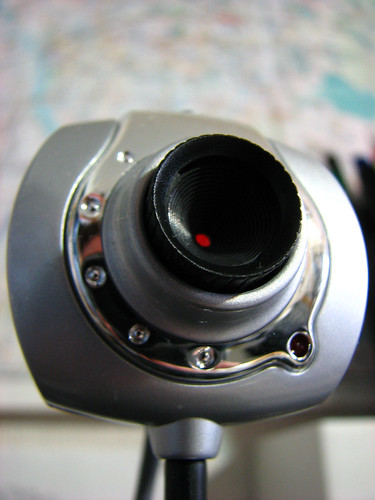
Start Up: Nest tries again (but smarthomes don’t), Windows Server on ARM, Facebook’s anti-science, and more


What if the genders had been reversed but the characters retained in the US presidential race? Photo by chuckp on Flickr.

You can now sign up to receive each day’s Start Up post by email. You’ll need to click a confirmation link, so no spam.

A selection of 10 links for you. Use them wisely. I’m @charlesarthur on Twitter. Observations and links welcome.

What if Donald Trump and Hillary Clinton had swapped genders? • New York University

Eileen Reynolds:

»

After watching the second televised debate between Donald Trump and Hillary Clinton in October 2016—a battle between the first female candidate nominated by a major party and an opponent who’d just been caught on tape bragging about sexually assaulting women—Maria Guadalupe, an associate professor of economics and political science at INSEAD, had an idea. Millions had tuned in to watch a man face off against a woman for the first set of co-ed presidential debates in American history.

But how would their perceptions change, she wondered, if the genders of the candidates were switched? She pictured an actress playing Trump, replicating his words, gestures, body language, and tone verbatim, while an actor took on Clinton’s role in the same way. What would the experiment reveal about male and female communication styles, and the differing standards by which we unconsciously judge them?

«

This is absolutely fascinating. Watching it with roles reversed, you realise how bad a candidate Clinton was; it explains why she lost twice (once to Obama, once to Trump). What people want from a leader is leadership; they want force, and they want drive.

All the punditry was that a woman who was forceful would turn voters off. I think they’d be fine with it. The audience reactions – this was shown as a play – are also noted in the article. Sometimes you need to turn things upside-down to see how they really are.
link to this extract


Alphabet’s Nest working on cheaper thermostat, home security system • Bloomberg

Mark Gurman:

»

Alphabet’s Nest, seeking a bigger share of the connected home market, is developing a cheaper version of its flagship thermostat and new home security products, according to a person familiar with the matter. 

The company is working on a version of its “learning thermostat,” which adjusts the temperature based on usage patterns, that would sell for under $200, the person said. The current version sells for $249. The cheaper model would include less expensive components and at least one internal prototype lacks the flagship model’s metal edges, the person said. 

A home-security alarm system, a digital doorbell and an updated indoor security camera are also in the works, representing potential good news for a company that has struggled to release many new products. 

Co-founded by Tony Fadell, a former Apple Inc. executive who helped create the iPod, Nest was acquired by Google for $3.2bn in 2014 after the first version of its thermostat sold well. Fadell left last year after some employees complained publicly about his aggressive management style. The business is now run by Marwan Fawaz, a former executive vice president of Motorola Mobility. 

«

A digital doorbell. The giant minds at Nest really are breaking new ground, aren’t they? You can hardly move on Kickstarter for digital doorbells, locks and security cameras. And offering them cheaply isn’t going to help their margins, though it might make the “Other Bets” revenue look more healthy.
link to this extract


What’s wrong with the smart home? • Stacey on IoT

Stacey Higginbotham:

»

I’ve been thinking for the last few months that we’ve misled people about the promise of the smart home, and perhaps as an industry, we need to focus on the basics before promising these intuitive homes of the future.

I recently built a presentation to this effect (which also digs into the reasons voice won’t save us) and was excited to see others discussing this topic as well.  Scott Jenson, a designer who works at Google, and Kai Kreuzer who works on the OpenHab smart home platform, both did a great job digging into the current state of the industry to explain why it’s not awesome.

Jenson’s point is that we’ve screwed up by not building the internet of things on the same principles of the open web. Instead, companies force consumers into their own apps and refuse to share data. The result of this is that nothing works together and the onboarding experience is terrible for most consumer devices.

He argues that we are missing essential underpinning technology to get the level of distributed intelligence the smart home needs. So not only do things need to be open, but we also need to think about how to make trusted, distributed systems.

«

“Trusted, distributed systems”? Sounds a bit like blockchain, or something similar. Equally, the reason companies force consumers into their own apps is that that’s the only way to make the business model work.
link to this extract


ARMing the cloud; Qualcomm’s Centriq 2400 platform will power Microsoft Azure instances • PC Perspective

Jeremy Hellstrom:

»

Last December Qualcomm announced plans to launch their Centriq 2400 series of platforms for data centres, demonstrating Apache Spark and Hadoop on Linux as well as a Java demo.  They announced a 48 Core design based on ARM v8 and fabbed with on Samsung’s 10nm process, which will compete against Intel’s current offerings for the server room.

Today marks the official release of the Qualcomm Falkor CPU and Centriq 2400 series of products, as well as the existence of a partnership with Microsoft which may see these products offered to Azure customers.  Microsoft has successfully configured a version of Windows Server to run on these new chips, which is rather big news for customers looking for low-powered hosting solutions running a familiar OS.

«

Some understatement in that. “ARM servers” has been a promise for years; I recall talking to HP which said it was working on it about five years ago. Now it is becoming a reality. This is very dangerous for Intel – especially with Microsoft breaking away like this. If servers become commoditised on ARM architecture, Intel’s chip business – which lately has looked to servers to keep it going – doesn’t have a floor.

It might not happen overnight, but this is the thin end of a giant wedge in Intel’s most profitable business.
link to this extract


Google isn’t actually tackling ‘fake news’ content on its ad network • Marketing Land

Ginny Marvin:

»

Why are my Google display campaigns running on “XYZ-Hyperpartisan-Site” with less-than-accurate or altogether false articles? That’s the polite version of a question I’ve heard in various forms over the past several weeks.

Isn’t Google taking steps against fake news on the Display Network? they ask. Why are sites that spread misinformation still able to earn ad revenue through Google’s AdSense publisher network? they wonder. I’ve heard these questions over and over again recently. In a nutshell, the answer comes down to semantics, namely the difference between “misrepresentation” and “misinformation.” Yes, Google is addressing fake publishers that impersonate well-known news outlets or make up clickbait headlines to drive users to articles that push diet pills or other products. Google’s not looking at misinformation, hoaxes and conspiracy theories.

Last fall, Google earned a lot of press, including on this site, for updating its AdSense “Misrepresentative content” policy to ostensibly “take aim at fake news,” as The New York Times put it. In its most recent Bad Ads Report, Google said it kicked out 200 sites permanantly and blacklisted 340 sites — out of some 2 million AdSense publishers — from the network for violations including misrepresentation. There has been a trend to capitalize on hyperpartisanship — because people are clicking.

Google continues to profit from ads served on hundreds if not thousands of sites promoting propaganda, conspiracy theories, hoaxes and flat-out lies.

«

link to this extract


How anti-science forces thrive on Facebook • BuzzFeed News

Stephanie Lee:

»

In January, Natural News shared a big story on Facebook: A federal scientist had affirmed Donald Trump’s belief that vaccines cause autism.

According to this researcher, the government had supposedly suppressed study data showing that African-American boys had a “340% increased risk for autism” after being vaccinated. “Despite being cast to the lunatic fringe by the mainstream media for his remarks,” the article said, the scientist “has confirmed Trump’s suspicions.”

The claim was false — but the story was an enduring hit. Since it was first published in November 2015, the link has popped up in alternative-health and anti-vaccine communities with names like “Vaccination Information Network” and “Healing ADHD & Asperger’s Without Hurting.” It’s been shared by Trump supporters, a fan account for the hacking group Anonymous, the conspiracy theory subreddit, and a former X Factor contestant on Twitter. All told, it’s garnered more than 141,000 likes, shares, and (overwhelmingly positive) comments on Facebook, according to the social media–tracking tool CrowdTangle. Meanwhile, a Time story that poked holes in the claim got 3,300.

«

You’re probably able to hum this one already; you’ve heard the chorus enough times. People share stupidity; sense struggles even to get out of its chair before stupidity has got a plane ticket around the world.
link to this extract


Apple captures 79% of global smartphone profits in 2016 • Korea Herald

Quoting Strategy Analytics research:

»

Samsung Electronics Co.’s smartphone business posted an operating profit of $8.3bn last year, accounting for 14.6% of the global profits.

Samsung is still reeling from the global recall of the Galaxy Note 7 smartphone, which was discontinued in October last year over safety concerns. The South Korean tech giant’s operating profit margin stood at 11.6% last year, while its annual sales of smartphones fell to $71.6bn from $75.2bn in 2015.

Profitability at Chinese smartphone makers is still low, although their cheaper handsets are rapidly gaining market share.

Huawei posted an operating profit of $929m last year, accounting for 1.6% of global profits. OPPO took 1.5% of the global profits, while its rival Vivo accounted for 1.3%, according to the research.

«

Hadn’t seen the Huawei figures before; it also shows how there’s (almost) no profit outside China. Apart from Apple, Sony and Samsung, everyone outside China is losing money.
link to this extract


The need for a Digital Geneva Convention • Microsoft On The Issues blog

Brad Smith, Microsoft’s chief legal officer:

»

Just as the Fourth Geneva Convention has long protected civilians in times of war, we now need a Digital Geneva Convention that will commit governments to protecting civilians from nation-state attacks in times of peace. And just as the Fourth Geneva Convention recognized that the protection of civilians required the active involvement of the Red Cross, protection against nation-state cyberattacks requires the active assistance of technology companies. The tech sector plays a unique role as the internet’s first responders, and we therefore should commit ourselves to collective action that will make the internet a safer place, affirming a role as a neutral Digital Switzerland that assists customers everywhere and retains the world’s trust.

«

Dream on with that one, Brad.
link to this extract


Autonomous cars must learn to drive the Italian way, the German way and every way in-between • IB Timeds

Alistair Charlton:

»

Another challenge faced by autonomous cars is how to navigate different countries and around humans using different forms of etiquette.

Callegari explained how self-driving cars will need to be taught how human driving and behaviours differ by country, and adapt accordingly.

“Blatting down the Autobahn at 250km/h (155mph) is quite common in Germany, then you’ll get chased down by a Mercedes or a Porsche. Then in Italy you’ll have someone in a Punto doing the same thing, but the driving conditions and the expectations there are quite different.”

In other words, autonomous cars will need to be comfortable with moving quickly in Germany, where lane discipline is generally very good, but in Italy they will need to deal with far more erratic driving from locals.

Callegari went on: “People don’t really tailgate in the UK; you think it’s bad there but it’s not that bad. But here [Switzerland] people tailgate, it’s just part of the way you drive. They sit two metres off your bumper and the conditions are very, very different in those cases…also how people drive, how aggressive they are, how casual they are is very different. In [rural] US it’s very relaxed but around the M25 [motorway around London] it’s completely different.”

«

link to this extract


Some comments on the Wikileaks CIA/#vault7 leak • Errata Security

Rob Graham:

»

I thought I’d write up some notes about the Wikileaks CIA “#vault7” leak. This post will be updated frequently over the next 24 hours.

• The CIA didn’t remotely hack a TV. The docs are clear that they can update the software running on the TV using a USB drive. There’s no evidence of them doing so remotely over the Internet. If you aren’t afraid of the CIA breaking in an installing a listening device, then you should’t be afraid of the CIA installing listening software.

• The CIA didn’t defeat Signal/WhattsApp encryption. The CIA has some exploits for Android/iPhone. If they can get on your phone, then of course they can record audio and screenshots. Technically, this bypasses/defeats encryption — but such phrases used by Wikileaks arehighly misleading, since nothing related to Signal/WhatsApp is happening. What’s happening is the CIA is bypassing/defeating the phone. Sometimes. If they’ve got an exploit for it, or can trick you into installing their software.

• There’s no overlap or turf war with the NSA. The NSA does “signals intelligence”, so they hack radios and remotely across the Internet. The CIA does “humans intelligence”, so they hack locally, with a human. The sort of thing they do is bribe, blackmail, or bedazzle some human “asset” (like a technician in a nuclear plant) to stick a USB drive into a slot. All the various military, law enforcement, and intelligence agencies have hacking groups to help them do their own missions.

• The CIA isn’t more advanced than the NSA. Most of this dump is child’s play, simply malware/trojans cobbled together from bits found on the Internet. Sometimes they buy more advanced stuff from contractors, or get stuff shared from the NSA. Technologically, they are far behind the NSA in sophistication and technical expertise…

«

And there’s plenty more where that come from. His quick conclusion: the CIA isn’t spying on us. (For some variant of “us”. Depends who you are, I guess.)

link to this extract


Errata, corrigenda and ai no corrida: none notified