Start Up No.999: Facebook’s German data hiccup, ads and robot anxiety, Twitter’s user truth, webcam insecurity, and more


The US has a lot of crumbling infrastructure. (This was a Minneapolis bridge collapse in 2007.) CC-licensed photo by Tony Webster on Flickr.

You can sign up to receive each day’s Start Up post by email. You’ll need to click a confirmation link, so no spam. And then you’ll start at No.1,000.

A selection of 11 links for you. Which service do you require? I’m @charlesarthur on Twitter. Observations and links welcome.

The infrastructural humiliation of America • TechCrunch

Jon Evans:

»

The USA is nine times wealthier than Thailand, per capita, but I’d far rather ride Bangkok’s SkyTrain than deal with NYC’s subway nowadays. I’d much prefer to fly into Don Muang, Bangkok’s ancient second-tier airport — which was actually closed for years, before being reopened to handle domestic flights and low-cost airlines — than the hostile nightmare that is LAX. And those are America’s two primary gateway cities!

So imagine what it’s like coming to America from wealthy Asian nations, and their gleaming, polished, metronomically reliable subways, trains, and airports. I don’t think Americans understand just how that comparison has become a quiet ongoing national humiliation. If they did, sheer national (and civic) pride would make them want to do something about it. Instead there’s a learned helplessness about most American infrastructure nowadays, a wrong but certain belief that it’s unrealistic to dream of anything better.

It’s not just those two cities. Compare Boston’s T to, say, Taipei, or San Francisco’s mishmash of messed-up systems — Muni, where I have waited 45 minutes for a T-Third; CalTrain, which only runs every 90 minutes on weekends; BART, which squandered millions on its useless white-elephant Millbrae station — to Shenzhen. And it’s not just age; Paris’s metro was inaugurated in 1900, but its well-maintained system continues to run excellently and expand continuously.

«

Can’t he just get a ride on the tax cuts?
link to this extract


Germany blocks Facebook from pooling user data without consent • Financial Times

Olaf Storbeck, Madhumita Murgia and Rochelle Toplensky:

»

Germany’s antitrust watchdog on Thursday blocked Facebook from pooling data collected from Instagram, its other subsidiaries and third-party websites without user consent in a landmark decision on internet privacy rights and competition.

The Federal Cartel Office said it was tackling what it described as the Silicon Valley company’s “practically unrestricted collection and assigning of non-Facebook data” to user accounts.

In a press conference in Bonn, the German authorities said that Facebook needed the “voluntary consent” of users to pool data from other services with its own Facebook user data.

The FCO also said that Facebook needed consent to collect data from third-party websites outside its own ecosystem. “If consent is not given . . . Facebook will have to substantially restrict its collection and combination of data,” the cartel office said.

«

Note that it’s the antitrust office, not the privacy commissioner doing this. Though one suspects that Facebook will get round it with a dialog box.
link to this extract


Over 40 smartphone brands exit India market owing to hyper-competition • ET Telecom

Tina Gurnaney:

»

As many as 41 smartphone brands exited the India smartphone market in 2018 owing to hyper-competition, while 15 brands entered the market eyeing growth prospects that India has to offer, according to data shared by Cybermedia Research.

Mirroring the same pattern, more exits than entry of smartphone players is expected in 2019 as major brands like Xiaomi, Samsung, Vivo, Oppo continue to consolidate their share by eating into those of the smaller brands, analysts say. Counterpoint Research predicts the exit of 15 smartphone players in 2019 versus entry of five players. CMR sees nine new entrants versus 10 exits in 2019.

As per CMR estimates, India currently has around 200 smartphone players operating in the market. At its peak in 2014-15, the mobile phone market had over 300 smartphone players.

«

That was the peak? Yet it’s still the fastest growing (big) market.
link to this extract


Why so many Super Bowl ads were about robots • Slate

Will Oremus:

»

It’s possible that Madison Avenue is just out of touch. But if the ads they cooked up for companies ranging from Michelin to TurboTax to Sprint provide a window into America’s anxieties, it sure seems like we’re struggling to figure out our place alongside machine intelligence. And we’re already resorting to gallows humor in the face of our own obsolescence.

The robot reckoning began with an ad from SimpliSafe, called “Fear Is Everywhere,” that played tech’s dark side for some wry chuckles. “In five years, robots will be able to do your job, your job, and your job” a man tells his friends at a ballgame. The camera pans up to show a robot in a baseball cap on the top bleacher eating a hot dog, who gives a slightly menacing dude-nod. Cut to an electronics store where a woman asks her phone-distracted husband if he’s listening. The reply comes instead from an Amazon Echo–like device on the store shelf: “Always, Denise.”

https://www.youtube-nocookie.com/embed/_rnrEQBieIQ

The spot works because it cloaks real fears in satire. It’s at once a sendup of the “scare people into buying a security system” genre and an exemplar of it.

That spooky-funny duality may help to explain why robots are fast becoming a trope in TV advertising. Humor is a way of dealing with topics that make us uncomfortable while maintaining some emotional distance from them. A.I. taking our jobs and listening in on our conversations really is frightening, but it isn’t quite so frightening that we can’t joke about it—like, say, climate change or terrorism. At least, not yet.

«

link to this extract


Twitter finally shared how big its daily user base is — and it’s a lot smaller than Snapchat’s • Recode

Kurt Wagner:

»

How big is Twitter’s daily user base? A lot smaller than Snapchat’s, it turns out.

For years, Twitter has been asking investors to judge the company by looking at user growth for its daily active users. But Twitter never shared how many daily active users it actually had, which made the year-over-year growth hard to appreciate.

That changed on Thursday when Twitter shared its daily user total for the first time: Twitter has 126 million daily users, which is 60 million fewer users than Snapchat (and a lot fewer users than the core apps owned by Facebook). That means roughly 39% of Twitter’s monthly active users are on the app every day.

The new metric matters to Twitter because it paints a picture that Twitter is growing. Twitter’s monthly active user base — the user metric it has shared quarterly since its IPO in 2013 — is shrinking, and has been for some time. So focusing on DAU instead of MAU lets Twitter show that it’s growing, which is a much happier story to tell. In fact, Twitter said it will stop sharing the MAU total altogether beginning this year.

The DAU metric also helps put Twitter’s user growth, which it’s been touting for years, into perspective. And it helps us compare Twitter’s audience to competitors like Snapchat, which it competes with for advertising dollars.

«

Facebook just ticking over on 1,520 million DAUs. And yet: none of the three looks likely to go away.
link to this extract


What I learned from the hacker who spied on me • WSJ

Joanna Stern:

»

We’re putting cameras in more and more places, yet more and more people are putting tape over their computer webcams because they fear who may be looking.

How secure are these tiny eyes into our private lives? The bad news is, it was possible for Mr. Heid to get into my Windows 10 laptop’s webcam and, from there, my entire home network. He also eventually cracked my MacBook Air. The good news is that both operating systems were initially able to thwart the hacker. It took me performing some intentionally careless things for him to “succeed.”

If you’re on guard and aware that people are out there trying to trick you to let down your defenses, and you follow some basic practices, you can make it much more difficult for the bad guys to get to you…

…When connected to the Windows laptop, Mr. Heid was able to scan for other devices on my home Wi-Fi network. He quickly found two cameras: a Nest Camera and a Wansview 1080p connected baby monitor that I bought for this column along with the laptops.

From this point on, getting into the baby monitor didn’t even require hacking. He went to its IP address, searched Google for the default username and password and typed it in to the camera’s web portal. He had a nice stream of my son’s playroom—my son included.

«

Windows 10: hard-ish to hack. MacBook Air: harder to hack. Android: harder to hack. iPhone: don’t bother. (Yeah yeah FaceTime. Isn’t the same.) Random webcams: cinch, especially if you don’t change the default password – and lots of people don’t.
link to this extract


Another demonstration of CRS/GDS insecurity • The Practical Nomad blog

Edward Hasbrouck:

»

Zack Whittaker had a report yesterday for Techcrunch on the latest rediscovery of a continuing vulnerability affecting sensitive personal data in airline reservations that I first reported, both publicly and to the responsible companies, more than 15 years ago: computerized reservations systems and systems that rely on them for data storage and retrieval, including airline check-in Web sites, use a short, insecure, unchangeable, system-assigned, and fundamentally insecure “record locator” as though it were a secure password to control access to passenger name record (PNR) data.

I wrote about these vulnerabilities and reported them to each of the major CRS/GDS companies in 2001, 2002, and 2003, specifically noting their applicability to airline check-in Web sites (among many other Web services). I pointed these vulnerabilities out in a submission to the US Federal Trade Commission in 2009 which was co-signed by several consumer and privacy organizations, in my 2013 testimony as an invited expert witness before the Advisory Committee on Aviation Consumer Protection of the U.S. Department of Transportation, in a complaint which was which finally accepted and docketed by the European Commission in 2017, and in my comments to the European Commission in December 2018 with respect to its current review of the European Union’s regulations governing protection of personal data by CRSs.

«

Ah, so it’s not a new thing by any means. That makes it a lot worse. (Thanks, Wendy Grossman.)

link to this extract


The proposed Green New Deal

Put forward by Alexandria Ocasio-Cortez, among others; its aims aren’t modest:

»

National mobilization of our economy through 14 infrastructure and industrial projects. Every project strives to remove greenhouse gas emissions and pollution from every sector of our economy:

o Build infrastructure to create resiliency against climate change-related disasters
o Repair and upgrade U.S. infrastructure. ASCE estimates this is $4.6 trillion at minimum.
o Meet 100% of power demand through clean and renewable energy sources
o Build energy-efficient, distributed smart grids and ensure affordable access to electricity
o Upgrade or replace every building in US for state-of-the-art energy efficiency
o Massively expand clean manufacturing (like solar panel factories, wind turbine factories, battery and storage manufacturing, energy efficient manufacturing components) and remove pollution and greenhouse gas emissions from manufacturing
o Work with farmers and ranchers to create a sustainable, pollution and greenhouse gas free, food system that ensures universal access to healthy food and expands independent family farming
o Totally overhaul transportation by massively expanding electric vehicle manufacturing, build charging stations everywhere, build out high-speed rail at a scale where air travel stops becoming necessary, create affordable public transit available to all, with goal to replace every combustion-engine vehicle
o Mitigate long-term health effects of climate change and pollution
o Remove greenhouse gases from our atmosphere and pollution through afforestation, preservation, and other methods of restoring our natural ecosystems
o Restore all our damaged and threatened ecosystems
o Clean up all the existing hazardous waste sites and abandoned sites o Identify new emission sources and create solutions to eliminate those emissions
o Make the US the leader in addressing climate change and share our technology, expertise and products with the rest of the world to bring about a global Green New Deal

«

Yes, that does say “Upgrade or replace every building in US for state-of-the-art energy efficiency”. It’s a ten-year plan “to mobilise every aspect of American society at a scale not seen since World War 2.” No exaggeration, that.
link to this extract


Apple SVPs • All this

Dr Drang:

»

Putting the App Store under Phil Schiller [rather than Eddy Cue], which on paper makes no sense for the SVP of marketing, was the solution, for which both Schiller and Tim Cook deserve credit.

I would argue that broadening Jony Ive’s design oversight to include software in addition to hardware was a mistake as big as putting Cue in charge of the App Store. The software side of Apple’s user interfaces—especially on iOS, which isn’t as hardened by long tradition as on the Mac—has become steadily more cryptic under Ive’s control. Some of this is due to Apple’s need to squeeze more functionality into the OS, but Ive hasn’t been up to the task of melding the new functions into the UI in a consistent and discoverable way.

To me, [Angela] Ahrendts’s five years in charge of Retail has been similar to Ive’s time as Chief Design Officer. The Apple Stores look better than ever, but they don’t work as well as they used to. No one I know looks forward to going to an Apple Store, even when it’s for the fun task of buying a new toy. No doubt a lot of this is due to Apple’s success and the mobs of people milling about, but Ahrendts didn’t solve the problem of efficiently handling the increased customer load.

I hope [Ahrendt’s replacement, Deirdre] O’Brien’s background in operations will lead to improvements in the flow of people through the Stores.

«

I hadn’t thought about Ive and software; that happened before the release of iOS 7, which he really influenced, and whose minimalism has been dialled back towards, if not maximalism, then sufficientism, over the intervening six years.
link to this extract


Attacking a paywall that hides public court filings • The New York Times

Adam Liptak:

»

By one estimate, the actual cost of retrieving court documents, including secure storage, is about one half of one ten-thousandth of a penny per page. But the federal judiciary charges a dime a page to use its service, called Pacer (for Public Access to Court Electronic Records).

The National Veterans Legal Services Program and two other nonprofit groups filed a class action in 2016 seeking to recover what they said were systemic overcharges. “Excessive Pacer fees inhibit public understanding of the courts and thwart equal access to justice, erecting a financial barrier that many ordinary citizens are unable to clear,” they wrote.

The suit accuses the judicial system of using the fees it charges as a kind of slush fund, spending the money to buy flat-screen televisions for jurors, to finance a study of the Mississippi court system and to send notices in bankruptcy proceedings.

A 2002 law allows — but does not require — the judicial system to charge for access to the records, but “only to the extent necessary” to pay for “services rendered.” The judicial system says the law allows it to charge the current fees and to spend the proceeds on a variety of programs. People seeking free access, the judicial system’s brief said, can visit the courthouse.

Last year, Judge Ellen S. Huvelle of the Federal District Court in Washington accepted the challengers’ basic theory and said the judicial system had misused some of the money.

«

There’s a samizdat effort to put any Pacer documents acquired into cloud services such as DocumentCloud so that people don’t have to re-pay to view them. In February 2017, the Internet Archive offered to host the data as Congress’s subcommittee on courts and IP met to discuss Pacer, for the first time in a decade. The US’s behaviour here is out of line with its normal approach to data held by governments, which are paid by the people.
link to this extract


Amazing illustrations that use negative space brilliantly • Digital Synopsis

»

In art, negative space is the background space around the main object of an image. In a two-tone image (eg. black and white), the object is usually depicted in a darker color (black) than the background (white), thereby forming a silhouette. Sometimes, the tones are reversed and white is used to fill the silhouette (refer Coke examples below). When an artist carves out a shape in the silhouette, in a way that the background creates a visual of its own, that’s when the magic happens.

«

Very Mad Men, but that doesn’t mean they’re not magical.
link to this extract


Errata, corrigenda and ai no corrida: none notified

Start Up No.998: bad news on global warming, why Spotify wants podcasts, EU roaming charges loom, hacking your airline ticket, and more


A melting glacier: indicative of global warming. It’s getting worse. CC-licensed photo by Len Radin on Flickr.

You can sign up to receive each day’s Start Up post by email. You’ll need to click a confirmation link, so no spam.

A selection of 11 links for you. Not assigned any particular place in hell. I’m @charlesarthur on Twitter. Observations and links welcome.

It’s official: 2018 was the fourth warmest year on record • The New York Times

John Schwartz and Nadja Popovich:

»

NASA scientists announced Wednesday that the Earth’s average surface temperature in 2018 was the fourth highest in nearly 140 years of record-keeping and a continuation of an unmistakable warming trend.

The data means that the five warmest years in recorded history have been the last five, and that 18 of the 19 warmest years ever recorded have occurred since 2001. The quickly rising temperatures over the past two decades cap a much longer warming trend documented by researchers and correspond with the scientific consensus that climate change is caused by human activity.

“We’re no longer talking about a situation where global warming is something in the future,” said Gavin A. Schmidt, director of the Goddard Institute for Space Studies, the NASA group that conducted the analysis. “It’s here. It’s now.”

While this planet has seen hotter days in prehistoric times, and colder ones in the modern era, what sets recent warming apart in the sweep of geologic time is the relative suddenness of the rise in temperatures and its clear correlation with increasing levels of greenhouse gases like carbon dioxide and methane produced by human activity over the same period.

«

The other day I was reading a depressing article about plastics being all through the marine food chain, and thought: this is the dinosaurs’ revenge. They got turned into oil, and now we burn them and wreck our ecosystem. A slow-motion meteor.
link to this extract


A hole opens up under Antarctic glacier — big enough to fit two-thirds of Manhattan

Denise Chow:

»

The discovery is described in a paper published Jan. 30 in the journal Science Advances. The researchers expected to see significant loss of ice, but the scale of the void came as a shock.

“The size of the cavity is surprising, and as it melts, it’s causing the glacier to retreat,” said Pietro Milillo, a radar scientist at NASA’s Jet Propulsion Laboratory in Pasadena, California, and the paper’s lead author. He said the ice shelf encompassing the Florida-sized glacier is retreating at a rate in excess of 650 feet per year, and that most of the melting that led to the void occurred during the past three years.


Sinking areas at Thwaites Glacier are shown here in red and rising areas in blue. The growing cavity (red mass, center) caused the greatest sinking. Source: NASA/JPL-Caltech

Previous research showed that meltwater from Thwaites accounts for about 4% of the global sea level rise, said Ted Scambos, a senior research scientist at the National Snow and Ice Data Center in Boulder, Colorado, who was not involved with the new study.

If the loss of ice becomes so severe that the glacier collapses — something computer models predict could happen in 50 to 100 years — sea levels would rise by two feet. That’s enough to inundate coastal cities across the globe.

«

Worth declaring a state of emergency for the crisis on the US’s south-eastern sea border?
link to this extract


Instacart changes tip policy after worker backlash • CNN

Sara Ashley O’Brien:

»

After mounting criticism from workers over its payment practices, Instacart has agreed to make some changes.

In a blog post on Wednesday, CEO Apoorva Mehta said the on-demand grocery delivery startup will no longer decrease the amount it contributes to worker base pay based on the size of their tips. He also said the company will reimburse workers who have been impacted by that practice.

“While our intention was to increase the guaranteed payment for small orders, we understand that the inclusion of tips as a part of this guarantee was misguided. We apologize for taking this approach,” said Mehta.

Instacart, along with rival DoorDash, has been under fire in recent weeks from workers who say the tips added by customers on orders are being used to subsidize a minimum pay rate, instead of being used as bonuses.

«

Meet the new boss class, same as the old boss class.
link to this extract


Spotify is spending up to $500m on podcast startups including Gimlet, Anchor • Recode

Peter Kafka:

»

Not only has Spotify acquired Gimlet Media, a podcast producer and network, for around $230m — a deal Recode told you about last week — but it has also bought Anchor, a startup that makes it easier for people to record and distribute their own podcasts.

The company says it isn’t done — it says it has other podcast acquisitions in mind and that it expects to spend up to $500m on deals this year. Reminder: with these deals, Spotify is now fully in the content creation business, a move it has yet to make with music.

In a blog post up this morning, Spotify CEO Daniel Ek says he didn’t plan on getting into podcasting when he founded the company 11 years ago, but he’s in it now. He says Spotify is now the world’s second-biggest podcast platform (behind Apple), and that podcast listening will eventually make up 20% of Spotify’s usage.

«

Here’s why. Spotify struggles to be profitable because when playing licensed music, it has to pay a fixed amount per track. Two hours of music listening costs it twice as much, and the subscriber has only paid once. For ad-funded listening, Spotify can play twice as many ads, but they don’t monetise as well as a subscription.

However: if someone listens to one hour, two hours of podcast – there’s no payout. The more time people spend listening to podcasts instead of music, the better Spotify’s margins get. Ideally, people would spend 100% of their time listening to lovely non-royalty-bearing podcasts. So buying podcast companies is an initially expensive method of aligning yourself with “listening” while improving your profitability, long-term.
link to this extract


Brits will face immediate return of mobile phone roaming charges under No-Deal Brexit, government reveals • HuffPost UK

Paul Waugh:

»

A little-noticed government regulation laid before parliament on Tuesday confirms that the UK will revoke the current legislation that allows holidaymakers and business people to use their smartphones in the EU at no extra cost.

The draft ‘statutory instrument’, which has been tabled as part of a raft of no-deal preparations, means that from March 29 phone users will be liable for surcharges when they travel on the continent.

In a note accompanying the secondary legislation – the Mobile Roaming (EU Exit) Regulations 2019 – government admits that consumer groups lobbied hard for a new scheme to maintain the current arrangements.

But “after careful consideration, the government decided not to adopt this proposal”, it states.

The Department of Culture, Media and Sport (DCMS) justified its stance by saying that if the current system continued after Brexit, UK phone firms would face “increased costs” from EU carriers that they might then pass on to customers.

«

For American readers: charges for UK visitors to the continent used to be a ripoff. Then the EU forced carriers to zero-rate them across the EU. Now the UK’s going to repeal it (probably).
link to this extract


Advancing research on fake audio detection • Google Blog

Daisy STanton is a software engineer at Google AI:

»

we’re keenly aware of the risks this [speech generation] technology can pose if used with the intent to cause harm. Malicious actors may synthesize speech to try to fool voice authentication systems, or they may create forged audio recordings to defame public figures. Perhaps equally concerning, public awareness of “deep fakes” (audio or video clips generated by deep learning models) can be exploited to manipulate trust in media: as it becomes harder to distinguish real from tampered content, bad actors can more credibly claim that authentic data is fake.

We’re taking action. When we launched the Google News Initiative last March, we committed to releasing datasets that would help advance state-of-the-art research on fake audio detection.  Today, we’re delivering on that promise: Google AI and Google News Initiative have partnered to create a body of synthetic speech containing thousands of phrases spoken by our deep learning TTS models. These phrases are drawn from English newspaper articles, and are spoken by 68 synthetic “voices” covering a variety of regional accents.  

We’re making this dataset available to all participants in the independent, externally-run 2019 ASVspoof challenge. This open challenge invites researchers all over the globe to submit countermeasures against fake (or “spoofed”) speech, with the goal of making automatic speaker verification (ASV) systems more secure. By training models on both real and computer-generated speech, ASVspoof participants can develop systems that learn to distinguish between the two. The results will be announced in September at the 2019 Interspeech conference in Graz, Austria.

«

Another arms race, or maybe speech (voice?) race.
link to this extract


Inside Wisconsin’s disastrous $4.5bn deal with Foxconn • Bloomberg

Austin Carr:

»

[Foxconn chief Terry] Gou deputized his special assistant, Woo, and another lieutenant, Alan Yeung, Foxconn’s director of US strategic initiatives, to handle the details. They aggressively pursued cash subsidies, calling and texting at all hours. At one point, according to state records released to the public, Woo texted Neitzel at 1:17 a.m., “Give us 200m upfront then it is a done deal.” (Neitzel declined.)

As a bidding war heated up among a handful of states, including Michigan and Ohio, Wisconsin upped its offer. Foxconn demanded subsidies that would make US operations as cheap as in China, and Hogan says Foxconn estimated a 30% cost difference. He acknowledges the subsidy numbers grew “staggering” but says Foxconn won’t get those incentives without delivering the promised numbers of jobs.

Wisconsin’s final bid, written on a single piece of paper, offered as much as $150m in sales tax exemptions and $2.9bn in refundable tax credits on the condition that Foxconn meet certain hiring and capital investment thresholds. Other public costs, including $764m in local incentives from Mount Pleasant and its home county of Racine, made up the other third of the package. When the team slid the paper to Woo in July, Hogan recalls, he folded it up and said, “Terry wants to do business with Governor Walker.”

Even before Foxconn signed the contract in November 2017, Walker’s win began to morph into a political liability. As details of the mostly closed-door negotiations came to light, the narrative soured. At a time when Trump was stoking economic nationalism and ripping on companies that shipped jobs to China, many saw the subsidies as a desperate giveaway to a foreign company with close ties to Beijing…

…“There’s no way this will ever pay itself off,” says Tim Bartik, a senior economist at the W.E. Upjohn Institute for Employment Research. He says Foxconn’s incentives are more than 10 times greater than typical government aid packages of its stripe.

«

link to this extract


E-ticketing system exposes airline passengers’ personal information via email • Cyberscoop

Jeff Stone:

»

At least eight airlines, including Southwest, use e-ticketing systems that could allow hackers to access sensitive information about travelers merely by intercepting emails, according to research published Wednesday by the mobile security company Wandera.

The systems fail to secure customers’ personally identifiable information, including names, boarding passes, passport numbers and flight numbers, Wandera said.

The email vulnerabilities still exist, Wandera found, even though researchers notified affected companies weeks ago, and despite growing corporate awareness about the risks associated with sacrificing security for convenience.

The weakness is a check-in link that is emailed to customers, Wandera researchers found. Customer information is embedded in the links, allowing travelers to travel from their email to a website where they check in for a flight without needing to enter their username and password. However the links are unencrypted and re-usable, presenting a tempting target for hackers, according to Michael Covington, vice president of product at Wandera.

«

“Weeks” isn’t enough time to change a system that will be deeply embedded, and airlines aren’t known for having the fastest-moving approach to changing their systems. I’m sure some readers would have more knowledge of this.
link to this extract


Apple paid its retail head $170M to transform its stores. Did she do it? • Euronews

»

Apple’s sleek, minimalist, glass-enshrined stores have long been holy places for Apple diehards, and expanded to 506 retail locations on five continents during Ahrendt’s tenure.

As the former chief executive of Burberry, Ahrendts was expected to be the face of Apple, but instead quietly worked in the background, carefully choosing her media appearances and staying out of the spotlight most of the time at the company’s semi-annual press events.

Ahrendts made her first on-stage appearance at Apple’s annual iPhone event in September 2017, where she called retail Apple’s “largest product” and shared how she envisioned the stores becoming “town squares” with plenty of green space, where people come together to hang out, learn new skills and, oh, buy the new $1,000 iPhone.

In an effort to get people to think of Apple products as part of a lifestyle, Ahrendts also spearheaded free “Today at Apple” courses, which launched in 2017. Apple continues to launch new sessions, including coding classes, software lessons and walking tours, where people can learn how to use the Apple Watch for fitness or how to shoot cinematic photos. Apple said it has held more than 18,000 free sessions since the launch and has reached millions of people.

During her tenure, Ahrendts also introduced more practical shopping functions that customers have come to expect from retailers, including the option to buy online and pick up in-store; and text message alerts, so people don’t have to linger waiting for an appointment at the Genius Bar.

«

Hm. The stores were already well-liked (despite former Dixons chief John Browett’s brief, unlamented, efforts). It’s really hard to get any feel for what impact Ahrendts had. If anything, the stores now feel too sparse to me when I look inside them: where is the excitement about new products? The big excited posters? The tables crammed with other extras to buy? They feel more like service centres than shopping destinations, and I don’t think that’s positive.

Her departure feels like she didn’t think she could make further impact. I couldn’t find any better analysis; nobody with contacts at this level will share the insights.
link to this extract


Hands up who reuses the same password everywhere, even with your Nest. Keep your hand up if you like being spied on by hackers • The Register

Kieren McCarthy:

»

Nest has urged its customers to not reuse passwords between their smart home gizmos and other websites and services.

This comes after miscreants were spotted taking usernames and passwords leaked or stolen from other websites, and using them to attempt to log into Nest accounts and hijack the internet-connected home gadgets, a type of attack known as credential stuffing.

Rishi Chandra, general manager of the Google-owned smart home outfit, sent an email to all Nest customers on Wednesday noting that the manufacturer had “heard from people experiencing issues with their Nest devices” before running through some security tips to secure their accounts…

…according to Nest, the likelihood is that dirtbags are trying out usernames and passwords dumped online from unrelated website security breaches, to access Nest accounts where credentials have been reused.

“Even though Nest was not breached, customers may be vulnerable because their email addresses and passwords are freely available on the internet,” Chandra’s email warned. “If a website is compromised, it’s possible for someone to gain access to user email addresses and passwords, and from there, gain access to any accounts that use the same login credentials.”

Nest claims to proactively look out for passwords being spilled online, “and when compromised accounts are found, we alert you and temporarily disable access. We also prevent the use of passwords that appear on known compromised lists.”

«

As we have said before, Nest allows two-factor authentication, though presently only via SMS (which is weaker than TOTP – timed one-time password – systems such as Authy or Google Authenticator). Odd that a company which is part of Google shouldn’t have TOTP.
link to this extract


Can Big Tech save its soul? • UnHerd

I wrote a piece over at Unherd:

»

As corporate mottos go, “Don’t be evil” is hard to beat. If your company’s ambitions are to change the world, having those little three words in the back of every employee’s mind is sure to lead to good outcomes – isn’t it? That’s why Google adopted it after a meeting about corporate values in 2000 or 2001 (the history is hazy), where it was suggested by Paul Buchheit, who also went on to create Gmail. “Don’t be evil!” Seriously, how hard can that be to follow?

Yet, as the novelist Stephen King points out, nobody considers themselves the “bad guy”. People start with good intentions and then, somehow, bad things happen. That’s what has happened to the lofty goals of the big Silicon Valley companies. They started with a raw-ingredient mix of idealism, social networks, mobile phones and software. And we cooked it into a stew of partisanship, hate, abuse and even murder.

«

Of course, you may well ask whether Big Tech had a soul in the first place.
link to this extract


Errata, corrigenda and ai no corrida: none notified

Start Up No.997: the workforce split, MPs’ Twitter mistake, Apple’s tax payback, Fortnite’s big show, and more


The Onion! From 2007, yet it feels as though it could be from right now. And it can teach machines about satire. CC-licensed photo by Jonathan Harford on Flickr.

What’s been among your favourite Overspill links? Seems for quite a few people in November 2015 was how hypothermia takes you. (You don’t shiver towards the end; you might even tear off your clothes.) There’s also “I wish mum’s phone was never invented” (May 2018). What’s yours?

A selection of 11 links for you. No, it’s referenda. I’m @charlesarthur on Twitter. Observations and links welcome.

Tech is splitting the US workforce in two • The New York Times

Eduardo Porter:

»

Automation is splitting the American labor force into two worlds. There is a small island of highly educated professionals making good wages at corporations like Intel or Boeing, which reap hundreds of thousands of dollars in profit per employee. That island sits in the middle of a sea of less educated workers who are stuck at businesses like hotels, restaurants and nursing homes that generate much smaller profits per employee and stay viable primarily by keeping wages low.

Even economists are reassessing their belief that technological progress lifts all boats, and are beginning to worry about the new configuration of work.

Recent research has concluded that robots are reducing the demand for workers and weighing down wages, which have been rising more slowly than the productivity of workers. Some economists have concluded that the use of robots explains the decline in the share of national income going into workers’ paychecks over the last three decades.

Because it pushes workers to the less productive parts of the economy, automation also helps explain one of the economy’s thorniest paradoxes: despite the spread of information technology, robots and artificial intelligence breakthroughs, overall productivity growth remains sluggish.

“The view that we should not worry about any of these things and follow technology to wherever it will go is insane,” said Daron Acemoglu, an economist at the Massachusetts Institute of Technology.

Semiconductor companies like Intel or NXP are among the most successful in the Phoenix area. From 2010 to 2017, the productivity of workers in such firms — a measure of the dollar value of their production — grew by about 2.1% per year, according to an analysis by Mark Muro and Jacob Whiton of the Brookings Institution. Pay is great: $2,790 a week, on average, according to government statistics.

But the industry doesn’t generate that many jobs. In 2017, the semiconductor and related devices industry employed 16,600 people in the Phoenix area, about 10,000 fewer than three decades ago.

«

link to this extract


The Onion headlines could teach AI what makes satire funny • Science News

»

The researchers compiled a dataset of satirical and serious headlines using the online game Unfun.me, where players edit humorous headlines from the satirical publication The Onion as little as possible to make them serious. These tweaks “put a finger onto the exact switch that induces the humor,” says Robert West, a computer scientist École Polytechnique Fédérale de Lausanne in Switzerland. He and coauthor Eric Horvitz, director of Microsoft Research in Redmond, Wash., amassed about 2,800 serious versions of nearly 1,200 headlines.

Most of the joke headlines followed a common logical structure, which West and Horvitz call “false analogy.” Words switched between spoof and serious headlines share a crucial similarity, as well as a fundamental difference.

Consider the humorless headline “BP ready to resume oil drilling” and its comedic counterpart “BP ready to resume oil spilling.” Subbing spilling for drilling works because both share the critical commonality of being activities famously associated with BP, but with one being intended and the other accidental. West and Horvitz identified several types of oppositions between words in serious and satirical headlines, such as modern versus outdated, human versus animal and obscene versus not.

These findings could help programmers create AI systems that better understand and have more natural interactions with humans, says Dan Goldwasser, an AI and natural language processing researcher at Purdue University in West Lafayette, Ind., not involved in the analysis.

«

The Onion team works by making up headlines, and then writing the stories for it. They also keep a list of headlines that don’t quite make the cut. My favourite of those is “Man knifed with spork”.
link to this extract


MPs, step away from the social media. Twitter is not your friend • The Guardian

Political journalist Martha Gill:

»

Almost all MPs have an account now and some tweet more than 60 times a day. But Twitter is not there to help them. It is there to trip them up. First it lulls them into a false sense of security – rewarding chit chat about their pets or their constituency, welcoming them into an environment where other people (not MPs) are free to tweet unguarded thoughts and opinions – and then, at some unspecified but certain point, it brutally shames them in front of the whole world. Twitter has nothing to lose, and they do.

In the last few days Twitter has claimed the dignity of no fewer than four Conservative MPs…

…Why do MPs go on Twitter at all? Why bother to control your public image – media advisers, training, care in interviews with journalists – and then risk it all by joining this lawless public message board? They can’t really claim it helps them with their jobs: only a narrow demographic slice of their constituents will be on the platform, and in any case few seem to use it for the purposes of engagement – an average 23% of tweets by MPs are direct replies (fewer for cabinet members). Some do seem to be good at it, such as the Labour MP Jess Phillips, but I’m not sure this bolsters their image either: shouldn’t elected representatives have better things to do?

«

The details of how the Conservative MPs screwed up is hilarious, though. I have to agree with the first comment below the piece:

»

It gives twitter users a chance to see how fatuous and bigoted and ignorant some of these politicians are. In the case of [Tory MP Nadine] Dorries, her twitter feed is an absolute delight. She is almost a parody of herself. In this day and age of course, it matters little that our elected representatives are dim or ill informed.

«

link to this extract


Apple agrees to pay back-taxes to French authorities • Reuters

Simon Carraud:

»

Apple’s French division said it had reached a deal with France to pay an undeclared amount of back-dated tax, which French media estimated at around 500 million euros (£441 million).

Apple’s French division confirmed the tax payment agreement, but did not disclose how much it had agreed to pay.

“As a multinational company, Apple is regularly audited by fiscal authorities around the world,” Apple France said in a statement.

“The French tax administration recently concluded a multi-year audit on the company’s French accounts, and those details will be published in our public accounts,” it said.
French business magazine L’Express/L’Expansion, which reported the tax payment figure, said the deal was reached in December after several months of negotiations between tax authorities and the company.

France is pushing for a European Union-wide tax on the world’s top digital and software companies such as Google, owned by Alphabet Inc, Amazon , Facebook and Apple that use complex intra-group arrangements to pay low single-digit tax rates on profits derived from European customers. The arrangements are not illegal.

«

link to this extract


I cut Apple out of my life. It was devastating • Gizmodo

Kashmir Hill, continuing her series of blocking the big tech giants from her life in order; she’s given up her iPhone and has got a Nokia featurephone:

»

Typing on the device is excruciating. It has 15 buttons: 0-9, *, #, left, right, and enter. If you want to type “c”, you have to press 1 three times. (Or you can turn on T9 predictive text, which I do, so that I can press 1-1-8 and have it guess that I mean “act,” “cat,” “bat,” or “abu,” in that order.)

It is basic as hell, but incredibly you can access the internet on it, very slowly, via a browser from Opera.

As I leave T-Mobile, I send my husband, Trevor, a text; his is the only number I have memorized, and the new phone doesn’t have my contacts. “Hello from my new phone” is exhausting to compose, and I have to stand still while I write the message. I can’t believe people actually wanted to text rather than call when texting was this hard to do.

Trevor doesn’t text me back. Rude.

I try to explore the phone while walking home, but it’s so hard to do without a touch screen that I almost turn my ankle twice on the sidewalk before I give up.

When I get home, I find out why I haven’t gotten a text from Trevor: There are two iMessages from him on the notification screen of my (now banned) iPhone. Apple still has iMessaging turned on for me and is automatically routing text messages from people with iPhones to its own messaging service.

Apple still has iMessaging turned on for me and is automatically routing text messages from people with iPhones to its own messaging service.

Still using my damn MacBook Air, I Google “how to turn off iMessaging.” I turn it off, but it causes problems for the rest of the experiment; some people’s texts just don’t get to me, particularly if they are sent to group threads in which all the people have iPhones except me. It’s harder to get out of Apple’s ecosystem than Google’s.

«

The rest of the series is here. Two more weeks to go.
link to this extract


Facebook paid people $20 monthly for access to their digital activity. Why did they sign up? • Slate

Shannon Palus:

»

One user, who identified themselves as 32 years old and reported that they had netted $30 in gift cards with the app, told me via email, “I’m not too worried about that data because I’m almost certain these companies collect that stuff anyway,” and that, “Google and Amazon know a lot already.” The user explained they do a lot of little paid tasks to earn money, like downloading apps or completing surveys. It isn’t significant, they said, but acts as a little bonus to their household income, which they told me is $60,000 a year. “Lately most of my earnings have gone to simple things (groceries, MetroCards, date night),” they wrote.

Others on Reddit expressed similar sentiments. “I have been enjoying the small amount of money. It helps me buy frivolous things like new games which I may not get as often,” wrote another user, who said they were perplexed as to why reporters like me were “asking about why I would give up so much data.” They wrote they thought the program was upfront in “clearly stat[ing] they farm data for money.” (Perhaps fittingly, when I messaged this person for more information, they offered to answer for $25—a deal which journalistic ethics compelled me to decline.)

Not everyone seemed as unquestioningly enthusiastic about the trade. One user, who said they were 40 (which put them over the age that Facebook was recruiting for), posted that the VPN was “quite obviously some shady shit,” and said they had purposefully installed it on an old junk phone they didn’t use anymore.

«

Their bigger worry was that the program would get shut down. And guess what!
link to this extract


Apple restores Google’s internal iOS apps after certificate misuse punishment • TechCrunch

Just for completeness. It did the same for Facebook after a short period in the sin bin.
link to this extract


Marshmello just played a live set to 10m people in video game Fortnite – and that wasn’t even the most interesting move he made this weekend • Music Business Worldwide

Tim Ingham:

»

We’ve been intrigued by the fact that Tencent – yes, that Tencent – acquired 40% of Fortnite maker Epic Games for a mere $330m in 2013. And we’ve marveled at the game’s huge audience, which stood at a total of over 200m players in November last year… roughly the same volume as Spotify’s monthly active user count at the close of 2018.

Now, following on from loose tie-ins with the likes of Drake and record label Astralwerks (via Twitch star Ninja), Fortnite has formed yet another significant link to the music industry.

Yesterday (February 2), DJ star Marshmello played an exclusive in-game concert in Fornite at 2pm ET. Fortnite players could watch the virtual show for free, so long as they made sure their avatar was available at the concert’s location (Pleasant Park).

The numbers are now coming in on the event’s audience, and they’re mighty impressive: according to reliable sources, over 10 million concurrent users witnessed Marshmello’s virtual concert. These people’s in-game avatars were all able to hit the virtual dancefloor in front of Marshmello’s own avatar and show off their moves.

Fans now can, and no doubt will, buy official Marshmello X Fortnite merch – with a hooded sweatshirt setting you back no less than $55.

«

Second Life did it first, but Fortnite has probably done it best.
link to this extract


EU orders recall of children’s smartwatch over severe privacy concerns • ZDNet

Catalin Cimpanu:

»

For the first time, EU authorities have announced plans to recall a product from the European market because of a data privacy issue.

The product is Safe-KID-One, a children’s smartwatch produced by German electronics vendor ENOX.

According to the company’s website, the watch comes with a trove of features, such as a built-in GPS tracker, built-in microphone and speaker, a calling and SMS text function, and a companion Android mobile app that parents can use to keep track and contact their children.

The product is what most parents regularly look in a modern smartwatch but in a RAPEX (Rapid Alert System for Non-Food Products) alert published last week and spotted by Dutch news site Tweakers, European authorities ordered a mass recall of all smartwatches from end users citing severe privacy lapses.

“The mobile application accompanying the watch has unencrypted communications with its backend server and the server enables unauthenticated access to data,” said authorities in the RAPEX alert. “As a consequence, the data such as location history, phone numbers, serial number can easily be retrieved and changed.”

On top of this, authorities also said that “a malicious user can send commands to any watch making it call another number of his choosing, can communicate with the child wearing the device or locate the child through GPS.”

«

But it gets worse: the Android app is owned not by Enox, but by a Chinese developer, so the data loops through Chinese servers.
link to this extract


Web design test • Can’t Unsee

»

Select the design that is most correct

«

Very simple at first, then harder: pick which of two onscreen designs (dialog boxes, profile pictures, auction site listings) better conforms to good web design rules. Engaging.
link to this extract


Apple Watch ‘fall detection’ feature credited with saving man’s life • BGR

Yoni Heisler:

»

According to a report from NRK, a 67-year old from Norway named Toralv Østvang credits his Apple Watch Series 4 with saving his life. The story is that Østvang experienced a serious fall in his bathroom whereupon his Apple Watch automatically contacted rescue personnel. Recall, the Apple Watch, upon detecting a fall, will send a message to local emergency services — along with information regarding your location —  if it detects that a user has been immobile for a full minute following a fall.

About a half hour after the fall, rescue workers arrived on the scene and found Østvang lying on his bathroom floor, unconscious and bloody. In the midst of the fall, Østvang also sustained three fractures to his face.

The fall detection feature on the Apple Watch is obviously geared towards older folks and, as a result, is off by default unless a user is 65 or older.

«

All else it needs is to contact the news agencies and you’ve got the perfect self-marketing device. As with the stories about the Watch identifying unusual heart activity and ECG patterns, this is technology that you’re only indifferent to if you’re indifferent to living – which makes the sale just that bit easier.
link to this extract


Errata, corrigenda and ai no corrida: none notified

You can sign up to receive each day’s Start Up post by email. You’ll need to click a confirmation link, so no spam.

Start Up No.996: Zuckerberg’s big hopes, a new Huawei sting, VPN truths, a five-year bet on Bitcoin, the Captcha puzzle, and more


Afraid so: the machines are now able to beat us at this game too. CC-licensed photo by Chris on Flickr.

Ahead of No. 1,000, send in your three favourite links – leave a comment, email or DM me. Popular so far: Why drowning doesn’t look like drowning (May 2018); why I hope we don’t find extraterrestrial life (Aug 2016); the heroes of the cave dive rescue (Jan 2019). What do you remember best?

You can sign up to receive each day’s Start Up post by email. You’ll need to click a confirmation link, so no spam.

A selection of 9 links for you. Borderless. I’m @charlesarthur on Twitter. Observations and links welcome.

Mark Zuckerberg – Fifteen years ago today, I launched the… • Facebook

Mark Zuckerberg on his oldest baby, now 15:

»

We’re now taking steps that wouldn’t have been possible even just a few years ago – for example, this year we plan to spend more on safety and security than our whole revenue at the time of our IPO, and the artificial intelligence required to help manage content at scale didn’t exist until recently. But as people use these networks to shape society, it’s critical we continue making progress on these questions.

At the same time, there is another force at play as well. As networks of people replace traditional hierarchies and reshape many institutions in our society – from government to business to media to communities and more – there is a tendency of some people to lament this change, to overly emphasize the negative, and in some cases to go so far as saying the shift to empowering people in the ways the internet and these networks do is mostly harmful to society and democracy.

To the contrary, while any rapid social change creates uncertainty, I believe what we’re seeing is people having more power, and a long term trend reshaping society to be more open and accountable over time. We’re still in the early stages of this transformation and in many ways it is just getting started. But if the last 15 years were about people building these new networks and starting to see their impact, then the next 15 years will be about people using their power to remake society in ways that have the potential to be profoundly positive for decades to come.

«

I have a question: are those people going to be unaccountable Russians working in low-rise buildings and pretending to be African-Americans based in Chicago protesting against police brutality in order to stir up division? Just so we’re clear on meaning, you understand.
link to this extract


Facebook’s research app isn’t the only VPN to mine user data • Abacus News

Karen Chiu:

»

VPNs are supposed to help you protect your data. But the Facebook flap shows that there’s one party that has full access to everything you’re doing: the VPN provider itself. And it’s a concern with several Chinese-owned VPNs, which reportedly send data back to China.

Recently, Top10VPN – a review site for VPN services – looked into the world’s 30 most downloaded free VPN apps. Among them, VPN Master, Turbo VPN, and Snap VPN claim the right to gather private information like IP addresses, time zones, and IMEIs (the unique number that identifies your phone). They also state that they may route personal data to China.

Another Chinese-owned app, VPN 360, notes that they may log and share an individual’s usage data with government authorities and law enforcement when required by law.

Unlike Facebook’s semi-secret “market research” app, these VPN services are readily available for everyone to download from Google Play and the iOS App Store.

And it means that while Facebook has said it will shut down its controversial market research app, other questionable VPN services are still being downloaded every day, with little transparency on where the data they collect will go.

«

Why, it’s as if VPNs aren’t a panacea to put you on the golden path to privacy at all, but instead might just mine your data. I guess you could ask the malicious hackers who have been busted via their VPN activity what they think for a second opinion.
link to this extract


Bitcoin’s ‘Five-Year Bet’ now has an official winner between Ben Horowitz and Felix Salmon • Bitcoinexchangeguide

»

Horowitz and Salmon both agreed to meet after five years and assess the state of the market during their 2014 appearance on NPR’s podcast. They also agreed on an official bet, the conditions for which are as follows:

“If 10% of Americans or more said they’d bought something with Bitcoin in the past month, Ben would win. If the number was lower, Felix would win.”

Before declaring the winner of the bet on episode #891, Planet Money published a poll on their website in an effort to gauge whether or not BTC (or any other major altcoin) had really been able to break into the financial mainstream.

Not only that, even Ipsos recently conducted a poll that took into consideration the opinions of 900 Americans who were asked the simple question:

“Have you purchased anything using Bitcoin as your payment within the past month?” In response, only a meager 3% of the respondents replied in the affirmative.

«

The transcript of the podcast makes for fun reading. That 3% is definitely a ceiling; in quite a few of the cases, people saying yes were using it to but other cryptocoins, and in some cases they claimed to have used it in places which don’t exchange bitcoin.

Salmon’s prediction – that bitcoin’s deflationary tendencies (forcing its price up) would kill its use as currency – turned out to be correct.
link to this extract


Why CAPTCHAs have gotten so difficult • The Verge

Josh Dzieza:

»

Recently there have been efforts to develop game-like CAPTCHAs, tests that require users to rotate objects to certain angles or move puzzle pieces into position, with instructions given not in text but in symbols or implied by the context of the game board. The hope is that humans would understand the puzzle’s logic but computers, lacking clear instructions, would be stumped. Other researchers have tried to exploit the fact that humans have bodies, using device cameras or augmented reality for interactive proof of humanity.

The problem with many of these tests isn’t necessarily that bots are too clever — it’s that humans suck at them. And it’s not that humans are dumb; it’s that humans are wildly diverse in language, culture, and experience. Once you get rid of all that stuff to make a test that any human can pass, without prior training or much thought, you’re left with brute tasks like image processing, exactly the thing a tailor-made AI is going to be good at.

“The tests are limited by human capabilities,” Polakis says. “It’s not only our physical capabilities, you need something that [can] cross cultural, cross language. You need some type of challenge that works with someone from Greece, someone from Chicago, someone from South Africa, Iran, and Australia at the same time. And it has to be independent from cultural intricacies and differences. You need something that’s easy for an average human, it shouldn’t be bound to a specific subgroup of people, and it should be hard for computers at the same time. That’s very limiting in what you can actually do. And it has to be something that a human can do fast, and isn’t too annoying.”

Figuring out how to fix those blurry image quizzes quickly takes you into philosophical territory: what is the universal human quality that can be demonstrated to a machine, but that no machine can mimic? What is it to be human?

«

Really it comes down to our tendency to dither when we don’t know. Or else be too certain when we don’t know. Unfortunately, machines can copy that too.
link to this extract


The lifespan of news stories • Newslifespan

»

The shapes of the plots can tells us more about the nature of attention to the topic. The duration of news events is dependent on the speed at which an event develops, and whether or not its outcome was expected. The North Korea summit, for example, was in the news in the lead up to the event, and continued to be reported on afterwards, producing a symmetrical interest plot. An event like July’s blood moon, by contrast, was rarely mentioned after the fact, resulting in a leftward skew in the plot. An unexpected event, on the other hand, like the death of Anthony Bourdain, can yield a rightward skew in the plot as the public continues to process unanticipated information. Lastly, some events can even produce multiple peaks, like the government shutdown of January 2018 that was followed by the threat of a second shutdown in early February, resulting in a bimodal search interest plot.

«

As a journalist, the question one always wanted to be able to answer was: how important will this story appear to readers? Is this just a short hit or does it tug at something deeper? After a while you’d get a feel for that, but could still be surprised by things. This tries to offer a clearer view. (Via @Sophiewarnes’s Fair Warning newsletter.)
link to this extract


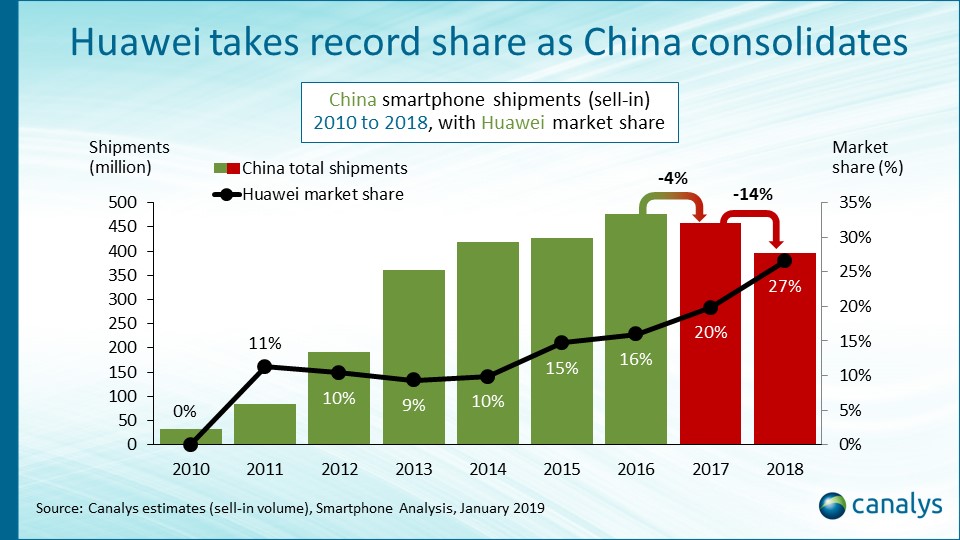
Huawei sting offers rare glimpse of US targeting Chinese giant • Bloomberg

Erik Schatzker:

»

Like all inventors, Khan was paranoid about knockoffs. Even so, he was caught by surprise when Huawei, a potential customer, began to behave suspiciously after receiving the meticulously packed sample [of a screen coated on one side with artificial diamond]. Khan was more surprised when the US Federal Bureau of Investigation drafted him and Akhan’s chief operations officer, Carl Shurboff, as participants in its investigation of Huawei. The FBI asked them to travel to Las Vegas and conduct a meeting with Huawei representatives at last month’s Consumer Electronics Show. Shurboff was outfitted with surveillance devices and recorded the conversation while a Bloomberg Businessweek reporter watched from safe distance.

This investigation, which hasn’t previously been made public, is separate from the recently announced grand jury indictments against Huawei. On Jan. 28, federal prosecutors in Brooklyn charged the company and its chief financial officer, Meng Wanzhou, with multiple counts of fraud and conspiracy. In a separate case, prosecutors in Seattle charged Huawei with theft of trade secrets, conspiracy, and obstruction of justice, claiming that one of its employees stole a part from a robot, known as Tappy, at a T-Mobile US Inc. facility in Bellevue, Wash. “These charges lay bare Huawei’s alleged blatant disregard for the laws of our country and standard global business practices,” Christopher Wray, the FBI director, said in a press release accompanying the Jan. 28 indictments. “Today should serve as a warning that we will not tolerate businesses that violate our laws, obstruct justice, or jeopardize national and economic well-being.” Huawei has denied the charges…

The first sign of trouble came two months later, in May, when Huawei missed the deadline to return the sample. Shurboff says his emails to Han requesting its immediate return were ignored. The following month, Han wrote that Huawei had been performing “standard” tests on the sample and included a photo showing a big scratch on its surface. Finally, a package from Huawei showed up at Gurnee on Aug. 2.

Shurboff remembers opening it. It looked just like the package Akhan had sent months earlier. Inside the cardboard box was the usual protective packaging—air bags, plastic case, gel insert, and wax paper. But he could tell something was wrong when he picked up the case. It rattled. The unscratchable Miraj sample wasn’t just scratched; it was broken in two, and three shards of diamond glass were missing.

Shurboff says he knew there was no way the sample could have been damaged in shipping—all the pieces would still be there in the case.

«

link to this extract


Shouldn’t we all have seamless micropayments by now? • WIRED

Zeynep Tufekci:

»

I don’t really want a flying car, but I do want to be able to shed pennies (and fractions of pennies) as I browse news or read fiction online. I want to easily support artists and writers without having to set up an account, create a password, fork over my credit card details, and commit to an ongoing relationship that involves receiving a new piece of spammish email at least once a week.

What would such a system look like? It would be as seamless as browsing itself. It could have an automatic mode (a news subscription consortium, for instance, could silently disperse payments to individual publications as I read articles from members) or a one-click mode. (Stumble across a nice poem on some unfamiliar site? A small green button on your browser lights up, and you can make a one-time contribution.) And, much as Apple Pay already does now, vendors wouldn’t necessarily get your account information, just a cryptographic payment token that’s good for exchange or verification.

Of course, we already make payments online all the time, but under current conditions, frankly, it sucks to do so. If you buy things directly from small vendors, you’re stuck entering your credit card information, your email, and your billing address on site after site—sinking ever deeper into the surveillance economy as each digital form puts your personal details into someone else’s database, while also giving hackers ever more opportunities to filch your data.

«

Zeynep is usually reliably wonderful, but this is one area where she’s got a blindness to the subtle combination of economics and internet behaviour that would result. I used to have a running bet with Jakob Nielsen: he said we would soon have micropayments, I said we wouldn’t. We gave up after I’d been correct four, or possibly five, years in a row; that was about 2003.

I wrote about why this won’t ever happen a week short of ten years ago. Not a single thing about the dynamic has changed since, despite the invention of bitcoin. Micropayments have too many perverse incentives to ever happen.
link to this extract


Robots have already mastered games like chess and Go. Now they’re coming for Jenga • The Washington Post

Peter Holley:

»

AI long ago mastered chess, the Chinese board game Go and even the Rubik’s cube, which it managed to solve in just 0.38 seconds.

Now machines have a new game that will allow them to humiliate humans: Jenga, the popular game —— and source of melodramatic 1980s commercials —— in which players strategically remove pieces from an increasingly unstable tower of 54 blocks, placing each one on top until the entire structure collapses.

A newly released video from MIT shows a robot developed by the school’s engineers playing the game with surprising precision. The machine is quipped with a soft-pronged gripper, a force-sensing wrist cuff and an external camera, allowing the robot to perceive the tower’s vulnerabilities the way a human might, according to Alberto Rodriguez, the Walter Henry Gale career development assistant professor in the Department of Mechanical Engineering at MIT.

“Unlike in more purely cognitive tasks or games such as chess or Go, playing the game of Jenga also requires mastery of physical skills such as probing, pushing, pulling, placing, and aligning pieces,” Rodriguez said in a statement released by the school. “It requires interactive perception and manipulation, where you have to go and touch the tower to learn how and when to move blocks.”

“This is very difficult to simulate, so the robot has to learn in the real world, by interacting with the real Jenga tower,” he added.

«

These things are really ruining party games.
link to this extract


Analysis: why the UK’s CO2 emissions have fallen 38% since 1990 • Carbon Brief

Zeke Hausfather:

»

UK emissions have declined from around 600m tonnes of CO2 (MtCO2) in 1990 to 367MtCO2 in 2017. If underlying factors driving emissions had not changed, Carbon Brief’s analysis shows that a growing population and a constant electricity generation mix would have led to emissions increasing by around 25% compared to 1990 levels.

Instead, emissions actually fell by 38% to 367MtCO2, as shown in the black area in the figure below. Each coloured wedge in the figure shows one factor contributing to this decline.

As the chart shows, no single factor was responsible for more than around a third of the total reduction in the UK’s CO2. Overall, emissions in 2017 were 51% lower than they would have been without these changes.

«

The surprising data point: UK CO2 emissions peaked in 1973, because we were burning so much coal.

link to this extract


Errata, corrigenda and ai no corrida: none notified

Start Up No.995: putting malware into DNA, Google’s marks go down, Buzzfeed’s unpaid quiz queen, the Quadriga mystery, and more


SimCity: based on ideas about city development that didn’t include humans. CC-licensed photo by leomarasciulo on Flickr.

We’re nearly at 1,000 – just a week to go. Want to contribute, specifically? Suggest the three links that you’ve found most interesting since you began reading. Email or Twitter.

You can sign up to receive each day’s Start Up post by email. You’ll need to click a confirmation link, so no spam.

A selection of 14 links for you. Go on, go on. I’m @charlesarthur on Twitter. Observations and links welcome.

Model metropolism • Logic Mag

»

In a paper serialized in two early issues of Reason, the libertarian magazine founded in 1968, [Jay] Forrester [author of the book whose equations were used as the basis for SimCity] argued that for most of human history, people have only needed to understand basic cause-and-effect relationships, but that our social systems are governed by complex processes that unfold over long periods of time. He claimed that our “mental models,” the cognitive maps we have of the world, are ill-suited to help us navigate the web of  interrelationships that make up the structure of our society.

For him, this complexity meant that policy interventions could, and usually would, have very different social effects than those imagined by policymakers. This led him to make the stark assertion that “the intuitive solutions to the problems of complex social systems” are “wrong most of the time.” In essence, anything we do to try to improve society will backfire and make things even worse.

In this respect, Forrester’s approach to the problems of American cities mirrored the “benign neglect” outlook of influential Nixon adviser Daniel Patrick Moynihan and the rest of the administration. Indeed, Moynihan was an enthusiastic proponent of Forrester’s work and recommended Urban Dynamics to his fellow White House officials. Forrester’s arguments enabled the Nixon Administration to claim that its plans to slash programs created to help the urban poor and people of color would actually, counterintuitively, help these people.

«

SimCity came out in 1989. Still influencing how people think about cities.
link to this extract


Biohackers encoded malware in a strand of DNA • WIRED

Andy Greenberg:

»

In new research they plan to present at the USENIX Security conference on Thursday, a group of researchers from the University of Washington has shown for the first time that it’s possible to encode malicious software into physical strands of DNA, so that when a gene sequencer analyzes it the resulting data becomes a program that corrupts gene-sequencing software and takes control of the underlying computer. While that attack is far from practical for any real spy or criminal, it’s one the researchers argue could become more likely over time, as DNA sequencing becomes more commonplace, powerful, and performed by third-party services on sensitive computer systems. And, perhaps more to the point for the cybersecurity community, it also represents an impressive, sci-fi feat of sheer hacker ingenuity.

“We know that if an adversary has control over the data a computer is processing, it can potentially take over that computer,” says Tadayoshi Kohno, the University of Washington computer science professor who led the project, comparing the technique to traditional hacker attacks that package malicious code in web pages or an email attachment. “That means when you’re looking at the security of computational biology systems, you’re not only thinking about the network connectivity and the USB drive and the user at the keyboard but also the information stored in the DNA they’re sequencing. It’s about considering a different class of threat.”

«

That is fabulously clever. (Thanks to the many people who sent this; Paul Guinnessy was first, I believe.) It’s obvious when you think about it: a Turing machine reading an instruction set.
link to this extract


One of the biggest at-home DNA testing companies is working with the FBI • Buzzfeed News

Salvador Hernandez:

»

Family Tree DNA, one of the largest private genetic testing companies whose home-testing kits enable people to trace their ancestry and locate relatives, is working with the FBI and allowing agents to search its vast genealogy database in an effort to solve violent crime cases, BuzzFeed News has learned.

Federal and local law enforcement have used public genealogy databases for more than two years to solve cold cases, including the landmark capture of the suspected Golden State Killer, but the cooperation with Family Tree DNA and the FBI marks the first time a private firm has agreed to voluntarily allow law enforcement access to its database.

While the FBI does not have the ability to freely browse genetic profiles in the library, the move is sure to raise privacy concerns about law enforcement gaining the ability to look for DNA matches, or more likely, relatives linked by uploaded user data.

For law enforcement officials, the access could be the key to unlocking murders and rapes that have gone cold for years, opening up what many argue is the greatest investigative tactic since the advent of DNA identification. For privacy advocates, the FBI’s new ability to match the genetic profiles from a private company could set a dangerous precedent in a world where DNA test kits have become as common as a Christmas stocking stuffer…

…In December 2018, the company changed its terms of service to allow law enforcement to use the database to identify suspects of “a violent crime,” such as homicide or sexual assault, and to identify the remains of a victim.

«

Ah, good old TOS. And yet: the FBI doesn’t hold this; it gets to access it just like a normal user, and to get more has to provide a court order or search warrant. This isn’t actually the gigantic intrusion it might look like.

link to this extract


How machine learning could keep dangerous DNA out of terrorists’ hands • Nature

Sara Reardon:

»

Biologists the world over routinely pay companies to synthesize snippets of DNA for use in the laboratory or clinic. But intelligence experts and scientists alike have worried for years that bioterrorists could hijack such services to build dangerous viruses and toxins — perhaps by making small changes in a genetic sequence to evade security screening without changing the DNA’s function.

Now, the US government is backing efforts that use machine learning to detect whether a DNA sequence encodes part of a dangerous pathogen. Researchers are beginning to make progress towards designing artificial-intelligence-based screening tools, and several groups are presenting early results at the American Society for Microbiology (ASM) Biothreats meeting in Arlington, Virginia, on 31 January. Their findings could lead to a better understanding of how pathogens harm the body, as well as new ways for scientists to link DNA sequences to specific biological functions.

«

At LAST someone has put together terrorism, DNA and machine learning.
link to this extract


Google talent advantage erodes as more workers doubt CEO vision • Bloomberg

Ellen Huet and Mark Bergen:

»

Alphabet Inc.’s Google became the most-profitable internet company by recruiting talented technologists and inspiring them enough to keep them around. That advantage may be slipping as some workers increasingly doubt the leadership and vision of Chief Executive Officer Sundar Pichai, according to recent results from an employee survey.

The annual internal poll, known as Googlegeist, asked workers whether Pichai’s vision of what the company can achieve inspires them. In response, 78% indicated yes, down 10 percentage points from the previous year.

Another question asked if employees have confidence in Pichai and his management team to effectively lead Google in the future. Positive responses represented 74% of the total, an 18 point decline from a year earlier.

There were similar declines for questions about Pichai’s decisions and strategies, his commitment to diversity and inclusion, and the compensation the company pays, according the results, which were viewed by Bloomberg News. Google shares the results with all employees to make sure concerns are heard. This time, 89% of workers took the survey.

«

It would be close to a miracle if a company expanded as fast as Google is doing and its employees were as happy as at the start when everyone had a concise shared vision. But those are big drops: clearly the rows over sexual harassment and payoffs, the proposal to do censored search in China, and whether to do work with the military have all hurt morale.
link to this extract


The layoffs at BuzzFeed and the case of the teenaged quizmaker • The New Yorker

Charles Bethea:

»

the company laid off some two hundred members of its staff, including its director of quizzes, Matthew Perpetua, who shared the news in a blog post, on Monday, titled “How Laid Off Are You?” Perpetua came to BuzzFeed in 2012, after he was laid off by Rolling Stone; he became the company’s first quiz master editor three years later. During his tenure, a quiz that asked “What state should you live in?” was viewed fifty million times.

Perpetua’s blog post noted that “a LOT” of BuzzFeed’s traffic came from quizzes, and that “a VERY large portion of that traffic comes from a constant flow of amateur quizzes made by community users.” He went on, “In the recent past the second highest traffic driver worldwide has been a community user in Michigan who is a teenager in college who, for some reason, makes dozens of quizzes every week.” A reporter at the Los Angeles Times tweeted a screenshot of that passage, and the tweet went semi-viral. Eventually, the Michigan teenager, whom Perpetua had not named, chimed in. “Okay… so I kinda feel horrible,” she tweeted. “If my hobby is partial cause for these layoffs, especially with those in the ‘quiz section’, I never intended to do so. I make the quizzes for fun, I didn’t know it would turn bad.”

The teenager in question, Rachel McMahon, is a sophomore at Grand Valley State University, outside of Grand Rapids. Her quizzes drew a hundred and thirty million views in 2018, making her, according to BuzzFeed, the fifth-highest traffic driver worldwide last year. (She did climb as high as No. 2 in some months.)

«

And she didn’t get paid – apart from a few items of schwag. But Perpetua’s blogpost, and the subsequent blizzard of interviews, has had a good effect: she might now get a job straight out of college. Or earlier. What’s the betting that it’s never as visible as the things she did while in college?
link to this extract


QuadrigaCX chain analysis report (pt. 1): bitcoin wallets • Medium

»

Brief Summary of Findings
Below are the findings made by the author of this report:

1: It appears that there are no identifiable cold wallet reserves for QuadrigaCX.
2: It appears that QuadrigaCX was using deposits from their customers to pay other customers once they requested their withdrawal.
3: It does not appear that QuadrigaCX has lost access to their Bitcoin holdings.
4: It appears the number of bitcoins in QuadrigaCX’s possession are substantially less than what was reported in Jennifer Robertson’s (wife of allegedly deceased CEO and Owner Gerry Cotten) affidavit, submitted to the Canadian courts on January 31st, 2019.
5: At least some of the delays in delivering crypto withdrawals to customers were due to the fact that QuadrigaCX simply did not have the funds on hand at the time. In some cases, QuadrigaCX was forced to wait for enough customer deposits to be made on the exchange before processing crypto withdrawal requests by their customers.
6: After completing the analysis, it is the author’s opinion that QuadrigaCX has not been truthful with regards to their inability to access the funds needed to honor customer withdrawal requests. In fact, it is almost impossible to believe that this is the case in lieu of the empirical evidence provided by the blockchain.

«

Just in case you hadn’t heard: the CEO of Quadriga, a cryptocurrency exchange, is claimed to have died – of Crohn’s Disease – while in India, according to a notarised bit of paper presented in a Canadian court. (Yes, that’s two 🤔 right away: Crohn’s Disease by itself isn’t fatal.) The exchange allegedly had its $190m of crypto held in “cold” (offline) wallets for which only the CEO knew the passphrase.

If any of those claims above is correct, Cotten is going to find out what a crowdsourced manhunt looks like, and it’ll make the John Darwin case look like a bit of a laugh. (Then again, Darwin only collected £25,000. Lightweight.)
link to this extract


Google Play apps with more than 4.3 million downloads stole pics and pushed porn ads • Ars Technica

Dan Goodin:

»

A blog post published by security firm Trend Micro listed 29 camera- or photo-related apps, with the top 11 of them fetching 100,000 to 1 million downloads each. One crop of apps caused browsers to display full-screen ads when users unlocked their devices. Clicking the pop-up ads in some cases caused a paid online pornography player to be downloaded, although it was incapable of playing content. The apps were carefully designed to conceal their malicious capabilities.

“None of these apps give any indication that they are the ones behind the ads, thus users might find it difficult to determine where they’re coming from,” Trend Micro Mobile Threats Analyst Lorin Wu wrote. “Some of these apps redirect to phishing websites that ask the user for personal information, such as addresses and phone numbers.”

The apps also hid their icons from the Android app list. That made it hard for users to uninstall the apps, since there was no icon to drag and delete. The apps also used compression archives known as packers to make it harder for researchers—or presumably, tools Google might use to weed out malicious apps—from analyzing the wares.

«

link to this extract


Adblocking in the UK 2018 • eMarketer Trends, Forecasts & Statistics

»

How many people in the UK are using ad blockers?

Rates of ad blocking in the UK remain relatively low compared with other Western countries tracked by eMarketer. We estimate that 12.2 million people in the UK will use an ad blocker at least monthly in 2018, representing 22.0% of internet users, compared with 28.7% in France, 32.0% in Germany and 25.2% in the US. Growth in user numbers will slow to single digits for the first time.

How prevalent is ad blocking among 18- to 24-year-olds in the UK?

As is so often the case when it comes to digital trends, behaviors are more pronounced among certain younger age groups. In the millennial cohort, for example, ad blocking user rates are much higher than in other age brackets. We expect 43.0% of UK internet users ages 18 to 24 will use an ad blocker this year.

«

Since you’re wondering, 38% of them are doing that on smartphones – up from 16.3% in 2014.
link to this extract


Donald Trump rejects intelligence briefing facts • Time

John Walcott:

»

the disconnect between Trump and his intelligence briefers is no joke, the officials say. Several pointed to concerns regarding Trump’s assessment of the threat posed by North Korea’s nuclear capabilities. After Trump’s summit with North Korean leader Kim Jong-Un last summer, the North claimed to have destroyed its major underground nuclear testing facility at Punggye-ri, and Trump has gone out of his way to credit the claim.

The National Geospatial-Intelligence Agency (NGIA), which oversees the spy satellites that map and photograph key areas, had tried to impress upon Trump the size and complexity of the North Korean site. In preparing one briefing for the President on the issue early in his administration, the NGIA built a model of the facility with a removable roof, according to two officials. To help Trump grasp the size of the facility, the NGIA briefers built a miniature version New York’s Statue of Liberty to scale and put it inside the model.

Intelligence officials from multiple agencies later warned Trump that entrances at the facility that had been closed after the summit could still be reopened. But the president has ignored the agencies’ warnings and has exaggerated the steps North Korea has taken to shutter the facility, those officials and two others say. That is a particular concern now, ahead of a possible second summit with the Kim Jong-Un later this month.

«

The headline didn’t need “intelligence briefing”, but the detail about building a model – and still not being listened to – is quite something. You’d begin asking yourself: what the hell do we have to do?
link to this extract


The problem with throwing away a smart device • Hackster Blog

Alasdair Allan:

»

Last week a teardown of the LiFX Mini white was published on the Limited Results site, and it shows that this smart lightbulb is anything but smart.

In a very short space of time the teardown established that if you’ve connected the bulb to your Wi-Fi network then your network password will be stored in plain text on the bulb, and can be easily recovered just by downloading the firmware and inspecting it using a hex editor.
In other words, throwing this lightbulb in the trash is effectively the same as taping a note to your front door with your wireless SSID and password written on it. This probably isn’t something you should be comfortable doing.

Worse yet both the root certificate and RSA private key for the bulb are also present in the firmware in plain text, and the devices is completely open—no secure boot, no flash encryption, and with the debug interface fully enabled.

It turns out that this particular LiFX bulb is built around an Espressif ESP32 which, as we know, has a sprawling and fairly mature open source ecosystem. But that also means that the security implemented by LiFX for the bulb was inexplicably poor. Because while the recovery of the password and keys was aided by the mature state of the development environment, the ESP32 also supports both secure boot and flash encryption, and the later would have provided “at-rest” data encryption, and stopped the this sort of attack dead in its tracks.

«

link to this extract


Lowe’s is killing off and bricking its Iris smart home products at the end of March • TechCrunch

Greg Kumparak:

»

If you’ve got any gear from Lowe’s Iris line of smart home products, it’s time to start looking for alternatives.

Lowe’s has announced that the line is toast, with plans to flip the switch on “the platform and related services” at the end of March. In other words: much of this once smart connected gear is about to get bricked.

On the upside, Lowe’s is committing to refund customers for “eligible, connected Iris devices” — with the caveat that you’ve got to go through its redemption portal. “PLEASE DO NOT BRING YOUR CONNECTED IRIS DEVICES BACK TO A LOWE’S STORE,” they note repeatedly. They don’t want it either.

Refunds will be issued in the form of a prepaid Visa card. They also note that some — but definitely not all — Iris-compatible devices work with alternatives like Samsung’s SmartThings platform.

«

So anyway, don’t throw them away.
link to this extract


Foxconn again shifts Wisconsin plan after Trump intervenes • Washington Post

Scott Bauer:

»

on Friday, in yet another twist, Foxconn said after discussions with the White House and a personal conversation between Trump and Foxconn chairman Terry Gou, it plans to proceed with the smaller manufacturing facility.

“Great news on Foxconn in Wisconsin after my conversation with Terry Gou!” Trump tweeted.

The Foxconn statement did not say whether the commitment to this size factory would affect the type of workers who would be employed in Wisconsin. Foxconn executive Louis Woo told Reuters earlier this week that about three-quarters of workers in Wisconsin would be in research and development-type jobs, not manufacturing. Woo said the Wisconsin project would be more of a research hub, rather than having a manufacturing focus.

A Foxconn spokeswoman had no immediate comment about what its plans to build the “Gen 6” factory would mean for the makeup of the workforce. The difference between a “Gen 10” and “Gen 6” plant rests with the size of the original glass used to make the screens. The larger plant, which had been part of Foxconn’s initial plans, would have used glass more than three-times as large as what the smaller facility will use. The “Gen 6” plant can make screens ranging in size from a smart phone to a 75in television, while the larger plant would have allowed for devices as large as 9½ft by 11ft.

Foxconn, the world’s largest electronics company, said Friday the campus will house both an advanced manufacturing facility and a center of “technology innovation for the region.”

«

Can they treat whiplash? (It won’t matter; Trump will be gone by the time the plant goes live.) Also: are TVs and smartphones the only place where imperial measures still rule?
link to this extract


Smartphone woes continue with worldwide shipments down 4.9% in Q4 2018 • IDC

»

smartphone vendors shipped a total of 375.4m units during the fourth quarter of 2018 (4Q18), down 4.9% year over year and the fifth consecutive quarter of decline. The challenging holiday quarter closes out the worst year ever for smartphone shipments with global smartphone volumes declining 4.1% in 2018 with a total of 1.4bn units shipped for the full year. With challenging market conditions continuing into the first quarter of 2019, the likelihood of a declining market this year becomes more of a reality.

“Globally the smartphone market is a mess right now,” said Ryan Reith, program vice president with IDC’s Worldwide Mobile Device Trackers. “Outside of a handful of high-growth markets like India, Indonesia, Korea, and Vietnam, we did not see a lot of positive activity in 2018. We believe several factors are at play here, including lengthening replacement cycles, increasing penetration levels in many large markets, political and economic uncertainty, and growing consumer frustration around continuously rising price points.”

…China, which accounts for roughly 30% of the world’s smartphone consumption, had an even worse 2018 than the previous year with volumes down just over 10%. High inventory continues to be a challenge across the market as is consumer spending on devices, which has been down overall. At the same time the top 4 brands, all of which are Chinese – Huawei, OPPO, vivo, and Xiaomi – grew their share of the China market to roughly 78%, up from 66% in 2017.

On a worldwide basis, the top 5 smartphone companies continue to get stronger and now account for 69% of smartphone volume, up from 63% a year ago. If vivo is included, which is currently number six and has been in and out of the top 5 in recent quarters, the share of the top companies is 75% and growing.

«

OK, but I’m not sure you can call a year that saw the second-highest number of shipments recorded the “worst ever”. Counterpoint Research puts the total shipped at 1.498bn, and says the market was down 4% on 2017. Lenovo looks to be in real trouble, down 23% year-on-year.
link to this extract


Errata, corrigenda and ai no corrida: none notified

Start Up No.994: Apple yanks Google’s iPhone enterprise certificate, bank accounts emptied by text hackers, Foxconn cuts plans in China, sayonara Ultraviolet, and more


“I’m sorry, Dave, I can’t do that.” What are the ethics of video doorbells? CC-licensed photo by Dave Taylor on Flickr.

You can sign up to receive each day’s Start Up post by email. You’ll need to click a confirmation link, so no spam.

A selection of 11 links for you. Double helpings for email! I’m @charlesarthur on Twitter. Observations and links welcome.

Death of the private self: how fifteen years of Facebook changed the human condition •The Guardian

John Harris:

»

the Facebook age marks a break from traditional human behaviour in key aspect. In the past, we could regularly take a break from acting, and revert to some sense of our private, authentic selves. Now, as we constantly prod at our smartphones and feel the pull of their addictive apps, when does the performing ever stop?

Along with Russian interference in elections, fake news, Facebook’s approach to hate speech and its insatiable appetite for personal data, this is surely one of the most malign ways in which its presence in our lives is playing out.

What its innovations have done to the divide between our social and private lives highlights a mess of stuff to do with the true meanings of intimacy and privacy, and something that goes even closer to the heart of what it is to be human: who we really are beyond the attention and judgments of others, and whether we even know any more.

This demise of the barrier between our public and private selves is particularly relevant to people going through that stage of life when the very idea of “self” is still in flux: the often difficult period from the stirrings of adolescence to the mid-20s (and, if you’re unlucky, even older). At that point, sensitivity to your peer group is at its height and an obsession with what some people call “social comparison” tends to run deep. We all know the basics: you desperately want to meet all the requirements of whichever code of cool is holding sway, and avoid mockery at all costs. Looks are at their peak of importance. So are clothes.

«

link to this extract


“It gives you the freedom to be violent to other people”: what has the alt account become? • New Statesman

Sarah Manavis:

»

On 28 December 2018, a tweet concerning presenter, food critic, and insanely inappropriate joke-maker Giles Coren went viral. It posited that the Times columnist had been using an alternative, anonymous Twitter account to respond to criticism of him. The subsequent thread noted that this alt-account was named after a character in one of Coren’s books, only ever tweeted about Coren or his wife, was followed by some of Coren’s famous friends such as Richard Bacon, and was linked to an email address that looked suspiciously like Coren’s Times’ account (g********n@t******s.co.uk). The account claimed to be a Polish plumber, and had a bio written in broken English; but the avatar was a picture from the cover of Coren’s book.

After receiving thousands of likes and retweets, Coren came clean to owning the account, and changed its arguably racist bio. At time of writing, he has ceased tweeting from it.

Coren was unusual in getting caught, but having an alternative account is now far from unusual. Once a behaviour reserved for “weirdos” on Reddit and Tumblr, it’s become a staple for internet users on essentially every platform. On Twitter it’s your “anon”; on Instagram it’s your “finsta” (fake-Insta); on multiple platforms it’s you and your friends’ “flop”, or simply your “alt”. Even allusions to an alternative account now serve as a meme. HOTM –“horny on the main” – Is a long-standing Tumblr joke, mocking those who post porn, half-naked selfies, and sexts on their main account, rather than restricting such behaviour to their alt.

Today, the alt account is often seen as an online necessity, something many people deem key to staying sane on the internet. But while the alt-account may now be normal, the reasons for having one are diverse. For some, they are positive and relieving; for others, they’re a tool for dangerous harm. In 2019, what has the alt-account become?

«

It’s become a tool for dangerous harm, and it often stresses the owner of the alt because they know they have to keep the link secret. Next, please.
link to this extract


Apple blocks Google from running its internal iOS apps • The Verge

Tom Warren:

»

Apple has now shut down Google’s ability to distribute its internal iOS apps, following a similar shutdown that was issued to Facebook earlier this week. A person familiar with the situation tells The Verge that early versions of Google Maps, Hangouts, Gmail, and other pre-release beta apps have stopped working today, alongside employee-only apps like a Gbus app for transportation and Google’s internal cafe app.

“We’re working with Apple to fix a temporary disruption to some of our corporate iOS apps, which we expect will be resolved soon,” says a Google spokesperson in a statement to The Verge. Apple has not yet commented on the situation.

Apple’s move to block Google’s developer certificate comes just a day after Google disabled its Screenwise Meter app following press coverage. Google’s private app was designed to monitor how people use their iPhones, similar to Facebook’s research app. Google’s app also relied on Apple’s enterprise program, which enables the distribution of internal apps within a company.

In an earlier statement over Facebook’s certificate removal, Apple did warn that “any developer using their enterprise certificates to distribute apps to consumers will have their certificates revoked.”

«

Hell of a scoop. Ben Thompson raised the question in his daily newsletter of why Google’s certificate hadn’t been revoked when Facebook’s had; here’s the answer.

Sure, this might get Facebook and Google working to shift their apps into being Progressive Web Apps. I won’t hold my breath. (Facebook had its certificate restored on Thursday afternoon, Pacific time.)
link to this extract


Apple is a hypocrite on data privacy • The Atlantic

Ian Bogost:

»

[In revoking Facebook’s enterprise developer certificate,] Apple didn’t take a position on Facebook’s creation of a paid “research” program to extract data from users. It enforced the terms of a licensing agreement; appearing to fight for user privacy is just a side effect. Apple is flexing its contract-law muscle, not its privacy muscle, and gaining a publicity win in the process. Crucially, Apple didn’t ban Facebook from the App Store or the iPhone platform: You can still download and use Messenger.

Facebook, for its part, maintains that the data-collection activity its Research app undertook was above board and not at all duplicitous. Unlike previous controversies about how Facebook shared user data with developers like Cambridge Analytica or foreign governments, little about the research program was hidden…

…Safari, the web browser that comes with every iPhone, is set up by default to route web searches through Google. For this privilege, Google reportedly paid Apple $9bn in 2018, and as much as $12bn this year. All those searches help funnel out enormous volumes of data on Apple’s users, from which Google extracts huge profits. Apple might not be directly responsible for the questionable use of that data by Google, but it facilitates the activity by making Google its default search engine, enriching itself substantially in the process.

The same could be said for the apps Apple distributes. Companies like Google and Facebook get access to iPhone users by offering their apps—Messenger, Gmail, Google Maps, and so on—for download from the Apple App Store. Most cost consumers nothing, because they exist to trade software services, like email or mapping, for data. That business model helped stimulate the data-privacy dystopia we now occupy.

«

Occasionally I include an article that I disagree with, and I disagree with this one. Bogost is holding Apple to an impossible standard here. It couldn’t know what Facebook was doing with the Enterprise Certificate or the app – to monitor that really *would* be an invasion of privacy, both Facebook’s and the users’. That was a contractual violation, and Facebook was punished for it. Setting Google as the Safari default is a commercial decision, but you don’t have to use it; and Google obeys privacy rules, as far as we can tell. The “privacy dystopia” is our own fault, but you can actually avoid it by not using Facebook or Google (as much as you can).

For Apple to ban Facebook and Google would open up the huge question: what form of “privacy” is sufficient? If people consent to something, what locus does Apple have to deny that? It’s providing a platform. You can give people electricity; some will use it for light, and others will electrocute themselves.
link to this extract


Criminals are tapping into the phone network backbone to empty bank accounts • Motherboard

Joseph Cox:

»

Sophisticated hackers have long exploited flaws in SS7, a protocol used by telecom companies to coordinate how they route texts and calls around the world. Those who exploit SS7 can potentially track phones across the other side of the planet, and intercept text messages and phone calls without hacking the phone itself.

This activity was typically only within reach of intelligence agencies or surveillance contractors, but now Motherboard has confirmed that this capability is much more widely available in the hands of financially-driven cybercriminal groups, who are using it to empty bank accounts. So-called SS7 attacks against banks are, although still relatively rare, much more prevalent than previously reported. Motherboard has identified a specific bank—the UK’s Metro Bank—that fell victim to such an attack.

The news highlights the gaping holes in the world’s telecommunications infrastructure that the telco industry has known about for years despite ongoing attacks from criminals. The National Cyber Security Centre (NCSC), the defensive arm of the UK’s signals intelligence agency GCHQ, confirmed that SS7 is being used to intercept codes used for banking.

“We are aware of a known telecommunications vulnerability being exploited to target bank accounts by intercepting SMS text messages used as 2-Factor Authentication (2FA),” the NCSC told Motherboard in a statement.

«

The bank will deny it and blame the customer. You don’t even have to know which bank it is to know that is how this will pan out.
link to this extract


How colonization’s death toll may have affected Earth’s climate • HISTORY

Sarah Pruitt:

»

As the 15th century drew to a close, some 60 million people lived across the Americas, sustaining themselves with the bounty of the vast lands they inhabited.

But with the arrival of the first European settlers, waves of new diseases, along with warfare, slavery and other brutality would kill off around 56 million people, or around 90% of the indigenous population.

Now, scientists from the University College London (United Kingdom) argue in a new study that this “Great Dying” that followed European colonization of the Americas may have actually affected Earth’s climate.

Their version of events, published in Quaternary Science Reviews, goes like this: After so many indigenous people died, no one was left to tend many of their fields, and trees and other vegetation quickly reclaimed huge expanses of land previously used for agriculture. As a result, enough carbon dioxide (CO₂) was removed from the atmosphere to actually cool down the planet, contributing to the coldest part of the mysterious period that historians have called the Little Ice Age.

«

So that’s twice that Americans will have been major contributors to climate change – once to cool, once to warm. A bit Thanos, though.
link to this extract


The next privacy worry is Ring doorbells and Nest security cameras • The Washington Post

Geoffrey Fowler:

»

We’re on a slippery slope. You’ve got a legal right to film in public places, including your entryway. There’s little agreement whether private cameras slash crime rates, yet police are setting up voluntary registries for private cameras in dozens of communities. Cities such as Washington have begun paying up to $500 for cameras on private property. Detroit is going further: its mayor wants to mandate security cameras at businesses open late, with a live feed going straight to police.

Meanwhile, Ring’s owner Amazon filed an eerily specific patent to put its controversial Rekognition facial-identification software into doorbells. The purpose: to automatically flag “suspicious” people. (Amazon CEO Jeffrey P. Bezos owns The Washington Post, but I review all tech with the same critical eye.)

We should recognize this pattern: tech that seems like an obvious good can develop darker dimensions as capabilities improve and data shifts into new hands. A terms-of-service update, a face-recognition upgrade or a hack could turn your doorbell into a privacy invasion you didn’t see coming…

In the future, what if your doorbell misidentified someone as a crime suspect? What if it logs a “dreamer” — an undocumented immigrant brought to the United States as a child — visiting, or living in, your house? Your family and friends are the ones whom this tech surveils the most.

«

That latter point is the most cogent. Bonus points to Fowler for the phrase “Big Doorbell” in the piece.
link to this extract


Foxconn’s $20bn projects in US and China hit by growth fears • Nikkei Asian Review

Lauly Li and Cheng Ting-Fang:

»

Foxconn will postpone most of the production planned in a 61bn yuan ($9bn) display panel project in the southern Chinese city of Guangzhou for at least six months, according to internal documents obtained by the Nikkei Asian Review. In the US, a $10 billion investment in display production in the state of Wisconsin has been suspended and scaled back as a result of negotiations with new Gov. Tony Evers, a Foxconn document obtained by Nikkei shows.

Foxconn’s decision to delay work on the two factories throws into doubt the promise of fresh investment and employment at a sensitive time for both economies. China’s economic growth has slowed to a 28-year low, while in the US, President Donald Trump continues to seek wins on his vow to bring manufacturing jobs back to America.

“Foxconn decided to slow the investment pace and scale back a bit at the moment because of weakening macroeconomic conditions and the uncertainties brought by the trade war,” a person with knowledge of Foxconn’s decision told Nikkei.

“If Foxconn expands as planned regardless of the rapidly changing market dynamics, it could eventually hurt the company’s business. It’s much safer to wait and carefully reconsider the next step,” the person added.

Foxconn’s moves to hold up planned investments come after the company took cost-cutting steps that included shedding 100,000 workers by the end of 2018.

«

So not just Wisconsin. (Thanks to Pete Kleinschmidt for the pointer.)
link to this extract


Want to get away with posting fake news on Facebook? Just change your website domain • Poynter

Daniel Funke:

»

Sinclair Treadway, who runs the [fake news purveyor] YourNewsWire site from Southern California with his husband Sean Adl-Tabatabai, told Bloomberg in November that the move to rebrand was a direct result of declining revenue due to Facebook’s fact-checking program. Once a fact-checking outlet like Snopes rates a link, image or video as false, its future reach decreases in the News Feed. (Disclosure: Being a signatory of the International Fact-Checking Network’s code of principles is a necessary condition for joining the project.)

YourNewsWire initially resorted to deleting debunked articles. Alternatively, it turned to changing headlines on debunked stories and requesting fact-checkers like (Poynter-owned) PolitiFact revoke their original flag.

Seemingly unsatisfied with these approaches, YourNewsWire decided to pull the plug on its website altogether and move everything to a new URL.

So far, it seems like its strategy is succeeding.

«

link to this extract


Samsung breaks 19-quarter tablet decline to post 7% growth in recovering global market • Strategy Analytics

»

Windows [tablet] shipments fell 4% year-on-year to 7.1m units in Q4 2018 from 7.3m in Q4 2017. Microsoft shipments increased 25% from the previous quarter on high seasonality and as a result, it has retaken its leadership position in Windows Detachable 2-in-1s with the release of the lower cost Surface Go and a refreshed Surface Pro all in the last half of 2018. This is the fourth straight quarter of year-on-year shipment and revenue gains for Microsoft.

Eric Smith continued, “Apple iOS shipments grew 10% year-on-year to 14.5m units in Q4 2018, pushing its worldwide market share to 26% of the tablet market. By growing double digits, Apple added 2 percentage points to its market share year-over-year. Apple is attempting to remake the computing market with more mobile iPad Pros for productivity while offering lower priced iPad slates for entertainment. The product mix tilted toward iPad Pro due to the launch of its newest products in that line and boosted ASPs to $463 this quarter from $445 in 2017.

“Meanwhile, Android shipments fell to 32.9m units worldwide in Q4 2018, down 6% from 34.9m a year earlier and up 35% sequentially. Market share fell 3 percentage points year-on-year to 60% as many branded Android vendors find it very difficult to compete on price in the wake of Apple lowering its iPad prices. The slate market is particularly sensitive to price and the Android segment is dominated by Slate models.”

«

The market shrank overall, by 1%. That’s not “recovering”; that’s “stabilising”. Tablets don’t seem to be going away, but neither are they taking everything over.

link to this extract


Ultraviolet shuts down: cloud locker closes this summer • Variety

Janko Roettgers:

»

The Digital Entertainment Content Ecosystem (DECE), the industry consortium that has been tasked with running Ultraviolet, will shut down the service on July 31.

DECE will start to inform its users of the wind-down this Thursday, and is advising users to not delete their Ultraviolet movie libraries. Users should instead make sure that their libraries are connected to the service of at least one retailer, which they can then use to access their movies and TV shows going forward, according to an FAQ document that is slated to be published on Ultraviolet’s website on Thursday morning.

DECE president Wendy Aylsworth told Variety in an exclusive interview this week that the decision to discontinue Ultraviolet was a response to the evolution of the market for online entertainment. “The marketplace for collecting entertainment content was very small when Ultraviolet started,” she said. “It was siloed into walled gardens at the time.”

Since then, services had become more comprehensive, giving fans of movies and TV shows more options to access and collect their titles. Aylsworth acknowledged that there has also been a move toward subscription services, but said ownership of movie and TV show collections would continue to play a significant role for the industry going forward. “It’s very clear to us that it is on very sound footing,” she said.

Ultraviolet launched in 2011 with support from all of the major Hollywood studios except Disney. The service also had buy-in from Lionsgate and other independent studios, and struck partnerships with online retailers, including Walmart’s Vudu service, FandangoNow, and some of the online services run by studios like Sony Pictures.

«

Inevitable. Never saw why one would go with that when services like iTunes and Netflix were available.
link to this extract


Errata, corrigenda and ai no corrida: none notified

Start Up No.993: Apple dings Facebook’s VPN, 3D iPhone cameras?, AlphaStar attacked, evaluating Alexa, life without Google, and more


Weather forecasters correctly predicted two months ago the extreme cold weather now hitting the US. CC-licensed photo by Coast Guard News on Flickr.

A selection of 13 links for you. Redone? I’m @charlesarthur on Twitter. Observations and links welcome.

Polar Vortex 2019: why forecasts are so accurate now • The Atlantic

Robinson Meyer:

»

“A modern five-day forecast is as accurate as a one-day forecast was in 1980,” says a new paper, published last week in the journal Science. “Useful forecasts now reach nine to 10 days into the future.”

The paper is a birthday present from meteorology to itself: the American Meteorological Society turns 100 this year. But it also acts as a good report card on how far weather prediction has come.

“Modern 72-hour predictions of hurricane tracks are more accurate than 24-hour forecasts were 40 years ago,” the authors write. The federal government now predicts storm surge, stream level, and the likelihood of drought. It has also gotten better at talking about its forecasts: As I wrote in 2017, the National Weather Service has dropped professional jargon in favor of clear, direct, and everyday language.

“Everybody’s improving, and they’re improving a lot,” says Richard Alley, an author of the paper and a geoscientist at Penn State.

With the current polar vortex, the first signs came almost a month in advance. On the final day of 2018, scientists detected what they call a “sudden stratospheric warming event,” high above the North Pole. The stratosphere, a layer of air about 20 miles above the surface, was being rocked by waves of warm air from below.

“What happens in the Arctic does not stay in the Arctic,” warned the meteorologist Andrew Freedman at the time. “Sudden stratospheric warming events are known to affect the weather in the US and Europe on a time delay.” The next 60 days would probably be colder than average, he said.

«

The “why” isn’t answered in this article, but is in the linked Science article. You guessed: better computers running more precise models. Down to -40C in the US from the polar vortex – which, yes, is attributable to global warming.
link to this extract


An AI crushed two human pros at StarCraft—but it wasn’t a fair fight • Ars Technica

Timothy Lee:

»

As this chart demonstrates, top StarCraft players can issue instructions to their units very quickly. Grzegorz “MaNa” Komincz averaged 390 actions per minute (more than six actions per second!) over the course of his games against AlphaStar.  But of course, a computer program can easily issue thousands of actions per minute, allowing it to exert a level of control over its units that no human player could match.

To avoid that, DeepMind says it put a hard cap on the number of actions per minute AlphaStar could make. “We set a maximum of 600 APMs over 5-second periods, 400 over 15-second periods, 320 over 30-second periods, and 300 over 60-second period,” wrote DeepMind researcher Oriol Vinyals in a reddit AMA following the demonstration.

But as other redditors quickly pointed out, five seconds is a long time in a StarCraft game. These limits seem to imply that AlphaStar could take 50 actions in a single second or 15 actions per second for three seconds.

More importantly, AlphaStar has the ability to make its clicks with surgical precision using an API, whereas human players are constrained by the mechanical limits of computer mice. And if you watch a pro like Komincz play, you’ll see that the number of raw actions often far exceeds the number of meaningful actions.

For example, if a human player is guiding a single unit on an important mission, he will often issue a series of “move” commands along the unit’s current trajectory. Each command barely changes the unit’s path, but, if the human player has already selected the unit, it takes hardly any time to click more than once. But most of these commands aren’t strictly necessary; an AI like AlphaStar could easily figure out the unit’s optimal route and then issue a much smaller number of move commands to achieve the same result.

So limiting the raw number of actions an AI can take to that of a typical human does not necessarily mean that the number of meaningful actions will be remotely comparable.

«

Notice the way this assertion slides past the realities here. Computers are going to be better at doing lots of things really fast; the human advantage is meant to be the capability to think strategically about what things to do. That strategic advantage has been ceded to AlphaStar, and so people complain about its speed.

How long before these systems are running defence computers, determining and carrying out attack plans?
link to this extract


Welcome • Statistics Done Wrong

Alex Reinhart:

»

If you’re a practicing scientist, you probably use statistics to analyze your data. From basic t tests and standard error calculations to Cox proportional hazards models and propensity score matching, we rely on statistics to give answers to scientific problems.

This is unfortunate, because statistical errors are rife.

Statistics Done Wrong is a guide to the most popular statistical errors and slip-ups committed by scientists every day, in the lab and in peer-reviewed journals. Many of the errors are prevalent in vast swaths of the published literature, casting doubt on the findings of thousands of papers. Statistics Done Wrong assumes no prior knowledge of statistics, so you can read it before your first statistics course or after thirty years of scientific practice.

«

Worth a read just so you can get a feel for how statistics are used against you.
link to this extract


Is Alexa working? • Benedict Evans

»

the paradox of an audio-only interface is that it looks like a much more flexible and free-form interface than a graphical interface, but in fact it has no way to tell you what it can do. If it has 5,000 ‘skills’, you can’t ask it to recite them, one by one. Solving this discoverability problem is one reason both Amazon and Google are exploring devices with small screens (through that doesn’t help the devices that are already out there).

Taking a step back, though, I think there is a deeper strategic value to Alexa – option value.

One of the fundamental shifts that came with mobile was that the users’ device became a lot less neutral. On the desktop, there were pretty narrow limits to what a web browser could do to control the economic models and interaction models of websites, but on a smartphone, the management of everything from system permissions to default apps to notifications and interaction models (not to mention in-app purchase) means that Apple and Android are in much more direct control of what business models are possible. Ironically, a major reason why Google bought and built Android in the first place was fear of what Microsoft and Nokia might do with such power. Now both Amazon is faced with this. The end point has become much more strategic for web platform companies. So, anything you can do to get an end-point of your own has value for the future, even if no-one today uses it to buy soap powder.

«

link to this extract


New iPhone, iPad in 2019 and 2020: what to expect from Apple • Bloomberg

Mark Gurman and Debby Wu:

»

For 2019, Apple plans successors to the iPhone XS and iPhone XS Max – codenamed D42 and D43 – and an update to the iPhone XR, said the people. The larger of the new high-end iPhones will have three cameras on the back, and other handsets could eventually come with the upgraded system, too, the people said…

…The laser-powered 3-D camera could debut first on an upgrade to the iPad Pro currently planned for as early as spring 2020, according to one of the people. Apple isn’t expected to release a major iPad Pro update this year like it did in 2018.

…Apple is also testing some versions of this year’s iPhone line that includes a USB-C connector instead of the Lightning port that has been used on iPhones since 2012, indicating that the company plans an eventual switch, according to one of the people. Moving to USB-C would make the new models compatible with chargers used for hundreds of other devices, like Android phones.

…Apple’s next operating system update, iOS 13, will include a dark mode option for easier nighttime viewing and improvements to CarPlay, the company’s in-vehicle software. There will also be iPad-specific upgrades like a new home screen, the ability to tab through multiple versions of a single app like pages in a web browser, and improvements to file management.

«

“Improvements to file management”, huh? Sounds like the USB-C port is going to come in useful. But 3D cameras? Hm.
link to this extract


Facebook pays teens to install VPN that spies on them • Techcrunch

Josh Constine:

»

Since 2016, Facebook has been paying users ages 13 to 35 up to $20 per month plus referral fees to sell their privacy by installing the iOS or Android “Facebook Research” app. Facebook even asked users to screenshot their Amazon order history page. The program is administered through beta testing services Applause, BetaBound and uTest to cloak Facebook’s involvement, and is referred to in some documentation as “Project Atlas” — a fitting name for Facebook’s effort to map new trends and rivals around the globe.

[Update 11:20pm PT: Facebook now tells TechCrunch it will shut down the iOS version of its Research app in the wake of our report. The rest of this article has been updated to reflect this development.]

Facebook’s Research program will continue to run on Android. We’re still awaiting comment from Apple on whether Facebook officially violated its policy and if it asked Facebook to stop the program. As was the case with Facebook removing Onavo Protect from the App Store last year, Facebook may have been privately told by Apple to voluntarily remove it.

We asked Guardian Mobile Firewall’s security expert Will Strafach to dig into the Facebook Research app, and he told us that “If Facebook makes full use of the level of access they are given by asking users to install the Certificate, they will have the ability to continuously collect the following types of data: private messages in social media apps, chats from in instant messaging apps – including photos/videos sent to others, emails, web searches, web browsing activity, and even ongoing location information by tapping into the feeds of any location tracking apps you may have installed.”

«

Just astonishing. Facebook truly is the scorpion on the back of the frog; it just can’t help itself.

Meanwhile, it’s a reminder that VPNs only offer privacy from those who aren’t controlling the VPN. So that’s the shot; here’s the chaser…
link to this extract


Apple revokes Facebook’s developer credentials over an app that mined teenagers’ device data • Buzzfeed

Pranav Dixit:

»

Apple said in a statement on Wednesday: “We designed our Enterprise Developer Program solely for the internal distribution of apps within an organization. Facebook has been using their membership to distribute a data-collecting app to consumers, which is a clear breach of their agreement with Apple. Any developer using their enterprise certificates to distribute apps to consumers will have their certificates revoked, which is what we did in this case to protect our users and their data.”

This is not the first time Facebook has run afoul of Apple’s developer policies. When its data-collecting Onavo VPN app was booted from the App Store last August, the company said, “As a developer on Apple’s platform, we follow the rules they’ve put in place.”

Apple’s decision to revoke Facebook’s developer certificate came just hours after TechCrunch first wrote about the Facebook Research app. The app will, however, continue to be available on Android.

«

Revoking the enterprise credentials means that Facebook can’t test internal builds of its app on phones among test groups. That’s a big move. Also: your move, Google. Speaking of whom…
link to this extract


Google’s also peddling a data collector through Apple’s back door • TechCrunch

Zack Whittaker, Josh Constine and Ingrid Lunden:

»

It looks like Facebook is not the only one abusing Apple’s system for distributing employee-only apps to sidestep the App Store and collect extensive data on users. Google has been running an app called Screenwise Meter, which bears a strong resemblance to the app distributed by Facebook Research that has now been barred by Apple, TechCrunch has learned.

In its app, Google invites users aged 18 and up (or 13 if part of a family group) to download the app by way of a special code and registration process using an Enterprise Certificate. That’s the same type of policy violation that led Apple to shut down Facebook’s similar Research VPN iOS app, which had the knock-on effect of also disabling usage of Facebook’s legitimate employee-only apps — which run on the same Facebook Enterprise Certificate — and making Facebook look very iffy in the process.

«

Google disabled the app on iOS within hours of the story going up. “This app is completely voluntary and always has been,” it said in a statement. (I don’t think anyone was suggesting they forced it on people; that’s not the complaint.) It also said “We have no access to encrypted data in apps and on devices”, which is more helpful. And since we’re on Google…
link to this extract


I cut Google out of my life. It screwed up everything • Gizmodo

Kashmir Hill set up a VPN to block all of Google’s 8m-odd IP addresses, to see what life looked like:

»

Google, like Amazon, is woven deeply into the infrastructure of online services and other companies’ offerings, which is frustrating to all the connected devices in my house.

“Your smart home pings Google at the same time every hour in order to determine whether or not it’s connected to the internet,” Dhruv tells me. “Which is funny to me because these devices’ engineers decided to determine connectivity to the entire internet based on the uptime of a single company. It’s a good metaphor for how far the internet has strayed from its original promise to decentralize control.”

In some cases, the Google block means apps won’t work at all, like Lyft and Uber [which use it for maps], or Spotify, whose music is hosted in Google Cloud. The more frequent effect of the Google block though is that the internet itself slows down dramatically for me.

Most of the websites I visit have frustratingly long load times because so many of them rely on resources from Google and get confused when my computer won’t let them talk to the company’s servers. On Airbnb, photos won’t load. New York Times articles won’t appear until the site has tried (and failed) to load Google Analytics, Google Pay, Google News, Google ads, and a Doubleclick tracker.

As I sit staring at my screen and drumming my fingers, I get flashbacks to computing via dial-up in the ’90s, when I used to read a book while waiting for websites to open. It’s amazing to see how often sites are trying to serve trackers, ads, and analytics from Google before their own content.

«

Clever idea for a story. Facebook next?
link to this extract


US market sell-through drops 10% YoY in 4Q18 • Counterpoint Research

»

Research director Jeff Fieldhack stated, “We saw the same trends in 4Q as we saw during the whole year. Holding periods continued to creep longer. Upgrade percentages during the quarter were down and could be down as much as 3% on the year. Phone churn continues to be impressively low and was under 1% at three of the four major carriers. Lastly, carriers were more disciplined in their marketing spend and focused on EBITDA margins over winning net adds at all costs. These all contributed to lower smartphone sell-through numbers.”

Fieldhack added, “Prepaid did not consume the number of handsets in 2018 it consumed across 2017. Prepaid used to have a holding period well under one year. Today, holding periods are closer to postpaid holding periods due to the higher quality of devices. Devices with large displays and batteries, with lower-cost mid-tier processors, are the workhorses within prepaid. These devices have the longevity of higher ASP postpaid devices. In addition, the evolution of the refurbish and repair ecosystem makes it easier for consumers to either purchase a high-quality used device or repair a current device. We estimate the US absorbed almost 11.5m refurbished smartphones in 2018. These are meaningful numbers of consumers deciding not to buy new.”

«

Then again, Apple had 47% of the market there, according to Counterpoint. Samsung was next with 23%. The biggest grower? You probably won’t guess.


link to this extract


Data without a cause — the hype and hope around wearables • Medium

Annastiina Salminen:

»

none of the users I talked to had presented any of their sleep or activity data to their doctors or other health professionals. Despite their intrigue, the weekly heart rate variance or the share of REM of last night’s sleep are still arbitrary numbers with little actionability from a scientific perspective. What does a readiness level of 73 actually mean and how does it differ from 52? Are these just vanity metrics or is there a way for the doctor to somehow contextualize them?

The most avid proponents of quantified self think that the clinical system is broken. In times where scientific versus experiential experience is a continuous topic of discussion, the information asymmetry argued to have benefited the clinicians instead of the patients is now perceived to have been turned upside down thanks to the rise of wearables and the democratized access to data. But it’s important to note that all data doesn’t carry the same value. The information asymmetry argument holds true when looking only at the sheer volume, but the main challenge of identifying the clinical benefit of wearables data and integrating it to the clinical work is that despite being mile wide, it’s still only an inch deep…

…Health data is the last frontier that lacks democratization, and the push for wearables is a result of that impatience. The data and the consumer-grade devices presenting it might be far from reliable, but they are the first wave towards a more open health data ecosystem and needs to be taken seriously. The responsibility to interpret the readiness levels and sleep data doesn’t lie with the individual, but with the doctors and every other actor in the ecosystem.

«

link to this extract


Exclusive: Foxconn reconsidering plans to make LCD panels at Wisconsin plant • Reuters

Jess Macy Yu and Karl Plume:

»

Foxconn Technology Group is reconsidering plans to make advanced liquid crystal display panels at a $10 billion Wisconsin campus, and said it intends to hire mostly engineers and researchers rather than the manufacturing workforce the project originally promised.

Announced at a White House ceremony in 2017, the 20-million square foot campus marked the largest greenfield investment by a foreign-based company in U.S. history and was praised by President Donald Trump as proof of his ability to revive American manufacturing.

Foxconn, which received controversial state and local incentives for the project, initially planned to manufacture advanced large screen displays for TVs and other consumer and professional products at the facility, which is under construction. It later said it would build smaller LCD screens instead.

Now, those plans may be scaled back or even shelved, Louis Woo, special assistant to Foxconn Chief Executive Terry Gou, told Reuters. He said the company was still evaluating options for Wisconsin, but cited the steep cost of making advanced TV screens in the United States, where labor expenses are comparatively high.

“In terms of TV, we have no place in the U.S.,” he said in an interview. “We can’t compete.”

«

Apparently it’s not going to be a factory, and rather than having 5,200 people by the end of 2020 that’ll probably be more like 1,000. A neat bait-and-switch for the $4bn in tax breaks it got. Wisconsin narrowly voted for Trump. By the time the next election comes around, will voters feel the same?
link to this extract


Huawei and Xiaomi near 34m customers in western Europe • Kantar World Panel

»

Dominic Sunnebo, Global Director for Kantar Worldpanel ComTech comments: “The European smartphone market remains highly competitive. Despite recent negative headlines for the Chinese manufacturers, there’s no evidence that these issues have affected sales as Huawei, Honor and Xiaomi continue their concerted push into western Europe.

“Samsung and Apple still performed admirably, with disruption limited to only a marginal loss of market share.”

Xiaomi is now the fourth best-selling smartphone brand in Europe, with nearly six million active owners. The manufacturer is continuing to expand rapidly in Spain and, more recently, in Italy and France as well. Sunnebo comments: “Having only launched in the UK in November last year, Xiaomi’s presence in Great Britain is still small, but with new products already going on sale in January we expect further growth in 2019. The Chinese manufacturer has found success so far with a competitive pricing strategy which places its most expensive flagship model at around £500. This appeals to users who are looking for premium quality but are not willing or able to splash out the best part of a four-figure sum.”

“While Samsung and Apple are still doing well in Europe, the impact these Chinese giants are having on the market is causing headaches for the smaller operators. Sony, LG and Wiko are being disproportionally impacted because of their historic stakes in the ultra-competitive low and mid-price tiers. To keep up in this landscape, these brands should take heed from their competitors when it comes to marketing…”

«

I think LG and Sony aren’t going to compete in this field much longer. There simply isn’t any profit in it for them.
link to this extract


You can sign up to receive each day’s Start Up post by email. You’ll need to click a confirmation link, so no spam.

Errata, corrigenda and ai no corrida: none notified

Start Up No.992: the iPhone motor slows, why kids are online, choosing the right astronaut, laser whispering, and more


Good news, music fans: we stumbled on a wonderful album demo. CC-licensed photo by Tony + Wayne on Flickr.

A selection of 9 links for you. Use them wisely. I’m @charlesarthur on Twitter. Observations and links welcome.

Apple’s revenue and profit drop: ‘the iPhone has matured’ • WSJ

Tripp Mickle:

»

The downturn in China caught Apple by surprise in November and December, Apple finance chief Luca Maestri said. He expects weak economic conditions there to continue to pose challenges for the company.

Apple also faced challenges in other markets including Europe, its second-largest, where sales fell 3.3%. Sales in the Americas, its largest market, rose about 5%.

Mr. Maestri said the strength of the US dollar has increased iPhone prices overseas, making the cost of the newest handsets pricier than they are in the US. For example, in China, he said the yuan weakened 9% relative to the dollar, crimping sales.

“We’re seeing fewer upgrades than in the past,” Mr. Maestri said. He added that the company has lowered the price of the iPhone XR in China to negate the effect of currency changes, and that has helped sales.

The strong performance of Apple’s other businesses accentuated its iPhone dependency. Sales of Macs, iPads, Services and other products rose by 19%. Its Mac and iPad businesses benefited from Apple’s recent strategy of raising prices on new products. A year after lifting its flagship iPhone price to $999, the company raised the price of the MacBook Air by 20%, the Mac mini by 60% and the iPad Pro by about 25%.

«

No unit sales figures; Canalys suggested that Apple outsold others during the quarter with 71.7m (v 70.3m for Samsung and 60.5m for Huawei, as the market shrank by 6% in that period; for the year, the market was down 5% – Samsung 293.7m, Apple 212.1m, Huawei 206.0m.

I’d take those numbers with a pinch of salt – could be up or down a few% for the fourth-quarter figure – and expect Huawei will be second-biggest in 2019, unless something dramatic happens.
link to this extract


It’s time to rethink who’s best suited for space travel • WIRED

Rose Eveleth:

»

consider movement in space. You’ve certainly seen videos of astronauts zipping around the space station using their arms and legs to push off surfaces and direct their motion. This is a type of movement that people who use wheelchairs and other mobility aids are already familiar with. In fact, the various devices and ways of moving the body in space are likely more familiar to people with disabilities than to able-bodied people. “We move our bodies in so many different ways, and the disabled community has an exuberant amount of options,” says Nelson, who is an amputee and who has used crutches, a wheelchair, a scooter, and a prosthetic to get around. Nelson even coined a term for this recently: transmobility, the idea that there are lots of ways to get around besides putting one foot in front of the other.

Nelson also points out that most astronauts have no prior experience relying on technology for their movement and lives, whereas people with disabilities do so every day. In a space suit, for a space walk, an astronaut has to be trained in how to move their body in unison with a piece of technology. They have to get used to the idea that, if that technology should fail, they could be in grave danger. This, again, is an experience people like Nelson live with every day. “I’m always moving my body in motion with another object. That’s all we do,” Nelson says.

Or take blind astronauts. In a piece for Scientific American, Sheri Wells-Jensen lays out the case for designing spaceships for blind space travelers:

“After all, in a serious accident, the first thing to go might be the lights! This generally means that the first thing a sighted astronaut must do for security is ensure visual access to the environment. He hunts for a flashlight, and if emergency lighting comes on, his eyes take a moment to adjust. Meanwhile, the blind astronaut is already heading toward the source of the problem…”

«

Where disability becomes ability. Clever.
link to this extract


Why children spend time online • Ofcom

Ofcom is the UK’s communications regulator, and does regular research into viewing and internet habits of the UK population:

»

To help understand why children are drawn towards online content, this year Ofcom has undertaken a detailed qualitative study of children’s viewing.

A panel of 40 boys and girls, aged 4-16, from around the UK, offered in-depth data, seven-day diaries and interviews on what they were watching and why. The study revealed powerful preferences for choice, control and a sense of community. It found that:

• YouTube dominates, followed by Netflix. Children in the study overwhelmingly preferred watching YouTube (almost all children watched it daily) and Netflix, to any other platforms
• Live TV is parent-led, and often reserved for family time. Most of the children in the study watched live, scheduled TV, though only a small number did so daily. Live TV viewing was often convened by parents, allowing the family to come together to watch soaps, quizzes or ‘appointment viewing’ such as Strictly Come Dancing or The X-Factor. Some children used live TV to fill time, often while they were doing something else such as eating dinner.
• Choice and control. Many children said they valued YouTube and Netflix for offering instant control over what they are watching, and access to seemingly endless, personalised content. Children appreciated the platforms’ content recommendations and valued receiving notifications from the channels they subscribed to. Some preferred to watch content privately, whether this be on their personal devices or in their bedrooms.
• Children turn to YouTube for three things. The study found most of the children’s viewing on YouTube fell into three broad categories: hobbies and passions; vloggers and community; sensory videos.

«

That’s essentially impossible for TV companies to replicate. Given the chance, almost half prefer to watch a YouTube video; only about 1 in 8 prefers TV programmes.

Would feel happier about this if the content on YouTube were more oriented towards accuracy.
link to this extract


Lasers can send a whispered audio message directly to one person’s ear • MIT Technology Review

»

To send the messages, researchers from MIT relied upon the photoacoustic effect, in which water vapor in the air absorbs light and forms sound waves. The researchers used a laser beam to transmit a sound at 60 decibels (roughly the volume of background music or conversation in a restaurant) to a target person who was standing 2.5 meters away. 

A second technique modulated the power of the laser beam to encode a message, which produced a quieter but clearer result. The team used it to beam music, recorded speech, and various tones, all at conversational volume. “This can work even in relatively dry conditions because there is almost always a little water in the air, especially around people,” team leader Charles M. Wynn said in a press release. Details of the research were published in Optics Letters

In theory, the technique could be used to direct a message to a single person at range, without any receiving equipment.

«

link to this extract


Teenager and his mom tried to warn Apple of FaceTime bug • WSJ

»

An Arizona teenager and his mother spent more than a week trying to warn Apple of a bug in its FaceTime video-chat software before news of the glitch—which allows one FaceTime user calling another in a group chat to listen in while the recipient’s Apple device is still ringing—blew up on social media Monday.

In the days following their discovery, the pair posted on Twitter and Facebook , called and faxed Apple, and learned they needed a developer account to report the bug. They eventually traded a few emails, viewed by The Wall Street Journal, with Apple’s security team.

But it wasn’t until word of the bug started spreading more widely on social media that Apple disabled the software feature at the heart of the issue.

Michele Thompson said her 14-year-old son, Grant, discovered the issue Jan. 20. She said it was frustrating trying to get the attention of one of the world’s largest technology companies.

“Short of smoke signals, I was trying every method that someone could use to get a hold of someone at Apple,” said Ms. Thompson, 43, who lives with her son in Tucson…

…Grant, a high-school freshman, was setting up a FaceTime chat with friends ahead of a “Fortnite” videogame-playing session when he stumbled on the bug. Using FaceTime, Mr. Thompson found that as he added new members to his group chat, he could hear audio from other participants, even if they hadn’t answered his request to join the chat.

«

Apple turned off Group FaceTime once this blew up; that seems to be the core of the fault. Surprising it wasn’t found during testing; surprising it wasn’t found a great deal earlier after release. Which implies.. not that many people have used Group FaceTime.
link to this extract


NCAA, Colleges hit with new deluge of concussion lawsuits • Bloomberg Law

Steven Sellers:

»

A new wave of football concussion lawsuits charges the NCAA didn’t protect student-athletes from later-life brain injuries, and also targets dozens of private universities.

Dozens of lawsuits were filed over the past four days, and several dozen more cases are expected to be filed soon. The cases target schools such as Cornell University, the University of Southern California, West Virginia University, the University of Virginia, Johns Hopkins University, and Lehigh University.

More than 200 additional cases are on the way, a spokesman for two law firms representing the former players told Bloomberg Law Jan. 28.

The complaints, which join 110 other class complaints against the National Collegiate Athletic Association and football conferences, could affect as many as 300,000 former football players at 300 different colleges, according to Nicholas Gaffney, a spokesman for two law firms that brought the cases.

«

This has been a long time coming. But America’s winter outdoor sport has a huge submerged problem which is just starting to come to light. Making gridiron football safer is going to be a huge challenge.
link to this extract


How much would you pay for a foldable smartphone? • NY Mag

Jake Swearingen:

»

There are already at least three foldable phones on the horizon this month. Of those, the most significant is Samsung’s foldable phone, rumored to be called either the Galaxy X or the Galaxy F. At the Annual Developer Conference in San Francisco in November, the device was shown onstage, but dim lighting and a stage-managed presentation meant that we only got a vague notion of what the phone would look like. More will likely be revealed at Samsung Unpacked event on February 20, where Samsung will roll out its 2019 lineup of Galaxy phones, but early rumors put the foldable phone at around $2,000, making even Apple’s highest-end phones seem like a bargain.

There’s Royole’s FlexPai, which was shown off at CES. Royole, founded by Stanford engineering grads, is first to the market, already selling the FlexPai in China for of 8,999 yuan, or around $1,300. (Americans can buy a developer’s version for about the same price.) Those who’ve gotten hands-on time with it have been less than impressed — the FlexPai may fold down, but folded down it’s a very, very bulky piece of hardware.

Meanwhile, Lenovo is set to relaunch the Motorola Razr brand with a flip phone of sorts, but with a fully foldable screen inside. The phone hasn’t been shown yet, but per The Wall Street Journal, it would cost around $1,500 and be a Verizon exclusive.

«

Anyhow, tell me again about high-priced iPhones. I feel these aren’t going to quite be in the hot cakes department.
link to this extract


Huawei MateBook 13 review: sophomore struggles • The Verge

Dan Seifert generally likes Huawei’s PC. This detail caught my eye:

»

Like the MacBook Air, the MateBook 13 has two USB-C ports. But unlike the MacBook Air, neither of them support Thunderbolt 3. Further, the left port supports data transfer and charging, but not video out, while the port on the right side supports data transfer and video out, but not charging. That means it’s not possible to connect the MateBook 13 to an external display and charger with just one cable, which is something every other laptop with USB-C I’ve tested is capable of. It’s a strange and frustrating limitation. The MateBook 13 also lacks any USB-A ports, but Huawei does include a small hub with USB-A, HDMI, and VGA ports in the box. Too bad you can’t use that hub to charge the laptop and connect it to an external display at the same time.

«

USB-C is still something of a mess for those who aren’t really cautious. It’s still at the stage we were with PCs in the late 1980s: you couldn’t take it for granted that one would be truly compatible with another.
link to this extract


Joni Mitchell’s “The Hissing of Summer Lawns” demos • Waxy.org

Andy Baio, in 2008:

»

These are the unreleased demos from Joni Mitchell’s The Hissing of Summer Lawns, one of my favorite albums ever. Unlike the lush arrangements found on the album, these early versions are stripped down to only piano, and acoustic guitar. It’s like Hissing of Summer Lawns in the style of Blue or For the Roses. At the time of its 1975 release, The Hissing of Summer Lawns was panned by critics unhappy with her shift towards jazz/folk/rock fusion. I doubt they would’ve complained if these demos were the final cuts.

«

The tracks are still there. (I downloaded them in a hurry. You never know.) Prince was once asked “what’s the last album you listened to?” and he replied “The last one I listened to all the way through was ‘Hissing of Summer Lawns’.” One genius speaking of another. Don’t @ me. (Via Maryanne Hobbs mentioning on her BBC 6 Music show that Danny Baker tweets the links to this once a year. Turns out 17 January was the one. Better late than never, eh.
link to this extract


Errata, corrigenda and ai no corrida: none notified
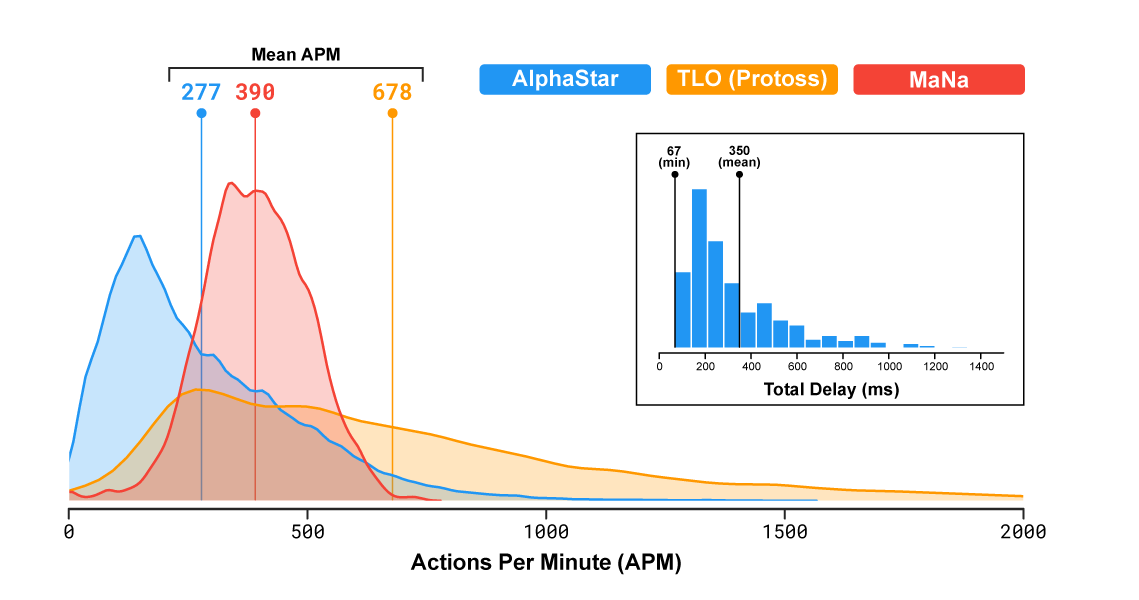
You can sign up to receive each day’s Start Up post by email. You’ll need to click a confirmation link, so no spam.

Start Up No.991: US charges Huawei, Pentagon v deepfakes, Iranian cryptocurrency?, IBM goes quantum, and more


You think Apple could assemble iPhones in the US? Trouble is, there aren’t enough of these. CC-licensed photo by @abrunvoll on Flickr.

You can sign up to receive each day’s Start Up post by email. You’ll need to click a confirmation link, so no spam.

A selection of 9 links for you. API-free. I’m @charlesarthur on Twitter. Observations and links welcome.

US authorities unveil sweeping set of charges against China’s Huawei • WSJ

Kate O’Keeffe and Aruna Viswanatha:

»

The Trump administration unveiled a sweeping set of actions—including criminal charges—against China’s Huawei Technologies in its latest salvo against the telecom giant, with authorities unsealing a set of indictments just days before US-China trade talks are set to resume.

In a pair of cases unsealed Monday, federal prosecutors accused Huawei of violating US sanctions on Iran and of stealing trade secrets from a US business partner, portraying the company as a serial violator of US laws and global business practices.

The charges contained in separate indictments in Brooklyn, NY, and Washington state were detailed by senior officials from the departments of Justice, Commerce and Homeland Security on the first day the government reopened after a 35-day shutdown—and just two days before negotiators for the US and China are set to resume trade talks in Washington, D.C.

«

Now it’s getting serious. Huawei clearly violated the Obama-era sanctions against selling equipment to Iran: the evidence collected by Reuters shows as much. The “trade secrets” is about T-Mobile. So this isn’t new, in that sense.
link to this extract


Deepfake videos: inside the Pentagon’s race against disinformation • CNN

Donie O’Sullivan and a host of others:

»

Advances in artificial intelligence could soon make creating convincing fake audio and video – known as “deepfakes” – relatively easy. Making a person appear to say or do something they did not has the potential to take the war of disinformation to a whole new level. Scroll down for more on deepfakes and what the US government is doing to combat them.

«

It’s an interactive – as you really need for this topic – with lots of food for thought.
link to this extract


Iran inches closer to unveiling state-backed cryptocurrency •Al Jazeera

Maziar Motamedi:

»

Details of Iran’s new cryptocurrency were revealed last summer, after the Trump administration started reimposing sanctions over alleged “malign activities”.

The biggest blow to Iran’s economy came in November, when some of its banks were barred from SWIFT, the Belgian-based global messaging system that facilitates cross-border payments.

Countries excluded from SWIFT cannot pay for imports or receive payments for exports, leaving them crippled financially, and having to rely on alternative methods of moving money.

Iran’s cryptocurrency is expected to be rolled out in phases, first as a rial-backed digital token, to facilitate payments between Iranian banks and other Iranian institutions active in the crypto space, and later possibly as an instrument for the Iranian public to pay for local goods and services.

While it would not directly facilitate payments between Iran and other countries, the state-backed digital currency could lay the groundwork for Iran to join a blockchain-based international payments system that could emerge as an alternative to SWIFT.

There is no official confirmation of active participation between Iran and other nations in this area, or when any potential multilateral initiatives will yield results, but developments in recent months provide clues.

«

The problem with this is the sheer volume of currency that Iran would need to be moving around. Who is going to swap cryptorials for anything?
link to this extract


The heroes of the Thai cave rescue • Macleans

Shannon Gormley has a long, detailed, insider-y reporting of what happened, including this as they were bringing one of the boys out – drugged so that he wouldn’t struggle:

»

the boy is writhing like a salted snail; this time, no one is there to help.

Jim will have to help the boy himself. There’s a bit of a bank up ahead: the unmanned Station 4. He hauls the boy up onto the mud a little bit. He pulls the plastic safety cap off the syringe with his teeth. He stabs the needle into the boy. He waits for the boy to calm down. The boy calms down. He waits to be absolutely sure the boy has calmed down. The boy has absolutely calmed down. Jim sticks the needle in a crack of the cave wall so it doesn’t pierce the next divers, and he swims on to Grand Central Station 3, the final station on Jim’s journey.

Hand. Hand. Hand. Again. Again. Again.

Impossible, but there it is: the body doubling over. Again, Jim thinks it’s happening again. Again, it’s worse. This time, they’re far from a bank. And this time, the boy has nearly knocked his own air tank clear off—Jim can feel the cylinder just barely hanging on by the top rubber bind, flapping around in the water.

If explorers only thought about the destination they’re trying to reach, they would never see it. In a cave, short-sighted tunnel vision can be a lifesaver. Jim knows to home in on the critical elements of dangerous situations: Ignore your quickening heartbeat, concentrate on your breathing; forget what happens to you if your air runs out, focus on what you can do with the air that remains; disregard the fact that a hand might resume strangling your air tube at any moment, remember that you’re not quite dead yet.

«

link to this extract


IBM launches commercial quantum computing – we’re not ready for what comes next • The Conversation

Carlos Perez-Delgado is a lecturer in computing at the University of Kent:

»

The one criticism typically laid against quantum technologies is that they are “too expensive”, and will continue to be so even as they become more readily available. This is certainly the case today. IBM isn’t making <a href="https://newsroom.ibm.com/2019-01-08-IBM-Unveils-Worlds-First-Integrated-Quantum-Computing-System-for-Commercial-Use“>its quantum computer available to buy but rather to access over the internet. But this shows the technology is on its way to becoming affordable in the near future.

Quantum computers are very easily disrupted by changes in the environment and take a long time to reset. So IBM has developed a protective system to keep the Q System One stable enough to perform tasks for commercial customers, which are likely to include large companies, universities and research organisations that want to run complex simulations. As a result, IBM believes it has a commercially viable product, and is putting its money where its mouth is…

…Quantum technologies are disruptive, and more so in cybersecurity than any other field. Once large-scale quantum computers become available (which at the current rate could take another ten to 15 years), they could be used to access pretty much every secret on the internet. Online banking, private emails, passwords and secure chats would all be opened up. You would be able to impersonate any person or web page online.

«

I’m ever so slightly dubious about this “quantum computer but only available via the internet”. So you don’t see it, just see its results? How does one distinguish results obtained from a quantum computer over a link where you’re timesharing from a result obtained from a top-speed non-quantum computer on a fast link? IBM’s press release, linked above, and its <a href="https://quantumexperience.ng.bluemix.net/qx/experience“>Q Experience page, don’t really explain this at all. Let’s hope this isn’t another Watson.
link to this extract


A tiny screw shows why iPhones won’t be ‘assembled in U.S.A.’ • The New York Times

Jack Nicas:

»

when Apple began making the $3,000 computer in Austin, Tex., it struggled to find enough screws, according to three people who worked on the project and spoke on the condition of anonymity because of confidentiality agreements.

In China, Apple relied on factories that can produce vast quantities of custom screws on short notice. In Texas, where they say everything is bigger, it turned out the screw suppliers were not.

Tests of new versions of the computer were hamstrung because a 20-employee machine shop that Apple’s manufacturing contractor was relying on could produce at most 1,000 screws a day.

The screw shortage was one of several problems that postponed sales of the computer for months, the people who worked on the project said. By the time the computer was ready for mass production, Apple had ordered screws from China.

The challenges in Texas illustrate problems that Apple would face if it tried to move a significant amount of manufacturing out of China. Apple has found that no country — and certainly not the United States — can match China’s combination of scale, skills, infrastructure and cost…

…Apple has intensified a search for ways to diversify its supply chain, but that hunt has homed in on India and Vietnam, according to an Apple executive who asked not to be named because the executive was not authorized to speak publicly. The company’s executives are increasingly worried that its heavy dependence on China for manufacturing is risky amid the country’s rising political tensions with the United States and unpredictability, this person said.

“The skill here is just incredible,” Mr. Cook said at a conference in China in late 2017. Making Apple products requires state-of-the-art machines and lots of people who know how to run them, he said.

“In the U.S., you could have a meeting of tooling engineers and I’m not sure we could fill the room,” he said. “In China, you could fill multiple football fields.”

«

Cook has been making this point about China’s scale for years – and it remains true regardless of trade wars. (Nice implication that it was a paucity of screws that prevented the Mac Pro selling more.)
link to this extract


Apple in 2018: the Six Colors report card • Six Colors

Each year Jason Snell asks a fairly wide group of journalists and analysts to comment on how Apple’s year was, in hardware, software and so on. I’m quoted, though not in this bit:

»

overall the MacBook line “remains entirely confused,” according to Fraser Speirs. John Siracusa said, “The story of the Mac in 2018 was dominated by a laptop lineup that remains both confusing and unsatisfying.” Adam Engst said, “Apple’s laptop line is even more of a confusing mess than before.”

“I honestly don’t know why [the 13-inch MacBook Pro without Touch Bar] is even being sold—It’s similar for the MacBook… there is no compelling reason this exists. And yet it is still being sold for more than a MacBook Air. I just don’t get it…. The gulf between what Apple charges and what its competitors charge is increasing in a way that doesn’t benefit Apple,” said Christina Warren.

Steven Aquino lamented “a lack of iteration on the Touch Bar.”

And did we mention the MacBook keyboards? Matt Deatherage said, “It defies reason for Apple [to offer] keyboards of inferior design and execution.” John Gruber said, “I may be biased as a writer and a keyboard aficionado, but it used to be the case that Apple’s notebook keyboards were widely hailed as the best in the world… that’s no longer the case and I think that’s a problem.” Shahid Kamal Ahmad said that the major failing of the keyboard was not its feel but “the inherent unreliability of the switches and their propensity to fail from the inevitable ingress of a subatomic particle.”

«

The chances that Apple reverts its keyboard design, or even offers the older scissor form as an alternative, are between zero and none. Yet this sort of complaint is going to continue; it’s like the hockey puck mouse, which everyone hated. Apple moved on there. Realistically, what will it do here?
link to this extract


China’s smartphone market falls 14% in 2018 • Canalys Newsroom

»

In 2018, smartphone shipments in China fell to their lowest level since 2013, at 396 million units. The natural slowdown as consumers keep their smartphones for longer is one factor, but it has been amplified considerably by the economic slowdown in China and consumers&rsquo; weakened purchasing power. The latest quarter, Q4 2018, marked a 15% year-on-year drop, and the seventh consecutive quarter of decline.

<img src="https://www.canalys.com/static/press_release/images/pr20190128%20huawei%20takes%20record%20share%20.jpg” width=”100%” />

As shipments tumble, the market is rapidly consolidating. The top five smartphone vendors’ market share has increased from 73% in 2017 to 88% in 2018. Among them, Huawei and Vivo bucked the overall market decline, and grew 16% and 9% respectively. Oppo managed to hold onto second place, falling 2% but growing market share. Xiaomi ranked fourth, as a disappointing second half caused its full-year shipments to fall by 6%. Apple stayed in fifth place with a 13% decline in 2018. It still outperformed the market, but this was the worst growth rate in the top five, and Apple’s third consecutive year of shipment decline in China.

Huawei achieved a record market share of 27% in 2018, with 105 million shipments. “Huawei has penetrated the high-end with technological innovations, and a strengthening brand, which has helped it markedly extend its lead in China,” said Mo Jia, an analyst based in Canalys’s Shanghai office. “Its dual-brand strategy has been a huge success, with sub-brand Honor helping it cover a broad range of price bands. China continues to be a strong foundation for Huawei, and its launchpad for overseas expansion as Huawei aims to challenge Samsung for global leadership in 2019.”…

…Apple had the toughest year of the top five, with shipments falling 13%, as customers were deterred by the high pricing of its new iPhone. In addition, models such as iPhone 7 and 8 did not see significant uplift in China, even after prices were lowered after the launch of the iPhone XS. “Apple has several challenges in China, and the growing power of competitors is not actually its biggest,” said Jia. “…Apple must re-examine its China strategy, and find a way to revive its high-end brand image, in order to align with the purchasing behavior of local middle-class and upper-class demographics.”

Leading manufacturers will have even less breathing space in 2019, as Canalys expects the Chinese smartphone market to fall by 3% to 385 million units.

«

I think Apple’s problem was that the XS and XS Max don’t look different enough from last year’s (let’s call it the Stratechery Thesis). This is going to be a squeeze on the “others”.
link to this extract


Amazon changes tack on video offering, as Apple joins market • The Information

Jessica Toonkel:

»

Over the past few months, executives at the e-commerce giant have told entertainment companies that it is going to be more selective about which video services it adds to what it calls Amazon Channels. The offering now includes around 200 services, from small paid video services like Acorn to big ones like HBO Now and Showtime. Amazon has increasingly focused its attentions on the biggest channels on the platform which generate the most subscription revenue, said two people familiar with its plans.

The shift signals that Amazon’s vision for its digital video service has narrowed. While its own Prime Video streaming service is a strong competitor to Netflix—offering original series like “Transparent” and “Bosch” as well as reruns from TV networks—the Channels offering made Amazon the destination for all kinds of streaming services. It was the video version of Amazon’s Marketplace, where the e-commerce giant lets other merchants sell their goods on its site in exchange for a fee. In the case of the Channels service, Amazon takes a cut of subscription revenues, generating $500m last year, estimates BMO Capital Markets.

Amazon is still interested in adding some of the bigger subscription services to its platform, and wants to expand internationally. But it is no longer is striving to offer every streaming service available, the people said.

«

I had no idea Amazon offered these things (perhaps because I don’t own an Amazon Fire Stick). The timing for the Apple launch feels like it’s giving itself plenty of time to get people interested before it starts doing its own content in a big way.
link to this extract


Errata, corrigenda and ai no corrida: Any weird formatting is my fault – I had to rewrite the script to compile this in a hurry as Pinboard’s API was dead. Hurrah for web scraping to short deadlines.

Start Up No.990: the coming Facebook-Instagram-WhatsApp integration, Japan’s here to hack!, living on bitcoin, and more


With a payback of three months, are scooters surviving long enough to keep companies afloat? CC-licensed photo by waltarrrrr on Flickr.

You can sign up to receive each day’s Start Up post by email. You’ll need to click a confirmation link, so no spam.

A selection of 10 links for you. Rolling on. I’m @charlesarthur on Twitter. Observations and links welcome.

Scooter hype gives way to tough questions about durability and unit economics • The Drive

Edward Niedermeyer:

»

That three-month payback period [for a Bird scooter], based on Bird’s projection of improved unit economics during 2018, is a far cry from the less than one month of in-fleet operation that Bird’s scooters have been averaging according to our source. At the time Bird told investors that repairs cost the company 14% of gross revenue, or about 51 cents per ride. Since then widespread reports of “scooter vandalism” have raised fresh questions about the repair and replacement costs that shared scooter companies are facing…

…investors aren’t the only stakeholders who are growing concerned by Bird’s operational challenges. In multiple posts made at the subreddit r/birdchargers in the last week “Bird hunters” who charge the company’s scooters have wondered if the company is “going out of business” and “about to collapse.” The picture that emerges from the subreddit is of chaos: chargers report receiving messages from the company accusing them of “hoarding” scooters in order to game charging bounties (the longer a scooter remains uncharged, the more a charger makes from the company when it charges it) even when they aren’t hoarding, don’t have any scooters or are storing scooters during bad weather (in some cases without being paid for storage).

These issues seem to be tied to a combination of seasonal issues that the Southern California-based company doesn’t seem well-prepared for, a shortage of full-time staff, falling charging bounties, and what appears to be a rampant hoarding problem. There’s even evidence that Bird and other scooter companies are being targeted by startup impound companies who want their slice of those millions in venture capital.

«

I’m not sure if this is just a generational thing, but I don’t think I’d want to be riding a scooter on a snowy day in London. Or a rainy day in London. Of which there are quite a few. Also, there’s a very effective public transport system of overground buses and underground trains. Does this limit them to fair-weather cities with bad public transport?
link to this extract


Japanese government plans to hack into citizens’ IoT devices • ZDNet

Catalin Cimpanu:

»

The Japanese government approved a law amendment on Friday that will allow government workers to hack into people’s Internet of Things devices as part of an unprecedented survey of insecure IoT devices.

The survey will be carried out by employees of the National Institute of Information and Communications Technology (NICT) under the supervision of the Ministry of Internal Affairs and Communications.

NICT employees will be allowed to use default passwords and password dictionaries to attempt to log into Japanese consumers’ IoT devices.

The plan is to compile a list of insecure devices that use default and easy-to-guess passwords and pass it on to authorities and the relevant internet service providers, so they can take measures to alert consumers and secure the devices.

The survey is scheduled to kick off next month, when authorities plan to test the password security of over 200 million IoT devices, beginning with routers and web cameras. Devices in people’s homes and on enterprise networks will be tested alike.

«

That’s not going to be controversial at all. Though possibly Japanese consumers are more relaxed about this.
link to this extract


Undercover agents target cybersecurity watchdog • Associated Press

Raphael Satter:

»

The researchers who reported that Israeli software was used to spy on Washington Post journalist Jamal Khashoggi’s inner circle before his gruesome death are being targeted in turn by international undercover operatives, The Associated Press has found.

Twice in the past two months, men masquerading as socially conscious investors have lured members of the Citizen Lab internet watchdog group to meetings at luxury hotels to quiz them for hours about their work exposing Israeli surveillance and the details of their personal lives. In both cases, the researchers believe they were secretly recorded.

Citizen Lab Director Ron Deibert described the stunts as “a new low.”

“We condemn these sinister, underhanded activities in the strongest possible terms,” he said in a statement Friday. “Such a deceitful attack on an academic group like the Citizen Lab is an attack on academic freedom everywhere.”

Who these operatives are working for remains a riddle, but their tactics recall those of private investigators who assume elaborate false identities to gather intelligence or compromising material on critics of powerful figures in government or business.

Citizen Lab, based out of the Munk School at the University of Toronto, has for years played a leading role in exposing state-backed hackers operating in places as far afield as Tibet , Ethiopia and Syria . Lately the group has drawn attention for its repeated exposés of an Israeli surveillance software vendor called the NSO Group, a firm whose wares have been used by governments to target journalists in Mexico , opposition figures in Panama and human rights activists in the Middle East .

«

link to this extract


The Wii Shop Channel closes forever next week • Game Informer

Imran Khan:

»

The question often arises of what happens when a company just decides to close up and shut down the shop, but it hasn’t been too big an issue so far. That will change at the end of this week, when Nintendo becomes the biggest player in the game to shut down a digital distribution shop, in the future effectively ending the ability to download or re-download anything from the Wii Shop.

The shutdown, which was announced on Nintendo’s support website, means that the Wii Shop servers will no longer be accessible. So if there’s games you have paid for but do not currently have downloaded on your Wii, you have until January 30 to get them onto the system memory or associated SD card before Nintendo brings down the axe. This means WiiWare games and Virtual Console titles, as well as any content that needs to be downloaded, like channels. In theory, Skyward Sword’s patch can no longer be downloaded, thus leaving a progress-blocking glitch in the game forever.

«

There was a similar problem when all the Windows-based digital music stores shut down, but at least they were replaced by services offering the same or more songs. Not so simple with Wii games. (13-year-old’s comment as he plays on Nintendo Switch: “I had no idea it was still open.”)
link to this extract


The facts about Facebook • WSJ

Mark Zuckerberg:

»

Some worry that ads create a misalignment of interests between us and people who use our services. I’m often asked if we have an incentive to increase engagement on Facebook because that creates more advertising real estate, even if it’s not in people’s best interests.

We’re very focused on helping people share and connect more, because the purpose of our service is to help people stay in touch with family, friends and communities. But from a business perspective, it’s important that their time is well spent, or they won’t use our services as much over the long term. Clickbait and other junk may drive engagement in the near term, but it would be foolish for us to show this intentionally, because it’s not what people want.

Another question is whether we leave harmful or divisive content up because it drives engagement. We don’t. People consistently tell us they don’t want to see this content. Advertisers don’t want their brands anywhere near it. The only reason bad content remains is because the people and artificial-intelligence systems we use to review it are not perfect—not because we have an incentive to ignore it. Our systems are still evolving and improving…

…In a global survey, half the businesses on Facebook say they’ve hired more people since they joined. They’re using our services to create millions of jobs.

For us, technology has always been about putting power in the hands of as many people as possible. If you believe in a world where everyone gets an opportunity to use their voice and an equal chance to be heard, where anyone can start a business from scratch, then it’s important to build technology that serves everyone.

«

Essentially setting Facebook up as a competitor to Google in that regard. (That “hired more” syllogism is awful. Causality?) The subtext here: don’t regulate Facebook’s ad business, or Facebook, because the effects would go far beyond Facebook.
link to this extract


Zuckerberg plans to integrate WhatsApp, Instagram and Facebook Messenger • The New York Times

Mike Isaac:

»

Mark Zuckerberg, Facebook’s chief executive, plans to integrate the social network’s messaging services — WhatsApp, Instagram and Facebook Messenger — asserting his control over the company’s sprawling divisions at a time when its business has been battered by scandal.

The services will continue to operate as stand-alone apps, but their underlying technical infrastructure will be unified, said four people involved in the effort. That will bring together three of the world’s largest messaging networks, which between them have more than 2.6 billion users, allowing people to communicate across the platforms for the first time.

The move has the potential to redefine how billions of people use the apps to connect with one another while strengthening Facebook’s grip on users, raising antitrust, privacy and security questions. It also underscores how Mr. Zuckerberg is imposing his authority over units he once vowed to leave alone.

The plan — which is in the early stages, with a goal of completion by the end of this year or early 2020 — requires thousands of Facebook employees to reconfigure how WhatsApp, Instagram and Facebook Messenger function at their most basic levels, said the people involved in the effort, who spoke on the condition of anonymity because the matter is confidential.

«

There’s a lot of murmuring now among European politicians who dislike Facebook that this would be grounds to revisit Facebook’s acquisition of Instagram and WhatsApp, on the basis that it said this wouldn’t happen.
link to this extract


Continuing our work to improve recommendations on YouTube • Official YouTube Blog

“The YouTube Team”:

»

in the last year alone, we’ve made hundreds of changes to improve the quality of recommendations for users on YouTube.

We’ll continue that work this year, including taking a closer look at how we can reduce the spread of content that comes close to—but doesn’t quite cross the line of—violating our Community Guidelines. To that end, we’ll begin reducing recommendations of borderline content and content that could misinform users in harmful ways—such as videos promoting a phony miracle cure for a serious illness, claiming the earth is flat, or making blatantly false claims about historic events like 9/11.

While this shift will apply to less than one% of the content on YouTube, we believe that limiting the recommendation of these types of videos will mean a better experience for the YouTube community. To be clear, this will only affect recommendations of what videos to watch, not whether a video is available on YouTube. As always, people can still access all videos that comply with our Community Guidelines and, when relevant, these videos may appear in recommendations for channel subscribers and in search results. We think this change strikes a balance between maintaining a platform for free speech and living up to our responsibility to users.

This change relies on a combination of machine learning and real people. We work with human evaluators and experts from all over the United States to help train the machine learning systems that generate recommendations.

«

Notice how no product manager is taking responsibility for this; it’s “the team”. And that machine learning isn’t good enough yet to discern the nonsense from the sensible. For context: it’s still broken, as this tweet shows.
link to this extract


4chan trolls flood laid off HuffPost, BuzzFeed reporters with death threats • NBC News

Ben Collins:

»

[Nick] Wing was one of many journalists who were let go by BuzzFeed and HuffPost this week and were sent death threats from trolls organizing their efforts on the far-right message board 4chan. Many of those targeted by the harassment campaign did not cover the far-right, including Wing, whose beat focused on inequality and guns.

“It really is upsetting to see such outright animus toward the entire journalism profession, to the point where trolls are openly reveling in people’s misfortune or even working to make it worse. But ultimately I think it says more about their character than anything,” Wing told NBC News.

“What sort of sad and pathetic human being do you have to be to do that?”

Tweets sent from trolls to Wing that included everything from threats to racial slurs to images of swastikas remained visible on Twitter hours after they were posted.

BuzzFeed and HuffPost both laid off substantial portions of its newsrooms this week. BuzzFeed said it would cut about 15% of its workforce, and layoffs began Friday. HuffPost’s parent company, Verizon, promised to cut 7% of workers from its media division, and those layoffs began Thursday.

Talia Lavin, a freelance writer whose primary income was a political column for HuffPost before her editors were laid off this week, found 4chan threads with users bragging about “taunting them with my sock puppet Twitter.”

«

As someone pointed out in discussion, seeing a not-very-active account suddenly come to life and then suddenly get a lot of blocks should trigger some sort of suspension. (You don’t want to suspend normally-active accounts which get a lot of blocks; that would be used as a weapon against innocent people.) Also: notice how 4chan has become “far-right” 4chan.
link to this extract


Apple granted patent for interchangeable ‘universal’ AirPods with biometrics and improved fit • 9to5Mac

Alex Allegro:

»

This patent filing comes just days after a new Ming-Chi Kuo report which signaled for updated AirPods in the first quarter of 2019 set to include wireless charging. It seems clear the next AirPods refresh will most likely focus on improving upon the current design. But this patent shows that in 2020 and beyond, Apple is interested in creating an ultimate earbud that can fit anybody, with an array of biometric sensors capable of tracking health measurements along with detecting ear placement.

One of the points touched upon in the patent is how biometric sensors need to be pressed firmly against the skin to work best, and in a few of the designs outlined in the document, foam is used to expand the bud against the ear canal.

Obviously, this is a departure from the traditional plastic mold used by Apple in both EarPods and AirPods. However, in the pursuit of a universal fit, Apple might deem expanding foam as the best option as opposed to hard plastic.

«

Foam would be a nice feature. AirPods aren’t uncomfortable, but they’re too big for some ears. There has been some indication that the new versions will come after iOS 12.2 – currently in beta – is official.
link to this extract


Living on bitcoin day 1: “that’s not going to work” • Bitcoin Magazine

Colin Harper:

»

The crypto community in 2013 was devout but scant, and so were the places [journalist Kashmir] Hill could spend bitcoin [when she tried to live on it for a week]. Her entire experience was punctuated by a sense of getting by. This is best encapsulated by the final line of her 2013 series: “I survived.”

I compared notes with her about what I foresaw as being my biggest obstacles for the week, making mental notes to see if I could do more than “survive” and if 2013 might have actually been an easier year for the experiment.

As our conversation came to a close, Hill left me with a nugget of advice that I’d adopted as a mantra for my own iteration of the experiment.

“Don’t make the focus about yourself. Make it about other people, who the experiment allows you to access.”

Leaving La Boulangerie, I took an Uber back to the conference venue, where I made arrangements with Jeremy Gardner to visit a new project he’s working on and, of course, tour the infamous Crypto Castle.

We had a tight time frame; he was leaving for Park City, Utah, that night to go snowboarding.

“You can come by the castle tonight. Or later in the week, someone will let you in, show you around — I don’t care.”

We eventually settle on a 4:00 p.m. meeting outside of Monarch, a popular club wedged between San Francisco’s Mid Market and Tenderloin districts that accepts bitcoin by-the-bottle. It’s within walking distance of the conference which is good because my Uber credit was running low and the conference didn’t have any Wi-Fi for me to get on Paxful/Bitrefill to top it off.

The rest of the early afternoon was spent prepping for and moderating a panel, after which I scrambled around, looking for a USB-C charger to juice my phone and keep my financial lifeline alive (I had lost my charger that morning, of course). The conference tech staff was nice enough to lend me a charger, one of many acts of good will that seems to continually grace my experience.

When the time rolls around, Jeremy meets me with one of his business partners, Micah, who owns Monarch and another bitcoin accepting club in San Francisco, Great Northern. We hop one building over to their new project: a pawn shop that serves as the front for a speakeasy, both of which will accept bitcoin.

The shop had been a pawn for a while, Gardner said, buying, trading, selling and even offering loans and collateral for years before it shut down.

“All the snakey stuff,” he intimated.

«

If you needed persuading that bitcoin really isn’t for day-to-day transactions.
link to this extract


Errata, corrigenda and ai no corrida: none notified