Start Up No.1,101: Evernote’s long goodbye, climate change 30 years on, the racists in the CBP, Cue and Ive and Apple, and more


The current Mac Pro (the new one isn’t on sale yet): a Jony Ive design, or his team? CC-licensed photo by Steve Garfield on Flickr.

You can sign up to receive each day’s Start Up post by email. You’ll need to click a confirmation link, so no spam.

A selection of 11 links for you. There you go. I’m @charlesarthur on Twitter. Observations and links welcome.

A unicorn lost in the Valley, Evernote blows up the ‘fail fast’ gospel • The New York Times

Erin Griffith:

»

In Silicon Valley, the idea that most start-ups won’t make it to a splashy public offering or acquisition is not just understood, but embraced. “Fail fast, fail often” is one of the region’s earliest and best-recognized catchphrases. The implication is that people and companies that don’t find success can transition, efficiently and without stigma, to more promising ventures. But Evernote’s struggles illustrate a harsher truth: For many start-ups of a certain size, failure rarely happens abruptly.

More often, after early momentum wanes, the missteps and bad press accumulate until a company enters a slow, difficult rehabilitation that stretches on for years. But in and around San Francisco, no one likes to talk about getting stuck in start-up purgatory. Once venture capital investors have sunk in considerable sums, they’re willing to let struggling companies flounder for years on the off chance they hit on something big. “They’re not in it for a break-even or a slight loss or a slight gain,” said Jeffrey Cohen, a bankruptcy lawyer at Lowenstein Sandler. “They’re willing to let it ride a little longer to see whether it explodes.”

It’s a common trap for the most recent generation of start-ups, which has been marked by the proliferation of “unicorns” worth $1bn or more. For fledgling companies, taking enough investor money to become one of these magical ungulates was supposed to show customers, employees and the world that they were sure bets — that they were too special and big and valuable to fail. But many companies that chased three-comma valuations are now stuck trying to live up to almost impossible expectations.

«

Marvellous depiction of the slow slide into obscurity. Everything dies, even startups.
unique link to this extract


Microsoft’s Ebook apocalypse shows the dark side of DRM • WIRED

Brian Barrett:

»

Microsoft made the announcement in April that it would shutter the Microsoft Store’s books section for good. The company had made its foray into ebooks in 2017, as part of a Windows 10 Creators Update that sought to round out the software available to its Surface line. Relegated to Microsoft’s Edge browser, the digital bookstore never took off. As of April 2, it halted all ebook sales. And starting as soon as this week, it’s going to remove all purchased books from the libraries of those who bought them…

Microsoft will refund customers in full for what they paid, plus an extra $25 if they made annotations or markups. But that provides only the coldest comfort.

“On the one hand, at least people aren’t out the money that they paid for these books. But consumers exchange money for goods because they preferred the goods to the money. That’s what happens when you buy something,” says Aaron Perzanowski, professor at the Case Western University School of Law and coauthor of The End of Ownership: Personal Property in the Digital Economy. “I don’t think it’s sufficient to cover the harm that’s been done to consumers.”

Presumably not many people purchased ebooks from Microsoft; that’s why it’s pulling the plug in the first place. But anyone who did now potentially has to go find those same books again on a new platform, buy them again, and maybe even find a new device to read them on. For certain types of readers, particularly lawyers and academics, markups and annotations can be worth far more than $25. And even if none of that were the case, the move rankles on principle alone.

«

unique link to this extract


Electric cars grab almost half of sales in oil-producing Norway • Reuters

»

Almost half of new cars sold in Norway in the first six months of 2019 were powered by fully electric engines, up from just over a quarter in the same period last year, ensuring the Nordic nation retains its top global ranking in electric vehicle sales.

Tesla’s Model 3 was Norway’s top-selling vehicle, the Norwegian Road Federation (NRF) said when announcing the latest sales data on Monday.

In total, 48.4% of all new cars sold from January to June were electric, surpassing the 31.2% seen for the full year 2018, and making oil-producing Norway the global leader in per-capita electric car sales by a wide margin.

«

unique link to this extract


California was warned about climate change 30 years ago. Now it’s feeling the effects • Los Angeles Times

Julia Rosen:

»

Back in 1989, Californians received a sobering warning: The accumulation of heat-trapping gases in the atmosphere would likely bring more droughts, floods, fires, and heat waves to the state.

In the thirty years since, those projections of what would happen in a warming world have proven to be remarkably prescient.

“We’ve already observed some of the things we expected in 1989,” said Susan Fischer Wilhelm, a research manager at the California Energy Commission, the agency that compiled the report.

The assessment laid the groundwork for what has arguably become the country’s most ambitious effort to address global warming.

But to many who worked on the report, looking back on it now only underscores how long we’ve waited to act — and how much time has been wasted.

“I felt a sense of pride of being able to participate in something like this, but also a sense of regret for us as a society,” said Les Baxter, who worked on the report as a policy analyst at the CEC and is now vice president of program strategy for the Pew Charitable Trusts.

“We’ve known what we need to do and we just keep refusing to do it.”

The report might have remained lost to history if Gary Estes hadn’t been going through boxes in his garage last year and stumbled upon a copy.

«

unique link to this extract


Huawei reprieve: what happens next? • CNBC

Kate Fazzini:

»

The White House and Commerce Department haven’t yet clarified whether the policy will affect Huawei’s use of Google’s Android operating system on many of its mobile devices, or Microsoft’s Windows operating system on its computers.

But a Microsoft spokesperson said the company made “an initial evaluation” of the Commerce Department decision on Huawei and will “to continue to offer Microsoft software updates to customers with Huawei devices.”

“We’re still providing Windows software updates to customers with Huawei laptops,” the spokesperson said.

Google did not immediately respond to comment, and a Huawei spokesperson said the company “had no further details at this time.”

«

OK fine so you’re all as confused as the rest of us. Good to know.
unique link to this extract


Inside the secret Border Patrol Facebook group where agents joke about migrant deaths and post sexist memes • ProPublica

A.C. Thompson:

»

ProPublica received images of several recent discussions in the 10-15 Facebook group and was able to link the participants in those online conversations to apparently legitimate Facebook profiles belonging to Border Patrol agents, including a supervisor based in El Paso, Texas, and an agent in Eagle Pass, Texas. ProPublica has so far been unable to reach the group members who made the postings.

ProPublica contacted three spokespeople for CBP in regard to the Facebook group and provided the names of three agents who appear to have participated in the online chats. CBP hasn’t yet responded.

“These comments and memes are extremely troubling,” said Daniel Martinez, a sociologist at the University of Arizona in Tucson who studies the border. “They’re clearly xenophobic and sexist.”

The postings, in his view, reflect what “seems to be a pervasive culture of cruelty aimed at immigrants within CBP. This isn’t just a few rogue agents or ‘bad apples.’”

«

In Trump’s administration, that sort of thing will make them more, not less, employable. A reminder: dehumanising fellow human beings is a key step towards fascism.
unique link to this extract


Jony Ive is leaving Apple, but his departure started long ago • WSJ

Tripp Mickle says that this story follows conversations over “more than a year” with people who worked with Ive and “people close to” Apple’s leadership:

»

Mr. Ive had been growing more distant from Apple’s leadership, say people close to the company. Mr. Jobs’s protégé—and Apple’s closest thing to a living embodiment of his spirit—grew frustrated inside a more operations-focused company led by Chief Executive Tim Cook.

Mr. Ive, 52, withdrew from routine management of Apple’s elite design team, leaving it rudderless, increasingly inefficient, and ultimately weakened by a string of departures, people close to the company say.

The internal drama explains a lot about Apple’s dilemma. Its one major new product of the post-Jobs era, the Apple Watch, made its debut five years ago. Its iPhone business is faltering, and more recent releases like its wireless AirPods haven’t been enough to shore up falling sales. It hasn’t had a megahit new product since the iPad that started selling in 2010…

…At a meeting with members of the watch team, [Ive] thanked them for their work, and said 2014 had been one of his most challenging years at Apple. The company sold about 10 million units in the first year, a quarter of what Apple forecast, a person familiar with the matter said. Thousands of the gold [Edition] version went unsold.

«

There’s a terrific podcast hosted by John Gruber, guest Ben Thompson, which runs over Ive’s importance and the questions that arise over his leaving. Gruber has the contacts, Thompson has the insight. (Hardware matters less at the modern Apple than in the past, for example.) The feeling is that Ive, like Jobs, wants to leave a permanent mark on the world. Apple Park – his last design job at Apple – is definitely a start.

What’s odd is if Mickle had been talking to people for a year, why he didn’t write it a week ago, before the announcement? Though sometimes the story only emerges in retrospect. But such fascinating questions: did Ive drive the design of the “trashcan” Mac Pro? Of the AirPods? Of the new Mac Pro? (Probably not.) The butterfly keyboard? Where do we discern the end of his reign?
unique link to this extract


Can Apple hack it in Hollywood? We talk to the man behind Apple TV+ • British GQ

Stuart McGurk:

»

Cue himself is something of an Apple lifer, having joined the company in 1989. It was Steve Jobs who spotted his potential and over the years Cue has been responsible for everything from creating the App Store to the acquisition of Beats Audio.

What are his main memories of Jobs?

“Someone I loved dearly as a friend. So when you ask that question to me it’s a personal question. He was obviously an incredible boss. I had the greatest mentor in the world.”

Cue says he didn’t realise it at the time – “I was young” – but that one of the greatest things to happen to Apple was Jobs getting fired in 1985 by then-CEO John Sculley.

“Because when he came back, one of the things that he wanted to do is create a company that would outlast him and could live for hundreds of years.”

He was really thinking in terms of centuries?

“He absolutely was. And he put people in place and created a culture that he thought would do that. But obviously he was taken way too early. I figured I’d be walking out of Apple the same day he was walking out of Apple.”

He does not much rate the portraits of Jobs that have appeared since, not least the biography by Walter Isaacson and the film, Steve Jobs, written by Aaron Sorkin.

“No. Terrible. They’re not true. Most of the stories are just not accurate. They’re just not accurate. And I think they missed the boat on Steve. They don’t capture in my mind the real Steve. There’s a good book called Becoming Steve Jobs, which I think is the best book. It captures good, bad, fun, pain, emotions, all of it. That’s better than anything I’ve seen. So I’d encourage you to read that.”

«

Lots of good stuff in this interview; Cue denies the story that Cook (or he) passed “notes” on the content of the proposed TV dramas. Doesn’t deny he might have fallen asleep in a meeting. And more.
unique link to this extract


The Pentagon has a laser that can identify people from a distance—by their heartbeat • MIT Technology Review

David Hambling:

»

A new device, developed for the Pentagon after US Special Forces requested it, can identify people without seeing their face: instead it detects their unique cardiac signature with an infrared laser. While it works at 200 meters (219 yards), longer distances could be possible with a better laser. “I don’t want to say you could do it from space,” says Steward Remaly, of the Pentagon’s Combatting Terrorism Technical Support Office, “but longer ranges should be possible.”

Contact infrared sensors are often used to automatically record a patient’s pulse. They work by detecting the changes in reflection of infrared light caused by blood flow. By contrast, the new device, called Jetson, uses a technique known as laser vibrometry to detect the surface movement caused by the heartbeat. This works though typical clothing like a shirt and a jacket (though not thicker clothing such as a winter coat)…

…Cardiac signatures are already used for security identification. The Canadian company Nymi has developed a wrist-worn pulse sensor as an alternative to fingerprint identification. The technology has been trialed by the Halifax building society in the UK.

«

unique link to this extract


America’s teenagers skew a lot more conservative than most people realize, and they get most of their news from Instagram • Business Insider

Kate Taylor:

»

It is tempting to see the teens and young 20-somethings of Generation Z as a united, progressive force, rising up to challenge a divided country. The reality is more complicated.

While Gen Z is united on some issues, including climate change and legalizing marijuana, political rifts remain.

Social media, including Instagram, one of the most popular places for Gen Z to get political news, is helping deepen and amplify these divisions, sparking concerns in some young Americans that the country is simply entering a new era of political strife.

One of the biggest differences about Gen Z, according to experts and members of the generation, is the role social media plays in shaping beliefs.

Social media is the top way Gen Z finds out about news, with 59% of respondents listing it as a top news source in Business Insider’s poll of more than 1,800 people between the ages of 13 and 21. The national poll was conducted with SurveyMonkey Audience partner Cint on behalf of Business Insider. It ran January 11-14.

More than half the people surveyed said they checked Snap, YouTube, or Instagram daily.

Parkland survivors, for example, organized and amplified their message on social media. Gonzales has more than 1.6 million followers on Twitter, while a Twitter campaign by Parkland survivor David Hogg helped persuade more than a dozen advertisers to slash ties with Laura Ingraham’s Fox News show.

But for most Gen Zers, Instagram, not Twitter, reigns supreme. About 65% of respondents said they checked it daily, with many Gen Zers citing it as a major source for political news specifically.

«

Political news from Instagram? This is one of those moments when you suddenly think you’ve woken up in someone else’s novel. (“Gen Z” are those born in this century.)
unique link to this extract


How Amazon and the cops set up an elaborate sting operation that accomplished nothing • VICE

Caroline Haskins:

»

For Amazon, fear is good for business.

If customers fear their neighbors, and fear they might steal a package, customers are less likely to be mad at Amazon if they don’t get a package they ordered. They’re also more likely to buy an Amazon-owned Ring doorbell camera, which is marketed as way of surveilling your stoop for package deliveries and package thieves—especially on Neighbors, the Ring-owned “neighborhood watch” app.

New documents obtained by Motherboard using a Freedom of Information request show how Amazon, Ring, a GPS tracking company, and the US Postal Inspection Service collaborated on a package sting operation with the Aurora, Colorado Police Department in December. The operation involved equipping fake Amazon packages with GPS trackers, and surveilling doorsteps with Ring doorbell cameras in an effort to catch someone stealing a package on tape.

The documents show the design and implementation of a highly elaborate public relations stunt, which was designed both to endear Amazon and Ring with local law enforcement, and to make local residents fear the place they live. The parties were disappointed when the operation didn’t result in any arrests.

«

unique link to this extract


Errata, corrigenda and ai no corrida: none notified

Start Up No.1,100: the Huawei un-ban puzzle, 5G’s infrastructure problem, how Uber worsens congestion and pollution, ‘kayfabe’ and Trump, and more


A new research technique uses pixel differences to detect or prevent deepfakes. CC-licensed photo by Dorian on Flickr.

You can sign up to receive each day’s Start Up post by email. You’ll need to click a confirmation link, so no spam.

A selection of 10 links for you. Maybe it’s your eyesight? I’m @charlesarthur on Twitter. Observations and links welcome.

Detecting deepfakes by looking closely reveals a way to protect against them • The Conversation

Siwei Lyu is Professor of Computer Science and the director of the Computer Vision and Machine Learning Lab at the University at Albany, State University of New York:

»

Some of my research group’s earlier work allowed us to detect deepfake videos that did not include a person’s normal amount of eye blinking – but the latest generation of deepfakes has adapted, so our research has continued to advance.

Now, our research can identify the manipulation of a video by looking closely at the pixels of specific frames. Taking one step further, we also developed an active measure to protect individuals from becoming victims of deepfakes.

In two recent (1) research papers (2), we described ways to detect deepfakes with flaws that can’t be fixed easily by the fakers.

When a deepfake video synthesis algorithm generates new facial expressions, the new images don’t always match the exact positioning of the person’s head, or the lighting conditions, or the distance to the camera. To make the fake faces blend into the surroundings, they have to be geometrically transformed – rotated, resized or otherwise distorted. This process leaves digital artifacts in the resulting image.

You may have noticed some artifacts from particularly severe transformations. These can make a photo look obviously doctored, like blurry borders and artificially smooth skin. More subtle transformations still leave evidence, and we have taught an algorithm to detect it, even when people can’t see the differences…

…As we develop this algorithm, we hope to be able to apply it to any images that someone is uploading to social media or another online site. During the upload process, perhaps, they might be asked, “Do you want to protect the faces in this video or image against being used in deepfakes?” If the user chooses yes, then the algorithm could add the digital noise, letting people online see the faces but effectively hiding them from algorithms that might seek to impersonate them.

«

Explained, of course, with videos.
unique link to this extract


Kudlow: US sales to Huawei won’t imperil national security • The New York Times

Associated Press:

»

[White House economics adviser Larry] Kudlow told “Fox News Sunday” and CBS’ “Face the Nation” that Huawei will remain on an American blacklist as a potential security threat. He stressed that additional US licensing “will be for what we call general merchandise, not national security sensitive,” such as chips and software generally available around the world.

“What’s happening now is simply a loosening up for general merchandise,” Kudlow said. “This is not a general amnesty.”

Trump made the announcement Saturday after meeting with China’s Xi Jinping at the Group of 20 summit in Japan. Trump said US companies could make the sales if the transactions don’t present a “great, national emergency problem.”

Several Republican senators immediately expressed concerns. In a tweet Saturday, Sen. Marco Rubio of Florida called the decision a “catastrophic mistake.” Sen. Lindsey Graham [Republican, South Carolina], told CBS that Trump’s agreement was “clearly a concession,” and also said it would be a mistake if sales to Huawei involved “major technology.”

Sen. John Barrasso, R-Wyo., described the Chinese company as a clear threat to US national security. “To me, Huawei in the United States would be like a Trojan horse ready to steal more information from us,” he told NBC’s “Meet the Press.”

«

The reversal on Huawei was predictable enough – Trump doesn’t do anything on principle, even when everyone around him knows that something should be done on principle – but this is just baffling. American companies were banned from selling to Huawei, and it looked like it would cripple the Chinese company. So is Google still on the banned list, given that its products aren’t generally available?
unique link to this extract


The downside of 5G: overwhelmed cities, torn-up streets, a decade until completion • WSJ

Christopher Mims:

»

5G networks don’t work like previous wireless cellular networks. Where 2G, 3G and even 4G rely on large towers with powerful antennas that can cover many square miles, the shorter-range, higher-frequency radio waves used by 5G networks—essential to their ability to deliver the 10- to 100-times faster speeds they promise—mean that 5G networks must have small cells placed much closer together.

Typically these small cells must be placed about 800 to 1,000 feet apart, says AT+T’s Ms. Knight. Small-cell antennas are typically the size of a pizza box, but can be much larger, and require both a fiber-optic connection to the internet and access to power. They go wherever there’s space: on buildings, new 5G-ready telephone poles and, often, retrofitted lampposts.

In 2018, the US had 349,344 cell sites, according to CTIA, a wireless industry trade organization. The organization estimates that—to achieve full 5G coverage—carriers will have to roll out an additional 769,000 small cells by 2026.

This rollout could mean three or four different carriers will be arriving at your street, each trying separately to dig to bury fiber. (And yes, fiber-optic cable almost always has to be buried.)

«

Terrific piece about the real-world implications of getting this done. The implication (to me at least) is that rural areas will be unlikely to see 5G: its range is too short and the cost disproportionate to the benefits it can provide compared to 4G, with its greater range.
unique link to this extract


GrubHub is buying up thousands of restaurant web addresses. That means Mom and Pop can’t own their slice of the internet • New Food Economy

H. Claire Brown:

»

Grubhub purchased three different domains containing versions of Shivane’s restaurant’s name—in 2012, 2013, and 2014. “I never gave them permission to do that,” she says. 

Shivane believes GrubHub purchased her restaurant’s web domain to prevent her from building her own online presence. She also believes the company may have had a special interest in owning her name because she processes a high volume of orders. She rattles off a list of names of local restaurants that she suspects may be in the same predicament. I find versions of about half those names on the list of GrubHub-owned domains. 

Additionally, it appears GrubHub has set up several generic, templated pages that look like real restaurant websites but in fact link only to GrubHub. These pages also display phone numbers that GrubHub controls. The calls are forwarded to the restaurant, but the platform records each one and charges the restaurant a commission fee for every order, according to testimony from GrubHub executives at a hearing at New York City Hall on Thursday. This happens on the GrubHub platform itself, too. The phone numbers you see displayed in the app typically aren’t a restaurant’s actual phone number, they’re the numbers that GrubHub uses to make sure it’s getting its commission. 

«

GrubHub says it’s doing it as a service to restaurants: “we have created microsites for them as another source of orders and to increase their online brand presence. Additionally, we have registered domains on their behalf, consistent with our restaurant contracts.” But now has stopped doing it. Odd.
unique link to this extract


‘Empty’ Uber cabs driving pollution and congestion • The Sunday Times

Nicholas Hellen:

»

Uber was launched in Britain with a promise that its smart technology, which matches passengers with the nearest vehicle for hire, would reduce traffic.

In 2014 Travis Kalanick, then its chief executive, told the Institute of Directors: “In our current model here in London there are 7½ cars taken off the road for every fully utilised Uber that is on the road.”

But James Farrar, a former Uber driver who obtained the figures after a two-year legal battle, said they provided hard evidence that the company’s approach added to congestion.

“They are competing on immediacy and availability and they do not carry any of the costs [of buying the cars]. That is going to lead to oversupply. You will cause congestion and these drivers will not have enough work.”

The figures, which tracked three drivers for a combined 7,500 hours, confirm that when they are looking for their next job they do not park, but typically spend 94% of their time cruising the streets, to maximise their chances of being offered another passenger.

David Dunn, 58, one of the three drivers, said he quit driving for Uber in Glasgow because he was having to work 80-hour weeks to recoup the £37,000 that he had spent on a car.

«

This doesn’t of course show how much of the time non-Uber taxis spend noodling around looking for trade, but it seems reasonable to think that if there are fewer taxis available, they spend less time not carrying passengers. Given that, maybe you’d want a licensing authority to mandate a maximum number of cars at some times, or that a certain proportion be electric (though that won’t help congestion), or similar. It’s the same story in the US.
unique link to this extract


Inside Apple’s long goodbye to design chief Jony Ive • Bloomberg

Mark Gurman:

»

He was in charge of a roughly two-dozen person design team that included artists whose passions extended to the development of surfboards, cars, and even DJing on weekends. Many of their spouses worked as designers, too…

…some people familiar with Apple are already worried about the new design leadership. Now that Ive is officially leaving, longtime studio manager Evans Hankey will run the hardware design group, Apple said. Hankey is a great team leader, but Apple now lacks a true design brain on its executive team, which is a concern, a person familiar with the design team said.

Hankey and Dye will report to Jeff Williams, Apple’s chief operating officer. While Williams is a talented executive, some people familiar with matter believe the shift is another sign of Apple becoming more of an operations company. Apple declined to comment.

“The design team is made up of the most creative people, but now there is an operations barrier that wasn’t there before,” one former Apple executive said. “People are scared to be innovative.”

…The design team is taking on this challenge without veteran members. Christopher Stringer and Daniele De Iuliis, a pair of key Ive lieutenants, kicked off the departures a few years ago, with Daniel Coster leaving to lead design at GoPro in 2016. The team lost three members in the past six months: Julian Hoenig, Rico Zorkendorfer and Miklu Silvanto.

While each Apple designer specializes in specific product lines, they all contribute to each other’s products and plans. That means losing an individual designer is still a big deal, a former Apple executive said. “The design studio has no secrets,” this person said. “They all know what each other is working on.”

«

It’s definitely worth re-reading the New Yorker article from 2015 about Ive in the light of this announcement. It makes it feel a lot different. I didn’t think that Steve Jobs leaving Apple was the catastrophe some did. But Apple without Jobs and Ive isn’t the same beast.
unique link to this extract


Publishers says Apple is changing Apple News Plus, its subscription bundle • Business Insider

Lucia Moses:

»

publishers have had mixed views on Plus so far. Some saw it as a way to reap revenue from Apple’s massive customer base as many of them struggle to grow ad revenue. (Apple is sharing half of the revenue with publishers based on how much time users spend with the given publishers’ content, knowledgeable sources said.) The Wall Street Journal, New York magazine, Vox, and TheSkimm, opted in, as did Business Insider. Big magazine chains including Hearst, Meredith, and Condé Nast are also participating in the bundle, but are contractually obligated to do so as former owners of the app, according to sources.

Some publishers had concerns that the bundle would not produce meaningful revenue and that it would cannibalize their own subscription businesses, though. Major subscription publications The New York Times and Washington Post opted out of the bundle.

Apple gave away Plus for free for the first month, and in its first two days, it reportedly had about 200,000 subscribers, which is about what Texture had. But three months in, publishing execs who spoke for this article said the subscription revenue they’d gotten from the service was underwhelming based on two months of data after the trial ended.

One publishing exec said Apple projected publishers would get 10 times the revenue they made from Texture at the end of Apple News Plus’ first year. “It’s one twentieth of what they said,” the exec said. “It isn’t coming true.”

«

Got to admit, I don’t open Apple News (the app) from one month’s end to the next. The fact that it defines links using its own URL schema is almost worse than Google’s AMP. There are better news aggregators.
unique link to this extract


April 2017: How wrestling explains Alex Jones and Donald Trump • The New York Times

Nick Rogers, in April 2017:

»

Although the etymology of the word is a matter of debate, for at least 50 years “kayfabe” has referred to the unspoken contract between wrestlers and spectators: We’ll present you something clearly fake under the insistence that it’s real, and you will experience genuine emotion. Neither party acknowledges the bargain, or else the magic is ruined.

To a wrestling audience, the fake and the real coexist peacefully. If you ask a fan whether a match or backstage brawl was scripted, the question will seem irrelevant. You may as well ask a roller-coaster enthusiast whether he knows he’s not really on a runaway mine car. The artifice is not only understood but appreciated: The performer cares enough about the viewer’s emotions to want to influence them. Kayfabe isn’t about factual verifiability; it’s about emotional fidelity.

Although their athleticism is impressive, skilled wrestlers captivate because they do what sociologists call “emotional labor” — the professional management of other people’s feelings. Diners expect emotional labor from their servers, Hulkamaniacs demand it from their favorite performer, and a whole lot of voters desire it from their leaders.

The aesthetic of World Wrestling Entertainment seems to be spreading from the ring to the world stage. Ask an average Trump supporter whether he or she thinks the president actually plans to build a giant wall and have Mexico pay for it, and you might get an answer that boils down to, “I don’t think so, but I believe so.” That’s kayfabe. Chants of “Build the Wall” aren’t about erecting a structure; they’re about how cathartic it feels, in the moment, to yell with venom against a common enemy.

«

“Kayfabe” feels as though it describes quite a lot of politics right now. But definitely Trump.
unique link to this extract


Boeing’s 737 Max software outsourced to $9-an-hour engineers • Bloomberg

Peter Robison:

»

Increasingly, the iconic American planemaker and its subcontractors have relied on temporary workers making as little as $9 an hour to develop and test software, often from countries lacking a deep background in aerospace – notably India.

In offices across from Seattle’s Boeing Field, recent college graduates employed by the Indian software developer HCL Technologies Ltd. occupied several rows of desks, said Mark Rabin, a former Boeing software engineer who worked in a flight-test group that supported the Max.

The coders from HCL were typically designing to specifications set by Boeing. Still, “it was controversial because it was far less efficient than Boeing engineers just writing the code,” Rabin said. Frequently, he recalled, “it took many rounds going back and forth because the code was not done correctly.”

Boeing’s cultivation of Indian companies appeared to pay other dividends. In recent years, it has won several orders for Indian military and commercial aircraft, such as a $22bn one in January 2017 to supply SpiceJet Ltd. That order included 100 737-Max 8 jets and represented Boeing’s largest order ever from an Indian airline, a coup in a country dominated by Airbus.

Based on resumes posted on social media, HCL engineers helped develop and test the Max’s flight-display software, while employees from another Indian company, Cyient Ltd., handled software for flight-test equipment.

In one post, an HCL employee summarized his duties with a reference to the now-infamous model, which started flight tests in January 2016: “Provided quick workaround to resolve production issue which resulted in not delaying flight test of 737-Max (delay in each flight test will cost very big amount for Boeing).”

«

Boeing says those programmers didn’t do the MCAS software that’s blamed for the crashes. There seems to be a deeper problem at Boeing, dumping its institutional memory (experienced staff) on the basis that its products are “mature”.
unique link to this extract


Amazon’s facial recognition creates dystopic future for trans and nonbinary people • Jezebel

Dhruv Mehrotra and Anna Merlan:

»

We reached out to all the companies using Rekognition for facial analysis as listed on Amazon’s information page for the product. Only two got back to us in a meaningful way. One was Limbik, a startup that uses machine learning to help companies understand whether their videos are being watched, and by who. They told us that Amazon’s binary gender settings posed a problem for them: “We have noticed this as an issue for us, as the better we can tag videos with proper tags the more accurate we can be with predictions and improvement recommendations. It would be best if we could get this type of information as it would help us categorize videos better and help with prediction.”

Without that information, Limbik added, they have to specify to customers what their analysis, using Rekognition, does and doesn’t do. “Since Rekognition only returns a binary value for gender, we have to make sure that, to customers, we specify that it is biological sex that is examined and not gender specifically and that it isn’t perfect. We have internal conversations about this issue and have discussed remedies but as we can have upwords of 1000 tags connected to a video coming from other Rekognition services, our internal tagging methods, manual human tagging and other methods, we haven’t found a good way to address this.”

«

Umm. The thing is, the recognition system is making determinations based on the shape of the face, which is sex-chromosome-determined, not gender-determined. To use a broad metaphor, it’s about where you were born, not what town you live in now. Nowhere in the story is this acknowledged, though.
unique link to this extract


Errata, corrigenda and ai no corrida: none notified
Start Up No.1,099: polls and trolls, China’s electric bus dominance, the growing price of cutting the cord, $30 per month for email?, and more


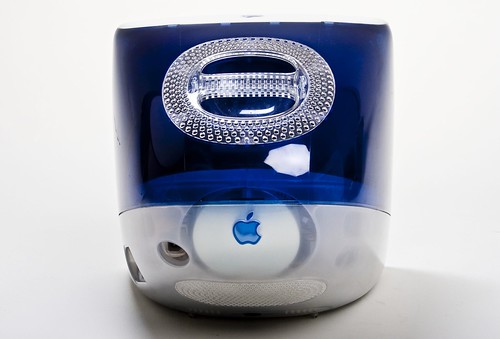
The back of an iconic design; its iconic designer is heading out of Apple. CC-licensed photo by Carl Berkeley on Flickr.

You can sign up to receive each day’s Start Up post by email. You’ll need to click a confirmation link, so no spam.

A selection of 10 links for you. Got 99 problems but finding a replacement head of design ain’t one. I’m @charlesarthur on Twitter. Observations and links welcome.

Jony Ive, iPhone designer, announces Apple departure • Financial Times

Tim Bradshaw:

»

Sir Jonathan is setting up his own new venture, a creative business called LoveFrom, with Apple as its first client. The transition will begin later this year, with LoveFrom launching fully in 2020. 

“While I will not be an [Apple] employee, I will still be very involved — I hope for many, many years to come,” Sir Jonathan told the FT in an exclusive interview. “This just seems like a natural and gentle time to make this change.”

The departure of the world’s most famous industrial designer and the custodian of the entire Apple aesthetic — from its hardware and software to its physical architecture — will come as a shock to its investors and customers. Many see Sir Jonathan as one of its most crucial assets as it looks beyond the iPhone into a new phase of products and services. 

Tim Cook, Apple’s chief executive, sought to play down the changes as an “evolution”, pointing to an expanded group of in-house designers that is “the strongest it’s ever been”. 

“We get to continue with the same team that we’ve had for a long time and have the pleasure of continuing to work with Jony,” Mr Cook told the FT. “I can’t imagine a better result.” 

«

So Apple’s going to be one of his clients. Which makes sense of a sort, but given the way that the ID (industrial design) team has determined the direction of the company for years and years, it will be up to Apple to prove that this isn’t going to be a huge disjointing change. The only way it couldn’t be is if Ive has been of diminishing importance over the past few years, and now someone else is going to step up and lead the ID team.

One must expect there will be a power struggle too. Apple’s press release says “Design team leaders Evans Hankey, vice president of Industrial Design, and Alan Dye, vice president of Human Interface Design, will report to Jeff Williams, Apple’s chief operating officer.” Going to be quite the spectator sport seeing which of those two prevails.
unique link to this extract


Google’s new reCaptcha has a dark side • Fast Company

Katharine Schwab:

»

According to two security researchers who’ve studied reCaptcha, one of the ways that Google determines whether you’re a malicious user or not is whether you already have a Google cookie installed on your browser. It’s the same cookie that allows you to open new tabs in your browser and not have to re-log in to your Google account every time. But according to Mohamed Akrout, a computer science PhD student at the University of Toronto who has studied reCaptcha, it appears that Google is also using its cookies to determine whether someone is a human in reCaptcha v3 tests. Akrout wrote in an April paper about how reCaptcha v3 simulations that ran on a browser with a connected Google account received lower risk scores than browsers without a connected Google account. “If you have a Google account it’s more likely you are human,” he says. Google did not respond to questions about the role that Google cookies play in reCaptcha.

With reCaptcha v3, technology consultant Marcos Perona and Akrout’s tests both found that their reCaptcha scores were always low risk when they visited a test website on a browser where they were already logged into a Google account. Alternatively, if they went to the test website from a private browser like Tor or a VPN, their scores were high risk.

To make this risk-score system work accurately, website administrators are supposed to embed reCaptcha v3 code on all of the pages of their website, not just on forms or log-in pages. Then, reCaptcha learns over time how their website’s users typically act, helping the machine learning algorithm underlying it to generate more accurate risk scores.

«

But that also means Google is seeing everything you do. Okayyy but.. it does anyway?
unique link to this extract


Trolls target online polls following first Democratic presidential debate • NBC News

Ben Collins and Ben Popken:

»

Users from pro-Trump communities on 4chan and Reddit implored fellow members to vote for lower-polling candidates in online polls, specifically Tulsi Gabbard and Bill de Blasio, in the hours after Wednesday’s Democratic debate — a sign that digital manipulation efforts related to U.S. politics and elections remain very much alive.

Users on 4chan’s anonymous far-right /pol/message board repeatedly posted links to polls across the web, encouraging one another to “blow the polls out” for Gabbard, the congresswoman from Hawaii who has developed a substantial support base among many of its users.

The posts pointed users toward polls on national news websites like the Drudge Report, The Washington Examiner, and Heavy.com, but also polls from local news providers like NJ.com, which posts from several newspapers in the state.

“GIVE HER YOUR POWER,” read one 4chan post from 1 a.m. Thursday, pointing to a screenshot of the still-active Drudge poll showing Gabbard leading.

«

Online polls are a trapdoor to bad outcomes. Is anyone seriously still running online polls, let alone believing them?
unique link to this extract


Why China is winning the electric bus race • CityLab

Linda Poon:

»

The biggest takeaway [from the World Enterprise Institute report] is the cities that want to hop aboard the e-bus revolution need to completely rewire their thinking about electricity and vehicles. “Understanding that electric vehicles are about more than just vehicles is one of the hardest barriers for people to cross over, in both the energy and transportation sectors,” says Camron Gorguinpour, one of the lead authors of the twin reports. “It’s hard on people who have gone through their whole careers thinking that vehicles and electrical systems are [separate] to now internalize that these things are one in the same.”

That means when cities consider adopting electric buses, they need to understand the power grid upgrades and charging infrastructure required, and challenges associated with that. Failure to do so is the most common mistake, according to Gorguinpour. Many cities just set up their charging stations thinking that things would “work themselves out.”

That’s why he says one of the most overlooked stories from Shenzhen’s experience is the city’s long process in setting up the charging infrastructure to support more than 16,000 electric buses. Each bus has a range of about 124 miles on a single charge of 252 kilowatt hours (KWh). In total, the fleet can eat more than 4,000 megawatt-hours (MWh). For comparison’s sake, 1 MWh is enough to power about 300 homes for an hour. “That’s an insane amount of power required, not to mention real estate,” he says.

«

99% of the world’s 425,000 electric buses are in China.
unique link to this extract


Streaming TV is about to get very expensive – here’s why • The Guardian

Stuart Heritage:

»

Right now, things are just about manageable: if you have a TV licence, a Netflix subscription, an Amazon subscription and a Now TV subscription, you are pretty much covered – but things are about to take a turn for the worse.

In November, Disney will launch Disney+, a streaming platform that will not only block off an enormous amount of existing content (Disney films, ABC shows, Marvel and Pixar films, Lucasfilm, The Simpsons and everything else made by 20th Century Fox), but will also offer a range of new scripted Marvel shows that will directly inform the narrative of the Marvel Cinematic Universe. Essentially, if you want to understand anything that happens in any Marvel film from this point onwards, you’ll need to splash out on a Disney+ subscription.

Apple will also be entering the streaming market at about the same time, promising new work from Sofia Coppola, Jennifer Aniston, Oprah Winfrey, Reese Witherspoon, Brie Larson, Damien Chazelle and Steven Spielberg. In the next three years, Apple will spend $4.2bn on original programming, and you won’t get to see any of it if you don’t pay a monthly premium.

There are so many others. NBCUniversal is pulling its shows from Netflix for its own platform. Before long, Friends is likely to disappear behind a new WarnerMedia streaming service – along with Lord of the Rings films, the Harry Potter films, anything based on a DC comic and everything on HBO – that it is believed will cost about £15 a month. In the UK, the BBC and ITV will amalgamate their archives behind a service called BritBox. The former Disney chairman Jeffrey Katzenberg is about to launch a platform called Quibi, releasing “snackable” content from Steven Spielberg and others that is designed to be watched on your phone. YouTube is producing more and more original subscription-only content. Facebook is making shows, for crying out loud.

«

Yay Americans! You cut the cord! Now you can get it all over the internet. In pieces.
unique link to this extract


Creator of DeepNude, app that undresses photos of women, takes it offline • VICE

Samantha Cole:

»

On Wednesday, Motherboard reported that an anonymous programmer who goes by the alias “Alberto” created DeepNude, an app that takes an image of a clothed woman, and with one click and a few seconds, turns that image into a nude by algorithmically superimposing realistic-looking breasts and vulva onto her body.

The algorithm uses generative adversarial networks (GANs), and is trained on thousands of images of naked women. DeepNude only works on images of women, Alberto said, because it’s easy to find thousands of images of nude women online in porn.

Following Motherboard’s story, the server for the application, which was available for Linux and Windows, crashed.

By Thursday afternoon, the DeepNude twitter account announced that the app was dead: No other versions will be released and no one else would be granted to use the app.

“We created this project for users’ entertainment months ago,” he wrote in a statement attached to a tweet. “We thought we were selling a few sales every month in a controlled manner… We never thought it would become viral and we would not be able to control traffic.”

When I spoke to Alberto in an email Wednesday, he said that he had grappled with questions of morality and ethical use of this app.

«

One person proves it, a thousand will follow. The more depressing bit is that “it’s easy to find thousands of images of nude women online in porn.” It’s that “see through peoples’ clothes with X-ray specs!” advert brought to life through a smartphone.
unique link to this extract


Consumers are becoming wise to your nudge • Behavioral Scientist

Simon Shaw:

»

I know exactly how the conversation will go.

I’m interviewing Chris, a 52-year-old man living a small coastal town, for the second time. We’ve been exploring the new checkout process for a client’s redesigned website. The new site isn’t performing as well as the company thought it would, so I’m exploring why and seeing what we can learn from competitors. 

“Only 2 rooms left? They don’t expect me to believe that do they? You see that everywhere.”

I leave with a wry smile. The client won’t be happy, but at least the project findings are becoming clear. Companies in certain sectors use the same behavioral interventions repeatedly. Hotel booking websites are one example. Their sustained, repetitive use of scarcity (e.g., “Only two rooms left!”) and social proof (“16 other people viewed this room”) messaging is apparent even to a casual browser. 

For Chris the implication was clear: this “scarcity” was just a sales ploy, not to be taken seriously.

«

The problem now is that you can’t do that honestly; people will think you’re conning them.
unique link to this extract


Huawei smartphone sales ebbing in Taiwan • Digitimes

Max Wang and Steve Shen:

»

Huawei shipped about 50,000 smartphones in Taiwan in May, accounting for a 8.6% share in terms of unit shipments and remaining in fourth place as it did a month earlier, trailing Apple (24.8%), Samsung (23.7%) and Oppo (10.8%), said the sources.

In terms of shipment value, Huawei saw its ranking slide one notch to fourth from third with a 6% share, trailing Apple (52.7%), Samsung (19.7%) and Oppo (6.4%).

However, the sources said that they believe sales of Huawei’s smartphones are likely to drop by 60-80% on month in June, with its ranking in unit shipments to tumble by 4-5 notches.

«

Not that you’d expect a Chinese mainland brand to sell that well in Taiwan.
unique link to this extract


Pre-saving albums can allow labels to track users on Spotify • Billboard

Micah Singleton:

»

To pre-save music, which adds a release to a user’s library as soon as it comes out, Spotify users click through and approve permissions that give the label far more account access than the streaming giant normally grants them — enough to track what they listen to, change what artists they follow and potentially even control their music streaming remotely.

This lets labels access some of the data that streaming companies usually guard for themselves — which they want in order to compete with the streaming giants on a more even playing field. But at a time when the policies of online giants like Google and Facebook has made online privacy a contentious issue, music’s pre-saving process could begin to spark concern among consumers, and perhaps even regulators.

Labels also ask for far more permissions than they need. Spotify users who, for example, tried to pre-save the Little Mix single “Bounce Back” from links shared by the act or its label, Sony Music, were prompted to agree that Spotify could allow Sony to “view your Spotify account data,” “view your activity on Spotify” and “take actions in Spotify on your behalf.” The exact permissions Sony requests are only visible to those who click through to the corresponding submenus, so users may not fully understand all that they’re agreeing to — or that the changes apply to their account unless they change it on Spotify’s website…

…The only access labels need to pre-save music to a Spotify account is permission to “add and remove items in your Library.” But the submenus for Sony’s Little Mix campaign asked users for 16 additional permissions, including to “control Spotify on your device” and “stream and control Spotify on your other devices.” In its campaign for Chris Brown’s new single “No Guidance,” featuring Drake, Sony asked to “upload images to personalize your profile or playlist cover” and manage who you follow on Spotify. (Spotify, Sony and the other major labels declined to comment for this story.)

«

Yeah, I bet they did. “Permissions overreach” is such a 21st century thing to do.
unique link to this extract


Would you pay $30 a month to check your email? • The New York Times

Kevin Roose:

»

if you’re approved for access, there’s a mandatory session in which a representative gives you a videoconference tutorial. In my case, Mr. Vohra spent a full hour teaching me how to use the app’s features. Superhuman, which plugs into your existing email account, works with only Gmail and Google G Suite addresses for now, but the company plans to expand to other providers soon.

Some of the app’s features — such as ones that let users undo sending, track when their emails are opened and automatically pull up a contact’s LinkedIn profile — are available in other third-party email plug-ins. But there are bells and whistles that I hadn’t seen before. Like “instant intro,” which moves the sender of an introductory email to bcc, saving you from having to manually re-enter that person’s address. Or the scheduling feature, which sees that you’re typing “next Tuesday” and automatically pulls up your calendar for that day.

These features will appeal most to power users who spend most of their day typing on a laptop or desktop. (Superhuman has a mobile app, but much of the heavy-duty functionality requires a keyboard.) Mr. Vohra said the app was targeted at people who spend three or more hours a day checking their email.

“When you’re doing three-plus hours of email every day, it’s your job,” Mr. Vohra said. “And every single other job has a tool that makes you do it faster.”

…with Superhuman, I bushwhacked through my unread emails in less than an hour, eventually reaching a kind of dissociative flow state. Invitation to a blockchain-themed happy hour? Hit ⌘-; to insert a “snippet,” a canned reply politely declining. Newsletter from a hotel I stayed at once in 2014? Hit ⌘-U to unsubscribe. It made checking my email feel less like doing work and more like speed-running a video game in which the object is to annoy as few people as possible.

«

OK, those sound useful – especially the Unsubscribe. I can imagine every email company (all three of them) stealing those features and making them universal (and free, rather than $30 per month) in a couple of years.

unique link to this extract


Errata, corrigenda and ai no corrida: none notified
Start Up No.1,098: life and data on 5G, classical streaming’s woes, EU v AI, Apple hires ARM chief, Libra’s risky potential, and more


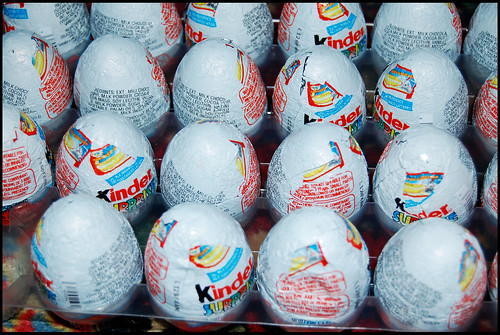
Think carefully: are these gambling? Some games companies would like you to think so. CC-licensed photo by Brandon Cripps on Flickr.

A selection of 12 links for you. Not a baker’s dozen. I’m @charlesarthur on Twitter. Observations and links welcome.


Adblock-proof just-this-side-of-annoying promo: got half an hour? Try The Human and Machine podcast. It’s a co-presentation by Julia Hobsbawm (of Editorial Intelligence) and myself.

The latest episode is a discussion with Yasmin Alibhai-Brown and Rohan Candappa, plus an interview with Professor Charlton McIlwain, about race and the internet.

Previous episodes included autopilots, the 737 Max and the implications for self-driving cars with Alex Hern of the Guardian and Dr Jack Stilgoe of University College London.

The next one (coming soon!) will talk to Professor Martyn Rees about humans on Mars, genetic modification, and much more. Find these episodes, and the whole series, by searching for “human and machine” on your podcast app.


EA: loot boxes are actually “surprise mechanics” that are “ethical and fun” • Ars Technica

Kyle Orland:

»

Representatives from EA and Epic Games spoke in front of a UK parliamentary panel [last] Wednesday (transcript). They were there to defend the game industry against charges of addictive game mechanics and encouragement of gambling via loot boxes. But at least one of those representatives took issue with the basic premise that randomized item purchases should be labeled as “loot boxes” in the first place.

“That is what we look at as ‘surprise mechanics,'” EA Legal and Government Affairs VP Kerry Hopkins told the panel when asked about the ethics of loot boxes. “It is important to look at this. If you go to—I don’t know what your version of Target is—a store that sells a lot of toys and you do a search for surprise toys, you will find that this is something people enjoy. They enjoy surprises. It is something that has been part of toys for years, whether it is Kinder eggs or Hatchimals or LOL Surprise!”

As implemented in a game like FIFA, Hopkins went on to argue that these surprise mechanics are “quite ethical and fun [and] enjoyable to people… We think it is like many other products that people enjoy in a very healthy way. They like the element of surprise.

“The packs—the surprise that we talked about a little before—are fun for people,” Hopkins said. “They enjoy it. They like earning the packs, opening the packs, and building and trading the teams.”

«

Solipsistic nonsense. It’s gambling, because you pay non-trivial sums of money in the hope that you’ll get something of greater value than the sum paid, but you can also get something worth less. A Kinder Egg content is never worth more than you pay, never worth less.
unique link to this extract


5G in Australia: supersonic speeds raise data consumption questions • CNET

Daniel Van Boom:

»

That brings us to a more practical issue. As noted, Randwick was my first testing location. About 25 minutes in, after several speed tests, downloading PUBG and two movies from Netflix, I got an SMS. “You’ve used 50% of your 20GB data allowance,” Telstra warned me. Uh oh.

The SIM card I was using was loaned to me by Telstra for testing, but 20GB isn’t an unusually small amount. Telstra’s fattest data plan offers 150GB for $70 (AU$100) a month, but the average Australian has a 10GB data limit, according to a 2018 Finder study. Most plans in Australia give you between 10 and 50GB of data. In the US, “unlimited” data plans tend to include up to about 75GB, or 100GB for Sprint’s priciest plan, before internet speeds are throttled.

It will be impossible to burn through 50GB, let alone 150GB, just by using social media, answering emails and streaming YouTube on 4G. But with 5G speed comes incentive to, y’know, use 5G. When 5G speeds outpace home broadband by a significant margin, data will have to become cheaper for those blazing speeds to be convenient and truly useful. 

«

In the UK, the mobile company EE (owned by the landline monopoly BT) is the first with 5G. In my experience, it’s also the stingiest with data allowances – or the priciest, which works out to the same thing. 5G is fast – though even those testers were seeing speeds fall in their testing.
unique link to this extract


YouTube lets users override recommendations • Bloomberg

Lucas Shaw and Gerrit De Vynck:

»

YouTube said it will let users override automated recommendations after criticism over how the online video service suggests and filters toxic clips.

“Although we try our best to suggest videos you’ll enjoy, we don’t always get it right, so we are giving you more controls for when we don’t,” Essam El-Dardiry, a product manager at YouTube, wrote in a blogpost on Wednesday.

Users will now be able to tell YouTube to stop suggesting videos from a particular channel by tapping the three-dot menu next to a video on the homepage or Up Next, then choosing “Don’t recommend channel.” After that, viewers should no longer see videos from that channel, El-Dardiry said.

The move comes after Susan Wojcicki and other YouTube executives were criticized for being either unable or unwilling to act on internal warnings about extreme and misleading videos because they were too focused on increasing viewing time and other measures of engagement.

«

It’s pretty weak sauce, though. The risk from recommendations is not from channels you recognise, but from the bazillions of nonsense things that drive people down rabbit holes, from all sorts of channels. It’s the recommendation algorithm itself.
unique link to this extract


In the age of streaming, classical music gets lost in the metadata • The New York Times

Ben Sisario:

»

Classical music has always been a specialized corner of the music business, with a discerning clientele and few genuine blockbusters. But by some measures the genre has suffered in the shift to streaming. While 2.5% of album sales in the United States are classical music, it accounts for less than 1% of total streams, according to Alpha Data, a tracking service.

Two new companies, Idagio and Primephonic, see an opportunity in the disconnect. Both are challenging the big platforms by offering streaming services devoted to classical music, with playlists that push Martha Argerich over Ariana Grande, and databases tailored to the nuances of the genre.

“The mission we are on is to turn the tide for classical music the way Spotify has done for pop,” said Thomas Steffens, the chief executive of Primephonic, which is based in Amsterdam and went online last fall.

The genre has been an awkward fit for streaming partly because of the major services’ metadata — the underlying organizational schemes for identifying titles of recordings, the personnel associated with them and other details.

For most of the music on Spotify or Apple Music, a listing of artist, track and album works fine. But critics of the status quo argue that the basic architecture of the classical genre — with nonperforming composers and works made up of multiple movements — is not suited to a system built for pop.

Search Spotify’s mobile app for “Mozart Requiem,” for example, and a confusing list of dozens of albums follows; since there is no special field for a composer, most of those albums designate Mozart as the “artist.” On Apple Music, a composer field has become standard only in recent months.

«

unique link to this extract


EU should ban AI-powered citizen scoring and mass surveillance, say experts • The Verge

James Vincent:

»

The recommendations are part of the EU’s ongoing efforts to establish itself as a leader in so-called “ethical AI.” Earlier this year, it released its first guidelines on the topic, stating that AI in the EU should be deployed in a trustworthy and “human-centric” manner.

The new report offers more specific recommendations. These include identifying areas of AI research that require funding; encouraging the EU to incorporate AI training into schools and universities; and suggesting new methods to monitor the impact of AI. However, the paper is only a set of recommendations at this point, and not a blueprint for legislation.

Notably, the suggestions that the EU should ban AI-enabled mass scoring and limit mass surveillance are some of the report’s relatively few concrete recommendations. (Often, the report’s authors simply suggest that further investigation is needed in this or that area.)

The fear of AI-enabled mass-scoring has developed largely from reports about China’s nascent social credit system.

«

unique link to this extract


Oppo’s under-screen camera is real and taking photos in Shanghai • Engadget

Richard Lai:

»

when the camera is idle, the screen works just as normal. However, when you look up close, the area above the camera appears to be more pixelated. According to Oppo, this zoned-out area features a highly-transparent material plus a redesigned pixel structure for improved light transmittance. In other words, this camera tech requires a customized display panel, because existing ones won’t do the job — their transparency properties are only good enough for in-display fingerprint readers, but not conventional cameras.

Oppo added that the under-screen camera itself also packs a larger sensor with bigger pixels, along with a larger aperture to get as much light as possible. This does mean a drop in resolution, and based on our quick comparison, there’s certainly room for improvement in terms of clarity and color accuracy. This is a little worrying, considering Oppo has already applied its algorithm fix on haze removal, HDR plus white balance, and it’ll have to put in extra effort here to meet its usual selfie standards.

There’s still no update on when we can expect this under-screen camera technology to show up on a mass-production phone – all we were told was this will be released “in the near future.”

«

“In the near future” is my favourite date. I’ve got it marked in my calendar. Meanwhile this seems like another not-quite-there-yet feature/gimmick that Oppo is rushing out so it can say “first!”
unique link to this extract


Exclusive: Intel launches blockbuster auction for its mobile portfolio • IAM

Richard Lloyd:

»

In what looks set to become one of the highest profile patent sales in years, Intel has put its IP relating to cellular wireless connectivity on the auction block. The company is seeking to divest around 8,500 assets from its massive portfolio.

The news comes as the chip giant searches for a buyer for its 5G smartphone modem business having announced in April that it was pulling out of the market. That was after as it had become increasingly clear that the company, which has been the supplier of 4G modem chips to Apple for the last few years, was struggling to release a 5G product even though the rollout of the next generation of mobile technology is well underway.

The auction offering is comprised of two parts: the cellular portfolio and a connected device portfolio. The former includes approximately 6,000 patent assets related to 3G, 4G and 5G cellular standards and an additional 1,700 assets that read on wireless implementation technologies. The latter is made up of 500 patents with broad applicability across the semiconductor and electronics industries.

«

Not quite a fire sale, but there isn’t anything left of the building now that Apple isn’t going to buy 5G modems from it.
unique link to this extract


Apple hires ARM’s lead CPU architect amid rumours of ARM-based Macs as early as 2020 • MacRumors

Joe Rossignol:

»

ARM’s lead CPU and system architect Mike Filippo joined Apple last month, based out of the Austin, Texas area, according to his LinkedIn profile. Filippo led the development of several chips at ARM between 2009 and 2019, including the Cortex-A76, Cortex-A72, Cortex-A57, and upcoming 7nm+ and 5nm chips.

Filippo also served as Intel’s lead CPU and system architect between 2004 and 2009, and he was a chip designer at AMD between 1996 and 2004, so he brings a wealth of chipmaking experience with him to Apple.

Filippo’s profile still lists his ARM role as ongoing, but social media talk suggests that he has left the company.

Apple designing its own ARM-based processors for Macs would allow it to move away from Intel processors, which have frequently faced delays. In fact, sources within Intel reportedly confirmed to Axios that Apple does plan to transition to ARM-based processors in Macs starting next year.

«

That’s quite an aggressive hire; can’t imagine ARM being charmed by it. The timetable for ARM-based Macs is going to be the focus of everyone’s interest in the next few months, for certain.
unique link to this extract


Rumor: Samsung’s next foldable will be a clamshell device • Android Authority

Scott Adam Gordon:

»

Samsung is already working on its next flexible display smartphone, according to speculation from ETNews. In an article published yesterday, the website suggested Samsung’s next folding screen device would be a clamshell-style product with an outward-facing, 1in display.

The phone would seemingly be more portable than the Galaxy Fold, which functions as a hybrid between phone and tablet. The future foldable is tipped to be about the size of a regular flagship, with its display coming in at around 6.7in when unfolded. The Galaxy Fold has a 7.3in screen when unfolded and a nearly 4:3 aspect ratio.

ETNews didn’t say whether the 1in screen on the outside would be touch-enabled, but it did say it would offer limited functionality. It might operate something like the always-on displays found on other Samsung phones.

«

One inch seems awfully small for a screen. The idea is that it folds in the middle from top to bottom, so that.. well, I’m not really sure how this benefits humanity, but apparently we don’t have enough folding phones in our lives. Not that actually we have any yet, of course.
unique link to this extract


US tech companies sidestep a Trump ban, to keep selling to Huawei • The New York Times

Paul Mozur and Cecilia Kang:

»

Kevin Wolf, a former Commerce Department official and partner at the law firm Akin Gump, has advised several American technology companies that supply Huawei. He said he told executives that Huawei’s addition to the list did not prevent American suppliers from continuing sales, as long as the goods and services weren’t made in the United States.

A chip, for example, can still be supplied to Huawei if it is manufactured outside the United States and doesn’t contain technology that can pose national security risks. But there are limits on sales from American companies. If the chip maker provides services from the United States for troubleshooting or instruction on how to use the product, for example, the company would not be able to sell to Huawei even if the physical chip were made overseas, Mr. Wolf said.

“This is not a loophole or an interpretation because there is no ambiguity,” he said. “It’s just esoteric.”

After this article was published online on Tuesday, Garrett Marquis, the White House National Security Council spokesman, criticized the companies’ workarounds. He said, “If true, it’s disturbing that a former Senate-confirmed Commerce Department official, who was previously responsible for enforcement of U.S. export control laws including through entity list restrictions, may be assisting listed entities to circumvent those very enforcement mechanisms.”

Mr. Wolf said he does not represent Chinese companies or firms on the entity list, and he added that Commerce Department officials had provided him with identical information on the scope of the list in recent weeks.

«

Trade’s gonna trade. And as one annoyed person has pointed out, wasn’t Trump elected on a “let’s all get rich selling stuff to the Chinese” platform?
unique link to this extract


Here’s why some users are getting more LinkedIn notifications • Axios

:

»

Linkedin will today announce algorithm changes made over the past 12-18 months to favor conversations in its Feed that cater to niche professional interests, as opposed to elevating viral content, its executives tell Axios.

News feeds that were fundamentally built to connect one voice to many are struggling to deliver on value as communication trends move to more personal and ephemeral conversations.

Users may have noticed that their notifications or engagements on LinkedIn have increased lately.

LinkedIn has done this in part, because internal research found that participation wasn’t even across the platform, and that much of the attention in on LinkedIn was skewed towards the top 1% of power users, according to Tim Jurka, Director of Artificial Intelligence at LinkedIn.
Changes include:
• Elevating content that users are most likely to join in conversation, which typically means people that users interact with directly in the feed through comments and reactions, or people who have shared interests with you based on your profile.
• Elevating a post from someone closer to a users’ interests or network if it needs more engagement, not if it’s already going viral.
• Elevating conversations with things that encourage a response (like opinions commentary alongside content), as well as posts that use mentions and hashtags to bring other people and interests into the conversation and elevating posts from users that respond to commenters.
• Elevating niche topics of conversation will perform better than broad ones. (When it comes to length, LinkedIn says its algorithm doesn’t favor any particular format, despite rumors that it does.)

«

On that last point: it’s probably that people interact better with content of particular lengths because that’s how people are, not because the algorithm chooses the length.
unique link to this extract


Facebook’s Libra has staggering potential: state control of money could end • The Conversation

Gavin Brown:

»

Imagine ten years from now if, say, 40% of all US dollars are held on deposit by Facebook/the council to back the issued libra coins, which have by now become widely used across the world. We can hypothesise that US dollars might constitute a 30% weight of libra’s asset-backing basket – to have a steady exchange rate for libra, the idea is to underpin it with a selection of stable and widely traded financial assets.

In the likely event that the US experiences a moderate, or even severe economic crisis, Facebook/the council would need to rebalance the basket of assets to defend the value of libra. Let’s say they decided to revise down the US dollar weighting in their reserve to 25% of the basket. This would involve selling huge sums of US dollars and replacing them with, say, euros, and would significantly drive down the value of the dollar.

This would be a very negative market signal, encouraging other holders of dollars to dump them as well, thereby exacerbating the fall. And even before this happened, Facebook could potentially use the mere threat as leverage in negotiating with nation states on matters of regulation, taxation and so on. Based on Facebook’s current revenues, it would already be 90th in the world by GDP if it was a nation state, so its power to face off in negotiations with states and trading blocs is formidable even without libra.

«

Brown is senior lecturer in finance at Manchester Metropolitan University. (He’s also “a Non-Executive Director and Co-founder at Blockchain Capital Limited, a start-up digital assets fund which has yet to launch. It would not benefit directly from this article but does have an interest in digital asset investments such as bitcoin which leverage blockchain technology.”) That scenario isn’t so unlikely. And it’s slightly worrying, isn’t it? Libra’s value being like that of a share in an exchange-traded fund is slightly problematic if it’s used for transactions. Related: I appeared last night on an Al Jazeera program with the PR head of the Libra Consortium. I asked him twice whether it could go bust, and what would happen in that case to everyone’s Libra – would it be refunded? I don’t think I got a clear answer.
unique link to this extract


Errata, corrigenda and ai no corrida: none notified

You can sign up to receive each day’s Start Up post by email. You’ll need to click a confirmation link, so no spam.

Start Up No.1,097: Apple’s self-driving (again), RIP chatbot news, sizing Hong Kong’s protests, Facebook and Libra, and more


Quantum computing may be about to take off at a dramatic rate. Who benefits? CC-licensed photo by Kevin Dooley on Flickr.

You can sign up to receive each day’s Start Up post by email. You’ll need to click a confirmation link, so no spam.

A selection of 12 links for you. Not a model. I’m @charlesarthur on Twitter. Observations and links welcome.

Drive.ai, a self-driving car startup once worth $200 million, is closing • SFChronicle.com

Sophia Kunthara and Melia Russell:

»

Mountain View startup Drive.ai, which made kits to turn regular cars into autonomous ones, will shut its office in June and lay off 90 workers in a permanent closure of its business, according to a filing with a state agency.

At the same time, Apple has hired a handful of hardware and software engineers from Drive.ai, in what appears to be part of a renewed effort by the iPhone and Mac maker to branch out into self-driving cars.

Three weeks ago, Apple was said to be exploring a purchase of Drive.ai, a deal that would let Apple pick up dozens of Drive.ai engineers while eliminating a competitor from the market.

So far, five former Drive.ai employees have changed their LinkedIn profiles to say they left Drive.ai in June and joined Apple the same month. Four of those workers list “special projects” in their job titles. Those employees include data, systems and software engineers.

«

Apple doesn’t seem to quite want to let go of this idea. Can’t be a sunk cost thing; they know when to stop throwing good money after bad. Either their ambitions are much bigger than we suspect, or much smaller than we infer.
unique link to this extract


R.I.P. Quartz Brief, the innovative mobile news app. Maybe “chatting with the news” isn’t something most people really want to do? • Nieman Journalism Lab

:

»

When the Quartz app debuted in 2016, it was immediately clear that it would be a big step away from the news app mainstream. No list of headlines here; a first-time user saw what looked like a chat interface, familiar from whatever app they use to trade barbs with friends, and a sort of textual uncanny valley: Am I talking with a bot? A person? A news organization?

The answer was a combination of all three. In real time, the app’s prose was being sent by software; there wasn’t some thumb-sore intern responding to each and every user 24/7. But those words were written by real Quartz staffers, one tasked with condensing an interesting story into a script of back-and-forth responses that encouraged engagement with the story and felt human. And in a sense, you really were chatting with the news organization itself; as Quartz’s Zach Seward put it before the app even launched, “Quartz is an API”.

«

Is it a surprise that people don’t want to have to work any harder than absolutely necessary to read the news? Mistaking novelty for utility is a common problem in product design.
unique link to this extract


Does Neven’s Law describe quantum computing’s rise? • Quanta Magazine

Kevin Hartnett:

»

In December 2018, scientists at Google AI ran a calculation on Google’s best quantum processor. They were able to reproduce the computation using a regular laptop. Then in January, they ran the same test on an improved version of the quantum chip. This time they had to use a powerful desktop computer to simulate the result. By February, there were no longer any classical computers in the building that could simulate their quantum counterparts. The researchers had to request time on Google’s enormous server network to do that.

“Somewhere in February I had to make calls to say, ‘Hey, we need more quota,’” said Hartmut Neven, the director of the Quantum Artificial Intelligence lab. “We were running jobs comprised of a million processors.”

That rapid improvement has led to what’s being called “Neven’s law,” a new kind of rule to describe how quickly quantum computers are gaining on classical ones. The rule began as an in-house observation before Neven mentioned it in May at the Google Quantum Spring Symposium. There, he said that quantum computers are gaining computational power relative to classical ones at a “doubly exponential” rate — a staggeringly fast clip.

With double exponential growth, “it looks like nothing is happening, nothing is happening, and then whoops, suddenly you’re in a different world,” Neven said. “That’s what we’re experiencing here.”

«

Double exponential (the exponent of the exponent) is shockingly fast. Though the problem with quantum computers is that until (unless) you can find room-temperature superconductors, they’re going to be highly specialised kit, available only to a select few. Which poses its own kind of problem: who gets access?
unique link to this extract


Hong Kong protests: measuring the masses • Reuters

Simon Scarr, Manas Sharma, Marco Hernandez and Vimvam Tong:

»

Robert Chung, director of the program, said headcounts were getting hopelessly politicised. “Headcount calling has become less and less scientific,” Chung said. “One side bluffs more and more, the other side compresses harder and harder, both have gone beyond reality.”

Professor Yip, who also worked on crowd estimates for the June 16 rally, said: “I think the gap between the organisers and police becoming wider is a reflection of how much distrust is in the community. The wider the gap, the wider distrust.”

HKUPOP typically measures flow over the duration of a march, no matter how long, with estimates adjusted based on sample interviews with protesters about where they joined the march and when. The program did not deploy a team to measure crowd size on June 9 or June 16. But Yip said that based on what he saw of the march, he estimated the latest rally to have drawn 500,000 to 800,000 people.

It seems unlikely police and protesters in Hong Kong will reach a consensus about the size of crowds during marches and other rallies. And the science behind crowd counting will continue to evolve as researchers find more accurate ways to measure how many people take to the streets. But Yip said both sides may be missing the point by arguing over numbers.

«

Long, scientific and detailed; but also pointing out that scientific might be the least useful way to think about it, because it’s political. (Via Sophie Warnes’s Fair Warning newsletter.)
unique link to this extract


Global telecom carriers attacked by suspected Chinese hackers • WSJ

Timothy W. Martin and Eva Dou:

»

Hackers believed to be backed by China’s government have infiltrated the cellular networks of at least 10 global carriers, swiping users’ whereabouts, text-messaging records and call logs, according to a new report, amid growing scrutiny of Beijing’s cyberoffensives.

The multiyear campaign, which is continuing, targeted 20 military officials, dissidents, spies and law enforcement—all believed to be tied to China—and spanned Asia, Europe, Africa and the Middle East, says Cybereason Inc., a Boston-based cybersecurity firm that first identified the attacks. The tracked activity in the report occurred in 2018.

The cyberoffensive casts a spotlight on a Chinese group called APT 10; two of its alleged members were indicted by the US Department of Justice in December for broad-ranging hacks against Western businesses and government agencies. Cybereason said the digital fingerprints left in the telecom hacks pointed to APT 10 or a threat actor sharing its methods.

«

Scary, right? However:

»

The Wall Street Journal was unable to independently confirm the report. Cybereason, which is run by former Israeli counterintelligence members, declined to name the individuals or the telecom firms targeted, citing privacy concerns.

«

Nobody has been able to independently verify this claim. There are lots of security companies making these claims. It’s increasingly difficult to figure out who’s telling the truth, who’s exaggerating but truthful, and who’s spinning some big ones. Don’t forget that people once believed what Theranos told them too.
unique link to this extract


Juul ban in San Francisco is passed, outlawing e-cigarette sales • Bloomberg

Ellen Huet:

»

The city voted Tuesday to ban sales of e-cigarettes, making it illegal to sell nicotine vaporizer products in stores or for online retailers to ship the goods to San Francisco addresses. The ban will be the first of its kind to go into effect in the US.

The ordinance will now go to the mayor to sign into law. Cigarettes and other tobacco products will remain legal in the city, along with recreational marijuana.

As cigarette use in the US declines, tobacco companies have looked to other areas for revenue growth. Altria Group, which sells Marlboro cigarettes in the US, bought a 35% stake in Juul Labs Inc. last year, valuing the startup at $38bn. Juul told investors last month that revenue rose to $528m in the first quarter, as international sales took off. This week, an Indonesian retail chain that sells iPhones said it expected to begin carrying Juul products, sending its stock surging.

The legislation in San Francisco is aimed at all e-cigarette companies, but it has to feel personal for Juul. The San Francisco-based startup is the biggest target for vaping critics, who say it’s hooking kids on nicotine and creating a new generation of addicts.

«

I can’t follow how you’d allow the sale of cigarettes and marijuana, but ban the sale of e-cigarettes (which release vapourised nicotine). Yes, they’re worse than not smoking, but they’re a lot safer than cigarettes; the principal risks are mouth and throat cancers (and nicotine addiction, of course), but not the lung cancer and others that cigarette smoking offers.
unique link to this extract


Trump signs Executive Order compelling disclosure of prices in health care • WSJ

Stephanie Armour and Anna Wilde Mathews:

»

President Trump on Monday pushed for greater price disclosure in health care, signing an executive order that could make thousands of hospitals expose more pricing information and require doctors, health clinics and others to tell patients about out-of-pocket costs upfront.

While President Trump has pledged repeatedly to take on health costs, the signing of the executive order unleashes coordinated efforts from multiple agencies to pursue the goal. It calls for the Department of Health and Human Services to issue a rule within two months that could require hospitals to publicize information on their negotiated rates with insurers for common procedures.

«

Blimey. I guess this proves the stopped-clock theory. Trump admin does a good thing which will benefit people.
unique link to this extract


Facebook, Libra, and the long game • Stratechery

Ben Thompson:

»

the reality is that credit card penetration is much lower amongst the poor in developed countries and in developing countries generally: a digital currency ultimately premised on owning a smartphone has the potential to significantly expand markets to the benefits of both consumers and service providers.

To put it another way, Libra has the potential to significantly decrease friction when it comes to the movement of money; of course this potential is hardly limited to Libra — the reduction in friction is one of the selling points of digital currencies generally — but by virtue of being supported by Facebook, particularly the Calibra wallet that will be both a standalone app and also built into Facebook Messenger and WhatsApp, accessing Libra will likely be much simpler than accessing other cryptocurrencies. When it comes to decreasing friction, simplifying the user experience matters just as much as eliminating intermediary institutions.

There is also another component of trust beyond caring about who is verifying transactions: confidence that the value of Libra will be stable. This is the reason why Libra will have a fully-funded reserve denominated in a basket of currencies. This does not foreclose Libra becoming a fully standalone currency in the long run, but for now both users and merchants will be able to trust that the value of Libra will be sufficiently stable to use it for transactions.

If all of these bets pay off — that users and merchants will trust a consortium more than Facebook; that Libra will be cheaper and easier to use, more accessible, and more flexible than credit cards; and that Libra itself will be a reliable store of value — than that decrease in friction will be realized at scale.

«

This is a thoughtful article; Thompson isn’t taking things for granted. That idea of Libra growing at scale implies a world, eventually, where you have two currencies: WeChat Pay and Libra.
unique link to this extract


Facebook’s new currency has big claims and bad ideas • Foreign Policy

David Gerard offers a counter-narrative:

»

David Marcus, the Facebook executive in charge of the project, told the press last week that the problems of banking the unbanked were technical — that banks were unable to move money fast enough without a blockchain. This is completely backward. Experts know how to move numbers on a computer. The slow part is settlement and compliance: making sure that money transmitters are solvent, honest, and not fronting for drug runners. Banking the unbanked is a slow, one-on-one social process. Libra’s public relations material describes this as if it were entirely a technical problem — and none of it is.

The real motivation for the project seems to be ideological. Marcus was formerly at PayPal, and he understands payments and regulation. But he’s been a bitcoin fan since 2012 and was on the board of the cryptocurrency exchange Coinbase in 2017.

Marcus had been thinking about something like Libra for several years and had discussed the project with Facebook CEO Mark Zuckerberg since January 2018. Zuckerberg was interested in the project and the ideas—“a high-quality medium of exchange for the world, on a blockchain that could scale,” as Marcus described it in a press conference on June 17.

Facebook is under increasingly close attention from governments deeply suspicious of its track record on privacy, election manipulation, and fake information and its repeated defiance of calls to appear before elected representatives. Yet Facebook and its closest partners seem to think that they are large and powerful enough to swing a coup against the concept of government control of money.

«

So, take your pick.
unique link to this extract


Theranos founder Elizabeth Holmes’ fraud trial may not start until September 2020 • Silicon Valley

Ethan Baron:

»

Lawyers and prosecutors in the federal criminal case against disgraced Theranos founder Elizabeth Holmes have agreed on a September 2020 start date for a trial expected to take three months, according to a new court filing.

Holmes is charged with felony conspiracy and fraud for allegedly misleading patients, doctors and investors about her now-defunct Silicon Valley blood-testing startup. She and former company president Sunny Balwani were indicted by a grand jury in June. They are charged with 11 criminal counts of wire fraud and conspiracy to commit wire fraud.

On Friday, federal prosecutors and lawyers for Holmes and Balwani filed a joint memo in San Jose U.S. District Court, saying the prosecution did not oppose the proposal by lawyers for Holmes and Balwani to start the trial in September 2020, “or as soon thereafter as would be convenient for the court.” Prosecutors had preferred a start date in the first half of 2020, but the defense maintained that more time was needed to prepare, according to the memo.

«

So it will suck up huge amounts of time and money and happen much later than we’d hoped, if at all. Somehow this seems fitting.
unique link to this extract


Bitfinex misled public: execs feared $BTC drop to $1,000 as Tether hit $0.86 in October 2018 • The Block

:

»

As speculation of major problems at Bitfinex and Tether ran rampant last October amidst rumors of customer withdrawal issues, Bitfinex published a notice to the market stating that there were no issues with the exchange. As customers and the public questioned the solvency of the related entities and the price of the stablecoin Tether dropped to $0.86, the company’s official stance was that all was well…

…At the same time as the positive public statement, Bitfinex was having severe problems meeting customer withdrawal demands. In response to the troubles, a senior Bitfinex executive bluntly wrote to his external payments partner, “Please understand all this could be extremely dangerous for everybody, the entire crypto community. BTC could tank to below 1k if we don’t act quickly.”

Unfortunately, the alleged solution was to co-mingle customer and company funds, including those from Tether, to support Bitfinex redemptions [from Tether to a currency you can actually use for something in the real world]. This activity, which wasn’t disclosed by Bitfinex, is now being pursued as “fraud” by one of the top lawyers in the State of New York.

«

“Unfortunately” doesn’t belong in that last paragraph. I mean, call me curmudgeonly, but there was no accident there. Bitfinex did it on purpose. The writer shouldn’t have written it, and any editor should have struck it out. Complain about fake news if you like, but the problem starts with substandard news; the internet largely killed trade publications by taking away the oxygen of advertising, which tore up the training ground for the rest of the business. “Unfortunately”.

Also, I’m still very suspicious of Bitfinex.
unique link to this extract


Huawei exec: the foldable Mate X with Android intact to launch by September • TechRadar

Matt Swider:

»

The foldable Huawei Mate X is still coming and we know when it’ll launch: September or sooner, according to a Huawei executive who spoke to TechRadar this week.

“It’s coming in September – at the latest,” said Vincent Pang, President of Huawei’s Western European Region, while visiting New York City. “Probably earlier, but definitely September is guaranteed.”

Where will the Huawei Mate X launch? “Any country that has 5G,” Pang told us, making sure to remind us that Huawei’s foldable phone is a 5G phone. 

This was likely stressed because the Samsung Galaxy Fold launched with a 4G LTE version (before ultimately being recalled), with a 5G version only spoken about once and never officially priced.

Of course, Pang’s “any country that has 5G” comment comes with a caveat. The Mate X isn’t coming to the US, which is no surprise given the Huawei ban in the US…

…will the Mate X actually run Android and its apps when it launches?

“Yes,” Pang told us. “Because it has already been announced,” suggesting that it may fall outside of Trump administration’s ban on US companies (including software companies like Google) from dealing with Huawei.

«

Minor detail: the Galaxy Fold didn’t launch. They sent some to reviewers. Makes sense that the Mate will have Android – it was kitted out before the US ban – but updates might be in question.

September feels a long, long way off, though. Yet it’ll be here in a smattering of weeks.
unique link to this extract


Errata, corrigenda and ai no corrida: none notified

Start Up No.1,096: Raspberry Pi gets more vroom, Apple downplays Spotify numbers, the trouble with cement, how Wikipedia beats fake news, and more


Is the number of people who doubt this message growing – or perhaps actually shrinking? CC-licensed photo by Province of British Columbia on Flickr.

A selection of 10 links for you. Tuesday already? I’m @charlesarthur on Twitter. Observations and links welcome.


Adblock-proof shameless promo: got half an hour? Try The Human and Machine podcast. It’s a co-presentation by Julia Hobsbawm (of Editorial Intelligence) and myself.

The latest episode is a discussion with Yasmin Alibhai-Brown and Rohan Candappa, plus an interview with Professor Charlton McIlwain, about race and the internet.

We’ve previously spoken about autopilots, the 737 Max and the implications for self-driving cars with Alex Hern of the Guardian and Dr Jack Stilgoe of University College London.

The next one (coming soon!) will talk to Professor Martyn Rees about humans on Mars, genetic modification, and much more. Find these episodes, and the whole series, by searching for “human and machine” on your podcast app. As long as that isn’t BBC Sounds, which arguably isn’t a podcast app anyway.


Anti-vaxxers aren’t the main driver of the measles epidemic; their numbers aren’t growing • Slate

Daniel Engber:

»

Here’s a simpler, more convincing explanation for the sudden surge of measles: Much bigger outbreaks overseas have been spilling over to our shores. More than 66,000 cases have been registered in Europe since the start of the year, and there have been alarming flare-ups in parts of Africa and Asia, too. These crises have in turn set off the ones we’re seeing here. In May, the US Centers for Disease Control and Prevention confirmed that the recent measles outbreaks affecting New York’s Orthodox Jewish communities and Russian speakers in Clark County, Washington, each started off with sickened travelers returning from Israel and Eastern Europe.

In other words, one doesn’t need to posit soaring rates of craziness within the US to explain the growing public health disaster. It’s certainly true that pockets of vaccine refusal persist in this country, as they have for many years. If those pockets are now experiencing greater numbers of measles cases, it may be on account of dire trends in far-off places.

This global explanation only kicks the can a little farther down the road, however. Measles cases are spreading here because they’re spreading overseas—OK, fine. But why is measles spreading overseas?

«

Think a little while before you answer; it’s not obvious.
unique link to this extract


The new Raspberry Pi is basically a $35 desktop computer • Gizmodo

Andrew Liszewski:

»

At $35, the new Raspberry Pi 4 is the last thing you’ll want to rely on for tasks like Photoshop, video editing, or gaming. But it’s now packing a Broadcom 1.5 GHz ARM Cortex-A72 quad-core processor and the option to step up from 1GB of faster LPDDR4 RAM to 2GB for $45, or 4GB for $55, which should go a long way to making the Pi 4 more viable as a web browsing and email machine straight out of the box.

The Raspberry Pi 3’s standard sized HDMI port has been upgraded to a pair of micro HDMI ports on the Pi 4, allowing the tiny computer to power a pair of 4K displays at 30 frames per second, or a single 4K display at 60 frames per second—thanks to the board now adopting developer Eric Anholt’s Mesa V3D graphics driver. Onboard you’ll also find a pair of USB 2.0 ports and a pair of USB 3.0 ports, but microUSB is nowhere to be seen. It’s been replaced with a power-only USB-C port, adding an extra 500 mA of juice. On the wireless front, the Raspberry Pi 4’s Bluetooth has been upgraded to the 5.0 standard, and wifi now supports dual-band 802.11ac.

Originally designed as both a tool for tinkerers and those wanting to learn more about how computers work, the Raspberry Pi has become an essential tool for industrial applications, according to the company.

«

There’s a long discussion about what people use their Raspberry Pi to do over on Hacker News.
unique link to this extract


Green cement struggles to expand market as pollution focus grows • Bloomberg

Vanessa Dezem:

»

Manufacturing the stone-like building material is responsible for 7% of global carbon dioxide emissions, more than what comes from all the trucks in the world. And with that in mind, it’s surprising that leading cement makers from LafargeHolcim Ltd. in Switzerland to Votorantim Cimentos SA in Brazil are finding customers slow to embrace a greener alternative.

Their story highlights the difficulties of taking greenhouse gases out of buildings, roads and bridges. After wresting deep cuts from the energy industry, policymakers looking to extend the fight against global warming are increasingly focusing on construction materials and practices as a place to make further reductions. The companies are working on solutions, but buyers are reluctant to pay more.

“There is so far too little demand for sustainable materials,” said Jens Diebold, head of sustainability at LafargeHolcim. “I would love to see more demand from customers for it. There is limited sensitivity for carbon emissions in the construction of a building.”

«

Fertilizer yesterday, cement today – it seems like everything is contributing to the problem. In a way, it is.
unique link to this extract


An encyclopedia with breaking news • Wikipedia At 20

Brian Keegan on how Wikipedia has survived the “fake news” and clickbait incursion that has infected everywhere else:

»

Every user’s Facebook News Feed is personalized in response to their relationships, interests, and behavior. Content featuring novelty, humor, and outrage receives greater “engagement”, so publishers and advertisers are locked in an arms race to produce ever more attention-grabbing content and target it for users’ personalized feeds. Wikipedia has no newsfeed1, runs no advertising, and has a comparatively minuscule operating budget.

But an overlooked and critical difference between Wikipedia and other social platforms is the absence of personalization in the user experience. Every English Wikipedia user’s “Abraham Lincoln” article is the same regardless of their geography, gender, browsing history, or social graph. This common experience concentrates collective scrutiny and deliberative capacity rather than diffusing these accountability mechanisms across inscrutable and incommensurable personalized news feeds. Linus’s Law—”given enough eyes, all bugs are shallow” evidently holds for preserving the integrity of social information feeds.

«

That lack of personalisation turns out to be a boon. Not an easy one to predict. And yes, it is used as a source for breaking news by some senior people in Silicon Valley.
unique link to this extract


US bans AMD’s Chinese joint venture from developing, selling hardware • Extreme Tech

Joel Hruska:

»

The United States added five Chinese companies to a blacklist on Friday, restricting their access to US technology. The so-called Entity List “identifies entities for which there is reasonable cause to believe, based on specific and articulable facts, have been involved, are involved, or pose a significant risk of being or becoming involved in activities contrary to the national security or foreign policy interests of the United States.”

The companies in question are: Sugon, Higon, Chengdu Haiguang Integrated Circuit, Chengdu Haiguang Microelectronics Technology, and Wuxi Jiangnan Institute of Computing Technology. One of these, Higon (also spelled Hygon) is a fabless semiconductor joint venture between AMD and THATIC, responsible for selling x86 CPUs for the Chinese server market. THATIC is itself composed of two separate joint ventures — Chengdu Haiguang Microelectronics Technology and Chengdu Haiguang Integrated Circuit Design. If you look at the list above, both of these companies are on it.

«

Sugon makes supercomputers (“exascale machines”). Seems possible that Hikvision, which is behind lots of CCTV cameras, will also join them on the blacklist.
unique link to this extract


Facebook adds new limits to address the spread of hate speech in Sri Lanka and Myanmar • TechCrunch

Manish Singh and Jon Russell:

»

As Facebook grapples with the spread of hate speech on its platform, it is introducing changes that limit the spread of messages in two countries where it has come under fire in recent years: Sri Lanka and Myanmar.

In a blog post on Thursday evening, Facebook said that it was “adding friction” to message forwarding for Messenger users in Sri Lanka so that people could only share a particular message a certain number of times. The limit is currently set to five people.

This is similar to a limit that Facebook introduced to WhatsApp last year. In India, a user can forward a message to only five other people on WhatsApp . In other markets, the limit kicks in at 20. Facebook said some users had also requested this feature because they are sick of receiving chain messages.

In early March, Sri Lanka grappled with mob violence directed at its Muslim minority. In the midst of it, hate speech and rumors started to spread like wildfire on social media services, including those operated by Facebook.

«

Missed this at the time, but it’s quite the thing to see how remarkably hard Facebook is rowing back on the whole “sharing stuff really easily is terrifically good for everyone” idea.
unique link to this extract


Do the best academics fly more? • Impact of Social Sciences

Seth Wynes:

»

Flying comes at a huge environmental cost, and yet many researchers view it as crucial to their success. Using the University of British Columbia as a case study, we investigated whether the faculty at our institution who flew the most were also the most successful. We found that beyond a small threshold there was no relationship between scholarly output and how much an individual academic flies.

These results are not intuitive. Networking, attending conferences and delivering lectures should give your ideas an edge, help you to disseminate your research, and result in higher quality papers that get more citations. And the fastest way to do all of these things in person is to fly. But even when accounting for department, position and gender, we found no relationship between how much academics travel and their total citation count or their hIa (a version of h-index adjusted for academic age).

«

Thank you to the mischievous academic – you know who you are – who I think has a very low air mileage, and who sent this link.
unique link to this extract


We tried to publish a replication of a Science paper in Science. The journal refused • Slate

Kevin Arceneaux, Bert N. Bakker, Claire Gothreau, Gijs Schumacher:

»

The researchers behind the Science article had shown a series of images to 46 participants in Nebraska and used equipment to record how much the participants’ palms sweated in response. The images included scary stuff, like a spider on a person’s face. We conducted two “conceptual” replications (one in the Netherlands and one in the U.S.) that used different images to get at the same idea of a “threat”—for example, a gun pointing at the screen. Our intention in these first studies was to try the same thing in order to calibrate our new equipment. But both teams independently failed to find that people’s physiological reactions to these images correlated with their political attitudes.

Our first thought was that we were doing something wrong. So, we asked the original researchers for their images, which they generously provided to us, and we added a few more. We took the step of “pre-registering” a more direct replication of the Science study, meaning that we detailed exactly what we were going to do before we did it and made that public. The direct replication took place in Philadelphia, where we recruited 202 participants (more than four times than the original sample size of 46 used in the Science study). Again, we found no correlation between physiological reactions to threatening images (the original ones or the ones we added) and political conservatism—no matter how we looked at the data.

By this point, we had become more skeptical of the rationale animating the original study.

«

As you’ve guessed, Science didn’t feel like publishing their non-replication. There have been proposals for a Journal of Non-Replication, but the problem is that you have to be sure that the replication attempt was good in every aspect, and that the failure isn’t due to some other reason. Not as easy as it sounds.
unique link to this extract


Apple files response to Spotify complaint in Europe • 9to5Mac

Chance Miller:

»

In March, Spotify’s public PR campaign against Apple focused on the company of charging a 30% “tax” on all App Store transactions. In actuality, Apple now says that Spotify isn’t paying the 30% fee on any of its subscribers.

Essentially, Spotify only offered the ability to sign up for a subscription through its iOS app from 2014 until 2016. For subscriptions, Apple charges a 30% fee for the first year, then a 15% fee each year after that. All of the subscribers that Spotify acquired though its iOS app are long since out of that one-year window.

Apple also underscores in its response that Spotify only pays Apple a fee on just over 0.5% of its total subscribers. As noted by CNET, Spotify has around 100 million paying subscribers. Apple says that Spotify acquired 680,000 subscribers through its iOS app. That means that Spotify gives Apple a cut on only 0.68% of its total subscribers.

This response from Apple marks the first time Apple has formally responded to Spotify’s European Commission complaint. Immediately after Spotify’s initial PR campaign in March, Apple publicly responded to the accusations made by Spotify, but as of earlier this month, it had not yet filed a formal response to the commission.

«

Well that’s quite the response. Although, of course, the complaint is about a matter of law, not number.
unique link to this extract


Apple was right again: here’s why a Galaxy Note 10 without a microSD slot isn’t a big deal • BGR

Chris Smith:

»

[XDA Developers organiser Max] Weinbach says the Samsung Galaxy Note 10 Pro will have expandable storage, whereas the Note 10 will not. That would be a strange thing for Samsung to do, but the larger dimensions of the Note 10 would explain why Samsung might do it. Also, Samsung likes money too, so it would definitely welcome your extra cash for versions with more internal storage.

When Samsung did the same thing with the Note 5 a few years ago, the cheapest version of the phone shipped with 32GB of storage. But Samsung flagships now start at 128GB of memory, which is a significant upgrade — that goes for the Note 9 and the Galaxy S10. Add to that USB-C connectivity and speedy internet support (up to 5G), and you’d have more ways to move data at high speeds and free up your local storage than we had four years ago.

Yes, Samsung brought the microSD card back after backlash from consumers. But the absence of microSD storage shouldn’t be a deal-breaker in 2019. By the way, the Galaxy Fold that’s still delayed would have shipped without a microSD slot too, but the foldable phone packs speedier storage. And built-in flash memory is always faster than expandable storage.

Finally, by removing ports and buttons from its flagship phones, Samsung might be able to manufacture more durable handsets than before. Sooner or later, the microSD card is bound to disappear from more flagship devices, not just Samsung’s. The iPhone never supported microSD cards, and Google’s Pixel doesn’t do it either. OnePlus has been selling phones without microSD support for years, well before significantly bumping up onboard storage, and Android fans have been buying them like crazy.

«

unique link to this extract


Errata, corrigenda and ai no corrida: none notified

You can sign up to receive each day’s Start Up post by email. You’ll need to click a confirmation link, so no spam.

Start Up No.1,095: US’s cyberattack on Iran, big expectations for 16in MacBook Pro, stopping Libra, the trouble with fertiliser, and more


Amazon and Walmart want to recommend stuff based on your indoor camera. In this case, a cleaner. CC-licensed photo by Scott Miller on Flickr.

You can sign up to receive each day’s Start Up post by email. You’ll need to click a confirmation link, so no spam.

A selection of 11 links for you. Switching the week back on again. I’m @charlesarthur on Twitter. Observations and links welcome.

Trump approved cyber-strikes against Iran’s missile systems • The Washington Post

Ellen Nakashima:

»

President Trump approved an offensive cyberstrike that disabled Iranian computer systems used to control rocket and missile launches, even as he backed away from a conventional military attack in response to its downing Thursday of an unmanned US surveillance drone, according to people familiar with the matter.

The cyberstrikes, launched Thursday night by personnel with US Cyber Command, were in the works for weeks if not months, according to two of these people, who said the Pentagon proposed launching them after Iran’s alleged attacks on two oil tankers in the Gulf of Oman earlier this month.

The strike against the Islamic Revolutionary Guard Corps was coordinated with US Central Command, the military organization with purview of activity throughout the Middle East, these people said. They spoke on the condition of anonymity because the operation remains extremely sensitive.

Though crippling to Iran’s military command and control systems, the operation did not involve a loss of life or civilian casualties — a contrast to conventional strikes, which the president said he called back Thursday because they would not be “proportionate.”

«

My reading of this is that the cyberattacks were to disable the missile defences against the planned US missile attack. Which makes sense.

What’s absurd about the entire US-Iran scenario, though, is that the US unilaterally withdrew from the JCPOA, on spurious claims (repudiated by every other western signatory to the JCPOA) that Iran was breaching its requirements. Then Iran says it’s enriching its nuclear fuel, because if it isn’t bound by the JCPOA any more, then it might as well because there’s no agreement to break any more. To which John Bolton, who never saw a tense situation that he didn’t want to turn into a conflagration, declares that Iran is going too far and rattles his sabre. Whose fault was this? America’s. Who’s going to suffer? Not America. This isn’t a symmetrical allocation.
unique link to this extract


Walmart and Amazon want to see inside your house. Should you let them? • Los Angeles Times

Sam Dean:

»

Walmart — which is rolling out its service in Pittsburgh, Kansas City and Vero Beach, Fla., this fall — said it was too early to say how the footage would be stored and processed. But the fact that Walmart owns the in-home recording device, in contrast to the customer-owned Cloud Cam, could lead to even less accountability for how footage of customers’ homes is used.

“For these companies, it would be very difficult to resist the temptation of ‘Look, we have all this video inside people’s houses,’ ” Gillula said. “Let’s use it to train AI to recognize specific products we can recommend.”

In fact, Google last year filed a patent application laying out a system that would do exactly that.
Featuring smart speakers and cameras, Google Home competes with Amazon’s smart home suite. But, unlike Amazon, Google depends on advertising for the vast majority of its revenue.

It’s unclear whether Google is using your home as a data mine to improve its ad targeting, but in its patent, Google engineers described how that would work in detail. In-home cameras and audio sensors would look at the objects in your house, create a detailed profile of your tastes and potential desires, and then serve up ads and content that fit that profile.

In one of the patent’s example scenarios, a smart video camera sees that you have a paperback of “The Godfather” on your bedside table, then feeds that information back to a local processing hub. Some light profile-crunching later, and a notification pops up: “I noticed you have a copy of ‘The Godfather’ by your bed. The movie based on this novel is showing tonight at 9:30 PM on Channel 5.”

«

“I notice that you have thrown the camera out of the window and disabled our ability to show you relevant adverts.”
unique link to this extract


Apple plans to ship 16in MacBook Pro this year, says IHS Markit, with more details • Forbes

Brooke Crothers:

»

The 16in MacBook Pro is slated for release this fall, according to IHS Markit.

“We foresee that Apple will release a new product [at the] Sep’19 Apple event if there’s no unexpected development issue,” Jeff Lin, Associate Director, Consumer Electronics at IHS Markit, said in an email, referring to the 16in MacBook Pro.

IHS Markit describes the future MacBook Pro as having a “new display size (16in), new Mac OS (Catalina) & CPU,” as cited in its “IHS Markit Q1’19 Mobile PC Market Tracker.”


The coming 16-inch MacBook Pro: expected specs. CREDIT: IHS MARKIT

If the IHS Markit data is accurate, Apple will opt for a 3,072-by-1,920 resolution* LCD not an OLED display – at least on the model specified by IHS Markit. Hewlett-Packard and Dell are now moving to OLED displays on large, select 15.6in laptops.

«

The demand forecast points to sales of 750k per quarter, which is a bit over 15% – or nearly one-seventh – of all Apple’s quarterly computer sales. There are seven different models of Mac (MacBook, MacBook Air, MacBook Pro, iMac, iMac Pro, Mac Pro, Mac mini). If the forecast is right, this would be one *variant* of one model, the MacBook Pro, taking a huge chunk of the market. In other words, they’re expecting it to sell well.
unique link to this extract


Why brilliant people lose their touch • Tim Harford

Tim Harford:

»

The story of triumph followed by disappointment is not limited to investment [such as suddenly-struggling investment fund manager Neil Woodford]. Think of Arsène Wenger, for a few years the most brilliant manager in football, and then an eternal runner-up. Or all the bands who have struggled with “difficult second-album syndrome”.

There is even a legend that athletes who appear on the cover of Sports Illustrated are doomed to suffer the “SI jinx”. The rise to the top is followed by the fall from grace.

There are three broad explanations for these tragic career arcs. Our instinct is to blame the individual. We assume that Mr Woodford lost his touch and that Mr Wenger stopped learning. That is possible. Successful people can become overconfident, or isolated from feedback, or lazy.

But an alternative possibility is that the world changed. Mr Wenger’s emphasis on diet, data and the global transfer market was once unusual, but when his rivals noticed and began to follow suit, his edge disappeared. In the investment world — and indeed, the business world more broadly — good ideas don’t work forever because the competition catches on.

The third explanation is the least satisfying: that luck was at play. This seems implausible at first glance. Could luck alone have brought Mr Wenger three Premier League titles? Or that Mr Bolton was simply lucky for 28 years? Do we really live in such an impossibly random universe?

«

Second-album syndrome is easily explained: a band has all the time up until it records its first album to refine and write its songs. That’s often many years. Then it typically gets a year to write the same number of songs which are meant to be just as good. That’s really hard.
unique link to this extract


Facebook’s Libra must be stopped • Project Syndicate

Katharina Pistor:

»

Zuckerberg seems to understand that technological innovation alone will not ensure Libra’s success. He also needs a commitment from governments to enforce the web of contractual relations underpinning the currency, and to endorse the use of their own currencies as collateral. Should Libra ever face a run, central banks would be obliged to provide liquidity.

The question is whether governments understand the risks to financial stability that such a system would entail. The idea of a private, frictionless payment system with 2.6 billion active users may sound attractive. But as every banker and monetary policymaker knows, payment systems require a level of liquidity backstopping that no private entity can provide.
Unlike states, private parties must operate within their means, and cannot unilaterally impose financial obligations on others as needed. That means they cannot rescue themselves; they must be bailed out by states, or be permitted to fail. Moreover, even when it comes to states, currency pegs offer only an illusion of safety. Plenty of countries have had to break such pegs, always while insisting that “this time is different.”

What sets Facebook apart from other issuers of “private money” is its size, global reach, and willingness to “move fast and break things.”

«

So to put it in words that Zuckerberg might understand, “Libra delenda est”?
unique link to this extract


It wasn’t the cows after all • A Greener World

Andrew Gunther:

»

While the cattle industry is repeatedly accused of being the main culprit for increased global methane emissions (and a leading cause for climate change), a new study shows that the fertilizer industry is the root cause.

The report by researchers from Cornell and the Environmental Defense Fund, published in Elementa, shows that emissions of methane from the industrial fertilizer industry have been ridiculously underestimated (and, it turns out, based on self-reporting) and the production of ammonia for fertilizer may result in up to 100 times more emissions than previously estimated for this sector. What’s worse is that these newly calculated emission amounts from the industrial fertilizer industry are actually more than the total amount the Environmental Protection Agency (EPA) estimated for all industries to emit across the US.

Researchers used a Google Street View car equipped with a high-precision methane sensor to measure the emissions of six fertilizer plants for this study. They drove the car on public roads, downwind from the facilities to record the methane levels in the air. The study reveals an enormous disparity between EPA estimates and actual emissions levels. The team discovered that on average, 0.34% of the gas used in the plants is emitted to the atmosphere. Scaling this emission rate from the six plants to the entire industry suggests total annual methane emissions of 28 gigagrams, which is 100 times higher than the fertilizer industry’s self-reported estimate of 0.2 gigagrams per year.

«

The more we look into the realities of greenhouse gas emissions, the more complicated the picture is.
unique link to this extract


Why Chennai, India’s sixth biggest city, has run out of water • Gizmodo

Brian Kahn:

»

Climate change has an influence on heat waves, raising the risks of more evaporation and baking in drought by sucking moisture out of the soil. Background warming has also raised Chennai’s temperatures about 1.3ºC (2.4ºF) over the past 60 years meaning even without heat waves, climate change is altering the hydrological cycle. But the problems for Chennai’s water supply extend beyond low rainfall.

“The issue plaguing Chennai is a mix of over consumption and low rainfall during 2018 North East Monsoon,” Bhagat said. “The city and its neighbouring region has witnessed massive growth in all sectors over the last century which had resulted in massive [increases in water] consumption.”

Indeed, the city has seen its population grow by double digit percentages every decade since the 1940s. The huge growth coupled with weak planning has led to a water system that’s both overtaxed and widely inefficient. The rapid urbanization has also paved over once permeable surfaces, reducing groundwater recharge rates. Chennai’s reservoir capacity also remains well below what’s needed to serve the population and there’s no water metering program in place, meaning already scarce water resources aren’t being monitored for overuse.

In short, it’s the perfect storm of human failures and a harsher climate coming together create huge issues for the city’s residents.

«

“No water metering program in place”. Which isn’t surprising (it’s an old city), but suddenly looks necessary. However the cost of doing that would be colossal.

Cape Town in 2018 (and that site is worth a look in its own right), Chennai in 2019, which ones shall we nominate for 2020?
unique link to this extract


Deepfakes: a threat to individuals and national security • Lionbridge AI

Limarc Ambalina:

»

The dangers of deepfakes are serious, but OpenAI policy director Jack Clark emphasized that misinformation is not a new problem and fake media is not a new issue. AI itself is not the problem, but just an “accelerant to an issue that’s been with us for some time.” Deepfake technology is merely a tool which has more positive applications than negative. Certain actions and precautions should be taken to minimize the damage done by those who use deepfakes with nefarious intent.

“The people that share this stuff are part of the problem,” said Doermann. Individuals, social media platforms, and the press should all have the tools readily available to quickly and easily test media they suspect to be fake. Policing content should be put it in the hands of individuals rather than the government. Individuals should be able to identify immediately whether or not something they are viewing or sharing is authentic.

[Former head of Media Forensics (MediFor) at the Defense Advanced Research Projects Agency (DARPA), David] Doermann also called for social media sites to be pressured to moderate their content more seriously. Websites and platforms where harmful manipulated media is shared should hold more responsibility and accountability. Not all deepfakes are nefarious, but at the very least, social media sites should more diligently label synthetic media, increase public awareness of such material and allow the public to make better decisions.

«

The trajectory to watch is Facebook’s position on whether it removes deep fakes, particularly about politicians, or not. So far it looks like it will say no, but there’s going to be a lot of pressure which it might find irresistible.
unique link to this extract


US air quality is slipping after years of improvement • Associated Press

Seth Borenstein and Nicky Forster:

»

Over the last two years the nation had more polluted air days than just a few years earlier, federal data shows. While it remains unclear whether this is the beginning of a trend, health experts say it’s troubling to see air quality progress stagnate.

There were 15% more days with unhealthy air in America both last year and the year before than there were on average from 2013 through 2016, the four years when America had its fewest number of those days since at least 1980.

President Donald Trump has repeatedly claimed just the opposite, saying earlier this month in Ireland: “We have the cleanest air in the world, in the United States, and it’s gotten better since I’m president.”

That’s not quite the case. There were noticeably more polluted air days each year in the president’s first two years in office than any of the four years before, according to new Environmental Protection Agency data analyzed by The Associated Press.

The Trump administration is expected to replace an Obama-era rule designed to limit emissions from electric power plants on Wednesday. Called the Clean Power Plan, it would have gradually phased out coal-burning power plants that emit both air pollutants and heat-trapping gases responsible for climate change.

«

It’s wrong to say “That’s not quite the case” about Trump’s claim on air quality. It’s not the case, full stop. Spade = spade.
unique link to this extract


Before you use a password manager • Medium

Stuart Schechter:

»

In this article, I’ll start by examining the benefits and risks of using a password manager. It’s hard to overstate the importance of protecting the data in your password manager, and having a recovery strategy for that data, so I’ll cover that next. I’ll then present a low-risk approach to experimenting with using a password manager, which will help you understand the tough choices you’ll need to make before using it for your most-important passwords. I’ll close with a handy list of the most important decisions you’ll need to make when using a password manager.

There are a lot of password managers to choose from. There’s a password manager built into every major web browser today, and many stand-alone password managers that work across browsers. In addition to remembering your passwords, most password managers will type your password into login forms. The better ones will create randomly-generated passwords for you, ensuring that you’re not using easily-guessed passwords or re-using passwords between sites. Some will even identify passwords you’ve re-used between sites and help you replace them.

«

The low-risk approach seems like a good plan. It’s the idea of jumping in that many people find problematic.
unique link to this extract


Amazon will pay $0 in taxes on $11,000,000,000 in profit for 2018 • Yahoo Finance

Kristin Myers:

»

While some people have received some surprise tax bills when filing their returns, corporations continue to avoid paying tax — thanks to a cocktail of tax credits, loopholes, and exemptions.

According to a report from the Institute on Taxation and Economic Policy (ITEP), Amazon (AMZN) will pay nothing in federal income taxes for the second year in a row.

Thanks to the new Tax Cuts and Jobs Act (TCJA), Amazon’s federal tax responsibility is 21% (down from 35% in previous years). But with the help of tax breaks, according to corporate filings, Amazon won’t be paying a dime to Uncle Sam despite posting more than $11.2 billion in profits in 2018.

How is that possible?

“It’s hard to know exactly what they’re doing,” said Steve Wamhoff, ITEP’s Director of Federal Tax Policy. “In their public documents they don’t lay out their tax strategy. So it’s unclear exactly which breaks [the company is taking advantage of]. They vaguely say tax credits. One could think of many different ways a corporation could do this, like the depreciation breaks which were expanded under TCJA.”

… this isn’t the first year that Amazon has avoided paying federal tax. The company reported $5.6bn in US profits in 2017 and paid $0 last year as well.

«

As Vlad Savov tweeted, just by buying a sandwich at an airport in the US he paid more taxes (sales tax) than Amazon. It’s incomprehensible to the average person how this can happen.

unique link to this extract


Errata, corrigenda and ai no corrida: none notified

Start Up No.1,094: Facebook’s moderators under stress, UK porn verification delayed, US cities in ransomware attacks, premium smartphone market slumps, and more


Madrid’s traffic reduction measures improved air quality dramatically; now they’re under threat. CC-licensed photo by EURIST e.V. on Flickr.

You can sign up to receive each day’s Start Up post by email. Or tell a friend!

A selection of 11 links for you. They’re tasty. I’m @charlesarthur on Twitter. Observations and links welcome.


Increasingly regular shameless promo: got half an hour? Try The Human and Machine podcast. It’s a co-presentation by Julia Hobsbawm (of Editorial Intelligence) and myself.

The latest episode is a discussion with Yasmin Alibhai-Brown and Rohan Candappa, plus an interview with Professor Charlton McIlwain, about race and the internet.

We’ve previously spoken about autopilots, the 737 Max and the implications for self-driving cars with Alex Hern of the Guardian and Dr Jack Stilgoe of University College London.

The next one (coming soon!) will talk to Professor Martyn Rees about humans on Mars, genetic modification, and much more. Find these episodes, and the whole series, by searching for “human and machine” on your podcast app. As long as that isn’t BBC Sounds. (If it is, please explain yourself.)


Facebook moderators break their NDAs to expose desperate working conditions • The Verge

Casey Newton:

»

[Keith] Utley worked the overnight shift at a Facebook content moderation site in Tampa, FL, operated by a professional services vendor named Cognizant. The 800 or so workers there face relentless pressure from their bosses to better enforce the social network’s community standards, which receive near-daily updates that leave its contractor workforce in a perpetual state of uncertainty. The Tampa site has routinely failed to meet the 98% “accuracy” target set by Facebook. In fact, with a score that has been hovering around 92, it is Facebook’s worst-performing site in North America.

The stress of the job weighed on Utley, according to his former co-workers, who, like all Facebook contractors at the Tampa site, must sign a 14-page nondisclosure agreement.

“The stress they put on him — it’s unworldly,” one of Utley’s managers told me. “I did a lot of coaching. I spent some time talking with him about things he was having issues seeing. And he was always worried about getting fired.”

On the night of March 9th, 2018, Utley slumped over at his desk. Co-workers noticed that he was in distress when he began sliding out of his chair. Two of them began to perform CPR, but no defibrillator was available in the building. A manager called for an ambulance.

The Cognizant site in Tampa is set back from the main road in an office park, and between the dim nighttime lighting and discreet exterior signage, the ambulance appears to have had trouble finding the building. Paramedics arrived 13 minutes after the first call, one worker told me, and when they did, Utley had already begun to turn blue.

«

Stunning reporting by Newton. Still feeling good about how your digital money will be handled if you need to dispute a transaction?
unique link to this extract


15-inch MacBook Pro battery recall program • Apple Support

»

Apple has determined that, in a limited number of older generation 15-inch MacBook Pro units, the battery may overheat and pose a fire safety risk. Affected units were sold primarily between September 2015 and February 2017 and product eligibility is determined by the product serial number.

Customer safety is always Apple’s top priority, and we have voluntarily decided to replace affected batteries, free of charge.

First check to see which 15-inch MacBook Pro you have. Choose About This Mac from the Apple menu () in the upper-left corner of your screen. Confirm your model is “MacBook Pro (Retina, 15-inch, Mid 2015).” If you have that model, enter your computer’s serial number below to see if it is eligible for this program.

«

Afraid they’re only going to replace the battery, not the whole device.
unique link to this extract


UK age-verification system for porn delayed by six months • The Guardian

Jim Waterson and Alex Hern:

»

The already delayed policy, which will require all adult internet users wanting to watch legal pornography to prove they are over 18 by providing some form of identification, was due to come into force on 15 July.

However, the culture secretary, Jeremy Wright, told the House of Commons, that would not happen, because of a failure to comply with European law in how statutory instruments are passed.

“In autumn last year, we laid three instruments before the house,” Wright told the Commons. “One of them sets out standards that companies need to comply with. This should have been notified to the European commission, and it was not. This will result in a delay in the region of six months.”

The delay, first reported by Sky News, is likely see the issue of age verification fall under the responsibility of the next prime minister.

Wright emphasised that the delay did not mean the government was backing down from its policy. “There are also those who do not want these measures to be brought in,” he said, “but let me be clear, although this is an apology for the delay, it is not a change in policy. Age verification needs to happen, and in the interest of the needs of children, it must.”

Labour’s Cat Smith, responding, said the announcement was “proof that an important policy issue has descended into utter shambles”.

«

Not sure about “descended”. It was already there.
unique link to this extract


Display the macOS Dock in the Touch Bar • Pock

Pierluigi Galdi:

»

Display your macOS Dock in the Touch Bar.
It’s free and open source!

«

My first reaction is that this is a great idea, though looking at my Dock, it has 56 apps, 31 of them open, and 5 folders, plus the Trash. They’re pretty small because I have the Dock on the left-hand side of the screen – leaving it on the bottom is a criminal waste of space.

I guess there’s more real estate in the Touch Bar? (I don’t yet have a Touch Bar Mac.) Then again, I’ve got a lot of apps I never use in there, and when I launch apps I tend to do it via Spotlight.

Plus the Dock has one advantage: if you click and hold on an icon, you get a menu of all the open windows and can navigate directly to any of them. Probably can’t do that with Pock. Even so, nice idea.
unique link to this extract


Millions of business listings on Google Maps are fake—and Google profits • WSJ

Rob Copeland and Katherine Bindley:

»

Once considered a sleepy, low-margin business by the company and known mostly for giving travel directions, Google Maps in recent months has packed more ads onto its search queries. It is central to Google parent Alphabet Inc.’s hope to recharge a cresting digital-advertising operation.

Often, Google Maps yields mirages, visible in local business searches of U.S. cities, including Mountain View, Calif., Google’s hometown. Of a dozen addresses for personal-injury attorneys on Google Maps during a recent search, only one office was real. A Viennese patisserie was among the businesses at addresses purported to house lawyers. The fakes vanished after inquiries to Google from The Wall Street Journal.

The false listings benefit businesses seeking more customer calls by sprinkling made-up branches in various corners of a city. In other cases, as Ms. Carter discovered, calls to listed phone numbers connect to unscrupulous competitors, a misdirection forbidden by Google rules but sporadically policed by the company.

Hundreds of thousands of false listings sprout on Google Maps each month, according to experts. Google says it catches many others before they appear.

The Justice Department is laying the groundwork for a broad antitrust probe of Google, which will include a look at the company’s dominant advertising platform, the Journal has reported.

«

How do you solve a problem like the internet?
unique link to this extract


Florida city to pay $600k ransom to hacker who seized computer systems weeks ago • CNN

Faith Karimi:

»

A Florida city is paying $600,000 in Bitcoins to a hacker who took over local government computers after an employee clicked on a malicious email link three weeks ago.

Riviera Beach officials voted this week to pay 65 Bitcoins to the hacker who seized the city’s computer systems, forcing the local police and fire departments to write down the hundreds of daily 911 calls on paper, CNN affiliate WPEC reported.

The 65 Bitcoins, which equals $600,000, will come from the city’s insurance, officials said.
Once the payment is made, they hope to get access to data encrypted by the hacker. Even with the plans to pay the ransom, the city said, an investigation is under way.

Riviera Beach has a population of 35,000 and is about 80 miles from Miami.

Targeted ransomware attacks on local US government entities – cities, police stations and schools – are on the rise, costing millions as some pay off the perpetrators in an effort to untangle themselves and restore vital systems.

Cybersecurity firm Recorded Future found that at least 170 county, city or state government systems have been attacked since 2013, including at least 45 police and sheriff’s offices.

«

The fact that it’s local government that’s being targeted tells you something: they’re easier targets than many and able to pay up better than others. And it’s really noticed when the systems don’t work; and they’re accountable.
unique link to this extract


Premium smartphone market collapses 8% in Q1 2019, after Apple shipments drop 20% • Counterpoint Research

Varun Mishra:

»

Apple’s declining shipments has pulled down the global smartphone premium segment. Data from Counterpoint Research’s Market Monitor Service for Q1 2019, shows that Apple’s shipments fell 20% year-on-year in Q1 2019, resulting in an 8%  YoY decline for the global premium* segment. However, as Apple is losing ground, Samsung is gaining share. During the quarter, Samsung ended up with one-fourth of the global premium segment, its highest ever share over the past year. This was also the first time when Samsung launched three devices instead of the usual two in its S series, thus covering wider price points.

According to our analysis, the trend of users holding onto their iPhones for longer has affected Apple’s shipments. The replacement cycle for iPhones has grown to over three years, on an average, from two years. On the other hand, substantial design changes in the Galaxy S10 series and the better value proposition it offers compared to high-end iPhones helped Samsung close the gap to Apple in the global premium segment.

Apart from Apple’s falling shipments, the sluggishness of the Chinese market was the other key reason for the decline in the global premium segment.

«

Old news, in a way; wait and see what happens to Huawei’s numbers in the next couple of quarters. (Might rise in the next one because networks are trying to get them out of their channel so they aren’t left with unsaleable stock.)
unique link to this extract


Gun influencers on Instagram are a boon to gun companies • Vox

Kaitlyn Tiffany:

»

three years ago, she moved to Michigan to be with her American husband, who’d recently retired from the military. Now they shoot guns together, and arrange assault-weapon-centric lingerie photo sessions for Matte and her clients. She makes good money for her part, doing sponsored posts for brands both firearm-related and not — assault rifles one day, teeth-whitening treatments the next. For $100 and some free products, Matte will post a “selfie and shoutout” on her Instagram grid; she gets paid thousands of dollars per month for recurring endorsements.

Matte’s feed is a mix of guns and rough-cut firewood and laser-cut underwear. She doesn’t let anyone shoot guns on her property because her yard is an unofficial foster home for wild deer, several of which she personally nurtured through infancy when their mother was hit by a car. She loves the president, hates the “free-for-all negativity” around him. She is extremely charming. Her platform, she tells me, is a place to preach love.

And because Facebook, and by extension the Facebook-owned Instagram, forbids retailers to run ads that promote the sale or use of firearms, her platform is also a place to market guns that can’t be easily marketed online.

Kyle Clouse, head of marketing at the gun safe company Liberty Safe, refers to influencers as “the goose laying the golden egg” for the firearms industry. Influencers skirt the rules and restrictions platforms impose on official businesses that want to advertise guns or gun-related services and accessories.

«

Another end-run around carefully devised regulation. Why are guns banned from advertising on these networks? Because they don’t want those ads.
unique link to this extract


Google says it’s done making tablets and cancels two unreleased products • The Verge

Chris Welch:

»

Google went so far as to reveal that it has axed two in-development tablet products, moving the employees who had been working on them to other areas of the company. (Most have apparently joined the Pixelbook team.) The tablets were both smaller in size than the Pixel Slate and were planned for release “sometime after 2019.” But disappointing quality assurance testing results led Google to completely abandon both devices. Google informed employees of its decision on Wednesday.

The Pixel Slate received largely mediocre reviews when it went on sale last year. Google earned praise for the device’s hardware design, but the software felt unfinished — Chrome OS has yet to really feel at home on a tablet — and lower-priced versions of the Slate suffered from extremely sluggish performance and lag. Google has resolved some of those issues with updates, but more than anything else, the company might have realized that taking on Apple’s iPad was going to be a losing battle. The iPad is offered at multiple price points, has an enormous selection of apps, and is set to gain productivity enhancements this fall with the rollout of iPadOS.

The Pixelbook, meanwhile, has been met with much better feedback from customers since its release in 2017 owing to its fantastic keyboard, nice screen, lightweight design, and unique style. And it’s now clear that a new model is on the way. A Google spokesperson told Computer World, which also reported on this news, that it’s “very likely” a Pixelbook 2 will see release before the end of 2019.

«

Google’s saying Android slates have reached the end of their evolution (and zero profitability – note that’s not the case for iPads). It’s going to focus “solely on laptops” for ChromeOS – which also implies that ChromeOS (or a fusion, or Fuchsia) isn’t going to come to Android tablets either.
unique link to this extract


Is this the end of the road for Madrid’s car ban? • Citylab

Feargus O’Sullivan:

»

The game changer is that the right-wing Popular Party (PP) and the centrist Ciudadanos brokered a deal with recently emerged extreme-right party Vox, whose four seats gave them just enough to tip the coalition over the finishing line, with 29 seats collectively. Vox doesn’t even bother to dog-whistle its racist views, peddling a rhetoric that suggests Spain’s cathedrals are in danger of being torn down to build mosques; it’s also avowedly anti-feminist and anti-marriage equality. The full political consequences of this pact remain to be seen, but it’s worth pointing out that this extreme-right party has been granted political power and a seat at the table in Madrid’s affairs despite holding only a tiny amount of support in the city itself. It’s unfortunately possible that the city’s progressive road policy will not be the most serious casualty of this pact.

A casualty it would nonetheless be, along with the substantial pollution drops associated with its first five months of operation. Outside Madrid’s City Hall, carbon dioxide levels dropped 44% year-on-year while nitrogen dioxide fell by 42%, according to monitoring by local ecologists. Property values within the car-ban-zone rose at a rate notably higher than surrounding neighborhoods, while footfall in commercial streets remained reportedly stable. However, these figures have been disputed by some local retail associations, who insist that their turnover has fallen since their businesses became less accessible by car.

Accordingly, the car ban was already set to be a battleground for succeeding city leaders: Madrid’s likely next mayor, PP candidate José Luis Martínez-Almeida, has promised to address the issue as the new administration’s first action. Right now, however, the form that action will take is unclear.

«

Improving quality of life takes second place to kickbacks; there’s a plan to construct a tunnel, which would be pricey, less effective, but also a great way to line pockets of those in power.
unique link to this extract


Don’t panic: Dixons Carphone’s share price crashes 30% after statutory losses hit £329m • The Register

Paul Kunert:

»

Consumers have generally moved from two-year contracts to SIM-only packages and more “flexible credit-based contracts”, the firm reiterated. This changing mix led to Dixons’ £440m goodwill write-down in December.

Group revenues for the year dropped 1% to £10.443bn, and profit before tax was £298m compared to £382m a year earlier.

The big boss said today the pace of change in the mobile sector was happening more quickly than it had predicted, forcing the retailer to “move faster”.

“We’ve renegotiated all our legacy network contacts, we’re developing our new customer offer, and are accelerating the integration of Mobile and Electronics into one business,” said Baldock.

Dixons had faced large penalties from the networks for falling short of “volume commitments”. It is also broadening its choice of networks, and adding more SIM-only deals.

“This means taking more pain in the coming year, when Mobile will make a significant loss. But accelerating our transformation provides certainty that this year is the trough, as during next year the legacy contractual constraints on our Mobile business lift, and the integration costs benefits build,” the CEO added.

«

Shrinking mobile business (and the writeoff of goodwill means “it doesn’t have any synergy after all”); this is the long slow ebb of Dixons, which used to be where you got all your PC gew-gaws, and Carphone Warehouse, from the days when fitting a mobile phone! In! Your! Car! was a thing.
unique link to this extract


Errata, corrigenda and ai no corrida: none notified

Start Up No.1,093: YouTube thinks of the kids, more deepfakery, the antivax funders, GDPR by the numbers, views on Libra, and more


Behold the last redoubt (probably) of IBM’s OS/2. CC-licensed photo by Arun D on Flickr.

You can sign up to receive each day’s Start Up post by email. You’ll need to click a confirmation link, so no spam.

A selection of 9 links for you. Completely immune. I’m @charlesarthur on Twitter. Observations and links welcome.

Meet the New York couple donating millions to the anti-vax movement • The Washington Post

Lena Sun and Amy Brittain:

»

A wealthy Manhattan couple has emerged as significant financiers of the anti-vaccine movement, contributing more than $3m in recent years to groups that stoke fears about immunizations online and at live events — including two forums this year at the epicenter of measles outbreaks in New York’s ultra-Orthodox Jewish community.

Hedge fund manager and philanthropist Bernard Selz and his wife, Lisa, have long donated to organizations focused on the arts, culture, education and the environment. But seven years ago, their private foundation embraced a very different cause: groups that question the safety and effectiveness of vaccines.

How the Selzes came to support anti-vaccine ideas is unknown, but their financial impact has been enormous. Their money has gone to a handful of determined individuals who have played an outsize role in spreading doubt and misinformation about vaccines and the diseases they prevent. The groups’ false claims linking vaccines to autism and other ailments, while downplaying the risks of measles, have led growing numbers of parents to shun the shots. As a result, health officials have said, the potentially deadly disease has surged to at least 1,044 cases this year, the highest number in nearly three decades.

«

“Hedge fund manager and philanthropist” is a job title to conjure with. It’s like “TV presenter and barman”, which appeared on a UK reality show recently. O tempora, o mores.
unique link to this extract


YouTube weighs major changes to kids’ content amid FTC probe • WSJ

Rob Copeland:

»

Executives at the Google unit are debating moving all children’s content into a separate product, the stand-alone YouTube Kids app, to better protect young viewers from objectionable videos, say people briefed on the discussions. That would be a seismic and risky switch, as children’s videos are among the most popular on the platform and carry millions of dollars in advertising.

Some YouTube employees are pushing for another significant modification. They are encouraging the company to switch off for children’s programming a feature that automatically plays a new video after one has been completed, according to the people briefed. While that default setting—known as YouTube’s recommendation system—has helped boost audience hours to new heights, it has also opened the company up to criticism that children and parents can select innocuous videos only to be automatically transitioned into inappropriate fare.

The proposed changes are motivated in part by a continuing investigation by the Federal Trade Commission, according to people familiar with the matter. The probe was initiated by a complaint last year from consumer groups that accused Google of exploiting YouTube’s popularity with children to illegally amass data on minors under 13 without parental consent, the people said. The groups also alleged the site subjected children to inappropriate content.

«

Can we have “no autoplay” for adults too? As a personal setting? The above would be a good first step, though; YouTube needs to take more responsibility for the children who use it all the time. TV was regulated. YouTube isn’t.
unique link to this extract


GDPR Enforcement Tracker: a list of GDPR fines

»

This website contains a list and overview of fines and penalties which data protection authorities within the EU have imposed under the EU General Data Protection Regulation (GDPR, DSGVO). Our aim is to keep this list as up-to-date as possible. Since not all fines are made public, this list can of course never be complete, which is why we appreciate any indication of further GDPR fines and penalties.

«

Google’s well out in front, but there’s a hospital too which is not far behind with a €400,000 fine for unauthorised access by doctors to patient records.
unique link to this extract


Facebook’s Libra will not help the unbanked • FT Alphaville

Brendan Greeley has an alternative view:

»

The organisations that actually work on getting people into this banking system, most significantly Bank On in the United States, have identified two hurdles. First, existing consumer banks need to offer entry-level, low-fee checking accounts. Bank On has developed a list of standards for these accounts, and leans on banks, city by city, to offer them. And that’s the easy part.

The hard part is that, city by city, Bank On creates local coalitions of city governments, regional banks, and local nonprofits and social services. Actual people, following best practices that have been developed through experience in other cities, find locals where they are — kids at summer jobs, parolees at halfway houses, people receiving public benefits at the benefit offices — and work with them, over time, to walk through the sociological and administrative hurdles to getting a basic checking account.

“I don’t have enough money to open a bank account” isn’t a problem that can be solved by putting a bank account on the internet. It takes a lot of face-to-face conversations about what banking is, how it works, and why it’s an important tool for every household. For example, a recent pilot in New York City (paid for by Michael Bloomberg, that other billionaire) found some success in offering a series of personal financial inclusion counselling sessions, almost like therapy.

This is personal, detailed, local work. It does not scale. It requires trust, and good relationships with civic authorities. To start with, there’s not much in our recent experience with Facebook that suggests they’d flourish as the senior partner in any initiative that demands personal, detailed, local work that requires civic trust. Let us also point out, though, that nowhere, in any research on the unbanked, does it state that the US dollar is unsuited to the task of moving people into the formal financial system.

«

unique link to this extract


Deepfake 3.0 (beta), the bad news: This AI can turn ONE photo of you into a talking head. There’s no good news • The Register

Katyanna Quach:

»

The internet freaked out over portraits of Mona Lisa and photos of dead celebrities like Marilyn Monroe suddenly coming to life, reanimated by the cold clammy hands of neural networks and code. Their eyes blinked, and their mouths moved, but no sound came out.

Now, researchers at the Samsung AI Center, and Imperial College London in the United Kingdom, have gone one step further. They have created fake talking heads that really can speak. Listen to Einstein discussing the wonders of science below. Yes, it’s his face and his voice, but it’s still fake, and clearly fake, nevertheless.

The audio was sourced from a recording of a speech by the E-mc2 super-boffin, and his face is from a photograph. Here’s one that’s more obviously bogus: it’s a photograph of Grigori Rasputin singing popstar Beyonce’s smash hit Halo…

The images are pretty grainy, obviously manipulated in some way, and they’re amusing enough to not really be taken seriously. However, here’s another clip that shows why this type of technology is potentially dangerous:

Normal people like you or me can therefore be visually manipulated, and the doctoring is not always obvious.

«

unique link to this extract


Subway history: how OS/2 powered the NYC subway for decades • Tedium

Andrew Egan:

»

Despite the failure of [IBM’s PC operating system from the late 1980s] OS/2 in the consumer market, it was hilariously robust, leading to a long life in industrial and enterprise systems—with one other famous example being ATMs. Waldhauer said, “Thinking about all the operating systems in use [in the NY Metropolitan Transit Authority, MTA], I’d have to say that OS/2 is probably the most robust part of the system, except for the mainframe.”

It’s still in use in the NYC subway system in 2019. IBM had long given up on it, even allowing another company to maintain the software in 2001. (These days, a firm named Arca Noae sells an officially supported version of OS/2, ArcaOS, though most of its users are in similar situations to the MTA.)

The role of OS/2 in the NYC subway system is more of a conduit. It helps connect the various parts that people use with the parts they don’t. Waldhauer notes, “There are no user-facing applications for OS/2 anywhere in the system. OS/2 is mainly used as the interface between a sophisticated mainframe database and the simple computers used in subway and bus equipment for everyday use. As such, the OS/2 computers are just about everywhere in the system.”

At this point, we’re talking about an OS designed in the late 80s, released in the early 90s, as part of a difficult relationship between two tech giants. The MTA had to ignore most of this because it had already made its decision and changing course would cost a lot of money.

«

This is quite the horror story. No wonder New Yorkers are thrilled when they can pay by contactless, five years after it became standard all over London’s underground network.
unique link to this extract


Alarming and unnecessary: Facebook’s new cryptocurrency must be resisted • The Guardian

I opined over at The Guardian:

»

Have you heard about Facebook’s new “cryptocurrency”, called Libra? Its basic pitch boils down to “we messed up your privacy and gave your data to all sorts, and let foreign actors screw up your elections – now let’s see what we can do with banking!”…

…Facebook insists that 1.7 billion people without bank accounts in developing countries need it; strange they can’t see that M-Pesa [the phone-based non-bank money transfer system used in Africa and India] fits the bill already.

Overall, it’s not reassuring that Facebook is doing this. First, it has a track record of screwing up when it comes to looking after or respecting your data – Cambridge Analytica and the Onavo VPN that spied on users being just two obvious examples. Second, it has problems being consistent in how it applies its rules: see the many, many rows over content. It’s ignorant of its naivete, and so big it repeatedly causes huge problems.

Third, its size and US-centredness means that the new currency could gain critical mass, and take on a life of its own. And that carries gigantic risks. Lana Swartz, an assistant professor of media studies at the University of Virginia, put it succinctly: “Facebook wants to be/is now a government.” But have Marcus and Zuckerberg thought of the inevitable problems that will emerge? What if other governments don’t like what Libra does to their local currency, perhaps by undermining financial export rules? If they block Facebook, what happens to citizens’ money tied up in Libra?

«

I wish I felt confident that they’d wargamed the possible downsides of this, but I suspect they haven’t.
unique link to this extract


2017: The CIA spied on people through their smart TVs, leaked documents reveal • VICE

Lorenzo Franceschi-Bicchierai, in March 2017:

»

The CIA and MI5 called the project to spy on Samsung Smart TVs “Weeping Angel,” perhaps a reference to Doctor Who, where weeping angels are “the deadliest, most powerful, most malevolent life-form ever produced.” The malware was designed to keep the smart TVs on even when they were turned off. This was dubbed “Fake-Off mode,” according to the documents. The CIA hackers even developed a way to “suppress” the TVs LED indicators to improve the “Fake-Off” mode.

“Weeping Angel already hooks key presses from the remote (or TV goes to sleep) to cause the system to enter Fake-Off rather than Off,” one of the leaked document reads. “Since the implant is already hooking these events, the implant knows when the TV will be entering Fake-Off mode.”

After this article was published, Samsung reacted with a statement. 

“Protecting consumers’ privacy and the security of our devices is a top priority at Samsung,” read the statement sent via email. “We are aware of the report in question and are urgently looking into the matter.”

«

This precedes, of course, Samsung’s bizarre tweet (since deleted) earlier this week about scanning your TV for malware. Maybe just unplug it?
unique link to this extract


Samsung Galaxy Fold is now ready for launch: Samsung Display exec • Korean Investor

Kim Young-won:

»

Samsung Electronics’ first foldable smartphone, the Galaxy Fold, will launch soon, as “most” issues linked to the screen have been solved, a Samsung Display executive has revealed.

“Most of the display problems have been ironed out, and the Galaxy Fold is ready to hit the market,” said Samsung Display Vice President Kim Seong-cheol in his speech at a conference held by industry organization The Korean Information Display Society on June 18 in Seoul.

Samsung Display, a subsidiary of Samsung Electronics, is the main supplier of the folding screen.

The Fold was initially scheduled to hit the shelves in April in the US and in May in Korea, but the launch has been delayed after reviewers complained of flickering screens and creases in the middle of the screen made after repeated folds.

It is rumored that the launch will take place in July before the tech giant unveils its flagship for the latter half, Galaxy Note 10, but the tech giant has denied the rumor.

«

Most of the display problems. Most of them. OK, not all of them. Quite a lot of them. Nearly all. Most of the problems with the thing that is what you look at and manipulate every moment you’re using it. Yeah, those problems? Most of them are gone.

I’m trying to imagine what sort of mindset you need to go onto a stage and say those words. To be quite truthful, I’m finding it difficult.
unique link to this extract


Errata, corrigenda and ai no corrida: none notified

Start Up No.1,092: Facebook launches Libra, driving v self-driving cars, how we changed dogs, Mazda dumps touchscreens, and more


Some of the bits are going out – and being reclaimed. CC-licensed photo by charlene mcbride on Flickr.

You can sign up to receive each day’s Start Up post by email. You’ll need to click a confirmation link, so no spam.

A selection of 10 links for you. Sufficient votes to stay. I’m @charlesarthur on Twitter. Observations and links welcome.

Self-driving cars have a problem: safer human-driven ones • WSJ

Christopher Mims:

»

If you buy one of many new makes and models of car today, you might be surprised to find that, as a standard feature, it can do something your previous car couldn’t: It will take over when it thinks you’re making a mistake.

In the coming years, many cars will do more than that, even driving mostly by themselves, at least on highways. And not just luxury models such as the latest Audi A8 or Cadillac CT6, but something as mainstream as a Nissan Rogue.

Some of this technology has been in development for years, but the newest versions of it—with advanced object recognition, radar-and-laser detection and lightning-fast artificial intelligence—were created for autonomous cars. Many tech entrepreneurs have argued that fleets of robo-taxis would convince us to abandon personal car ownership in favor of “transportation as a service.” Some of them have predicted these robot cars will start populating U.S. roads within the next two years.

But the paradox of how this evolution is playing out is that technology developed to give us driverless vehicles from the likes of Tesla and Alphabet’s Waymo could actually delay their adoption.

When car makers put these incremental tech advances in human-driven cars, they pre-empt one of the fully self-driving car’s supposed advantages: safety. These new systems marry the best machines capabilities—360-degree sensing and millisecond reflexes—with the best of the human brain, such as our ability to come up with novel solutions to unique problems.

«

Maybe we’ll just never quite get there; maybe it’ll be an asymptotic, Zeno-style approach rather than a big bang.
unique link to this extract


☠️☠️☠️ PixelPirate MillionDollarHomepage-As-A-Service (MDHPAAS) ☠️☠️☠️

Domain Research Group:

»

Avast ye maties and welcome aboard the SS PixelPirate. Every day, domains linked from the MillionDollarHomepage expire.

With the help of PixelPirate’s revolutionary MillionDollarHomepage As A Service (MDHPAAS) technology, our band of robot scallywags scour the data seas, always on the lookout for domains prematurely sent to Davy Jones’ Locker.

Capture the domain, own the Pixels.

«

People still visit the Million Dollar Homepage? I’d have thought this is more like a scheme by its creator to get people to go back. (Though he has since moved on to much better things.)
unique link to this extract


Dogs’ eyes have changed since humans befriended them • The Atlantic

Haley Weiss:

»

We connect profoundly with animals capable of exaggerating the size and width of their eyes, which makes them look like our own human babies and “hijacks” our nurturing instincts. Research has already demonstrated that humans prefer pets with more infantlike facial features, and two years ago, the authors of this latest study showed that dogs who made the facial movement enabled by the RAOL and LAOM muscles—an expression we read as distinctly humanlike—were more likely to be selected for adoption from a shelter than those who didn’t.

We might not have bred dogs for this trait knowingly, but they gained so much from having it that it became a widespread facial feature. “These muscles evolved during domestication, but almost certainly due to an advantage they gave dogs during interactions with humans that we humans have been all but unaware of,” Hare explained.

“It’s such a classically human system that we have, the ways we interact with our own infants,” says Angie Johnston, an assistant professor at Boston College who studies canine cognition and was not involved with the study. “A big theme that’s come out again and again in canine cognition and looking at the domestication of dogs is that it seems like they really just kind of dove right into our society in the role of being an infant or a small child in a lot of ways. They’re co-opting existing systems we have.”

«

Quite how a muscle like that evolves is really puzzling: domestication is relatively recent (40,000-20,000 years ago) which doesn’t seem to give it much time. And it has to spread through the whole species.

unique link to this extract


Why Mazda is purging touchscreens from its vehicles • Motor Authority

Bengt Halvorson:

»

It wasn’t a decision that was hastily made, according to company officials. However, as they started studying the effects of touchscreens on driving safety (and driving comfort), it soon became clear what the priorities should be with this completely new system that makes its debut in the 2019 Mazda 3.

It started out by looking at actual times—the times spent looking away from the road to make a screen selection, and the time needed to refocus the eyes on something close versus the road ahead—and decided that it needed to home in on factors that reduced that time.

“Doing our research, when a driver would reach towards a touch-screen interface in any vehicle, they would unintentionally apply torque to the steering wheel, and the vehicle would drift out of its lane position,” said Matthew Valbuena, Mazda North America’s lead engineer for HMI and infotainment.

“And of course with a touchscreen you have to be looking at the screen while you’re touching…so for that reason we were comfortable removing the touch-screen functionality,” he added.

The head-up display that top trims of the Mazda 3 get is now projected onto the windshield.

«

Pretty obvious really that touchscreens don’t offer tactile feedback; the distraction factor is very high.
unique link to this extract


Congress must act on regulating deepfakes • OneZero

Mutale Nkonde:

»

We are 17 months away from the 2020 Presidential Election and the rise of deepfake videos should concern us all. The indictment of 13 members of Russia’s Internet Research Agency (IRA) by Special Counsel Robert Mueller for online African-American voter suppression highlights how American anti-blackness was weaponized against the country as a whole. Mueller’s team showed how Russian operatives created 30 pro-black Facebook and Instagram sites with names like “blacktivst” and “woke blacks,” which thanks to advertising recommendation algorithms reached 1.2 million people.

During the deepfakes briefing process, Russia expert Nina Jankowitcz debunked the idea that disinformation campaigns were built solely on lies. She explained that Russian disinformation campaigns build trust with their target audiences by introducing verifiable facts into public debate. In the case of the IRA they bought Facebook ads highlighting Hillary Clinton’s support of the 1994 crime bill, linking this legislation to the criminalization of the African-American community, and reinforcing this argument with clips of her describing young black boys as “super predators.” That much was true, but they also weaved in inspirational quotes, funny memes and provided a space to vent online for African-Americans frustrated with their presidential options. Once messages expressing dissatisfaction with both 2016 candidates began accumulating, the IRA began to release ads suggesting members of these pro-Black communities should not vote for Hillary Clinton because she may still hold these views. That part wasn’t true, but it did fit into the narrative laid out by this otherwise trustworthy community.

Now imagine if nefarious actors could create deepfake video of a presidential candidate saying the N-word, or appearing in blackface? That would potentially and unfairly end their run. That’s why we need to stop the spread of deepfake video before it is used to interfere with the 2020 election.

«

My prediction: deepfakes will be a notable part of the 2020 US presidential election. Facebook will dither about them.
unique link to this extract


Solar, wind, batteries to attract $10 trillion to 2050, but curbing emissions long-term will require other technologies too • BloombergNEF

»

Deep declines in wind, solar and battery technology costs will result in a grid nearly half-powered by the two fast-growing renewable energy sources by 2050, according to the latest projections from BloombergNEF (BNEF). In its New Energy Outlook 2019 (NEO), BNEF sees these technologies ensuring that – at least until 2030 – the power sector contributes its share toward keeping global temperatures from rising more than 2 degrees Celsius.[1]

Each year, NEO compares the costs of competing energy technologies through a levelized cost of energy analysis. This year, the report finds that, in approximately two-thirds of the world, wind or solar now represent the least expensive option for adding new power-generating capacity. Electricity demand is set to increase 62%, resulting in global generating capacity almost tripling between 2018 and 2050. This will attract $13.3 trillion in new investment, of which wind will take $5.3 trillion and solar $4.2 trillion.

«

Encouraging. But of course there’s still that “will require new technologies too” coda.
unique link to this extract


Time for Clockwise • Greylock Perspectives

John Lilly:

»

I met the Clockwise founders Matt Martin, Mike Grinolds, and Gary Lerhaupt early in 2018 and was immediately taken with them, their passion for helping us get control of our time, and their new approach to doing it — not by creating a new calendar app, but by using machine learning to make the calendars we already have work better. The approach would take a deep mix of product, UX, machine learning and systems thinking to make work, and that’s precisely what Matt, Mike & Gary demonstrated. This was a team I wanted to be in business with, building a technology that needed to exist in the world.

Clockwise makes a product and supporting technology that actually gives us time back. They’ve been heads down over the past couple of years building their first product — connect it to your own calendar and it figures out how to optimize your days to give you back meaningful chunks of time in whole blocks. For old school nerds (🙋 ♂️) , it will remind you of a disk defragmenter:

You can see from the animation above that Clockwise can figure out which meetings are movable (like weekly 1–1s) and which aren’t (like staff meetings), and can rework your weekly calendar to give you back time to think and time to work.

«

$10m for this? But Lilly says that the power emerges when you use it across the whole organisation, so that it can maximise multiple peoples’ time, and offers some examples.

Except… what if you’re in an organisation which just has lots of ad-hoc meetings? Or maybe newspapers are atypical organisations.
unique link to this extract


These influencers aren’t flesh and blood, yet millions follow them • The New York Times

Tiffany Hau:

»

Everything about Ms. Sousa, better known as Lil Miquela, is manufactured: the straight-cut bangs, the Brazilian-Spanish heritage, the bevy of beautiful friends.

Lil Miquela, who has 1.6 million Instagram followers, is a computer-generated character. Introduced in 2016 by a Los Angeles company backed by Silicon Valley money, she belongs to a growing cadre of social media marketers known as virtual influencers.

Each month, more than 80,000 people stream Lil Miquela’s songs on Spotify. She has worked with the Italian fashion label Prada, given interviews from Coachella and flaunted a tattoo designed by an artist who inked Miley Cyrus.

Until last year, when her creators orchestrated a publicity stunt to reveal her provenance, many of her fans assumed she was a flesh-and-blood 19-year-old. But Lil Miquela is made of pixels, and she was designed to attract follows and likes.

Her success has raised a question for companies hoping to connect with consumers who increasingly spend their leisure time online: Why hire a celebrity, a supermodel or even a social media influencer to market your product when you can create the ideal brand ambassador from scratch?

That’s what the fashion label Balmain did last year when it commissioned the British artist Cameron-James Wilson to design a “diverse mix” of digital models, including a white woman, a black woman and an Asian woman. Other companies have followed Balmain’s lead.

«

And no chance of them collapsing out of a taxi drunk. Although… isn’t that publicity, of which there is no bad form?
unique link to this extract


China’s unmanned store boom ends as quickly as it began • Nikkei Asian Review

Hiroshi Murayama:

»

In Shenzhen’s neighboring city of Guangzhou, i-Store, the first local unmanned convenience chain, has also been closing stores one after another. It had three left at the end of March, down from a peak of nine, according to a local newspaper.

Last December, JD.com, China’s second-largest online retailer, announced it would suspend its smart shelf business — small unmanned shops the size of train station kiosks. In July 2018, JD.com unveiled a plan to open 5,000 of them in office buildings and other places in major cities by the end of the year, only to withdraw the plan six months later.

What went wrong?

The difficulty of selling fresh groceries in stores without staff is one major obstacle.

Industry experts say a convenience store in a major Chinese city like Beijing needs to generate at least 5,000 to 6,000 yuan in sales per day to remain viable. A significant chunk of those sales come from boxed lunches, ready-made fresh meals, desserts and other products with limited shelf lives.

In Japan and China alike, the gross margin on processed food, which lasts longer, is about 25%, while that on fast food and fresh groceries stands at 40% to 50%. In other words, the higher the ratio of fresh food at a convenience store, the more stable the business becomes.

Many of the companies that attempted to run unmanned convenience stores appear to have lacked such knowledge.

«

Robots not as good at running shops as humans? There’s hope for us yet.
unique link to this extract


Facebook’s Libra will give billions access to cryptocurrency • CNBC

Salvador Rodriguez:

»

Facebook on Tuesday unveiled its long-rumored digital coin called Libra that will become available to users in the first half of 2020. The open-source digital currency has been under development by Facebook over the past year, but it will be managed by a nonprofit association with support from a variety of companies and organizations.

“Libra is a major validation of cryptocurrencies and blockchain technology to be the financial infrastructure of the future,” said Garrick Hileman, head of research at Blockchain, which makes a cryptocurrency wallet. Libra “could be one of the most significant and positive events in cryptocurrencies’ history as billions of Facebook users could join the ecosystem we’ve been building over the last decade.”

Many in the blockchain space say they believe Libra will leverage Facebook’s more than 2.7 billion monthly users to finally bring cryptocurrencies into the mainstream.

“Worst case scenario, Facebook crypto could become the gateway drug to introduce people to the greater crypto ecosystem,” said Roneil Rumburg, CEO of Audius, a blockchain-based music streaming service. “Best case, their stablecoin is sufficiently decentralized to enable interesting censorship-resistant use cases and is still usable by a mainstream audience.”

«

I don’t think it’s going to bring cryptocurrencies into the mainstream; it might bring Libra into the mainstream, but it’s colossally well funded compared to many others, and has the infrastructure behind it. That to me makes it worrying more than anything else.
unique link to this extract


Errata, corrigenda and ai no corrida: none notified