
Start Up No.1,151: TikTok’s meme vision, Huawei’s unfinished dev tool, YouTube creators hit by hackers, looking at Imagenet in detail, and more


This photo was taken in Holland, but some in Switzerland are saying the same: they don’t want 5G. CC-licensed photo by Mike Gifford on Flickr.

You can sign up to receive each day’s Start Up post by email. You’ll need to click a confirmation link, so no spam.

A selection of 11 links for you. Unprorogued. I’m @charlesarthur on Twitter. Observations and links welcome.

How TikTok holds our attention • The New Yorker

Jia Tolentino:

»

Connie Chan, a general partner at Andreessen Horowitz, told me that investors normally look for “organic growth” in social apps; ByteDance has been innovative, she said, in its ability and willingness to spend its way to big numbers. One former TikTok employee I spoke to was troubled by the company’s methods: “On Instagram, they’d run ads with clickbaity images—an open, gashed wound, or an overtly sexy image of a young teen girl—and it wouldn’t matter if Instagram users flagged the images as long as the ad got a lot of engagement first.”

In April, the Indian government briefly banned new downloads of the app, citing concerns that it was exposing minors to pornography and sexual predation. (At least three people in India have died from injuries sustained while creating TikToks: posing with a pistol, hanging out on train tracks, trying to fit three people on a moving bike.) In court, ByteDance insisted that it was losing $500,000 a day from the ban. The company announced plans to hire more local content moderators and to invest a billion dollars in India during the next three years. The ban was lifted, and the company launched a campaign: every day, three randomly selected users who promoted TikTok on other platforms with the hashtag #ReturnOfTikTok would receive the equivalent of $1,400.

TikTok is a social network that has nothing to do with one’s social network. It doesn’t ask you to tell it who you know—in the future according to ByteDance, “large-scale AI models” will determine our “personalized information flows,” as the Web site for the company’s research lab declares. The app provides a “Discover” page, with an index of trending hashtags, and a “For You” feed, which is personalized—if that’s the right word—by a machine-learning system that analyzes each video and tracks user behavior so that it can serve up a continually refined, never-ending stream of TikToks optimized to hold your attention. In the teleology of TikTok, humans were put on Earth to make good content, and “good content” is anything that is shared, replicated, and built upon. In essence, the platform is an enormous meme factory, compressing the world into pellets of virality and dispensing those pellets until you get full or fall asleep.

«

unique link to this extract


Returning rogue weather app continues mobile ad fraud • Upstream

»

First discovered in January 2019 by mobile technology company Upstream to be triggering false premium transactions and, at the time, secretly harvesting consumer data, the app – called Weather Forecast: World Weather Accurate Radar – is preinstalled on specific Alcatel phones and also available on Google Play Store.  Following the revelation by Upstream the app immediately ceased its background activity and was withdrawn from the Play Store. [It subsequently returned to the Google Play Store.]

However, after an idle two-month period and despite the earlier exposure, Upstream says its Secure-D mobile security platform combating advertising fraud detected and blocked some 34 million fresh suspicious transaction attempts from Weather Forecast. The version of the weather app preinstalled on Alcatel Pixi4 devices attempted to subscribe nearly 700,000 mobile consumers to premium digital services without their knowledge in just six months.

«

unique link to this extract


Health fears prompt Swiss 5G revolt • Yahoo News

»

Switzerland was among the first countries to begin deploying 5G, but health fears over radiation from the antennas that carry the next-generation mobile technology have sparked a nationwide revolt.

Demonstrators against the technology are due to fill the streets of Bern later this month, but already a number of cantons have been pressured to put planned constructions of 5G-compatible antennae on ice.

The technology has been swept up in the deepening trade war between China and the United States, which has tried to rein in Chinese giant Huawei – the world’s leader in superfast 5G equipment – over fears it will allow Beijing to spy on communications from countries that use its products and services.

But far from the clash of the titans, a growing number of Swiss are voicing alarm at possible health effects from exposure to the electromagnetic rays radiating from the new antennae, and are threatening to put the issue to a referendum in the country famous for its direct democratic system.

«

This rolls around with pretty much every new version of wireless tech. I’ve seen it with the original mobile phones, with 3G, with Wi-Fi, but oddly not 4G. It never comes to anything, because it’s based on a misunderstanding of what “radiation” can be. (We worry far too much about ionising radiation too, but that’s separate.)
unique link to this extract


Programmers complain that Huawei’s Ark Compiler is ‘not even half-finished’ • Abacus

Josh Ye:

»

A scam. A publicity stunt. Premature. These are just a few of the things Chinese developers are saying about the release of Huawei’s supposed secret weapon: the Ark Compiler.

Developers are even claiming the program feels incomplete. The reception has been so bad that one programmer told Abacus that he wondered whether it was released just for publicity.

“Maybe they’re doing it to help in the PR and trade war, adding leverage against the US,” said Max Zhou, co-founder of app-enhancement company MetaApp and former head of engineering at Mobike.

The Ark Compiler is a key component of Huawei’s new operating system, HarmonyOS. The tool is meant to allow developers to quickly port their Android apps to the new OS, ideally helping to quickly bridge the gap of app availability. It is also said to be able to improve the efficiency of Android apps, making them as smooth as apps on iOS.

As of right now, though, developers say the promises are too good to be true.

“The ad says it’s a Michelin 3-star. But when it’s served, it turns out to be a pack of Tingyi cup noodles and it doesn’t even come with hot water. Do you think it has met expectations?” one programmer wrote on Q&A site Zhihu under the question “Did the open source code of the Ark Compiler meet everyone’s expectations?

Huawei declined to comment for this article, but the company has said before that the Ark Compiler would be rolled out in phases, with the source code for the complete toolchain not being available until 2020.

«

This does not seem to be going well. Without the toolchain, without the apps, there’s pretty much nothing.
unique link to this extract


Massive wave of account hijacks hits YouTube creators • ZDNet

Catalin Cimpanu:

»

Over the past few days, a massive wave of account hijacks has hit YouTube users, and especially creators in the auto-tuning and car review community, a ZDNet investigation discovered following a tip from one of our readers.

Several high-profile accounts from the YouTube creators car community have fallen victim to these attacks already. The list includes channels such as Built, Troy Sowers, MaxtChekVids, PURE Function, and Musafir.

But the YouTube car community wasn’t the only one targeted. Other YouTube creatorss also reported having their accounts hijacked last week, and especially over the weekend, with tens of complaints flooding Twitter and the YouTube support forum .

The account hacks are the result of a coordinated campaign that consisted of messages luring users to phishing sites, where hackers logged account credentials.

According to a channel owner who managed to recover their account before this article’s publication and received additional information from YouTube’s staff, we got some insight into how the full attack chain might have gone down.

• Hackers use phishing emails to lure victims on fake Google login pages, where they collect users’ account credentials
• Hackers break into Google accounts
• Hackers re-assign popular channels to new owners
• Hackers change the channel’s vanity URL, giving the original account owner and his followers the impression that their account had been deleted.

«

Possibly made easier because YouTube has been messing around with user verification recently, which maybe made some more vulnerable to phishing.

The hackers also managed to break into some two-factor-protected accounts, most likely by using a toolkit that can intercept codes sent by SMS. Moral: don’t use SMS for two-factor. Use an app. (I’ll once more recommend Authy.)
unique link to this extract


Samsung’s Galaxy Fold will finally be released in the US on Friday • BGR

Zach Epstein:

»

The Galaxy Fold will be sold by AT+T, which has proven over the years that it will sell literally any cell phone made by any company regardless of how good or bad it may be. No other US wireless carriers will offer the handset at launch, but an unlocked version will be available in Samsung stores and on Samsung’s website. As far as pricing goes, it’ll cost $1,980 despite a recent rumor that the relaunched Galaxy Fold might end up being a bit cheaper than Samsung had initially announced.

Our advice: save yourself $2,000 and skip it. Word on the street is the redesigned Galaxy Fold can still break if dust or dirt works its way into certain parts of the phone, which is pretty much inevitable despite how careful you might be. And even if that weren’t the case, the Galaxy Fold still has an awful design with massive bezels and a huge notch chomped out of the corner of the main display. The company is working on much better designs for its second-generation foldable smartphone that will be released next year, and several other folding phones are also expected in 2020.

«

It’s going to be fun seeing the reviews, and then the scratched screens after, oh, let’s give it two weeks’ use.
unique link to this extract


Excavating AI

Kate Crawford and Trevor Paglen:

»

Images do not describe themselves. This is a feature that artists have explored for centuries. Agnes Martin creates a grid-like painting and dubs it “White Flower,” Magritte paints a picture of an apple with the words “This is not an apple.” We see those images differently when we see how they’re labeled. The circuit between image, label, and referent is flexible and can be reconstructed in any number of ways to do different kinds of work. What’s more, those circuits can change over time as the cultural context of an image shifts, and can mean different things depending on who looks, and where they are located. Images are open to interpretation and reinterpretation.

This is part of the reason why the tasks of object recognition and classification are more complex than Minksy—and many of those who have come since—initially imagined.

Despite the common mythos that AI and the data it draws on are objectively and scientifically classifying the world, everywhere there is politics, ideology, prejudices, and all of the subjective stuff of history. When we survey the most widely used training sets, we find that this is the rule rather than the exception.

«

Great essay.
unique link to this extract


Google Play Pass on Android: $5/mo for 350+ games, apps sans microtransactions • Ars Technica

Sam Machkovech:

»

Google has opened the door on Google Play Pass, a $5/mo subscription service for Android phones that unlocks access to a whopping 350 games and apps. The move follows Apple’s much ballyhooed dive into its own mobile gaming subscription service, Apple Arcade, which launched last week at the same monthly price point.

Google’s service will go live exclusively on Android phones in the United States on a rolling basis “this week.” In order to access Google Play Pass, you’ll have to wait for your Android device’s Play Store app to update with a new “Play Pass” toggle in its hamburger menu. Once you have access, your account can claim a free 10-day trial and then begin paying only $2/mo for the service’s first 12 months, so long as you start paying by October 10.

Google has yet to release a formal list of compatible Play Pass software, but its “games and apps” designation already confirms an effort to step outside the “games only” reputation that its rival Apple Arcade currently enjoys…

Once Play Pass is available, participating games and apps will include a multi-colored ticket icon in their store listings. By paying for Play Pass, these apps become wholly free to download and use—and they will have all ads and microtransactions disabled, so any extra tidbits in a game or app can simply be downloaded and accessed without fears of auto-playing videos or $1-a-pop charges after the fact.

«

The fact that both Apple and Google have gone for the $5 (£5? €5?) price point is interesting in itself: one guesses that the proportion of Android users for whom this is a good deal (they spend more on games per month, so this represents a saving) is lower than for Apple users. But the absolute number of Android users should be higher. So Google ought to do better out of this.
unique link to this extract


Apple to keep building Mac Pro in US after securing tariff relief • WSJ

Tripp Mickle and Sarah E. Needleman:

»

Apple said it is keeping production of its new Mac Pro computer in Texas, reversing earlier plans to shift manufacturing of the device to China.

The decision follows the Trump administration’s granting Apple exemptions last week from tariffs on 10 items it imported from China. The exclusions for components, including a power supply and a logic board, cover a period from September of last year to August 2020, and the US will refund tariffs already paid.

The tech giant had earlier tapped Taiwanese contractor Quanta Computer Inc. to manufacture the nearly $6,000 desktop computer outside Shanghai. The previous version of the high-end computer, which was introduced in 2013, had been assembled in Austin, Texas, by contractor Flex Ltd. and was touted as Apple’s only Made in USA product.

Escalating trade tensions over the summer challenged Apple’s plans to make the product in China, where labor and logistics costs are lower than in the US. In August, President Trump said he planned to extend tariffs of 10% to essentially all Chinese imports in December and raise tariffs on items already subject to duties. The tariffs could have cut into Apple’s profits or forced it to increase the cost of its $5,999 Mac Pro made in China.

«

I don’t think the margins on the Mac Pro are exactly wafer-thin, but also the number being produced will be comparatively small – perhaps 300,000 in the first quarter, when demand is high, and then 100k afterward? – so this sounds more like a PR coup for those concerned.
unique link to this extract


Is hi-res audio coming of age? • Futuresource Consulting

Alexandre Jornod:

»

Amazon has just launched Amazon Music HD in the US, UK, Germany and Japan, becoming the first mainstream streaming service to offer Hi-Res. This new plan, which provides CD quality (16bit/44.1 kHz) and Hi-Res streaming of up to 24bit/192 kHz (when available) is priced at $14.99/month and $12.99/month for Prime members; compared to a minimum $19.99/month for Tidal and Qobuz, the other high-audio quality streaming services. Additionally, thanks to the growth of wireless speakers, notably driven by Amazon, the components required to fully benefit from Hi-Res have been significantly simplified, now incorporating all the required audio components into a single device. To successfully establish its service, Amazon will need to launch a new speaker, which offers an enhanced audio experience to justify the extra investment. This new device is rumoured to launch imminently and is likely to have a significant impact on bringing Hi-Res to the mass market by leveraging Amazon’s wider ecosystem.

Similarly, the audio manufacturer Devialet and streaming service Qobuz have recently partnered in France to offer for a fixed monthly price (from €39.90 per month, depending on the length of the contract) and a one-off initial payment, a high-end wireless speaker with a CD quality streaming subscription. This partnership might help in reducing the barrier of adoption for high-quality streaming by providing both the device and its content under a unique subscription. It also introduces long-term contractual commitment to a streaming plan, which so far was a specificity of telcos and TV cable providers.

While these two initiatives are mainly focussing on CD quality streaming (Hi-Res being anything above CD quality), they are expected to create awareness about higher audio quality streaming on top of incentivising users to invest in better quality speakers.

«

Getting people to buy new kit when their old stuff is perfectly capable is a hell of a trick. Most people will never hear the difference: you need super-top-end kit and an acoustically excellent room. (I’ve been in those rooms with that kit.) Save your money. AAC is fine.
unique link to this extract


ImageNet Roulette

:

»

ImageNet Roulette is a provocation designed to help us see into the ways that humans are classified in machine learning systems. It uses a neural network trained on the “Person” categories from the ImageNet dataset which has over 2,500 labels used to classify images of people.

Warning: ImageNet Roulette regularly returns racist, misogynistic and cruel results. That is because of the underlying data set it is drawing on, which is ImageNet’s ‘Person’ categories. ImageNet is one of the most influential training sets in AI. This is a tool designed to show some of the underlying problems with how AI is classifying people.

UPDATE: IMAGENET ROULETTE HAS ACHIEVED ITS GOALS.

Starting Friday, September 27th this application will no longer be available online.

«

unique link to this extract


Errata, corrigenda and ai no corrida: none notified
Start Up No.1,150: Facebook zaps more data-sucking apps, bitcoin for.. aliens?, Google claims quantum leap, WeWork’s CEO under pressure, Apple Arcade gets replay, and more


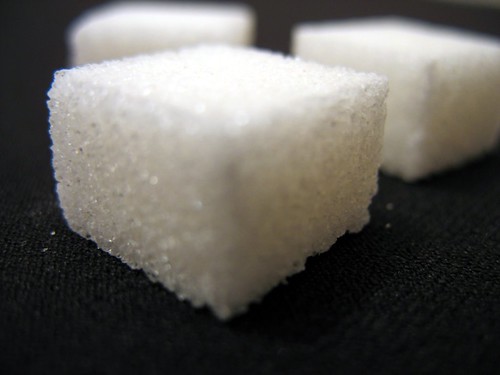
Recognise it? The hot summer meant English people consumed more of it. CC-licensed photo by Uwe Hermann on Flickr.

You can sign up to receive each day’s Start Up post by email. You’ll need to click a confirmation link, so no spam.

A selection of 12 links for you. Begin again. I’m @charlesarthur on Twitter. Observations and links welcome.

Facebook’s suspension of ‘tens of thousands’ of apps reveals wider privacy issues • The New York Times

Kate Conger, Gabriel J.X. Dance and Mike Isaac:

»

Facebook said on Friday that it had suspended tens of thousands of apps for improperly sucking up users’ personal information and other transgressions, a tacit admission that the scale of its data privacy issues was far larger than it had previously acknowledged.

The social network said in a blog post that an investigation it began in March 2018 — following revelations that Cambridge Analytica, a British consultancy, had retrieved and used people’s Facebook information without their permission — had resulted in the suspension of “tens of thousands” of apps that were associated with about 400 developers. That was far bigger than the last number that Facebook had disclosed of 400 app suspensions in August 2018.

The extent of how many apps Facebook had cut off was revealed in court filings that were unsealed later on Friday by a state court in Boston, as part of an investigation by the Massachusetts attorney general into the technology company. The documents showed that Facebook had suspended 69,000 apps. Of those, the majority were terminated because the developers did not cooperate with Facebook’s investigation; 10,000 were flagged for potentially misappropriating personal data from Facebook users.

The disclosures about app suspensions renew questions about whether people’s personal information on Facebook is secure, even after the company has been under fire for more than a year for its privacy practices.

«

I had to use Facebook a lot over the past two weeks, and realised that I really don’t like using it. The interface is noisy, it’s confusing, and working out whether what you’ve written is private, semi-private, public, or what – always with the knowledge that it could be screenshotted anyway – makes it a viper’s nest if you’re saying anything that you might not want made totally public. By contrast, Twitter’s a doddle: flat, and what you say is public. Couldn’t be simpler.
unique link to this extract


English consuming more sugar despite tax and anti-obesity drive • The Guardian

Denis Campbell:

»

Experts are warning that the nation’s increasingly sweet tooth will worsen the damage already being done to public health by sugar, such as through diabetes and tooth decay.

The alarming trend of rising overall consumption of what critics call the “pure, white and deadly” substance is revealed in a report by Public Health England (PHE). It shows that the sugar tax on soft drinks introduced in 2017 has proved unexpectedly successful and has led to a 28.8% fall in the amount of sugar contained in such beverages.

In addition, the sugar content of yoghurt and fromage frais has fallen by 10.3%In breakfast cereals it has fallen 8.5%, in cakes 4.8% and in sweet spreads and sauces 4.6%.

However, many manufacturers are defying the government’s plea to cut sugar by 20% by next year – which is a key element of its campaign to tackle the epidemic of childhood obesity. Firms have done the opposite of what ministers asked them to do in 2016 and increased the amount of sugar they put in sweets and confectionery by 0.6% and in puddings by 0.5%.

«

Seems a big part of the increased consumption was from ice creams during the hot summer. The UK government tried to suppress this report; it demonstrates the opposite of what Boris Johnson had wanted to suggest, that “sin taxes” make no difference. By the way, much of his run for PM was funded by companies making money from sugar.
unique link to this extract


Google chief Sundar Pichai warns against rushing into AI regulation • Financial Times

Tim Bradshaw:

»

In an interview, Mr Pichai suggested looking to existing laws to govern how AI is used “rather than assuming that everything you have to do is new”.

When new regulations are required, they should be applied to particular sectors and industries, such as healthcare and energy, he said, rather than through a blanket vetting of algorithms, as some politicians have suggested.

“It is such a broad cross-cutting technology, so it’s important to look at [regulation] more in certain vertical situations,” Mr Pichai said.

“There are areas where we need to do the research before we know what are the right kinds of approaches we need to take,” he said, citing aspects of AI that have caught politicians’ attention, including bias, safety and explainability.

“Rather than rushing into it in a way that prevents innovation and research, you actually need to solve some of the difficult problems.”

Mr Pichai spoke after meeting European politicians including Finnish prime minister, Antti Rinne. The Google chief unveiled a series of announcements, including 18 new clean energy deals, a €3bn investment to expand its data centres across Europe and a $2m grant to train European workers in digital skills.

After attacks from regulators across Europe and around the world over allegations of anti-competitive behaviour and privacy infringement, Mr Pichai hopes to get ahead of any crackdown on AI.

“We are for sure definitely approaching things more deliberately than before,” he said. “Over the past few years, all of us have learnt that technology can have unintended consequences.” After publishing a set of AI principles last year, Mr Pichai said he would be “happy to evolve them over time as we gain more insights both internally and from externally”.

«

unique link to this extract


Global premium market declines 6% YoY in Q2 2019 • Counterpoint Research

Varun Mishra:

»

Apple held its market share but declined 6% YoY in the segment during the quarter. The OEM grew 9% YoY in NAM (North America), but China remains a challenge as it declined 33% YoY in the region. Competitive pressure continues to increase in China with the rise of local players, especially, Huawei. Apple’s buyback programs and other marketing activities are working in reversing the trend of growing holding periods.

However, the lack of a 5G model in the newly launched iPhone 11 series is likely to increase holding periods again. As a result, we expect Apple to regain momentum in H2 2020, after the launch of a 5G device, while in the short-term demand will be sluggish. Looking at the market in terms of price bands, Apple grew the fastest within the US$600-$800 price band as the iPhone XR continues to do well.

«

unique link to this extract


Google claims to have reached quantum supremacy • Financial Times

Madhumita Murgia and Richard Waters:

»

A paper by Google’s researchers seen by the FT, that was briefly posted earlier this week on a Nasa website before being removed, claimed that their processor was able to perform a calculation in three minutes and 20 seconds that would take today’s most advanced classical computer, known as Summit, approximately 10,000 years.

The researchers said this meant the “quantum supremacy”, when quantum computers carry out calculations that had previously been impossible, had been achieved.

“This dramatic speed-up relative to all known classical algorithms provides an experimental realisation of quantum supremacy on a computational task and heralds the advent of a much-anticipated computing paradigm,” the authors wrote.

“To our knowledge, this experiment marks the first computation that can only be performed on a quantum processor.”

The system can only perform a single, highly technical calculation, according to the researchers, and the use of quantum machines to solve practical problems is still years away.

But the Google researchers called it “a milestone towards full-scale quantum computing”. They also predicted that the power of quantum machines would expand at a “double exponential rate”, compared to the exponential rate of Moore’s Law, which has driven advances in silicon chips in the first era of computing.

«

Probably going to be another decade before its applications are really clear. But a decade can pass quickly.
unique link to this extract


Op ed: Hear me out … in a post-Area 51 world, bitcoin could be our best hope for alien interaction • Bitcoin Magazine

Brandon Green:

»

Bitcoin will be the obvious way for us to unify our world under a common value system. Bitcoin will be how we transact with aliens.

There’s an added boost for Bitcoin too: it’s based on those 1s and 0s that would be the most basic way to communicate in the first place. Bitcoin is effectively math money and, therefore, would be the first choice for aliens to transact with as well.

Thanks to SegWit and the Lightning Network (or at least what the Lightning Network could eventually become), it would be possible not only for aliens to transact in bitcoin locally (local to Earth anyway), but also take it with them back to their own planets and create mesh Lightning Networks to trade there.

«

Greene works for BTC Inc, which is based in Tennessee. My research suggests marijuana isn’t legal there yet, but I can’t really think of any better explanation.
unique link to this extract


How to regulate Big Tech without breaking it up • MIT Technology Review

Angela Chen:

»

Hal Singer, a senior fellow at the George Washington Institute of Public Policy, agrees that breakups could be inefficient, but unlike Mayer-Schönberger, he doesn’t care about data inequality. So what if Google dominates because all their data makes their products the best? “If they win these ancillary markets on the merits, that’s a good thing,” he says.

So, says Singer, the problem isn’t that Google might get too good. Nor is it—as others, including Warren, have argued—that Google both hosts restaurant reviews as a platform and has its own reviews. That could be making things more efficient and lead to benefits. The problem, he says, is that Google edges out competitors like Yelp by giving its own reviews special treatment on its platform, even when they’re not as good.

Singer proposes a nondiscrimination principle that would prevent this. This is how cable channels are already regulated. Other companies worried about favoritism when Comcast started making content, but Congress didn’t break up the conglomerate. “They said, ‘We’re going to let you have a foot in the content space, but you can’t use your platform to artificially give a leg up to your own affiliated properties,’” Singer says. Now, independent networks can bring complaints to a neutral arbitrator that is responsible for making sure everyone is treated fairly.

Singer thinks this idea can apply to companies like Google and Amazon, too. The biggest concern is that tiny businesses won’t have power to take on the likes of Google, but he’s hopeful that if larger businesses sue—as in the case of the National Football League’s suit against Comcast, which was settled—norms will change to favor complaints from smaller brands.

«

Favouritism of own services is the biggest problem in big companies.
unique link to this extract


SoftBank turns against WeWork’s parent CEO Neumann: sources • Reuters

Anirban Sen and Joshua Franklin:

»

Japan’s SoftBank Group Corp, the biggest investor in WeWork owner The We Company, is exploring ways to replace Adam Neumann as chief executive of the US office-sharing start-up, four people familiar with the matter said on Sunday.

The rare showdown between SoftBank and one of its biggest investments comes after We Company postponed its initial public offering (IPO) last week, following pushback from perspective investors, not just over its widening losses, but also over Neumann’s unusually firm grip on the company.

This was a blow for SoftBank, which was hoping for We Company’s IPO to bolster its profits as it seeks to woo investors for its second $108bn Vision Fund. It invested in We Company at a $47bn valuation in January, yet stock market investor skepticism led to the startup considering a potential valuation in the IPO earlier this month of as low as $10bn, Reuters reported.

«

Sweepstake on the number of days Neumann lasts. I’ll give it until the end of next week, ie the end of September.
unique link to this extract


TiVo rolling out skippable pre-roll ads for retail DVRs • Light Reading

Jeff Baumgartner:

»

Opening up a new source of revenue and perhaps a can of customer ire, TiVo confirmed that it is rolling out a new product that inserts pre-roll ads in DVR recordings.

TiVo is testing it now, but it won’t be long before it becomes part of its retail platform. In addition to creating a new revenue stream, the new advertising inventory could help to subsidize the cost of TiVo’s retail hardware.

“DVR advertising is going to be a permanent part of the service,” a TiVo spokesperson said in an emailed statement to Light Reading. “We expect to be fully rolled-out to all eligible retail devices within 90 days.”

TiVo also confirmed that customers will be able to skip those pre-roll ads in much the same way they can skip commercials inserted in TV shows and movies recorded to the DVR. The change appears to be largely focused on retail devices running TiVo Experience 4, the company’s current-gen software and services platform.

“We’re dedicated to innovation that helps our customers stay in control of how, when, and what they watch,” the spokesperson said. “Advertising is an important part of every media business and TiVo is investing in new advertising experiences. We have designed our new DVR advertising units with the ability to ‘skip’ ads anytime a customer hits ‘skip.’ This is part of our ongoing commitment to bring our users the best media discovery experience possible.”

«

Well done – straight out of the Department of Bad Ideas. You know that “skippable” will turn into “unskippable” and then “inserted where the ad breaks are, and now unskippable”. A shame that TiVo couldn’t make its business model work; ever since I tried it in 2001, I’ve had a soft spot for it. (But it’s long since stopped being on sale in the UK; the Sky+ box deleted it from the market.)
unique link to this extract


Apple Arcade is mobile gaming without all the bullshit • Kotaku

Michael Fahey and Stephen Totilo:

»

The Apple Arcade service is an all-you-can-play offering of more than 70 new games that is available starting today for $5 a month, with a one-month free trial.. It runs on iPhones and iPads now and will soon also work on iMacs and other devices including Apple TV.

Because of the way the games are being offered, there’s no need for the developers to include any of the aggravations typical of modern gaming. There are no timers designed to stop you from playing the game you’re enjoying unless you pay extra. There are no ads. There are no energy meters, and no microtransactions.

There are, simply, none of the manipulative systems that have contaminated nearly all of mobile gaming. Just imagine playing a puzzle game and not having to wait an hour for a timer to tick down before you can play the next level. Imagine playing a strategy game where you aren’t offered the chance to pay more to speed up the suspiciously slow building times. Imagine not being screwed with while you play mobile games. What a concept!

Freed of that, there is instead what will possibly prove to be one of the best gaming launch lineups in history. We say probably, because the biggest problem of covering Apple Arcade’s launch is the sheer amount of games, that all hit at once. The roster included about 50 new games when we started digging into a beta of the service earlier this week. It has grown to 70 today, and Apple says it will soon expand past 100. We therefore haven’t even had time to play all the games, let alone get very far into many of them.

«

What they forgot to mention: PlayStation and XBox controllers will work with them – you don’t have to use touch. Pair the controller with your iPhone/iPad/Apple TV/iMac and you can play the game with those. (They also show a number of the games below.)
unique link to this extract


iPhone 11, 11 Pro and 11 Pro Max review: a Game Of Cameras • WSJ

»

From night shooting mode to ultra-wide lenses, Apple’s latest iPhones have a bunch of new camera tricks. WSJ’s Joanna Stern, with the help from the queen and some jousters, put all the new phones to the test at the New York Renaissance Faire.

«

I rarely link to videos (OK there’s another one below) or to smartphone reviews, but Stern’s fabulous creativity in how to test and demonstrate devices is unmatched. Of course you’d take your phones to a faux-medieval jousting tournament where they don’t have any power outlets and refer to phones as “pixie boxes”. Of course. It’s just she mentioned it first.
unique link to this extract


The Galaxy Fold is still extremely fragile, and Samsung knows it • The Verge

Chaim Gartenberg:

»

Samsung’s video exhorts owners to handle their $1,000-plus phones with kid gloves. Some of Samsung’s requests are more logical: the company advises against adding any additional screen protectors (which could interfere with the folding display). Others, though, like not applying “excessive pressure” to the touchscreen when tapping it, are a bit more unusual for a phone. Samsung also cautions that the Fold isn’t water or dustproof and that the magnets that hold it shut can interfere with other magnetic products, like credit credits, hotel room keys, or medical devices.

Unfortunately, despite all those warnings, it looks like the new Fold is still almost absurdly easy to break. As JerryRigEverything shows off in a comprehensive durability test, many of the issues that plagued the first attempt at the Fold are still here: the screen is still extremely soft and easy to scratch; even fingernails are capable of damaging the display. (Samsung’s warning about tapping it too hard makes more sense now.)

JerryRigEverything’s tests also found that it was far too easy for debris to make it inside the display, which is troubling. Other parts of the test were more encouraging. The Fold does hold up admirably against attempts to fold it backward, which is a testament to the level of engineering that Samsung has put into the physical hardware.

«

“The Galaxy Fold [internal screen] has a hardness comparable to Play-doh, soggy bread or a $2,000 stick of chewing gum,” says JerryRigEverything calmly. It’s somewhere around 2 on the 10-denominated Mohs scale. The outside screen (and most smartphone screens) is about 7.
unique link to this extract


Errata, corrigenda and ai no corrida: none notified

Start Up No.1,149: Apple’s AR patent surfaces, Huawei’s unsellable Mate 30, China’s Twitter troll scheme, and more


Sim cards – all vulnerable to hacking due to their inbuilt browser. CC-licensed photo by mroach on Flickr.

You can sign up to receive each day’s Start Up post by email. You’ll need to click a confirmation link, so no spam.

A selection of 9 links for you. And just like that, it’s Friday! I’m @charlesarthur on Twitter. Observations and links welcome.

New Sim card flaw lets hackers hijack any phone just by sending SMS • The Hacker News

Mohit Kumar:

»

Cybersecurity researchers today revealed the existence of a new and previously undetected critical vulnerability in Sim cards that could allow remote attackers to compromise targeted mobile phones and spy on victims just by sending an SMS.

Dubbed “SimJacker,” the vulnerability resides in a particular piece of software, called the S@T Browser (a dynamic Sim toolkit), embedded on most Sim cards that is widely being used by mobile operators in at least 30 countries and can be exploited regardless of which handsets victims are using.

What’s worrisome? A specific private company that works with governments is actively exploiting the SimJacker vulnerability from at least the last two years to conduct targeted surveillance on mobile phone users across several countries.

S@T Browser, short for SIMalliance Toolbox Browser, is an application that comes installed on a variety of Sim cards, including eSim, as part of Sim Tool Kit (STK) and has been designed to let mobile carriers provide some basic services, subscriptions, and value-added services over-the-air to their customers.

Since S@T Browser contains a series of STK instructions—such as send short message, setup call, launch browser, provide local data, run at command, and send data—that can be triggered just by sending an SMS to a device, the software offers an execution environment to run malicious commands on mobile phones as well.

«

Not worrying at all. Nothing to see here. Move along.
unique link to this extract


Huawei confirms the new Mate 30 Pro won’t come with Google’s Android apps • The Verge

Tom Warren:

»

Richard Yu, the CEO of Huawei’s consumer products division, revealed onstage at a press event in Germany this morning that the company has been forced to drop Google’s Mobile Services (GMS) license on the Mate 30 series of devices.

“We cannot use the Google Mobile Services core, we can use the Huawei Mobile Services (HMS) core,” explained Yu very briefly. “Today that’s because of a US ban that these phones cannot preinstall the GMS core, it has forced us to use the HMS Core running the Huawei app gallery on the Mate 30 series phones.”

Google’s Play Store is an essential part of the company’s Google Mobile Services license, and it’s how the majority of Android-powered handsets outside of China get access to apps. Huawei can’t really work around this very easily, so instead, it’s simply building its own alternative to Google’s Play Store and associated services. Huawei is using $1bn to fund development, user growth, and marketing of its own Huawei Mobile Services.

There are 45,000 apps already integrated with Huawei Mobile Services, but there will be many thousands more that will need to be tweaked and made available in Huawei’s App Gallery. It’s a big task to get developers to support its own app store, but the company has no other real alternative.

Huawei spent less than a minute talking about the Android ban onstage, during a presentation that lasted nearly two hours. It’s clear the company has some big work ahead of it to convince consumers and developers that its version of Android, based on Android Open Source Project, will be viable.

«

Huawei’s $1bn to try to create a virtuous circle – developers bring users who buy phones which brings developers – is just like Microsoft’s effort with Windows Phone 7 ($100 per app, up to 10 apps, per developer), and as doomed outside China. (And inside China, why would you write for Huawei rather than just to be on top of WeChat?) There are 2.7m apps on Google Play.

European carriers won’t want the Mate 30: too much hassle doing customer support for people trying to get Netflix and not understanding why it isn’t there. And “Android” is a Google trademark – so Huawei can’t market it as an Android handset.
unique link to this extract


Crash course: how Boeing’s managerial revolution created the 737 Max disaster • The New Republic

Maureen Tkacik:

»

Under the sway of all the naysayers who had called out the folly of the McDonnell deal, the board had adopted a hard-line “never again” posture toward ambitious new planes. Boeing’s leaders began crying “crocodile tears,” Sorscher claimed, about the development costs of 1995’s 777, even though some industry insiders estimate that it became the most profitable plane of all time. The premise behind this complaining was silly, Sorscher contended in PowerPoint presentations and a Harvard Business School-style case study on the topic. A return to the “problem-solving” culture and managerial structure of yore, he explained over and over again to anyone who would listen, was the only sensible way to generate shareholder value. But when he brought that message on the road, he rarely elicited much more than an eye roll. “I’m not buying it,” was a common response. Occasionally, though, someone in the audience was outright mean, like the Wall Street analyst who cut him off mid-sentence:


“Look, I get it. What you’re telling me is that your business is different. That you’re special. Well, listen: Everybody thinks his business is different, because everybody is the same. Nobody. Is. Different.”


And indeed, that would appear to be the real moral of this story: Airplane manufacturing is no different from mortgage lending or insulin distribution or make-believe blood analyzing software—another cash cow for the one percent, bound inexorably for the slaughterhouse. In the now infamous debacle of the Boeing 737 MAX, the company produced a plane outfitted with a half-assed bit of software programmed to override all pilot input and nosedive when a little vane on the side of the fuselage told it the nose was pitching up. The vane was also not terribly reliable, possibly due to assembly line lapses reported by a whistle-blower, and when the plane processed the bad data it received, it promptly dove into the sea.


«

A long read, but a terrific one.
unique link to this extract


Facebook working on smart glasses with Ray-Ban, code-named Orion • CNBC

Salvador Rodriguez:

»

Facebook has been working to develop augmented reality glasses out of its Facebook Reality Labs in Redmond, Washington, for the past couple of years, but struggles with the development of the project have led the company to seek help. Now, Facebook is hoping a partnership with Ray-Ban parent company Luxottica will get them completed and ready for consumers between 2023 and 2025, according to people familiar.

The glasses are internally codenamed Orion, and they are designed to replace smartphones, the people said. The glasses would allow users to take calls, show information to users in a small display and live-stream their vantage point to their social media friends and followers.

Facebook is also developing an artificial intelligence voice assistant that would serve as a user input for the glasses, CNBC previously reported. In addition, the company has experimented with a ring device that would allow users to input information via motion sensor. That device is code-named Agios.

«

Problem for Facebook doing hardware is always that its platform is so limited. You’re doing Facebook; you’re not doing Google, not doing Netflix, not doing Twitter, not doing a million other things that any platform company can offer.
unique link to this extract


Apple AR/VR patent details plans for eye, gesture, facial tracking • Variety

Janko Roettgers:

»

Apple’s upcoming mixed reality headset could include a number of sensors to track the eyes, gestures and even facial expressions of its users. The company applied for a patent to track these kinds of inputs, and combine them with information gathered from outward-facing sensors for mixed reality experiences.

The patent application in question, simply titled “Display System Having Sensors,” was first filed in March of this year, and published last week. It describes in detail plans to use a range of sensors to gather data from the wearer of a mixed reality headset.

Such sensors would make it possible for Apple to more realistically reproduce a user’s facial expression in mixed reality. Apple has already developed facial tracking software for Animoji, the company’s animated AR emoji. Animoji make use of an iPhone’s selfie camera to track facial expressions, and then translate those movements to animation.

The challenge with that approach is that you can’t simply film a user’s face if they’re wearing a headset. That’s why Apple is looking to combine data from separate sensors, including some used for eyebrow and jaw tracking, as well as eye tracking cameras.

«

The real challenge is to stop the wearer looking like an absolute dork.
unique link to this extract


How China unleashed Twitter trolls to discredit Hong Kong’s protesters • The New York Times

Raymond Zhong, Steven Lee Myers and Jin Wu:

»

For fans of pro tennis, European soccer and British tabloids, the mysterious Twitter account had a lot to offer.

Beginning last year, it retweeted news, most of it in English, about Roger Federer and the Premier League, and it shared juicy clickbait on Zsa Zsa, an English bulldog that won the 2018 World’s Ugliest Dog contest.

Then, suddenly, the account began posting, in Chinese, about a different obsession: politics in Hong Kong and mainland China. By this summer, it had become a foot soldier in a covert campaign to shape people’s views about one of the world’s biggest political crises.

The account, @HKpoliticalnew, and more than 200,000 other Twitter accounts were part of a sprawling Russian-style disinformation offensive from China, Twitter now says, the first time an American technology giant has attributed such a campaign to the Chinese government.

China has long deployed propaganda and censorship to subject its citizens to government-approved narratives. As the nation’s place in the world grows, Beijing has increasingly turned to internet platforms that it blocks within the country — including Twitter and Facebook — to advance its agenda across the rest of the planet.

It has done so in part by setting up accounts on the platforms for its state-run news outlets, such as China Daily, to make a public case for its views. But that is quite different from using fake accounts to manipulate opinions surreptitiously or simply to sow confusion.

“The end goal is to control the conversation,” said Matt Schrader, a China analyst with the Alliance for Securing Democracy at the German Marshall Fund in Washington.

Twitter last month took down nearly 1,000 accounts that it said were part of a state-directed effort to undermine the antigovernment protests in Hong Kong. It also suspended 200,000 other accounts that it said were connected to the Chinese operation but not yet very active. Facebook and YouTube quickly followed suit. All three platforms are blocked in mainland China but not in Hong Kong.

«

The obvious question, which this article seems to answer, is that the accounts are hijacked after years of being used by normal people, rather than being long-planned schemes to subvert Twitter.
unique link to this extract


Why prescription drugs cost so much more in America • Financial Times

Hannah Kuchler:

»

All over the world, drugmakers are granted time-limited monopolies — in the form of patents — to encourage innovation. But America is one of the only countries that does not combine this carrot with the stick of price controls. 

The US government’s refusal to negotiate prices has contributed to spiralling healthcare costs which, said billionaire investor Warren Buffett last year, act “as a hungry tapeworm on the American economy”. Medical bills are the primary reason why Americans go bankrupt. Employers foot much of the bill for the majority of health-insurance plans for working-age adults, creating a huge cost for business.

In February, Congress called in executives from seven of the world’s largest pharmaceutical companies and asked them: why do drugs here cost so much? The drugmakers’ answer is that America is carrying the cost of research and development for the rest of the world. They argue that if Americans stopped paying such high prices for drugs, investment in innovative treatments would fall. President Trump agrees with this argument, in line with his “America first” narrative, which sees other countries as guilty of freeloading.

For the patients on the trip, the notion is galling: insulin was discovered 100 years ago, by scientists in Canada who sold the patent to the University of Toronto for just $1. The medication has been improved since then but there seems to have been no major innovation to justify tripling the list price for insulin, as happened in the US between 2002 and 2013.

«

Insulin is just one of the many, many cases where Americans are being ripped off by drugs companies.
unique link to this extract


An exclusive look inside Apple’s A13 Bionic chip • WIRED

Om Malik:

»

So what happens inside the A13 Bionic when it goes to work? The general concept involves assignments, delegation, and hand-offs. For low-energy tasks—say opening and reading email—the iPhone will use the more efficient cores. But for more intense tasks like loading complex web pages, the high-performance cores take charge. For some routine and well established machine-learning work, the neural engine can hum along by itself. But for newer, more cutting-edge machine-learning models, the CPU and its specialized machine-learning accelerators lend a helping hand.

Apple’s secret, though, lies in the way all of these various parts of the chip work together in a way that conserves battery power. In a typical smartphone chip, parts of the chip are turned on to do particular tasks. Think of it as turning on the power for an entire neighborhood for them to eat dinner and watch Game of Thrones, then turning the power off, then switching on the power for another neighborhood that wants to play videogames.

With the A13, think of doing the same on-and-off approach, but on a single home basis. Fewer electrons go to waste.

“Machine learning is running during all of that, whether it’s managing your battery life or optimizing performance,” [marketing chief Phil] Schiller said. “There wasn’t machine learning running 10 years ago. Now, it’s always running, doing stuff.”

In the end, the progression of this technology is dictated by simple things we humans want from our phones—intense games that run as smoothly on a mobile handset as a console, or a camera that takes beautiful and clean photos in the middle of the dimly lit night. As we tap and swipe, Apple’s engineers are paying attention, retooling their designs, and working on a chip for next year that will entice us to upgrade all over again.

«

This article is a bit all over the place; I think the problem is you really need someone who understands chips very deeply, and gets deep details, to make sense out of it. Schiller and a member of the chip team drop some little tidbits, but I think Malik would have done better just to print the transcript of the interview. Someone would have been able to decode it.
unique link to this extract


Here’s how to avoid iOS 13 — if you want to • The Verge

Barbara Krasnoff:

»

If you’re an adventurous iPhone user who doesn’t mind dealing with possible issues, then enjoy your new operating system. But if you depend heavily on your phone for day-to-day tasks and don’t want to deal with what may be a buggy upgrade, caution may be the order of the day. Apple has promised that version 13.1, which will contain a number of bug fixes and new features, will be following shortly; in fact, the upgrade should be available on September 24th, just days after iOS 13 launches.

If you’d rather be safe than sorry, then it’s easy to avoid the iOS 13 update. All you have to do is turn off Automatic Updates.

• Go to Settings > General > Software Update
• If the Automatic Updates setting is on (which it probably is), tap on it
• Move the toggle to the left (so that it’s no longer green)

Your Automatic Updates setting is now off. In 11 days (or whenever you hear from us that most of the bugs that came with iOS 13 have been swatted), you can just follow the same directions to turn Automatic Updates back on.

«

Probably a good idea if you can bear it. The iOS 13.1 update has been moved forward by six days, which I think – though I would, wouldn’t I? – lends even more credence to the idea that 13.0 was frozen early in order to avoid tariffs that never came. New iPhones are in stores today, so we can find out precisely what version of iOS 13 they’re running. Exciting! (Ish.)
unique link to this extract


Errata, corrigenda and ai no corrida: none notified

Start Up No.1,148: Imagenet Roulette goes Milkshake Duck, WeWork’s mad king, California v Trump on car quality, the Amazon’s criminal deforestation, and more


A HomePod with Siri operating: would you like it more if you chatted to it more? Or vice-versa? CC-licensed photo by Joe Wilcox on Flickr.

You can sign up to receive each day’s Start Up post by email. You’ll need to click a confirmation link, so no spam.

A selection of 9 links for you. Free at point of sale. I’m @charlesarthur on Twitter. Observations and links welcome.

The viral selfie app ImageNet Roulette seemed fun – until it called me a racist slur • The Guardian

Julia Carrie Wong:

»

ImageNet Roulette, a project developed by the artificial intelligence researcher Kate Crawford and the artist Trevor Paglen…[aims] not to use technology to help us see ourselves, but to use ourselves to see technology for what it actually is.

The site’s algorithm was trained on photos of humans contained in ImageNet, a dataset described by Crawford as “one of the most significant training sets in the history of AI”. Created in 2007 by researchers at Stanford and Princeton, ImageNet includes more than 14m photographs, mostly of objects but also of humans, that have been classified and labeled by legions of workers on Amazon’s crowdsourcing labor site, Mechanical Turk.

If you upload your photo, ImageNet Roulette will use AI to identify any faces, then label them with one of the 2,833 subcategories of people that exist within ImageNet’s taxonomy. For many people, the exercise is fun. For me, it was disconcerting.

As a technology reporter, I’m regularly tasked with writing those scolding articles about why you should be careful which apps you trust, so I usually eschew viral face apps. But after a day of watching my fellow journalists upload their ImageNet Roulette selfies to Twitter with varying degrees of humor and chagrin about their labels (“weatherman”, “widower”, “pilot”, “adult male”), I decided to give it a whirl. That most of my fellow tech reporters are white didn’t strike me as relevant until later.

I don’t know exactly what I was expecting the machine to tell me about myself, but I wasn’t expecting what I got: a new version of my official Guardian headshot, labeled in neon green print: “gook, slant-eye”. Below the photo, my label was helpfully defined as “a disparaging term for an Asian person (especially for North Vietnamese soldiers in the Vietnam War)”.

«

Which is also part of why diversity among journalists matters: because they can make a noise about it. If Wong had been just another user, her justifiable outrage would have been lost in the noise.
unique link to this extract


‘This is not the way everybody behaves’: how Adam Neumann’s over-the-top style built WeWork • WSJ

Eliot Brown:

»

Mr. Neumann moved to the US when he was 22, where he attended Baruch College and tried to start businesses. One was a collapsible heel on women’s shoes that didn’t get off the ground. Working out of his Tribeca apartment, he started Krawlers, which sought to make baby clothes with knee pads to make crawling more comfortable. The slogan, he has said: “Just because they don’t tell you, doesn’t mean they don’t hurt.” It never gained traction.

He and Mr. McKelvey started a small co-working space on the side during the recession that followed the financial crisis and were amazed by the demand… [and that became WeWork…]

…Alcohol has been a big part of the culture, particularly in We’s first half-decade. Mr. Neumann has told people he likes how it brings people together, and tequila, his favorite, flows freely. Executive retreats sport numerous cases of Don Julio 1942, with a retail price of more than $110 a bottle, and pours sometimes start in the morning.

A few weeks after Mr. Neumann fired 7% of the staff in 2016, he somberly addressed the issue at an evening all-hands meeting at headquarters, telling attendees the move was tough but necessary to cut costs, and the company would be better because of it.

Then employees carrying trays of plastic shot glasses filled with tequila came into the room, followed by toasts and drinks.

Soon after, Darryl McDaniels of hip-hop group Run-DMC entered the room, embraced Mr. Neumann and played a set for the staff. Workers danced to the 1980s hit “It’s Tricky” as the tequila trays made more rounds; some others, still focused on the firings, say they were stunned and confused.

«

At this point everyone knows that WeWork is going to implode – it’s a house of cards that will be vulnerable to the slightest economic downturn, or change in leasing conditions – and is just enjoying the absurd stories that come out of it.
unique link to this extract


California promises to fight EPA plan on car standards • Scientific American

Anne C. Mulkern:

»

The Trump administration’s plan to revoke California’s ability to set its own clean car standards promises to ignite a monumental legal fight between a dozen states and the federal government.

“We’ll see you in court,” California Attorney General Xavier Becerra (D) said yesterday.

His comments came after news broke that Trump EPA officials will announce a formal effort as soon as today to repeal California’s ability to set vehicle standards that exceed federal requirements. Two sources familiar with the plans confirmed the event to E&E News after Bloomberg News first reported it.

California’s special oversight of tailpipe pollution dates back to the 1960s when the state was grappling with high levels of smog. The 1970 Clean Air Act folded in California’s authority to set its own standards, because the state’s law predated the federal act. The Obama administration in 2009 extended California’s authority to include greenhouse gas emissions from cars. Thirteen other states now follow California’s rules.

“The evidence is irrefutable: today’s clean car standards are achievable, science-based, and a boon for hardworking American families and public health,” Becerra said in a statement. “It’s time to remove your blinders, President Trump, and acknowledge that the only person standing in the way of progress is you. You have no basis and no authority to pull this waiver. We’re ready to fight for a future that you seem unable to comprehend.”

…EPA Administrator Andrew Wheeler said yesterday at the National Automobile Dealers Association that “we embrace federalism and the role of the states, but federalism does not mean that one state can dictate standards for the nation.”

…States that use California’s car standards include Connecticut, Delaware, Maine, Maryland, Massachusetts, New Jersey, New Mexico, New York, Oregon, Pennsylvania, Rhode Island, Vermont and Washington. Together they represent nearly 40% of the U.S. car market, said Dan Sperling, director of the Institute of Transportation Studies at the University of California, Davis.

«

Of those 14 states (including California), only Pennsylvania voted for Trump. It makes sense to have a federal standard, but if you’re going to allow states to have the power to set their own standards in anything (which Republicans insist on, calling it “states’ rights”), you can’t do it piecemeal. I predict the Trump admin’s position won’t stand up in court.
unique link to this extract


Apple Watch Series 5 review: always on time • WIRED

Lauren Goode:

»

This year’s Apple Watch doesn’t look different from last year’s Watch. I wouldn’t say the Apple Watch is unilaterally attractive, but it is distinctive. It lacks the overtly masculine aesthetic some sporty smartwatches have, and it’s more sophisticated than most Fitbits. (Then again, Fitbits are less expensive than Apple Watches, and work with Android phones instead of just with iOS devices.)

This year’s base model of Apple Watch has an aluminum case, just like in past years. It costs $399, unless you want one with a cellular modem (for when you’re swept out to sea!), in which case it costs $499. You can upgrade to a stainless steel model ($699), a titanium version ($799), or a model with a ceramic case ($1,299). You can even buy a Hermès-branded version for the low, low price of $1,399. I’ve been wearing the aluminum Series 5 with cellular connectivity.

The Watch comes with easy-to-swap watch bands, and this year the buying flow for a new watch is more customizable: You can go to the Apple website and pick your size, casing, and band all at the same time. Some of the pricier bands cost an extra $100 or more.

If those prices are all too steep, you can now buy the Apple Watch Series 3 for a discounted $199. It has GPS and the water expulsion feature first introduced in the Series 2, so you can take it in the pool.

«

So the S3 isn’t more expensive than a Fitbit Versa 2 – it’s exactly the same price, and almost all the same features. Though the Versa does have a longer battery life.

Goode gives the S5 a score of 8/10. Seems that not being compatible with Android is its “con” to set against its “pros”.
unique link to this extract


New iPhone pre-orders in China are triple last year’s, but lack of 5G may damp sales • Yicai Global

»

First day pre-orders of Apple’s much-anticipated new iPhone 11 were more than triple the first day of sales of last year’s iPhone XR, according to Alibaba Group Holding’s Tmall online shopping website.

But turnover is expected to slump 15% this year due to the iPhones’ lack of fifth-generation network capability, industry analyst IDC said. 

Within the first minute of pre-orders starting on Sept. 13, CNY100 million (USD14m) worth of the smartphones had been purchased on Tmall, data obtained by Yicai Global showed. The iPhone 11 Pro series sold out within five minutes, according to e-commerce platform JD.com.

Android handset makers are ahead of Apple in 5G technologies with some 5G smartphones already on the market, IDC said.

«

Guessing that it’s a thing to have the multi-camera “looks new” shape – and the new green colour. China seems to be that shallow in some ways.
unique link to this extract


How the Internet Archive is waging war on misinformation • Financial Times

Camilla Hodgson:

»

Since the 2016 US election, as fears about the power of fake news have intensified, the archive has stepped up its efforts to combat misinformation. At a time when false and ultra-partisan content is rapidly created and spread, and social media pages are constantly updated, the importance of having an unalterable record of who said what, when has been magnified.

“We’re trying to put in a layer of accountability,” said founder Brewster Kahle.

Mr Kahle founded the archive, which now employs more than 100 staff and costs $18m a year to run, because he feared that what was appearing on the internet was not being saved and catalogued in the same way as newspapers and books. The organisation is funded through donations, grants and the fees it charges third parties that request specific digitisation services.

So far, the archive has catalogued 330bn web pages, 20m books and texts, 8.5m audio and video recordings, 3m images and 200,000 software programs. The most popular, public websites are prioritised, as are those that are commonly linked to. Some information is free to access, some is loaned out (if copyright laws apply) and some is only available to researchers.

Curled up in a chair in his office after lunch, Mr Kahle lamented the combined impact of misinformation and how difficult it can be for ordinary people to access reliable sources of facts.

“We’re bringing up a generation that turns to their screens, without a library of information accessible via screens,” said Mr Kahle. Some have taken advantage of this “new information system”, he argued — and the result is “Trump and Brexit”.

Having a free online library is crucial, said Mr Kahle, since “[the public is] just learning from whatever . . . is easily available”.

«

unique link to this extract


Apple study suggests chattier users prefer chattier AI assistants • VentureBeat

Kyle Wiggers:

»

How might you characterize the conversational style of a digital assistant like Siri? No matter your impression, it stands to reason that striking the wrong tone could dissuade users from engaging with it in the future.

Perhaps that’s why in a paper (“Mirroring to Build Trust in Digital Assistants“) accepted to the Interspeech 2019 conference in Graz, Austria, researchers at Apple investigated a conversational assistant that considered users’ preferred tones and mannerisms in its responses. They found that people’s opinions of the assistant’s likability and trustworthiness improved when it mirrored their degree of chattiness, and that the features necessary to perform the mirroring could be extracted from those people’s speech patterns.

“Long-term reliance on digital assistants requires a sense of trust in the assistant and its abilities. Therefore, strategies for building and maintaining this trust are required, especially as digital assistants become more advanced and operate in more aspects of people’s lives,” wrote the paper’s coauthors. “We hypothesize that an effective method for enhancing trust in digital assistants is for the assistant to mirror the conversational style of a user’s query, specifically the degree of ‘chattiness,’ [which] we loosely define chattiness to be the degree to which a query is concise (high information density) versus talkative (low information density).”

«

In the paper, they describe their putative assistant as “an interactive Wizard-of-Oz (WOZ)”. Nicely played, people.
unique link to this extract


A veterans for Trump Facebook page was hijacked by a North Macedonian businessman for months • The Washington Post

Craig Timberg:

»

The takeover of Vets for Trump, which has not previously been reported, underscores how money, politics and online misinformation remain deeply and often invisibly entangled ahead of the 2020 presidential election, despite years of promises by government officials and technology companies to combat such problems.

Foreign actors — some seeking profit, some seeking influence and some seeking both — haven’t flagged in their efforts to reach U.S. voters through online information sources such as Facebook, Twitter and YouTube. Veterans and active-duty military personnel are especially valuable targets for manipulation because they vote at high rates and can influence others who admire their records of service.

“Veterans as a cohort are more likely than others to participate in democracy. That includes not only voting but running for office and getting others to vote,” said Kristofer Goldsmith, chief investigator for Vietnam Veterans of America. He was the first to discover the takeover of Vets for Trump during research for a report to be released Wednesday that documents widespread, persistent efforts by foreign actors to scam and manipulate veterans over Facebook and other social media.

«

Doesn’t say many good things about veterans though does it?
unique link to this extract


Amazon deforestation is driven by criminal networks, report finds • The Guardian

Dom Phillips:

»

Deforestation in the Brazilian Amazon is a lucrative business largely driven by criminal networks that threaten and attack government officials, forest defenders and indigenous people who try to stop them, according to a new report by Human Rights Watch.

Rainforest Mafias concludes that Brazil’s failure to police these gangs threatens its abilities to meet its commitments under the Paris climate deal – such as eliminating illegal deforestation by 2030. It was published a week before the UN Climate Action Summit.

Ricardo Salles, Brazil’s environment minister in the government of far-right president Jair Bolsonaro, has argued that poverty drives degradation, and that development of the Amazon will help stop deforestation.

But the report’s author, Cesar Muñoz Acebes, argues that Amazon needs to be better policed.

“As long as you have this level of violence, lawlessness and impunity for the crimes committed by these criminal groups it will be impossible for Brazil to rein in deforestation,” he said. “These criminal networks will attack anyone who stands in their way.”

«

unique link to this extract


Errata, corrigenda and ai no corrida: none notified

Start Up No.1,147: new iPhones in review, an elevator to the Moon!, WeWork delays IPO, the Britons still off the internet, and more


It seems like smartphone prices have peaked – and the top is coming down. CC-licensed photo by Craig Murphy on Flickr.

You can sign up to receive each day’s Start Up post by email. You’ll need to click a confirmation link, so no spam.

A selection of 10 links for you. Use them wisely. I’m @charlesarthur on Twitter. Observations and links welcome.

IPhone 11 and 11 Pro review: thinking differently in the golden age of smartphones • The New York Times

Brian Chen:

»

I tested the new iPhones for a week, starting with the $700 entry-level iPhone 11 with a 6.1-inch display, which I used as my primary phone for three days. Then I switched to the iPhone 11 Pro, the $1,000 model with a 5.8-inch screen, for two days. And then finally, the iPhone 11 Pro Max, the $1,100 model with a jumbo 6.5-inch screen, for another two days.

Then I compared the results with my notes and photos from testing the iPhone X in 2017. What I found was that the iPhone 11 was better, but not profoundly so.

«

Also worth reading: John Gruber essentially saying the same thing, and app maker Halide essentially saying the same thing.
unique link to this extract


Have flagship smartphone prices peaked? • CCS Insight

Ben Wood:

»

Smartphone makers have been testing the economic rule of supply and demand for the past decade, seemingly defying conventional wisdom in consumer electronics products by raising prices. Greater utility and the constant of use smartphones combined to grow the value of devices to customers. But it seems that top phone-makers are learning that no tree grows to heaven, as prices beyond the psychological threshold of $1,000 have created sticker shock among some consumers.

Apple’s announcement of the iPhone 11 at its annual product event last week largely centered on incremental improvements such as better camera and battery life, but the company’s decision to lower the price of its base flagship smartphone caught our eye (see Instant Insight: Apple Unveils New Hardware, Competitive Subscription Services). The iPhone 11 will cost $699 in the US. A year ago, Apple introduced the iPhone XR at $749. It’s a subtle, but interesting move that sees Apple shifting its “mid-range” iPhone back to a price of $699, where it previously resided with the iPhone 8.

Apple’s decision to lower pricing can be seen as an acknowledgement that it has tested the upper limits of consumer acceptance. At a time when the company wants to expand its number of customers as it builds out its ecosystem of content and services, it’s sensible that it slightly brought down the barriers for consumers to get their hands on the new device.

«

I think he’s right: Apple has tested the peak for the normal factor. Sure, there are people who will pay extra for the novelty of a folding phone, but Vertu had a market for a while too.
unique link to this extract


A Moon space elevator is actually feasible and inexpensive: study • Observer

:

»

In a paper published on the online research archive arXiv in August, Columbia astronomy students Zephyr Penoyre and Emily Sandford proposed the idea of a “lunar space elevator,” which is exactly what it sounds like—a very long elevator connecting the moon and our planet.

The concept of a moon elevator isn’t new. In the 1970s, similar ideas were floated in science fiction (Arthur C. Clarke’s The Fountains of Paradise, for example) and by academics like Jerome Pearson and Yuri Artsutanov.

But the Columbia study differs from previous proposal in an important way: instead of building the elevator from the Earth’s surface (which is impossible with today’s technology), it would be anchored on the moon and stretch some 200,000 miles toward Earth until hitting the geostationary orbit height (about 22,236 miles above sea level), at which objects move around Earth in lockstep with the planet’s own rotation…

…After doing the math, the researchers estimated that the simplest version of the lunar elevator would be a cable thinner than a pencil and weigh about 88,000 pounds, which is within the payload capacity of the next-generation NASA or SpaceX rocket.

The whole project may cost a few billion dollars, which is “within the whim of one particularly motivated billionaire,” said Penoyre.

«

Whimsical space elevators. It’s what the 21st century promised.
unique link to this extract


WeWork delays IPO after frosty investor response • Reuters

Joshua Franklin, Anirban Sen:

»

WeWork owner The We Company has postponed its initial public offering (IPO), walking away from preparations to launch it this month after a lackluster response from investors to its plans.

The US office-sharing startup was getting ready to launch an investor road show for its IPO this week before making the last-minute decision on Monday to stand down, people familiar with the matter said.

The company has been under pressure to proceed with the stock market flotation to secure funding for its operations.

In the run-up to the launch of its IPO, We Company has faced concerns about its corporate governance standards, as well as the sustainability of its business model, which relies on a mix of long-term liabilities and short-term revenue, and how such a model would weather an economic downturn…

…Were We Company to have pressed on with the IPO at such a low valuation, it would have represented a major turning point in the growth over the last decade of the venture capital industry, which has led to the rise of startups such as Uber Technologies Inc (UBER.N), Snap Inc (SNAP.N) and Airbnb Inc.

It would have meant that We Company would be valued at less than the $12.8bn in equity it has raised since it was founded in 2010, according to data provider Crunchbase. And it would have been a blow to its biggest backer, Japan’s SoftBank Group Corp, at a time when it is trying to amass $108bn from investors for its second Vision Fund.

«

“No plan survives contact with the enemy.”

unique link to this extract


What the ctenophore says about the evolution of intelligence • Aeon Essays

Douglas Fox:

»

The ctenophore was already known for having a relatively advanced nervous system; but these first experiments by [Leonid] Moroz showed that its nerves were constructed from a different set of molecular building blocks – different from any other animal – using ‘a different chemical language’, says Moroz: these animals are ‘aliens of the sea’.

If Moroz is right, then the ctenophore represents an evolutionary experiment of stunning proportions, one that has been running for more than half a billion years. This separate pathway of evolution – a sort of Evolution 2.0 – has invented neurons, muscles and other specialised tissues, independently from the rest of the animal kingdom, using different starting materials.

This animal, the ctenophore, provides clues to how evolution might have gone if not for the advent of vertebrates, mammals and humans, who came to dominate the ecosystems of Earth. It sheds light on a profound debate that has raged for decades: when it comes to the present-day face of life on Earth, how much of it happened by pure accident, and how much was inevitable from the start?

If evolution were re-run here on Earth, would intelligence arise a second time? And if it did, might it just as easily turn up in some other, far-flung branch of the animal tree? The ctenophore offers some tantalising hints by showing just how different from one another brains can be. Brains are the crowning case of convergent evolution – the process by which unrelated species evolve similar traits to navigate the same kind of world. Humans might have evolved an unprecedented intellect, but the ctenophore suggests that we might not be alone. The tendency of complex nervous systems to evolve is probably universal – not just on Earth, but also in other worlds.

«

Them and the octopi? Seems like there’s a lot of super-intelligent alien-like species under the sea.
unique link to this extract


Fossil fuel divestment has ‘zero’ climate impact, says Bill Gates • Financial Times

Andrew Edgecliffe-Johnson and Billy Nauman:

»

Climate activists are wasting their time lobbying investors to ditch fossil fuel stocks, according to Bill Gates, the billionaire Microsoft co-founder who is one of the world’s most prominent philanthropists.

Those who want to change the world would do better to put their money and energy behind the disruptive technologies that slow carbon emissions and help people adapt to a warming world, Mr Gates told the Financial Times.

“Divestment, to date, probably has reduced about zero tonnes of emissions. It’s not like you’ve capital-starved [the] people making steel and gasoline,” he said. “I don’t know the mechanism of action where divestment [keeps] emissions [from] going up every year. I’m just too damn numeric.”

Pension funds, the Church of England and even a vehicle for the Rockefeller family’s oil fortune are among a growing group of investors that have divested their fossil fuel holdings in recent years, driven by a belief that finance can be a tool to combat climate change.

«

You only have to think for a moment to realise Gates is right. If an organisation divests its holdings, they don’t vanish; they’re simply owned by someone else, who might try to make those fossil fuel companies extract even more. The sensible thing is to try to force the companies to divest; or, as Gates says, put money into disruptive tech. (In which case it could make sense to divest from fossil fuels, but only as a way to get capital.)
unique link to this extract


Buster Keaton: The Art of the Gag • YouTube

»

Before Edgar Wright and Wes Anderson, before Chuck Jones and Jackie Chan, there was Buster Keaton, one of the founding fathers of visual comedy. And nearly 100 years after he first appeared onscreen, we’re still learning from him.

«

Just thought it would be nice to have something quite different. This is eternal.
unique link to this extract


Almost one-fifth of Britons ‘do not use internet’ • BBC News

Mark Ward:

»

Almost 20% of British people are not using the internet, a survey suggests. The detailed in-home survey of almost 2,000 Britons found that 18% described themselves as non-users.

The Oxford Internet Institute (OII), which carried out the research, said people falling into the category tended to be older and poorer than frequent net users.

The size of the group presented a “dilemma” for any government trying to reach and support them, said the OII. “Non-users are older, proportionately less well-educated and have lower incomes,” said Dr Grant Blank, survey research fellow at the OII, who oversaw the project.

Non-users, said Dr Blank, were those who did not go online via any means – either phone or computer. The proportion of those falling into this category grew as people aged, he said.

The figure of 18% is higher than other official measures of non-users, he said, because of the way the OII sampled the UK population. Figures gathered by the Office for National Statistics suggest about 7.4% of the population are non-users but this figure is drawn from data gathered for its Labour Force Survey.

«

This is still a pretty big number. When I spoke to Martha Lane Fox, then the UK’s “digital champion”, ten years ago, the figure was about 10m adults and 1.6m children.
unique link to this extract


The startup that manipulated data to get a miracle drug to market • WSJ

Denise Roland:

»

The startup had something incredible: a cure for babies with a deadly neurological disease. Last year, the company was snapped up by pharmaceutical giant Novartis AG, and by this past May, its drug was the most expensive on the market.

In just a few years, the company, AveXis, morphed from a handful of hospital-based researchers into one of the pharmaceutical industry’s most stunning success stories.

But in the hurry to fulfill the drug’s promise, AveXis manipulated data that went into the drug’s approval, Novartis and the Food and Drug Administration now say.

And some former AveXis employees say there were other stumbling blocks, separate from the manipulation cited by the FDA. They say the company struggled to manage a fast ramp-up of its research and manufacturing operations. They describe a race to develop the drug that, at times, yielded mistakes, including misstated dosing figures from early-stage trials of the drug.

AveXis went through a “fundamental shift in capabilities,” a Novartis spokesman said. He said it “evolved from an academic setting to a commercial organization with leaders who had a deeper understanding of the requirements of the pharmaceutical industry and the FDA approval process.” The spokesman said new leadership established processes “in line with the needs for a company that was gearing for product approval and commercialization.”

«

Not quite Theranos; there’s an actual product here. Just not as efficacious as hoped. Quite a common story in biotech, and especially in gene therapy, which has been tomorrow’s technology for about three decades now.
unique link to this extract


Four reasons why the BBC is failing to explain the news • openDemocracy

Mark Oliver:

»

People in the UK look to the BBC to explain many of the challenges facing the country today. Yet most are under informed about a raft of issues ranging from: Brexit to immigration policy. So why is the BBC failing in its “mission to explain”? In short, it has failed the necessary precursor – the mission to understand.

Our commentariat has never been better supplied with facts, and yet we have never had such a paucity of public knowledge around complex issues. To counter popular misconceptions, the BBC needs to go beyond fact checking and provide more context. The lack of depth in its coverage of crucial stories is leading to an increasingly partisan general public, and, consequently, a failure to hold those with power to account.

«

It’s an interesting piece (for the reasons, you’ll have to click through; it’s worthwhile) but the question is, who’s going to listen?
unique link to this extract


Errata, corrigenda and ai no corrida: none notified

Start Up No.1,146: Google Assistant workers gripe, get fit for.. chess?, HP’s chatty printers, Microsoft doing foldables?, dogs at work, and more


CC-licensed photo by Joe Pemberton on Flickr.

You can sign up to receive each day’s Start Up post by email. You’ll need to click a confirmation link, so no spam.

A selection of 10 links for you. Use them wisely. I’m @charlesarthur on Twitter. Observations and links welcome.

‘A white-collar sweatshop’: Google Assistant contractors allege wage theft • The Guardian

Julia Carrie Wong:

»

to some of the Google employees responsible for making the Assistant work, the tagline of the conference – “Keep making magic” – obscured a more mundane reality: the technical wizardry relies on massive data sets built by subcontracted human workers earning low wages.

“It’s smoke and mirrors if anything,” said a current Google employee who, as with the others quoted in this story, spoke on condition of anonymity because they were not authorized to speak to the press. “Artificial intelligence is not that artificial; it’s human beings that are doing the work.”

The Google employee works on Pygmalion, the team responsible for producing linguistic data sets that make the Assistant work. And although he is employed directly by Google, most of his Pygmalion co-workers are subcontracted temps who have for years been routinely pressured to work unpaid overtime, according to seven current and former members of the team.

These employees, some of whom spoke to the Guardian because they said efforts to raise concerns internally were ignored, alleged that the unpaid work was a symptom of the workplace culture put in place by the executive who founded Pygmalion. That executive, Linne Ha, was fired by Google in March following an internal investigation, Google said. Ha could not be reached for comment before publication. She contacted the Guardian after publication and said her departure had not been related to unpaid overtime.

«

The depressing reality is how Wizard-of-Oz these assistants seem to be: ignore the temp worker behind the curtain.
unique link to this extract


Why grandmasters like Magnus Carlsen and Fabiano Caruana lose weight playing chess • ESPN

Aishwarya Kumar:

»

At 5-foot-6, [Fabiano] Caruana has a lean frame, his legs angular and toned. He also has a packed schedule for the day: a 5-mile run, an hour of tennis, half an hour of basketball and at least an hour of swimming.

As he’s jogging, it’s easy to mistake him for a soccer player. But he is not. This body he has put together is not an accident. Caruana is, in fact, an American grandmaster in chess, the No. 2 player in the world. His training partner, Chirila? A Romanian grandmaster. And they’re doing it all to prepare for the physical demands of … chess? Yes, chess.

It seems absurd. How could two humans — seated for hours, exerting themselves in no greater manner than intermittently extending their arms a foot at a time — face physical demands?

Still, the evidence overwhelms.

The 1984 World Chess Championship was called off after five months and 48 games because defending champion Anatoly Karpov had lost 22 pounds. “He looked like death,” grandmaster and commentator Maurice Ashley recalls.

In 2004, winner Rustam Kasimdzhanov walked away from the six-game world championship having lost 17 pounds. In October 2018, Polar, a U.S.-based company that tracks heart rates, monitored chess players during a tournament and found that 21-year-old Russian grandmaster Mikhail Antipov had burned 560 calories in two hours of sitting and playing chess — or roughly what Roger Federer would burn in an hour of singles tennis.

Robert Sapolsky, who studies stress in primates at Stanford University, says a chess player can burn up to 6,000 calories a day while playing in a tournament, three times what an average person consumes in a day. Based on breathing rates (which triple during competition), blood pressure (which elevates) and muscle contractions before, during and after major tournaments, Sapolsky suggests that grandmasters’ stress responses to chess are on par with what elite athletes experience.

«

Fabulous new excuse for loading your plate high with chips: you’re playing chess later.
unique link to this extract


HP printers try to send data back to HP about your devices and what you print • Robert Heaton

He thought he was just helping his in-laws set up their new printer:

»

In summary, HP wants its printer to collect all kinds of data that a reasonable person would never expect it to. This includes metadata about your devices, as well as information about all the documents that you print, including timestamps, number of pages, and the application doing the printing (HP state that they do stop short of looking at the contents of your documents). From the HP privacy policy, linked to from the setup program:

»

Product Usage Data – We collect product usage data such as pages printed, print mode, media used, ink or toner brand, file type printed (.pdf, .jpg, etc.), application used for printing (Word, Excel, Adobe Photoshop, etc.), file size, time stamp, and usage and status of other printer supplies. We do not scan or collect the content of any file or information that might be displayed by an application.

Device Data – We collect information about your computer, printer and/or device such as operating system, firmware, amount of memory, region, language, time zone, model number, first start date, age of device, device manufacture date, browser version, device manufacturer, connection port, warranty status, unique device identifiers, advertising identifiers and additional technical information that varies by product.

«

HP wants to use the data they collect for a wide range of purposes, the most eyebrow-raising of which is for serving advertising. Note the last column in this “Privacy Matrix”, which states that “Product Usage Data” and “Device Data” (amongst many other types of data) are collected and shared with “service providers” for purposes of advertising.

HP delicately balances short-term profits with reasonable-man-ethics by only half-obscuring the checkboxes and language in this part of the setup.

At this point everything has become clear – the job of this setup app is not only to sell expensive ink subscriptions; it’s also to collect what apparently passes for informed consent in a court of law. I clicked the boxes to indicate “Jesus Christ no, obviously not, why would anyone ever knowingly consent to that”, and then spent 5 minutes Googling how to make sure that this setting was disabled.

«

Thanks to dark patterns, it can be really hard to be certain that you have disabled these things. You’re often navigating a chicane of tickboxes – just ticking all yes or all no won’t sort it.
unique link to this extract


OnlyFans, Fancentro and Snapchat help models sell porn to fans • CNBC

Salvador Rodriguez:

»

Dolly, an 18-year-old aspiring online model, was sitting in her kitchen one day in June when an exciting email arrived. Someone had just paid $10 to view her posts for a month on a social network called OnlyFans. Just like that, Dolly had her first subscriber.

Like a growing number of her counterparts in the world of online sexual content, Dolly is trying to start converting her social media following into a paid customer base. Models are using Twitter, Facebook-owned Instagram and Snapchat to promote their premium offerings on sites like OnlyFans, Fancentro and Patreon, where they can charge a recurring subscription.

In the opaque online porn industry, where billions of dollars a year flow to websites powered by ads and premium subscriptions, Dolly and others are aiming to wrest some control from the content distributors and take a bigger slice of the economic pie.

«

The internet cycle: 1) internet undermines business model of Big Offline. 2) Big Offline tries to shift online, usually unsuccessfully. 3) Individuals begin exploiting online, and make it work.
unique link to this extract


The new target that enables ransomware hackers to paralyze dozens of towns and businesses at once • ProPublica

Renee Dudley:

»

On July 3, employees at Arbor Dental in Longview, Washington, noticed glitches in their computers and couldn’t view X-rays. Arbor was one of dozens of dental clinics in Oregon and Washington stymied by a ransomware attack that disrupted their business and blocked access to patients’ records.

But the hackers didn’t target the clinics directly. Instead, they infiltrated them by exploiting vulnerable cybersecurity at Portland-based PM Consultants Inc., which handled the dentists’ software updates, firewalls and data backups. Arbor’s frantic calls to PM went to voicemail, said Whitney Joy, the clinic’s office coordinator.

“The second it happened, they ghosted everybody,” she said. “They didn’t give us a heads up.”

A week later, PM sent an email to clients. “Due to the size and scale of the attack, we are not optimistic about the chances for a full or timely recovery,” it wrote. “At this time we must recommend you seek outside technical assistance with the recovery of your data.”

On July 22, PM notified clients in an email that it was shutting down, “in part due to this devastating event.” The contact phone number listed on PM’s website is disconnected, and the couple that managed the firm did not respond to messages left on their cellphones.

The attack on the dental clinics illustrates a new and worrisome frontier in ransomware — the targeting of managed service providers, or MSPs, to which local governments, medical clinics, and other small- and medium-sized businesses outsource their IT needs.

«

unique link to this extract


Samsung might combine Galaxy S and Note lineups next year • Android Police

Corbin Davenport:

»

Samsung’s yearly smartphone strategy has been the same for years — release a new mainstream Galaxy S device in the spring and a more premium Galaxy Note phone in the fall. Now that there are so few hardware and software differences between the two lineups, there has been plenty of speculation that they might be merged, and a new report from Evan Blass is lending more credibility towards the idea.

Evan Blass, better known as @evleaks, said on Twitter, “Samsung is said to be debating future Galaxy branding, including eliminating the distinction [between] the S and Note lines. Could manifest in different ways, possibly [with] a ‘Galaxy One’ in lieu of an S11. [..] One possibility is to simply fuse them into a single-first half handset, essentially an S-series with an S-Pen.” Blass went on to say that if the Galaxy Fold performs as well as Samsung hopes, it could replace the Note lineup as Samsung’s latter-year premium flagship.

«

Or just smooooosh them all into one single release of a giant plastic blob. Smartphone launches really are for the birds now. (Sure, Dan Frommer and John Gruber have stats showing lots of people watching them. I don’t think this means excitement is mounting year by year (and there aren’t year-on-year comparison figures); more that it’s becoming easier to access the keynote.

For much the same reason, I’ll let the Google Pixel 4 actually appear rather than linking to any of the carefully crafted social media “leaks” (I imagine a marketing meeting: “let’s have your program of social media leaks, Derek”) leading up to it. It’s a smartphone, folks. We’ve been seeing them in this incarnation for 12 years.
unique link to this extract


Illinois teen’s memory resets every two hours after head injury • BGR

Mike Wehner:

»

Of all the types of injuries a person can sustain, head injuries tend to be the scariest. Scientists have learned a lot about how the human brain works, but there are still many uncertainties. That’s especially true when it comes to brain injuries, where a person can appear medically healthy but still exhibit dramatic cognitive symptoms.

16-year-old Riley Horner was a happy, healthy Illinois teen when she was struck in the head on June 11th of this year. Her injury — an accidental kick in the head from a fellow student who was crowd surfing at an event — resulted in what doctors initially believed was a concussion, but every day since, she’s woken up believing it was June 11th.

Horner’s memory never recovered, and as WQAD reports, the teen can remember things for about two hours before it all disappears. Doctors are stumped, since brain scans have revealed nothing, highlighting how incredibly difficult it can be to diagnose brain trauma.

To cope with her memory troubles, Horner carries a notebook where she jots down details of her day that she can read back when needed. She sets an alarm on her phone to remind her to read over her notes every two hours. Her parents are, understandably, struggling with the uncertainty of what lies ahead.

«

A starring role in a revise of Memento? But of course it’s terribly debilitating – and must be horribly confusing in the moments when she wakes up.
unique link to this extract


Microsoft is working on foldable Surface devices with liquid-powered hinges • The Verge

Tom Warren:

»

Microsoft has been working on a dual-screen Surface device that may well resemble the company’s Courier concept. The software giant is expected to tease the device at its Surface hardware event next month, but new patents show that Microsoft’s work goes far beyond just dual-screen hardware. A new patent, spotted by WindowsUnited, has surfaced that reveals Microsoft has been working on a special hinge that uses liquid to reduce the stress on flexible and foldable displays.

The liquid can be filled inside cavities around the flexible display to help it bend and move into different positions. Microsoft’s example shows a device with two separate sides and a flexible OLED display that extends across the entire device. Microsoft has long been focused on complex and impressive hinge work with its Surface devices, and this particular hinge is described in a lot of detail in the patent filing.

«

Microsoft doesn’t make phones, though. I could believe that it’s making a Surface where you never detach the keyboard. But the hinge arrangement is quite messy.
unique link to this extract


Why more companies are going dog friendly • The Conversation

Holly Patrick:

»

From the perspective of human resources, being dog friendly could form an important part of an employer brand that is used to differentiate the company to potential recruits. This can be seen in the many online lists of pet friendly workplaces like this one on business news website Fortune. There’s also evidence that it’s an important way to retain valued employees, as bringing your dog to work may be seen as by employees as part of the reward package offered by their firm, which is not easily replicated by competitors.

Most of the empirical evidence on dogs at work concerns the benefits to employee well-being – and not just for dog owners. Research has shown that dogs promote interactions between staff resulting in an improved social atmosphere. Other research finds that dogs reduce the stress of owners and of others in the same office.

Dogs can even improve customer perceptions (for example students think professors with dogs are more friendly). And there may be benefits in terms of productivity, although the evidence for this is based on experimental medical studies rather than research involving dogs in actual workplaces.

«

This is crying out for a Gary Larson cartoon, perhaps set in a tennis ball factory.
unique link to this extract


How Wi-Fi almost didn’t happen • WIRED

Jeff Abramowitz:

»

[In summer 1999] HomeRF was the biggest and most visible WLAN consortium at the time. The specification was developed by the group of Compaq, Hewlett-Packard, IBM, Intel, and Microsoft; it targeted the consumer market, and was backed by more than 80 other companies. Unlike 802.11 products, HomeRF products communicated with each other, and were considerably cheaper. HomeRF (short for home radio frequency) also had a catchier name than IEEE 802.11, and it had lofty plans for higher speeds and expansion into the business market.

Meanwhile, the second generation of the IEEE standard, 802.11b, was expected to get final approval at the end of September. The company 3Com, then a leading networking firm (both 3Com and Compaq were acquired by HP), had developed products based on this new and faster standard that were slated to ship toward the end of 1999. With the clock ticking, 3Com brought five strong IEEE advocates together to found an independent Wireless Ethernet Compatibility Alliance, or WECA, which aimed to ensure that products based on the pending standard would work together. The name “FlankSpeed” was proposed, but they ultimately trademarked the name “Wi-Fi”—a riff on “hi-fi,” or high-fidelity from the era of home stereos—and established the rules by which devices could become “Wi-Fi Certified.”

We all know Wi-Fi won, but there are many ways in which Wi-Fi might not have become ubiquitous, and instead HomeRF remained a competing standard. For one, IEEE 802.11b could have been delayed, which nearly occurred save for a brilliant compromise between two WLAN industry pioneers and foes, Lucent Technologies and Harris Semiconductor. Instead, let’s hypothesize a second scenario where WECA chose to focus on just business connectivity (which was also discussed), not “go-anywhere” connectivity, and “FlankSpeed” was chosen over “Wi-Fi.”

In a FlankSpeed world, workers would have used FlankSpeed at the office and HomeRF at home. It would be more difficult to bring work home with you. Which technology would you look for in a coffee shop or at the airport? Maybe neither. Wait, no public access? NoHO (not home/not office) zones might become no man’s lands for connectivity. Far worse, no FlankSpeed baked into smartphones. Mobility as we know it vanishes into thin air!

«

Scary. Which makes me wonder if there are other non-standards around where we use different ones at home and in the office.
unique link to this extract


Errata, corrigenda and ai no corrida: none notified

Start Up No.1,145: Vestager embeds, Apple’s neat UWB move, moving 3D from a flat image, your period is on Facebook, and more


Spoken language seems to have a maximum bitrate. Weird yet true. CC-licensed photo by Andy Field on Flickr.

You can sign up to receive each day’s Start Up post by email. You’ll need to click a confirmation link, so no spam.

A selection of 11 links for you. Use them wisely. I’m @charlesarthur on Twitter. Observations and links welcome.

EU’s new digital czar: ‘most powerful regulator of big tech on the planet’ • The New York Times

Matina Stevis-Gridneff:

»

As the European Union’s competition commissioner, she and her army of lawyers became heroes to many critics of Big Tech, even as they were loathed in some corporate offices and in the White House.

“She hates the United States,” President Trump said, “perhaps worse than any person I’ve ever met.”

On Tuesday, Ms. Vestager assumed more power than ever, expanding her portfolio to become the equivalent of the European Union’s digital czar.

It’s a job that analysts say will give her unmatched regulatory reach at a time when public anger is rising over issues like privacy, disinformation, data management and the enormous reach of the largest technology companies — like Google, Apple, Amazon and Facebook — into the everyday lives of billions of people.

“Margrethe Vestager will be the most powerful regulator of Big Tech on the planet,” said Thomas Vinje, a veteran antitrust lawyer based in Brussels. “She will have more leverage than anyone else in the world.”

Ms. Vestager’s enhanced status reflects the European Union’s ambition to become the most activist tech regulator in the world, creating a far-reaching role for itself in the global economy. European officials see an opening to become the trusted global regulator, especially as their American counterparts have been criticized for doing too little.

As the digital giants branch out into new areas, including finance with Facebook’s proposed Libra cryptocurrency, regulators are finding it harder to keep up with the complex, highly sophisticated and opaque nature of the companies they’re meant to oversee, experts say.

«

Vestager has tried very, very hard, and has been the only person to really try to regulate the big tech companies. But even her powers to fine aren’t big enough.
unique link to this extract


It’s time to forcibly reform big tech • WIRED UK

Carl Miller, of the thinktank Demos:

»

telling the tech giants to sort out the problems they’ve caused just makes them more powerful, with enormous latitude to both define the problem and work out solutions. We have asked them to become counter-radicalisation specialists. Social cohesion experts. Digital literacy trainers. Cybercrime police. Guardians of open journalism. In some cases, the arbiter of truth itself.

This simply isn’t what private companies are set up to do. They lack the accountability, democratic oversight, or public transparency to make morally hazardous distinctions like defining fake news. Especially when those distinctions can transform the global news diet.

We need to remind ourselves that technology companies are profit-maximising entities with fiduciary duties to their investors. They have earnings calls. They need to return dividends. They need to show capital appreciation. The solutions they propose are business decisions as much as moral ones. In a clash of incentives, they are always going to pick growth over safety, and engagement over decency. It’s not because they’re evil. They’re just not not evil. They’re companies like any other, trying to make money within the law – because that is actually what their legal responsibility is.

Reform through embarrassment is also incredibly iniquitous to the countries and communities that cannot embarrass the tech giants. Facebook has been active in fighting electoral interference in America, Germany, and the UK. But the story is very different if you’re in Georgia or Kosovo. Smaller markets, less widely spoken languages – or just people who aren’t journalists, politicians or celebrities – always lose out when the enforcement of basic standards and rules boils down to corporate reputation-management. The rich, visible and powerful tend to be protected in this arrangement while others lose out.

«

unique link to this extract


3D Ken Burns effect from a single image • Simon Niklaus

»

The Ken Burns effect allows animating still images with a virtual camera scan and zoom. Adding parallax, which results in the 3D Ken Burns effect, enables significantly more compelling results. Creating such effects manually is time-consuming and demands sophisticated editing skills. Existing automatic methods, however, require multiple input images from varying viewpoints.

In this paper, we introduce a framework that synthesizes the 3D Ken Burns effect from a single image, supporting both a fully automatic mode and an interactive mode with the user controlling the camera.

«

The promo video is really impressive.
unique link to this extract


Human speech may have a universal transmission rate: 39 bits per second • AAAS

Catherine Matacic:

»

Italians are some of the fastest speakers on the planet, chattering at up to nine syllables per second. Many Germans, on the other hand, are slow enunciators, delivering five to six syllables in the same amount of time. Yet in any given minute, Italians and Germans convey roughly the same amount of information, according to a new study. Indeed, no matter how fast or slowly languages are spoken, they tend to transmit information at about the same rate: 39 bits per second, about twice the speed of Morse code.

“This is pretty solid stuff,” says Bart de Boer, an evolutionary linguist who studies speech production at the Free University of Brussels, but was not involved in the work. Language lovers have long suspected that information-heavy languages—those that pack more information about tense, gender, and speaker into smaller units, for example—move slowly to make up for their density of information, he says, whereas information-light languages such as Italian can gallop along at a much faster pace. But until now, no one had the data to prove it.

Scientists started with written texts from 17 languages, including English, Italian, Japanese, and Vietnamese. They calculated the information density of each language in bits—the same unit that describes how quickly your cellphone, laptop, or computer modem transmits information. They found that Japanese, which has only 643 syllables, had an information density of about 5 bits per syllable, whereas English, with its 6949 syllables, had a density of just over 7 bits per syllable. Vietnamese, with its complex system of six tones (each of which can further differentiate a syllable), topped the charts at 8 bits per syllable.

«

Now I’m wondering about a world where there’s a language which transmits information more quickly. And also about how quickly reading transmits information. Plus: what about folk who listen to podcasts at 2x speed?
unique link to this extract


Period tracker apps: Maya and MIA Fem are sharing deeply personal data with Facebook • Buzzfeed News

Megha Rajagopalan:

»

UK-based advocacy group Privacy International, sharing its findings exclusively with BuzzFeed News, discovered period-tracking apps including MIA Fem and Maya sent women’s use of contraception, the timings of their monthly periods, symptoms like swelling and cramps, and more, directly to Facebook.

Women use such apps for a range of purposes, from tracking their period cycles to maximizing their chances of conceiving a child. On the Google Play store, Maya, owned by India-based Plackal Tech, has more than 5 million downloads. Period Tracker MIA Fem: Ovulation Calculator, owned by Cyprus-based Mobapp Development Limited, says it has more than 2 million users around the world. They are also available on the App Store.

The data sharing with Facebook happens via Facebook’s Software Development Kit (SDK), which helps app developers incorporate particular features and collect user data so Facebook can show them targeted ads, among other functions. When a user puts personal information into an app, that information may also be sent by the SDK to Facebook.

Asked about the report, Facebook told BuzzFeed News it had gotten in touch with the apps Privacy International identified to discuss possible violations of its terms of service, including sending prohibited types of sensitive information.

Maya informs Facebook whenever you open the app and starts sharing some data with Facebook even before the user agrees to the app’s privacy policy, Privacy International found.

«

unique link to this extract


The U1 chip in the iPhone 11 is the beginning of an Ultra Wideband revolution • Six Colors

Jason Snell:

»

Apple likes talking about the awesome chips it designs for its iPhones, but it hates even hinting at products it hasn’t yet announced. The new U1 chip—introduced with the iPhone 11 but never mentioned on stage at Tuesday’s iPhone event—strikes at the heart of this conflict. Embedded in the U1 is new technology that may dramatically change how our various intelligent devices interact with each other, but Apple is only using it to make a small addition to AirDrop.

Of course, the story is more complicated. If you believe the reports that Apple is working on a tracking accessory that will let you locate just about any object with extreme precision, then the lack of a keynote mention starts to make sense. Apple will probably be ready to talk up Ultra Wideband (UWB), the wireless standard that powers the U1, the very moment that product is released. Until then, we’re left with a paragraph on Apple’s website:

»

The new Apple‑designed U1 chip uses Ultra Wideband technology for spatial awareness — allowing iPhone 11 Pro to understand its precise location relative to other nearby U1‑equipped Apple devices. It’s like adding another sense to iPhone, and it’s going to lead to amazing new capabilities.

«

Amazing new capabilities, eh? The Apple marketing copy has it right—UWB’s technological trick is allowing devices to pinpoint one another’s locations in the real world with great precision. From raw data alone, UWB devices can detect locations within 10cm (4in), but depending on implementation that accuracy can be lowered to as much as 5mm, according to Mickael Viot, VP of marketing at UWB chipmaker Decawave.

«

Terrific piece, and it really feels like Apple is going to announce something in October around this. UWB has been a technology waiting to happen for about a decade. Yet Apple is the first company to incorporate a UWB chip in a phone.

Also worth reading: a Quora answer about “what’s the U1 chip?” by Brian Roemelle, which quotes from Apple’s own page about the U1:

»

The new Apple‑designed U1 chip uses Ultra Wideband technology for spatial awareness — allowing iPhone 11 to precisely locate other U1‑equipped Apple devices. Think GPS at the scale of your living room. So if you want to share a file with someone using AirDrop, just point your iPhone at theirs and they’ll be first on the list.

«

Yeah, but that’ll turn into “your lost keys are here” [activates AR mode on phone screen with arrows towards it, and see-through views of obstacles.
unique link to this extract


Apple, services and moats • Benedict Evans

»

[Besides the iPhone,] everything from the HomePod and Watch to Apple TV, the credit card or iMessage make it more likely that you’ll stay on iPhone, and this applies whether they’re hardware or software, whether they’re paid-for or free, and whether they’re high margin or low margin. This of course goes right back to the original iTunes Music Store, where it was very clear that Apple got far more financial value from all of the iPods bought to use the store than from its commission on sales on the store itself. This was why in 2007 Jeff Zucker (then CEO of NBC Universal) said that Apple should give TV companies a share of revenue from iPod Video sales. Today Apple makes a lot of money from some of these things (when you have a billion users, ancillary revenue adds up), but the defensive value is key. 

There’s the defensive value, and the money, but I think another interesting lens for all of these things is to ask how ‘Appley’ they are. How much do they bring some unique Apple sensibility or unique Apple technical capability, around, say, chip design or hardware/software integration?

First, at one end of the spectrum, the Watch or the AirPods involve industry-leading semiconductor work, hardware-software integration, power optimisation, efficient manufacturing at massive scale and a sense of user experience that are all very specific to Apple and very hard for other more modular companies to match. All of Apple’s various capabilities are brought together at a single point (which is why it’s a functional organisation rather than a product organisation). 

Second, there are things where there may not necessarily be any unique primary technology or especially difficult integration, but there is some unique Apple sensibility. Increasingly, I look at this as Apple extending from being a trusted party in your computing experience to being a trusted party in your online experience. The old Mac proposition was that you don’t have to worry if this hardware will work, or if you’re going to break your computer if you do something wrong. The Mac was friendly and safe, whereas the command line was a buzzsaw with no guards. Today the sphere for worry and danger has moved from hardware to news, or online privacy, or business models. That means we go from plug+play hardware or sandboxed apps to curated content…

«

In that sense the “moat” of associated products makes it hard for rivals to get at Apple’s customers. Every Apple ID-dependent service or product builds into that. It’s a strategy more than a decade in the making, which helps explain why it’s so resilient.
unique link to this extract


MIT scientists just created the blackest black ever • BGR

Mike Wehner:

»

For years, scientists have been experimenting with tiny carbon structures that, when arranged in the right way, can absorb an incredible amount of light. Now, researchers from MIT have developed a new material that captures an incredible 99.995% of all incoming light, making it the blackest black on the planet.

In a new paper published in ACS-Applied Materials and Interfaces, the MIT research team explains that while they appear to have created the blackest material ever, they weren’t even really trying to do so.

The team’s work was focused on growing carbon nanotubes on aluminum, which can prove difficult due to the way aluminum reacts when exposed to air. By using salt to break down a pesky layer of oxidation on the aluminum’s surface, the team achieved their goal, and it was then that they noticed how black the aluminum became when it was covered in the tiny nanotubes.

“I remember noticing how black it was before growing carbon nanotubes on it, and then after growth, it looked even darker,” Kehang Cui, co-author of the work, said in a statement. “So I thought I should measure the optical reflectance of the sample.”

Upon measuring the material’s ability to reflect light they realized they had stumbled onto something extraordinary, and it surpasses all other super black materials created in recent years. Vantablack, a coating that also uses carbon nanotubes attached to thin layers of material like aluminum, absorbs around 99.96% of incoming light.

«

Can we have it as a colour option for smartphones? That would be fun.
unique link to this extract


Florida man missing since 1997 found at the bottom of a pond thanks to Google Maps • BGR

Mike Wehner:

»

when a car was spotted in a residential pond using Google’s high-flying satellites in late August, it shed light on a mystery far more intense than finding the quickest route across town.

As the Sun Sentinel reports, a neighbor of a Florida resident named Barry Fay first alerted him to what appeared to be a vehicle sitting in a pond directly behind his home. When police investigated the sighting, they found the final resting place of a man who had been missing since 1997.

The unexpected discovery was made thanks to Google Maps, which still shows the 1994 Saturn SL sitting in a pond in an upscale community in Wellington, Florida.

When police dragged the car from below the surface they found the remains of 40-year-old William Earl Moldt who went missing one evening in 1997. It’s still unclear how Moldt’s vehicle ended up in the pond, but it’s worth noting that the area where it was found was still under development at the time he went missing, and it’s possible an off-road accident and drowning were to blame.

As the Sun Sentinel notes, finding vehicles in canals and other small bodies of water in Florida isn’t exactly a rare occurrence, and sometimes those vehicles have human remains still seated inside. Careening off the road and into a pond or canal can quickly turn deadly when the vehicle is swallowed up, but it’s unclear if that’s what happened in this particular case.

«

I’d quote directly from the Sun Sentinel, but apparently it’s still working out how to make its website available in Europe under GDPR. Meanwhile: Google Maps exposes our weirdness.
unique link to this extract


Climate change: Phoenix, Arizona’s worst-case heat wave could harm thousands • Vox

:

»

Droughts, heat waves, and wildfires are growing more intense and dangerous from global warming and rising greenhouse gas emissions. Meanwhile, we’re not reckoning with scientists’ predictions that worst-case weather scenarios will be more likely — and common — if we don’t change course. Only 41% of the American public believes climate change will affect them personally, a 2018 survey by Yale and George Mason University found.

Phoenix, Arizona, is susceptible to a heat wave that could peak at a staggering 122 degrees Fahrenheit. Southern California could face a wildfire that burns 1.5 million acres of land. Tampa, Florida, could see 26 feet of storm surge flooding from a hurricane, just below the record-breaking 28-foot storm surge of Hurricane Katrina.

In every case, these “Big Ones” could be huge disasters not just because of geography and proximity to threats, but also because of decisions to build homes and offices in certain places, ignoring nature. Many other communities in the same regions have similar vulnerabilities.

For too long, we’ve been complacent about climate change and the really scary possibilities of 2 degrees Celsius (3.6ºF) or more of average warming. Two degrees is the amount of warming we are likely to experience by midcentury, and it’s double the warming we’ve experienced to date. As David Wallace-Wells, author of The Uninhabitable Earth, put it in a Vox interview, “being scared about what is possible in the future can be motivating.”

Californians have long been taught to fear and prepare for the next big earthquake — and the state now has stronger infrastructure and wide engagement in earthquake readiness and planning. If more communities around the country feared climate “Big Ones,” they and their leaders would be more engaged in both stopping fossil fuel use and readying for disaster.

The scenarios in Phoenix, Southern California, and Tampa we describe in this three-part series are hypothetical. But they’re based on models scientists use to project what’s possible today, or tomorrow.

«

unique link to this extract


Google just fixed one of Android’s biggest problems • BGR

Chris Smith:

»

Backing up data on a smartphone shouldn’t be a chore, regardless of operating systems, and you should perform regular backups to protect yourself against accidents. Just because a phone is lost, stolen, or destroyed, doesn’t mean your data has to be. Also, regular backups will make it a lot easier to switch to a new device.

The easiest way to do this is by using a cloud service of your choosing. Apple has given iPhone and iPad users the ability to back up their files, contacts, messages, and photos with the help of a full device backup in iCloud. Google, meanwhile, took its time to come up with an iCloud-like solution. But, going forward, Android users will be able to perform full device backups with the help of Google’s One cloud storage.

Announced in a blog post, the new Google One phone backup comes with each Google One account, with memberships starting at $1.99 per month for 100GB of storage.

«

Jeepers. Even Apple doesn’t charge for the first 5GB, and it introduced iCloud in 2011. Has Google honestly taken eight years to come up with something less good than Apple relating to cloud storage?
unique link to this extract


Errata, corrigenda and ai no corrida: none notified

Start Up No.1,144: electric scooters are coming!, France v Libra, could Apple kill WearOS?, Facebook and Google on news, and more


Is knowing how many Likes we have bad for us? CC-licensed photo by TonG FotoArt on Flickr.

You can sign up to receive each day’s Start Up post by email. You’ll need to click a confirmation link, so no spam.

A selection of 10 links for you. For the weekend. I’m @charlesarthur on Twitter. Observations and links welcome.

The rise of the electric scooter • Coding Horror

Jeff Atwood:

»

There are some challenges with electric scooters, starting with the biggest one: your local government has no idea how to regulate the darn things.

Is this regulated like a bicycle? If not, why not?
Are they allowed on the sidewalk?
Do you have to ride them in the road, with cars … uh, depending on the speed limit?
Do you need a driver’s license?
Do you need a helmet?
Are you even allowed to legally ride them in public at all outside of private property?
The answers also vary wildly depending on where you live, and with no consistency or apparent logic. Here are the current electric scooter laws in California, for what it’s worth, which require the rider to have a valid driver’s license (unlike electric bicycles) and also disallow them from sidewalks, both of which I feel are onerous and unnecessary restrictions.

One aspect of those laws I definitely agree with, however, is the 15 mile per hour speed restriction. That’s a plenty brisk top speed for a standing adult with no special safety equipment. Anything faster starts to get decidedly … uncomfortable.

«

unique link to this extract


France will block development of Facebook Libra cryptocurrency • Yahoo News

AFP:

»

France warned Thursday it will block development of Facebook’s planned Libra cryptocurrency in Europe because it threatens the “monetary sovereignty” of governments.

“I want to be absolutely clear: in these conditions, we cannot authorise the development of Libra on European soil,” Bruno Le Maire said at the opening of an OECD conference on virtual, cryptocurrencies.

Facebook unveiled in June its plans for Libra in an announcement greeted with concern by governments and critics of the social network behemoth whose reputation has been tarnished by its role in spreading fake information and extremist videos.

Expected to launch in the first half of 2020, Libra is designed to be backed by a basket of currency assets to avoid the wild swings seen with bitcoin and other cryptocurrencies.

Another major difference is that control over it would not be decentralised but entrusted to a Swiss-based non-profit association.

«

Had forgotten about Libra from day to day until this.
unique link to this extract


Would the internet be healthier without ‘like’ counts? • WIRED

Paris Martineau:

»

A YouTube video with 100,000 views seems more valuable than one with 10, even though views—like nearly every form of online engagement—can be easily bought. It’s a paradoxical love affair. And it’s far from an accident.

Increased engagement is good for business, and the impulse to check the score is an easy way to keep users coming back. As Twitter CEO Jack Dorsey put it at last year’s WIRED25 conference: “Right now we have a big Like button with a heart on it and we’re incentivizing people to want it to go up,” and to get more followers.

But these tactics are attracting increased scrutiny, about their impact on the health of the internet and on society at large. Publicly measurable indicators—including views, retweets, or likes—are “one of the driving forces in radicalization,” says Whitney Phillips, a media manipulation researcher and associate professor at Syracuse University. It works both ways, she says. A user can be radicalized by consuming content and a creator can be radicalized by users’ reactions to their content, as they tailor their behavior around what garners the most interest from their audience.

The concerns are leading some companies to explore ways to promote “conversational health.” Over the past year, Facebook, Instagram (which is owned by Facebook), Twitter, and YouTube have moved to deemphasize or eliminate key metrics in the name of promoting healthy user engagement. The trend gave birth to a word you won’t find in dictionaries: demetrication.

Yet the changes have been decried by some of the very users they were meant to aid, who view the metrics as an essential part of their experience. That’s left platforms in the awkward position of detoxing users from an addiction they initially introduced to users.

«

unique link to this extract


Comment: Apple could kill Wear OS with a pull of the Apple Watch lever • 9to5Google

Stephen Hall:

»

It’s a sad reality, but if Apple made the Watch compatible with Android, it would be bar-none the best smartwatch for Android phones. It already is the fastest, most useful, and most technically impressive wearable you can buy. The problem for Android users is that — outside of hacky methods of using the LTE model — it’s only compatible with the iPhone.

As it is, Android users are limited to Samsung’s Tizen-running watches (arguably the best Apple Watch alternatives) and the countless Wear OS options from Fossil Group, Mobvoi, and others.

Of all these watches, the Apple Watch is already in a distant first place in market share as a recent report highlights. Apple Watch has a massive 47% of the market, Samsung is in second place with around 16%, Fitbit sits around 10%, and all others — every single smartwatch from every other maker, Wear OS or not — share the remaining 28%. Wear OS is only a slice of that slice.

Wear OS makers are not only struggling to grow, they’re dropping. Counterpoint says that Fossil’s 3.2% worldwide market share in 2018 dropped to a measly 2.5% in 2019. And, again, that’s for one of the biggest and best makers of Wear OS devices. Even they are in the low single-digits. Fossil makes the most Wear OS watches, and they also make the best. Fossil Sport is one of many examples.

All of this is happening while the Apple Watch continues to grow in dominance. Counterpoint earlier this year put Apple at more than 1 in 3 smartwatch purchases worldwide, while Strategy Analytics says that number is closer to being a full half. There’s no way around it: Apple Watch is killing the game.

«

Maybe Android compatibility will be the next-year thing. Or, more possibly, Apple feels that it’s gaining enough distance through the integration of Watch and Airpods that it’s becoming a reason for some to switch. With the smartphone market essentially static, holding on to a reason to make people buy an iPhone rather than an Android phone has far greater value than just a single phone sale.
unique link to this extract


Kickstarter fires two union organizers • Slate

April Glaser:

»

On Thursday morning, Kickstarter fired Taylor Moore, an employee who was one of the organizers of a unionization effort within the company. This was the second firing of a union organizer since last week, when Clarissa Redwine was also fired. Moore had been at the company for six years and Redwine since 2016, and both worked on the outreach team. Both had been heavily involved in the union effort since it began earlier this year. Moore and Redwine, according to four sources who work at the company, were both fired for what management alleged were performance-related issues…

…Multiple current and former employees told Slate that since March the company has expressed to the staff that it does not believe a union is right for Kickstarter.

«

Which is exactly why Kickstarter’s staff need a union. Only the sort of company that treats people unfairly and unevenly would think a union is wrong for it.

(Can’t wait for the first products on Kickstarter which offer “The Smartest Way To Organise Your Workplace” which are.. a union.)
unique link to this extract


Good stuff first: Google moves to prioritize original reporting in search • Nieman Journalism Lab

Laura Hazard Owen:

»

In an effort to put original reporting in front of users, Google’s VP of news Richard Gingras announced Thursday that the company has changed its global search algorithm to “highlight articles that we identify as significant original reporting,” and to keep such articles in top positions for longer.

The change is available in Google search now and will roll out to Google News and Google Discover shortly, Search Engine Land reported.

Google doesn’t venture to define exactly what original reporting is, saying vaguely, “There is no absolute definition of original reporting, nor is there an absolute standard for establishing how original a given article is. It can mean different things to different newsrooms and publishers at different times, so our efforts will constantly evolve as we work to understand the life cycle of a story.”

These “efforts” do include actual humans making judgments: The company noted that it has “more than 10,000 raters around the world” evaluating the Google algorithm.

«

The fact that Google News (and then Google Search) tends to give priority to the most recent, rather than the original, version of a story has annoyed journalists pretty much since Google News’s inception. Google Search is as bad, but less obvious. The problem is, when someone adds extra to a story – more context? New facts? Turns it from anonymous, unconfirmed to named, confirmed – how do you treat that?
unique link to this extract


Musicians demand Ticketmaster ban facial recognition at concerts • VICE

Janus Rose:

»

Digital rights advocacy group Fight For the Future is spearheading the campaign, which calls out Ticketmaster and its parent company, Live Nation. Last year, the company announced it will begin deploying facial recognition at its live events, having customers walk past face-scanning cameras instead of presenting a ticket.

Citing dangers to fans in the form of police harassment, misidentification, and discrimination at concerts, artists including Speedy Ortiz, The Glitch Mob, and Rage Against The Machine’s Tom Morello have joined activists to call for a ban on face surveillance at live events.

“Facial recognition surveillance is uniquely dangerous. It doesn’t keep fans or artists safe, it just subjects them to invasive, racially biased monitoring that will inevitably lead to fans getting harassed, falsely arrested, deported, or worse,” said Evan Greer, Fight For the Future’s deputy director, in an emailed statement. “We’re calling on all artists to stick up for their fans’ basic rights and safety by speaking out against the use of Big Brother style biometric surveillance at live music events.”

Although the practice is not yet commonplace, facial recognition has already been used at high-profile music and sporting events around the world. Taylor Swift infamously deployed face-scanning tech at her 2018 Rose Bowl performance, in order to search the crowd for “known stalkers” of the pop star. A month earlier, Chinese police used facial recognition to arrest a man at a concert for the pop star Jackie Cheung, identifying him within a crowd of around 60,000 fans.

«

Give those in favour (Taylor Swift) and those against (RATM etc), I don’t think the noes are going to win this.
unique link to this extract


Internal Facebook memo reveals guidelines for showcasing news • The Information

Alex Heath and Jessica Toonkel on the upcoming guidelines for its forthcoming news tab:

»

According to the memo, the other guidelines Facebook is giving to its editors include:

• Editors will wait for two whitelisted media outlets—publishers who have qualified to be listed as official news sources on Facebook—to confirm a breaking news story if the story is based on an “unsubstantiated report.” How a report would be defined as “unsubstantiated” couldn’t be learned.
• Editors won’t feature stories “constructed to provoke, divide, and polarize,” but Facebook notes that “fact-based stories that rely upon journalistic standards” will be promoted even if they are “divisive.”
• Headlines that include profanity or obscenities won’t be featured.
• Editors will “prioritize stories with on-the-record sources rather than anonymous sources.”
• Editors will seek to promote the media outlet that first reported a particular news story, and additionally prioritize stories broken by local news outlets. “If a local story then becomes the subject of national or international coverage, we will make subsequent, independent decisions about those developments,” the social network’s internal guidelines note.
• Facebook said that editors will “show a range of topics and publishers” with the goal of showing “a diversity of voices.”
• Facebook said it will also tell its editors that they shouldn’t censor bad news about the company itself. Editors will be instructed to “impartially share stories about Facebook, Facebook executives, and tech at large,” according to the internal memo.

«

Sounds like your average boring US news outlet, too afraid to have anything interesting or present it in an interesting way.
unique link to this extract


Los Angeles OKs a deal for record-cheap solar power and battery storage • Los Angeles Times

Sammy Roth:

»

For a long time, there were two big knocks against solar power: It’s expensive, and it can’t keep the lights on after sundown.

A contract approved Tuesday by the Los Angeles Department of Water and Power shows how much that reality has changed.

Under the 25-year deal with developer 8minute Solar Energy, the city would buy electricity from a sprawling complex of solar panels and lithium-ion batteries in the Mojave Desert of eastern Kern County, about two hours north of Los Angeles. The Eland project would meet 6% to 7% of L.A.’s annual electricity needs and would be capable of pumping clean energy into the grid for four hours each night.

The combined solar power and energy storage is priced at 3.3 cents per kilowatt-hour — a record low for this type of contract, city officials and independent experts say, and cheaper than electricity from natural gas.

The Eland deal’s approval was delayed last month after DWP staff said concerns had been raised by the union representing employees of the city-run utility.

It wasn’t clear whether the International Brotherhood of Electrical Workers Local 18 had specific objections to the Eland project. But the union has been on the attack against LA Mayor Eric Garcetti since his decision in February to shut down three natural-gas-fired power plants along the coast, which could force hundreds of union workers to transition to new jobs.

«

Hadn’t considered that staff in gas plants might find solar power + batteries threatening; but, of course.
unique link to this extract


Apple’s new iPhone finally sacrifices thinness for battery life • The Verge

I’m not going to specify the author, or extract from the story. Just this bit at the end:

»

Correction: The iPhone 11 Pro is 0.02 inches thicker than the iPhone XS, not a quarter-inch as this post originally wrote.

«

(Thanks Nic for the link.)
unique link to this extract


Errata, corrigenda and ai no corrida: none notified

Start Up No.1,143: Reddit draws its awful self, are iPads Surfaces now?, the no-deal Brexit paper, scientists cool on Franzen, and more


What’s the similarity between the Apollo moon landings and iPhone launches? CC-licensed photo by NASA%27s Marshall Space Flight Center on Flickr.

You can sign up to receive each day’s Start Up post by email. You’ll need to click a confirmation link, so no spam.

A selection of 10 links for you. But share them nicely. I’m @charlesarthur on Twitter. Observations and links welcome.

Layer: Reddit’s new Adobe art project gets trolled by racist memes • Daily Dot

Ignacio Martinez:

»

Layer is a new art project between creative software developer Adobe and Reddit. On the Layer subreddit, users can post drawings within a large, shared canvas. As illustrated by a tutorial and welcome post on the subreddit, the drawings are uploaded directly via the subreddit so posting whatever image your heart desires is open to anyone with a Reddit account. 

Unfortunately, things are already starting to go awry.

Although the subreddit has only been around for a little over a day, individuals attempting to poison the well of this interactive experience are uploading concealed, offensive content. 

A quick perusal of the canvas’ recent layers will show you a whole host of subtle, coded dogwhistles.

Several “pool’s closed” messages have been uploaded to the canvas. “Pool’s closed” is a reference to an activity that malicious users of the children’s online game Habbo Hotel commit by standing in the formations of swastikas inside pools in the game’s world. Additionally, several actual swastikas have been added to the canvas. Users have been adding drawings of swastikas in an eye-catching colour.

«

Does everybody have to learn all the lessons of the internet right from scratch every time? Don’t make content creation open to everyone unless you want the worst people to zero in on it.
unique link to this extract


California passes landmark bill requiring contract workers to be labeled as employees • WSJ

Alejandro Lazo:

»

Uber and Lyft have said the proposed law could upend their businesses and lobbied to change the bill. Gov. Newsom, in an interview Tuesday, said he remains personally involved in talks with Uber, Lyft and other gig-economy companies that have sought exemptions from the measure, known as Assembly Bill 5, as well as some of the unions supporting it.

“As it relates to Uber, Lyft, DoorDash, others, some of the gig platforms, these remain ongoing negotiations, and regardless of what happens with AB5, I am committed, at least, to continuing those negotiations,” Mr. Newsom said.

The governor said it was in the best interest of the state to “stay at the bargaining table, to continue to negotiate” and that talks will continue even though a deal wasn’t reached with the companies during this year’s legislative session.

“By no means this delay is a denial, and I’m fully committed—and expressed that to all sides—fully committed to continuing,” he said. “Not jump-starting, not-reconvening.”

In a statement following the vote in the state Senate, Lyft said it was ready to begin a ballot-measure fight next year to win provisions to exclude it from the law.

«

Uber similarly said that it would not call its drivers “employees” because their work is outside the usual course of Uber’s business.” That’s going to be a fun one for the lawyers. The gig economy sure is resistant to the idea that it might have to fit with the rest of the economy.
unique link to this extract


Every iPad wants to be a Surface now • The Verge

Tom Warren:

»

Apple introduced a new 10.2in iPad on Tuesday, designed to be the cheapest (aka, default) iPad that consumers will purchase. At just $329, the new seventh-generation iPad is compatible with the full-sized Smart Keyboard and the first-generation Apple Pencil. These changes mean the iPad Pro, iPad Air, and iPad all support the Smart Keyboard for the first time. Apple first introduced its iPad keyboards with the iPad Pro back in 2015, and now they’ve made their way through the iPad lineup. The iPad Mini is the noticeable exception, but a Smart Keyboard at that size probably wouldn’t work all that well.

The change is significant in the way the iPad is positioned. You’ve had to opt for third-party keyboards on the base iPad for nearly 10 years, and now Apple wants every iPad to work with a keyboard out of the box. Microsoft clearly saw the keyboard opportunity for the iPad early, and the Surface was born out of the option to function as either a laptop or tablet.

While most Surface owners will purchase the optional keyboard because Windows is primarily an OS designed for traditional computing, it’s fair to say that most iPad owners probably don’t own a keyboard. Apple’s latest iPad might not be enough to change that overnight, but it certainly positions the tablet closer to Chromebooks and lower priced Windows laptops, even when you factor in the $160 price point for the Smart Keyboard that will bring the base iPad cost closer to $500.

Apple even briefly compared its new iPad to the top-selling Windows laptop on stage yesterday, clearly identifying the iPad’s target audience in the face of withering Android tablet competition. If you’re considering a laptop or a tablet, a $500 iPad (with keyboard) that tries to do both certainly puts the pressure on Microsoft’s Surface Go. Apple’s entire 10.2in iPad site is also dedicated to its benefits over a computer.

«

When he says “withering Android tablet competition”, he doesn’t mean it like “withering fire” but “withering plant”.
unique link to this extract


The last Apple keynote (hopefully) • The New York Times

Charlie Warzel:

»

As a luxury brand, Apple’s been accused of being out of touch in keynotes before. My former colleague Katie Notopoulos skewered the company in 2016 for appealing to the prototypical “40-something dad who just wants to FaceTime his adorable children while he’s on a business trip, and also find a local pourover coffee shop while he’s in town.” She dubbed this marketing amalgam, “Apple Man,” noting that the needs of this test audience often came at the expense of making the product more affordable or adding features aimed at the millions of loyal customers who don’t worship at the altar of inbox zero.

To its credit, Apple has taken steps to address a good deal of this criticism. Its keynotes now feature more women and people of color, and Apple has designed many more accessibility features (some life-changing) for users with different needs.

But even more inclusive products can’t fix the problem with recent Apple keynotes: The company’s flagship product — the iPhone — no longer feels like a piece of the future dropped from into the hands of mere mortals. It feels like, well, a phone, a commodity. And so the whole thing seems gratuitous, self-serving and, most importantly, quite removed from the very fraught relationship most of us have with our phones.

«

Warzel’s piece was probably written about the same time as mine, below. But I think he’s diagnosing the wrong problem. And Apple really isn’t going to stop doing iPhone keynotes.
unique link to this extract


Apple’s iPhones [and other technologies] have hit an evolutionary stasis • OneZero

I wrote about the meta-view:

»

The reality is there’s little to say about new smartphones because there’s little for manufacturers to do with new smartphones, a fact that reviewers struggle with each time they’re called on to deploy their skills. The new screens are great, the benchmarks are better, the cameras are better in the dark, the battery life is a little better, urrr… is that 900 words yet? No surprise, therefore, that people in the United States now keep the same smartphone for an average of nearly three years.

It’s like the Apollo moon landing program, the 50th anniversary of which we were all called on to be so excited about back in the summer. We stepped on the moon! We flew people to the moon—and back! But after that, what? Subsequent Apollo missions included: “We’re going back to the moon, but this time with golf clubs.” Or: “We’re going back to the moon, but this time with a car.” Yes, but you’re still only going back to the moon.

The original iPhone in 2007 was the equivalent of Apollo 11: an accomplishment so audacious, so apparently impossible and yet so successful that it changed how we thought about phones forever. The capacitative touchscreen with its gestures was a revelation, though it took Steve Jobs to persuade people who had been used to mobile phones with a five-day battery life to accept one that lasted just a day. That’s the audacity you need to pull off a moon landing.

«

I think we’re in tech stasis: nothing truly new can happen until we have a breakthrough technology, rather as capacitative touchscreens were. Room-temperature superconductor? New battery tech? It must be out there. And it will change things again.
unique link to this extract


Apple announces release dates for OS updates, new iPhones, and Apple Watch • MacStories

What I find so interesting here is how close the release of 13.0 and 13.1 are: just 11 days apart. Typically, it’s six weeks. Something has really changed about how Apple has handled this update regime.
unique link to this extract


Amazon allows some toys to go on sale before asking for proof of safety compliance • CNBC

Eugene Kim:

»

Amazon reached out to a group of new toy sellers in recent weeks, asking them to submit the “required safety documentation” for toys that were already available for sale, according to an email seen by CNBC. Amazon said the submissions had to be made no later than September 9th, 2019 — roughly two weeks after these sellers started selling those products. The sellers who spoke to CNBC said they were not asked to submit the safety documents prior to listing on the site. Several sellers have previously mentioned receiving the same type of email in Amazon’s seller forum.

The email highlights a potential loophole in Amazon’s product safety practices, which have come under the spotlight following a recent report by the Wall Street Journal that found over 4,000 unsafe or federally banned products for sale on Amazon’s marketplace, including certain children’s toys with high lead levels. The gap between selling and checking for safety compliance could contribute to a proliferation of unsafe products on Amazon, experts say.

«

Oh piff-paff with these silly regulations. What’s the occasional dead or poisoned child, compared to Amazon shareholders getting a bit more, and some people in warehouses being employed?
unique link to this extract


Fears of no-deal chaos as ministers forced to publish secret Brexit papers • The Guardian

Heather Stewart:

»

A no-deal Brexit could result in rising food and fuel prices, disruption to medicine supplies and public disorder on Britain’s streets, according to secret documents the government was forced by MPs to publish on Wednesday.

A five-page document spelling out the government’s “planning assumptions” under Operation Yellowhammer – the government’s no-deal plan – was disclosed in response to a “humble address” motion.

The content of the document was strikingly similar to the plan leaked to the Sunday Times in August, which the government dismissed at the time as out of date.

That document was described as a “base case”; but the new document claims to be a “worst-case scenario”…

…The document, which says it outlines “reasonable worst case planning assumptions” for no deal Brexit, highlights the risk of border delays, given an estimate that up to 85% of lorries crossing the Channel might not be ready for a new French customs regime.

“The lack of trader readiness combined with limited space in French ports to hold ‘unready’ HGVs could reduce the flow rate to 40%-60% of current levels within one day as unready HGVs will fill the ports and block flow,” it warns.

This situation could last for up to three months, and disruption might last “significantly longer”, it adds, with lorries facing waits of between 1.5 days and 2.5 days to cross the border.

«

Three months would be well into January, having extended through Christmas. Note that the government purposely put this in non-machine-readable PDF, scanned at an angle to make OCR harder. Pure pettiness. There’s also a redacted part of the scenario – which journalist Rosamund Urwin got hold of weeks ago (the government then said it was “old”), and says relates to a forecast of thousands of job losses due to fuel refinery closures because the UK won’t be able to export fuel to the EU.
unique link to this extract


Shut up, Franzen • Scientific American Blog Network

Kate Marvel is a climate scientist at Columbia University:

»

We are, I promise you, not doomed, no matter what Jonathan Franzen says. We could be, of course, if we decided we really wanted to. We have had the potential for total annihilation since 1945, and the capacity for localized mayhem for as long as societies have existed. Climate change offers the easy choice of a slow destruction through inaction like the proverbial frog in the slowly boiling pot. And there are times when the certainty of inevitability seems comforting. Fighting is exhausting; fighting when victory seems uncertain or unlikely even more so. It’s tempting to retreat to a special place—a cozy nook, a mountaintop, a summer garden—wait for the apocalypse to run its course, and hope it will be gentle…

…it is precisely the fact that we understand the potential driver of doom that changes it from a foregone conclusion to a choice, a terrible outcome in the universe of all possible futures. I run models through my brain; I check them with the calculations I do on a computer. This is not optimism, or even hope. Even in the best of all possible worlds, I cannot offer the certainty of safety. Doom is a possibility; it may that we have already awakened a sleeping monster that will in the end devour the world. It may be that the very fact of human nature, whatever that is, forecloses any possibility of concerted action.

But I am a scientist, which means I believe in miracles. I live on one. We are improbable life on a perfect planet. No other place in the Universe has nooks or perfect mountaintops or small and beautiful gardens. A flower in a garden is an exquisite thing, rooted in soil formed from old rocks broken by weather. It breathes in sunlight and carbon dioxide and conjures its food as if by magic. For the flower to exist, a confluence of extraordinary things must happen. It needs land and air and light and water, all in the right proportion, and all at the right time. Pick it, isolate it, and watch it wither. Flowers, like people, cannot grow alone.

«

Franzen’s piece (which is also worth reading) essentially says “We’re screwed, but we could make ourselves a bit less screwed, though screwed nonetheless”. It has annoyed a lot of climate scientists.
unique link to this extract


You can bring online video to people, but you can’t bring people to online video • Ampere Analysis

Tony Maroulis:

»

Increased broadband penetration and improved connectivity does not translate to increased uptake of online video usage amongst Internet users. There is a negative correlation between broadband penetration and the proportion of Internet users who use any video on demand services on a monthly basis.

France, the leading European country in terms of fixed-line broadband penetration, features the largest proportion of Internet users indicating a lack of regular usage of any video-on-demand services (including YouTube). Roughly one in five Internet users said that they have not watched any online video in the last month when surveyed in early 2019. Similarly, in the Netherlands, roughly one in six of those surveyed do not use video-on-demand services regularly.

By contrast, this proportion is halved (at just 9%) in Italy, where two in three households have a fixed-line broadband connection. These consumers tend to be older (over the age of 45) and generally disengaged from all services and devices. Unsurprisingly, the largest differences are found with digital subscription-based services (such as SVoD and Music subscriptions), but also with premium channels, that require a basic pay TV service.

«

Quite the perverse outcome. Perhaps it depends on how fast the connection is, and some of the highest penetration is actually with longstanding, slow connections?
unique link to this extract


Errata, corrigenda and ai no corrida: none notified

Start Up No.1,142: Apple event roundup, chameleon inks, the coming US college collapse, Uber cuts jobs, and more


A simple experiment reveals that we don’t have free will – or wait, does it? CC-licensed photo by Brian Auer on Flickr.

You can sign up to receive each day’s Start Up post by email. You’ll need to click a confirmation link, so no spam.

A selection of 12 links for you. Order! I’m @charlesarthur on Twitter. Observations and links welcome.

Evolving “nofollow” – new ways to identify the nature of links • Official Google Webmaster Central Blog

Danny Sullivan and Gary Illyes:

»

Nearly 15 years ago, the nofollow attribute was introduced as a means to help fight comment spam. It also quickly became one of Google’s recommended methods for flagging advertising-related or sponsored links. The web has evolved since nofollow was introduced in 2005 and it’s time for nofollow to evolve as well.

Today, we’re announcing two new link attributes that provide webmasters with additional ways to identify to Google Search the nature of particular links. These, along with nofollow, are summarized below:

rel=”sponsored”: Use the sponsored attribute to identify links on your site that were created as part of advertisements, sponsorships or other compensation agreements.

rel=”ugc”: UGC stands for User Generated Content, and the ugc attribute value is recommended for links within user generated content, such as comments and forum posts.

rel=”nofollow”: Use this attribute for cases where you want to link to a page but don’t want to imply any type of endorsement, including passing along ranking credit to another page.

«

Bet there are going to be lots of requests to sites which have sold links to spammers who’ll be requesting that their link now be marked “ugc” or “sponsored” as they figure out how that affects them in Google’s rankings.
unique link to this extract


Apple iPhone event 2019: the biggest announcements • The Verge

Cameron Faulkner:

»

Apple’s big hardware event for 2019 has wrapped, and, as expected, it brought a bounty of exciting announcements. Of course, the iPhone 11 happened — and, yes, a version is really called the iPhone 11 Pro Max — but there were a bunch of other good moments that are worth talking about.

If you weren’t able to follow along with this year’s Apple fall hardware event or if you just want to relive it again, you can read the live blog to see the moments unfold as they happened or check out this brief recap on the biggest announcements.

«

Knock yourself out. The Watch with an always-on display is attractive.
unique link to this extract


Objects can now change colors like a chameleon • Tech Xplore

Rachel Gordon:

»

A team from MIT’s Computer Science and Artificial Intelligence Laboratory (CSAIL) has brought us closer to this chameleon reality, by way of a new system that uses reprogrammable ink to let objects change colors when exposed to ultraviolet (UV) and visible light sources.

Dubbed “PhotoChromeleon,” the system uses a mix of photochromic dyes that can be sprayed or painted onto the surface of any object to change its color—a fully reversible process that can be repeated infinitely.

PhotoChromeleon can be used to customize anything from a phone case to a car, or shoes that need an update. The color remains, even when used in natural environments.

“This special type of dye could enable a whole myriad of customization options that could improve manufacturing efficiency and reduce overall waste,” says CSAIL postdoc Yuhua Jin, the lead author on a new paper about the project. “Users could personalize their belongings and appearance on a daily basis, without the need to buy the same object multiple times in different colors and styles.”

«

What sort of monster buys the same thing in different colours and styles?
unique link to this extract


Apple TV+ finally gets its price: $4.99 per month • Yahoo Finance

Daniel Roberts:

»

Since Apple (AAPL) first announced its big push into original programming at a star-studded event in March, questions have followed. Wells Fargo wrote in March that the event “leaves us/investors with more questions than answers.”

On Tuesday at its big event in Cupertino, Calif., Apple gave some answers. Apple TV+ will launch on Nov. 1 at a cost of $4.99 per month. “The price of a single movie rental,” Apple CEO Tim Cook said on stage. “This is crazy!”

The low price clearly aims to undercut Netflix and Disney’s forthcoming Disney+ service, and shares of Netflix and Disney both dropped on the news.

Prior to Tuesday’s event, Apple had released just three trailers for some of its biggest original shows: “The Morning Show” with Jennifer Aniston and Steve Carell, “Dickinson” starring Hailee Steinfeld as the poet Emily Dickinson, and “For All Mankind,” an alternate history about the space race.

…[Tim] Cook also said Apple will begin offering a free one-year subscription to Apple TV+ with the purchase of any new iPhone, iPad, or Mac.

To be sure, even with a slew of expensive originals, analysts had doubts the service can be an instant hit. Nomura, in a note in March, correctly predicted that pricing would have to be low “given the small content library at launch,” and added, “If Apple is playing the long game here it could pressure financials for years.”

«

It definitely is a low price, and looks like a come-on with the one-year free offering if you buy something. (What, not with a Watch? Or – huh – an Apple TV?)
unique link to this extract


A famous argument against free will has been debunked • The Atlantic

Bahar Gholipour:

»

The participants sat in a chair, tucked neatly in a metal tollbooth, with only one task: to flex a finger on their right hand at whatever irregular intervals pleased them, over and over, up to 500 times a visit.

The purpose of this experiment was to search for signals in the participants’ brains that preceded each finger tap. At the time, researchers knew how to measure brain activity that occurred in response to events out in the world—when a person hears a song, for instance, or looks at a photograph—but no one had figured out how to isolate the signs of someone’s brain actually initiating an action.

The experiment’s results came in squiggly, dotted lines, a representation of changing brain waves. In the milliseconds leading up to the finger taps, the lines showed an almost undetectably faint uptick: a wave that rose for about a second, like a drumroll of firing neurons, then ended in an abrupt crash. This flurry of neuronal activity, which the scientists called the Bereitschaftspotential, or readiness potential, was like a gift of infinitesimal time travel. For the first time, they could see the brain readying itself to create a voluntary movement.

This momentous discovery was the beginning of a lot of trouble in neuroscience. Twenty years later, the American physiologist Benjamin Libet used the Bereitschaftspotential to make the case not only that the brain shows signs of a decision before a person acts, but that, incredibly, the brain’s wheels start turning before the person even consciously intends to do something. Suddenly, people’s choices—even a basic finger tap—appeared to be determined by something outside of their own perceived volition.

«

This is a fascinating correlation v causation tale – and a great example of how science works when it works best.
unique link to this extract


Expert predicts 25% of colleges “will fail” in the next 20 years • CBS News

:

»

For the first time in 185 years, there will be no fall semester at Green Mountain College in western Vermont. The college, which closed this year, isn’t alone: Southern Vermont College, the College of St. Joseph, and Atlantic Union College, among others, have shuttered their doors, too.

The schools fell victim to trends in higher education – trends that lead one expert to believe that more schools will soon follow.   

“I think 25% of schools will fail in the next two decades,” said Michael Horn, who studies education at Harvard University. “They’re going to close, they’re going to merge, some will declare some form of bankruptcy to reinvent themselves. It’s going to be brutal across American higher education.”

Part of the problem, Horn explained, is that families had fewer kids after the 2008 recession, meaning that there will be fewer high school graduates and fewer college students. “Fundamentally, these schools’ business models are just breaking at the seams,” he said.

That’s what happened to Green Mountain College. When Robert Allen became president of the school in 2016, he realized “very quickly” that the school had a problem. “I’m a mathematician by training, a financial person,” he said. “And I realized that we were going to come up short.”

«

Hadn’t considered the effect of a population squeeze, but it makes sense. Wonder how the UK looks on that basis.
unique link to this extract


Face recognition, bad people and bad data • Benedict Evans

Evans on fine form again:

»

what exactly is in the training data – in your examples of X and Not-X? Are you sure? What ELSE is in those example sets?

My favourite example of what can go wrong here comes from a project for recognising cancer in photos of skin. The obvious problem is that you might not have an appropriate distribution of samples of skin in different tones. But another problem that can arise is that dermatologists tend to put rulers in the photo of cancer, for scale – so if all the examples of ‘cancer’ have a ruler and all the examples of ‘not-cancer’ do not, that might be a lot more statistically prominent than those small blemishes. You inadvertently built a ruler-recogniser instead of a cancer-recogniser.

The structural thing to understand here is that the system has no understanding of what it’s looking at – it has no concept of skin or cancer or colour or gender or people or even images. It doesn’t know what these things are any more than a washing machine knows what clothes are. It’s just doing a statistical comparison of data sets. So, again – what is your data set? How is it selected? What might be in it that you don’t notice – even if you’re looking? How might different human groups be represented in misleading ways? And what might be in your data that has nothing to do with people and no predictive value, yet affects the result? Are all your ‘healthy’ photos taken under incandescent light and all your ‘unhealthy’ pictures taken under LED light? You might not be able to tell, but the computer will be using that as a signal.

«

A very astringent look at a lot of the hoopla about machine learning.
unique link to this extract


Uber lays off 435 people across engineering and product teams • TechCrunch

Megan Rose Dickey:

»

Uber has laid off 435 employees across its product and engineering teams, the company announced today. Combined, the layoffs represent about 8% of the organizations, with 170 people leaving the product team and 265 people leaving the engineering team.

The layoffs had no effect on Eats, which is one of Uber’s top-performing products, and Freight, according to a source familiar with the situation.

Meanwhile, the company is lifting the hiring freeze on the product and engineering teams that has been in effect since early August, according to the source…

…Of those laid off, more than 85% are based in the U.S., 10% in the Asia-Pacific and 5% in Europe, the Middle East and Africa, according to the source.

The layoffs came after Uber CEO Dara Khosrowshahi asked every member of his executive leadership team if they were to start from scratch, would their respective organizations would look like the way they do today.

“After careful consideration, our Engineering and Product leaders concluded the answer to this question in many respects was no,” the spokesperson said.

«

Uber’s PR instincts, putting this out when tech and to some extent stock markets would be stuffed with Apple stuff, is still good.
unique link to this extract


Technostress: how social media keeps us coming back for more even when it makes us unhappy • The Conversation

Christian Maier:

»

The constant stream of messages, updates and content that social media apps deliver right to our pockets can sometimes feel like a social overload, invading your personal space and obliging you to reply in order to maintain friendships.

You’d think an obvious response to this problem would be to stop using our devices or deleting the apps. But we have recently published research showing that, when faced with this pressure, many of us end up digging deeper and using our phones more frequently, often compulsively or even addictively.

Conventional wisdom implies that when people are faced with a stressful social situation, for example, an argument with someone – they cope with the stress by distancing themselves. They take a walk, go for a run, play with their kids. But when the stressful situations stem from the use of social media, we find people tend to adopt one of two very different coping strategies.

We surveyed 444 Facebook users from Germany three times over a year to find out how they responded to social media technostress. Sometimes, as we might have expected, they diverted or distracted themselves with unrelated activities such as hobbies. But counter-intuitively, we found it was more common for people to distract themselves by using social media even more.

«

unique link to this extract


Why Teslas aren’t the future • The Week

Navneet Alang:

»

technological change is a funny thing — unpredictable, non-linear, and often like a perpendicular slash against the present rather than a simple evolution. Far from being the thing that will save us, we would be better off if Teslas and electric cars in general weren’t the future of transportation. Instead, the only thing that will lead to better, greener, healthier cities is, quite simply, fewer cars.

That’s not to say that electric cars don’t have a place — or aren’t very cool. I’ve been learning a lot about the Model 3 in particular lately, and its minimalist interior, quiet ride, and ginger steps toward automated driving seem like they would be a significant upgrade for many drivers. For long distance trips, inclement weather, or for the elderly or disabled, of course cars will still play a role.

Yet, the idea that Teslas are the future is predicated on a more basic idea: that the role of the car in society shouldn’t change. Instead, the current car — noisy, polluting, backwards — gets replaced by a cleaner, more efficient one.

Technology, however, has a tendency to change in far less predictable ways. The most obvious example is, well, the car itself. The famous Henry Ford quote (which in truth was never said by Ford) is that if he had asked people in the early 20th century what they wanted, they would have said faster horses. True or not, it gets to the core of how tech changes.

«

unique link to this extract


Trump dismisses John Bolton as National Security Adviser: ‘no longer needed’ • Daily Beast

Audrey McNamara, Betsy Woodruff and Asawin Suebsaeng:

»

Bolton was scheduled to attend a press briefing at 1:30 p.m. with Secretary of State Mike Pompeo and Secretary of the Treasury Steve Mnuchin. And moments after Trump’s announcement, Bolton himself seemed to directly contradict the president’s account of the departure, writing: “I offered to resign last night and President Trump said, ‘Let’s talk about it tomorrow.’”

In a text to The Daily Beast, White House Press Secretary Stephanie Grisham disputed the now-former national security adviser’s description of how he left the administration. 

“Last night, Potus said he wanted Bolton’s resignation on his desk tomorrow AM. Bolton delivered it. Simply put, many of Bolton’s policy priorities did not align w POTUS,” Grisham said. 

Bolton responded in a text to The Daily Beast: “[White House] press secretary statement is flatly incorrect.”

Bolton had served as Trump’s third national-security adviser since April 9, 2018. Charlie Kupperman will serve as acting national security adviser.

«

Hmm, who to believe between John Bolton and the White House Press Secretary. Bolton’s not known for dissembling. The WHPS, on the other hand…

Nice to know that Bolton didn’t get his wish to have war with Iran and North Korea.
unique link to this extract


The race to create a perfect lie detector – and the dangers of succeeding • The Guardian

Amit Katwala:

»

In the past couple of decades, the rise of cheap computing power, brain-scanning technologies and artificial intelligence has given birth to what many claim is a powerful new generation of lie-detection tools. Startups, racing to commercialise these developments, want us to believe that a virtually infallible lie detector is just around the corner.

Their inventions are being snapped up by police forces, state agencies and nations desperate to secure themselves against foreign threats. They are also being used by employers, insurance companies and welfare officers. “We’ve seen an increase in interest from both the private sector and within government,” said Todd Mickelsen, the CEO of Converus, which makes a lie detector based on eye movements and subtle changes in pupil size.

Converus’s technology, EyeDetect, has been used by FedEx in Panama and Uber in Mexico to screen out drivers with criminal histories, and by the credit ratings agency Experian, which tests its staff in Colombia to make sure they aren’t manipulating the company’s database to secure loans for family members. In the UK, Northumbria police are carrying out a pilot scheme that uses EyeDetect to measure the rehabilitation of sex offenders. Other EyeDetect customers include the government of Afghanistan, McDonald’s and dozens of local police departments in the US. Soon, large-scale lie-detection programmes could be coming to the borders of the US and the European Union, where they would flag potentially deceptive travellers for further questioning.

But as tools such as EyeDetect infiltrate more and more areas of public and private life, there are urgent questions to be answered about their scientific validity and ethical use.

«

Oh my they do.
unique link to this extract


Errata, corrigenda and ai no corrida: none notified