Start Up No.1286: the exit metric for coronavirus, YouTube ad rates plummet, the trouble with ‘immunoprivilege’, pollsters rejoice!, and more


Use your imagination: what sort of home furnishing could you turn a smaller one of these into? Answer below. CC-licensed photo by Ian Abbott on Flickr.

You can sign up to receive each day’s Start Up post by email. You’ll need to click a confirmation link, so no spam.

A selection of 10 links for you. Use them wisely. I’m @charlesarthur on Twitter. Observations and links welcome.

The metric we need to manage COVID-19 • systrom

Kevin Systrom (you know, the Instagram guy):

»

As we socially distance and isolate, R [the ratio of infected people to people newly infected] plummets. Because the value changes so rapidly, epidemiologists have argued that the only true way to combat COVID19 is to understand and manage by Rt [the value of R over time].

I agree, and I’d go further: we not only need to know Rt, we need to know local Rt. New York’s epidemic is vastly different than California’s and using a single number to describe them both is not useful. Knowing the local Rt allows us to manage the pandemic effectively.

States have had a variety of lockdown strategies, but there’s very little understanding of which have worked and which need to go further. Some states like California have been locked down for weeks, while others like Iowa and Nebraska continue to balk at taking action as cases rise. Being able to compare local Rts between different areas and/or watch how Rt changes in one place can help us measure how effective local policies are at slowing the spread of the virus.

«

He then goes on to provide estimates for Rt for multiple states; the implication seems to be that for many, it’s below the crucial figure of 1. But calculating it depends a great deal on testing, which varies so much that the estimate for Rt swings wildly too.

unique link to this extract


Where you can buy used airplane windows, lights, seats, coffeemakers, bathrooms and other parts • Core77

Rain Noe:

»

In 2005, Derk-Jan van Heerden was an aerospace engineering student at TU Delft. That year he wrote his Master’s thesis on the subject of “What happens to decommissioned airplanes?”

After graduating, van Heerden got a job with KLM’s Engineering and Maintenance division, where he managed the disassembly of a Boeing 747. He didn’t last long; after just five months, van Heerden had learned enough to start his own company, Aircraft End-of-Life Solutions…

…While their main business is reselling operational parts to the aircraft industry, “We receive many requests from people who want to buy aircraft parts for decoration,” the company writes. As a result, they’ve begun holding periodic sales and auctions open to anyone. You can buy wheels, lights, landing gear, ovens, coffeemakers, business class seats, the bathrooms, you name it.

“We love to see how creative people can be with aircraft components,” they write. “Did you ever try to make a photo frame out of an airplane window? Or a bar from an engine inlet? What is the coolest thing you have ever made of aircraft parts? Ours is this coffee table.”

«

Brilliant. And here’s the Excel spreadsheet of their parts and prices. Coffee table glass extra.
unique link to this extract


As YouTube traffic soars, YouTubers say pay is plummeting • OneZero

Chris Stokel-Walker:

»

Newspapers, websites, and TV channels have all been decimated by the coronavirus. And YouTubers are also feeling the pinch.

While boredom-inducing stay-at-home orders may be good for YouTube channel traffic, increasing by 15%, according to the New York Times, YouTubers say that the rates companies pay to advertise on their videos are dropping significantly. That means that despite increased audiences, some YouTubers are making less money.

Carlos Pacheco, a former media buyer turned YouTube adviser, says that across 180 YouTube channels he works with — which have a total of nearly 68 million subscribers worldwide across a range of different interests — advertising rates have tanked by an average of nearly 50% since the start of February.

“Everyone is pausing their campaigns on YouTube,” Pacheco says.

Data from the Interactive Advertising Bureau (IAB), an advertising industry body, suggests that one in four media buyers and brands have paused all advertising for the first half of 2020, and a further 46% have adjusted their spending downwards. Three-quarters say the coronavirus will be more damaging for the ad industry than the 2008–09 financial crisis. That means fewer ads for Big Macs on TV and in newspapers, but it also means advertisers are less likely to compete for the pre-roll ads that usher you toward your next YouTube video.

«

Which implies that people won’t be going for subscriptions to avoid the ads, either. Lose-lose for YouTube.
unique link to this extract


Gardaí suspect masts set on fire deliberately in Co Donegal • Irish Times

Stephen Maguire:

»

Gardaí said pieces of coal were found at the scenes of the fires.
“We do suspect the fires were started deliberately,” a garda source said. “Traces of coal were found near the control boxes beside the masts.”

Forensic examinations of the scenes were carried on Monday and the results of tests are being awaited.

A spokesman for Eir said the masts were used to provide 3G and 4G internet.

“They were designed to improve indoor coverage, including at Letterkenny Hospital,” he said.
A conspiracy theory linking 5G technology to the spread of coronavirus has spread on social media in recent weeks. However, international radiation experts have repeatedly made clear that the new high-speed telephone system does not pose a risk to humans, while pointing out that the coronavirus has spread widely in many countries without any 5G coverage, such as Iran.

«

Ofcom data shows that the EMF emissions are about 1% of the maximum recommended level. But stupid is widespread: some masts in Holland were burnt too.
unique link to this extract


The dangerous history of immunoprivilege • The New York Times

Kathryn Olivarius recalls how yellow fever created a two-tier state in the southern US in the mid-19th century:

»

immunity was more than a product of epidemiological luck. In the context of the Deep South, it was wielded as a weapon. From the start, wealthy white New Orleanians made sure that while mosquitoes were equal-opportunity vectors, yellow fever would be anything but colorblind. Pro-slavery theorists used yellow fever to argue that racial slavery was natural, even humanitarian, because it allowed whites to socially distance themselves; they could stay at home, in relative safety, if black people were forced to labor and trade on their behalf. In 1853, the “Weekly Delta” newspaper claimed, ludicrously, that three-quarters of all deaths from yellow fever were among abolitionists.

Black people, with limited access to health care, were of course as scared of yellow fever as anyone else. But those enslaved people who’d acquired immunity increased their monetary value to their owners by up to 50 percent. In essence, black people’s immunity became white people’s capital.

Yellow fever did not make the South into a slave society, but it widened the divide between rich and poor. High mortality, it turns out, was economically profitable for New Orleans’s most powerful citizens because yellow fever kept wage workers insecure, and so unable to bargain effectively. It’s no surprise, then, that city politicians proved unwilling to spend tax money on sanitation and quarantine efforts, and instead argued that the best solution to yellow fever was, paradoxically, more yellow fever. The burden was on the working classes to get acclimated, not on the rich and powerful to invest in safety net infrastructure.

«

Something tells me we’re going to see history repeat itself with coronavirus, immunity and the deep divisions in the US.
unique link to this extract


Beijing Diary: the Great Wall of coronavirus data • Nikkei Asian Review

Tetsushi Takahashi:

»

Badaling [part of the Great Wall] had been closed for two months to prevent the spread of the coronavirus, but it reopened on March 24. Tickets must be purchased online in advance, and entries will be stopped if the number of visitors exceeds about 30% of normal levels. Last summer, up to 65,000 visitors passed through per day; now the limit is around 20,000.

Usually, the place is so packed you cannot move. So this might be an ideal time for a leisurely visit.

I saw a middle-aged woman making a video call on her smartphone. “You should visit here now!” she said. “You can get in without waiting in line.”

Still, hordes of people do form here and there — especially at Beibalou, the highest point in Badaling, and Haohanshi, a popular photography spot. A worrying thought crossed my mind: What if these crowds included a coronavirus carrier? I wondered if the Chinese authorities shared this concern.

Then I remembered that, upon entering, I had been asked to show my smartphone with the Health Kit service screen.

One registers for this through the WeChat mobile messaging app, by providing a face photo and personal identification number. Using big data, the service detects whether registered individuals have had contact with anyone known to be infected, and tracks infected people leaving Beijing. When I entered my passport number and picture, I promptly received an all-clear message.

«

Brave new strange new world.
unique link to this extract


Pollsters find unexpected boon: Americans stuck at home willing to talk • The Hill

Jonathan Easley and Reid Wilson:

»

Lonely Americans trapped in their homes because of the coronavirus outbreak are answering their phones to talk to political pollsters in big numbers, a reversal of fortunes for an industry that has recently struggled to connect with people.

The Hill interviewed more than a half-dozen of the nation’s top political pollsters, and all of them said the same thing: People are locked indoors. They’re bored. And they’re far more likely to answer the phone when an unidentified number blazes across their cell phone screens.

Public Policy Polling director Tom Jensen said he bought a list that normally assures him of 500 respondents. He booked 1,000 interviews in no time flat.

Suffolk University polling director David Paleologos said the response rate for some of his surveys is three times what it normally is.

OnMessage pollster Wes Anderson told The Hill that in a typical call, the goal is to complete the survey in 20 minutes or less because you start losing people after 13 minutes on the phone. At the moment, respondents are hanging on the line for 30 minutes or more.

“Our response rates are through the roof now that we have a captive audience,” said John Anzalone, the chief pollster for former Vice President Joe Biden’s campaign. “Everyone is home and people want to talk.”

«

Silver linings, baby, silver linings. I wonder if this will mean that the polling information is more accurate this year, though.
unique link to this extract


How coronavirus will blow up the 2020 campaign • POLITICO

Jeff Greenfield:

»

The impact of a well-crafted convention, hammering home key arguments, can leave voters with a positive impression of a party, and can make a difference even before the main event of a nominee’s acceptance speech. (Think Bill Clinton making the case for Obama’s re-election in 2012.) As for the acceptance speech, they have made a real difference to charismatically challenged nominees like George H.W. Bush in 1988 and Al Gore in 2000. It’s exactly the kind of setting Joe Biden needs… and one that a virtual convention would not provide. So what to do?

Based on the optics alone, the worst idea would be to stage some “safe” version of a gathering, like having a few hundred party insiders space themselves six feet apart in an arena. As anyone who’s ever worked advance will tell you, there’s nothing more deflating than an event staged in a mostly empty hall.

Longtime Republican operatives Mike Murphy suggests that campaigns forget the old model and try something radically new. “I’d call Hollywood and say, ‘We need a great 90 minute movie … and start thinking about this now,’ ” he said. “Hollywood people know how to do this better than political hacks.”

Robert Shrum, who helped shape Democratic campaigns from Ed Kennedy to Al Gore, has a different notion: “If I was with the Biden campaign I’d work long and hard at shaping an acceptance speech that’s more of a ‘fireside chat.’ I’d forget about shaping sound bites and go for a narrative and a logical consistency. You have to deliver them in a conversational way. And I think Biden can pull this off. One of the things that people think is a weakness is a strength. He’s reassuring, not a revolutionary.”

Whatever the campaign might come up with—Hollywood dazzle or calm reassurance—one key question is what the broadcast networks will cover. Over the years, they’ve featured less and less convention coverage, jointly broadcasting only the last night of the convention, with the nominee’s speech. Will they agree to run, say, a two-hour film instead? A pre-recorded speech?

«

This is going to be a very weird campaign indeed.
unique link to this extract


Work-at-home causes one-third surge in demand for notebooks and tablets across Europe • IDC

»

Initial feedback on the first quarter across Europe suggests a spike of a third or so in year-on-year demand for notebook computers and tablets, as COVID-19 lockdowns have led companies to equip employees to work at home and students set themselves up to study remotely.

“This has led to many retailers and distributors in Western Europe running out of stock,” said Malini Paul, research manager at IDC EMEA. “Disruption to the supply chain in China following the lockdown in Wuhan over the Chinese New Year cut deliveries into the European market by approximately 15%–20% in the first quarter. More than 90% of the portable PCs and tablets imported into Europe are manufactured and assembled in China.”

«

unique link to this extract


China CPI up 4.3% in March 2020; pork more than doubles • China Internet Watch

»

In March, prices of Food, Tobacco, and Liquor went up by 13.6% year-on-year, affecting nearly 4.10 percentage points increase in the CPI.

• Livestock meat price up by 78.0% affecting nearly 3.44 percentage points increase in the CPI (the price of pork was up by 116.4% affecting nearly 2.79 percentage points increase in the CPI);

• The price of aquatic products rose by 2.8% affecting nearly 0.05 percentage point increase in the CPI

•The price of eggs went up by 1.9% affecting the CPI up by about 0.01 percentage point

• Fresh fruit and vegetable prices dropped by 6.1 and 0.1% affecting the CPI down by 0.12 percentage point in total.

«

Food prices up by 18.3%. That’s the one to watch: if that trend is sustained for any length of time, things begin to look bad.
unique link to this extract


Errata, corrigenda and ai no corrida: none notified

Start Up No.1285: contact tracing examined, how Trump failed on the virus, IBM offers free Cobol tuition, Google rebrands Hangouts once again, and more


A dying breed? Newspaper sales are cratering because of the lockdown. CC-licensed photo by Harshil Shah on Flickr.

You can sign up to receive each day’s Start Up post by email. You’ll need to click a confirmation link, so no spam.

A selection of 12 links for you. Yes, even today. I’m @charlesarthur on Twitter. Observations and links welcome.

Contact tracing in the real world • Light Blue Touchpaper

Professor Ross Anderson:

»

On Friday, when I was coming back from walking the dogs, I stopped to chat for ten minutes to a neighbour. She stood halfway between her gate and her front door, so we were about 3 metres apart, and the wind was blowing from the side. The risk that either of us would infect the other was negligible. If we’d been carrying bluetooth apps, we’d have been flagged as mutual contacts. It would be quite intolerable for the government to prohibit such social interactions, or to deploy technology that would punish them via false alarms. And how will things work with an orderly supermarket queue, where law-abiding people stand patiently six feet apart?

Bluetooth also goes through plasterboard. If undergraduates return to Cambridge in October, I assume there will still be small-group teaching, but with protocols for distancing, self-isolation and quarantine. A supervisor might sit in a teaching room with two or three students, all more than 2m apart and maybe wearing masks, and the window open. The bluetooth app will flag up not just the others in the room but people in the next room too.

How is this to be dealt with? I expect the app developers will have to fit a user interface saying “You’re within range of device 38a5f01e20. Within infection range (y/n)?” But what happens when people get an avalanche of false alarms? They learn to click them away. A better design might be to invite people to add a nickname and a photo so that contacts could see who they are. “You are near to Ross [photo] and have been for five minutes. Are you maintaining physical distance?”

When I discussed this with a family member, the immediate reaction was that she’d refuse to run an anonymous app that might suddenly say “someone you’ve been near in the past four days has reported symptoms, so you must now self-isolate for 14 days.” A call from a public health officer is one thing, but not knowing who it was would just creep her out. It’s important to get the reactions of real people, not just geeks and wonks! And the experience of South Korea and Taiwan suggests that transparency is the key to public acceptance.

«

I’ve no idea why anyone building any sort of app that’s going to be involved in this sort of potential privacy invasiveness wouldn’t call Ross Anderson up as their first step. If you can get his backing, then you’ve got it sewn up.
unique link to this extract


UK government using confidential patient data in coronavirus response • The Guardian

Paul Lewis, David Conn and David Pegg on work by Palantir (Peter Thiel-funded) and another company called Faculty, using AI, to analyse NHS data:

»

The documents also suggest that:

• While anonymised, confidential 111 information in the Covid-19 datastore may include people’s gender, postcode, symptoms, the mechanism through which any prescription was dispatched to them, and the precise time they ended the call.
• The project appears to be using a “pseudo NHS number” to cross-match large datasets, including a master patient index, an existing NHS resource that uses “social marketing data” to segment the British population into different “types” at household level.
• While not a current priority, phone location data could be used in the datastore after it was “offered” to the government by two private companies for help with contact tracing. The NHS declined to say which companies had offered the location data or how it would be used.
• Faculty’s proposed simulation of a policy described as “targeted herd immunity” was part of an NHSX and Faculty planning document considered around 23 March, more than a week after ministers insisted the controversial policy was no longer being contemplated.
• Lawyers for Faculty suggested the proposed simulation was the result of entirely internal, preliminary discussions. The planning document listed potential analysis of the impact of “targeted herd immunity (only isolate most vulnerable parts of population)” alongside other possible government policies such as social distancing, school closures and household quarantines.

«

Faculty’s lawyers sure seem busy. Can nobody at Faculty speak for themselves?
unique link to this extract


He could have seen what was coming: behind Trump’s failure on the virus • The New York Times

Eric Lipton, David E. Sanger, Maggie Haberman, Michael D. Shear, Mark Mazzetti and Julian E. Barnes:

»

The shortcomings of Mr. Trump’s performance have played out with remarkable transparency as part of his daily effort to dominate television screens and the national conversation.

But dozens of interviews with current and former officials and a review of emails and other records revealed many previously unreported details and a fuller picture of the roots and extent of his halting response as the deadly virus spread:

• The National Security Council office responsible for tracking pandemics received intelligence reports in early January predicting the spread of the virus to the United States, and within weeks was raising options like keeping Americans home from work and shutting down cities the size of Chicago. Mr. Trump would avoid such steps until March.

• Despite Mr. Trump’s denial weeks later, he was told at the time about a Jan. 29 memo produced by his trade adviser, Peter Navarro, laying out in striking detail the potential risks of a coronavirus pandemic: as many as half a million deaths and trillions of dollars in economic losses.

• The health and human services secretary, Alex M. Azar II, directly warned Mr. Trump of the possibility of a pandemic during a call on Jan. 30, the second warning he delivered to the president about the virus in two weeks. The president, who was on Air Force One while traveling for appearances in the Midwest, responded that Mr. Azar was being alarmist.

• Mr. Azar publicly announced in February that the government was establishing a “surveillance” system in five American cities to measure the spread of the virus and enable experts to project the next hot spots. It was delayed for weeks. The slow start of that plan, on top of the well-documented failures to develop the nation’s testing capacity, left administration officials with almost no insight into how rapidly the virus was spreading. “We were flying the plane with no instruments,” one official said.

«

Deeply researched. Of course, the way to get Trump to ignore something is to tell him about it, or have it in his daily briefing. And planning just isn’t part of the agenda. If you want him to notice it, you need it on Fox News.
unique link to this extract


ACLU comment on Apple/Google COVID-19 contact tracing effort • American Civil Liberties Union

»

Apple and Google today announced a joint contact tracing effort using Bluetooth technology.

Below is comment from Jennifer Granick, ACLU surveillance and cybersecurity counsel, in response:

“No contact tracing app can be fully effective until there is widespread, free, and quick testing and equitable access to health care. These systems also can’t be effective if people don’t trust them. People will only trust these systems if they protect privacy, remain voluntary, and store data on an individual’s device, not a centralized repository. At the same time, we must be realistic that such contact tracing methods are likely to exclude many vulnerable members of society who lack access to technology and are already being disproportionately impacted by the pandemic.

“To their credit, Apple and Google have announced an approach that appears to mitigate the worst privacy and centralization risks, but there is still room for improvement…”

«

The ACLU has a whole white paper on the topic.
unique link to this extract


Aircraft emissions fall sharply as pandemic grounds flights • Financial Times

Aleksandra Wisniewska, Leslie Hook and Tanya Powley:

»

Aeroplane emissions fell by almost a third last month as the coronavirus lockdown grounded flights around the world, a drop in emissions equivalent of taking about 6m cars off the road.

An FT analysis of more than 6m flights, using data from FlightRadar24, found that as much as 28m fewer tonnes of carbon dioxide were emitted in March as nearly 1m flights were cancelled globally. This is equivalent to a month of the UK’s total carbon dioxide emissions and constitutes a drop of 31% from the comparable period last year.

Lauri Myllyvirta, lead analyst at the Centre for Research on Energy and Clean Air, a Finnish research group, pointed to previous shocks to commercial aviation, notably the 9/11 terrorist attacks in 2001 and the Eyjafjallajökull volcanic eruption a decade ago. “Neither of these events had as dramatic an impact on global aviation volumes on one-month or one-week basis as the ongoing Covid-19 crisis, making the current events unprecedented,” he said.

The number of scheduled flights in the last week of March was almost half that of the same period a year ago, according to OAG, a data consultancy, as governments around the world grounded air travel in an effort to contain the pandemic.

«

Going to be bigger this month. It’s now almost a surprise to see a plane in the sky.
unique link to this extract


Coronavirus: the US has a collective action problem that’s larger than Covid-19 • Vox

Patrick Sharkey:

»

Containing the spread of the coronavirus requires collective, unified action, but data on social distancing makes it clear this isn’t happening everywhere. The question is why. In what kinds of places are residents deciding to move about as if they are immune to the virus that has paralyzed much of the world? What do they look like, and why are they ignoring the calls for social distancing?

To get some hints, I put together several sources of data from US counties focusing on economic and demographic characteristics, voting patterns, civic engagement and social capital, and even attitudes toward climate change from Yale’s Climate Change in the American Mind survey.

Analyzing the data reveals that social distancing behavior is related to education; to race and ethnicity; to political identity and social capital; and to the impact that this virus has already had on the residents of particular counties. And the various sources of data also reveal a larger pattern.

One of the strongest and most robust predictors of social distancing behavior is found in attitudes toward another major challenge facing the United States: climate change. Places where residents are less likely to agree that global warming is happening, that humans are the cause, and that we have an obligation to do something about it are the places where residents haven’t changed their behavior in response to coronavirus. The analysis makes clear that we have a collective action problem much larger than Covid-19.

«

The US is incapable of collective action against anything that doesn’t have its own tanks.
unique link to this extract


Read my lips: how lockdown TV could boost children’s literacy • The Guardian

Vanessa Thorpe:

»

An urgent call is to go out to children’s television broadcasters this weekend, backed by major names in British entertainment, politics and technology. Writer and performer Stephen Fry, best-selling author Cressida Cowell and businesswoman Martha Lane Fox are joined by former children’s television presenter Floella Benjamin as signatories to a letter, carried in today’s Observer, that urges all leading streaming, network and terrestrial children’s channels to make one simple change to boost literacy among the young: turn on the subtitles.

If English-language subtitles were to be run along the bottom of the screen for all programming, they argue, reading levels across the country would automatically rise. Longstanding international academic research projects prove, they say, that spelling, grammar and vocabulary would all be enhanced, even if children watching TV are not aware they are learning.

The campaign aims to improve reading ability across the English-speaking world and has won backing from former President Bill Clinton, who said: “Same-language subtitling doubles the number of functional readers among primary school children. It’s a small thing that has a staggering impact on people’s lives.”

«

This is the terrific “Turn On The Subtitles” campaign. That’s quite the collection of people backing it.
unique link to this extract


UK newspapers’ woes deepen as sales collapse during lockdown • Financial Times

Mark Di Stefano and Patricia Nilsson:

»

The newspaper industry is facing an unprecedented crisis with the sharp fall in advertising spending accelerating a long-term decline in revenue and forcing many groups to furlough staff and cut pay. But the government-imposed lockdown has created another challenge: how to sell daily print products with far fewer people leaving their homes.

National newspaper sales fell over a fifth between the middle and end of March, according to data from distributor Smiths News and seen by the Financial Times. 

Sales at major supermarkets fell as much as 48% in the week to March 24, while those at travel hubs and motorway stores fell as much as 67% and 70% respectively.

Many of the UK’s biggest print media groups have announced emergency measures to get them through the crisis. Local newspaper companies JPI Media and Newsquest are suspending titles and furloughing hundreds of journalists while Reach, which publishes the Daily Mirror, Express and Star tabloids, is also cutting pay and putting staff on leave.

Daily Mail and General Trust, which publishes the Daily Mail, Metro and Mail Online, is not putting journalists on leave but is asking higher earners to take pay cuts and accept shares in lieu. London-based freesheets Evening Standard and City AM, which have been badly affected as commuters stay at home, have also cut salaries.

«

This is going to be an extinction event for quite a few papers. If you’ve got a way to support one that you really appreciate, then do.
unique link to this extract


IBM will offer free COBOL training to address overloaded unemployment systems • Input Mag

Tom Maxwell:

»

IBM is releasing a free training course next week to teach the 60-year-old programming language COBOL to coders. It is also launching a forum where those with knowledge of the language can be matched with companies in need of help maintaining their critical systems.

The moves come in response to desperate pleas by state governors for anyone with knowledge of COBOL to volunteer their time to help keep unemployment systems functioning, a critical need as the coronavirus has resulted in an unprecedented surge in people being laid off and having to claim unemployment benefits…

…The alternative — writing completely new software from scratch — would take time states don’t have. The surge in layoffs and furloughs has pushed the U.S. unemployment rate to a record-breaking 13%, from 4.4% only a month ago. Economists expect it to peak somewhere around 20% before the pandemic declines. As the situation continues to escalate, any delays with benefits could have serious consequences for many Americans.

The situation is so bad that Congress has decided to give all unemployed workers a flat $600 extra per week in unemployment insurance payouts instead of calculating their bonus as a percentage of lost wages, as they originally planned to. Why? Because state’s have said changing the reimbursement percentage in their legacy software would take an estimated five months (or longer).

«

unique link to this extract


Cloudflare dumps reCAPTCHA as Google intends to charge for its use • ZDNet

Catalin Cimpanu:

»

Internet web infrastructure company Cloudflare announced plans to drop support for Google’s reCAPTCHA service and move to a new bot detection provider named hCaptcha.

Cloudflare co-founder and CEO Matthew Prince said the move was motivated by Google’s future plans to charge for the use of the reCAPTCHA service, which would have “added millions of dollars in annual costs” for his company – costs that Cloudflare would have undoubtedly had to unload on its customers.

“That is entirely within their right,” Prince said yesterday. “Cloudflare, given our volume, no doubt imposed significant costs on the reCAPTCHA service, even for Google.”

“If the value of the image classification training did not exceed those costs, it makes perfect sense for Google to ask for payment for the service they provide,” he added.

«

unique link to this extract


Intelligence report warned of coronavirus crisis as early as November: sources • ABC News

Josh Margolin and James Gordon Meek:

»

Concerns about what is now known to be the novel coronavirus pandemic were detailed in a November intelligence report by the military’s National Center for Medical Intelligence (NCMI), according to two officials familiar with the document’s contents.

The report was the result of analysis of wire and computer intercepts, coupled with satellite images. It raised alarms because an out-of-control disease would pose a serious threat to US forces in Asia – forces that depend on the NCMI’s work. And it paints a picture of an American government that could have ramped up mitigation and containment efforts far earlier to prepare for a crisis poised to come home.

“Analysts concluded it could be a cataclysmic event,” one of the sources said of the NCMI’s report. “It was then briefed multiple times to” the Defense Intelligence Agency, the Pentagon’s Joint Staff and the White House. Wednesday night, the Pentagon issued a statement denying the “product/assessment” existed.

«

If the Pentagon was really spotting evidence of this in late November, that’s before the first patients were reported by Chinese hospitals in published papers (which was December 2). Possibility: the hospitals were lying. Alternate possibility: ABC News heard some chatter but its interpretation is miles off base. Phylogenetic analysis of the virus suggests it only emerged in the week of 22 November. I think ABC News got the wrong end of a stick and things got out of control – which can easily happen when you have two people trying to chase down two ends of a story. They don’t necessarily meet in the middle; sometimes they turn out to be unravelling different pieces of string.
unique link to this extract


Google is rebranding Hangouts Chat as just Google Chat • The Verge

Nick Statt:

»

Google has officially removed the Hangouts brand from its enterprise G Suite offering with the rebranding of Hangouts Chat as Google Chat, the company confirmed to The Verge on Thursday. The rebranding follows a similar name change, confirmed yesterday, from the companion videoconferencing app Hangouts Meet to Google Meet.

This latest modification was first hinted at by an updated G Suite support document listing the Google Chat name alongside Google Meet. Of course, this version of Chat is not to be confused with the other version of Chat, the name Google inexplicably gave its relatively new RCS-based Android messaging protocol.

«

Perhaps it will just rebrand all of its many, many chat and messaging products as Chat and Messaging, and let people figure out which one they have.
unique link to this extract


Errata, corrigenda and ai no corrida: none notified
Start Up No.1284: are runners really a risk?, inside Zuckerberg’s jealous rage at Instagram, Travelex’s downfall, Microsoft puts off Windows 10X devices, and more


Huawei says it has lost a ton of money on this foldable phone. Are we surprised? CC-licensed photo by Rob Pegoraro on Flickr.

You can sign up to receive each day’s Start Up post by email. You’ll need to click a confirmation link, so no spam.

A selection of 9 links for you. One day closer. I’m @charlesarthur on Twitter. Observations and links welcome.

The viral ‘study’ about runners spreading coronavirus is not actually a study • VICE

Jason Koebler:

»

In the last 24 hours, a computer simulation by a team of Belgian engineers that tracks the “spread droplets” and “slipstream” of the exhalations, coughs, and sneezes of people who are running, walking, or cycling has gone viral. Perhaps you have seen the gif on Twitter, Facebook, or NextDoor. Or, as some people on our staff have seen, perhaps write-ups of it have been texted to you by concerned friends or family.

Though this was not the specific goal of the simulation, it is currently being used on neighborhood groups and social media as scientific evidence that people who are jogging and biking are putting others at risk. If you are getting “droplets” or “globules” on you, the thinking goes, you are at risk of contracting coronavirus.

“People should read and not misread my tweets and texts,” Bert Blocken of Eindhoven University of Technology, the lead researcher on the simulation, wrote in an email to Motherboard. “I have never and nowhere discouraged people from walking, running, or cycling. Rather the opposite. Maybe people should read more, and react less.”

Blocken has yet to publish a peer-reviewed paper about the simulation. In fact, he hasn’t even published a non-peer-reviewed study. Instead, he spoke to a reporter in Belgium about it, who wrote a news article, which has now been aggregated and shared widely by many publications. Given what Blocken has put into the world, taken at face value, some people are understandably concluding that it is impossible to run or cycle safely in many cities; he recommends a distance of 65 feet between bikers and other people, something that is impossible to do in cities. The issue with Blocken’s suggestion that we “read more, and react less” is that there is almost nothing to read, and there is no study to critique.

«

Another news article in a Belgian paper. (The Belgian doctor who linked 5G to coronavirus was also written about in a Belgian paper.) It’s a bad look, Belgium. But more worrying is the way that any old thing is being shoved out there.
unique link to this extract


Zuckerberg’s jealousy held back Instagram and drove off founders • Bloomberg

Sarah Frier:

»

[Mark Zuckerberg’s and Instagram co-founder Kevin Systrom’s] competitive streaks manifested in different ways. When they went on a ski trip to bond shortly after the acquisition, Systrom preferred the unpredictability of backcountry trails, while Zuckerberg just wanted to race black diamonds to the bottom. No matter the stakes, Zuckerberg was win-at-all-costs. Once, when he lost a Scrabble match to a friend’s teenage daughter, he created a simple software program to cheat for him. Systrom fancied himself a Renaissance man, with a passion for self-improvement matched only by his expensive tastes for Italian leather, bespoke mountain bikes, and dinner with celebrities. In 2018, around the time Zuckerberg testified to Congress about one of Facebook’s data-sharing scandals, Systrom passed his wine sommelier exam and sat with the Kardashians at the Met Gala.

Instagram’s success earned Zuckerberg’s respect, but not a place on the short list of Facebook executives he counted as confidants and friends. Zuckerberg couldn’t relate to Systrom’s obsession over each contour of Instagram’s design, which slowed product development. Systrom worried that Facebook’s hard-sell approach—sending spammy emails to push users to log in, for example, or using red dots in the interface to create anxiety about missed messages—might cost Instagram the relative trust it enjoyed as a friendlier-looking social network. Still, he believed that keeping Zuckerberg happy would require him to show that Instagram remained valuable to Facebook’s future. He assumed Zuckerberg would continue to honor Instagram’s independence as long as it grew quickly—and crushed the competition…

…After Instagram reached 1 billion users, Zuckerberg directed Javier Olivan, Facebook’s head of growth, to draw up a list of all the ways Instagram was supported by the Facebook app. Then he ordered the supporting tools turned off. Instagram would no longer be promoted in Facebook’s news feed. Sure enough, Instagram’s growth slowed to a halt.

«

This is an extract from Frier’s new book about Instagram. Zuckerberg comes across as a maniacally competitive sociopath.
unique link to this extract


COVID-19: How we’re continuing to help • Inside Google blog

Sundar Pichai:

»

With so many disruptions to daily life, people are looking for more information about school or business closures. Based on data from governments and other authoritative sources, Google Search and Maps will now display if a place, like a school or local business, is temporarily closed. In the coming days, we’ll make it possible for businesses to easily mark themselves as “temporarily closed” using Google My Business. We’re also using our artificial intelligence (AI) technology Duplex where possible to contact businesses to confirm their updated business hours, so we can reflect them accurately when people are looking on Search and Maps. 

«

Not clear from this which countries Google is going to use Duplex in. UK journalists seem to have been told that this is its introduction to the UK, though it’ll only be used by Google to confirm whether stores are open. A little way from being the program you can use all the time to book a hairdresser.. er, a restaurant.. er..
unique link to this extract


Huawei has lost at least $60m on Mate XS foldable • Android Authority

Hadlee Simons:

»

Huawei launched its Mate X foldable phone at MWC 2019, following up with the Mate XS in February this year. The latter foldable has enjoyed a wider launch of sorts, but the firm has reportedly revealed that it’s still making a hefty loss on the device.

Huawei consumer group CEO Richard Yu told media in China that even though the Mate XS retails for an eye-watering 16,999 yuan (~$2,408), the firm has lost between $60m and $70m. This is despite earlier claims that the phone is seeing high demand, suggesting that the company is willing to swallow losses to encourage foldable adoption.

“After the cost of the folding screen is reduced, it is possible to make a profit, not just the selling price (sic),” the CEO was quoted as saying by ITHome and MyDrivers.

It really makes you wonder how much the Mate XS would cost if the company was trying to make a profit right out of the gate. But the silver lining is that the price of foldable phone components is expected to come down over time as production and development matures.

In fact, the Huawei executive previously stated that it’ll take roughly two years for foldable phones to have the same price as traditional smartphones.

«

Oh yeah, remember folding phones. Pff.
unique link to this extract


Travelex paid hackers multimillion-dollar ransom before hitting new obstacles • WSJ

Anna Isaac, Caitlin Ostroff and Bradley Hope:

»

Owned by London-listed payments conglomerate Finablr PLC, Travelex found its operations crippled by a New Year’s Eve ransomware attack that left some of its systems offline for weeks. The finance company paid out the ransom in the form of 285 bitcoin, according to the person with knowledge of the transaction.

Asked about the payment, a Travelex spokesman said the firm has taken advice from a number of experts and has kept regulators and partners informed about its efforts to manage the recovery. A U.K. law-enforcement investigation into the breach is continuing, he said. He declined to comment further on the incident.

The company said it had begun reinstating some of its operations in January and revived its consumer business in the second half of February…

…Finablr said last month that it was preparing for a potential collapse as investors began questioning its financial arrangements and ability to operate amid the pandemic, sending its shares into a tailspin. The company’s founder, Bavaguthu Raghuram Shetty, stepped down from the board of London-listed NMC Health PLC earlier in the year amid concerns about financial irregularities including understating the health-care provider’s debt.

Days later, S&P Global cut Travelex’s credit ratings deeper to junk status, citing liquidity constraints and a potential breach of its contractual obligations to some creditors. Finablr’s own financial problems leave it unable to support Travelex, the ratings company said.

«

So when the airports reopen, it’s possible that those ripoff kiosks won’t be open. Though others will probably have replaced them.
unique link to this extract


Head of ATM network warns cash could be killed off by end of summer as shoppers switch to cards • This is Money

Helen Cahill:

»

Cash could be almost killed off by the end of the summer as shoppers switch to using cards and never go back, the head of the ATM network warned last night. 

John Howells, chief executive of Link, which runs Britain’s 70,000 cashpoints, said the coronavirus pandemic has dramatically sped up the switch from cash to card and online payments. 

Before the shutdown, cash was still used in around a third of transactions. Now Link predicts its use will slump to just 10% by August as people shop and go out less, use cards when they stock up at supermarkets and avoid coins and notes for fear of picking up the virus. 
Research shows that once people switch to using cards and digital payments they rarely use cash again. Previously, cash use had been expected to fall to 10% by 2025 – meaning a change that should have taken five years will now take five months. 

Howells said the rapid fall could see vast numbers of ATMs close as they are used less often, while withdrawal fees could be rapidly introduced on other ATMs to ensure they remain profitable. 

Older and more vulnerable people would be the worst hit as they might be forced to travel miles to withdraw cash. 

«

Definitely a predictable effect.
unique link to this extract


Diamond and Silk’s Twitter account locked for breaking coronavirus misinformation rules • POLITICO

Cristiano Lima:

»

Twitter briefly locked the account of online personalities and prominent Trump allies Diamond and Silk over a tweet that violated the company’s rules against coronavirus misinformation, a spokesperson for the social media firm told POLITICO on Wednesday.

It’s the latest instance of Twitter taking enforcement action against a notable surrogate of President Donald Trump for ruling afoul of its recently enacted rules against medical hoaxes and misleading information during the Covid-19 outbreak.

The duo, whose legal names are Lynnette Hardaway and Rochelle Richardson, claimed in a tweet Wednesday afternoon that individuals will get sicker if they stay inside amid the pandemic, a statement directly at odds with the advice of public health experts who have called for millions of Americans to self-isolate.

“The only way we can become immune to the environment; we must be out in the environment. Quarantining people inside of their houses for extended periods will make people sick!” the pair tweeted from their official account, which boasts 1.4 million followers.

«

When I heard that this pair had tweeted something suggesting that the official advice was wrong, I knew it was only a matter of time before they got hammered. Twitter is coming down hard on people who advise people to “self-harm” by ignoring the advice or encouraging them to contract coronavirus.

As the story says, the circle is getting closer to Trump, though he’s staying out of its reach. But one of his idiot sons might feel more tempted soon enough. The result of that should be fun to watch.
unique link to this extract


Microsoft thinks coronavirus will forever change the way we work and learn • The Verge

Tom Warren:

»

Microsoft is also working on improving the video call view in Teams to include more people. Zoom usage has soared recently, and it has a simple gallery view that lets you easily see everyone in a conversation. “Today the Teams setup allows you to have the two-by-two, and we recognize meetings are bigger than just four people and people want to see more video,” says Spataro. “So we’ve reprioritized resources to make sure we’re quickly moving on that and in the near future we’re working on getting to see more and more people at once.”

During this work from home period, webcams and laptops are selling out at retailers as consumers look to buy equipment for remote work and distance learning. Microsoft is seeing similar trends in the supply chain. “The PC is back,” jokes Spataro. “People are recognizing… trying to use an iPad to work from home is not gonna work. That PC form factor is huge and you can see that data in everything from supply chain and what’s happening with devices.” Mobile usage is also increasing in Teams, driven by usage in education and health care where people have different devices and setups to typical commercial users of Teams.

So what happens after the pandemic has subsided? “It’s clear to me there will be a new normal,” explains Spataro. “If you look at what’s happening in China and what’s happening in Singapore, you essentially are in a time machine. We don’t see people going back to work and having it be all the same. There are different restrictions to society, there are new patterns in the way people work. There are societies that are thinking of A days and B days of who gets to go into the office and who works remote.”

«

“The PC is BACK, BABYYYY”, I can imagine them yelling down the halls in Redmond. However…
unique link to this extract


Microsoft: don’t expect any Windows 10X devices this calendar year • ZDNet

Mary Jo Foley:

»

Microsoft is setting internal expectations that it won’t deliver any Windows 10X devices in calendar 2020, my contacts say. This isn’t really surprising, given what’s going on externally with the COVID-19 coronavirus pandemic. But for enthusiasts who were looking forward to dual-screen Surface Neo devices this holiday season, the reality is taking root.

My contacts say that Chief Product Officer Panos Panay informed some of his team internally today, April 8, that Microsoft wouldn’t be delivering its own Surface Neo dual-screen 10X devices this calendar year. In addition, Microsoft also won’t be enabling third-party dual-screen Windows devices to ship with 10X in calendar 2020, I hear. 

Microsoft’s new priority is to get Windows 10X on single-screen devices first – which could be good news for those who were hoping that Microsoft’s 10X push might help the company in its Chromebook-compete effort. (Single-screen devices means both 2-in-1-type form factors and traditional clamshell-type devices.)

I am hearing Microsoft is not saying that it plans to delay its Android-based Surface Duo to some time beyond this holiday season.

«

The dual-screen thing never looked like a realistic product, to be honest.
unique link to this extract


Errata, corrigenda and ai no corrida: none notified

Start Up No.1283: the 5G conspiracy theory’s origins, Google bans Zoom, life in the ICU, Foxconn’s pricey ventilator factory, and more


New facial recognition systems can pick out who you are even when you’re wearing a mask. CC-licensed photo by Zadi Diaz on Flickr.

You can sign up to receive each day’s Start Up post by email. You’ll need to click a confirmation link, so no spam.

A selection of 10 links for you. Another day done. I’m @charlesarthur on Twitter. Observations and links welcome.

How the 5G coronavirus conspiracy theory tore through the internet • WIRED UK

James Temperton:

»

Almost all of the conspiracy theory posts linking 5G to coronavirus make use of tired, debunked tropes about non-ionising radiation, chemtrails and “deep state” plots to use vaccines to control people and remotely shut down their organs. Most of the time, such unsubstantiated and outlandish claims remain more or less hidden inside the communities that believe in them. But with coronavirus as a peg, they were always bound to go viral.

“The coronavirus has created the perfect environment for this message to spread,” says Josh Smith, senior researcher at Demos, a think tank. “Like many conspiracy theories, the idea that 5G is to blame for the uncertain, frightening situation we find ourselves in is a comfort. It provides an explanation, and a scapegoat, for the suffering caused by this pandemic; as well as – cruelly – suggesting a way we might stop it: take down the masts and the virus will go away.” If only it were that simple. And, worryingly, the conspiracy theories themselves aren’t as simple as they first appear.

«

Terrific piece by Temperton, who traces a major link of the “5G coronavirus” nonsense back to a local article in a Dutch Belgian newspaper on January 22 quoting a Dutch Belgian GP talking the usual nonsense about “radiation”. Though I think this would have happened anyway; if not him, someone else would have made it up, because the link was too tempting. 5G: in China! Coronavirus: in China!
unique link to this extract


Google bans Zoom videoconferencing software from employees’ computers • Buzzfeed News

Pranav Dixit:

»

Google has banned the popular videoconferencing software Zoom from its employees’ devices, BuzzFeed News has learned. Zoom, a competitor to Google’s own Meet app, has seen an explosion of people using it to work and socialize from home and has become a cultural touchstone during the coronavirus pandemic.

Last week, Google sent an email to employees whose work laptops had the Zoom app installed that cited its “security vulnerabilities” and warned that the videoconferencing software on employee laptops would stop working starting this week.

“We have long had a policy of not allowing employees to use unapproved apps for work that are outside of our corporate network,” Jose Castaneda, a Google spokesperson, told BuzzFeed News. “Recently, our security team informed employees using Zoom Desktop Client that it will no longer run on corporate computers as it does not meet our security standards for apps used by our employees. Employees who have been using Zoom to stay in touch with family and friends can continue to do so through a web browser or via mobile.”

«

There are about 293 Google messaging apps, aren’t there? But none of those quite cuts it. The security point is reasonable enough. But it’s telling that people aren’t using Google Duo (its video messaging app – I had to look it up), isn’t it?
unique link to this extract


Wearing a mask won’t stop facial recognition anymore: the coronavirus is prompting facial recognition companies to develop solutions for those with partially covered faces • Abacus

Masha Borak:

»

If you’ve been walking around your city recently believing that the face mask you wear to protect you from the coronavirus is also fooling facial recognition cameras, then we have bad news for you: Facial recognition is evolving.

New forms of facial recognition can now recognize not just people wearing masks over their mouths, but also people in scarves and even with fake beards. And the technology is already rolling out in China because of one unexpected event: the coronavirus outbreak.

Over the last several weeks, the deadly Covid-19 disease has forced millions of people across China to don surgical masks and N95 respirators. This has led China’s AI champion SenseTime to adapt its facial recognition product to identify people wearing these masks, according to an announcement from the company last week.

But this technology isn’t exactly new. Stanford University postdoctoral fellow Amarjot Singh and his team published research on disguised face identification (DFI) in 2017. Their algorithm made a breakthrough in recognizing people wearing eyeglasses, fake beards, scarves and hard hats.

“Face recognition identifies a person by locating several key points on the face and connecting them together to form a unique person-specific signature,” Singh explained.

«

Now it depends on detecting hundreds of points around the eyes and nose. But it’s only going to have the eyes to work with.
unique link to this extract


Watchsmith review: create your own Apple Watch complications • MacStories

Ryan Christoffel:

»

Watchsmith, the latest app from David Smith, was birthed from the inability to create third-party watch faces on the Apple Watch. As Smith has previously explained, while third-party faces may never be possible, several first-party faces already offer significant room for customization. The Infograph face, for example, contains eight different complication slots; if a rich array of third-party complications were available, you could build a highly customized watch face using the existing faces provided by Apple.

Watchsmith exists to provide that rich set of complications. The app offers 37 types of complications, each adaptable to different watch faces and complication slots, and all fully customizable so they can look exactly the way you prefer. Additionally, Watchsmith offers scheduling functionality to cause different complications to appear on your Watch at different times throughout the day.

«

Very neat idea. Haven’t tried it myself yet, but the illustrations are very promising.
unique link to this extract


Foxconn will produce ventilators at its controversial Wisconsin plant • The Verge

Jon Porter:

»

Foxconn’s Wisconsin plant, the controversial recipient of billions of dollars in tax subsidies and the focus of multiple Verge investigations, will produce ventilators with medical device firm Medtronic. The partnership was announced by Medtronic CEO Omar Ishrak in an interview with CNBC, who said that Foxconn will be manufacturing ventilators based on its PB-560 design in the next four to six weeks.

Foxconn’s Wisconsin plant was first announced way back in 2017 as a $10bn LCD factory. It was labeled the “eighth wonder of the world” by President Trump, but Foxconn’s plans for the site appear to have changed repeatedly over the years. At various points, Foxconn has said that it would build a smaller LCD factory, no factory at all, or that it would produce other items like a robot coffee kiosk. Now, it appears the factory will, in part at least, produce ventilators, after its planned opening next month.

Medtronic’s CEO was unable to share the numbers of ventilators that Foxconn will produce during his interview with CBNC.

«

Never lived up to any of its promises. The most incredible boondoggle.
unique link to this extract


How to look your best on a video call • The Verge

Becca Farsace:

»

I’ve been on enough video calls this week to know that everyone could use a little help looking their best. From virtual weddings to work meetings, we all suddenly have to be on camera in our homes, and as a Verge video director and host, I’m no stranger to having to be camera-ready at all times and in imperfect spaces.

Over the past few weeks, I’ve been optimizing my own video chat setup: from knowing where to sit to get the best light, to choosing the right microphone, to just staying comfortable. Here are my tips and tricks to becoming the video call MVP you were meant to be.

«

All good tips (lighting, camera height, testing and so on) which are worth noting, even for these AL (after-lockdown) times. It’s all BC (before coronavirus) and AL, isn’t it.
unique link to this extract


Fingerprint cloning: myth or reality? • Cisco Talos Intelligence Group

Paul Rascagnere:

»

Fingerprint authentication became commonly available on phones with the launch of Apple TouchID in the iPhone 5S in 2013. That technology was bypassed shortly after being released. Since then, the technology evolved into three main kinds of sensors: optic, capacitance and ultrasonic.

Our tests showed that — on average — we achieved an ~80% success rate while using the fake fingerprints, where the sensors were bypassed at least once. Reaching this success rate was difficult and tedious work. We found several obstacles and limitations related to scaling and material physical properties. Even so, this level of success rate means that we have a very high probability of unlocking any of the tested devices before it falls back into the pin unlocking. The results show fingerprints are good enough to protect the average person’s privacy if they lose their phone. However, a person that is likely to be targeted by a well-funded and motivated actor should not use fingerprint authentication.

We developed three threat models use cases to match real world scenarios. As a result the reader should compare the result to a home security system. If you want it to stop well funded actors like national security agencies from spying on your house, this may not provide enough resistance to be effective. For a regular user, fingerprint authentication has obvious advantages and offers a very intuitive security layer. However, if the user is a potential target for funded attackers or their device contains sensitive information, we recommend relying more on strong passwords and token two-factor authentication.

«

Basically, don’t worry about it. The lengths they had to go to make the process seem like something out of Mission Impossible.
unique link to this extract


Fears of crisis in UK car finance market as owners seek payments help • The Guardian

Patrick Collinson:

»

Around nine out of 10 of the 2.3m new cars sold in a typical year in Britain are paid for using some sort of financing provided by an FLA (Finance and Leasing Association) member. The most common purchase method has been personal contract plans (PCP), where a buyer puts down a deposit and then rents the vehicle for two to three years at a monthly cost, typically around £250.

Volkswagen and Ford said they have already introduced emergency measures to help customers. VW, whose brands include Audi, Seat and Skoda, said it is taking “exceptional steps” to help lease-buyers keep hold of their vehicle.

It said customers will be offered a “breathing space” of up to 60 days in which it won’t chase the driver for payment or rack up fees. It said it will also consider extending the period of time for the buyer to pay off the debt.

The FLA said other forbearance measures may include payment breaks, payment reductions or waiving interest…

…Problems in the UK car loans market may pale into insignificance compared with the colossal scale of auto lending in the US, which totals $1.3tn (£1tn). Some of it has been securitised into bonds that bear echoes of “subprime” lending common before the financial crisis of 2007-08.

Around $30bn of new subprime vehicle loans were issued in 2019, and there have been reports of some lenders verifying the income of just 8% of borrowers – whose loans are then bundled into bonds sold on Wall Street as an income stream for investors. However, the US Federal Reserve has already stepped in with a programme to support “asset-backed securities”, including bonds holding auto loans.

«

Wonder if Americans will get the same holidays on their car loans.
unique link to this extract


As an ICU doctor, I see the crisis unfold one person at a time. Here’s what it looks like • The Guardian

Shaan Sahota is a junior doctor working in London, who was redeployed from surgery to critical care, and now looks after patients who have been intubated:

»

We talk about coronavirus all the time, but it’s often in terms of a bigger picture. I find it hard to make sense of that bigger picture from the frontline. In a crisis of scale I want to tell the story I’ve seen – the story of a pandemic unfolding one person at a time.

The expanded ICU is a surreal world. I don layers of stifling PPE to enter into “Covid zones” – zip-entry plastic marquees within converted hospital bays. I enter a ward full of unconscious patients. There’s no chatter, just beeping monitors over the rhythmic hiss of pressured air. I spend every 12-hour shift caring for two or three patients. It’s humbling, often manual work. I’m adjusting their anaesthesia agents and checking their urine hourly to balance their fluids. I’m placing pillows under pressure points so they don’t end up with lasting damage during their paralysis. I suction secretions from their airways.

I’m working the hardest I can, delaying toilet breaks, for a patient who I have never seen open their eyes, let alone breathe for themselves. It’s a difficult environment to work in.

I trawl through medical notes to find my patients in a time before they were paralysed and sedated and put on to a ventilator, to catch a glimpse of the person they are. I try to get to know them through the jewellery they used to wear, now safe in a tray at their sides. I conjure them up from sketched details in their past medical notes.

«

A deeply moving piece.
unique link to this extract


Special report: Johnson listened to his scientists about coronavirus – but they were slow to sound the alarm • Reuters

Stephen Grey and Andrew MacAskill:

»

With Brexit done [on January 31], [Boris] Johnson had the chance to focus on other matters the following month, among them the emerging virus threat. But leaving the European Union had a consequence.

Between February 13 and March 30, Britain missed a total of eight conference calls or meetings about the coronavirus between EU heads of state or health ministers – meetings that Britain was still entitled to join. Although Britain did later make an arrangement to attend lower-level meetings of officials, it had missed a deadline to participate in a common purchase scheme for ventilators, to which it was invited. Ventilators, vitally important to treating the direst cases of COVID-19, have fallen into short supply globally. Johnson’s spokesman blamed an administrative error…

…According to emails and more than a dozen scientists interviewed by Reuters, the government issued no requests to labs for assistance with staff or testing equipment until the middle of March, when many abruptly received requests to hand over nucleic acid extraction instruments, used in testing. An executive at the Weatherall Institute of Molecular Medicine at the University of Oxford said he could have carried out up to 1,000 tests per day from February. But the call never came.

“You would have thought that they would be bashing down the door,” said the executive, who spoke on condition of anonymity. By April 5, Britain had carried out 195,524 tests, in contrast to at least 918,000 completed a week earlier in Germany.

Nor was there an effective effort to expand the supply of ventilators.

«

Thorough piece; so many missed opportunities, but also so much institutional inertia against doing anything. Mix in a little bit of dogma around Brexit, and you have a recipe for calamity.
unique link to this extract


Errata, corrigenda and ai no corrida: none notified
Start Up No.1282: NHS coronavirus app shows mission creep, WhatsApp cuts group sharing, YouTube bans 5G conspiracies, block that Cobol!, and more


Could AI help interpret chest CT scans during the coronavirus crisis? CC-licensed photo by Simon Lee on Flickr.

You can sign up to receive each day’s Start Up post by email. You’ll need to click a confirmation link, so no spam.

A selection of 10 links for you. Use them wisely. I’m @charlesarthur on Twitter. Observations and links welcome.

The NHS coronavirus app could track how long you spend outside • WIRED UK

Gian Volpicelli:

»

The NHS is drawing up plans that could see it expand the remit of its coronavirus contact-tracing app to enforce social distancing by warning people if they spend too much time outside.

The smartphone app, currently under development at the health service’s innovation unit NHSX, is expected to be released within weeks. Its main purpose has been reported as “contact-tracing”: it would keep tabs of users’ encounters with their contacts through Bluetooth, and then automatically notify those people if a user is infected with coronavirus.

Internal documents seen by WIRED reveal that the people working on the project are exploring whether the app could be retooled with extra functions that could allow it to boost social distancing measures that have been in place since March 23.

These distancing measures could be accomplished by using the app to notify users if they spend more than one hour out of their houses by nudging them to go back home, or to warn them if they are coming too close to other groups of people who have downloaded the app.

WIRED understands that the decision to assess the potential addition of these features was taken following a meeting between health secretary Matt Hancock, the government’s chief scientific Adviser Patrick Vallance, and NHSX CEO Matthew Gould.

At this stage, the inclusion of such features is still only hypothetical.

«

Mission creep at its finest. Only meant to note who you get close to, but instead starts bothering you about how long you’ve been out.
unique link to this extract


Hospitals deploy AI tools to detect Covid-19 on chest scans • IEEE Spectrum

Megan Scudellari:

»

AI-powered analysis of chest scans has the potential to alleviate the growing burden on radiologists, who must review and prioritize a rising number of patient chest scans each day, experts say. And in the future, the technology might help predict which patients are most likely to need a ventilator or medication, and which can be sent home.

“That’s the brass ring,” says Matthew Lungren, a pediatric radiologist at Stanford University Medical Center and co-director of the Stanford Center for Artificial Intelligence in Medicine and Imaging. “That would be the killer app for this.”

Some companies are selling their tools, others have released free online versions, and various groups are organizing large crowdsourced repositories of medical images to generate new algorithms.

“The system we designed can process huge amounts of CT scans per day,” says Hayit Greenspan, a professor at Tel-Aviv University and chief scientist of RADLogics, a healthcare software company that recently announced one such AI-based system. “The capability for quickly covering a huge population is there.” 

«

So this could turn out to be an important proving ground for AI-based medicine. Though detecting the “ground glass” markings on lungs in scans isn’t hard, and the patients will often be showing plenty of distress by that time.
unique link to this extract


Facebook’s WhatsApp battles coronavirus misinformation • WSJ

Newley Purnell:

»

In one of the biggest changes WhatsApp has made to a core feature, the company said Tuesday that its more than two billion users globally can now send along frequently forwarded messages they receive to only one person or group at a time, down from five.

In recent weeks the company has “seen a significant increase in the amount of forwarding which users have told us can feel overwhelming and can contribute to the spread of misinformation,” the company said.

WhatsApp is also testing a new feature that enables users to click an icon next to frequently forwarded messages—those forwarded at least five times—to search the web for their contents and verify them before sending the message to others, a WhatsApp spokeswoman said.

World-wide, Facebook, Twitter and YouTube, owned by Alphabet Inc.’s Google, have been battling misinformation related to the coronavirus on their platforms. The European Union is reviving an alliance formed last year with U.S. tech companies to fight online political disinformation, now focusing on false information about the coronavirus.

While those platforms moderate content users post and can eliminate problematic material, all WhatsApp messages are encrypted. That helps turbocharge the spread of messages on WhatsApp, analysts say, since they can’t be traced to their original senders.

Though WhatsApp’s new measures apply globally and misinformation is passed on everywhere, the problem is particularly acute in developing countries such as India, its biggest market by users, with 400 million.

«

So reducing the number of people a viral message can reach from five to one. Sort of… flattening the curve?
unique link to this extract


Silicon Valley is going all out to fight coronavirus. That’s a risky move • POLITICO

Mark Scott:

»

By doing all that they can to quell online falsehoods, protect at-risk workers and vaccinate much of the digital world from COVID-19, Silicon Valley and its counterparts across the Western world have acknowledged the crucial, systemic role they play in society — a position that is only growing more entrenched as the years go by.

They have also pulled back the curtain on how far these companies are able to go to regulate their own platforms. While the tech industry claims that much of what happens online is out of its hands, cannot be touched because of people’s right to freedom of expression or is based on people’s decisions to work independently, the current crisis has debunked those assertions once and for all.

Sure, governments too have shown their inability, so far, to create new binding rules for everything from stopping the rise of misinformation to creating a new playbook for the gig economy.

To be fair, tech companies have mostly stepped up to the plate to help combat COVID-19. But in doing so, they’ve handed regulators the perfect weapon in their broader push to regulate these platforms: clear examples of how the industry could police itself.

That will likely have serious consequences for Silicon Valley and others well after the coronavirus pandemic is finally brought under control.

«

unique link to this extract


Coronavirus: YouTube tightens rules after David Icke 5G interview • BBC News

Leo Kelion:

»

YouTube has banned all conspiracy theory videos falsely linking coronavirus symptoms to 5G networks.

The Google-owned service will now delete videos violating the policy. It had previously limited itself to reducing the frequency it recommended them in its Up Next section.

The move follows a live-streamed interview with conspiracy theorist David Icke on Monday, in which he had linked the technology to the pandemic. YouTube said the video would be wiped.

During the interview, Mr Icke falsely claimed there “is a link between 5G and this health crisis”.
And when asked for his reaction to reports of 5G masts being set on fire in England and Northern Ireland, he responded: “If 5G continues and reaches where they want to take it, human life as we know it is over… so people have to make a decision.” Several users subsequently called for further attacks on 5G towers in the comments that appeared alongside the feed.

Mr Icke also falsely claimed that a coronavirus vaccine, when one is developed, will include “nanotechnology microchips” that would allow humans to be controlled. He added that Bill Gates – who is helping fund Covid-19 vaccine research – should be jailed. His views went unchallenged for much of the two-and-a-half-hour show.

The interview was watched by about 65,000 people as it was streamed, some of whom clicked an on-screen button to trigger payments to make their live chat reactions stand out.

YouTube only deleted the content after the session had ended, despite being aware of the broadcast while it was ongoing.

«

So that was one day from “demoting” to “removing”.
unique link to this extract


The intrepid mother and son who unraveled a geographic hoax • Atlas Obscura

Matthew Taub:

»

It was 3 a.m. on a nearly deserted island, and two hikers were badly lost. Roger Dickey and his mother, Ellie Talburtt, had been exploring Michigan’s Isle Royale—the least-visited national park in the United States—and were trying to recover the trail in the island’s murky and bewildering woods. This was not what they had had in mind for a mother-son getaway, no matter how good a story it would make if things turned out okay.

What had brought them there, and into this rather dicey situation, was something called Moose Boulder, a kind of geological matryoshka [Russian doll-within-a-doll-within-a-doll]. Here’s what makes Moose Boulder special, from the outside in: Lake Superior is the world’s largest freshwater lake, and its largest island is Isle Royale, whose largest lake is called Siskiwit, whose largest island is called Ryan. According to Wikipedia, at least, Ryan Island is home to a seasonal pond called Moose Flats that, when flooded, contains its own island—Moose Boulder. This makes it “the largest island in the largest lake on the largest island in the largest lake on the largest island in the largest lake in the world.” Pity it’s not in Greenland, it could have gone all the way.

Spoiler: Mother and son made it out alive, but it wasn’t because they stumbled on a geological/hydrological anomaly that they could use to get their bearings. They couldn’t have, because, despite what the internet has to say, Moose Boulder almost surely doesn’t exist…

…By now, the odds seemed overwhelming to Dickey that Moose Boulder was a myth, a spasm of the internet’s imagination that had managed to proliferate and live on. But still, something didn’t quite add up. There was a missing piece to the puzzle that stopped Dickey short of declaring it all a hoax. He had found another article about Moose Boulder, published in 2009, that cited Wikipedia as its source of information. But the information about Moose Boulder had been added to Siskiwit Lake’s Wikipedia page in 2012. It was like a scene in a bad horror movie in which someone gets a phone call from a dead person.

«

Wonderful writing; a sort of shaggy dog story, except it’s a boulder.
unique link to this extract


NJ’s 40-year-old system increases delays for unemployment checks amid coronavirus crisis • NorthJersey.com

Ashley Balcerzak and Scott Fallon:

»

Labor Commissioner Robert Asaro-Angelo said a plan to increase phone lines, train additional staff to handle claims and provide laptops to workers at home will help ease the crushing amount of claims being sought amid the economic meltdown brought upon by the virus. 

“There is nothing I want more than to put your hard-earned benefits into your family budget sooner,” he said at Gov. Phil Murphy’s daily coronavirus briefing.

Recently jobless New Jerseyans have experienced heavy lag times or issues while trying to collect unemployment insurance, partly due to a “clunky” 1980s computer  system that the Department of Labor still depends upon to process claims and issue checks.

“We literally have a system that is forty-plus years old,” Murphy said.

“There will be lots of postmortems and one of them on our list will be: how did we get here when we literally need COBOL programmers,” Murphy said of the outdated computer language.

Weekly unemployment insurance applications skyrocketed in recent weeks as Murphy ordered nonessential retail businesses closed and New Jerseyans to stay at home.

«

Who had “Cobol” in their forecasts for 2020’s in-demand programming languages?
unique link to this extract


The COBOL problem • S.Lott-Software Architect

Steve Lott:

»

Objection: Yes, But, The COBOL Is Complicated

No. It’s not.

It’s a lot of code working around language limitations. There aren’t many design patterns, and they’re easy to find.

• Read, Validate, Write. The validation is quirky, but generally pretty easy to understand. In the long run, the whole thing is a JSONSchema document. But for now, there may be some data cleansing or transformation steps buried in here.
• Merged Reading. Execute the Transaction. Write. The transaction execution updates are super important. These are the state changes in object classes. They’re often entangled among bad representations of data.
• Cached Data. A common performance tweak is to read reference data (“Lookups”) into an array. This was often hellishly complex because… well… COBOL. It was a Python dict, for the love of God, there’s nothing to it. Now. Then. Well. It was tricky.
• Accumulators. Running totals and counts were essential for audit purposes. The updates could be hidden anywhere. Anywhere. Not part of the overall purpose, but necessary anyway.
• Parameter Processing. This can be quirky. Some applications had a standard dataset with parameters like the as-of-date for the processing. Some applications prompted an operator. Some had other quirky ways of handling the parameters.

The bulk of the code isn’t very complex. It’s quirky. But not complicated.

The absolute worst applications were summary reports with a hierarchy. We called these “control break” reports. I don’t know why. Each level of the hierarchy had its own accumulators. The data had to be properly sorted. It was complicated. 

Do Not Convert these. Find any data cleansing or transformation and simply pour the data into a CSV file and let the users put it into a spreadsheet.

«

unique link to this extract


13-inch MacBook Pro with mini-LED display may arrive next month • BGR

Yoni Heisler:

»

A new leak from Jon Prosser — who has been accurate with respect to Apple rumours in the past — claims that Apple may release a refreshed 13in MacBook Pro next month. Incidentally, Prosser adds that a display upgrade from 13in to 14in is a “big possibility.”

Lending credence to Prosser’s prediction is that Ming-Chi Kuo — who has a stellar record when it comes to Apple rumours — issued an investor note last month claiming that Apple will replace its 13-inch MacBook Pro with a 14.1in model. What’s more, Kuo said that the 14.1in model will boast a mini-LED display.

The inclusion of mini-LED displays on the MacBook Pro line would certainly be compelling as the technology allows for thinner and lighter displays. Further, the technology should also provide markedly better picture quality thanks to high contrast, local dimming, and impressive wide color gamut performance.

Mini-LED displays are rather expensive, so if this particular rumor pans out, it will likely be exclusive Apple’s pricier notebooks. Meanwhile, there are also rumors that Apple will release a 5G iPad Pro with a mini-LED display later this year.

«

Mini-LED can offer higher contrast ratio, better brightness, greater power efficiency and doesn’t have OLED’s burn-in or degradation problems. It’s also pricey.

Still, at a time when everyone is finding it hard to focus on anything but That Story, distractions are nice.
unique link to this extract


It’s a “cold war every day” inside this group at Apple • Buzzfeed News

Alex Kantrowitz:

»

A group inside Apple called Information Systems & Technology, or IS&T, builds much of the company’s internal technology tools — from servers and data infrastructure to retail and corporate sales software — and operates in a state of tumult.

IS&T is made up largely of contractors hired by rival consulting companies, and its dysfunction has led to a rolling state of war. “It’s a huge contractor org that handles a crazy amount of infrastructure for the company,” one ex-employee who worked closely with IS&T told me. “That whole organization is a Game of Thrones nightmare.”

Interviews with multiple former IS&T employees and its internal clients paint a picture of a division in turmoil, where infighting regularly prevents the creation of useful software, and whose contract workers are treated as disposable parts.

“There’s a Cold War going on every single day,” Archana Sabapathy, a former IS&T contractor who did two stints in the division, told me. Sabapathy’s first stint at IS&T lasted more than three years, the second only a day. Inside the division, she said, contracting companies such as Wipro, Infosys, and Accenture are constantly fighting to fill roles and win projects, which are handed out largely on the basis of how cheaply they can staff up to Apple’s needs.

“They’re just fighting for the roles,” Sabapathy told me. “That’s all they care about, not the work, not the deliverables, the effort they put in, or even talent. They’re not looking for any of those aspects.”

«

This is an extract from Kantrowitz’s forthcoming book, about strategies and cultures inside various companies. I found this extract puzzling: is it somehow saying that this is holding Apple back? Or that it’s surprising that some work is contracted? Or that this work is contracted? It seems a really nothing story – and a little oversourced from Quora.
unique link to this extract


Errata, corrigenda and ai no corrida: none notified
Start Up No.1281: the roots of the 5G conspiracy, has Google found a new Covid-19 symptom?, a child’s unpredictable future, getting gamers to stay in, and more


Does this mobile phone mast have 5G equipment? Most people can’t tell – but that doesn’t stop some CC-licensed photo by Ivan Radic on Flickr.

You can sign up to receive each day’s Start Up post by email. You’ll need to click a confirmation link, so no spam.

A selection of 9 links for you. Intensive. I’m @charlesarthur on Twitter. Observations and links welcome.

YouTube moves to limit spread of false coronavirus 5G theory • The Guardian

Alex Hern:

»

YouTube will reduce the amount of content spreading conspiracy theories about links between 5G technology and coronavirus that it recommends to users, it has said, as four more attacks were recorded on phone masts within 24 hours.

The online video company will actively remove videos that breach its policies, it said. But content that is simply conspiratorial about 5G mobile communications networks, without mentioning coronavirus, is still allowed on the site.

YouTube said those videos may be considered “borderline content” and subjected to suppression, including loss of advertising revenue and being removed from search results on the platform.

“We also have clear policies that prohibit videos promoting medically unsubstantiated methods to prevent the coronavirus in place of seeking medical treatment, and we quickly remove videos violating these policies when flagged to us,” a YouTube spokesperson said.

“We have also begun reducing recommendations of borderline content such as conspiracy theories related to 5G and coronavirus, that could misinform users in harmful ways.”

The company’s decision to reduce the visibility of content linked to the false theory came as Vodafone said that two of its own masts, and two it shares with O2, were targeted. Three other masts were subjected to arson attacks last week.

«

That was Sunday; the count is now up to 20. But how do you reduce the infectivity of stupidity? What’s more is that it’s rarely 5G kit that’s actually being damaged.
unique link to this extract


May 2019: Mapping the anti-5G campaign • Global Disinformation Index

Ben Decker in May 2019:

»

Fifth generation (5G) wireless technology has become a flashpoint of conflict dominating our news and social feeds – from the EU to the US. Arguments against 5G range on everything from health concerns to national security.

Mainstream media has even entered into the discussions. Just on May 21, Fox News host Tucker Carlson asked his viewers: “Are 5G networks medically safe?” Carlson was not alone in publicly voicing these concerns in recent weeks. On Facebook, anti-5G Pages promoted over a dozen Irish politicians who were “against 5G” and running in European and local Irish elections in May.

But it is a narrative arc whose design demonstrates a large-scale disinformation campaign that dates back at least two years. The New York Times has tried to trace some of its genesis, based on its investigation into RT America’s latest “reporting”  around “the coming ‘5G Apocalypse.”

At the GDI, we have mapped the anti-5G narrative being pushed across both American and European social media echo chambers, producing a chronological timeline which starts in 2017. This broader overview helps to demonstrate the slow and steady impact of what we’ll refer to as an adversarial narrative against 5G. A forthcoming GDI study will look at this in more detail.

«

So basically the idiots just needed something to latch onto.

unique link to this extract


1998: Immune system ‘attacked by mobile phones’ • BBC News

»

Radiation from mobile phones can severely damage the human immune system, a scientist has claimed.

Biologist Roger Coghill has long campaigned for health warnings to be attached to mobile phones, which he has already linked to headaches and memory loss.

His latest research suggests the microwaves generated by mobile phones may damage the ability of white blood cells to act as the “policemen” of the body, fighting off infection and disease.

Mr Coghill took white blood cells, known as lymphocytes, from a donor, keeping them alive with nutritients and exposed them to different electric fields.

He found that after seven-and-a-half hours, just 13% of the cells exposed to mobile phone radiation remained intact and able to function, compared with 70% of cells exposed only to the natural electromagnetic field produced by the human body.

«

Ah, Roger Coghill. Read a couple of Ben Goldacre’s Bad Science entries about him: one and two. Go on, you deserve a laugh.
unique link to this extract


Google searches can help us find emerging Covid-19 outbreaks • The New York Times

Seth Stephens-Davidowitz:

»

To see the potential information lying in plain sight in Google data, consider searches for “I can’t smell.” There is now strong evidence that anosmia, or loss of smell, is a symptom of Covid-19, with some estimates suggesting that 30-60% of people with the disease experience this symptom. In the United States, in the week ending this past Saturday, searches for “I can’t smell” were highest in New York, New Jersey, Louisiana, and Michigan — four of the states with the highest prevalence of Covid-19. In fact, searches related to loss of smell during this period almost perfectly matched state-level disease prevalence rates.

Google searches for the phrase “loss of smell” align closely with the number of positive cases of coronavirus. The inability to smell could be an early warning sign that someone is infected.

Vasileios Lampos, a computer scientist at University College London, and other researchers have found that a bevy of symptom-related searches — loss of smell as well as fever and shortness of breath — have tracked outbreaks around the world.

Because these searches correlate so strongly with disease prevalence rates in parts of the world with reasonably good testing, we can use these searches to try to find places where many positive cases are likely to have been missed.

«

He thinks, based on Google search data for symptoms – what people are asking Google – that “eye pain” might be another symptom. (I think it’s more like “joint pain”; that people feel generalised pressure and pain from the infection ahead of it getting bad.)
unique link to this extract


How the cell phones of spring breakers who flouted coronavirus warnings were tracked • CNN

Donie O’Sullivan:

»

Facebook and Google confirmed to CNN Business in March that they were exploring ways to use aggregated, anonymized data to help in the US coronavirus effort. The location data conversations were part of a series of interactions between the White House and the tech industry about how Silicon Valley could can contribute to the response to the pandemic.

The potential embrace of such technologies by the US government is leaving privacy advocates feeling uneasy.

David Carroll, an associate professor at The New School in New York and a privacy campaigner who has worked for years exposing Facebook’s Cambridge Analytica data scandal, warned the coronavirus pandemic could be used as a way to undermine American civil liberties.

“Pandemics offer an urgent justification to surrender to surveillance that informs response efforts. But privacy protections, especially related to health data, are among the first to be rescinded in this type of emergency,” Carroll told CNN Business on Wednesday.

“Beyond taking pains to exploit our location data responsibly and temporarily, we need to ensure that when we return to normal, we do the work of dismantling the pandemic panopticon and finish overdue reform in the United States, which includes improving how we enforce fundamental data protection rights around the world,” he added. “Otherwise pandemic-level surveillance capabilities will surely be abused.”

«

As everyone says, the question is how you turn it off afterwards. The ratchet is hard to resist.
unique link to this extract


Foursquare merges with Factual, another location-data provider • WSJ

Sahil Patel:

»

Foursquare, which first gained fame for an app that allowed people to share their location with friends, pivoted in recent years to providing location data and software to businesses including marketers and ad agencies, helping them see how well their ads steered people to their stores and restaurants.

While the Placed deal improved Foursquare’s ability to gauge the effectiveness of ads by measuring foot traffic, the merger with Factual will build on its ad-targeting capabilities, executives said.

Factual’s location software helps marketers home in on customer segments, for instance, people who have visited certain car dealerships in the last 30 days. Factual or Foursquare’s data is already integrated into the digital advertising platforms of companies that include Oracle Corp., Roku Inc. and The Trade Desk Inc.

“Location data has tremendous power because of intent,” said Factual founder Gil Elbaz.

Foursquare already allows advertisers to target different audience groups, but Factual’s underlying data set is better, said Foursquare Chief Executive David Shim, who will continue in the role after the deal closes.

“When it comes to audience segments, Factual is No. 1; we’re not No. 1,” Mr. Shim said. “Foursquare is No. 1 when it comes to attribution and ad effectiveness, when it comes to app developer tools.”

Foursquare, which is based in New York, and Factual, based in Los Angeles, together generated more than $150m in revenue last year, executives said. The combined company will operate as Foursquare Labs Inc.

«

When you let random apps have your location data, you’re basically giving them money. Lots of money, over time.
unique link to this extract


AI can’t predict how a child’s life will turn out even with a ton of data • MIT Technology Review

Karen Hao:

»

Three sociologists at Princeton University asked hundreds of researchers to predict six life outcomes for children, parents, and households using nearly 13,000 data points on over 4,000 families. None of the researchers got even close to a reasonable level of accuracy, regardless of whether they used simple statistics or cutting-edge machine learning.

“The study really highlights this idea that at the end of the day, machine-learning tools are not magic,” says Alice Xiang, the head of fairness and accountability research at the nonprofit Partnership on AI.

The researchers used data from a 15-year-long sociology study called the Fragile Families and Child Wellbeing Study, led by Sara McLanahan, a professor of sociology and public affairs at Princeton and one of the lead authors of the new paper. The original study sought to understand how the lives of children born to unmarried parents might turn out over time. Families were randomly selected from children born in hospitals in large US cities during the year 2000. They were followed up for data collection when the children were 1, 3, 5, 9, and 15 years old.

McLanahan and her colleagues Matthew Salganik and Ian Lundberg then designed a challenge to crowdsource predictions on six outcomes in the final phase that they deemed sociologically important. These included the children’s grade point average at school; their level of “grit,” or self-reported perseverance in school; and the overall level of poverty in their household. Challenge participants from various universities were given only part of the data to train their algorithms, while the organizers held some back for final evaluations. Over the course of five months, hundreds of researchers, including computer scientists, statisticians, and computational sociologists, then submitted their best techniques for prediction.

The fact that no submission was able to achieve high accuracy on any of the outcomes confirmed that the results weren’t a fluke.

«

unique link to this extract


Quit trying to make Quibi happen • Engadget

Devindra Hardawar:

»

Nobody asked for Quibi. Nobody, that is, except for Jeffrey Katzenberg, the founder of Dreamworks Pictures and famed Hollywood producer. Where other mobile video startups failed, like Samsung’s long-forgotten Milk Video and Verizon’s own Go90 (RIP), Katzenberg figured he could succeed by pouring money (somehow he’s raised $1.75 billion so far!) into top talent and well produced shows. At CES in January, Quibi also revealed its core innovation, Turnstyle, which allows you to seamlessly switch between portrait and landscape video playback modes. 

I was intrigued by that technology at the time. The company’s chief product officer, Tom Conrad, the former CTO of Pandora and Snapchat product VP, also seemed excited about its potential. Still, it was hard to truly judge Quibi until I got a look at some of its shows. And after spending a few days with the app, which launches today, I can’t say I’m impressed. Sure, Katzenberg and crew managed to bring some professional-looking “quick bites” of entertainment to phones, but the shows I’ve seen aren’t nearly as compelling as anything on Netflix or Hulu. And their slick production values makes it harder to connect with Quibi shows than your favorite YouTube personality. 

Why, exactly, would anyone want to pay $5 a month (it’s also launching with a 90-day free trial) for this stuff – especially when you still have to deal with ads and can’t even watch it on other screens? Quibi CEO Meg Whitman had an answer for me at CES, though it’s not entirely convincing: “We think we’re a third category of this on-the-go viewing opportunity that people will make room for in their entertainment budget, because it’s going to be great content for a mobile use-case.”

«

Looks really smart now, launching an app for commuters at a time when nobody’s commuting.
unique link to this extract


British government starts pushing social distancing via in-game ads • Ars Technica

Kyle Orland:

»

As governments around the world urge their citizens to “Stay at home, save lives,” the UK Department for Digital, Culture, Media and Sport is using in-game advertising to get that message in front of a younger audience of video game players.

The messaging is already appearing through in-game banners in Codemasters’ Dirt Rally 2.0, which will be offered as a free PlayStation Plus title this month. Rebellion titles like Sniper Elite and Strange Brigade, meanwhile, will display the message before the start of each game. And King’s Candy Crush Saga will insert the PSA amid the usual interstitial advertising for millions of free-to-play players.

“At Codemasters we came to realize that technology within our games, which enables the remote updating of banners within the virtual environment, could be repurposed to assist with the coronavirus communication effort,” Codemasters VP of Business Development Toby Evan-Jones said in a statement. “It’s fantastic to see conversations already being sparked amongst our community.”

«

I’d have thought that the sort of people who are both playing games *and* noticing the ads in them are probably the least in need of any advice to stay home, but I guess every little helps.
unique link to this extract


Errata, corrigenda and ai no corrida: none notified
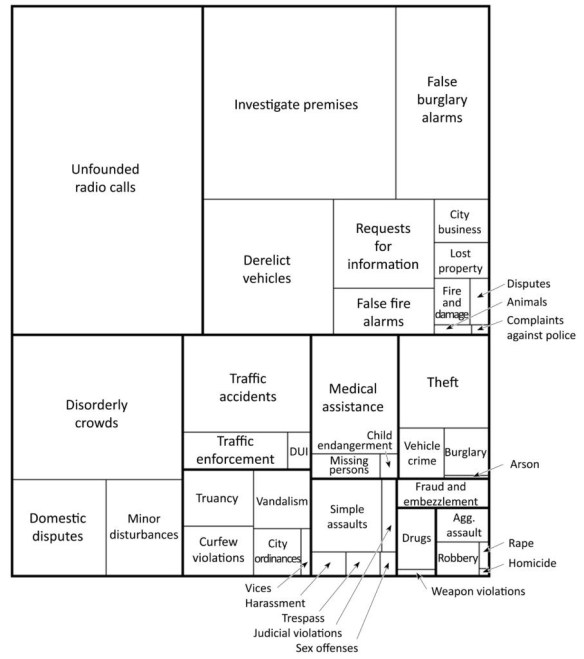
Start Up No.1280: the 5G coronavirus madness, marooned in paradise, our Tiger King world, wear a mask!, Italy’s uneasy peace, and more


RCGS Resolute: a cruise liner not to be messed with, as Venezuela’s navy learnt CC-licensed photo by David Larson on Flickr.

You can sign up to receive each day’s Start Up post by email. You’ll need to click a confirmation link, so no spam.

A selection of 10 links for you. Use them on a precautionary basis. I’m @charlesarthur on Twitter. Observations and links welcome.

Broadband engineers threatened due to 5G coronavirus conspiracies • The Guardian

Jim Waterson:

»

Telecoms engineers are facing verbal and physical threats during the lockdown, as baseless conspiracy theories linking coronavirus to the roll-out of 5G technology spread by celebrities such as Amanda Holden prompt members of the public to abuse those maintaining vital mobile phone and broadband networks.

Facebook has removed one anti-5G group in which users were being encouraged to supply footage of them destroying mobile phone equipment, with some contributors seemingly under the pretence that it may stop the spread of coronavirus and some running leaderboards of where equipment had been targeted.

Video footage of a 70ft (20 metre) telephone mast on fire in Birmingham this week has also circulated widely alongside claims it was targeted by anti-5G protesters. Network operator EE told the Guardian that its engineers were still on site assessing the cause of the fire but it “looks likely at this time” that it was an arson attack.

The company said it would be working with the police to find the culprits. It said: “To deliberately take away mobile connectivity at a time when people need it more than ever to stay connected to each other, is a reckless, harmful and dangerous thing to do. We will try to restore full coverage as quickly as possible, but the damage caused by the fire is significant.”

«

Celebrities promoting the idea that the coronavirus is somehow linked to 5G. It’s insane. To be so divorced from the capacity for rational thinking is one thing; not to be able to see how it might affect your fans is quite another. I do wonder if the celebrities will be called to account on the Monday morning TV shows, or if that would be seen as spreading the nonsense.
unique link to this extract


They were the last couple in paradise. Now their resort life continues • The New York Times

David Zweig:

»

By Sunday, they were the only guests at their resort, the Cinnamon Velifushi Maldives, which normally is at capacity this time of year, catering to some 180 guests. (“Room rates start at $750 a night,” its website still says.) The resort comprises the entirety of its speck of an island. There is nowhere to go. The couple reign like benign yet captive sovereigns over their islet. The days are long and lazy. They sleep in, snorkel, lounge by the pool, repeat.

The resort’s full staff are at hand, because of the presence of the two guests. Government regulations won’t allow any Maldivians to leave resorts until after they undergo a quarantine that follows their last guests’ departure. Accustomed to the flow of a bustling workday, and the engagement with a full house of guests, most of the staff, having grown listless and lonely, dote on the couple ceaselessly. Their “room boy” checks on them five times a day. The dining crew made them an elaborate candlelit dinner on the beach. Every night performers still put on a show for them in the resort’s restaurant: Two lone audience members in a grand dining hall.

At breakfast, nine waiters loiter by their table. Hostesses, bussers and assorted chefs circulate conspicuously, like commoners near a celebrity. The couple has a designated server, but others still come by to chat during meals, topping off water glasses after each sip, offering drinks even though brimming cocktail glasses stand in full view, perspiring. The diving instructor pleads with them to go snorkeling whenever they pass him by.

«

Such fabulous tales that are being thrown up by this most disruptive of circumstances. (Soon after this, the couple were told by the embassy to vacate – to another five-star resort, where all the South Africans are being gathered.)
unique link to this extract


Why this crisis is a turning point in history • New Statesman

John Gray:

»

A situation in which so many of the world’s essential medical supplies originate in China – or any other single country – will not be tolerated. Production in these and other sensitive areas will be re-shored as a matter of national security. The notion that a country such as Britain could phase out farming and depend on imports for food will be dismissed as the nonsense it always has been. The airline industry will shrink as people travel less. Harder borders are going to be an enduring feature of the global landscape. A narrow goal of economic efficiency will no longer be practicable for governments.

The question is, what will replace rising material living standards as the basis of society? One answer green thinkers have given is what John Stuart Mill in his Principles of Political Economy (1848) called a “stationary-state economy”. Expanding production and consumption would no longer be an overriding goal, and the increase in human numbers curbed. Unlike most liberals today, Mill recognised the danger of overpopulation. A world filled with human beings, he wrote, would be one without “flowery wastes” and wildlife. He also understood the dangers of central planning. The stationary state would be a market economy in which competition is encouraged. Technological innovation would continue, along with improvements in the art of living.

In many ways this is an appealing vision, but it is also unreal. There is no world authority to enforce an end to growth, just as there is none to fight the virus…

…the notion persists that pandemics are blips rather than an integral part of history. Lying behind this is the belief that humans are no longer part of the natural world and can create an autonomous ecosystem, separate from the rest of the biosphere. Covid-19 is telling them they cannot. It is only by using science that we can defend ourselves against this pestilence. Mass antibody tests and a vaccine will be crucial. But permanent changes in how we live will have to be made if we are to be less vulnerable in future.

«

The word people are throwing around for this situation is “Ballardian” – as in, like a work by JG Ballard. True, though which one?
unique link to this extract


Tiger King reflects our world back to us – one run by megalomaniacs and amateurs • The Guardian

Jessa Crispin:

»

Tiger King’s most powerful message might be about the people who have been elected and selected to keep us safe, to give wise counsel, and steer us through this crisis. Most true-crime entertainment sings love songs to cops, giving us smart, eager detectives who just can’t get that one unsolved case out of their heads, who will tirelessly pursue truth and justice, no matter how long it takes. These men, and it’s almost always men, will be haggard and aged, so we can imagine all of their hard work and sleepless nights.

Instead, Tiger King shows authorities for how they actually often are: fumbling, inadequate and drunk on power. The detective faced with finding Carole Baskin’s missing husband: well, gee, I don’t know, maybe one day we’ll find something or someone will say something. The prosecutor who may well be relying on the testimony of a liar to ensure the conviction of a defendant: well, golly, he sure seemed credible to me, seeing as how he said exactly the thing I wanted him to say.

I switched between watching Tiger King and the news and it’s like there’s no difference between the two. The lead member of the White House coronavirus taskforce: well, shucks, I sure do think America is doing the best job in the world with testing and treating coronavirus patients. The president who for months insisted the coronavirus was a minor problem until it had spread to the largest number of cases in the world: well, gee whiz, America is the best, we’re doing the best, we’re going to be fine, and hey, why don’t I put my son-in-law with no experience in anything in charge of this. And meanwhile the numbers of diagnosed patients and fatalities just keep spiraling upward.

The pathologies on display in Tiger King – the drive for power, the constant need for more, the willingness to remove any obstacle to what you desire, even by using violence – underlie a society that can’t take care of its sick or poor, that can’t pass regulations that would reduce real suffering.

«

I watched Tiger King, by the end of which I felt profoundly sorry for the tigers and lions, and glad for the rare moments when they could assert themselves. The tigers are us, aren’t they?
unique link to this extract


Let’s all wear a mask • Idle Words

Maciej Cieglowski:

»

Here are the ways wearing a mask will help you as an individual:

• A mask is a barrier that keeps you from touching your nose and mouth. By now you’ve probably noticed how irresistibly drawn your hands are to your face, far more than you would have guessed possible before paying attention to it. Masks make it harder to indulge that habit, as well as other unconscious habits like nose-picking, nail-biting, chewing on pens, or licking your finger when you count money.

• Wearing a mask is a mental reminder that things are not normal. Just like many religions ask believers to wear a special garment to keep them mindful of their duty to God, having a mask on your face can help you remember that you are in a situation that calls for special behavior.

• Masks are somewhat uncomfortable, a helpful feature when we’re trying to limit time spent in public places. Wearing one out in the world gives you an incentive to get your business done quickly so you can go home, scrub your hands, and paw at your naked face in voluptuous luxury.

•Masks can help you remember to wash your hands. If you form an association between handwashing and touching your mask, it becomes harder to forget to wash your hands when you come home and take your mask off.

«

I guess the masks I’ve got for DIY sanding will pass muster then.
unique link to this extract


Boeing 787s must be turned off and on every 51 days to prevent ‘misleading data’ being shown to pilots • The Register

Gareth Corfield:

»

According to the directive itself, if the aircraft is powered on for more than 51 days this can lead to “display of misleading data” to the pilots, with that data including airspeed, attitude, altitude and engine operating indications. On top of all that, the stall warning horn and overspeed horn also stop working.

This alarming-sounding situation comes about because, for reasons the directive did not go into, the 787’s common core system (CCS) stops filtering out stale data from key flight control displays. That stale data-monitoring function going down in turn “could lead to undetected or unannunciated loss of common data network (CDN) message age validation, combined with a CDN switch failure”.

Solving the problem is simple: power the aircraft down completely before reaching 51 days. It is usual for commercial airliners to spend weeks or more continuously powered on as crews change at airports, or ground power is plugged in overnight while cleaners and maintainers do their thing.

The CDN is a Boeing avionics term for the 787’s internal Ethernet-based network. It is built to a slightly more stringent aviation-specific standard than common-or-garden Ethernet, that standard being called ARINC 664. More about ARINC 664 can be read here.

Airline pilots were sanguine about the implications of the failures when El Reg asked a handful about the directive. One told us: “Loss of airspeed data combined with engine instrument malfunctions isn’t unheard of,” adding that there wasn’t really enough information in the doc to decide whether or not the described failure would be truly catastrophic. Besides, he said, the backup speed and attitude instruments are – for obvious reasons – completely separate from the main displays.

«

Pilots always sound sanguine, even when they’re terrified. It’s the training. Sounds like a clock overflow problem, of course, though finding where it is in the system is easier said than done.
unique link to this extract


The WHO has failed us again • UnHerd

Ian Birrell:

»

Taipei officials said in late December they tipped off WHO — through a warning system designed for exchange of such facts — that medical staff in China were becoming ill: a clear indication of human-to-human transmission. But this critical information was not shared, since Taiwan was excluded from a key WHO platform; indeed, the body did not even bother to reply. “An opportunity to raise the alert level both in China and the wider world was lost,” Chen Chien-jen, Taiwan’s vice-president and an epidemiologist, told The Financial Times.

It took until the end of January before Tedros finally proclaimed coronavirus to be a public health emergency of international concern — by which time it had spread to 19 nations on four continents. Some experts defend his pragmatic need to work with China to contain the outbreak, despite scepticism over data. And despite WHO’s sluggishness to declare a pandemic, the body has been hailed for subsequent work to marshall global efforts to contain the virus. Yet when this crisis is concluded, there needs to be accountability for actions that have again damaged its credibility.

WHO was guilty of disastrous inaction over the deadly ebola outbreak six years ago, when its slack approach was accused of fuelling death and suffering. The terrible epidemic killed more than 11,000 people in three west African nations, provoking fear and paralysing these countries, as I saw for myself in Liberia.

Yet when Médecins Sans Frontières begged the world for help and warned the disease was out of control, it was rebuked by a WHO spokesman on social media. Only after four more months did this body, which is supposed to show global leadership, concede that  there was an international health emergency. A devastating inquiry by British and US experts accused it of “the most egregious failure” for failing to sound the alarm.

«

As bureaucracies grow they tend to become self-sustaining and self-protecting, more interested in threats to themselves than to those they’re meant to protect. If the bureaucracy is meant to respond to global health threats, that’s not good.
unique link to this extract


Singing stops in Italy as fear and social unrest mount • The Guardian

Angela Giuffrida and Lorenzo Tondo:

»

Tensions are building across the poorest southern regions of Campania, Calabria, Sicily and Puglia as people run out of food and money. There have been reports of small shop owners being pressured to give food for free, while police are patrolling supermarkets in some areas to stop thefts. The self-employed or those working on contracts that do not guarantee social benefits have lost salaries, and many small businesses may never reopen.

Paride Ezzine, a waiter in Palermo, Sicily, no longer gets his salary. “Obviously, due to the lockdown, the restaurant closed,” he said. “I have a wife and two children and we’re living off our savings. But I don’t know how long they will last. I asked my bank to postpone payment instalments – they said no. This situation is bringing us to our knees.”

The ramifications of the lockdown, which is poised to be extended until at least Easter, are also affecting the estimated 3.3 million people in Italy who were working off the books, of whom more than 1 million live across Campania, Sicily, Puglia and Calabria, according to the most recent figures from CGIA Mestre, a Venice-based small business association.

A billboard in Naples reads: ‘All together, without fear.’ Photograph: Carlo Hermann/AFP via Getty Images
“In reality, we don’t know how many are working in the black as these numbers are only estimates,” said Giovanni Orsina, a politics professor at Luiss University in Rome. “However, a significant number of people live day to day, doing occasional jobs. There are also many shopkeepers, or professionals working for themselves, who may have moderate reserves that will run out the longer they’re in lockdown.”

Amid the brewing social unrest, the prime minister, Giuseppe Conte, said €4.3bn (£3.8bn) from a solidarity fund would immediately be advanced to all municipalities and an additional €400m would go to mayors for conversion into food stamps. But mayors have protested that the funds, especially the €400m for food vouchers, are insufficient.

«

This is yet another proximate risk from coronavirus: social unrest when – or if – the social contract breaks down.
unique link to this extract


All across the United States, the coronavirus is killing more men than women, data show – The Washington Post

Chris Mooney, Sarah Kaplan and Brady Dennis :

»

The Washington Post identified 37 states that provide a breakdown of how many men, and how many women, have tested positive for covid-19. In 30 of those states, including the large outbreaks in Massachusetts, Michigan and Washington, women had a higher number of reported cases, though not always by a large margin. In several large states, including California and Florida, and in the vast outbreak in New York City, the data swing the other way toward male cases, leaving an ambiguous picture overall.

Fewer states provide an analysis of the differing numbers of deaths among men and women. But at least 13 with substantial death numbers reported that data. (The Post did not analyze some states, like Alaska, where the death numbers remain small.) In every one of those states, men died more frequently, and that was the case even if they made up fewer total cases of the disease to begin with.

That’s also true in the city with the country’s biggest outbreak. As of Friday, men made up 59% of overall hospitalizations in New York City and 62% of more than 1,800 fatalities.

“I’ve seen more males that need immediate respiratory support — to be intubated or supplemental oxygen,” Jackson said. “That’s been the major difference. They come in sicker.”

Men in New York are dying at a disproportionately high rate, even when accounting for the fact that male cases are more numerous to begin with. Men make up 55% of cases there, but 62% of deaths…

…For almost all infectious diseases, women are able to mount a stronger immune response then men, [a doctor] said. Women with acute HIV infections have 40% less viral genetic material in their blood than men. They are less susceptible to the viruses that cause hepatitis B and C. Men infected with coxsackie viruses — which in severe cases can cause inflammation of heart tissue — are twice as likely to die of the disease.

That holds true even in other animals. Female birds show higher antibody responses to infection than males, especially during mating season. The immune cells that eat up microbes and cellular debris are less active in male lizards than in their female counterparts.

«

unique link to this extract


Cruise ship sunk Venezuelan Navy ship after being fired at and rammed. Don’t mess with RESOLUTE • Maritime Bulletin

Mikhail Voytenko:

»

Cruise ship with 35 maintenance crew on board (no passangers) was positioned outside Venezuelan territorial waters, when she was approached by NAIGUATA and ordered to sail to Puerto Moreno on Isla De Margarita. Warning shots were fired, Master of RESOLUTE (RESOLUTE indeed!) refused to obey and maintained her course. From RESOLUTE owner statement:

… the navy vessel approached the starboard side at speed with an angle of 135° and purposely collided with the RCGS RESOLUTE. The navy vessel continued to ram the starboard bow in an apparent attempt to turn the ship’s head towards Venezuelan territorial waters. While the RCGS RESOLUTE sustained minor damages, not affecting vessel’s seaworthiness, it occurs that the navy vessel suffered severe damages while making contact with the ice-strengthened bulbous bow of the ice-class expedition cruise vessel RCGS RESOLUTE and started to take water…

NAIGUATA sank, but RESOLUTE, as it came out, didn’t flee, she “…remained for over one hour in vicinity of the scene and reached out to MRCC Curacao, and sailed away only after receiving the order to resume passage full ahead by the MRCC and that further assistance is not required”.

So, there’s nothing much else left to talk about, except to laugh and to applaud RESOLUTE Master. Not many – if any – similar cases in naval history, when defenceless passenger ship sunk Navy battleship, and went away with it.

«

You might have been hearing bits of this story over the weekend, and it’s absolutely true. There are photos of Resolute in (non-Venezuelan) dock, and its starboard bow is scraped to hell.
unique link to this extract


Errata, corrigenda and ai no corrida: none notified

Start Up No.1279: ‘Contagion’ writer on what to expect, no more 5G conspiracies?, Bird Zooms 406 out of work, WeWork founder to lose a billion, and more


What if the BBC was funded by a levy on your internet connection rather than your TV ownership? CC-licensed photo by Karl Baron on Flickr.

You can sign up to receive each day’s Start Up post by email. You’ll need to click a confirmation link, so no spam.

A selection of 10 links for you. Comfortable yet? I’m @charlesarthur on Twitter. Observations and links welcome.

BBC suggests broadband ISP levy to replace UK TV licence fee • ISPreview UK

Mark Jackson:

»

in its response to the Government’s consultation, the BBC has also said that they’re willing to consider alternative funding models, such as one linked directly to an existing household bill.

Extract from the BBC’s Response:

»

In some countries the TV licence, or equivalent, is linked directly to an existing common household bill. For example it is collected through electricity bills in Italy and the equivalent of council tax bills in France. Another option to consider as the UK progresses towards universal access could be broadband bills.

This would be a significant change for the UK and we are not, at this stage, advocating it. It does however raise an interesting question as to whether the current system could be made much simpler, more efficient and more automated. We are open to exploring this further.

«

We suspect that consumers would not be universally welcoming of having their broadband bills so directly linked to the BBC TV Licence, particularly since most regard internet access as being an essential service but many would not hold the broadcaster’s own content to that same level of importance. Not that the content they create isn’t good, but broadband is simply on a different level and with other challenges.

The idea also raises complicated questions about how such a system might be imposed across such a diverse UK market, which may be dominated by a handful of major ISPs but is also home to hundreds of smaller providers. Such a levy would be quite a noticeable change and is certain to require regulatory approval, so as not to trigger penalty-free exit clauses (usually occurring when a provider imposes a mid-contract price hike).

«

People already have levies on their electricity bill to pay for desirable things (green electricity production). Why not look at how it’s done in France and Italy? If you’re going to have a national broadcaster, it seems sensible to have its income base as wide as possible; and it’s internet-supplied, so that would be a logical place to tap.
unique link to this extract


‘Contagion’ writer Scott Burns on the coronavirus and parallels with his film • The Washington Post

Michele Norris interviewed Burns:

»

Q: Many people are turning to you because your “Contagion” screenplay seemed to predict the global pandemic. What do people want to know when they reach out?

It is sad, and it is frustrating. Sad because so many people are dying and getting sick. Frustrating because people still don’t seem to grasp the situation we are now in and how it could have been avoided by properly funding the science around all of this. It is also surreal to me that people from all over the world write to me asking how I knew it would involve a bat or how I knew the term “social distancing.” I didn’t have a crystal ball — I had access to great expertise. So, if people find the movie to be accurate, it should give them confidence in the public health experts who are out there right now trying to guide us.

People also want to know what I think will happen next. My sense is that we are still very much in the first act of this story — how it will go from here depends on how both the people and the government react in the days ahead. I never contemplated a federal response that was so ignorant, misguided and full of dangerous information. I thought our leaders were sworn to protect us. I don’t get to write this story this time. This is a story we are all writing together…

Q: Was there some hidden message that you left in the film to find our best selves or to stay calm instead of panic?

Yeah, I think the intention in the film — and there are a few scenes where you do see basic human kindness in the face of panic — is that this is an opportunity for a country, as divided as we are, to find common cause. And one of the things that epidemiologist Larry Brilliant has said to me over the years is that love is a big part of survival in these situations. Do you love someone enough to take care of yourself and to respect their vulnerability? Do you have a basic compassion for people less fortunate than you? Dr. Brilliant, you know, had always said to me, “There is, in every one of these, an opportunity for people to become heroic in the way that they respect and treat each other.”

«

unique link to this extract


Scoop: Google to lift advertising ban on coronavirus topics • Axios

Sara Fischer:

»

Google will begin to allow some advertisers to run ads across its platforms that address the coronavirus, according to a Google memo sent to clients and obtained by Axios.

Democrats have argued that in banning attack ads targeting President Trump’s response to the coronavirus pandemic, including on YouTube, Google was shielding his campaign in a critical election year.

The broad ban had also stopped consumer advertisers, like retail and packaged goods companies, as well as corporate social responsibility advertisers like nonprofits, from running messaging about the virus.

According to the memo, sent from Google’s Head of Industry Mark Beatty to political advertising clients, Google is beginning to phase in advertisers who want to run ads related to COVID-19, prioritizing those advertisers that are working directly on this issue.

«

That ban didn’t last long. Wonder if Google is feeling the pinch at all on advertising yet.
unique link to this extract


UK media outlets told not to promote baseless 5G coronavirus theories • The Guardian

Jim Waterson:

»

British broadcasters are being warned that they face sanctions from the media regulator if they give airtime to false health advice about coronavirus, after a Sussex radio station was given a severe warning for broadcasting baseless conspiracy theories that the pandemic is linked to the rollout of 5G phone networks.

Members of the public complained after hearing a broadcast on the community radio station Uckfield FM, in which a woman introduced as a “registered nurse” claimed, without any evidence, that the rollout of 5G phone technology in Wuhan was connected to the outbreak and that the virus had been created in a lab.

It later emerged that she was a practitioner of alternative medicines, while the media regulator said it was “not aware of any reputable scientific evidence to corroborate such a contentious claim which runs contrary to all official advice, both in the UK and internationally, about coronavirus.”

Ofcom confirmed it was actively monitoring television and radio stations that might be broadcasting potentially harmful views about the causes and origins of Covid-19 that have “the potential to undermine people’s trust in the advice of mainstream sources of information” during the crisis.

Baseless suggestions that coronavirus is linked to 5G have spread widely in recent weeks on WhatsApp, Facebook groups, and on the fast-growing community website NextDoor – all of which have the ability to reach vastly more people than a small community radio station in Sussex but are much less regulated.

«

“Here’s the news the MSM won’t tell you!”
unique link to this extract


Here’s how Bird laid off 406 people in two minutes • dot.LA

Ben Bergman:

»

Travis VanderZanden, 41, a former top Uber executive who founded Bird only three years ago, had abruptly cancelled the previous Thursday’s regular biweekly all-hands meeting, referred to internally as Birdfams. He had not addressed Bird’s thousand-plus employees since they were forced to leave their offices, so most employees assumed he was giving an update on the company’s response to the worsening global pandemic.

But some grew suspicious when they noticed the guest list and host were hidden and they learned only some colleagues were included. It was also unusual they were being invited to a Zoom webinar, allowing no participation, rather than the free-flowing meeting function the company normally uses. Over the next hour, employees traded frantic messages on Slack and searched coworkers’ calendars to see who was unfortunate enough to be invited…

…[At 1030] thinking there were technical difficulties, some employees logged-off and were never able to return to the meeting. Then, after five minutes of dead air that seemed like an eternity, a robotic-sounding, disembodied voice came on the line.

The woman began by acknowledging “this is a suboptimal way to deliver this message.” Then she cut to the chase: “COVID-19 has also had a massive impact on our business, one that has forced our leadership team and our board of directors to make extremely difficult and painful decisions. One of those decisions is to eliminate a number of roles at the company. Unfortunately your role is impacted by this decision.”

The meeting was scheduled to last half an hour but ended up going for only two minutes. Towards the end of the monologue, as the woman started talking about the future of Bird, she sounded like she was getting choked up and was trying to hold back tears.

“It felt like a Black Mirror episode,” Alvauaje said. “This ominous voice came over and told us we were losing our jobs.”

«

Next step will be to get an AI to read it out, won’t it? In a nicely manicured voice. Using Google Plex.
unique link to this extract


How Google ruined the internet • Superhighway 98

»

In 1998, the velocity of information was slow and the cost of publishing it was high (even on the web). Google leveraged those realities to make the best information retrieval system in the world.

Today, information is free, plentiful and fast moving; somewhat by design, Google has become a card catalog that is constantly being reordered by an angry, misinformed mob.

The web was supposed to forcefully challenge our opinions and push back, like a personal trainer who doesn’t care how tired you say you are. Instead, Google has become like the pampering robots in WALL-E, giving us what we want at the expense of what we need. But, it’s not our bodies that are turning into mush: It’s our minds.

«

The main Superhighway 98 site itself is quite a throwback: 100 links, each to a site with a specific, identifiably useful purpose. I can’t find who the author is.
unique link to this extract


WeWork founder Adam Neumann loses out as SoftBank scraps share buyout • CNN

Sherisse Pham:

»

SoftBank is walking away from a sizeable chunk of its WeWork rescue package, which included a near billion dollar windfall for ousted founder Adam Neumann.

The Japanese tech company has backed out of a plan to buy $3bn worth of shares in the coworking startup from existing shareholders and investors, according to statements from SoftBank and a special committee of WeWork’s board.

SoftBank’s chief legal officer, Rob Townsend, said in a statement on Thursday that the share purchase was subject to certain conditions agreed to in October.

“Several of those conditions were not met, leaving SoftBank no choice but to terminate the tender offer,” he said.

Shares in SoftBank (SFTBY) closed up 2.5% in Tokyo following the announcement.

The about face cuts deep for Neumann — the October agreement had included an offer to buy up to $975m worth of the WeWork founder’s shares — and is further evidence that SoftBank CEO Masayoshi Son is stepping back from his trademark high-risk investment strategy after the company’s shares cratered earlier this year.

«

World’s tiniest violin factory overwhelmed with global demand.
unique link to this extract


Where America didn’t stay home even as the virus spread • The New York Times

James Glanz, Benedict Carey, Josh Holder, Derek Watkins, Jennifer Valentino-DeVries, Rick Rojas and Lauren Leatherby:

»

Stay-at-home orders have nearly halted travel for most Americans, but people in Florida, the Southeast and other places that waited to enact such orders have continued to travel widely, potentially exposing more people as the coronavirus outbreak accelerates, according to an analysis of cellphone location data by The New York Times.

The divide in travel patterns, based on anonymous cellphone data from 15 million people, suggests that Americans in wide swaths of the West, Northeast and Midwest have complied with orders from state and local officials to stay home. Disease experts who reviewed the results say those reductions in travel — to less than a mile a day, on average, from about five miles — may be enough to sharply curb the spread of the coronavirus in those regions, at least for now.

“That’s huge,” said Aaron A. King, a University of Michigan professor who studies the ecology of infectious disease. “By any measure this is a massive change in behavior, and if we can make a similar reduction in the number of contacts we make, every indication is that we can defeat this epidemic.”

But not everybody has been staying home.

In areas where public officials have resisted or delayed stay-at-home orders, people changed their habits far less. Though travel distances in those places have fallen drastically, last week they were still typically more than three times those in areas that had imposed lockdown orders, the analysis shows.

A half-dozen of the most populous counties where residents were traveling widely last week are in Florida, where Gov. Ron DeSantis resisted calling for a statewide lockdown until Wednesday. People in Jacksonville, Tampa, Daytona Beach, Lakeland and surrounding areas continued to travel much more than people in other parts of the country, putting those areas at a higher risk for outbreaks in the coming weeks.

«

Nearly as many people writing it as tracked. The data is remarkable, and the argument that “in the rural areas you can’t stay put” doesn’t quite gel: many of those have very dense cities too. The other eye-opener is that this data can be acquired at all. You’re not going to see this in European publications.
unique link to this extract


Zoom announces 90-day feature freeze to fix privacy and security issues • The Verge

Tom Warren:

»

The challenges of supporting 200 million users compared to just 10 million a few months ago are significant enough, but the privacy and security issues that have been uncovered recently present greater challenges for the company. Zoom is https://blog.zoom.us/wordpress/2020/04/01/a-message-to-our-users/ and focusing on its security and privacy issues instead. “Over the next 90 days, we are committed to dedicating the resources needed to better identify, address, and fix issues proactively,” explains Yuan. “We are also committed to being transparent throughout this process.”

All of Zoom’s engineering resources will now be focused on safety and privacy issues, and the company is planning a “comprehensive review” with third-parties to ensure it’s handling the security of these new consumer cases properly.

Zoom is also committing to releasing a transparency report to share the number of requests from law enforcement and governments for user data. It’s something that digital rights advocacy groups have called on Zoom to release. Zoom is also “enhancing” its bug bounty program, consulting with other chief information security officers across the industry, and using white box penetration tests to identify other security bugs.

Yuan will also hold a weekly webinar on Wednesdays at 10AM PT / 1PM ET to discuss privacy and security updates for Zoom as it tackles its response over the next 90 days.

«

Good; rather like Microsoft (belatedly) focussing on security after the Swiss cheese of Windows XP. Impressive that it comes exactly a day after Ben Thompson pointed out this was what it should do in his Stratechery newsletter.
unique link to this extract


‘Rats out of the sewers’: ad fraudsters are leaping on the coronavirus crisis • Digiday

Lara O’Reilly:

»

Website traffic is surging. But with advertisers adding coronavirus-related keywords to their block lists and others pausing spend altogether, ad prices on news sites are low. With less competition in the auction, low quality ads — and even publishers’ own house ads — are now making their way to the most prized ad slots on homepages. The fraudsters have quickly leaped into action.

Clean.io, a company that offers malvertising protection to publishers, found there was a surge in malvertising campaigns starting Mar. 11. Clean.io’s “global threat level” — a percentage calculation of the number of threats clean.io blocked divided by the number of pageviews it behaviorally analyzed — was 50 times higher during the surge to the end of March relative to the start of the month.  Around 1% of all pageviews Clean.io analyzed over the past two weeks were impacted by malicious ads, compared with a very low baseline of around 0.02% at the beginning of the month.

The U.S. has seen a significantly higher increase in malvertising compared with the rest of the world over the last month, according to Clean.io. The company said it analyzed the JavaScript within ads on tens of thousands of sites and apps that generate tens of billions of monthly page views.

The market forces of lower ad prices and extraordinarily high traffic “have basically brought the rats out of the sewers,” said Clean.io CEO Matt Gillis.

Ad fraud tends to spike over weekends and holidays as more people switch to personal devices versus work devices that tend to have better security settings. But with the majority of people now at home, there are more opportunities for bad actors to pounce.

«

Rats is the word.
unique link to this extract


Errata, corrigenda and ai no corrida: Yesterday I wondered whether we could figure out how accurate a SARS-Cov-2 test which said it had 90% specificity, 90% sensitivity was. Gordon McKenzie writes: “These are specific medical statistics which can take a bit of getting your head around. They relate to the population as a whole, they don’t tell you a lot about any single individual test.

“Sensitivity is True Positive / (True Positive + False Negative). This is a measure of how likely you are to find everyone that has the disease. So, 90% sensitivity means you’ll find 90 of every 100 with the lurgy. Specificity is the other side of that coin. 90% specificity means you’ll correctly identify 90 of every 100 who are healthy (TN / (TN+FP)).

“What’s interesting is that these two factors don’t tell you how likely your individual test result is to be correct. For that you need the Positive and Negative Predictive Values. Without more data, those don’t just drop out.”

In other words: we don’t know. Await more information.

Start Up No.1278: how the UK government screwed up Covid testing, more Zoom hacks, Dark Sky alternatives, YouTube plans TikTok ‘rival’, and more


He’s going to be missed and mourned. Farewell, and thanks for all the answers, Jack Schofield. CC-licensed photo by Aleks on Flickr.

You can sign up to receive each day’s Start Up post by email. You’ll need to click a confirmation link, so no spam.

A selection of 11 links for you. Stay well. I’m @charlesarthur on Twitter. Observations and links welcome.

‘Absolutely wrong’: how UK’s coronavirus test strategy unravelled • The Guardian

Sarah Boseley:

»

Ministers have been flailing. What has emerged is a picture of confusion and uncertainty at the top, with ministers making promises they cannot keep and apparently with little comprehension of the global tussle for tests that may make it impossible for the UK to buy its way belatedly out of the problem.

The UK is now competing with every other nation to obtain the kits it needs, particularly the polymerase chain reaction (PCR) test, which tells someone whether they have Covid-19 or not.

The Guardian has been told that presidents and prime ministers are trying to outbid each other to secure these kits and their components, which are in short supply. The US also has woken up to the need to test – and is telling companies that export them that America must come first.

No wonder, perhaps, the UK now finds itself struggling to increase testing to 25,000 a day for hospital patients and health workers, let alone meet its ambition – once stated but now seldom mentioned – to reach 100,000 a day, to include other key workers.

“In all countries we have prime ministers calling the CEOs and diagnostic companies to try to get hold of the stocks. Indonesia and Peru we know have offered to order several million tests and send private planes to pick the tests up. There is more going on behind the scenes to secure supplies,” said Dr Catharina Boehme, chief executive of the non-profit Geneva-based Foundation for Innovative New Diagnostics, which is a WHO collaborating centre.

The companies are trying to be responsible, she said. “They supply small quantities to each country to give sufficient supplies for a number of days and then ship on a very frequent basis. But there is clearly this move in the US where several companies have openly declared they can’t supply anyone outside the US.”

«

Terrific piece; clearly there’s a sort of intergovernmental eBay, where they’re all just upping their bids wildly. The antigen tests being proposed are apparently 90% sensitive to Covid-19 (so a 90% true positive rate? So a false positive rate of 10%?) and 90% specific (which I take to mean if it’s positive, there’s a 90% chance that it’s reacting to SARS-Cov2). Someone better than me at Bayesian maths can figure out the chances you’re antibody-positive to SARS-Cov2 if the test is positive: I think it’s 89%.
unique link to this extract


Time to kick the ‘Good Times’ delusion to the curb • FierceWireless

Geoff Blaber of analysts CCS Insight:

»

I’ve read reports about how the situation could be a boon for virtual reality over the next few months. I get the theory around escapism, but thinking that folks will splash out on headsets to play Beat Saber when they can’t make the next mortgage payment is devoid of reality.

Not all can remember what happened when the dot com bubble burst or the financial crisis of 2008. Others weren’t old enough to have experienced it. Others are still on the sugar high of the last decade. Even as pensions and investments decline, the “Good Times Delusion” means some are finding it hard to equate these factors with their own business and circumstances. It’s been that long since we’ve seen this kind of financial and economic turmoil that those who aren’t among the first wave to be affected are numb to the potential consequences…

I don’t want to be seen as overly pessimistic. The hope is that this is a short term jolt to the system from which the economy sees a swift V-shaped recovery. This isn’t the structural economic downturn of 2008. But this could also prove to be more of U or even L shaped recovery. I’m not an economist so it’s not for me to determine where we’re heading, but these scenarios have all played a role in our forecast revisions.

Whatever the scenario, it won’t just be the hospitality industry and Uber drivers that are affected. If a start-up such as OneWeb – the SoftBank-backed low earth orbit satellite communications company with over $3bn in funding – is on the rocks, you can bet that many others are going to follow, and spending is going to tighten from top to bottom of the economy.

«

As he also says in the piece, assume that everything from here forward will focus on profit before growth.
unique link to this extract


Ex-NSA hacker drops new zero-day doom for Zoom • TechCrunch

Zack Whittaker:

»

Patrick Wardle, a former NSA hacker and now principal security researcher at Jamf, dropped the two previously undisclosed flaws on his blog Wednesday, which he shared with TechCrunch.

The two bugs, Wardle said, can be launched by a local attacker — that’s where someone has physical control of a vulnerable computer. Once exploited, the attacker can gain and maintain persistent access to the innards of a victim’s computer, allowing them to install malware or spyware.

Wardle’s first bug piggybacks off a previous finding. Zoom uses a “shady” technique — one that’s also used by Mac malware — to install the Mac app without user interaction. Wardle found that a local attacker with low-level user privileges can inject the Zoom installer with malicious code to obtain the highest level of user privileges, known as “root.”

Those root-level user privileges mean the attacker can access the underlying macOS operating system, which are typically off-limits to most users, making it easier to run malware or spyware without the user noticing.

The second bug exploits a flaw in how Zoom handles the webcam and microphone on Macs. Zoom, like any app that needs the webcam and microphone, first requires consent from the user. But Wardle said an attacker can inject malicious code into Zoom to trick it into giving the attacker the same access to the webcam and microphone that Zoom already has.

«

unique link to this extract


Attackers can use Zoom to steal users’ Windows credentials with no warning • Ars Technica

Dan Goodin:

»

Users of Zoom for Windows beware: the widely used software has a vulnerability that allows attackers to steal your operating system credentials, researchers said.

Discovery of the currently unpatched vulnerability comes as Zoom usage has soared in the wake of the coronavirus pandemic. With massive numbers of people working from home, they rely on Zoom to connect with co-workers, customers, and partners. Many of these home users are connecting to sensitive work networks through temporary or improvised means that don’t have the benefit of enterprise-grade firewalls found on-premises.

Attacks work by using the Zoom chat window to send targets a string of text that represents the network location on the Windows device they’re using. The Zoom app for Windows automatically converts these so-called universal naming convention strings—such as //attacker.example.com/C$—into clickable links. In the event that targets click on those links on networks that aren’t fully locked down, Zoom will send the Windows usernames and the corresponding NTLM hashes to the address contained in the link.

Attackers can then use the credentials to access shared network resources, such as Outlook servers and storage devices.

«

Well, it’s been 24 hours, after all.
unique link to this extract


Democrats say Google’s COVID-19 ad ban is a gift to Trump • Protocol

Emily Birnbaum:

»

“I totally understand if they want to ban for-profit entities from talking about coronavirus,” he said. “They’re trying to avoid people price-gouging face masks and selling fake cures, and generally exploiting the crisis for profit. But that’s an entirely separate use-case from nonprofit organizations trying to spread accurate information about the situation and holding elected officials accountable for the life-and-death decisions they are currently making.”

The Trump campaign and Republicans across the country also are not allowed to run advertisements right now. But the democratic strategists argue that the CDC and White House’s messaging, which are permitted by Google, fall under Trump’s purview.

“For Google to basically say that the Trump administration is the only entity that is allowed to talk about the most important issue in politics really puts their thumb on the scale of the incumbent president and against anyone who is really looking to challenge him,” said Eli Kaplan, a founding partner of Rising Tide Interactive, a digital marketing firm for Democratic political organizations and progressive nonprofits.

A Google spokesperson told Protocol that the company proactively instituted the policy at the beginning of February when it noticed a flurry of advertisers throwing their messages onto coronavirus-related terms in order to drive traffic. While Google announced the ban in general terms earlier this month, its effect on political messaging is only now being recognized.

“We are currently blocking ads related to coronavirus under our sensitive events policy, with exception of government PSAs on important health information,” a Google spokesperson told Protocol in a statement. “This policy applies to all advertisers equally, including all political advertisers.”

«

Google’s policy says “On Google Ads we are blocking all ads capitalising on the coronavirus”. Be interesting to see how “capitalising” the CDC and WH messaging is judged to be.
unique link to this extract


Six Dark Sky alternatives for Android weather watchers • The Verge

Barbara Krasnoff:

»

If you’re an Android user with Dark Sky and you’re wondering where to go now for your weather report, there are a few alternatives to choose from. But first, here are a couple of things to consider.

Several Android weather apps have been found to ask for more permissions than they need and to have shared location data with advertisers and other third parties. These privacy issues are detailed in a Vice article by Jason Koebler.

One suggestion is to simply use the weather app that Google supplies with its OS. A way to get that somewhat elusive app to live on your home screen is described on GadgetHacks.com. We tried it, and it works quite nicely.

If the Google app isn’t enough for you, here are six alternatives. All have free versions with ads, and all have paid versions that not only remove the ads but add other features.

Besides the price of each app, I’ve also listed all the various permissions requested as listed on its Google Play entry.

«

So it turns out there are lots of alternative weather data sources. The pant-wetting over Apple buying up a single one of them looks more and more hyperbolic – as such things often are.
unique link to this extract


COVID19 patients describe a loss of smell and taste • News Medical

Dr Liji Thomas:

»

a significant citation comes from South Korea, where testing has been carried out on a mass scale. Here, 30% of 2,000 patients who tested positive first presented with the loss of smell. All of these were mild cases. The statement says, “These patients might be some of the hitherto hidden carriers that have facilitated the rapid spread of COVID-19.”

The British physicians are backed by American ENT specialists. The website of the American Academy of Otolaryngology now carries the information that many stories have come in indicating that anosmia or hyposmia (a reduced sense of smell) and ageusia are significant COVID-19 symptoms, often seen in patients who later turned out to be positive on virus tests, though they had no other symptoms.

The website advises that if the patient’s anosmia or hyposmia cannot be satisfactorily accounted for by allergies or sinusitis, the physician should think immediately of testing for coronavirus. The condition should lead to the recommendation that the patient self-isolate as well.

In Italy’s worse-affected areas too, doctors say they have found that anosmia and ageusia are telltale signs that an apparently healthy person is harboring the virus and is probably spreading it to others. Marco Metra, cardiology chief at Brescia’s main hospital, which has 700 coronavirus patients out of a total of 1,200 patients, says, “Almost everybody who is hospitalized has this same story. The patient says, ‘My wife has just lost her smell and taste, but otherwise she is well.’ So she is likely infected, and she is spreading it.”

German virologist Hendrik Streeck personally interviewed coronavirus patients in Germany’s Heinsberg district, by house to house visiting. He reports an even higher percentage – about 66% – of the over 100 patients he met with mild coronavirus infection had loss of smell and taste lasting for several days.

«

A team at Harvard reckons it’s because some cells in the olfactory epithelium (in your nose, helps you smell) have ACE2, the protein that SARS-Cov2 attacks to enter into cells. There seems to be an implication of a link between mildness and anosmia. (Certainly has been for me.)
unique link to this extract


AI tool predicts which coronavirus patients get deadly ‘wet lung’ • Yahoo News

»

The tool discovered several surprising indicators that were most strongly predictive of who went on to develop so-called acute respiratory disease syndrome (ARDS), a severe complication of the COVID-19 illness that fills the lungs with fluid and kills around 50% of coronavirus patients who get it. 

The team applied a machine learning algorithm to data from 53 coronavirus patients across two hospitals in Wenzhou, China, finding that changes in three features – levels of the liver enzyme alanine aminotransferase (ALT), reported body aches, and haemoglobin levels – were most accurately predictive of subsequent, severe disease.

Using this information along with other factors, the tool was able to predict risk of ARDS with up to 80% accuracy.

By contrast, characteristics that were considered to be hallmarks of COVID-19, like a particular pattern in lung images called “ground glass opacity,” fever, and strong immune responses, were not useful in predicting which of the patients with initially mild symptoms would get ARDS. 

«

Age and sex weren’t strong predictors. Really would like to see how well this applies with a much larger dataset.
unique link to this extract


Jack Schofield, Guardian’s Ask Jack tech columnist, dies at 72 • The Guardian

Alex Hern:

»

Jack Schofield, the Guardian’s former computer editor and author of its technology advice column, Ask Jack, for almost 20 years, has died aged 72.

Schofield was taken to hospital following a heart attack on Friday night and died on Tuesday afternoon.

The Guardian’s editor-in-chief, Katharine Viner, said: “Jack Schofield was one of the first true technology and computing experts in British journalism. In more than 35 years writing for the Guardian, he saw (and foresaw) the rise of personal computers, the advent of the internet, Google, smartphones and much more. His Ask Jack column was an essential and expert guide for generations of Guardian readers. Our thoughts are with Jack’s family and friends at this sad time.”

Schofield had written for the paper since 1983, initially as a columnist for the new computing pages, called Futures Micro Guardian. His first column, on how to buy a home “micro”, walked the reader through the difficult process of picking one of the many microcomputers available in Britain at the time, ultimately recommending the £400 Acorn BBC Model B or, for the budget conscious, the £100 Sinclair Spectrum.

«

Jack is fondly remembered by many who grew up reading his work in The Guardian. He wrote briefly for ZDNet after 2010, when he took voluntary redundancy from the paper as it tried to cut costs; but he was back freelancing for The Guardian almost as soon as it could hire him back.

He was an editor’s dream: his output was tireless, precise and incredibly punctual; he wasn’t precious about his copy. The thing that most annoyed him about the newer offices was the ban on smoking, which meant his iconic pipe had to stay unlit, at least when indoors. He had a knack for staying abreast of developments and the mental flexibility not to resist them; he was the first person to mention Google to me – in 1998 or 1999.

The one element of computing technology he couldn’t fathom was Apple’s success. Jack had a utilitarian view of IT, perhaps because he’d seen it from the wires-and-transistors era; he didn’t understand why people would pay extra for something that he didn’t perceive as having value, ie the user experience. As a result, I don’t recall him recommending Apple gear for anything, ever.
unique link to this extract


YouTube plans ‘Shorts’ to rival TikTok • The Information

Alex Heath and Jessica Toonkel:

»

YouTube is planning to release a rival to TikTok, the hugely popular video-sharing app, by the end of the year, according to two people familiar with the matter.

YouTube is currently planning Shorts, its answer to TikTok, as a feature inside its existing mobile app. Shorts will include a feed of brief videos posted by users inside the Google-owned app and will take advantage of the video service’s catalog of licensed music, songs from which will be available to use as soundtracks for the videos created by users, said the people. The move represents the most serious effort yet by a Silicon Valley tech company to combat the rise of TikTok, a rare example of a Chinese-owned social media app that has become a global hit.

A YouTube spokesperson declined to comment.

TikTok, owned by Beijing-based tech firm ByteDance, has catapulted into pop culture over the past year, attracting celebrities and young people to its service. A big part of the app’s appeal is its editing tools, which let users easily sync music clips to their videos and share them to an endless, algorithmically sorted feed on the app’s main screen.

While ByteDance hasn’t disclosed TikTok’s numbers, the app saw an estimated 842 million first-time installations from the Apple and Google app stores in the 12 months ended March 31, up 15% from the comparable period that ended March 31 of last year, according to SensorTower, a mobile data research firm. By comparison, the number of new installs of more mature apps like Facebook and YouTube was 693 million and 280 million, respectively, for the 12 months ended March 31, down 4% and 2% from the comparable period that ended March 31 of last year, SensorTower estimates.

TikTok may even be getting a bump from the coronavirus pandemic as more people hunker down in their homes and turn to online sources of entertainment. In March, TikTok saw 111 million first-time installs from the mobile app stores, up 11% from February, SensorTower said.

«

I’m sure this will successfully rival TikTok in the same way that Google+ successfully rivalled Facebook.
unique link to this extract


China concealed coronavirus outbreak extent: US intelligence • Bloomberg

Nick Wadhams and Jennifer Jacobs:

»

China has concealed the extent of the coronavirus outbreak in its country, under-reporting both total cases and deaths it’s suffered from the disease, the US intelligence community concluded in a classified report to the White House, according to three US officials.

The officials asked not to be identified because the report is secret and declined to detail its contents. But the thrust, they said, is that China’s public reporting on cases and deaths is intentionally incomplete. Two of the officials said the report concludes that China’s numbers are fake.

The report was received by the White House last week, one of the officials said.

«

That’s it. That’s all there is to this story – all the rest of it is publicly available stuff. We don’t get by how much China is reckoned to have undercounted the number of cases or deaths, whether it affects any of the calculations, whether it affected the decisions in the past two days (almost certainly not; those rely on the Imperial College modelling).

Bloomberg, let’s not forget, is the news source which was also tipped off by “US intelligence sources” about “tiny chips that China is inserting into servers used by Amazon, Apple and others”. That story (by different writers) has never, ever been confirmed, indirectly or otherwise.

For a news organisation that is so determined to use circumlocutions like “people not authorised to talk about the matter” – hell, just say “anonymous sources” and get it over with – Bloomberg seems very happy to carry water for the US’s propaganda efforts, which is what this amounts to, absent more information about the contents of the study.

And it’s not just the writers. What sort of editor approves a non-story like this? Estimates about underreporting from China have been floating around for months. This isn’t news just because some spook types are trying to produce a diversion.
unique link to this extract


Errata, corrigenda and ai no corrida: none notified

Start Up No.1277: Zoom get clobbered (but doesn’t care), consumers doubt personal data benefit, Apple buys Dark Sky, Covid-19 forecasts by US state, and more


what sort of SF novel are we really living through? The author of ‘Arrival’ can explain. CC-licensed photo by Patricia Wong on Flickr.

You can sign up to receive each day’s Start Up post by email. You’ll need to click a confirmation link, so no spam.

A selection of 10 links for you. Use them wisely. I’m @charlesarthur on Twitter. Observations and links welcome.

Ted Chiang explains the disaster novel we all suddenly live in • Electric Literature

Halimah Marcus interviews science fiction writer Chiang, whose short story became the film Arrival:

»

HM: Do you see aspects of science fiction (your own work or others) in the coronavirus pandemic? In how it is being handled, or how it has spread?

TC: While there has been plenty of fiction written about pandemics, I think the biggest difference between those scenarios and our reality is how poorly our government has handled it. If your goal is to dramatize the threat posed by an unknown virus, there’s no advantage in depicting the officials responding as incompetent, because that minimizes the threat; it leads the reader to conclude that the virus wouldn’t be dangerous if competent people were on the job. A pandemic story like that would be similar to what’s known as an “idiot plot,” a plot that would be resolved very quickly if your protagonist weren’t an idiot. What we’re living through is only partly a disaster novel; it’s also—and perhaps mostly—a grotesque political satire.

What we’re living through is only partly a disaster novel; it’s also—and perhaps mostly—a grotesque political satire.

HM: This pandemic isn’t science fiction, but it does feel like a dystopia. How can we understand the coronavirus as a cautionary tale? How can we combat our own personal inclinations toward the good/evil narrative, and the subsequent expectation that everything will return to normal?

TC: We need to be specific about what we mean when we talk about things returning to normal. We all want not to be quarantined, to be able to go to work and socialize and travel. But we don’t want everything to go back to business as usual, because business as usual is what led us to this crisis. COVID-19 has demonstrated how much we need federally mandated paid sick leave and universal health care, so we don’t want to return to a status quo that lacks those things. The current administration’s response ought to serve as a cautionary tale about the dangers of electing demagogues instead of real leaders, although there’s no guarantee that voters will heed it. We’re at a point where things could go in some very different ways, depending on what we learn from this experience.

«

unique link to this extract


Zoom meetings aren’t end-to-end encrypted, despite misleading marketing • The Intercept

Micah Lee and Yael Grauer:

»

In Zoom’s white paper, there is a list of “pre-meeting security capabilities” that are available to the meeting host that starts with “Enable an end-to-end (E2E) encrypted meeting.” Later in the white paper, it lists “Secure a meeting with E2E encryption” as an “in-meeting security capability” that’s available to meeting hosts. When a host starts a meeting with the “Require Encryption for 3rd Party Endpoints” setting enabled, participants see a green padlock that says, “Zoom is using an end to end encrypted connection” when they mouse over it.

But when reached for comment about whether video meetings are actually end-to-end encrypted, a Zoom spokesperson wrote, “Currently, it is not possible to enable E2E encryption for Zoom video meetings. Zoom video meetings use a combination of TCP and UDP. TCP connections are made using TLS and UDP connections are encrypted with AES using a key negotiated over a TLS connection.”

The encryption that Zoom uses to protect meetings is TLS, the same technology that web servers use to secure HTTPS websites. This means that the connection between the Zoom app running on a user’s computer or phone and Zoom’s server is encrypted in the same way the connection between your web browser and this article (on https://theintercept.com) is encrypted. This is known as transport encryption, which is different from end-to-end encryption because the Zoom service itself can access the unencrypted video and audio content of Zoom meetings. So when you have a Zoom meeting, the video and audio content will stay private from anyone spying on your Wi-Fi, but it won’t stay private from the company.

«

Everyone is crawling over Zoom in a way it never would have expected; years of technical debt are being exposed in days.
unique link to this extract


Zoom is leaking peoples’ email addresses and photos to strangers • VICE

Joseph Cox:

»

The issue lies in Zoom’s “Company Directory” setting, which automatically adds other people to a user’s lists of contacts if they signed up with an email address that shares the same domain. This can make it easier to find a specific colleague to call when the domain belongs to an individual company. But multiple Zoom users say they signed up with personal email addresses, and Zoom pooled them together with thousands of other people as if they all worked for the same company, exposing their personal information to one another.

“I was shocked by this! I subscribed (with an alias, fortunately) and I saw 995 people unknown to me with their names, images and mail addresses.” Barend Gehrels, a Zoom user impacted by the issue and who flagged it to Motherboard, wrote in an email.

Gehrels provided a redacted screenshot of him logged into Zoom with the nearly 1000 different accounts listed in the “Company Directory” section. He said these were “all people I don’t know of course.” He said his partner had the same issue with another email provider, and had over 300 people listed in her own contacts.

«

Zoom is basically getting publicly red-teamed (attacked by hackers trying to break into every aspect of it). Mistakes like this though make you wonder how it can have pretended to be an enterprise offering.
unique link to this extract


Zoom videoconferencing is very popular. It has bigger plans • Protocol

David Pierce with an oh-my-god-how-timely piece (which must have been researched just before everything got locked down):

»

As the company got ready for its IPO roadshow last year, [cofounder Eric] Yuan made a decision: He wasn’t going on the roadshow. (Yuan said this, too, was hairier than it seems in retrospect: “Not only did I scare people, I even scared our board of directors.”) He did most of his investor meetings through Zoom, bringing in other employees to do virtual demos and betting the product would work well enough to convince the bankers. It did. Though it probably also helped Zoom’s case that it was the rare tech company that was both growing fast and already profitable.

Fast-forward a few months — more growth, rising stock — and here we are. There have been a few blips along the way, like last spring, when a security researcher found an issue in Zoom’s Mac app that would let any website add a user to a Zoom call and activate their camera without permission. The problem even affected users who had uninstalled Zoom from their computer, forcing Apple to release a patch to fix it. It was a core test of Zoom’s relentless focus on simplicity — the same feature that made it possible to click a link and suddenly be in a conference also made the system penetrable. Ultimately, Zoom tweaked the way it handled permissions and uninstalls going forward. And then kept growing.

Right now, Zoom is big, it’s profitable, and it’s growing like crazy. It cracked Okta’s list of the 15 most-used business tools in 2019, while also being one of the fastest-growing. According to one estimate, the company added more users in the first two months of 2020 than in all of 2019. In early March, it reported 61% more business customers than the year prior, with revenue up 88% year-over-year. More than 10 million people join a Zoom meeting every day. And, of course, the coronavirus bump has been significant: CFO Kelly Steckelberg recently told Yahoo Finance that at the end of January, Zoom was headed for 100 billion annual meeting minutes, “and that’s up pretty significantly since then.” For the last several days, it’s supplanted TikTok as the #1 free app in the iOS App Store.

«

The challenge will be whether it wants to be business-facing or consumer-facing. They bring different demands: businesses want true security. Consumers aren’t that bothered; they like ease of use.
unique link to this extract


Consumers don’t believe use of personal data leads to more relevant ads, report finds • Campaign US

Michael Heusner:

»

While the use of consumer data is a widespread advertising and marketing tactic, the majority of people are still not okay with it and don’t believe it benefits them, according to a new GroupM report. 

The survey of nearly 14,000 middle income consumers in 23 countries found 61% of consumers are less inclined to use a product if their personal data is used for any purpose, while 56% of consumers want more control over their data.

“It is a staple of the advertising industry to claim that data collection benefits consumers because they are shown ads of greater relevance to them. In our study, only 18% of consumers believe that,” said Chris Myers, regional director, GroupM APAC.

But consumers are not powerless in this scenario. Many consumers are actively changing what they don’t like by adjusting privacy settings, deleting cookies and browser histories, and using extensions to mask their data.

Interestingly, the percentage of those who were okay with their data being used varied from as low as 38% in Indonesia to 75% in New Zealand, indicating a lack of uniformity on the issue across the world.

«

I’m sure all the adtech companies will listen to this finding very, very carefully.
unique link to this extract


What’s the smallest country that can fit everyone standing six feet apart? • Shrey Banga’s Blog

»

Today’s xkcd got me wondering how much land would we need if everyone stood six feet apart.

Methodology: We are all but spherical cows

If we want everyone to keep a minimum distance of r from each other, the problem boils down to efficiently packing n circles of radius r in the smallest area possible.

«

Have a guess. We’re talking about 7.77 billion people. (Clue: the most suitable two countries are both in Europe.) This is of course an update of British SF writer John Brunner’s postulation in 1968 that by 2010 the world population, then 3.5bn, would have grown to 7bn – he was correct, of course – and that you could fit them in standing-room-only fashion on Zanzibar.
unique link to this extract


Kenyans spending most of their money on airtime • Kenya News Broadcast Service

Dominic Omondi:

»

Airtime is now the single item that takes up the most income for Kenyans.

This is after the Kenya National Bureau of Statistics (KNBS) reviewed its Consumer Price Index (CPI).

After the review of the basket of goods and services used to compile CPI, KNBS gave airtime a weight of 5.496, the largest of any single consumer product.

Kenyans are putting more of their money in airtime than even rent, which had the heaviest weight three years ago from 2019. Kenyans, according to the review, are also spending more on airtime than on health or education.

Matatu fares and rent for a single room are the second and third consumer items respectively. Other expensive items that take a lot of money include white bread, milk, and beef with bones…

…Today, airtime is a need that most Kenyans can’t do without. Bitange Ndemo, a former Permanent Secretary in the Ministry of ICT and currently a senior lecturer at the University of Nairobi, in an earlier interview, said airtime was no longer a luxury.

If anything, he observed, it was a matter of “life and death” for some individuals. “Airtime is so critical,” says Prof Ndemo. “Some people are using the airtime to call so they can find a kibarua (menial work).”

Between July 2016 and June last year, Kenyans spent a total of 75 billion minutes talking on their mobile phones, or 143,086 years. They sent a total of 55.2 billion SMSs during this period, according to the Communications Authority of Kenya.

«

unique link to this extract


Dark Sky has a new home • Dark Sky

Adam Grossman:

»

What happens to our existing products?

iOS App: There will be no changes to Dark Sky for iOS at this time. It will continue to be available for purchase in the App Store.

Android and Wear OS App: The app will no longer be available for download. Service to existing users and subscribers will continue until July 1, 2020, at which point the app will be shut down. Subscribers who are still active at that time will receive a refund.

Website: Weather forecasts, maps, and embeds will continue until July 1, 2020. The website will remain active beyond that time in support of API and iOS App customers.

API: Our API service for existing customers is not changing today, but we will no longer accept new signups. The API will continue to function through the end of 2021.

«

Started, I believe, as a two-person $35,000 Kickstarter in October 2011. Always been terrific. There’s lots of chest-beating (especially among Android users) because lots of apps, on iOS and Android, use the API. They’ve got another 18 months, though, and there are other sources of weather data. It’s not clear whether Apple will make the data available after 2021; I’d guess not. Best guess, it gets rolled into iOS and Siri.

This does look like a late-stage consolidation: Apple and Google and smartphone OEMs (to a lesser extent) will try to buy up firms that make their platforms or products stand out.
unique link to this extract


The long-term impacts of the pandemic on consumer purchasing preferences • Strategy Analytics

»

The pandemic will have long-term impacts on what consumers want to purchase as well as how they purchase them. In addition to the inevitable increased use of delivery services for grocery and food, alternative shopping experiences such as Amazon Go’s contactless shopping experience – where consumers do not have to proceed through a checkout experience – will also see a boost in popularity.

For consumer electronics, where some devices such as smartphones are typically sold more on ‘in-hand’ experience, this pandemic presents a more challenging situation as consumers’ are less inclined to handle in-store displays.

Focus needs to shift to alternative ways of showcasing products. Previous Strategy Analytics research has shown that try-before-you-buy is a key use case for foldable phones and augmented reality. Consumers will need to be able to experience products and services outside the store as much as possible.

«

Notable how Apple now lets you view its new products using augmented reality: could be an accidental must-have in the coming years.
unique link to this extract


COVID-19: forecasts for the US and state-by-state • Healthdata.org

»

The charts below show projected hospital resource use based on COVID-19 deaths.

The projections assume the continuation of strong social distancing measures and other protective measures.

To view the methods used to produce the projections click here.

«

Visualisation and data collection by the University of Washington: currently forecasts a midrange of 84,000 deaths, with a range from 32,000 to 150,000.

A graphic showing how the 50 states’ trajectories will go would be good to see, but hard to produce, I guess.
unique link to this extract


Errata, corrigenda and ai no corrida: none notified