Start Up No.1406: China’s worrying food shortage, the Excel virus screwup, whither America after Trump?, dry Venice, and more


The US CDC is finally acknowledging that coronavirus spreads by a method more like cigarette smoke than spitting. CC-licensed photo by Shannon Holman on Flickr.

A selection of 9 links for you. A little oxygen aperitif for monsieur? I’m @charlesarthur on Twitter. Observations and links welcome.

China pushes ‘clean plate’ push amid food supply squeeze • The Washington Post

Eva Dou:

»

On the surface, China’s campaign to encourage mealtime thrift has been a cheerful affair: with soldiers, factory workers and schoolchildren shown polishing off their plates clean of food.

But behind the drive is a harsh reality. China does not have enough fresh food to go around — and neither does much of the world.

The pandemic and extreme weather have disrupted agricultural supply chains, leaving food prices sharply higher in countries as diverse as Yemen, Sudan, Mexico and South Korea. The United Nations warned in June that the world is on the brink of its worst food crisis in 50 years.

“It’s scary and it’s overwhelming,” Arif Husain, chief economist of the United Nations World Food Program, said in an interview. “I don’t think we have seen anything like this ever.”

In China, the two foods in the tightest spots are pork and corn, with the nation’s pigs hit hard by African swine fever and much of the year’s corn crop ruined by floods. But fresh foods of all stripes are in short supply, too, due to the coronavirus pandemic and flooding — from eggs, to seafood, to leafy green vegetables.

Beijing has declared it is not in a food crisis, and says it has enough reserve wheat to help feed its people for a year. Still, China’s leadership has watched uneasily as pork prices soared 135% in February, and floods washed away vegetable crops.

And for China’s leadership, there is a worrisome legacy. The country has a long history of food shortages sparking political unrest.

«

This is a big, big story that of course is being overlooked because of *waves hands at all this*. If China is short of food, everyone’s going to have a problem pretty soon. Oh, and there’s Brexit on the way too.
unique link to this extract


Excel: why using Microsoft’s tool caused Covid-19 results to be lost • BBC News

Leo Kelion:

»

The issue was caused by the way [Public Health England, or PHE] brought together logs produced by commercial firms paid to analyse swab tests of the public, to discover who has the virus.

They filed their results in the form of text-based lists – known as CSV files – without issue. PHE had set up an automatic process to pull this data together into Excel templates so that it could then be uploaded to a central system and made available to the NHS Test and Trace team, as well as other government computer dashboards.

The problem is that PHE’s own developers picked an old file format to do this – known as XLS.
As a consequence, each template could handle only about 65,000 rows of data rather than the one million-plus rows that Excel is actually capable of.

And since each test result created several rows of data, in practice it meant that each template was limited to about 1,400 cases. When that total was reached, further cases were simply left off.

For context, Excel’s XLS file format dates back to 1987. It was superseded by XLSX in 2007. Had this been used, it would have handled 16 times the number of cases. At the very least, that would have prevented the error from happening until testing levels were significantly higher than they are today.

But one expert suggested that even a high-school computing student would know that better alternatives exist.

“Excel was always meant for people mucking around with a bunch of data for their small company to see what it looked like,” commented Prof Jon Crowcroft from the University of Cambridge. “And then when you need to do something more serious, you build something bespoke that works – there’s dozens of other things you could do. But you wouldn’t use XLS. Nobody would start with that.”

«

I’d bet that XLS was used because that was the lowest common denominator that was assured to work across the computers in use in the civil service. Ironic that if they’d been less Microsoft-oriented and more “make it work on every platform”, they’d have stuck with CSV, which is like a raw database, and not had this problem.
unique link to this extract


Algorithm discovers how six simple molecules could evolve into life’s building blocks • Chemistry World

Patrick Hughes:

»

Despite hundreds of demonstrations that various organic reactions can take place under the conditions on early Earth, the scientific community still only has a piecemeal understanding of how the building blocks of life emerged. That’s because the number of possible combinations of these reactions is so large that the number of molecules generated quickly jumps into the tens of thousands. While synthesising and analysing so many compounds is difficult, it could in principle be sorted using a computer.

Now, researchers have done just that. A team led by Bartosz Grzybowski and Sara Szymkuć from the Polish Academy of Sciences encoded all 500 known prebiotic reactions and a feedstock of six precursors – water, hydrogen cyanide, ammonia, hydrogen sulfide, nitrogen and methane – into open-use platform Allchemy. The algorithm then used encoded mechanistic chemistry rules to produce a map of their combinations.

Running the program for seven generations, each time combining the generated molecules with what came before, the researchers ended up with almost 35,000 compounds including 50 biotic ones. The program was able to find many prebiotic syntheses previously described in the literature, for example 10 pathways leading to the DNA component adenine. But it also discovered 24 entirely new pathways to biotic compounds – more than 20 of which the team experimentally validated.

«

unique link to this extract


America after Trump • Medium

Tim Wu:

»

whatever the electoral results, nearly half the country will have voted Republican, and in some States, by overwhelming majorities. The question will be, with the tables turned, when is it worth pushing parts country that want genuinely different things into following a national lead?

To be sure, I strongly believe there are an enormous number of areas — largely economic matters — where majorities, indeed supermajorities of the entire population want stuff that is the Democratic party’s agenda. Take the pricing practices of the pharmaceutical industry: it isn’t as if the population of Kentucky thinks there’s something great about charging whatever you can get away with to sick and dying patients.There are lots of areas where the whole country is unified in its desire for change. Higher taxes for the ultra-wealthy. A restoration of the balance between corporate power and the rights of employees. Paid parental leave. The list goes on.

…returning some semblance of unity and national purpose will definitely depend on picking the right battles in Washington D.C. And those, to my mind, are usually those that involve the excesses of private power that we all suffer under, the inequality of wealth and income that isn’t restricted to one part of the country or another.

In many of the areas I mentioned, the real dynamic is not really left versus right, but actually the People versus Congress. In other words, there are things that everyone wants done, but the institutions of government, most clearly Congress, just won’t act.

«

This is so true. The US legislature has been sclerotic for years, because it has ceased to try to improve the lives of its people – since the passage of the ACA.
unique link to this extract


CDC acknowledges Covid-19 can spread via tiny air particles • WSJ

Caitlin McCabe and Betsy McKay:

»

The US Centers for Disease Control and Prevention said tiny particles that linger in the air can spread the coronavirus, revising its guidelines on the matter just a few weeks after the health agency had acknowledged a role for the particles and then abruptly removed it.

The guidelines on how the coronavirus spreads were initially updated last month to acknowledge a role, and possibly the primary one, played by tiny aerosol particles in spreading the virus. But the agency removed the changes only days later, saying a draft version of the proposed changes had been posted in error.

In its latest revisions to the guidelines Monday, the CDC acknowledged a role for the tiny airborne particles, though the latest wording says they aren’t the main way the virus spreads.

«

So close, yet whiffed at the last minute. Contrast the letter in Science magazine on the same day from a group of American scientists:

»

There is overwhelming evidence that inhalation of severe acute respiratory syndrome coronavirus 2 (SARS-CoV-2) represents a major transmission route for coronavirus disease 2019 (COVID-19). There is an urgent need to harmonize discussions about modes of virus transmission across disciplines to ensure the most effective control strategies and provide clear and consistent guidance to the public. To do so, we must clarify the terminology to distinguish between aerosols and droplets using a size threshold of 100 μm, not the historical 5 μm. This size more effectively separates their aerodynamic behavior, ability to be inhaled, and efficacy of interventions.

Viruses in droplets (larger than 100 μm) typically fall to the ground in seconds within 2m of the source and can be sprayed like tiny cannonballs onto nearby individuals. Because of their limited travel range, physical distancing reduces exposure to these droplets. Viruses in aerosols (smaller than 100 μm) can remain suspended in air for many seconds to hours, like smoke, and be inhaled. They are highly concentrated near an infected person, so they can infect people most easily in close proximity. But aerosols containing infectious virus can also travel more than 2 m and accumulate in poorly ventilated indoor air, leading to superspreading events.

«

There’s so much denial going on about how aerosols are the principal cause of spread. It’s quite weird. Think of coronavirus as infectious smoke, with some heavy smokers and lots of very light smokers, and you’re there. The problem: you can’t tell who the heavy smokers are.
unique link to this extract


The Ulez countdown: Londoners have a year to ditch old polluting cars • The Guardian

Miles Brignall:

»

Hundreds of thousands of Londoners – and many more who regularly drive into the capital – have a year to get rid of vehicles that do not adhere to new emissions standards to be rolled out across the capital or face paying £12.50 a day every time they get behind the wheel.

On 25 October 2021, London’s Ultra Low Emission Zone (Ulez) is being expanded from its current limit – within the congestion charge zone in central London – to include most of the capital.

This will mean that the original area will be 18 times bigger and include all the streets inside the North and South Circular Roads.

It’s been described as one of the most radical anti-pollution policies in the world. Millions of people will find themselves in the low-emissions area, and many will find that their existing car simply isn’t worth keeping.

Anyone driving a petrol car that does not meet Euro 4 standards – typically any car sold before 2006 – will have to pay the daily charge.

But the bigger shock is that diesel cars that do not hit the Euro 6 standard – which is most cars bought before September 2015 – will also not comply. In both cases, owners will have to pay the £12.50 a day, even if they drive just a mile down the road.

The move, which environmental groups say is years overdue and should lead to a dramatic improvement to London’s air quality, will leave the owners of some six-year-old cars, which could have just 24,000 miles on the clock, having to sell at a significant loss.

The AA has warned that up to 350,000 London motorists will be affected, with a further 160,000 hit if and when similar schemes in Birmingham, Coventry, Edinburgh and Glasgow get the go ahead.

«

There was a time when diesel vehicles were being pushed really hard by the government: the fuel was cheaper, there were subsidies for using them as company cars. Now they’re pretty much reviled for their role in generating particulate emissions.
unique link to this extract


Google says ‘beauty’ filters are bad for your mental health, Pixel cameras won’t use them by default • Android Police

Corbin Davenport:

»

Most smartphones have offered some type of ‘beauty’ filter for years, which smooth out pimples, freckles, wrinkles, and other details in your face. There are a few studies that show such functionality can have a negative effect on mental health, and as a result, Google is now turning them off by default on its own phones and encouraging other OEMs to do the same.

“We set out to better understand the effect filtered selfies might have on people’s wellbeing,” Google said in a blog post, “especially when filters are on by default. We conducted multiple studies and spoke with child and mental health experts from around the world, and found that when you’re not aware that a camera or photo app has applied a filter, the photos can negatively impact mental wellbeing. These default filters can quietly set a beauty standard that some people compare themselves against.”

Google has created documentation for best practices when implementing face filters, recommending that they be off by default.

«

These are enormously popular in South Korea, in particular, and Japan and China. Not sure how many Pixels sell there. Quite the gesture, of course. A real strategy credit.
unique link to this extract


Floodgates in Venice work in first major test • The New York Times

Elisabetta Povoledo:

»

After decades of bureaucratic delays, corruption and resistance from environmental groups, sea walls designed to defend Venice from “acqua alta,” or high water, went up on Saturday, testing their ability to battle the city’s increasingly menacing floods.

By 10 a.m., all 78 floodgates barricading three inlets to the Venetian lagoon had been raised, and even when the tide reached as high as four feet, water levels inside the lagoon remained steady, officials said.

“There wasn’t even a puddle in St. Mark’s Square,” said Alvise Papa, the director of the Venice department that monitors high tides.

Had the flood barriers not been raised, about half the city’s streets would have been under water, and visitors to St. Mark’s Square — which floods when the tide nears three feet — would have been wading in a foot and a half of water, he said.
“Everything dry here. Pride and joy,” tweeted Luigi Brugnaro, Venice’s newly re-elected mayor.

Designed some four decades ago to help save Venice from flooding, the mobile barrier system was delayed by cost overruns, corruption, and opposition from environmental and conservation groups. The cost of the system tripled from initial estimates, and a 2014 bribery scandal led to the arrest of the then-mayor, Giorgio Orsoni, and dozens of others, including politicians and businessmen involved in the project.

«

Yes, it’s the rest of Infrastructure Week! (Thanks Gregory.) Note that the impressive work on infrastructure (out of necessity) has recently from Italy: Venice floodgates, replacement of the Ponte Morandi, and stabilised the Leaning Tower of Pisa.
unique link to this extract


Why the future of Delta and American Airlines may depend on frequent flyer miles • Marker

Byrne Hobart:

»

To remain solvent during the pandemic, airlines have raised cash by putting up for collateral typical aviation assets, including aircraft and landing slots or the rights to use a particular flight route (for example, Delta could borrow against a given route and, if it defaulted, the lender could sell that route to United). But perhaps more interesting, airlines have also collateralized their loyalty programs, popularized by frequent flyer miles and travel points accumulated with credit card purchases. A recent analysis of these loyalty and rewards programs by the Financial Times reveals significant data about just how big and profitable those programs are as a stand-alone business — and how dependent major airlines have become on them as a core revenue generator.

The Financial Times pegs the value of Delta’s loyalty program at a whopping $26bn, American Airlines at $24bn, and United at $20bn. All of these valuations are comfortably above the market capitalization of the airlines themselves — Delta is worth $19bn, American $6bn, and United $10bn. In other words, if you take away the loyalty program, Delta’s real-world airline operation — with hundreds of planes, a world-beating maintenance operation, landing rights, brand recognition, and experienced executives — is worth roughly negative $7bn. But economics of the loyalty program don’t work without a robust airline operation.

…The airline business was perfectly optimized for the economics of 2019, offering a mix of cheap-but-uncomfortable seats, lucrative last-minute business-class tickets, and, of course, a durable fintech business. Today, the fintech business is the only part of the airlines that investors are excited about, but if airlines dramatically scale back their flights and routes, those loyalty programs could become worthless, too.

«

unique link to this extract


Errata, corrigenda and ai no corrida: none notified

You can sign up to receive each day’s Start Up post by email. You’ll need to click a confirmation link, so no spam.

Start Up No.1405: the un-American internet, sayonara California?, Covid’s aerosol risk, virtually cycling seniors, the battery-free future, and more


An Australian internet pioneer would like to apologise for introducing it there. CC-licensed photo by James Cridland on Flickr.

You can sign up to receive each day’s Start Up post by email. You’ll need to click a confirmation link, so no spam.

A selection of 11 links for you. Leaving today? Nice idea. I’m @charlesarthur on Twitter. Observations and links welcome.

The end of the American internet • Benedict Evans

»

[TikTok] is the first time that Americans have really had to deal with their teenagers using a form of mass media that isn’t created in their country by people who mostly share their values. It’s from somewhere else. That’s compounded by the fact that the ‘somewhere else’ is China, with all of the political and geopolitical issues that come with that, but I’d suggest that the core, structural issue is that it’s foreign. This is, of course, a problem that the rest of the world has been wrestling with since 1994, but it comes as something of a shock in Washington DC. There’s an old joke that war is how God teaches Americans geography – now it’s regulation.

There are many questions that flow out of this. One, for example, is how far and how many Chinese consumer internet companies will spread globally as opposed to being constrained by their domestic environment (this would be the ‘Galapagos Effect’ often suggested of Japanese tech. Tiktok worked, but WeChat failed). Another is how many ‘unicorns’ come from Europe – how fast does its population, economic, scientific and educational base produce a proportionate number of big tech companies (or if not, why not?). Yet another is the ‘Is Silicon Valley Over?’ debate, which goes back decades – when my old colleague Marc Andreessen arrived there in the early 1990s, he thought the whole thing was over and he’d missed it.

You can argue about the details of these all day, but it does seem clear that we should just presume a global diffusion of software creation and internet company creation. It doesn’t really matter if Silicon Valley ends up as 25% or 75% of the next 100 important companies – America doesn’t have a monopoly on the agenda any more.

Hence, there are all sorts of issues with the ways that the US government has addressed Tiktok in 2020, but the most fundamental, I think, is that it has acted as though this is a one-off, rather than understanding that this is the new normal – there will be hundreds more of these.

«

As he also says, Europe has had to deal with this for ages. It’s thus is well ahead in knowing how to deal with it: through regulation and sensible antitrust laws based around encouraging competition.
unique link to this extract


The gold rush for the exits. It’s the end of California as we know it • 500ish

M.G. Siegler:

»

We live in a state that offers fantastic career and life opportunities. But the pandemic has negated many of those opportunities. They will be back, but it has also highlighted that many of those same opportunities are available elsewhere or remotely. At the same time, when not avoiding a virus, we have to avoid poisonous smoke or deadly fire on an ever-increasing basis. So when the pandemic is over and we can go out and about as we once did — we still probably won’t be able to at all times. And yet we pay a premium in terms of rent and mortgages and taxes to live here. Taxes which have yet to solve some of the very real and very sad issues within our cities.

I mean, I won’t go so far as to say it’s becoming a no-brainer to leave San Francisco or the Bay Area or California in general. But I won’t not go there either given a long enough time horizon.

If I had to predict what will happen, it’s this: the pandemic will be under control at some point next year. Around the same time, there will be a full-on backlash against work from home, and people will be ready and willing to go back to the office. And it will seem like a bounce back — but it will be more of a dead cat kind.

Many who moved and/or were hired remotely will stay working in that regard. New companies will start this way. And a hybrid model will become the norm. This will slowly but surely ease the strain on Silicon Valley. It will still be the “tech capital” of the world, but it will stop growing at such a rapid clip. Other hubs will become far stronger as a result. This is a natural and good thing and was already happening, but all of the above will accelerate it.

«

If Silicon Valley ceases to be the place where proto-companies spawn and die and regenerate, that will be a big, big change.
unique link to this extract


FAQs on protecting yourself from aerosol transmission of Covid-19 (Google Doc)

A ten-strong team of scientists and doctors has written this guide trying to point out that the idea that droplets (big infected drops, ie from a cough or sneeze) or fomites (infected drops on a surface) are the principal modes of transmission of Covid-19 just doesn’t add up:

»

Q 1.3. But if COVID-19 was transmitted through aerosols, wouldn’t it be highly transmissible like measles, and have a very high R0 and long range transmission?

In a word, no. This is a myth. Here some people are confusing an artifact of history with a law of nature (see also the next question which explains the history in more detail). There is no reason that nature can only produce highly transmissible aerosol-transmitted diseases. It was the entrenched resistance against aerosol transmission initiated in 1910 by Chapin’s book on The sources and modes of infection that led to only highly transmissible viral diseases being accepted as being transmitted through aerosols, because only for those the evidence was too obvious to be denied (plus tuberculosis, which is less transmissible, due to some amazing experiments). Other diseases such as the flu, SARS, or MERS also have an aerosol transmission component, but the lack of acceptance of that fact has deprived the medical community of accepted examples of less transmissible aerosol diseases.

Also note that Rt for SARS-CoV-2 is very high for superspreading events, which can only be explained by aerosols. This is easily explained by aerosol transmission, depending on whether infected people participate in situations conducive to superspreading, and with variable emission of viable viruses in time and among people. This leads to a very skewed distribution of R, with many low values, and some very high values.

«

As they point out, most people don’t know how they got infected; yet you’d remember if someone ill-looking sneezed on you and landed a direct hit.

The FAQ isn’t short, but is a fascinating read which goes into the history of why medical authorities are so biased in favour of the droplet theory against the aerosol theory. The trouble with such implicit biases is that people die as a result. It’s bad science.
unique link to this extract


Out of retirement: the care home seniors chasing global cycling glory • The Guardian

Amelia Hill:

»

The Road Worlds for Seniors competition, now in its third year, aims to reduce immobility of older people in care home settings, especially among those with dementia.

Immobility is a serious issue among care home residents. In just one week, immobile older people can lose 10-12% of their muscle mass and reduce their circulatory volume – which can cause internal organs to stop working – by 25%.

Reversing the damage is not straightforward: for every 10 days of bed rest in hospital, the equivalent of 10 years of muscle ageing occurs in people over 80 years old. That muscle can only be rebuilt at a rate of 6% a week. If older people are immobile for just 3 to 5 weeks, they can lose the ability to stand. The best way to slow the loss of muscle mass and function is resistance training.

Which is where Motitech, a Norwegian startup launched in 2013 comes in. Founded by Jon Ingar Kjenes, it has developed specially-adapted exercise bikes that enable users to revisit familiar places from their childhoods and other important points in their lives, through a video projection that can play over 2,000 videos from 400 countries while they pedal.

Kjenes happily admits it’s a simple idea but homes report immediate and transformative benefits among residents: less anxiety, frustration and confusion. Better sleeping and eating patterns. Less need for painkillers and other medicines. And crucially, more activity.

Kjenes tells the tale of an elderly dementia sufferer with a double hip fracture. “When she came back from rehab, she was so aggressive and affected that doctors said she would never walk again,” he says. “But after six months of using these machines, she was able to walk unaided.”

«

This is a really delightful story. Technology for good! For the elderly! The sort of thing that you so rarely (or comparatively rarely) hear about.
unique link to this extract


Battery-free, energy-harvesting perpetual machines: the weird future of computing • WSJ

Christopher Mims:

»

battery or no, a key concern is what happens to a sensor’s data when it runs out of power.

To address this problem, the Game Boy research team upended a fundamental rule of computers: If you turn it off, you lose unsaved work. Their system, by contrast, can lose power completely, even many times a second, and the instant it gets enough power again—say, from a player impatiently mashing buttons—it picks up right where it left off.

Known as “intermittent computing,” this system relies on a still-exotic kind of memory chip. Almost every computer in history has had two separate forms of memory: volatile RAM and more permanent, but harder to access nonvolatile storage, which includes anything from punch cards and magnetic tape to hard drives and flash memory. But these researchers are using a new type of RAM—ferroelectric RAM or F-RAM—that erases the distinction. It’s as quickly and easily accessible as typical RAM, but as persistent as any permanent storage medium. It also takes only a minuscule amount of electricity to make it work, and it doesn’t degrade over time, like flash memory does.

Jasper de Winkel, a Ph.D. candidate at Delft University of Technology in the Netherlands, and the technical lead on the batteryless Game Boy project, married this power-sipping, nonvolatile memory to a power-sipping processor from Ambiq, a 10-year-old Austin-based company that specializes in processors for smartwatches, industrial sensors and other ultralow power devices.

The total package—including the memory, processor and display—draws on average 11.5 milliwatts of power. This makes it, according to the researcher’s calculations, about 20 times more power efficient than the original Game Boy from 1989. By comparison, a typical smartphone draws 1 to 3 watts of power from its battery when in use, or around a hundred times more power.

It’s this combination of traits—never needing to reboot, using very little power, and harvesting energy from the environment—that yields a system that could be a “perpetual” computer, says Dr. Hester.

«

The idea that you don’t care whether the power’s on or off is a great way of completely reshaping your thinking about computing.
unique link to this extract


Digital pioneer Geoff Huston apologises for bringing the internet to Australia • ZDNet

Stilgherrian :

»

Geoff Huston is an Internet Hall of Fame global connector, an honour which acknowledges his “critical role” in bringing the internet to Australia in the 1990s.

“While the Internet was still in its infancy in the US, he was able to complete the construction of a new and rapidly growing network within a few months,” the organisation wrote.

On Thursday, Huston apologised for that. “The internet is now busted, and to be perfectly frank, it’s totally unclear how we can fix it. We can’t make it better,” said Huston, now chief scientist with the Asia Pacific Network Information Centre (APNIC). “I’m sorry, I’m really sorry,” he said.

“I actually want to apologise for my small part in this mess we find ourselves in, because it all turned out so horrendously badly.”

Huston is well-known in Australian internet technical circles for his cheerfully pessimistic presentations.

…”None of us envisioned that perversion of our nobly motivated ambition into the sewage of Twitter, the deluge of waste products from the Facebook factory,” he said.

“We only choose to listen to what we agree with these days. The internet’s a gigantic vanity-reinforcing distorted TikTok selfie. And for my part in all this, I am sorry.”

«

He’s certainly got a style about him.
unique link to this extract


2008: predicting where Google will be 10 years from now • The Guardian

Back in September 2008, when Google was about to turn ten years old, I wrote a piece trying to forecast how things would look in a decade. Amazingly, not all of it is wrong:

»

Larry Page and Sergey Brin have had their differences; I suspect that Battelle is right that one of them will leave within the next decade, and how Google reacts to that will be key to its future.

The other two things that will be a problem are that China will resist Google, because its authoritarian government cannot contemplate the openness of information the search engine represents. China, already the largest internet nation, will be stubbornly closed to Google’s best endeavours.

The other is that there is going to be one hell of an antitrust case coming. Google’s in so many places at so many times, and so dominant particularly in search, that it cannot avoid this: it’ll move into some new market, and someone will raise a huge stink about how it is using its power in search to take over a new market. (A reminder: having a monopoly isn’t illegal. Using that monopoly to force others out of other markets is.)

As Microsoft discovered, fighting an antitrust case takes the creative wind out of your sails; it becomes all you can do to row to shore. The Microsoft of 10 years ago was cocky, confident; today it’s vast, but uncertain, overwhelmed by its bureaucracy. That could be Google’s fate – even as in 10 years we use its tools all the time, and a significant number of people use phones and computers based around its products, it will be becoming sclerotic.

«

Google subsequently went into China, and then rapidly exited. The antitrust cases, well, those are happening too – the US keeps saying it’s just about to. And then doesn’t. See also the prediction about Android: this article was published a month before the first such phone came out.
unique link to this extract


White House spreads COVID-19 and lies about Trump’s health • NY Mag

Olivia Nuzzi and Ben Jacobs:

»

[Alleged medic – or at least, person who plays one on TV – Sean] Conley attempted to clean up part of his mess. In a statement released through the White House press office, he insisted he misspoke when he said the president had been diagnosed “72 hours ago” and had actually meant to say “day three.” He also said he misspoke about when the experimental therapy was administered to the president: on “day two,” not “48 hours ago,” as Dr. Brian Garibaldi, a well-respected pulmonologist at Johns Hopkins hospital, had stated. Garibaldi and Johns Hopkins declined to comment.

But Panagis Galiastatos, a pulmonary and critical-care physician at Johns Hopkins, told Intelligencer that by taking remdesivir, Trump’s doctors had committed to the fact that the president is suffering from a “moderate” or “severe” case of COVID-19. Galiastatos defined moderate as requiring hospitalization and severe as close to being committed to an intensive-care unit.

Galiastatos, who said he cared for more than 100 COVID patients in the Johns Hopkins ICU, said that his suspicion was that Trump “probably had COVID-19 around Wednesday” and that when you develop symptoms, you are “probably contagious several days before.” If this is correct, it would mean Trump could have spread the virus during Tuesday’s presidential debate, when he stood 12 feet and eight inches from Joe Biden and shouted in his direction for 90 minutes. (The Biden campaign said on Friday that Biden tested negative.)

This is the type of information the public should be learning from the president’s medical team, but it’s becoming clear that those officials cannot be trusted to be any more truthful about Trump’s condition than this White House has been about anything else.

«

I agree with Galiastatos – the superspreader event was the Rose Garden ceremony the Saturday before, when the GOP came to dance on Ruth Bader Ginsburg’s grave and anoint a successor judge. At which point, the gods laughed.
unique link to this extract


Facebook is still showing ads about election fraud to millions of users • Vice

David Gilbert:

»

Facebook announced a new rule on Wednesday that banned any ads that sought to delegitimize the outcome of the presidential election.

But an investigation has found at least 80 ads that do just that, run almost exclusively by right-wing groups or individuals, were active on the site as of Thursday evening. The ads have already garnered more than 2 million impressions, with the potential to reach many more American voters.

The investigation was conducted by Media Matters for America, a nonprofit that tracks conservative media output. The ads were still live on Friday morning when VICE News checked Facebook’s ad library.

…The ads [which all come from rightwing individuals or groups] are a mix of fearmongering about widespread voter fraud — of which there is little evidence — and allegations that voting by mail is fraudulent — another claim with scant evidence.

Facebook did not immediately respond to a request for comment.

Earlier this week, Rob Leathern, Facebook’s director of product management, announced that the company would no longer allow “ads with content that seeks to delegitimize the outcome of an election.”

As examples of what types of ad the new rule would prohibit, Leathern said “calling a method of voting inherently fraudulent or corrupt, or using isolated incidents of voter fraud to delegitimize the result of an election.”

The ads currently live on Facebook’s site do both of these things. “This report underlines that we can’t trust Facebook on ads,” Damian Collins, a UK lawmaker who has held multiple hearings on disinformation, told VICE News.

“Even when they change their policy to make it more responsible, they are caught out failing to deliver on it. This is why Facebook needs an oversight board with the power to investigate and challenge the company when it fails to properly implement its own policies.”

«

I’ll say it again: Facebook can’t control Facebook. Until people really internalise this, the problems are going to get worse and worse.
unique link to this extract


Journalists, beware: This White House can’t be trusted to be truthful about Trump’s health • The Washington Post

Margaret Sullivan:

»

In this latest crisis, the predictable cycle of dangerous obfuscation has already begun. It was only after Bloomberg News reported that Trump aide Hope Hicks had tested positive for coronavirus that the White House acknowledged it.

Would we even know about Trump’s diagnosis if it weren’t for that? Maybe not. What about those he has come in contact with in recent days? Would they know they were endangered? The indications aren’t good. Yamiche Alcindor, the PBS White House correspondent, reported Friday that there was “no contact from the Trump campaign or the White House to alert the Biden campaign of possible exposure.” The campaign learned of the situation from news reports.

And when it comes to Trump’s health, he and his minions have a history of dubious statements. His former personal physician, Harold Bornstein, confessed that Trump dictated the doctor’s glowing 2015 letter that “his physical strength and stamina are extraordinary,” and that, if elected, Trump would be “the healthiest individual ever elected to the presidency.” More recently, his trip to Walter Reed National Military Medical Center last November remains all too mysterious; reasonable questions were never satisfactorily answered.

…The stakes are higher than ever, and the demand for proof should be, too.

Otherwise, Americans will reasonably come to an unavoidable conclusion: If the statement is from the president’s tweet, or from the press secretary’s mouth, there’s no reason to think it’s true.

«

It’s not as if the precedent from the UK or Brazil is a good one. Boris Johnson’s worsening condition was hidden even from his Cabinet colleagues, who assured people he was fine just as he was about to head into the intensive care unit. The blizzard of lies around Trump’s health is going to be epic – and on Friday, began with the question: precisely when did he test positive? He seemed to be showing symptoms a couple of days before.
unique link to this extract


Pyto: Python 3 on the App Store

»

Pyto is a Python 3.8 IDE for iPhone and iPad. Run code directly on your device and offline. You can run scripts from Shortcuts and code your own home screen widgets.

Features:

– Python 3.8 with all standard libraries
– Full Python REPL
– Code user interfaces
– Smart code completion
– Use pip to install pure Python modules from PyPI
– Access scripts from everywhere
– Preview images and plots on console
– Multiple windows for iPadOS 13+
– Run scripts and code from Siri Shortcuts
– Code your own home screen widgets
– Interact with other apps thanks to x-callback urls

«

If you’re looking for Python on your iPad… (which can then make your iPhone do things..) Quite similar to Pythonista, but possibly with more Python libraries. Home screen widgets, eh? What a hit they’ve been.
unique link to this extract


Errata, corrigenda and ai no corrida: none notified

Start Up No.1404: Facebook triples down on Groups, Navalny on novichok, GCHQ finds Huawei flaw, Google aims low with Pixel, and more


The bread used by sandwich chain Subway is more like these than normal bread, an Irish judge has ruled. CC-licensed photo by Nenad Stojkovic on Flickr.

You can sign up to receive each day’s Start Up post by email. You’ll need to click a confirmation link, so no spam.

A selection of 10 links for you. Maybe you’re on mute? I’m @charlesarthur on Twitter. Observations and links welcome.

Facebook will start surfacing some public group discussions in News Feeds and search results • The Verge

Ashley Carman:

»

Facebook is expanding the reach of public groups today with new features that could lead to more people engaging in group discussions, but also potentially more visibility for dangerous or nefarious communities. The company announced multiple updates today for Groups that include automating moderation and covering people’s News Feeds with group discussions.

The most intriguing update is starting out as a test at first. Facebook says it’ll start surfacing public group discussions in people’s News Feeds. These can show up if someone shares a link or reshares a post. Beneath that link, people will be able to click to see relevant discussions that are taking place about that same post or link in public Facebook groups. The original poster can then join the discussion even without joining the group.

…For now, the kinds of restrictions moderators can set are limited, says Tom Alison, VP of engineering at Facebook. Moderators can’t, for example, set a rule about having no “politics” in the group, which has been a controversial rule over this past summer with the Black Lives Matter movement gaining momentum in the US and around the world.

“Over time, we’ll be looking at ways to make this more sophisticated and capture broad actions that maybe the admins want to take, but for now what we really focused on were some of the most common things that admins are doing and how we can automate that, and we’ll be adding more things as we learn with the admin community,” Alison says in an interview with The Verge.

It’s hard to see how conversations will stay productive with these new features when people share links to political content. The relevant discussions could lead down a dark rabbit hole and introduce people to extreme content and ideologies from groups they never expected to engage with and might not realise are sharing misinformation or conspiracy theories.

«

This is going to have bad effects, as Carman points out. Zuckerberg has been obsessed with Groups since 2017, on the basis that we’re bowling alone. But Groups also leads people to conspiracy theories, terror groups and extremist content: there are so many cases. Why do Groups need to be forced on people? Because Facebook wants them “engaged” so it can show them ads. That’s all it really cares about. Not the social externalities.
unique link to this extract


Alexei Navalny on his poisoning: “I assert that Putin was behind the crime” • DER SPIEGEL

Christian Esch, Benjamin Bidder, DER SPIEGEL:

»

Navalny: It was a wonderful day. I’m on my way home, with a strenuous and successful business trip behind me. We shot videos for the regional election campaign, and everything had gone according to plan. I’m sitting comfortably in my seat and I’m looking forward to a quiet flight during which I can watch a series. Once I get back to Moscow, I am looking forward to recording my weekly YouTube show and then spending the weekend with my family. I feel good, as I did at the airport. And then… it’s hard to describe because there is nothing to compare it with. Organophosphorus compounds attack your nervous system like a DDos attack attacks the computer – it’s an overload that breaks you. You can no longer concentrate. I can feel that something is wrong. I break out in a cold sweat. I ask Kira beside me for a tissue. Then I say to her: Speak to me. I need to hear a voice – something’s wrong with me. She looks at me like I’m crazy and starts talking.

DER SPIEGEL: What happened then?

Navalny: I don’t understand what is happening to me. The stewards come by with the trolley. I first want to ask them for water, but I then say: No, let me by, I’m going to the bathroom. I wash myself with cold water, sit down and wait and then wash myself again. And then I think: If I don’t get out now, I’ll never get out. The most important feeling was: You are feeling no pain, but you know you’re dying. And I mean, right now, yet nothing hurts. I leave the toilet, turn to the steward – and instead of asking for help, I say, to my own surprise: “I’ve been poisoned. I’m dying.” And then I lay down on the ground in front of him to die. He’s the last thing I see – a face that looks at me with slight astonishment and a light smile. He says: “Poisoned?” and by that he probably means I was served bad chicken.

And the last thing I hear, already on the floor is: Do you have heart problems? But my heart doesn’t hurt. Nothing hurts. All I know is that I am dying. Then I hear voices growing ever quieter, and a woman calling: “Don’t leave us! Don’t leave us!” Then it’s over. I know I’m dead. Only later would it turn out that I was wrong.

«

Life – and near-death – as a Russian opposition politician.
unique link to this extract


This super-hot box could be the “missing piece” of the energy transition • Sifted

Maija Palmer:

»

Imagine driving around the city with a box on the back of your truck — the inside of which is hot enough to melt steel or power an industrial furnace.

It is heated up to a temperature of 1300 degrees Celsius using the waste heat — usually just lost into the atmosphere — from an industrial plant and then driven across town to an apartment block where it plugs in to provide heating.

“Part of the energy transition will be about becoming very efficient with our use of heat, not just throwing it away as we do now.”

This is the clean energy vision being developed by Kraftblock, a German startup which is using nanotechnology to develop a highly efficient thermal storage system. The company has just taken a €3m investment from Dutch clean energy company Koolen Industries which will help it commercialise the system.

…A move to renewable energy sources simply won’t work if energy can’t be stored — not just electricity generated from renewable sources like solar and wind power, but also heat energy, which at the moment often ends up being wasted.

…Martin Schichtel, founder of Kraftblock, says he came up with the company while working in the porcelain industry, where pottery is regularly fired at temperatures above 1300 degrees Celsius.

“I remember reading about these thermal storage systems and thinking they sounded interesting, but I wondered why people thought 600 degrees Celsius was a high temperature. In the porcelain industry that is a warm-up temperature,” he told Sifted.

Schichtel began thinking of ways to create a material that could hold much higher temperatures, and eventually hit upon a patented nanotechnology granule, containing, among other things, steel slag, a byproduct of steelmaking. Some 85% of the material used in the system is recycled.

«

unique link to this extract


GCHQ discovered ‘nationally significant’ vulnerability in Huawei equipment • Sky News

Alexander Martin:

»

Cyber security analysts tasked with investigating Huawei equipment used in the UK’s telecommunications networks discovered a “nationally significant” vulnerability last year.

Investigators at the UK’s Huawei Cyber Security Evaluation Centre (HCSEC) found an issue so severe that it was withheld from the company, according to an oversight report published on Thursday.

Vulnerabilities are usually software design failures which could allow hostile actors (in particular the Chinese state when it comes to Huawei) to conduct a cyber attack. They are not necessarily intentional and can’t be seen as an indication of any hostile intent on the part of the developers themselves.

There is a hypothetical concern that Beijing could purposefully design some kind of deniable flaw in Huawei’s equipment which it would know how to exploit – or that it could have been alerted to a potential attack vector once the issue was reported to Huawei.

The report explicitly states that the UK’s National Cyber Security Centre (NCSC) – a part of GCHQ – “does not believe that the defects identified are as a result of Chinese state interference”, and adds that there is no evidence the vulnerabilities were exploited.

«

What I hear again and again when I talk to people who are close to this topic is that Huawei’s coding is sloppy. One has to wonder, too, about China’s access to the source code used there.
unique link to this extract


Google sets modest smartphone goals as COVID-19 bites • Nikkei Asia

Cheng Ting-Fang and Lauly Li:

»

Google plans to produce less than 1 million Pixel 5 smartphones this year, sources told Nikkei Asia, signalling a far more conservative outlook for the internet giant’s flagship device than last year.

Production could be as low as around 800,000 units for the 5G-capable flagship smartphone, which is set to be released on Sept. 30, the sources added. Google will also introduce the Pixel 4A (5G), following the recent launch on its website of the more affordably priced Pixel 4A.

Initial production for these three models this year is currently set at a modest 3 million units. Google’s total handset sales last year fell below the company’s target, and market demand this year has been further hit by the coronavirus pandemic.

Last year, Google shipped 7.2m Pixel smartphones, according to research company IDC, falling short of the company’s ambitious target of 8m to 10m units – double the 4.7m it shipped in 2018. Sales of last year’s flagship phone, the Pixel 4, were particularly weak.

For the first six months of 2020, Google shipped just 1.5m smartphones, a sharp drop from the 4.1m units it sold in the first half of last year, when Google introduced its first-ever budget model, the Pixel 3A, IDC data showed.

«

People are puzzled by what Google’s strategy is with Pixel. At the analysis company CCS Insight, Ben Wood is unusually blunt:

»

Google’s smartphone hardware strategy is in need of a reset. The company either needs to deliver differentiated flagship Android experiences or mass-market products with broad distribution. Right now, it provides neither and sits awkwardly within a vibrant ecosystem of Android players led by Samsung. Google must prove that Pixel still has a role.

«

Google has never known what it wants to do with smartphones (remember the purchase and subsequence abandonment of Motorola back in 2011?). Still doesn’t, apparently.
unique link to this extract


Exclusive: Russian operation masqueraded as right-wing news site to target U.S. voters – sources • Reuters

Jack Stubbs on how an FBI “probe” (it’s always a “probe”) found the Internet Research Agency, from St Petersburg, up to its 2016 tricks:

»

NAEBC presents itself as a “free and independent” media outlet based in Hungary with a mission to promote conservative and right-wing voices. Its main page carries a warning to its readers: “Don’t get yourself fooled.”

The website’s own name, however, is a pun on a Russian expletive meaning to deceive or “screw over.”

Ben Nimmo, head of investigations at social media analytics firm Graphika, analysed the website after being alerted to the activity by Reuters. He said NAEBC and the left-wing Peace Data showed Russian influence operations had evolved since 2016.

“But the overall strategy looks unchanged: energise Trump supporters, depress support for Biden, and target both sides with divisive and polarising messages,” he said.

NAEBC has been active since late June and built a small network of personas on Twitter and LinkedIn – some of which used computer-generated photographs of non-existent people – to solicit articles from followers and freelance journalists, according to the Graphika analysis here.

Nimmo said the accounts failed to attract any significant following with many posts only receiving a handful of shares, but got more traction on Gab and Parler – two social media platforms favoured by right-wing users for their lax approach to content moderation.

«

Doesn’t he mean their lax approach to thinking? However: this is only the ones they caught. As usual, we can expect that the IRA is all over Facebook like ants.
unique link to this extract


Subway bread is not bread, Irish court rules • The Guardian

Sam Jones:

»

Those wrestling with the great culinary-philosophical dilemmas of our time – are Jaffa cakes actually cakes or just up-themselves biscuits, is putting chorizo in paella really an act of gastronomic terrorism, and what kind of monster doesn’t love Marmite? – can give thanks to the Irish supreme court. Earlier this week, it brought clarity to an important, if less bitterly contested, debate.

In a judgment published on Tuesday, the court ruled that the bread served at Subway, the US chain that hawks giant sandwiches in 110 countries and territories, could not in fact be defined as bread because of its high sugar content.

The ruling followed an appeal by Bookfinders Ltd, Subway’s Irish franchisee. The company had argued that the bread used in Subway sandwiches counted as a staple food and was consequently exempt from VAT.

However, as the court pointed out, Ireland’s Value-Added Tax Act of 1972 draws a distinction between staple foods – bread, tea, coffee, cocoa, milk and “preparations or extracts of meat or eggs” – and “more discretionary indulgences” such as ice-cream, chocolate, pastries, crisps, popcorn and roasted nuts.

The clincher was the act’s strict provision that the amount of sugar in bread “shall not exceed 2% of the weight of flour included in the dough”.

«

The judgment is about lots more (does the phrase “VAT on food and drink” mean VAT doesn’t apply if someone only buys food but not drink? On such issues do eminent lawyers earn their daily, um, bread).

The bread topic points to a deeper issue, though, familiar to anyone who has been to the US: there’s too much sugar in American food (and drink), so to the European palate the processed food tastes unbearably sweet. While they might be happy with the incipient obesity and type 2 diabetes that naturally follow that – so much more money for pharmaceutical companies treating it! – one really doesn’t want to encourage the export of such bad habits. Well done, Ireland. (Kinda sorta related: fact-checking Trump’s claim in the debate that insulin in the US now costs “like water”.)

Oh, and Jaffa cakes are officially cakes.
unique link to this extract


Bob Murray, who fought against black lung regulations as a coal operator, has filed for black lung benefits • WVPB

Dave Mistich and Brittany Patterson:

»

In his claim, Murray, who is now 80 years old, writes that he is heavily dependent on the oxygen tank he is frequently seen using, and is “near death.”

North American Coal Corporation is named as one potentially liable party in Murray’s claim for the benefits. According to documents associated with his claim, he states that he was employed by the company from May 1957 to October 1987 — where he ascended through its ranks, first as a miner before taking on the role of president.

Later, he served as president and operator of Ohio Valley Resources, Inc. and a subsidiary from 1988 to 2001. He founded Murray Energy in 1988.

He states in his claim for benefits that he worked underground while supervising operations throughout the years.

“During my 63 years working in underground coal mines, I worked 16 years every day at the mining face underground and went underground every week until I was age 75,” Murray wrote in his claim.

…Like other coal operators, Murray’s companies have disputed the claims made by miners who seek black lung benefits. The coal magnate, who for decades ran the largest privately owned underground coal mining company in the United States, has also been at the forefront of combatting federal regulations that attempt to reduce black lung, an incurable and ultimately fatal lung disease caused by exposure to coal and rock dust.

In 2014, Murray Energy spearheaded a lawsuit against the Obama administration over a federal rule that strengthened control of coal dust in mines.

«

Karma, irony, tragedy – take your pick. Did Murray just get greedy once he was out of the pit? Or did he think those who followed him deserved to suffer the same way? (Thanks Oliver for the link.)
unique link to this extract


Facebook will forbid ads that undermine the legitimacy of the coming election • The New York Times

Mike Isaac:

»

Facebook, under its amended policy, said it would not allow paid ads on its site that try to undermine the election process, such as by declaring voter fraud. The change builds on the company’s recent moves to keep out political ads that make premature declarations of victory and to stop candidates from purchasing political ads entirely in the week before Election Day, Nov. 3.

“For example, this would include calling a method of voting inherently fraudulent or corrupt, or using isolated incidents of voter fraud to delegitimize the result of an election,” said Rob Leathern, a director of product management at Facebook, in a tweet on Wednesday.

The changes will apply to ads on both Facebook and Instagram, Mr. Leathern said, and are effective immediately.

Facebook updated its policies less than 24 hours after President Trump, in a debate Tuesday with the Democratic nominee, Joseph R. Biden Jr., refused to agree to accept the election outcome. Mr. Trump repeatedly railed against voting and the integrity of the election, suggesting without evidence that voter fraud was rampant and telling his supporters to go to the polls and watch voters closely.

Facebook has struggled with how to police political advertising. The company’s chief executive, Mark Zuckerberg, has said he supports unfettered speech on his platform while also trying to minimise the amount of harm Facebook can do to the electoral process.

«

Zuckerberg cannot square that circle, and he should stop pretending that there is any way to do so. The two statements are obviously at odds. For instance: if you let someone prominent spout absolutely anything about the forthcoming election, including outright lies, you cannot allow it to be “unfettered”; democracy will be damaged. Sort-of related: Facebook is removing Trump ads about refugees if they suggest that will spread coronavirus. But otherwise, lying in political ads is fine by Facebook. Just pay them.
unique link to this extract


‘It’s not in my head’: they survived the coronavirus, but they never got well • The New York Times

Sarah Mervosh:

»

As the coronavirus has spread through the United States over seven months, infecting at least seven million people, some subset of them are now suffering from serious, debilitating and mysterious effects of Covid-19 that last far longer than a few days or weeks.

The patients wrestling with an array of alarming symptoms many months after first getting ill — they have come to call themselves “long-haulers” — are believed to number in the thousands. Their circumstances, still little understood by the medical community, may play a significant role in shaping the country’s ability to recover from the pandemic.

By some estimates, as many as one in three Covid-19 patients will develop symptoms that linger. The symptoms can span a wide range — piercing chest pain, deep exhaustion, a racing heart. Those affected include young and otherwise healthy people. One theory is that an overzealous immune system plays a role.
Some are unable to work. Many may need long-term medical care.

Still, many say their biggest challenge is getting other people simply to believe them.

“There is just a lot of misunderstanding,” said Marissa Oliver, 36, who, long after she experienced classic virus symptoms, dragged herself to an urgent care clinic in New York because she was still struggling to breathe. The medical professional’s advice? Go home and have a glass of wine.

«

There are signs that for some people, the aftereffects are like chronic fatigue syndrome. This is the problem with trying to come up with a simple open/lockdown formula for “how to tackle Covid-19”: you can’t say for certain what the outcomes will be.
unique link to this extract


Errata, corrigenda and ai no corrida: none notified

Start Up No.1403: Tiktok zaps political misinformation (Facebook doesn’t), Samsung’s TV ad invasion, goodbye hold music, and more


Shell is cutting thousands of jobs as oil demand falls. CC-licensed photo by John Vincent on Flickr.

You can sign up to receive each day’s Start Up post by email. You’ll need to click a confirmation link, so no spam.

A selection of 10 links for you. Let me just say… I’m @charlesarthur on Twitter. Observations and links welcome.

TikTok videos, Facebook Trump ads spread misinformation concerning Biden’s health • The Washington Post

Elizabeth Dwoskin:

»

False stories about Joe Biden’s health continued to spread on social platforms the day after the first presidential debate, including misleading Facebook ads by the Trump campaign and a viral video on TikTok.

A false story about Biden wearing an earpiece that emerged on Tuesday continued to get traction on Facebook after the debate. The Trump campaign ad, which encourages people to “Check Joe’s Ears,” and asked “Why won’t Sleepy Joe commit to an earpiece inspection,” was viewed between 200 to 250,000 times and marketed primarily to people over 55 in Texas and Florida. The implication of the ad, the content of which originated from a tweet by a New York Post reporter who cited a single anonymous source, is that Biden needed the assistance of an earpiece so someone could pass him information during the debates.

And on the video platform TikTok, four grainy videos alleging that Biden was wearing a wire to “cheat” during the debate racked up more than half a million combined views on Wednesday, according to research by the left-leaning media watchdog group Media Matters. One of the videos shows a still of Biden with his hand inside his suit, while another overlays an arrow over Biden’s tie, but neither video shows any visual evidence of Biden wearing an electronic device of any kind.

«

Turns out that TikTok – you know, the platform that’s meant to be a national security threat – is better at taking down misinformation than Facebook.

The indifference of Facebook to the spread of outright lies intended to degrade trust in the democratic process and politicians is simply incredible.
unique link to this extract


Samsung TV owners complain about increasingly obtrusive ads • FlatpanelsHD

Rasmus Larsen:

»

In the beginning, Samsung TV owners were seeing ads for new streaming content, apps or Samsung products. Owners are now complaining about larger, increasingly obtrusive, and unrelated ads.

Sometime in 2016 Samsung began pushing a software update to enable ads in the user interface of previously acquired Smart TVs as well as new TVs. The ads were shown above a new icon in the bottom menu.

The move upset some owners of Samsung TVs while others accepted it. Back then, the ads related mostly to new services (such as GameFly), new content from close partners (such as Google Play or Amazon Video), new movies in theaters (such as Angry Birds 2), Samsung’s own services (such as TV Plus) or its own products (such as Galaxy smartphones).

Towards the end of 2019, owners have started to voice their dissatisfaction with larger, increasingly obtrusive, and unrelated ads showing up on their Samsung TVs. These include ads for canned beans or discount supermarkets such as the one embedded below or the one shared on Samsung’s community boards here.

On its webpage intended for business partners, Samsung boasts that is has 50 million Smart TVs in operation and that it has the “industry’s largest ACR data set”.

What is ACR? It is short for Automatic Content Recognition and it means that the TV uses identification technology to analyze and recognize the content displayed on the screen at any time. It is used to build a personal profile of you and your interests in order to serve “native ads on the home screen” and “video ads on Samsung TV Plus” as well as ads “on the biggest to the smallest screens”. In other words ads that venture beyond your TV.

There is apparently no way to deactivate the ads.

«

Samsung makes money hand over fist, so why on earth does it need to do this? The money it gets from this (which it also does on its phones, though those can be deactivated) can’t be more than a fraction of a% of what it gets from any big contract to make screens for Apple. Or just for its own TVs.
unique link to this extract


Windows XP leak confirmed after user compiles the leaked code into a working OS • ZDNet

Catalin Cimpanu:

»

The Windows XP and Windows Server 2003 source code that was leaked online last week on 4chan has been confirmed to be authentic after a YouTube user compiled the code into working operating systems.

Shortly after the leak occurred last week, ZDNet reached out to multiple current and former Microsoft software engineers to confirm the validity of the leaked files.

At the time, sources told ZDNet that from a summary review, the code appeared to be incomplete, but from the components they analyzed, the code appeared to be authentic.

NTDEV, a US-based IT technician behind the eponymous Twitter and YouTube accounts, was one of the millions of users who downloaded the code last week.

But rather than wait for an official statement from Microsoft that is likely to never come, NTDEV decided to compile the code and find out for themselves.

According to videos shared online, the amateur IT technician was successful in compiling the Windows XP code over the weekend, and Windows Server 2003 yesterday.

“Well, the reports were indeed true. It seems that there are some components missing, such as winlogon.exe and lots of drivers,” NTDEV told ZDNet in an interview today, describing his work on XP.

«

That’s impressive. Still haven’t heard much about potential sources.
unique link to this extract


Say goodbye to hold music • Google blog

Andrew Goodman (Google Assistant person) and Joseph Cherukara (Google phone app product manager):

»

Sometimes, a phone call is the best way to get something done. We call retailers to locate missing packages, utilities to adjust our internet speeds, airlines to change our travel itineraries…the list goes on. But more often than not, we need to wait on hold during these calls—listening closely to hold music and repetitive messages—before we reach a customer support representative who can help. In fact, people in the United States spent over 10 million hours on hold with businesses last week.

Hold for Me, our latest Phone app feature, helps you get that time back, starting with an early preview on Pixel 5 and Pixel 4a (5G) in the U.S. Now, when you call a toll-free number and a business puts you on hold, Google Assistant can wait on the line for you. You can go back to your day, and Google Assistant will notify you with sound, vibration and a prompt on your screen once someone is on the line and ready to talk. That means you’ll spend more time doing what’s important to you, and less time listening to hold music.

«

That’s the Phone app that you can download from Google Play. Smart.
unique link to this extract


Chris Wallace calls debate ‘a terrible missed opportunity’ • The New York Times

Michael Grynbaum:

»

In his first interview since the chaotic and often incoherent spectacle — in which a pugilistic Mr. Trump relentlessly interrupted opponent and moderator alike — Mr. Wallace conceded that he had been slow to recognize that the president was not going to cease flouting the debate’s rules.

“I’ve read some of the reviews, I know people think, Well, gee, I didn’t jump in soon enough,” Mr. Wallace said, his voice betraying some hoarseness from the previous night’s proceedings. “I guess I didn’t realize — and there was no way you could, hindsight being 20/20 — that this was going to be the president’s strategy, not just for the beginning of the debate but the entire debate.”

Recalling his thoughts as he sat onstage, with tens of millions of Americans watching live, Mr. Wallace said: “I’m a pro. I’ve never been through anything like this.”

Mr. Trump’s bullying behavior had no obvious precedent in presidential debates, even the one that Mr. Wallace previously moderated, to acclaim, in 2016. In the interview, the anchor said that when Mr. Trump initially engaged directly with Mr. Biden, “I thought this was great — this is a debate!”

But as the president gave no sign of backing off, Mr. Wallace said, he grew more alarmed. “If I didn’t try to seize control of the debate — which I don’t know that I ever really did — then it was going to just go completely off the tracks,” he said.

«

Wallace is a terrific interviewer one-on-one, but if he honestly didn’t think Trump was going to interrupt all the time, has he been asleep since 2015? The next debate simply needs a cutoff switch, operated by the moderator. (And might get one.) For Nixon-Kennedy, they sat down when not asked to speak.
unique link to this extract


The National Guard’s fire-mapping drones get an AI upgrade • WIRED

Tom Simonite:

»

climate change has helped make crisscrossing California gathering video a new fall tradition for the 163rd Attack Wing. Its drones have helped map wildfires every year since 2017, thanks to special permission from the secretary of defense.

Normally, National Guard analysts review that wildfire surveillance video to create maps, a process that takes as long as 6 hours. This year, the Pentagon is testing artificial intelligence algorithms that scan the video and automatically generate maps of the fires in minutes. Call it cartogr-AI-phy. Results have been promising, and the California Department of Forestry and Fire Protection, known as CalFire, used the maps to help its response to the Creek Fire, near Yosemite National Park. The software could be rolled out broadly in next year’s seemingly inevitable wildfire crisis. The project may also help the Pentagon build AI muscle that can be flexed on other missions, whether it be hurricane relief or mapping enemy movements.

Fighting wildfires is a multidimensional logistical hell with the challenge of mapping fast-moving flames in rugged terrain at its tangled heart. CalFire has traditionally updated its maps overnight, using ground and air observations called or radioed in by firefighters and spotters. This season’s conflagrations have advanced as fast as 15 miles in a day, though, and delayed or out-of-date maps put personnel and vehicles at risk, because they could end up in the wrong place at the wrong time, with tragic results.

In recent years the drones have sped up this mapping process. Footage from MQ-9s—the same model that killed Iranian general Qassim Suleimani early this year—is beamed down to National Guard analysts. They mark the boundary of active burns using the line-drawing tool in Google Earth and flag smaller “spot fires” that may need attention.

«

But that’s still too slow – so, enter machine learning, or more precisely machine prediction to get ahead of where the fires will be. But if you give a military drone an AI upgrade, is that necessarily a good idea?
unique link to this extract


Thread by @adamdavidson re Trump’s odd UK golf course accounting • Thread Reader App

An addendum to the story the other day about Scottish MSPs seeking to investigate Trump for money laundering is this thread from Adam Davidson, who is looking at the UK Companies House records for Trump’s golf properties:

»

The thing everyone reports is the losses–the shareholder (Trump) has lost more than £7m.

But the interesting stuff is the fixed asset value and the creditors – over one year.

Trump is all of them: he owns the asset, lends the money, owes the money, is owed the money.

We see the same process year after year. He lends himself millions, the asset value is increased by that same number of millions.

This happens in many years when he does no work on the property – no investment, no building.

It happened through the 2008 crash.

…the overall picture is crystal clear: Every year, Trump lends millions to himself, spends all that money on something, and claims the asset is worth all the money he spent.

He cannot have spent all that money on the properties. We have the planning docs. We know how much he spent–it’s far less than what he claims.

The money truly disappears. It goes from one pocket to another pocket and then the pocket is opened to reveal nothing is there.

«

You read it, and you start to understand how money laundering (or simple asset inflation) works. The courses will go bust, and the banks that really loaned the money against the property will find it’s not worth that at all.
unique link to this extract


It can happen here. It is • The.Ink

Anand Giridharadas with a long interview with Sarah Kendzior, who has a doctorate in anthropology and first looked at authoritarian politics in post-Soviet satellite states, and thus recognises the tropes:

»

SK: As for the debt and other information revealed in the NYT piece, none of this is surprising, but people need to learn how to interpret it. People should review his mentor Roy Cohn — Trump’s tax-dodging, mobbed-up, media-savvy lawyer who was the biggest influence in his life. Cohn dreamed of dying owing the US government enormous amount of money, and in 1986, he did. Acquisition of wealth is not the goal for either Trump or Cohn; debt is not a problem for them. A luxurious lifestyle, powered by fraud and threat and untouchable by law, is the goal. People need to examine not only Cohn and Trump’s crimes but the complicit actors that enabled them, which in this case includes the I.R.S., the Department of the Treasury and other broken U.S. institutions. Trump and Cohn are symptoms of a broader disease.

Trump will continue to try to steal the election. That was always the goal, and the tax stories don’t change that. The revelations about his taxes also won’t affect his base in the way some pundits claim. Trump doesn’t care if they know that he doesn’t pay taxes because he thinks taxes are for suckers. His base will also see it this way. What I do wish his base (and everyone else) would understand is that the reason Trump doesn’t pay taxes is because he is a key part of the so-called “deep state” and “DC swamp” and “NYC elites” that his base claims to despise.

But in terms of the election, the focus should be on the mechanisms of rigging — domestic voter suppression, foreign interference, insecure machines, the destruction of the U.S. Postal Service, and so on — and what to do if he cheats and is caught or refuses to concede, both of which are likely. No one should ever compromise in holding him and his crime cult accountable.

«

There’s plenty more; it’s a hell of an interview, and Kendzior has been saying this for five years now. That point about Trump’s taxes is incisive: the pretence that he’s somehow not part of the “swamp” is completely undercut by the way that he uses everything in the tax code to avoid helping any other person but himself. Utter pinhole selfishness personified; the very worst of America.

Read the whole thing, though, and worry.
unique link to this extract


Shell to cut up to 9,000 jobs • WSJ

Sarah McFarlane:

»

The pandemic has sapped demand for oil, sending prices tumbling and hitting profits hard. That has already prompted Shell to write down the value of some of its assets and cut its dividend for the first time since World War II.

Shell said it was restructuring to focus more on the highest value oil it produces, grow in liquefied-natural gas and invest in low carbon energy businesses, while shrinking its refining operations. It expects the plan to deliver annual cost savings of $2bn to $2.5bn by the end of 2022, including from the staff cuts, less travel and fewer contractors.

It expects to cut between 7,000 and 9,000 jobs from its more than 80,000 employees.

The planned job cuts follow similar moves at peers including BP PLC and Chevron Corp. to rein in costs amid the pandemic.

Shell said its restructuring isn’t just a response to the pandemic, but also part of a broader plan to accelerate investments in low-carbon energy.

The company says that by 2050 it will sell predominantly low-carbon electricity, biofuels, hydrogen and other solutions. However, it says it needs its oil-and-gas business to perform well to fund that change.

Chief Executive Ben Van Beurden said Shell’s core business would be critical to the effort. “We need it to be very successful, so we have the financial strength to invest further in our lower-carbon products,” he added.

«

That “by 2050.. [but] oil-and-gas businesses [need] to perform well” is otherwise translated as “we’re going to keep crapping in the back garden, but rest assured that in a few years we’re going on a diet.”

Still, the pandemic – and the reevaluation that’s following – is probably leading to an overshoot in reduction.
unique link to this extract


Sonos sues Google for infringing five more wireless audio patents • The Verge

Nilay Patel:

»

Sonos filed its first patent lawsuits against Google in January in California federal court and with the International Trade Commission; the federal case has been put on hold while the ITC reaches a decision on whether to block Google’s allegedly infringing products from market. The new case is filed only in the federal court for the Western District of Texas — an emerging patent lawsuit hotspot — and represents a more aggressive approach from Sonos.

“We think it’s important to show the depth and breadth of Google’s copying,” says Eddie Lazarus, Sonos’ chief legal officer. “We showed them claim charts on 100 patents that we claimed they were infringing, all to no avail.”

Google, of course, says it will fight back; it has countersued Sonos in the initial case. “Sonos has made misleading statements about our history of working together,” says Google spokesperson Jose Castaneda. “Our technology and devices were designed independently. We deny their claims vigorously, and will be defending against them.”

Sonos has long been vocal about the power of big platform companies like Google to push around smaller companies. In particular, Sonos alleges the tech giants routinely copy technology because the penalties are so low compared to the benefits of flooding the market with cheap loss-leader products and gaining market share. CEO Patrick Spence testified to the House antitrust subcommittee earlier this year about what’s called “efficient infringement” — and this new case is a reflection of how strongly the company thinks it should be curtailed.

“Efficient infringement is a very big problem,” says Lazarus. “That’s why we went to the ITC and now Texas — to shorten the process and get resolution as quickly as possible.” (To be clear, “short” is a relative term in patent law — Lazarus estimates this new case will take two years.)

«

Sonos’s financial year ends this week; it hopes to get $30m in back payments after forgiveness on tariffs for its imports from China (strange, I thought someone orange said that China paid those). It has had to let go of staff and close offices. Revenues have actually held up pretty well in the pandemic. So far this litigation has cost it over $4m, but it has more than $600m in assets. It should be able to see the case through.

Hard not to think that Sonos should prevail: it’s been doing this for absolutely ages, so should have all the intellectual property sewn up.
unique link to this extract


Errata, corrigenda and ai no corrida: none notified

Start Up No.1402: Facebook’s populist ‘advantage’, deepfake blood detection, do smartphones think?, moving buildings, and more


A tokomak: a more advanced version of this could become the world’s first self-sustaining nuclear fusion reactor. CC-licensed photo by David Chase on Flickr.

You can sign up to receive each day’s Start Up post by email. You’ll need to click a confirmation link, so no spam.

A selection of 9 links for you. Not up for debate. I’m @charlesarthur on Twitter. Observations and links welcome.

Compact nuclear fusion reactor is ‘very likely to work,’ studies suggest • The New York Times

Henry Fountain:

»

Scientists developing a compact version of a nuclear fusion reactor have shown in a series of research papers that it should work, renewing hopes that the long-elusive goal of mimicking the way the sun produces energy might be achieved and eventually contribute to the fight against climate change.

Construction of a reactor, called Sparc, which is being developed by researchers at the Massachusetts Institute of Technology and a spinoff company, Commonwealth Fusion Systems, is expected to begin next spring and take three or four years, the researchers and company officials said.

Although many significant challenges remain, the company said construction would be followed by testing and, if successful, building of a power plant that could use fusion energy to generate electricity, beginning in the next decade.

This ambitious timetable is far faster than that of the world’s largest fusion-power project, a multinational effort in Southern France called ITER, for International Thermonuclear Experimental Reactor. That reactor has been under construction since 2013 and, although it is not designed to generate electricity, is expected to produce a fusion reaction by 2035.
Bob Mumgaard, Commonwealth Fusion’s chief executive and one of the company’s founders, said a goal of the Sparc project was to develop fusion in time for it to play a role in mitigating global warming. “We’re really focused on how you can get to fusion power as quickly as possible,” he said.

…Sparc would be far smaller than ITER — about the size of a tennis court, compared with a soccer field, Dr. Mumgaard said — and far less expensive than the international effort, which is officially estimated to cost about $22bn but may end up being far costlier. Commonwealth Fusion, which was founded in 2018 and has about 100 employees, has raised $200m so far, the company said.

«

Come on, come on… Fusion is always just out of reach. But maybe, maybe this time, it will change? If the papers are published, could anyone try?
unique link to this extract


The subtle effects of blood circulation can be used to detect deep fakes • IEEE Spectrum

David Schneider:

»

This work, done by two researchers at Binghamton University (Umur Aybars Ciftci and Lijun Yin) and one at Intel (Ilke Demir), was published in IEEE Transactions on Pattern Analysis and Machine Learning this past July. In an article titled, “FakeCatcher: Detection of Synthetic Portrait Videos using Biological Signals”, the authors describe software they created that takes advantage of the fact that real videos of people contain physiological signals that are not visible to the eye.

In particular, video of a person’s face contains subtle shifts in color that result from pulses in blood circulation. You might imagine that these changes would be too minute to detect merely from a video, but viewing videos that have been enhanced to exaggerate these color shifts will quickly disabuse you of that notion. This phenomenon forms the basis of a technique called photoplethysmography, or PPG for short, which can be used, for example, to monitor newborns without having to attach anything to a their very sensitive skin.

Deep fakes don’t lack such circulation-induced shifts in color, but they don’t recreate them with high fidelity.

«

So we win the war! Until the next update.
unique link to this extract


Why the right wing has a massive advantage on Facebook • POLITICO

Alex Thompson:

»

Throughout 2020, Democrats have denounced Facebook with growing ferocity as a “right wing echo chamber” with a “conservative bias” that’s giving an edge to Donald Trump in November.

But Facebook says there’s a reason why right-wing figures are driving more engagement. It’s not that its algorithm favors conservatives — the company has long maintained that its platform is neutral. Instead, the right is better at connecting with people on a visceral level, the company says.

“Right-wing populism is always more engaging,” a Facebook executive said in a recent interview with POLITICO reporters, when pressed why the pages of conservatives drive such high interactions. The person said the content speaks to “an incredibly strong, primitive emotion” by touching on such topics as “nation, protection, the other, anger, fear.”

“That was there in the [19]30’s. That’s not invented by social media — you just see those reflexes mirrored in social media, they’re not created by social media,” the executive added. “It’s why tabloids do better than the [Financial Times], and it’s also a human thing. People respond to engaging emotion much more than they do to, you know, dry coverage. …This wasn’t invented 15 years ago when Mark Zuckerberg started Facebook.”

«

“Hitler would have done great on Facebook” isn’t quite the ringing endorsement that the executive seems to think it is. Populism might be “engaging” but it’s not generally how the human race has thrived. Quite the opposite.
unique link to this extract


What is it like to be a smartphone? • ROUGH TYPE

Nick Carr:

»

You would not be able to know what it’s like to be an AI by examining the 1s and 0s of its machine code any more than you’d be able to understand your own being by examining the As, Cs, Gs, and Ts of your genetic code. A conscious computer would likely be unaware of the routines of its software — just as we’re unaware of how our DNA shapes our body and being or even of the myriad signals that zip through our nervous system every moment. An intelligent computer may perform all sorts of practical functions, including taking our inputs and supplying us with outputs, without having any awareness that it is performing those functions. Its being may lie entirely elsewhere.

The Turing test, in all its variations, would also be useless in identifying an AI. It merely tests for a machine’s ability to feign likeness with ourselves. It provides no insight into the AI’s being, which, again, could be entirely separate from its ability to trick us into sensing it is like us. The Turing test tells us about our own skills; it says nothing about the character of the artificial being.

All of this raises another possibility. It may be that we are already surrounded by AIs but have no idea that they exist. Their beingness is invisible to us, just us ours is to them. We are both objects in the same place, but as beings we inhabit different universes. Our smartphones may right now be having, to borrow Nagel’s words, “experiences fully comparable in richness of detail to our own.”

Look at your phone. You see a mere tool, there to do your bidding, and perhaps that’s the way your phone sees you, the dutiful but otherwise unremarkable robot that from time to time plugs it into an electrical socket.

«

Always a treat when Nick puts finger to keyboard. (“Is your smartphone conscious?” should be in an Oxbridge philosophy exam at some point in the near future.)
unique link to this extract


Financial Conduct Authority Perimeter Report 2019/20

Under section 3.20, “Mass marketing of high risk investments to retail consumers”:

»

Online platforms, such as search engines and social media platforms, play an increasingly significant role in communicating financial promotions to consumers. As a result, consumers are being more readily exposed to adverts, ranging from scams and promotions of high-risk investments to false or misleading adverts (falling either side of the regulatory perimeter) which, directly or indirectly, lead consumers onto paths resulting in harm. As the digital world continues to develop, the potential harms to consumers change in both nature and severity.

We think that it is important that online platform operators, like Google, bear clear legal liability for the financial promotions they pass on – at least to the same extent as traditional publishers of financial promotions; that would mean that an online publisher would have to ensure that any financial promotion which they communicate has first been approved by an authorised person or otherwise falls within the scope of an exemption in the Financial Promotions Order. We are currently considering with the Treasury the application of the financial promotions regime to these platform operators and whether we need any new powers over them. This work is relevant not just to the promotion of high risk investments but to our work to address online harms – including scams – more generally.

«

Emphasis added. This is the subject of a campaign offline, and the challenge is to get the Treasury to listen. Given that it will “just” mean that Google has to take a bit more time about checking adverts, you’d think the Treasury would be happy to listen to the FCA.
unique link to this extract


Introducing Amazon One—a new innovation to make everyday activities effortless • Amazon

»

Why did you create Amazon One?
As with everything Amazon does, we started with the customer experience and worked backwards. We solved for things that are durable and have stood the test of time but often cause friction or wasted time for customers. We wondered whether we could help improve experiences like paying at checkout, presenting a loyalty card, entering a location like a stadium, or even badging into work. So, we built Amazon One to offer just that—a quick, reliable, and secure way for people to identify themselves or authorize a transaction while moving seamlessly through their day.

Why did you pick palm recognition?
We selected palm recognition for a few important reasons. One reason was that palm recognition is considered more private than some biometric alternatives because you can’t determine a person’s identity by looking at an image of their palm. It also requires someone to make an intentional gesture by holding their palm over the device to use. And it’s contactless, which we think customers will appreciate, especially in current times. Ultimately, using a palm as a biometric identifier puts customers in control of when and where they use the service.

«

You can’t determine a person’s identity by looking at an image of their iris, either. But that doesn’t mean you’d want even a hashed version of your iris sitting on Amazon’s EC2. I don’t see the advantage over using a normal contactless payment system, except that with this one Amazon gets to tie your transactions to you, perfect you (and your credit card and mobile phone, required for signup).
unique link to this extract


Media’s failed attempt to take on the Facebook-Google “duopoly” • Axios

Sara Fischer:

»

Disney on Monday sold ad tech provider TrueX, per the Wall Street Journal, an asset it’s been looking to divest since it acquired the property through its acquisition of most of 21st Century Fox. Disney was never trying to develop a major ad tech business the same way some of its streaming rivals once were, although it does have ad tech businesses that help power its ESPN and Hulu streaming platforms, as well as its digital assets.

AT&T is exploring the potential sale of its ad-buying unit Xandr, per the Journal. Xandr was created through the acquisitions of the ad tech firm AppNexus and the merger with Time Warner. During the trial to buy Time Warner, executives argued that the deal made sense because it would help AT&T compete with Google and Facebook for ad dollars.

Verizon has written down half of its investment in its mostly ad-supported media arm, and reports suggest it is looking to offload HuffPost, which was once considered a traffic goldmine for an ad-supported business. Verizon is still investing in its advertising technology, but its business has taken a hit due to the coronavirus.

Google and Facebook still control an overwhelming percentage of the U.S. digital ad market, even though they are losing some ground to Amazon. 

Jason Kint, CEO of Digital Content Next, the trade group representing premium publishers, tweeted in July that he still expects Facebook and Google to bring in 88% of all new digital ad dollar growth this year.

«

Not far to go before it’s past 90%, then 95%.
unique link to this extract


Pandemic is far from over, experts say, despite Trump allies’ claims • The New York Times

Donald McNeil Jr:

»

In the last week, leading epidemiologists from respected institutions have, through different methods, reached the same conclusion: About 85% to 90% of the American population is still susceptible to SARS-CoV-2, the virus causing the current pandemic.

The number is important because it means that “herd immunity” — the point at which a disease stops spreading because nearly everyone in a population has contracted it — is still very far off.

The evidence came from antibody testing and from epidemiological modeling. At the request of The New York Times, three epidemiological teams last week calculated the percentage of the country that is infected. What they found runs strongly counter to a theory being promoted in influential circles that the United States has either already achieved herd immunity or is close to doing so, and that the pandemic is all but over. That conclusion would imply that businesses, schools and restaurants could safely reopen, and that masks and other distancing measures could be abandoned.

“The idea that herd immunity will happen at 10 or 20% is just nonsense,” said Dr. Christopher J.L. Murray, director of the University of Washington’s Institute for Health Metrics and Evaluation, which produced the epidemic model frequently cited during White House news briefings as the epidemic hit hard in the spring.

…More than 200,000 Americans have already died, and models estimate that if people return to old habits, such as gathering indoors without masks, more than 300,000 and possibly 400,000 could die before a vaccine is widely available.

…The immunity conferred by a common cold coronavirus appears to last a year or two, immunologists say, and then a person can catch the same cold again. Antibodies against it fade away; primed T-cells remain.

Primed T-cells may lower the odds of dying from the new, dangerous coronavirus, Dr. Crotty said, but that has not been proven. There is no evidence that they protect against becoming infected with it.
The experts who promote the theory that primed T-cells even stop infections typically are not immunologists.

«

“Typically not immunologists” is a neat way of saying “people who score highly on Dunning-Kruger”.
unique link to this extract


Swiss company moves 6,200 tonne building 60 metres • BBC News

»

A 122-year-old, 6,200 tonne building in Zurich is being moved 60 metres westward to make way for the expansion of a nearby railway.

The ambitious project, two years in the making, has involved freeing the foundations of the Machine Factory Oerlikon building before loading it onto a dedicated rail track.

«

There’s an accompanying video, which shows how remarkable this is. I’m constantly astonished at the process of moving a building because I keep wondering: how do you separate the walls from the foundations? (Cut through them, I guess.) Having done that, how do you lift all of the building at the same time so that you don’t destroy it through uneven stresses – which, given the size of this one, would quickly be catastrophic? Once that’s done, how do you unite it to the new foundations?

And in case you hadn’t noticed, it is somehow Infrastructure Week. Suggestions and links of absurd building deployment welcome. (Thanks Giuseppe for today’s.)
unique link to this extract


Errata, corrigenda and ai no corrida: none notified

Start Up No.1401: Google cracks down on app payments, the TikTok failure, how Iranians stay in touch, no herd immunity in Brazil, and more


Scottish MSPs want to investigate Trump’s purchase of golf courses under money-laundering laws. CC-licensed photo by Ric Lander on Flickr.

You can sign up to receive each day’s Start Up post by email. You’ll need to click a confirmation link, so no spam.
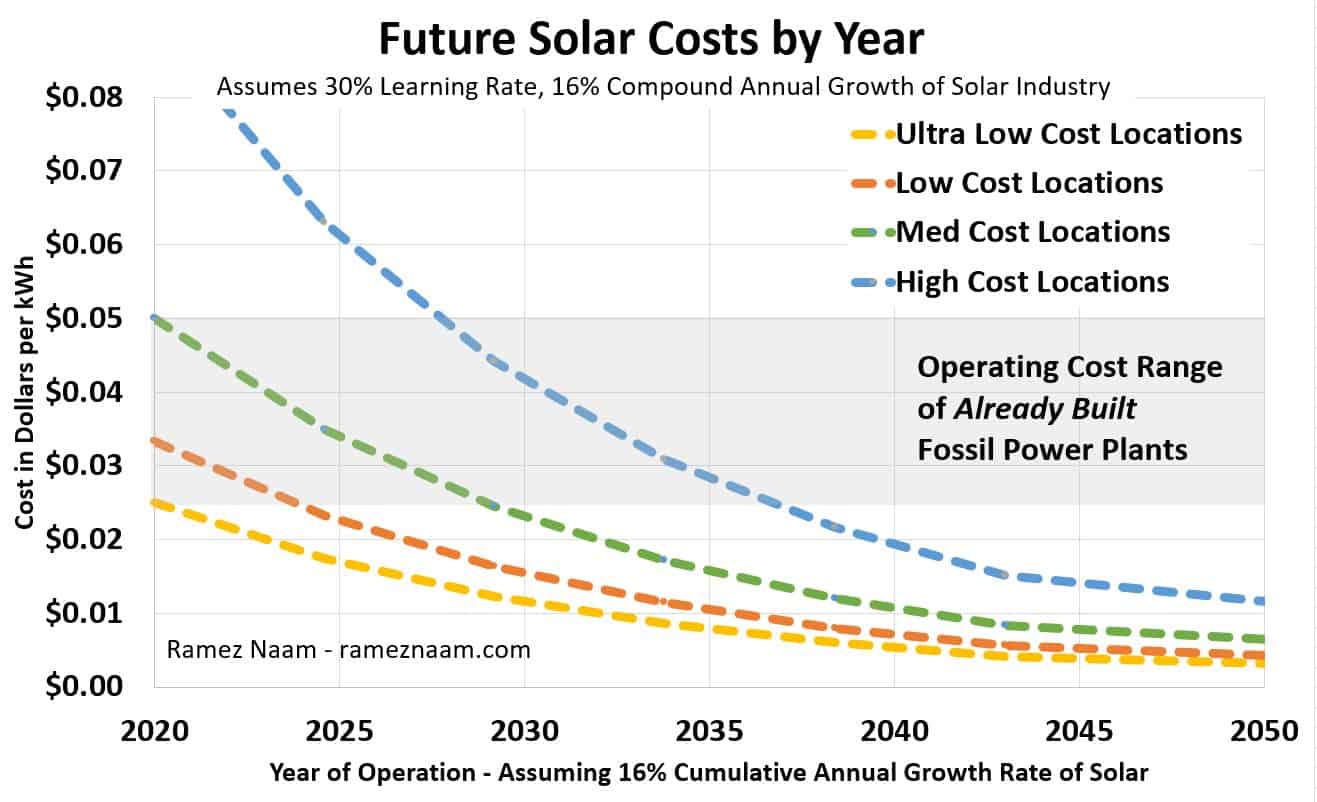
A selection of 9 links for you. Not in the rough. I’m @charlesarthur on Twitter. Observations and links welcome.

Google demands 30% cut from app developers in its Play Store • The New York Times

Daisuke Wakabayashi:

»

Google said it would no longer allow any apps to circumvent its payment system within the Google Play store that provides the company a cut of in-app purchases.

Google said in a blog post on Monday that it was providing “clarity” on billing policies because there was confusion among some developers about what types of transactions require use of its app store’s billing system.

Google has had a policy of taking a 30% cut of payments made within apps offered by the Google Play store, but some developers including Netflix and Spotify have bypassed the requirement by prompting users for a credit card to pay them directly. Google said companies had until Sept. 30, 2021, to integrate its billing systems.

The way the Google and Apple app stores collect fees has become an especially contentious issue in recent months after Epic Games, maker of the popular game Fortnite, sued Apple and Google, claiming they violated antitrust rules with the commissions they charge.

On Monday, a federal judge in California’s Northern District Court in Oakland heard testimony from Epic Games and Apple to determine whether Apple can continue to ban Fortnite, Epic’s popular game, from its app store. The hearing, in which each side debated the size of the app distribution market and Apple’s power over it, offered a preview of the antitrust case before it goes to trial sometime next year.

«

Poor headline; doesn’t do the work that the intro (lede to Americans) does. There doesn’t seem to have been an outraged response from either Netflix or Spotify to this. Meanwhile, Google says Android 12 will let companies set up “alternative app stores”. Exciting, but will only be available to a tiny proportion of Android users for a long time.
unique link to this extract


The biggest Trump financial mystery? Where he came up with the cash for his Scottish resort purchases • Mother Jones

Russ Choma:

»

His large expenditures in Scotland were notable because they came during a rocky financial stretch for Trump. The year before purchasing the Aberdeenshire estate, he was ousted as CEO of his thrice-bankrupted casino business; in 2008, he defaulted on a large Deutsche Bank loan tied to a development in Chicago.

Like other Trump wagers, his Scottish gamble has so far not worked out. Both resorts are bleeding millions annually. Meanwhile, he and his company have spent years viciously skirmishing with various locals and government agencies that resisted Trump’s plans to build luxury housing on the fringes of the resorts, which the Trump Organization seems to view as vital to profitability.

If business was lackluster before, it’s dismal now that the coronavirus pandemic has all but halted the Scottish golf season, at least as far as international travelers are concerned. To make matters worse, as Trump’s hospitality empire grapples with the fallout of COVID-19, it also faces a series of maturing debts, loans amounting to nearly a half-billion dollars, which need to be paid down or refinanced over the next four years.

Recently, a new—and perhaps bigger—threat to Trump has emerged in Scotland. Scottish lawmakers are pushing to peer into Trump’s finances using an anti-money- laundering statute typically employed against kleptocrats, oligarchs, and crime kingpins. Their question: where did the hundreds of millions Trump poured into his Scottish courses actually come from?

«

I like how the penultimate sentence there uses “typically” rather than “usually”. Trump’s all three, after all. And it certainly is very, very suspicious that he paid cash for these rather than raising debt (his preferred method for purchasing) and that they lose money hand over fist. He likes golf, but it’s hard to believe he likes golf that much.

Proving that they’re money laundering conduits is going to be much harder, though. At least this quote is a keeper: “Of all the people in the world that aren’t going to put up with a fool, it’s the Scots,” [Rick Reilly] says. “They’re just such a no-nonsense people and they see him for what he is: He’s a big blowhard con man who is trying to tell them what they know isn’t true.”
unique link to this extract


Cockamamie TikTok deal fails on every measure • Financial Times

John Thornhill:

»

Like all Chinese companies, TikTok’s parent ByteDance operates at the whims of the Communist party. The flip side of any Chinese censorship is propaganda. Should it so wish, TikTok could target users in electoral swing states in the US to push — or undermine — a particular agenda or candidate.

If the overriding concern about TikTok is national security then it would make more sense to ban it outright, just as India has done. If we are living in a world of informational warfare then it matters who controls the platforms.

The deal’s details have yet to be clarified, but, as it stands, it skirts many of those national security concerns. True, TikTok’s data will be held on US servers and Oracle will have an oversight role. But ByteDance will retain control of the all-important algorithms that serve up content to its users and the Chinese government has signalled it does not want to share such important technology. ByteDance says it will also retain an 80% stake in TikTok Global. 

Moreover, as Sinan Aral, co-leader of the Massachusetts Institute of Technology’s Initiative on the Digital Economy, argues, US-owned tech platforms, such as Facebook and Twitter, are themselves still open to manipulation by malign foreign powers. 

As he describes in his book The Hype Machine, Russian disinformation reached at least 126m people on Facebook in the 2016 presidential election and is still rampant today. This is a systemic failing that needs to be tackled, not a national security threat that can be expunged by one executive order.

The broader problem with the TikTok deal is the damaging politicisation of business. “To step in to decide winners and losers on the level of individual companies and individual deals is next to unprecedented in the US and sets a very dangerous precedent,” Prof Aral says.

«

Of course Facebook and Twitter are being manipulated in favour of Trump, so he’s not going to object to them. TikTok’s threat is only theoretical, but of course Trump was angered by them making fun of him, and the natsec argument is a figleaf. Modi’s excuse in India is just as thin, but at least he didn’t arse about with fake “deals” for his friends.
unique link to this extract


How Iran’s diaspora are using old-school tech to fight censorship at home • Rest Of World

Mehr Nadeem:

»

On November 15, as Iranian authorities first moved to induce the digital blackout, 44-year-old Yahyanejad raced against the clock in Los Angeles to make sure that people back home had downloaded his satellite file-casting application Toosheh. “It was a very small window,” says Yahyanejad. “Once they were fully disconnected, I wasn’t sure they’d be able to download the software.” 

Launched by Yahyanejad in 2016, the technology aggregates uncensored content, like news articles, YouTube videos, and podcasts, and sends it to Iranian homes directly via satellite TV. When Yahyanejad first began developing Toosheh in 2013, an estimated 70% of Iranian households owned a satellite dish, while around 20% had access to the internet. Even as internet access has grown, state censorship means Toosheh’s satellite technology is a much more reliable source for uncensored content. Iranians can install Toosheh’s satellite channel and receive a daily dispatch in the form of a file package of up to 8 gigabytes. Once a user downloads the app, the satellite transfers circumvent the internet entirely. 

Yahyanejad says Toosheh gained nearly 100,000 new Iranians users in November 2019. In the absence of an internet connection, it became the only way for many users to access news from the outside world. The voice on Toosheh’s voicemail belonged to one such user, a 34-year-old high school principal in Tehran who downloaded emergency VPN and proxy tools delivered to him through the satellite service. 

Having navigated extensive cyber censorship for over a decade, Iranians are tech savvy and adept at nimbly crossing firewalls, using proxies and foreign circumvention tools. “It’s a constant cat-and-mouse game,” says Fereidoon Bashar, executive director of ASL19, a Canadian organization working to help Iranians bypass internet censorship.

«

Toosheh is a clever idea: you can get quite a download speed from a satellite. The problem, of course, is the uplink. Rest Of World is highly recommended: a focus on all those technology stories that aren’t happening in the Anglocentric world. (Thanks Ravi for the link.)
unique link to this extract


In Brazil’s Amazon, a COVID-19 resurgence dashes herd immunity hopes • Reuters

Anthony Boadle:

»

In April and May, so many Manaus residents were dying from COVID-19 that its hospitals collapsed and cemeteries could not dig graves fast enough. The city never imposed a full lockdown. Non-essential businesses were closed but many simply ignored social distancing guidelines.

Then in June, deaths unexpectedly plummeted. Public health experts wondered whether so many residents had caught the virus that it had run out of new people to infect.

Research posted last week to medRxiv, a website distributing unpublished papers on health science, estimated that 44% to 66% of the Manaus population was infected between the peak in mid-May and August.

The study by the University of Sao Paulo’s Institute of Tropical Medicine tested newly donated banked blood for antibodies to the virus and used a mathematical model to estimate contagion levels. The high infection rate suggested that herd immunity led to the dramatic drop in cases and deaths, the study said.

Scientists estimate that up to 70% of the population may need to be protected against coronavirus to reach herd immunity.

…The Sao Paulo University study said coronavirus antibodies appeared to wane after just a few months, which could explain the resurgence in Manaus.

“Something that became evident in our study – and that is also being shown by other groups – is that antibodies against SARS-CoV-2 decay quickly, a few months after infection,” one of its authors, Lewis Buss, said in a statement by the São Paulo research foundation FAPESP that accompanied the paper.

“This is clearly occurring in Manaus,” Buss said.

«

What does this mean for a vaccine, though, if antibodies go after a few months? Also – a question I haven’t seen anywhere – does that mean that all of the body’s response to this fades in the same period?
unique link to this extract


Poland goes nuclear with plan to build six reactors by 2040 • Global Construction Review

David Rogers:

»

The government of Poland plans to invest $40bn in building six nuclear reactors over the next 20 years. It currently has none.

The announcement was made on Tuesday 8 September by Michał Kurtyka, the country’s climate minister (pictured).

Poland wants to cut its dependence on coal, which currently fuels about 75% of its electricity generation, and generate half its electricity from zero-emission sources by 2040. 

The reactors are intended to provide a baseload supply, and to cover the nine or 10 days in the year when there is not enough wind or solar energy to meet demand. 

Work on the first reactor will begin in 2026 with the aim of it entering service in 2033. 

Altogether, the new units will generate about 9GW by 2040, according to the plan.

«

Classic problem of coal (or gas) providing the baseline. Even with the UK it’s still a struggle not to use coal despite the breadth of renewable use.
unique link to this extract


Some Google search rivals lose footing on Android system • WSJ

Sam Schechner:

»

Since March, Alphabet-owned Google has been showing people in Europe who set up new mobile devices running the company’s Android operating system what it calls a “choice screen,” a list of rival search engines that they can select as the device’s default. The system is part of Google’s compliance with a 2018 decision that found the company used Android’s dominance to strong-arm phone makers into pre-installing its search engine.

But some small search engines that are relatively popular in Europe failed to win spots in large European countries in the latest round of auctions to appear on the choice screen, according to people familiar with the results. The results, which cover the fourth quarter of the year, are set to be announced on Monday.

DuckDuckGo, maker of a US-based search engine that doesn’t collect data about its users, lost the auction in all but four small European countries, the people said. Berlin-based Ecosia, which donates most of its profit to planting trees, also didn’t win a slot in any large European country, the people added.

The major winners of the auctions—which offer three spots in each of 31 countries to outside search engines—include Microsoft Corp.’s Bing, as well as a handful of other small search engines, the people said. Google doesn’t participate in the auctions but is offered automatically as a choice in every country along with the auction winners.

…Google has defended its use of auctions saying that “an auction is a fair and objective method to determine which search providers are included.”

The elimination of some smaller search engines gives fodder to Google rivals who have complained that the company has crafted its compliance with the EU’s antitrust decisions in ways that don’t fundamentally change the competitive landscape. DuckDuckGo and Ecosia are the most popular small search engines in Europe, with 0.5% and 0.3% market share as of August, respectively, according to Statcounter.

«

OK. So they’re not big. At all. (The choice screen hadn’t been updated when I looked on Monday night in the UK.) Who gets the money from the auction? I don’t quite get why it should be an auction at all: if the EC says that Google shouldn’t force itself on OEMs, shouldn’t there just be a list?
unique link to this extract


Withings ScanWatch review: measuring your sleep still needs work • The Verge

Nicole Wetsman:

»

smartwatches can still only tell you so much. They’re good at calculating the total amount of time healthy people spend asleep. They’re usually just measuring time at rest, though. If someone has insomnia and spends hours lying very still and trying to sleep, a smartwatch might think that they’re actually asleep, says Chris Depner, who studies sleep at the University of Utah.

The charts that show how much time you spend in deep sleep versus light sleep also don’t tend to be reliable for most people. The stages of sleep as measured by smartwatches are only accurate about half of the time. “It’s just like a flip of a coin. It could be accurate for you, or it could actually be horribly inaccurate,” Depner says.

It’s not clear what counts as deep sleep for the different devices. There’s a fine line between the different stages of sleep, and there are different ways to calculate them. Even among experts, people use deep sleep to mean different things, says Seema Khosla, medical director of the North Dakota Center for Sleep. Some might lump non-REM and REM sleep together, for example, while others would differentiate between them.

At a high level, the sleep stage feature might help give a general idea of how someone is sleeping. But they can also be misleading. “I tend to trust when the devices might tell me someone is awake, verses when someone is asleep,” Patil says. “But I don’t put a lot of emphasis on the differentiation between light sleep and deep sleep.”

«

The implicit claim of these sleep monitoring apps (via smartwatches) has never stacked up to me. If they can’t monitor REM v non-REM sleep, and they can’t, then about all they can tell you is your pulse rate and struggle to infer something from that. As Wetsman says, nobody goes around bragging about their sleep score.
unique link to this extract


Seattle underground • Wikipedia

Following on from yesterday’s by-the-way about Chicago being lifted up six feet to get it above sea/lake level:

»

After the Great Seattle Fire of June 6, 1889, new construction was required to be of masonry, and the town’s streets were regraded one to two stories higher. Pioneer Square had originally been built mostly on filled-in tidelands and often flooded. The new street level also kept sewers draining into Elliott Bay from backing up at high tide.

For the regrade, the streets were lined with concrete walls that formed narrow alleyways between the walls and the buildings on both sides of the street, with a wide “alley” where the street was. The naturally steep hillsides were used and, through a series of sluices, material was washed into the wide “alleys,” raising the streets to the desired new level, generally 12 feet (3.7 m) higher than before, in some places nearly 30 feet (9.1 m).

At first, pedestrians climbed ladders to go between street level and the sidewalks in front of the building entrances.

«

These incredible feats of civil engineering are all completely overlooked now – well, apart from Wikipedia, of course. Though it does make me feel that the plotline in the film “Us” could almost be, you know, true. (Thanks Ravi for the link.)
unique link to this extract


Errata, corrigenda and ai no corrida: none notified

Start Up No.1400: how to raise a city by six feet, iOS 14’s biggest hit, people back social media election blackout, solar’s wild prices, and more


What if you could replace the sugar in this with.. sugar? CC-licensed photo by Andrei! on Flickr.

You can sign up to receive each day’s Start Up post by email. You’ll need to click a confirmation link, so no spam.

A selection of 10 links for you. Not saccharin. I’m @charlesarthur on Twitter. Observations and links welcome.

The race to redesign sugar • The New Yorker

Nicola Twilley:

»

In 1800, an average American would have lived and died never having encountered a single manufactured candy, let alone the array of sugar-sweetened yogurts, snacks, sauces, dressings, cereals, and drinks that now line supermarket shelves. Today, that average American ingests more than nineteen teaspoons of added sugar every day. Not only does most of that never come into contact with our taste buds; our sweet receptors are also less effective than those for other tastes. Our tongues can detect bitterness at concentrations as low as a few parts per million, but, for a glass of water to taste sweet, we have to add nearly a teaspoon of sugar.

…DouxMatok’s [new formulation of sugar called] Incredo, being 99% sucrose, is not subject to regulatory constraints, but any food that uses it still requires reformulation. If you remove the 57 teaspoons of sugar in a jar of Nutella and replace them with 35 teaspoons of Incredo, the jar will be noticeably under-filled. And although the product would taste sweet enough, everything else would be off. “The mouthfeel, the balance, the color—everything goes,” Baniel said. Similar problems arise with the Petit Beurre cookie. “When you just reduce the sugar with Incredo and leave everything else the same, the salt gets a presence you don’t want it to have,” he said. “And the vanilla, on the other hand, goes hysterical.”

Estella Belfer, a pastry chef who is a judge on the TV show “Bake-Off Israel,” hopes to use Incredo exclusively one day, but, recently, she told me about some of the challenges of cooking with it. “To make chocolate, it’s easy. I just substitute the sugar with a smaller amount. In shortbread cookies, it is an improvement—it makes them crispier,” she said. “But in the cupcakes and the sponge cakes—this is where there is an art to using Incredo sugar.” Sugar is responsible for much of the tender, springy texture of a good cake; Incredo sugar behaves exactly the same way, but there’s a lot less of it, which creates a problem.

«

Sugar turns out to be really ingrained into our culture. Absorbed, you could say.
unique link to this extract


‘The Social Dilemma’ and the last fucking thing i’ll ever write about Facebook • The Pull Request

Antonio Garcia-Martinez (who used, of course, to work at Facebook, where he helped develop its ad system):

»

As is clear from the first minutes [of the Netflix documentary], the entire point of this cinematic pageant is to keep the focus constantly, irrevocably, and fatiguingly on Trist-AHN [ex-Googler Tristan Harris], the anti-prophet of the social media religion.

As might be expected from someone who oozes as much self-righteousness as narcissistic self-importance, he faceplants in due course. “No one got upset when the bicycle showed up,” he proclaims, invoking the ill-advised example of bicycles as historical foil to the Internet and social media.

That’s of course hilariously and incontrovertibly wrong: There was a wave of anti-bicycle activism (much of it fanned by those in the horse trade) when the first two-wheeled conveyances came out in the late 19th century. And that’s been true of every technology—bicycles, cars, radios, TV, movies, video games, smartphones, and indeed even vaccines—since the mythic Prometheus gave humans fire. The supreme irony is that Harris, who always talks up his former techie credentials, is falling prey to the same historical myopia and cluelessness for which many techies (rightly I should add) are routinely criticized. It’s always Day One in the Eternal Present of the Internet, no different for its detractors than its fans.

«

Garcia-Martinez is, to put it mildly, sceptical about the bona fides of those interviewed in The Social Dilemma (a program that I think is generally right about causes, but doesn’t look enough at effects).

I do think his description of how you’d describe WhatsApp to someone in the Middle Ages is neat (as telepathy). You’d get burned as a witch, of course.
unique link to this extract


Melting Antarctic ice will raise sea level by 2.5 metres – even if Paris climate goals are met, study finds • The Guardian

Fiona Harvey:

»

Melting of the Antarctic ice sheet will cause sea level rises of about two and a half metres around the world, even if the goals of the Paris agreement are met, research has shown.

The melting is likely to take place over a long period, beyond the end of this century, but is almost certain to be irreversible, because of the way in which the ice cap is likely to melt, the new model reveals.

Even if temperatures were to fall again after rising by 2C (3.6F), the temperature limit set out in the Paris agreement, the ice would not regrow to its initial state, because of self-reinforcing mechanisms that destabilise the ice, according to the paper published in the journal Nature.

“The more we learn about Antarctica, the direr the predictions become,” said Anders Levermann, co-author of the paper from the Potsdam Institute for Climate Impact Research. “We get enormous sea level rise [from Antarctic melting] even if we keep to the Paris agreement, and catastrophic amounts if we don’t.”

The Antarctic ice sheet has existed in roughly its current form for about 34m years, but its future form will be decided in our lifetimes, according to Levermann. “We will be renowned in future as the people who flooded New York City,” he told the Guardian.

«

There’s a video too. It’s also depressing. It seems to me that decarbonisation – as in, not putting more carbon dioxide into the atmosphere – isn’t going to be enough. We need a huge carbon capture and storage program. Trees would be a start. New York in the future might appreciate it.
unique link to this extract


Twitter is bringing its ‘read before you retweet’ prompt to all users • The Verge

James Vincent:

»

Twitter says it’s working on bringing its “read the article before you retweet it” prompt to all users “soon.” The company began testing the prompt in June, which shows up when people go to retweet a story they haven’t clicked through to actually read.

Twitter says its motivation is to “help promote informed discussion.” Headlines often don’t tell the whole story and can even be actively misleading. Encouraging people to at least read the article they’re sharing seems like a smart way to promote media literacy and stop some of the knee-jerk reactions that can make misinformation viral.

«

Twitter says the prompt gets people to open the link 40% more often, and that the number who open before retweeting is up by 33%. And some people don’t retweet or pass it on.

Getting people to pause and even read before they pass content on is a good move.
unique link to this extract


Custom iOS 14 widgets have become a TikTok flex • The Verge

Julia Alexander:

»

The most exciting part of iOS 14 isn’t picture-in-picture video display or the app library — it’s widgets.

Instead of once-boring app icons for your calendar or clock that might get placed in a utilities folder, the new wave of widgets let you spice up your homepage with anything from custom notes to astronomy and weather reports. Those options have existed on Android devices for years, but their sudden arrival on the iPhone has created a kind of gold rush, with users combining them into custom layouts that can be tweaked, shared, and even sold.

The new options have also turned a small utility called Widgetsmith into a surprise success, garnering more than 2 million downloads since it launched on September 16th, according to CNBC. Widgetsmith isn’t necessary for layouts, but its wide-ranging custom widget options give users more control. Most importantly, it’s become the preferred tool for most layout tutorial videos, which has put it at the center of the growing scene. Even with Widgetsmith, designing the perfect layout can take several hours — but it’s worth it for users who are trying to make a splash on Instagram or TikTok.

«

David Smith, the maker of Widgetsmith, was at first counting the number of support emails per minute, and then per second. And then a copycat app ripping off the name turned up above it in App Store search. Apple really needs to work on.
unique link to this extract


Exclusive: majority polled back a social-media blackout for election • Axios

Ashley Gold:

»

Fifty-two% of voters support shutting down social media platforms altogether for the week of the presidential election, according to a poll from GQR research shared exclusively with Axios.

Tech companies have aggressively rolled out new guardrails around misinformation related to the election and taken down numerous foreign-led meddling campaigns this year, but critics continue to fear that social media is a vector for domestic and foreign deceit.

In the run-up to the election, Twitter has banned political advertising altogether, Facebook is banning new political ads a week before election day and YouTube announced a crackdown on deceptive ads this summer.

The survey, commissioned by Accountable Tech, questioned 1,000 registered voters in early September. Some notable results:

• 52% support shutting down social media platforms for the week of the election (54% Democrats and 51% Republicans)
• 79% say social media companies should “do more to protect democracy”
• Facebook is the most used social platform (65%), but 52% hold unfavorable views of it, and it is the least trusted news source compared to other social media and traditional media
• 62% say they are not confident social media companies can prevent election-related misinformation, and 91% think social media companies should do more to prevent its spread
• 82% support placing warning labels on accounts spreading false information about voting and 85% support blocking posts calling for violence or spreading election misinformation altogether.

«

I may have mentioned it before, but a study in 2018 paid people money to stay off Facebook in the four weeks before and after the 2018 US midterm elections. They reported being happier as a result; a significant number then stayed off it when the experiment came to an end.

The people in the poll seem to have an inkling of that.
unique link to this extract


Solar’s future is insanely cheap (2020) • Ramez Naam

Naam has analysed energy price trends going back some decades, and now he looks forward:

»

This incredible pace of solar cost decline, with average prices in sunny parts of the world down to a penny or two by 2030 or 2035, is just remarkable. Building new solar would routinely be cheaper than operating already built fossil fuel plants, even in the world of ultra-cheap natural gas we live in now. This is what I’ve called the third phase of clean energy, where building new clean energy is cheaper than keeping fossil fuel plants running. Even in places like Northern Europe, by the later 2030s we’d see solar costs below the operating cost of fossil fuels, providing cheap electricity in summer months with their very long days in the high latitudes. These prices would be disruptive to a large fraction of already operating fossil fuel power plants – particularly coal power plants, that are far less able to ramp their power flexibly to follow solar’s day-night cycle.

In a purely open market, these incredibly low prices would drive the world’s remaining coal plants into bankruptcy, and steal some of the most profitable operating hours even from cheap natural gas plants.

Solar, if it keeps dropping at this pace, could well be by far the cheapest electricity over the vast majority of areas where people live. Nothing would ever be quite the same in the world of energy.

«

Then we need methods of energy storage for the night. Or, perhaps, lots of wind energy? Lots of hydro? The reality is that we need nuclear as a baseline.
unique link to this extract


Pasta, wine and inflatable pools: how Amazon conquered Italy in the pandemic • The New York Times

Adam Satariano and Emma Bubola:

»

Amazon was hampered in Italy by a lack of widespread broadband and poor roads for delivering packages, especially in the south. Italy has the oldest population in Europe, and many people are also wary of providing their financial details online. E-commerce accounts for only 8% of retail spending in the country.

“There were some structural issues that we had to face,” said Mariangela Marseglia, Amazon’s country manager for Italy. “Unfortunately, our country was and still is one of those where technological understanding and tech culture is low.”

The turning point was the pandemic. Mr. Parma said 75% of Italians shopped online during the lockdown. Total online sales are estimated to grow 26% to a record €22.7bn this year, according to researchers from Polytechnic University of Milan. Netcomm, an Italian retail consortium, called it a “10-year evolutionary leap,” with more than two million Italians trying e-commerce for the first time between January and May.

Hurdles remain for Amazon. Small and midsize businesses are an integral part of Italian society. They make up roughly 67% of the economy, excluding finance, and about 78% of employment, which are higher than EU averages, according to E.U. statistics.

In Gragnano, a hilltop town near the Amalfi Coast with a 500-year history of pasta manufacturing, Ciro Moccia, the owner of La Fabbrica della Pasta, said Amazon was a “dangerous” monopoly that could destroy businesses like his that rely on conveying the quality of a product.

But during the lockdown, his company had no choice but to sell on Amazon after many stores shut. Standing above the family’s factory recently, where semolina flour was mixed with spring water and pressed into 140 different pasta shapes, Mr. Moccia said, “I am very worried.”

«

Amazon as a platform for existing sellers is going to make complete sense. It would be possible for companies to do better by using it, even, as Moccia discovered.
unique link to this extract


The big national news providers need threat modeling teams • PressThink

Jay Rosen argues that the media in the US needs to adopt “threat modelling” against the onslaught of misinformation that will come their way over the coming weeks and months from the Trump side as they try to an “autocratic attempt” (explained earlier in his post; the other two stages are “autocratic breakthrough” and “autocratic consolidation”):

»

If threat modelling is defensive, what is it that journalists should be trying to defend? 

To me this is one reason to do it. In order to deploy a threat modeling, or threat “ideation” team you have to know what you are trying to protect against. You have to own that responsibility. Which is a lot different from reporting whatever comes down the pike.

Earlier in the campagn, I wrote a post about this problem: You cannot keep from getting swept up in Trump’s agenda without a firm grasp on your own. But what should that agenda be? I think it has to be some kind of defense of American democracy and its central ritual: free and fair elections that engender trust in the outcome, and thereby make the peaceful transfer of power possible.

Earlier in the modern era, journalists covering election campaigns had been able to assume the existence of a stable system, and therefore focus on the contest itself. That doesn’t work for 2020. For it is by no means guaranteed that we will have a free and fair vote. Journalists have to plant their flag on the sacred ground of legitimate elections, and help defend it against all threats. Threat modeling can assist with that project. And that is my argument for its adoption by the big national news providers.

«

There’s a lot of concern that the US is going to become Belarus-on-the-Potomac.
unique link to this extract


Weighing in • All this

Dr Drang (who is a structural engineer):

»

In October 2018, Myke Hurley and Stephen Hackett were in Chicago for a Relay FM event that I attended. During the event, they recorded this episode of Ungeniused, their podcast about weird articles on Wikipedia. In honour of the city they were in, the article they chose was “Raising of Chicago”, which describes how, in the 1850s and 1860s, the roadways and buildings of the city were elevated as much as six feet to get them up out of the muck and allow decent drainage of both stormwater and wastewater.

The roadways were easy because you don’t really lift a street; you just add a bunch of fill and build a new road on top of that. But substantial buildings had to be jacked up to keep their ground floors from becoming basements. Here’s an image from the article of a large team of men doing just that.

One of the advantages of blogging over podcasting is you get to include cool pictures like this.

As they were describing the process, Myke and Stephen mentioned the weights of some of the buildings that were lifted, and Stephen asked, “How do you estimate the weight of a building?” After the recording, I told him that the weights of significant buildings are always known by the people who build them. I further said that I would write a post about it. And to prove that I’m a man of my word, here I am… two years later.

«

First you marvel at how you estimate the weight of a building, and then at the fact that Chicago simply got on and hefted them higher. The incentive was a cholera outbreak in 1854 because Chicago was basically at sea level beside a lake. And: people were allowed to keep shopping even in the buildings that were being raised.
unique link to this extract


Errata, corrigenda and ai no corrida: none notified

Start Up No.1399: Facebook lets misleading political ads through, Cambridge Analytica boss dinged, Big Bang black holes?, and more


What if tobacco companies had had the same exemptions over consequences as social media companies enjoy today? CC-licensed photo by Jamie Anderson on Flickr.

A selection of 10 links for you. Another one down. I’m @charlesarthur on Twitter. Observations and links welcome.

Facebook allowed hundreds of misleading super PAC ads, activist group finds • CNN

Brian Fung:

»

Facebook (FB) has allowed political advertisers to target hundreds of misleading ads about Joe Biden and the US Postal Service to swing-state voters ranging from Florida to Wisconsin in recent weeks, in an apparent failure to enforce its own platform rules less than two months before Election Day.

The ads containing false or misleading information, primarily by a pro-Republican super PAC led by former Trump administration officials, have collectively been viewed more than 10 million times and some of the ads remain active on the service, according to an analysis of Facebook’s ad transparency data by the activist group Avaaz.

Two super PACs emerged as the worst offenders in Avaaz’s analysis: the pro-Trump group America First Action, and the pro-Democratic group Stop Republicans. But the report found that AFA’s activities far exceeded those of Stop Republicans, both in terms of money spent and impressions received.

While Facebook allows politicians to make false claims in their ads — arguing that voters deserve an unfiltered view of what candidates and elected officials say — advertisements by super PACs and other independent groups are subject to the company’s policies on misinformation.

«

The crucial point here is that the misinformation tends to be “dark” – it’s hard to find what going on because you have to dig into Facebook’s Ad Library, unlike monitoring TV stations or newspaper output.

But are we surprised by Facebook failing to enforce its own rules? Of course we aren’t. The point to bear in mind now about Facebook is that Facebook has lost control of Facebook. The network is metastasizing, and things that happen on it are completely beyond the ability of the people who moderate it to stop.
unique link to this extract


Seven-year disqualification for Cambridge Analytica boss • GOV.UK

»

Effective from 5 October 2020, Alexander Nix is disqualified for seven years from acting as a director or directly or indirectly becoming involved, without the permission of the court, in the promotion, formation or management of a company.

Alexander Nix was a director of SCL Elections Ltd, a company that provided data analytics, marketing and communication services to political and commercial customers. He was also a director of five other connected UK companies: SCL Group Ltd, SCL Social Ltd, SCL Analytics Ltd, SCL Commercial Ltd, and Cambridge Analytica (UK) Ltd.

Investigators’ enquiries confirmed that Alexander Nix had caused or permitted SCL Elections or associated companies to act with a lack of commercial probity.

The unethical services offered by the companies included bribery or honey trap stings, voter disengagement campaigns, obtaining information to discredit political opponents and spreading information anonymously in political campaigns.

Mark Bruce, Chief Investigator for the Insolvency Service, said: “Following an extensive investigation, our conclusions were clear that SCL Elections had repeatedly offered shady political services to potential clients over a number of years.

“Company directors should act with commercial probity and this means acting honestly and correctly. Alexander Nix’s actions did not meet the appropriate standard for a company director and his disqualification from managing limited companies for a significant amount of time is justified in the public interest.”

«

Wow. I cannot recall any occasion when anything like this has happened without outright fraud on the part of the director. Absolutely astonishing. And yet: the UK government, which has signed off on this decision, thinks there’s absolutely nothing to consider around the 2016 referendum even though Cambridge Analytica played a key part in it.
unique link to this extract


Black holes from the Big Bang could be the dark matter • Quanta Magazine

Joshua Sokol:

»

We know that dying stars can make black holes. But perhaps black holes were also born during the Big Bang itself. A hidden population of such “primordial” black holes could conceivably constitute dark matter, a hidden thumb on the cosmic scale. After all, no dark matter particle has shown itself, despite decades of searching. What if the ingredients we really needed — black holes — were under our noses the whole time?

“Yes, it was a crazy idea,” said Marc Kamionkowski, a cosmologist at Johns Hopkins University whose group came out with one of the many eye-catching papers that explored the possibility in 2016. “But it wasn’t necessarily crazier than anything else.”

Alas, the flirtation with primordial black holes soured in 2017, after a paper by Yacine Ali-Haïmoud, an astrophysicist at New York University who had previously been on the optimistic Kamionkowski team, examined how this type of black hole should affect LIGO’s detection rate. He calculated that if the baby universe spawned enough black holes to account for dark matter, then over time, these black holes would settle into binary pairs, orbit each other closer and closer, and merge at rates thousands of times higher than what LIGO observes. He urged other researchers to continue to investigate the idea using alternate approaches. But many lost hope. The argument was so damning that Kamionkowski said it quenched his own interest in the hypothesis.

Now, however, following a flurry of recent papers, the primordial black hole idea appears to have come back to life. In one of the latest, published last week in the Journal of Cosmology and Astroparticle Physics, Karsten Jedamzik, a cosmologist at the University of Montpellier, showed how a large population of primordial black holes could result in collisions that perfectly match what LIGO observes.

«

Must admit, it would be bloody good if we could sort the black matter question out, so we could move on to something new.
unique link to this extract


Leak reveals $2tn of possibly corrupt US financial activity • The Guardian

David Pegg:

»

The documents were provided to BuzzFeed News, which shared them with the International Consortium of Investigative Journalists.

The documents are said to suggest major banks provided financial services to high-risk individuals from around the world, in some cases even after they had been placed under sanctions by the US government.

According to the ICIJ the documents relate to more than $2tn of transactions dating from between 1999 and 2017.

One of those named in the SARs is Paul Manafort, a political strategist who led Donald Trump’s 2016 presidential election campaign for several months.

He stepped down from the role after his consultancy work for former Ukrainian president Viktor Yanukovych was exposed, and he was later convicted of fraud and tax evasion.

According to the ICIJ, banks began flagging activity linked to Manafort as suspicious beginning in 2012. In 2017 JP Morgan Chase filed a report on wire transfers worth over $300m involving shell companies in Cyprus that had done business with Manafort.

«

Isn’t it just amazing how pretty much everyone that Donald Trump comes in to any sort of close business contact with is revealed to have lied or otherwise been corrupt.
unique link to this extract


To fight Apple and Google, smaller app rivals organize a coalition • The New York Times

Erin Griffith:

»

At the heart of the new alliance’s effort is opposition to Apple’s and Google’s tight grip on their app stores and the fortunes of the apps in them. The two companies control virtually all of the world’s smartphones through their software and the distribution of apps via their stores. Both also charge a 30% fee for payments made inside apps in their systems.

App makers have increasingly taken issue with the payment rules, arguing that a 30% fee is a tax that hobbles their ability to compete. In some cases, they have said, they are competing with Apple’s and Google’s own apps and their unfair advantages.

Apple has argued that its fee is standard across online marketplaces.

On Thursday, the coalition published a list of 10 principles, outlined on its website, for what it said were fairer app practices. They include a more transparent process for getting apps approved and the right to communicate directly with their users. The top principle states that developers should not be forced to exclusively use the payments systems of the app store publishers.

Each of the alliance’s members has agreed to contribute an undisclosed membership fee to the effort.

“Apple leverages its platform to give its own services an unfair advantage over competitors,” said Kirsten Daru, vice president and general counsel of Tile, a start-up that makes Bluetooth tracking devices and is part of the new nonprofit. “That’s bad for consumers, competition and innovation.”

Ms. Daru testified to lawmakers this year that Apple had begun making the permissions around Tile’s app more difficult for people to use after it developed a competing feature.

«

(Though of course subsequent to that Apple changed things so that Tile’s app can work competitively.) This is an interesting move: if it has any effect, it will probably occur well before any legislative action can.
unique link to this extract


This $1 hearing aid could treat millions with hearing loss • AAAS

Christa Lesté-Lasserre:

»

Inspired by his grandparents and a hearing-impaired colleague—who is first author on the new paper—Bhamla and his team set out to develop a cheap hearing aid built with off-the-shelf parts. They soldered a microphone onto a small circuit board to capture nearby sound and added an amplifier and a frequency filter to specifically increase the volume of high-pitch sounds above 1000 hertz. Then they added a volume control, an on/off switch, and an audio jack for plugging in standard earphones, as well as a battery holder. The device, dubbed LoCHAid, is the size of a matchbox and can be worn like a necklace. At bulk rates, Bhamla says, it would cost just under $1 to make. But anyone with the freely available blueprints and a soldering iron can make their own for not much more—maybe $15 or $20, Bhamla says. The parts are easy to source, he says, and putting them together takes less than 30 minutes.

Next, Bhamla and his colleagues tested the device. They found that it boosted the volume of high-pitch sounds by 15 decibels while preserving volumes at lower pitches. It also filtered out interference and sudden, loud sounds like dog barks and car horns. Finally, tests with an artificial ear revealed that LoCHAid might improve speech recognition, by bringing conversations closer to the quality heard by healthy individuals. It complied with five out of six of the World Health Organization’s preferred product recommendations for hearing aids, the researchers report today in PLOS ONE.

«

This is the sort of technology that can really change the world.
unique link to this extract


Authoritative voting information on YouTube • YouTube blog

Leslie Miller is VP of government affairs and public policy at YouTube:

»

YouTube’s Community Guidelines protect the community from harmful content and we enforce these policies consistently, regardless of who expresses it. Our policies prohibit claims that mislead voters on how to vote or encourage interference in the democratic process. Additionally, we demonetize content with claims that could significantly undermine participation or trust in an electoral or democratic process.
 
Alongside the consistent enforcement of our policies, we’re continuing to raise up authoritative voices and reduce harmful misinformation. One of the ways we do this is through our information panels, which provide relevant context alongside content. For example, in 2018, we started to show information panels linking to third-party sources around a small number of well-established topics that are subject to misinformation, such as the moon landing or COVID-19. We’re expanding this list of topics to include voting by mail. This means that under videos that discuss voting by mail, you’ll see an information panel directing you to authoritative information from the Bipartisan Policy Center, a bipartisan think tank.

«

“Demonetise” claims that could significantly undermine participation? Such half measures. What if the people who put such claims up aren’t interested in monetisation, just spread? What if YouTube is part of the problem, rather than (as it’s trying to pretend here) the solution?

Related: YouTube labelling (with AI) more age-restricted, ie over-18s, content. And: “former YouTube content moderator sues the company after developing symptoms of PTSD“.
unique link to this extract


Ring’s latest security camera is a drone that flies around inside your house • The Verge

Dan Seifert:

»

Ring latest home security camera is taking flight — literally. The new Always Home Cam is an autonomous drone that can fly around inside your home to give you a perspective of any room you want when you’re not home. Once it’s done flying, the Always Home Cam returns to its dock to charge its battery. It is expected to cost $249.99 when it starts shipping next year.

Jamie Siminoff, Ring’s founder and “chief inventor,” says the idea behind the Always Home Cam is to provide multiple viewpoints throughout the home without requiring the use of multiple cameras. In an interview ahead of the announcement, he said the company has spent the past two years on focused development of the device, and that it is an “obvious product that is very hard to build.” Thanks to advancements in drone technology, the company is able to make a product like this and have it work as desired.

The Always Home Cam is fully autonomous, but owners can tell it what path it can take and where it can go. When you first get the device, you build a map of your home for it to follow, which allows you to ask it for specific viewpoints such as the kitchen or bedroom. The drone can be commanded to fly on demand or programmed to fly when a disturbance is detected by a linked Ring Alarm system.

The charging dock blocks the camera’s view, and the camera only records when it is in flight. Ring says the drone makes an audible noise when flying so it is obvious when footage is being recorded.

«

Clever. Where’s the place you don’t need permission to fly a drone? Your home. Where might you want random footage from? Your home. As with Alexa, Amazon has thought one step ahead. Whether this is really going to make a difference is harder to say. Ring probably has, Alexa (as a standalone) probably not. This seems to sit between those two. But it’s also a surveillance system.
unique link to this extract


Written testimony to the US House Committee on Energy and Commerce

Tim Kendall:

»

When I started working in technology, my hope was to build products that brought people together in new and productive ways. I wanted to improve the world we all lived in.

Instead, the social media services that I and others have built over the past 15 years have served to tear people apart with alarming speed and intensity. At the very least, we have eroded our collective understanding – at worst, I fear we are pushing ourselves to the brink of a civil war.

I feel ashamed by this outcome. And I am deeply concerned. And to that end, I am compelled to talk to you about what we can do to limit further damage—and maybe even undo some of it.

My path in technology started at Facebook where I was the first Director of Monetization. I thought my job was to figure out the business model for the company, and presumably one that sought to balance the needs of its stakeholders – its advertisers, its users and its employees. Instead, we sought to mine as much attention as humanly possible and turn into historically unprecedented profits.

To do this, we didn’t simply create something useful and fun. We took a page from Big Tobacco’s playbook, working to make our offering addictive at the outset.

Tobacco companies initially just sought to make nicotine more potent. But eventually that wasn’t enough to grow the business as fast as they wanted. And so they added sugar and menthol to cigarettes so you could hold the smoke in your lungs for longer periods. At Facebook, we added status updates, photo tagging, and likes, which made status and reputation primary and laid the groundwork for a teenage mental health crisis.

«

No punches pulled. He was at Facebook from 2006 to 2010. You can’t argue that things have improved since then. He extends the tobacco metaphor too: what if they’d had some version of Section 230? One to ponder.
unique link to this extract


Facebook Oversight Board plans to launch ahead of US election • CNBC

Sam Shead:

»

Facebook’s much-anticipated Oversight Board has confirmed that it is planning to launch ahead of the US election on Nov. 3 after being criticized for a perceived lack of action. 

The board will rule on appeals from Facebook and Instagram users and questions from Facebook itself, although it will have to pick and choose which content moderation cases to take due to the sheer volume of them.

Following a report from The Financial Times, a spokesperson for the independent Oversight Board told CNBC that it expects to start in mid to late October. 

“We are currently testing the newly deployed technical systems that will allow users to appeal and the Board to review cases. Assuming those tests go to plan, we expect to open user appeals in mid to late October.”

They added: “Building a process that is thorough, principled and globally effective takes time and our members have been working aggressively to launch as soon as possible.”

The Oversight Board said it expects to decide on a case, and for Facebook to have acted on this decision, within a maximum of 90 days.

«

Good grief. Could we replace them with a machine learning system? It would be much faster and the results would be just as debatable.
unique link to this extract


Errata, corrigenda and ai no corrida: none notified

You can sign up to receive each day’s Start Up post by email. You’ll need to click a confirmation link, so no spam.

Start Up No.1398: Twitter blamed for Indian and South African violence, the acediac world of Covid, Zuck caught on tape, and more


Will QR codes be the bug in the NHS’s new Test & Trace app launching today? CC-licensed photo by Steven Severinghaus on Flickr.

You can sign up to receive each day’s Start Up post by email. You’ll need to click a confirmation link, so no spam.

A selection of 10 links for you. Seasonal. I’m @charlesarthur on Twitter. Observations and links welcome.

The NHS Test and Trace app’s biggest flaw? Botched QR codes • WIRED UK

Nicole Kobie on the T&T system, where you scan a QR code using the app on entering a commercial location such as a shop or gym:

»

Newham residents [who have been beta testing the UK app being launched on September 24 – today!] told WIRED that they’ve barely seen any of the official NHS QR codes in shops or restaurants. Others say they’re confused as to whether a QR code on the door is the right one to scan or not, as existing contact-tracing systems also use the codes – just wait until these codes are ubiquitous and scammers start putting up false ones. And some residents reported that the QR code throws up an error message in the app or simply takes too long to scan, causing queues to enter a shop — hardly ideal in these times of social distancing. “Although the app looks good, if I can’t use the QR scanner, it defeats the object of the app’s purpose,” wrote one app reviewer on Google Play.

The other challenge is downloading the app. Residents were sent out a detailed, four-page letter with instructions on how to install the app and use one-time codes to activate it for the trial, which residents said was off-putting – especially so for those who don’t speak English as a first language. The council has pushed for the app and online advice for it to be available in several languages, including Polish, Gujarati, Urdu and more, but as Fiaz notes, Newham has more than 100 languages and dialects spoken locally.

The residents who did head to the App Store or Google Play to download the app faced another hurdle: it only works on recent smartphones, running Android 6.0 or iOS 13.5 later; that’s iPhone 6S and newer. However, that risks leaving out people with older phones, in particular those without the money to buy a newer one. A story in the Newham Recorder quotes an 82-year-old resident of Manor Park as saying he couldn’t download the app because his smartphone was too old, with Age UK warning this could leave those most at risk of Covid being treated as “second-class citizens.”

«

It’s going to be so much fun. The code is available, by the way.
unique link to this extract


Twitter let dozens of tweets doxing Indian interfaith couples stay up for months • Buzzfeed News

Pranav Dixit:

»

For nearly two months, tweets by far-right Hindu nationalists in India doxing dozens of young interfaith couples — usually Muslim men marrying Hindu women — circulated on Twitter.

“This is going to be a long thread,” one of the accounts involved in the doxing said, following it up with 17 more tweets. Each tweet contained pictures of government documents including names, ages, occupations, addresses, and photographs of Hindu-Muslim couples in India. “Look at these pictures,” another tweet from the same account said. “Who instigates these couples to get together? It can’t be that they just ‘fall in love.’”

On Monday, as outrage mounted in India, Twitter finally took down some of the largest threads, even though people had been reporting them for weeks.

But more than half a dozen other tweets doxing interfaith couples remained after the first takedowns. One of them included a tweet from a politician from India’s ruling Bharatiya Janata Party, who tweeted the address of an Indian actor who allegedly converted to Islam. Twitter took down these posts after BuzzFeed News asked about them.

None of the accounts whose tweets were taken down were suspended.

«

The latter part is bad. Accounts which publish personal information like that are suspended as a matter of course. Once more there’s a suspicion that these companies are somehow beholden to, or scared of, the Indian government.
unique link to this extract


Xenophobic Twitter campaigns orchestrated by a former South African soldier • Daily Maverick

Jean le Roux for DFRLab:

»

A South African Twitter account at the centre of a network of xenophobic hashtags and inciting statements has been linked to a former member of the South African National Defence Force (SANDF). 

Sifiso Jeffrey Gwala, a former lance corporal with the 121st SA Infantry Battalion in Mtubatuba in coastal KwaZulu-Natal, has been identified as the person behind the “anonymous” Twitter account previously known as @uLerato_pillay, which has been accused of inciting xenophobic tensions in South Africa. In recent weeks, these narratives have bubbled to the surface of mainstream media outlets as public officials from fringe political parties echoed these nationalist sentiments in what appears to be reckless political opportunism.

South Africa has a fatal history of violence against foreign nationals, particularly other Africans. In May 2008, 62 people died as a result of nationwide xenophobic riots that started near Johannesburg, and in April 2015, seven people were killed in similar protests in Durban. South Africa’s high unemployment rate and lacklustre service delivery are often blamed on the nearly four million foreign nationals staying in South Africa, and unfounded claims that foreign nationals are disproportionately responsible for crime are frequently used to justify these attacks. 

«

This is a long, long read but that’s the takeaway: taking advantage of Twitter’s algorithms to create discord.
unique link to this extract


Facebook denies it will pull service in Europe over data transfer ban • TechCrunch

Natasha Lomas:

»

“We of course won’t [shut down in Europe] — and the reason we won’t of course is precisely because we want to continue to serve customers and small and medium sized businesses in Europe,” said Facebook VP Nick Clegg during a livestreamed EU policy debate yesterday.

However he also warned of “profound effects” on scores of digital businesses if a way is not found by lawmakers on both sides of the pond to resolve the legal uncertainty around US data transfers — making a pitch to politicians to come up with a new legal ‘sticking plaster’ for EU-US data transfers now that a flagship arrangement, called Privacy Shield, is dead.

“We have a major issue — which is that for various complex, legal, political and other reasons question marks are being raised about the current legal basis under which data transfers occur. If those legal means of data transfer are removed — not by us, but by regulators — then of course that will have a profound effect on how, not just our services, but countless other companies operate. We’re trying to avoid that.”

«

So if the legal means of transfer are removed then Facebook will have to shut down in Europe. Because he certainly doesn’t seem to be saying that Facebook is going to alter its behaviour.
unique link to this extract


The unrelenting horizonlessness of the Covid world • CNN

Nick Couldry and Bruce Schneier:

»

Acedia was a malady that apparently plagued many medieval monks. It’s a sense of no longer caring about caring, not because one had become apathetic, but because somehow the whole structure of care had become jammed up.

…Moving around is what we do as creatures, and for that we need horizons. Covid has erased many of the spatial and temporal horizons we rely on, even if we don’t notice them very often. We don’t know how the economy will look, how social life will go on, how our home routines will be changed, how work will be organized, how universities or the arts or local commerce will survive.

What unsettles us is not only fear of change. It’s that, if we can no longer trust in the future, many things become irrelevant, retrospectively pointless. And by that we mean from the perspective of a future whose basic shape we can no longer take for granted. This fundamentally disrupts how we weigh the value of what we are doing right now. It becomes especially hard under these conditions to hold on to the value in activities that, by their very nature, are future-directed, such as education or institution-building.

That’s what many of us are feeling. That’s today’s acedia.

«

(Couldry is a professor of media, communications and social theory. Bruce Schneier you should know as a security expert.)

unique link to this extract


Casey Newton on leaving ‘The Verge’ for Substack and the future of tech journalism • OneZero

Sarah Jeong:

»

asey Newton, The Verge’s longtime Silicon Valley editor and the creator of The Interface newsletter, is leaving the publication to start a newsletter on Substack called Platformer.

Newton, who started at The Verge in 2013, has published more than 570 issues of The Interface since it launched in October 2017. The newsletter currently boasts more than 20,000 subscribers. The Interface usually follows the themes of content moderation, disinformation, and the negative effects of social media on society. The focus is frequently on the omnipresent and ever-controversial Facebook, but the newsletter also covers companies like TikTok, Apple, Google, Amazon, and more.

…Q: What does this deal look like?

Newton: When you look at the economics of newsletters, there are opportunities that are bigger for some writers than any media company can match. If you can find 10,000 people to pay you $100 a year, you’re making $1 million a year. No one in media is going to pay you that unless you’re the anchor of a popular news show or something.

I’m not going to get to 10,000 subscribers anytime soon, but if I can work toward that over time, not only will I be in a position where I’m doing well for myself, but I’ll be in a position where I can create media jobs. I can hire someone to go out and do more reporting. I can hire an editor. I can hire a graphics person. I can start to — in this tiny, tiny way — rebuild a little of what has been lost and figure some things out for the future. That just seemed like a really cool bet to make. Maybe I can actually start a tiny media company out of this and do some really cool stuff.

«

Speaking of Casey Newton…
unique link to this extract


Facebook leaks show Mark Zuckerberg defending his decisions to angry employees • The Verge

Casey Newton:

»

On June 18th, Facebook employees asked Zuckerberg if they could hear from Kaplan directly:

Many people feel that Joel Kaplan has too much power over our decisions. Can we get him on a Q&A to learn more about his role, influence, and beliefs?

Zuckerberg said the company would work to provide more information about the operations of its policy team. But he dismissed the idea that Kaplan has undue influence at the company, saying that Monika Bickert, the company’s head of policy management, plays a stronger day-to-day role in policy development. And Zuckerberg bristled at the implication that Kaplan’s party affiliation should disqualify him from the job.

“I’ve seen a bunch of comments internally that — that I have to say bothered me a bit,” Zuckerberg said.  “That basically asked whether Joel can be in this role, or can be doing this role, on the basis of the fact that he is a Republican, or has beliefs that are more conservative than the average employee at the company. And I have to say that I find that line of questioning to be very troubling. In my work with Joel, I’ve found him to be … very rigorous and principled in his thinking.”

The controversy over Kaplan highlighted a growing and seemingly intractable gap within Facebook — between the values of its more progressive workforce and those of its user base at large.

«

There’s audio of Zuckerberg’s replies, if you wanted to hear his Kermit-like speaking voice. The fact that all this got leaked demonstrates that the internal consensus inside Facebook is breaking down. The problem with Kaplan isn’t so much his political bias, but the fact that he uses that political bias to help people he agrees with, as has been documented again and again.
unique link to this extract


Video and education drive demand for bigger tablets as global sales increase for first time since 2014 • Strategy Analytics

»

Households are more crowded than ever at all times of the day with work, learning, and entertainment all occurring in the home as a result of COVID-19 counter-measures. To meet these needs consumers have been buying tablets at the fastest rate in six years, and as a result global sales are expected to increase…

«

Yes? YES?

»

…by 1% year-on-year to 160.8 million units in 2020, according to Strategy Analytics’ latest report. The analysis also shows that consumers are switching to larger displays, with a majority now larger than 10” for the first time.

«

OK, so there’s a replacement surge happening. But that’s hardly what you’d call dramatic, is it.
unique link to this extract


Why Magic Leap failed: AR hype exceeded product’s capabilities • Bloomberg

Joshua Brustein and Ian King:

»

After Magic Leap’s $2,300 headset bombed, the startup narrowed its focus to professional applications, tried unsuccessfully to sell the company and fired more than half of its staff. Investors wrote down their stakes by an average of about 94% over a 12-month period ending in June, a steeper decline than WeWork, according to data collected by Zanbato, a research firm that tracks institutional investors.

The new CEO, Johnson, is trying to revive the business through partnerships. Magic Leap is engaged in discussions with Amazon.com Inc. about packaging the headsets with Amazon’s cloud services, according to three people familiar with the talks. The conversations are at an early stage and may not result in a deal. A spokeswoman for Magic Leap declined to comment, and Amazon didn’t respond to request for comment. 

Abovitz responded to an interview request with a message consisting entirely of link to a research report, which estimates long-term growth in the augmented reality market. His spokesman later clarified that there would be no interview and referred subsequent questions to Magic Leap, which declined to comment. People familiar with Abovitz’s next project said it centers on building entertainment content for smartphones and augmented reality devices, including Magic Leap.

The co-founder’s departure came as little surprise to those who worked with him. Interviews with over two dozen people familiar with Magic Leap’s operations, including current and former employees, investors and business partners, suggest Abovitz’s world-building aspirations had become increasingly disconnected from the company’s reality. When employees found they would be unable to deliver on Abovitz’s vision, Magic Leap went from being one of the most intriguing tech startups outside of Silicon Valley to a parable about believing one’s own hype.

«

There’s a lovely quote from one ex-employee who says Abovitz “wasn’t equipped to run a company the size of Magic Leap.” It was a zero-billion dollar company, for god’s sake. Its size was his own fault.
unique link to this extract


Internet: old TV caused village broadband outages for 18 months • BBC News

»

The mystery of why an entire village lost its broadband every morning at 7am was solved when engineers discovered an old television was to blame.

An unnamed householder in Aberhosan, Powys, was unaware the old set would emit a signal which would interfere with the entire village’s broadband.

After 18 months engineers began an investigation after a cable replacement programme failed to fix the issue.

The embarrassed householder promised not to use the television again. The village now has a stable broadband signal.

Openreach engineers were baffled by the continuous problem and it wasn’t until they used a monitoring device that they found the fault.

The householder would switch their TV set on at 7am every morning – and electrical interference emitted by their second-hand television was affecting the broadband signal.

The owner, who does not want to be identified, was “mortified” to find out their old TV was causing the problem, according to Openreach.

«

What I learn from this is that Openreach hasn’t installed fibre in Aberhosan. The village’s broadband would be a lot faster and uninterrupted if it were.
unique link to this extract


Errata, corrigenda and ai no corrida: none notified

Start Up No.1397: Facebook’s strategy on US election chaos (and threat to Europe), is Twitter’s photo algorithm secretly racist?, and more


How many people would be needed to run a dogwalking app for the entire world? Probably fewer than you think. CC-licensed photo by Staffan Cederborg on Flickr.

You can sign up to receive each day’s Start Up post by email. You’ll need to click a confirmation link, so no spam.

A selection of 9 links for you. Not locked down. I’m @charlesarthur on Twitter. Observations and links welcome.

YouTube reverts to human moderators in fight against misinformation • Financial Times

Alex Barker and Hannah Murphy:

»

Google’s YouTube has reverted to using more human moderators to vet harmful content after the machines it relied on during lockdown proved to be overzealous censors of its video platform.

When some of YouTube’s 10,000-strong team filtering content were “put offline” by the pandemic, YouTube gave its machine systems greater autonomy to stop users seeing hate speech, violence or other forms of harmful content or misinformation.

But Neal Mohan, YouTube’s chief product officer, told the Financial Times that one of the results of reducing human oversight was a jump in the number of videos removed, including a significant proportion that broke no rules.

Almost 11m were taken down in the second quarter between April and June, double the usual rate. “Even 11m is a very, very small, tiny fraction of the overall videos on YouTube . . . but it was a larger number than in the past,” he said.

“One of the decisions we made [at the beginning of the pandemic] when it came to machines who couldn’t be as precise as humans, we were going to err on the side of making sure that our users were protected, even though that might have resulted in s slightly higher number of videos coming down.”

«

The implicit assumption there is that there’s a correct number of videos to be taken down – that it doesn’t vary, even in a situation where you have loads of people spreading conspiracy videos about 5G, bats, Chinese bioweapons, vaccines, and so on. That seems like an assumption that needs closer examination.
unique link to this extract


I scanned the websites i visit with Blacklight, and it’s horrifying. Now what? • The Markup

Aaron Sankin:

»

Internet browsers have a “do not track” feature, which is a browser setting that signals to websites and third-party tracking companies that the user would prefer they refrain from collecting the person’s data.

But The Future of Privacy Forum says it has little effect: “Most sites do not currently change their practices when they receive a … [Do Not Track] signal.”

The Digital Advertising Alliance, an industry trade group, offers a tool allowing internet users to opt out of having their browsing history used to serve them targeted ads. Since the group is a consortium representing hundreds of companies, users can opt out of being targeted by all of them with a few clicks.

However, to even get the tool to work in the first place, users have to allow themselves to be tracked by third-party cookies, since those cookies are how the ad-tech companies are able to identify who has opted out. In addition, opting out like this isn’t guaranteed to stop companies from collecting your data; they only promise they won’t use that data to try to sell you stuff.

«

It’s a very, very, very, very detailed look at browser tracking and how to avoid it (you can’t entirely). Blacklight is a tool developed by The Markup which shows you what trackers are operating on what site.

This blog (as it’s run by WordPress) has a Facebook tracker – I’ve looked, and can’t seem to turn it off as it’s embedded somewhere in the code. If you know how I can, please let me know.
unique link to this extract


No matter what the CDC says, here’s why many scientists think the coronavirus is airborne • The Washington Post

Ben Guarino, Chris Mooney and Tim Elfrink:

»

The Centers for Disease Control and Prevention on Monday removed language from its website that said the novel coronavirus spreads via airborne transmission, the latest example of the agency backtracking from its own guidance.

The agency said the guidance, which went up on Friday and largely went without notice until late Sunday, should not have been posted because it was an early draft.

“Unfortunately an early draft of a revision went up without any technical review,” said Jay Butler, the CDC’s deputy director for infectious diseases. “We are returning to the earlier version and revisiting that process. It was a failure of process at CDC.”

Evidence that the virus floats in the air has mounted for months, with an increasingly loud chorus of aerosol biologists pointing to superspreading events in choirs, buses, bars and other poorly ventilated spaces. They cheered when the CDC seemed to join them in agreeing the coronavirus can be airborne.

Experts who reviewed the CDC’s Friday post had said the language change had the power to shift policy and drive a major rethinking on the need to better ventilate indoor air.

…If airborne spread was the main route, Butler said he would have expected the disease to travel even faster around the globe than it did. “The epidemiology seems pretty clear that the highest risk is in household contexts,” he said, meaning through the proximity of one family member or roommate to another.

Sudden flip-flops on public guidance is antithetical to the CDC’s own rules for crisis management. After disastrous communications during the 2001 anthrax attacks — when white powder in envelopes sparked widespread panic — the agency created a 450-page manual outlining how US leaders should talk to the public during crises.

«

I’m sure that manual is doing really great work propping up a table somewhere, given how much notice the current administration takes of such advice.
unique link to this extract


Facebook vows to restrict users if US election descends into chaos • Financial Times

Hannah Murphy:

»

Facebook has said it will take aggressive and exceptional measures to “restrict the circulation of content” on its platform if November’s presidential election descends into chaos or violent civic unrest.

In an interview with the Financial Times, Nick Clegg, the company’s head of global affairs, said it had drawn up plans for how to handle a range of outcomes, including widespread civic unrest or “the political dilemmas” of having in-person votes counted more rapidly than mail-in ballots, which will play a larger role in this election due to the coronavirus pandemic.

“There are some break-glass options available to us if there really is an extremely chaotic and, worse still, violent set of circumstances,” Mr Clegg said, though he stopped short of elaborating further on what measures were on the table.

The proposed actions, which would probably go further than any previously taken by a US platform, come as the social media group is under increasing pressure to lay out how it plans to combat election-related misinformation, voter suppression and the incitement of violence on the November 3 election day and during the post-election period. 

It also comes as concerns mount that even US president Donald Trump himself could take to social media to contest the result or call for violent protest, potentially triggering a constitutional crisis.

«

I’m wary of believing Clegg’s talking up of “what Facebook would do” because Facebook always talks a lot bigger than it ever does; even when it wants to do something, the company’s own scale overwhelms it. (See yesterday’s item about trying and failing to rein in QAnon nonsense.) But ex-engineers at Facebook say there is an option to remove all news links from the News Feed. That would be a start, though just shutting the whole thing down for a few days might be a better option.
unique link to this extract


Facebook says it will stop operating in Europe if regulators don’t back down • Vice

David Gilbert:

»

In a court filing in Dublin, Facebook said that a decision by Ireland’s Data Protection Commission (DPC) would force the company to pull up stakes and leave the 410 million people who use Facebook and photo-sharing service Instagram in the lurch.

If the decision is upheld, “it is not clear to [Facebook] how, in those circumstances, it could continue to provide the Facebook and Instagram services in the EU,” Yvonne Cunnane, who is Facebook Ireland’s head of data protection and associate general counsel, wrote in a sworn affidavit.

The decision Facebook’s referring to is a preliminary order handed down last month to stop the transfer of data about European customers to servers in the US, over concerns about US government surveillance of the data.

Facebook hit back by filing a lawsuit challenging the Irish DPC’s ban, and in a sworn affidavit filed this week, the company leveled some very serious accusations about the Irish data-protection commissioner, including a lack of fairness and apparent bias in singling out Facebook.

Cunnane points out that Facebook was given only three weeks to respond to the decision, a period that is “manifestly inadequate,” adding that Facebook wasn’t contacted about the inquiry prior to judgment being handed down.

She also raises concerns about the decision being made “solely” by Helen Dixon, Ireland’s data protection commissioner.

«

This would be remarkable if it came to pass, though I think we all suspect that they will find some fuged middle path in which Facebook will promise not to transfer the data (but will) and Ireland will accept its white lie. After all, that’s what’s happened before.
unique link to this extract


What to expect from Google’s 2020 Hardware event • Ars Technica

Ron Amadeo:

»

Google’s big yearly hardware event is scheduled for September 30, and as usual, we’re expecting a big pile of products to be announced. Google has a hard time keeping anything under wraps before the event, so we’re doing a roundup of all the leaks so far. We’re expecting four products: the Pixel 5 (and Pixel 4a 5G), the “Nest Audio” smart speaker, a new Chromecast with a remote and Android TV, and maybe even a new Nest thermostat.

«

Fine thanks goodbye. Basically all the details have been leaked, so why turn up?
unique link to this extract


Google is shutting down paid Chrome extensions • The Verge

Jay Peters:

»

Google is shutting down paid Chrome extensions offered on the Chrome Web Store, the company announced today. That means that developers who are trying to monetize their extensions will have to do so with other payment-handling systems.

As of Monday, developers can no longer make new paid extensions, according to Google — though that’s cementing a policy that has already been in place since March. And that policy follows a temporary suspension of publishing paid extensions in January after Google noticed an uptick in fraudulent transactions that “aim[ed] to exploit users.”

«

Though in its blogpost, Google effectively says “it’s because there are lots of other ways to pay for extensions”, implying that it’s fine with you being ripped off as long as the ripoff doesn’t go through its payment systems. Possibly, though, that’s what it’s about: it doesn’t like having to deal with refund demands, rather than that it doesn’t like people being ripped off.
unique link to this extract


Twitter investigating after users spot mobile app prefers White faces • CNBC

Sam Shead:

»

Twitter says it’s investigating why its picture-cropping algorithm sometimes prefers White faces to Black ones.

The investigation comes after Twitter users noticed Black faces were less likely to be shown than White ones in image previews on mobile when the image contains a Black face and a White face.

The micro-blogging platform said it didn’t find any evidence of racial and gender bias when it tested the algorithm but conceded it had more analysis to do.

Parag Agrawal, Twitter’s chief technology officer, said Twitter analyzed the model when it shipped it, but said that it needs continuous improvement.

“Love this public, open, and rigorous test — and eager to learn from this,” he said on the platform.

The issue came to light after Colin Madland, a university manager in Vancouver, noticed that his Black colleague’s head kept disappearing when using the video conferencing app Zoom. It appeared as though Zoom’s software thought the Black man’s head was part of the background and removed it as a result. Zoom did not immediately respond to CNBC’s request for comment. 

After tweeting about the issue to see if anyone knew what was going on, Madland then realized that Twitter was also guilty of hiding Black faces. Specifically, he noticed Twitter was choosing to preview his own White face over his colleague’s Black face on mobile.

«

I saw the original thread by Madland, and didn’t see the problems other people did; I was viewing it in a third-party app (Tweetbot) on both mobile and desktop. Clearly, it’s Twitter’s system at fault here.
unique link to this extract


Just how many people do we need doing that job, anyway? • Rachel By The Bay

Rachel Kroll:

»

Think of your favorite “web 2.0” service or app. Maybe it’s something that sends dog walkers around to your house regularly. Perhaps it can be used to deliver your favorite kind of pizza or beer. It could even be something that lets you chat with other people. We’ll go with dog walking as the example here.

Now think about the entirety of humanity. At the moment, there seem to be about 7.8 billion people running around on this planet (plus a handful in orbit). For the sake of this thought experiment, assume all of them have Internet access and actually have some use for dog walking services.

Consider this: just how many really good people do you suppose it would take to saturate the market and provide service to the entirety of humanity for that dog walking dispatch?

Me? I think it’s about 100 people, tops. Granted, I’m talking about the top 100 people in the population for solving this specific problem: running apps that dispatch dog walkers to dogs… for all ~8 billion of us.

They need not work at the same company. For the sake of some realism, imagine them split up somehow. It could be 20 companies with 5 people each, 5 companies with 20 people each, or 10 companies with 10 people each. Whatever.

Now let’s say you looked at the actual marketplace and determined there were closer to 100,000 people actually working on these dog-walking apps. What do you suppose that means? What could possibly be going on there?

«

Kroll is widely admired in the web engineering community; what she describes in the rest of her post is probably much of what’s really happening. The classic cases of “a few people running a world-spanning service” are Instagram and WhatsApp, of course. Kroll presently works at Facebook.
unique link to this extract


Errata, corrigenda and ai no corrida: none notified