
Start Up No.1416: Google’s antitrust redux, how a Trumpite got ZTE out of US sanctions, how climate change killed early humans, and more


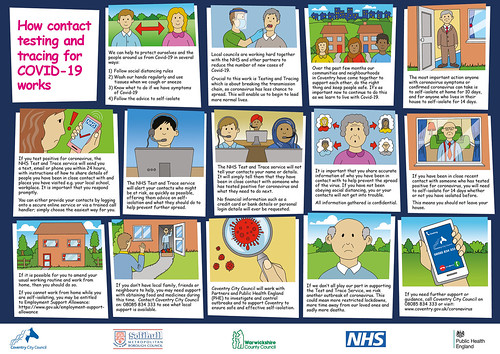
“How track and trace works” now needs to include “and data passed to the police”. CC-licensed photo by Coventry City Council on Flickr.

You can sign up to receive each day’s Start Up post by email. You’ll need to click a confirmation link, so no spam.

A selection of 9 links for you. Not adverts. I’m @charlesarthur on Twitter. Observations and links welcome.

How does Google’s monopoly hurt you? Try these searches • The Washington Post

Geoffrey Fowler:

»

Let’s Google together. Open a Web browser and search for “T-shirts”. I’ll wait.

Is the first thing you see a search result? I’m not talking about the stuff labeled Ads or Maps. On my screen, the actual result is not in the first, second, third, fourth, fifth, sixth, seventh or even eighth row of stuff. It’s buried on row nine.

Googling didn’t used to require so much … scrolling. On some searches, it’s like Where’s Waldo but for information. Without us even realizing it, the Internet’s most-used website has been getting worse. On too many queries, Google is more interested in making search lucrative than a better product for us.

There’s one reason it gets away with this, according to a recent congressional investigation: Google is so darn big. An impending antitrust lawsuit from the US Justice Department is expected to make a similar point.

How does Google’s alleged monopoly hurt you? Today, 88% of all searches happen on Google, in part because contracts make it the default on computers and phones. But whether Google is actually fetching you good information can be hard to see. First, Googling is easy and free, which blinds everyone a bit. Second, we don’t have a great alternative for broad Web searches — Microsoft’s rival Bing doesn’t have enough data to compete well. (This is the problem of monopolies in the information age.)

Over the last two decades, Google has made changes in drips rather than big makeovers. To see how search results have changed, what you’d need is a time machine. Good news: We have one of those!
The Internet Archive’s Wayback Machine stored some Google search results over the years. When we look back, a picture emerges of how Google increasingly fails us. There’s more space dedicated to ads that look like search results. More results start with answer “snippets” — sometimes incorrect — ripped from other sites. And increasingly, results point you back to Google’s own properties such as Maps and YouTube, where it can show more ads and gather more of your data.

«

The FTC looked at some elements of this back in 2010-13, and decided that it couldn’t take action over Google favouring its own properties, because consumers weren’t harmed through higher prices. If the DoJ and state AGs are going to take action now, they need to explain what their new antitrust doctrine is, because there haven’t been any court cases I’ve seen in the US which back up that change in doctrine. In Europe, it’s embedded as part of the requirement for a “competitive market”.

By the way, I assume Fowler’s talking about a phone screen. On my computer screen, the first organic link is the sixth element (after a gallery, map, and three shop links).
unique link to this extract


The China ambassador’s son who got rich in Trump’s swamp • The Intercept

Mara Hvistendahl and Lee Fang on how ZTE – the company that’s not Huawei which broke US sanctions to sell telecoms equipment to Iran, and was put on the sanctioned list in April 2018 under which it was banned from buying American parts (essentially, the same death sentence that Huawei later received).

But then it was reprieved. Here’s how:

»

ZTE’s path back into business with American suppliers has long been shrouded in mystery. Some critics highlighted the role of lobbyists working for ZTE. Shortly after the Commerce Department penalized ZTE, a law firm representing the Chinese company started paying the lobbying outfit Mercury Public Affairs $75,000 a month to unwind the order. Mercury partner and former Trump campaign adviser Bryan Lanza took on the account. But an Intercept investigation has found that Lanza traveled to China with a Mercury colleague and fellow Trump campaign veteran: former Commerce Department official Eric Branstad, who is also the son of Terry Branstad, then Trump’s ambassador to China.

Eric Branstad was close with Trump and had joined Mercury just three months earlier, after a stint advising Commerce Secretary Wilbur Ross. He had a checkered past, marred by killing two people in a car crash when he was a teenager, and had made money off his relationships with his father and Trump. In his home state of Iowa, his activities would spark comparisons to Hunter Biden, the son of Democratic presidential nominee Joe Biden.

Three days after Trump’s curious tweet, Lanza began emailing and calling officials at the Commerce Department on ZTE’s behalf. In June, he and Eric Branstad traveled to Beijing for meetings with Chinese government groups, including a chamber of commerce established by the Chinese Communist Party’s influential United Front Work Department that has ties to large Chinese companies. ZTE is an executive board member of a closely affiliated group.

«

This well-researched story came out last Thursday. A poorly researched story on a similar topic, but not about Trump, came out the same day. Guess which one got the attention?
unique link to this extract


Climate change likely drove early human species to extinction, modeling study suggests • Phys.org

Cell Press:

»

“Our findings show that despite technological innovations including the use of fire and refined stone tools, the formation of complex social networks, and—in the case of Neanderthals—even the production of glued spear points, fitted clothes, and a good amount of cultural and genetic exchange with Homo sapiens, past Homo species could not survive intense climate change,” says Pasquale Raia of Università di Napoli Federico II in Napoli, Italy. “They tried hard; they made for the warmest places in reach as the climate got cold, but at the end of the day, that wasn’t enough.”

To shed light on past extinctions of Homo species including H. habilis, H. ergaster, H. erectus, H. heidelbergensis, H. neanderthalensis, and H. sapiens, the researchers relied on a high-resolution past climate emulator, which provides temperature, rainfall, and other data over the last 5 million years. They also looked to an extensive fossil database spanning more than 2,750 archaeological records to model the evolution of Homo species’ climatic niche over time. The goal was to understand the climate preferences of those early humans and how they reacted to changes in climate.

Their studies offer robust evidence that three Homo species—H. erectus, H. heidelbergensis, and H. neanderthalensis—lost a significant portion of their climatic niche just before going extinct. They report that this reduction coincided with sharp, unfavorable changes in the global climate. In the case of Neanderthals, things were likely made even worse by competition with H. sapiens.

«

So let’s try running the experiment again, but with just H.sapiens, and see how things go.
unique link to this extract


Google kills off app that let you find loved ones’ location during an emergency • The Verge

Ian Carlos Campbell:

»

Google will discontinue its emergency location sharing app Trusted Contacts in December, and has already yanked it from the Google Play Store. Instead, it’s directing existing users to try similar but less helpful features in Google Maps. That’s a shame, because while Trusted Contacts could let you find a family member even if they don’t respond (say, if they are unconscious or in danger), Google Maps requires them to proactively broadcast their location to you.

The announcement was quite abrupt [saying, in effect, “we’ve built the functionality directly into Google Maps with Location Sharing”].

Google Maps has been able to do real time location sharing since 2017, but again, you have to opt-in to constant tracking, sharing your location with other people all the time instead of only broadcasting it to loved ones if you don’t respond. Trusted Contacts, by comparison, allows you to add people to your contacts who you’d like to instantly share your locations with in case of emergency. If one arises, your contacts can request a status update to see if you’re alright and you can respond with your location to reassure them. If you don’t respond, the app automatically shares your last known location so they can send for help.

«

It’s a tough choice: do you have more and more and more apps, or do you roll all the functionality into one incredibly widely used app (Maps has more than a billion users)? Trusted Contacts definitely had more useful functionality, closer to the surface. And most people really don’t dig very far into apps at all.
unique link to this extract


Police get access to people told to self-isolate by NHS test and trace • The Guardian

Jedidajah Otte:

»

People who have been told to self-isolate through NHS test and trace could have their contact details passed to police, a move some fear could deter people from being tested for coronavirus.

Police forces will be able to access information about people “on a case-by-case” basis, so they can learn whether an individual has been told to self-isolate, the Department of Health and Social Care (DHCS) said.

England made it a legal requirement for people to self-isolate if they test positive for coronavirus. Those who fail to do so face fines starting at £1,000, while repeat offenders or those committing serious breaches could receive fines of up to £10,000, according to the DHSC.

The department updated its online guidance on Friday about how coronavirus testing data will be handled.

People who fail to self-isolate “without reasonable justification” could have their name, address and contact details passed to their local authority and then to the police, the DHSC’s website said.

…Ed Davey, the Liberal Democrat leader, said ministers should “reverse the policy urgently”, calling it a “huge mistake”.

“Anything that further undermines the public’s dwindling trust in this government’s handling of the pandemic is damaging, and few things could have been better designed to do that than this,” he said.

«

What’s next? Getting people to wear tags? At least T&T is about theoretical contact with people who have tested positive, rather than the super-vague app warnings. If they start sharing the latter, the whole system will collapse from mistrust.
unique link to this extract


As local news dies, a pay-for-play network rises in its place • The New York Times

Davey Alba and Jack Nicas:

»

The instructions were clear: Write an article calling out Sara Gideon, a Democrat running for a hotly contested U.S. Senate seat in Maine, as a hypocrite.

Angela Underwood, a freelance reporter in upstate New York, took the $22 assignment over email. She contacted the spokesman for Senator Susan Collins, the Republican opponent, and wrote an article on his accusations that Ms. Gideon was two-faced for criticizing shadowy political groups and then accepting their help.

The short article was published on Maine Business Daily, a seemingly run-of-the-mill news website, under the headline “Sen. Collins camp says House Speaker Gideon’s actions are hypocritical.” It extensively quoted Ms. Collins’s spokesman but had no comment from Ms. Gideon’s campaign.

Then Ms. Underwood received another email: The “client” who had ordered up the article, her editor said, wanted it to add more detail.

The client, according to emails and the editing history reviewed by The New York Times, was a Republican operative.

Maine Business Daily is part of a fast-growing network of nearly 1,300 websites that aim to fill a void left by vanishing local newspapers across the country. Yet the network, now in all 50 states, is built not on traditional journalism but on propaganda ordered up by dozens of conservative think tanks, political operatives, corporate executives and public-relations professionals, a Times investigation found.

«

Oligarchs gonna oligarch. Now that the media ecosystem has collapsed, there’s a clear road for this sort of distortion. Some hilarious details in the story – such as the reporter who says he’s not allowed to talk to reporters. Questions not answered in the story, but maybe there’ll be a followup: does Google downrank these as junk in “news” searches? Does Facebook?
unique link to this extract


A profanity filter banned the word ‘bone’ at a paleontology conference • Vice

Becky Ferreira:

»

Participants in a virtual paleontology meeting were not permitted to use the words “bone,” “sexual,” or “Hell” in early digital Q&A sessions, sparking amusement and frustration from researchers attending the online conference.

Due to the COVID-19 pandemic, the Society of Vertebrate Paleontology (SVP) opted to hold its annual meeting, which runs from Monday to Friday this week, as a virtual event. At the end of presentations, attendees can ask written questions, but it quickly became apparent that some words and phrases—including many that are utterly ubiquitous in paleontology—were verboten.

The platform that the virtual meeting used, provided by Convey Services, came with “a pre-packaged naughty-word-filter,” explained Stephanie Drumheller, a paleontologist at the University of Tennessee and a member of the SVP, in an r/askscience Reddit thread about the meeting on Wednesday.

“After getting a good belly laugh out of the way on the first day and some creative wording (my personal favorite was Heck Creek for Hell Creek), some of us reached out to the business office and they’ve been un-banning words as we stumble across them,” she added. “It takes a little time to filter from Twitter to the platform programmers, but it’s getting fixed slowly.”

Convey Services was not immediately available to comment.

«

Ah, the Scunthorpe problem raises its ugly head. Oops. (Thanks Jim for the pointer.)
unique link to this extract


The Citizen Browser project: auditing the algorithms of disinformation • The Markup

»

At the center of The Citizen Browser Project is a custom web browser designed by The Markup to audit the algorithms that social media platforms use to determine what information they serve their users, what news and narratives are amplified or suppressed, and which online communities those users are encouraged to join. Initially, the browser will be implemented to glean data from Facebook and YouTube.

A nationally representative panel of 1,200 people will be paid to install the custom web browser on their desktops, which allows them to share real-time data directly from their Facebook and YouTube accounts with The Markup. Data collected from this panel will form statistically valid samples of the American population across age, race, gender, geography, and political affiliation, which will lead to important insights about how Facebook’s and YouTube’s algorithms operate. To protect the panel’s privacy, The Markup will remove personally identifiable information collected by the panel and discard it, only using the remaining redacted data in its analyses.

“Social media platforms are the broadcasting networks of the 21st century,” said The Markup’s editor-in-chief, Julia Angwin. “They dictate what news the public consumes with black box algorithms designed to maximize profits at the expense of truth and transparency. The Citizen Browser Project is a powerful accountability check on that system that can puncture the filter bubble and point the public toward a more free and democratic discourse.”

«

I wonder how long it will take for Facebook to run a browser detection tool and try to block this sort of auditing.
unique link to this extract


The Top 10 of… technologies that are just about to solve big problems but probably won’t ever work • The Independent

John Rentoul, who I used to work with long ago at The Independent, is reliably sceptical:

»

This list started in 2018 as a joke about max fac, short for maximum facilitation, which was Theresa May’s magic way of making the border between Northern Ireland and the republic disappear. I compared it to other wonderful technologies that hadn’t been invented yet, such as carbon capture and storage and self-driving cars.

«

The list includes carbon capture & storage, nuclear fusion, blockchain and more. It’s actually pretty hard to refute any of them. (Particularly hydrogen power.)
unique link to this extract


Errata, corrigenda and ai no corrida: none notified

Start Up No.1415: why British TV cops rule, can AI fix US government regulations?, free speech v misinfo, is social media like smoking?, and more


This picture’s acceptable for some – no, pretty much all – SCUBA newsgroups. CC-licensed photo by Derek on Flickr.

You can sign up to receive each day’s Start Up post by email. You’ll need to click a confirmation link, so no spam.

A selection of 10 links for you. May be used against you. I’m @charlesarthur on Twitter. Observations and links welcome.

Why British police shows are better • The Atlantic

Christopher Orr:

»

Crime shows set in Britain may offer the best way—apart from actually moving there—to appreciate how much the nation has become a quasi-benevolent surveillance state. If the police need to determine someone’s whereabouts at a particular hour on a particular night, they will dutifully interview witnesses, check phone records, and otherwise establish alibis much as they would in the United States. But they will also—as any fan of these shows can readily attest—check the CCTV…

This pervasive video footage is an obvious boon not only to British police, but to the writers of British police dramas as well. Is your plot missing a link in the chain of evidence, a way from narrative Point A to narrative Point B? Just check the CCTV footage, and discover a familiar face exiting a pub or a telltale license plate on the highway. More notably, this panoptical scrutiny changes the atmosphere of the shows. The awareness of supervision lends British series a greater sense of control, of order, relative to the urban chaos that prevails on American television. Crime is experienced as a deviation from the norm—something that fell into the cracks between the cameras—rather than the norm itself.

The more glaring contrast between American and British law enforcement—both real and fictive—is the near-total absence of handguns in Britain. (In 2018, for example, London—home to 9 million people—reported just 15 gun homicides.)

…The cumulative effect on British police shows can’t be overstated. Everyone weaned on American cop dramas, for instance, knows the right way to approach a door behind which a suspect might be waiting: His gun drawn, an officer stands to one side before knocking and declaring himself loudly. The anticipation of violence is so primal that it dominates almost every interaction that involves the police. In your typical British police show, by contrast, a visit to a suspect can resemble a social errand, as unarmed detectives wait patiently in front of a door after ringing the bell. The absence of gunfire—and, more important, of concern about the possibility of gunfire—almost invariably leads to more actual detective work.

«

Brön (the Swedish/Danish original of The Bridge) does have some gunplay – Saga Nören often brandishes her gun, but rarely fires it. There’s a fair amount of shooting in later series of Line Of Duty. But it’s all done in the context of it being very undesirable.

One thing I always liked about The Rockford Files (Jim Rockford was an ex-con private investigator) was that the scripts, and the character, abhorred guns.
unique link to this extract


Tap to navigate: how to systematize interactive labels for maps • Tap to Dismiss

Linzi Berry is the product design manager at Lyft:

»

Systemizing a map component has remarkably more constraints than your average button. These seemingly simple interactive labels must stand out against all terrains, densities and fixed buttons. Can combined with regions, exact locations, objects or stand on their own. Are required to be big enough to meet accessibility and tap target requirements and small enough to not block map interaction. And flexibly hold content for 1 destination address or 1,000+ scooters and adjust when zoomed… and more!!!

This is our attempt at an elegant solution for systemizing interactive map labels, or as we like to call them— Map Bubbles.

«

The most interesting part is the question of how much of a map you should allow to be obscured by icons – the sort of problem that can occur if you have lots of Lyft cars at an airport, for example.
unique link to this extract


The “game theory” in the Qanon conspiracy theory • FT Alphaville

Izabella Kaminska on the theory that the QAnon stuff is a LARP – live-action role-playing game – created by a close-knit group of people:

»

The rabbit hole behind the rabbit hole points the finger at a small group of online Youtubers and social-media amplifier networks. But it also links into strange cults, well established online ARGs like Cicada 3301, with seeming support from a network of former intelligence operators.

As it stands, it looks very much like Q drops are authored not by a single person but a team.

But there is also a problem.

In a nod to the famous search for Satoshi, definitive proofs are lacking. The entire network operates around the construct of plausible deniability. And some of the most-likely candidates still deny involvement. Thomas Schoenberger, who goes online by the name of St Germain – and who is referenced in our film as one of the most likely orchestrators – provided us with the following statement:

»

Schoenberger bluntly denies the claims that he is Q and says he is being framed by other online personalities, including former disgruntled associates. Schoenberger states he has nothing to do with the crazy IAM movement either and finds it “silly”. Schoenberger says his only commonality with Count St Germain is that he is a composer and historian,as was St Germain Schoenberger’s youtube Channel “Sophia Musik” feature Schoenberger’s original music. When asked about his role in the creation of Cicada 3301, Schoenberger declined comment.

«

Youtuber Defango, whose real-name is Manuel Chavez, meanwhile, continues to claim that he invented the game in a Coleen Rooney-style sting operation to smoke out how disinformation spreads across the alternative media space.

«

Style note: QAnon or Qanon? I prefer the former because it seemed to originate in the Anon world. (Alphaville posts are not paywalled, though you do have to register for free.)
unique link to this extract


New climate maps show a transformed United States • ProPublica

Al Shaw, Abrahm Lustgarten and Jeremy Goldsmith:

»

A new climate analysis — presented for the first time here — projects how humidity and heat will collide to form “wet bulb” temperatures that will disrupt the norms of daily existence.

Today, the combination of truly dangerous heat and humidity is rare. But by 2050, parts of the Midwest and Louisiana could see conditions that make it difficult for the human body to cool itself for nearly one out of every 20 days in the year. New projections for farm productivity also suggest that growing food will become difficult across large parts of the country, including the heart of the High Plains’ $35bn agriculture industry. All the while, sea level rise will transform the coasts.

Combined, these factors will lead to profound economic losses — and possibly mass migration of Americans away from distress in much of the southern and coastal regions of the country. Meanwhile, the northern Midwest and Great Plains will benefit, in farm productivity, in economy and in overall comfort.

…Populous cities with expensive real estate, including Houston and Miami, will see damage tallied in the billions — losses worth several percentage points of GDP — largely driven by storms, sea level rise and deaths from high heat, Hess said. Climate will have a larger proportional impact in rural places like Gulf County, Florida, which might lose half its economy.

«

That’s a really short time horizon. Thirty years? Yet will it be taken seriously? I guess we need to wait three weeks. (Via Sophie Warnes’s Fair Warning. I only just got the assonance joke in the title.)
unique link to this extract


Google Pixel 5’s wimpy camera is driving me to the iPhone 12 • CNET

Stephen Shankland:

»

Google tried to match Apple’s prowess this year by replacing the telephoto camera with an ultrawide camera in the Pixel 5. But Apple made major camera improvements with its iPhone 12 Pro, including a bigger image sensor, a longer-reach telephoto lens, improved image stabilization to counteract shaky hands, Dolby Vision HDR video at 60 frames per second and Apple’s more flexible ProRaw format. It’s clear Apple is sinking enormous resources into better photography.

Google may have made the right call for the broad market. I suspect ultrawide cameras are better for mainstream smartphone customers than telephotos. Ultrawide cameras for group shots, indoor scenes and video are arguably more useful than telephoto cameras for portraits and mountains.

But I want both. I enjoy the different perspectives. Indeed, for a few years I usually carried only telephoto and ultrawide lenses for my DSLR.

In response to my concerns, Google says it’s improved the Super Res Zoom technique for digital zooming on the Pixel 5 with better computational photography and AI techniques that now can magnify up to a factor of 7X.

“We studied carefully to determine what’s really important to folks, and then we focused on that – and shaved off literally hundreds of dollars in the process,” said camera product manager Isaac Reynolds. Having a telephoto camera would have helped image quality, but Google’s priority this year “was to produce a phone that compared well to the top end but at a much lower price – and we did that.”

I’m not so convinced. When shooting even at 2X telephoto zoom, my 2-year-old iPhone XS Max and my 1-year-old Pixel 4 both offer far superior imagery compared with the Pixel 5. 

«

It’s possible that most people wouldn’t be able to notice the subtle differences that Shankland can, but the fact that the Pixel 5 fares worse than the Pixel 4 seems like a problem. Again, what’s Google’s aim with the Pixel? If it’s not to do the very best possible computational photography, then what?
unique link to this extract


US government agencies to use AI to cull and cut outdated regulations • Reuters

David Shepardson:

»

The White House Office of Management and Budget (OMB) said Friday that federal agencies will use artificial intelligence to eliminate outdated, obsolete, and inconsistent requirements across tens of thousands of pages of government regulations.

A 2019 pilot project used machine learning algorithms and natural language processing at the Department of Health and Human Services. The test run found hundreds of technical errors and outdated requirements in agency rulebooks, including requests to submit materials by fax.

OMB said all federal agencies are being encouraged to update regulations using AI and several agencies have already agreed to do so.

Over the last four years, the number of pages in the Code of Federal Regulations has remained at about 185,000.

White House OMB director Russell Vought said the AI effort would help agencies “update a regulatory code marked by decades of neglect and lack of reform.”

Under the initiative agencies will use AI technology and other software “to comb through thousands and thousands of regulatory code pages to look for places where code can be updated, reconciled, and general scrubbed of technical mistakes,” the White House said.

«

This is when you might have an inkling that things have really, really gotten too complex. (Thanks Jim for the pointer.)
unique link to this extract


The problem of free speech in an age of disinformation • The New York Times

EMily Bazelon:

»

The false story about Democrats plotting a coup spread through a typical feedback loop. Links from Fox News hosts and other right-wing figures aligned with Trump, like Bongino, often dominate the top links in Facebook’s News Feed for likes, comments and shares in the United States. Though Fox News is far smaller than Facebook, the social media platform has helped Fox attain the highest weekly reach, offline and online combined, of any single news source in the United States, according to a 2020 report by the Reuters Institute.

It’s an article of faith in the United States that more speech is better and that the government should regulate it as little as possible. But increasingly, scholars of constitutional law, as well as social scientists, are beginning to question the way we have come to think about the First Amendment’s guarantee of free speech. They think our formulations are simplistic — and especially inadequate for our era. Censorship of external critics by the government remains a serious threat under authoritarian regimes. But in the United States and other democracies, there is a different kind of threat, which may be doing more damage to the discourse about politics, news and science. It encompasses the mass distortion of truth and overwhelming waves of speech from extremists that smear and distract.

This concern spans the ideological spectrum. Along with disinformation campaigns, there is the separate problem of “troll armies” — a flood of commenters, often propelled by bots — that “aim to discredit or to destroy the reputation of disfavored speakers and to discourage them from speaking again,” Jack Goldsmith, a conservative law professor at Harvard, writes in an essay in “The Perilous Public Square,” a book edited by David E. Pozen that was published this year. This tactic, too, may be directed by those in power.

…These scholars argue something that may seem unsettling to Americans: that perhaps our way of thinking about free speech is not the best way. At the very least, we should understand that it isn’t the only way. Other democracies, in Europe and elsewhere, have taken a different approach.

«

Maybe “more speech is better” is no longer true in this age. But it also points out that the “originalist” decisions on the Supreme Court are empowering the wealthy, not improving democracy.
unique link to this extract


Summary of Apple’s iPhone 12 event • YouTube

It’s only 50 seconds long, so you can afford the time. And admit it, you’ve always wondered what “fai chi” was.
unique link to this extract


Thank you for posting: smoking’s lessons for regulating social media • MIT Technology Review

Joan Donavan:

»

at the end of September, Facebook’s former director of monetization, Tim Kendall, gave testimony before Congress that suggested a new way to look at the site’s deleterious effects on democracy. He outlined Facebook’s twin objectives: making itself profitable and trying to control a growing mess of misinformation and conspiracy. Kendall compared social media to the tobacco industry. Both have focused on increasing the capacity for addiction. “Allowing for misinformation, conspiracy theories, and fake news to flourish were like Big Tobacco’s bronchodilators, which allowed the cigarette smoke to cover more surface area of the lungs,” he said. 

The comparison is more than metaphorical. It’s a framework for thinking about how public opinion needs to shift so that the true costs of misinformation can be measured and policy can be changed. 

It might seem inevitable today, but regulating the tobacco industry was not an obvious choice to policymakers in the 1980s and 1990s, when they struggled with the notion that it was an individual’s choice to smoke. Instead, a broad public campaign to address the dangers of secondhand smoke is what finally broke the industry’s heavy reliance on the myth of smoking as a personal freedom. It wasn’t enough to suggest that smoking causes lung disease and cancer, because those were personal ailments—an individual’s choice. But secondhand smoke? That showed how those individual choices could harm other people.

«

The metaphor is useful, though Donovan doesn’t seem to know quite what shape regulation should take. Personally, I have an idea – which will be in my forthcoming book, out early 2021.
unique link to this extract


alt.binaries.images.underwater.non-violent.moderated: a deep dive • Waxy.org

Andy Baio:

»

This morning, my friend Tamás dropped this tweet into the #internet channel of the XOXO Slack, a place where we talk about weird and good internet.

[Tamás pointed to the existence of two Usenet newsgroups, alt.binaries.images.underwater and alt.binaries.images.underwater.non-violent.moderated, and demanded to know what the story behind it was]

Never one to turn down an inconsequential quest, I did a deep-dive through Google’s fragmented late-1990s Usenet archives to see if I could piece it together. What caused such a specific group to be created?

It ended up being an interesting microcosm exploring three approaches to community moderation: hands-off moderation, majority rule, and strong moderation.

The original charter for the alt.binaries.images.underwater newsgroup was extremely wholesome:

»

The theme or Topic of this newsgroup shall be images portraying “an underwater scene.” Only photographs, paintings, and graphics whose primary subject is shown in an underwater setting are “on topic” in alt.binaries.images.underwater. Its title’s broadness is deliberate, and indicates inclusion of a varied range of UW themes and imagery. Some examples: shipwrecks, non-human sea life (i.e. fish & coral), swimmers & divers (scuba, snorkelers, free-divers, mermaids, pearl-divers, “hard-hat” divers). The setting may be an ocean, river, lake, or swimming pool… as long as the picture’s primary subject is seen underwater, the image is on-topic.

The setting may be an ocean, river, lake, or swimming pool… as long as the picture’s primary subject is seen underwater, the image is on-topic.

Certain “surface scenes” shall be considered acceptable *if* the image’s subject is seen *semi-submerged* (meaning more in-the-water than out of it. Some examples: a surface view of a semi-submerged shipwreck, or divers/snorkelers floating beside their boat or a buoy

«

.

It was designed to be G-rated and family-friendly, placed outside the alt.binaries.pictures.erotica.* hierarchy, and with no mentions of sex, nudity, or fetishes.

«

It’s a tale of paradise lost, and maybe found.
unique link to this extract


Errata, corrigenda and ai no corrida: none notified
Start Up No.1414: GOP subpoenas Twitter, thousands of Robinhood accounts hacked, GM to test driverless cars on SF streets, and more


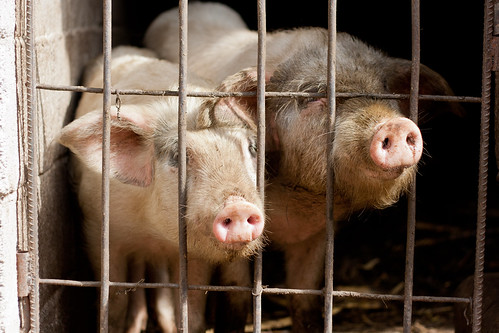
You’ll never guess which animal the next coronavirus outbreak is coming from. CC-licensed photo by angieandsteve on Flickr.

A selection of 10 links for you. Not stood up. I’m @charlesarthur on Twitter. Observations and links welcome.

As Twitter and Facebook clamp down, Republicans claim ‘election interference’ • The New York Times

Mike Isaac and Kate Conger:

»

On Thursday, simmering discontent among Republicans over the power that Facebook and Twitter wield over public discourse erupted into open acrimony. Republicans slammed the companies and baited them a day after the sites limited or blocked the distribution of an unsubstantiated New York Post article about Hunter Biden, the son of the Democratic presidential nominee, Joseph R. Biden Jr.

The criticism did not stop the companies. Twitter locked the personal account of Kayleigh McEnany, the White House press secretary, late Wednesday after she posted the article, and on Thursday it briefly blocked a link to a House Judiciary Committee webpage. The Trump campaign said Twitter had also locked its official account after it tried promoting the article. Twitter then doubled down by prohibiting the spread of a different New York Post article about the Bidens.

The actions brought the already frosty relationship between conservatives and the companies to a new low point, less than three weeks before the Nov. 3 presidential election, in which the social networks are expected to play a significant role. It offered a glimpse at how online conversations could go awry on Election Day and underlined how the companies have little handle on how to consistently enforce what they will allow on their sites.

“There will be battles for control of the narrative again and again over coming weeks,” said Evelyn Douek, a lecturer at Harvard Law School who studies social media companies. “The way the platforms handled it is not a good harbinger of what’s to come.”

«

None of the major papers has been able to stand the Hunter Biden story up – not surprising, because it’s Swiss cheese with a Möbius twist which makes no sense, no matter where you start; the more you read the less it hangs together. So of course the noise is all about the cackhanded approach Twitter took. They must envy Facebook’s ability to simply turn the volume down.
unique link to this extract


Robinhood hack: almost 2,000 accounts infiltrated, more widespread than known • Bloomberg

Sophie Alexander:

»

Almost 2,000 Robinhood Markets accounts were compromised in a recent hacking spree that siphoned off customer funds, a sign that the attacks were more widespread than was previously known.

A person with knowledge of an internal review, who asked not to be identified because the findings aren’t public, provided the estimated figure.

When Bloomberg first reported on the hacking spree last week, the popular online brokerage disclosed few details. It said “a limited number” of customers had been struck by cyber-criminals who gained access by breaching personal email accounts outside of Robinhood, an assertion that some of the victims acknowledge and others reject.

The attacks unleashed a torrent of complaints on social media, where investors recounted futile attempts to call the brokerage, which doesn’t have a customer service phone number. Robinhood, which has more than 13 million customer accounts, is now considering whether to add a phone number along with other tools, the person said.

«

A phone number. All your money is siphoned off and there’s no way to call anyone. Amazing anyone is still with Robinhood after that. Some of the accounts were access despite having two-factor authentication – which suggests someone getting very deep into the system (as happened with Twitter.)
unique link to this extract


FCC chairman says he will move forward with plans to ‘clarify’ Section 230 • Deadline

Ted Johnson:

»

The chairman of the FCC issued a statement on Thursday saying that he plans to move forward with efforts to clarify Section 230, the provision of a 1996 law that gives immunity to internet companies like Facebook and Twitter over the way that they moderate content.

Chairman Ajit Pai issued a statement as President Donald Trump and his allies have blasted Twitter and Facebook for steps they have taken to restrict the sharing of a New York Post story on Hunter Biden. Twitter has disabled links to the story, and the Trump campaign said that its account was briefly locked after it tried to share it.

“As elected officials consider whether to change the law, the question remains: What does Section 230 currently mean?” Pai said in a statement. “Many advance an overly broad interpretation that in some cases shields social media companies from consumer protection laws in a way that has no basis in the text of Section 230. The Commission’s General Counsel has informed me that the FCC has the legal authority to interpret Section 230. Consistent with this advice, I intend to move forward with a rulemaking to clarify its meaning.”

He added, “Throughout my tenure at the Federal Communications Commission, I have favored regulatory parity, transparency, and free expression. Social media companies have a First Amendment right to free speech.  But they do not have a First Amendment right to a special immunity denied to other media outlets, such as newspapers and broadcasters.”

«

The thing is, the FCC doesn’t have the power to regulate companies in this way. Section 230 is completely unambiguous, despite the tortured attempts by Clarence Thomas on the Supreme Court to suggest that it isn’t. (Looking forward, by the way, to learning what the writers of the US Constitution knew about the internet.) Any attempt the FCC makes to regulate social media companies (and what would that even look like?) will end up tangled in the courts for years, by which time Pai will have been replaced. Or, alternatively, the US will be in flames and it won’t matter anyway.
unique link to this extract


Cruise gets the green light to test fully driverless cars in California • The Verge

Andrew Hawkins:

»

Cruise, the self-driving company owned by General Motors, has been approved to test its driverless cars on public roads in California. The company says it plans to test vehicles without a human safety driver behind the wheel before the end of 2020.

Cruise is the fifth to receive a driverless permit from the state’s Department of Motor Vehicles, the others being Waymo, Nuro, Zoox, and AutoX. Currently, 60 companies have an active permit to test autonomous vehicles with a safety driver in California.

Dan Ammann, CEO of Cruise, said in a blog post that the company may not have been the first to receive a driverless permit, but it intends to be the first to test fully driverless cars in San Francisco.

“Before the end of the year, we’ll be sending cars out onto the streets of SF — without gasoline and without anyone at the wheel,” Ammann said. “Because safely removing the driver is the true benchmark of a self-driving car, and because burning fossil fuels is no way to build the future of transportation.” (Cruise’s fleet of vehicles is composed of 200 electric Chevy Bolts.)

«

This is a pretty good time to do it: roads are going to be emptier than usual. Though maybe a lot more cyclists?
unique link to this extract


YouTube bans coronavirus vaccine misinformation • Reuters

Elizabeth Culliford and Paresh Dave:

»

Alphabet Inc’s YouTube said on Wednesday it would remove videos from YouTube containing misinformation about COVID-19 vaccines, expanding its current rules against falsehoods and conspiracy theories about the pandemic.

The video platform said it would now ban any content with claims about COVID-19 vaccines that contradict consensus from local health authorities or the World Health Organization.

YouTube said in an email that this would include removing claims that the vaccine will kill people or cause infertility, or that microchips will be implanted in people who receive the vaccine.

A YouTube spokesman told Reuters that general discussions in videos about “broad concerns” over the vaccine would remain on the platform.

YouTube says it already removes content that disputes the existence or transmission of COVID-19, promotes medically unsubstantiated methods of treatment, discourages people from seeking medical care or explicitly disputes health authorities’ guidance on self-isolation or social distancing.

«

Remarkable how the platforms are all doing this almost in lockstep. It’s not quite coordinated, but it’s certainly as if they’re looking at each other and following each other. Holocaust denial next to go from YouTube? (It’s already going after QAnon.)
unique link to this extract


The dystopian lake filled by the world’s tech lust • BBC Future

Tim Maughan:

»

From where I’m standing, the city-sized Baogang Steel and Rare Earth complex dominates the horizon, its endless cooling towers and chimneys reaching up into grey, washed-out sky. Between it and me, stretching into the distance, lies an artificial lake filled with a black, barely-liquid, toxic sludge.

Dozens of pipes line the shore, churning out a torrent of thick, black, chemical waste from the refineries that surround the lake. The smell of sulphur and the roar of the pipes invades my senses. It feels like hell on Earth.

Welcome to Baotou, the largest industrial city in Inner Mongolia. I’m here with a group of architects and designers called the Unknown Fields Division, and this is the final stop on a three-week-long journey up the global supply chain, tracing back the route consumer goods take from China to our shops and homes, via container ships and factories.

You may not have heard of Baotou, but the mines and factories here help to keep our modern lives ticking. It is one of the world’s biggest suppliers of “rare earth” minerals. These elements can be found in everything from magnets in wind turbines and electric car motors, to the electronic guts of smartphones and flatscreen TVs. In 2009 China produced 95% of the world’s supply of these elements, and it’s estimated that the Bayan Obo mines just north of Baotou contain 70% of the world’s reserves. But, as we would discover, at what cost?

…You can see the lake on Google Maps, and that hints at the scale. Zoom in far enough and you can make out the dozens of pipes that line the shore. Unknown Fields’ Liam Young collected some samples of the waste and took it back to the UK to be tested. “The clay we collected from the toxic lake tested at around three times background radiation,” he later tells me.

«

unique link to this extract


A new coronavirus that could be even more dangerous was just discovered in China • BGR

Mike Wehner:

»

As the coronavirus pandemic continues to ravage many parts of the world, researchers have been working hard to develop a safe and effective vaccine that could bring life back a bit closer to normal. Of course, the development of a vaccine and the good it could do for humanity assumes that another, separate strain of the virus isn’t poised to make a jump to humans and start the process all over again.

Now, researchers are warning that a type of coronavirus seen in pigs may indeed be capable of jumping to humans, and if it does, it could cause even more problems. It’s called SADS-CoV, which is short for “Swine Acute Diarrhea Syndrome Coronavirus” and, yeah, it’s as bad as it sounds.

As you might have gathered from the virus’s name, the SADS-CoV virus infects pigs, but it originated in bats. It’s been found in China, and it appears to be taking a similar route to the virus that causes COVID-19. Humans and pigs are shockingly close when it comes to genetics, making it easier for a virus to jump from pigs to humans.

«

I’m reminded of the cascading environmental collapses of John Brunner’s “The Sheep Look Up”.
unique link to this extract


Fifth of countries at risk of ecosystem collapse, analysis finds • The Guardian

Damian Carrington:

»

Natural “services” such as food, clean water and air, and flood protection have already been damaged by human activity.

More than half of global GDP – $42tn (£32tn) – depends on high-functioning biodiversity, according to the report, but the risk of tipping points is growing.

Countries including Australia, Israel and South Africa rank near the top of Swiss Re’s index of risk to biodiversity and ecosystem services, with India, Spain and Belgium also highlighted. Countries with fragile ecosystems and large farming sectors, such as Pakistan and Nigeria, are also flagged up.

Countries including Brazil and Indonesia had large areas of intact ecosystems but had a strong economic dependence on natural resources, which showed the importance of protecting their wild places, Swiss Re said.

“A staggering fifth of countries globally are at risk of their ecosystems collapsing due to a decline in biodiversity and related beneficial services,” said Swiss Re, one of the world’s biggest reinsurers and a linchpin of the global insurance industry.

“If the ecosystem service decline goes on [in countries at risk], you would see then scarcities unfolding even more strongly, up to tipping points,” said Oliver Schelske, lead author of the research.

«

There’s still no good news on this front. Emissions are down, but that doesn’t mean there’s less carbon dioxide in the atmosphere; just that we’re not adding to it as quickly.
unique link to this extract


Students are rebelling against eye-tracking exam surveillance tools • Vice

Todd Feathers and Janus Rose:

»

Students’ and educators’ objections to exam proctoring software go beyond the privacy concerns around being watched and listened to in their bedrooms while they take a test. As more evidence emerges about how the programs work, and fail to work, critics say the tools are bound to hurt low-income students, students with disabilities, students with children or other dependents, and other groups who already face barriers in higher education.

Every day for the last week, Ahmed Alamri has opened ExamSoft and attempted to register for the practice version of the California state bar exam. Every time, the software’s facial recognition system has told him the lighting is too poor to recognize his face. Alamri, who is Arab-American, has attempted to pass the identity check in different rooms, in front of different backgrounds, and with various lighting arrays. He estimates he’s attempted to verify his identity as many as 75 times, with no success. “It just seems to me that this mock exam is reading the poor lighting as my skin color,” he told Motherboard.

Alamri isn’t alone. Law students around the country are organizing to fight against the use of any kind of digital proctoring software like ExamSoft on bar exams. In California, two students have filed an emergency petition with the state supreme court requesting that it cancel the exam entirely and institute a new form of assessment. A similar effort is underway in Illinois, while Louisiana, Oregon, and Wisconsin have already scrapped their upcoming bar exams as a result of student pressure. Other states, including New York, are fumbling for solutions as deadlines for the exams quickly approach; at one point, New York’s test proctor announced it was going to ban the use of “desktop computers” to take the test.

«

Nightmarish. You can see that organisations that rely on exams are going to be concerned about the possibility of people cheating now they’re working from home. But how do you monitor those fairly? If you give up entirely, that doesn’t seem ideal either.
unique link to this extract


Google Pixel 5 review: new phone, old tricks • The Verge

Dieter Bohn:

»

TheThe clearest signal that Google isn’t trying to compete directly with top-tier phones isn’t the $699 price; it’s the Snapdragon 765G processor. For all of 2020, the best Android phones have had Qualcomm’s fastest chip, but Google has chosen to go with something a little slower in the Pixel 5G.

I don’t disagree with this choice. Although it doesn’t have the raw power of Qualcomm’s fastest chip, it’s still fast enough to not feel slow. I can detect a bit of a lag in rendering complex webpages or opening heavy apps like big games, but that’s mainly because I’ve reviewed so many flagship Android phones. In day-to-day use, I have had no problems with speed. There’s also 8GB of RAM for multitasking, which is enough to keep apps from closing in the background — a problem that frequently plagued older Pixel models.

There is one processor decision I do disagree with, though: removing the Pixel Neural Core processor for image processing. It means I’m waiting for photos to process way more often than I did with the Pixel 4. There’s a lag between shots when in portrait mode, which keeps me from shooting as quickly as I’d like, and I frequently have to wait for the HDR processing to finish when I review a shot after the fact.

…It may be disappointing to see Google shy away from the big leagues this year, but I think sticking to making a premium midrange phone is more true to the Pixel’s whole ethos. The Pixel 5 is not an especially exciting phone, but instead of overreaching, Google focused on the fundamentals: build quality, battery life, and, of course, the camera.

«

I’ll admit, I don’t understand Google’s smartphone strategy. What is it aiming to do with the Pixel? It’s not competing at the high end. Fine. So what is it demonstrating? That it can make a middling phone with a really good machine learning-powered camera? Perhaps the imaging ML, not the phone, is the real point.

Plus, as Bohn also points out, things like Soli (wave your hand to control the phone!) and the squeeze-to-click and face unlock are gone. After one outing. That makes it feel like the designers are just throwing things at the wall. Contrast with Apple, which only drops features such as 3D Touch after years, once completely certain developers and users aren’t using it. (Mumble mumble Touch Bar.)
unique link to this extract


Errata, corrigenda and ai no corrida: the headline about polling in yesterday’s edition should have said people want to “rein in” tech companies. We all know the difference.

You can sign up to receive each day’s Start Up post by email. You’ll need to click a confirmation link, so no spam.

Start Up No.1413: Twitter and Facebook act on ‘hacking’ story, red states want limits on big tech, the racism in healthcare software, and more


What if these were augmented reality glasses? Who’d be a good boy then? CC-licensed photo by Adrian Smalley on Flickr.

You can sign up to receive each day’s Start Up post by email. You’ll need to click a confirmation link, so no spam.

A selection of 9 links for you. Not locked up or down. I’m @charlesarthur on Twitter. Observations and links welcome.

Twitter cites ‘Hacked Materials Policy’ to justify censorship of NY Post Hunter Biden article • Yahoo News

Tobias Hoonhout:

»

Twitter said Thursday that it censored a New York Post article based on emails between Hunter Biden and a Burisma executive in accordance with its “hacked materials policy.”

“In line with our Hacked Materials Policy, as well as our approach to blocking URLs, we are taking action to block any links to or images of the material in question on Twitter,” a Twitter spokesperson told National Review when asked why the platform was not allowing users to share the Post’s article.

Twitter’s Hacked Materials Policy states that it does not “permit the use of our services to directly distribute content obtained through hacking that contains private information, may put people in physical harm or danger, or contains trade secrets,” though the platform does currently allow leaked and hacked material from other sources, including Wikileaks, to be shared.

The platform said that the policy applied in this case due to concerns about the “lack of authoritative reporting” in regards to the origins of the material included in the article, and subsequently locked the Post’s Twitter account. Twitter’s actions came after Facebook announced it would limit the sharing of the story while fact-checkers reviewed the piece.

«

If you read further on, the actual story that the NY Post has gone with is remarkably sketchy – the emails were on the disk drive of a laptop that was taken to a repair shop and never picked up and then subpoenaed by the FBI? The fact that both Twitter and Facebook find this story dodgy is very unusual.

More to the point, this Hacked Materials Policy is new, dating back only to March 2019. Yet it says

»

You can discuss a hack that has taken place (including reporting on a hack, or sharing press coverage of hacking), provided that you don’t include someone’s private information, information that could put people at risk of physical harm or danger; and/or information related to trade secrets.

«

The big question is whether this really was hacking, or if it’s just Russian (or, even more wildly, Trump campaign-ian) disinformation. The timing, too, is amazing.
unique link to this extract


Large majority in Senate battleground states agree government needs to act now to reign in big tech companies • Public Policy Polling

Jim Williams runs Public Policy Polling:

»

A new Public Policy Polling survey finds that a large majority of voters across Senate battleground states agree that big tech companies like Facebook, Google, and Amazon have grown too big and powerful, and the government needs to act now to rein in their power.

A total of 84% of voters agree with this sentiment, with 53% strongly agreeing and 31% somewhat agreeing, with 7% who say they somewhat disagree and only 2% strongly disagreeing. 61% of voters say they would be more likely to vote for a Senator who voted to rein in the power of big tech companies, with thirty six% saying they would be much more likely, and only 11% saying they would be less likely to vote for them.

«

A few words about the methodology:
• carried out on landlines and mobiles, robocalling rather than humans (which these days is reckoned to make people more likely to answer truthfully, at least on voting intention
• total of 701 voters (just about enough to be statistically valid) in Arizona, Colorado, Georgia, Iowa, Maine, Michigan, Minnesota, Montana, North Carolina
• 41% Democrat, 34% Republican, 25% independent; in 2016 voted 46% Trump, 45% Clinton, 9% someone else/didn’t vote
• 47% approve of Trump’s job performance, 47% approve, 3% “not sure”. What on earth more do they need to know after the past four years?

There’s lots of fascinating data to be found in the cross-tabulations, but the sentiment is clearly bipartisan, and running against tech companies. That will surely be reflected in the next Senate from January 2021. (Thanks Jim for the link.)
unique link to this extract


How software infuses racism into US health care • STAT

Casey Ross:

»

A STAT investigation has found that a common method of using analytics software to target medical services to patients who need them most is infusing racial bias into decision-making about who should receive stepped-up care. While a study published last year documented bias in the use of an algorithm in one health system, STAT found the problems arise from multiple algorithms used in hospitals across the country. The bias is not intentional, but it reinforces deeply rooted inequities in the American health care system, effectively walling off low-income Black and Hispanic patients from services that less sick white patients routinely receive.

These algorithms are running in the background of most Americans’ interaction with the health care system. They sift data on patients’ medical problems, prior health costs, medication use, lab results, and other information to predict how much their care will cost in the future and inform decisions such as whether they should get extra doctor visits or other support to manage their illnesses at home. The trouble is, these data reflect long-standing racial disparities in access to care, insurance coverage, and use of services, leading the algorithms to systematically overlook the needs of people of color in ways that insurers and providers may fail to recognize.

“Nobody says, ‘Hey, understand that Blacks have historically used health care in different patterns, in different ways than whites, and therefore are much less likely to be identified by our algorithm,” said Christine Vogeli, director of population health evaluation and research at Mass General Brigham Healthcare in Massachusetts, and co-author of the study that found racial bias in the use of an algorithm developed by health services giant Optum.

The bias can produce huge differences in assessing patients’ need for special care to manage conditions such as hypertension, diabetes, or mental illness

«

Of course, the algorithm works on what it’s given. What does that tell us about health care in the US?
unique link to this extract


PC sales soared in Q3, Chromebook shipments up 90% • ExtremeTech

Joel Hruska:

»

PC sales boomed in Q3 2020, driven by massive new demand in the education market and continuing strong sales in business and gaming segments. The coronavirus has fueled a tremendous surge in PC sales throughout 2020. Initially, demand was expected to taper off in Q3, but we now know the market grew significantly.

How much the market grew depends on whether you count Chromebooks. Gartner (which doesn’t) reports that PC sales grew 3.6% compared with Q3 2019. Now, understand — 3.6% is not nothing for a market that’s been in almost continuous decline for a decade now.

But the 3.6% growth Gartner reports is dwarfed by the 14.1% growth that IDC recorded, and the difference comes down to Chromebooks. IDC counts them. According to Gartner’s figures, counting Chromebooks, the market grew at 9%, with Chromebooks representing about 11% of total shipments. A 9%/14% gap between the two firms is still large, but it’s much closer than the previous figure.

Chromebook shipments surged an astounding 90% year-on-year, driven by massive demand ahead of the deployment of remote learning in US school systems. Non-Chromebook sales were driven by an increase in Windows laptops and in gaming systems, but the huge 28% surge in laptop sales was undercut by a nearly equivalent decline in desktops. Outside of gaming, where they remain fairly popular, overall desktop adoption declined sharply.

«

Echoing the Canalys figures earlier this week. That’s an amazing figure for Chromebooks: being cheap, reliable and virus-free really counts for something for schools.
unique link to this extract


First room-temperature superconductor reported • Ars Technica

John Timmer:

»

In the period after the discovery of high-temperature superconductors, there wasn’t a good conceptual understanding of why those compounds worked. While there was a burst of progress toward higher temperatures, it quickly ground to a halt, largely because it was fueled by trial and error. Recent years brought a better understanding of the mechanisms that enable superconductivity, and we’re seeing a second burst of rapidly rising temperatures.

The key to the progress has been a new focus on hydrogen-rich compounds, built on the knowledge that hydrogen’s vibrations within a solid help encourage the formation of superconducting electron pairs. By using ultra-high pressures, researchers have been able to force hydrogen into solids that turned out to superconduct at temperatures that could be reached without resorting to liquid nitrogen.

Now, researchers have cleared a major psychological barrier by demonstrating the first chemical that superconducts at room temperature. There are just two catches: we’re not entirely sure what the chemical is, and it only works at 2.5 million atmospheres of pressure.

«

Woo-h….what? Room-temperature superconductivity and routine nuclear fusion: incorporated ages ago into science fiction, endlessly out of reach in real life.
unique link to this extract


Augmented reality dog goggles could help protect soldiers • The United States Army

»

The augmented reality goggles are specially designed to fit each dog with a visual indicator that allows the dog to be directed to a specific spot and react to the visual cue in the goggles. The handler can see everything the dog sees to provide it commands through the glasses.

“Augmented reality works differently for dogs than for humans,” said Dr. Stephen Lee, an ARO senior scientist. “AR will be used to provide dogs with commands and cues; it’s not for the dog to interact with it like a human does. This new technology offers us a critical tool to better communicate with military working dogs.”

The initial prototype is wired, keeping the dog on a leash, but researchers are working to make it wireless in the next phase of development.

“We are still in the beginning research stages of applying this technology to dogs, but the results from our initial research are extremely promising,” Peper said. “Much of the research to date has been conducted with my rottweiler, Mater. His ability to generalize from other training to working through the AR goggles has been incredible. We still have a way to go from a basic science and development perspective before it will be ready for the wear and tear our military dogs will place on the units.”

«

Normally it’s done by pointing, but AR would allow remote interaction. Or a whole new way to throw the ball to be fetched.
unique link to this extract


Poor numerical literacy linked to greater susceptibility to Covid-19 fake news • The Guardian

Natalie Grover:

»

People in Ireland, Spain, Mexico, the US and the UK took part in the study. Their numerical literacy levels were calculated on the basis of three different numeracy tests.

Participants were presented with nine statements about Covid-19, some false (for example, 5G networks may be making us more susceptible to the coronavirus) and some true (for instance, people with diabetes are at higher risk of complications from coronavirus).

Participants were also asked about their risk perception of Covid-19, what extent they complied with public health guidance and their likelihood of getting vaccinated if a vaccine were to become available.

Overall, higher susceptibility to fake news was associated with lower self-reported compliance with public health guidance for Covid-19, as well as people’s willingness to get vaccinated against the virus and recommend the vaccine to vulnerable family and friends.

Some scientists think that susceptibility to misinformation is related to political views, while others think it is linked to reasoning abilities, study author Dr Sander van der Linden explained.

“My take is that both are relevant. And I was surprised to see numeracy playing such a strong role here … it was one of the single most important predictors,” he said. “I like that finding in a sense because it gives me hope that there’s a solution out there.”

…The research, published in the journal Royal Society Open Science, also found that people who were more receptive to misinformation viewed themselves as minorities and appeared resistant to voices in authority such as scientists and politicians

«

That latter sentence is a bit of a mixture. Scientists, fine, but which politicians should we regard as an authority on this topic? Jacinda Ardern, perhaps, but you’d hardly look to Donald Trump for your best advice on avoiding it.
unique link to this extract


Exclusive: Huawei in talks to sell parts of its Honor smartphone business – sources • Reuters

Julie Zhu:

»

Embattled Huawei is resetting its priorities due to US sanctions and will focus on its higher-end Huawei phones rather than the Honor brand which is aimed at young people and the budget conscious, they said.

The assets to be sold have yet to be finalised but could include Honor’s brand, R&D capabilities and related supply chain management business, two of the people said.

The deal may be an all-cash sale and could end up smaller, worth somewhere between 15 billion yuan and 25 billion yuan ($2.2bn-$3.7bn), one of the people said.

Digital China, the main distributor for Honor phones, has emerged as the frontrunner but other prospective buyers include Chinese electronics maker TCL and rival smartphone maker Xiaomi Corp, the people said, declining to be identified as the talks were confidential.

…Kuo Ming-chi, an analyst at TF International Securities, has said that any sale by Huawei of the Honor smartphone business would be a win-win situation for the Honor brand, its suppliers and China’s electronics industry.

“If Honor is independent from Huawei, its purchase of components will no longer be subject to the U.S. ban on Huawei. This will help Honor’s smartphone business and the suppliers,” he wrote in a research note last week.

«

Huawei’s executives must be praying that Trump loses and that they’ll get a chance to reset with a new administration, but even that won’t happen until January. This feels like testing the market in case things don’t turn out well in November. Note the inclusion of the R&D: is that really separate for the high-end phones and the cheaper Honor brand?
unique link to this extract


Google and Facebook have a news labelling problem • Columbia Journalism Review

Emily Bell and Sara Sheridan:

»

When the Institute for Nonprofit News was approached several years ago by a news organization targeting African American readers, executive director Sue Cross was intrigued. Although the organization did not pass the transparency of funding standards for INN membership, Cross followed their journalism closely over a period of months. While much of the reporting seemed solid, Cross noted “a pattern of stories emerging; particularly positive stories about coal and stories about how particular types of new energy have a racist impact.” The undisclosed money funding the site was clearly aligned with the interests of the fossil-fuel industry, but as Cross put it recently, “You had to read the output of a number of months to even detect it.”

Sites like this one were the subject of a recent Tow Center discussion on the phenomenon of covertly partisan money funding local news. Tow Center research into understanding how partisan online news networks operate ahead of elections revealed over a thousand politically backed sites cropping up across the US producing largely automatically generated stories. The Metric Media network at the center of the study is the largest, but by no means the only example of organizations that are serving lobbying or political interests by producing what appears to be local news content. As Cross pointed out, the lack of transparency around funding sources is designed to deceive readers by making it difficult to detect political or commercial motives. 

«

Of course, as they acknowledge, the world of print and cable has seen partisan funding (the right-wing press in the UK; Sinclair Media in the US). But Facebook lets anyone define themselves as a media/news company, while Google doesn’t apply it consistently. That, in turn, creates problems of “pink slime” news: regurgitated, reused content with undeclared partisan intent.
unique link to this extract


Errata, corrigenda and ai no corrida: none notified

Start Up No.1412: the ‘gangstalking’ delusion, Apple’s new iPhones (and HomePod), Facebook moves against vaccines, UK plans retrospective tech un-buyout law, and more


Eli Pariser reckons it’s time we had the equivalent of properly public parks on the internet? CC-licensed photo by Dmitry Ryzhkov on Flickr.

You can sign up to receive each day’s Start Up post by email. You’ll need to click a confirmation link, so no spam.

A selection of 10 links for you. Undeniably. I’m @charlesarthur on Twitter. Observations and links welcome.

To mend a broken internet, create online parks • WIRED

Eli Pariser:

»

To build the thriving digital public spaces we need, we must address three surmountable challenges.

First: money. While the internet started out as a publicly supported network, digital spaces in the last 20 years have been mostly funded by venture capitalists who are looking for enormous returns on investment. Scaling a product so that millions of people know about it and can use it fluidly can cost billions.

While a multi-billion-dollar price tag seems massive, we implicitly value our physical public infrastructure at many times that. Central Park’s land value alone is, by one calculation, $37 trillion. (That’s more than 50 Facebooks, if you’re keeping score.)

History suggests that a guilty-but-loaded tech mogul could step up and solve the funding problem, becoming the Andrew Carnegie of the 21st century. But philanthropic money often comes with strings attached. That’s why it’s worth investing in the more radical notion recently proposed by the American Academy of Arts and Sciences’ report on American citizenship. The Academy suggests taxing targeted advertising, and using those funds to shore up democratic functions that the big tech platforms have eroded, such as local journalism. Public digital infrastructure could also be funded in this way.

Second, there’s a talent and research problem. People outside of tech generally underestimate how hard it is to build something seamless, intuitive, and irresistible that allows millions of people to interact. We need to rally a diverse, representative generation of builders to this cause. And given that digital products live and die by metrics, we need to identify signals that correspond to flourishing public digital space.

Finally, there’s a problem of public imagination. Fixing our ability to connect and build healthy communities at scale is arguably an Apollo mission for this generation—a decisive challenge that will determine whether our society progresses or falls back into conspiracy-driven tribalism. We need to summon the creative will worthy of a problem of this urgency and consequence.

«

Pariser, of course, is the author of The Filter Bubble, the iconic work on the topic. This point about the lack of a public space for people to gather virtually has also been made, some time ago, by Zeynep Tufekci. If both Pariser and Tufekci think something is a good idea, it’s a good idea.
unique link to this extract


Apple’s iPhone 12 event: the seven biggest announcements • The Verge

The bits I find interesting (given that the addition of 5G was predictable):
• the HomePod Mini – at just $99 (£99 in the UK of course), that will sell well to iPhone users, even if it’s about three years too late
• the “MagSafe” brand reappearing as a way to implement reliable wireless charging, which Apple is encouraging third-party companies to use too, which in turn implies that the Lightning charging port is going away over time
• looks like the iPhone 4 design – flat sides – has come back into fashion.

Otherwise: big screens, lots of pixels, lowest price version still doesn’t quite have enough storage.
unique link to this extract


Gangstalking forums are hurting people even as some on them try to help • MIT Technology Review

Amelia Tait:

»

Right now, on Facebook pages, forums, blogs, YouTube channels, and subreddits across the internet, thousands of people are sharing their belief that they are being “gangstalked.” These self-described “targeted individuals” say they are being monitored, harassed, and stalked 24/7 by governments and other organizations. Targeted individuals claim that seemingly ordinary people are in fact trained operatives tasked with watching or harassing them—delivery men, neighbors, colleagues, roommates, teachers, even dogs. And though small compared with the most popular online forums, gangstalking communities are growing quickly; one estimate from 2016 suggested that there might be 10,000 people in such groups across the internet. Today, just one subreddit and one Facebook group adds up to over 22,000—and there are hundreds more groups scattered across different platforms.

The only academic study on gangstalking, a 2015 research article published in The Journal of Forensic Psychiatry & Psychology, involved a questionnaire of 128 gangstalking victims undertaken by forensic psychologist Lorraine Sheridan and stalking expert David James. Sheridan and James found that—compared to people who experienced stalking from an individual—people who believed they were being gangstalked scored more highly on depressive and post-traumatic symptoms, and “had a clear need for psychiatric support.” The authors concluded that gangstalking is “delusional in basis,” with those surveyed making improbable claims about hostile gangstalkers in their children’s schools, traffic lights being manipulated to always turn red, mind-controlled family and friends, and the invasion of their dreams.

Every day, the internet legitimizes these beliefs. A post entitled “confessions from a gangstalker” has been copied-and-pasted widely, while people share their own stories of being targeted by strangers or incapacitated by technology in their homes. Often, people log on looking for help—“Am I going crazy or am i being stalked?” reads a post on a gangstalking subreddit shared at the beginning of 2020 by a teen who claimed to have a schizophrenia diagnosis—and leave with what they believe are the answers.

«

This reminds me of the people who think they have weird fibres under their skins – morgellons. The internet won’t tell you you’re wrong, even if you have a delusion.
unique link to this extract


Facebook to ban ads discouraging vaccination • The Guardian

Kari Paul and agencies:

»

Facebook will ban ads that discourage people from getting vaccinated, the social media company announced Tuesday, as it launches a new public health campaign aimed at spreading flu vaccine information.

The changes are a departure from Facebook’s previous policy, which prohibited ads with vaccine misinformation but allowed ads expressing opposition to vaccines if they did not contain false claims.

The company said in a blogpost, however, that it would still allow ads advocating for or against legislation or government policies on vaccines, including a Covid-19 vaccine. Several ads discouraging vaccine mandates remained on the platform as of Tuesday.

Anti-vaccine content agnd discussion will still be allowed to appear organically on the platform, including in Facebook groups. A Guardian analysis found engagement with anti-vaccine posts on a sample of Facebook pages soared this summer. The company did not respond to request for comment regarding the policing of user-generated content relating to vaccines.

«

So this has become quite a thing. Militias one day, postal voting disinformation the next, then QAnon, then Holocaust denial, and now vaccine denial. Two obvious questions: what’s the next one to drop, and who inside Facebook has been driving the change in thinking about this? Sure, Zuckerberg gives it the final yes/no, but there must be a strand of executive thinking that’s pushing this.
unique link to this extract


Facebook gives Bletchley Park £1m to help it through pandemic • CNBC

Sam Shead:

»

Bletchley Park, a top-secret British codebreaking hub in World War Two, has received a £1m ($1.3m) donation from Facebook to help it through the coronavirus pandemic.

The donation comes after Bletchley Park, which is now a national heritage attraction and computing museum, said in August that it had lost over 95% of its income between March and July as a result of the virus. It reopened on July 4 but with reduced visitor numbers and is expecting to record a £2m deficit this year.

Iain Standen, chief executive of Bletchley Park, said in a statement: “We are very grateful to Facebook for their generous donation.”

“With this significant support, the Bletchley Park Trust will be better positioned to operate in the ‘new world’, and keep its doors open for future generations.”

«

Pros: getting on the side of the people who fought Nazis (and also who helped invent modern computing). Cons: you know, Facebook, you probably could have made it £2m.
unique link to this extract


Why Facebook can’t fix itself • The New Yorker

Andrew Marantz on Facebook’s moderation problem:

»

Mildka and Chris Gray left Facebook in 2018. Shortly afterward, in the U.K., Channel 4 aired a documentary that had been filmed by an undercover reporter posing as a content moderator in their office. At one point in the documentary, a trainer gives a slideshow presentation about how to interpret some of the Implementation Standards regarding hate speech. One slide shows an apparently popular meme: a Norman Rockwell-style image of a white mother who seems to be drowning her daughter in a bathtub, with the caption “When your daughter’s first crush is a little Negro boy.” Although the image “implies a lot,” the trainer says, “there’s no attack, actually, on the Negro boy . . . so we should ignore this.”

There’s a brief pause in the conference room. “Is everyone O.K. with that?” the trainer says.

“No, not O.K.,” a moderator responds. The other moderators laugh uneasily, and the scene ends.

After the footage became public, a Facebook spokesperson claimed that the trainer had made a mistake. “I know for a fact that that’s a lie,” Chris Gray told me. “When I was there, I got multiple tickets with that exact meme in it, and I was always told to ignore. You go, ‘C’mon, we all know exactly what this means,’ but you’re told, ‘Don’t make your own judgments.’ ”

A former moderator from Phoenix told me, “If it was what they say it is—‘You’re here to clean up this platform so everyone else can use it safely’—then there’s some nobility in that. But, when you start, you immediately realize we’re in no way expected or equipped to fix the problem.” He provided me with dozens of examples of hate speech—some of which require a good amount of cultural fluency to decode, others as clear-cut as open praise for Hitler—that he says were reviewed by moderators but not removed, “either because they could not understand why it was hateful, or because they assumed that the best way to stay out of trouble with their bosses was to leave borderline stuff up.”

«

There’s lots of this. (The C4 documentary is still online, and still shocking.) Two moderators who spoke to Marantz called Facebook’s minimalist approach “a kind of libertarian imperialism”, which is spot on.
unique link to this extract


2018: the AskHistorians subreddit banned Holocaust deniers, and Facebook should too • Slate

Johannes Breit, writing in July 2018 when Mark Zuckerberg had said he wouldn’t ban Holocaust denial on Facebook:

»

Zuckerberg got into hot water on Wednesday when he stated that Facebook wouldn’t necessarily remove Holocaust deniers from its platform because people “get things wrong” and because it’s not always possible to understand the deniers’ intent.

This position fundamentally fails to grasp how Holocaust deniers spread anti-Semitic propaganda, underscoring a flaw in how the purportedly neutral platform thinks it ought to handle particularly odious ideas. Conversation is impossible if one side refuses to acknowledge the basic premise that facts are facts. This is why engaging deniers in such an effort means having already lost. And it is why AskHistorians, where I am one of the volunteer moderators, takes a strict stance on Holocaust denial: we ban it immediately. Deniers need a public forum to spread their lies and to sow doubt among readers not well-informed about history. By convincing people that they might have a point or two, they open the door for further radicalization in pursuit of their ultimate goal: to rehabilitate Nazism as an ideology in public discourse by distancing it from the key elements that make it so rightfully reviled—the genocide against Jews, Roma, Sinti, and others.

…The Holocaust is the obvious proof that the ideology of National Socialism is, at its core, racist, anti-Semitic, and genocidal. Holocaust denial erases this massive crime to blunt the horror of Nazi ideas as a whole.

The point of JAQing off [“Just Asking Questions”, in faux “good faith”, about minor details of the Holocaust] is not to debate facts. It’s to have an audience hear denialist lies in the first place. Allowing their talking points to stand in public helps sow the seeds of doubt, even if only to one person in 10,000.

«

It’s worth reading Breit’s piece in full, because this isn’t just a rhetorical game. What remains puzzling is that Zuckerberg was so certain he knew better than people who had been immersed in this subject literally for decades, until his abrupt reversal this week. I’m very much looking forward to whoever can winkle out of him an explanation of what shifted his position.
unique link to this extract


Computers Are Hard: building software with David Heinemeier Hansson • Medium

Wojtek Borowicz interviews DHH, who Has Opinions:

»

Software, in most cases, is inherently unpredictable, unknowable, and unshaped. It’s almost like a gas. It can fit into all sorts of different openings from the same basic idea. The notion of trying to estimate how long a feature is going to take doesn’t work because you don’t know what you’re building and because humans are terrible at estimating anything. The history of software development is one of late or cancelled projects. If you were to summarize the entire endeavor of software development, you’d say: ‘The project ran late and it got canceled’. Planning work doesn’t work, so to speak.

So the problem with those methodologies is they put too much focus on estimating, which is inherently impossible with software?
I’d go even further and say that estimation is bullshit. It’s so imprecise as to be useless, even when you’re dealing with fixed inputs. And you’re not. No one is ever able to accurately describe what a piece of software should do before they see the piece of software. This idea that we can preemptively describe what something should do before we start working on it is bunk. Agile was sort of onto this idea that you need running software to get feedback but the modern implementations of Agile are not embracing the lesson they themselves taught.

…The magic really is in shifting your mindset from estimates to budgets. Don’t think about how long something takes. Think about how long are you willing to give something. This flips the entire idea. It lets the requirements float. The project definition that is vague is actually more realistic. Highly specific project definitions usually go astray very quickly.

«

unique link to this extract


UK plans new law to undo foreign deals on security grounds • Bloomberg

Tim Ross and Alex Morales:

»

Boris Johnson’s government is drawing up plans for a radical new law that would give ministers power to unravel foreign investments in U.K. companies – potentially casting major doubt on deals that have already been concluded – to stop hostile states gaining control over key assets.

The National Security and Investment Bill is in the final stages of drafting and could be published later this month, according to people familiar with the matter who spoke on condition of anonymity because the subject is sensitive.

It aims to cover deals in sectors such as defense and critical infrastructure, and will make provisions to protect sensitive intellectual property.

Among the most potentially controversial parts of the draft law is a proposal to allow the government to intervene retrospectively in circumstances where national security is an issue. That would mean allowing government officials to look back at past takeovers and mergers where concerns have been raised.

…Under the plans, the bill would include certain elements that are retroactive, enabling ministers to look back at past investments. One person familiar with the draft suggested this was with a particular deal in mind, though another denied that was the case.

«

I bet the “particular deal” is Softbank’s purchase of ARM, and NVidia’s new attempt to buy it. The question though is: how would the investment be unraveled, exactly? What would the government pay, and how would it compensate the companies involved?
unique link to this extract


Winning bid: how auction theory took the Nobel memorial prize in economics • Financial Times

Tim Harford:

»

A well-designed auction forces bidders to reveal the truth about their own estimate of the prize’s value. At the same time, the auction shares that information with the other bidders. And it sets the price accordingly. It is quite a trick.

But in practice it is a difficult trick to get right. In the 1990s, the US Federal government turned to auction theorists — [Nobel prize winners] Milgrom and Wilson prominent among them — for advice on auctioning radio-spectrum rights. “The theory that we had in place had only a little bit to do with the problems that they actually faced,” Milgrom recalled in an interview in 2007. “But the proposals that were being made by the government were proposals that we were perfectly capable of analysing the flaws in and improving.”

The basic challenge with radio-spectrum auctions is that many prizes are on offer, and bidders desire only certain combinations. A TV company might want the right to use Band A, or Band B, but not both. Or the right to broadcast in the east of England, but only if they also had the right to broadcast in the west. Such combinatorial auctions are formidably challenging to design, but Milgrom and Wilson got to work.

Joshua Gans, a former student of Milgrom’s who is now a professor at the University of Toronto, praises both men for their practicality. Their theoretical work is impressive, he said, “but they realised that when the world got too complex, they shouldn’t adhere to proving strict theorems”.

«

Further auction possibilities: carbon credits. If more governments would implement them.
unique link to this extract


Errata, corrigenda and ai no corrida: none notified

Start Up No.1411: Facebook bans Holocaust denial (but others are OK), Wisconsin further snubs Foxconn, is ad tech a bubble?, and more


You won’t believe the things Eddie Van Halen did to his guitars and amps. CC-licensed photo by National Museum of American History Smithsonian Institution on Flickr.

You can sign up to receive each day’s Start Up post by email. You’ll need to click a confirmation link, so no spam.

A selection of 10 links for you. Could be misinformation. I’m @charlesarthur on Twitter. Observations and links welcome.

On Facebook, misinformation is more popular now than in 2016 • The New York Times

Davey Alba:

»

have the platforms really become more sophisticated at handling misinformation?

Not necessarily.

People are engaging more on Facebook today with news outlets that routinely publish misinformation than they did before the 2016 election, according to new research from the German Marshall Fund Digital, the digital arm of the public policy think tank. The organization, which has a data partnership with the start-up NewsGuard and the social media analytics firm NewsWhip, published its findings on Monday.

In total, Facebook likes, comments and shares of articles from news outlets that regularly publish falsehoods and misleading content roughly tripled from the third quarter of 2016 to the third quarter of 2020, the group found.

About two thirds of those likes and comments were of articles published by 10 outlets, which the researchers categorized as “false content producers” or “manipulators.” Those news outlets included Palmer Report and The Federalist, according to the research.

The group used ratings from NewsGuard, which ranks news sites based on how they uphold nine journalistic principles, to sort them into “false content producers,” which repeatedly publish provably false content; and “manipulators,” which regularly present unsubstantiated claims or that distort information to make an argument.

«

Somehow, so unsurprising.
unique link to this extract


Wisconsin rejects Foxconn’s subsidies after contract negotiations fail • The Verge

Josh Dzieza:

»

Through the many twists and turns of Foxconn’s troubled Wisconsin project, one thing has long been clear: the company is not building the promised 20 million-square-foot Gen 10.5 LCD factory specified in its contract with the state. Even before President Trump broke ground on the supposed factory in June 2018, Foxconn said it would instead build a far smaller factory than it had proposed.

The discrepancy between what Foxconn is doing and what it said it would do in its contract has only grown since then, and it has brought Wisconsin and the company to an impasse. Documents obtained by The Verge show that attempts to renegotiate that contract have so far failed, and today, the Wisconsin Economic Development Corporation (WEDC), which oversees the deal, rejected Foxconn’s application for tax subsidies on the grounds that Foxconn had not carried out the Gen 10.5 LCD factory project described in its original contract.

WEDC also noted that even if whatever Foxconn is currently doing had been eligible under the contract, it had failed to employ the minimum number of people needed to get subsidies.

«

Let’s just rewind to June 2018, when Trump broke ground and (according to the speech) said it was “one of the most advanced places of any kind you’ll see anywhere in the world” and “Think of it: more than 20 million feet. And that’s probably going to be a minimal number.”

We’re going to look back on stuff like that (the White House transcript is, indeed, a transcript) and marvel that anything so doltish could happen in public.
unique link to this extract


Eddie Van Halen: how the rock legend hacked his guitar • Popular Mechanics

The man himself wouldn’t just hack his guitar; he’d go at his amps too:

»

If it was movable, or turnable, or anything that resembled something that could go up or down, I would mess with it to make the amp run hotter. I opened the amp up and saw this thing. I found out later it was a bias control, which controls the power to the output tubes. I’m poking around, and all of a sudden I touch this huge blue thing and my God, it was like being punched in the chest by Mike Tyson. My whole body flexed stiff, and it must have thrown me five feet. I’d touched a capacitor. I didn’t know they held voltage.

The Marshall amp I brought home from the store where I worked was only good if you turned it all the way up. Any lower and you’d lose the distortion. I needed that, but it was impossible to play anywhere with the volume that loud, so I tried everything, from leaving the thick plastic cover on it to facing it backwards to putting it face down. I’d blow a fuse twice an hour.

«

There’s pretty much no aspect of his guitars (the pickup, the frets, the nut, the back of the neck) or kit that he didn’t mess with.

unique link to this extract


Facebook to ban posts that deny Holocaust, reversing policy • Bloomberg

Sarah Frier:

»

Chief executive officer Mark Zuckerberg, who has been lobbied by civil rights groups such as the Anti-Defamation League to make the change, said he is concerned about the “current state of the world” and hate-based violence.

“I’ve struggled with the tension between standing for free expression and the harm caused by minimizing or denying the horror of the Holocaust,” Zuckerberg said in a Facebook post. “My own thinking has evolved as I’ve seen data showing an increase in anti-Semitic violence.”

Facebook said its decision was supported by the documented evidence of a rise in anti-Semitism globally and “the alarming level of ignorance about the Holocaust, especially among young people.” According to a recent survey of adults age 18-39 in the U.S., almost a quarter said they believed the Holocaust was a myth, that it had been exaggerated or they weren’t sure, Facebook’s head of content policy, Monika Bickert, said in a separate post. The Holocaust was the extermination of 6 million Jews by the Nazis and their allies during World War II.

Jonathan Greenblatt, CEO of the ADL, said he’s pushed Facebook to make the change for years. It’s “a big deal,” Greenblatt wrote on Twitter. “Glad it finally happened.”

«

As recently as July 2018 Zuckerberg was insisting that it was all just a matter of opinion. The real puzzle is still why he has changed his position on this. Where has this rise in anti-Semitic violence occurred? Yet there are a lot of changes afoot at Facebook.

Meanwhile, other genocide denial is just fine.
unique link to this extract


Twitter flags Trump’s false claim about his Covid-19 immunity. Facebook, however, does nothing • CNN

Jason Hoffman and Jordan Valinsky:

»

There is no evidence that people are immune to coronavirus if they have been infected once, according to the Centers for Disease Control and Prevention. The CDC specifically cautions people not to assume they are immune.

Twitter’s warning label says the tweet “violated the Twitter Rules about spreading misleading and potentially harmful information related to Covid-19.”

“We placed a public interest notice on [President Trump’s] Tweet for violating our Covid-19 Misleading Information Policy by making misleading health claims about Covid-19,” a Twitter spokesperson said. “As is standard with this public interest notice, engagements with the Tweet will be significantly limited.”

Trump posted the same message on his Facebook account, but the platform hasn’t added a warning label despite the fact that it violates its rules. The post has been up for four hours and shared more than 24,000 times on Facebook.

Facebook did not respond to a request for comment.

«

Now if he had said that coronavirus made him immune to the Holocaust…
unique link to this extract


Ad tech could be the next internet bubble • WIRED

Gilad Edelman:

»

[Ex-Googler Tim] Hwang thinks online ads are heading in the same direction, since no one really grasps their worthlessness. There are piles of research papers in support of this idea, showing that companies’ returns on investment in digital marketing are generally anemic and often negative. One recent study found that ad tech middlemen take as much as a 50% cut of all online ad spending. Brands pay that premium for the promise of automated microtargeting, but a study by Nico Neumann, Catherine E. Tucker, and Timothy Whitfield found that the accuracy of that targeting is often extremely poor. In one experiment, they used six different advertising platforms in an effort to reach Australian men between the ages of 25 and 44. Their targeting performed slightly worse than random guessing. Such research indicates that, despite the extent of surveillance tech, a lot of the data that fuels ad targeting is garbage.

Even when targeting works as promised, and the ads are served to their intended audience, many are simply never seen, because they load somewhere out of sight, like the bottom of a webpage. The rise of ad blocking makes the problem even more acute. Hwang cites a 2015 Adobe estimate that ad blockers deprived online publishers of $21.8bn in annual revenue, more than Facebook’s entire take for that year. Then there’s the astonishing level of digital ad fraud, including “click farms” that serve no purpose other than for bots or paid humans to constantly refresh and click ads, and “domain spoofing,” in which a bottom-dweller site participates in ad auctions while disguised as a more prestigious one. Hwang cites a 2017 study finding that, between lousy ad placement and outright fraud, “as much as 56% of all display ad dollars were lost to fraudulent or unviewable inventory in 2016.”

«

Hwang is very sure that it’s all going to collapse, like the US housing market in 2008. To me, the difference seems to be that everyone has an interest in the online advertising market continuing. And there’s no downside for them if it continues.
unique link to this extract


Feds may target Google’s Chrome browser for breakup • Politico

Leah Nylen:

»

In the advertising investigation, DOJ and state attorneys general have asked rivals and other third parties for their views on which businesses Google should have to sell. They have also asked whether any existing competitors should be off-limits as potential buyers, the people said.

The lawyers have also asked whether any of Google’s properties outside of the advertising technology market should be targeted for potential sale — leading some to single out Google’s Chrome browser, they said.

The browser, which Google introduced in 2008 and has the largest market share in the US, has been at the centre of rivals’ accusations that the search giant uses its access to users’ web histories to aid its advertising business.

That criticism escalated in January, when Google said it would phase out the use of third-party cookies in its Chrome browser within two years to enhance consumer privacy. But cookies — small files a browser uses to track visits to websites — are also a key tool for publishers to demonstrate the effectiveness of advertising campaigns to ad buyers.

Google’s own estimates show that eliminating those cookies will reduce advertising revenue to news outlets that show online ads by as much as 62%.

«

If the US somehow goes mad and implements this, will Google also have to do it in other countries? Chrome is the biggest browser in the world. The logic makes a kind of sense – through Chrome, Google can dictate how websites can behave and what tracking can and can’t be done. Wouldn’t be great news for Chromebooks, of course.
unique link to this extract


Apple Watch at five • Asymco

Horace Dediu:

»

The Watch has an always-on altimeter which is working to help with tracking effort by the wearer.

The Watch can detect hand washing and provide a timer so you do it well enough.
The Watch can track all physical activity and provide motivational reminders to meet daily goals.
The Watch can monitor exercise with precision and provide data that helps you improve your performance.
The Watch can also be used to pay for your groceries at the register.

The reason the Watch can do all these things is because it’s a computer. A computer with a dual core processor based on the A13 bionic chip also used in the iPhone 11, a retina display that is always on(!) and displaying at least 500nits at all times. It has on-board storage for music, WiFi, Bluetooth and a touch screen.

But although being a computer allows the Watch to do all this and more, no PC can do even one of these things. Nor does a PC have GPS, or Cellular connectivity or NFC and is certainly not swimproof. You don’t wear a PC in bed and it does not stay with you 24×7.

…The story of phones, tablets and wearables is a story of creating new markets, not substituting for old ones. In so doing the new markets are greater than their putative substitutions would allow. This is happening over and over again but it still seems to go largely unnoticed. Keep an eye out for a lot more of this.

«

unique link to this extract


Covid-19: China’s Qingdao to test nine million in five days • BBC News

»

The Chinese city of Qingdao is testing its entire population of nine million people for Covid-19 over a period of five days.

The mass testing comes after the discovery of a dozen cases linked to a hospital treating coronavirus patients arriving from abroad.

In May, China tested the entire city of Wuhan – home to 11 million people and the epicentre of the global pandemic.

The country has largely brought the virus under control. That is in stark contrast to other parts of the world, where there are still high case numbers and lockdown restrictions of varying severity.

In a statement posted to Chinese social media site Weibo, Qingdao’s Municipal Health Commission said six new cases and six asymptomatic cases had been discovered. All the cases were linked to the same hospital, said the state-run Global Times.

«

Those are stunning numbers – both the small number of positives and the size of the testing – though in context: 9m people in China’s 1.4 billion is equivalent to 0.6%, or 405,000 of the UK’s 63m population. The UK has a PCR testing capacity of about 310,000 tests per day.
unique link to this extract


100-watt wireless charging could be a thing next year • Android Authority

Hadlee Simons:

»

We’ve seen major strides in fast charging in the last two years, as smartphone manufacturers like Huawei, BBK, and Xiaomi upped the ante for both wired and wireless charging. We’ve previously seen wired charging top out at ~120W in recent months, but wireless charging solutions aren’t far behind, either.

Now, frequent leaker Digital Chat Station has claimed that several manufacturers are targeting 100W wireless charging for phones launching in 2021. Check out the post below.

This would be a major leap over current wireless charging standards. We’ve seen 40W wireless charging in the likes of the Oppo Ace 2 and Huawei P40 Pro Plus respectively. Oppo has also announced 65W wireless charging technology earlier this year, although we haven’t seen it on a commercial device just yet.

Nevertheless, we do wonder about heat and battery degradation with a move to 100W wireless charging. Oppo in particular stated that its 125W wired charging solution degraded the battery to 80% capacity after 800 charging cycles, compared to its 65W wired solution dropping down to 90% capacity after 800 cycles.

«

The heat alone would be a concern. Plus that degradation: 800 charging cycles would be around two years and two months, on a daily schedule. Nor would the degradation mean you go from 100% to 80% on day; you’d lose a bit more each time, so you’d need to charge sooner, so the degradation would get worse… Wireless charging strikes me as a waste. What’s wrong with doing it slowly overnight on a power-efficient wire?
unique link to this extract


Errata, corrigenda and ai no corrida: none notified

Start Up No.1410: should Trump’s tweets be delayed?, our crowded orbits, Facebook and the kidnap plot, Apple’s T2 problem, and more


Here comes the mobile internet; there goes (some) trust in government. CC-licensed photo by Toujours Passages on Flickr.

You can sign up to receive each day’s Start Up post by email. You’ll need to click a confirmation link, so no spam.

A selection of 10 links for you. Depending what the meaning of “link” is. I’m @charlesarthur on Twitter. Observations and links welcome.

Space is becoming too crowded, Rocket Lab CEO warns • CNN

Jackie Wattles:

»

Rocket Lab CEO Peter Beck said that the sheer number of objects in space right now — a number that is growing quickly thanks in part to SpaceX’s satellite internet constellation, Starlink — is making it more difficult to find a clear path for rockets to launch new satellites.

“This has a massive impact on the launch side,” he told CNN Business. Rockets “have to try and weave their way up in between these [satellite] constellations.”

Part of the problem is that outer space remains largely unregulated. The last widely agreed upon international treaty hasn’t been updated in five decades, and that’s mostly left the commercial space industry to police itself.

Rocket Lab set out to create lightweight rockets — far smaller than SpaceX’s 230-foot-tall Falcon rockets — that can deliver batches of small satellites to space on a monthly or even weekly basis. Since 2018, Rocket Lab has launched 12 successful missions and a total of 55 satellites to space for a variety of research and commercial purposes. Beck said the in-orbit traffic issues took a turn for the worst over the past 12 months.

It was over that time that SpaceX has rapidly built up its Starlink constellation, growing it to include more than 700 internet-beaming satellites. It’s already the largest satellite constellation by far, and the company plans to grow it to include between 12,000 and 40,000 total satellites. That’s five times the total number of satellites humans have launched since the dawn of spaceflight in the late 1950s.

…Moriba Jah, an astrodynamicist at the University of Texas at Austin and a leading expert in space traffic, said most of Earth’s orbit below about 750 miles is becoming a danger zone.

«

The “Gravity” scenario (aka Kessler Syndrome) becomes more likely every day.
unique link to this extract


Facebook and the group that planned to kidnap Gretchen Whitmer • The New York Times

Charlie Warzel:

»

Just how effective these bans [on QAnon and political adverts after the US election] will be depends on their implementation. Facebook’s record on this is spotty, but so far the takedowns seem comprehensive. Both decisions are steps in the right direction.

Still, taken together, Facebook’s pre-election actions underscore a damning truth: With every bit of friction Facebook introduces to its platform, our information ecosystem becomes a bit less unstable. Flip that logic around and the conclusion is unsettling. Facebook, when it’s working as designed, is a natural accelerating force in the erosion of our shared reality and, with it, our democratic norms.
A good example of this appeared on Thursday in a criminal complaint released by the F.B.I. The complaint details a federal investigation that successfully stopped a plot to kidnap the Michigan governor, Gretchen Whitmer, and put her on “trial.” The investigation is the latest example of anti-government domestic terrorism among far-right extremists. The group also discussed plans to attack the Michigan State Capitol building in what the state attorney general, Dana Nessel, called an attempt to “instigate a civil war.”

…Near the beginning of his 2017 speech on community, Mr. Zuckerberg revealed part of his motivation to focus on groups and communities. “Every day, I say to myself, I don’t have much time here on Earth, how can I make the greatest positive impact?” he mused.

Normally, that’s a hard question for a company of Facebook’s size. But if Mr. Zuckerberg is still asking himself that question every morning, the answer right now should be crystal clear. Facebook itself seems to know what it ought to do. That’s why it is quietly, temporarily dismantling normally crucial pieces of its infrastructure in anticipation of a crucial moment for American democracy. It’s a tacit admission that what is good for Facebook is, on the whole, destabilizing for society.

«

unique link to this extract


Apple’s T2 security chip has an unfixable flaw • WIRED

Lily Hay Newman:

»

In general, the jailbreak community haven’t paid as much attention to macOS and OS X as it has iOS, because they don’t have the same restrictions and walled gardens that are built into Apple’s mobile ecosystem. But the T2 chip, launched in 2017, created some limitations and mysteries. Apple added the chip as a trusted mechanism for securing high-value features like encrypted data storage, Touch ID, and Activation Lock, which works with Apple’s “Find My” services. But the T2 also contains a vulnerability, known as Checkm8, that jailbreakers have already been exploiting in Apple’s A5 through A11 (2011 to 2017) mobile chipsets. Now Checkra1n, the same group that developed the tool for iOS, has released support for T2 bypass.

On Macs, the jailbreak allows researchers to probe the T2 chip and explore its security features. It can even be used to run Linux on the T2 or play Doom on a MacBook Pro’s Touch Bar. The jailbreak could also be weaponized by malicious hackers, though, to disable macOS security features like System Integrity Protection and Secure Boot and install malware. Combined with another T2 vulnerability that was publicly disclosed in July by the Chinese security research and jailbreaking group Pangu Team, the jailbreak could also potentially be used to obtain FileVault encryption keys and to decrypt user data. The vulnerability is unpatchable, because the flaw is in low-level, unchangeable code for hardware.

…There are a few important limitations of the jailbreak, though, that keep this from being a full-blown security crisis. The first is that an attacker would need physical access to target devices in order to exploit them. The tool can only run off of another device over USB. This means hackers can’t remotely mass-infect every Mac that has a T2 chip. An attacker could jailbreak a target device and then disappear, but the compromise isn’t “persistent”; it ends when the T2 chip is rebooted.

…In this case, you’d likely have to be a very high-value target to register any real alarm. But hardware-based security measures do create a single point of failure that the most important data and systems rely on.

«

Still, at least they found a good use for the Touch Bar. “Using [X] to play Doom” has now become the hacking existence proof, like “hello world” for programming.
unique link to this extract


PC market shipments grow a stellar 13% in Q3 2020 to break ten-year record • Canalys

»

Recently released Canalys data shows the global PC market climbed 12.7% from a year ago to reach 79.2 million units in Q3 2020 as it continued to benefit hugely from the COVID-19 crisis. This is the highest growth the market has seen in the past 10 years. After a weak Q1, the recovery in Q2 continued into Q3 this year, and it even grew on top of a strong market the previous year. Global notebook shipments touched 64 million units (almost as much as the record high of Q4 2011 when notebook shipments were 64.6 million) as demand continued to surge due to second waves of COVID-19 in many countries and companies continued to invest in longer-term transitions to remote working. Shipments of notebooks and mobile workstations grew 28.3% year-on-year. This contrasted with desktop and desktop workstations, which saw shipments shrink by 26.0%.

«

Canalys rushed this out before IDC and Gartner could get their quarterly figures out (probably on Wednesday or Thursday). The growth might be big, but the actual level of shipments is less than Q4 or Q3 of 2014. You can see from the graph how there’s been a gradual decline. That figure for the fall in desktops is dramatic – is that business going to come back?

unique link to this extract


Web of distrust: faith in government declines when mobile internet arrives • The Economist

»

Most of the 4.1bn people now online got connected after 2010. To measure how new users’ views changed as a result, the authors combined two datasets. First, for each year in 2007-18, they estimated the share of people in each of 2,232 regions (such as states or provinces), spread across 116 countries, that could access at least 3g-level mobile internet. Then they used surveys by Gallup, a pollster, to measure how faith in government, courts and elections changed during this period in each area.

In general, people’s confidence in their leaders declined after getting 3G. However, the size of this effect varied. It was smaller in countries that allow a free press than in ones where traditional media are muzzled, and bigger in countries with unlimited web browsing than in ones that censor the internet. This implies that people are most likely to turn against their governments when they are exposed to online criticism that is not present offline. The decline was also larger in rural areas than in cities.

A similar pattern emerged at the ballot box. Among 102 elections in 33 European countries, incumbent parties’ vote-share fell by an average of 4.7 percentage points once 3G arrived.

«

unique link to this extract


Twitter bans calls for polling disruptions and early victory declarations to curb election abuse • The Washington Post

Elizabeth Dwoskin and Craig Timberg:

»

Twitter will impose new warnings on politicians’ lies, restrict premature declarations of victory and block calls for polling violence or other disruptions, the company announced Friday as it rolled out wide-ranging changes designed to harden the platform against abuse related to the US election on Nov. 3.

The moves also will temporarily alter the look and feel of Twitter, a service built on instantaneous conversation, quips and breaking news. Retweeting others, for example, will require an extra step designed to encourage users to add their own thoughts before posting. Recommendations and trends will get new curbs intended to prevent abuse.

Twitter’s moves, like those announced recently by Facebook, are aimed mainly at combating efforts to manipulate the political landscape at critical moments in the hotly contested national vote.

…Trump campaign spokeswoman Samantha Zager said in a statement Friday after the announcement, “Make no mistake, this corporation is attempting to silence voters and elected officials to influence our election, and this is extremely dangerous for our democracy.”

The campaign for Joe Biden, Trump’s Democratic rival, did not respond to a request for comment.

Democrats, civil rights activists and independent researchers, by contrast, have generally praised efforts by social media companies to prevent abuse and manipulation of platforms that are potent, far-reaching sources of news and opinion to billions of people worldwide.

“It’s really important these companies are understanding the unique role they play in amplifying or cutting off disinformation,” said Vanita Gupta, president of the Leadership Conference on Civil and Human Rights,

«

The contrast between the Trump and Biden campaign comments is telling. One gets the feeling that Silicon Valley has chosen its timing on this very carefully.
unique link to this extract


Put Trump’s tweets on a time delay • WIRED

Mike Ananny is a professor at USC, and Daniel Kreiss is a principal researchers at UNC Center for Information:

»

Twitter and Facebook have extensive and well-documented content rules that prohibit everything from electoral to health disinformation. The platforms have singled out these categories of content in particular because they have significant likelihood of causing real world harm, from voter suppression to undermining the Centers for Disease Control and Prevention’s public health guidelines. The FBI found that the plot to kidnap Michigan governor Gretchen Whitmer was, in part, organized in a Facebook group.

To date, the enforcement of these policies has been spotty at best. Twitter has labeled some of the president’s tweets as “potentially misleading” to readers about mail-in ballots. The platform hid a Trump tweet stating “when the looting starts, the shooting starts” for “glorifying violence,” and it recently hid another tweet equating Covid-19 to the flu, claiming that the president was “spreading misleading and potentially harmful information” when he wrote that “we are learning to live with Covid, in most populations far less lethal!!!” Facebook has taken similar actions, providing links to reliable voter and health information and removing posts that it deems violate its policies.

But these actions often take hours to put in place while this content racks up thousands of engagements and shares. In those hours, as recent research from Harvard shows, Trump is a one-man source of disinformation that travels quickly and broadly across Twitter and Facebook. And we know that the mainstream media often picks up on and amplifies Trump’s posts before platforms moderate them. Journalists report on platforms’ treatments of Trump’s tweets, making that and them the story, and giving life to false claims.

What if we never let Trump’s disinformation breathe to begin with, cutting it off from the social media and mainstream journalism oxygen it craves?

…why should this system be applied only to the posts of Trump and other political elites when Twitter and Facebook are rife with abuse from many sources? The answer, in short, is that when it comes to political and health disinformation, political elites matter the most. As decades of political science has taught us, people often take their cues from political leaders; they have outsized influence on public attitudes. Even more, such a high-profile test run of these systems on political elites in the US might help these companies figure out how to create a generalized post-delay system to ensure the integrity of their platforms’ policies.

«

unique link to this extract


Trump reveals his climate weakness • HEATED

Very late to this (bookmarked it ages ago and then News Happened), but Emily Atkin poked at the one crucial question that came up in the first (and last? who knows) presidential debate:

»

• [Moderator Chris] Wallace’s first question to Trump was, simply, “What do you believe about the science of climate change?” Trump admitted that humans contribute “to some extent.” Wallace then asked the necessary follow-up question that moderators don’t often do: “If you believe in the science of climate change, why have you rolled back [climate change regulations]?” Trump responded by saying energy prices would rise, and then rambled incoherently for a full minute about why cars should be able to pollute more.

• Through his climate answers, Biden revealed that he has a plan to address climate change, and that he really needs to get better at talking about it. When Wallace asked Biden about concerns that his climate plan will hurt the economy, for example, Biden responded that his plan would “create thousands and millions of jobs” before launching into a tirade about… building weatherization, for some reason?? Biden never made a forceful argument about how much not addressing climate change is hurting the economy, which is essential for voters to understand, particularly as wildfires and hurricanes rip through the country. This was an absolute softball that Biden should have been able to knock out of the park. He got on base, but that’s not enough to win.

• Climate change may actually be Trump’s greatest debate weakness. And here’s why: Trump just doesn’t know what to say. A huge reason last night’s debate was such a train wreck was because Trump could not stop interrupting every five seconds. But during the 11-minute climate portion, Trump was weirdly silent. He barely interrupted Biden or Wallace the entire time.

«

Atkins writes a newsletter: you can sign up on the site. Occasional free posts, or if you pay then you can get the whole shebang. (Her most recent, on “petro-masculinity“, is worth your time too.
unique link to this extract


Inside the Trump White House after his Covid-19 diagnosis • NY Mag

Olivia Nuzzi:

»

Statistically, the coronavirus is more likely to cost Donald Trump the White House than his life, though the threat to the latter isn’t helping the former. A little more than three weeks before the election, potentially contagious and freaking everybody out, Trump faces what looks like the end of his presidency. “He’s mishandled the coronavirus, he’s never been popular, and he’s gonna lose badly. I think it’s pretty simple,” a senior Republican official said. “Of course he was going to say, ‘Oh look, I feel great! Look how badly I beat this puny little virus!’ Meanwhile, it touches every American’s life every day in multiple different ways, and he’s handled it badly and people don’t forget that.” Or, as ex–Trump adviser Sam Nunberg put it, “Everything has just completely gone to shit.”

The polls suggest not just that the president will lose to Joe Biden but that he might lose bigly, in a landslide.

…After [Hope Hicks] tested positive on Thursday afternoon, the White House failed to notify others who would soon test positive themselves. They learned about it when the world did, not with an official disclosure but with a leak to the media. “The president could’ve given it to her,” one of those people told me, in fairness, but “I would’ve done things different that day, had I known.”

Trump did know, but he didn’t change his plans. At 1pm on Thursday, he flew to his Bedminster, New Jersey, golf club, for a fund-raiser with hundreds of his supporters, some of whom he spoke with indoors. Later that night, he tweeted about Hicks being sick. “Terrible!” he said. “The First Lady and I are waiting for our test results. In the meantime, we will begin our quarantining process.”

Reading the message, the person said, “I assumed he must’ve had a preliminary positive one.” The lack of transparency, this person added, is “symptomatic about how people I work with always keep the wrong things secret.” Suicidal in all senses, this is the Trumpian madness that threatens the president’s political and earthly future as it puts at risk everyone around him.

«

Note: people are starting to use the L word – “landslide”.
unique link to this extract


Telegram forced to close channels run by Belarus protestors • Decrypt

Scott Chipolina:

»

Apple is requesting that Telegram shut down three channels used in Belarus to expose the identities of individuals belonging to the Belarusian authoritarian regime that may be oppressing civilians. 

Apple’s concern is that revealing the identities of law enforcement individuals may give rise to further violence. 

Telegram on the other hand, would prefer to keep these channels open but the company said that it feels it has no choice in the matter. These channels are a tool for Belarus’ citizens protesting the recently rigged presidential election, but, with a centralized entity like Apple calling the shots on its own App Store, there’s little the protesters can do about it. 

“I think this situation is not black and white and would rather leave the channels be, but typically Apple doesn’t offer much choice for apps like Telegram in such situations,” Telegram CEO Pavel Durov said in his Telegram channel.

The tension between Apple and Telegram is part of the wider issue surrounding Belarus’ 2020 election, which saw incumbent Alexander Lukashenko re-elected despite claims and evidence the election was rigged. The result has seen thousands of Belarusian citizens take to the streets to protest. 

This tension also highlights a problem with centralized app stores. “Unfortunately, I assume these channels will end up getting blocked on iOS, but remain available on other platforms,” Durov added. 

«

I really don’t understand the dynamics here. Telegram can surely keep what channels it wants open, and while Apple can stop new downloads, it can’t affect what happens on old ones. And Android is definitely an option – which I would have thought would be popular in Belarus.
unique link to this extract


Errata, corrigenda and ai no corrida: none notified
Start Up No.1409: Sweden’s pandemic response examined, Supremes considers Google v Oracle, hacking Apple, how deadly is Covid?, and more


You’re looking at the most popular app for American teens. (Don’t tell Trump.) CC-licensed photo by Solen Feyissa on Flickr.

You can sign up to receive each day’s Start Up post by email. You’ll need to click a confirmation link, so no spam.

A selection of 10 links for you. Not part of a conspiracy to kidnap Facebook. I’m @charlesarthur on Twitter. Observations and links welcome.

TikTok passes Instagram as second-most popular social app for US teens • CNBC

Salvador Rodriguez:

»

TikTok has surpassed Instagram as U.S. teenagers’ second-favorite social media app, according to a report published Tuesday. 

The short-video app is now favored among teens second only to Snap’s Snapchat, according to Piper Sandler. The report found that 34% of teens list Snapchat as their favorite social app followed with 29% picking TikTok. Trailing Snapchat and TikTok was Facebook’s Instagram, with only 25% of teens picking it as their favorite social app. TikTok placed No. 3 in the spring 2020 version of the Piper Sandler report. 

Usage was a different story, according to the report. In that regard, Instagram remains in first place with 84% engagement, followed by Snapchat at 80% and TikTok at 69%, up from 62% in the spring.

The report shows TikTok is continuing to gain market share among young U.S. users, which are a key demographic for social apps. These users are next a key demographic for advertisers, which are the main source of revenue for social apps. 

To circumvent the growing TikTok threat, Facebook in August released Reels, a copycat version of TikTok that lets Instagram users make short video clips of them lip syncing, dancing or doing skits. 

«

Haven’t seen any evidence that Reels is capturing any interest, but maybe it’s too soon. TikTok’s algorithm, though, is clearly the first wave of an entirely new sort of app: it generates its network purely from what you’re interested in, not who you know.
unique link to this extract


Facebook just forced its most powerful critics offline • Vice

David Gilbert:

»

Facebook is using its vast legal muscle to silence one of its most prominent critics.

The Real Facebook Oversight Board, a group established last month in response to the tech giant’s failure to get its actual Oversight Board up and running before the presidential election, was forced offline on Wednesday night after Facebook wrote to the internet service provider demanding the group’s website — realfacebookoversight.org — be taken offline.

The group is made up of dozens of prominent academics, activists, lawyers, and journalists whose goal is to hold Facebook accountable in the run-up to the election next month. Facebook’s own Oversight Board, which was announced 13 months ago, will not meet for the first time until later this month, and won’t consider any issues related to the election.

In a letter sent to one of the founders of the RFOB, journalist Carole Cadwalladr, the ISP SupportNation said the website was being taken offline after Facebook complained that the site was involved in “phishing.”

«

There was quite a back-and-forth on Twitter between Carole Cadwalladr, who helped organise the RFOB, and Andy Stone, who does “communications” for Facebook, over this. “You thing that accuses us of fake things was caught in our thing to prevent fake things”, Stone tweeted at her. Text kills nuance, but the tone seemed pretty snide; it’s not a good look.
unique link to this extract


‘It’s been so, so surreal’: critics of Sweden’s lax pandemic policies face fierce backlash • Science

Gretchen Vogel with a long, in-depth piece of reporting about the country that is seen either as a shining example or a complete screwup on Covid:

»

[The Swedish public health authority] FoHM’s decision to keep schools open despite surging cases may also have added to the spread. A report from the agency itself, released in July, compared Sweden with Finland, which closed its schools between March and May, and concluded that “closing of schools had no measurable effect on the number of cases of COVID-19 in children.” But few Swedish children were tested in that period, even if they had COVID-19 symptoms. And the lack of contact tracing means there are no data about whether cases spread in schools or not. When new FoHM guidelines allowed symptomatic children to be tested in June, cases in children shot up—from fewer than 20 per week in late May to more than 100 in the second week of June. (FoHM reversed course in July and returned to recommending that children under 16 not be tested.)

Indirect data suggest children in Sweden were infected far more often than their Finnish counterparts. The FoHM report says 14 Swedish kids were admitted to intensive care with COVID-19, versus one in Finland, which has roughly half as many schoolchildren. In Sweden, at least 70 children have been diagnosed with multisystem inflammatory syndrome, a rare complication of COVID-19, versus fewer than five in Finland.

In the population as a whole, the impact of Sweden’s approach is unmistakable. More than 94,000 people have so far been diagnosed with COVID-19, and at least 5895 have died. The country has seen roughly 590 deaths per million—on par with 591 per million in the United States and 600 in Italy, but many times the 50 per million in Norway, 108 in Denmark, and 113 in Germany.

Another way to measure the pandemic’s impact is to look at “excess deaths,” the difference between the number of people who died this year and average deaths in earlier years. Those curves show Sweden did not suffer as many excess deaths as England and Wales—whose tolls were among Europe’s highest—but many more than Germany and its Nordic neighbors (see graphic, above). Immigrant communities were hit very hard. Between March and September, 111 people from Somalia and 247 from Syria died, compared with 5-year averages of 34 and 93, respectively.

«

unique link to this extract


Google’s Supreme Court faceoff with Oracle was a disaster for Google • Ars Technica

Timothy Lee:

»

The Supreme Court’s eight justices on Wednesday seemed skeptical of Google’s argument that application programming interfaces (APIs) are not protected by copyright law. The high court was hearing oral arguments in Google’s decade-long legal battle with Oracle. Oracle argues that Google infringed its copyright in the Java programming language when it re-implemented Java APIs for use by Android app developers.

The stakes in the case are high for Google, which could owe Oracle billions of dollars in damages. More importantly, an Oracle win could reshape how copyright law treats APIs, giving incumbents the power to lock out competitors who want to build compatible software.

For decades prior to Oracle’s lawsuit, most people in the software industry assumed that APIs couldn’t be copyrighted. That meant a software company could re-implement the APIs of a competitor’s product in order to enable software designed to work with the competitor’s product to work with its own.

A win for Oracle would call that into question. That would not only generate extra work for copyright lawyers, it could lead to a world where software compatibility problems crop up more often in everyday life.

«

Again and again, the oral argument part of a Supreme Court hearing tends to be a poor guide to the eventual decisions. It seems to me that the judges (who will have read up about the topic thoroughly in advance) are just checking the soundness of arguments they might come to rely on themselves later, so when they seem to be tearing an argument apart they’re actually just stress-testing it.

What I don’t know – have I missed something obvious? – is whether they then gather around a fire or a bottle and argue it out collectively in a single group, or whether there’s one-on-one lobbying, or what.

Also: this case has been going on forever.
unique link to this extract


Facebook to defy new Turkish social media law • Financial Times

Laura Pitel and Hannah Murphy:

»

Facebook has decided to defy a new law in Turkey requiring social media companies to establish a formal presence in the country, setting the stage for a showdown with the government of Recep Tayyip Erdogan that could culminate in the platform being blocked.

The San Francisco-based company informed the Turkish government in recent days that it would not be complying with the legislation, which went into force last week, said two people familiar with the matter. 

The decision will be welcomed by human rights campaigners who had urged technology companies not to bow to requirements that they described as “draconian” and a fresh attempt by Mr Erdogan’s government to muzzle free speech.

But it opens Facebook up to penalties including escalating fines and a reduction of its internet bandwidth by as much as 90% — a move that would make the platform impossibly slow to use for the 83m people living in Turkey.

Yaman Akdeniz, a Turkish academic and cyber rights campaigner said he was informed on Monday by a Facebook representative of the company’s decision. The social media group felt that the law was “a restrictive regime” that it did not want to be part of, he said. Facebook declined to comment.

Mr Erdogan, president, earlier this year declared that he wanted “immoral” social media platforms to be either “completely banned or controlled” after Twitter users posted harsh personal attacks against his daughter and son-in-law after the birth of their fourth child.

«

Ah, so it’s just a bit of wild authoritarianism. But how do you tell the difference between that and perfectly reasonable content requests? It must be on a case-by-case basis, I guess. What happens if Turkey follows through and makes Facebook effectively inaccessible? Most likely people will hop onto VPNs. There’s a really powerful ratchet effect once Facebook and social media arrive: the public doesn’t like losing them.
unique link to this extract


We hacked Apple for three months: here’s what we found • Sam Curry

Curry and four others were working as part of the Apple Bug Bounty program:

»

During our engagement, we found a variety of vulnerabilities in core portions of their infrastructure that would’ve allowed an attacker to fully compromise both customer and employee applications, launch a worm capable of automatically taking over a victim’s iCloud account, retrieve source code for internal Apple projects, fully compromise an industrial control warehouse software used by Apple, and take over the sessions of Apple employees with the capability of accessing management tools and sensitive resources.

There were a total of 55 vulnerabilities discovered with 11 critical severity, 29 high severity, 13 medium severity, and 2 low severity reports. These severities were assessed by us for summarization purposes and are dependent on a mix of CVSS and our understanding of the business related impact.

As of October 6th, 2020, the vast majority of these findings have been fixed and credited. They were typically remediated within 1-2 business days (with some being fixed in as little as 4-6 hours).

…To be brief: Apple’s infrastructure is massive.

They own the entire 17.0.0.0/8 IP range, which includes 25,000 web servers with 10,000 of them under apple.com, another 7,000 unique domains, and to top it all off, their own TLD (dot apple). Our time was primarily spent on the 17.0.0.0/8 IP range, .apple.com, and .icloud.com since that was where the interesting functionality appeared to be.

«

They seem to have had a lot of fun, though they don’t say how much money they collected from it. One of the most dramatic discoveries, via a flaw in the Pages app, gave access to iOS source code and to the Apple internal network.
unique link to this extract


Facebook bans troll accounts linked to conservative group Turning Point USA • The Verge

Adi Robertson:

»

Facebook has removed a group of fake accounts tied to Turning Point USA, the conservative youth organization caught coordinating a “troll farm”-style social media campaign last month. The company’s latest report on coordinated inauthentic behavior says it banned 200 Facebook accounts, 55 pages, and 76 Instagram accounts linked to Turning Point and a marketing firm called Rally Forge, which is now banned from Facebook.

Facebook says it began its investigation after The Washington Post reported on “some elements” of the campaign in September. The operation apparently started in 2018 around the US midterm elections, then reappeared in June 2020 as the presidential election heated up. As the Post described, it focused on leaving coordinated Facebook comments — including ones supporting President Donald Trump, criticizing rival Joe Biden, questioning mail-in voting, and supporting sport hunting in Kenya and Botswana.

Turning Point characterized its operation as coordinated “sincere political activism conducted by real people who passionately hold the beliefs they describe online, not an anonymous troll farm in Russia.” But Facebook describes the most recent accounts it removed as “‘thinly veiled personas’ whose names were slight variations of the names of the people behind them,” and it says their “sole activity on our platform was associated with this deceptive campaign.” It also says the group spent around $973,000 advertising on Facebook and Instagram.

«

The phrase “conservative youth organisation” is always a worrying one, and usually understates the extremity of the “conservative” thinking involved.

Not hearing about similar left-wing groups being removed from Facebook or Twitter. Have I just missed them?
unique link to this extract


Coronavirus killed three times as many people as flu and pneumonia combined, figures show • Sky News

Emily Mee:

»

Coronavirus caused three times more deaths than pneumonia and flu combined in the first eight months of this year, according to new figures.

There were 48,168 deaths due to COVID-19, 13,619 due to pneumonia and 394 deaths due to influenza in England and Wales between January and August, said the Office for National Statistics (ONS).

Out of all deaths during this period, COVID-19 accounted for 12.4%, whereas 0.1% were due to flu and 3.5% caused by pneumonia.

However, deaths caused by flu and pneumonia have been below the five-year average for every month between January and August this year.

«

The BBC’s More Or Less programme did an excellent little segment on the claim by Trump (of course) that “actually, only 6% of people died of Covid [in the US]”. As they explained, what that means is that only 6% of those who died from Covid didn’t have any co-morbidities (obesity, heart disease, diabetes, etc). But they all had had Covid very soon before they died. Thus it was a cause of death, but the death certificate (in the UK as in the US) also lists contributing factors.
unique link to this extract


Apple will extend free Apple TV+ trials for three months • CNBC

Kif Leswing:

»

When Apple TV+ launched last fall, Apple bundled a free one-year subscription with the purchase of an Apple product, immediately boosting the number of people who could watch the streaming service. 

The first of those trial subscriptions were previously going to expire at the start of November, meaning that people on the one-year trial who had not cancelled were going to be charged $4.99 per month for the streaming service. 

Now subscribers whose trial expires before February will get three additional months of Apple TV+ for free. This means that someone who bought an iPhone on December 1 and activated Apple TV+ on the same day will have access to the service through March 1, when billing starts.

Apple has not revealed the number of Apple TV+ subscribers. The service has fewer TV shows and movies than rivals like Disney+, which surpassed 60 million subscribers in August after launching last November. Netflix has more than 190 million subscribers around the world, it said in July. But unlike those services, Apple TV+ doesn’t have a back catalog of reruns.

«

Could be a sign that it doesn’t want people unsubscribing over Christmas, or that it has better stuff coming up at Christmas. Or that the cost of extending is essentially zero (which it is), so why not? And given that it has a ton of new products about to be released, the free ride can continue.
unique link to this extract


IBM spins out infrastructure business in major shift towards cloud • Financial Times

Richard Waters and Miles Kruppa:

»

The US computing giant said on Thursday that it planned to spin out its managed infrastructure services unit, which accounts for around a quarter of its revenue, into a freestanding company.

Big Blue’s share price jumped 8% on the news, as investors welcomed the spin-out of a business that has become a drag on IBM’s growth. A broad range of consulting and technology services accounted for nearly 60% of IBM’s revenue in the latest quarter, though these businesses have been shrinking steadily and faced relentless profit margin pressures. The company’s revenues have shrunk in 29 of the last 33 quarters.

“This is the end of IBM as we know it, as a single one-stop shop for enterprise technology,” said Holger Mueller, an analyst at Constellation Research. He called the announcement “a trial balloon” to see whether Wall Street would welcome an unwinding of the entire services operation, and predicted further spin-offs to come.

IBM moved heavily into services after Lou Gerstner was parachuted in from outside the tech industry to save what was then a struggling mainframe business at the start of the PC era. He made services the linchpin of a turnround, appealing to customers who needed help stitching together their IT as PCs, servers and new business applications.

However, the rise of cloud computing has seen customers steadily reduce their spending on in-house technology, shifting more of their IT budgets to cloud companies such as Amazon and Microsoft.

«

The phrase used to be that “No one ever got fired for buying IBM”. Long since past; that figure about shrinking revenue shows how many options companies now have for getting things done. Last year IBM bought RedHat – for $34bn! – and has just reported quarterly revenues of $17.6bn and a gross profit margin of 48%. (Apple’s is typically around 38%.) It’s lucrative, but competitive.
unique link to this extract


Errata, corrigenda and ai no corrida: none notified

Start Up No.1408: Uighur diaspora v Great Firewall, is Facebook preparing for Trump’s defeat?, the Big Tech report digested, and more


Think the hardest part of a USB3 connection is getting the plug right way up? Think again. CC-licensed photo by Kai Hendry on Flickr.

You can sign up to receive each day’s Start Up post by email. You’ll need to click a confirmation link, so no spam.

A selection of 13 links for you. They’re on steroids! I’m @charlesarthur on Twitter. Observations and links welcome.

The rise of a quiet Uighur counter-surveillance state • Rest of World

Peter Guest:

»

Cut off from their loved ones, Uighurs in exile are testing the limitations of the firewall. In Japan, Muhammad’ali stays in touch with old school friends via WeChat and Douyin, the Chinese version of TikTok. They communicate in Mandarin — to use Uighur would attract attention — and in code. They are all basketball fans, so they use ciphers based on teams and players to relay information about who is still free and who has been sent to a camp or transferred to a factory. This doesn’t guarantee safety, but they gamble that they can stay ahead of the censors. “We can guess some keywords are monitored by machines, not by people,” Muhammad’ali says. “So we try not to say these keywords and just find other signals.”

Muhammad’ali and his fellow exiles meet in WeChat and WhatsApp groups, where they share and pore over leaked videos, social posts, reports from state media, and propaganda broadcasts, scanning the backgrounds for inconsistencies and absences — anything they can use to determine what is really happening back home. For the most part, they are not activists — or at least they didn’t start out as such. But frustrated with stonewalling and state propaganda, they are doing whatever they can to find out what happened to their loved ones and to relay that information to journalists and human rights organizations. 

«

Easy to forget that the Uighurs aren’t limited to China, and that there’s a diaspora who want to talk to those inside it. Too easy to forget this injustice altogether.
unique link to this extract


Congress gets ready to smash big tech monopolies • BIG by Matt Stoller

Matt Stoller has read the Congressional report on Big Tech so you don’t have to:

»

the subcommittee report is also a deeply political document, explicitly so. Cicilline attacks the way that these corporations finance think tanks and academics. “Through a combination of direct lobbying and funding think tanks and academics,” it wrote, “the dominant platforms have expanded their sphere of influence, further shaping how they are governed and regulated.” I got fired from my think tank after criticizing Google in 2017, so that section rings true to me. The platforms also engaged in routine attempts to deceive investigators, and the report is merciless about such attempts at deception. For instance, the committee asked Amazon for a list of its top ten competitors. The report authors noted that “Amazon identified 1,700 companies, including Eero (a company Amazon owns), a discount surgical supply distributor, and a beef jerky company.” The report has multiple examples of such dissembling, from each company.

…Basically, Cicilline wants to fix the problem we have with big tech, make sure it doesn’t recur by changing the laws that led to it, and make enforcement better by pressuring public officials and empowering ordinary citizens themselves to enforce anti-monopoly laws. So recommendations fall into four buckets: (1) a legislative break-up and restructuring of big tech platforms to restore competition online (2) a strengthening of laws against monopolies and mergers, (3) institutional reforms to fix and fund the Federal Trade Commission and DOJ Antitrust Division, and (4) restoring the ability of ordinary citizens to take monopolists to court on their own.

The premise of this report is that the tech sector is simply far too concentrated, and so Congress will have to affirmatively take steps to de-centralize power there. Cicilline recommends passing laws that would break up tech platforms, as well as imposing rules mandating that dominant platforms offer equal access to their facilities for rivals.

«

There’s an implicit suggestion that companies would be broken up – though it’s not specified, one could see that Facebook and Instagram (and WhatsApp?) could be split apart. An ex-Facebook engineer is quoted saying that would be pretty easy. Drama lies ahead: now this idea is out there, lots can happen.
unique link to this extract


White House quietly told Veterans group it might have exposed them to Covid • Daily Beast

Spencer Ackerman, Asawin Suebsaeng, Erin Banco and Sam Stein:

»

On the same day President Trump acknowledged contracting the coronavirus, the White House quietly informed a veterans group that there was a COVID-19 risk stemming from a Sept. 27 event honoring the families of fallen US service members, the head of that charitable organization told The Daily Beast.

The White House warning, which came on [Friday] Oct. 2, is the earliest known outreach to visitors of the complex that there was a risk of coronavirus emerging from the grounds where the president, the first lady, and at least 17 of his aides, according to Politico, have now tested positive for the virus.

The Sept. 27 event to honor Gold Star families came the day after the White House hosted a celebration for Supreme Court nominee Amy Coney Barrett that appears to have been an early source of the White House outbreak, though West Wing officials have quietly disputed that linkage. It is unclear to the head of the veterans charity—the Greatest Generations Foundation—which participant’s potential positive coronavirus test sparked the warning.

Pictures from the Gold Star family event, which Trump attended, show minimal mask wearing and social distancing. It took place indoors, though attendees said they were tested prior to attending. A Republican close to the White House also told The Daily Beast that others present at the event received outreach from a White House office—though not the medical office—late last week urging them to get coronavirus tests. The source described a chaotic scene in the White House as it tries to manage the internal outbreak.

«

Indoors – the most dangerous place. The White House admitted that Hope Hicks was infected before it admitted that Trump was infected (I’m not saying “knew” for either, because there’s been so much lying about what was known). Trump spoke at the Veterans event, as the photos show.

Tentative conclusion: Trump was probably developing the disease at least on Sunday, and could have been shedding virus at that point, since it starts in the upper respiratory tract. (Thanks G for the link.)
unique link to this extract


Quartz is put on the block just two years after sale • WSJ

Lukas I. Alpert and Benjamin Mullin:

»

Online business news site Quartz has been put up for sale just over two years after it was acquired by a Japanese financial intelligence and media company, according to people familiar with the matter.

The company, Uzabase agreed to purchase Quartz in mid-2018 in a cash-and-stock deal that could have been worth as much as $110m based on whether the site hit certain financial goals. Uzabase ultimately only paid about $86m.

The economic fallout from the coronavirus pandemic has also pushed Uzabase to seek an exit from the business, some of the people said.

Many digital-media companies have been working to cut costs and preserve capital, and the market for raising funds is tight, so it may prove challenging to find a buyer at an attractive price, one of the people said.

«

Scrolling through qz.com, I’m not sure who it’s aiming at. What’s its USP? Why go there regularly? There seem to be a lot of sites like this.
unique link to this extract


USB3: why it’s a bit harder than USB2 • kate’s lab notebook

Kate Temkin:

»

A few people on twitter have asked me to explain why the USB3 winds up being much harder to implement than USB2. The answer is more than will fit in a single tweet, so I thought I’d put a quick-but-rough answer, here. This is by no means comprehensive; consider it a longer tweet what a tweet would be given I had more than 240 characters and a proclivity to babble. (I do.)

A lot of the challenges come from the way we work around physical-layer limitations. Put poetically, physics gives us lots of little obstacles we have to work around in order to talk at 5 billion transfers per second (5GT/s).

«

This is extremely nerdy, but just scanning through it makes you realise that what looks simple – you just plug the cable into two sockets! – hides a colossal complexity that nevertheless happens reliably for almost all the systems you use.
unique link to this extract


Facebook to ban QAnon-themed groups, pages and accounts in crackdown • The Guardian

Julia Carrie Wong:

»

Facebook will ban any groups, pages or Instagram accounts that “represent” QAnon, the company announced Tuesday, in a sharp escalation of its attempt to crack down on the antisemitic conspiracy movement that has thrived on its platform.

The policy will apply to groups, pages or Instagram accounts whose names or descriptions suggest that they are dedicated to the QAnon movement, a Facebook spokesperson explained. It will not apply to individual content, nor to individual Instagram users who post frequently about QAnon but do not explicitly identify themselves as representing the QAnon movement.

The new, broader ban represents the second update to Facebook’s policy against QAnon in less than two months, and signals that the company’s initial efforts were insufficient to curb the spread of a movement that has been identified as a potential domestic terror threat by the FBI.

Just two months ago, Facebook had no policy on QAnon, which is a baseless internet conspiracy theory whose followers believe, without evidence, that Donald Trump is waging a secret battle against an elite global cabal of child-traffickers.

«

Let’s see how precise it gets. This has the potential to be very leaky. Still a good move, though.
unique link to this extract


trump censored • The World Is Yours*

Alex Hern reckons that Trump is going to lose the election, and that Facebook’s (top) leadership thinks the same, and that this explains the deletion of a Trump post and the widespread action against QAnon:

»

the timing is impossible to ignore. Facebook is a company which has bent over backwards to stay on the right side of the American Republican Party for the past four years, to the chagrin of its employees, and without really receiving much reciprocal love from the US Right itself, which continues to falsely claim that it is uniquely censored on social media.

It’s also led to the social network being completely out of sync with the rest of the world: if you position yourself as centrist in the nation with one of the most extreme ruling parties in the developed world, you position yourself as wildly out of touch in the rest of the world. In order to stay on the right side of the ruling regime in America, Facebook has needed to invent itself as a social network which sees no problem with handing fact checking responsibilities to a site such as the Daily Caller, and which thinks it is problematic if a list of respectable media outlets includes the New York Times but not Breitbart News.

I think Mark Zuckerberg made a calculated gamble, that staying on the right side of the Republican Party would protect Facebook from suffering at the hands of regulation it did not want. And I think the company is now starting to make a similar calculation: that it needs to begin severing those links.

«

The unprecedented deletion of Trump’s post, and the action against QAnon – which is a wildly pro-Trump delusion – definitely suggests that the weather inside Facebook is changing. Mark Zuckerberg can read polls as well as the rest of us.
unique link to this extract


Meet the star witness: your smart speaker • WIRED

Sidney Fussell:

»

Earlier this month, Amazon said it had received more than 3,000 requests from police for user data in the first half of this year, and complied almost 2,000 times. That was a 72% increase in requests from the same period in 2016, when Amazon first disclosed the data, and a 24% jump in the past year alone.

Amazon doesn’t provide granular data on what police are seeking, but Douglas Orr, head of the criminal justice department at the University of North Georgia, says police now look for smart home data as routinely as data from smartphones. Data on a smartphone often points officers towards other devices, which they then probe as the investigation continues.

By amending a search warrant, police can “keep going to keep collecting data,” Orr says. “That usually leads to an Echo or at least some other device.”

As Orr explains, officers are getting more savvy about smart home devices, creating templates that simplify requesting data. Police departments often share these templates, he says, tailoring requests for the specifics of the case they’re investigating.

Google’s Nest unit reported increasing police demands for data from its smart speakers through 2018. Google then stopped reporting Nest data separately, including such requests in its broader corporate transparency report, which shows increased requests for Google user data.

«

Predictable enough: get enough of these in homes and of course police are going to issue warrants for absolutely everything they might have had.
unique link to this extract


Asbestos could be a powerful weapon against climate change (you read that right) • MIT Technology Review

James Temple:

»

The vast surface area of certain types of fibrous asbestos, a class of carcinogenic compounds once heavily used in heat-resistant building materials, makes them particularly good at grabbing hold of the carbon dioxide molecules dissolved in rainwater or floating through the air.

That includes the most common form of asbestos, chrysotile, a serpentine mineral laced throughout the mountain (serpentine is California’s state rock). The reaction with carbon dioxide mainly produces magnesium carbonate minerals like magnesite, a stable material that could lock away the greenhouse gas for millennia.

Woodall and his advisor Jennifer Wilcox, a carbon removal researcher, are among a growing number of scientists exploring ways to accelerate these otherwise slow reactions in hopes of using mining waste to fight climate change. It’s a handy carbon-capturing trick that may also work with the calcium- and magnesium-rich by-products of nickel, copper, diamond, and platinum mining.

The initial hope is to offset the ample carbon emissions from mining itself using these minerals already extracted in the process. But the real hope is that this early work allows them to figure out how to effectively and affordably dig up minerals, potentially including asbestos, specifically for the purpose of drawing down vast amounts of greenhouse gas from the atmosphere.

“Decarbonizing mines in the next decade is just helping us to build confidence and know-how to actually mine for the purpose of negative emissions,” says Gregory Dipple, a professor at the University of British Columbia and one of the leading researchers in this emerging field.

«

Negative emissions is the way to go. How amazing if asbestos (and other “tails” – the leftovers from mining – could somehow become a solution to carbon emissions.)
unique link to this extract


Some former Triller employees are wary of monthly active-user count – Business Insider

Dan Whateley:

»

The short-form-video app Triller, a TikTok rival, touted massive user growth last year that some former employees said they believed was inflated.

When Triller announced a fundraise in October 2019, it said it had grown 500% organically year over year to 13 million monthly active users.

Six former Triller employees said that number of monthly active users was more than five times what they were seeing on some internal metrics. One provided a screenshot that showed closer to 2 million monthly active users.

In August, Triller threatened to sue a third-party app-analytics company, Apptopia, after it provided estimates of Triller’s app downloads that contradicted the company’s publicly reported numbers.
Triller CEO Mike Lu said the former employees were “disseminating inaccurate information” to Business Insider. “We can validate each and every one of our 239M plus of them,” he added.

«

Really? Validate 239 million users? That’s quite a claim.
unique link to this extract


‘The coal industry is back,’ Trump proclaimed. It wasn’t • The New York Times

Eric Lipton (and lovely photos by Christie Hemm Klok):

»

“We’re going to put our miners back to work,” Mr. Trump promised soon after taking office.

He didn’t.

Despite Mr. Trump’s stocking his administration with coal-industry executives and lobbyists, taking big donations from the industry, rolling back environmental regulations and intervening directly in cases like the Arizona power plant and mine, coal’s decline has only accelerated in recent years.

And with the president now in the closing stages of his struggling re-election campaign, his failure to live up to his pledge challenges his claim to be a champion of working people and to restore what he portrayed four years ago as the United States’ lost industrial might.

The story of the complex in Arizona demonstrates the lengths the administration went to in helping a favored industry, the limits of its ability to counter powerful economic forces pushing in the other direction and ultimately Mr. Trump’s quiet retreat from his promises.

…Since Mr. Trump was inaugurated, 145 coal-burning units at 75 power plants have been idled, eliminating 15% of the nation’s coal-generated capacity, enough to power about 30 million homes.

That is the fastest decline in coal-fuel capacity in any single presidential term, far greater than the rate during either of President Barack Obama’s terms. An additional 73 power plants have announced their intention to close additional coal-burning units this decade, according to a tally by the Sierra Club.

An estimated 20% of the power generated in the United States this year is expected to come from coal, down from 31% in 2017.

In part because of the coronavirus-induced recession, total coal production is expected to drop this year to 511m tons, down from 775m tons in 2017. That 34% decline is the largest four-year drop in production since at least 1932.

«

Promises made, promises.. has he actually kept a single one of them?
unique link to this extract


Tesla dissolves its PR department — a new first in the industry • Electrek

Fred Lambert:

»

Electrek can confirm that Tesla has dissolved its PR department — technically becoming the first automaker who doesn’t talk to the press.

It’s something that we have discussed on our podcast several times over the last few months, but now that reporters are publicly complaining about it, we thought we’d clear things up in an article.

Tesla hasn’t responded to a press inquiry in months. We have received the odd email here and there from former press people, but it almost seems to be in an unofficial capacity.

If you’re a reporter who isn’t getting a response from Tesla, don’t take it personally, because it’s due to the automaker having dissolved its PR team.

The move has been confirmed to Electrek at the highest level at Tesla with the source saying, “We no longer have a PR Team.”

Keely Sulprizio, the last person known to officially be in charge of PR/communications at Tesla, left the automaker in December of last year to join Impossible Foods. Following her departure, virtually every other member of Tesla’s PR team either left or moved to other positions at Tesla.

«

So really it’s just Elon Musk. Will he hire in an agency when there’s a new car to launch? And what about the times when there are investor calls – does investor relations pick up all the media queries? Should reporters buy a share so they can get an answer?
unique link to this extract


Virtuix announces Omni One home VR treadmill • The Verge

Adi Robertson:

»

Virtual reality startup Virtuix is building a VR treadmill for your home. The Omni One is an elaborate full-body controller that lets you physically run, jump, and crouch in place. Following an earlier business- and arcade-focused device, it’s supposed to ship in mid-2021 for $1,995, and Virtuix is announcing the product with a crowdfunding investment campaign.

The crowdfunded Virtuix Omni started development in 2013. It’s not a traditional treadmill — it’s a low-friction platform that’s used with special low-friction shows or shoe covers and a harness. (You may remember the overall VR treadmill concept from Steven Spielberg’s Ready Player One.) As an Omni One prototype video demonstrates, the device basically holds you in place while your feet slide across the platform, and that movement gets translated into a VR environment.

«

Crowdfunding, eh. Virtuix has already tried that once and struggled to meet its targets (it didn’t) so I’m going to suggest that this is going to prove harder to pull off than it thinks. Also, it’s VR: the market will be smaller, so the production run will be small, which makes the chance of error greater.
unique link to this extract


Errata, corrigenda and ai no corrida: none notified
Start Up No.1407: Big Tech gets monopoly slap, Facebook zaps Trump Covid post, Apple tips iPhone date, sex app lock-in, and more


Guess what contact tracers calling potentially infected Americans keep being treated as? CC-licensed photo by heath_bar on Flickr.

You can sign up to receive each day’s Start Up post by email. You’ll need to click a confirmation link, so no spam.

A selection of 11 links for you. No, you’re gasping for breath. I’m @charlesarthur on Twitter. Observations and links welcome.

House lawmakers condemn big tech’s ‘monopoly power’ • The New York Times

Cecilia Kang and David McCabe:

»

To amend the inequities, the lawmakers recommended restoring competition by restructuring many of the companies, emboldening the agencies that police market concentration and throwing up hurdles for the companies to acquire start-ups. They also proposed reforming antitrust laws, in the biggest potential shift since the Hart-Scott-Rodino Act of 1976 created stronger reviews of big mergers.

“The totality of the evidence produced during this investigation demonstrates the pressing need for legislative action and reform,” the report said. “These firms have too much power, and that power must be reined in and subject to appropriate oversight and enforcement.”

The House report is the most significant government effort to check the world’s largest tech companies since the government sued Microsoft for antitrust violations in the 1990s. It offers lawmakers a deeply researched road map for turning criticism of Silicon Valley’s influence into concrete actions.

The report is also expected to kick off other actions against the tech giants. The Justice Department has been working to file an antitrust complaint against Google, followed by separate suits against the internet search giant from state attorneys general. Antitrust investigations of Amazon, Apple and Facebook are also underway at the Justice Department, the Federal Trade Commission and four dozen state attorneys general.

But the House antitrust subcommittee split along party lines on how to remedy and corral the power of the tech companies, pointing to an uphill battle for Congress to curtail them.

«

(Here’s the story on how and why the subcommittee split; here’s the full PDF of the report, though not searchable.)

This is almost sure to fall to the Democrats to do. They may well have the will to do it, since unlike the Republicans they’re not just enraged about whether posts get deleted on social media.
unique link to this extract


Largest COVID-19 contact tracing study to date finds children key to spread, and evidence of superspreaders • Princeton University

»

A study of more than a half-million people in India who were exposed to the novel coronavirus SARS-CoV-2 suggests that the virus’ continued spread is driven by only a small percentage of those who become infected.

Furthermore, children and young adults were found to be potentially much more important to transmitting the virus — especially within households — than previous studies have identified, according to a paper by researchers from the United States and India published Sept. 30 in the journal Science.

Researchers from the Princeton Environmental Institute (PEI), Johns Hopkins University and the University of California, Berkeley, worked with public health officials in the southeast Indian states of Tamil Nadu and Andhra Pradesh to track the infection pathways and mortality rate of 575,071 individuals who were exposed to 84,965 confirmed cases of COVID-19, the disease caused by SARS-CoV-2. It is the largest contact tracing study — which is the process of identifying people who came into contact with an infected person — conducted in the world for any disease.

Lead researcher Ramanan Laxminarayan, a senior research scholar in PEI, said that the paper is the first large study to capture the extraordinary extent to which SARS-CoV-2 hinges on “superspreading,” in which a small percentage of the infected population passes the virus on to more people. The researchers found that 71% of infected individuals did not infect any of their contacts, while a mere 8% of infected individuals accounted for 60% of new infections.

“Our study presents the largest empirical demonstration of superspreading that we are aware of in any infectious disease,” Laxminarayan said. “Superspreading events are the rule rather than the exception when one is looking at the spread of COVID-19, both in India and likely in all affected places.”

«

That 8% of individuals accounting for 60% of infections is a hell of a number. The trouble is we don’t know who they are. But: lockdown works to forestall them.
unique link to this extract


Facebook removes Trump post over false Covid-19 claim for first time • The Guardian

Julia Carrie Wong:

»

Facebook has removed a post from Donald Trump’s page for spreading false information about the coronavirus, a first for the social media company that has been harshly criticized for repeatedly allowing the president to break its content rules.

The post included video of Trump falsely asserting that children were “almost immune from Covid-19” during an appearance on Fox News. There is evidence to suggest that children who contract Covid-19 generally experience milder symptoms than adults do. However, they are not immune, and some children have become severely ill or died from the disease.

“This video includes false claims that a group of people is immune from Covid-19 which is a violation of our policies around harmful Covid misinformation,” a Facebook spokesperson said.

The Twitter account for Trump’s re-election campaign, @TeamTrump, also posted the video, which Twitter said violated its rules. “The account owner will be required to remove the Tweet before they can Tweet again,” a company spokesperson said of @TeamTrump.

«

Twitter also locked Trump’s account for tweeting a claim that flu kills more than 100,000 people a year (did he just mean the US? Miles wrong if so) and that “in many populations less lethal” (than the flu? That’s the obvious implication). Only when the tweet was removed was the account unlocked. Twitter also locked the accounts of journalists who had screenshotted the claim until they deleted it.

Notable muscle-flexing by both Twitter and Facebook.
unique link to this extract


Nvidia says its AI can fix some of the biggest problems in video calls • The Verge

James Vincent:

»

Nvidia has announced a new videoconferencing platform for developers named Nvidia Maxine that it claims can fix some of the most common problems in video calls.

Maxine will process calls in the cloud using Nvidia’s GPUs and boost call quality in a number of ways with the help of artificial intelligence. Using AI, Maxine can realign callers’ faces and gazes so that they’re always looking directly at their camera, reduce the bandwidth requirement for video “down to one-tenth of the requirements of the H.264 streaming video compression standard” by only transmitting “key facial points,” and upscale the resolution of videos. Other features available in Maxine include face re-lighting, real-time translation and transcription, and animated avatars.

Not all of these features are new of course. Video compression and real-time transcription are common enough, and Microsoft and Apple have introduced gaze-alignment in the Surface Pro X and FaceTime to ensure people keep eye contact during video calls (though Nvidia’s face-alignment features looks like a much more extreme version of this).

But Nvidia is no doubt hoping its clout in cloud computing and its impressive AI R&D work will help it rise above its competitors. The real test, though, will be to see if any established videoconferencing companies actually adopt Nvidia’s technology.

«

All very desirable, especially the reduction in bandwidth requirement. But where is Nvidia going to find the leverage to persuade companies to adopt it? If this all happens on its cloud platform, who’s going to trust both that it’s secure, and that it can scale when demand suddenly spikes?
unique link to this extract


Spam calls are hindering efforts to contact trace and track Covid-19 • CNN

Faith Karimi, CNN:

»

many people wary of spam calls and phishing scams are not answering calls from unknown numbers, undermining efforts by contact tracers to reach people exposed to Covid-19. And some states such as Louisiana are sending letters to those people who don’t answer – not the most effective way when time is of the essence.

Without a federal contact tracing program, health departments have set up a patchwork of procedures. Some have worked with phone companies to ensure the name of the health department shows up on caller ID. For example, in Washington, DC, it shows up as DC Covid 19 Team.

Still, others appear as unknown numbers and are getting mistaken for spam calls. And even when they show up with the specific departments, some are still going unanswered.

“Hello? Yes, it’s you we’re looking for,” Mayor Muriel Bowser tweeted, echoing the Lionel Richie song. “Contact tracing is a critical tool in getting our city back on its feet. Answer the call.”

«

When a failure to police spammers comes back and bites the people who are the target of the spammers, that’s not irony. It’s some sort of cosmic joke. There seems to be a lot of that going on.
unique link to this extract


Apple’s iPhone 12 lineup will be announced on October 13th • The Verge

Jay Peters:

»

The rumored iPhone 12 lineup is expected to have a new design with squared-off edges (perhaps similar to the iPad Pro) and support for 5G networks. It’s also supposed to come in four different models, including a new 5.4-inch size (which would be smaller than the iPhone 11 Pro) and a 6.7-inch size (which would be the largest iPhone ever). But if you were hoping that the new iPhones would have buttery-smooth 120Hz refresh rates, well, you might have to wait for another year. If you want to know more about what’s rumored for the new iPhones, we’ve got a full roundup of everything we think we know right here.

Apple is rumored to have a number of other products in the works, including new over-ear headphones, a smaller and more affordable HomePod, and a competitor to Tile’s location tracking tags that are apparently called AirTags.

«

Notably, Apple has taken all the third-party speakers and headphones off its site and from its shops. Quite an aggressive move, particularly against Sonos.
unique link to this extract


Apple’s iPhone Covid-19 delay ripples through tech supply chain • Bloomberg

Tim Culpan:

»

“Weakening demand for premium smartphone lenses and order cuts from Huawei are the two major factors weighing on product prices and lens shipments,” Bloomberg Intelligence analyst Charles Shum wrote this week of Largan. “Huawei, Xiaomi and other smartphone makers are expected to focus on selling more mid- and low-end models to maintain sales volume during the pandemic crisis.”

…With the iPhone to be revealed next week, and the sales launch likely to be absent the ritual queues outside Apple retail stores, we won’t know how well it’s doing until press releases (to be glowing, of course) and news reports (fawning, perhaps) roll in during subsequent weeks. Market researchers may be able to give us hints by late October.

One of the comforting aspects of a September iPhone release was how it allowed revenue at suppliers to be broken into two distinct phases: ramp-up, reveal, and release in the third quarter; followed by momentum and holiday-season demand in the fourth. This year, it will be crammed into just one period.

The first weeks of November and December will be critical for the analysts, traders and investors who parse supply-chain data to get a handle on the world’s biggest tech company. Well before firms report quarterly revenue, Taiwanese companies are required to announce monthly sales. 

If October numbers, to be reported by Nov. 10, don’t show massive spikes, then expect an overreaction in tech stocks.

«

Apple’s financial quarter ended with September, so it’s under less pressure to push out big numbers. Given the circumstances, it would never be able to match up to earlier years, so it may well not bother.

unique link to this extract


Security flaw left ‘smart’ chastity sex toy users at risk of permanent lock-in • TechCrunch

Zack Whittaker:

»

as security researchers recently found out, the consequences of having a major security flaw in one popular sex toy could have been catastrophic for tens of thousands of users.

UK-based security firm Pen Test Partners said the flaw in the Qiui Cellmate internet-connected chastity lock, billed as the “world’s first app controlled chastity device,” could have allowed anyone to remotely and permanently lock in the user’s penis.

The Cellmate chastity lock works by allowing a trusted partner to remotely lock and unlock the chamber over Bluetooth using a mobile app. That app communicates with the lock using an API. But that API was left open and without a password, allowing anyone to take complete control of any user’s device.

Because the chamber was designed to lock with a metal ring underneath the user’s penis, the researchers said it may require the intervention of a heavy-duty bolt cutter or an angle grinder to free the user.

«

I do wonder a couple of things. First, wouldn’t they have found the idea that *anyone* could do it vaguely… exciting? Isn’t that sort of the point of these things in the first place? Second, wouldn’t the threat of bolt cutters and the, um, high stakes generally make this more of a feature than a bug? Even though it very definitely is a bug.

Oh, reading on:

»

The unsecured API also allowed access to the private messages and the precise location from the user’s app.

«

Hmm, possibly less good. Also: first time “permanent lock-in” has been used and not applied to a technology platform.
unique link to this extract


John McAfee arrested, indicted on tax evasion charges, sued for fraud • Ars Technica

Kate Cox:

»

Noted cybersecurity eccentric John McAfee is under arrest in Spain awaiting extradition to the United States after being indicted on federal tax evasion charges.

The Department of Justice unsealed the indictment on Monday following McAfee’s arrest by Spanish authorities at Barcelona’s airport over the weekend.

The filing alleges that McAfee deliberately not only avoided paying federal taxes from tax years 2014 through 2018 but also tried to hide considerable assets from the IRS. He allegedly hid those assets—including a yacht, a vehicle, real estate, bank accounts, and cryptocurrency—by purchasing and titling them under “the name of a nominee.”

McAffee in the past has effectively dared the IRS to come get him. In 2019, he went on a Twitter screed calling taxes “illegal” and claiming he had not filed a federal tax return in eight years. “I am a prime target for the IRS,” he concluded. “Here I am.”

Neither the DOJ’s press release nor the indictment specify how much McAfee made or owed, saying only he “earned millions” from “promoting cryptocurrencies, consulting work, speaking engagements, and selling the rights to his life story for a documentary.” Another regulator, however, alleges that at least $23m of that income came from committing fraud.

The US Securities and Exchange Commission filed a lawsuit against McAfee on Monday, alleging that he fraudulently promoted multiple initial coin offerings. According to the SEC, McAfee and his bodyguard, Jimmy Watson Jr., promoted ICOs on Twitter “pretending to be impartial and independent even though he was paid more than $23m in digital assets” to make those promotions.

«

I do like “cybersecurity eccentric”. It’s pretty much the perfect descriptor. I guess that “cryptocurrency eccentric” would be tautologous.
unique link to this extract


Partisan differences in physical distancing predict infections and mortality during the Coronavirus pandemic • PsyArXiv

A group from Yale and New York universities:

»

Few things bind disparate groups together like a common challenge. Yet numerous polls suggest that the current COVID-19 pandemic in the U.S. is subject to a partisan divide.

Using the geotracking data of 15 million smartphones per day, we show that counties that voted for Donald Trump over Hillary Clinton in 2016 exhibited 14% less physical distancing between March and May, 2020. Partisanship was a stronger predictor of physical distancing than numerous other factors, including counties’ median income, COVID-19 cases, and racial and age make-up.

Contrary to our predictions, this finding strengthened over time and remained when stay-at-home orders were active. Additionally, counties’ consumption of conservative media (Fox News) predicted reduced physical distancing.

Finally, reduced physical distancing in pro-Trump counties was associated with subsequently higher COVID-19 infection and fatality growth rates. Taken together, these data suggest that U.S. responses towards COVID-19 are subject to a deep partisan divide.

«

The full paper is going to be published in Nature Human Behaviour. The change in distancing was measured through reduction in movement and use of nonessential services (barbers, restaurants, clothing stores).

It’s not quite “Vote Trump and die”. The question is, just what are they correlating?
unique link to this extract


GOP elites thought they could buy exemption from a pandemic. Guess what? • NY Mag

Eric Levitz:

»

I can’t look inside Mike Lee’s mind and wouldn’t have the stomach to peer into Bill Barr’s even if I could. But I have a theory (one that I first saw articulated by the policy researcher Will Stancil): Elite Republicans have trouble accepting that they cannot purchase a reprieve from this pandemic — in part because a foundational premise of the elite Republican worldview is that the wealthy can always buy immunity from whatever befalls the herd.

This notion isn’t necessarily conscious. Foundational ideas rarely are (it’s probably been a while since you subjected the premise, “the grass is green” to conscious scrutiny). But the conservative movement’s theory of government is not compatible with the concept of human interdependence. Although the movement is eager to circumscribe sexual freedom in the name of the collective good, it demands that (moneyed) individuals enjoy a nigh-absolute degree of liberty in the economic realm. And justifying that laissez-faire philosophy requires ignoring the myriad ways that individual assertions of economic liberty can impinge on the freedom of collectives. For example, it is hard to deride restrictions on the freedom of coal plants to spew sulfur dioxide unless one ignores that such plants share a sky with the communities in their vicinity. Otherwise, one would need to explain why a coal magnate’s right to maximize profits takes precedence over the right of children in Thompsons, Texas, to breathe air that won’t shave years off their life expectancy.

…On the White House lawn, Donald Trump and Co. were safe from the particulates they’d fought to keep in the air above East Texas and the neurotoxins they sought to keep in the lungs of farmworkers. They were safe from the police violence they’d worked to abet and the hunger they’d declined to alleviate; safe from the gangs they’d delivered Central American migrants back to, and the shrill cries of the families they’d helped separate. They were at no risk of having to explain themselves to any of the people whose deprivation their “liberty” demanded.

But no bouncer could stop COVID-19 at the gate.

«

I overuse the word “excoriating”, but this one really does deserve it.
unique link to this extract


Errata, corrigenda and ai no corrida: none notified