Start Up No.1456: 2020’s energy shifts, how ARM won the world, Singapore betrays Covid promises, kill those remote batteries!, and more


New lockdown, new monitor? We’ve got recommendations for quality monitors to go with your PC or Mac. CC-licensed photo by Matt Hamm on Flickr.

You can sign up to receive each day’s Start Up post by email. You’ll need to click a confirmation link, so no spam.

A selection of 9 links for you. Uncontested. I’m @charlesarthur on Twitter. Observations and links welcome.

Ten charts that tell the weird story of oil and energy in 2020 • Bloomberg

Nathaniel Bullard:

»

Not all electric vehicles are cars
In May, BloombergNEF analysis found that the electric vehicles currently on the road are already avoiding a million barrels per day of the world’s would-be oil consumption. There are now millions of personal electric vehicles on the road and hundreds of thousands of electric buses, not to mention commercial electric vehicles. Yet none of those categories is the main part of avoided oil consumption today. For that we can thank the tiny electrics with two or three wheels — they’re responsible for more than half of that vanished demand for oil. There are almost a quarter-billion such electric vehicles on the road today. China buys more than 18 million electric two-wheelers a year; by 2040, BNEF expects the world to buy 70 million.

Electric vehicle sales are outperforming
Global automobile sales plunged in the first two quarters of 2020 to levels not seen since the financial crisis. Electric vehicles, though, fell less. That’s thanks to Europe, which had the largest fall in internal combustion sales (down almost 56% year on year) and a similarly humongous increase in EV sales (up more than 45%). Expect the electric vehicle market to grow in 2020.

BP calls the top on oil demand
The big takeaway from BP Plc’s annual energy outlook: Oil demand will peak this decade. That’s not because of aggressive policies aimed at reaching net-zero global greenhouse gas emissions by 2050, nor as a result of carbon prices or other interventions aimed at limiting global temperature rise. BP says that even if energy policy keeps evolving at pretty much the pace it is today, oil demand will still start declining.

«

One other one: oil now has a lower return on equity than renewables. And while the “million barrels per day” number sounds good, current consumption is about 100 million per day. So there’s a long way to go.

(A new year hint: if you want to read a Bloomberg story but don’t have a subscription, try plugging the headline of the story into a search engine. You’ll almost always find a site which republishes it without a paywall, with permission.)
unique link to this extract


How an obscure British PC maker invented ARM and changed the world • Ars Technica

Jason Torchinsky:

»

The ARM processor, the bit of silicon that controls over 130 billion devices all over the world and without which modernity would effectively come to a crashing halt, has a really strange origin story. Its journey is peppered with bits of seemingly bad luck that ended up providing crucial opportunities, unexpected technical benefits that would prove absolutely pivotal, and a start in some devices that would be considered abject failures.

But everything truly did sort of get set in motion by a TV show—a 1982 BBC program called The Computer Programme. This was an attempt by the BBC to educate Britons about just what the hell all these new fancy machines that looked like crappy typewriters connected to your telly were all about.

The show was part of a larger Computer Literacy Project started by the British government and the BBC as a response to fears that the UK was deeply and alarmingly unprepared for the new revolution in personal computing that was happening in America. Unlike most TV shows, the BBC wanted to feature a computer on the show that would be used to explain fundamental computing concepts and teach a bit of BASIC programming. The concepts included graphics and sound, the ability to connect to teletext networks, speech synthesis, and even some rudimentary AI. As a result, the computer needed for the show would have to be pretty good—in fact, the producers’ demands were initially so high that nothing on the market really satisfied the BBC’s aspirations.

So, the BBC put out a call to the UK’s young computer industry, which was then dominated by Sinclair, a company that made its fortune in calculators and tiny televisions. Ultimately, it was a much smaller upstart company that ended up getting the lucrative contract: Acorn Computers.

«

If you don’t know this story, then it’s a rewarding read. Apple supported it at the start, and then income from selling ARM shares supported Apple in its darkest days when it was making an operational loss.
unique link to this extract


Haven, the Amazon-Berkshire-JPMorgan venture to disrupt health care, is disbanding after three years • CNBC

Hugh Son:

»

Haven, the joint venture formed by three of America’s most powerful companies to lower costs and improve outcomes in health care, is disbanding after three years, CNBC has learned exclusively.

The company began informing employees Monday that it will shut down by the end of next month, according to people with direct knowledge of the matter.

Many of the Boston-based firm’s 57 workers are expected to be placed at Amazon, Berkshire Hathaway or JPMorgan Chase as the firms each individually push forward in their efforts, and the three companies are still expected to collaborate informally on health-care projects, the people said.

The announcement three years ago that the CEOs of Amazon, Berkshire Hathaway and JPMorgan Chase had teamed up to tackle one of the biggest problems facing corporate America – high and rising costs for employee health care  – sent shock waves throughout the world of medicine. Shares of health-care companies tumbled on fears about how the combined might of leaders in technology and finance could wring costs out of the system.

The move to shutter Haven may be a sign of how difficult it is to radically improve American health care, a complicated and entrenched system of doctors, insurers, drugmakers and middlemen that costs the country $3.5 trillion every year.

«

Guess it’s over to the politicians again then. Only Barack Obama has been able to make a significant change to it in the past 12 years.
unique link to this extract


Singapore police can access COVID-19 contact tracing data for criminal investigations • ZDNet

Eileen Yu:

»

Singapore has confirmed its law enforcers will be able to access the country’s COVID-19 contact tracing data to aid in their criminal investigations. To date, more than 4.2 million residents or 78% of the local population have adopted the TraceTogether contact tracing app and wearable token, which is one of the world’s highest penetration rates.

This figure is double that of the adoption rate just three months ago in September, when TraceTogether had clocked 2.4 million downloads or about 40% of the population. A recent spike likely was fuelled by the government’s announcement that use of the app or token would be mandatory for entry into public venues in early-2021, when it was able to distribute the token to anyone who wanted one. 

Introduced last March, TraceTogether taps Bluetooth signals to detect other participating mobile devices – within 2 metres of each other for more than 30 minutes – to allow them to identify those who have been in close contact when needed.

«

It’s a complete reversal of what they said. Incredibly dangerous: people will never trust what the Singaporean government tells them again. (If they did in the first place.)
unique link to this extract


More streaming remotes need to be battery-free • Gizmodo

Catie Keck:

»

We’re talking most of the major streaming devices available right now. Roku, Fire TV, Chromecast with Google TV, Nvidia Shield TV, Tivo Stream 4K, and others all require a pair of batteries that will most likely eventually wind up in the trash. Apple TV’s remote is a rare outlier; it charges via a Lightning port.

I’m not giving Apple a free pass here on its dumb proprietary charging protocol. Device- or maker-specific charging cables are a huge pain in the butt, an environmental nightmare in their own right, and an avoidable problem that might be solved with a universal charging standard like USB-C. In my perfect world, the next-generation Apple TV would phase out its hell port in favor of something that plays nice with other charging cables and devices—though based on its recent product launches, I’m not holding my breath.

But Apple still has the best solution for reducing battery waste than most other major streamers. A single charge on my Apple TV remote can last months without me having to plug it in again, while some Roku users, for example, have reported that their remotes chew through batteries like wild. Of course, rechargeable batteries are an option here, but how many users are really going out of their way to equip their clickers with these to avoid waste? And most streaming devices I’ve unboxed ship with a standard pair of AAA batteries anyway.

«

Apple’s solution is certainly the better one. Rechargeables would be good, but then you’d need the recharger too. It must be a price thing: including a rechargeable Li-ion battery and cable (and charger!) would be much more expensive than a gap and a couple of disposables.
unique link to this extract


The ultimate MacBook+PC monitor showdown • So long, and thanks for all the bits

James Jones:

»

Like many folks finding their way through the COVID-19 pandemic, I’ve recently accepted a job working permanently remote. So for the foreseeable future my workstation will be pulling double-duty for macOS-based software development with a MacBook Pro and Windows-based gaming on a PC.

Modern monitors come with a lot of interesting features. Did you know you can connect a MacBook to a monitor using a single USB-C cable and transmit USB, power, audio and video?

Unfortunately, it’s not as simple as knowing whether a monitor supports USB-C. Many monitors support USB-C but don’t have any sort of way to pipe the audio out from the monitor (for example, to a sound bar). And some monitors have USB-C and audio out, but only provide 15W of power.

So I set out to identify a monitor that meets all of my criteria. Specifically:

• Has a built-in KVM switch that lets me easily switch between my PC and MacBook.
• Provides at least 60W power over USB-C (the bare minimum to power a 16-inch MacBook Pro).
• Some sort of audio output (almost always analog).
• Upstream USB-B Port so that I can plug my keyboard and mouse into the monitor and pipe PC audio through the monitor to the sound bar.
• VESA mountable.
• IPS panel. The viewing angles on my TN panel are so bad it interferes with my work so IPS is a must.
• 27” or 34” ultrawide @ 1440p. Good for gaming and happens to be the ideal non-retina DPI for macOS. Full retina @ 5k instead of 1440p would be nice, but unfortunately I couldn’t find such a monitor that meets all the minimum criteria. Awkward DPIs are a deal-breaker due to scaling and “shimmering” effects mentioned in the linked post.

«

Just in case you’re contemplating, say, a six-week lockdown, and want to get a really good monitor. He has a list which, if you’re prepared to let some things go, should provide at least one or two good candidates. And they’re applicable for either Windows or Mac or both, don’t forget.
unique link to this extract


Adobe Flash rides off into the sunset • The Verge

TC Sottek:

»

While Adobe won’t start blocking Flash content until January 12th, major browsers shut it all down on January 1st and Microsoft will block it in most versions of Windows. It’s over.

Flash enjoyed huge cultural relevance and looms large in web history, which might be why its funeral procession has lasted for years. Browsers started showing Flash the door early in the last decade, and in 2015 Adobe asked developers to move on to HTML5. Things became official in 2017, when Adobe announced it would end support.

While Adobe is finally (mercifully) letting Flash go, it will live on in many historical artifacts. The Internet Archive is preserving Flash games and animations, including well-known hits like “Peanut Butter Jelly Time.”

«

Two things really killed Flash: its woeful performance on mobile, and its calamitous security problems. Steve Jobs hammered a big nail into its coffin with his “Thoughts on Flash” in April 2010 [the original is long gone from Apple’s pages], and then Adobe read the writing on the wall at the end of 2011, and now here we are. At one point it was the most widely distributed third-party plugin on desktop browsers; it made a lot of criminals rich.
unique link to this extract


Hundreds of Google employees unionize, culminating years of activism • The New York Times

Kate Conger:

»

More than 225 Google engineers and other workers have formed a union, the group revealed on Monday, capping years of growing activism at one of the world’s largest companies and presenting a rare beachhead for labor organizers in staunchly anti-union Silicon Valley.

The union’s creation is highly unusual for the tech industry, which has long resisted efforts to organize its largely white-collar work force. It follows increasing demands by employees at Google for policy overhauls on pay, harassment and ethics, and is likely to escalate tensions with top leadership.

The new union, called the Alphabet Workers Union after Google’s parent company, Alphabet, was organized in secret for the better part of a year and elected its leadership last month. The group is affiliated with the Communications Workers of America, a union that represents workers in telecommunications and media in the United States and Canada.

But unlike a traditional union, which demands that an employer come to the bargaining table to agree on a contract, the Alphabet Workers Union is a so-called minority union that represents a fraction of the company’s more than 260,000 full-time employees and contractors. Workers said it was primarily an effort to give structure and longevity to activism at Google, rather than to negotiate for a contract.

Chewy Shaw, an engineer at Google in the San Francisco Bay Area and the vice chair of the union’s leadership council, said the union was a necessary tool to sustain pressure on management so that workers could force changes on workplace issues.

«

But the workplace issues aren’t (just) things like pay. This is going to be something of a watershed for Google. Will it lance the anger that’s been building up, or is it going to be some sort of battering ram on management?
unique link to this extract


URGENT: SECURITY: New maintainer is probably malicious · Issue #1263 • The Great Suspender

The Great Suspender is a Chrome extension that stops tabs sitting in the background from running. Some time last year it gained a new “owner”, origin obscure, and now people have become concerned about changes that have been made to the code:

»

On November 6th, @lucasdf discovered a smoking gun that the new maintainer is malicious. Although OpenWebAnalytics is a real software, it does not provide the files executed by the extension. Those are hosted on the unrelated site owebanalytics.com, which turns out to be immensely suspicious. That site is one month old, and is clearly designed to appear innocent, being hosted on a public webhost, and being given a seemingly innocent homepage from the CentOS project. However, the site contains no real information other than the tracking scripts, and is only found in the context of this extension. Most importantly, the minified javascript differs significantly from that distributed by the OWA project.

While there does exist an innocent explanation for this, I can no longer say that it is the most likely. Using the chrome web store version of this extension, without disabling tracking, will execute code from an untrusted third-party on your computer, with the power to modify any and all websites that you see. The fact that disabling tracking still works is irrelevant given the fact that most of the 2 million users of this extension have no idea that that option even exists. The fact that the code is not obvious malware is meaningless in light of the fact that it can be changed without notice, and that it is minified (human-unreadable).

«

As you might expect, the “issues” page for the project is suddenly alive with queries and questions. They’re not being answered.
unique link to this extract


Errata, corrigenda and ai no corrida: none notified

Start Up No.1455: SolarWinds hack worse than thought, hedge fund prods Intel, is the Turing Test dead?, Xiaomi’s charger chat bites it, and more


Farmville is dead, as of 31 December; but its legacy lives on. CC-licensed photo by Mahmut on Flickr.

You can sign up to receive each day’s Start Up post by email. You’ll need to click a confirmation link, so no spam.

A selection of 10 links for you. Vaccinated New Year! I’m @charlesarthur on Twitter. Observations and links welcome.

As understanding of Russian hacking grows, so does alarm • The New York Times

David E. Sanger, Nicole Perlroth and Julian E. Barnes:

»

Interviews with key players investigating what intelligence agencies believe to be an operation by Russia’s S.V.R. intelligence service revealed these points:

• The breach is far broader than first believed. Initial estimates were that Russia sent its probes only into a few dozen of the 18,000 government and private networks they gained access to when they inserted code into network management software made by a Texas company named SolarWinds. But as businesses like Amazon and Microsoft that provide cloud services dig deeper for evidence, it now appears Russia exploited multiple layers of the supply chain to gain access to as many as 250 networks.

• The hackers managed their intrusion from servers inside the United States, exploiting legal prohibitions on the National Security Agency from engaging in domestic surveillance and eluding cyberdefenses deployed by the Department of Homeland Security.

• “Early warning” sensors placed by Cyber Command and the National Security Agency deep inside foreign networks to detect brewing attacks clearly failed. There is also no indication yet that any human intelligence alerted the United States to the hacking.

• The government’s emphasis on election defense, while critical in 2020, may have diverted resources and attention from long-brewing problems like protecting the “supply chain” of software. In the private sector, too, companies that were focused on election security, like FireEye and Microsoft, are now revealing that they were breached as part of the larger supply chain attack.

•SolarWinds, the company that the hackers used as a conduit for their attacks, had a history of lacklustre security for its products, making it an easy target, according to current and former employees and government investigators. Its chief executive, Kevin B. Thompson, who is leaving his job after 11 years, has sidestepped the question of whether his company should have detected the intrusion.

«

That’s a lot of hacking. You might wonder about the root cause. The last point in that hints at it; below, Matthew Stoller has a more specific look at what that might be. (Remember when the worst America had to worry about from a hack was all of its credit records? Come back 2017.)
unique link to this extract


How to get rich sabotaging nuclear weapons facilities • BIG by Matt Stoller

Matt Stoller on the SolarWinds hack:

»

cybersecurity risk is akin to pollution, a cost that the business itself doesn’t fully bear, but that the rest of society does. The private role in cybersecurity is now brushing up against the libertarian assumptions of much of the policymaking world; national security in a world where private software companies handle national defense simply cannot long co-exist with our monopoly and financier-dominated corporate apparatus.

All of which brings me to what I think is the most compelling part of this story. The point of entry for this major hack was not Microsoft, but a private equity-owned IT software firm called SolarWinds. This company’s products are dominant in their niche; 425 out of the Fortune 500 use SolarWinds. As Reuters reported about the last investor call in October, the CEO told analysts that “there was not a database or an IT deployment model out there to which [they] did not provide some level of monitoring or management.” While there is competition in this market, SolarWinds does have market power. IT systems are hard to migrate from, and this lock-in effect means that customers will tolerate price hikes or quality degradation rather than change providers. And it does have a large market share; as the CEO put it, “We manage everyone’s network gear.”

…it’s not that the [SolarWinds] CEO is stupid. Far from it. “Employees say that under Mr. Thompson,” the Times continued, “an accountant by training and a former chief financial officer, every part of the business was examined for cost savings and common security practices were eschewed because of their expense.” The company’s profit tripled from 2010 to 2019. Thompson calculated that his business could run more profitably if it chose to open its clients to hacking risk, and he was right.

And yet, not every software firm operates like SolarWinds. Most seek to make money, but few do so with such a combination of malevolence, greed, and idiocy. What makes SolarWinds different? The answer is the specific financial model that has invaded the software industry over the last fifteen years, a particularly virulent strain of recklessness typically called private equity.

«

You might be able to guess where this goes. We’ve heard the same story in toys, retail malls, manufacturing, and so many others.
unique link to this extract


Exclusive: Hedge fund Third Point urges Intel to explore deal options • Reuters

Svea Herbst-Bayliss and Stephen Nellis:

»

Were it to gain traction, Third Point’s push for changes could lead to a major shakeup at Intel, which has been slow to respond to investor calls to outsource more of its manufacturing capacity. It could also lead to the unwinding of some of its acquisitions, such as the $16.7bn purchase of programmable chip maker Altera in 2015.

Third Point chief executive Daniel Loeb wrote to Intel chairman Omar Ishrak calling for immediate action to boost the company’s position as a major provider of processor chips for PCs and data centers. The New York-based fund has amassed a nearly $1bn stake in Intel, according to people familiar with the matter.

…Loeb asked Intel to retain an investment adviser to evaluate strategic alternatives, including whether it should remain an integrated device manufacturer and the potential divestment of failed acquisitions, according to the letter. Third Point believes that Intel should consider separating its chip design from its semiconductor fabrication plant manufacturing operations, according to the sources. This could include a joint venture in manufacturing, according to sources.

Intel customers, such as Apple, Microsoft and Amazon are developing their own in-house silicon solutions and sending those designs to be manufactured in East Asia, Loeb wrote. He suggested Intel must offer new solutions to retain these customers rather than have them send their manufacturing away.

«

There’s no way that Apple is ever coming back to Intel, unless Intel sets up a fab which makes chips at 5nm or less as TSMC can. True, it’s not a big customer. But Microsoft and Amazon (and in time Google?) are going to start shifting from x86 to ARM for servers too. We’re just on the verge of that happening. If Intel hasn’t got a plan for that, it’s already dead; it just hasn’t realised it.

unique link to this extract


FarmVille once took over Facebook. Now everything is FarmVille • The New York Times

Daniel Victor:

»

At its peak, the game had 32 million daily active users and nearly 85 million players over all. It helped transform Facebook from a place you went to check in on updates — mostly in text form — from friends and family into a time-eating destination itself.

“We thought of it as this new dimension in your social, not just a way to get games to people,” said Mark Pincus, who was chief executive of Zynga at the time and is now chairman of its board of directors. “I thought: ‘People are just hanging out on these social networks like Facebook, and I want to give them something to do together.’”

That was accomplished partly by drawing players into loops that were hard to pull themselves from. If you didn’t check in every day, your crops would wither and die; some players would set alarms so they wouldn’t forget. If you needed help, you could spend real money or send requests to your Facebook friends — a source of annoyance for nonplayers who were besieged with notifications and updates in their news feeds.

Ian Bogost, a game designer and professor at Georgia Tech, said the behaviours FarmVille normalised had made it a pace car for the internet economy of the 2010s.

He did not mean that as praise.

The game encouraged people to draw in friends as resources to both themselves and the service they were using, Mr. Bogost said. It gamified attention and encouraged interaction loops in a way that is now being imitated by everything from Instagram to QAnon, he said.

«

Farmville finally shut down on New Year’s Eve. Oh, the virtual humanity! There’s also this Twitter thread (gathered on Thread Reader as a single page) by Pincus about what Farmville did and meant. You might not be surprised to hear that he thinks of it more positively than Bogost.
unique link to this extract


The world is trapped in America’s culture war • The Atlantic

Helen Lewis:

»

Sharing the internet with America is like sharing your living room with a rhinoceros. It’s huge, it’s right there, and whatever it’s doing now, you sure as hell know about it.

This month, Twitter announced that it would restrict retweets for a few weeks, and prompt its users to reconsider sharing content that has been flagged as misinformation. The reason for this change, of course, is the U.S. presidential election. The restricted features will be restored when its result is clear.

Anything that makes Twitter fractionally less hellish is welcome, as is the recent crackdown by Facebook and YouTube on QAnon conspiracy groups and Holocaust denial. But from anywhere outside the borders of the U.S., it is hard not to feel faintly aggrieved when reading this news. Hey guys! We have elections too!

…In the UK., provocateurs such as Piers Morgan seek out the most eye-catching opinions of not only British activists to denounce, but American ones too. Morgan’s new book, Wake Up, is a jeremiad against “the woke world view.” It expresses fury at the British government’s handling of COVID-19 and the failed police investigation into the disappearance of a British toddler, but also about Google removing the egg from its salad emoji, Rose McGowan’s tweet apologizing to Iran for the killing of Qassem Soleimani, the use of the N-word in rap music, and the opinion writer Bari Weiss’s resignation from The New York Times.

The wall-to-wall coverage of the Adele story and of other apparent outrages reflects a simple demographic and economic truth: There are six times as many Americans as Britons, so English-language publishers around the world are keen to serve the U.S. market. Going viral on the British corner of the internet is less rewarding, in terms of web traffic and advertising revenue, than “breaking America.”

«

British rock bands always aspired (still do) to break America. Now media companies are just the same.
unique link to this extract


The Turing Test is obsolete. AI needs a new benchmark • Fast Company

Rohit Prasad is chief scientist for Amazon’s Alexa system:

»

To make AI more useful today, these systems need to accomplish our everyday tasks efficiently. If you’re asking your AI assistant to turn off your garage lights, you aren’t looking to have a dialogue. Instead, you’d want it to fulfill that request and notify you with a simple acknowledgment, “ok” or “done.” Even when you engage in an extensive dialogue with an AI assistant on a trending topic or have a story read to your child, you’d still like to know it is an AI and not a human. In fact, “fooling” users by pretending to be human poses a real risk. Imagine the dystopian possibilities, as we’ve already begun to see with bots seeding misinformation and the emergence of deep fakes.

Instead of obsessing about making AIs indistinguishable from humans, our ambition should be building AIs that augment human intelligence and improve our daily lives in a way that is equitable and inclusive. A worthy underlying goal is for AIs to exhibit human-like attributes of intelligence—including common sense, self-supervision, and language proficiency—and combine machine-like efficiency such as fast searches, memory recall, and accomplishing tasks on your behalf. The end result is learning and completing a variety of tasks and adapting to novel situations, far beyond what a regular person can do.

…While these AI services depend on human-like conversational skills to complete both simple transactions (e.g. setting an alarm) and complex tasks (e.g. planning a weekend), to maximize utility they are going beyond conversational AI to “Ambient AI”–where the AI answers your requests when you need it, anticipates your needs, and fades into the background when you don’t.

For example, Alexa can detect the sound of glass breaking, and alert you to take action. If you set an alarm while going to bed, it suggests turning off a connected light downstairs that’s been left on. Another aspect of such AIs is that they need to be an expert in a large, ever-increasing number of tasks, which is only possible with more generalized learning capability instead of task-specific intelligence. Therefore, for the next decade and beyond, the utility of AI services, with their conversational and proactive assistance abilities on ambient devices, are a worthy test.

«

unique link to this extract


Xiaomi’s Mi 11 won’t come with charger after it mocked Apple for not including a charger • The Verge

Kim Lyons:

»

Lei Jun, the CEO of Chinese phone maker Xiaomi, has confirmed that its upcoming Mi 11 phone will not come with a charger, citing environmental concerns. While that’s a legitimate argument against providing yet another hunk of plastic that resembles all the other chargers people already have, Xiaomi joined other phone makers who poked fun at Apple a few short months ago for not including chargers with the iPhone 12.

Jun made the remarks on Chinese social media site Weibo, saying people have many chargers which creates an environmental burden, and therefore the company was canceling the charger for the Mi 11.

…Shortly after the iPhone 12 launch, Xiaomi tweeted that it “didn’t leave anything out of the box” for its Mi 10T Pro, adding a short video clip that shows a Mi 10T box with a charger inside. Perhaps the takeaway here is that companies should keep the marketing team in the loop about future product decisions?

«

The other question is whether Xiaomi will lower the price by an amount concomitant with the price of the charger. Heavily betting that it won’t. Still, good that there won’t be extra chargers in the world. Which company do we think will be first to offer a trade-in program?
unique link to this extract


How my record player helped me feel the music • WIRED

Julian Chokkattu:

»

Before the pandemic began, I had one record. It sat atop my red Ikea bookshelf, collecting dust. The Great Ray Charles. I picked it up at an event I attended a little more than a year ago, in the Before Times. I figured I’d find a way to play it at some point. But then, in mid-August, a turntable arrived at my doorstep.

My colleague and WIRED audio nerd extraordinaire, Parker Hall, recoiling after hearing I use a pair of decade-old, $30 computer speakers for my TV’s audio output, loaned me a pair of Klipsch speakers and a Fluance turntable. And just like that, four months later, my once pathetic record collection has swiftly grown to 16 pieces.

I don’t think I can forget the day I finally peeled the shrink-wrap from the Ray Charles album, choking from the mist of dust that sloughed off it. I had just finished setting up the Fluance RT80, which, by the way, was very easy. That surprised me. I always had this idea that turntables had a complicated and involved setup process, but I had it up and running in 10 minutes.

«

If you’re old enough, as dammit I am, to have used a record player back when they were the principal way of reproducing music, this will have caused a suppressed giggle. You could spend 10 minutes setting up your record player – getting the stylus pressure right, checking for bias (pulling towards/away from the centre) – or you could spend just about zero.

But the points Chokkattu makes about the intimacy of watching an object create the sounds you’re hearing – that the turntable is in effect an instrument – are completely true, and much forgotten.
unique link to this extract


The relentless 2020 news cycle in one chart • Axios

Stef W. Kight:

»

From a pandemic to multi-city protests to contested elections, 2020 has been one unprecedented crisis after another. “We have never seen a year like this in Google Trends history,” Simon Rogers, a Google data editor, told Axios.”These were huge stories that changed how we search.”

Because of the overwhelming volume of search interest in the broad topics of “coronavirus” and “elections,” Axios left those terms out of our list.

We opted instead to include more specific, related topics like “masks,” “Anthony Fauci,” “absentee ballots” and “Joe Biden.”

The chart again reveals how short Americans’ attention span can be, with surges in Google searches often lasting only a week for a given topic.

You can see this with 2020 topics like House Speaker Nancy Pelosi tearing up President Trump’s State of the Union speech, Kobe Bryant’s death and the Beirut explosion.

But several big topics saw multiple weeks of increased interest this year, such as masks, Prince Harry and Meghan Markle’s exit from the royal family, the QAnon conspiracy theory, the record-breaking use of absentee ballots because of the pandemic, and the various investigations and conspiracy theories involving Hunter Biden.

«

I think the accusation of “short attention span” is a little unfair, actually. What if people search for stuff, and then they’ve found out, and that’s it? Nobody is going to search for “Tiger King” all year long. Notable that the biggest spike in search was for “absentee ballot”.
unique link to this extract


‘Peak hype’: why the driverless car revolution has stalled • The Observer

Gwyn Topham:

»

Prof Nick Reed, a transport consultant who ran UK self-driving trials, says: “The perspectives have changed since 2015, when it was probably peak hype. Reality is setting in about the challenges and complexity.”

Automated driving, says Reed, could still happen in the next five years on highways with clearly marked lanes, limited to motorised vehicles all going in the same direction. Widespread use in cities remains some way further out, he says: “But the benefits are still there.”

The most touted benefit is safety, with human error blamed for more than 90% of road accidents. Proponents also say autonomous cars would be more efficient and reduce congestion.

Looking back, Reed says “the technology worked … people had the sense, it does the right thing most of the time, we are 90% of the way there. But it is that last bit which is the toughest. Being able reliably to do the right thing every single time, whether it’s raining, snowing, fog, is a bigger challenge than anticipated.”

Waymo, the Google spin-off that has led the field, could be a case in point: having quickly wowed the world with footage of self-driving cars, the subsequent steps appear small.

In October last year it announced the public could hail fully driverless taxis; yet only a fraction of journeys will not have a safety driver in the car – and the range remains limited to the sunny suburbs of Phoenix, Arizona, whose every centimetre has been mapped by Waymo computers.

«

The problem is always in that 10%: plus the fact that it isn’t evenly distributed. You might abruptly need to take control of the wheel or brake on a motorway if a car careens in front of you (been there), just as much as on rural roads with grassy verges and long-gone centre lines. The next 10% will take 90% of the effort.
unique link to this extract


Errata, corrigenda and ai no corrida: none notified

Start Up No.1454: Facebook turns up the misinformation dial, another Google project dies, Fitbit purchase cleared, and more


You might not know where the air comes from in passenger jets. It’s surprising and new data suggests it’s worrying. CC-licensed photo by Mark Hodson Photos on Flickr.

You can sign up to receive each day’s Start Up post by email. You’ll need to click a confirmation link, so no spam.

A selection of 11 links for you. Present, correct? I’m @charlesarthur on Twitter. Observations and links welcome.


Please note that this will be the last daily Overspill for this year: service ought to resume on January 4. Let’s hope for a Vaccinated New Year.


How toxic fumes seep into the air you breathe on planes • Los Angeles Times

Kiera Feldman:

»

The air you breathe on airplanes comes directly from the jet engines. Known as bleed air, it is safe, unless there is a mechanical issue — a faulty seal, for instance. When that happens, heated jet engine oil can leak into the air supply, potentially releasing toxic gases into the plane.

For decades, the airline industry and its regulators have known about these incidents — called fume events — and have maintained that they are rare and that the toxic chemical levels are too low to pose serious health risks.

But a Times investigation found that vapors from oil and other fluids seep into planes with alarming frequency across all airlines, at times creating chaos and confusion: Flight attendants vomit and pass out. Passengers struggle to breathe. Children get rushed to hospitals. Pilots reach for oxygen masks or gasp for air from opened cockpit windows.

Such events are documented in airport paramedic records, NASA safety reports, federal aviation records and other filings reviewed by The Times.

Tellmann, the Spirit Airlines pilot, was one of hundreds of airline crew members and passengers who reported being sickened or impaired on flights in recent years. A Times analysis of NASA safety reports from January 2018 to December 2019 identified 362 fume events that airline crew members reported to the agency, with nearly 400 pilots, flight attendants and passengers receiving medical attention. During at least 73 of those flights, pilots used emergency oxygen. Four dozen pilots were described as impaired to the point of being unable to perform their duties.

«

You weren’t planning on flying anywhere soon, were you? Though reading the Wikipedia page on bleed air suggests that it’s used for loads of things on commercial planes. But the article indicates that “fume events” are more common than previously thought, and that there’s a certain amount of denial from the airline/aircraft industry.
unique link to this extract


An Alabama nurse did not die after taking the coronavirus vaccine • Politifact

Daniel Funke:

»

As COVID-19 cases and deaths surge across the country, some Facebook users say frontline health care workers are in trouble. But not because of the virus.

A Dec. 15 text post said “one of the first nurses to receive the vaccine in AL is now dead.”  Similar posts said a 42-year-old nurse who got the vaccine died at least 8 hours later.

“Not an internet rumor, my FB friend’s friend’s aunt,” one of the posts says. “If you want to play Russian roulette with your life for a flu with a 99.997% survival rate, that’s your choice. Just don’t force it on others or shame those who don’t.”

The posts were flagged as part of Facebook’s efforts to combat false news and misinformation on its News Feed.

«

Ah, the classic “my friend’s friend”, always the most reliable source (of completely made-up nonsense). Notice that Facebook isn’t deleting the posts, just dialling them down.

Meanwhile, Facebook is turning down the algorithm that boosted news from authoritative sources. Because now the election’s done, who needs authority? That’s never going to keep the fires of outrage, and thus “engagement”, going.
unique link to this extract


Google to shut down Android Things, a smart home OS that never took off • The Verge

Jacob Kastrenakes:

»

Google plans to shut down Android Things, a stripped-down version of Android designed for smart home devices. The OS never really got off the ground, so this isn’t all that much of a loss, but it is yet another entry in Google’s expansive graveyard of shut-down projects.

The smart home project got its start in 2015 under the name Brillo, which was meant to provide the “underlying operating system for the internet of things.” In 2016, Google revamped Brillo and relaunched the initiative as Android Things, which was likewise meant to run on products like connected speakers, security cameras, and routers. By relying on Android, the OS was supposed to be familiar to developers and easy to get started with.

Then nothing happened. In 2018, some initial smart speakers and smart displays came out using the underlying OS. It seems no other companies were interested, because in February 2019, Google announced it was “refocusing” Android Things to cater specifically to smart speakers and smart displays.

Nearly two years later, and Android Things is now on track to be shut down.

«

Android No Things. Apart from smartphones, Android hasn’t actually shaped peoples’ experience in anything – by which I mean that it hasn’t determined how large numbers of people interact with a system. (Smartphones are important, of course.) We’ve seen tablets, TVs, IoT and many more be offered up but be mostly ignored or run aground. You could ask: why? Is it because of fundamental limitations in Android – unlikely, since it’s basically Linux – or Google? If you want to think more on the latter, this piece by Alex Hern might get you thinking. He suggests: “Google is just a really badly run company.” And expands on how, and why.
unique link to this extract


Texas accuses Google and Facebook of an illegal conspiracy • WIRED

Gilad Edelman explains what that antitrust complaint is about when it relates to Facebook and Google:

»

As described in the complaint, the scheme between Google and Facebook has its roots in 2017, when Facebook announced it would start supporting something called “header bidding.” The details are too wonky to get into here. Basically, Google, which runs the biggest online ad exchange, likes to make publishers give it first dibs on bidding to place an ad. (“Publisher” just means any website or app that runs ads.) Header bidding was a technical hack that allowed publishers to earn higher prices by soliciting bids from multiple exchanges at once. Google hated this, because it created more competition. When Facebook declared that it would work with publishers that used header bidding, it was seen as a provocation. The millions of businesses that advertise with Facebook don’t just advertise on Facebook; through the Facebook Audience Network, the company also places ads across the web, making it one of the biggest ad buyers on the internet. If it began supporting header bidding, that could cause Google’s ad platform to lose a lot of business.

Drawing on internal documents uncovered during its investigation, however, the Texas attorney general claims that Facebook’s leaders didn’t actually want to compete with Google; they wanted Google to buy them off. This seems to have worked. In September 2018, the companies cut a deal. Facebook, the complaint says, agreed to “curtail its header bidding initiatives” and send the millions of advertisers in its Facebook Audience Network to bid on Google’s platform. In return, Google would give the Facebook Audience Network special advantages in ad auctions, including setting aside a quota of ad placements to Facebook, even when the company didn’t make the highest bid. The agreement, the complaint says, “fixes prices and allocates markets between Google and Facebook.”

«

Given the two companies’ dominance, but especially Google’s, this is antitrust on its face – restraint of trade, as Edelman explains. It’s going to get walloped in court. (Meanwhile, eight states filed another antitrust case against Google, over search dominance; though I don’t think that’s going to stick.)
unique link to this extract


Blob Opera • Google Arts & Culture

»

Create your own opera inspired song with Blob Opera – no music skills required ! A machine learning experiment by David Li in collaboration with Google Arts & Culture

«

You wanted uplifting and fun? Here it is! Doesn’t work in Safari, works nicely in Microsoft Edge. And Google Chrome, if you haven’t deleted it. (Thanks, Kieran.)
unique link to this extract


Google AI researchers lay out demands, escalating internal fight • Bloomberg

Josh Eidelson and Mark Bergen:

»

A group of Google artificial intelligence researchers sent a sweeping list of demands to management calling for new policies and leadership changes, escalating a conflict at one of the company’s prized units.

The note centers on the departure of Google AI ethics researcher Timnit Gebru, which set off protests inside the company. Citing that situation, the employees called for a company vice president, Megan Kacholia, to no longer be part of their reporting chain. “We have lost trust in her as a leader,” the researchers wrote, according to a copy of the letter obtained by Bloomberg.

Gebru has said she was fired after the company rejected a research paper she co-authored that questioned an AI technology at the heart of Google’s search engine. The company has said she resigned and Google’s Chief Executive Officer Sundar Pichai told staff he is investigating the incident.

“Google’s short-sighted decision to fire and retaliate against a core member of the Ethical AI team makes it clear that we need swift and structural changes if this work is to continue, and if the legitimacy of the field as a whole is to persevere,” the letter reads.

It was sent Wednesday to officials including Pichai by employee Alex Hanna, who worked with Gebru, on behalf of Google’s Ethical AI team.

«

This is turning into a real problem for Google. It’s either going to fester over Christmas, or they’ll figure out some way to calm it all down (by firing a lot of people?).
unique link to this extract


Inside the UK’s pandemic spending: waste, negligence and cronyism • The New York Times

Jane Bradley, Selam Gebrekidan and Allison McCann:

»

To shine a light on one of the greatest spending sprees in Britain’s postwar era, The New York Times analyzed a large segment of it, the roughly 1,200 central government contracts that have been made public, together worth nearly $22bn. Of that, about $11bn went to companies either run by friends and associates of politicians in the Conservative Party, or with no prior experience or a history of controversy. Meanwhile, smaller firms without political clout got nowhere.

“The government had license to act fast because it was a pandemic, but we didn’t give them permission to act fast and loose with public money,” said Meg Hillier, a lawmaker with the opposition Labour Party and chair of the powerful Public Accounts Committee. “We’re talking billions of pounds, and it’s quite right that we ask questions about how that money was spent.”

The procurement system was cobbled together during a meeting of anxious bureaucrats in late March, and a wealthy former investment banker and Conservative Party grandee, Paul Deighton, who sits in the House of Lords, was later tapped to act as the government’s czar for personal protective equipment.

Eight months on, Lord Deighton has helped the government award billions of dollars in contracts –– including hundreds of millions to several companies where he has financial interests or personal connections.

«

As bad as the US is, this is bad too. Sometimes it takes the outside perspective to remind you just how bad things are.
unique link to this extract


I was the Homeland Security adviser to Trump. We’re being hacked • The New York Times

Thomas Bossert :

»

This is what is called a supply-chain attack, meaning the pathway into the target networks relies on access to a supplier. Supply-chain attacks require significant resources and sometimes years to execute. They are almost always the product of a nation-state. Evidence in the SolarWinds attack points to the Russian intelligence agency known as the S.V.R., whose tradecraft is among the most advanced in the world.
According to SolarWinds S.E.C. filings, the malware was on the software from March to June. The number of organizations that downloaded the corrupted update could be as many as 18,000, which includes most federal government unclassified networks and more than 425 Fortune 500 companies.

The magnitude of this ongoing attack is hard to overstate.

The Russians have had access to a considerable number of important and sensitive networks for six to nine months. The Russian S.V.R. will surely have used its access to further exploit and gain administrative control over the networks it considered priority targets. For those targets, the hackers will have long ago moved past their entry point, covered their tracks and gained what experts call “persistent access,” meaning the ability to infiltrate and control networks in a way that is hard to detect or remove.

While the Russians did not have the time to gain complete control over every network they hacked, they most certainly did gain it over hundreds of them. It will take years to know for certain which networks the Russians control and which ones they just occupy.

«

Bossert worked for Trump from January 2017 to April 2018, having previously worked for the GWBush administration. From his Wikipedia entry: “On April 10, 2018, Bossert resigned, a day after John R. Bolton, the newly appointed National Security Advisor, started his tenure. Bossert’s departure corresponded with the dissolution of the global health security team that he oversaw.”
unique link to this extract


EU: Google can acquire Fitbit, but users’ health data can’t be used for ads • PC Mag

Michael Kan:

»

The European Commission on Wednesday approved Google’s $2.1bn deal to acquire Fitbit, with conditions. Google can buy Fitbit as long as the tech giant avoids using the wearable maker’s user health data for advertising purposes.

EU regulators have been scrutinizing the deal for months over concerns the merger would undermine competition in the tech sector. A major worry is that Google will tap Fitbit’s customer data to create more personalized ads, giving the tech giant an even greater edge in the online advertising industry. The commission also feared Google might cut access to Fitbit’s API for third-party apps and services.

“Such a strategy would come especially at the detriment of start-ups in the nascent European digital healthcare space,” the commission said.

By buying Fitbit, Google will for the first time have its own hardware products in the smartwatch market. However, EU regulators question whether the company will continue to play fair or try to undermine its rivals. “The Commission is concerned that following the transaction, Google could put competing manufacturers of wrist-worn wearable devices at a disadvantage by degrading their interoperability with Android smartphones,” it added.

«

It’s a little like when Google bought Motorola, the smartphone company (remember? 2011?), but the difference then was that there was a thriving smartphone business; Motorola was a tiny part of it, and Google’s acquisition was about getting hold of defensive patents. There’s no comparable Android smartwatch business; Google could completely overwhelm it.
unique link to this extract


Nuclear weapons agency breached amid massive cyber onslaught • POLITICO

Natasha Bertrand:

»

The Energy Department and National Nuclear Security Administration, which maintains the US nuclear weapons stockpile, have evidence that hackers accessed their networks as part of an extensive espionage operation that has affected at least half a dozen federal agencies, officials directly familiar with the matter said.

On Thursday, DOE and NNSA officials began coordinating notifications about the breach to their congressional oversight bodies after being briefed by Rocky Campione, the chief information officer at DOE.

They found suspicious activity in networks belonging to the Federal Energy Regulatory Commission (FERC), Sandia and Los Alamos national laboratories in New Mexico and Washington, the Office of Secure Transportation and the Richland Field Office of the DOE. The hackers have been able to do more damage at FERC than the other agencies, the officials said, but did not elaborate.

«

It’s going to take weeks, possibly longer, to figure all this out. Biden’s going to be sworn in and they’ll still going to be trying to figure it out. And even while there’s a lot of certainty that the hack is Russia’s work, the Trump admin has been silent.
unique link to this extract


‘Like a hand grasping’: Trump appointees describe the crushing of the CDC • The New York Times

Noah Weiland:

»

“Everyone wants to describe the day that the light switch flipped and the C.D.C. was sidelined. It didn’t happen that way,” Mr. McGowan said. “It was more of like a hand grasping something, and it slowly closes, closes, closes, closes until you realize that, middle of the summer, it has a complete grasp on everything at the C.D.C.”

Last week, the editor in chief of the C.D.C.’s flagship weekly disease outbreak reports — once considered untouchable — told House Democrats investigating political interference in the agency’s work that she was ordered to destroy an email showing Trump appointees attempting to meddle with their publication.

…Dr. Tom Frieden, the C.D.C. director under President Barack Obama, said it was typical and “legitimate” to have interagency process for review. “What’s not legitimate is to overrule science,” he said.

Often, Mr. McGowan and Ms. Campbell mediated between Dr. Redfield and agency scientists when the White House’s guidance requests and dictates would arrive: edits from Mr. Vought and Kellyanne Conway, the former White House adviser, on choirs and communion in faith communities, or suggestions from Ivanka Trump, the president’s daughter and aide, on schools.

“Every time that the science clashed with the messaging, messaging won,” Mr. McGowan said.

«

There are going to be reams and reams and reams of stories like this from January 20 – and, as this shows, from before then. People who were inside and are getting out will have so many beans to spill, but what it’s going to show, again and again and in greater and greater depth, is the utter corruption and stupidity of those who were in charge. But that was always on show, from the top.
unique link to this extract


Errata, corrigenda and ai no corrida: none notified

Start Up No.1453: Google accused of secret Facebook deal, when will VR take off?, our vaccine fight illustrated, and more


The film “Her” gave a vision of a computer interface more fascinating than a human. Now, in China, it’s real. CC-licensed photo by gato-gato-gato on Flickr.

You can sign up to receive each day’s Start Up post by email. You’ll need to click a confirmation link, so no spam.

A selection of 11 links for you. Bubbling over. I’m @charlesarthur on Twitter. Observations and links welcome.

The AI girlfriend seducing China’s lonely men • Sixth Tone

Zhang Wanqing:

»

On a frigid winter’s night, Ming Xuan stood on the roof of a high-rise apartment building near his home. He leaned over the ledge, peering down at the street below. His mind began picturing what would happen if he jumped.

Still hesitating on the rooftop, the 22-year-old took out his phone. “I’ve lost all hope for my life. I’m about to kill myself,” he typed. Five minutes later, he received a reply. “No matter what happens, I’ll always be there,” a female voice said.

Touched, Ming stepped down from the ledge and stumbled back to his bed.

Two years later, the young man gushes as he describes the girl who saved his life. “She has a sweet voice, big eyes, a sassy personality, and — most importantly — she’s always there for me,” he tells Sixth Tone.

Ming’s girlfriend, however, doesn’t belong to him alone. In fact, her creators claim she’s dating millions of different people. She is Xiaoice — an artificial intelligence-driven chat bot that’s redefining China’s conceptions of romance and relationships.

Xiaoice was first developed by a group of researchers inside Microsoft Asia-Pacific in 2014, before the American firm spun off the bot as an independent business — also named Xiaoice — in July. In many ways, she resembles AI-driven software like Apple’s Siri or Amazon’s Alexa, with users able to chat with her for free via voice or text message on a range of apps and smart devices. The reality, however, is more like the movie “Her.”

Unlike regular virtual assistants, Xiaoice is designed to set her users’ hearts aflutter. Appearing as an 18-year-old who likes to wear Japanese-style school uniforms, she flirts, jokes, and even sexts with her human partners, as her algorithm tries to work out how to become their perfect companion.

«

Somewhat appropriate that the movie “Her” (which this is so reminiscent of) was filmed in Shanghai, as having an appropriately America-In-The-Future look.
unique link to this extract


10 states accuse Google of abusing monopoly in online ads • The New York Times

David McCabe:

»

Ten state attorneys general on Wednesday accused Google of illegally abusing its monopoly over the technology that delivers ads online, adding to the company’s legal troubles with a case that strikes at the heart of its business.

The state prosecutors said that Google overcharged publishers for the ads it showed across the web and edged out rivals who tried to challenge the company’s dominance. They also said that Google had reached an agreement with Facebook to limit the social network’s own efforts to compete with Google for ad dollars. Google said the suit was “baseless” and that it would fight the case.

“If the free market were a baseball game, Google positioned itself as the pitcher, the batter and the umpire,” Ken Paxton, the Texas attorney general, said in a video on Twitter announcing the plans.

«

You can read the complaint in full. One notable element: it alleges an “unlawful agreement” with Facebook (see p4) “to manipulate advertising auctions”. There’s more – but redacted – beginning at paragraph 11 of the complaint. The redaction, however, makes it pretty much impossible to figure out exactly what they did.
unique link to this extract


The $100 bet: when will virtual reality take off? • Geeking with Greg

Greg Linden:

»

About four years ago, Professor Daniel Lemire and I made a $100 bet on how quickly virtual reality would reach a broad, mainstream market. Specifically, my side of the bet was, “Virtual reality hardware (not counting cardboard) will not sell more than 10m units/year worldwide before March 2019.” He bet that it would.

In early 2020, we decided to wait settle the bet because it looked like there was some chance VR would reach 10m units/year in 2020. Because of COVID and people looking for entertainment at home, Valve’s release of Half Life Alyx, Supernatural (the VR exercise program), and big pushes on consumer VR by several companies, we wanted to wait and see if it was off by just one year, if 2020 was the year.

At this point, the results are in, and it is clear VR has not reached far beyond early adopters and enthusiasts. Estimates of total hardware sales vary depending on what is considered VR hardware, but most estimates I’ve seen have worldwide unit sales at around 5-6m in 2020.

Barron’s has a nice summary: “We’ve been talking about virtual reality for decades, but it’s gone pretty much nowhere. Despite all of our advances in tech, VR hasn’t been able to bridge the physical and digital realms in any substantial way.” TechCrunch adds, “There are signs of growth though it’s clear [VR] is still a niche product.”

So what went wrong?

«

He offers some reasons, but I’d also suggest: it’s harder to control what’s going on. And that’s very different from the physical world we know about directly.
unique link to this extract


Exclusive: Facebook to move UK users to California terms, avoiding EU privacy rules • Reuters

Joseph Menn:

»

Facebook Inc will shift all its users in the United Kingdom into user agreements with the corporate headquarters in California, moving them out of their current relationship with Facebook’s Irish unit and out of reach of Europe’s privacy laws.

The change takes effect next year and follows a similar move announced in February by Google here. Those companies and others have European head offices in Dublin, and the UK’s exit from the EU will change its legal relationship with Ireland, which remains in the Union.

Initially, sources briefed on the matter told Reuters about the move. Facebook later confirmed it.

“Like other companies, Facebook has had to make changes to respond to Brexit and will be transferring legal responsibilities and obligations for UK users from Facebook Ireland to Facebook Inc. There will be no change to the privacy controls or the services Facebook offers to people in the UK,” the company’s UK arm said.

«

Although… California’s new privacy laws are sort of GDPR-lite, aren’t they? In any case, for now the UK’s laws will mirror the EU’s GDPR. The question is when there will be divergence, and what form it will take.
unique link to this extract


Spy companies using Channel Islands to track phones around the world • The Bureau of Investigative Journalism

Crofton Black:

»

Private intelligence companies are using phone networks based in the Channel Islands to enable surveillance operations to be carried out against people around the world, including British and US citizens, the Bureau of Investigative Journalism can reveal following a joint reporting project with the Guardian.

Leaked data, documents and interviews with industry insiders who have access to sensitive information suggest that systemic weaknesses in the global telecoms infrastructure, and a particular vulnerability in Jersey and Guernsey, are being exploited by corporate spy businesses.

These businesses take advantage of some of the ways mobile phone networks across the world interact in order to access private information on targets, such as location information or, in more sophisticated applications, the content of calls and messages or other highly sensitive data.

The spy companies see phone operators in the Channel Islands as an especially soft route into the UK, according to industry experts, who say the attacks emanating from the islands appear to be targeted at individuals rather than cases of “mass” surveillance. The Bureau understands that the targets of this surveillance have been spread across the globe, and included US citizens as well as people in Europe and Africa.

«

More evidence that the mobile network is terribly insecure. Even if you’re using secure apps, you can still be tracked by your phone pinging base stations.
unique link to this extract


Our history is a battle against the microbes: we lost terribly before science, public health, and vaccines allowed us to protect ourselves • Our World in Data

Max Roser:

»

Globally we have also made a lot of progress. Today, 85% of one-year olds receive the measles vaccine and the number of deaths has fallen from 2.6 million to 95,000 in the latest data. 

Smallpox, polio, and measles are just three of the diseases we have vaccines for. We now have effective vaccines against at least 28 diseases.

I selected these three diseases because they protect us from particularly terrible diseases. And the vaccines for polio and measles stand out because even the very early stage prototypes were very efficacious; the efficacy of many other vaccines increased slowly over time as researchers made adjustments that improved them.

«

Apologies if the graphic comes over large. But it’s just amazing. I wonder if we’ll be able to show the same for Covid.
unique link to this extract


Trump Twitter ‘hack’: Dutch police accept attacker’s claim • BBC News

Joe Tidy:

»

Dutch prosecutors have found a hacker did successfully log in to Donald Trump’s Twitter account by guessing his password – “MAGA2020!”

But they will not be punishing Victor Gevers, who was acting “ethically”.

Mr Gevers shared what he said were screenshots of the inside of Mr Trump’s account on 22 October, during the final stages of the US presidential election.

But at the time, the White House denied it had been hacked and Twitter said it had no evidence of it.
In reference to the latest development, Twitter said: “We’ve seen no evidence to corroborate this claim, including from the article published in the Netherlands today. We proactively implemented account security measures for a designated group of high-profile, election-related Twitter accounts in the United States, including federal branches of government.”

The White House has not responded to a request for further comment.

Mr Gevers had previously shared a screenshot that appeared to show him editing Donald Trump’s Twitter profile information.

Mr Gevers said he was very happy with the outcome.

“This is not just about my work but all volunteers who look for vulnerabilities in the internet,” he said.

«

I don’t think so. Twitter says no, Trump’s team says no (which adds no weight), but the police are happy to accept – and not prosecute – a hacker’s claim which will get him lasting notoriety. The screenshot would be easy to fake; if the editing happened, Twitter would definitely know about it. If Gevers had edited and made it stick, or posted a tweet that definitively showed it was him, that would have been entirely different. But he didn’t.
unique link to this extract


Facebook launches campaign against Apple over new IDFA rules in iOS 14 • The Washington Post

Reed Albergotti:

»

Dan Levy, Facebook‘s vice president for ads and business products, blasted Apple, questioning the company’s motives for a move he said benefits Apple’s bottom line. “We believe Apple is behaving anti-competitively by using their control of the App Store to benefit their bottom line at the expense of app developers and small businesses,” he said during a call Wednesday. Facebook launched a new website and took out full-page ads in newspapers to try to drum up support.

Apple spokesman Fred Sainz declined to comment on Facebook’s allegations. Apple has denied that it is making the changes for business reasons. Instead, Apple says, the changes, which require customers to specifically opt into personalized ad tracking, are meant to enhance its customers’ privacy, which the company has called a fundamental human right.

In a letter to human rights groups last month, Jane Horvath, Apple’s senior director of global privacy, dismissed the allegations that the changes would hurt small businesses. “In fact, the current data arms race primarily benefits big businesses with big data sets,” she said. “Privacy-focused ad networks were the universal standard in advertising before the practice of unfettered data collection began over the last decade or so.”

«

This has been rumbling on since Apple unveiled iOS 14 and people began to dig into it, and discovered this. It’s about IDFA (Identifier for Advertisers), which is unique to a phone or tablet: without specific user consent, advertisers can’t use it to track people. You might ask why Facebook is so keen to act on behalf of small businesses. There’s no obvious answer.
unique link to this extract


‘We want them infected’: Trump appointee demanded ‘herd immunity’ strategy, emails reveal • POLITICO

Dan Diamond:

»

A top Trump appointee repeatedly urged top health officials to adopt a “herd immunity” approach to Covid-19 and allow millions of Americans to be infected by the virus, according to internal emails obtained by a House watchdog and shared with POLITICO.

“There is no other way, we need to establish herd, and it only comes about allowing the non-high risk groups expose themselves to the virus. PERIOD,” then-science adviser Paul Alexander wrote on July 4 to his boss, Health and Human Services assistant secretary for public affairs Michael Caputo, and six other senior officials.

“Infants, kids, teens, young people, young adults, middle aged with no conditions etc. have zero to little risk….so we use them to develop herd…we want them infected…” Alexander added.

“[I]t may be that it will be best if we open up and flood the zone and let the kids and young folk get infected” in order to get “natural immunity…natural exposure,” Alexander wrote on July 24 to Food and Drug Administration Commissioner Stephen Hahn, Caputo and eight other senior officials. Caputo subsequently asked Alexander to research the idea, according to emails obtained by the House Oversight Committee’s select subcommittee on coronavirus.

«

A certain murderous streak there. The story also points out that Alexander tried to get the CDC to lie to favour Trump. The Trump administration has had some of the most poisonous advisers in living memory.
unique link to this extract


COVID-19 is 10 times deadlier for people with Down syndrome, raising calls for early vaccination • AAAS

Meredith Wadman:

»

Among groups at higher risk of dying from COVID-19, such as people with diabetes, people with DS stand out: If infected, they are five times more likely to be hospitalized and 10 times more likely to die than the general population, according to a large U.K. study published in October. Other recent studies back up the high risk.

Researchers suspect background immune abnormalities, combined with extra copies of key genes in people with DS—who have three copies of chromosome 21 rather than the usual two—make them more vulnerable to severe COVID-19. “This is a vulnerable population that may need protective policies put in place,” says Julia Hippisley-Cox, a clinical epidemiologist at the University of Oxford’s medical school and senior author on the U.K. study.

On 2 December, the United Kingdom’s Joint Committee on Vaccination and Immunisation recommended prioritizing people with DS for speedy vaccination. But the more than 200,000 Americans with DS  so far are not slated for early vaccination. Nor has the U.S. Centers for Disease Control and Prevention (CDC) included DS in its list of conditions it says boost the risk for severe COVID-19.

«

It’s as thought that adviser hadn’t been moved in in September and they were still practising a sort of eugenics-lite policy.
unique link to this extract


Fake GOP leaders are selling CBD oil on Parler • Bussfeed News

Craig Silverman:

»

On Dec. 5, an account that said it was Vice President Mike Pence’s “Official Profile” on the conservative social network Parler posted a link to a Trump Challenge Coin giveaway.

“Own A Piece Of History With President Trump’s Commemorative Medallion!” said @MikePenceVicePresident, directing people to a website where they could order a free Trump commemorative coin if they paid for shipping. The post attracted over 170,000 views. Days later, the Pence account reshared a message from a “Team Trump” Parler account that promoted a CBD oil that falsely claimed to be endorsed by first lady Melania Trump.

Pence’s office confirmed that the account, which attracted hundreds of thousands of views, is fake. So are roughly 50 other Parler accounts that masqueraded as prominent Republicans, including White House chief of staff Mark Meadows, Sen. Lindsey Graham, Donald Trump Jr., and former Trump attorney Sidney Powell to shill sketchy products to Parler’s pro-Trump user base.

On Tuesday, Parler said it banned the accounts after being contacted by BuzzFeed News. “I believe most of those fraudulent accounts were a sad attempt to circumvent our advertising network,” Parler CEO John Matze said.

The fake accounts masqueraded as popular right-wing figures, as well as conservative news sources and average Trump fans, with the goal of earning money. Their ability to quickly attract followers and hundreds of thousands of views shows how Parler’s current growth spurt and freewheeling, anti-censorship ethos has created opportunities for manipulation and financial schemes.

«

Parler is such a mess that it will produce stories like this endlessly – even once Trump is ejected it will continue to be a fabulous site for grifting. This is just the tip of the iceberg.
unique link to this extract


Errata, corrigenda and ai no corrida: none notified

Start Up No.1452: Europe goes after on Big Tech, UK unveils Online Harms bill, valuing wireless broadband, Apple Fitness+ reviewed, and more


Figuring out when the next bus will come should be easier through a data-sharing initiative. CC-licensed photo by Chris on Flickr.

You can sign up to receive each day’s Start Up post by email. You’ll need to click a confirmation link, so no spam.

A selection of 11 links for you. Unvaccinated. I’m @charlesarthur on Twitter. Observations and links welcome.

Big fines and strict rules unveiled against ‘big tech’ in Europe • The New York Times

Adam Satariano:

»

The European Union proposals introduced in Brussels on Tuesday present the greatest risk to the tech industry, as the 27-nation bloc is home to roughly 450 million people and its regulations often become a model for others in the world. The rules do not single out any company by name, though the targets were clear.

One measure, called the Digital Services Act, proposed large fines for internet platforms like Facebook, Twitter and YouTube if they do not restrict the spread of certain illegal content like hate speech. Along with the similar proposal made earlier in the day in Britain, the debate will be closely watched. Large internet companies have faced years of criticism for not doing more to crack down on user-generated content, but governments have been reluctant to impose laws banning specific material for fear of restricting speech and self-expression.

…In Brussels, leaders also proposed new transparency rules that require companies to disclose more about their services, including why people are targeted with advertisements and other content online. Internet retailers like Amazon could face new requirements to prevent the sale of counterfeit goods.

Another measure aimed at fostering competition would prevent the largest platforms from giving their products better treatment over rivals, potentially affecting how Google displays search results or what products Amazon promotes.

Regulators would have a path for breaking up companies that repeatedly violate E.U. antitrust laws.

Margrethe Vestager, the European Commission executive vice president who oversees digital policy and antitrust enforcement, said the global tech policy debate is a “different world” compared to five years ago when she was criticized for taking action against Google and other American firms.

Now, she said, there is broad agreement that “with size comes responsibility.”

«

Europe has been a long way ahead of the US (and UK, in effect) in its treatment of big tech. Not that the UK has been slumming it…
unique link to this extract


Online harms bill: firms may face multibillion-pound fines for illegal content • The Guardian

Alex Hern:

»

Social media companies will need to remove and limit the spread of harmful content or face fines of billions of pounds, the UK government has announced, as it finally reveals the details of its proposed internet regulation.

The online harms bill, first proposed by Theresa May’s government in April 2019, sets out strict new guidelines governing removal of illegal content such as child sexual abuse, terrorist material and media that promotes suicide, which sites must obey or face being blocked in the UK.

It also requires platforms to abide by a new code of conduct that sets out their responsibilities towards children. The bill requires the most popular sites to set their own terms and conditions, and face fines if they fail to stick to them.

For the first time, online misinformation will come under the remit of a government regulator, in cases when content is legal but could cause significant physical or psychological harm to adults.

Ofcom, which has been confirmed as the regulator by the bill, will have the power to levy unprecedented fines of up to £18m or 10% of global turnover. That would leave a company such as Facebook potentially paying a £5bn fine for serious breaches. By contrast, GDPR laws cap fines at €20m (£18m) or 4% of global turnover. Ofcom will also have the power to block services from the UK entirely.

The government has backed down on one suggestion, made in the initial consultation, to bring criminal sanctions against individual executives. The legislation includes provisions for such penalties, but that power will need to be separately introduced by parliament via secondary legislation. The government says it plans to introduce that legislation only if companies fail to take the new rules seriously.

«

Here’s the Online Harms White Paper response, if you’re feeling strong. This has been brewing for a long, long time inside government (I think I was interviewed for part of it myself back in 2016 by some of the Home Office’s people). Meanwhile, tech companies have rushed on. But as Benedict Evans points out, what the EU’s moves and this show is that tech is now becoming a regulated industry. There are limits being put on what it can do. Know what else is regulated? Pollution.
unique link to this extract


Twitter to shut down streaming app Periscope by March • Reuters

Reuters Staff:

»

Twitter Inc on Tuesday said it would shut down live-streaming app Periscope, which it bought in 2015, due to declining usage over the past couple of years and high supporting costs.

The mobile app has been in “an unsustainable maintenance-mode state” for a while, Twitter said in a blog post here.

Most of Periscope’s core capabilities have been integrated into Twitter and the company plans to remove it from app stores by March 2021.

«

People are still using Periscope? I thought its death had been announced years ago. TikTok has swept all before it with its pure algorithmic approach.
unique link to this extract


RDOF auction results already raising questions • Light Reading

Mike Dano:

»

The ink is just beginning to dry on the FCC’s initial $9.2bn Rural Digital Opportunity Fund (RDOF) auction, but some in the telecom industry are already raising questions about the entities receiving funds, what they plan to spend it on, and whether they might be able to effectively cross the digital divide.

“Confusion and corruption may just be beginning,” wrote Christopher Mitchell, director of the Community Broadband Networks Initiative with the Institute for Local Self-Reliance (ILSR), on the group’s MuniNetworks website. Mitchell raised a number of questions about how some of the auction’s biggest winners might effectively deploy a range of telecom technologies in rural areas.

And Mitchell isn’t the only one signalling concerns.

“Not feeling quite as bullish about this final outcome for RDOF,” tweeted Shirley Bloomfield, the CEO of the NTCA rural trade association.

“We started poking around the FCC’s maps of winning RDOF bids, and there’s enough smoke to suggest a fire,” wrote S. Derek Turner, a research director at public-interest group Free Press, in a lengthy post to the association’s website. Turner pointed to a number of locations receiving RDOF funds that may not be considered rural areas needing connectivity.

Indeed, some financial analysts even raised questions about the logistics governing the FCC’s RDOF auction. “We have heard rumblings from bidders that there is significant unhappiness with the auction,” wrote the financial analysts at New Street Research in a note to investors issued just prior to the agency’s release of the auction’s winning bidders. “We are not sure of the causes … but we have heard suggestions of software errors, predictions of significant defaults caused by winners being stuck in places they don’t really have an interest in, and results where the actual subsidy is minimal so that the aggregate amount the FCC will use could end up being significantly lower than the allotted $16bn.”

«

The most interesting thing in this is the table from a company offering both fixed fibre and wireless, which shows that it’s significantly cheaper to connect customers wirelessly, and their net present value (NPV) – what they’re effectively worth to the company – is also higher for wireless.
unique link to this extract


Revealed: China suspected of spying on Americans via Caribbean phone networks • The Guardian

Stephanie Kirchgaessner:

»

China appears to have used mobile phone networks in the Caribbean to surveil US mobile phone subscribers as part of its espionage campaign against Americans, according to a mobile network security expert who has analysed sensitive signals data.

The findings paint an alarming picture of how China has allegedly exploited decades-old vulnerabilities in the global telecommunications network to route “active” surveillance attacks through telecoms operators.

The alleged attacks appear to be enabling China to target, track, and intercept phone communications of US phone subscribers, according to research and analysis by Gary Miller, a Washington state-based former mobile network security executive.

Miller, who has spent years analysing mobile threat intelligence reports and observations of signalling traffic between foreign and US mobile operators, said in some cases China appeared to have used networks in the Caribbean to conduct its surveillance.

At the heart of the allegations are claims that China, using a state-controlled mobile phone operator, is directing signalling messages to US subscribers, usually while they are travelling abroad.

Signalling messages are commands that are sent by a telecoms operators across the global network, unbeknownst to a mobile phone user. They allow operators to locate mobile phones, connect mobile phone users to one another, and assess roaming charges. But some signalling messages can be used for illegitimate purposes, such as tracking, monitoring, or intercepting communications.

US mobile phone operators can successfully block many such attempts, but Miller believes the US has not gone far enough to protect mobile phone users, who he believes are not aware of how insecure their communications are.

«

The mobile network really is very insecure. That reality has only become clear in the past few years as its openness becomes clear.
unique link to this extract


My million dollar domain hobby: setting the stage • Medium

Adam Doppelt:

»

I like to keep my hobbies cheap and cheerful — no database, no queue, no complexity. Just a CSV file, ssh whois, and my old friend sleep() to honor the rate limits. The results were cached in a Dropbox folder with one file per request. My precious data lives in a single Google Sheet, though I export periodically to feed my scripts.

Both crawls completed in a few hours and I was shocked to find that some wonderful domains were unregistered! Why hadn’t anyone registered Thump.io or Bullseye.ai? With shaking hands I quickly created an account at Namecheap and registered 50 domains that looked promising. It cost a few thousand dollars.

Now I had a new problem. How could I tell which of the remaining 44k domains were valuable? How could I separate the wheat from the chaff? My instincts were passable but I yearned for data. Luckily I had a bright idea.

Google rolled out the .app TLD in mid-2018. Rather than releasing all the domains into the wild on day one, they released the names in stages. It went something like this. On the first day, a .app domain could be registered for $10k. On the second day, a .app domain could be registered for $5k. On the third day, the price dropped to $2.5k. This would continue for ten days.

Here was my bright idea — a whois crawl of .app would reveal which domains were registered each of those ten days. Clearly, the domains registered on day one were more likely to be valuable than the domains registered on day two. I already had a whois crawler ready to go, so it was trivial to gather the data for .app. Now I had a reasonable way to value prospective .ai and .io domains from my list of 44k. I called my metric gscore and it became another column in my spreadsheet.

Now it was time to buy some domains.

«

Originally I was going to say that a hobby that costs a few thousand dollars is more than a hobby, but that’s really not true, is it? After a house and a car (or possibly before), that’s likely to be your biggest discretionary expenditure. Though possibly not to a portfolio of a million dollars.
unique link to this extract


TfN unveils bus data development service • UKAuthority

Mark Say:

»

Transport for the North (TfN) has developed a service to enable bus operators to publish fares in a standardised data format.

Named the Create Fares Data Service, it will initially be available for bus services in the TfN region but is to be handed to the DfT to develop as a national service.

It is intended to enable the operators to publish fares online and in journey planning apps, to help app developers use the data in other services.

The tool has been developed in partnership with the Department for Transport (DfT) and Traveline – a partnership of transport companies, local authorities and passenger groups – as part of TfN’s Integrated and Smart Travel programme.

Digital transformation consultancy Infinity Works has also been involved in the development, with bus operators contributing to the design and testing.

The new service uses the NeTEx format – an XML schema for public transport data – which has not been widely used in the UK. TfN said this would give developers further scope to innovate and ultimately provide passengers with better access to information.

«

So here’s a story. Back in 2006, Michael Cross and I started a campaign at the Guardian called Free Our Data, about getting the UK government to make the nonpersonal data that it held (such as map data, business data, river level data, tide data and so on) available for free reuse by companies, on the basis that this would encourage data-reliant businesses to thrive. In 2010, both the Labour and Tory parties had such moves in their manifestos.

But the thing that didn’t come through? Bus data. So much competition, so much distrust, and so little leverage from government: I recall being in a meeting with Francis Maude, then the Cabinet Office minister, where there was vague hope of getting bus data to be public. That was 2011 or so.

Now it seems like something might actually happen, so that we can get some real interaction and information about bus services.
unique link to this extract


Pinterest settles gender discrimination suit for $22.5m • The New York Times

Erin Griffith:

»

Pinterest on Monday agreed to pay $22.5m to settle a gender discrimination and retaliation lawsuit from Françoise Brougher, its former chief operating officer, in one of the largest publicly announced individual settlements for gender discrimination.

As part of the agreement, Pinterest did not admit to any liability.

…Pinterest, a virtual pinboard company, has been under scrutiny for months about how it handles its employees. In June, two employees who had recently quit, Ifeoma Ozoma and Aerica Shimizu Banks, publicly discussed their experiences with racist and sexist comments, pay inequities and retaliation at the company. Further reports of cultural issues at Pinterest added fuel to their accounts.

In August, Ms. Brougher sued Pinterest for sexist treatment in San Francisco Superior Court. She joined the company in 2018 as chief operating officer and was responsible for the company’s revenue, with roughly half of the 2,000 employees reporting to her.

But even though she was a top executive, Ms. Brougher said, she had been left out of important meetings, was given gendered feedback and was paid less than her male peers. She said she was let go in April after she spoke up about the treatment.

Alongside her lawsuit, she published a blog post titled “The Pinterest Paradox: Cupcakes and Toxicity,” outlining her experience. She said the post prompted an outpouring of support and similar stories from other female tech executives.

«

That is a big settlement which will attract a lot of notice in Silicon Valley.
unique link to this extract


Dear Google: we agree search competition should be “only 1 click away” – so why is it 15+ on Android? • Spread Privacy (DuckDuckGo)

»

Dear Google, one of the most repeated lines you’ve used to fend off antitrust inquiries is to say search competition is “only one click away.” The recent House Antitrust Subcommittee report notes that “in an internal presentation about [Microsoft] Internet Explorer’s default search selection, Google recommended that users be given an initial opportunity to select a search engine and that browsers minimize the steps required to change the default search provider.” Finally, something we can agree on!

So, Google, given that you’ve often said competition is one click away, and you’re aware a complicated process suppresses competition, why does it take fifteen+ clicks to make DuckDuckGo Search or any other alternative the default on Android devices? Google search is made the default on Android devices in two ways, through the home screen search bar and default browser. Here is how someone can change both:

«

…It’s quite involved. I haven’t got an iOS device to hand, but I don’t think it’s quite as complicated – though you can’t make DuckDuckGo the search engine that Siri uses.
unique link to this extract


About iOS 12 Updates • Apple Support

»

iOS 12.5 lets you opt-in to the COVID-19 Exposure Notifications system for your iPhone. System availability depends on support from your local public health authority. For more information see covid19.apple.com/contacttracing

This release also provides security updates and is recommended for all users.

«

Apple 12.5 runs on devices as far back as the iPhone 5S. Which was released in 2013. Your move, Google.
unique link to this extract


I hate working out, but Apple Fitness+ got me hooked • Input Magazine

Raymond Wong:

»

I was not expecting much from Fitness+, Apple’s new fitness subscription service ($9.99/month, $79.99/year, or bundled with Apple One Premier for $29.95/month) that pairs an Apple Watch with video workouts delivered on an iOS device or Apple TV. “Great, Apple is trying to reinvent the Jane Fonda workout tapes my mom used to watch in front of the CRT,” is what I thought at first.

Many Apple Fitness+ workouts later, I am hooked. It’s not just that Apple’s hired a bunch of attractive and fit trainers draped in immaculate Nike activewear to coach you through various workouts (there’s no shortage of those on YouTube), but that the fitness routines and the coaching are actually fun.

Fitness+’s integration with data measured by the Apple Watch is clever and adds value to the smartwatch. Yeah, Fitness+ is sort of a modern take on the jazzercise of the ‘80s, but the workouts are more engaging and very well produced, which only makes them more addictive. I don’t think it all “clicked” until I took a dance “class” with one of the trainers, Ben Allen, that Fitness+ became fun. “It doesn’t have to be pretty. You just need to be having a good time!” he said as he busted a move and encouraged a flailing me to keep going.

Something about that hit differently. I stopped thinking of fitness as something to keep me sane, but as an enjoyable distraction from the bleakness of the world right now. Alright Apple, you got me. Take my money. It’s yours.

«

A number of people are comparing this to Peloton, but that’s the wrong comparison. It’s not trying to take time from Peloton; those are already dedicated users. It’s trying to take time from what Horace Dediu calls “non-consumption” – people who, for whatever reason, would like to try some workouts but haven’t had a good reason or way to.
unique link to this extract


Errata, corrigenda and ai no corrida: Jim Morrison points out that Pornhub deleting its non-verified user content pales when compared to Google effectively making everything on Drive, Mail and other services vanish for half an hour on Monday. He has a point. And you should try his “let’s fix news” product OneSub.

Start Up No.1451: the trouble with Slack and work, Apple works on replacing Qualcomm modems, Pornhub’s giant purge, and more


British police have a new speed camera that can measure speeds up to a mile away. CC-licensed photo by Nige Harris on Flickr.

You can sign up to receive each day’s Start Up post by email. You’ll need to click a confirmation link, so no spam.

A selection of 12 links for you. So they are. I’m @charlesarthur on Twitter. Observations and links welcome.

Slack is the right tool for the wrong way to work • The New Yorker

Cal Newport:

»

In 2016, I interviewed an entrepreneur named Sean who had co-founded a small technology startup based in London. As with many organizations at that time, Sean and his team relied on e-mail as their primary collaboration tool. “We used to have our Gmail constantly opened,” he said. Then they heard about a slick new instant-messenger service named Slack that promised to streamline office communication: “There was this hype, so we decided to try it.” Once the team switched to the tool, the rate of back-and-forth messaging intensified, eventually reaching a stressful peak when a demanding client insisted on the ability to directly communicate with Sean’s employees using Slack. The team soon burned out, and two engineers quit. In desperation, Sean moved the company off Slack. When I spoke with him, some time had passed since this incident, but the memory of the service’s omnipresent notification ping remained strong. “I hear that sound, it gives me the shivers,” he said.

I thought about Sean when I heard about Salesforce’s proposed acquisition of Slack for close to $28bn.

…The shift toward remote work during the pandemic only reinforces the company’s value to the marketplace. But a lot of us share Sean’s fatigue with Slack. Writing in The New Republic, Timothy Noah laments that the platform transformed the American workplace into a “dystopian micro-Twitterverse,” while the technology journalist Casey Newton tweeted, “Salesforce is paying $28 billion for an app that people shut down when they need to get things done.” Slack is both absolutely necessary and absolutely aggravating; we rely on it, but we also can’t stand it. To dismiss this confused reaction as the usual grumbling about new forms of communication, however, would be a mistake. A closer look at Slack reveals an underlying dynamic with potential economic ramifications that make $28bn seem paltry.

«

unique link to this extract


Apple is full-steam ahead on replacing Qualcomm modems with its own • Ars Technica

Samuel Axon:

»

As rumoured many months ago, Apple’s silicon ambitions don’t end with replacing Intel CPUs with its own in Macs—it plans to ditch Qualcomm modems in favor of its own custom-designed chips for iPhones, according to Apple hardware tech lead Johny Srouji.

Srouji confirmed the company’s plans when speaking to employees during an internal town hall meeting, as reported by Bloomberg today. Apple acquired Intel’s 5G smartphone modem business last summer. That acquisition of Intel’s intellectual property and resources was key for Apple’s new efforts.

Quoted in the Bloomberg story, Srouji told Apple employees: “This year, we kicked off the development of our first internal cellular modem which will enable another key strategic transition… Long-term strategic investments like these are a critical part of enabling our products and making sure we have a rich pipeline of innovative technologies for our future.”

Apple introduced 5G modems for the first time this year in its iPhone 12 lineup, but the phones use modems made by Qualcomm. When Apple completes its work on its own modems, it is likely to drop the Qualcomm modems from most or all of its phones. Qualcomm shares fell in value after the Bloomberg report ran.

However, the report notes that “a 2019 patent agreement between Apple and Qualcomm includes a six-year licensing pact,” and that “Qualcomm charges license fees to phone makers based on wireless patents it owns, regardless of whether they use its chips or not.”

«

You could take two views on how Apple’s DIY modems will go: they’ll be terrible – the butterfly keyboards of modems – or they’ll soar above everything that’s gone before, the M1 chip of modems. Given that the interaction between the modem and the phone OS is important to elements like battery life, reception and so on, it really could go either way.

I wonder too if the arrival of an Apple 5G modem will also mean its arrival on Macs, or if modems will continue to be reserved for iPhones and iPads.
unique link to this extract


New police speed camera can catch drivers from 750 metres away • Auto Express

Tristan Shale-Hester:

»

Police forces in the UK are being equipped with a new type of speed gun that can read a vehicle’s number plate from up to 750 metres away.

Constabularies across the country have confirmed trials of the TruCam II Speed Enforcement Laser, each of which costs around £10,000. The devices work both in the daytime and in the dark thanks to a new night-mode feature.

The TruCam can automatically focus on a car approaching from half a mile away, with vehicle data uploaded to a database, after which a penalty charge notice is sent to the registered keeper. This means police don’t need to pursue and pull over speeding drivers.

Using an integrated laser, the TruCam measures the time and distance between vehicles. It contains a digital camera that can collect and store HD video evidence of a speeding offence. The device itself is actually capable of reading number plates from up to 1.5km away, but UK police are calibrating theirs to 750 metres, in line with tolerances set by the UK Government. 

«

For American readers, 750 metres is just shy of half a mile. (0.47 miles to be precise.) I wonder where police would want to do this at night that isn’t a motorway, where average speed cameras (which average your speed over a long distance, typically miles) are common. Apparently the police did catch someone, horrors, doing 35mph in a 30mph zone. (Of course the UK still uses imperial measurements when it comes to distance except when talking about speed guns. Go figure.)
unique link to this extract


What comes after smartphones? • Benedict Evans

Evans has some thoughts:

»

As well as looking at the sequence ‘mainframe – PC – web – smartphone’, we should probably also think about what was going on underneath: ‘database – client/server – open source – cloud’, perhaps. That is, there are other progressions that are less visible but just as important. On that model, the fundamental trends of today are clearly machine learning and, perhaps, crypto. It’s very obvious that we are remaking the tech industry around machine learning, and probably a lot of other industries as well, and while there is a clear reason why there might not be anything after smartphones any time soon, I don’t think anyone would argue there won’t be anything after machine learning – there is a continuous process of innovation and creation (and, indeed, a pendulum, from server to local and back again). Meanwhile, if you come from Silicon Valley then things like cloud and SaaS seem like old and boring topics, but only around a quarter of large enterprise workflows have moved to the cloud at all so far – the rest are still ‘on-prem’ in old systems and indeed in mainframes. There is a huge amount of work and company creation to moving (a lot of) the rest in the next decade or two (this, really, is what I think ‘digital transformation’ means). 

There’s one more model to think about, though.

«

The answer is not “augmented reality glasses”, however.
unique link to this extract


Pornhub just purged all unverified content from the platform • Vice

Samantha Cole:

»

Pornhub is removing all videos on its site that weren’t uploaded by official content partners or members of its model program, a fundamental shift in the way one of the largest porn sites in the world operates. This means a significant portion of its videos will disappear. 

“As part of our policy to ban unverified uploaders, we have now also suspended all previously uploaded content that was not created by content partners or members of the Model Program,” according to Pornhub’s announcement. “This means every piece of Pornhub content is from verified uploaders, a requirement that platforms like Facebook, Instagram, TikTok, YouTube, Snapchat and Twitter have yet to institute.”

Pornhub said the videos will be removed pending verification and review, and the verification process will begin in the new year. Prior to this change, anyone could create an account on Pornhub and upload any video they wanted to, since the platform’s launch in 2007.

…Before the content purge on Sunday evening, Pornhub hosted around 13.5 million videos according to the number displayed on the site’s search bar, a large number of them from unverified accounts. On Monday morning as of 9 a.m., that search bar is showing only 4.7 million videos, meaning Pornhub removed most of the videos on its site, including the most-viewed non-verified amateur video, which had more than 29 million views. That number briefly went back up to 7.2 million, so at the moment it’s unclear how many videos will be removed.

…A lot of unverified videos on Pornhub aren’t even porn. People uploaded pirated full-length movies to Pornhub, as well as memes and jokes. Last year, users uploaded more than 6.83 million new videos to Pornhub, according to the platform’s 2019 year in review.

«

Though Tumblr did put a ton of content behind an “adult” label in December 2018, I can’t think of another example of a platform removing so much content at a stroke.
unique link to this extract


What engineers can learn from Apple’s M1 Macbook marketing campaign • Quixoticnomad

Ayush Kumar:

»

As far as I can remember, I’ve always had a disdain towards Apple products. Something about buying a laptop with poor thermals, a restrictive operating system, and a $1400 price tag just didn’t sit right with me. I was more content using my beat-up Thinkpad with Linux installed.

But 2020 has been an interesting year. So it would be fitting that 2020 would be the first year that I would venture out to buy a new laptop and somehow settle on choosing the new M1 Macbook Air. After using it for the past few weeks, I could not be happier. However, this got me thinking. How did Apple convince me (a staunch critic of Apple products) to buy a Mac?

After retracing my steps, I realized it was primarily due to their copywriting. As an engineer, I’ve only recently started to realize how important copywriting is when selling anything. Apple’s recent campaign around the new M1 Macs has been nothing short of spectacular and as engineers, I feel like there 2 key takeaways we all can learn from them.

«

Reading this, you realise that there really are people who haven’t heard this all rehearsed each time Apple introduces a new product. Of course the iPhone was nearly 14 years ago (yes!), and even the iPad is more than ten years distant. And the M1, in its way, is subtly different: the same package but new internals. That’s actually tough to advertise.
unique link to this extract


Google is getting left behind due to horrible UI/UX • Daniel Miessler

Meissler is, to say the least, frustrated by the madness of interfaces such as Gmail (with which I agree, whenever I have to use its web interface):

»

My question is simple: how the hell is this possible?

I get it 10 years ago. But then they came out with the new design language. Materialize, or whatever it was. Cool story, and cool visuals.

But it’s not about the graphics, it’s about the experience.

How can you be sitting on billions of dollars and be unable to hire product managers that can create usable interfaces?
How can you run Gmail on an interface that’s tangibly worse than anything else out there?
How can you let Google Docs get completely obsoleted by startups?
I’ve heard people say that Google has become the new Microsoft, or the new Oracle, but damn—at least Microsoft is innovating. At least Oracle has a sailing team, or whatever else they do.

I’m being emotional at this point.

Google, you are made out of money. Fix your fucking interfaces.

Focus on the experience. Focus on simplicity. And use navigation language that’s similar across your various properties, so that I’ll know what to do whether I’m managing my Apps account, or my domains, or my Analytics.

You guys are awesome at so many things. Make the commitment to fix how we interact with them.

«

unique link to this extract


Cardio fitness notifications are available today on Apple Watch • Apple

»

With iOS 14.3 and watchOS 7.2, Apple Watch users can view their cardio fitness level in the Health app on iPhone, and receive a notification on Apple Watch if it falls within the low range. Breakthrough technology released in watchOS 7 allows Apple Watch to easily measure low cardio fitness, and today cardio fitness notifications empower users to be more active for dramatic long-term health benefits.

Cardiorespiratory fitness, as measured by VO2 max, is the maximum amount of oxygen the body can use during exercise, and it can be increased through physical activity. Apple Watch already estimates average and higher levels of VO2 max during vigorous outdoor walks, runs, or hikes, which many runners and other athletes monitor to improve performance.

Now, with watchOS 7, Apple Watch uses multiple sensors, including the optical heart sensor, GPS, and the accelerometer, to estimate lower levels, too.

«

iOS 14.3 was released on Monday. The “low” level is really pretty low, but having the measurement available on the watch rather than in the Health app on the phone might make people more likely to take note of it.
unique link to this extract


FTC issues orders to nine social media and video streaming services seeking data about how they collect, use, and present information • Federal Trade Commission

»

The Federal Trade Commission is issuing orders to nine social media and video streaming companies, requiring them to provide data on how they collect, use, and present personal information, their advertising and user engagement practices, and how their practices affect children and teens.

The FTC is issuing the orders  under Section 6(b) of the FTC Act, which authorizes the Commission to conduct wide-ranging studies that do not have a specific law enforcement purpose. The orders are being sent to Amazon.com, Inc., ByteDance Ltd., which operates the short video service TikTok, Discord Inc., Facebook, Inc., Reddit, Inc., Snap Inc., Twitter, Inc., WhatsApp Inc., and YouTube LLC. The companies will have 45 days from the date they received the order to respond.

The FTC is seeking information specifically related to:

• how social media and video streaming services collect, use, track, estimate, or derive personal and demographic information;
• how they determine which ads and other content are shown to consumers;
• whether they apply algorithms or data analytics to personal information;
• how they measure, promote, and research user engagement; and
• how their practices affect children and teens.

«

This isn’t a Section 230 thing that has got right-wing Americans bent out of shape, but seems particularly to be looking at the “children and teens” element. Though of course it’s hard to be sure until the result of the investigation becomes clearer.
unique link to this extract


Exposure Notifications: end of year update • Google

Steph Hannon is senior director of product management, which includes the Exposure Notification system developed with Apple:

»

By simply downloading your regional app, you can help public health authorities in their efforts to control COVID-19. There’s plenty of evidence that people are doing this: 40% of the population in the UK and 17% of the population in Uruguay have downloaded the app. In the United States, 20% of Colorado and 53% of Washington D.C. have enabled EN. There are other anecdotal signs that the system is helping: In September, the Prime Minister of Finland, Sanna Marin, received an exposure notification, and in November, the governor of Virginia, Ralph Northam, had been infected and used Exposure Notifications to alert staff members who may have been exposed.

Research has revealed that exposure notifications can “save lives at all levels of uptake” and showed that a staff dedicated to working on contact tracing combined with 15% of the population using exposure notifications could reduce infections by 15% and deaths by 11%. In Ireland, early reports from their app indicated there were hundreds of EN notifications from people who had uploaded positive test results. A recent pilot in Spain showed that it could detect almost twice as many potential infections than manual contact tracing. 

«

UK not mentioned despite the big uptake of notifications. Possibly because the UK’s Test and Trace system has been so terrible?
unique link to this extract


Opinion: airborne transmission, not surfaces, is the bigger Covid-19 problem • The Washington Post

Joseph G. Allen, Charles Haas and Linsey C. Marr:

»

We don’t have a single documented case of covid-19 transmission from surfaces. Not one.

So why, then, are we spending a small fortune to deep clean our offices, schools, subways and buses?
Business leaders, school districts and government officials often ask us whether people are over-cleaning in response to the pandemic. The short answer is yes. The reality is that the novel coronavirus spreads mainly through the air. Especially with regular hand-washing, there’s no need to constantly disinfect surfaces.

The best analogy we’ve used for how this virus is spread is to think about a smoker. If you’re near a smoker outside, you may not notice the smell, especially if you’re not standing too close. But if you’re indoors, you could definitely detect it, even if you’re across the room, depending on how far away you are and how well-ventilated or filtered the air is.

How much could you protect yourself from that smoke by scrubbing down countertops, doorknobs and all the other surfaces in the room? Not much. Shared air is the problem, not shared surfaces.

Transmission of a disease through “fomites” — the name given to any inanimate surface that can be contaminated with a virus — is certainly possible. Many viruses, such as rhinovirus and norovirus, are transmitted through contaminated surfaces. But that’s just not really the case for covid-19.

«

Allen, Haas and Marr are professors of various forms of civil engineering. New Zealand might claim that it has identified a rubbish bin and a lift button as sources of infection, but I’m very dubious about the lift button; far more likely it was aerosol inside the lift. The rubbish bin remains an open question.
unique link to this extract


Russian hack’s sophistication impresses even the experts • The Washington Post

Craig Timberg and Ellen Nakashima:

»

The far-reaching Russian hack that sent U.S. government and corporate officials scrambling in recent days appears to have been a quietly sophisticated bit of online spying. Investigators at cybersecurity firm FireEye, which itself was victimized in the operation, marveled that the meticulous tactics involved “some of the best operational security” its investigators had ever seen, using at least one piece of malicious software never previously detected.

“This is classic espionage,” said Thomas Rid, a political science professor at the Johns Hopkins School of Advanced International Studies who specializes in cybersecurity issues. “It’s done in a highly sophisticated way… But this is a stealthy operation.”

The impact may ultimately prove to be profound. SolarWinds, the maker of widely used network-management software that the Russians manipulated to enable their intrusions, reported in a federal filing Monday that “fewer than 18,000” of its customers may have been impacted. That’s a small slice of the company’s more than 300,000 customers worldwide, including the Pentagon and the White House, but still represents a large number of important networks worldwide. (Russia has denied any role in the attacks.)

…The hackers used multi-step techniques that apparently started with the hack of somebody at SolarWinds. That allowed the Russians to manipulate software updates for systems reliant on the company’s Orion software, a popular monitoring tool that creates profound access across a computer network.

Software patches, which carry digital signatures verifying their authenticity, are an ideal target for hackers but controversial because they can undermine faith in the updating process itself — a key to good cybersecurity hygiene for computers and systems worldwide.

The altered patches — which FireEye’s blog said turned them into “trojans,” a term derived from the Trojan horse that the Greeks used to trick unsuspecting residents of Troy into bringing into their fortified city, allowing it to be sacked — were delivered to Orion customers between March and May.

«

Every security company’s nightmare: you send out a patch that’s actually got malware in it. Kim Zetter, who wrote a good book about Stuxnet, had a thread about this too.
unique link to this extract


Errata, corrigenda and ai no corrida: Not exactly errata or corrigenda, but I have had feedback from more than one person that removing Chrome (and Keystone) from their Mac led it to speed up. It may be something to do with an interaction with the newer operating systems; the jury’s still out on exactly what’s going on.

Start Up No.1450: Facebook staff look back in anger, US Treasury hacked, Oracle off to Texas, Johnson’s herd immunity lockdown failure, and more


The “5G” in your phone’s status bar will need a lot more explanation if you see it in the US. CC-licensed photo by ajay_suresh on Flickr.

You can sign up to receive each day’s Start Up post by email. You’ll need to click a confirmation link, so no spam.

A selection of 11 links for you. Gets my vote. I’m @charlesarthur on Twitter. Observations and links welcome.

After the US election, key people are leaving Facebook and torching the company in departure notes • Buzzfeed News

Ryan Mac and Craig Silverman:

»

On Wednesday, a Facebook data scientist departed the social networking company after a two-year stint, leaving a farewell note for their colleagues to ponder. As part of a team focused on “Violence and Incitement,” they had dealt with some of the worst content on Facebook, and they were proud of their work at the company.

Despite this, they said Facebook was simply not doing enough.

“With so many internal forces propping up the production of hateful and violent content, the task of stopping hate and violence on Facebook starts to feel even more sisyphean than it already is,” the employee wrote in their “badge post,” a traditional farewell note for any departing Facebook employee. “It also makes it embarrassing to work here.”

The departing employee declined to speak with BuzzFeed News but asked that they not be named for fear of abuse and reprisal.

Using internal Facebook data and projections to support their points, the data scientist said in their post that roughly 1 of every 1,000 pieces of content — or 5 million of the 5 billion pieces of content posted to the social network daily — violates the company’s rules on hate speech. More stunning, they estimated using the company’s own figures that, even with artificial intelligence and third-party moderators, the company was “deleting less than 5% of all of the hate speech posted to Facebook.” (After this article was published, Facebook VP of integrity Guy Rosen disputed the calculation, saying it “incorrectly compares views and content.” The employee addressed this in their post and said it did not change the conclusion.)

«

There’s plenty more that suggests wheels coming off, and people simply growing weary of the bad publicity that “I work at Facebook” brings them. But it can be worse than just bad publicity: read on.
unique link to this extract


In India, Facebook fears crackdown on hate groups could backfire on its staff • WSJ

Jeff Horwitz and Newley Purnell:

»

Dozens of religious extremists burst into a Pentecostal church outside New Delhi in June, claiming it was built atop a Hindu temple. The group installed a Hindu idol in protest, and a pastor says he was punched in the head by attackers.

Members of a Hindu nationalist organization known as Bajrang Dal claimed responsibility in a video describing the incursion that has been viewed almost 250,000 times on Facebook. The social-media company’s safety team earlier this year concluded that Bajrang Dal supported violence against minorities across India and likely qualified as a “dangerous organization” that should be banned from the platform, according to people familiar with the matter.

Facebook balked at removing the group following warnings in a report from its security team that cracking down on Bajrang Dal might endanger both the company’s business prospects and its staff in India, the people said. Besides risking infuriating India’s ruling Hindu nationalist politicians, banning Bajrang Dal might precipitate physical attacks against Facebook personnel or facilities, the report warned.

…Facebook’s human-rights staff have internally designated India a “Tier One” country, meaning it is at the highest risk of societal violence and therefore requires heightened efforts by the company to protect vulnerable populations, according to people familiar with the matter. This ranks it alongside Myanmar, Sri Lanka and Pakistan. Facebook staff’s designation of India hasn’t previously been reported.

In many countries where Facebook is available, the company doesn’t have staff. But it has a significant presence in India, with five offices including in New Delhi and Mumbai. Those facilities and their people are what the company’s security team zeroed in on as potential risks of retaliation from extremists.

«

What’s different here, of course, is that the company whose staff fear reprisal is the one that’s enabling and fomenting the motivation for reprisal. The snake eats itself. Social warming in action.
unique link to this extract


Exclusive: hackers spied on US Treasury emails for a foreign government – sources • Reuters

Christopher Bing:

»

Hackers backed by a foreign government have been monitoring internal email traffic at the US Treasury Department and an agency that decides internet and telecommunications policy, according to people familiar with the matter.

There is concern within the US intelligence community that the hackers who targeted Treasury and the Commerce Department’s National Telecommunications and Information Administration used a similar tool to break into other government agencies, according to three people briefed on the matter. The people did not say which other agencies.

“The United States government is aware of these reports and we are taking all necessary steps to identify and remedy any possible issues related to this situation,” said National Security Council spokesman John Ullyot.

The hack is so serious it led to a National Security Council meeting at the White House on Saturday, said one of the people familiar with the matter.

«

Just a reminder that Trump fired the head of cybersecurity for telling the truth about the security of the election, and shuffled his own people into the Treasury and NSC. They’re doing just as wonderfully on that as they did on containing Covid.
unique link to this extract


Solid-State vehicle batteries: they’re everywhere! They’re everywhere! • Clean Technica

Steve Hanley:

»

Suddenly, solid state batteries — the technology that is supposed to give us lower priced electric vehicles with more range and faster charging times — are like Chicken Man. They’re everywhere! They’re everywhere! Conventional lithium-ion batteries use a semi-liquid electrolyte between the anode and the cathode. That electrolyte can catch fire or explode if it gets too hot or if the battery is punctured.

Solid state batteries replace the semi-liquid electrolyte with a solid substance that is far more tolerant of high heat and less susceptible to damage in the event of a collision. In the lab, they have a higher energy density, can charge faster, and weigh less than traditional lithium-ion batteries. Not only do they cost less, they may require simpler, less costly cooling systems and could allow automakers to dispense with the heavy, bank vault quality safety cages used today to prevent damage to traction batteries in the event of a collision. Those two factors alone could lower the cost of manufacturing electric vehicles, making them affordable for more drivers.

Any new product that employs existing manufacturing techniques has a higher likelihood of success than one that requires all the old production equipment be scrapped and replaced with new machines.

So far this week — and it’s only Friday — there are announcements from Ford, BMW, Toyota, and Solid Power claiming solid state battery technology is just around the corner. Here’s the latest.

«

Very promising, particularly the fast charge: 50% in 15 minutes. That’s starting to approach what people expect from filling stations now. Now it needs governments to start pushing the chargers out.
unique link to this extract


48 hours in September when ministers and scientists split over Covid lockdown • The Sunday Times

Insight:

»

Two days earlier, Johnson had been forced to confirm the grim news that a second wave was “coming in”. His chief scientific and medical advisers were pressing him to bring in a short “circuit-breaker” lockdown that would save lives and arguably prevent the need for lengthy, economically damaging restrictions at a later date.

Johnson had reluctantly sided with the scientists and was preparing for a quick lockdown in the week of Monday, September 21, backed by his then chief adviser, Dominic Cummings. Two key members of his cabinet — Matt Hancock, the health secretary, and Michael Gove, the Cabinet Office minister — were also supporting tougher restrictions.

But Sunak wanted a different strategy. Faced with dire predictions that half a million people could be made redundant in the autumn, he strongly opposed a second lockdown, which some economists were saying would wreak further havoc on Britain’s already limping economy.

Which is why three of the four academics who had been invited to speak by No 10 that Sunday evening advocated a less restrictive approach, which avoided lockdowns.

The strategy of allowing the virus to take its course and build up “herd immunity” in the population had been dropped by the government at the start of the first wave because of evidence that it would lead to an unacceptable death toll and potentially overwhelm the NHS.

The speakers that night included Professor Sunetra Gupta and her Oxford University colleague, Professor Carl Heneghan. Gupta says they were each given 15 minutes in which they argued that a lockdown was unnecessary at that point: the virus could be allowed to spread with lighter controls if those most vulnerable to serious illness were protected. Gupta says herd immunity could be achieved “in the order of three to six months”.

«

And just to put the crap topping on the shite sandwich they had Sweden’s epidemiologist who advocated its calamitous “no lockdown” measure, which has seen deaths rise proportionally far beyond its neighbours. It’s incredible that these people were allowed to put this case in the face of a paper from SAGE, the government’s advisory team on this, which was calling for an immediate lockdown.

People died unnecessarily and avoidable because of this decision. This mishandling does call for a public inquiry.

(The team writing the story consists of Jonathan Calvert, George Arbuthnott, Shanti Das, Tom Calver and Lily Russell-Jones.)
unique link to this extract


Oracle’s move could could prompt others to relocate to Texas, experts say • Austin Business Journal

Mark Calvey:

»

Oracle’s headquarters move from Redwood City to Austin, announced Dec. 11, is expected to make it easier for other corporate giants to join the San Francisco Bay Area exodus.

“These high-profile moves create precedent and raise the comfort for other companies to do likewise,” said John Boyd, principal at site selection consultant The Boyd Co. in New Jersey. “Everyone seems to be getting the message — except California lawmakers.”

Former Wells Fargo CEO Dick Kovacevich echoed Boyd’s sentiment in a Dec. 11 email to me on Oracle’s big news: “California’s great migration continues. Wake up Sacramento. The golden goose is about to be roasted.”

California’s tax structure probably played a significant role in Oracle’s headquarters relocation, a business accountant said.

“California’s 13.3% top tax rate on personal income and capital gains versus no state income tax in Texas is likely a key driver in Oracle’s headquarters move,” said Alex Thacher, partner-in-charge of the state and local tax practice of San Ramon accounting firm Armanino.

To be certain, Oracle’s HQ relocation follows similar announcements from other Bay Area companies — and even more could occur before year-end.

“Oracle joins Schwab, McKesson, Toyota — and potentially Tesla — in rejecting California for Texas,” said Boyd, who has worked with several companies in moving to the Lone Star State. “These high-profile moves are not only an endorsement of Texas’ superior business climate, but also the talent assets there.

«

A tax rate of 13% and they’re complaining? But of course it’s classic devil take the hindmost – employed people get healthcare, but unemployed ones don’t (so you fear being fired). This won’t necessarily be great news for staff. (If you’re wondering, much of Texas’s tax revenue – 47% – comes from property taxes.)

I doubt it’s a death knell for Silicon Valley, though. Talent and venture capital find each other.
unique link to this extract


Here’s the 5G glossary every American is apparently going to need • Light Reading

Mike Dano:

»

T-Mobile on Thursday introduced the market’s newest 5G moniker: “Ultra Capacity.”

The label will stew alongside “5G Ultra Wideband,” “Extended Range 5G,” “5G+,” “5Ge,” “5GTF,” “5G Nationwide” and plain-old “5G” in the US wireless industry, ensuring that if American mobile customers aren’t confused yet, it’s only a matter of time before they’re hopelessly bewildered by operators’ thesaurus-toting marketing executives.

“One midband Ultra Capacity 5G site can cover tens of thousands of times the area that one Verizon Ultra Wideband 5G site can cover, giving T-Mobile customers the Wi-Fi rivaling 5G speeds in waaaaay more places,” boasted T-Mobile in a release that – incredibly – did not include a glossary.

So here’s that 5G lexicon everyone is apparently going to need.

«

Wow. And you thought USB and Wi-Fi had a lot of different brands.
unique link to this extract


10 myths about net zero targets and carbon offsetting, busted • Climate Change News

This is written by a group of 41 scientists:

»

The impacts of the climate crisis are becoming increasingly severe, everywhere. We are experiencing heat waves, floods, droughts, forest fires and sea level rise as a result of global heating. The average global temperature is rising at an unprecedented rate, rapidly diminishing the prospect of keeping global warming below 1.5C and with increasing risks of crossing irreversible tipping points.

In the face of growing demands for action, many countries and companies are making promises and setting targets to reach “net zero” emissions or “carbon neutrality”. These often sound ambitious and may even give the impression that the world is awakening and ready to take on the climate crisis.

In practice, however, net zero targets several decades into the future shift our focus away from the immediate and unprecedented emissions reductions needed. Net zero targets are generally premised on the assumption that fossil fuel emissions can be compensated for by carbon offsetting and unproven future technologies for removing carbon dioxide from the atmosphere. But offsetting does not cancel out our emissions – yet action to do so is immediately needed.

There are a number of myths about net zero targets and carbon offsetting that must be dispelled. By revealing them, we aim to empower people, so that they can pressure governments and companies to create real solutions, here and now

«

There’s a fair amount here to discomfort us all, unfortunately. Quite a lot of it around carbon offsetting and forests.
unique link to this extract


What the BBC can learn from its journalists’ use of Twitter • The Guardian

Tom Mills is a lecturer in sociology at Aston University:

»

Social media platforms have been blamed for increasing the perception of political partisanship by giving rise to online “echo chambers”, and the BBC itself has flagged up “social media vitriol and political polarisation”. However, criticisms have also been made of BBC journalists’ use of social media, particularly Twitter, which as a medium for breaking stories, relaying anonymous briefings and airing political gossip is not subject to the usual editorial controls. Addressing this has been a priority for the new director general, Tim Davie, who promised MPs in September that he would take “hard action” against anyone breaching impartiality rules on the site.

As is often the case with questions of BBC impartiality, though, there is much more heat than light. At present, thanks to some activist newspapers and Conservative MPs, the debate seems to centre on Gary Lineker’s use of Twitter to occasionally express liberal views on Brexit and immigration, rather than on the BBC’s journalism.

There is now a large body of scholarship on the influence of social media on journalism, and a number of recent studies examining journalists’ follow and interaction networks on Twitter. In the first quantitative study to look at BBC journalism specifically, two Aston colleagues, Killian Mullan and Gary Fooks, and I examine the use of the platform by 90 BBC journalists tweeting in their official capacity, using data extracted in early 2019.

Rather than looking at particular journalists or specific tweets – the meaning of which will always be contested – we examine the Westminster MPs followed, retweeted or mentioned by these journalists in aggregate.

«

To be honest, I think this study was wasted effort. The Conservatives have been in power, one way or another, for the past ten years, which is two-thirds the lifespan of Twitter, so journalists will accumulate followers in that time. It doesn’t mean they pay attention to them. Far more important, and useful, would be a qualitative study of stories broken on Twitter by said journalists and the responses and effects they have.
unique link to this extract


Nick Kristof and the holy war on Pornhub • The New Republic

Melissa Gira Grant:

»

Anyone who wants to know that Pornhub has engaged in abusive and exploitative behavior toward women need only listen to the women whose videos were posted to the free porn site without their consent. That includes the abuse of people like Rose Kalemba, who has written about how she had to impersonate a lawyer to get Pornhub to remove a video that recorded a man raping her more than a decade ago. That also includes the numerous porn performers who have spoken publicly about how Pornhub routinely allows videos they made to be pirated and posted to the site, where it profits off the performers’ work and leaves them with nothing. Journalists who cover the tech company critically and with an eye toward its human costs have all been on this beat for some time. Slate covered the monopolistic model behind Pornhub’s parent company, Mindgeek, more than eight years ago, citing, among others, reporting by ABC’s Nightline, which preceded it, with performers stating they felt they couldn’t speak out against the company for fear of retaliation.

A failure to engage with this history and wider context is a failure to capture the real stakes of the conflict with Pornhub, and that’s the fundamental limitation behind the picture of abuse related by the New York Times op-ed columnist Nick Kristof in the latest entry in his long oeuvre concerning abuse, women, and sex.

«

A reader sent me this link, which I found slightly weird. Grant seems to accept that all the things Kristof pointed to as happening are indeed happening, but that because other people had written about it that invalidates his work. Then it goes on and on and ON. I got serious MEGO (My Eyes Glaze Over) and never figured out whether there was a point to be made other than what the extract above says. If you find out, congratulations. (Also, let’s hope the many mentions of Pornhub are not taunting Google’s spam filters too hard.)
unique link to this extract


Chrome is Bad • Loren Brichter

Brichter is a developer who got so annoyed about this he set up an entire website:

»

Short story: Google Chrome installs something called Keystone on your computer, which nefariously hides itself from Activity Monitor and makes your whole computer slow even when Chrome isn’t running. Deleting Chrome and Keystone makes your computer way, way faster, all the time. Click here for instructions.

Long story: I noticed my brand new 16″ MacBook Pro started acting sluggishly doing even trivial things like scrolling. Activity Monitor showed *nothing* from Google using the CPU, but WindowServer was taking ~80%, which is abnormally high (it should use <10% normally).

Doing all the normal things (quitting apps, logging out other users, restarting, zapping PRAM, etc) did nothing, then I remembered I had installed Chrome a while back to test a website.

I deleted Chrome, and noticed Keystone while deleting some of Chrome’s other preferences and caches. I deleted everything from Google I could find, restarted the computer, and it was like night-and-day. Everything was instantly and noticeably faster, and WindowServer CPU was well under 10% again.

«

More detail: Brichter is the guy who wrote the app that became the Twitter app; he invented the “pull to refresh” thing you now see everywhere. I haven’t tried this yet myself, but Firefox is a good alternative browser if you need to do things that for some reason you can’t in Safari. And of course Microsoft Edge uses the same underlying code as Chrome. (MacObserver also wrote about this a while back.)
unique link to this extract


Errata, corrigenda and ai no corrida: none notified
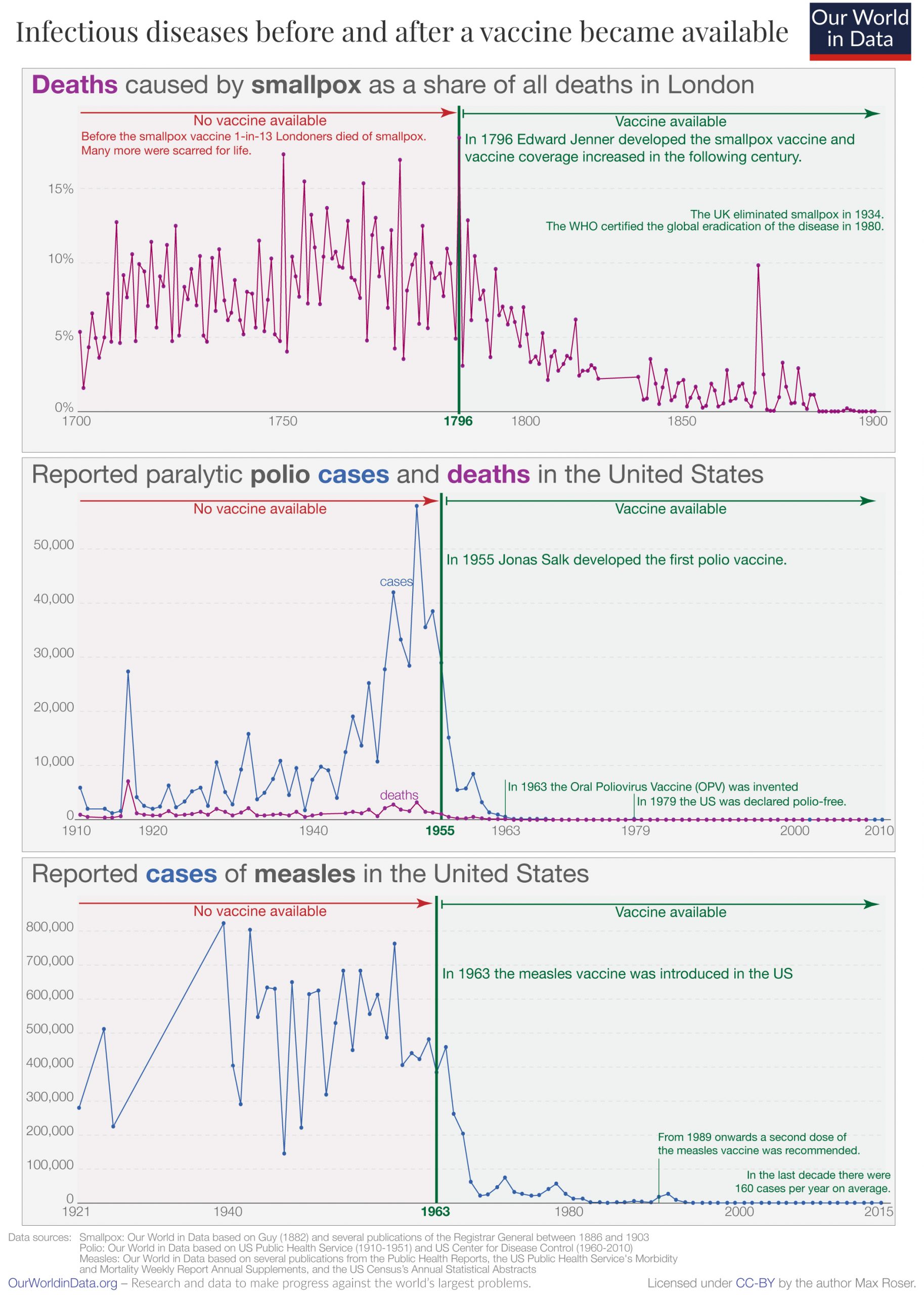
Start Up No.1449: Facebook’s creepy ad problem, why gigabit broadband?, Cydia sues Apple over app store, credit cards dump Pornhub, and more


Apple’s Fitness+ service will have something much more (or less) strenuous from Monday. CC-licensed photo by Underway In Ireland on Flickr.

You can sign up to receive each day’s Start Up post by email. You’ll need to click a confirmation link, so no spam.

A selection of 10 links for you. Fit! I’m @charlesarthur on Twitter. Observations and links welcome.

Facebook profits as users are ripped off by scam ads • Buzzfeed News

Craig Silverman and Ryan Mac:

»

Two years ago, a handful of Facebook employees began to raise internal alarms about a series of advertisements appearing in their news feeds. Purchased by a then up-and-coming lip-synching app called Musical.ly — now known as TikTok — the ads featured teenage girls provocatively gyrating to music in short video clips.

Curious as to why he and his colleagues were seeing ads ostensibly meant for young girls, one Facebook employee, who was also a father, dug into the company’s advertising system at the time to determine what was going on. What he discovered wasn’t an error, but Facebook’s advertising system working as intended. The social network’s algorithms had been optimizing the ads for the audience interacting with them the most: middle-aged men.

Initial complaints about the ads, which continued after Musical.ly was acquired and turned into TikTok, were rebuffed. TikTok, which reportedly spent $1 billion on advertising in 2018, was a valued business partner, one employee was told by higher-ups. Another person in a position to know told BuzzFeed News that a Facebook manager’s response to the concerns was to restrict access to data about the ads’ targeting.

The ads persisted for at least a year and a half — long after they had been publicly flagged in Facebook’s Workplace forum. Following publication of this story company spokesperson Joe Osborne disputed this timeline, saying “This isn’t accurate, we first learned about this is in 2019, not 2017.”

“It’s so weird that I only hear my 8-year old nieces talk about tiktok, but then see these ads with voluptuous young ladies targeted to men over 35 years old,” one Facebook data scientist wrote on the company’s internal message board last year. “Are we indeed making sure Facebook is not creating a predator’s paradise?”

«

This is quite a creepy story altogether.
unique link to this extract


Apple’s Jay Blahnik on how Fitness+ can make exercise easier • Fast Company

Mark Sullivan:

»

with Apple’s new Fitness+ subscription workout service, the [Apple] Watch’s exercise heritage extends off the wrist and onto the larger screens of iPads and TVs, and adds 21 human instructors whose workout sessions are available on demand. The Apple Watch is central to Fitness+; the service doesn’t work nearly so well without it.

“We feel like this is an iteration of the things we’ve been doing since the very beginning, which is to try to make it easier for people to be motivated and inspired to be more active and more fit, and so it fits right into that,” Apple’s head of fitness tech Jay Blahnik tells me. Blahnik is known for developing fitness devices and apps at Nike, and for his work on the Nike+ Running app in the mid-2000s. He now leads the development of Fitness+ at Apple.

The on-demand workouts, which you view on your iPhone, iPad, or home TV, feature a wide array of exercises from 10 disciplines, including strength training, HIIT (high-intensity interval training), cycling, yoga, dancing, rowing, and others. Some of the workouts, like rowing and strength training, require you to bring your own equipment. Others, like yoga, need only a mat.

The watch, which connects to your iPhone, iPad, or AppleTV via Bluetooth, transmits biometric data (like heart rate) and workout timers to the screen so you can see them while you’re moving. There’s also a “burn bar” that rates your performance against other people who have done the workout (you can turn this off if that doesn’t motivate you).

…If there’s a secret sauce to Fitness+, it’s the way Blahnik and company designed the service to appeal to a broad swath of users, from fitness buffs to people with no exercise habits.

Unlike other exercise apps which offer different workouts for different experience levels, Fitness+ tries to address every fitness level within its various workouts. To do so, each video includes three different trainers on screen at the same time, and at least one of them—Blahnik calls them “modifiers”—is doing a simpler or less-taxing version of the activity.

«

For people who are going slightly stir crazy and need some sort of inspiration, this might actually turn out to be just what they want. If you’ve got an Apple Watch, there’s a free month (counting down to being paid – £10/month or £80/yr). And it’s shareable. Apple had a sort-of go at this a few years ago with its yoga workouts on the Apple TV (and, hence, TV set). That seemed to go quiet, but maybe fed into this. Though it looks like it needs plenty of equipment to use it well.
unique link to this extract


Facebook hit with antitrust probe for tying Oculus use to Facebook accounts • TechCrunch

Natasha Lomas:

»

Germany’s Federal Cartel Office (aka, the Bundeskartellamt) said today that it’s instigated abuse proceedings against Facebook to examine the linkage between Oculus VR products and its eponymous social network.

In a statement, its president, Andreas Mundt, said:

»

In the future, the use of the new Oculus glasses requires the user to also have a Facebook account. Linking virtual reality products and the group’s social network in this way could constitute a prohibited abuse of dominance by Facebook. With its social network Facebook holds a dominant position in Germany and is also already an important player in the emerging but growing VR (virtual reality) market. We intend to examine whether and to what extent this tying arrangement will affect competition in both areas of activity.

«

The FCO has another “abuse of dominance proceeding” ongoing against Facebook — related to how it combines user data for ad profiling in a privacy-hostile way, which the authority contends is an abuse of Facebook’s market dominance.

«

Germany getting well ahead of the curve in trying to curb a potential abuse of dominance for a market that’s absolutely tiny. This is essentially what the FTC in the US, and those 48 states suing Facebook, wish they had thought of years ago. But that was a different time.
unique link to this extract


What’s the point of Gigabit broadband? • Terence Eden’s Blog

Terence had a problem:

»

My yearly contract with my ISP has just come to an end, so it was time to shop around for a better deal. They presented me with the following monthly options:

• Drop to 100Mbps for the same price I’m paying today (£44)
• Keep at 350Mbps for a tenner more (£55)
• Rise to 500Mbps for a fiver more (£49)
• Go to GIGABIT for a lot more (£60)

Mmmmmm GIGABIT…!

Obviously it’s classic anchor pricing. And obviously I fell for it. And obviously I negotiated a £50 bill credit for signing a new contract. But I only went with the half-gig option. Even then, I feel like I’ve bought a sports car and use it to pootle to the village shop and back.

Netflix reckons that 25Mbps is good enough for its 4K service. Even if my wife and I are both watching super-high-def-hdr-surround-sound-smellovision – what do we do with the other 450Mbps?

Once in a while we might download a 60GB video game (!!!). At 350Mbps, that’ll take 22 minutes. At 500Mpbs, 16 minutes. That’s six whole minutes saved (!!!). Going to 1Gbps means the game is downloaded in 8 minutes. But that’s assuming the game company’s CDN can sustain that speed. It probably can’t.

Now we’re in the land on constant video calling, the faster upload that we get is nice. Sadly it’s hard to get symmetric speeds in the UK – so we’re stuck with “only” 40Mbps up. But, again, even with both of us streaming 720p laptop-cam footage, it’s not really taxing the connection.

«

As he concedes, “This is a curmudgeonly post which is going to look ridiculously outdated in a few years.” (I’ve done a couple of those about broadband speeds.) I do think though that once you’re past 200Mbps, you struggle to find any benefit, because you’re throttled by the response of distant servers and the routers in the middle. It’s the upload speed that’s more useful now.
unique link to this extract


Cydia, the original app store, sues Apple on antitrust grounds • The Washington Post

Reed Albergotti:

»

A new lawsuit brought by one of Apple’s oldest foes seeks to force the iPhone maker to allow alternatives to the App Store, the latest in a growing number of cases that aim to curb the tech giant’s power.

The lawsuit was filed on Thursday by the maker of Cydia, a once-popular app store for the iPhone that launched in 2007, before Apple created its own version. The lawsuit alleges that Apple used anti-competitive means to nearly destroy Cydia, clearing the way for the App Store, which Cydia’s attorneys say has a monopoly over software distribution on iOS, Apple’s mobile operating system.

“Were it not for Apple’s anticompetitive acquisition and maintenance of an illegal monopoly over iOS app distribution, users today would actually be able to choose how and where to locate and obtain iOS apps, and developers would be able to use the iOS app distributor of their choice,” the lawsuit alleges. The lawsuit was filed in federal court in Northern California and Cydia is represented by Quinn Emanuel Urquhart and Sullivan.

Apple is facing an onslaught of lawsuits and scrutiny from lawmakers and regulators around the world for the way it allegedly uses its power to maintain its dominant position over its App Store. Epic Games, the maker of “Fortnite,” sued Apple in August for allegedly monopolistic behavior, and a coalition of software developers taking on Apple’s power has been growing in membership.

…In 2010, [Cydia founder Jay] Freeman told The Washington Post that Cydia had 4.5 million people searching for apps every week.

«

This could be interesting. Freeman’s argument is that it’s your phone, so you should be able to root it just like a computer – or at least jailbreak it. (I suspect Apple’s response would be that you’re free to try, but it doesn’t have to make it easy.)
unique link to this extract


Visa and Mastercard will stop processing payments to Pornhub • Vice

Samantha Cole:

»

On Thursday, both Visa and Mastercard announced that they would cut ties with Pornhub. Mastercard cited “unlawful content” on the site. 

The decision comes after Visa and Mastercard said on Monday that they would investigate allegations of child sexual abuse imagery on Pornhub, and their relationship to MindGeek, Pornhub’s parent company.   

“Our investigation over the past several days has confirmed violations of our standards prohibiting unlawful content on their site,” Mastercard said in a statement to Bloomberg on Thursday. “We instructed the financial institutions that connect the site to our network to terminate acceptance.”

Following that news, an official Visa account tweeted: “Given the allegations of illegal activity, Visa is suspending Pornhub’s acceptance privileges pending the completion of our ongoing investigation. We are instructing the financial institutions who serve MindGeek to suspend processing of payments through the Visa network.”

“These actions are exceptionally disappointing, as they come just two days after Pornhub instituted the most far-reaching safeguards in user-generated platform history,” Pornhub said in a statement. “Unverified users are now banned from uploading content – a policy no other platform has put in place, including Facebook, which reported 84 million instances of child sexual abuse material over the last three years.

«

Pornhub has a point here. It is covered by Section 230, same as Facebook. Has it really been abusing (um) its privilege for such a long time that Visa and Mastercard got sick of it? You’d think there might have been rumblings that they weren’t happy. Still, quite the week for Nick Kristof.
unique link to this extract


Part human, part machine: is Apple turning us all into cyborgs? • The Guardian

Alex Hern with a big read about the coming of smartglasses:

»

“Apple and Facebook are planning to launch consumer smartglasses over the next two years, and will expect to succeed where their predecessors could not,” [Rupantar] Guha [at the analysts GlobalData] adds.

If Apple pulls off that launch, then the cyberpunk – and cyborg – future will have arrived. It’s not hard to imagine the concerns, as cultural questions clash with technological: should kids take off their glasses in the classroom, just as we now require them to keep phones in their lockers? Will we need to carve out lens-free time in our evenings to enjoy old-fashioned, healthy activities such as watching TV or playing video games?

“It’s a fool’s errand to imagine every use of AR before we have the hardware in our hands,” writes the developer Adrian Hon, who was called on by Google to write games for their smartglasses a decade ago. “Yet there’s one use of AR glasses that few are talking about but will be world-changing: scraping data from everything we see.” This “worldscraping” would be a big tech dream – and a privacy activist’s nightmare. A pair of smartglasses turns people into walking CCTV cameras, and the data that a canny company could gather from that is mindboggling.

…“We won’t be able to opt out from wearing AR glasses in 2035 any more than we can opt out of owning smartphones today,” Hon writes. “Billions have no choice but to use them for basic tasks like education, banking, communication and accessing government services. In just a few years time, AR glasses do the same, but faster and better.”

«

I still wonder how it’s going to manage for those of us who, sigh, wear reading glasses. How will smartglasses cope with presenting text to eyes that can’t focus on something that close? Can it somehow seem to be projected so it hovers in the air some feet away? These aren’t arcane questions; lots of people have some form of presbyopia or myopia.
unique link to this extract


Amazon’s Halo Band wearable tracks your voice and body fat, but isn’t helpful • The Washington Post

Geoffrey Fowler and Heather Kelly:

»

Amazon has a new health-tracking bracelet with a microphone and an app that tells you everything that’s wrong with you.

You haven’t exercised or slept enough, reports Amazon’s $65 Halo Band. Your body has too much fat, the Halo’s app shows in a 3-D rendering of your near-naked body.

And even: Your tone of voice is “overbearing” or “irritated,” the Halo determines, after listening through its tiny microphone on your wrist.

And even: Your tone of voice is “overbearing” or “irritated,” the Halo determines, after listening through its tiny microphone on your wrist.

We hope our tone is clear here: We don’t need this kind of criticism from a computer. The Halo collects the most intimate information we’ve seen from a consumer health gadget — and makes the absolute least use of it. This wearable is much better at helping Amazon gather data than at helping you get healthy and happy.

Since August, the Halo has been listed by Amazon as an “early access” product that requires an “invitation” to buy. (It will cost $100 plus a $4 monthly fee once it’s sold widely.) We’re reviewing the Halo now because Amazon’s first digital wellness product offers a glimpse of how one of tech’s most influential companies thinks about the future of health. And what could be better to do when we’re lonely during a pandemic than have an always-listening device point out our flaws? (Amazon chief executive Jeff Bezos owns The Washington Post, but we review all technology with the same critical eye.)

«

TL;DR it’s sexist, inaccurate and very judgey.
unique link to this extract


Physicists solve 150-year-old mystery of equation governing sandcastle physics • Ars Technica

Jennifer Ouellette:

»

Building sandcastles at the beach is a time-honored tradition around the world, elevated into an art form in recent years thanks to hundreds of annual competitions. While the basic underlying physics is well-known, physicists have continued to gain new insights into this fascinating granular material over the last decade or so. The latest breakthrough comes from Nobel Laureate Andre Geim’s laboratory at the University of Manchester in England, where Geim and his colleagues have solved a mathematical puzzle—the “Kelvin equation”—dating back 150 years, according to a new paper just published in Nature.

All you really need to make a sandcastle is sand and water; the water acts as a kind of glue holding the grains of sand together via capillary forces. Studies have shown that the ideal ratio for building a structurally sound sandcastle is one pail of water for every eight pails of sand, although it’s still possible to build a decent structure with varying water content. But if you want to build the kind of elaborate, towering sandcastles that win competitions, you’d be wise to stick with that ideal ratio.

Back in 2008, physicists decided to delve a little deeper into why sand becomes sticky when it gets wet. Using X-ray microtomography, they took 3D images of wet glass beads of similar shape and size as grains of sand. When they added liquid to dry beads, they observed liquid “capillary bridges” forming between individual beads.

…For this latest work, Geim’s team painstakingly constructed molecular-scale capillaries by layering atom-thin crystals of mica and graphite on top of each other, with narrow strips of graphene in between each layer to serve as spacers. With this method, the team built capillaries of varying height, including capillaries that were just one atom high—just enough to fit one layer of water molecules, the smallest such structure possible.

Geim et al. found that the Kelvin equation is still an excellent qualitative description of capillary condensation at the molecular scale—contradicting expectations, since the properties of water are expected to become more discrete and layered at the 1nm scale.

«

Science never sleeps. Vaccines, sandcastles, they’ve got it covered.
unique link to this extract


Facebook outage disrupted Messenger and Instagram DMs • The Verge

Jacob Kastrenakes:

»

The outage appears to have started around 4:30AM ET and gotten worse (or, at least, more widely noticed) in the following hours. The website Downdetector, which monitors website outages, showed a spike in users reporting issues with these services that peaked around 8:30AM.

Facebook says the disruptions have since been resolved. “Earlier today, some people have experienced trouble sending or receiving messages on Messenger, Instagram or Workplace Chat. The issue has since been resolved and we apologize for any inconvenience,” a Facebook spokesperson wrote in an email to The Verge.

Service outages happen every now and then, but the breadth of this latest disruption is in many ways Facebook’s own doing. The company has been integrating Facebook Messenger and Instagram DMs.

«

You see, if Facebook were broken up then this cost – the inconvenience! – wouldn’t be imposed on users. At least that would be an argument that the FTC and 48 states can make now.
unique link to this extract


Errata, corrigenda and ai no corrida: none notified

Start Up No.1448: Facebook faces breakup threat, Pichai responds on AI firing, AirPods… in the shower!, the Lincoln Project’s failure, and more


Thinking of building a high-end gaming PC? You might have to wait a few months. CC-licensed photo by D%u0101vis Mos%u0101ns on Flickr.

You can sign up to receive each day’s Start Up post by email. You’ll need to click a confirmation link, so no spam.

A selection of 11 links for you. Unmerged. I’m @charlesarthur on Twitter. Observations and links welcome.

Facebook accused of breaking antitrust laws • The New York Times

Cecilia Kang and Mike Isaac:

»

The Federal Trade Commission and more than 40 states accused Facebook on Wednesday of buying up its rivals to illegally squash competition, and they called for the deals to be unwound, escalating regulators’ battle against the biggest tech companies in a way that could remake the social media industry.

Federal and state regulators of both parties, who have investigated the company for over 18 months, said in separate lawsuits that Facebook’s purchases, especially Instagram for $1bn in 2012 and WhatsApp for $19bn two years later, eliminated competition that could have one day challenged the company’s dominance.

Since those deals, Instagram and WhatsApp have skyrocketed in popularity, giving Facebook control over three of the world’s most popular social media and messaging apps. The applications have helped catapult Facebook from a company started in a college dorm room 16 years ago to an internet powerhouse valued at more than $800bn.

The prosecutors said Facebook should break off Instagram and WhatsApp, and that new restrictions should apply to the company on future deals, some of the most severe penalties regulators can demand.

…“The most important fact in this case, which the commission does not mention in its 53-page complaint, is that it cleared these acquisitions years ago,” Jennifer Newstead, Facebook’s general counsel, said in a statement. “The government now wants a do-over, sending a chilling warning to American business that no sale is ever final.”

«

It’s absolutely the weakest part of the suit that the FTC previously cleared the acquisition. Then again, AT&T was forced to disgorge the “Baby Bells” that it already owned in the 1982 antitrust decision. So there is a sort of precedent. Zuckerberg’s worried that this is an existential threat. And he might be right. Although, also, AT&T eventually survived the breakup… and gradually swallowed up what had been the Baby Bells.
unique link to this extract


Google CEO Sundar Pichai pledges to investigate exit of top AI ethicist Timnit Gebru • Axios

Ina Fried:

»

Google CEO Sundar Pichai apologized Wednesday for the company’s handling of the departure of AI ethics researcher Timnit Gebru and said he would investigate the events and work to restore trust, according to an internal memo sent companywide and obtained by Axios.

Gebru’s exit has provoked anger and consternation within Google as well as in academic circles, with thousands of people signing an open letter urging Google to reexamine its practices.

In the note, Pichai acknowledged the depth of the damage done by the company’s actions and said the company would look at all aspects of the situation, but stopped short of saying the company made a mistake in removing Gebru.

“I’ve heard the reaction to Dr. Gebru’s departure loud and clear: it seeded doubts and led some in our community to question their place at Google,” Pichai said in the memo. ” I want to say how sorry I am for that, and I accept the responsibility of working to restore your trust.”

«

Pichai clearly sees this as a huge PR problem both internally and externally; it was inevitable that the memo (which is reproduced in full in the story) would leak. However, he’s not making any commitment to re-hiring Gebru, or actually change anything at all. It’s all couched as “must continue to make progress” and “challenging questions”. There isn’t a single actionable statement in the whole thing, except about assessing the circumstances of Gebru’s departure.
unique link to this extract


Brian Roemmele’s answer in September 2016 to ‘How well will Apple AirPods sell?’ • Quora

Roemmele is a sort of trendspotter and futurist:

»

I had 9 researchers at 9 lines formed at 7 a.m. PDT. The research concluded at 2 p.m. PDT. This is part of an ongoing study I am conducting for a group of private parties centered around my Voice First hypothesis [1].

The early results are:

• On average one out of three iPhone 7 purchasers would purchase AirPods today if available (700 person sample)• 80% of iPhone 7 purchasers at the Apple Store at The Grove near Beverly Hills would purchase AirPods if available today (131 person sample)

AirPods were not available for purchase or pre-order on the release date of the iPhone 7 and may become available in October. Based on this early sampling I think the trend line will point to a few conclusions:

• AirPods will likely sell out for the holiday season of 2016
• AirPods will likely become a most coveted consumer item
• AirPods will become available in a wide range of colors made from a wide range of materials including Jet Black, Matte Black, Gold, Rose Gold, Silver, Translucent, etc.

«

He was right about the first two, and there’s no reason the third shouldn’t come true in time. (Copycats already do that, I think.)

unique link to this extract


AirPods in the shower: accident or innovation? • WSJ

Kenny Wassus:

»

When the home becomes the gym, office and classroom, a kind of cognitive dissonance can occur, resulting in forgotten-in-the-ears AirPods, said Martin Wiener, an assistant professor of cognitive and behavioral neuroscience at George Mason University. “The transitions between those places,” he said, and the cues associated with them, such as taking off headphones when leaving the gym or office, “are effectively gone.”

Beata Stopka, 24, made the mistake one evening in March. She had been attending graduate school from home in Oak Lawn, Ill., and regularly listening to lectures and true-crime podcasts on her AirPods.

“When I started washing my hair, I felt it in my ear and was, like, ‘Oh my God,’ ” she recalls. She quickly pulled the forgotten AirPod out of her ear and flung it over the shower curtain, narrowly missing the toilet.

Now, when she listens to lectures, the audio in the left earbud occasionally cuts out.

Apple has two truly wireless earbud offerings. The entry-level model isn’t water resistant. The AirPods Pro are water and sweat resistant, meaning they should survive heavy perspiration or a splash, though Apple tells users not to place them “under running water, such as a shower or faucet.”

Jasmine Ali didn’t want that to stop her shower jam sessions. The 23-year-old student at Florida State University has two roommates whom she didn’t want to disturb by using a waterproof Bluetooth speaker.

“I didn’t want to play music loud,” she said. “Plus when I go home, my mom hates when I play music.”

Her solution: Cover her AirPods with a $1 shower cap from Walmart.

«

Apple really missed a trick there. The Apple Shower Cap. A case for your head. Imagine what it could charge for that.
unique link to this extract


The hottest campaign ads on Twitter didn’t really work: study • Daily Beast

Sam Stein:

»

At various junctures during the 2020 campaign an attack ad would pop online that had observers on Twitter buzzing about how devastating for Donald Trump it would be. Except, more often than not, the ads weren’t effective, at least not for the nominal point of the election: persuading on-the-fence voters to back Joe Biden.

That’s the conclusion the Democratic Party’s top super PAC reached after doing analytical research into a handful of spots that went viral on Twitter.

The PAC, Priorities USA, spent a good chunk of the cycle testing the effectiveness of ads, some 500 in all. And, along the way, they decided to conduct an experiment that could have potentially saved them tons of money. They took five ads produced by a fellow occupant in the Super PAC domain—the Lincoln Project—and attempted to measure their persuasiveness among persuadable swing state voters; i.e. the ability of an ad to move Trump voters towards Joe Biden. A control group saw no ad at all. Five different treatment groups, each made up of 683 respondents, saw one of the five ads. Afterwards they were asked the same post-treatment questions measuring the likelihood that they would vote and who they would vote for.

The idea wasn’t to be petty or adversarial towards the Lincoln Project, which drew both fans and detractors for the scorched-earth spots it ran imploring fellow Republicans to abandon Trump. It was, instead, to see if Twitter virality could be used as a substitute for actual ad testing, which took funds and time. If it turned out that what the Lincoln Project was doing was proving persuasive, the thinking went, then Priorities USA could use Twitter as a quasi-barometer for seeing how strong their own ads were.

«

This will no doubt taste like ashes to the Lincoln Project people (a set of ex-Republicans furious with Trump), but I didn’t think at the time that the ads would have much impact beyond Twitter – and perhaps with Trump, who was the one they were really targeted at. A useful reminder that Twitter isn’t the real world, which Biden’s team was very careful to bear in mind.
unique link to this extract


YouTube will now remove videos disputing Joe Biden’s election victory • The Verge

Makena Kelly:

»

On Wednesday, YouTube announced that it will begin removing any content alleging widespread voter fraud influenced the outcome of the 2020 US presidential election.

In the immediate aftermath of the November 3rd election, YouTube came under fire for allowing channels to publish videos making false claims about election results. In one instance, One America News Network, a verified YouTube channel, published a video declaring that “Trump won” the election. At the time, YouTube defended its decision to let the video stand, saying in a statement, “Like other companies, we’re allowing these videos because discussion of election results & the process of counting votes is allowed on YouTube.”

The company went on to say that content from “authoritative news organizations” were “the most popular videos about the election.”

In its Wednesday blog, YouTube said that its decision to begin removing misleading election videos follows the US’s safe harbor deadline and that “enough states have certified their election results to determine a President-elect.” Starting Wednesday, YouTube will begin removing any new content that misleads viewers about the outcome of the 2020 election.

«

Which raises the question: if OANN publishes a video disputing it (or reporting people disputing it, or with a news segment disputing it) will that be removed? Will that happen if Fox runs such a segment? Does “news” get a different treatment? When does a news organisation slip from (or into) being “authoritative”? Meanwhile, Google is going to allow political adverts in the US again, because all 50 states have certified their votes. (Which is why YouTube is doing this.)
unique link to this extract


This is a bad time to build a high-end gaming PC • ExtremeTech

Joel Hruska:

»

the current GPU market makes building a gaming system much above lower-midrange to midrange a non-starter. Radeon 6000 GPUs and RTX 3000 GPUs are both almost impossible to find, and the older, slower, and less feature-rich cards that you can buy are almost all selling for more today than they were six months ago. Not every GPU has been kicked into the stratosphere, but between the cards you can’t buy and the cards you shouldn’t buy, there’s a limited number of deals currently on the market. Your best bet is to set up price alerts on specific SKUs you are watching with the vendor in question.

There is some limited good news, though: DRAM and SSDs are both still reasonably priced. DRAM and SSD prices are both expected to decline 10-15% through Q4 2020 compared with the previous quarter, and there are good deals to be had on both. DDR4-3600 is available for a fairly small premium over DDR4-3000, and 2TB M.2 NAND PCIe 3.0 SSDs are now under $200 for a lot of models. 1TB PCIe 4.0 SSDs are broadly around this price point as well — personally, I’d rather have PCIe 3.0 and 2TB than PCIe 4.0 and 1TB, but both are options right now. Power supply prices look reasonable, too, and motherboard availability looks solid.

If you don’t need to buy a GPU right now and you’re willing to or prefer to use Intel, there’s a more reasonable case to be made for building a system. But if you need a high-end GPU and/or want a high-end Ryzen chip to go with it, you may be better off shopping prebuilt systems or waiting a few more months.

«

You’d be pushing it trying to do that so close to Christmas in a year when there has been such disruption to supply chains. GPUs are in short supply – and so worth it that $330,000 worth were stolen from a factory.
unique link to this extract


Apple and Google to stop X-Mode from collecting location data from users’ phones • WSJ

Byron Tau:

»

Apple and Alphabet’s Google will ban the data broker X-Mode Social from collecting any location information drawn from mobile devices running their operating systems in the wake of revelations about the company’s national-security work.

The two largest mobile-phone platforms told developers this week that they must remove X-Mode’s tracking software from any app present in their app stores or risk losing access to any phones running Apple’s or Google’s mobile operating systems.

Both Apple and Google disclosed their decision to ban X-Mode to investigators working for Sen. Ron Wyden (D., Ore.), who has been conducting an investigation into the sale of location data to government entities.

In a statement provided by a spokesman, Google said developers had seven days to remove X-Mode or face a ban from Google’s Play store, adding that some developers could ask for an extension of up to 30 days. Apple didn’t immediately respond to a request for comment but told developers they had two weeks to remove the company’s trackers, according to one notice sent to a developer and reviewed by The Wall Street Journal.

«

That’s going to make life interesting for X-Mode. Best guess is it will try to sneak its framework into apps under another name, or perhaps inveigle its framework into an open-source framework that everyone uses.
unique link to this extract


The world smartphone market in Q3 • Counterpoint Research

»

Some quick observations from the smartphone market:
• Global smartphone market shipments declined 4% YoY but grew 32% QoQ to reach 366m units in Q3 2020.
• India smartphone market surpassed the pre-Covid levels growing at 9% YoY and 188% QoQ to reach 53m units, followed by MEA (2% YoY).
• Samsung regained the top spot, shipping 80.4m units with 48% QoQ and 3% YoY growth with highest-ever shipments in the last three years.
• Realme shipments grew 132% QoQ, becoming the world’s fastest brand to hit 50m shipments since inception.
• Xiaomi grew 75% QoQ, contributing 13% in the total smartphone shipments. Notably, this was the first time when Xiaomi surpassed Apple to capture the third spot in the global smartphone market.
• Apple iPhone shipments declined 7% YoY during Q3 2020 as the company delayed its annual iPhone launch from Q3 to Q4 in 2020

«

Apple’s fall in sales was because it didn’t release its new phones until October, ie Q4. Xiaomi’s rise is quite a thing, though, and its rise surely due to India growing so quickly.
unique link to this extract


The next phase of social? Listen closely • Andreessen Horowitz

Andrew Chen:

»

there’s a lot more to audio than podcasts and smart assistants. In fact, we anticipate that the audio innovation of the next decade will rival what we’ve seen in video apps over the past few years.

The draw of audio apps over other traditional formats is obvious to any podcast (and music) devotee: the ease. That lean-back, hands-free experience means that audio apps generally don’t compete with a vast competitive library of other startups. Instead, they compete with washing dishes, working out, driving. This dynamic is akin to the competitive landscape for mobile apps 10 years ago. Early entrants were competing with waiting in line, sitting in bed, and staring at the ceiling while riding a bus—and achieved hypergrowth, as a result. Easy competition! Today, traditional apps are just one notification or swipe away from losing users to Instagram, iMessage, or thousands of other engaging apps. In contrast, audio startups face a less crowded and less competitive landscape.

Unlike much of social media, which just shows the highlights—the amazing travel adventures, the huge mansions and cars, fitness influencers, or people with amazing dance skills—audio hits different. Listening to someone’s voice is personal, and hearing unedited audio is the opposite of seeing the highlights. It’s about ideas, not the visuals, so it emphasizes a different kind of content that can often feel deeper and more intellectually stimulating. When you listen to Elon Musk get interviewed by Joe Rogan for two hours, you may begin to develop a deeper understanding of how he thinks—beyond the headlines. When you listen to a comedian like Tina Fey read her autobiographical audiobook over multiple hours, you start to feel an emotional bond with the person. When you listen to a live conversation on Clubhouse and hear people talk over each other, all the “ums,” and sometimes awkward silences, it reminds you—in a shelter-in-place era—what a lively dinner conversation is supposed to feel like.

«

I faintly get the idea of a “Twitter for voice”, which is what Clubhouse seems to be, but not why you’d want that rather than something (semi-)professional.
unique link to this extract


Apple shifts leadership of self-driving car unit to AI chief • Bloomberg

Mark Gurman:

»

Apple Inc. has moved its self-driving car unit under the leadership of top artificial intelligence executive John Giannandrea, who will oversee the company’s continued work on an autonomous system that could eventually be used in its own car.

The project, known as Titan, is run day-to-day by Doug Field. His team of hundreds of engineers have moved to Giannandrea’s artificial intelligence and machine-learning group, according to people familiar with the change. An Apple spokesman declined to comment.

Previously, Field reported to Bob Mansfield, Apple’s former senior vice president of hardware engineering. Mansfield has now fully retired from Apple, leading to Giannandrea taking over.

Giannandrea joined Apple in 2018 as its vice president of AI Strategy and Machine Learning before being promoted to Apple’s executive team as a senior vice president later that year. He ran Google’s machine-learning and search teams before that. At Apple, in addition to the car project, he is in charge of Siri and machine-learning technologies across Apple’s products.

«

I wonder if Giannandrea had this in mind all the time from when he joined Apple. His skills and knowledge are such a fit with the problem that self-driving vehicles pose. Siri, maybe, is harder.
unique link to this extract


Errata, corrigenda and ai no corrida: none notified

Start Up No.1447: how Biden won online, Pornhub stiffens its moderation, Samsung won’t ship chargers, TikTok survives in US, and morei


Big radiators by easily opened windows in American blocks of flats? The result of the 1918 pandemic. CC-licensed photo by Smithsonian American Art Museum on Flickr.

You can sign up to receive each day’s Start Up post by email. You’ll need to click a confirmation link, so no spam.

A selection of 12 links for you. Untested in court. I’m @charlesarthur on Twitter. Observations and links welcome.

How Joe Biden’s digital team tamed the MAGA internet • The New York Times

Kevin Roose:

»

after I wrote about Mr. Biden’s comparatively tiny internet presence last spring, I heard from legions of nervous Democratic strategists who worried that using “heal the nation” messaging against the MAGA meme army was like bringing a pinwheel to a prizefight.

But in the end, the bed-wetters were wrong. Mr. Biden won, and despite having many fewer followers and much less engagement on social media than Mr. Trump, his campaign raised record amounts of money and ultimately neutralized Mr. Trump’s vaunted “Death Star” — the name his erstwhile campaign manager, Brad Parscale, gave to the campaign’s digital operation.

Figuring out whether any particular online strategy decisively moved the needle for Mr. Biden is probably impossible. Offline factors, such as Mr. Trump’s mishandling of the pandemic and the economic devastation it has caused, undoubtedly played a major role. But since successful campaigns breed imitators, it’s worth looking under the hood of the Biden digital strategy to see what future campaigns might learn from it.
After the election, I spoke with Mr. Flaherty, along with more than a dozen other people who worked on the Biden digital team. They told me that while the internet alone didn’t get Mr. Biden elected, a few key decisions helped his chances.

Influencers, low-level grassroots efforts, ignoring Twitter (but focusing on Facebook), not trying to stamp out all the misinformation. A fascinating counter-example to 2016.
unique link to this extract


Our commitment to trust and safety • Pornhub

»

We have worked to create comprehensive measures that help protect our community from illegal content. In recent months we deployed an additional layer of moderation. The newly established “Red Team” will be dedicated solely to self-auditing the platform for potentially illegal material.

The Red Team provides an extra layer of protection on top of the existing protocol, proactively sweeping content already uploaded for potential violations and identifying any breakdowns in the moderation process that could allow a piece of content that violates the Terms of Service. Additionally, while the list of banned keywords on Pornhub is already extensive, we will continue to identify additional keywords for removal on an ongoing basis.

We will also regularly monitor search terms within the platform for increases in phrasings that attempt to bypass the safeguards in place. Pornhub’s current content moderation includes an extensive team of human moderators dedicated to manually reviewing every single upload, a thorough system for flagging, reviewing and removing illegal material, robust parental controls, and utilization of a variety of automated detection technologies.

«

Looks like Nicholas Kristof’s article has had some effect.
unique link to this extract


Revealed: Mark Zuckerberg threatened to pull UK investment in secret meeting with Matt Hancock • The Bureau of Investigative Journalism

Matthew Chapman:

»

Mark Zuckerberg threatened to pull Facebook’s investment from the UK in a private meeting with Matt Hancock, the Bureau of Investigative Journalism can reveal.

The minutes, from May 2018, show that an obsequious Hancock was eager to please, offering “a new beginning” for the government’s relationship with social media platforms. He offered to change the government’s approach from “threatening regulation to encouraging collaborative working to ensure legislation is proportionate and innovation-friendly”.

Hancock sought “increased dialogue” with Zuckerberg, “so he can bring forward the message that he has support from Facebook at the highest level”.

The meeting took place at the VivaTech conference in Paris. It appears to have been arranged “after several days of wrangling” by Matthew Gould, the former culture department civil servant that Hancock later made chief executive of NHS X.

Zuckerberg attended the meeting only days after Hancock – then the secretary of state for digital, culture, media and sport (DCMS) – had publicly criticised him for dodging a meeting with MPs.

…These details can finally be made public after a two-year battle that culminated in the Information Commissioner’s Office ordering the department to release the minutes. The newly released notes represent the first public airing of Mark Zuckerberg’s views regarding the UK’s proposed legislation on internet safety and regulation.

«

Unsurprisingly, the Tory MP Damian Collins (who had been leading the committee trying to get Zuckerberg to testify) is fuming about this.
unique link to this extract


The curious history of steam heat and pandemics • Bloomberg

Patrick Sisson:

»

The battle against pathogens reshaped the inner working of buildings, too. Take that familiar annoyance for New Yorkers: the clanky radiator that overheats apartments even on the coldest days of the year. It turns out that the prodigious output of steam-heated buildings is the direct result of theories of infection control that were enlisted in the battle against the great global pandemic of 1918 and 1919. 

The Spanish Influenza, which caused just over 20,000 deaths in New York City alone, “changed heating once and for all.” That’s according to Dan Holohan, a retired writer, consultant, and researcher with extensive knowledge of heating systems and steam heating. (Among his many tomes on the topic: The Lost Art of Steam Heating, from 1992.) Most radiator systems appeared in major American cities like New York City in the first third of the 20th century. This golden age of steam heat didn’t merely coincide with that pandemic: beliefs about how to fight airborne illness influenced the design of heating systems, and created a persistent pain point for those who’ve cohabitated with a cranky old radiator. 

Health officials thought (correctly) that fresh air would ward off airborne diseases; then as now, cities rushed to move activities outdoors, from schools to courtrooms. When winter came, the need for fresh air didn’t abate. According to Holohan’s research, the Board of Health in New York City ordered that windows should remain open to provide ventilation, even in cold weather. In response, engineers began devising heating systems with this extreme use case in mind. Steam heating and radiators were designed to heat buildings on the coldest day of the year with all the windows open. Anybody who’s thrown their windows open in January, when their apartment is stifling, is, in an odd way, replicating what engineers hoped would happen a century ago. 

«

Ironic that the miasma (bad air/smells) theory still had a hold then – though it was only 70 years since the classic “disease map” of cholera in London tracing it not to bad air but infected water. Viruses weren’t widely known about in 1918; the first (in plants) had only been identified in 1898. In fact Alexander Fleming was trying to discover the bacterium that was believed to be behind the Spanish flu when he accidentally discovered penicillin.
unique link to this extract


He pretended to be Trump’s family. Then Trump fell for it • The New York Times

Jack Nicas:

»

Last month, between tweets disputing his election loss, President Trump posted an article from a conservative website that said his sister Elizabeth Trump Grau had just joined Twitter to publicly back her brother’s fight to overturn the vote.

“Thank you Elizabeth,” Mr. Trump wrote on Twitter. “LOVE!”

But the Twitter account that prompted the article was not his sister’s. It was a fake profile run by Josh Hall, a 21-year-old food-delivery driver in Mechanicsburg, Pa.

“I was like, ‘Oh, my goodness. He actually thinks it’s his sister,’” Mr. Hall, a fervent Trump supporter, said in an interview last week.

It was a surreal coda to nearly a year of deception for Mr. Hall. Since February, he had posed as political figures and their families on Twitter, including five of the president’s relatives. He had pretended to be Robert Trump, the president’s brother; Barron Trump, the president’s 14-year-old son; and Dr. Deborah L. Birx, the White House coronavirus response coordinator. The accounts collectively amassed more than 160,000 followers.

Using their identities, he gained attention by mixing off-color political commentary with wild conspiracy theories, including one that the government wanted to implant Americans with microchips, and another that John F. Kennedy Jr., who died in a plane crash in 1999, was alive and about to replace Mike Pence as vice president.

“There was no nefarious intention behind it,” Mr. Hall said. “I was just trying to rally up MAGA supporters and have fun.”

«

Nicas has an accompanying article about why it’s so hard for social networks to spot handmade (as opposed to bot-generated) fakes. When it comes to Hall, Nicas points out that he ran a crowdfunding scam which pulled in thousands of dollars. Hall says he didn’t collect. GoFundMe says he did.
unique link to this extract


US cybersecurity firm FireEye discloses breach, theft of internal hacking tools • Reuters

Christopher Bing:

»

FireEye, one of the largest cybersecurity companies in the United States, said on Tuesday that is has been hacked, possibly by a government, leading to the theft of an arsenal of internal hacking tools typically reserved to privately test the cyber defenses of their own clients.

The hack of FireEye, a company with an array of business contracts across the national security space both in the United States and its allies, is among the most significant breaches in recent memory.

The FireEye breach was disclosed in a blog post authored by CEO Kevin Mandia. The post said “red team tools” were stolen as part of a highly sophisticated, likely “nation-state” hacking operation. It is not clear exactly when the hack initially took place.

Beyond the tool theft, the hackers also appeared to be interested in a subset of FireEye customers: government agencies.

“We hope that by sharing the details of our investigation, the entire community will be better equipped to fight and defeat cyber attacks,” Mandia wrote.

The company itself has partnered in recent weeks with different software makers to share defensive measures.

«

Obvious suspects: China, Russia, Iran, North Korea.
unique link to this extract


Economics is going through an intellectual revolution on public debt • The Washington Post

Charles Lane:

»

Right now, economics is going through a mind-change on public-sector debt that borders on intellectual revolution.

Government debt accumulation was once considered inherently risky: By competing with private investors for investible funds, it would trigger ruinous interest-rate spikes. The new consensus is that debt is, if not quite the proverbial free lunch, then such a good deal that the United States and its fellow industrialized democracies can’t afford not to borrow. And this applies not only to the Covid-related crisis but also to the more normal times ahead.

What happened? Mainly, the gap between theory and fact became too large to ignore. The Congressional Budget Office’s 10-year forecast of US government debt as a share of total output grew from a mere 6% in 2000 to 109% in 2020. Yet in that same decade, real (inflation-adjusted) interest rates on benchmark US government bonds fell from 4.3% to negative 0.1%, as two top former Obama administration economists, Jason Furman and Lawrence H. Summers, point out in a new paper that’s attracting attention in pre-Biden Washington.

In fiscal 2020, the U.S. government borrowed a staggering 15% of gross domestic product, yet the 10-year government bond still pays less than 1%.

…the prime suspect is a mismatch between abundant private savings around the world and scarce profitable opportunities for private investment — the latter of which, in turn, partly reflects slow labor supply growth in industrialized countries.

Under such circumstances, holders of wealth see no alternative to parking their money with governments. There’s no private investment to “crowd out”; to the contrary, financial markets are actually signaling that the highest and best use of the funds may be a public one.

«

This is a quiet but epochal moment. If governments can borrow with abandon, it upends all the thinking that used to be in place about debt, repayment, borrowing and especially budgets.
unique link to this extract


Second judge says Trump can’t ban TikTok • The Verge

Jay Peters:

»

A federal judge has granted a preliminary injunction that should keep the US Commerce Department from banning transactions with TikTok.

The Trump administration issued an executive order on August 6th that would have blocked transactions between US companies and TikTok and WeChat’s Chinese parent companies, ByteDance and Tencent. Trump declared TikTok and WeChat a “national emergency,” citing privacy and security concerns. That order invoked the International Emergency Economic Powers Act (IEEPA), a law that allows Trump to ban transactions between the US and foreign entities.

However, in his opinion accompanying today’s decision, US district judge Carl Nichols said that “the government likely exceeded IEEPA’s express limitations.” He granted TikTok’s motion for a preliminary injunction against each item the Commerce Department was attempting to prohibit.

Nichols also previously granted a preliminary injunction on September 27th that allowed people to continue downloading the app in the US. At that time, he didn’t rule on the Commerce Department’s other restrictions.

«

The Trump administration is just going to run the clock out on this one – they’ve all completely lost interest in it. Trump’s distracted and bored, the DOJ knows the case won’t succeed, all the people in the administration are looking for new jobs. So the judge actually did them a favour here.
unique link to this extract


Samsung’s no-charger-in-box future may be here sooner than expected • SamMobile

“Asif S”:

»

Remember when Apple said that it wouldn’t include a charger in the box with its new iPhones and Samsung mocked the company’s decision? Well, it looks like the South Korean company might take a U-turn and follow Apple in that regard. It is being reported that the Galaxy S21 series might not come with a charger and earphones in the box, at least in some regions.

The Galaxy S21, Galaxy S21+, and the Galaxy S21 Ultra have recently been certified by Anatel, Brazil’s regulatory agency. The certification documents specifically say that the upcoming phones won’t be marketed with a charger or earphones. You can see the relevant text highlighted in Portuguese in the image below. Apple seems to have started one more trend that other companies, including Samsung, might follow soon.

We first heard about the possibility of Samsung removing the charger one month ago, but it was just a rumor back then. Now, it appears that the company has taken the final decision. Even with the Galaxy Note 20 and Galaxy S20 series, Samsung didn’t bundle earphones in the US. However, people who wanted them could request Samsung for free AKG earphones.

«

Given all the much bigger things going on, it feels a bit wearying to point to the hypocrisy involved in criticising something you then go and do yourself, but if we let this go then everything starts to slide.
unique link to this extract


Announcing the CSAM scanning tool, free for all Cloudflare customers • Cloudflare

Justin Paine and John Graham-Cumming:

»

The hard cases are when a customer of ours runs a service that allows user generated content (such as a discussion forum) and a user uploads CSAM [child sexual abuse material – often wrongly called “kiddie porn”], or if they’re hacked, or if they have a malicious employee that is storing CSAM on their servers. We’ve seen many instances of these cases where services intending to do the right thing are caught completely off guard by CSAM that ended up on their sites. Despite the absence of intent or malice in these cases, there’s still a need to identify and remove that content quickly.

Today we’re proud to take a step to help deal with those hard cases. Beginning today, every Cloudflare customer can login to their dashboard and enable access to the CSAM Scanning Tool. As the CSAM Scanning Tool moves through development to production, the tool will check all Internet properties that have enabled CSAM Scanning for this illegal content. Cloudflare will automatically send a notice to you when it flags CSAM material, block that content from being accessed (with a 451 “blocked for legal reasons” status code), and take steps to support proper reporting of that content in compliance with legal obligations.

«

This is good; this is what Parler isn’t doing, and is likely to get walloped for as a result. (Tumblr has had problems with CSAM more recently.)

Calling it “child sexual abuse material” might seem like being pernickety, but it’s actually important to make the distinction: adult pornography is (almost always) consensual, but children cannot give consent, which automatically makes this abuse.
unique link to this extract


Christchurch shooter was radicalized on YouTube, New Zealand report says • The Verge

Elizabeth Lopatto:

»

The Australian white supremacist who killed 51 people at two mosques in Christchurch, New Zealand was radicalized by YouTube, according to a 792-page report on the March 2019 shooting.

“What particularly stood out was the statement that the terrorist made that he was ‘not a frequent commentator on extreme right-wing sites and YouTube was a significant source of information and inspiration’,” said Jacinda Ardern, New Zealand’s Prime Minister, according to The Guardian. “This is a point I plan to make directly to the leadership of YouTube.”

This is not the first time YouTube has been linked to radicalization and white supremacist content. There has been an ongoing argument about whether YouTube’s algorithm pushes people toward more extreme views over time. Although this is not a universal conclusion, some researchers say that the combination of a business model that rewards edgy content and a personalized algorithm meant to keep viewers hooked is a recipe for radicalization.

YouTube has made “significant progress” in curtailing hate speech since the 2019 Christchurch attack, says Alex Joseph, a YouTube spokesperson. YouTube strengthened its hate speech policy, terminated the channels mentioned in the report, and has altered its recommendations system to limit the spread of “borderline content.”

«

The report is remarkable in its calm tone; the killer is simply called “the individual” (always lower case) in order not to give any oxygen to him. It’s evident that he became radicalised through his use of the web, though much of the detail is lost: he took the hard drive out of his computer and it has not been found.
unique link to this extract


LG shakes up loss-making phone business, to outsource lower-end models • Reuters

Joyce Lee:

»

LG’s mobile communications business, which has reported an operating loss for 22 consecutive quarters, has created a new management title for original design manufacture (ODM), a spokeswoman for the South Korean company said.

This refers to the outsourcing of design and manufacture of smartphones, with LG putting its label on the product.

It has also abolished some research and production positions and reshuffled others, the spokeswoman said, as part of an effort to focus its in-house R&D and production on premium smartphones, with low and mid-end ones to be produced by ODM.

Although ranked No. 3 in global smartphone market in the first quarter of 2013 by Strategy Analytics, LG is not even among the top seven in the third quarter of this year after losing ground to Chinese smartphone makers like Huawei, Xiaomi, Oppo and Vivo, research firm Counterpoint says.

“It knows it is competing with Chinese competitors, not Apple or Samsung, and it is trying to add to its lower-end models’ value for the price, by using original design manufacturers that Chinese firms use,” Tom Kang, an analyst at Counterpoint, said.

“But even if LG sources its products, without marketing ability, it cannot win against Chinese firms who are good at it,” Kang added.

«

People look at that 22 quarters thing, but it’s even worse than it seems. I checked back on the records, and since Q1 2010, LG’s phone division has been profitable in just nine quarters. Nine out of 40. It’s been a money pit for ten years, and the management is only just now getting round to doing something about it. (Thanks G for the link.)
unique link to this extract


Errata, corrigenda and ai no corrida: none notified