
Start Up No.1476: might Dunning-Kruger be fake?, SolarWinds hack hits US court system, what LinkedIn is really good for, and more


Tesla has copied an element of the KITT Knight Rider car – unfortunately, the least ergonomic one. CC-licensed photo by Dan Thornton on Flickr.

You can sign up to receive each day’s Start Up post by email. You’ll need to click a confirmation link, so no spam.

A selection of 10 links for you. Mostly harmless. I’m @charlesarthur on Twitter. Observations and links welcome.

The Dunning-Kruger effect is probably not real • Office for Science and Society, McGill University

Jonathan Jarry:

»

I want the Dunning-Kruger effect to be real. First described in a seminal 1999 paper by David Dunning and Justin Kruger, this effect has been the darling of journalists who want to explain why dumb people don’t know they’re dumb. There’s even video of a fantastic pastiche of Turandot’s famous aria, Nessun dorma, explaining the Dunning-Kruger effect. “They don’t know,” the opera singer belts out at the climax, “that they don’t know.”

I was planning on writing a very short article about the Dunning-Kruger effect and it felt like shooting fish in a barrel. Here’s the effect, how it was discovered, what it means. End of story.

But as I double-checked the academic literature, doubt started to creep in. While trying to understand the criticism that had been leveled at the original study, I fell down a rabbit hole, spoke to a few statistics-minded people, corresponded with Dr. Dunning himself, and tried to understand if our brain really was biased to overstate our competence in activities at which we suck… or if the celebrated effect was just a mirage brought about by the peculiar way in which we can play with numbers.

…In 2016 and 2017, two papers were published in a mathematics journal called Numeracy. In them, the authors argued that the Dunning-Kruger effect was a mirage. And I tend to agree.

The two papers, by Dr. Ed Nuhfer and colleagues, argued that the Dunning-Kruger effect could be replicated by using random data.

«

😱😱😱

unique link to this extract


Feds want to talk to Tesla about the Model S ‘yoke’ steering wheel • Roadshow

Sean Szymkowski:

»

The National Highway Traffic Safety Administration told Roadshow on Friday it has reached out to Tesla following the news of its planned yoke-style steering wheel for the refreshed Model S electric sedan. The government agency did not say if the automaker has been in touch with regulators since it debuted the radical new wheel.

Tesla this week revealed the refreshed flagship sedan, along with a revamped Model X SUV, with the steering yoke grabbing eyeballs across the internet. Roadshow’s Editor-in-Chief Tim Stevens has laid out why the design is a likely safety risk, but US regulators will certainly get to the bottom of it. NHTSA told Roadshow that on first glance it “cannot determine if the steering wheel meets Federal Motor Vehicle Safety Standard.” If Tesla’s in violation of the standards, the yoke will have to go.

«

I heard this being discussed on the most recent Accidental Tech Podcast, not having seen the wheel (it’s basically a rectangle), and couldn’t believe that Tesla could have been so stupid. But apparently it has. In user interface terms, it’s, well, a car crash. There isn’t even a stalk for triggering the turn indicators, and the buttons that do it are now on the steering wheel on the same side for both right and left. Unbelievable that any of this could get through a usability test of any sort.
unique link to this extract


Russian hack brings changes, uncertainty to US court system • Associated Press

Maryclaire Dale:

»

Trial lawyer Robert Fisher is handling one of America’s most prominent counterintelligence cases, defending an MIT scientist charged with secretly helping China. But how he’ll handle the logistics of the case could feel old school: Under new court rules, he’ll have to print out any highly sensitive documents and hand-deliver them to the courthouse.

Until recently, even the most secretive material — about wiretaps, witnesses and national security concerns – could be filed electronically. But that changed after the massive Russian hacking campaign that breached the U.S. court system’s electronic case files and those of scores of other federal agencies and private companies.

The new rules for filing sensitive documents are one of the clearest ways the hack has affected the court system. But the full impact remains unknown. Hackers probably gained access to the vast trove of confidential information hidden in sealed documents, including trade secrets, espionage targets, whistleblower reports and arrest warrants. It could take years to learn what information was obtained and what hackers are doing with it.

It’s also not clear that the intrusion has been stopped, prompting the rules on paper filings. Those documents are now uploaded to a stand-alone computer at the courthouse — one not connected to the network or Internet. That means lawyers cannot access the documents from outside the courthouse.

«

This hack is putting the US back years. It’s amazing.
unique link to this extract


Abusing LinkedIn for better customer service • Terence Eden’s Blog

From 2019, but Eden says he’s still using it:

»

When I have a complaint about a company, and regular customer services just can’t fix it, I cheat. I send a connection request [on LinkedIn, not Twitter] to the CEO, or head of customer service, or anyone senior who looks like they might actually hold some sway.

After a month of my energy company sending me incorrect bills, and several hours on hold, I cracked and connected to someone senior there.

A few messages later, it was all sorted.

Similarly, when an employer’s payroll company started messing me around, I went straight to the top. In this case, an executive had posted several times about their “award winning” team. So I left comments on their post asking if my poor experience with their company was typical of their service. Within a moment, I had a response.

«

Smart understanding of the real dynamics of the social networks.
unique link to this extract


Analysis: Robinhood and Reddit protected from lawsuits by user agreement, Congress • Reuters

Tom Hals:

»

Robinhood is not legally bound to carry out every trade and the lawsuits will not succeed without evidence the company restricted trading for an improper reason, such as to favor certain investors, according to several legal experts.

The user agreement on Robinhood’s website says it “may at any time, in its sole discretion and without prior notice to Me, prohibit or restrict My ability to trade securities.”

Adam Pritchard, a professor at the University of Michigan Law School, said the lawsuits are very unlikely to gain traction.

“The contract says they can do it,” Pritchard said of the company’s decision to restrict trading. “That seems to be a big stumbling block to the breach of contract claim.”

«

You knew it would be in there somewhere, and so it is.
unique link to this extract


How I learned to stop worrying and love Twitter’s Trump ban • The New York Times

Farhad Manjoo:

»

instead of worrying about the precedent Twitter set by “permanently suspending” the president, I lament all that might have been if Trump had been banned sooner. And I believe there’s only one lesson Silicon Valley’s luminaries should take away from Trump’s calamitous time on Twitter — it is a cautionary tale about all that can go wrong when digital innovation is stretched far beyond its original purpose.

Twitter was never meant to be used the way Trump used it, as an all-purpose bullhorn for governing a superpower, and as a result the company often found itself having to create special rules just for the president. Ordinary users might be punished for harassment or threats of violence, for instance, but Twitter gave “world leaders” like Trump special permission to behave badly. The company reversed course only after Trump’s supporters stormed the Capitol; Trump’s tweets following the riot risked “further incitement of violence,” it said.

Trump’s case may be unique, for now, but why risk a replay? If I ran the company I’d push to make sure Twitter can never be used the way Trump used it.

The rule need not be partisan. Something far simpler would suffice: heads of state should not be allowed to tweet. The most powerful person in the world’s most visible lever on power should not be 280-character chunks of tossed-off thoughts published instantly, without review, on a medium run by a private company whose secret algorithms are designed to encourage outrage and reward cheap dunks.

«

Trump was an exception, but not a lone one. The benefit of this is that at least it doesn’t require any judgement by Twitter. Feels a bit brutal to lump Jacinda Ardern in with Trump, though.
unique link to this extract


We spoke to a guy who got his dick locked in a cage by a hacker • Vice

Lorenzo Franceschi-Bicchierai:

»

Sam Summers was sitting at home with his penis wrapped in an internet-connected chastity cage when he got a weird message on the app that connects to the device. Someone told him they had taken control and they wanted around $1,000 in Bitcoin to give control back to Summers. 

“Initially, I thought it was my partner doing that,” Summers told Motherboard in a phone call. “It sounds silly, but I got a bit excited by it.” 

But when Summers called his partner, she told him it wasn’t her, even after he told her their safe word. That’s when he realized he had gotten hacked. His penis was locked in the cage, and he had no way out.

“Oh, shit, it’s real,” Summers said. “I started looking at the thing. There’s no manual override at all. It’s a chastity belt, I guess it kind of shouldn’t [have an override.] But when it’s a digital thing like that, it should have a key or something. But it obviously didn’t.”

«

A topic that I covered a while back, but here’s the interview with a victim. Appropriate that it should appear in Vice.
unique link to this extract


‘Carbon-neutrality is a fairy tale’: how the race for renewables is burning Europe’s forests • The Guardian

Hazel Sheffield:

»

To investigate the subsidised European pellet trade and its impact on Baltic forests, we uploaded boundary files for Estonia’s Natura 2000 zones to Global Forest Watch, an online platform for monitoring forests, and found that per-hectare tree cover loss (the removal of the tree canopy rather than outright deforestation) in these areas accelerated after 2015. That was when the government adjusted park conservation rules to allow clear-cutting of up to one hectare at a time in some nature reserves.

Across Estonia, between 2001 and 2019, Natura 2000 areas lost more than 15,000 hectares (37,000 acres) of forest cover, an area more than twice the size of Manhattan. The last five years account for 80% of that loss. Further alterations to rules in other Estonian national parks are planned.

This acceleration appears to be taking a toll on bird species like the black grouse, woodlark and others. Woodland birds are declining at a rate of 50,000 breeding pairs a year, according to national records.

The clearances are also damaging the ability of Baltic forests to store carbon, and could be undermining climate goals by reducing the chance for Estonia and Latvia to achieve net-zero greenhouse gas emissions.

In a country where the overwhelming majority of people say they regard nature as sacred, logging has led to protests or what the Estonian media calls the “forest war”. Residents of Saku, a small town 16 miles south of Tallinn, successfully fought to save an area of forest that was scheduled to be cut down this year by RMK, the state forest management company, which manages around half of Estonian forests

«

unique link to this extract


Here’s a way to learn if facial recognition systems used your photos • The New York Times

Cade Metz and Kashmir Hill:

»

When tech companies created the facial recognition systems that are rapidly remaking government surveillance and chipping away at personal privacy, they may have received help from an unexpected source: your face.

Companies, universities and government labs have used millions of images collected from a hodgepodge of online sources to develop the technology. Now, researchers have built an online tool, Exposing.AI, that lets people search many of these image collections for their old photos.

The tool, which matches images from the Flickr online photo-sharing service, offers a window onto the vast amounts of data needed to build a wide variety of A.I technologies, from facial recognition to online “chatbots.”

“People need to realize that some of their most intimate moments have been weaponized,” said one of its creators, Liz O’Sullivan, the technology director at the Surveillance Technology Oversight Project, a privacy and civil rights group. She helped create Exposing.AI with Adam Harvey, a researcher and artist in Berlin.

«

unique link to this extract


Why webcams aren’t good enough • Reincubate

Jeff Carlson:

»

Primarily this is about size: webcams are designed as small devices that need to fit onto existing monitors or laptop lids, so they use small camera modules with tiny image sensors. These modules have been good enough for years, generating accolades, so there’s little incentive to change. The StreamCam appears to have a better camera and sensor, with an aperture of f/2.0; aperture isn’t listed for the other cameras.

Contrast this technology with the iPhone, which also includes small camera modules by necessity to fit them into a phone form factor. Apple includes better components, but just as important, incorporates dedicated hardware and software solely to the task of creating images. When you’re taking a photo or video with an iOS device, it’s processing the raw data and outputting an edited version of the scene.

Originally, Logitech’s higher-end webcams, such as the C920, also included dedicated MPEG processing hardware to decode the video signal, but removed it at some point (without changing the model numbers or otherwise indicating the change except for an undated blog post). The company justified the change because of the power of modern computers, stating, “there is no longer a need for in-camera encoding in today’s computers,” but that just shifts the processing burden to the computer’s CPU, which must decode raw video instead of an optimized stream. It’s equally likely Logitech made the change to reduce component costs and no longer pay to license the H.264 codec from MPEG LA, the group that owns MPEG patents.

That brings us to the other factor keeping webcam innovation restrained: manufacturers aren’t as invested in what has been a low margin business catering to a relatively small niche of customers.

«

Easy to forget that for most PC companies, making PCs isn’t actually a high-margin business: when I looked into it in detail in 2014, the top five PC companies were making operating margins of about $15 per PC sold. No hurry to spend more than that extra on the webcam. (Link via John Naughton.)
unique link to this extract


Errata, corrigenda and ai no corrida: none notified

Start Up No.1475: how vengeful people ruin online reputations, the fake Huawei influencers, ransomware gang shuts down, and more


We have a definitive explanation for why RobinHood blocked purchases of Gamestop stock, despite demand. CC-licensed photo by Dicoplio Family on Flickr.

You can sign up to receive each day’s Start Up post by email. You’ll need to click a confirmation link, so no spam.

A selection of 11 links for you. Part 2 of 12. I’m @charlesarthur on Twitter. Observations and links welcome.

A vast web of vengeance • The New York Times

Kashmir Hill on a man who found himself defamed online, and while digging in to :

»

Mr. Babcock stared at the photo in shock. He hadn’t seen it in decades, but he recognized it instantly. The woman’s name was Nadire Atas; this was her official work portrait from 1990, when she worked in a Re/Max real estate office the Babcock family owned outside Toronto. She had initially been a star employee, but her performance deteriorated, and in 1993 Mr. Babcock’s father had fired her. Afterward, she had threatened his father, according to an affidavit filed in a Canadian court.

Mr. Babcock felt lightheaded. A memory came back to him: When his mother died in 1999, the family had received vulgar, anonymous letters celebrating her death. A neighbor received a typed letter stating that Mr. Babcock’s father “has been seen roaming the neighbourhood late at night and masturbating behind the bushes.” The Babcocks had suspected Ms. Atas, who was the only person who had ever threatened them. (Ms. Atas denied making threats or writing the letters.)
Decades later, it appeared that she was still harboring her grudge — and had updated her methods for the digital age.

…These situations — where one angry person targets a large group of perceived enemies — are not uncommon. Maanit Zemel, a lawyer who specializes in online defamation, represents a group of 53 people who have filed a lawsuit saying they were attacked online by Tanvir Farid after he failed to get jobs at their companies. (Mr. Farid’s lawyer declined to comment.)

For victims, these sorts of attacks “can literally end their life and their career and everything,” Ms. Zemel said.

«

You don’t have to read much further before you begin wondering about a mental health test for people who want to post stuff on the internet.

unique link to this extract


Inside a pro-Huawei influence campaign • The New York Times

Adam Satariano:

»

First, at least 14 Twitter accounts posing as telecommunications experts, writers and academics shared articles by Mr. Vermulst and many others attacking draft Belgium legislation that would limit “high risk” vendors like Huawei from building the country’s 5G system, according to Graphika, a research firm that studies misinformation and fake social media accounts. The pro-Huawei accounts used computer-generated profile pictures, a telltale sign of inauthentic activity.

Next, Huawei officials retweeted the fake accounts, giving the articles even wider reach to policymakers, journalists and business leaders. Kevin Liu, Huawei’s president for public affairs and communications in Western Europe, who has a verified Twitter account with 1.1 million followers, shared 60 posts from the fake accounts over three weeks in December, according to Graphika. Huawei’s official account in Europe, with more than five million followers, did so 47 times.

The effort suggests a new twist in social media manipulation, said Ben Nimmo, a Graphika investigator who helped identify the pro-Huawei campaign. Tactics once used mainly for government objectives — like Russia’s interference in the 2016 American presidential election — are being adapted to achieve corporate goals.

«

The use of AI-generated faces for this stuff is so prevalent. Of course, computer networks can’t detect them because the adversarial networks used to generate them spend half their time trying to detect fakes. Huawei hasn’t acknowledged this being its own work.
unique link to this extract


Exclusive: China’s Huawei in talks to sell premium smartphone brands P and Mate – sources • Reuters

Julie Zhu, Yingzhi Yang and David Kirton:

»

China’s Huawei Technologies Co Ltd is in early-stage talks to sell its premium smartphone brands P and Mate, two people with direct knowledge of the matter said, a move that could see the company eventually exit from the high-end smartphone-making business.

The talks between the world’s largest telecommunications equipment maker and a consortium led by Shanghai government-backed investment firms have been going on for months, the people said, declining to be identified as the discussions were confidential.

Huawei started to internally explore the possibility of selling the brands as early as last September, according to one of the sources. The two sources were not privy to the valuation placed on the brands by Huawei.

Shipments of Mate and P Series phones were worth $39.7bn between Q3 2019 and Q3 2020, according to consultancy IDC.

However, Huawei has yet to make a final decision on the sale and the talks might not conclude successfully, according to the two sources, as the company is still trying to manufacture at home its in-house designed high-end Kirin chips which power its smartphones.

«

unique link to this extract


China smartphone market declines 11% in 2020 as Huawei unable to revive supply • Canalys

»

The smartphone market in Mainland China finished 2020 with 84 million units shipped in Q4 2020, declining 4% year-on-year. That meant for the full year, the China market declined 11% to arrive at just over 330 million units, as market recovery was stalled by the rapid deterioration of Huawei’s performance as a result of US sanctions.

For Q4 2020, Huawei (including Honor) managed to ship 18.8 million units, and its market share declined to 22% from 41% in Q3 2020. Oppo rose rapidly into second place, shipping 17.2 million smartphones, growing 23% year-on-year. Vivo also showed strong year-on-year growth at 20%, and came in third at 15.7 million units. Apple also reported its best performance in China in recent years, shipping more than 15.3 million units in Q4, with 18% market share, up from 15% in Q4 2019. Xiaomi completed the top five, shipping 12.2 million units, growing 52% year-on-year.

«

Huawei’s loss very much Apple’s gain, especially as it was one of those years when also had a new phone design, which always helps sales.
unique link to this extract


FonixCrypter ransomware gang releases master decryption key • ZDNet

Catalin Cimpanu:

»

The cybercrime group behind the FonixCrypter ransomware has announced today on Twitter that they’ve deleted the ransomware’s source code and plan to shut down their operation.

As a gesture of goodwill towards past victims, the FonixCrypter gang has also released a package containing a decryption tool, how-to instructions, and the ransomware’s master decryption key.

These files can be used by former infected users to decrypt and recover their files for free, without needing to pay for a decryption key.

Allan Liska, a security researcher for threat intelligence firm Recorded Future, has tested the decrypter at ZDNet’s request earlier today and verified that the FonixCrypter app, instructions, and master key work as advertised.

“The decryption key provided by the actors behind the Fonix ransomware appears to be legitimate, thought it requires each file to be decrypted individually,” Liska told ZDNet.

“The important thing is that they included the master key, which should enable someone to build a much better decryption tool,” he added.

«

All of this is very mysterious: why would an otherwise successful gang suddenly shut up shop and release their source code? Suggestions rolling around are that they’re either worried about imminently getting their collars felt; or they got hacked by a rival group.
unique link to this extract


Suspected Russian hack extends far beyond SolarWinds software, investigators say • WSJ

Robert McMillan and Dustin Volz:

»

Close to a third of the victims didn’t run the SolarWinds software initially considered the main avenue of attack for the hackers, according to investigators and the government agency digging into the incident. The revelation is fueling concern that the episode exploited vulnerabilities in business software used daily by millions.

Hackers linked to the attack have broken into these systems by exploiting known bugs in software products, by guessing online passwords and by capitalizing on a variety of issues in the way Microsoft’s cloud-based software is configured, investigators said.

Approximately 30% of both the private-sector and government victims linked to the campaign had no direct connection to SolarWinds, Brandon Wales, acting director of the Cybersecurity and Infrastructure Security Agency, said in an interview.

The attackers “gained access to their targets in a variety of ways. This adversary has been creative,” said Mr. Wales, whose agency, part of the U.S. Department of Homeland Security, is coordinating the government response. “It is absolutely correct that this campaign should not be thought of as the SolarWinds campaign.”

«

Think they’re stuck with the name. This seems to be a much, much, much bigger deal than anyone realised, which probably means that this will pretty much be the last we hear of it. It’s going to be one for the espionage world.
unique link to this extract


The machine stops • The New Yorker

Oliver Sacks wrote this in 2014, before he died, but it wasn’t published until February 2019:

»

A few years ago, I was invited to join a panel discussion about information and communication in the twenty-first century. One of the panelists, an Internet pioneer, said proudly that his young daughter surfed the Web twelve hours a day and had access to a breadth and range of information that no one from a previous generation could have imagined. I asked whether she had read any of Jane Austen’s novels, or any classic novel. When he said that she hadn’t, I wondered aloud whether she would then have a solid understanding of human nature or of society, and suggested that while she might be stocked with wide-ranging information, that was different from knowledge. Half the audience cheered; the other half booed.

Much of this, remarkably, was envisaged by E. M. Forster in his 1909 story “The Machine Stops,” in which he imagined a future where people live underground in isolated cells, never seeing one another and communicating only by audio and visual devices. In this world, original thought and direct observation are discouraged—“Beware of first-hand ideas!” people are told. Humanity has been overtaken by “the Machine,” which provides all comforts and meets all needs—except the need for human contact. One young man, Kuno, pleads with his mother via a Skype-like technology, “I want to see you not through the Machine. . . . I want to speak to you not through the wearisome Machine.”

He says to his mother, who is absorbed in her hectic, meaningless life, “We have lost the sense of space. . . . We have lost a part of ourselves. . . . Cannot you see . . . that it is we that are dying, and that down here the only thing that really lives is the Machine?”

This is how I feel increasingly often about our bewitched, besotted society, too.

«

Douglas Adams described this first. (The sad thing is that we can’t have any new Douglas Adams aphorisms.)
unique link to this extract


China is now sending Twitter users to prison for posts most Chinese can’t see • WSJ

Chun Han Wong:

»

Chinese authorities have sentenced more than 50 people to prison in the past three years for using Twitter and other foreign platforms—all blocked in China—allegedly to disrupt public order and attack party rule, according to a Wall Street Journal examination of court records and a database maintained by a free-speech activist.

The growing use of prison sentences marks an escalation of China’s efforts to control narratives and strangle criticism outside China’s cloistered internet. In the past, the suppression of views on foreign social media was enforced mostly through detentions and harassment, rarely by imprisoning people, human-rights activists say.

Courts records cited offending speech ranging from criticism of state leaders and the Communist Party to discussions of Hong Kong, the northwestern region of Xinjiang, and the democratically ruled island of Taiwan, which Beijing claims as its territory. Among those whose Twitter accounts remained online or whose followings were cited in court records, their followers typically numbered in the hundreds or low thousands, though one had fewer than 30 followers when he was detained.

…Later that month, three men dressed as neighborhood volunteers showed up at Mr. Zhou’s apartment, saying they wanted to discuss pandemic controls. When he opened the door, the men rushed in along with seven uniformed police officers, pressed him onto the ground, and then took him away for interrogation about his Twitter use, he said.

Even though Mr. Zhou said he had only about 300 followers when he was detained, a local court ruled in November that he had egregiously damaged social order and handed him a nine-month prison sentence. “I felt helpless and indignant,” he said.

«

unique link to this extract


Financial presentation of Alzheimer disease and related dementias • JAMA Network

»

Question: are Alzheimer disease and related dementias (ADRD) associated with adverse financial outcomes in the years before and after diagnosis?

Findings: In this cohort study of 81,364 Medicare beneficiaries living in single-person households, those with ADRD were more likely to miss bill payments up to six years prior to diagnosis and started to develop subprime credit scores 2.5 years prior to diagnosis compared with those never diagnosed. These negative financial outcomes persisted after ADRD diagnosis, accounted for 10% to 15% of missed payments in our sample, and were more prevalent in census tracts with less college education.

Meaning: Alzheimer disease and related dementias were associated with adverse financial events starting years prior to clinical diagnosis.

«

A comment on that page from someone who used to work in consumer fraud says that this matches what they see exactly: the inability to spot a scam often precedes a clear onset of Alzheimer’s by a handful of years.
unique link to this extract


What’s happening with RobinHood? By @compound248 on Twitter • Thread Reader App

»

Dear Media,

What’s happening with RobinHood?

A quick primer.

This is a “plumbing” issue. It is esoteric, even for those on Wall Street.

A very long thread on how the toilet is clogged

«

This is also well-explained if you’re prepared to concentrate. Key points are that if you think you’re “buying” stock in RobinHood, actually you’re not – RobinHood owns it. And systems put in place to prevent a repeat of the Lehman Brothers domino effect is what got RobinHood into trouble.

Plus it was made even worse by margin trading on options, which have the ability to make things calamitous rather than just awful. RobinHood itself finally added a “you probably won’t understand this” blogpost to explain things, but the thread above is better.
unique link to this extract


Robinhood, in need of cash, raises $1bn from its investors • The New York Times

Kate Kelly, Erin Griffith, Andrew Ross Sorkin and Nathaniel Popper:

»

On Thursday, Robinhood was forced to stop customers from buying a number of stocks, like GameStop, that were heavily traded this week. To continue operating, it drew on a line of credit from six banks amounting to between $500m and $600m to meet higher margin, or lending, requirements from its central clearing facility for stock trades, known as the Depository Trust & Clearing Corporation.

Robinhood still needed more cash quickly to ensure that it didn’t have to place further limits on customer trading, said two people briefed on the situation, who asked to remain anonymous because the negotiations were confidential.

Robinhood, which is privately held, contacted several of its investors, including the venture capital firms Sequoia Capital and Ribbit Capital, which came together on Thursday night to offer the emergency funding, five people involved in the negotiations said.

“This is a strong sign of confidence from investors that will help us continue to further serve our customers,” Josh Drobnyk, a Robinhood spokesman, said in an email. Sequoia and Ribbit declined to comment.

«

Robinhood’s PR is absolutely awful. It talks with marbles in its mouth. The message on the app – “let the people trade” – is simple. But everything is much more complicated than it makes out, and that hurts it as soon as the complexity begins intruding.
unique link to this extract


Errata, corrigenda and ai no corrida: none notified

Start Up No.1474: Tim Cook knocks Facebook, Oversight Board rules (badly) on Myanmar, Guardian’s regex style guide, and more


There are plenty of legal call centres in India, such as this one – but also others dedicated to scamming people. CC-licensed photo by International Labour Organization ILO on Flickr.

You can sign up to receive each day’s Start Up post by email. You’ll need to click a confirmation link, so no spam.

A selection of 10 links for you. See? Another one done. I’m @charlesarthur on Twitter. Observations and links welcome.

Who’s making all those scam calls? • The New York Times

Yudhijit Bhattacharjee:

»

I flew to India at the end of 2019 hoping to visit some of the call centers that L. had identified as homes for scams. Although he had detected many tech-support scams originating from Delhi, Hyderabad and other Indian cities, L. was convinced that Kolkata — based on the volume of activity he was noticing there — had emerged as a capital of such frauds. I knew the city well, having covered the crime beat there for an English-language daily in the mid-1990s, and so I figured that my chances of tracking down scammers would be better there than most other places in India.

I took with me, in my notebook, a couple of addresses that L. identified in the days just before my trip as possible origins for some scam calls. Because the geolocation of I.P. addresses — ascertaining the geographical coordinates associated with an internet connection — isn’t an exact science, I wasn’t certain that they would yield any scammers.

But I did have the identity of a person linked to one of these spots, a young man whose first name is Shahbaz. L. identified him by matching webcam images and several government-issued IDs found on his computer. The home address on his ID matched what L. determined, from the I.P. address, to be the site of the call center where he operated, which suggested that the call center was located where he lived or close by. That made me optimistic I would find him there. In a recording of a call Shahbaz made in November, weeks before my Kolkata visit, I heard him trying to hustle a woman in Ottawa and successfully intimidating and then fleecing an elderly man in the United States.

«

I first wrote about this scam system more than 10 years ago. It was obvious then that it was a multi-million pound scam; this NYT article shows that it’s still going strong, and more organised than ever.
unique link to this extract


Tim Cook condemns Facebook business model, says valuing engagement over privacy leads to ‘polarization’ and ‘violence’ • 9to5Mac

Michael Potuck:

»

Tim Cook touched on a variety of concerning issues Apple sees when it comes to privacy and security across the technology industry. He reiterated the point that in many cases, people aren’t customers anymore but rather the product that businesses are selling to advertisers: “As I’ve said before, if we accept as normal and unavoidable that everything in our lives can be aggregated and sold, we lose so much more than data, we lose the freedom to be human. And yet, this is a hopeful new season, a time of thoughtfulness and reform.”

Cook praised GDPR for being the most concrete progress in consumer privacy and security and said it’s time for the US and the rest of the world to pass similar legislation: “Together, we must send a universal, humanistic response to those who claim a right to users’ private information about what should not and will not be tolerated.”

Cook made the point that advertising thrived for decades without invading personal privacy. And detailed Apple’s recent privacy features like privacy nutrition labels and the upcoming iOS 14 ad tracking transparency feature.

While Cook didn’t call out Facebook by name, he condemned its business model that any engagement is good engagement and capturing as much user data as possible.

«

Apple and Facebook are the Cold War of tech.
unique link to this extract


Yael Eisenstat on Facebook and “free speech” • Galley By CJR

Eisenstat was formerly a CIA officer, and worked for a few months at Facebook: she had thought she was being hired to oversee political advertising, but instead found herself shunted into a non-job. So she complained, and then resigned. Here she’s in conversation with Mathew Ingram:

»

The problem is, in part, that Facebook let Trump violate their policies and stoke division and distrust for so long, that now we’re asking this huge question about whether they were right to de-platform him, as opposed to why did they allow him to violate their policies for so long? Had they held him to the same standard as the rest of us, we might not have ever made it to this dramatic moment where they had to de-platform him.

Let’s remember this: Facebook has policies that they apply to the rest of us, and we are put in “Facebook jail” or kicked off if we violate them. They have selectively held certain politicians and elite voices to a different standard. So if the question is simply about whether Trump violated Facebook’s policies and should be judged strictly on that… then yes, I think they did the right thing. But if we are looking at it in the larger context of what it will mean for global speech and norms, and who holds the power over how speech is treated, then it is much more complicated. Unfortunately, there’s no hot take on this. It’s not a simple “yes” or “no”.

«

She’s very smart on the topic.
unique link to this extract


Facebook to downplay politics on its platform • Axios

Sara Fischer:

»

Facebook CEO Mark Zuckerberg on Wednesday said the company will dial back on pushing political groups and content to users.

Facebook is hoping to dim intense political pressure from conservatives and liberals by backing away from arguments it’s long made that political speech is vital to free expression.

On a call to investors, Zuckerberg said that the company will stop providing recommendations for users to join civic and political groups on a long-term basis.

The company had done so temporarily leading up to the US election last year. Zuckerberg said Facebook plans to extend this policy globally as well.

Facebook also plans to take steps to reduce the amount of political content in the News Feed, although Zuckerberg didn’t provide any details about how it plans to do so.

He said users don’t want politics and fighting to take over their experience on the app.

“There has been a trend across society that a lot of things have become politicized and politics have had a way of creeping into everything,” Zuckerberg said. “A lot of the feedback we see from our community is that people don’t want that in their experience.”

«

Really. Only four or five years too late. And after all the insistence that hardly anyone saw politics.
unique link to this extract


Case Decision 2020-002-FB-UA • Facebook Oversight Board

»

On October 29, 2020, a user in Myanmar posted in a Facebook group in Burmese. The post included two widely shared photographs of a Syrian toddler of Kurdish ethnicity who drowned attempting to reach Europe in September 2015.

The accompanying text stated that there is something wrong with Muslims (or Muslim men) psychologically or with their mindset. It questioned the lack of response by Muslims generally to the treatment of Uyghur Muslims in China, compared to killings in response to cartoon depictions of the Prophet Muhammad in France. The post concludes that recent events in France reduce the user’s sympathies for the depicted child, and seems to imply the child may have grown up to be an extremist.

Facebook removed this content under its Hate Speech Community Standard.

Key findings
Facebook removed this content as it contained the phrase “[there is] something wrong with Muslims psychologically.” As its Hate Speech Community Standard prohibits generalized statements of inferiority about the mental deficiencies of a group on the basis of their religion, the company removed the post.

The Board considered that while the first part of the post, taken on its own, might appear to make an insulting generalization about Muslims (or Muslim men), the post should be read as a whole, considering context.

«

This is an astonishingly bad decision. In my forthcoming book, an entire chapter looks at Facebook’s effect on Myanmar, where the (majority) Buddhists often discriminate against the (tiny minority) Muslims. Facebook posts which dehumanise or demean Muslims raise the social temperature in the country, where there was a genocide which Facebook was partly blamed for in 2017. Anything that ignores that context and allows demeaning posts risks making things worse.

If this is going to be typical of the Oversight Board’s decisions, best to dissolve it now.
unique link to this extract


How we made Typerighter, the Guardian’s style guide checker • The Guardian

Jonathon Herbert:

»

The Guardian’s style guide was originally published in 1928 as a physical book, and is available to everyone on our website. Over time, it’s grown bigger and more complex, containing guidelines on important topics that we want to get right. Last year, for example, we updated it to more accurately describe the environmental crisis facing the world. In short, our style guide is ever-expanding, and it changes to reflect our times and values. How do journalists writing and editing content keep up to date?

I’m a software engineer on the Guardian’s Editorial Tools team. Two years ago, the team were introduced to Max Walker, who had been working on an answer to that question. As a subeditor on the Features desk, Max had begun writing regular expressions – short sequences of characters to search for patterns in text (regex) – to help spot copy that didn’t match parts of the style guide. He’d begun work on them about a year before, and had written a script to apply them to copy as it appeared on our website.

Led across the office by our product manager David Blishen, we peered over Max’s shoulder at the litany of corrections his regexes had picked up. There were lots. Somebody asked Max how many rules he’d written. “Oh”, he said. “About 13,000.”

«

This is a terrific story, and so familiar to anyone who’s tried to introduce some sort of technology into a newsroom – including the period in the middle when they develop the tool, and nobody uses it. But they ended up with a system that applies the Guardian’s style guide to copy in the in-browser system used for content management.
unique link to this extract


Has science solved the Dyatlov Pass incident, one of history’s greatest adventure mysteries? • National Geographic

Robin George Andrews:

»

In what has become known as the Dyatlov Pass incident, ten members of the Urals Polytechnic Institute in Yekaterinburg—nine students and one sports instructor who fought in World War II—headed into the frigid wilderness on a skiing and mountaineering expedition on January 23, 1959.

One student with joint pain turned back, but the rest, led by 23-year-old engineering student Igor Dyatlov, continued on. According to camera film and personal diaries later found on the scene by investigators, the team made camp on February 1, pitching a large tent on the snowy slopes of Kholat Saykhl, whose name can be interpreted as “Dead Mountain” in the language of the region’s Indigenous Mansi people.

When a search team arrived at Kholat Saykhl a few weeks later, the expedition tent was found just barely sticking out of the snow, and it appeared cut open from the inside. The next day, the first of the bodies was found near a cedar tree. Over the next few months, as the snow thawed, search teams gradually uncovered more spine-chilling sights: All nine of the team members’ bodies were scattered around the mountain’s slope, some in a baffling state of undress; some of their skulls and chests had been smashed open; others had eyes missing, and one lacked a tongue.

Each body was a piece in a grim puzzle, but none of the pieces seemed to fit together. A criminal investigation at the time blamed their deaths on an “unknown natural force,” and the Soviet bureaucracy kept the case quiet. The lack of detail about this shocking event, an apparent massacre that transpired in a deeply secretive state, gave rise to dozens of long-lived conspiracy theories, from clandestine military tests to Yeti attacks.

«

Normally a headline ending with a questionmark is answered “no”, but in this case it’s pretty certainly “yes”. The solution involves crash test dummies and Pixar.
unique link to this extract


Game. Stop. • Margins by Ranjan Roy and Can Duruk

Ranjan Roy:

»

A year ago I wrote about how ZIRP, or cheap capital, had completely distorted financial markets at all levels. Last summer, I wrote about how Robinhood sells order flow to giants like Citadel and its traders are “the gravy”. I theorized how people sitting at home, spending more time on social media, was adding a new level of distortion into financial markets. I argued George Soros’s reflexivity theory was being realized in so many weird and new ways because of social platform dynamics. I freaking described in detail how a Gamma Squeeze works.

A month ago, I wrote how the only way I could describe my feeling towards these markets was one of exasperated exuberance. And just last week I wrote about how cheap capital via zero interest rates combined with social platform dynamics have created a completely distorted market economy that rewards grifting above all else.

I promise you this is not some weak attempt to get you to read my older pieces. I’m trying to convey how the events of the past two days are so ridiculously in my headspace that my head feels like it’s about to explode. A lot of people have been messaging me to try to help explain what’s going on. Given everything I listed above, I wish I could provide everyone with a simple explanation.

All I can say to anyone who’s simply market-curious and wants to try to understand what’s going on. Don’t.

«

Roy is a former trader (he got out because he thought it was so unfair to the small investor – honest). His writeups are the best things around for understanding all this madness. (Also The Margins is free! Subscribe!)
unique link to this extract


Robinhood blocks purchase of GameStop, AMC, and BlackBerry stock • The Verge

Chaim Gartenberg:

»

Robinhood has added new limits to its app to restrict users from buying or trading any of the popular Reddit r/WallStreetBets stocks, including GameStop ($GME), AMC ($AMC), BlackBerry ($BB), Bed Bath & Beyond ($BBBY), Nokia ($NOK), and more. Users will still be allowed to close out existing positions but won’t be able to buy more of the stocks. The company is citing “recent volatility” in the market as the reasoning behind the change.

»

We continuously monitor the markets and make changes where necessary. In light of recent volatility, we are restricting transactions for certain securities to position closing only, including $AMC, $BB, $BBBY, $EXPR, $GME, $KOSS, $NAKD and $NOK. We also raised margin requirements for certain securities.

«

«

But hedge funds could, though other “traditional brokers” who deal with individual investors also mysterious put a stop on buying because of “unprecedented” trading activity. Guess the stock market knows the internet has arrived. And that’s led to American politicians calling a hearing about what’s going on.

Not too clever to call your app Robinhood and then turn tail as soon as it starts living up to its namesake.
unique link to this extract


Robinhood hit with class action suit after trying to shut down WallStreetBets’ GameStop uprising • Daily Beast

Arya Hodjat:

»

The financial trading app Robinhood is been hit with a federal class action lawsuit after it restricted trades to stocks popular on the Reddit forum r/WallStreetBets, sending Redditors and app users into a meltdown.

The lawsuit, filed in the Southern District of New York on Thursday, alleges that the app “purposefully, willfully, and knowingly removing the stock ‘GME’ from its trading platform in the midst of an unprecedented stock rise, thereby deprived [sic] retail investors of the ability to invest in the open-market and manipulating the open-market.”

Robinhood, which describes itself as “democratizing finance for all” allows users to buy and sell stock, without a commission fee. A Robinhood spokesperson declined to comment on the lawsuit on Thursday, instead pointing to a Thursday blog post on its website.

“We continuously monitor the markets and make changes where necessary. In light of recent volatility,” the statement read. “We are restricting transactions for certain securities to position closing only.”

«

They’re all really going to want to go over the fine print over the end-user licence agreement. I bet there’s a bit of squeaky bum time among the Robinhood lawyers.
unique link to this extract


Errata, corrigenda and ai no corrida: none notified

Start Up No.1473: r/wallstreetbet wins (and loses), Facebook hoes back, Unix v time, can Biden buy electric?, sudo’s big bug, and more


The world relies on TSMC for chips. Now, what if China invades Taiwan? CC-licensed photo by Kaiping Wen on Flickr.

You can sign up to receive each day’s Start Up post by email. You’ll need to click a confirmation link, so no spam.

A selection of 10 links for you. Not a variation. I’m @charlesarthur on Twitter. Observations and links welcome.

The world is dangerously dependent on Taiwan for semiconductors • Bloomberg

Alan Crawford, Jarrell Dillard, Helene Fouquet, and Isabel Reynolds:

»

Taiwan, which China regards as a province, is being courted for its capacity to make leading-edge computer chips. That’s mostly down to Taiwan Semiconductor Manufacturing Co., the world’s largest foundry and go-to producer of chips for Apple Inc. smartphones, artificial intelligence and high-performance computing.

Taiwan’s role in the world economy largely existed below the radar, until it came to recent prominence as the auto industry suffered shortfalls in chips used for everything from parking sensors to reducing emissions. With carmakers including Germany’s Volkswagen AG, Ford Motor Co. of the U.S. and Japan’s Toyota Motor Corp. forced to halt production and idle plants, Taiwan’s importance has suddenly become too big to ignore.

U.S., European and Japanese automakers are lobbying their governments for help, with Taiwan and TSMC being asked to step in. Chancellor Angela Merkel and President Emmanuel Macron discussed the potential for shortages last year and agreed on the need to accelerate Europe’s push to develop its own chip industry, according to a French official with knowledge of the matter.

The auto industry’s pleas illustrate how TSMC’s chip-making skills have handed Taiwan political and economic leverage in a world where technology is being enlisted in the great power rivalry between the US and China – a standoff unlikely to ease under the administration of Joe Biden.

Taiwan’s grip on the semiconductor business – despite being under constant threat of invasion by Beijing – also represents a choke point in the global supply chain that’s giving new urgency to plans from Tokyo to Washington and Beijing to increase self-reliance.

By dominating the US-developed model of outsourcing chip manufacture, Taiwan “is potentially the most critical single point of failure in the entire semiconductor value chain,” said Jan-Peter Kleinhans, director of the technology and geopolitics project at Berlin-based think tank Stiftung Neue Verantwortung.

«

It’s not beyond possibility that China invades Taiwan and thus has a chokehold on the world’s chip industry. I’d love to know what the US military’s game plan is in that eventuality.
unique link to this extract


An “angry mob” on Reddit is pushing up GameStop’s stock price and pissing off a bunch of Wall Street firms • Buzzfeed News

Amber Jamieson:

»

By encouraging everyday investors, also known as retail investors, to buy up GME stock and increase its price, hedge funds would have to sell out in order to cut their losses from having shorted the stock, which increases the stock price even further.

“Hedge funds are getting their asses kicked by the retail investor,” Lindzon said.

He noted that millennial investors have been sharing information across Reddit and social networks for years, but the sheer number of them now means they are a force to be reckoned with. “It’s like the velociraptors in Jurassic Park; they get smarter, and eventually they hop the fence,” he said.

The moment has also been a chance for young investors — many of whom have flocked to investing since the pandemic was declared, causing the stock market to jump, helped in part by free brokerage apps such as Robinhood — to flip the bird at established Wall Street firms.

…Their actions are having a very real impact on those hedge funds. Two firms announced they were investing over $2bn into Melvin on Monday — “an emergency influx of cash,” as the Wall Street Journal described it — aimed at stabilizing the fund.

But not all the young investors on WSB are making money from GameStop’s rise.

On Monday, David — a 25-year-old who works in corporate finance for a private tech company in the Bay Area and lives in the Midwest but asked that his last name not be used in this story — bought about $14,000 in GME stock after reading about it on WSB.

…He bought about $7,000 worth of stock priced at $115 on Monday morning. After watching it rise, he bought another $7,000 at $155 — except that ended up being the stock’s highest point that day.

David panicked as he realized he was possibly about to lose 15% of his total portfolio. He sold all of his GME investment and only lost about $600 in total. If he hadn’t sold them just moments after buying them, by the end of the day he would have been down around $10,000 (although he would have been up by the end of Tuesday).

«

It’s going to be a fight between “the market can stay irrational longer than you can stay solvent” v “the big guys can stay solvent longer than you can hold your nerve”.
unique link to this extract


Facebook apologises for flagging Plymouth Hoe as offensive term • The Guardian

Steven Morris:

»

Plymouth Hoe is one of the most well-known sites in the UK’s seafaring history, the spot where Sir Francis Drake reputedly finished a game of bowls before heading out to fight the Spanish Armada.

But Facebook has found itself in hot water after challenging some posts from local people who innocently mentioned the Hoe, mistakenly thinking they were using a misogynist term.

The social media company has apologised for its mistake and promised to take steps to ensure residents and visitors can use the term in relation to the Devon landmark.

It has argued that some words can be slurs or offensive if used in certain ways and certain contexts, but not in others – but admitted it was at fault in this case.

The problem emerged when some Plymouth Facebook users spotted that their posts were coming under unexpected scrutiny.

«

Bet this is down to some machine learning software getting a bit excitable. A Scunthorpe classic.
unique link to this extract


UNIX and Time • revidwerd

Drew Diver references yesterday’s linked article on Why the iPhone Timer Lies (a little) :

»

I recently finished Jaron Lanier’s book You Are Not A Gadget which sort of makes sense of the above issue:

»

There’s a core design feature in UNIX called a “command line interface.” In this system, you type instructions, you hit “return,” and the instructions are carried out.* A unifying design principle of UNIX is that a program can’t tell if a person hit return or a program did so. Since real people are slower than simulated people at operating keyboards, the importance of precise timing is suppressed by this particular idea. As a result, UNIX is based on discrete events that don’t have to happen at a precise moment in time. The human organism, meanwhile, is based on continuous sensory, cognitive, and motor processes that have to be synchronized precisely in time..

…I have an iPhone in my pocket, and sure enough, the thing has what is essentially UNIX in it. An unnerving element of this gadget is that it is haunted by a weird set of unpredictable user interface delays. One’s mind waits for the response to the press of a virtual button, but it doesn’t come for a while. An odd tension builds during that moment, and easy intuition is replaced by nervousness. It is the ghost of UNIX, still refusing to accommodate the rhythms of my body and my mind, after all these years.

«

«

So in the spirit of The Chain (on RadMac), can you link to this? (You’ll either get the reference of you won’t.)
unique link to this extract


Magic Leap founder Rony Abovitz creates startup Sun and Thunder to build synthetic beings • VentureBeat

Dean Takahashi:

»

Former Magic Leap CEO Rony Abovitz has started a new company called Sun and Thunder to focus on AI characters and interactive storytelling.

In an interview with GamesBeat, Abovitz said the company represents a fusion of technology, intellect, and art. The aim is to create “synthetic beings” and tell stories within worlds made possible by “spatial computing,” or the kind of mixed reality experiences that Abovitz has tried to create in his prior company Magic Leap. Abovitz will talk about his new startup today at our GamesBeat Summit: Into the Metaverse conference in a session entitled Notes From Our Science Fiction Future.

«

Promising area. So were AR headsets once. And perhaps in the future. Magic Leap managed to burn a gigantic amount of money being in what might be the right place at definitely the wrong time.
unique link to this extract


A game designer’s analysis of QAnon • Medium

Rabbit Rabbit:

»

I am a game designer with experience in a very small niche. I create and research games designed to be played in reality. I’ve worked in Alternate Reality Games (ARGs), LARPs, experience fiction, interactive theater, and “serious games”. Stories and games that can start on a computer, and finish in the real world. Fictions designed to feel as real as possible. Games that teach you. Puzzles that come to life all around the players. Games where the deeper you dig, the more you find. Games with rabbit holes that invite you into wonderland and entice you through the looking glass.

When I saw QAnon, I knew exactly what it was and what it was doing. I had seen it before. I had almost built it before. It was gaming’s evil twin. A game that plays people. (cue ominous music)

QAnon has often been compared to ARGs and LARPs and rightly so. It uses many of the same gaming mechanisms and rewards. It has a game-like feel to it that is evident to anyone who has ever played an ARG, online role-play (RP) or LARP before. The similarities are so striking that it has often been referred to as a LARP or ARG. However this beast is very very different from a game.

«

I promise, no more QAnon stuff unless something very, very important happens with it. (Thanks to Sean Mulcahy for the link.)
unique link to this extract


Oklahoma trying to return its $2m stockpile of hydroxychloroquine • The Frontier

Dylan Goforth:

»

The Oklahoma Attorney General’s Office has been tasked with attempting to return a $2m stockpile of a malaria drug once touted by former President Donald Trump as a way to treat the coronavirus.

In April, Gov. Kevin Stitt, who ordered the hydroxychloroquine purchase, defended it by saying that while it may not be a useful treatment for the coronavirus, the drug had multiple other uses and “that money will not have gone to waste in any respect.”

But nearly a year later the state is trying to offload the drug back to its original supplier, California-based FFF Enterprises, Inc, a private pharmaceutical wholesaler. 

Alex Gerszewski, a spokesman for Oklahoma Attorney General Mike Hunter, told The Frontier this week that the AG’s office was working with the state health department “to try to figure out a solution.”

Gerszewski said Hunter’s office had gotten involved at the request of the Oklahoma State Department of Health.

Stitt was criticized last year for the $2m purchase, a move viewed by some as a partisan move to curry favor with conservatives who were defending Trump amid criticism of his own support of the drug. But Stitt defended the purchase at the time by likening it to the race early last year to procure personal protective equipment for Oklahomans, believing it was better to have the hydroxychloroquine stockpile and not need it, rather than to later learn the drug was useful but not have it.

«

Those “multiple other uses” never materialised, huh. It would be nice to think that the desire to lie will go away in US politics, but perhaps it will only be doing stupid things suggests by a stupid person that will stop.

Also, what do we think the HCL is worth now – one-tenth the original price, now it’s shown not to be an effective Covid treatment?
unique link to this extract


Biden’s plan to replace government fleet with electric vehicles will take forever • Axios

Joann Muller:

»

President Biden’s plan to replace the government’s fleet of 650,000 cars and trucks with electric vehicles assembled in the US by union workers is easier said than done.

The populist “Buy American” message sounds good, but the vehicles Biden wants are still several years away and his purchase criteria would require an expensive overhaul of automakers’ manufacturing strategies, not to mention a reversal of fortune for labour organizers long stymied by Tesla and other non-union companies.

Right now, not a single model fits the president’s criteria: battery-powered, made in America, by union workers.

• Tesla produces the vast majority of EVs in the US, and all of its models contain at least 55% American-made parts, according to federal data. But Tesla doesn’t have a union and CEO Elon Musk has run afoul of federal labor laws.
• General Motors’ Chevrolet Bolt is the only US-built EV made by union labor. But it’s made mostly with parts imported from Korea. Just 24% of the content is considered domestic.
• The Nissan Leaf, another popular EV, is made in Tennessee. But the factory is non-union and only 35% of the parts are domestic.

«

Might be a race between Nissan and GM, since I can’t imagine Tesla wanting to unionise, nor to fulfil the USG requirement. But achieving it would be a second-term thing, it seems.
unique link to this extract


Apple says iOS 14.4 fixes three security bugs ‘actively exploited’ by hackers • TechCrunch

Zack Whittaker:

»

Apple has released iOS 14.4 with security fixes for three vulnerabilities, said to be under active attack by hackers.

The technology giant said in its security update pages for iOS and iPadOS 14.4 that the three bugs affecting iPhones and iPads “may have been actively exploited.” Details of the vulnerabilities are scarce, and an Apple spokesperson declined to comment beyond what’s in the advisory.

It’s not known who is actively exploiting the vulnerabilities, or who might have fallen victim. Apple did not say if the attack was targeted against a small subset of users or if it was a wider attack. Apple granted anonymity to the individual who submitted the bug, the advisory said.

Two of the bugs were found in WebKit, the browser engine that powers the Safari browser, and the Kernel, the core of the operating system. Some successful exploits use sets of vulnerabilities chained together, rather than a single flaw.

«

Apple’s caginess about this is unusual. Might be something to do with the next link…
unique link to this extract


Sudo vulnerability allows attackers to gain root privileges on Linux systems (CVE-2021-3156) • Help Net Security

Zeljka Zorz:

»

A vulnerability (CVE-2021-3156) in sudo, a powerful and near-ubiquitous open-source utility used on major Linux and Unix-like operating systems, could allow any unprivileged local user to gain root privileges on a vulnerable host (without authentication).

“This vulnerability is perhaps the most significant sudo vulnerability in recent memory (both in terms of scope and impact) and has been hiding in plain sight for nearly 10 years,” said Mehul Revankar, Vice President Product Management and Engineering, Qualys, VMDR, and noted that there are likely to be millions of assets susceptible to it.

Also dubbed Baron Samedit (a play on Baron Samedi and sudoedit), the heap-based buffer overflow flaw is present in sudo legacy versions (1.8.2 to 1.8.31p2) and all stable versions (1.9.0 to 1.9.5p1) in their default configuration.

«

As Alex Hern points out, the flaw in the code was introduced in July 2011, which means a) it’s on gazillions of machines b) has survived all the people looking at it since then, thus offering an empirical disproof to the “many eyes make bugs shallow” premise. (Though how many eyes have looked at the source code?) Very reminiscent of Heartbleed, which was a flaw in OpenSSL that was introduced in 2012, but spotted in 2014.

If I had a suspicious mind, I’d wonder if some person or group had cleverly gone around various crucial open source projects after 2010 introducing subtle but exploitable flaws, knowing that very few people would review the code, or understand what to look for if they did.
unique link to this extract


Errata, corrigenda and ai no corrida: none notified

Start Up No.1472: reddit v the hedge funds, will offices charge EVs?, Twitter buys newsletter company, iPhone timers lie!, and more


When Adobe killed Flash, it halted China’s Dalian rail system in its tracks – because it relied on Actionscript. CC-licensed photo by shankar s. on Flickr.

You can sign up to receive each day’s Start Up post by email. You’ll need to click a confirmation link, so no spam.

A selection of 10 links for you. Use them wisely. I’m @charlesarthur on Twitter. Observations and links welcome.

This is personal. For all of us. • reddit/wallstreetbets

User benaffleks:

»

his is a big moment. A tug of war between tradition and the future.
Hedge fund managers live in the past, and continue to look down upon the retail investors. They truly believe that we, the average retail investors, don’t know anything about finances or the market (which may be true), and we’re just gambling our money away.

We don’t know any better. WE NEED HEDGE FUND MANAGERS TO TELL US WHAT TO DO! SAVE US!

This is the world they want to live in. This was the past.

Remember that scene from the Sopranos, where Tony’s wife calls to buy 5000 shares of Webonics, after she was manipulated emotionally to so? Institutions and hedge funds want us to be stuck in that world.

They’re scared of the future. They’re scared because, so much information is available for free now. There’s no more fees for trading. We have large communities that discuss stocks and trading openly.

We can think and make decisions for ourselves, which scares the FUCK out of old school institutions and hedge funds.

Fuck them all. This affects every single one of you, whether or not you’re holding $GME.

«

The Sopranos reference puts a certain age on the writer, but /wallstreetbets is ramping Gamestop’s stock price up wildly in the expectation that it will make a hedge fund go bust. (I think not – the fund will surely have been smart enough to have unwound its short position when it saw that it was up against an army, won’t it?) Some of the denizens have made multimillion-dollar profits in the couple of days. (Ah, but try to liquidate your stockholding and see how it goes.)

Stock markets still aren’t a game for amateurs, but we now have something like the gentlemen players of the Victorian era: good enough at it and not really in it for the money.
unique link to this extract


How charging in buildings can power up the electric-vehicle industry • McKinsey

Zealan Hoover, Florian Nägele, Evan Polymeneas, and Shivika Sahdev:

»

More than 250 new models of battery electric vehicles (BEV) and plug-in hybrid electric vehicles (PHEV) will be introduced in the next two years alone, and as many as 130 million EVs could be sharing roads the world over by 2030.1 To support these numbers, significantly expanded charging is required—and it will not be cheap. In fact, an estimated $110bn to $180bn must be invested from 2020 to 2030 to satisfy global demand for EV charging stations, both in public spaces and within homes.

While EV charging stations in private residences are quite common today, on-site commercial charging will need to become a standard building feature in the next ten years to meet consumer demand. Across the three most advanced EV markets—China, the EU-27 plus the United Kingdom, and the United States—charging in residential and commercial buildings is the dominant place for the foreseeable future and will remain key to scaling the industry. Yet without upgrading buildings’ electrical infrastructure, there simply will not be enough accessible EV chargers to satisfy demand. Further complicating matters, EV charging at scale requires careful planning of a building’s electrical-distribution system as well as local electric-grid infrastructure.

«

But if we’re not going to offices any more.. I guess we’re all charging at home? Also the cost implied in this suggests that you’re not getting a free charge at the office. (Via Benedict Evans.)
unique link to this extract


Twitter acquiring newsletter publishing company Revue • Axios

Sara Fischer:

»

Twitter on Tuesday said it has acquired Revue, a newsletter platform for writers and publishers.

The deal marks Twitter’s first step into building out long-form content experiences on Twitter, and its first foray into subscription revenue.

While deal terms weren’t disclosed, Twitter presumably didn’t break the bank to acquire Revue. The five-year-old Dutch company has 6 employees and has raised only around $318,000, according to Crunchbase.

Twitter will be acquiring the team and plans to expand it once onboard.

Revue offers free and paid newsletter options. The free version lets writers send newsletters to up to 50 people. The paid version lets them email up to 40,000 people.

Revue takes a 6% cut of paid newsletter revenues as a part of its transaction fee. Twitter says it will be lowering that cut to 5%.

Twitter says it welcomes all creators to join the platform, including experts, curators, journalists, publishers and more.

«

Now that would be a hell of a way to find a lot of subscribers for your newsletter. And the cut it takes is half what Substack does.
unique link to this extract


Why the iPhone Timer app displays a fake time • Luka Shermann

»

Javascript likes to use milliseconds when dealing with time, 1000ms equals 1s. Here [on the page] is an example of a 5s countdown that starts at 5000ms and uses the setInterval() function to deduct 10ms every 10ms, simple enough. Milliseconds are converted to seconds by dividing by 1000 and rounding down like so: Math.floor(milliseconds / 1000)

The timer jumps to 4s right when hitting start and once the timer switches to 0s there are still 1s to go. This makes a lot of sense when counting up, for example, 10:00 is displayed during the first minute of 10 AM, not 10:01, always rounding down. But for a countdown timer, this is counterintuitive. It is easier to understand if the timer has a fractional seconds display.

Now the timer displays 0.9s seconds instead of 0s to show clearly that there is still time left on the clock. However, I didn’t want to show fractional seconds for my timer.

Now I was curious how my iPhone solves this conundrum. So I set my iPhone timer to 5 seconds.

After I click “Start” the iPhone timer shows 5s, not 4s like in the example above. But it switches to 4s before a full second expired. It then counts proper seconds until it reaches 0s which, again, is not a full second. And if you tap “Pause” just after it jumped to 0s it will promptly jump back to 1s to show you that there is, in fact, still some time left on the countdown.

«

The amount of attention that has to go into stuff like this is remarkable. To make a digital artefact behave like an analogue one, you have to first realise how its behaviour is different.
unique link to this extract


Bets, bonds, and kindergarteners • Jefftk

Jeff Kaufman:

»

Bets and bonds are tools for handling different epistemic states and levels of trust. Which makes them a great fit for negotiating with small children!

A few weeks ago Anna (4y) wanted to play with some packing material. It looked very messy to me, I didn’t expect she would clean it up, and I didn’t want to fight with her about cleaning it up. I considered saying no, but after thinking about how things like this are handled in the real world I had an idea. If you want to do a hazardous activity, and we think you might go bankrupt and not clean up, we make you post a bond. This money is held in escrow to fund the cleanup if you disappear. I explained how this worked, and she went and got a dollar:

Then: [she played and had a wild time with the packing material]

When she was done playing, she cleaned it up without complaint and got her dollar back. If she hadn’t cleaned it up, I would have, and kept the dollar.

Some situations are more complicated, and call for bets. I wanted to go to a park, but Lily (6y) didn’t want to go to that park because the last time we had been there there’d been lots of bees. I remembered that had been a summer with unusually many bees, and it no longer being that summer or, in fact, summer at all, I was not worried. Since I was so confident, I offered my $1 to her $0.10 that we would not run into bees at the park. This seemed fair to her, and when there were no bees she was happy to pay up.

Over time, they’ve learned that my being willing to bet, especially at large odds, is pretty informative, and often all I need to do is offer.

«

I really wish I’d read this (or thought of this) when my children were small. It’s a terrific way to create incentives and indicate trust. You could argue that it makes children too focused on money. But the amounts are trivial and it’s more about creating a framework for expectations. (Via John Naughton.)
unique link to this extract


Gay dating app “Grindr” to be fined almost €10m ($11.7m) • None Of Your Business (Noyb)

»

In January 2020, the Norwegian Consumer Council and the European privacy NGO noyb.eu filed three strategic complaints against Grindr and several adtech companies over illegal sharing of users’ data. Like many other apps, Grindr shared personal data (like location data or the fact that someone uses Grindr) to potentially hundreds of third parties for advertisment.

Today, the Norwegian Data Protection Authority upheld the complaints, confirming that Grindr did not recive valid consent from users in an advance notification. The Authority imposes a fine of 100m NOK (€9.63m or $11.69m) on Grindr. An enormous fine, as Grindr only reported a profit of $31m in 2019 – a third of which is now gone.

«

unique link to this extract


Research Data Agreement • SOCIAL SCIENCE ONE

Harvard University’s Institute for Quantitative Social Science:

»

Today, we are a big step closer to providing society with insights and information about how social media impacts elections and democracy. After months of work, we can report that on behalf of Social Science One we have completed negotiations over the principles to govern the relationship between researchers (and their universities) and Facebook as articulated in a new Research Data Agreement. Signing this agreement enables approved researchers to obtain legal, trusted, secure, and privacy-protected access to Facebook data under the Social Science One framework.

As we negotiated this agreement, we consulted with attorneys from the general counsel offices, the offices of sponsored research, and offices for technology development at our universities and half a dozen others, in addition to our own independent legal counsel.  The unprecedented nature of this partnership and the special data access researchers will receive has led to the inclusion of a few unusually restrictive provisions researchers may not have encountered before. If you are granted access to the data, we suggest you talk to attorneys at your university to understand this further and make an informed decision, but here is a summary a few of the key provisions and how we think about them.

One area to highlight is the document’s so-called “open science” provision, which requires that researchers agree not to seek patent protection for any invention that results from access to Facebook’s confidential information. Facebook’s goal for this provision is to ensure that research results arising from access to Facebook confidential information can be made available to others for future research and that researchers cannot use Facebook data under this research program to patent technology that could limit the benefits to the research community or restrict Facebook’s ability to conduct business.

«

That’s a big step forward. And does mean that they will be able to see how election ads were targeted.
unique link to this extract


Close the borders now – there won’t be a second chance • CapX

Alex Morton:

»

Nothing would give me greater pleasure right now than a holiday somewhere warm. I suspect that this is true of many. But this option has to remain off the table for some time to come. At present, border controls are being discussed in the same breath as school reopening at half term or Easter, or when pubs could serve again. But this totally misses the point: if a vaccine resistant strain arises in the UK then this will undo every single hope of a return to normality – no schools, restaurants, pubs, family visits, offices or anything. We will be back to square one just with a crippled economy and compliance exhaustion.

The success or failure of this Government hinges on how fast the UK returns to normality, with people allowed to behave as usual and Covid deaths and serious cases remaining low. The UK’s success in rolling out vaccines could massively boost this country. But if lax border controls allow a new strain that is vaccine resistant to enter, or escape, there will be severe implications across a number of fronts:

• Economic costs: this would require at least another six months of lockdown
• The Union: a new strain in England could mean internal UK borders
• Social and health costs: lockdown could collapse with severe ramifications
• Global leadership: the UK would be seen to have failed and jeopardised other nations
• The Conservative party would, put simply, risk collapse.

The risk is real.

«

Daily Struggle: stop Covid or destroy Tories?
That’s quite the dilemma.
unique link to this extract


QAnon’s ‘meme queen’ marches on • The New York Times

Kevin Roose:

»

Ms. Gilbert used to get push notifications on her phone every time Q posted a new message. But Q, who once sent dozens of updates a day, has essentially vanished from the internet in recent weeks, posting only four times since the November election. The sudden disappearance has caused some believers to start asking questions. Chat rooms and Twitter threads have filled with impatient followers wondering when the mass arrests will begin, and if Q’s mantra — “trust the plan” — is just a stalling tactic.

But Ms. Gilbert isn’t worried. For her, QAnon was always less about Q and more about the crowdsourced search for truth. She loves assembling her own reality in real time, patching together shards of information and connecting them to the core narrative. (She once spent several minutes explaining how a domino-shaped ornament on the White House Christmas tree proved that Mr. Trump was sending coded messages about QAnon, because the domino had 17 dots, and Q is the 17th letter of the alphabet.)

When she solves a new piece of the puzzle, she posts it to Facebook, where her QAnon friends post heart emojis and congratulate her.

This collaborative element, which some have likened to a massively multiplayer online video game, is a big part of what drew Ms. Gilbert to QAnon and keeps her there now.

“I am really good at putting symbols together,” she said.

«

We’re all really good at deluding ourselves that we’re really good at putting symbols together.
unique link to this extract


When Adobe stopped Flash content from running it also stopped a Chinese railroad • Jalopnik

Jason Torchinsky:

»

I have a little experience with Flash and its programming language, ActionScript, from some past lives. My goofy hoax Kyrgyzstani dead-goat-polo arcade machine’s code was written in Flash/ActionScript, and I pissed away most of my money in the early 2000s trying to start a webcasting company that used a Flash-based player. So, I know it can actually be made to do all kinds of interesting things.

Hell, YouTube used to run on Flash until 2015. It wasn’t all stupid little web games but, that said, I can’t for the life of me fathom why anyone would want to run a freaking railroad network on it, with physical, multi-ton moving railcars full of human beings on it.

So, when Adobe finally killed Flash-based content from running, this Tuesday Dalian’s railroad network found itself ground to a halt for 20 hours.

The railroad’s technicians did get everything back up and running, but the way they did this is fascinating, too. They didn’t switch the rail management system to some other, more modern codebase or software installation; instead, they installed a pirated version of Flash that was still operational. The knockoff version seems to be known as “Ghost Version.”

«

unique link to this extract


Errata, corrigenda and ai no corrida: none notified

Start Up No.1471:


Ever wondered why you have to scroll so far to find the recipes on recipe blogs? It’s for SEO – honest. CC-licensed photo by Mike on Flickr.

You can sign up to receive each day’s Start Up post by email. You’ll need to click a confirmation link, so no spam.

A selection of 10 links for you. Lacking oversight. I’m @charlesarthur on Twitter. Observations and links welcome.

Trump wants back on Facebook. This star-studded jury might let him • The New York Times

Ben Smith:

»

They meet mostly on Zoom, but I prefer to picture the members of this court, or council, or whatever it is, wearing reflective suits and hovering via hologram around a glowing table. The members include two people who were reportedly on presidential shortlists for the U.S. Supreme Court, along with a Yemeni Nobel Peace Prize laureate, a British Pulitzer winner, Colombia’s leading human rights lawyer and a former prime minister of Denmark. The 20 of them come, in all, from 18 countries on six continents, and speak 27 languages among them.

This is the Oversight Board, a hitherto obscure body that will, over the next 87 days, rule on one of the most important questions in the world: Should Donald J. Trump be permitted to return to Facebook and reconnect with his millions of followers?

The decision has major consequences not just for American politics, but also for the way in which social media is regulated, and for the possible emergence of a new kind of transnational corporate power at a moment when almost no power seems legitimate.

…The company put $130m into a legally independent trust with a staff of 30, which two people involved said paid six figures annually to each board member for what has become a commitment of roughly 15 hours a week.

…the board has been handling pretty humdrum stuff so far. It has spent a lot of time, two people involved told me, discussing nipples, and how artificial intelligence can identify different nipples in different contexts. Board members have also begun pushing to have more power over the crucial question of how Facebook amplifies content, rather than just deciding on taking posts down and putting them up, those people said.

«

Hoo boy. So they get $100k minimum for that job? For 15 hours a week? So there is a career path in content moderation. (And want to have a go at the recommendation algorithm. That’s going to be fun.)
unique link to this extract


UK drivers have cut 550 million miles a week by working from home • By Miles Insurance

Ciara Knight:

»

Year by year, cars in the UK are continuing to drive less. We’ve seen by just how much Britain’s mileage has been steadily decreasing thanks to our analysis of official MOT data from the Department for Transport earlier this year.

Before Covid-19 hit, it was expected that the average annual mileage of a car in the UK would reduce to around 6,970 miles in 2020. But now that we find ourselves in the midst of an unprecedented global pandemic and a second lockdown, and we’ve seen the daily miles driven by our members reduce by a quarter since the first lockdown began, we project that the annual mileage will actually go as low as 5,960 miles per car in the UK. Clearly, the downward trend continues, albeit much steeper than expected.

We’ve surveyed UK drivers and learned that the number of people traveling to work by car has fallen by 3.5 million to 11.4 million, decreasing from a total of 14.8 million before Covid-19 happened. On average, commuters have been driving around 30 miles less each week, compared to their pre-lockdown mileage in March. Simply put, that’s a lot.

The Government’s advice to avoid unnecessary journeys has played a major role in this reduction in mileage, as drivers obeyed guidelines to only make essential car trips. Up to 26 million UK drivers are now driving less since the pandemic started.

«

unique link to this extract


Why recipe bloggers make you scroll so far to read the recipe • OneZero

Byrne Hobart:

»

Why does every single entree need a more detailed backstory than the Warhammer 40,000 universe?

People ask this rhetorically, but there’s an easy answer: Recipes are a commodity; you can copy them as soon as you have the text. And Google’s search engine algorithm penalizes sites whose content duplicates other sites while rewarding sites with original content and a trusted brand name. So the competition in recipes is to either be a beloved site with short blurbs, or be a less reputable site with longer ones.

But if there’s more than one site in category A, Google still has to choose, and they use original content as a factor.

A 2,000-word story about how eggs Benedict reminds you of idyllic summer vacations is just the digital equivalent of putting a fence around the commons.

Google doesn’t want to tell everyone how much to write before they have enough “original content”— they just want everyone to err on the side of caution. If they gave explicit guidelines, they could see who was gaming the system by looking at who just barely managed to stick to the guidelines. (This was the downfall of the content farm Demand Media back in 2011; because they followed the letter of the law so scrupulously, all Google had to do was slightly tweak the rules to punish Demand for violating their spirit.)

While this feels weird, in an odd sense Google is just doing something that reflects physical reality. Every Italian restaurant below the 95th percentile of quality is a block of pseudo-unique content — location, decoration, ambiance, service — designed so you’ll pay a big markup on stuff anyone can make at home.

«

unique link to this extract


Apple “Computer” • Micromobility Industries

Horace Dediu on the prospects or lack of them for an “Apple Car”:

»

The larger the unit market the more likely the user base is large and it needs to be very large indeed to attract third party developers who are effectively co-innovators moving the category to new use cases and more value. The vibrancy of a category—its dynamism, cadence of innovation and platform or ecosystem health depends on high number of users using the same version of the product. This is evident in that the Smartphone market which has at least 3.5 billion users, the PC market with about 1.2 billion, tablets probably at 0.5 billion, all new markets. While the automobile install base is about 1 billion it is highly fragmented and slow to change.

The unit data can be expanded into value by multiplying by the average selling price. This results in the respective industries’ yearly sales, shown below.

I added additional color to this sales graph:
• Growth (1 yr.) is shown with the grey outlines
• Apple’s Services is added as a new bar
• Apple’s share of the industries’ sales is shown in orange. The orange bars across the graph add up to Apple’s yearly revenues.
• Tesla’s share of the car industry (and thus its revenues) is shown for calibration.

A few observations:
• Apple’s decision to stay out of game consoles seems right and it should be seen in contrast to its enabling gaming on phones, tablets and Home (via Apple TV, part of Wearables). It might have seemed logical for Apple to enter into the console business the way Microsoft did but it chose to disrupt with “good enough” games and that seems to have been the right decision driving the stickiness and value of the devices business.

• The Cars market is very large but it’s difficult to gain a large share of it. Judging by its valuation, Tesla’s entry into the automotive market has been a great success. But during its first 16 years the share gained (500k units out of 70 million or 0.7%) is not extraordinary. Hyundai in combination with Kia, another recent entrant, gained about 10.5% share in 53 years. (And yes, 53 years makes one an entrant in this business). The reason Apple’s market revenue shares are so much greater is because it largely created the markets in which it participates. Rather than hacking out share from incumbents, it created its own and iterated to sustain.

«

It would be really useful to know what criteria Apple uses to decide whether to enter (or leave) a market. Why get out of routers (essential, good privacy story, existing expertise) but get into the voice-controlled speaker space, say?
unique link to this extract


The information warriors fighting ‘robot zombie army’ of coronavirus sceptics • The Guardian

Archie Bland:

»

Sometimes, Stuart Ritchie feels like he’s being pursued by an army of smiley faces. The lecturer at the Institute of Psychiatry, Psychology and Neuroscience at King’s College London, is not delusional: instead, and somewhat to his surprise, he is on the frontline of a coronavirus information war.

The emojis often decorate the Twitter profiles of the self-proclaimed “lockdown sceptics”, a subset of social media users who remain unconvinced that coronavirus restrictions are necessary, even as the number of deaths in the UK approaches 100,000.

Often they are indignant at the efforts of Ritchie and others to refute the claims of a small but thoroughly amplified cadre of columnists, academics and enthusiastic amateurs, ranging from the free speech advocate Toby Young to the engineer and diet guru Ivor Cummins, who provide dubious but densely argued justifications for their stance. At some point they settled on the smiley as their membership badge. If it is meant to be friendly, it doesn’t necessarily come across that way.

“When you tweet anything to dispute these claims, they come after you endlessly,” said Ritchie. “And with the emoji, it’s almost cult-like. They make the same discredited arguments over and over again. It’s like a robot zombie army.” In the course of a telephone interview, he got four disapproving tweets from the same user, whose profile picture was a great big yellow grin.

«

The site they’ve built is covidfaq.co. I’d have pulled extracts from it before but there’s something weird about its coding. (Bare HTML, people! It’s simple! Loads fast on everything!) The content, though, is terrific. Worth reading alongside this piece by Nick Cohen about a 46-year-old denier who died of Covid.
unique link to this extract


I’m an ex Q, former conspiracy theorist, ama. • QAnonCasualties

Reddit user “diceblue” does an AMA (Ask Me Anything) about how he dropped out of believing:

»

I believed it all. 9/11, pizzagate, illuminati, Qanon, area 51 aliens, everything but lizard people or flat earth “because that’s crazy”. I eventually got out. Ama

Edit: Because the mods pinned this: Please everyone check out Street Epistemology and the works of folk like Anthony Magnabosco on YouTube. I could be wrong but I think approaches like his might be a way to get through to conspiracy believers.

Edit edit: the right Q hasn’t come up for this, but worth mentioning – there is a perverse comfort in Con Ts because of the false sense of order and purpose it brings to the world. Either the world is a boardgame chess match between Good and Evil forces working behind the scenes, and you might be a pawn but at least you are on The Right Side tm or you admit that the world is a mess, nobody is in charge, there is no grand battle of good and evil behind the scenes and your life has less purpose and order than you hoped.

Edit 3: Thanks mods for the chance to help/tell my story.

«

His epiphany related to a Q claim about shutting down supercomputers. Turns out simple little things can tip people from believing to disbelieving. (I like the reddit users’ use of “Qultist” for the dolts.) (Via Garbage Day.)
unique link to this extract


How Reddit’s WallStreetBets pushed GameStop (GME) shares to the moon • Bloomberg

Brandon Kochkodin:

»

GameStop has become a money geyser for the options-obsessed crowd that gathers in Reddit’s WallStreetBets (WSB) forum. For those wagering on a decline, it’s been a catastrophe.

Give credit where it’s due. In their frenzy, WSB’s cocky hordes have managed to turn the tables in a game short sellers invented, spinning gold from the complacency of others. Before this year, GameStop was a cash register for bearish traders, who borrowed and sold more shares than the company issued. Hedge funds had been winning so long that they overlooked the tinderbox they were creating should sentiment turn.

Now it has, violently. GameStop, which isn’t expected to turn a profit before 2023, has seen its market value triple to $4.5bn in three weeks, burning the skeptics whose any attempt to cover is likely to further propel its ascent.

A notable victim of the shift has been Citron Research’s Andrew Left, once Wall Street’s most celebrated iconoclast for his role hounding Bill Ackman out of another battleground stock, Valeant Pharmaceuticals, five years ago. Today, Left finds himself first among the hunted, his decision to stop publicly bashing GameStop helping drive it up as much as 78% on Friday.

“Price movement aside, I am most astounded by the thought process that goes in to making these decisions,” Left said in an email to Bloomberg News on Monday. “Any rational person knows this type of trading behavior is short lived.”

«

Trolling short-sellers for the lolz is quite the move, and a neat proof about the market staying irrational longer than (some) people can stay solvent. Except now Reddit has become “the market”.
unique link to this extract


Shell buys electric vehicle charging station network Ubitricity • The Times

Emily Gosden, Energy Editor:

»

Royal Dutch Shell has agreed to buy one of the UK’s biggest electric vehicle charging networks as the oil giant steps up its push into the power sector.

The Anglo-Dutch group said that it would acquire Ubitricity, which operates more than 2,700 public charging points, for an undisclosed sum.

Ubitricity was founded in 2008 in Berlin and specialises in on-street charging points that can be installed into existing street lights or bollards, which it says removes the need for planning consent and reduces set-up costs.

Shell said that Ubitricity had the “largest public EV charging network” in the UK, with a 13% market share according to Zapmap, a third-party website. Zapmap ranks the company just ahead of BP’s Pulse network, which it says has more than 2,500 public charging points.

BP also lays claim to being “the largest public network of electric vehicle charging points in the UK” and says that it “operates more than 7,000 public charging points across the UK”. The discrepancy is understood to relate to different definitions of what counts as “public”.

«

Makes sense: if you’re an energy company with a big line in fuelling vehicles then you’d want to shift your business as the fuel does.
unique link to this extract


Scoop: Google is investigating the actions of another top AI ethicist • Axios

Ina Fried:

»

Google is investigating recent actions by Margaret Mitchell, who helps lead the company’s ethical AI team, Axios has confirmed.

The probe follows the forced exit of Timnit Gebru, a prominent researcher also on the AI ethics team at Google whose ouster ignited a firestorm among Google employees.

According to a source, Mitchell had been using automated scripts to look through her messages to find examples showing discriminatory treatment of Gebru before her account was locked.

The AI ethics team has been under great stress since Gebru’s exit, while thousands of people both within and outside of Google have criticized the company’s actions.

Google CEO Sundar Pichai said in a December memo that the company was looking further into its treatment of Gebru. Google has yet to detail any findings from that inquiry.

Workers cited that treatment as among the reasons for forming a minority union for employees at Google parent firm Alphabet.

What they’re saying: In a statement, Google confirmed that Mitchell’s email account has been locked and that the company is investigating why Mitchell downloaded a large number of files and shared them with people outside the company.

»

“Our security systems automatically lock an employee’s corporate account when they detect that the account is at risk of compromise due to credential problems or when an automated rule involving the handling of sensitive data has been triggered. In this instance, yesterday our systems detected that an account had exfiltrated thousands of files and shared them with multiple external accounts. We explained this to the employee earlier today.”

«

«

That’s kinda suspicious, now, isn’t it.
unique link to this extract


Dominion voting machine firm sues Giuliani for more than $1.3bn • The Washington Post

Emma Brown:

»

Dominion Voting Systems filed a defamation lawsuit Monday seeking more than $1.3 billion from Rudolph W. Giuliani, the lawyer for former president Donald Trump who played a key role in promoting the falsehood that the 2020 election was rigged.

The 107-page complaint, filed in federal court in D.C., cites dozens of statements Giuliani made about Dominion — on Twitter, in appearances on conservative media shows and on his own podcast — to promote the “false preconceived narrative” that the election was stolen from Trump.

That “Big Lie” not only damaged Dominion’s reputation and business and led to death threats against its employees, but also laid the groundwork for hundreds of people to storm the U.S. Capitol on Jan. 6, the complaint says. Five people died as a result of the attack, and dozens of law enforcement officials were injured.

In a speech just before the Capitol was stormed, Giuliani spoke of “crooked Dominion machines” that were used to steal the election and suggested that Trump supporters conduct “trial by combat.” Federal officials have charged more than 135 people in connection with the riot, and more are expected to be charged as the investigation continues.

“Having been deceived by Giuliani and his allies into thinking that they were not criminals — but patriots ‘Defend[ing] the Republic’ from Dominion and its co-conspirators — they then bragged about their involvement in the crime on social media,” the complaint says.

«

The lawsuit is pretty thorough – there’s barely a public occasion when Giuliani dissed Dominion that isn’t included (and quite a lot of is-this-relevant? stuff). Skip to p76 for the condensed version. The crux is on Giuliani having been told authoritatively that the claims were wrong but ignoring them and continuing. I think he loses this one.
unique link to this extract


Errata, corrigenda and ai no corrida: none notified

Start Up No.1470: how VAR has harmed soccer, VW’s stuttering efforts to catch Tesla, will Biden reshape US tech?, and more


Google has permanently grounded its Loon scheme to provide internet access via balloons. CC-licensed photo by btwashburn on Flickr.

You can sign up to receive each day’s Start Up post by email. You’ll need to click a confirmation link, so no spam.

A selection of 10 links for you. Wouldn’t you like to know? I’m @charlesarthur on Twitter. Observations and links welcome.

He shoots, he scores – or does he? How VAR changed football for ever • The Guardian

Tom Lamont on the long-term effect of British soccer’s Video Assisted Referee (VAR), a decision review system introduced in 2019:

»

I was a young and huffy writer for a sports magazine in 2009 and I’m amazed, Googling my opinions now, how convinced I was that VAR would save us. By giving referees the benefit of replay, I harrumphed, we’d eliminate “incorrect decisions, questionable penalties, phantom goals”.

I got my wish, or some bastardised, comeuppance version of it, in 2016 when, after a couple of years of trials, the laws of football were altered to accommodate VAR. Introduced throughout the world in phases, it became part of top-flight English football in 2019. Kilbane, who’d brooded on that heartbreaking night for Ireland for years, “was all for VAR at first. But quickly, I had reservations. Was this enhancing the game as a spectacle? Was it giving us anything positive?”

By 2019, Kilbane had retired as a footballer and become a TV pundit. “I’m not a player now, I’m a watcher,” he said, “and watching games can be painful at times. Some of the joy’s gone. You can see it on players’ faces sometimes, they’re demoralised. And when do you see a referee actually smile now? It’s a small detail. But a bit of a laugh and a giggle between the referee and the players, that speaks to a connection between them. And I think, every week, with VAR, that connection grows more distant.”

Tony Evans, a columnist for the Independent, memorably called the implementation of VAR “football’s Brexit”. “The majority of people wanted VAR but failed to understand how it might affect the game or how it would be implemented. Then came the realisation that it is unworkable. And no one knows where to go from here.” John Nicholson, author of Can We Have Our Football Back?, and one of the most eloquent VAR dissenters, has said the game has lost its humanity. “Sport is a human pursuit and therefore it’s intrinsically flawed,” Nicholson told me when we spoke one day last winter. “What VAR seems to be saying is, let’s make everything right. No mistakes. But I don’t want everything to be right. I don’t want to fix things in the edit.”

«

I don’t understand why VAR isn’t used like reviews in tennis or squash: each player (side) gets a limited number of appeals per half – say, two. If your appeal is upheld, your number stays the same. Making the referee decide is bonkers and is quickly eroding trust. As the article points out, it’s almost impossible for it to be truly accurate either.
unique link to this extract


How Volkswagen’s $50bn plan to beat Tesla short-circuited • WSJ

William Boston:

»

Software has been running in gas-powered cars for years. An average passenger vehicle typically includes about 80 parts fitted with chips that perform discrete tasks. These chips run code that remains static over a car’s lifetime.

With the shift to electric, computing has become the heart of the vehicle, with a central processor managing the battery, running the electric motors, brakes, lights and other critical systems as well as additional features such as entertainment or heating in the seats. Just like a gas-powered car should be serviced regularly, a modern electric vehicle may receive software updates to improve safety and performance, offer new in-car services, or unlock sources of revenue for the manufacturer.

“The key here is taking this distributed system in the car, dozens if not hundreds of applications, and centralizing everything,” says Danny Shapiro, senior director of automotive at Nvidia Corp., the graphics chip maker that has become a player in self-driving car technology. “This is very complex, especially with a car where the safety level is critical. You can’t just flip a switch and be a software company.”

In the early years of the ID.3 effort [by VW to build a Tesla competitor], the task to code software for the car was scattered across the organization. VW’s appointment of Christian Senger, previously head of digital services and electric mobility products, as leader of VW’s entire software development, came only in 2019, months before the vehicle’s planned launch.

The group’s first task was to create a coherent organization out of the thousands of programmers spread around the group and begin to shift critical development in-house. The first major project was VW.os, an operating system for ICAS1, the car’s central computer that could be updated remotely.

Another source of complexity was that VW picked different vendors to develop different parts of its software ecosystem.

«

You can see how this is a “teaching elephants to dance” moment for VW: Tesla has ensured that electric cars are thought of entirely differently now. It’s often said that you can see the organisational structure of a car company by which controls are where (or not there) on the dashboard. You can’t on an iPhone.
unique link to this extract


Moore’s Law and cars • Terence Eden’s Blog

Having made the point that while processing power has followed Moore’s Law, battery life and charging speed haven’t:

»

Electric cars are cratering in price. Like the iPhone, no one needs a blinged out Tesla. Sure, there will be plenty of people who buy them. But the vast majority will be satisfied with Moore’s Law driving the cost of motoring down to rock bottom.

At some point – probably in the next three years – there will be a widely available EV for under £100pcm. It’ll probably have a low range – but how often do you drive more than 100 miles? And it’ll only seat 2 people comfortably – perfect for young couples. And it’ll technically be a low-safety quadricycle – but you won’t care because it’ll cost the same as your phone.

And that will anchor people’s expectations for what a car should cost. Yeah, you’ll pay a bit more if you want a “brand” or if you need more seating – but for a huge swathe of people a car will be a monthly expense on par with their phone bill or Internet bill.

Perhaps we’ll even hit a weird point when your top-spec iPhone will come with a “free” car.

Either way, people will soon expect that their cars receive a significant upgrade ever few years. Can the industry keep up with the rate of change that consumers expect from their electronics?

«

In the case of cars, there’s no way that they’ll change as quickly; it’s just baked into the organisations, which aren’t used to the white-knuckle ride of the electronics sector. (Think how long it took them to incorporate USB sockets.) Tesla, in that regard, is better-suited to it, given Musk’s experience in tech.

Also, it’s not just the car that needs to be cheap. You need chargers in the road (not everyone has a drive to park and recharge in), and you need chargers at all the other places people stop.
unique link to this extract


Biden has a chance to reshape tech. Will he? • OneZero

Will Oremus:

»

There are two schools of thought. One recalls the Obama administration’s cozy relationship with Silicon Valley, notes Vice President Kamala Harris’ ties to companies such as Uber, points out Biden’s reliance on tech allies as advisers, and predicts a relatively easy ride for Big Tech over the next four years. We might see some new regulations around online privacy and content moderation, but they’ll be crafted with close input from the industry and tailored in ways that the largest firms are well-equipped to comply with. We might see some new antitrust regulations or enforcement actions but nothing that truly threatens the largest platforms’ dominance.

…The other school of thought observes that momentum for stronger oversight of Big Tech has been building for years on both left and right, that Biden seems personally irked by social media misinformation and has expressed skepticism of Section 230, and that some of his early appointments to tech-relevant positions have been vocal critics of the industry. In this view, the Biden administration is poised to enact sweeping reforms on multiple fronts, and while the industry may have some input, corporate interests will come second to a progressive agenda that prioritizes consumer protections, worker rights, platform accountability, and trustbusting. We’ll get a federal online privacy act, protections for gig-economy workers, a reworking of Section 230, and tough new antitrust legislation that could lead to breakups.

…Recode’s Jason Del Rey reported on Friday that a leading antitrust advocate, Lina Khan, is “gaining traction” as a candidate for the other open FTC seat and possibly the chair. Khan’s legal scholarship has been instrumental in making the case that internet platforms are monopolies, and she was one of the architects of last fall’s House antitrust subcommittee report that recommended sweeping new limits on digital platforms. That report had tech critics on the left practically salivating. Khan did not return OneZero’s request for comment Friday.

«

The one to watch is Khan. If she gets an influential post, that will make all the difference.
unique link to this extract


This decade’s burning platform • CCS Insight

Ben Wood:

»

It’s not easy to pinpoint where LG went wrong but scale is a big part of the story. As we’ve seen numerous times, success requires either deep pockets or substantial scale to sustain a position over time. Once LG’s market share started to erode, it had to make difficult decisions. With competition from Apple and Samsung making a high-tier presence almost impossible, LG lost the ability to price aggressively enough to compete with Chinese rivals in the mid- and low tiers.

That said, there’s no doubting the solid talent and good intentions of the company. Its recent unveiling of a smartphone with an expanding, rollable display was a breath of fresh air for many who have become bored with endless launches of lookalike phones. For a few moments, LG gave us hope. But hope doesn’t keep the lights on. This smartphone, if launched, is expected to have a very high price tag, limiting sales volumes.

LG Electronics is still a vital supplier of components to smartphone makers, and a leading manufacturer of high-end TVs as well as home appliances. In other words, the LG brand is still very valuable.

Mobile phones are arguably the most prolific type of consumer electronics on the planet. With 1.5 billion units, the mobile phone market is attractive to any consumer electronics brand. You only have to look at Sony’s dogged refusal to exit the category, which has also been a loss-making business for Sony for years, to understand why LG has continued to hang on as well.

LG still has operator customers for its phones, mostly in the US and prominently in the prepaid segment, so opportunities do still exist. But there need to be some big changes. One possibility is for LG to outsource all its smartphone development and manufacturing, merely using the LG logo to provide users with a familiar name.

«

The BlackBerry option. But this isn’t really a burning platform like Nokia’s Symbian was. It’s just failing to find a sustainable niche.
unique link to this extract


Covid and me: 10 days on life support  • Financial Times

Tim Hayward, in an astonishing story of survival:

»

I woke feeling unusually short of breath. I’d bought, on the recommendation of a medical friend, a little gadget that measures SAT, the concentration of oxygen in the blood. My score was not out of the ordinary — above 94 — but something felt wrong nonetheless. Just after lunch, I called 111. I felt “out of it” and had an overpowering feeling that life would be a lot better if I could just take one decent full breath. The ambulance was outside in 15 minutes. Two reassuring medics stuck a mask on me, checked a few vital signs and said, “Yep . . . we’re seeing a lot of this . . . looks like Covid.”

Addenbrooke’s Hospital, in Cambridge, is a centre of excellence for all kinds of medicine. Everyone here knows people who work there and we live with a sense of reassurance. Even lying woozily in the back of an ambulance, it’s good to know you’re only a five-minute drive from the best minds, hands and equipment in the country. I remember someone introducing herself as a doctor from behind a mask, a visor, apron and gloves — over the next month, I’d get used to recognising people from a single strip, the bridge of the nose, tired eyes and a muffled voice. By 4pm, I was in a comfortable bed, waiting for the results of my first Covid test and “responding well” to oxygen therapy and Dexamethasone. But I wasn’t destined to get off that lightly — at 9 o’clock that night, they called Al to tell her I was being put on a ventilator.

Most people need to be knocked out to have a tube put down their throat but somehow, I’m told, I remained conscious, though I have no recollection of this at all. 

«

The article is free to read, and has been shared a lot since it appeared at the weekend. One point to note is his description of how every so often those who are on a ventilator have to be turned over to lie prone (on their front). This takes nine people to make sure they don’t dislodge the tubes or damage the equipment – or the patient.

Nine people; imagine that in a busy ICU ward. It would be almost continual.
unique link to this extract


Android 10 ported to homegrown multi-core RISC-V system-on-chip by Alibaba biz, source code released • The Register

Matthew Hughes:

»

Alibaba-owned T-Head Semiconductor says it has ported Android 10 to its Matthew Hughesown RISC-V chips, highlighting increased momentum for the open-source instruction set architecture (ISA) against proprietary alternatives.

…RISC-V is a royalty-free, open-source ISA. Since it was introduced in the early 2010s, interest in the tech has grown, particularly in China and India, where it is seen as a way to reduce their dependence on foreign technology suppliers. While organizations are free to implement the RISC-V specifications in CPU cores for their own chips with or without releasing the source code of those designs, there are a number of blueprints available as open source or for a licensing fee.

For Middle Kingdom [Chinese] businesses wary of falling afoul of US sanctions, RISC-V is something of an insurance policy or escape route – albeit one that still needs time to mature.

Speaking to El Reg, Gartner VP analyst Alan Priestly described the porting of Android 10 as an “interesting development,” and could be useful for adding graphical user interfaces to RISC-V-powered IoT and embedded systems.

…On the mobile front, it might take some time for RISC-V to have a real impact. Compatibility with graphically intensive apps, like games, will be a problem as many game engines are written natively in C and C++, and specifically target the Arm architecture. It would also require some upfront investment from vendors to match incumbent silicon in performance and power efficiency.

“I’m not sure I have seen any vendor going down this route, but it’s always a possibility if Nvidia closes its acquisition of Arm and a vendor has concerns working with a major competitor,” Priestly added.

«

So it’s an insurance policy against the US that Chinese companies might be able to use extensively at some point in the future. You can see this getting a lot more attention there quite quickly.
unique link to this extract


MeWe CEO: enforcing social media rules is ‘messy’ amid post-Trump surge • NPR

Shannon Bond:

»

The alternative social network MeWe had 12 million users at the end of 2020. Barely three weeks into 2021 — and two since a right-wing mob attacked the U.S. Capitol — the company says it’s now passed 16 million.

CEO Mark Weinstein says this popularity is a testament to the reason he launched MeWe in 2016 as an alternative to Facebook. MeWe markets itself as privacy forward. It doesn’t harness users’ data to sell ads or decide what content to show them.

“There’s no targeting, there’s no algorithm manipulating your news feed. No advertisers or marketers can reach or target you with anything,” Weinstein said. Instead, MeWe makes money by selling subscriptions that give members extra features.

…”People are splintering off into these more fringe platforms that essentially have no content moderation or threat-monitoring capability whatsoever,” said Cindy Otis, a former CIA analyst who tracks disinformation at the Alethea Group.

…MeWe’s Weinstein resists the comparison to Parler or Gab, which tout themselves as free-speech sites. For one thing, he says, MeWe is serious about putting limits on what people can say.

“I don’t like sites that are anything goes,” Weinstein said. “I think they’re disgusting. Good people right and left and middle can’t handle ‘anything goes.’ We don’t want to be around hate speech. We don’t want to be around violence inciters.” Nor is MeWe meant to be a right-wing “echo chamber,” the CEO said.

While MeWe does have rules, they are more lax than Facebook and Twitter.

«

Not having algorithms and relying on subscriptions is a novel move. Hard to compete against free, of course.
unique link to this extract


Loon’s bubble bursts: Alphabet shuts down Internet balloon company • Ars Technica

Ron Amadeo:

»

When Google announced “Project Loon” in 2013, a running joke behind the project was that no one thought a network of flying Internet balloons was a feasible idea. Eight years later, Google has decided that a network of flying Internet balloons is indeed not a feasible idea. Loon announced it is shutting down, citing the lack of a “long-term, sustainable business.”

Loon CEO (Loon was eventually spun out into an Alphabet company) Alastair Westgarth writes:

»

We talk a lot about connecting the next billion users, but the reality is Loon has been chasing the hardest problem of all in connectivity—the last billion users: The communities in areas too difficult or remote to reach, or the areas where delivering service with existing technologies is just too expensive for everyday people. While we’ve found a number of willing partners along the way, we haven’t found a way to get the costs low enough to build a long-term, sustainable business. Developing radical new technology is inherently risky, but that doesn’t make breaking this news any easier. Today, I’m sad to share that Loon will be winding down.

«

Google also cited economic problems when it shut down Titan Aerospace in 2017, which was a plan to deliver the internet via drone.

The name “Loon” came partly from the fact that the project uses flying balloons as a kind of ultra-low-orbit satellite, but also from how “loony” the idea sounded to everyone outside the project.

«

The Google Graveyard is filling up pretty fast. Now up to 224 items and counting. The moonshots have such a poor record (Fibre, Loon, Waymo) that they look more like Saturnshots.
unique link to this extract


2008: 16:10 vs 16:9 – the monitor aspect ratio conundrum • bit-tech.net

Anthony Leather, writing in 2008:

»

If you’re familiar with aspect ratios, you’ll probably know about the fact that in the last four or so years, monitors have switched from being predominately 16:10 (typically 1,680 x 1,050 or 1,920 x 1,200) to 16:9 (usually 1,600 x 900 or 1,920 x 1,080). This is to cut production costs by tying them in with flatscreen TV manufacturing which also sports a 16:9 aspect ratio. As you can see from the above resolutions, you lose a considerable amount of vertical screen real-estate with 16:9 compared to 16:10.

This has real knock-on effects when it comes to viewing photos or webpages, the latter requiring a lot more scrolling for example, while you end up with a narrower field of vision in games too. These are disadvantages that enthusiasts have been crowing about for some time, but having used a larger 27in 16:9 monitor, compared to the seemingly much smaller 24in 16:10 for a few weeks and just having switched back, do you know what I realised?

Even with an extra three inches of diagonal screen space (24in vs 27in) the 27in monitor simply didn’t feel as big. Admittedly it was nice to get rid of the horizontal black lines when watching 1080p movies, but apart from this, even having gotten used to the extra size (which was quite immersive in games it has to be said) I still pined to switch back to the 24in screen.

«

You’ll recall that Friday’s edition pointed to an article saying more laptops this year will be using 16:10 rather than 16:9. I’d wondered why, and Lloyd Wood pointed out that there’s a whole Wikipedia article about it, for which this is one of the sources.
unique link to this extract


Errata, corrigenda and ai no corrida: Dominic Brown, a writer based in Vancouver, got in touch to point out that there is a better way to consume Twitter on the Twitter web interface:

One can use search to filter your feed so it shows 1) only tweets from people you follow; 2) only their own tweets and not their replies to those of others, and 3) everything in reverse-chronological order:

https://twitter.com/search?q=filter%3Afollows%20-filter%3Areplies&f=live

Twitter seen through this lens is essentially an RSS feed from people you follow, limited to their own original microblog entries and links, without any of the toxic reply wars and endlessly retweeted viral nonsense. I rely on this search exclusively, and never have to look at an algorithmic timeline at all. I’m not sure it’s totally untouched by Twitter’s algorithms, because some of the less-prominent people I follow, who tweet infrequently, either don’t show up at all, or slip past my eyes as I’m scanning—I don’t notice their posts as often as I’d like, anyway. Barring that, this is a pretty solid way to enjoy Twitter and avoid its worst aspects.

Start Up No.1469: farewell frictionless president, what’s Apple’s AR plan?, Intel re-hires retired CPU architects, goodbye 16:9 laptops, and more


Facebook has asked its Oversight Board to decide whether Trump’s suspension from the site should continue. In golf terms? Driven it into the long grass. CC-licensed photo by Mark Morton on Flickr.

You can sign up to receive each day’s Start Up post by email. You’ll need to click a confirmation link, so no spam.

A selection of 10 links for you. Over the hump. I’m @charlesarthur on Twitter. Observations and links welcome.

Facebook sent its decision to ban Trump to its Oversight Board • The Washington Post

Elizabeth Dwoskin:

»

Facebook said it would refer its decision to indefinitely suspend former president Donald Trump’s Facebook and Instagram accounts to the oversight board, an independent Facebook-funded body composed of international experts that has the power to review — and potentially overturn — the company’s content decisions.

The referral would amount to the first major case for the board, which took the first spate of cases it would consider in December. It will also be a key test for a model of external governance for Silicon Valley’s decision-making, one that is being closely watched by experts and policymakers around the world.
The board, an idea first floated by Facebook CEO Mark Zuckerberg in 2018 and launched last year, is composed of 40 or so experts including a former prime minister, a Nobel Peace Prize laureate and several law experts and rights advocates. About a quarter of the members are US-based. The board, which does not allow former Facebook employees to be members in what it says is an effort to preserve independence, has been criticized because it is still up to Facebook to approve its policy recommendations.

«

This is the Oversight Board’s page to watch. They took on their first raft of cases at the beginning of December, and don’t seem to have adjudicated on any of them yet. I wouldn’t expect Mark Zuckerberg wants them to decide on Trump in any hurry either. Six months? A year? The longer the better for him, because he can truthfully say it’s out of his hands. In that respect, the “Oversight Board” is a stroke of genius. (It can’t, after all, overturn Facebook’s suspension of Trump in the two weeks before the inauguration. All it can do is suggest it reinstates him from “indefinite” suspension.)
unique link to this extract


Farewell to the frictionless president • Margins

Adam Conner is theVP for Tech Policy at CAP Action and the Center for American Progress:

»

We shouldn’t be surprised that Trump found himself addicted to Twitter. As Ben Smith wrote a few weeks ago in his New York Times column, “If you haven’t had the experience of posting something on social media that goes truly viral, you may not understand its profound emotional attraction. You’re suddenly the center of a digital universe, getting more attention from more people than you ever have. The rush of affirmation can be giddy, and addictive. And if you have little else to hold on to, you can lose yourself to it.” Trump was riding the ultimate frictionless optimized engagement Twitter experience: he rode it all the way to the presidency, and then he crashed the presidency into the ground.

Twitter almost certainly started to internalize the danger of this lack of friction in the last few years:not just from Trump but on the spread of mis- and disinformation generally. They took unprecedented and positive steps to literally limit their product functionality and introduce friction in an attempt to prevent the spread of disinformation and violence in the weeks before the election. 

Perhaps more than any other job in the world, you do not want the President of the United States to live in a frictionless state of posting. The Presidency is not meant to be a frictionless position, and the United States government is not a frictionless entity, much to the chagrin of many who have tried to change it. Prior to this administration, decisions were closely scrutinized for, at the very least, legality, along with the impact on diplomacy, general norms, and basic grammar. This kind of legal scrutiny and due diligence is also a kind of friction – one that we now see has a lot of benefits. 

…Twitter’s frictionless product experience is one that helped to foster the frictionless Presidency. Sure, Donald Trump was a unique user, and wielded the product in ways Twitter would have strongly preferred that he not. But did Trump use Twitter in any way other than the way it was designed? We’ll be living with the consequence of that product spec for a long, long time.

«

unique link to this extract


Apple’s first headset to be niche precursor to eventual AR glasses • Bloomberg (via Hindustan Times)

Mark Gurman:

»

The initial device has confronted several development hurdles and the company has conservative sales expectations, illustrating how challenging it will be to bring this nascent consumer technology to the masses. 

As a mostly virtual reality device, it will display an all-encompassing 3-D digital environment for gaming, watching video and communicating. AR functionality, the ability to overlay images and information over a view of the real world, will be more limited. Apple has planned to launch the product as soon as 2022, going up against Facebook’s Oculus, Sony’s PlayStation VR and headsets from HTC, the people said. They asked not to be identified discussing private plans. 

Apple’s typical playbook involves taking emerging consumer technology, such as music players, smartphones, tablets and smartwatches, and making it reliable and easy to use for everyone. This time, though, Apple isn’t looking to create an iPhone-like hit for its first headset. Instead, the company is building a high-end, niche product that will prepare outside developers and consumers for its eventual, more mainstream AR glasses. 

«

I increasingly have the feeling that Gurman’s sources are all in the supply chain, and don’t really have any idea about what they’re talking about. They can figure out some of the purposes from what’s incorporated, but not really what the driving ideas are. The guesses about sales come from how big the factory bookings look like.

unique link to this extract


New Intel CEO making waves: rehiring retired CPU architects • Anandtech

Dr. Ian Cutress:

»

We’re following the state of play with Intel’s new CEO, Pat Gelsinger, very closely. Even as an Intel employee for 30 years, rising to the rank of CTO, then taking 12 years away from the company, his arrival has been met with praise across the spectrum given his background and previous successes. He isn’t even set to take his new role until February 15th, however his return is already causing a stir with Intel’s current R&D teams.

News in the last 24 hours, based on public statements, states that former Intel Senior Fellow Glenn Hinton, who lists being the lead architect of Intel’s Nehalem CPU core in his list of achievements, is coming out of retirement to re-join the company. (The other lead architect of Nehalem are Ronak Singhal and Per Hammerlund – Ronak is still at Intel, working on next-gen processors, while Per has been at Apple for five years.)

Hinton is an old Intel hand, with 35 years of experience, leading microarchitecture development of Pentium 4, one of three senior architects of Intel’s P6 processor design (which led to Pentium Pro, P2, P3), and ultimately one of the drivers to Intel’s Core architecture which is still at the forefront of Intel’s portfolio today. He also a lead microarchitect for Intel’s i960 CA, the world’s first super-scalar microprocessor. Hinton holds more than 90+ patents from 8 CPU designs from his endeavors. Hinton spent another 10+ years at Intel after Nehalem, but Nehalem is listed in many places as his primary public achievement at Intel.

«

Is hiring old staff going to be the way to get Intel, which has clonked into the ditch, out of the ditch? Are they different people from the ones who got them into the ditch? I don’t have a good feeling about it.
unique link to this extract


Why do we assume extraterrestrials might want to visit us? • Scientific American

Avi Loeb:

»

It is presumptuous to assume that we are worthy of special attention from advanced species in the Milky Way. We may be a phenomenon as uninteresting to them as ants are to us; after all, when we’re walking down the sidewalk we rarely if ever examine every ant along our path.

Our sun formed at the tail end of the star formation history of the universe. Most stars are billions of years older than ours. So much older, in fact that many sunlike stars have already consumed their nuclear fuel and cooled off to a compact Earth-size remnant known as a white dwarf. We also learned recently that of order half of all sunlike stars host an Earth-size planet in their habitable zone, allowing for liquid water and for the chemistry of life.

Since the dice of life were rolled in billions of other locations within the Milky Way under similar conditions to those on Earth, life as we know it is likely common. If that is indeed the case, some intelligent species may well be billions of years ahead of us in their technological development. When weighing the risks involved in interactions with less-developed cultures such as ours, these advanced civilizations may choose to refrain from contact. The silence implied by Fermi’s paradox (“Where is everybody?”) may mean that we are not the most attention-worthy cookies in the jar.

«

This seems to be a riposte to the New Yorker article from yesterday about extraterrestrials. It’s also pretty grouchy. Wouldn’t you want to take over a planet of ants?
unique link to this extract


WhatsApp is at risk of losing its most loyal customers: Indian uncles and aunties • Rest Of World

Nilesh Christopher:

»

For the last two years, Mala Jadwani, a 31-year-old teacher, has received daily messages from her 60-year-old chachi. On their family WhatsApp group, her aunt, who started using a smartphone a few years ago, posts classic older-relative content: garden-variety motivational quotes, prayer emojis, home remedies for body aches, and “good morning,” “good afternoon,” and “good evening” greetings accompanied by pictures of babies and roses. On days when her chachi’s messages were particularly prolific, Jadwani’s phone would freeze, forcing her to disable WhatsApp’s automatic photo download setting. 

But last week, her chachi’s WhatsApp messages suddenly stopped. 

Worried, Jadwani called her aunt. It turned out that she had read a chain of viral messages on WhatsApp, which falsely said the platform’s messaging system was no longer private. She was one of millions of users who received a push notification from WhatsApp earlier this month, explaining that the company was updating its privacy policy, mostly in superficial ways. After February 8, 2021, “you’ll need to accept these changes to continue using WhatsApp,” the update read. The thought of her WhatsApp messages being exposed frightened Jadwani’s aunt so much, she said, that she stopped sending messages on WhatsApp altogether. 

«

What I find so fascinating about this story is the idea that the Indian uncles and aunties would be worried about Facebook spying on their messages – which are of course so anodyne. But here’s the fallout from the terrible messaging about the WhatsApp data sharing. And there’s no way WhatsApp gets them back.
unique link to this extract


‘Gas is over’, EU bank chief says • EURACTIV.com

Kira Taylor:

»

Europe needs to acknowledge that its future is no longer with fossil fuels, said the President of the European Investment Bank as he presented the bank’s 2020 results on Wednesday (20 January).

“To put it mildly, gas is over,” Dr Werner Hoyer said at a press conference on the EIB’s annual results.

“This is a serious departure from the past, but without the end to the use of unabated fossil fuels, we will not be able to reach the climate targets,” he added.

The EU aims to reach net zero emissions by 2050 and is expected to adopt a new carbon reduction target of -55% for 2030. However, gas has remained a grey area, with the  European Commission saying it will still be needed to help coal-reliant EU member states transition away from fossil fuels.

Under their climate bank roadmap published in 2020, the EIB plans to use 50% of its activity to support climate and environmental sustainability, unlocking €1 trillion for green funding by 2030. It will also ensure that all activity is aligned with the Paris Agreement.

Gas has limited support under the EIB’s climate roadmap. Only power plants emitting less than 250 grammes of CO2 per kilowatt-hour are currently eligible for support under the bank’s rules and the EIB intends to pursue its decarbonisation policy by phasing out all funding for fossil fuels before the end of the year.

Funding for large-scale heat production based on unabated oil, natural gas, coal or peat, upstream oil and gas production or traditional gas infrastructure will all be stopped by 1 January 2021, the EIB explained.

«

unique link to this extract


Learning to love the spy in your living room • How To Measure Ghosts

Matt Locke:

»

Like a lot of technology in the 50s and 60s, these [British TV detector] vans feel simultaneously futuristic, yet rooted in the everyday. The huge antennas and banks of TV screens speak of cutting edge technology networks, but the vans themselves are ordinary, usually seen doing more mundane tasks like taking school-kids to and from football matches. They are at once homely and strange – the very definition of uncanny. In his essay on the uncanny, Sigmund Freud uses the German word Unheimlich, which translates as ‘un-homely’. The TV Detector vans were definitely ‘un-homely’, creepy symbols of a paranoia that people had, and continue to have, about domestic technology – that we don’t just watch it, but it watches us back.

The story of how we’ve measured media audiences is, to a surprisingly large degree, a battle to find ways into our living rooms. Audiences became ghosts not because we disappeared, but because technology emerged that took media and culture into our private spaces.

Once we stopped going into a newsagent, bookstore, cinema or theatre to give someone money in return for culture, we became invisible. We stayed at home, and in order to continue making money, companies had to convince us to let them in (I’ll leave the obvious vampire reference to the reader).

The first device we let in our living rooms to measure us was the Audimeter, invented at MIT, but bought by Arthur C Nielsen to help grow his emerging radio measurement service. You’ll know if you’ve read my other newsletters that I’m fascinated by Nielsen, and think he’s the most influential, but overlooked, figure in the 20th Century.

«

Matt has been investigating how TV audiences are measured, so yesterday’s piece about TV detector vans fitted right into his subject. Honestly, you’d almost think there was a sentient being behind the choice of links here.
unique link to this extract


Goodbye and good riddance to the 16:9 aspect ratio • The Verge

Monica Chin:

»

One of the biggest trends coming out of this year’s CES wasn’t something people will necessarily notice at first glance unless they look closely. After enduring years of cramped, “widescreen” laptop displays, it looks like we’re finally starting to say goodbye to the 16:9 aspect ratio.

An aspect ratio is the ratio of a display’s width to a display’s height (in that order). For example, a screen with a resolution of 500 x 500 would have an aspect ratio of 1:1. Think of it like simplifying a fraction: a 1080p screen has a resolution of 1920 x 1080, which divides down to 16:9.

The aspect ratios you’ll typically see on laptops are 16:9, 3:2, 16:10 (which, for whatever reason, is called 16:10 rather than 8:5), and (occasionally) 4:3. 16:9 is the most common option and also the one with the lowest amount of vertical space relative to its horizontal space.

If you have a modern Windows laptop, there’s a good chance your screen is 16:9. If you have a gaming laptop, its panel is almost certainly 16:9. (It’s unusual to find high refresh-rate panels with other proportions.) There are some notable exceptions: Microsoft’s Surface products have been 3:2 for quite some time, while Dell’s last few XPS 13 models and Apple’s MacBooks are already 16:10. But traditionally, Windows laptops like these have been few and far between.

16:9 screens are cramped — at least compared to other options. I usually can’t comfortably work in multiple windows side by side without zooming out or doing a ton of vertical scrolling, and when I’m multitasking in Chrome, the tabs get tiny very quickly. If you’re used to using a 16:9 screen and you try a 16:10 or 3:2 display of the same size, you probably won’t want to go back. You just have a lot more room, and it’s a much more efficient use of screen space.

«

As the photos in the article show, the vertical difference is very noticeable. And most of us work in the vertical, not the horizontal.
unique link to this extract


The conservative climate fear-mongering begins • HEATED

Emily Atkin:

»

at Fox Business, columnist Phil Flynn asserted that 11,000 jobs had been lost because of Biden’s executive order [cancelling the Keystone XL pipeline permits]. “TC Energy [the company behind the pipeline, formerly known as TransCanada] said the Keystone XL was going to sustain more than 11,000 jobs in 2021 so we can start the Biden administration with a net negative 11,000 jobs job [sic] is lost,” he wrote. “Not bad for your first day.”

Fox Business followed up with a full news story, too, claiming Biden’s order “will kill thousands of American jobs.”

The Wall Street Journal editorial board chimed in as well. Citing a vague “source,” it said TC Energy and unions “tried to persuade the Biden team by explaining Keystone’s benefits to progressives, including 10,000 American union construction jobs,” but were rebuffed. Thus, the WSJ said, “TC announced layoffs on Wednesday.”

“On day one Mr. Biden has already managed to kill high-paying, working-class jobs,” the WSJ editorial board wrote. It added that America should “expect many more losses” as Biden rebuilds the environmental regulatory regime Trump dismantled. It said cancelling the Keystone XL pipeline would not even “matter to the climate.” Then, it warned Biden’s “climate panic” would “trump nearly everything else in his Administration.”

It’s a revealing window into how Republicans and the fossil fuel industry plan to fight the new president’s climate efforts: By lying to the public about the enormous threat climate change poses to the economy and human life, while whipping them into a frenzy about the loss of temporary construction jobs that do not yet exist.

«

The reality is that the pipeline, once built, would support about 35 jobs directly; the jobs cited would be temporary, and there’s nobody in them at present (because the pipeline isn’t built, and a number of states haven’t given their own form of permit).
unique link to this extract


Errata, corrigenda and ai no corrida: none notified
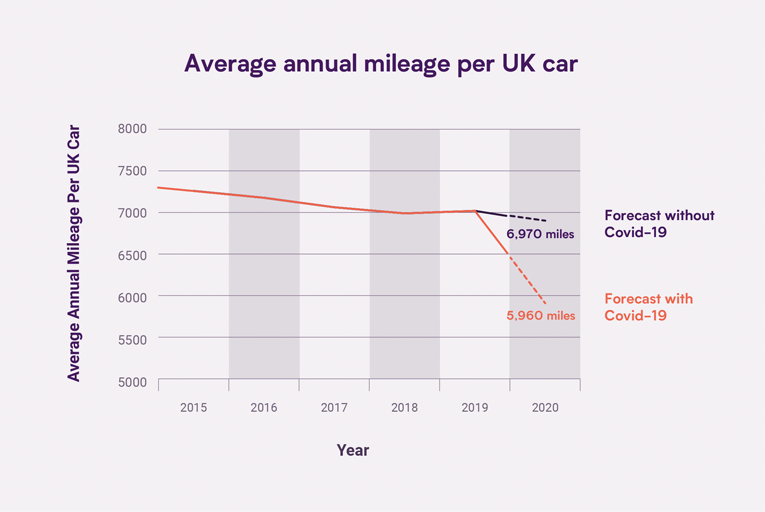
Start Up No.1468: QAnon baffled by Biden, AirPods Max one month in, Google and Apple zap Wimkin, FOAD Ajit Pai, and more


TV detector vans didn’t hide what they did; part of the idea was to scare you into paying. CC-licensed photo by kitmasterbloke on Flickr.

You can sign up to receive each day’s Start Up post by email. You’ll need to click a confirmation link, so no spam.

A selection of 9 links for you. Sometimes going forward requires reversing. I’m @charlesarthur on Twitter. Observations and links welcome.

QAnon believers struggle with Biden’s inauguration • The New York Times

Kevin Roose:

»

Followers of QAnon, the pro-Trump conspiracy theory, have spent weeks anticipating that Wednesday would be the “Great Awakening” — a day, long foretold in QAnon prophecy, when top Democrats would be arrested for running a global sex trafficking ring and President Trump would seize a second term in office.

But as President Biden took office and Mr. Trump landed in Florida, with no mass arrests in sight, some believers struggled to harmonize the falsehoods with the inauguration on their TVs.

Some QAnon believers tried to rejigger their theories to accommodate a transfer of power to Mr. Biden. Several large QAnon groups discussed on Wednesday the possibility that they had been wrong about Mr. Biden, and that the incoming president was actually part of Mr. Trump’s effort to take down the global cabal.

“The more I think about it, I do think it’s very possible that Biden will be the one who pulls the trigger,” one account wrote in a QAnon channel on the messaging app Telegram.
Others expressed anger with QAnon influencers who had told believers to expect a dramatic culmination on Inauguration Day.

“A lot of YouTube journalists have just lost one hell of a lot of credibility,” wrote a commenter in one QAnon chat room.

Still others attempted to shift the goal posts, and simply told their fellow “anons” to hang on and wait for future, unspecified developments.

«

I’m utterly fascinated by how quickly and how widely this is going to unravel. As things keep on not happening, and Biden keeps on being president, it will be impossible for them to pretend that it’s Just About To Happen, because the not-having-happened gets larger all the time. Yet conspiracy theories built around End Dates have an amazing resilience. This will be the story Roose and others will track over the next year.
unique link to this extract


AirPods Max one-month review: heavy, pricey and not worth it • WIRED UK

Jeremy White:

»

AirPods Max pair effortlessly to an iPhone and are about as intuitive to control as headphones get. The sound is superb – more of that below – and that quality build leaves you in no doubt whatsoever that Apple wants you to feel like these are an expensive bit of kit. The colour choices of silver, space grey, sky blue, pink or green are all tasteful.

The 20 hours or so of listening time on a single charge with noise cancellation on is sufficient (this is about the same as the Sony XM4s) and five minutes of charge gets an extra 1.5 hours of listening time. But note there’s no wireless charging, and, as they are never off (the headphones go into standby when taken off and into an “ultra-low-power state” in the Smart Case), you will notice the battery levels dropping between uses.

Making and taking calls is also a joy thanks to three microphones. One mic in the left ear cup works with two of the noise cancellation mics to enhance your voice during calls. The H1 chip is brought into play to discern your voice versus background noise, while one of the mics also suppresses wind noise.

Park all the good listed above, there are a number of issues, too. The first being weight. Remember that headband open-knit mesh canopy to distribute weight? Well, it is designed to reduce the pressure on the top of your head. It is very clever, and initially works well. But the key point here is why should it be needed at all? It’s needed because AirPods Max are heavy. They feel heavy, and wear heavy. Apple headphones come in at 384.8g. By comparison, the Sony XM4s weigh just 254g.

The mesh fools you just long enough to initially think you don’t mind the considerable heft of the Maxes. But walk around with these on for 30 minutes and you start to know you’re wearing them. This should not happen. And you cannot get lost in music or a podcast if you are constantly being reminded of the tech on your head. Perhaps worse still, on occasion the Maxes even started to get uncomfortable during longer sessions well past the hour mark.

«

So reduce the weight and they’re golden.
unique link to this extract


Google Play suspends Wimkin, citing posts calling for violence • WSJ

David Uberti:

»

Alphabet Inc.’s Google has removed the small social-media site Wimkin from its Google Play store, joining Apple Inc. in cutting the app’s reach amid a broader effort to rein in misleading or potentially harmful content.

Google suspended Wimkin from its app store Monday night, a company spokesman said, citing posts that called for violence against liberals. The posts violated rules barring apps from hosting what Google deems inappropriate content, the spokesman said.

“We don’t allow apps that depict or facilitate gratuitous violence or other dangerous activities,” the Google spokesman said.

The suspension is the latest move by tech companies since the Jan. 6 Capitol Hill riot to more aggressively moderate conspiracy theories on the presidential election or calls for violence.

Apple suspended the roughly 300,000-user Wimkin from its App Store last week over such posts, according to Wimkin Founder Jason Sheppard and records of his correspondence with Apple viewed by the Wall Street Journal. Apple’s correspondence cited posts urging users to start a civil war and arrest Vice President Mike Pence, which Wimkin’s content moderators removed.

«

Notable how these small social networks are getting kicked right and left over moderation. But Twitter and Facebook? They’re too big to act against.
unique link to this extract


Gigantic asshole Ajit Pai is officially gone. Good riddance (time of your life) • Vice

Matthew Gault:

»

Ajit Pai, the man who killed net neutrality, enacted a series of industry-friendly deregulatory moves for big telecom, and drank from a gigantic mug, is no longer around to terrorize the internet. The FCC confirmed to Motherboard that Pai is officially gone:

“Federal Communications Commission Chairman Ajit Pai today concluded his four years as Chairman, eight years as a Commissioner, and twelve years as an employee of the agency,” the agency said.

His official FCC Twitter account, where he antagonized people who criticized him, has been deleted. 

Pai stood out among the sea of Trump’s corrupt political employees because he was effective and he survived the entire administration. The former Verizon lawyer fought against net neutrality and won, then danced the Harlem Shake on its grave in one of the biggest cringe videos ever posted online.

“By the time I turn in my badge, I will have spent a total 4,557 days working here,” Pai said in a goodbye video posted to his personal Twitter account. That’s almost 4,500 days of a giant coffee cup, embarrassing posts, and bad policy.

…Here is a list of harmful nonsense Pai and his FCC did over the last four years:

«

The list is way, way too long to include here, but it’s quite the list. Pai was, like so much of the Trump administration, the complete opposite of helpful and constructive for the consumer.
unique link to this extract


TV detector vans once prowled the streets of England • Hackaday

Lewin Day:

»

The vans were first deployed in 1952, with equipment designed to pick up the magnetic field from the horizontal deflection scanning of the picture tube, at 10.125 KHz. Loop antennas were used to detect the second harmonic of this signal at 20.25 KHz, which was mixed with a local beat frequency oscillator at 19.25 KHz to create a 1 KHz tone to indicate to the operator when a signal was picked up. Three antennas were used, one on the front of the van and two on the rear on the left and right sides. When the van was next to an operating television in a house, the signal between the front and side antenna would be roughly the same. Signal from the right and left antennas could then be compared to determine which side of the street the television was on.

Once ITV started broadcasting in 1963, this method of detection became impractical. The two television stations did not synchronise their line-scan signals, so neighbouring houses watching different channels would create confusing interference for the detector. To get around this, the vans switched to detecting the local oscillator of the TV set’s superheterodyne VHF receiver instead. With stations broadcasting on bands spanning 47 to 240 MHz, it was impractical at the time to build a tuner and antenna to cover this entire range. Instead, the equipment was designed to work from 110-250MHz tuning in the fundamental frequencies of the higher bands, or the harmonics of the lower frequency oscillators. A highly directional antenna was used to hone in on a set, and a periscope was installed to allow the operator to view the house the antenna was pointing at. If operating in the dark, the periscope could instead be used to shine a small dot of light in the direction of the antenna’s facing, to identify the relevant target. Results were cross-referenced with a list of houses with lapsed or absent licences to help hunt down evaders.

«

But then, as he points out, we enter the modern era of flat-screen TVs without CRTs. So how do they “detect” you now? Day makes a good attempt to explain what might be inexplicable.
unique link to this extract


Why the hell do they still make car alarms? • Popular Mechanics

Alexander George:

»

I asked automakers how the alarms on their 2016 models work. Generally, the only way they trigger is if the car has been locked and the doors are opened from the inside—that is, if someone breaks the window and opens the door from the inside handle, then it’ll sound. That’s a big change from cars a few years back. Davis Adams, who works at Honda and drives an S2000, told me about a Lotus Elise he used to own that had a motion sensor. “If you locked the door, and moved your hand in the open air,” he said, “the alarm would go off. So if you left a dog in the car, or someone leaned in the open convertible to look, it’d trigger the alarm.”

If you’ve been hearing fewer errant car alarms lately, there’s a reason. Back in the early 2000s, advocacy groups took legal action to make alarms less sensitive and quieter. Manufacturers have since, it seems, taken heed. “My impression is that there are far fewer false alarms now, and that this started around that same time, when the [New York] City Council held some hearings on the issue,” says Professor Mateo Taussig-Rubbo of SUNY Buffalo Law School. He authored a 2003 paper called The Case for Banning Car Alarms in New York City. “I would speculate that the industry, especially the aftermarket sector, which may have had more problems, made the alarms less sensitive in order to get out ahead of any potential legislation,” he says. Mercifully, that seems to be correct, (though you can still find it in some cars like the 2015 Escalade).

No one steals radios anymore, and cars have gotten impossible to steal (except via sophisticated hacking), which brings us to a wonderfully evolved era where, it seems, we’ve stifled some noise pollution, and gotten rid of something that doesn’t work. Now, if only we can get ambulances and fire trucks to be less deafening.

«

Very true. And welcome.
unique link to this extract


LG considers exiting smartphones in 2021 • The Verge

Tom Warren:

»

LG is considering exiting the smartphone market in 2021. After losing around $4.5bn over the past five years, LG’s smartphone business has been struggling to compete with rivals. Now LG CEO Kwon Bong-seok has notified employees that the company is considering making big changes to its smartphone business.

The Korea Herald reports that Kwon Bong-seok sent out an internal memo to staff on Wednesday, hinting at a change in direction for LG’s phone business. “Since the competition in the global market for mobile devices is getting fiercer, it is about time for LG to make a cold judgment and the best choice,” says an LG official in a statement to The Korea Herald. “The company is considering all possible measures, including sale, withdrawal and downsizing of the smartphone business.”

LG confirmed the internal memo was genuine in a statement to The Verge, noting that nothing has been decided yet. “LG Electronics management is committed to making whatever decision is necessary to resolve its mobile business challenges in 2021,” says an LG spokesperson. “As of today, nothing has been finalized.”

«

I guess LG could just about suggest that because it makes display panels, the discipline of making phones helps (Sony has a similar idea about its camera sensors and its lossmaking smartphone division). In both cases they’re fooling themselves. This move by LG is years late. The question of why big companies are bad at making big decisions must be one for the management books.
unique link to this extract


Have we already been visited by aliens? • The New Yorker

Elizabeth Kolbert on the controversy, ongoing, about ‘Oumuamua, the cigar-shaped object that whistled through the solar system in 2017, leading one scientist to insist it’s an alien artefact:

»

When I was a kid, one of my favorite books was “Chariots of the Gods?,” by Erich von Däniken. The premise of the book, which was spun off into the TV documentary “In Search of Ancient Astronauts,” narrated by Rod Serling, was that Fermi’s question had long ago been answered. “They” had already been here. Von Däniken, a Swiss hotel manager turned author who for some reason in the documentary was described as a German professor, argued that aliens had landed on Earth sometime in the misty past. Traces of their visits were recorded in legends and also in artifacts like the Nazca Lines, in southern Peru. Why had people created these oversized images if not to signal to beings in the air?

I figured that von Däniken would be interested in the first official interstellar object, and so I got in touch with him. Now 85, he lives near Interlaken, not far from a theme park he designed, which was originally called Mystery Park and then later, after a series of financial mishaps, rebranded as Jungfrau Park. The park boasts seven pavilions, one shaped like a pyramid, another like an Aztec temple.

Von Däniken told me that he had, indeed, been following the controversy over ‘Oumuamua. He tended to side with Loeb, who, he thought, was very brave.

«

The detail in this story that I found amazing: Von Däniken is still alive. And is only 85. Though if he’d called his book “Cigars Of The Gods” it might not have sold so well.
unique link to this extract


Inexpensive battery charges rapidly for electric vehicles, reduces range anxiety • Penn State University

»

Range anxiety, the fear of running out of power before being able to recharge an electric vehicle, may be a thing of the past, according to a team of Penn State engineers who are looking at lithium iron phosphate batteries that have a range of 250 miles with the ability to charge in 10 minutes.

“We developed a pretty clever battery for mass-market electric vehicles with cost parity with combustion engine vehicles,” said Chao-Yang Wang, William E. Diefenderfer Chair of mechanical engineering, professor of chemical engineering and professor of materials science and engineering, and director of the Electrochemical Engine Center at Penn State. “There is no more range anxiety and this battery is affordable.”

The researchers also say that the battery should be good for 2 million miles in its lifetime.

They report today (Jan. 18) in Nature Energy that the key to long-life and rapid recharging is the battery’s ability to quickly heat up to 140 degrees Fahrenheit (60 Celsius), for charge and discharge, and then cool down when the battery is not working.

“The very fast charge allows us to downsize the battery without incurring range anxiety,” said Wang.

«

Also doesn’t contain cobalt. No word on when it might reach the market, though.
unique link to this extract


Errata, corrigenda and ai no corrida: none notified
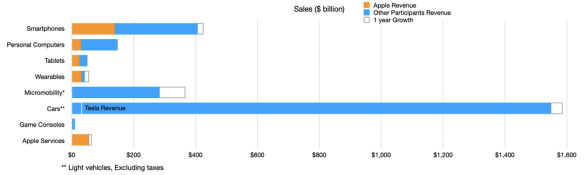
Start Up No.1467: Brexit’s dawning reality, should Sandberg resign?, the Westminster Abbey railway, the bitcoin heaters, and more


Radio was the social media of 1930s America – and led to a big ban that might sound familiar CC-licensed photo by Joe Haupt on Flickr.

You can sign up to receive each day’s Start Up post by email. You’ll need to click a confirmation link, so no spam.

A selection of 11 links for you. Inaugural. I’m @charlesarthur on Twitter. Observations and links welcome.

That time private US media companies stepped in to silence the falsehoods and incitements of a major public figure … in 1938 • The Conversation

William Kovarik is professor of communication at Radford University:

»

In speeches filled with hatred and falsehoods, a public figure attacks his enemies and calls for marches on Washington. Then, after one particularly virulent address, private media companies close down his channels of communication, prompting consternation from his supporters and calls for a code of conduct to filter out violent rhetoric.

Sound familiar? Well, this was 1938, and the individual in question was Father Charles E. Coughlin, a Nazi-sympathizing Catholic priest with unfettered access to America’s vast radio audiences. The firms silencing him were the broadcasters of the day.

As a media historian, I find more than a little similarity between the stand those stations took back then and the way Twitter, YouTube and Facebook have silenced false claims of election fraud and incitements to violence in the aftermath of the siege on the US Capitol – noticeably by silencing the claims of Donald Trump and his supporters.

Coughlin’s Detroit ministry had grown up with radio, and, as his sermons grew more political, he began calling President Franklin D. Roosevelt a liar, a betrayer and a double-crosser. His fierce rhetoric fueled rallies and letter-writing campaigns for a dozen right-wing causes, from banking policy to opposing Russian communism. At the height of his popularity, an estimated 30 million Americans listened to his Sunday sermons.

«

If you’ve read Philip Roth’s ‘The Plot Against America’ – about that America sliding into fascism – you’ll have heard Coughlin’s name. What’s worth reading in Kovarik’s piece is precisely what tipped all those radio stations into cancelling Coughlin.

History doesn’t repeat, but it does rhyme.
unique link to this extract


Brexiters are waking up to the damage they’ve done • The Guardian

Polly Toynbee lays out some of the industries that are being walloped by the effects of new border arrangements due to Brexit, then continues:

»

And then there is the unfolding Northern Ireland disaster. Stena Line ferries has diverted its Great Britain-Northern Ireland sea crossings to the Rosslare-to-Cherbourg route instead. The Times headline reads “Doldrums ahead in shipping forecast as Brexit complicates customs”.

Over the past year I have been following the impending haulage disaster through Manfreight, a 200-lorry company in Coleraine. Its owner Chris Slowey says no, the crisis in the GB/UK crossing is not down to “teething problems”, as Raab put it, but is baked into the nature of Brexit. His lorries carrying exports to England return empty, doubling his costs, as English exporters find it too costly to sell to Northern Ireland – and that’s permanent. The Telegraph reports that one in 10 lorries are being turned back at the EU border. Delays will continue: spot checks at EU borders are standard. So will queues, lorry parks and roadside squalor. The pandemic has worsened the Brexit effect, but that was a good reason to extend the transition period.

It’s only human to confess to some remainer “I told you so” glee when ex-MP Kate Hoey wails in the Telegraph, “The Tories have betrayed Northern Ireland with their Brexit deal”. What on earth did she expect? That’s why Northern Ireland wisely voted remain.

Expect a lot more shocked Brexiters to discover what they have done, the Brexit cabinet itself is on a steep learning curve. Here’s one Telegraph columnist: “We Brexiters are being blamed for the problems we warned about. In reality, the fault lies squarely with the government and poor planning.” Oh the schadenfreude! That’s a sharp U-turn from the Telegraph’s too-eager 1 January report from the Dover front: “Chaos? What chaos?”

«

Are we going to get used to this? Or will it chafe with people as they realise it and try to hold those responsible to account?

unique link to this extract


Sheryl Sandberg, resign • The New Republic

Melissa Gira Grant:

»

“If you are not prepared to use force to defend civilization, then be prepared to accept barbarism,” a member of the “Red-State Secession” Facebook group posted the day before the insurrection, according to The New York Times: “Beneath it, dozens of people posted comments that included photographs of the weaponry—including assault rifles—that they said they planned to bring to the rally. There were also comments referring to ‘occupying’ the Capitol and forcing Congress to overturn the November election that Joseph R. Biden Jr. had won—and Mr. Trump had lost.”

“I think these events were largely organized on platforms that don’t have our abilities to stop hate, and don’t have our standards and don’t have our transparency,” Sheryl Sandberg told the Reuters Next conference on Monday, as the fallout from the Capitol riot was still unfolding. This is not the first time Sandberg, the company’s chief operating officer, has performed this duty—the reasonable public face of the private company with an outsize power over the public square.

Sandberg’s words follow a familiar pattern in all Facebook P.R. efforts: They simultaneously embrace and downplay the company’s power. Yet, as Vice reported, “at the very moment Sandberg made these comments, there were at least 60 ‘Stop the Steal’ groups active on Facebook, some with tens of thousands of members and millions of interactions.” The same day Sandberg minimized Facebook’s role in service of the armed people who tried to take the Capitol, people who claimed responsibility for organizing the mob were using Facebook and Instagram to plan more of them.

«

In truth, Facebook has lots of people who go in front of cameras and make demi-apologies for whatever terrible thing has been shown to be its fault, from Zuckerberg on down; Sandberg hardly stands out there. (Monika Bickert has done this at least as often.) Grant’s argument is that if Sandberg really wanted to lean in to her responsibilities as a woman, she’d have nothing more to do with the company. It’s a point of view, at least.
unique link to this extract


Behind a secret deal between Google and Facebook • The New York Times

Daisuke Wakabayashi and Tiffany Hsu:

»

The agreement between Facebook and Google, code-named “Jedi Blue” inside Google, pertains to a growing segment of the online advertising market called programmatic advertising. Online advertising pulls in hundreds of billions of dollars in global revenue each year, and the automated buying and selling of ad space accounts for more than 60% of the total, according to researchers.

In the milliseconds between a user clicking on a link to a web page and the page’s ads loading, bids for available ad space are placed behind the scenes in marketplaces known as exchanges, with the winning bid passed to an ad server. Because Google’s ad exchange and ad server were both dominant, it often directed the business to its own exchange.

A method called header bidding emerged, in part as a workaround to reduce reliance on Google’s ad platforms. News outlets and other sites could solicit bids from multiple exchanges at once, helping to increase competition and leading to better prices for publishers. By 2016, more than 70% of publishers had adopted the technology, according to one estimate.

Seeing a potentially significant loss of business to header bidding, Google developed an alternative called Open Bidding, which supported an alliance of exchanges. While Open Bidding allows other exchanges to simultaneously compete alongside Google, the search company extracts a fee for every winning bid, and competitors say there is less transparency for publishers.

«

Like all adtech, it’s fiendishly difficult to figure out what’s going on. But you have to love the tortured NewSpeak of the Facebook flack:

»

Christopher Sgro, a Facebook spokesman, said deals like its agreement with Google “help increase competition in ad auctions,” which benefits advertisers and publishers. “Any suggestion that these types of agreements harm competition is baseless,” he said.

«

Cartels – they’re just what the market is calling for!
unique link to this extract


The year a “railway” ran inside Westminster Abbey • Ian Visits

Ian Mansfield:

»

For a few months in 1952, railway tracks could be found running through the middle of Westminster Abbey.

It’s autumn, and the Abbey is being prepared for Coronation of a Queen the following June, and a lot of steel and wood needs to be delivered to build the massive seating stands to hold all the nobles and important people who were invited to attend.

What better to carry all that material than a railway?

OK, it can be technically argued that a railway with humans as the “locomotive” isn’t a railway, but there’s a locomotive, and carriages, and track – it’s a railway. A railway inside an ancient abbey.

The railway ran through the side entrance of the Abbey — where tourists arrive today and ran to the lorries outside delivering goods. Although there are photos of the conversion works, there are sadly few written records of the railway itself.

What’s fascinating is how most of the interior of Westminster Abbey is covered in plywood, so that hardly anything of the ancient original can be seen. The Westminster Abbey we see on television is largely a fantasy created for the Coronation to make the Abbey look grander than it really is. Even the raised dais where the Queen is crowned is just a wooden stage covered in carpet.

It was also packed — literally — to the rafters.

«

The pictures are absolutely amazing. Really worth your time.
unique link to this extract


Online speech and publishing • Benedict Evans

»

The internet and then social platforms break a lot of our definitions of different kinds of speech, and yet somehow Facebook / Google / Twitter are supposed to recreate that whole 200-year tapestry of implicit structures and consensus, and answer all of those questions, from office parks in the San Francisco Bay Area, for both the USA and Myanmar, right now. We want them to Fix It, but we don’t actually know what that means.   

You can see a microcosm of this in the US debate last year about political ads on Facebook. Do you run ads that tell lies? Newspapers do, and they run opinion pieces that their own reporting staff might disagree with. US TV stations aren’t allowed to block ads from qualifying candidates. Meanwhile a ban on advertising is good for incumbents, who already have organic reach, and for populists and trolls, who can get it, but shuts out moderates and new entrants. And yet a lie on Facebook, spread with money (from where?), reaches new people. In the UK, political TV ads are regulated – should the US apply that? These are all interesting questions, but who decides? For now, one 36-year-old called Mark. 

This is part of the challenge: everyone at a big social media company thinks about these problems, but they do so conscious that they don’t have much legitimacy to make those kinds of decisions. They have neither the social legitimacy of a newspaper editor nor the political legitimacy of a regulator or a law. In 2015, most people in Silicon Valley would have said censorship was both wrong and unscalable – now ML means you can at least try to scale it (with tens of thousands of human moderators) and everyone understands how bad things can get and the responsibility to do something. But what?

«

We are glimpsing the reality: that even understanding what we do and don’t want to moderate on social media is difficult. And then there’s the problem of doing it.
unique link to this extract


Chilly this winter? Cozy up to your computer that’s mining bitcoin • WSJ

Sarah Needleman:

»

As winter approached, Dan van der Ster worried his annual utility bill would skyrocket since his family of five was homebound with the pandemic.

It hardly budged.

While the electric portion shot up in 2020, the gas-heat expense surprisingly declined. He thinks that’s largely thanks to the beefy new computer he uses to mine cryptocurrency and on which his teenage son plays videogames. Mr. Van der Ster, a 40-year-old engineer who lives in France near the Switzerland border, now has a new concern: “It’s getting too warm.”

With the health crisis keeping people home, computer gamers and bitcoin miners are taking greater advantage of a cold-weather perk. The more they use their high-powered machines, the more heat the devices give off.

In the pandemic’s early days, photographer Thomas Smith funneled heat through a tube from a computer he uses mainly for mining bitcoin to maintain a small greenhouse in his garage. It yielded fresh basil and heirloom cherry tomatoes.

“It was like those heaters on a restaurant patio,” he said. “I made a caprese salad.”

Now Mr. Smith, who lives in Lafayette, Calif., is experimenting with using his computer to heat at night a coop he recently set up in his backyard for two chickens. “It’s chilly out there,” he said, though he is concerned about the birds’ safety. “I don’t want to overheat them.”

Rebecca Ratchford hasn’t had to raise the thermostat this winter in her three-bedroom Cary, N.C., home, where she has been working remotely as an administrative assistant since the pandemic began. Her custom-built computer gives off plenty of warm air, she said, especially during intense battles in “Destiny 2,” the science-fiction shooter game.

«

This feels a little like a commercial from Intel. “Stay with our computers – they get wonderfully hot!” Ignoring the reality that that’s all wasted energy. Buy a blow heater, people.
unique link to this extract


Facebook said it would stop pushing users to join partisan political groups. It didn’t • The Markup

Leon Yin and Alfred Ng:

»

In the run-up to the 2020 presidential election, Facebook said it was taking “emergency” measures to prevent people from using the platform to spread misinformation or coordinate violence. Among those measures, CEO Mark Zuckerberg testified under oath before Congress in October, Facebook had stopped recommending all “political content or social issue groups”—a practice its own internal research has suggested steers users toward divisive and extremist content. 

Days after a riot organized at least partially on social media overtook the US Capitol, Facebook reiterated in a Jan. 11 blog post that it was “not recommending civic groups for people to join.”

But contrary to Facebook’s claims, The Markup found the platform continued to recommend political groups to its users throughout December. We found 12 political groups among the top 100 groups recommended to the more than 1,900 Facebook users in our Citizen Browser project, which tracks links and group recommendations served to a nationwide panel of Facebook users. Our data shows Facebook also continued to recommend political groups throughout January, including after it renewed its promise not to on Jan. 11.

Facebook pushed political groups most often to the Trump voters on our panel. Almost one quarter of the top 100 groups suggested to Trump voters were political—and political groups accounted for half of the top 10 groups recommended to Trump voters. Some posts in those groups contained conspiracy theories, calls to violence against public officials, and discussions of logistics for attending the rally that preceded the Capitol riot. 

«

Why did this happen, you may wonder? Because Facebook relied on group administrators ticking a box that said “political”. And once more, Facebook’s Groups system is making things worse.
unique link to this extract


Spotify, Substack, and Clubhouse are the next fronts in the moderation war • OneZero

Alex Kantrowitz:

»

“I think we have all become smarter about the downsides of communication at scale,” Siri Srinivas, an investor at Draper Associates, told OneZero. As an early user of Clubhouse, Srinivas has seen the trade-offs firsthand. Clubhouse — a live, audio-only conversation platform — has already endured a lifetime’s worth of moderation controversy.

“We discovered a lot of the issues with the bigger platforms about five years after they became too large,” Srinivas said. “We’re using the same vocabulary to talk about Clubhouse.”
Over the summer, while still in beta, Clubhouse experienced its first high-profile flare-up. After New York Times reporter Taylor Lorenz criticized ex-Away CEO Steph Korey for views she expressed about the press, some Clubhouse users attacked Lorenz viciously in a Clubhouse room asking whether journalists have too much power. The attack was bad enough that Clubhouse co-founder Paul Davison spoke with Lorenz about what happened, and what Clubhouse could do to improve.

Clubhouse, which didn’t respond to a request for comment, has since added user controls like a block button and an option to report abusive behavior. But the reporting functionality — which includes options to report content under categories like “discrimination or hateful conduct” — doesn’t seem to be doing much. Lorenz has kept a running list of disturbing content on Clubhouse. An explicitly anti-LGBT conversation in December, for instance, featured one speaker who said, “I’m bringing down you fucking faggots.”

Clubhouse’s tentative moderation approach might reflect the ideological reticence that Facebook, Twitter, and YouTube displayed in their early days. It may also reflect a unique business problem. As smaller platforms take off and fill with content, the cost to moderate can be overwhelming. “That’s why you see so much emphasis on automation,” the former Twitter employee said. “Taken to its logical conclusion, you could have a full federal jobs program moderating content on a platform like Facebook or Twitter.”

«

It’s moderators, almost all human, all the way down.
unique link to this extract


Hudson to introduce Amazon’s ‘Just Walk Out’ tech in airport stores • Retail Dive

Kaarin Vembar:

»

Amazon’s Just Walk Out tech may have been created in part to eliminate lines, but it also has an added bonus of being contactless when hygiene is top of mind for shoppers during the pandemic. 

Just Walk Out does not require that users download an app or create an Amazon account. Instead, shoppers use a credit card and the technology detects what products are being selected via a virtual cart. The service leverages similar technology that is used in self-driving cars: computer vision, sensor fusion and deep learning, according to Amazon. 

“Today’s traveler is progressively more connected, mobile, and time sensitive — and they have higher expectations for convenience, safety, and speed during their shopping experiences,” Brian Quinn, executive vice president and chief operating officer of Hudson, said in a statement. 

Retail foot traffic is down overall, sliding 49.3% in malls, according to a December report from foot traffic analytics firm Placer.ai. Even harder hit is the larger travel industry. According to December research from the US Travel Association, since the beginning of March the pandemic resulted in over $500bn in cumulative losses for the US travel economy.

«

Airports are the ideal location for these: if people are airside (past security checks) they can’t really escape if they somehow zoom out without paying. Plus the lack of hassle is a boon. But how will they make you show your boarding card for the VAT scam?
unique link to this extract


Vaccine maker BioNTech reports potential multiple sclerosis breakthrough • The Week

Peter Weber:

»

BioNTech, the German biotechnology company that paired with Pfizer to develop first COVID-19 vaccine approved in the US, reports in the journal Science that a new vaccine using the same mRNA technique has proved effective in treating or stopping multiple sclerosis (MS) in lab mice. MS is caused not by a virus but by the immune system malfunctioning and attacking the protective covering of nerve cells in the brain and spinal cord, disrupting signals between those cells and their targets in the body, causing neurological, sensor, and motor issues.

BioNTech said it successfully encoded MS-specific autoantigens that, when delivered via its experimental vaccine, stopped MS symptoms in mice bred with a condition mirroring MS in humans, and prevented further deterioration in mice with early signs of MS. Mice given a placebo showed typical MS symptoms.

«

Only mice – which is a notoriously unreliable guide to whether something will work in humans. But an important first step. mRNA looks ready to overtake CRISPR as the next big hope in medicine.
unique link to this extract


Errata, corrigenda and ai no corrida: none notified