
Unknown's avatar

About charlesarthur

Freelance journalist - technology, science, and so on. Author of "Digital Wars: Apple, Google, Microsoft and the battle for the internet".

Start Up No.1749: Icann leaves Russia online, Twitter goes Birdwatching, AMD and Intel ban, Venezuela users face crypto block, and more


Remember HTC? It isn’t dead yet, and it’s pivoting from the blockchain (yawn) to the metaverse (yay!). Still phones, of course. CC-licensed photo by Tony Webster on Flickr.

You can sign up to receive each day’s Start Up post by email. You’ll need to click a confirmation link, so no spam.

A selection of 10 links for you. Not part of a convoy. I’m @charlesarthur on Twitter. Observations and links welcome.


ICANN rejects Ukraine’s request to cut off Russia from the global internet • CNN

Brian Fung:

»

The international non-profit that coordinates management of the internet told Ukraine it will not intervene in the country’s war with Russia, rebuffing a request to cut Russia off from the global internet.

Ukraine’s proposal is neither technically feasible nor within the mission of ICANN, the Internet Corporation for Assigned Names and Numbers, according to a letter ICANN sent to Ukrainian officials on Wednesday.

“As you know, the Internet is a decentralized system. No one actor has the ability to control it or shut it down,” ICANN CEO Göran Marby wrote in the the letter. Marby expressed his personal concern about Ukrainians’ well-being as well as the “terrible toll being exacted on your country.” But, he wrote, “our mission does not extend to taking punitive actions, issuing sanctions, or restricting access against segments of the Internet — regardless of the provocations.”

“Essentially,” he added, “ICANN has been built to ensure that the Internet works, not for its coordination role to be used to stop it from working.”

Internet governance experts previously told CNN that ICANN was expected to reject Ukraine’s plea, and that Ukraine’s proposal, if implemented, could have devastating consequences for average Russian internet users, including dissidents.

The original request, sent on Monday from Ukraine’s representative on ICANN’s Governmental Advisory Committee, called for the Russian internet country code .RU and its Cyrillic equivalents to be revoked. The representative, Andrii Nabok, also said he was sending a separate request to Europe and Central Asia’s regional internet registry, asking it to take back all of the IP addresses it had assigned to Russia.

«

Certainly it would be relatively trivial for lots of companies to block anything coming from a .ru address – and I recall a developer saying recently that he found the simplest way to cut spam by 99% or so was to block anything from that IP range. But it was never going to happen as a broad strategy. Ukraine has developed a clever strategy of asking for everything – cut Russia off the internet, implement no-fly zones – and thus making any little concession seem like both a victory on its part and parsimony on those who do it.
unique link to this extract


Twitter’s Birdwatch fact-checking project moves forward with new test • The Washington Post

Will Oremus:

»

Twitter will begin showing fact-checking notes, submitted by volunteers, on potentially misleading tweets to a small fraction of its users in a test in the United States this week. The test is a step forward for its experimental Birdwatch program, which seeks to enlist Twitter’s users to flag and debunk misinformation on the social platform.

Users in the test group will see a message inviting them to click for more context when they encounter a tweet that has been flagged by a volunteer fact-checker participating in Birdwatch. There, they’ll find one or more notes written by Birdwatch contributors, correcting or adding relevant background to the tweet itself, and ideally citing reliable outside sources. They’ll then be asked to rate the note’s helpfulness — ratings that in turn are used to determine whether to continue showing that note to others on Twitter.

Twitter launched the Birdwatch pilot more than 13 months ago, inviting interested users to apply to become volunteer fact-checkers. As The Washington Post reported on Tuesday, Twitter has enrolled some 10,000 people in the pilot, but just 359 of those had actively contributed fact-checking notes in 2022, as of Feb. 24. In all, Birdwatch contributors have been flagging about 43 tweets per day in recent months, a vanishingly small fraction of the posts on a global platform that is used by some 217 million people each day.

The hope is that, eventually, crowdsourced fact checks can help Twitter users avoid falling for and spreading misinformation, while helping Twitter itself limit the spread of such information.

Twitter is taking a cue from sites including Wikipedia that harness volunteer labor to vet information transparently, at high speed and low cost. The approach differs from rival Facebook’s, which has relied on partnerships with professional fact-checking organizations to identify false posts.

«

Could work – better than Facebook’s system, but worse than Wikipedia’s because that has a static page to coalesce around.
unique link to this extract


Putin no longer seems like a master of disinformation • The New York Times

Farhad Manjoo:

»

The Ukrainian crisis shows that the West has learned a lot about countering Russian propaganda in the past few years. Social media companies are now adept at spotting and removing Russian disinformation. The Biden administration has been masterful at “prebunking” Russia’s moves; by disseminating intelligence about Russian plans almost as quickly as it collects it, the White House has managed to embarrass and undermine Russian efforts to control the Ukraine story.

Then there’s the steadfast bravery and media wiliness of the Ukrainians, whom Helmus described as “a messaging adversary of the type Russia has never seen before.” As the Russian military bore down on their nation, Ukrainians began filling the internet with irresistible footage of their determination — the 79-year-old grandmother taking up arms against the invaders, the fearless young man kneeling in front of a Russian tank, the member of parliament who boasts on Fox News about kicking Putin’s derrière. In a series of inspirational battlefield dispatches, Volodymyr Zelensky, Ukraine’s president, has projected an air of heroic machismo of the sort that Putin has long tried to cultivate.

«

It’s the simplicity and directness of the Ukrainian message – and especially its focus through Zelensky, who as an actor (his former job) knows completely the power of a moving image and a few powerful words – that makes it such a complete antidote, or even kryptonite, to Russia’s efforts.
unique link to this extract


AMD and Intel halt processor sales to Russia • Tom’s Hardware

Paul Alcorn:

»

In a sign that the United States government’s export restrictions on semiconductor sales to Russia due to its war against Ukraine have been enacted swiftly, AMD has confirmed that it has suspended chip sales to Russia, and according to multiple reports, Intel has taken the same steps. In addition, reports have also emerged that TSMC’s decision to participate in the sanctions will thwart Russia’s supply of homegrown chips. Intel and AMD have both provided us with a statement on the matter, and we have also reached out to Nvidia for comment.

The Russian media outlets also claim that the suspensions have been confirmed by the Association of Russian Developers and Electronics Manufacturers (ARPE). Additionally, Chinese IT companies are said to have been notified by Intel that sales to Russia have been banned.

An AMD representative told Tom’s Hardware, “Based on sanctions placed on Russia by the United States and other nations, at this time AMD is suspending its sales and distribution of our products into Russia and Belarus.”

Intel provided the following comment to Tom’s Hardware: “Intel complies with all applicable export regulations and sanctions in the countries in which it operates, including the new sanctions issued by OFAC [Office of Foreign Assets Control] and the regulations issued by BIS [Bureau of Industry and Security].”

The extent of Intel’s halted sales is currently unclear. The new export restrictions are primarily aimed at chips for military purposes or dual-use chips that could be used for both civilian and military purposes. That means sales of most consumer-focused chips, like Intel’s Core chips, likely won’t be impacted. However, it is widely expected that there will be a temporary halt for all semiconductor sales to Russia as companies work to decide which products and customers are impacted.

«

Depending how long this all goes on (and I think we should expect that it will last months, not weeks) we could see the slow-motion collapse of Russia’s economy and infrastructure. Artillery apart, its military has not looked too well prepared – despite all those “manoeuvres” – in the past week, and that can only get worse as sanctions bite.
unique link to this extract


A view from Russian academia • Tatyana Deryugina

Deryugina wrote to loads of Russian academics asking why they weren’t protesting. She got a response from one, which she was given permission to share:

»

Here is also my view as to why the Russian people are not protesting en masse:

1: Negative influence of the USSR: beginning with the immigration after 1917 and Stalinist purges and ending with the destruction of the will to live freely to the falling apart of the country. People didn’t live normally and so don’t want to live normally now, those who protest are mostly very young.

2. A non-trivial share of the people are idiots. They can’t or, for many reasons, don’t want to absorb non-one-sided information and just want to be “outside of politics”. And the most accessible information is, sadly, propaganda.

3. Propaganda is literally EVERYWHERE. On TV it reaches absurd proportions, and besides that special bot farms write a huge number of online comments, forming a false public opinion and swaying those who are uncertain to their side.

4. A huge army of siloviki (strongmen). Ukraine’s Maidan could happen because resistance [against the protestors] was not comparable to that of Russia and Belorussia. The Russian government has a huge horde of policemen and Rosgvardiya [National Guard of Russia] who get paid decent money just for brutally beating people who simply show up to a demonstration (and actually get pleasure out of doing so because they are idealistic and see enemies in those who show up). Then they imprison the people for 30 days and then create problems for them in their studies or work. And any resistance leads to a huge prison sentence. I’m not even mentioning, that people can be jailed for several years for tweets or social media posts (this is not an exaggeration!)

«

“A non-trivial share of the people are idiots” is pretty widely applicable, isn’t it.
unique link to this extract


Ukraine population density • Airwars

»

This interactive map depicts the population per square kilometre of Ukraine. Using data from the WorldPop initiative, each point is colour coded from least to most densely populated. The data comes from bedfore Russia’s invasion on February 24 2022.

Click on any location to reveal the population density there and search for specifgic locations or coordinates using the search bar.

«

Even on a first glance it’s quite sparsely populated, with occasional flashes of urban concentration; Russia is trying to occupy a whole load of wide open space.

By contrast, the UK has an average population density of 283 people per sq km; for Ukraine it’s 75. It’s also been seeing continued depopulation due to emigration, plus low birth/high death rates. The former has speeded up dramatically now, of course.
unique link to this extract


HTC pivots from blockchain to the metaverse for its next smartphone gimmick • The Verge

Chaim Gartenberg:

»

HTC’s slow-motion fall from smartphone grace is reportedly set to continue in 2022, with the company said to be working on a new “metaverse”-focused phone in April as the remnants of the once-flagship smartphone company continues to desperately cling to whatever zeitgeist term it can to stay afloat, according to DigiTimes.

The news comes from Charles Huang, HTC’s general manager for the Asia-Pacific region, who reportedly commented at MWC 2022 that the company would be introducing a new high-end smartphone next month with unspecified “metaverse” features. Details are slim, including any specs, markets it’ll be released in, or even what kind of AR or VR features the new device will offer.

The news sounds a lot like HTC’s last major pivot towards relevancy: its Exodus line of blockchain phones that its offered for the past few years. Promising decentralized apps (“Dapps”) and a built-in cryptocurrency wallet, the phones could run blockchain nodes and even mine paltry amounts of cryptocurrency, but — like many instances of blockchain technology — it was a solution largely in search of a problem that never really took off.

For argument’s sake, a metaverse phone would at least make slightly more sense than a blockchain one, if only because HTC has actually been a major player in the virtual reality space.

«

As Gartenberg notes:

»

Given that HTC’s Viverse doesn’t really exist — nor does widespread adoption of any modern metaverse concept — it’s easy for the company to just say it’s making a metaverse app or phone. After all, who’s to say that you aren’t?

«

First reaction: HTC is still going? Next reaction: how small can it get? Total revenues last year were $140m. That’s about 1% of its peak revenue (from 2011). Sometimes they just don’t die, they just fade Zeno-style.
unique link to this extract


Wikimedia says it ‘will not back down’ after Russia censorship threat • The Verge

Adi Robertson:

»

The Wikimedia Foundation has issued a statement supporting Russian Wikipedia volunteers after a censorship demand from internet regulators. On Tuesday, tech and communications regulator Roskomnadzor threatened to block Wikipedia over the Russian-language page covering Russia’s invasion of Ukraine, claiming it contained “false messages” about war casualties and the effects of economic sanctions, among other things.

“On March 1st 2022 the Wikimedia Foundation received a Russian government demand to remove content related to the unprovoked invasion of Ukraine posted by volunteer contributors to Russian Wikipedia,” reads the statement sent to The Verge via email. “As ever, Wikipedia is an important source of reliable, factual information in this crisis. In recognition of this important role, we will not back down in the face of efforts to censor and intimidate members of our movement. We stand by our mission to deliver free knowledge to the world.”

The Roskomnadzor demand, which was posted in Russian Wikipedia’s Telegram channel, demands Wikimedia address user edits from a February 27th version of the article. As translated by Wikimedia Russia, it takes issue with “information about numerous casualties among the military personnel of the Russian Federation, as well as the civilian population of Ukraine, including number of children,” as well as “the need to withdraw funds from accounts in banks of the Russian Federation in connection with the sanctions imposed by foreign states.” (While the war’s casualties remain difficult to estimate, the United Nations has confirmed hundreds of civilian deaths in Ukraine since the conflict began last week, including at least 13 children, and acknowledged that its numbers likely underestimate the real death toll.)

«

The truth hurts.
unique link to this extract


IKEA pauses operations in Russia and Belarus • Ikea.com

»

The war has had a huge human impact already. It is also resulting in serious disruptions to supply chain and trading conditions. For all of these reasons, the company groups have decided to temporarily pause IKEA operations in Russia. 

This means that:

• Inter IKEA Group has taken the decision to pause all export and import in and out of Russia and Belarus
• Inter IKEA Group has taken the decision to pause all IKEA Industry production operations in Russia. This also means that all deliveries from all sub-suppliers to these units are paused
• Ingka Group has taken the decision to pause all IKEA Retail operations in Russia, while the shopping centre Mega will continue to be open to ensure that the many people in Russia have access to their daily needs and essentials such as food, groceries and pharmacies.  

«

Seems to me the smart thing to do if you really want to disrupt them is just to hide all the Allen keys. Or take two screws out of every assembly kit.
unique link to this extract


Venezuelan users of crypto wallet MetaMask say they can no longer access it • The Block

MK Manoylov:

»

Users of MetaMask based in Venezuela say they can no longer access the popular digital asset wallet. 

Messages about the issue began to crop up on social media on Wednesday, with numerous examples spreading as of late Thursday morning. The suspected culprit is the API for Infura, a blockchain node infrastructure network.  

A MetaMask support page, updated an hour before press time, states that “MetaMask and Infura are unavailable in certain jurisdictions due to legal compliance.”

…Word of the blockages also prompted commentary on the use of VPNs to circumvent the issue. 

Unclear at present is the extent to which the reported blockages represent at tightening of rules with respect to other countries sanctioned by the US and other governments. Users from Iran and Lebanon appear to have been affected, though many of the recent messages pertain to Venezuelan access. 

«

Big win for decentralisation, yes?
unique link to this extract


• Why do social networks drive us a little mad?
• Why does angry content seem to dominate what we see?
• How much of a role do algorithms play in affecting what we see and do online?
• What can we do about it?
• Did Facebook have any inkling of what was coming in Myanmar in 2016?

Social Warming, my latest book, and find answers – and more.


Errata, corrigenda and ai no corrida: none notified

Start Up No.1748: the Ukraine war on Wikipedia, Amazon shutters retail stores, Fitbit recalls Ionic, fixing AirTags, and more


Fancy a game of Pong, but don’t have the small change? Don’t worry, you can play a version right here on your phone or computer. CC-licensed photo by Carlos Duarte Do Nascimento on Flickr.

You can sign up to receive each day’s Start Up post by email. You’ll need to click a confirmation link, so no spam.

A selection of 10 links for you. Use them carelessly. I’m @charlesarthur on Twitter. Observations and links welcome.


How the Russian invasion of Ukraine is playing out on Wikipedia • Slate

Stephen Harrison:

»

According to Samuel Breslow, an experienced Wikipedia editor and an information journalist, one of the trickiest elements of covering the Russian invasion is writing the encyclopedia articles at the right level of detail. Wikipedia aspires to take a long-term world-historical view similar to a traditional encyclopedia like Encyclopedia Britannica. That means presenting a summary rather than an overly detailed description of historical events. But with the Russian invasion of Ukraine, it’s not immediately clear what events will have long-term historical importance. “For instance, we don’t know whether the ‘Ghost of Kyiv’ will ultimately be a significant part of the narrative of the invasion or just a momentary internet rumor,” Breslow said in an email. (If you’re curious, the Ghost of Kyiv’s wiki page describes it as an “unconfirmed MiG-29 Fulcrum flying ace” credited with shooting down six Russian planes. The page also notes that the Ghost is most likely an urban legend that has had the effect of boosting Ukrainian morale.)

Most of the English Wikipedia articles relating to the invasion of Ukraine have a blue “E” symbol in the top-right corner, indicating that editing is limited to experienced Wikipedia editors, those with at least 500 edits and a month’s tenure. That means brand-new editors can only propose edits to the article’s behind-the-scenes talk pages. On the one hand, this protective measure cuts against Wikipedia’s ethos as the encyclopedia that “everyone” can edit. But Wikipedians say that the extra level of protection is helping to reduce vandalism and disinformation attacks on Ukraine-related information. “Writing on Wikipedia always comes with a lot of responsibility,” Breslow said in an email. “Wikipedia is the major collective record of humanity’s knowledge, and its articles are read by a staggering number of readers. They influence what people believe and how they live their lives, so it’s essential we make them as reliable, neutral, and comprehensive as possible.”

…although English Wikipedia has seen a huge uptick in the amount of activity dedicated to Ukraine, the Ukrainian-language version has seen considerably less activity. Since the invasion, the number of article edits per day on Ukrainian Wikipedia has decreased by at least 50%, according to the Wikimedia Foundation. That’s understandable. When a superpower is invading your country, the Wikipedia-editing hobby tends to fall off the old to-do list. “Editing Wikipedia from a bomb shelter is difficult,” said Mykola Kozlenko, the vice president of the Wikimedia Ukraine user group.

«

unique link to this extract


Amazon closing 68 stores, ending Amazon Books, 4-star, Pop Up shops • CNBC

Annie Palmer:

»

Amazon is shutting down all its Amazon Books physical bookstores, as well as its Amazon 4-star and Amazon Pop Up shops, which sold a variety of electronics and other hot items.

The closures affect 68 stores across the U.S. and U.K., Amazon said. Closure dates will vary by location and Amazon said it would help affected employees find roles elsewhere in the company. Workers who opt not to stay will be offered severance packages, it said.

Amazon declined to say how many employees would be affected by the closures.

…Amazon has gradually launched an array of brick-and-mortar concepts, from supermarkets to retail stores offering branded electronics like Fire tablets and Echo smart speakers. The 4-star stores, in particular, attempted to mesh Amazon’s in-store and offline operations by featuring top-selling products in its web store.

But sales growth of the physical stores unit has noticeably lagged the company’s overall retail business. Physical stores, which includes Whole Foods and Fresh outlets, reported lower sales in 2021 than in 2018.

Amazon is trimming its physical retail footprint after coming off its slowest growth rate for any quarter since 2001. Shares are down more than 8% so far this year, and the stock was the worst performer in the Big Tech group last year.

«

It always did seem a bit strange to be doing the thing that it was set up in direct opposition to.
unique link to this extract


Fitbit recalls Fitbit Ionic smartwatches due to burn hazard, offers refund • DC Rainmaker

DC Rainmaker:

»

Fitbit has announced a recall of their older Ionic GPS smartwatch, due to situations where the battery can overheat and cause burn injuries. The Ionic was introduced back in 2017, which was really their first smartwatch to support a 3rd party app platform as well as on-watch payments and on-watch music streaming services. It was a massive step forward for the company, setting their watch platform stage for the next half-decade. Their previous smartwatch was the Fitbit Blaze.

The company, in conjunction with the Consumer Protection Safety Commission (CPSC) says there are cases where the battery can overheat, and can cause burns. The CPSC says they’ve received 115 reports in the US (plus 59 internationally) over the battery overheating. Within that, 78 of those reports in the US include third-degree burns, with four reports of second-degree burns. Additionally, 40 internal burn injuries were reported.

«

Sold roughly 1 million in the US, and another 693,000 internationally. If you’ve got one lying around in a drawer, it’s still eligible. Pity it was the previous product that was called the Blaze or it would have been perfect nominative determinism.
unique link to this extract


AirTags are dangerous; here’s how Apple could fix them • The Verge

Monica Chin and Victoria Song:

»

the longer it takes from the time an AirTag is planted to the point when it alerts the victim, the more information an ex or spouse can potentially collect about their victim’s daily activities. Currently, that timeframe is too large.

As Victoria [Song, one of the writers] experienced, and as experts highlighted, the more time an abuser has to monitor a victim before they pull the plug, the more of that victim’s calendar they’re able to reconstruct for future use. “You’re usually in work nine to five; I ping at nine to five — now I know where you work. You’re usually home in the hours of eight to 10PM; I ping it — now I know where you live,” says Kathryn Kosmides. Kathryn is CEO of Garbo, a nonprofit dedicated to preventing tech-enabled abuse. “If they’re pinging at the opportune moments, at the right time, you can start to put patterns together. The ways someone walks to work, you know, all of these different things, which can be super, super weaponized.”

And abusers really are that relentless, says Becker. “They are tracking it while they’re in Zoom meetings; they’re tracking it while they’re checking their email or looking at memes. It is a full-time job to be an abuser, to be a stalker, and they take that job very seriously.”

What would an acceptable window be? That gets tricky. Advocates who have worked with Apple on AirTags noted that the device still needs to be able to accurately identify that it’s moving with someone rather than just near someone, which can take time to assess. “We actually don’t want people completely terrified that they’re being tracked when they’re not because they just happen to be sitting at a cafe with somebody who’s got an iPhone or an AirTag,” Olsen says.

And too many false alarms could put people in more danger — if someone develops a mindset that AirTag pings are usually errors, they could be quick to dismiss a real one. “We don’t want people to start ignoring these as noise,” Dodge said.

Still, all the advocates agree: the current arrangement does not work. There’s “a pretty significant valley between a few seconds and eight hours,” Dodge said.

«

“Dangerous” inasmuch as stalkers are dangerous, but yes, these seem like reasonable suggestions.
unique link to this extract


How Ukrainian tech companies are handling Russia’s invasion • Fast Company

Mark Sullivan:

»

The Ukraine crisis touches the tech world in a number of different ways. For example, a number of the U.S. sanctions relate to denying Russia’s ability to acquire high technology for military and other uses. And Ukraine is home to a number of business and consumer technology companies that impact the lives and businesses of millions of people around the world. I talked with some of them on Thursday, the first official day of the Russian occupation.

Grammarly may be the best-known Ukraine-based tech company. Grammarly is the maker of an AI-driven tool that helps people communicate better in writing. It is used by millions around the world, and has raised capital from some top-shelf VCs including General Catalyst and Blackrock. It’s now valued at $13bn.

The company has a significant number of software developers in Kyiv, the city in which the company was founded in 2009. Kyiv is about 700km or 435 miles from the current conflict zone in eastern Ukraine. It also has staff in San Francisco, New York, and Vancouver, BC.

Grammarly spokesperson Senka Hadzimuratovic told me via email Thursday that her company is now executing the contingency plans it had in place to protect its employees in Ukraine. She says the company isn’t providing many details of the plans, in the interest of security.

«

Also Readdle, MacPaw and plenty of freelance developers. (There’s always a tech angle. In a war, there’s an everything angle.)
unique link to this extract


Inside Bangladesh village YouTube cooking channel AroundMeBD • Rest of World

Nilesh Christopher and Faisal Mahmud:

»

Almost every week, Delwar Hussain, a stocky 40-year-old schoolteacher with betel-stained teeth, travels more than 100 miles on a public bus from his village of Shimulia in western Bangladesh to the capital city, Dhaka, carrying a 64GB SanDisk memory card carefully packed in a bag of fruits and vegetables. On a good day, this journey takes six hours, but during winter, when dense fog covers the River Padma and ferry services slow to a crawl, it can take more than 12. Once Hussain reaches the city, he heads to a cyber café owned by his nephew and business partner, Liton Ali Khan.

There, he transfers the contents of the memory card — professionally shot videos of elderly villagers preparing, cooking, and serving food to hundreds of people — to a desktop computer, from where the material is edited and uploaded to YouTube and watched by 4 million subscribers. The videos, depicting a community kitchen in Shimulia producing gargantuan quantities of food, are extravagant: meals include 14 full goat intestines, 50 country ducks, a 185-pound vanilla cake, or a 650-pound water buffalo.

The channel behind this operation is called AroundMeBD, and its success has created a whole new economy in Shimulia, which has since been dubbed the YouTube village of Bangladesh.

The YouTube village is a prominent example of a niche but is also part of a growing online trend across South Asia: As the internet reaches villages, rural societies are finding ways to showcase and monetize their unique food cultures to audiences across the world, using platforms like YouTube and Facebook.

«

unique link to this extract


The internet is a force multiplier for Ukraine • Platformer

Casey Newton:

»

Social media didn’t cause any of this resistance. But it amplified these stories quickly and at scale, overwhelming what analysts say has been a shockingly inept information strategy from the Russians. And with every viral TikTok about the situation unfolding — here’s one in which a Russian car influencer teaches you how to drive abandoned Russian military vehicles — support for the resistance grows.

All of this has offered some comfort during a frightening time. But there is a risk of making too much of the way the internet and social networks have bolstered the Ukrainian resistance to date — or in underestimating Russia’s ability to retaliate.

On the war front: yes, Ukraine’s efforts so far have been inspiring. But we are only four days in, and as this long thread from a Russian military analyst explains, most of the aggressor’s significant firepower is still waiting to be deployed. The most likely outcome continues to be a Russian takeover of the country. (Though even then Putin may find it exceedingly difficult or even impossible to govern, as Yuval Noah Harari explains.)

And on the platform front, the path forward is not at all clear. For their part, tech companies have largely acted as democratic governments have asked them to. On Monday Meta’s Nick Clegg announced that the company would restrict access to Russian state media networks RT and Sputnik in the European Union, just as the European Union itself announced it would do a day earlier. (TikTok followed suit on Monday as well.) Twitter stopped short of banning the networks but added a state media label to any links shared on the network.

Russia is actively resisting these efforts. It blocked Twitter and slowed Facebook. It sought to ban any footage of military action on TikTok. It wrote to Google protesting the demonetization of RT and Sputnik.

These moves are unfortunate primarily for Russian citizens, who will have less access to independent media and the organizing tools that social networks provide.

«

In Social Warming, I pointed out that humans work best when they work together against a common enemy. It’s how social media can be at its most useful.
unique link to this extract


Almost Pong • Lessmilk

»

Press space (or tap the screen) to make the ball jump and hit the paddles for as long as possible. This arcade game works on desktop and mobile.

«

Yes, it’s Pong, where you play yourself (or perhaps a two-player if you’re able enough). Well you did want something to take your mind off everything. You’ll certainly lose quite a few minutes on this one. It doesn’t bounce off the sides of the screen – it’s more like Flappy Bird, where you have to keep the bird (ball) up. (Thanks Barry C for the pointer.)
unique link to this extract


TikTok faces scrutiny in state attorneys general probe of online harms to children • WSJ

John McKinnon:

»

A coalition of state attorneys general is launching an investigation into TikTok, seeking information about whether and how the video-sharing platform contributes to online harms to children.

The move is an extension of an investigation unveiled by the same group of eight state attorneys general into Meta Platforms Inc.’s Instagram that focuses on similar concerns. The expansion adds fast-growing TikTok—owned by Beijing-based ByteDance Ltd.—to the list of targets under scrutiny.

“Today, attorneys general across the nation joined an investigation into TikTok for providing and promoting its social media platform to children and young adults while use is associated with physical and mental health harms,” the prosecutors said in a joint announcement Wednesday.

They added: “The investigation will look into the harms such usage causes to young users and what TikTok knew about those harms. The investigation focuses, among other things, on the techniques utilized by TikTok to boost young user engagement, including increasing the duration of time spent on the platform and frequency of engagement with the platform.”

Leading the investigation is a bipartisan coalition of attorneys general from California, Florida, Kentucky, Massachusetts, Nebraska, New Jersey, Tennessee and Vermont, the group said.

«

Very gradual but relentless. Truly this is turning into social networks’ tobacco moment. That too took a long time to grind through, but it got there in the end.
unique link to this extract


Twitter’s fact-checking project, Birdwatch, is MIA as Ukraine rumors swirl • The Washington Post

Will Oremus and Jeremy Merrill:

»

Over a year ago, Twitter launched a pilot of an ambitious project that was meant to harness the wisdom of crowds to answer just these sorts of questions on its platform, potentially across countries and languages, in near real time. Called Birdwatch, it lets volunteer fact-checkers add notes to tweets that are going viral, flagging them as potentially misleading and adding context and reliable sources that address their claims. By crowdsourcing the fact-checking process, Twitter hoped to facilitate debunkings at a greater speed and scale than would be feasible by professional fact-checkers alone.

Yet after 13 months, Birdwatch remains a small pilot project, its fact checks invisible to ordinary Twitter users — even as its volunteer contributors dutifully continue to flag false or contested tweets for an audience of only each other. That suggests that either Twitter hasn’t prioritised the project amid internal upheaval and pressure from investors to grow faster, or that it has proved thornier than the company hoped.

Twitter vice president of product Keith Coleman said Tuesday, after publication, that the company will be expanding the Birdwatch pilot “very soon.” He said it’s important to make sure that the fact-checks added to tweets are helpful, and the company has been “focused on making that a reality before expanding.”

A Washington Post analysis of data that Twitter publishes on Birdwatch found that contributors were flagging about 43 tweets per day in 2022 before Russia’s invasion of Ukraine, a microscopic fraction of the total number of tweets on the service and probably a tiny sliver of the potentially misleading ones. That’s down from about 57 tweets per day in 2021, though the number ticked upward on the day Russia’s invasion began last week, when Birdwatch users flagged 156 tweets. (Data after Thursday wasn’t available.)

«

I’d imagine it’s proved harder to get right than they expected. Spotting false stuff, and walking the line between something that’s “false” and that’s just “wrong” or “misguided” or “overinterpreting” is really difficult; we do it all the time, but if you felt that it could somehow affect how Twitter looks to absolutely everyone, you might be wary. (Or you ought to be.)
unique link to this extract


• Why do social networks drive us a little mad?
• Why does angry content seem to dominate what we see?
• How much of a role do algorithms play in affecting what we see and do online?
• What can we do about it?
• Did Facebook have any inkling of what was coming in Myanmar in 2016?

Social Warming, my latest book, and find answers – and more.


Errata, corrigenda and ai no corrida: none notified

Start Up No.1747: Apple halts Russian sales, Russians buy crypto, the missing cyberwar, “yes, Putin would 🍄”, convoy tracking, and more


Machine learning still struggles to make good film recommendations. Why is that, though? CC-licensed photo by Elias Bizannes on Flickr.

You can sign up to receive each day’s Start Up post by email. You’ll need to click a confirmation link, so no spam.

A selection of 10 links for you. Still mostly Ukraine. I’m @charlesarthur on Twitter. Observations and links welcome.


Apple halts all sales from online store and to channels in Russia • MacRumors

Juli Clover:

»

Apple today confirmed that it has stopped all product sales from its online website in Russia, which means customers in Russia can no longer purchase Macs, iPhones, iPads, and other Apple devices. Attempting to make a purchase from the Russia store results in a “delivery unavailable” result when trying to add a product to the online cart.

Sales have been halted following a plea last week from Ukrainian vice prime minister Mykhailo Fedorov, who wrote a letter to Apple CEO Tim Cook asking Apple to stop device sales and to block App Store access in Russia.

»

I appeal to you and I am sure you will not only hear, but also do everything possible to protect Ukraine, Europe, and finally, the entire democratic world from bloody authoritarian aggression – to stop suppling Apple services and products to the Russian Federation, including blocking access to App Store!

We are sure that such actions will motivate youth and active population of Russia to proactively stop the disgraceful military aggression.

«

Apple said in a statement that it has also stopped all exports into the sales channel in the country and disabled traffic and live incidents in Apple Maps in Ukraine as a safety and precautionary measure for Ukrainian citizens.

«

A lot easier for Apple to do, as has been pointed out by many, when it doesn’t have substantial manufacturing in Russia and it doesn’t represent 20% of its sales.
unique link to this extract


Russians are buying more crypto as sanctions set in, data shows • Vice

Ekin Genç:

»

The Russian ruble fell to a record low against the US dollar on Monday, plummeting by 30% at one point before regaining a third of its losses as the Central Bank of Russia hiked the interest rates from 9.5% to 20%. High interest rates often lure local currency depositors in a bid to help stop further depreciation, or at least that’s the goal.

Now, there are indications that Russians are converting their rubles into cryptocurrency in a bid to protect the value of their savings. Specifically, much of the buying activity has centered on Tether (USDT), a stablecoin that is pegged 1:1 with the value of the US dollar.

Data from blockchain research firm Arcane Research shared with Motherboard shows that USDT/RUB (Tether/Russian ruble) trading volume on Monday broke a new record with $34.94m. The previous daily record, $34.31m, was in May of last year, when Bitcoin’s price came crashing down after Elon Musk criticized its environmental footprint, and many investors—not just Russians—switched to stablecoins.

Monday’s trading volume in Tether was 519% above the average for this year—a period when Russian invasion rumors and possible sanctions were already circulating.

Last week, Bitcoin saw a 214% week-over-week growth in BTC/RUB volume, compared to a 46% growth in the global volumes in the same period, Arcane analyst Vetle Lunde told Motherboard. “Russian investors are evidently far more active in the market compared to the global investors,” he said.

The ruble-denominated Bitcoin trade recorded $11.4m in daily volume on Monday—a large amount but a far cry from the stablecoin trade volume in rubles.

«

Honestly, that’s small beer – and Tether implies it would take action if people tried to move very large amounts of money through these exchanges. This Twitter thread (on a single page) also explains why it’s not going to be a way to evade sanctions.
unique link to this extract


Russia, Ukraine cyberwar hasn’t unfolded as expected • The Washington Post

Joseph Menn and Craig Timberg:

»

Ukraine’s core cyberdefense has done better than expected because it focused on the issue after Russian hackers briefly knocked out power to swaths of the country in 2015 and 2016, said David Cowan, a veteran cybersecurity venture capitalist and corporate director, and because it has had help from American and European experts.

“I would have thought that by now Russia would have disabled a lot more infrastructure around communications, power and water,” Cowan said. “If Russia were attacking the US, there would be more cyber damage.”

The absence of major disruptions predicted by cyberwar doctrine has allowed Ukraine’s President Volodymyr Zelensky to deliver propaganda coups with little more than a smartphone and a data link. Images of civilian casualties, the brutal shelling of cities and also some Russian losses have undermined that nation’s claims of a limited and humane “special military operation.” A viral audio clip of Ukrainian soldiers on a tiny island telling a Russian warship to “go f— yourself” has become a defining moment of national resistance.

“It’s become a global participatory thing. Everybody thinks they’re part of it,” said Doug Madory, director of Internet analysis for Kentik, which tracks global data flows. “It would be a lot harder to do all that if there was a blackout.”

Ukraine has not escaped unscathed, and some experts warn that cyberattacks or Internet outages could grow as Russia’s invasion intensifies in the face of unexpectedly stout resistance.

Russia or its allies already have deployed software to wipe data off some Ukrainian computers, including border control offices. But such intrusions are not nearly as widespread as in past attacks such as NotPetya, in which fake ransomware attributed to the Russian government caused billions of dollars in damages, much of it in Ukraine.

«

When the story of this invasion comes to be written (there’s implicit optimism for you) the failure to knock out the mobile networks will look like a key mistake. (Though there is wiper software at large.)
unique link to this extract


‘Yes, he would’: Fiona Hill on Putin and nukes • POLITICO

Maura Reynolds:

»

Hill spent many years studying history, and in our conversation, she repeatedly traced how long arcs and trends of European history are converging on Ukraine right now. We are already, she said, in the middle of a third World War, whether we’ve fully grasped it or not.

“Sadly, we are treading back through old historical patterns that we said that we would never permit to happen again,” Hill told me.

Reynolds: What have we learned about NATO in the last two months?

Hill: In many respects, not good things, initially. Although now we see a significant rallying of the political and diplomatic forces, serious consultations and a spur to action in response to bolster NATO’s military defenses.

But we also need to think about it this way. We have had a long-term policy failure going back to the end of the Cold War in terms of thinking about how to manage NATO’s relations with Russia to minimize risk. NATO is a like a massive insurer, a protector of national security for Europe and the United States. After the end of the Cold War, we still thought that we had the best insurance for the hazards we could face — flood, fire etc. — but for a discounted premium. We didn’t take adequate steps to address and reduce the various risks. We can now see that that we didn’t do our due diligence and fully consider all the possible contingencies, including how we would mitigate Russia’s negative response to successive expansions. Think about Swiss Re or AIG or Lloyds of London — when the hazard was massive, like during Hurricane Katrina or the global financial crisis in 2008, those insurance companies got into major trouble. They and their clients found themselves underwater. And this is kind of what NATO members are learning now.

…if anybody thinks that Putin wouldn’t use something that he’s got that is unusual and cruel, think again. Every time you think, “No, he wouldn’t, would he?” Well, yes, he would. And he wants us to know that, of course.

«

She also calls for a complete temporary suspension of business activity with Russia: that companies have a choice to make about whether they want to help a regime doing this. An essential read. The money quote: “We’re already in World War III.”
unique link to this extract


Conti ransomware’s internal chats leaked after siding with Russia • BleepingComputer

Lawrence Abrams:

»

A Ukrainian security researcher has leaked over 60,000 internal messages belonging to the Conti ransomware operation after the gang sided with Russia over the invasion of Ukraine.

BleepingComputer has independently confirmed the validity of these messages from internal conversations previously shared with BleepingComputer regarding Conti’s attack on Shutterfly.

AdvIntel CEO Vitali Kremez, who has been tracking the Conti/TrickBot operation over the last couple of years, also confirmed to BleepingComputer that the leaked messages are valid and were taken from a log server for the Jabber communication system used by the ransomware gang.

Kremez told BleepingComputer that the data was leaked by a researcher who had access to the “ejabberd database” backend for Conti’s XMPP chat server. This was also confirmed by cybersecurity firm Hold Security.

In total, there are 393 leaked JSON files containing a total of 60,694 messages since January 21, 2021, through today. Conti launched their operation in July 2020, so while it contains a big chunk of their internal conversations, it is not all of them.

These conversations contain various information about the gang’s activities, including previously unreported victims, private data leak URLs, bitcoin addresses, and discussions about their operations.

«

Initially it was suggested this happened because one of the gang is Ukrainian and didn’t like the Russian invasion, but it seems just to have been an independent security researcher. The bitcoin wallets associated with the group have apparently received hundreds of millions of dollars in payments. Now they’re screwed for a couple of months at least.
unique link to this extract


The speed of information • SatPost

Trung Phan:

»

Twitter was founded in 2006. The most recent conflict of this *size* was the Iraq War, which started in 2003.

Twitter is already optimized as a dopamine drip machine. Now, it’s covering the largest land invasion on the European continent since the end of World War II. Then layer on the drama of a David vs. a nuclear-armed Goliath battle (Zelensky + Ukraine vs. Putin + Russia). Finally, throw in confusion as to what information is real and it has truly become “insane”.

Like a lot of writers I know, I have dozens of Google docs with ideas that “I might write about one day”. A random topic I’ve been collecting notes on is “what was communication like back in the day”.

I started this vaguely titled list after reading about how Abraham Lincoln received information during the US Civil War. After the war began in April 1861, the US Military Telegraph Corps. laid “15,000 miles of telegraph wire across battlefields that transmitted news nearly instantaneously from the front lines”, per History.

All communications from that telegraph network — literally 100% — was sent to the library room of the War Department, which was next to the White House.

Other than the White House, Lincoln spent more time in the telegraph room than any other place during the Civil War:

»

David Homer Bates, one of the four original members of the U.S. Military Telegraph Corps, recounted in “Lincoln in the Telegraph Room” that several times a day, Lincoln sat down at a telegraph office desk near a window overlooking Pennsylvania Avenue and read through the fresh stack of incoming telegrams, which he called “lightning messages.” As telegraph keys chattered, he peered over the shoulders of the operators who scribbled down the incoming messages converted from Morse Code. He visited the office nearly every night before turning in and slept there on a cot during pivotal battles.

«

From 1861-1865, the President of the United States was the only person in the country receiving all the flow of information related to the war (the Confederates never built a comparable telegraph network). He wrote more than a thousand telegrams.

Today, literally billions of people are being flooded with images, intel, news, updates and propagandas at every waking second. Obviously, we’re not getting the full picture but it’s an astounding amount of information (and mis/dis-information, too).

Each of us has Lincoln’s telegraph room in our pocket.

«

Plenty more analysis in the post, but even this part is quite astonishing.
unique link to this extract


Facebook AI researchers built a ‘fashion map’ with your social media photos • Vice

Ella Fassler:

»

Artificial intelligence researchers—some of whom are affiliated with Facebook’s parent company Meta and Cornell University—used more than 7 million public, geolocated social media photos from Instagram and Flickr to construct what they’re calling an “underground fashion map” that spans 37 cities. The map can reveal groupings of people within a city, including areas that are the most “trendy” or “progressive,” and builds on an Amazon-funded AI tool called GeoStyle to forecast fashion trends, according to a press release about the research.

“A person unfamiliar with a city could find out what neighborhoods might be suitable for them to visit, e.g., to satisfy interests in outdoor activities vs. shopping vs. tourist areas,” researchers wrote in a newly published report completed as part of an internship with Facebook AI Research. They also claim anthropologists could leverage the maps to infer trends within a city across time.

The project’s affiliation with Facebook and Amazon raises larger questions about the unexpected ways tech companies use personal data, often without explicitly notifying users.

Tamara Berg, co-author of the report and director of Meta AI—Facebook’s artificial intelligence research center—did not respond to Motherboard’s inquiry about Facebook’s potential use of the data, or whether Instagram and Flickr users are aware that their photos are being used to construct fashion maps.

«

Everything old is new again: back in January 2014 I wrote about a little British company called Jetpac, which produced “city guides” based on content from Flickr and Instagram. Its co-founder and chief technology officer Pete Warden was hired by Google, which was rather taken by the idea. But of course Instagram is owned by Facebook. And good ideas never die.
unique link to this extract


The oddly addictive quality of Google Alerts • The New Yorker

Casey Cep:

»

Google Alerts can cast a wonderful net, but mesh size matters: large holes and it catches nothing, too small and it catches everything. Consider the earliest and one of the most persistent reasons for setting these alerts: tracking yourself. All is vanity, perhaps especially on the Internet, so it’s no surprise that one of the things that we’re most eager to know is what the world is saying about us.

The engineer who developed the alert system for Google told CNN in 2016 that when he first presented the idea, twenty years ago, his manager was skeptical, worrying that it would starve the search-engine of traffic: rather than consumers constantly searching for fresh mentions of whatever topic interested them, they would wait for the alert, then follow its links not to Google but to outside Web sites, leaching away potential advertising revenue. In response, the engineer, one of the first forty or so employees of the company, took his prototype to Google’s co-founders, who approved it after watching him demonstrate only two search terms: “Google” and “Larry Page,” the name of one of the co-founders.

Learning what other people thought about us used to take either a great deal of luck, like Tom Sawyer being mistaken for dead and then getting to eavesdrop on his own funeral, or a great deal of effort, like Harun al-Rashid, a caliph of the Abbasid dynasty, in the “Arabian Nights,” disguising himself in order to venture out into the streets and talk with his subjects candidly. But the Internet has made it easy—made it, in fact, almost unavoidable. The same Google Alert can make sure you know that your long-lost bunkmate from summer camp has mentioned you in an essay, that a friend of your deceased uncle has written a memoir of their time together in the Marines (including the care packages you sent them), and that the local newspaper has digitized its archives, thereby offering up to the internet your high-school football averages and your arrest for vandalism.

«

unique link to this extract


Kyiv Convoy Tracker

Corey Scher:

»

This map automatically updates to highlight diferences between Sentinel-1 radar images at the location of Russian convoy buildup north of Kyiv.

«

Another fascinating piece of open source intelligence work. At the time of checking (about 11pm Tues Kyiv time) the head of the convoy was about 57km to the north.
unique link to this extract


My favorite movies of 2021 • Remains of the Day

Eugene Wei:

»

Film remains a difficult category for machine learning to crack. Most people only watch movies once. In a category like music, people listen to their favorite tracks repeatedly. Films are very long while music tracks only last a few minutes. As a result, the frequency of feedback is much higher for music than film.

Viewers generally provide a single point of feedback on a film, if they even choose to sample it: they either finish the movie or they don’t. In music, you not only gather many more data points per hour because of the short duration of each track, but you gather feedback within each piece. People hit skip, or rewind, or repeat. People add songs to playlists or ask their streaming service to generate radio stations off of that track.

As I’ve written before about TikTok, one of its most critical design choices was to full-screen videos, allowing it to gather really accurate signal from the viewer on each video. TikTok videos are even shorter than music tracks, but they often contain snippets of music tracks. In many ways a TikTok is about as short a piece of media as could be designed that can be said to still tell a narrative (though maybe a dating app profile photo is even more concise).

The ways that music tracks resemble each other feel easier to see with math. This makes it easier to generate a playlist of similar tracks even before gathering listener feedback. Machine learning algorithms have learned to write music that often sounds like specific composer and musicians. I’ve yet to see an algorithm that can just spit out a Wes Anderson-like movie.

It’s no surprise to me that Netflix seems largely to have given up on much of the work that came out of the Netflix Prize and instead focuses on using the massive funnel of its above-the-fold home screen real estate to push its latest original production. I didn’t like Red Notice, but I can understand what types of metrics would lead Netflix to just splash it across every subscriber’s eyeballs.

«

I haven’t watched any of the movies he liked, and of the TV series have only watched Succession. Though I agree with his analysis. It’s how humans work, isn’t it?

And apparently pushing new content, rather than showing you the programme you’d like to continue watching, makes millions for streaming companies.
unique link to this extract


• Why do social networks drive us a little mad?
• Why does angry content seem to dominate what we see?
• How much of a role do algorithms play in affecting what we see and do online?
• What can we do about it?
• Did Facebook have any inkling of what was coming in Myanmar in 2016?

Social Warming, my latest book, and find answers – and more.


Errata, corrigenda and ai no corrida: none notified

Start Up No.1746: Russian disinformation squashed, crypto keeps running, Dune DAO puzzles, moderating Pornhub, and more


Google Maps showed the Russian invasion happening in real time. Now Google’s turned that data off because of its potential for Russian use for targeting.

You can sign up to receive each day’s Start Up post by email. You’ll need to click a confirmation link, so no spam.

A selection of 10 links for you. Ukraine first, other stuff after. I’m @charlesarthur on Twitter. Observations and links welcome.


Facebook, Twitter remove disinformation accounts targeting Ukrainians • NBC News

Ben Collins and Jo Ling Kent:

»

Facebook and Twitter removed two anti-Ukrainian “covert influence operations” over the weekend, one tied to Russia and another with connections to Belarus, the companies said.

One of the operations, a propaganda campaign featuring a website pushing anti-Ukraine talking points, was an offshoot of a known Russian disinformation operation. A Facebook spokesperson said it used computer-generated faces to bolster the credibility of fake columnists across several platforms, including Instagram.

The other campaign used hacked accounts to push similar anti-Ukraine propaganda and was tied to a known Belarusian hacking group.

Disinformation experts warned that Russia is expected to continue to try to manipulate narratives about Ukraine — most notably around the claims made by Russian President Vladimir Putin. 

The networks that were removed by Facebook and Twitter pushed narratives that Putin himself mentioned in his speech announcing a military operation, which has since turned into a large-scale invasion.

The announcement also demonstrates that Russia continues to use disinformation strategies first identified years ago around the 2016 election, albeit with some advancements — most notably the use of software that can create realistic and original human faces.

«

My impression is that Russia has been faring exceptionally badly in the information wars. There’s so much factual stuff coming out of Ukraine (and wildly exaggerated stuff). Plus there doesn’t seem to be any media embedded with the Russian troops. Pictures win the morale war – though of course it’s troops that win the real war.
unique link to this extract


Google turns off maps features in Ukraine that inadvertently showed Russia’s invasion • Vice

Gavin Butler:

»

Google has temporarily disabled tools that provide live information about traffic conditions in Ukraine, the company confirmed to VICE World News, following reports that people around the world were using the service to track the movements of troops and civilians during the Russian invasion.

Google Maps’ live traffic data works by incorporating location and speed information from smartphones with the app, then using it to show in real-time how dense traffic conditions are in certain places, or how busy those areas are overall. When Russian President Vladimir Putin launched an attack on Ukraine last week, however, some spectators realised the feature could also be used to provide open-source insights regarding the whereabouts of military operations.

“I think we were the first people to see the invasion. And we saw it in a traffic app,” Jeffrey Lewis, an open-source intelligence expert and professor at Middlebury Institute, told Motherboard, after he noticed an unusual traffic jam developing around the Russian border town of Belgorod on Thursday morning.

This was just hours after Putin declared a “special military operation” in the eastern Ukrainian region of Donbas, foreshadowing a potential invasion. But the traffic buildup Lewis was seeing on Google Maps was across the border from a different region of Ukraine, north of Kharkiv, and slowly extended to the border before it disappeared.

“We have developed incredibly data-rich definitions of what normal patterns of life look like,” Lewis explained. “And any deviation is immediately caught.” 

«

Google has also disabled the data showing how busy locations are, as that could be used for targeting. The Ukraine carriers, meanwhile, have blocked Russian phones from connecting to their base stations. That’ll lead to some annoyed conscripts.
unique link to this extract


Crypto exchanges refuse to freeze all Russian accounts • Vice

Maxwell Strachan:

»

Faced with a request by Ukrainian leadership to freeze the accounts of all people in Russia and Belarus, major crypto exchanges are steadfastly refusing, saying the tactic would unfairly harm civilians and “fly in the face” of the crypto community’s libertarian ideology. 

In a tweet, Vice Prime Minister of Ukraine Mykhailo Fedorov publicly asked the world’s major crypto exchanges over the weekend to freeze all accounts of the Russian people, as well as the people of Belarus, a Putin ally, rather than only those entities who have been legally sanctioned, thereby placing additional domestic pressure on Russia to end its war on Ukraine.

Instead of joining the military defence, the US and European Union have attempted to cripple Russia’s economy by aggressively sanctioning Russian banks, sovereign debt, and leadership, leading the Russian ruble to plunge in value. At the same time, cryptocurrency has emerged as a site of contest, with millions of dollars in crypto being donated to Ukraine while observers wonder if Russia will turn to the blockchain to escape sanctions. 

A spokesperson for US-based exchange Coinbase told Motherboard that the company will not comply with the request to ban all Russian users, citing “economic freedom” and the harm that a ban would bring to average Russians, but that it is complying with existing sanctions.

”At this time, we will not institute a blanket ban on all Coinbase transactions involving Russian addresses. Instead, we will continue to implement all sanctions that have been imposed, including blocking accounts and transactions that may involve sanctioned individuals or entities,” the spokesperson said in an emailed statement. “Our mission is to increase economic freedom in the world. A unilateral and total ban would punish ordinary Russian citizens who are enduring historic currency destabilization as a result of their government’s aggression against a democratic neighbor. We remain vigilant as this invasion evolves and are deeply committed to playing our part.”

Coinbase conducts sanctions screening as part of its onboarding process, the spokesperson said, and blocks transactions between sanctioned entities as well as uses analytics to identify illicit transactions.

«

What about some sort of volume limitation? Cap transactions at the equivalent of £10,000? But of course someone could create lots of wallets and split large amounts into multiple smaller ones. But the bank sanctions hit individuals too; the point is that it’s those needing to move large amounts of money who are hit the hardest by it. Same with crypto. Therefore a ban does make sense if you’re really looking to play your part.
unique link to this extract


The internet is debunking Russian war propaganda in real time • Vice

Matthew Gault:

»

On February 21, Tass—a Russian news agency—reported that five Ukrainian soldiers had crossed the border into Russia riding two armored personnel carriers (APC). According to the story, Russian forces destroyed both vehicles and killed the five Ukrainians. Later, Russia released a helmet-cam from one of the supposed Ukrainians as well as photos and videos of one of the destroyed APCs. It’s one of many Russian reports of alleged Ukrainian aggression — like the shelling of a school in Donetsk and Luhansk — that Russia has used to justify its military action in the region. 

Soon after the footage hit the internet, sleuths had picked it apart. One Twitter user used metadata of the video file and satellite imagery to geolocate the images and figured out it had all been filmed in the exact same location where Russia previously claimed a shell had destroyed a border post. 

The location of the skirmish was miles from where Russia said it was and deep inside occupied territory in Eastern Ukraine, not Russia. The destroyed APC was a BTR-70M, a type that Ukraine doesn’t own, painted over to make it look Ukrainian.

There are dozens of stories like this. But as Russia floods Telegram, TikTok, and its own state-controlled media with stories of Ukrainian aggression, people on the internet are using open-source intelligence tools that have proliferated in recent years to debunk Russia’s claims. Internet sleuths are debunking the Kremlin’s disinformation and justification for war in real time.

Amid all this, Eliot Higgins and Bellingcat are collecting the data, fact checking it, archiving footage, and amplifying the messages online. Higgins and Bellingcat are old hands at this. They’ve been tracking conflict online and sifting through the morass of multiple sources and bad information for eight years now.

They’ve gotten good at it. “It used to be days or weeks until we had fact checks,” Higgins told Motherboard over the phone. “Now we’re getting it within an hour. That helps with the rapid news cycle. The question of whether these will be authentic or not is being answered very quickly. We didn’t have that back in 2014.”

«

This is definitely a very encouraging trend. We’ve come a long, long way since 2016, when misinformation bloomed around the Philippines election, Brexit referendum and US presidential election.
unique link to this extract


Why will Russia lose this war? • Thread Reader App

Kamil Galeev:

»

Why Russia will lose this war?

Much of the “realist” discourse is about accepting Putin’s victory, cuz it’s *guaranteed*. But how do we know it is?

I’ll argue that analysts 1) overrate Russian army 2) underrate Ukrainian one 3) misunderstand Russian strategy & political goals. Here’s a thread.

«

This is a single-page long read (not just in Twitter terms) but gives an excellent (as far as I can tell) insight into what’s been going on in the Russian army, and why being led by someone who’s survived every regime change since 1991 isn’t necessarily a good thing for success in the field. Ukraine is big, especially compared to Georgia, and things are very different from 2008 and 2014 – particularly in Ukraine’s army.

Another Twitter thread talked about how military officers are either regulators or ratcatchers. Regulators thrive in peacetime. Ratcatchers are what you want in war. Russia’s military chief is a regulator. (To get a Twitter thread on a single page like this, reply to any tweet in the thread with “@threadreadapp unroll please” and it will reply to you with a link to a page.)
unique link to this extract


The Jodorowsky’s Dune crypto collective wants to make its own sci-fi epic • The Verge

Adi Robertson:

»

It’s still not quite clear what scanning and sharing the book will ultimately entail, nor how much of the DAO’s roughly $3m in remaining Ethereum — according to its public treasury ledger — it will require. As of earlier this month, the bible was in Paris awaiting shipment to Delaware, after which it’s going to a climate-controlled art storage facility once the DAO sets up formal corporations and a bank account to make payments. The budget outline estimates storage and insurance will cost around $30,000 annually, plus fees for shipping and potential physical exhibition — which, at this point, might be the only risk-free way of sharing the whole book.

Around that January vote, Spice DAO had hit a rough patch. The value of the $SPICE token had cratered alongside a worldwide crash in cryptocurrency, including Ethereum, which Spice DAO used to store its funds. (Disclosure: I purchased a little under 60,000 $SPICE for $30 in the process of reporting this story. I sold it before this article’s publication for $8.) They had also failed to get approval for putting scans of the book online, a key reason lots of people supported the project.

The group’s forums lit up with drastic and quickly abandoned member proposals. They included a nixed plan that involved minting an NFT for every page of Jodorowsky’s bible and then burning the physical copy, leading the organizers to post a Discord message reassuring visitors they weren’t going to destroy the book.

The animated series, meanwhile, had become a point of tension between the core team and some backers. The organizers posted a Roble Ridge pitch for a series tentatively titled Vengeance on Planet Zug, including a rough draft of a potential pilot script. The script follows a protagonist with a burning desire for vengeance (naturally) and an “oversized sword,” which he uses to messily slaughter a bar full of people in an “extremely gore-heavy sequence” before throwing it across a room to impale a man against a wall.

The community response was less than thrilled. (“Sorry but what the hell is this,” said one DAO member in the group’s Discord.)

«

The volatility of cryptocurrency – especially the specific coins issued for DAOs – makes these flights of fancy even more fanciful. Keeping the book in a climate-controlled space will cost about $30,000 annually. That adds up, especially if your currency is challenging the ruble at cliff-diving.
unique link to this extract


The case of the creepy algorithm that ‘predicted’ teen pregnancy • WIRED

Diego Jemio, Alexa Hagerty and Florencia Aranda:

»

“With technology you can foresee five or six years in advance, with first name, last name, and address, which girl—future teenager—is 86% predestined to have an adolescent pregnancy,” Juan Manuel Urtubey, then the governor of the province [of Salta in northeastern Argentina], proudly declared on national television. The stated goal was to use the algorithm to predict which girls from low-income areas would become pregnant in the next five years. It was never made clear what would happen once a girl or young woman was labeled as “predestined” for motherhood or how this information would help prevent adolescent pregnancy. The social theories informing the AI system, like its algorithms, were opaque.

The system was based on data—including age, ethnicity, country of origin, disability, and whether the subject’s home had hot water in the bathroom—from 200,000 residents in the city of Salta, including 12,000 women and girls between the ages of 10 and 19. Though there is no official documentation, from reviewing media articles and two technical reviews, we know that “territorial agents” visited the houses of the girls and women in question, asked survey questions, took photos, and recorded GPS locations. What did those subjected to this intimate surveillance have in common? They were poor, some were migrants from Bolivia and other countries in South America, and others were from Indigenous Wichí, Qulla, and Guaraní communities.

Although Microsoft spokespersons proudly announced that the technology in Salta was “one of the pioneering cases in the use of AI data” in state programs, it presents little that is new. Instead, it is an extension of a long Argentine tradition: controlling the population through surveillance and force. And the reaction to it shows how grassroots Argentine feminists were able to take on this misuse of artificial intelligence.

«

No formal review, no official data on accuracy or outcomes – a classic piece of AI work. (How do you lower teenage pregnancies? It’s not easy, but it can be done. Doesn’t require AI.)
unique link to this extract


Behind Pornhub’s decade-old moderation problems • The Verge

Nathan Munn worked as a moderator back in the early days of Pornhub:

»

I realized that, even as I tried to keep my distance from the porn, I was, in fact, exercising my personal judgment every day — and that there was no way to do the job without making decisions based on what I thought was appropriate. 

I often encountered videos that were uploaded again and again, no matter how many times I removed them. One day, a woman emailed me, calmly explained that her ex-boyfriend had uploaded a video of them having sex, and asked me to remove it. I deleted the clip. Later that week, it was re-uploaded. The woman wrote again, I removed it, and this continued for months; I must have pulled the same video down a dozen times. This was before I had ever heard the term “revenge porn.”

Requests like this were not uncommon. Once, a woman wrote to say there was a video of her on Tube8 that showed her being sexually assaulted after someone spiked her drink at a party. The video had tens of thousands of views, so I had to review it before making the call to remove it. In the clip, the woman is clearly high, laughing and head lolling, having sex on a bed surrounded by fully dressed people holding drinks and watching as coloured lights flashed and music blared in the background. I took it down, but it was uploaded again repeatedly in the following months. Each time, the mortified woman flagged it, and each time, I removed it; both of us were aware that there was nothing we could do to stop the clip from resurfacing.

I only learned about the adult industry through informal chats and secondhand conversation around the office. Competition in the porn world was cutthroat. A Manwin developer told me how, when they caught a competitor ripping off content from Pornhub to create a knockoff website, engineers placed a link to the offending website in a few pixels of the Pornhub homepage, where millions of people clicked daily. The resulting tsunami of web traffic swamped the pirate site and knocked it offline in minutes — the kiss of death. 

«

unique link to this extract


Bitcoin is getting even dirtier • CNN

Jon Sarlin:

»

China’s cryptocurrency mining ban in the spring of 2021 significantly worsened Bitcoin’s environmental impact, according to new research on crypto mining published in Joule. It is because Bitcoin miners were tapping into a significant amount of Chinese hydropower which suddenly evaporated when China made mining illegal, said Alex de Vries, one of the study’s authors and a researcher at the School of Business and Economics at the Vrije Universiteit Amsterdam.

So miners took their business elsewhere, including countries using significantly dirtier energy than China. Electricity sources powering the Bitcoin network were just 25.1% renewable in August 2021, nearly 17 percentage points lower than the 2020 average.

Mining Bitcoin each year produces as much pollution as Greece created in 2019, the study found. A single Bitcoin transaction results in the same carbon footprint as a traveler flying from New York to Amsterdam.

“After China banned Bitcoin mining, everyone was expecting it to become more green, but we are somewhat surprisingly seeing the opposite happening.” said de Vries. “A lot of the hydropower these miners got previously in China has now been replaced with natural gas from the US.”

Bitcoin mining is still booming in the United States. According to the study, many of the American Bitcoin mines are powered by natural gas and coal. Kentucky now offers subsidies to crypto miners, looking to attract business for the state’s coal industry.

Kazakhstan has also become a destination for Bitcoin miners. According to the study, the country’s electricity grid is reliant on hard coal, which is even more polluting than the coal used in China.

«

It’s a no-win. If it uses renewables, it’s displacing the use of that energy by something useful. If it’s using something else, it’s adding to the general load, pulling polluting generators online.
unique link to this extract


EU’s Vestager says tech giants may prefer fines to compliance, cites Apple • Reuters

Foo Yun Chee:

»

Some US tech giants may prefer to pay a fine rather than comply with antitrust rules, the European Union’s antitrust chief said, and cited Apple’s fight with the Netherlands’ competition authority as an example.

The Dutch Authority for Consumers and Markets (ACM) imposed a €5m ($5.7m) fine on Apple on Monday [21st], the fifth such penalty in successive weeks, linked to claims Apple does allow access to non-Apple payment methods for subscriptions to dating apps.

European Commission Vice President and digital chief Margrethe Vestager said Apple’s behaviour could indicate other big companies behave similarly.

“Some gatekeepers may be tempted to play for time or try to circumvent the rules,” she said in an online speech at a US awards ceremony on Tuesday.

“Apple’s conduct in the Netherlands these days may be an example. As we understand it, Apple essentially prefers paying periodic fines, rather than comply with a decision of the Dutch Competition Authority on the terms and conditions for third parties to access its App Store.”

«

She’s not wrong. For Facebook and Apple, among others, such fines are just a cost of doing business. Apple’s behaviour over the Dutch case is especially egregious (to outsiders) and hard to explain except as a combination of extreme entitlement – we built it so we should be able to make money from it in perpetuity – and tone-deafness.
unique link to this extract


• Why do social networks drive us a little mad?
• Why does angry content seem to dominate what we see?
• How much of a role do algorithms play in affecting what we see and do online?
• What can we do about it?
• Did Facebook have any inkling of what was coming in Myanmar in 2016?

Social Warming, my latest book, and find answers – and more.


Errata, corrigenda and ai no corrida: none notified

Start Up No.1745: Instagram’s fake war reporters, vertical tabs!, Peloton’s rust trouble, Covid from Wuhan market?, and more


The war in Ukraine is going to change our futures significantly. It’s already changing our experience of war. CC-licensed photo by Bartosz Brzezinski on Flickr.

You can sign up to receive each day’s Start Up post by email. You’ll need to click a confirmation link, so no spam.

A selection of 10 links for you. “I don’t need a ride, I need ammunition.” I’m @charlesarthur on Twitter. Observations and links welcome.


Scammy Instagram ‘war pages’ are capitalizing on Ukraine conflict • Input Mag

Taylor Lorenz:

»

Just hours after the first explosions rocked Ukraine Wednesday night, massive Instagram meme pages began promoting an account purporting to be that of a journalist live-streaming from the ground.

The posts urged fans to follow @livefromukraine to stay in the loop on the breaking news. “PUTIN DECLARES WAR: @livefromukraine is streaming the chaos now!!” one meme page with more than 3.7 million followers posted along with a carousel of videos supposedly showing Russian jets flying overhead and a missile hitting an airport.

A slew of other meme pages followed suit, promoting @livefromukraine — affiliated with a similar page called @POVwarfare — throughout the day yesterday. The bios for both accounts claimed that they were run by journalists in Ukraine. Instagram users flocked to the pages, which were set to private, hoping to gain any morsel of information on what was happening from the ground.

But @livefromukraine and @POVwarfare were not run by Ukrainian journalists — they were operated by a young meme admin in the U.S. who oversees a network of viral content across the web.

The accounts are what have become known as “war pages” on Instagram. They gather shocking battleground footage and videos depicting violence and repost them on Instagram with little to no context, often in an effort to leverage tragedy and conflict to gain followers. (War accounts such as @waraholics, @military_footage, and @war_strikes have all gained followers since the crisis in Ukraine heated up.) Some then monetize these followers by posting advertisements, often for OnlyFans creators.

“What I’m trying to do is get as many followers as possible by using my platform and skills,” the administrator for @livefromukraine and @POVwarfare, who calls himself Hayden, says when reached by phone yesterday. …“I don’t really know what’s going on with all this political tension,” Hayden says. “I’m just trying to document what’s going on.” His verification methods involve sussing out the comment sections of the videos and seeing if other people have claimed they are false. “I can’t really verify them myself,” he says of the videos he shares.

«

War as a sort of spectator sport for Likes. Strange times. (Note that Lorenz has moved on from the NYTimes, where I think she didn’t get sufficient support for the sorts of stories she wrote – exposing sketchy behaviour by Silicon Valley types who had big megaphones that they’d use to go after her.)
unique link to this extract


How the crisis in Ukraine may end • The Atlantic

Derek Thompson:

»

There are now five ways that the aggression in Ukraine can end, according to Paul Poast, a professor of foreign policy and war at the University of Chicago. They are: a disastrous quagmire or retreat for Russia; violent regime change in Kyiv; the full conquest of Ukraine; the beginning of a new Russian empire; or a chaotic stumble into something like World War III.

In an interview for my podcast Plain English, Poast discussed these five scenarios in depth, the major factors that will shape the outcome of this crisis, the Biden administration’s response to Putin, why he feels this invasion is reminiscent of Japan’s attacks on Pearl Harbor, and the most important things to watch out for in the coming week. This is an edited and abbreviated transcript of our conversation.

Thompson: Tell me what you are looking for in the next week to determine the most likely outcome of this crisis.

Poast: Two things. First, how is the actual military campaign going? Does Russia seem like they’re achieving quick success? That will tell us whether full conquest is still likely. And second, watch Poland. I really do think that Poland could be the flashpoint. What does the refugee situation in Poland look like? What is Russia saying about the refugees? Are there any hints about whether Russia is planning any kind of move against Poland? Anything along those lines would bring us closer to the nightmare scenario of war against NATO.

«

I’m optimistic of something like disastrous quagmire/retreat where Putin is able (with a little help from those who don’t want escalation) to portray it, even to himself, as a success – eg securing some sort of corridor around Crimea. The expectation in the Kremlin certainly seems to have been that it would all be over by now.

I’d also recommend this analysis by Thomas Friedman at the NYT, who points out that since Russia took over the Crimea, Ukraine’s biggest trading partner has gone from being Russia to being the EU. Russia’s economy isn’t big enough to sustain it.
unique link to this extract


Elon Musk activates Starlink satellites on Ukraine plea • Bloomberg

Natalia Kniazhevich:

»

Elon Musk said his Starlink satellite service is up and running in Ukraine, responding to a plea from the deputy prime minister to supply satellite-based communications to help resist Russia’s invasion of the country.

More Starlink terminals are en route, Musk tweeted Saturday in reply to Mykhailo Fedorov’s entreaty, without explaining how the equipment would get there.

Musk’s SpaceX plans to take thousands of Starlink satellites into orbit, creating an internet-service constellation that would work as a low-cost alternative to remote land-based systems that are vulnerable to interruption. The billionaire previously donated 50 satellite terminals to restore the internet in Tonga, whose telecommunications network was severely disrupted by a tsunami this year.

«

Getting the satellites oriented is one thing, but getting the terminals distributed in the country quite another. As with all the questions about supply of anything to Ukraine just now, it’s pretty mysterious. And while we’re on the subject of Mr Musk…
unique link to this extract


Elon Musk promises full self-driving “next year” for the ninth year in a row • Jalopnik

Jason Torchinsky:

»

It’s happened again! It’s incredibly predictable, sure, but that doesn’t make it any less glorious or wonderful! During Tesla’s earnings call yesterday, where the company very justifiably crowed about their record revenue and Model Y production at their new Texas factory, Tesla CEO and adorable optimist Elon Musk gave the world what they wanted and confidently predicted that Tesla would achieve “full self-driving” (FSD) — a term usually understood to refer to SAE Autonomy Levels 4 and 5, requiring no monitoring or input from whomever is in the car — less than a year from now. This makes the ninth year in a row he’s predicted full FSD coming in around a year! It’s the gift that keeps on giving.

«

There’s now a neck-and-neck race as to which will happen first: Tesla cars achieve FSD, or we get usable fusion power. Place your bets.
unique link to this extract


New research points to Wuhan market as pandemic origin • The New York Times

Carl Zimmer and Benjamin Mueller:

»

Scientists released a pair of extensive studies on Saturday that point to a market in Wuhan, China, as the origin of the coronavirus pandemic. Analyzing data from a variety of sources, they concluded that the coronavirus was very likely present in live mammals sold in the Huanan Seafood Wholesale Market in late 2019 and suggested that the virus twice spilled over into people working or shopping there. They said they found no support for an alternate theory that the coronavirus escaped from a laboratory in Wuhan.

“When you look at all of the evidence together, it’s an extraordinarily clear picture that the pandemic started at the Huanan market,” said Michael Worobey, an evolutionary biologist at the University of Arizona and a co-author of both studies.

The two reports have not yet been published in a scientific journal that would require undergoing peer review.

…In a separate line of research, scientists at the Chinese Center for Disease Control and Prevention carried out a new analysis of the genetic traces of coronaviruses collected at the market in January 2020. Previous studies have shown that the viruses sampled from early cases of Covid belonged to two main evolutionary branches. The Huanan market samples included both branches, the scientists reported in a study they posted online on Friday.

Dr. Worobey, who said he was not aware of the study until it was made public, said that their findings are consistent with the scenario he and his colleagues put forward for two origins at the market.

“The beauty of it is how simply it all adds up now,” said Jeremy Kamil, a virologist at Louisiana State University Health Sciences, who was not involved in the new study.

«

The puzzle of there being two ever so slightly different strains of SARS-Cov-2 seems to be answered by the hypothesis that they crossed to humans from two different animal species, at slightly different times (a few weeks apart). I’m sure this will finally end the debate. (OK, it won’t. Thanks G for the link.)
unique link to this extract


Ex-ERCOT chief says Governor Abbott directed freeze blackouts to stop before decision to run up billions in bills • Houston Chronicle

James Osborne:

»

The former head of the Texas power grid testified in court Wednesday that he was following the direction of Governor Greg Abbott when the grid manager ordered wholesale power prices to stay at the maximum price cap for days on end during last year’s winter storm and blackout, running up billions of dollars in bills for power companies.

Bill Magness, the former CEO of the Electric Reliability Council of Texas, said even as power plants were starting to come back online, former Public Utility Commission Chair DeAnn Walker told him that Abbott wanted them to do whatever necessary to prevent further rotating blackouts that left millions of Texans without power.

“She told me the governor had conveyed to her if we emerged from rotating outages it was imperative they not resume,” Magness testified. “We needed to do what we needed to do to make it happen.”

…The decision to keep power prices at the maximum cap is now at the center of a bankruptcy trial waged by the Waco-based electric co-op Brazos Electric. Brazos contends that decision was made recklessly, adding up to a $1.9bn power bill from ERCOT that forced co-op into bankruptcy.

…The original order to raise power prices to the cap was made by the Public Utility Commission on Feb. 15. The aim was to provide incentives to get power plants back online and encourage large power users such as factories and petrochemical plants to stay offline. Even as power plants were starting to come back online on Feb. 17, ERCOT elected to keep prices at the cap another 32 hours, a decision that the Texas Independent Market Monitor criticized in a report last year as having “exceeded the mandate of the Commission.”

“This decision resulted in $16bn in additional costs to ERCOT’s market,” wrote Carrie Bivens, director of ERCOT’s Independent Market Monitor.

«

This, you’ll recall, is the outcome of Texas refusing to become part of a federal power grid. Bad decisions about power tend to be over-reliance on single sources. See also: Germany and Russian gas.
unique link to this extract


Inside ‘Project Tinman’: Peloton’s plan to conceal rust in its exercise bikes • Financial Times

Patrick McGee:

»

In September last year, staff at Peloton warehouses, which receive high-end bikes originally manufactured in Taiwan, noticed that paint was flaking off some of the exercise machines.

The cause was a build-up of rust on “non-visible parts” of the bike — the inner frame of the seat and handlebars — and did not affect the product’s integrity, Peloton recently told the Financial Times.

Instead of returning the bikes to the manufacturer, executives hatched a plan, dubbed internally as “Project Tinman”, to conceal the corrosion and sent the machines to customers who had paid between $1,495 and $2,495 to purchase them.

The project was first revealed in FT Magazine last week but eight current and former Peloton employees across four US states have provided further details on the operation.

They described the plan as a nationwide effort to avoid yet another costly recall just months after the company’s most tragic episode — the death of a child due to the design of its treadmill.

Internal documents seen by the FT showed that Tinman’s “standard operating procedures” were for corrosion to be dealt with using a chemical solution called “rust converter”, which conceals corrosion by reacting “with the rust to form a black layer”. Employees said the scheme was called Tinman to avoid terms such as “rust” that executives decided were out of step with Peloton’s quality brand.

Insiders were also angered about enacting a plan that they argued cut across Peloton’s supposed focus on its users, who are called “members” to evoke a sense that buyers are more than customers and part of a broader community. Tinman also put a spotlight on the company’s quality control process versus meeting aggressive sales targets in the search for growth.

“It was the single driving factor in my beginning stages of hatred for the company that I had spent the previous year and a half falling in love with,” said an outbound team lead, who reviews products before they are shipped to customers.

«

Totally cosmetic, no effect on performance or durability. Except at those prices you’d feel a bit miffed at flaky paint, surely.
unique link to this extract


A technical note on access to Russia’s Ministry of Defence site • Topicbox

William Waites, on Dave Farber’s “interesting people/things” mailing list:

»

Yesterday, as Russia began its invasion of Ukraine, some people on the Internet noticed a strange thing. I’m not going to comment on the big picture except to say that the situation is terrible, the invasion criminal and the failure of other countries to do anything meaningful to stop it, reprehensible. Nor will I attempt to expound on how the conditions for this to happen came to exist; there are plenty of people who know more about that than I do. Instead, I will examine this strange detail that will surely be just a minor footnote in this terrible conflict, try to explain what it means, and, at the end, indulge in some hopeful speculation into how it got there.

The web site of the Russian Ministry of Defence looks like it’s “down” from the perspective of nearly everyone outside of Russia and a small number of other countries. If you point a web browser at it right now, you’ll get a blank page. But the _way_ that it is down is interesting. If you look closely, you’ll see that it is producing an error code 418.

«

You’re familiar with 404 Not Found, but 418? Like most people you’ve probably never heard of it. But it means “I’m A Teapot”. But why would the Russian defence ministry website be returning such a peculiar error code? Waites has an intriguing theory. (Though that may be from earlier in the conflict; I tried the same commands as him and simply got “reset by peer”, with no HTTP code.)
unique link to this extract


Randy Russian soldiers bombard Ukrainian girls with flirty Tinder requests • The Sun

Nick Parker:

»

When Dasha [Synelnikova] asked outright whether Andrei was a Russian soldier, he replied with a cheeky “gif” video of Hollywood star Jim Carrey, as if to say: “Oops!”

In the space of one hour, Dasha’s Tinder trawl unearthed a steady stream of Russian admirers, all appearing to be among Putin’s force massing north of Kharkiv.

Ukrainian military intelligence said last night that the sheer volume of troops there pointed to an attack on the city in the coming hours.

Soldiers looking for love included bearded “Black” — a 33-year-old Chechen fighter who posted a snap of himself in bed clutching a pistol — and another cuddling a kitten.

Alexander, 29, posed in a beret with his sunglasses tucked in his tight blue and white striped vest.

Uniformed Gregory, 25, seemed keen to show off his military watch in another snap.

Another Russian was Alexander, 31 — a possible Russian spy. He revealed he was working in the “Ministry of Internal Affairs of the Russian Federation.”

Dasha said: “These guys are just the same as anyone else on Tinder — they want love or companionship. So it’s kind of hard to imagine that they could be coming here to attack us. I hope it won’t happen.”

Russian units have been ordered to switch off mobile phones in preparation for an invasion, it has emerged. Advanced units of the 1st and 2nd Army Corps are said to have received the order.

«

Tinder as a route to discovering intel about the opposing forces? Wouldn’t have happened if Hitler were in charge. (There’s a picture of Synelnikova holding her phone to prove it, in case you’re dubious. I found this story via a tweet linking to the FT linking to the NY Post linking to The Sun, which seems to be the origin.)
unique link to this extract


You should switch to a browser with ‘vertical tabs’ • Debugger

Clive Thompson:

»

I’m a pretty extravagant tab-hoarder. Currently I’ve got 94 tabs open — and that’s on the low side, since the number is usually well over 150. This is probably way more than the average person, I grant you! As this decade-old study of Firefox users would suggest, most people probably have a single-digit number of tabs open. Not me. I go for broke.

Why do I have so many tabs open? Because my work is research-intensive, and also longitudinal: If I’m working on a story for a few months, I might open 25 tabs in a flurry of research one evening, then leave half of them open as mental reminders for the weeks to come — oh, yeah, I should follow up on that. Seeing those weeks-old tabs, as I flit about doing my work, is a mental trigger to keep thinking about that subject.

It’s much like the cognitive value of leaving stacks of paper on your desk for months. When you idly glance at the corner of a document, peeking out from an unruly stack, it helps refresh that document in your mind. It keeps subjects from vanishing from your attention, and encourages your backbrain to ruminate on those subjects for weeks, months, or years. (This, indeed, was one of the findings in the insanely interesting book The Myth of the Paperless Office.) Having a document or tab lurk around the edges of your work for a long, long time can be crucial to doing long-term thinking.

Now, I know there are people who hate having cluttered desks and cluttered browsers. They find it distracting and mentally chaotic. That’s cool; this piece is not aimed at you! It’s for those of us who get deep value from having a sprawling amount of info arrayed before us.

«

I’m often a terrible tab hoarder, and make every effort to close them and get them out of the way; I “save” them by having my browser history go back a year, meaning I can easily find a closed tab if I can remember some part of the headline or URL. So I don’t agree with this piece; but in case you’re a tab hoarder too, his recommendation is that you switch to Vivaldi, as it offers vertical tabs. I can see the point of that. It feels like a necessary next step in browser UI evolution.)
unique link to this extract


• Why do social networks drive us a little mad?
• Why does angry content seem to dominate what we see?
• How much of a role do algorithms play in affecting what we see and do online?
• What can we do about it?
• Did Facebook have any inkling of what was coming in Myanmar in 2016?

Social Warming, my latest book, and find answers – and more.


Errata, corrigenda and ai no corrida: none notified

Start Up No.1744: US mulls cyberattack on Russia, Ukraine systems hit by virus, NFT auction yanked, AMP nearer death, and more


If you want to watch multiple news video streams at once (maybe desirable just now?) there’s a website for you. CC-licensed photo by NASA Goddard Space Flight Center on Flickr.

You can sign up to receive each day’s Start Up post by email. You’ll need to click a confirmation link, so no spam.

A selection of 10 links for you. It’s Friday, James. I’m @charlesarthur on Twitter. Observations and links welcome.


Biden has been presented with options for massive cyberattacks against Russia • CNBC

Ken Dilanian and Courtney Kube:

»

President Joe Biden has been presented with a menu of options for the US to carry out massive cyberattacks designed to disrupt Russia’s ability to sustain its military operations in Ukraine, four people familiar with the deliberations tell NBC News.

Two US intelligence officials, one Western intelligence official and another person briefed on the matter say no final decisions have been made, but they say US intelligence and military cyber warriors are proposing the use of American cyberweapons on a scale never before contemplated. Among the options: disrupting internet connectivity across Russia, shutting off electric power, and tampering with railroad switches to hamper Russia’s ability to resupply its forces, three of the sources said.

“You could do everything from slow the trains down to have them fall off the tracks,” one person briefed on the matter said.

The sources said the options presented include pre-emptive responses to Russia’s invasion of Ukraine, irrespective of whether Russian launches its own cyberattacks on the US in retaliation for sanctions. They said most of the potential cyberattacks under consideration are designed to disrupt but not destroy, and therefore fall short of an act of war by the United States against Russia. They say the idea is to harm networks, not people. Officials are debating the legal authorities under which the attacks would take place — whether they would be covert action or clandestine military activity. Either way, the US would not publicly acknowledge carrying out the operations, the sources say. US Cyber Command, the National Security Agency, the CIA and other agencies would have a role to play in the operations, the sources said. 

“Our response will be harsh and measured, but not so severe as to encourage Putin to take more drastic steps,” one US official said.

«

More drastic steps such as.. what? Cyberattacks on other countries besides Ukraine, perhaps? But…
unique link to this extract


Russia unleashed data-wiper virus on Ukraine, say cyber experts • The Guardian

Dan Milmo:

»

Cyber experts have identified a new strain of computer-disabling malware unleashed on Ukrainian targets as part of Russia’s offensive, as the UK government and banks said they were on alert for online attacks.

Russia was widely expected to launch a cyber assault alongside its military campaign, and the run-up to the invasion of Ukraine was marked by the deployment of a “wiper” virus. A distributed denial-of-service (DDoS) attack, which paralyses websites by bombarding them with spurious information requests, also hit Ukrainian government sites.

On Wednesday, ESET Research Labs, a Slovakia-based cybersecurity company, said it had detected a new piece of data-wiping malware on hundreds of machines in Ukraine.

ESET said large organisations had been affected, while security experts at Symantec’s threat intelligence team said the malware had affected Ukrainian government contractors in Latvia and Lithuania and a financial institution in Ukraine. ESET has called the malware, which renders computers inoperable by disabling rebooting, HermeticWiper.

The NotPetya attack of 2017, which devastated Ukrainian businesses, was a wiper attack that encrypted computers irretrievably and spilled over into other countries, causing $10bn (£7.5bn) of damage worldwide.

«

unique link to this extract


VidGrid: a news channel multiview in your browser

Matt Taylor:

»

VidGrid is a free multiviewer built for news channels by Matt TK Taylor. It uses YouTube-sourced and other publicly listed and unprotected playlist (m3u8) HLS streams provided by broadcasters to the internet in order to provide streams. It cannot play protected streams such as those protected by YouTube’s embedding policy, or by web standards like Cross-Origin Resource Sharing (CORS) protection.If you are a broadcaster who would like your stream removed, please contact me, I’d be happy to do so. I am also open to helping your teams implement the protections suggested to prevent others from doing this.This is a personal side-project and no infringement of rights is intended. Streams are not hosted, generated, or proxied by this service but instead come directly from publicly accessible and generally broadcaster-endorsed links.

«

Lots of choice for those who aren’t sufficiently distracted by one picture-in-picture element.
unique link to this extract


Sotheby’s NFT sale, expected to hit $30m, suddenly cancelled • The New York Times

Zachary Small:

»

At Sotheby’s on Wednesday night, a single lot of NFTs — 104 digital art assets known as CryptoPunks — was expected to sell for as much as $30m. But after a delay of 25 minutes past the auction’s expected start time, the sale was off.

The consignor had withdrawn the pixelated collectibles and posted a meme on Twitter mocking the auction house.

Audiences inside a packed Sotheby’s salesroom were shocked, according to two attendees. The evening began with people drinking Champagne and ended with a stunned shuffle back home.

Derek Parsons, a Sotheby’s spokesman, said in a statement Wednesday night that “the lot was withdrawn prior to the sale following discussions with the consignor,” but he did not share details of how the deal fell apart.

“People were extremely upset,” said Kent Charugundla, a telecom investor and NFT collector who attended the event.

“This is so bad for the NFT community,” he added, explaining that the market needed strong sales to continue its momentum.

«

A cloud no bigger than a man’s fist.
unique link to this extract


CNN removes ‘squeezeback’ ads from Ukraine invasion coverage following online outcry • AdWeek

Jason Lynch:

»

CNN has removed “squeezeback” ads from its ongoing coverage of Russia’s Ukraine invasion, after the jarring juxtaposition of carefree advertising messages alongside somber images of Ukraine under siege sparked an online outcry earlier in the day.

Several Twitter users began noticing that instead of cutting away for its advertising breaks as usual, CNN was running split-screen ads alongside its continuing coverage, which led to what we’ll charitably call mixed messaging. Those included an Applebee’s spot celebrating “a little bit of chicken fried” and “cold beer on a Friday night,” as well as an ad for Sandals Resorts, set to Bob Marley’s “Three Little Birds,” which includes the lyrics, “Don’t worry ‘bout a thing/Cause every little thing gonna be all right!”

«

The pictures are amazing. This video is the classic American insistence that advertising must be everywhere at all times. (Applebees blamed CNN for running the advert.)
unique link to this extract


Publishers move to abandon Google-supported mobile web initiative • WSJ

Alexandra Bruell:

»

Companies including Vox Media LLC, BuzzFeed Inc.’s Complex Networks and Bustle parent BDG said they have started testing or are considering using their own versions of mobile-optimized article pages, instead of building them using the Accelerated Mobile Pages framework, which Google introduced in 2015 and is supported by an open-source working group. The Washington Post has gone a step further, abandoning AMP last summer.

A potential exit from AMP would make media companies slightly less reliant on Google, whose dominance in digital advertising has strained its relationship with publishers and been referenced in a December 2020 lawsuit by state attorneys general alleging anticompetitive behavior.

A recently unredacted version of the lawsuit alleged that AMP pages—which are hosted on Google’s servers—have been specifically designed to make it more difficult for ad space to be auctioned on platforms other than Google’s ad exchange. It also alleged that Google made ads that didn’t use AMP load with a one-second delay.

A Google spokesman at the time said the lawsuit’s claims about AMP were false and said its engineers designed the system to load webpages faster.

Media executives have said dropping AMP would give them more control over their page designs and ad formats, and make it easier for them to sell ad space in auctions that include a greater number of ad marketplaces through a system known as header bidding, ultimately boosting competition and prices for their ad space.

Google said it is possible for publishers to sell ad space on AMP pages through header bidding, but the practice has its downsides, including using more data and causing webpages to load more slowly.

«

Gradually, then suddenly: AMP is dying. It’s taken just over six years. (The full article should be visible if you click the link.)
unique link to this extract


Bitcoin donations to Ukrainian military soar as Russia invades • CNBC

MacKenzie Sigalos:

»

Bitcoin donations to the Ukrainian army are soaring after Moscow launched a large-scale offensive against Ukraine early Thursday.

New data from blockchain analytics firm Elliptic shows that over a 12-hour window Thursday, nearly $400,000 in bitcoin was donated to Come Back Alive, a Ukrainian nongovernmental organization providing support to the armed forces.

The fresh round of crypto donations capitalizes on a trend seen in recent weeks, in which donations totaling hundreds of thousands of dollars have flooded into Ukrainian NGOs and volunteer groups working to stave off a Russian offensive, according to Elliptic.

Activists have deployed the crypto for a variety of purposes, including equipping the Ukrainian army with military equipment, medical supplies, and drones, as well as funding the development of a facial recognition app designed to identify if someone is a Russian mercenary or spy.

“Cryptocurrency is increasingly being used to crowdfund war, with the tacit approval of governments,” said Tom Robinson, chief scientist of Elliptic, which sells blockchain analytics tools to banks and cryptocurrency platforms.

«

You win some…
unique link to this extract


Financial sanctions are easier than ever for Russians to evade. Thank bitcoin • CNN

Allison Morrow:

»

The West’s initial salvo of financial sanctions against Russia failed to deter President Vladimir Putin from launching a full-scale invasion of Ukraine. Now the United States is taking a punitive approach, announcing another round of sanctions meant to tighten the screws on Russian banks and “corrupt billionaires.”

But some experts say those measures, which so far do not target Putin himself, are becoming increasingly easy to evade, thanks in part to a surge of cryptocurrency adoption in Russia.

The US and EU sanctions rely heavily on banks to enforce the rules. If a sanctioned business or individual wants to make a transaction denominated in traditional currencies such as dollars or euros, it’s the bank’s responsibility to flag and block those transactions.

But digital currencies operate outside the realm of standard global banking, with transactions recorded on a public ledger known as the blockchain.

“If the Russians decide — and they’re already doing this, I’m sure — to avoid using any currency other than cryptocurrency, they can effectively avoid virtually all of the sanctions,” said Ross S. Delston, an expert on anti-money laundering compliance.

The US Treasury is well aware of this problem. In an October report, officials warned that digital currencies “potentially reduce the efficacy of American sanctions” by allowing bad actors to hold and transfer funds outside the traditional financial system. “We are mindful of the risk that, if left unchecked, these digital assets and payments systems could harm the efficacy of our sanctions.” 

As Exhibit A, look no further than Eastern Europe, which has one of the highest rates of crypto transaction volume associated with criminal activity, according to research by Chainalysis. Websites used for illicit trades known as darknet markets brought in a record $1.7bn worth of cryptocurrency in 2020, most of it in bitcoin.

«

Not sure that all the Russian banks would really be able to do all their work using bitcoin rather than the SWIFT interbank network. And KYC (know your customer) requirements on crypto exchanges can be a big roadblock. Not to mention the general cash-strappedness of crypto exchanges, which hate handing out fiat (real) money (when they’re not getting zapped by the SEC).
unique link to this extract


Meta AI: company builds translation engine for the metaverse • Protocol

Janko Roettgers:

»

Meta wants you to understand anyone, from anywhere, no matter which language they speak. To achieve this the company is looking to build a universal, instantaneous speech translator, capable of translating any language to any other language — including languages that are primarily spoken.

Mark Zuckerberg announced this goal during an AI-focused event Wednesday, describing it as a key step toward a world-encompassing metaverse. “The ability to communicate with anyone in any language — that’s a superpower people have dreamed of forever, and AI is going to deliver that in our lifetimes.”

Meta’s ambitious universal translation project is part of a broader push to build out the company’s translation capabilities for the metaverse. “This is going to be especially important when people begin teleporting across virtual worlds and experiencing things with people from different backgrounds,” Zuckerberg said.

As part of these efforts, Meta’s AI researchers have begun to build an AI model called “No Language Left Behind” that is supposed to be able to learn new languages with less training data than existing machine translation models to more easily understand languages like Luganta, a language spoken by an estimated 2 million people in Uganda.

Going even further, the company’s “Universal Speech Translator” is supposed to be able to translate speech directly to speech without first transcribing it.

«

Can I point out, as I did in Social Warming, that many of the problems in Myanmar were amplified because Facebook’s systems were set up in Unicode, and Myanmar used a home-grown character system called Zawgyi. And Facebook still isn’t any good at translating and moderating inflammatory language in Ethiopia, where there are multiple ethnicities.

Don’t have a lot of confidence about this.
unique link to this extract


How an obscure far-right website with three employees dominates Facebook in 2022 • Popular Info

Judd Legum:

»

Most people have probably never heard of the website Conservative Brief. It employs just three writers and it does not produce any original reporting. Nearly all of its articles are aggregations of Tweets, YouTube videos, or other media websites, presented with a far-right spin. Recent headlines include “More Damning Evidence Surfaces Against Hillary Clinton in Durham Probe,” and “Trump Gives Love To Mike Lindell, Showers Him With Praise For The Good He Has Done.” Conservative Brief has been cited repeatedly for publishing false claims. 

Yet Conservative Brief has emerged in 2022 as a dominant force on Facebook. It has recently become more popular on the platform than the New York Times and the Washington Post. 

How did this happen? Popular Information has uncovered evidence strongly suggesting that Conservative Brief is paying a network of large Facebook pages, including several controlled by prominent conservative political personalities, to post its content. This conduct, if it is indeed occurring, is in direct violation of Facebook’s rules. 

Conservative Brief’s engagement on Facebook has exploded over the last year. According to data provided to Popular Information by NewsWhip, an independent social media analytics firm, in February 2021, Conservative Brief attracted about 2,500 engagements (a combination of likes, reactions, comments, and shares) per article. Today, each article posted by Conservative Brief attracts well over 30,000 engagements. 

«

Urgh.

unique link to this extract


• Why do social networks drive us a little mad?
• Why does angry content seem to dominate what we see?
• How much of a role do algorithms play in affecting what we see and do online?
• What can we do about it?
• Did Facebook have any inkling of what was coming in Myanmar in 2016?

Social Warming, my latest book, and find answers – and more.


Errata, corrigenda and ai no corrida: none notified

Start Up No.1743: how Facebook enabled truck protest, cyberwar and Ukraine, Julie Meyer faces arrest, Saudi’s “pink hydrogen”, and more


We regret to inform you that conspiracy theorists are attempting to milkshake DuckDuckGo, the search engine. CC-licensed photo by Ivan Radic on Flickr.

You can sign up to receive each day’s Start Up post by email. You’ll need to click a confirmation link, so no spam.

A selection of 10 links for you. Use them wisely. I’m @charlesarthur on Twitter. Observations and links welcome.


How Facebook twisted Canada’s trucker convoy into an international movement • The Verge

Ryan Broderick:

»

For many Canadians, it’s an overdue end to a chaotic protest that has stifled trade and brought alarming weaponry into otherwise quiet communities. But right-wing supporters have a wildly different view of events: figures like Tucker Carlson have portrayed the convoy as a working-class rebellion, and Trudeau’s response has been treated as enacting martial law, leading Elon Musk to tweet (and then delete) a meme comparing Trudeau to Adolf Hitler.

It’s a shocking split, arguably the single most important factor in the protests, and much of it originates in the fractured way information travels online. Convoy supporters are getting their news from a tangle of Facebook groups, Telegram channels, and random influencers, which is all then amplified and expanded by right-wing broadcasters like Carlson, The Daily Caller, or Canadian right-wing media network Rebel News. These channels promote a sanitized version of movements like the Freedom Convoy, amplifying its hashtags and turning its obscure extremist leaders into celebrities.

This pipeline — from physical protest to social media to establishment outlets — is what has helped the convoy evolve from a local standoff into a televised event that can raise millions from supporters thousands of miles away. Almost all of that infrastructure pre-dates the convoy itself, drawing from anti-vaxx groups, QAnon, and other fringe communities. And while the convoy itself may soon be broken up by the Canadian government, those online pathways are much stickier.

To understand how this echo chamber works, we have to start with the Ottawa protest itself. The “Freedom Convoy’’ started as a loosely affiliated group of Canadian truck drivers led by a group called Canada Unity, founded by far-right activist and QAnon conspiracy theorist James Bauder. But over the last 30 days, Bauder has managed to build a coalition of fed-up truck drivers, fringe Canadian political party members, neo-Nazis, anti-vaxxers, and an international coterie of scammers, grifters, and low-level online creators that has been able to generate major headlines around the world.

«

Broderick is excellent at navigating the labyrinth (as he calls it) of social networks. As ever, Facebook’s algorithms and their love for amplifying “engagement” – for which read “controversy where people may be trying to correct desperately wrong content, whose efforts are ignored but which pushes it to more people who believe it” – bear a big responsibility. (Via John Naughton.)
unique link to this extract


There is no cyber ‘shock and awe’: plausible threats in the Ukrainian conflict • War on the Rocks

Lennart Maschmeyer and Nadiya Kostyuk:

»

The empirical record of cyber conflict… suggests that what is feasible in practice is far more limited. Ukraine has been a “giant test lab” where Russia, one of the world’s foremost cyber powers, has experimented with cyber operations for eight years. Yet these operations have failed to produce significant strategic value either as force complements or standalone tools.

The substitutability argument — that states can or do substitute cyber operations for the use of force — has little empirical support since Russia levied no major cyber operations against Ukraine in the runup to the military escalation of the conflict in 2014. While it is possible that we do not know about such operations given their veil of secrecy, it is clear that any attempted but undetected cyber surprise strike failed to produce any measurable effects.

Evidence supporting the complementarity perspective is similarly sobering. One of us has examined the role of low-level disruptive cyber operations in the military conflict and their relevance for battlefield events (and outcomes). Disruptive attacks can directly affect military operations as they seek to sabotage an opponent’s ability to fight. For example, the Russia-backed separatists in the Donbas and Luhansk regions used malware to retrieve data from mobile devices on the locations of Ukrainian artillery troops, facilitating better reconnaissance against these troops. Pro-Ukrainian hackers hijacked CCTV cameras behind enemy lines to obtain intelligence on the movement of Russian artillery in the separatist-controlled territories.

Focusing on the period of the most intense fighting, between 2014 and 2016 — the time when, if cyber tools are an effective complement to armed force, Russia would have been most likely to use them — we applied a series of statistical tests to thousands of cyber and military operations. The findings showed a strong, escalatory dynamic between military operations by both sides but no significant correlation in either direction between military and cyber operations, and no reciprocity between cyber operations. This evidence demonstrates that in one of the first armed conflicts where both sides used low-level cyber operations extensively, digital operations unfolded independently from the events on the ground and had no discernible effect on them.

«

Of note: there’s been ongoing cyber attacks against Ukraine for at least the past week, to a greater or lesser extent.
unique link to this extract


Bill Bailey reimagines the Doctor Who theme as Belgian jazz • YouTube

Alors, c’est la musique qu’il vous faut pour commencer votre journée: les Daleks et la boîte plus grande à l’intérieur qu’à l’extérieur, utilisée par Doctor Qui. Pas du guerre, trés tranquil.
unique link to this extract


Saudi energy minister touts pink hydrogen made by “emancipated young ladies” • Climate Change News

Joe Lo:

»

Saudi Arabia is touting hydrogen exports as a win for the climate and gender equality, as the petropower seeks to diversify its economy away from oil.

Energy minister Abdulaziz bin Salman told the online World Economic Forum this week the kingdom was pursuing blue, green and pink hydrogen development, the colours representing the way it is made – some cleaner than others.

He said the EU was interested in green hydrogen, made with renewable electricity, and joked that pink – to be generated with planned nuclear power plants – was of particular interest to women in the industry.

“We are recruiting, by the way, young Saudi ladies that are happy to see the pink coming along,” said bin Salman. “We have started being very conscious of taking care of our female new recruits and new cadets. We’re becoming an extremely well emancipated society.”

However the bulk is likely to be blue, made from methane gas and emitting carbon dioxide in the process, some of which may be captured and stored.

“We will have a field day with blue hydrogen because again, we’re the cheapest cost producer of gas,” bin Salman said. “We’re doing a huge investment in shale gas in Saudi Arabia and we will be dedicated to have that gas to be used for producing blue hydrogen.”

«

It says so much, doesn’t it, what sort of things you think are funny, even in your non-native language. As he already knows, “pink” hydrogen is produced by splitting water using nuclear power. (Green comes from renewable electrolysis, blue from cracking oil and methane.)

It’s a “joke” that might have been funny about the same time the creatures that became the oil and shale were wandering about. And these are the folks deciding how things will be.
unique link to this extract


Adding injury to insult • The Critic Magazine

James Chalmers:

»

How has a thirty-six year old man from Glasgow ended up with a criminal record for sending a “gratuitous insult” about Captain Sir Tom Moore on Twitter? And how exactly is this Clement Attlee’s responsibility?

The offence of which Joseph Kelly was convicted, following his response to Captain Tom’s death, is found in section 127 of the Communications Act 2003. That section criminalises a person who “sends by means of a public electronic communications network a message or other matter that is grossly offensive or of an indecent, obscene or menacing character”. (The court’s decision that the message was “grossly offensive” has not deterred multiple media outlets such as the BBC, Daily Mail and Independent from quoting it in full online.)

At first sight, this legislation might look like Parliament reacting to the challenges of the electronic age. But like so much of the British statute book, it is a rehash and reworking of a much older decision — in this case, where Parliament was concerned for the sensibilities of telephonists.

…As is often the case with individual prosecutions like Kelly’s, the full context is not public. We cannot know exactly what persuaded the prosecutor that charging him was in the public interest. There is something odd, at least, that in a criminal offence based on publishing an offensive tweet to the world at large, one of the witnesses was his former neighbour, who said the message “left a bad taste” (would a tweeter without an offended neighbour have escaped prosecution?). In court, the prosecutor argued that if Kelly had stood in public and shouted his comments, “there would have been little difficulty in breach of the peace charges being brought against him”.

But Kelly did not do that, and that difference matters. The Scottish offence of breach of the peace criminalises conduct which is “genuinely alarming and disturbing”, and perhaps the police might have felt constrained to arrest someone behaving that way in public to prevent a brawl breaking out. But as the Scottish courts have pointed out, breaches of the peace are criminalised because of the “real risk of disturbance” rather than any “perceived unpleasant or disgusting character” in someone’s actions. What was the risk of disturbance from Kelly’s tweet?

«

Fact check: the BBC either didn’t quote the tweet, or later removed it. The Independent used it as a subhead – the thing you read directly after the headline. What a ridiculous case, especially given the investigation now ongoing into possible misuse of money given to the connected charity.
unique link to this extract


Johnson tells City of London to prepare for tough new sanctions on Russia • Financial Times

George Parker, Stephen Morris and Laura Hughes:

»

Johnson has been stung by criticism that his first “barrage” of measures against Russia was too weak and left Britain trailing the US and EU in the scope and scale of its reprisals.

The prime minister on Wednesday convened leading City figures including senior executives from HSBC, Barclays, Goldman Sachs and Lloyd’s of London to tell them that he wanted the next “wave” of sanctions to “really bite”. Trading exchanges and regulators were also represented at the meeting in Number 10.

The City executives told Johnson they were already carrying out stress-testing on their business models to assess the impact of what Johnson claims will be robust sanctions.

“We want the toughest possible next tranche and I do think that will make a difference and change the outcome,” Johnson told the meeting. “Putin must fail.”

However, some of the bankers at the meeting bluntly told Johnson that they did not believe the UK sanctions had gone far enough, according to two people familiar with the discussion.

They praised the German decision to suspend the Nord Stream 2 gas pipeline project as an example of what needed to be done to have an impact.

Others stressed that the government should also consider widening the scope of sanctions to include real assets, such as property, owned by Russian citizens in the UK, not just financial instruments and bank accounts.

«

Seems to me the headline should have been “City of London tells Johnson to prepare tougher new sanctions”. The UK sanctions were utterly milquetoast, and criticised even within the Conservative party. Coincidentally*, the Conservative party has received quite a lot of donations from Russian [x]illionaires.

*perhaps not coincidentally
unique link to this extract


Fed up with Google, conspiracy theorists turn to DuckDuckGo • The New York Times

Stuart Thompson:

»

On an episode of Joe Rogan’s popular podcast last year, he turned to a topic that has gripped right-wing communities and other Americans who feel skeptical about the pandemic: search engines.

“If I wanted to find specific cases about people who died from vaccine-related injuries, I had to go to DuckDuckGo,” Mr. Rogan said, referring to the small privacy-focused search engine. “I wasn’t finding them on Google.”

Praise for DuckDuckGo has become a popular refrain during the pandemic among right-wing social media influencers and conspiracy theorists who question Covid-19 vaccines and push discredited coronavirus treatments. Some have posted screenshots showing that DuckDuckGo appears to surface more links favorable to their views than Google does.

In addition to Mr. Rogan, who has recently been at the centre of an outcry about misinformation on his podcast, the search engine has received ringing endorsements from some of the world’s most-downloaded conservative podcasters, including Ben Shapiro and Dan Bongino.

“Google is actively suppressing search results that don’t acquiesce to traditional viewpoints of the left,” Mr. Shapiro claimed last March. “I recommend you install DuckDuckGo on your computer, rather than Google, to combat all this.”

The endorsements underscore how right-wing Americans and conspiracy theorists are shifting their online activity in response to greater moderation from tech giants like Google.

…The New York Times reviewed the top 20 search results on Google, Bing and DuckDuckGo for more than 30 conspiracy theories and right-wing topics. Search results can change over time and vary among users, but the comparisons provide a snapshot of what a single user might have seen on a typical day in mid-February.

For many terms, Bing and DuckDuckGo surfaced more untrustworthy websites than Google did, when results were compared with website ratings from the Global Disinformation Index, NewsGuard and research published in the journal Science. (While DuckDuckGo relies on Bing’s algorithm, their search results can differ.)

Search results on Google also included some untrustworthy websites, but they tended to be less common and lower on the search page.

«

Ugh. Get off my search engine, you insects. (Also, you don’t “install” DuckDuckGo. You select it. Unsurprising I guess from the guy who reckoned that the solution to coastal cities being overwhelmed by rising seas was to sell the threatened property. You may be able to spot a logical flaw there.)

unique link to this extract


City exclusive: London court issues arrest warrant for high-profile venture capitalist Julie Meyer • City AM

Louis Goss:

»

The High Court has issued an arrest warrant for Julie Meyer, the founder and CEO of Swiss investment fund Viva Investment Partners (VIP), after she failed to attend a court hearing last week.

The decision to issue a warrant for Meyer’s arrest comes after the High Court this month handed the high-profile businesswoman a six-month suspended sentence, following a dispute with the Royal Family’s go-to law firm, Farrer & Co, over almost £200,000 in unpaid solicitors’ fees.

The sentence was handed down after the Swiss-American venture capitalist failed to hand over financial documents and refused to attend multiple court hearings, as she claimed she was unable to travel to the UK from her home in Switzerland due to having conjunctivitis and not being vaccinated against Covid-19.

City A.M. understands the courts have now issued a warrant for Meyer’s arrest, after she failed to attend a hearing on 14 February, despite being ordered by the High Court to attend the hearing in person.

«

Older readers might be thinking “Julie Meyer? Rings a distant bell.” That’s because she was one of the people behind First Tuesday, which she co-founded in London back in the dotcom boom years of 1998. It was an event on the first Tuesday of each month where would-be investors and would-be dotcom enterpreneurs (and a few journalists) got together and tried to make things happen.

Her CV since then though is an absolute train wreck of court cases and shady three card monte-style “investment funds”. Her being unvaccinated is just the cherry on the top.
unique link to this extract


Unfortunately, we can’t hire you after seeing that 2010 photo of you drinking a beer when you were 16 • McSweeney’s Internet Tendency

Rachel Keller:

»

Dear Applicant:

Thank you for applying to our advertising firm. Unfortunately, just as you were forewarned by your parents and teachers back in 2010, we have decided not to proceed with your application because our online background check revealed a photo of you drinking what is unmistakably beer in a red solo cup at Alex Sorenson’s house party when you were 16 years old.

You were very high on our list to be our new junior manager. Your educational background, your skills, and your interview were all superb. Sadly, we just can’t choose someone to join our team that hasn’t heard that the internet is forever. You were also holding a Kesha CD in the photo, and the lyrics to her song “TiK ToK” are too profane for our company.

We had the papers to hire you drawn up, but when we did a quick ten-hour search online, we found that beer-drinking photo from your high school friend Rob Danport’s profile. You may have asked Rob to untag you all those years ago, but we still can find anything online. Rob says hi, by the way.

«

Don’t say Eric Schmidt didn’t warn you.
unique link to this extract


Why Spotify bought Chartable & Podsights • On my Om

Om Malik:

»

For those not familiar, these companies work with podcasters and networks to include unique tags that give them insights into podcast listening behavior. Podsights help advertisers understand the effectiveness of their advertising, while Chartable provides valuable insights into the listeners and their behavior. 

Both these acquisitions add up to a smart move by Spotify. The company is trying hard to become the most significant player in the “hearing” attention economy and build a sizeable advertising business. Podcasts are a vital part of this business as they cost less and allow the company to keep a significant chunk of its revenues. In comparison, it has to share the money with record labels, who continue to have a draconian hold over the company.

…Podsights and Chartable would allow Spotify to know which podcasts are most effective or have tailwinds and could get famous shortly, giving them an excellent opportunity to either lock up that content into exclusive deals or bring them in-house. And remember, they could use the same data to create copy-cat podcasts — much like how Netflix creates copypasta versions of hit shows from other networks that get popular on its platform. Since Spotify controls the “attention spigot,” it can direct it at in-house podcasts and turn them into big hits.

«

“Lock up content” is certainly the phrase. There’s a lot of longstanding podcasters looking over their shoulders at what’s coming up behind them: more analytics, targeted ads (moving on from dynamically inserted ads), and particularly walled-garden content. Google can’t really justify putting walls up around previously open content, and Apple doesn’t want the headache of overseeing the generation of third-party audio content (it’s happier limiting it to games and TV, thanks) so this may be Spotify’s route to real profitability, which music never could be.

For a deeper analysis of this move, read Alex Hern’s take at The Guardian. And I’m not just recommending it because he happened to quote me, though obviously doing so Proves That He’s Right.
unique link to this extract


• Why do social networks drive us a little mad?
• Why does angry content seem to dominate what we see?
• How much of a role do algorithms play in affecting what we see and do online?
• What can we do about it?
• Did Facebook have any inkling of what was coming in Myanmar in 2016?

Social Warming, my latest book, and find answers – and more.


Errata, corrigenda and ai no corrida: none notified

Start Up No.1742: fighting Russia on.. Twitter?, Canadian protest crypto gets moving, the smart home puzzle, Horizon’s many bugs, and more


The FBI wants us to approach QR codes found in the wild “with caution”. It’s mostly good advice, but how many people will follow it? CC-licensed photo by Individual Design on Flickr.

You can sign up to receive each day’s Start Up post by email. You’ll need to click a confirmation link, so no spam.

A selection of 9 links for you. Storm? What storm? I’m @charlesarthur on Twitter. Observations and links welcome.


Thoughts on shitpost diplomacy – The Scholar’s Stage

Tanner Greer:

»

Approximately three hours ago, the official twitter account of the United States Embassy in Kiev posted this meme.

The meme is idiotic at even the surface level: in face of Russian claims that Ukraine is a 20th century political fiction artificially dividing the Russian people into national categories that would not have made sense to any European who lived before Lenin, and that this cradle of Russian culture should not be allowed to fall within the geopolitical ambit of a hostile anti-Russian alliance, the American embassy tweets a meme that highlights Kiev’s role as the origin point of Russian civilization. This is not hard. A Russian sixth-grader could explain why celebrating the glories of Kievan Rus does not subvert Putin’s claims about the history of the Russian nation so much as reinforce them.

The American diplomat who posted this meme should have known this. He or she was almost certainly a Foreign Service Officer in the Public Diplomacy cone; a public diplomat’s first charge is learning how to communicate persuasively to the people of the region stationed in. It is not that this officer lacked the raw intelligence to fulfill this role: four out of every five applicants fail the Foreign Service’s selective entrance tests. It is what this diplomat did after receiving his or her post that mattered. This diplomat did not study. Memes like these are the product of a culture that retweets more than it reads.   

The internet operates on its own logic. In the world of Twitter, Twitch and Tiktok, fame is the aim and exposure the goal. The influence of an influencer is measured in retweets, reblogs, and runaway memes. The internet-addled man glories in the hashtag that takes on its own life; he revels in the image that entire subcultures make their own. His battleground is “the discourse.” In this ethereal realm of images and threads, prestige comes from being clever, being funny, and being first. One’s internet enemies are to be cancelled where possible, and lampooned when not. The social media addict knows victory when the right words are used by the right sorts.

But not all enemies can be cancelled.

«

“We’ll bombard them with memes, and then our third infantry of tweeters will start blocking them.”
unique link to this extract


‘Frozen’ bitcoin tied to Canadian protests lands at Coinbase, Crypto.Com • Coindesk

Anna Baydakova and Sam Reynolds:

»

Cryptocurrency tied to the Canadian truckers protesting COVID-19 restrictions has been on the move, in defiance of the authorities’ orders to freeze funds, blockchain analysis shows.

Nearly all of the roughly 20 BTC (about $788,000 U.S. at current exchange rates) sent to the Tallycoin fundraiser is gone from that address, with only 0.11 BTC left, according to Blockchain.com data.

Most of the 30 bitcoin wallets identified by the Royal Canadian Mounted Police (RCMP) as being attached to the fundraising have been drained as well, with only 0.01 BTC combined between them, on-chain data shows.

Whether the recipients will be able to use the funds to buy goods or services remains to be seen, however.

A CoinDesk review of the public ledger shows that four small portions of the roughly 20 bitcoin raised – about 0.14 BTC each – ended up at two centralized exchanges, Coinbase and Crypto.com. It is not clear whether the funds were cashed out for fiat or frozen at those platforms.

The situation highlights the limitations of a government’s ability to thwart transactions through decentralized, censorship-resistant systems – but also the limitations of those systems to circumvent such sanctions.

…Centralized exchanges’ approaches to wallets sanctioned or blacklisted by authorities can vary, Crystal Blockchain’s head of data intelligence, Nicholas Smart, told CoinDesk.

“First off, does the exchange have to apply the sanctions? They may not if they are not facing the sanctioning market and don’t do business there,” Smart said.

Coinbase and Crypto.com both do business in Canada (although they are not listed among financial institutions ordered to freeze funds by the Mareva injunction in the private lawsuit).

“Second, did they know about the listing, and at what point did they find out?” Smart went on. “This will change if they will stop a transfer and report it or if they simply will report the activity. That detection is also dependent on how good their transaction monitoring system is.”

«

unique link to this extract


The average person doesn’t have a chance with the smart home • TechCrunch

Owen Williams:

»

Smart devices are everywhere, embedded in practically everything — but actually making a smart home that works in harmony is a nightmare that the average person is unlikely to be able to navigate on their own. 

I’ve been navigating this myself lately as someone who just purchased their first home, eager to make the most of the best of this smart tech now that I’m able to rip out light switches and cut holes in my walls when I want to. If you’re intentional about what you buy, the smart home can be magical, and I was ready to invest in that.

My plan was to go into the smart home eyes wide open and take my time to only buy devices that complement each other. I knew from my time renting that cobbling together a bunch of random smart devices without much thought grew increasingly annoying over time. Over the last few months I’ve spent hours researching things like smart light switches, sensors and blinds before spending any money. 

But, even as someone who works in technology, it has amazed me just how complicated the smart home still is: it’s full of jargon and incompatible standards. Before buying anything, people who want to get into the “smart home” need to choose their ecosystems and technologies wisely from the outset or they’ll be fidgeting with it for years — but no device maker is upfront with this. 

The basic goal of anyone building a smart home should be: which device do I want to primarily manage these things through? For most people, the best route is likely via a smart speaker like the Google Home, Amazon Alexa or Apple’s HomePod, all of which will allow you to control those devices with your voice as well as a single app on your phone. 

The problem, however, is that the need for a single app or device to control all the smart things isn’t obvious until you end up with a few different devices that it’s annoying to switch between via different apps to control each of your light bulbs.

«

The fact that you have to pick devices that will work with your ecosystem, which is probably determined by your phone, only heightens the confusion. (I use Ikea light bulbs, which interact well, and Hive for heating control.)
unique link to this extract


What went wrong with Horizon: learning from the Post Office trial • Evidence Critical Systems

Steven J. Murdoch:

»

What seems to be a simple problem – keeping track of how much money and stock is in a branch – is actually much harder than it appears. Considering the large number of transactions that Horizon performs (millions per day), inevitable hardware and communication failures, and the complex interactions between systems, it should have been obvious that errors would be a common occurrence.

In this video, I explained the basics of double-entry accounting, how this must be implemented on a transaction system (that provides atomicity, consistency, isolation, and durability – ACID) and gave some examples of where Horizon has failed. For this video, I had to abbreviate and simplify some of the aspects discussed, so I wrote this blog post to refer to the Post Office trial judgement that talked about the situations in which Horizon has been identified to fail.

«

There’s a lot here: so many ways in which Horizon could and did go wrong. (That’s Horizon the Post Office system, not Horizon the Facebook system – that still has some runway before it’s decided to have caused the wrongful convictions or deaths of dozens of people.
unique link to this extract


The failure paradox • Ingenuism

Don Watkins:

»

The aviation industry connected the important players to create a supportive environment that fosters sharing information, maximizing learning, and consistently using best practices. The result is astonishingly safe air travel where past failure sowed the seeds for the current success.

When we celebrate failure, what we are actually celebrating is its role in the learning process. But why should learning require failure? In school, after all, failure isn’t celebrated. The valedictorian isn’t the person who failed the most or even learned the most from failure—she’s the one who failed the least. Failure is treated as something we can avoid and, if we fail, it’s because we didn’t study hard enough, or pay attention enough, or aren’t smart enough. But is it?

Interestingly, one of the most successful approaches to education, the method pioneered by Maria Montessori, takes a completely different approach to failure. Believing that “Every great cause is born from repeated failures and from imperfect achievements,” Montessori created self-correcting classroom materials that let the child know when he’s made an error. Using these materials, a child doesn’t experience failure as a punishment, but as feedback that promotes learning.

But even when education encourages a healthier attitude toward failure, the school environment is unique. Its goal is to impart already discovered knowledge. In the real world, we’re seeking to apply discovered knowledge to new situations and to discover new knowledge. And it’s here that failure is most obviously inescapable.

You cannot fly billions of people through the sky without mistakes. You cannot create new products or launch new business ventures knowing they’ll work. Human beings aren’t omniscient or infallible. We acquire knowledge over time, and certain facts only reveal themselves in the midst of a journey into unexplored territory.

And so the question is not, to fail or not to fail? The question is: how to respond to inevitable failures?

«

unique link to this extract


Frequently Asked Questions for Windows on an Apple Silicon Mac • getwired.com

Wes Miller:

»

As I worked on my last blog post, it hit me that there are a ton of “frequently asked questions” that I’ve already seen around Windows on ARM running on Apple silicon Macs. I’ll try to keep these somewhat updated as I can, as things will likely change over time.

«

His focus is on the Windows licensing question (especially if you virtualise it, which is your only option on ARM at present). Apple doesn’t have a lot of incentive just yet to get Windows running natively on ARM, as it’s just coming off a year in which it sold more Macs than ever, and most of those were ARM-based, and none of them could run Windows directly. So what’s Apple’s motivation to get Windows running on ARM? It could just keep a few models running on Intel for those who really, really want to run Windows natively on Mac hardware. But it probably won’t.

Equally, Microsoft doesn’t have that much reason to let Apple ARM hardware run Windows: it’s more hassle, another platform to support, and not an eager OEM.
unique link to this extract


Firefighters struggle to douse fire on luxury cars vessel off Azores islands • Reuters

Catarina Demony and Victoria Waldersee:

»

Firefighters are struggling to put out a fire that broke out on Wednesday on a vessel carrying thousands of luxury cars, which is adrift off the coast of Portugal’s Azores islands, a port official said, adding it was unclear when they would succeed.

The Felicity Ace ship, carrying around 4,000 vehicles including Porsches, Audis and Bentleys, some electric with lithium-ion batteries, caught fire in the middle of the Atlantic Ocean on Wednesday. The 22 crew members on board were evacuated on the same day. read more

“The intervention (to put out the blaze) has to be done very slowly,” João Mendes Cabeças, captain of the nearest port in the Azorean island of Faial, told Reuters late on Saturday. “It will take a while.”

Lithium-ion batteries in the electric vehicles on board are “keeping the fire alive”, Cabeças said, adding that specialist equipment to extinguish it was on the way.

It was not clear whether the batteries sparked the fire.

«

However, the vessel is now officially salvage, so if you want to nab yourself a slightly scorched premium EV, launch your boat.
unique link to this extract


Peloton is down, so you might have to exercise alone • The Verge

Victoria Song:

»

If you were hoping to use the Slack outage to sneak in a Peloton ride, there’s bad news: the popular connected fitness company is also “currently investigating an issue with Peloton services.”

On Peloton’s status page, it appears that users cannot access logins, live classes, on-demand classes, leaderboards, or activate services on Peloton bikes and treadmills. On Twitter, the company said this may also impact users’ ability to access Peloton’s websites. However, as of this writing, the only Peloton site suffering a major outage is the member profile/workout history page. According to DownDetector, people began reporting Peloton outages at around 10AM ET.

While the outage isn’t necessarily Peloton’s fault, it does highlight one of the pitfalls of connected fitness. Without software and connectivity, the expensive hardware you just bought suddenly isn’t quite as useful.

«

Can’t even ride it on the road outside. Troubles don’t come singly for Peloton, they come in a.. pack.
unique link to this extract


The FBI is alarmed by the spike in fake QR code usage • ExtremeTech

Adrianna Nine:

»

according to the FBI, QR codes found out in the physical world (versus the virtual one) should be approached with caution. The agency warns that cybercriminals have begun tampering with QR codes to redirect those who scan them to malicious websites. Some of these websites are said to install malware onto victims’ phones and redirect otherwise innocent payments to the criminal. Others prompt victims to enter their financial institution credentials, giving the criminal access to the victim’s bank accounts. While virtual QR codes are tougher to tamper with, bad actors can easily stick altered codes over pre-existing ones in physical environments. And without more than just a glance, a hungry diner who’s just been seated at their favorite eatery might not notice the difference. 

It’s important to note that the FBI isn’t asking the public to do away with QR codes completely; after all, the codes have proved an excellent way for individuals and businesses to connect without contact and improve operational efficiency.

Instead, the FBI is asking people to look twice before scanning physical codes. The agency recommends that before engaging with a QR code’s destination site, individuals inspect the URL for any typos or misplaced letters; avoiding app downloads and payments via QR code can be a helpful practice, too, since both can usually be conducted through a more trustworthy source, like a mobile app store or official company website.

«

“Look twice before scanning physical codes”? We’re meant to be able to decipher QR codes with our bare eyes now? In fact the FBI advice is more nuanced, and includes the good advice not to download a QR code scanner app – because that could be poisoned.
unique link to this extract


• Why do social networks drive us a little mad?
• Why does angry content seem to dominate what we see?
• How much of a role do algorithms play in affecting what we see and do online?
• What can we do about it?
• Did Facebook have any inkling of what was coming in Myanmar in 2016?

Social Warming, my latest book, and find answers – and more.


Errata, corrigenda and ai no corrida: none notified
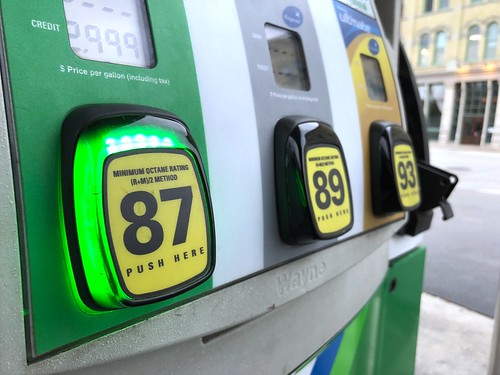
Start Up No.1741: unmasking the fake design agency, the wrong crypto argument, are Groups rural?, EV prices set to fall, and more


If you’re planning to film indoors, consider whether there are fluorescent lights. It could make a big difference to the result. CC-licensed photo by Tom Page on Flickr.

You can sign up to receive each day’s Start Up post by email. You’ll need to click a confirmation link, so no spam.

A selection of 10 links for you. Still a bit windswept. I’m @charlesarthur on Twitter. Observations and links welcome.


The elaborate con that tricked dozens into working for a fake design agency • BBC News

Leo Sands, Catrin Nye, Divya Talwar and Benjamin Lister:

»

Gemma Brett, a 27-year-old designer from west London, had only been working at Madbird for two weeks when she spotted something strange. Curious about what her commute would be like when the pandemic was over, she searched for the company’s office address. The result looked nothing like the videos on Madbird’s website of a sleek workspace buzzing with creative-types. Instead, Google Street View showed an upmarket block of flats in London’s Kensington.

Gemma contacted an estate agent with a listing at the same address who confirmed her suspicion – the building was purely residential. We later corroborated this by speaking to someone who’d worked in the building for years. They had never seen Ali Ayad. The block of flats was not the global headquarters of a design firm called Madbird.

Gemma shared her discovery with another Madbird employee she had got to know and trust – Antonia Stuart, who was leading the company’s expansion into Dubai.

Using online reverse image searches they dug deeper. They found that almost all the work Madbird claimed as its own had been stolen from elsewhere on the internet – and that some of the colleagues they’d been messaging online didn’t exist.

They thought about their options. One was to leave quietly without causing a stir. They had no idea who was behind this con, or the scale of it. They were scared. On the other hand, they worried if the truth wasn’t exposed innocent staff could end up in trouble if they completed deals for Madbird based on lies. Deals were just days away.

In the end, they decided to send an all-staff email from an alias – Jane Smith.

«

Terrific piece of work. It’s also a TV show on BBC3. And raises the question: how do you know your job is real?
unique link to this extract


I was wrong, we need crypto • Hey.com

David Heinemeier Hansson:

»

First the Ottawa police department got GoFundMe to confiscate donations with the intention of redirecting them to other causes [this is not true – Overspill Ed], then after an outcry, they backed down to merely blocking the money for 7-10 days before refunding. That seemed like a draconian escalation completely at odds with the tens of millions of dollars raised for social justice causes during the protest summer of 2020. But at the time, I thought it was something another fund-raising platform – one less likely to collaborate with the Canadian authorities – could route around. And GiveSendGo indeed started doing just that.

Turns out the concern over the donations was quickly rendered insignificant, as just a few days later, the Canadian prime minister imposed martial law on the protestors. Through powers intended for catastrophic events, he took to freeze the bank accounts of both Canadian protestors and donors, to compulsorily demand that tow-truck operators clear the streets, and forced insurance companies to drop policies for the protestors.

That “worked”. Together with police storming the protests with pepper spray and stun grenades, the area in front of parliament was cleared. But even that wasn’t enough. Even with the protests cleared out, the police vowed to press their new financial powers against anyone involved for months to come.

«

So wrong, in so many ways. Canada is nearly the most vaccinated country in the world. The protesters are a foreign-funded unpopular minority who have been indulged while they disrupt daily life. That’s not political protest; it verges on insurrection.

More to the point. Hansson hasn’t considered that even if the protesters were being paid in bitcoin (etc), they’d still need to convert it to dollars. Guess what? That goes through money laundering checks, ie banks. (The Canadian government has flagged 253 bitcoin addresses as part of its investigations of foreign funding.) And you can’t buy fuel, or other things, with cryptocurrency. Maybe a blessing.
unique link to this extract


COVID-19 genetic risk variant we inherited from Neanderthals • Medical Express

»

In the autumn of 2020, Hugo Zeberg at Karolinska Institutet and MPI-EVA [Max Planck Institute for Evolutionary Anthropology] and Svante Pääbo at MPI-EVA showed that we inherited the major genetic risk factor for severe COVID-19 from Neanderthals.

In the spring of 2021, the same researcher duo studied this variant in ancient human DNA and observed that its frequency has increased significantly since the last ice age. In fact, it has become unexpectedly common for a genetic variant inherited from Neanderthals. Hence, it may have had a favourable impact on its carriers in the past.

“This major genetic risk factor for COVID-19 is so common that I started wondering whether it might actually be good for something, such as providing protection against another infectious disease,” says Hugo Zeberg, who is the sole author of the new study in PNAS.

«

See if you can guess what the other infectious disease – which predates Covid by quite some time – is before you click through.
unique link to this extract


Apple Stores employees make effort to unionise • The Washington Post

Reed Albergotti:

»

Before officially filing, Apple Store organizers have been informally gauging interest among the staff, hoping that more than half of the employees will vote to unionize, people familiar with the matter say, the threshold needed to gain official legal standing with the NLRB.

In at least one case, store employees hoped to gain at least 80% support before officially filing to form a union. That’s because the organizers expect that Apple will try to convince employees to vote against the union.

To avoid detection by managers at the stores, employees have been meeting in secret and communicating with encrypted messaging, sometimes using Android phones, the competitor to Apple’s iOS operating system, to avoid any possible snooping by Apple.

Apple Store employees at one store said managers have already begun pulling employees aside and giving speeches about how unions will hurt employees, lower their wages and force Apple to take away benefits and opportunities, such as the “career experience” that Herbst described. Managers try to eavesdrop on employees, they said, while pretending to do something else.

«

It’s probably better for workers to be in a union than not, but I’m interested in the “sometimes using Android phones” bit. If these people work in the Apple Stores they can’t possibly think that Apple is spying on their phones, unless they have phones provided by Apple which has MDM (mobile device management) software on it. If so, OK, there’s a tenuous possibility. But a personal iPhone running WhatsApp or Signal is going to be secure: your messages won’t leak. Are they using Android phones because those are their personal phones? Or, just possibly, the Android phones are PAYG – in effect “burners” so the phone number isn’t listed as a named contact on others’ phones, to show who’s organising if the phone somehow gets compromised? (Quite paranoid thinking now.)

I like the thing about managers eavesdropping. Everyone eavesdrops. It’s just sometimes you’re more paranoid about it.
unique link to this extract


The people of the metaverse • ROUGH TYPE

Nick Carr:

»

It’s revealing that, before the arrival of the net, people didn’t talk about “authenticity” as we do today. They didn’t have to. They understood, implicitly, that there was something solid behind whatever show they might put on for public consumption. The show was not everything. The anxiety of the deep fake had not yet taken hold of the subconscious. The reason we talk so much about authenticity now is because authenticity is no longer available to us. At best, we simulate authenticity: we imbue our deep fakeness with the qualities that people associate with the authentic. We assemble a self that fits the pattern of authenticity, and the ever-present audience applauds the pattern as “authentic.” The likes roll in, the views accumulate. Our production is validated. If we’re lucky, we rise to the level of influencer. What is an influencer but the perfection of the deep-fake self?

I know, I know. You disagree. You reject my argument. You rebel against my “reductionist” speculations. You think I’m nuts. I can almost hear you screaming, “I am not a deep fake! I am a human being!” But that’s what you would think, and that’s what you would scream. After all, you have created for yourself a deep fake that believes, above all else, that it is real.

The metaverse may not yet have arrived, but we are prepared for it. We are, already, the people of the metaverse.

«

unique link to this extract


The internet is Tokyo • Garbage Day

Ryan Broderick, in a joint post with Josh Kramer’s “New Public” newsletter, noting how a leakd Facebook document suggests there’s more use of Facebook Groups in rural areas than urban ones:

»

We can only speculate, but why might rural folks use Facebook Groups more? If they’re like my wife’s Boomer aunt, they just want a place to talk about their interests (in her case, two elderly pugs named Thelma and Louise). Perhaps, because rural America is more conservative, this finding actually means that conservative users are more active in Groups. Or, maybe users in cities just have more options, and are using apps like Nextdoor instead.

But here’s my favorite theory, as expressed by a Facebook staffer with their name blacked out: “My hypothesis is that people in cities have compelling offline alternatives to whatever value FB Groups provide. But that seems a bit simplistic.” Actually, anonymous staffer, it suggests something really complicated — that population density is a factor affecting behavior on social platforms. This is fascinating to think about, and central to our mission at New_ Public.

Offline, density can manifest in rich, varied experiences that make cities worth living in. Our Co-director, Eli Pariser, previously of MoveOn and Upworthy, explained in WIRED why he loves living in crazy dense New York City, near Fort Greene Park in Brooklyn:

»

The park serves as an early-morning romper room, midday meeting point, festival ground, and farm stand. There are house-music dance parties, soccer games during which you can hear cursing in at least five languages, and, of course, the world-famous Great Pupkin Halloween Dog Costume Contest. In short, the park allows very different people to gather, see each other, and coexist in the same space. When it’s all working, Fort Greene Park can feel like an ode to pluralistic democracy itself.

«

«

Pariser, of course, is famous as the author of The Filter Bubble. The idea that population density (or lack of it) leads to different behaviour on social networks is probably overlooked, but it’s been emerging from academic research for some years.
unique link to this extract


The myth of tech exceptionalism • Noema

Yäel Eisenstat and Nils Gilman:

»

All business leaders dislike being regulated (who likes rules?), but many tech leaders believe “tech” is fundamentally different from “mature” industries, like those that create chemicals or cars, whose goods and harms are eventually well understood and therefore regulatable. Tech’s identity, on the other hand, was defined around the constant creation of the radically new or the disruption of the outdated, for which the proper regulatory framework could not be anticipated in advance. Would-be tech regulators were derided as dull bureaucrats, would-be killers of the golden goose, applying rules based on systems that tech itself, if left alone, would soon supersede anyway.

In any other industry, the sorts of harms produced by Big Tech would long ago have spurred the standard response: government regulation. But the tech titans and their stalwarts have shielded themselves by resorting to two basic arguments — really, rhetorical strategies — to fend off the regulators. First, many in the tech world insist that whatever harms technology creates, it is more than outweighed by the good in the present. In a September podcast interview, for example, Instagram head Adam Mosseri argued: “We know that more people die than would otherwise because of car accidents, but by and large, cars create way more value in the world than they destroy. And I think social media is similar.” Of course, Mosseri was roundly mocked for this line — he seemed unaware that, in fact, the auto industry is one of the most heavily regulated in the U.S. and Europe.

«

Terrific essay (not short), via John Naughton. Eisenstat in particular knows very much whereof she speaks: a former CIA officer, she went to work for Facebook in the belief that they were hiring her to find and root out election disinformation. On Day 2 (after Day 1, orientation) she discovered that that wasn’t their intent at all. She left soon after, and is strong Facebook critic.
unique link to this extract


Electric car prices could be about to plummet – here’s why • Sky News

Victoria Seabrook:

»

Battery electric vehicle (EV) prices have already fallen dramatically and are expected to reach parity with petrol or diesel cars between 2025 and 2027 – and be cheaper very soon after.

The average motorist should save £700 a year in fuel costs by switching, according to New Automotive, a research group aiming to accelerate the shift to electric.

The price drop is partly due to advancements in the batteries, set to tumble further still, as well as carmakers producing more mass market cars.

“International agreements on climate change mean car companies understand that there is a global transition to clean transport under way,” said Ben Nelmes from New Automotive.

“They are racing to increase the number of electric models they are selling to secure a share of tomorrow’s car market,” he said.

Now that the auto industry is designing EVs from scratch – rather than adapting existing design structures known as “platforms” – they are improving both performance and cost.

Government plans to set targets for manufacturers to sell more EVs should help prices fall further.

For now, the car industry is calling for increased incentives for buyers until EV prices match those of combustion engine cars.

«

Fun fact: around two-thirds “of people” in the UK have driveways and so could charge at home. I don’t know if that’s meant to equate to households or not, but it’s a lot more than one would expect. And the reason why prices could soon plummet is that a wave of secondhand EVs will hit the market, having been owned by fleets for a couple of years.
unique link to this extract


How to avoid flickering video with fluorescent lights • Untamed Science

Rob Nelson:

»

Essentially the problem has everything to do with understanding how fluorescent lights work. They’re not “on” all the time. Instead they flicker on and off at a certain frequency. They do this so fast that our eyes can’t sense it…

We’ll discuss how to get around this frequency. However, as we go through, understand that the frequency of AC currents differs depending where you are. In much of North and South America it’s 60 Hz and in Europe, Africa and Asia, it’s 50Hz…

If you set your camera up to capture a still frame at a certain frequency, it may mess you up. Here’s why. If you’re always capturing an image at the top of the curve [of illumination] (for example), you’re fine. However, if you start capturing video frames when the fluorescent light is putting out different intensities of light, you’ll run into trouble.

To get around this problem you have to match your frame rate with the frequency of the lights you are in. You need to shoot at frame rates that are divisible by the number of light pulses. So, in a 60 Hz AC area, you’ll need to shoot at 30, 60 or 120 fps.

However, If your camera is set up for European PAL shooting, you may not be able to get these frame rates. You can get around it by simply shooting at different shutter speeds.

«

Mains frequency turns out to be useful for crime solving and a pain for filming. What else? (Thanks Matt L for the link.)
unique link to this extract


The CDC isn’t publishing large portions of the Covid data it collects • The New York Times

Apoorva Mandavilli:

»

For more than a year, the Centers for Disease Control and Prevention (CDC) has collected data on hospitalizations for Covid-19 in the United States and broken it down by age, race and vaccination status. But it has not made most of the information public.

When the CDC published the first significant data on the effectiveness of boosters in adults younger than 65 two weeks ago, it left out the numbers for a huge portion of that population: 18- to 49-year-olds, the group least likely to benefit from extra shots, because the first two doses already left them well-protected.

The agency recently debuted a dashboard of wastewater data on its website that will be updated daily and might provide early signals of an oncoming surge of Covid cases. Some states and localities had been sharing wastewater information with the agency since the start of the pandemic, but it had never before released those findings.

Two full years into the pandemic, the agency leading the country’s response to the public health emergency has published only a tiny fraction of the data it has collected, several people familiar with the data said.

Much of the withheld information could help state and local health officials better target their efforts to bring the virus under control. Detailed, timely data on hospitalizations by age and race would help health officials identify and help the populations at highest risk. Information on hospitalizations and death by age and vaccination status would have helped inform whether healthy adults needed booster shots. And wastewater surveillance across the nation would spot outbreaks and emerging variants early.

«

Pretty bad. By contrasts the UK effort has been laudable – a triumph for open data. (Thanks G for the link.)
unique link to this extract


• Why do social networks drive us a little mad?
• Why does angry content seem to dominate what we see?
• How much of a role do algorithms play in affecting what we see and do online?
• What can we do about it?
• Did Facebook have any inkling of what was coming in Myanmar in 2016?

Social Warming, my latest book, and find answers – and more.


Errata, corrigenda and ai no corrida: none notified

Start Up No.1740: EU eyes search “spam ads”, NFTs are MLM, Wikipedia and the high five, Metaverse moderation hell, and more


There turns out to be a surprising use for tracking the mains frequency in your home. Just hope you never have to call on it. CC-licensed photo by Richard Ash on Flickr.

You can sign up to receive each day’s Start Up post by email. You’ll need to click a confirmation link, so no spam.

A selection of 10 links for you. Not featured in Wordle. I’m @charlesarthur on Twitter. Observations and links welcome.


New EU antitrust frontier emerges for Microsoft and Google: spam ads • POLITICO

Samuel Stolton:

»

A new claim that Microsoft and Google are gaming the online advertising market to the detriment of smaller rivals threatens to set up a new antitrust clash in Europe, according to previously unseen data.

The two U.S. giants appear to be flooding smaller search engine partners with spam ads and keeping some of the most valuable ads for themselves, according to data reviewed by POLITICO, in a move that draws parallels with the infamous €2.4bn Google Shopping case.

While EU competition chief Margrethe Vestager’s 2015 offensive against Google’s abuses in the search market got the backing of the EU General Court in November, there are some who say that blind spots in the case have allowed for certain violations to continue — illustrated by Swedish price-comparison site PriceRunner’s decision earlier this month to sue Google for €2.1 billion in damages.

And now, according to the same data, both Google and its closest rival in the search engine space, Microsoft, are siphoning off so-called spam ads to smaller search engines that use their search results, as well as limiting the quantity of higher-value ads that appear on these partner search engines.

Spam ads are regarded as those that have little relevance to the original search, direct users to less reputable online sources and generate little value for the search engine. In the long term, such ads may turn users away from using alternative search engines like Qwant, Ecosia and DuckDuckGo, and drive them back to the likes of Bing and Google, thereby negatively affecting the smaller players’ bottom lines.

The data, compiled by researchers working in the adtech space who wish to remain anonymous for fear of damaging commercial relations between Microsoft or Google and smaller search engines, indicates that the two internet giants fob off low-value and irrelevant ads to their downstream syndication partners — smaller search engines that rely on both gatekeepers’ huge web page indexes.

«

unique link to this extract


NFTs, cryptocurrencies and web3 are multilevel marketing schemes for a new generation • WSJ

Christopher Mims:

»

In a recent ad for cryptocurrency exchange FTX, Tom Brady asks seemingly everyone in his contact list, “You in?” As in, are you going to join him in buying some crypto, and not, presumably, in being a football star married to a supermodel. The pitch is straightforward celebrity-endorsement fare, designed to capitalize on the FOMO that is the standard psychological tactic of those who are already invested in cryptocurrencies and related technologies, and who would like the rest of us to come aboard. Mr. Brady has an equity stake in FTX.

A “You in?”-style pitch is also typical of successful multilevel marketing companies. Both make a virtue of the fact that our getting “in” will obviously enrich those urging us to do so, by driving up the value of their own holdings or network. And then, hey, the same could be true for us!

It’s a siren song as old as the promise of attaining financial freedom by selling herbal supplements, cosmetics or leggings from the comfort of your home, enhanced and refined by the ways in which modern communications systems can rapidly elevate ideas and movements from the fringe to the center of national and global conversation.

But how does owning or trading crypto, which is after all just data—infinitely reproducible, supposedly nearly free thanks to the internet—make one rich? Or for that matter, owning or trading other digital assets like NFTs (or “nonfungible tokens”) that have become all the rage among celebrity art collectors? The straightforward premise: by using the blockchain—a type of public database that anyone can access and everyone can (supposedly) trust—it is possible to create a chunk of data, known as a token, that is unique in the world, and cannot be reproduced. In other words, it is possible to make a digital object, be it a piece of art or a crypto coin, scarce.

«

He’s absolutely right. Usually MLM schemes thrive in times of hardship, but the NFT MLM has grown up in a time of plenty because there was so much money sloshing about for the past few years that grifters were looking for some way to siphon it in their direction. Hmm, what if you made something that isn’t rare, “rare”? Don’t enquire too much about the quote marks, just pay me.
unique link to this extract


Futures spun and stolen in the metaverse • Noema

Tim Maughan:

»

Like every young kid with an IG account he’d tried minting a few of the images as NFTs. None had sold. Well, not until yesterday, when I got some bots to buy a few. But like every artist that got in after the initial goldrush, Fragileman had realized there was no real money in tokenizing your work when you were starting out. The days of buying any tokenized art you saw just for the novelty or some mystical potentials were long gone; now only established artists, artists with connections and influence and a recognizable brand, made serious money selling their work. 

No, as a new artist there was little point wasting money and carbon on having your work minted when you could tokenize something far more valuable: yourself. Pay an exchange to mint you into an NFT, split it into thousands of shards, and then put those up for sale. Suddenly you were there, legitimately part of the real art world: a line on a chart. 

The artist as tradable financial product, your artistic value ranked by the automated exchanges, subreddit day traders, stonks hustlers, hedge fund analysts and high-frequency trading algorithms. They — the critics, the holdouts, the no-coiner ludds — they keep telling us we’d finally destroyed art, reduced it all to nothing but stocks and shares, meaningless toy money for the world’s rich to play with. Of course, the truth was that’s what art had always been, for centuries if not longer. We just made it more ubiquitous, more efficient, more technologically mediated. We made it faster.

«

Maughan wrote the fascinating SF book Infinite Detail, about a world where the internet (and hence any supply chain that relies on it, ie all of them) has broken down irrevocably. Now he’s looking around at the scenery he sees more recently.
unique link to this extract


The adorable love story behind Wikipedia’s ‘high five’ photos • Input Mag

Annie Rauwerda:

»

One reason I love the Wikipedia article for “high five” is that it’s one of those entries about an utterly basic aspect of everyday life that reads like it was written by a group of aliens observing human beings: “Its meaning varies with the context of use but can include as a greeting, congratulations, or celebration.”

But the high-five Wikipedia page is among my very favourites not because of its writing, but because of its iconic photos — specifically the ones in the section on the “too slow” variation. [High fives offers “up high, down low, too slow!]

I love the aughts fashion, the use of the word “victim,” and the fact that “finger-guns” gets a hyperlink in the last caption. The woman in the photo gives an Oscar-worthy performance in the final image — she looks like she’s on the verge of tears — and her male counterpart couldn’t look more smug. The pictures are endearing and capture a kind of humanity you don’t find in your average stock photo.

The sequence was uploaded on August 14, 2008 by Bgubitz, a user who describes themself as an accountant who likes “sunsets and long walks on the beach.” Today, photos from the “too slow” series are featured on Wikipedia pages in eight languages and get more than 200,000 annual views.

A quick search of “high five wikipedia photo” shows that the images are an object of fascination for many others besides me. People around the world have noted that the pair looks a lot like Rachel and Chandler from Friends. But not everyone is a fan. In 2020, one particularly passionate Wikipedia user named Kugihot suggested the photos be removed because they were “simply a waste of precious Wikipedia public bytes.”

Writing on the article’s talk page, the forum where editors discuss the article at hand, the critic went on: “My main concern that is especially out of place to me is the final image which depicts the use of finger guns, which is arguably completely and utterly irrelevant in the context of different variations of high fives.”

To me, the fact that the photos inspired such extreme pedantry speaks to their power.

«

And so she decided to try to find the two people in the article. Were they an article then before they became part of an article? Might they be now? Being an icon can be a lot of pressure down the years.
unique link to this extract


Electrical network frequency analysis • Wikipedia

»

Electrical network frequency (ENF) analysis is an audio forensics technique for validating audio recordings by comparing frequency changes in background mains hum in the recording with long-term high-precision historical records of mains frequency changes from a database. In effect the mains hum signal is treated as if it were a time-dependent digital watermark that can help identify when the recording was created, detect edits in the recording, or disprove tampering of a recording. Historical records of mains frequency changes are kept on record, e.g., by police in the German federal state of Bavaria since 2010 and the United Kingdom Metropolitan Police since 2005.

The technology has been hailed as “the most significant development in audio forensics since Watergate.” However, according to a paper by Huijbregtse and Geradts, the ENF technique, although powerful, has significant limitations caused by ambiguity based on fixed frequency offsets during recording, and self-similarity within the mains frequency database, particularly for recordings shorter than 10 minutes.

More recently, researchers demonstrated that indoor lights such as fluorescent lights and incandescent bulbs vary their light intensity in accordance with the voltage supplied, which in turn depends on the voltage supply frequency. As a result, the light intensity can carry the frequency fluctuation information to the visual sensor recordings in a similar way as the electromagnetic waves from the power transmission lines carry the ENF information to audio sensing mechanisms.

«

Since I was wondering last week what use monitoring your mains frequency would be.. at least it’s useful to some people. (Still not sure that personally monitoring your own has that much benefit.) (Thanks @Reynolds.)
unique link to this extract


Coronavirus: as BA.2 subvariant of Omicron rises, lab studies point to signs of severity • CNN

Brenda Goodman:

»

The BA.2 virus – a subvariant of the Omicron coronavirus variant – isn’t just spreading faster than its distant cousin, it may also cause more severe disease and appears capable of thwarting some of the key weapons we have against Covid-19, new research suggests.

New lab experiments from Japan show that BA.2 may have features that make it as capable of causing serious illness as older variants of Covid-19, including Delta.

And like Omicron, it appears to largely escape the immunity created by vaccines. A booster shot restores protection, making illness after infection about 74% less likely. BA.2 is also resistant to some treatments, including sotrovimab, the monoclonal antibody that’s currently being used against Omicron.

The findings were posted Wednesday as a preprint study on the bioRxiv server, before peer review…

“It might be, from a human’s perspective, a worse virus than BA.1 and might be able to transmit better and cause worse disease,” says Dr. Daniel Rhoads, section head of microbiology at the Cleveland Clinic in Ohio. Rhoads reviewed the study but was not involved in the research.

The US Centers for Disease Control and Prevention is keeping close watch on BA.2, said its director, Dr. Rochelle Walensky.

“There is no evidence that the BA.2 lineage is more severe than the BA.1 lineage. CDC continues to monitor variants that are circulating both domestically and internationally,” she said Friday.

«

There’s no evidence in humans. The Japanese paper infected hamsters and looked “surrogate markers for bronchoconstriction or airway obstruction”. Very unconfirmed.
unique link to this extract


Why I will never buy another Samsung device • Medium

Juhani Lehtimäki:

»

I needed to replace my aging Pixel 4 and after watching Marques’ video I decided to face my old dislike and go for a Samsung device. The [foldable] form factor definitely made the phone interesting, although costly.

The phone arrived and to my surprise Samsung software had become bearable, even likable over the years since I last tried it. I swapped out my Pixel and the Flip became my daily driver. I started to really like the phone. Foldables will definitely have a place in the future line-up of smartphones. All was looking good and in 3 months in I was happy with my purchase. But then…

One day, I took the phone out of my pocket and the screen had a black part in the middle and the top half no longer responded to touch. When I got home the black part has expanded and kept growing. The screen clearly had failed from the fold. But hey, no worries, I had not dropped the phone, it was in case and I’ve only used the phone the way I’ve always used my other phones.

So I’ll just send it to Samsung for repairs and all is good. Folding is still new tech so shit happens, I didn’t really mind.. until I received a response from Samsung repair:

»

We regret that your Samsung SM-F711BZGEEUB could not be repaired under warranty.
Based on the information you have provided, we have contacted our service partner to obtain more detailed information regarding the repair.
During the technical inspection of your device, the technician was able to determine that in addition to the display, the frame is also broken and that this damage is due to a mechanical impact, such as a fall, bending or excessive pressure.

«

«

It’s pretty dramatically bad for a phone that cost €1,099. Samsung will fix the screen for €304. But his real argument is that for such an early product, making early adopters bear the downside won’t encourage adoption.
unique link to this extract


Google should kill Stadia • Ars Technica

Ron Amadeo:

»

Google CEO Sundar Pichai opened the Stadia announcement by touting the worldwide scale of Google’s cloud, saying:

»

Our custom server hardware and data centers can bring more computing power to more people on planet Earth than anyone else. Today, we are in 19 regions and in over 200 countries and territories connected by hundreds of thousands of miles of fiber optic cables.

«

Google is a massive cloud computing company that has servers all over the world. So Stadia is available all over the world, right?

Not exactly. Stadia certainly isn’t available in “over 200 countries.” It’s available in just 22 countries, or about 10% of the scale Pichai heavily implied Google could work at.

Until recently, Stadia’s home inside Google has been the hardware division, with project leader Phil Harrison reporting to Google Hardware SVP Rick Osterloh. Google is actually pretty bad at competing on an international scale, and every Google Hardware product is capped at about 20 countries. It is strange that Stadia, a cloud service, ended up in the hardware division, but that’s where Google decided to put it. The company really wants people to use its game controller and Chromecast media players, so Stadia is limited to the small list of countries Google is willing to sell hardware in. (If you compare the Google Hardware country list to the Stadia country list, they are essentially the same.)

To be fair, international business is hard. Can any of Google’s competitors match Stadia’s 22-country distribution list?

Nvidia’s GeForce Now is available in 82 countries. Xbox Cloud Gaming—which is still labeled a “beta”—is available in 26 countries. Google is in third place. PlayStation Now—the most neglected service on our list (though it is reportedly due for a big update)—works in 19 countries. Google has Amazon Luna soundly beat, at least. That service is still in an invite-only “early access” and is available in one country, the United States.

«

Amadeo is frequently brutal about Google products and services, which must hurt the Google PR folk as he’s Ars Technica’s Google correspondent. There’s a lot more to this article, but he develops his case solidly.
unique link to this extract


Being a Facebook Metaverse ‘Community Guide’ seems like a nightmare job • Vice

Emanuel Maiberg:

»

Imagine you had to moderate a Facebook comment thread, only each commenter was able to come up to you, wave their hands in your face, and scream whatever they want.

That’s what some moderators of Facebook virtual reality platform Horizon Worlds are dealing with, and it looks just as nightmarish as it sounds. 

“Trying to not smash my headset, like in frustration,” one Horizon Worlds Community Guide with the screen name Peanutbutter can be heard saying in a TikTok uploaded by @vrpranksters after interacting with a bunch of kids fighting and screaming over a virtual boomerang. 

“Shhhh, can you guys stop?” Peanutbutter asks the screaming kids as he floats away to a quiet corner and attempts to help an older man navigate Horizon Worlds’ menus. “Please, I’m trying to actually help an adult here.” 

Peanutbutter sighs loudly and approaches the group of kids. “You guys know you’re not supposed to hit each other in here and yet you’re doing it?” he asks.

Most people don’t know this because they don’t have virtual reality headsets, but Facebook isn’t just talking about the “metaverse” and selling Oculus devices. It is actively letting people create virtual reality spaces and hosting its own with a flagship VR platform it calls Horizon Worlds.

Facebook says that Horizon Worlds allows users to find and create “communities” in VR, which understandably requires what the company calls “Community Guides,” people who appear in these spaces in order to help users who are new to VR and also do some basic moderation. 

«

You can see the video at this tweet. It does indeed look like a nightmarish task.
unique link to this extract


EU accuses China of ‘power grab’ over smartphone technology licensing • Financial Times

Andy Bounds:

»

The EU is taking China to the World Trade Organization for alleged patent infringements that are costing companies billions of euros, as part of what officials in Brussels claim is a “power grab” by Beijing to set smartphone technology licensing rates.

Businesses, including Sweden’s Ericsson, Finland’s Nokia and Sharp of Japan, have lost money after China’s supreme court banned them from protecting their patents by securing licensing deals in foreign courts, the European Commission said.

Chinese courts set licence fees at around half the market rate previously agreed between western technology providers and manufacturers such as Oppo, Xiaomi, ZTE and Huawei, it added.

“It is part of a global power grab by the Chinese government by legal means,” said a European Commission official. “It is a means to push Europe out.”

Smartphone makers have agreed global standards for telecommunications networks. In return, technology manufacturers must license their patents to others. If they cannot agree on a price, they go to court to set it. Chinese courts generally set prices at half the level of those in the west, meaning their companies pay less for the technology from overseas providers.

In August 2020, China’s Supreme People’s Court decided that Chinese courts can impose “anti-suit injunctions”, which forbid a company taking a case to a court outside the country. Those that do are liable for a €130,000 daily fine and the judgments of courts elsewhere are ignored.

«

Patents are a sort of intellectual property supply chain for smartphones in particular, and the disputes get very vicious and nationalistic.
unique link to this extract


• Why do social networks drive us a little mad?
• Why does angry content seem to dominate what we see?
• How much of a role do algorithms play in affecting what we see and do online?
• What can we do about it?
• Did Facebook have any inkling of what was coming in Myanmar in 2016?

Social Warming, my latest book, and find answers – and more.


Errata, corrigenda and ai no corrida: none notified