
Unknown's avatar

About charlesarthur

Freelance journalist - technology, science, and so on. Author of "Digital Wars: Apple, Google, Microsoft and the battle for the internet".

Start Up No.1860: Electricity traders get nervous, are half of bitcoin trades fake?, meet Biden’s social media maven, and more


Consider carefully – would it be legal to refuse to hire someone based on their star sign? CC-licensed photo by Numerology Sign on Flickr.

You can sign up to receive each day’s Start Up post by email. You’ll need to click a confirmation link, so no spam.

A selection of 9 links for you. Even on your holidays. I’m @charlesarthur on Twitter. Observations and links welcome.


Listening to European electricity traders is very, very scary • Bloomberg via The Washington Post

Javier Blas:

»

Every week, the people who trade electricity in the UK get to quiz the managers of the National Grid for an hour. The conference call, which anyone can monitor, offers an insight into what the men and women on the front line of the power market are worried about. Listening to them is getting scarier by the week — and suggests keeping the lights on this winter will be a lot more challenging than European governments are admitting.

Prices are worrying enough. British households were told on Friday that their power and gas bills will increase from Oct. 1 by 80%. The so-called energy price cap was set at £3,549 ($4,189) per year, up from £1,971 over the past six months and £1,277 during last winter.

But the industry’s teleconference suggests the problem is broader than just rising costs. Increasingly, the words “emergency” and “shortages” are being used, with participants focusing on when, rather than if, a crisis will hit. Imagine being able to overhear conversations between Wall Street executives and the Federal Reserve as the global financial crisis unfolded in 2008.

Here’s a question from last week’s session: “Are you war-gaming possible options for if/when cross-border trading collapses under security of supply pressures this winter?” And another: “Can we have a session where we talk through the emergency arrangements?” Another participant said that the forecast for demand-and-supply electricity balance showed “how bad the winter could be for anyone who can do the maths.” The same caller was blunt about the grid’s own predictions: “I don’t think you believe what you’ve written, and nobody else does.”

One intervention was particularly revealing. “Based on where winter ‘22 products are trading, where does this position yourself with respect to securing power over the winter?” asked one participant. The background? In the forward market, UK power for December 2022 is fast approaching £1,000 per megawatt hour, up 50% from current prices. The implication? Power shortages.

«

Going back to the 1970s, in an unfortunate hurry.
unique link to this extract


Closure of coal power station set to be delayed to prevent UK blackouts • The Guardian

Alex Lawson:

»

[German owner] Uniper had been due to decommission one of its 500-megawatt units at the Nottinghamshire plant at the end of September, two years before closing the remaining three units at the site.

Under the deal [first sought in May], the National Grid is expected to pay the company a fee to delay the decommissioning so all three units can be called on if needed. Uniper will also be compensated for costs incurred, including coal purchases, with any additional charges eventually being fed through to consumers’ energy bills.

The UK government has committed to ending the use of coal power in Great Britain by October 2024, a year earlier than originally planned. But that target is now at risk as ministers and power operators race to ensure security of supply.

Deals with Drax and EDF to extend the life of two units each from October to the end of March have already been agreed.

Drax, which operates a power plant in Yorkshire, said it had agreed to source up to 400,000 tonnes of additional coal, which with current stocks is enough to produce 1 terawatt of electricity. The plant will only operate when instructed to do so by National Grid.

«

Upfront cost of the deals: £220m-£420m, depending how much coal (whose price has predictably soared) is needed. It’s a contingency, but a reminder once more of the penalty we pay for inaction in the past. Knock the coal-fired stations down, cover the space with solar panels (or leave them up and ditto). After all, they’re already in the right place for a grid connection.
unique link to this extract


More than half of all bitcoin trades are fake • Forbes

Javier Paz:

»

As part of Forbes research into the crypto ecosystem using 2021 data, we ranked the 60 best exchanges in March. More recently we conducted a deeper-dive into the bitcoin trading markets to answer a few pressing questions:

Where is bitcoin traded? How much bitcoin gets traded every day? How is bitcoin traded? Our study evaluated 157 crypto exchanges across the world. Here are our main findings:

• More than half of all reported trading volume is likely to be fake or non-economic. Forbes estimates the global daily bitcoin volume for the industry was $128bn on June 14. That is 51% less than the $262bn one would get by taking the sum of self-reported volume from multiple sources.
• Tether, the world’s largest stablecoin, continues to be a dominant player in the crypto trading economy, especially when it comes to trades against bitcoin. Its current market capitalization is $68bn, despite questions about its reserves.

In terms of how much bitcoin activity takes place at these firms, 21 crypto exchanges generate $1bn or more in daily trading activity, while the next 33 exchanges had volume between $200m and $999m across all contract types, spot, futures and perpetuals.…
• The biggest problem areas regarding fake volume are firms that tout big volume but operate with little or no regulatory oversight that would make their figures more credible, notably Binance, MEXC Global and Bybit. Altogether, the lesser regulated exchanges in our study account for approximately $89bn of the true volume (they claim $217bn).
• The creation of new trading assets and products such as stablecoins and perpetual futures adds complications for national authorities seeking to regulate crypto markets. Major US exchanges hardly utilize these instruments or contracts in any of their trading. However, offshore exchanges make significant use of them as ways to synthetically create US dollar liquidity on their platforms (they cannot get US bank accounts).
• In the Western world and particularly in the US, it is tempting to think of bitcoin only trading against either the US dollar or the euro and British pound. But some of the largest trading pair activity occurs against fiat currencies like the Japanese yen and Korean won and against major stablecoins like Binance US dollar and the USD coin.
• 573 million people visit crypto exchange websites on a monthly basis.

«

So the fake trading is probably “wash trading” – basically passing the asset from one hand to the other and back again. Surprising if it’s only half fake, to be honest.
unique link to this extract


Megan Coyne, the voice of New Jersey, is headed to the White House • New Jersey Globe

David Wildstein, at the beginning of August:

»

Just five years after interning on Phil Murphy’s 2017 gubernatorial campaign, Livingston native Megan Coyne is on her way to the White House.

Coyne, one of the architects of New Jersey’s hugely successful Twitter account with an attitude departed last week as Murphy’s social media director to join the Biden administration.

“It’s an absolute dream come true to be joining the Office of Digital Strategy as Deputy Director of Platforms,” Coyne said on Twitter on Monday.  “So excited for the journey ahead.”

Coyne and her boss at the time, Pearl Gabel, brought life and a quintessential New Jersey manner to a once dull state-run Twitter account that began to take off in 2019. “Who lets New Jersey have a Twitter?” tweeted someone with 88 followers. The reply – “Your mom” – had nearly a half-million likes and 85,000 retweets.

More than 439,000 followers watch the wit and sarcasm of New Jersey’s official Twitter account every day, which has garnered national attention.

“Megan Coyne has been an incredibly valuable member of our team, and her humour and wit will be greatly missed in our office,” said Murphy.  “Her passion for our state—and fierce defense of Central Jersey—is unparalleled and as the person behind @NJGov, Megan’s voice has become synonymous with New Jersey.  I wish her the best at the White House.”

As New Jersey’s social media tone setter, Coyne has played nearly every conceivable New Jersey card: the Sopranos, Springsteen and Bon Jovi.  She has picked fights with other states, especially in defense of New Jersey’s pizza industry, and has treated the Taylor Ham vs. Pork Roll war fairly, even though she knows the real name is Taylor Ham.

«

That was the beginning of August. Coyne graduated (with a BA in political science) in 2019, so is in her mid-20s. She seems to have been the brains behind the excoriating tweet thread from the White House last week which picked out Republicans complaining about student loan forgiveness and citing PPP loans *they* had taken that had been forgiven. One to watch, especially as the November midterm elections approach.
unique link to this extract


SwitchBot Lock review: a smart lock with seven ways to unlock your door • The Verge

Jennifer Pattison Tuohy:

»

heThe $99 SwitchBot Lock is the first smart door lock I’ve tested that doesn’t replace any part of your existing lock. Instead, it attaches to the back of your door over the top of the thumb turn. This removes a major pain point of smart locks: an involved installation. But the SwitchBot Lock is really odd looking — my husband literally stopped in his tracks and said, “What is that thing?” I had a similar reaction when I first saw it and was wholly unconvinced this large piece of black plastic would have the power to unlock my deadbolt.

I was surprised to discover that the SwitchBot Lock moves that thumb turn just as well as I can, and it stayed firmly put during my two weeks of testing, despite being attached solely by double-sided sticky tape. (No word yet on long-term durability, but it looks promising so far).

The downsides are that it’s not very smart and it’s missing a few key features (haha). You also need around $70 worth of accessories to add smart home control and a keypad. This puts it closer in price to more elegant-looking solutions, such as the $230 August Wi-Fi Smart Lock, which needs a bit more work to install but doesn’t leave you with a honking great piece of plastic on your door.

The SwitchBot Lock is a retrofit Bluetooth-powered smart door lock that can lock and unlock your door using the SwitchBot app on a smartphone or Apple Watch. (It’s not Home Key compatible). It attaches to your door using 3M VHB tape and uses a small plastic grabber to hold on to and turn the lock’s thumb turn.

That grabber can turn anything. Videos in Amazon reviews show it even turning a key, making this an excellent solution for people with nontraditional door locks and multipoint locks who can’t get any other smart lock to work (see a list here). It’s cleverly engineered with shifting base plates that prevent the lock from twisting itself off while turning the lock.

«

Nice idea for retrofitting (though wouldn’t it need screwing in for really tricky locks?). Doesn’t seem to have reached the UK yet, though Switchbot does have lots of things for remotely opening and closing curtains.
unique link to this extract


Truth Social faces financial peril as worry about Trump’s future grows • The Washington Post

Drew Harwell:

»

Former president Donald Trump’s Truth Social website is facing financial challenges as its traffic remains puny and the company that is scheduled to acquire it expresses fear that his legal troubles could lead to a decline in his popularity.

Six months after its high-profile launch, the site — a clone of Twitter, which banned Trump after Jan. 6, 2021 — still has no guaranteed source of revenue and a questionable path to growth, according to Securities and Exchange Commission filings from Digital World Acquisition, the company planning to take Trump’s start-up, the Trump Media & Technology Group, public.

The company warned this week that its business could be damaged if Trump “becomes less popular or there are further controversies that damage his credibility.” The company has seen its stock price plunge nearly 75% since its March peak and reported in a filing last week that it had lost $6.5m in the first half of the year.

…There are signs that the company’s financial base has begun to erode. The Trump company stopped paying RightForge, a conservative web-hosting service, in March and now owes it more than $1m, according to Fox Business, which first reported the dispute.

The company also has struggled with some basics of corporate operation. The US Patent and Trademark Office this month denied its application to trademark “Truth Social,” citing the “likelihood of confusion” to other similarly named companies, including an app, “VERO — True Social,” first released in 2015.

«

The alternative web headline for this story is “Trump’s Truth Social isn’t paying its bills”. Next: remarkable news about the toilet habits of bears.
unique link to this extract


San Francisco police and car thefts: what they can and can’t do to help you • San Francisco Chronicle

Megan Cassidy had her car stolen while observing a court case in San Francisco:

»

In recent months, I’ve spoken to many theft victims who were able to pinpoint the location of their luggage, bicycles and other stolen goods.

While this technology has been around for years, police say its spread — particularly Apple’s introduction of the AirTag last year to compete with products like the Tile tracker and the Galaxy SmartTag — has prompted a boom in calls for help like mine.

As the Washington Post’s Heather Kelly wrote in an article in October, after tracking down her stolen Honda Civic in San Francisco, Apple’s marketing for the AirTag focuses on misplaced items and makes “no mention of crime, theft or stealing in any of the ads, webpages or support documents. But in reality, the company has built a network that is ideal for that exact use case.”

Recent stories have documented similar recoveries in Memphis, Atlanta and Seaford Rise, a suburb of Adelaide in Australia.

In San Francisco, a city rife with gadget-lovers and plagued by high property crime, the technology would seem to be a game changer. But in reality, situations like my stolen Subaru can often be mired in unforeseen complications.

The response by police has at times been thwarted by legal constraints — for example, an officer generally can’t enter a home just because the Find My iPhone app says your cellphone is inside — and at other times by what victims say feels like apathy.

Police officials say the reality is that a stolen phone, bike or even car is not as high a priority as a violent crime, so cops don’t always have time to get involved and stay involved.

The result can be maddening for victims armed with case-cracking evidence. And while police say they always advise these victims against following their valuables into potentially dangerous situations, many people told me they felt they had no choice but to go cowboy.

«

Seems like frustration with the police over property crimes is a common thread between the west coast of the US and all across the UK. Too few police, and an abundance of caution in the US where everyone might be armed and/or violent.
unique link to this extract


Rocket ships and tractors • Benedict Evans

Evans, on how revenue isn’t necessarily a necessity early on:

»

If you are acquiring tens or hundreds of millions of users with a new kind of service, and they are attributing value and attention to you, and the users, attention and value have network effects and hence probably winner-takes-all effects, and if they come with little or no marginal cost, then the revenue can and probably should come later. It is probably more important to focus on building the value than making money from the value – revenue is a feature, and you should build it later. Indeed, one of the ways NewsCorp killed MySpace was by trying to make money too early. Such companies spend much more time looking at MAU/DAU [monthly, daily average users] than OFCF [operating free cash flow].

In other words, if you’re on a rocket ship, and it’s going up very fast, don’t argue about the thrust-to-weight ratio. The thrust-to-weight ratio is ‘lots’. Your aim is to keep it pointed roughly upwards and make sure you don’t blow up – you can worry about the revenue model once you get into orbit.

However, there are other companies that are not rocket ships, but instead look more like tractors towing a heavy set of equipment across a muddy field. For these companies, Mr Micawber is much more relevant than Eric Schmidt. For a tractor, success comes down to the gearing ratios – you have 10 or 20 or 30 operating metrics, all interlocking, and their end result is the difference between £19.99 and happiness and £20.01 and misery. If Facebook or Snap were rocket ships, Uber or Instacart are tractors – it’s all about the ratios. For these kinds of companies, you need to have a pretty good idea of the unit economics before you start. 

…People really did think that Facebook would never make money, and they also looked at Wework and thought that arbitraging long-term rents against short-term rents could have high margins. WeWork could, theoretically, be a sustainable business, but it was never a rocket ship. And to stretch the analogy, if you put hydrogen peroxide into a tractor’s fuel tank, the results will be entertaining, but only from a safe distance.

This is also another way to look at the recurring question ‘is that a tech company?’, which can also mean ‘is that a software company?’ or, really, ‘does that have the scope for a 50x return?’ Software companies tend to be high gross margin companies – in the 1980s they sold you a couple of pieces of plastic in a cardboard box for $500, which is one reason Bill Gates became the richest man in the world. Pure software companies can have very high leverage on success.

«

unique link to this extract


Capricorns need not apply: is it legal to pick a roommate by astrological sign? • The Guardian

Kari Paul:

»

Is choosing a roommate based on their astrological sign simply a preference, or illegal discrimination? It may depend on where you live.

This week, a post sharing the response to a housing inquiry went viral when the applicant was turned down for their zodiac sign of Capricorn.

“Our main goal is to keep things egalitarian, without anyone being ‘in charge’ or domming the household,” the original poster said. Capricorns are known for being “know-it-alls”, “unforgiving” and condescending as well as good managers, disciplined and self-controlled, according to online astrology resources. “I love capricorns, but I don’t think I could live with one,” the post said.

People often share preferences for certain astrological signs, swearing to never date another Gemini (as pop star Lizzo did on her most recent album). As interest in astrology grows and apps to look up the signs of potential co-workers, partners and housemates become more mainstream, some have speculated that rejecting someone based on their star sign is a form of discrimination.

This argument is legally tenuous at the federal level, said David Levine, a professor who teaches civil procedure law at the University of California Hastings College of Law.

“In order for this to be legally considered discrimination, you have to fall within a protected category,” he said. “Otherwise, you can choose to create a housing contract for any reason you want.”

«

There’s a rumour that I can’t track down that a famous female singing star recently refused to hire various backing dancers on the basis of their star sign. If it’s not a protected characteristic, though, I guess we could start seeing this in job interviews as a way to winnow applications?
unique link to this extract


• Why do social networks drive us a little mad?
• Why does angry content seem to dominate what we see?
• How much of a role do algorithms play in affecting what we see and do online?
• What can we do about it?
• Did Facebook have any inkling of what was coming in Myanmar in 2016?

Read Social Warming, my latest book, and find answers – and more.


Errata, corrigenda and ai no corrida: none notified

Start Up No.1859: Twitter does podcasts!, Microsoft scammers try USB sticks, is this “peak TV”?, IMDb’s review bombs, and more


Google’s estimates for the climate impact of flights it finds for you have been cut substantially, a code change shows. CC-licensed photo by Bill Abbott on Flickr.

You can sign up to receive each day’s Start Up post by email. You’ll need to click a confirmation link, so no spam.

A selection of 9 links for you. Piecemeal. I’m @charlesarthur on Twitter. Observations and links welcome.


Google ‘airbrushes’ out emissions from flying, BBC reveals • BBC News

Justin Rowlatt:

»

The way Google calculates the climate impact of your flights has changed, the BBC has discovered, meaning flights now appear to have much less impact on the environment than before.

That’s because the world’s biggest search engine has taken a key driver of global warming out of its online carbon flight calculator.

With Google hosting nine out of every 10 online searches, this could have wide repercussions for people’s travel decisions. “Google has airbrushed a huge chunk of the aviation industry’s climate impacts from its pages” says Dr Doug Parr, chief scientist of Greenpeace.

The company said it made the change following consultations with its “industry partners”. It affects the carbon calculator embedded in the company’s “Google Flights” search tool.

Google says this feature is designed “to help you make more sustainable travel choices”. Yet in July, Google decided to exclude all the global warming impacts of flying except CO2.

Some experts say Google’s calculations now represent just over half of the real impact on the climate of flights. “It now significantly understates the global impact of aviation on the climate”, says Professor David Lee of Manchester Metropolitan University, the author of the most comprehensive scientific assessment of the contribution of air travel to global warming.

Flying affects the climate in lots of ways in addition to the CO2 produced by burning aviation fuel. These include the creation of long thin clouds high up in the atmosphere – known as contrails – which trap heat radiated by the Earth, leading to a net warming effect on our planet.

These additional warming impacts mean that although aviation is only responsible for around 2% of global CO2 emissions, the sector is actually responsible for around 3.5% of the warming caused by human activity. And it is a sector that is only going to get bigger. Since 2000 emissions have risen by 50%, and the industry is expected to grow by more than 4% every year for the next two decades, according to the International Energy Agency (IEA).

«

Spotted, no kidding, by a change on Github, where the code for the calculation is housed.

Question for Google: why not be aggressive in its estimates for the impact?
unique link to this extract


Twitter whistleblowing report actually seems to confirm Twitter’s legal argument, while pretending to support Musk’s • Techdirt

Mike Masnick:

»

The first and most important thing to remember is that, even as Musk insists otherwise, the Twitter lawsuit is not about spam. It just is not. I’m not going to repeat everything in that earlier story explaining why not, so if you haven’t read that yet, please do. But the core of it is that Musk needed an escape hatch from the deal he didn’t want to consummate and the best his lawyers could come up with was to claim that Twitter was being misleading in its SEC reporting regarding spam. (As an aside, there is very strong evidence that Musk didn’t care at all about the SEC filings until he suddenly needed an escape hatch, and certainly didn’t rely on them).

But — and this is kind of important — many of Musk’s claims were based on either misunderstanding or deliberately misreading Twitter’s SEC filings. As I’ve explained multiple times now, what Twitter reports to the SEC is how much spam is likely included in their “monetizable daily average user” (mDAU) accounting. This is not, and has never been, about “how much spam is on the platform.” The company came up with this other metric — mDAU — that is a segment of the total Twitter population. As Mudge’s report notes, an mDAU is defined as a “valid user account that might click through ads and actually buy a product.”

That’s not every account. There are accounts that are inactive. There are accounts that are automated (but useful — such as those tweeting out the weather or earthquakes or whatnot). There are lots of accounts that may exist on the platform, but may not be counted in mDAU. And that includes some spam/bot accounts. That has always been clear for anyone who reads the details.

Next, Twitter’s filings with the SEC are only about how much spam is in their mDAU number. This takes place after Twitter has made use of other processes to try to eliminate spam accounts from the mDAU, and then they do a daily spot check of 100 accounts. That creates a sample size of 9000 over the course of a quarter (the time period between Twitter reports), and is statistically significant for declaring that less than 5% of the mDAU is spam.

«

But of course Musk’s lawyers brought it up in legal pleadings on Wednesday: “The way Mr. Zatko [the whistleblower] put it, management had no appetite to properly measure bot accounts,” said Musk’s lawyers.
unique link to this extract


Twitter is becoming a podcast app • The Verge

Ariel Shapiro:

»

Twitter is officially getting into podcasts. The app will launch a test version of Twitter Spaces today that includes podcasts, letting you listen to full shows through curated playlists based on your interests.

The redesigned Spaces tab opens with Stations, topic-based playlists combining podcast episodes pulled from RSS with Twitter’s social audio events and recordings. It functions like a Pandora station but for spoken word and is pretty different from the a la carte listening podcast consumers are used to on Apple Podcasts or Spotify. Live and upcoming spaces are still in the tab, further down the page. The test will roll out to a random group of users across the world, initially only in English.

The more users listen, the more tailored the audio Stations will become. But Twitter isn’t starting from square one — the company is relying on what it already knows about its users’ interests to curate the playlists. It’ll draw from the interests of people they follow, as well. “What we’re really trying to capture here is as if it’s like another user recommending you something,” Twitter senior product manager Evan Jones, who focuses on audio, told Hot Pod.

Podcast discovery is notoriously difficult, limited either to top 100 charts, hand-picked selections on apps, or — more often than not — word of mouth. No platform has managed to crack it, yet.

It’s easy to imagine the promotional possibilities around being able to share and listen to podcasts in the same app, but it’s not quite there yet. The test does not yet have a clipping capability, and listening can only happen in the Spaces tab, not on the timeline. That being said, Spaces has a clipping feature that could be applied to podcasts at some point.

«

Neatly taking it full circle: Twitter was originally Odeo, a podcast company, and pivoted to a messaging project in July 2006. So, 16 years to go sort of full circle.
unique link to this extract


Criminals posting counterfeit Microsoft products to get access to victims’ computers • Sky News

Alexander Martin:

»

Microsoft has confirmed to Sky News that criminals are posting counterfeit packages designed to appear like Office products in order to defraud people.

One such package seen by Sky News is manufactured to a convincing standard and contains an engraved USB drive, alongside a product key.

But the USB does not install Microsoft Office when plugged in to a computer. Instead, it contains malicious software which encourages the victim to call a fake support line and hand over access to their PC to a remote attacker.

Microsoft launched an internal investigation into the suspect package after being contacted by Sky News.

The company spokesperson confirmed that the USB and the packaging were counterfeit and that they had seen a pattern of such products being used to scam victims before.

They added that while Microsoft had seen this type of fraud, it is very infrequent. More often when fraudulent products are sold they tend to be product keys sent to customers via email, with a link to a site for downloading the malicious software.

«

Apparently originally sent to a retired man’s home. Seems like the “Microsoft virus” scammers, who have been at this for at least 15 years, have moved on to a new method of targeting people.
unique link to this extract


Big budget blockbusters arrive amid fears of ‘peak TV’ • Financial Times

Alex Barker and Christopher Grimes:

»

this autumn will present audiences with a flood of some of the most expensive television ever produced.

On September 2, Amazon Prime will release its adaptation of The Lord of the Rings, with an estimated budget of $465mn for the first season — almost enough to make Top Gun: Maverick three times over.

HBO Max’s House of the Dragon — the prequel to Game of Thrones — is reported to have cost $200mn for the season’s 10 episodes. At Disney Plus, Star Wars: Andor will lead a large slate of new programmes that include a Pinocchio remake, She Hulk, and a spin-off of the Cars franchise.

…there are growing concerns that inflation will bite into discretionary spending, including on streaming services.

“Everyone [in Hollywood] is throwing big dollars after big things,” said Niels Juul, who was an executive producer of Martin Scorsese’s Netflix film The Irishman. “But [subscribers] are inundated now to the point where they are looking at their monthly bills and saying, ‘Something’s got to go — I’ve got $140 worth of subscriptions here!’”

Even so, Tom Harrington at Enders Analysis said consumers were still getting a better deal than the streaming companies themselves. “People get through $100mn of TV in a day and say: ‘what’s next?’ From a consumer point of view that is great. But for a video operator, it’s clearly unsustainable.”

This year’s wave of new programming is due in part to the bottleneck of Covid-delayed productions finally easing up. Yet it is unlikely that it will result in the kind of breakneck subscriber gains that streamers experienced during the pandemic — at least not in North America or the UK. The two leading streamers, Netflix and Disney, have had little growth in those markets this year.

«

I’d also observe: retreads. Not a single one of those is an original idea. Is that just how it goes?
unique link to this extract


She-Hulk’s review bombing proves IMDB’s biggest ratings problem • ScreenRant

De’Vion Hinton:

»

In the wake of its premiere, She-Hulk: Attorney at Law has become the latest in a growing list of movies and television series that have fallen victim to review-bombing on the website IMDb. The Internet Movie Database, popularly known as IMDb, has become a go-to resource for casting news, release dates, and audience reviews of films and shows. However, as exposed by the review bombs of She-Hulk and other recent projects, IMDb’s intent to offer a credible index of genuine audience reviews has been massively undermined by one of its own rules and by the site’s rise in popularity. The rise in bad-faith IMDb reviews, particularly for projects led by women and/or BIPOC, threatens to render the site’s scores meaningless if the problem is not addressed.

She-Hulk: Attorney at Law is an MCU comedy series starring Tatiana Maslany as Jennifer Walters, cousin of Bruce Banner, a.k.a. the Hulk. The show is looking to break new ground for the MCU in terms of style and form. Its first episode has drawn comparisons between the characters She-Hulk and Deadpool, with the series looking to deliver a similar sort of self-aware, fourth-wall-breaking humor combined with sitcom tropes and superhero action. As a result, She-Hulk: Attorney at Law has received acclaim to the tune of an 82% critics rating on Rotten Tomatoes. Yet even before any episodes became available to the public, many IMDb users sought to undermine the series by leaving as many one-star reviews as possible, striving to create a negative narrative around the latest Marvel release.

«

Internet rule 1: if you have an open ratings system, it will get abused.
Internet rule 2: if it involves something that white teenagers can get offended about, it will get seriously abused.
unique link to this extract


What the Colorado river water shortage means for the U.S. • ProPublica

Abrahm Lustgarten interviews Jay Famiglietti, executive director of the Global Institute for Water Security at the University of Saskatchewan :

»

Q: Let’s start with the Colorado River because it’s in the news. The federal government has put some extraordinary numbers out there, suggesting water users [should] cut between 2 and 4 million acre-feet of water usage starting this year — roughly 40% of the entire river’s recent flow. How could that possibly happen?

Jay Famiglietti: It’s going to be really hard. We’re looking at drastically reduced food production and the migration of agriculture to other parts of the country and real limits on growth, especially in desert cities like Phoenix. My fear is that groundwater will, as usual, be left out of the discussion — groundwater is mostly unprotected, and it’s going to be a real shit show.

Q: Remind us how that happens. States and farmers cut back on the Colorado River, and California and Arizona just start pumping all the water out of their aquifers?

JF: Yeah. This started with the drought contingency plan [the 2018 legal agreement among the states on the Colorado River]. Arizona had to cut nearly 20% of its Colorado River water. To placate the farmers, the deal was that they would have free access to the groundwater. In fact, something like $20 million was allocated to help them dig more wells. So, it was just a direct transfer from surface water to groundwater. Right away, you could see that the groundwater depletion was accelerating. With this latest round, I’m afraid we’re just going to see more of that.

Q: Some of that groundwater actually gets used to grow feed for cattle in the Middle East or China, right? There’s Saudi-owned agriculture firms planting alfalfa, which uses more water than just about anything, and it’s not for American food supply. Do I have that right?

JF: There’s been other buyers from other countries coming in, buying up that land, land grabbing and grabbing the water rights. That’s happening in Arizona.

Q: What about in California? Groundwater depletion has caused the earth to sink in on itself. Parts of the Central Valley are 28 feet lower today than they were a century ago.

JF: California passed the Sustainable Groundwater Management Act in 2014, which mandated an extraordinarily long time horizon: two years to form the Groundwater Sustainability Agencies and then five years for each GSA to come up with its sustainability plan. So that’s now: 2022. And then 20 years to come into sustainability. My fear is that the slow implementation will allow for too much groundwater depletion to happen. It’s sort of the same old, same old.

«

Amazing little glimpse of capitalism: other countries come in and buy up bits of the US to put water-intensive crops in for their animals.
unique link to this extract


China’s Chongqing extends factory power cuts indefinitely • The Register

Laura Dobberstein:

»

Officials from the manufacturing hub of Chongqing notified factories on Wednesday that mandated power cuts in the municipality were extended until further notice, affecting both PC and Apple suppliers.

The power cuts were originally ordered from August 15 to August 20 in 19 Chonging and Sichuan area cities, as a measure to prioritize electrical grid resources for residents while China experienced an unprecedented heatwave. The power rationing was eventually extended to Thursday August 24, before Chongqing’s mandate was made indefinite and neighboring Sichuan reportedly extended to Saturday.

The heatwave has been joined by sweeping wildfires, leaving residents relying on candlelight to see and blocks of ice to keep cool. In that environment, manufacturing lines just have to take a backseat.

Sichuan-based General Interface Solutions said in a regulatory filing with the Taiwan Stock Exchange on Monday that it was complying with government requests, and had adopted off-site backup to compensate for adjusted production and operations. The company provides touchscreens and other components for mobile phones, wearable devices, tablets and notebooks, and has been listed as an Apple supplier in the past.

Fellow Apple supplier Foxconn is reportedly operating at “low levels.” Foxconn told The Register the impact is currently “not significant.”

«

Second-order effects.
unique link to this extract


NFTs worth $100m stolen in past year, Elliptic says • Reuters

Elizabeth Howcroft:

»

Scams remain rife in the NFT market even as it declines, with July seeing the highest number of NFTs reported stolen on record, London-based Elliptic said in a report.

Security compromises via social media have surged, accounting for 23% of NFT thefts in 2022, it said.

Thieves received on averaged $300,000 per scam, Elliptic said. The true scale of NFT thefts is likely to be even higher, given that not all crimes are publicly reported, it added.

Hacks and scams have long plagued the crypto industry, while regulators around the world are increasingly concerned about the use of crypto assets in cyber crime.

Elliptic put the amount of money-laundering in NFT-based platforms at just $8 million. But almost $329 million worth of funds in the NFT market came from services such as so-called cryptocurrency mixers, which are designed to hide the funds’ origin, Elliptic said.

One such mixer, Tornado Cash, was used for laundering just over half of the proceeds of NFT scams, Elliptic said, before it was sanctioned by the United States this month.

«

North Korea must be astonished at how easy all this is – both the stealing and the cashing out. By contrast, my bank rang me the other day to say it couldn’t accept a payment sent to me by the news organisation Al-Jazeera for a TV appearance because the originating country, Qatar, doesn’t conform to the required anti-money laundering procedures. Maybe I should get them to pay me in.. no, actually no.
unique link to this extract


• Why do social networks drive us a little mad?
• Why does angry content seem to dominate what we see?
• How much of a role do algorithms play in affecting what we see and do online?
• What can we do about it?
• Did Facebook have any inkling of what was coming in Myanmar in 2016?

Read Social Warming, my latest book, and find answers – and more.


Errata, corrigenda and ai no corrida: none notified

Start Up No.1858: Japan likes nuclear again, Twitter v Musk (and the Chinese), California to ban fuel cars, AI rapper dumped, and more


A French photographer whose multi-year program finds döppelgangers thinks his double is.. Rowan Atkinson. Seriously. CC-licensed photo by GJ Kooijman on Flickr.

You can sign up to receive each day’s Start Up post by email. You’ll need to click a confirmation link, so no spam.

A selection of 9 links for you. We have followup! (See end.) I’m @charlesarthur on Twitter. Observations and links welcome.


Japan signals return to nuclear power to stabilise energy supply • Reuters

Mayu Sakoda and Yoshifumi Takemoto:

»

Japan will restart more idled nuclear plants and look at developing next-generation reactors, Prime Minister Fumio Kishida said on Wednesday, setting the stage for a major policy shift on nuclear energy a decade after the Fukushima disaster.

The comments from Kishida – who also said the government would look at extending the lifespan of existing reactors – highlight how the Ukraine crisis and soaring energy costs have forced both a change in public opinion and a policy rethink toward nuclear power.

Japan has kept most of its nuclear plants idled in the decade since a massive earthquake and tsunami in 2011 triggered a nuclear meltdown at the Fukushima Daiichi power plant. Quake-prone Japan also said it would build no new reactors, so a change in that policy would be a stark turnaround.

Kishida told reporters he had instructed officials to come up with concrete measures by the year end, including on “gaining the understanding of the public” on sustainable energy and nuclear power.

Government officials met on Wednesday to hammer out a plan for so-called “green transformation” aimed at retooling the world’s third-largest economy to meet environmental goals. Nuclear energy, which was deeply opposed by the public after the Fukushima crisis, is now seen by some in government as a component for such green transformation.

«

Six months into its three-day “special military operation” to acquire Ukraine, Russia has succeeded in making pretty much every country turn towards a less fossil fuel-dependent energy mix, and make serious plans to increase their renewables and nuclear production. The reversals by Japan (and to a lesser extent Germany) are amazing.
unique link to this extract


Twitter executives push back against whistle-blower complaint • The New York Times

Ryan Mac and Kate Conger:

»

Executives at Twitter pushed back on Wednesday against what they said was a “false” narrative being created around a former executive’s allegations about the company’s security practices.

At its weekly companywide meeting, Parag Agrawal, Twitter’s chief executive, addressed a whistle-blower complaint made by Peiter Zatko, the former head of security, who was fired in January. Mr. Zatko’s complaint, in which he accused Twitter of lying about its security practices and violating a 2011 agreement with the Federal Trade Commission, was made public on Tuesday.

“This complaint that was filed yesterday is foundationally, technically and historically inaccurate,” Mr. Agrawal told employees at the meeting, which The New York Times listened to. “There are accusations in there without any evidence and many points made without important context.”

Other executives — including Sean Edgett, the general counsel, and the privacy and security executives Damien Kieren and Lea Kissner — echoed Mr. Agrawal.

“We have never made a material misrepresentation to a regulator, to our board, to all of you,” Mr. Edgett said. “We are in full compliance with our F.T.C. consent decree.”

«

Uh-huh sure. Meanwhile here’s a thread by Zach Edwards, a private and data supply chain researcher, about how Chinese sources buying Twitter ads could be using them to unmask and identify Chinese Twitter users. Not good.
unique link to this extract


California to ban the sale of new gasoline cars • The New York Times

Coral Davenport and Lisa Friedman:

»

California is expected to put into effect on Thursday its sweeping plan to prohibit the sale of new gasoline-powered cars by 2035, a groundbreaking move that could have major effects on the effort to fight climate change and accelerate a global transition toward electric vehicles.

“This is huge,” said Margo Oge, an electric vehicles expert who headed the Environmental Protection Agency’s transportation emissions program under Presidents Bill Clinton, George W. Bush and Barack Obama. “California will now be the only government in the world that mandates zero-emission vehicles. It is unique.”

The rule, issued by the California Air Resources Board, will require that 100% of all new cars sold in the state by 2035 be free of the fossil fuel emissions chiefly responsible for warming the planet, up from 12% today. It sets interim targets requiring that 35% of new passenger vehicles sold in the state by 2026 produce zero emissions. That would climb to 68% by 2030.

The restrictions are important because not only is California the largest auto market in the United States, but more than a dozen other states typically follow California’s lead when setting their own auto emissions standards.

…At least 12 other states could potentially adopt the new California zero-emissions vehicle mandate relatively soon; another five states, which follow California’s broader vehicle pollution reduction program, are expected to adopt the rule in a year or so. If those states follow through, the restrictions on gasoline-vehicle sales would apply to about one-third of the United States’ auto market.

…The governments of Canada, Britain and at least nine other European countries — including France, Spain and Denmark — have set goals of phasing out the sale of new gasoline-powered vehicles between 2030 and 2040. But none have concrete mandates or regulations like the California rule.

«

Pretty sure the UK has committed, actually. Wonder if there will suddenly be a lot of “trucks” sold in California running on fossil fuels.
unique link to this extract


We must fundamentally rethink “net-zero” climate plans. Here are six ways • MIT Technology Review

James Temple:

»

the very nature of net-zero plans drives companies toward solutions that look quantifiable on paper. By embracing cheap offsets and other dubious tools, they can tally up a somewhat credible-seeming ton-for-ton decarbonization plan.

It’s time to stop that. (Even HBO’s John Oliver has taken to ridiculing offsets on his show.) Going forward, the purchase of such credits should at best be thought of as an act of climate philanthropy, but not as a realistic method for scratching off tons of emissions from corporate carbon ledgers.

Actually cutting operational emissions will mean investing heavily in research and development; supporting, testing, and scaling emerging solutions; and pushing for aggressive policies that will pressure suppliers and other business partners to strive for similar changes. 

These things may not earn credit within the confines of a net-zero plan anytime soon. But corporations need to achieve their long-term targets without questionable carbon accounting schemes.

The good news is that more and more companies and standards bodies are coming to recognize many of the flaws in current corporate climate plans and altering their practices or guidelines.

Here are six ways that companies can take real steps to tackle their pollution and help get industries on track to make much faster progress in the coming years.

«

The six ways being: slash actual emissions (duh), avoid offsets (unreliable, prone to scams), invest in actual carbon removal (trees!), fund R+D, stop relying on carbon “credits”. All good, though few companies would score 6/6.
unique link to this extract


Your doppelgänger is out there and you probably share DNA with them • The New York Times

Kate Golembiewski:

»

The picture series “I’m not a look-alike!” was inspired by Mr. Brunelle’s discovery of his own look-alike, the English actor Rowan Atkinson.

The project has been a hit on social media and other parts of the internet, but it’s also drawn the attention of scientists who study genetic relationships. Dr. Manel Esteller, a researcher at the Josep Carreras Leukaemia Research Institute in Barcelona, Spain, had previously studied the physical differences between identical twins, and he wanted to examine the reverse: people who look alike but aren’t related. “What’s the explanation for these people?” he wondered.

In a study published Tuesday in the journal Cell Reports, Dr. Esteller and his team recruited 32 pairs of look-alikes from Mr. Brunelle’s photographs to take DNA tests and complete questionnaires about their lifestyles. The researchers used facial recognition software to quantify the similarities between the participants’ faces. Sixteen of those 32 pairs achieved similar overall scores to identical twins analyzed by the same software. The researchers then compared the DNA of these 16 pairs of doppelgängers to see if their DNA was as similar as their faces.

Dr. Esteller found that the 16 pairs who were “true” look-alikes shared significantly more of their genes than the other 16 pairs that the software deemed less similar. “These people really look alike because they share important parts of the genome, or the DNA sequence,” he said. That people who look more alike have more genes in common “would seem like common sense, but never had been shown,” he added.

However, DNA alone doesn’t tell the whole story of our makeup. Our lived experiences, and those of our ancestors, influence which of our genes are switched on or off — what scientists call our epigenomes. And our microbiome, our microscopic co-pilot made up of bacteria, fungi and viruses, is further influenced by our environment. Dr. Esteller found that while the doppelgängers’ genomes were similar, their epigenomes and microbiomes were different. “Genetics put them together, and epigenetics and microbiome pulls them apart,” he said.

«

Still reeling at the idea that someone’s lookalike is Rowan Atkinson. Though judge for yourself. (Thanks G for the link.)
unique link to this extract


How a major change to ethereum could change cryptocurrency forever • The Guardian

Alex Hern on how the (expected) change in early September for Ethereum to proof-of-work to proof-of-stake (he compares it to lottery tickets v premium bonds) is likely to pan out:

»

After years at the centre of ethereum infrastructure, the miners face their industry being simply switched off overnight, and many of them aren’t happy with that proposal. They have real, physical assets invested in the continuation of a proof-of-work cryptocurrency, from expensive graphics cards to electrical hookups, and it’s not easy to repurpose it for something else.

Due to the open-source nature of cryptocurrencies, it’s easy enough for the miners to simply pick up where they left off, and carry on running Nu-thereum, or whatever it gets called, on 16 September as though the merge had never happened. The question is, what happens next?

Everyone who has a balance of ETH will suddenly find that they have two balances, one on each blockchain. And everyone who has a smart contract running on ETH will suddenly find they have two of them, as well: there will be the proof-of-work version of the Bored Ape NFTs, and the proof-of-stake version, and so on.

Some of those duplicates may happily coexist. Others might try to talk down the forked version, but never quite kill it – how much would someone who wants to own a killer NFT pay for an “unofficial” version on the forked chain? If it’s not zero, then the trade could continue for some time, even if the developers of the Apes disown the forks.

But for other projects, there can only be one. Each USDC token is backed by $1 of hard assets held by Circle, the company that develops the stablecoin. If there are suddenly twice as many USDCs because of the fork, Circle doesn’t have twice as much cash, and it will have to choose one network to support and the other to reject.

«

And it’s likely they’ll reject the proof-of-work version. We will see!
unique link to this extract


Capitol drops AI rapper FN Meka following backlash • The New York Times

Joe Coscarelli:

»

Capitol Music Group, the company that houses major record labels including Capitol and Blue Note, said on Tuesday that it was severing ties with its latest controversial artist: FN Meka, a virtual “robot rapper” powered partly by artificial intelligence, who boasts more than 10 million followers on TikTok.

The company had previously teased the project — the first augmented reality artist to sign to a major label, it said — as “just a preview of what’s to come.” Yet after growing backlash to what skeptical observers said amounted to digital blackface — including content that seemed to trivialize incarceration and police brutality — Capitol said it had “severed ties with the FN Meka project, effective immediately.”

The company added in a statement: “We offer our deepest apologies to the Black community for our insensitivity in signing this project without asking enough questions about equity and the creative process behind it. We thank those who have reached out to us with constructive feedback in the past couple of days — your input was invaluable as we came to the decision to end our association with the project.”

…FN Meka was backed by the company Factory New, which described itself as a “first of its kind, next-generation music company, specializing in virtual beings.” (Also on the roster: the crypto-rapper Lil Bitcoin.) Though voiced by a human, FN Meka and his music — “lyrical content, chords, melody, tempo, sounds” — was derived in part from artificial intelligence, the industry publication Music Business Worldwide reported last year.

“Not to get all philosophical, but what is an ‘artist’ today?” Anthony Martini, a Factory New founder, told the publication at the time. “Think about the biggest stars in the world. How many of them are just vessels for commercial endeavours?”

«

Really, it’s Gorillaz written by an algorithm, except they chose the wrong training schema.
unique link to this extract


Liz Truss is easy to mock, but she could do more damage than Boris Johnson ever did • The Guardian

Gaby Hinsliff:

»

Liz Truss loves maths. She loves it so much that she used to fire mental arithmetic questions at civil servants during meetings, and once told an audience of female high-flyers that her best advice for their ambitious daughters was to study the subject. She loves maths so much, indeed, that she approaches political decisions like an equation to be solved. The maths professor’s daughter works methodically through every possible option, including some that others would consider beyond the pale; she likes to test every argument, sometimes to exhausting lengths. (As one of her aides used to joke: what’s the difference between a rottweiler and Liz Truss? A rottweiler eventually lets go.) Her logical, dispassionate mathematician’s approach makes her a formidable negotiator and an unsentimental strategist, swift to abandon positions that no longer serve her.

Yet those who know her best say that with it comes a curious emotional detachment, or inability to factor into her calculations how things feel to other people, which is only now being exposed. She can be good company in private, funny and lively. But when colleagues mention her “faintly awkward” manner, or even call her “as close to properly crackers as anybody I’ve met in parliament” (Dominic Cummings, no stranger himself to being called something similar), this particular disconnectedness is often what they mean. It’s shaped the campaign of the woman still most likely to be Britain’s next prime minister, barring a political earthquake, and may soon shape this country’s future.

…She lacks Johnson’s taste for high living – any emerging scandals won’t involve gold wallpaper – or his need to be loved; she has taught herself not to care what people in politics think of her. But where Johnson never seemed to know what to do with his enormous majority, Truss is a workaholic policy geek whose government would be driven by her manic energy. In the worst-case scenario, she could do more damage than he ever did.

«

Very useful primer about who we seem, barring bizarre screwups by all the polling organisations, to be in for. Rory Stewart, who was an environment minister under her, tells of bringing her a 25-year environment plan (???), being told it wasn’t good enough in a meeting, and asking: “What don’t you like about it?” To which she replied “Everyone around this table knows what I don’t like about it,” to murmurs of assent from the civil servants. When she had left, he asked some of those remaining what, in fact was wrong with it. “Sorry, Rory, don’t know, just didn’t want to go against her,” came the reply.

She’s also a complete political chameleon, having once told Stewart (who finds her maths obsession weird) that she couldn’t see the point in his interest in foreign affairs. Then she ends up as Foreign Secretary.
unique link to this extract


Underground (1958) • British Television Drama

Oliver Wake:

»

When people talk about live television drama, and in particular the disasters that can befall live productions, actors forgetting their lines and technical faults loom large. Sometimes mention will be made of the incident in which a leading actor died during a performance. It sounds like it could be a dark joke or an industry myth, but it’s true. It’s a morbid story but a fascinating one.

The production in question was Underground, transmitted on Sunday 30 November 1958 as part of ITV company ABC’s popular Armchair Theatre drama anthology. It was directed by William (known as Ted) Kotcheff, one of ABC’s regular directors, then aged only 27, and produced by Sydney Newman, the company’s drama supervisor. The play was a television dramatisation by James Forsyth of Harold Rein’s 1955 novel Few Were Left.

No recording of the play exists, so this account is based on various interviews and media reports about the play. There are several accounts of what happened which, though largely consistent on the main events, differ notably on the smaller details. In this essay I’ll try to separate the reality from the myth and distortion as far as is possible at this remove from the event itself.

«

Back in the days when it seemed like a good idea to do live plays as TV drama, not realising the drama might turn into a crisis. Fantastic research for a curio of TV history.
unique link to this extract


• Why do social networks drive us a little mad?
• Why does angry content seem to dominate what we see?
• How much of a role do algorithms play in affecting what we see and do online?
• What can we do about it?
• Did Facebook have any inkling of what was coming in Myanmar in 2016?

Read Social Warming, my latest book, and find answers – and more.


Errata, corrigenda and ai no corrida: Two queries from yesterday.
First: Janet Jackson’s Rhythm Nation as a method of disturbing hard drives? Seth F pointed out that it had much of the flavour of an urban legend, with “a friend’s experience” and studied vagueness about the PC OEM and hard drive maker in question. One for the “unproven” files.

Second: the IKEA effect, where you value things you’ve assembled more than you do things of the same quality made by others? It’s a real thing – there’s research to sort of confirm it. (Might depend on interpretation.)

Start Up No.1857: Twitter hit by ex-security chief’s claims, why Google research is a bad idea, Europe’s spyware boom, and more


The pitch-shifted sound of a black hole in the Perseus cluster truly is the spookiest thing you’ll hear this week. CC-licensed photo by NASA Hubble Space Telescope on Flickr.

You can sign up to receive each day’s Start Up post by email. You’ll need to click a confirmation link, so no spam.

A selection of 9 links for you. Inflationary. I’m @charlesarthur on Twitter. Observations and links welcome.


Twitter whistleblower Peiter “Mudge” Zatko raises concerns over security threats at platform • CNN

Donie O’Sullivan, Clare Duffy and Brian Fung:

»

Twitter has major security problems that pose a threat to its own users’ personal information, to company shareholders, to national security, and to democracy, according to an explosive whistleblower disclosure obtained exclusively by CNN and The Washington Post.

The disclosure, sent last month to Congress and federal agencies, paints a picture of a chaotic and reckless environment at a mismanaged company that allows too many of its staff access to the platform’s central controls and most sensitive information without adequate oversight. It also alleges that some of the company’s senior-most executives have been trying to cover up Twitter’s serious vulnerabilities, and that one or more current employees may be working for a foreign intelligence service.

The whistleblower, who has agreed to be publicly identified, is Peiter “Mudge” Zatko, who was previously the company’s head of security, reporting directly to the CEO. Zatko further alleges that Twitter’s leadership has misled its own board and government regulators about its security vulnerabilities, including some that could allegedly open the door to foreign spying or manipulation, hacking and disinformation campaigns.

The whistleblower also alleges Twitter does not reliably delete users’ data after they cancel their accounts, in some cases because the company has lost track of the information, and that it has misled regulators about whether it deletes the data as it is required to do. The whistleblower also says Twitter executives don’t have the resources to fully understand the true number of bots on the platform, and were not motivated to.

«

Bet there were a few champagne bottles popping in Elon Musk’s office at this news. Though it doesn’t materially fit into their dispute – about how many bots there are on Twitter – it’s obvious that any halfway competent lawyer will be able to wrangle Zatko’s complaint into a narrative about a badly run company. Which isn’t hard, because Twitter famously is a badly run company.
unique link to this extract


Google search is quietly damaging democracy • WIRED

Francesca Tripodi:

»

If one were to look up “Washington Times Antifa Evidence,” the top return (as of the time of this writing) is the original article with the headline “Facial Recognition Identifies Extremists Storming the Capitol.” Underneath, Google summarizes an inaccurate argument, highlighting that the ones identified as the extremists were antifa. Perpetuating these falsehoods has long-lasting effects, especially since those in my study described Google as a neutral purveyor of news and information. According to an April 2021 poll, more than 20% of Republican voters still blame antifa for the violence that transpired that day.

The trouble is, many users still rely on Google to fact-check information, and doing so might strengthen their belief in false claims. This is not only because Google sometimes delivers misleading or incorrect information, but also because people I spoke with for my research believed that Google’s top search returns were “more important,” “more relevant,” and “more accurate,” and they trusted Google more than the news—they considered it to be a more objective source. Many said the Knowledge Graph might be the only source they consult, but few realized how much Google has changed—that it is not the search engine it once was. In an effort to “do their own research,” people tend to search for something they saw on Facebook or other social media platforms, but because of the way content has been tagged and categorized, they are actually falling into an information trap .

This leads to what I refer to in my book, The Propagandists’ Playbook, as the “IKEA effect of misinformation.” Business scholars have found that when consumers build their own merchandise, they value the product more than an already assembled item of similar quality—they feel more competent and therefore happier with their purchase. Conspiracy theorists and propagandists are drawing on the same strategy, providing a tangible, do-it-yourself quality to the information they provide.

«

Explains why “do your own research” is so dangerous.
unique link to this extract


The spookiest sound in astronomy • The Atlantic

Marina Koren:

»

Ah, the sounds of late summer. Pass a pool, and hear the happy yelps of kids splashing around. Sit outside at night, and bask in the soothing buzz of cicadas hidden in the trees. Open the internet, and hear the terrifying howling of outer space.

Thank NASA for that last one. The space agency recently shared a clip online of sound coming from a cluster of galaxies about 250 million light-years from Earth. NASA, always eager to show off its capacity to produce cosmic wonder, presented the audio enthusiastically, as if to say, Wow, check out this cool thing! And although the transformation of space phenomena into something detectable by our human ears certainly seems like an exciting exercise, the reality is—well, have a listen.

The noise sounds like a ghostly wail, or the horror-movie music just before a jump scare, or, as several people have pointed out, the cries of countless souls trapped in eternal darkness. Just nothing good; less awe-ful, and more awful. Does space really sound this scary?

The answer is, sort of. And there is a perfectly horror-free explanation for it. Some parts of space are full of hot gas, including the medium between the distant, sparkly galaxies huddled together. In 2002, when a NASA space telescope named Chandra studied the Perseus cluster, it detected wavelike movements in the gas, propagating outward like ripples in water. The ripples, scientists determined, were produced by the supermassive black hole in the cluster’s central galaxy. When the black hole sucks in cosmic material, it burps some out—explosive behavior that pushes around the gas nearby. The resulting waves, astronomers concluded, were sound waves, with a frequency much too deep for any of us to hear.

It wasn’t until recently that Kimberly Arcand, Chandra’s visualization scientist, decided to shift those impossibly low cosmic notes into the audible range. She wanted the public, and particularly those who are blind or have reduced vision, to be able to experience the wonder of the Perseus cluster with senses besides sight. Arcand told me she was inspired by Wanda Díaz-Merced, a blind astrophysicist who developed a program to convert sunlight into sound so that she could hear a solar eclipse sweeping across the United States in 2017. Arcand extracted the sound data from Chandra’s observations and then, with some mathematical work and sound editing, brought them into the range of human hearing, a couple hundred quadrillion times higher than the original frequency. The result: a spooky, cosmic wail.

«

It truly is like she says – souls trapped in a weird hellhole.
unique link to this extract


Right-wing groups are exploiting OSINT to spread propaganda in India • Rest of World

Nilesh Christopher:

»

A scan of @thehawkeyex’s viral tweets includes several unsubstantiated claims and conspiracy theories. For instance, @thehawkeyex has claimed that the music-streaming app Spotify is a leftist propaganda platform in India, based on the cherry-picked interpretation of podcast titles. The account also shared conspiratorial threads citing a belief that the Ford Foundation is a plant by the Central Intelligence Agency (CIA) operating and funding anti-India organizations. In some threads, @thehawkeyex cites documents, pamphlets, speeches, or tweets, presenting them as indisputable evidence of a grand conspiracy to destabilize the country. They have targeted Alt News, a prominent Indian fact-checking organization, and claimed to trace the organization’s public corporate filings, lobbing an allegation that its founders were involved in tax evasion. The account alleged that Pieter Friedrich, an activist and author critical of Hindu nationalism, was “running a non-stop unrest [campaign] in India.” Friedrich was reached for comment but did not respond.

Joyojeet Pal, a professor at the University of Michigan, and Aditya Kadam, a research intern, ran a forensic analysis of the reach and engagement of @thehawkeyex and found that all the quoted mentions of the tweets from the handle are from pro-BJP sources that appear to be making an effort to sway public opinion.

«

Not clear whether this is paid for in some way by the BJP. Probably not; with just under 100k followers, this account probably isn’t making much difference in the real world. And yet, it can feel like it’s making a difference online.
unique link to this extract


Snap scraps development on flying selfie Pixy drone • WSJ

Meghan Bobrowsky:

»

Snap Chief Executive Evan Spiegel recently told staff during a regular question-and-answer session of the decision around the Pixy drone. The effort to halt further development of the project is part of broader reprioritization of company resources, Mr. Spiegel told staff, the people said.

Pixy is a small drone that takes off and lands in the user’s hand. It was introduced at the end of April during Snap’s annual partner summit with a $230 starting price. When it launched, Mr. Spiegel said it planned to sell a limited quantity of them.

Snap will continue to sell the current iteration of Pixy, according to a person familiar with the matter. As of [last] Thursday morning, it was available for online purchase.

The company behind the social-media platform Snapchat has been particularly hard hit in recent months from disruptions in the digital advertising market, posting its weakest-ever quarterly sales growth in July. Shares tumbled almost 40% on those results.

The company also still is grappling with changes Apple Inc. introduced to its privacy policy, denting Snap’s ad business and that of other social-media companies. Snap shares have slumped more than 80% over the past year.

«

Just collecting some missed links, for completeness: Snap keeps trying hardware (glasses, drone) and then keeps giving up. Is the idea that it’ll achieve liftoff at some point? Perhaps if it focussed on something that’s a rising and popular space, in the way that Apple did with the iPod in 2001 (music = popular, MP3 players = emerging space)? Drones only seem to be good for war. A lot of money has been lost trying to get consumers interested in them.
unique link to this extract


Spyware scandals are ripping through Europe • WIRED

Morgan Meaker:

»

Over the past 13 months, it has been revealed that spyware had targeted opposition leaders, journalists, lawyers and activists in France, Spain, Hungary, Poland and even staff within the European Commission, the EU’s cabinet-style government, between 2019 and 2021. The bloc has already set up an inquiry into its own use of spyware, but even as the 38-person committee works toward producing a report for early 2023, the number of new scandals is quickly mounting up.

What sets the scandal in Greece apart is the company behind the spyware that was used. Until then the surveillance software in every EU scandal could be traced back to one company, the notorious NSO Group. Yet the spyware stalking Koukakis’ phone was made by Cytrox, a company founded in the small European nation of North Macedonia and acquired in 2017 by Tal Dilian—an entrepreneur who achieved notoriety for driving a high-tech surveillance van around the island of Cyprus and showing a Forbes journalist how it could hack into passing people’s phones. In that interview, Dilian said he had acquired Cytrox and absorbed the company into his intelligence company Intellexa, which is now thought to now be based in Greece. The arrival of Cytrox into Europe’s ongoing scandal shows the problem is bigger than just the NSO Group. The bloc has a thriving spyware industry of its own.

As the NSO Group struggles with intense scrutiny and being blacklisted by the US, its less well-known European rivals are jostling to take its clients, researchers say. Over the past two months, Cytrox is not the only local company to generate headlines for hacking devices within the bloc. 

In June, Google discovered the Italian spyware vendor RCS Lab was targeting smartphones in Italy and Kazakhstan. Alberto Nobili, RCS’ managing director, told WIRED that the company condemns the misuse of its products but declined to comment on whether the cases cited by Google were examples of misuse. “RCS personnel are not exposed, nor participate in any activities conducted by the relevant customers,” he says.

More recently, in July, spyware made by Austria’s DSIRF was detected by Microsoft hacking into law firms, banks, and consultancies in Austria, the UK, and Panama. DSIRF did not reply to WIRED’s request for comment.

«

unique link to this extract


Janet Jackson had the power to crash laptop computers • The Old New Thing

Raymond Chen:

»

A major computer manufacturer discovered that playing the music video for Janet Jackson’s “Rhythm Nation” would crash certain models of laptops. I would not have wanted to be in the laboratory that they must have set up to investigate this problem. Not an artistic judgement.

One discovery during the investigation is that playing the music video also crashed some of their competitors’ laptops.

And then they discovered something extremely weird: Playing the music video on one laptop caused a laptop sitting nearby to crash, even though that other laptop wasn’t playing the video!

What’s going on?

It turns out that the song contained one of the natural resonant frequencies for the model of 5400 rpm laptop hard drives that they and other manufacturers used.

The manufacturer worked around the problem by adding a custom filter in the audio pipeline that detected and removed the offending frequencies during audio playback.

And I’m sure they put a digital version of a “Do not remove” sticker on that audio filter. (Though I’m worried that in the many years since the workaround was added, nobody remembers why it’s there. Hopefully, their laptops are not still carrying this audio filter to protect against damage to a model of hard drive they are no longer using.)

«

As he says, it’s a Tacoma Narrows thing.
unique link to this extract


Court documents confirm Xbox One sold less than half as many as PS4 • GameLuster

Bobby Kent:

»

A high-profile case is ongoing in Brazil, as Microsoft attempts to defend its Activision Blizzard acquisition from CADE, the Brazilian competition authority. Official court documents have revealed a lot of juicy details so far. The latest court papers from Microsoft have confirmed that the Xbox One sold less than half of Sony’s PlayStation 4 throughout its lifetime.

Microsoft has been refusing to release console sales information since 2015, claiming it isn’t the “key metric of success” they like to focus on. Microsoft prefers to focus on engagement, a key factor for the creation of the Xbox Game Pass. The hesitation to release sales figures never stopped business analysts from coming up with some accurate estimations of sales. Ampere Analysis data predicted 51m sales of the Xbox One line of consoles in 2020, and it appears they were right.

The information can be found on page 18 of the Microsoft court papers dated Aug. 9, 2022. The translated line reads “Sony has surpassed Microsoft in terms of console sales and install base, having sold more than twice as many [than] Xbox in the last generation”, from a rough Google translation. A member of GameLuster staff who can read Spanish was able to partially read the Portuguese, and concurs with this translation.

Sony recently released their final PS4 sales figures, confirming 117.2m sales of the console line, making it the second biggest home console of all time. This means the Xbox One consoles must have sold less than approximately 58.5m units, which is in line with former industry analysts predictions. This places the Xbox One right below the NES, and just above the SNES.

«

We always focus on consoles and the games that appear on them, but phone gaming is easily an order of magnitude bigger in sheer numbers. Then again, Microsoft’s argument that it’s not about sheer numbers but about engagement (and selling those Xbox Passes) is reasonable.
unique link to this extract


Does the whole world hate Liz Truss? • POLITICO

Cristina Gallardo and Leonie Kijewski:

»

Around the world, governments are slowly waking up to a new reality: Liz Truss is about to become U.K. prime minister.

London-based diplomats are scrambling to report back to their capitals with intelligence on the Conservative leadership front-runner, as every new poll offers further evidence that — barring some last-minute disaster — Truss is headed to 10 Downing Street.

In truth, few foreign powers much like what they’ve seen.

More than a dozen conversations with senior diplomats and insiders from power centers around the world suggest Truss is not exactly a popular choice on the global stage. She will be met with deep skepticism across much of western Europe, and within the Biden White House. There are questions about relations with the new Australian government. She is despised in Moscow and Beijing.

On the other hand, Truss is quite popular in eastern European states, and parts of the Indo-Pacific. So it’s not all bad.

Supporters say Truss’ expected emergence on the world stage is just poorly-timed, with potential conservative allies in the US, Germany and Australia all ousted in national elections over the past two years.

But her relations with EU countries are undoubtedly clouded by the bitter row over how to trade across the Irish Sea after Brexit while keeping both the Northern Irish unionists and republicans happy.

Hopes in Brussels and other EU capitals that the new UK foreign secretary would prove an amicable interlocutor evaporated last spring when she unveiled controversial legislation to allow U.K. ministers to switch off parts of the Northern Ireland protocol, a key element of the Brexit Withdrawal Agreement, leading to accusations that Britain is preparing to breach international law.

«

Truss is walking into a situation that would challenge the most competent PM who had a highly skilled team of ministers backing them up: rampant inflation, energy shortages, strikes on railways and docks and in courts, an NHS in utter crisis. She might work harder than Johnson (wouldn’t be hard), but she lacks his charm. It’s hard to see how the next two years won’t be utterly calamitous.
unique link to this extract


• Why do social networks drive us a little mad?
• Why does angry content seem to dominate what we see?
• How much of a role do algorithms play in affecting what we see and do online?
• What can we do about it?
• Did Facebook have any inkling of what was coming in Myanmar in 2016?

Read Social Warming, my latest book, and find answers – and more.


Errata, corrigenda and ai no corrida: none notified

Start Up No.1856: Google’s CSA missteps, AI-generated music video, UK faces winter blackouts, Twitter’s lost city?, and more


Suddenly, solar panel payback times are plummeting – but supply chains can’t keep up with the new excess demand. CC-licensed photo by Ken Bosma on Flickr.

You can sign up to receive each day’s Start Up post by email. You’ll need to click a confirmation link, so no spam.

A selection of 9 links for you. Autopresent and autocorrect? I’m @charlesarthur on Twitter. Observations and links welcome.


A dad took photos of his naked toddler for the doctor. Google flagged him as a criminal • The New York Times

Kashmir Hill:

»

Mark noticed something amiss with his toddler. His son’s penis looked swollen and was hurting him. Mark, a stay-at-home dad in San Francisco, grabbed his Android smartphone and took photos to document the problem so he could track its progression.

It was a Friday night in February 2021. His wife called an advice nurse at their health care provider to schedule an emergency consultation for the next morning, by video because it was a Saturday and there was a pandemic going on. The nurse said to send photos so the doctor could review them in advance.

Mark’s wife grabbed her husband’s phone and texted a few high-quality close-ups of their son’s groin area to her iPhone so she could upload them to the health care provider’s messaging system. In one, Mark’s hand was visible, helping to better display the swelling. Mark and his wife gave no thought to the tech giants that made this quick capture and exchange of digital data possible, or what those giants might think of the images.

With help from the photos, the doctor diagnosed the issue and prescribed antibiotics, which quickly cleared it up. But the episode left Mark with a much larger problem, one that would cost him more than a decade of contacts, emails and photos, and make him the target of a police investigation. Mark, who asked to be identified only by his first name for fear of potential reputational harm, had been caught in an algorithmic net designed to snare people exchanging child sexual abuse material.

Because technology companies routinely capture so much data, they have been pressured to act as sentinels, examining what passes through their servers to detect and prevent criminal behavior. Child advocates say the companies’ cooperation is essential to combat the rampant online spread of sexual abuse imagery. But it can entail peering into private archives, such as digital photo albums — an intrusion users may not expect — that has cast innocent behaviour in a sinister light in at least two cases The Times has unearthed.

«

As Hill reports, this led to Mark – and in a separate case, another person who did similar – getting their accounts banned and being reported to the police. That’s the downside of false positives, and they’re very substantial. And very likely to stymie Apple’s plans for on-device scanning permanently, suggests G, who provided the link. (Ta.) It also reveals a sort of mission creep: Google is guessing at what is abuse content, and not being careful enough in its review.
unique link to this extract


Phoenix – Alpha Zulu (Official Video) • YouTube

Funky tune. But, more than that, the (very enjoyable) video is generated by AI. See? The content tsunami is coming our way. Now all you need is a GAN that produces different versions and pushes them at people in an A/B test and refines it more and more. AI can produce the music too. (Thanks Victor Z for the link.)
unique link to this extract


AI power consumption is exploding • Semi Engineering

Brian Bailey:

»

Why is energy consumption going up so fast? “The compute demand of neural networks is insatiable,” says Ian Bratt, fellow and senior director of technology at Arm. “The larger the network, the better the results, and the more problems you can solve. Energy usage is proportional to the size of the network. Therefore, energy efficient inference is absolutely essential to enable the adoption of more and more sophisticated neural networks and enhanced use-cases, such as real-time voice and vision applications.”

Unfortunately, not everyone cares about efficiency. “When you look at what the hyperscaler companies are trying to do, they’re trying to get better and more accurate voice recognition, speech recognition, recommendation engines,” says Tim Vehling, senior vice president for product and business development at Mythic. “It’s a monetary thing. The higher accuracy they can get, the more clients they can service, and they can generate more profitability. You look at data center training and inference of these very large NLP models, that is where a lot of power is consumed. And I don’t know if there’s any real motivation to optimize power in those applications.”

But some people do care. “There is some commercial pressure to reduce the carbon impact of these companies, not direct monetary, but more that the consumer will only accept a carbon-neutral solution,” says Alexander Wakefield, scientist at Synopsys. “This is the pressure from the green energy side, and if one of these vendors were to say they are carbon neutral, more people will be likely to use them.”

But not all energy is being consumed in the cloud. There are a growing number of smart edge devices that are contributing to the problem, as well.

«

This is based on a single slide from a talk by AMD’s chief technology officer talking about ML systems’ power consumption compared to world energy production. It seems a bit overdone, to be honest.
unique link to this extract


Faltering French connection leaves UK fearing winter blackouts • POLITICO

Graham Lanktree:

»

The UK government has already drawn up a “reasonable worst-case scenario,” for organized blackouts in the months ahead, Bloomberg reported recently. Over four days in January, the scenario envisages the UK’s capacity to supply energy could slump to just a sixth of peak demand, as cold weather combines with gas shortages to make organized blackouts a necessity.

Yet even this doomsday Whitehall planning downplays the increasing risk of uncontrolled blackouts if energy imports are cut off, a figure from one major, energy-intensive British manufacturing industry warned. “We do think that there’s a much higher risk than the government perhaps is recognising in public,” the person said, speaking on condition of anonymity.

Uncontrolled blackouts would be far more damaging to heavy industry than the organized shutdowns envisaged in the government’s worst-case scenario planning, due to “the risk to life and assets and damage,” the person added, if industrial equipment is shut off unexpectedly. Even a slightly increased risk of this happening is “intolerable,” they said.

The industrialist warned that the UK’s National Grid power network assumes in its winter outlook that “even on the coldest day, or the day with the highest demand,” Britain can always rely on “an influx of electricity via interconnectors on the continent.”

Yet these interconnectors link the UK to France — which, like much of Europe, is currently suffering its own large-scale energy crisis — along with the Netherlands and Belgium.

“We think that is a very brave assumption to make at the moment,” the person said, citing the disastrous outages in France’s nuclear fleet and the “potential risks that Russia could significantly reduce gas supply over the winter period to mainland Europe.”

A spokesperson for the National Grid defended its forecast as an “early view” to “help the industry prepare for this winter.”

«

What everyone is quietly hoping for now is a warm winter.
unique link to this extract


Chipmakers caught in crossfire of rising US-China geopolitical tensions • Financial Times

Christian Davies and Song Jung-a:

»

Samsung and SK Hynix have boosted investments in US production facilities even as they remain heavily exposed to the Chinese market. South Korea exported $50bn of chips to China last year, up 26% from 2020 and accounting for nearly 40% of the country’s total chip exports, according to the Korea International Trade Association.

But they share a near-total dependence on a small number of US, Japanese and European chip designers and equipment makers for the technology required to produce advanced chips, giving Washington leverage over what [author of “Chip War: The Fight For The World’s Most Critical Technology” Chris] Miller described as the “main choke points in the semiconductor production process”.

Those companies include US chip design software providers Cadence, Synopsys and Mentor Graphics, now Siemens EDA, American equipment makers Applied Materials and Lam Research and ASML in the Netherlands, which makes the extreme ultraviolet lithography (EUV) tools needed to produce cutting-edge Dram memory chips.

“China has the market, but the US has the technology,” said Yeo Han-koo, who served as South Korea’s trade minister until May. “Without technology, you have no product. Without a market, at least you can find a way to diversify and identify alternatives.”

Neither Samsung nor SK Hynix, which both specialise in Dram and Nand memory chip production, manufacture their most advanced semiconductors in China.

China’s largest chipmaker Semiconductor Manufacturing International Corp announced last month that it had started shipping advanced 7-nanometre semiconductors. However, analysts said that without access to the world’s most sophisticated equipment, SMIC would struggle to close the gap with Samsung and TSMC, which are major global suppliers of 5nm and 4nm chips.

A person close to TSMC, which dominates the global market for foundry chips, said the US bill was unlikely to have a dramatic effect as the Taiwanese government already had restrictions on producing advanced chips in mainland China.

«

As the author of Digital Wars and Cyber Wars, I feel like I missed a trick in letting Miller grab that title.
unique link to this extract


Learn all about any London postcode’s affluence, crime, demographics and more • CrystalRoof

Victoria Varzinova and Vlad Suharukov:

»

In 2016, Victoria and Vlad made the huge decision to relocate to London.

As you know, London is a pretty big place and finding the right spot proved challenging…

They went on their search with an open mind, but like most of us, they didn’t know much about how the real estate industry worked and how it was so focused on Landlords and Investors.

They were new to the city and didn’t have any special local knowledge about the many residential areas of Greater London. They did not understand the different properties and the many potential ‘warning signs’ you need to be aware of when viewing!

Despite their open minds and willingness to find a place to call home, they ended up being unhappy and unsuccessful in their search. They had to move on four separate occasions until they eventually found somewhere right for them.

Every time they thought they found the right property for them, an issue made the residence unlivable.

Whether it was: poor insulation in an old Victorian property, inconsiderate neighbours, noise pollution from aircraft despite the property being far from Heathrow airport… something wasn’t right.

If they’d had access to the information they needed, they would have been able to save nearly 30 hours of wasted time viewing unsuitable properties.

«

So they’ve set up a company that lets you stick in a postcode and it’ll tell you all the relevant information. Not quite down to individual properties, but impressive in its use of open data.
unique link to this extract


Solar panels: how to fix your energy bills while the sun shines • The Guardian

Patrick Collinson:

»

British households are racing to install roof-top solar electricity panels amid huge energy price rises, with installers saying demand has “exploded”.

Simon Dudson, the chief executive of the Little Green Energy Company, which serves London and south-east England, says: “It’s absolutely crazy times. It’s unprecedented. We have had a 400-500% increase in business.”

The soaring price of electricity means a domestic solar panel system can now pay for itself in as little as seven years, and the way things are going, that could go down to five years. About a year ago, installers were saying the “payback” period was 15 years or more. Then there are the environmental benefits of solar panels.

But don’t expect to have a system installed by your first-choice company this side of winter. The increase in demand, plus supply problems – about 90% of panels are made in China – mean some installers are warning customers of delays stretching out 10 months or more.

Sussex Solar, like many installers across the UK, this week had a blunt message on its website. “We are very sorry but due to an unprecedented level of interest in solar panels and heat pumps, we are unable to accept any new inquiries for the time being. We will reopen our contact page towards the end of August …”

Sussex Solar’s director, Amanda Baxter, adds: “It’s absolutely mad at the moment.”

«

Not just demand; the supply chain is all over the place. Used to be labour. The penny has dropped for a huge number of people, all at the same time.
unique link to this extract


Twitter is becoming a lost city • Buttondown

Annaleee Newitz:

»

there are a few growing communities on Twitter, like the Zack Snyder fans who lobbied for the “Snyder cut” of the Justice League movie and descended in howling troll maelstroms on anyone who dared question them. Unfortunately, a WarnerMedia investigation has just revealed that Snyder paid at least two consulting firms to create a bot army of shitposters for him. So I would take any report on the growth of certain segments on Twitter with a major grain of salt. At this point, the platform seems as if it’s optimized for paid trolls and automated “movements.”

And it’s not as if there is some new, different community arriving to pick up the pieces. I know because I’ve witnessed that happen, too. I was once, long ago, very into Orkut. It was a pre-Facebook social network created by product manager Orkut Büyükkökten at Google, with all the typical first-gen social media shit: you got a cute little personal page, where you posted pics, updates, quotes, links to your friends and websites. At first, its users were mostly English-speaking. But then more and more Portuguese-language memes flooded in. Every tenth new friend request came from someone in São Paulo. It was not the same Orkut, but the social network was bigger than ever, and arguably more fun. It just wasn’t a useful social platform for people who didn’t live in Brazil or read Portuguese.

This is not what’s happening on Twitter. I’m not seeing a flood of new people arriving, spouting memes I don’t understand. I’m just seeing less of everything. The point is, Twitter isn’t becoming a vibrant but different social space that belongs to a new group of people; it’s being abandoned. 

«

That Twitter isn’t attracting new users is a truism. But it also seems to have reached a steady state: not shrinking either. It’s still the place where people put news to get it noticed. Abandonment is a difficult thing to perceive, even more difficult to prove.
unique link to this extract


Sony’s racing car AI just destroyed its human competitors—by being nice (and fast) • MIT Technology Review

Will Douglas Heaven:

»

Sony soon learned that speed alone wasn’t enough to make [its AI racing program] GT Sophy a winner. The program outpaced all human drivers on an empty track, setting superhuman lap times on three different virtual courses. Yet when Sony tested GT Sophy in a race against multiple human drivers, where intelligence as well as speed is needed, GT Sophy lost. The program was at times too aggressive, racking up penalties for reckless driving, and at other times too timid, giving way when it didn’t need to.

Sony regrouped, retrained its AI, and set up a rematch in October. This time GT Sophy won with ease. What made the difference? It’s true that Sony came back with a larger neural network, giving its program more capabilities to draw from on the fly. But ultimately, the difference came down to giving GT Sophy something that Peter Wurman, head of Sony AI America, calls “etiquette”: the ability to balance its aggression and timidity, picking the most appropriate behavior for the situation at hand.

This is also what makes GT Sophy relevant beyond Gran Turismo. Etiquette between drivers on a track is a specific example of the kind of dynamic, context-aware behavior that robots will be expected to have when they interact with people, says Wurman.

An awareness of when to take risks and when to play it safe would be useful for AI that is better at interacting with people, whether it be on the manufacturing floor, in home robots, or in driverless cars. 

“I don’t think we’ve learned general principles yet about how to deal with human norms that you have to respect,” says Wurman. “But it’s a start and hopefully gives us some insight into this problem in general.”

«

unique link to this extract


• Why do social networks drive us a little mad?
• Why does angry content seem to dominate what we see?
• How much of a role do algorithms play in affecting what we see and do online?
• What can we do about it?
• Did Facebook have any inkling of what was coming in Myanmar in 2016?

Read Social Warming, my latest book, and find answers – and more.


Errata, corrigenda and ai no corrida: none notified

Start Up No.1855: Find My becomes Stalk Us, China and Germany hit by record droughts, America’s killer road(s), and more


Touchscreens in cars are less easy to use than physical buttons. That’s what you thought. Now data agrees. CC-licensed photo by Michael Sheehan on Flickr.

You can sign up to receive each day’s Start Up post by email. You’ll need to click a confirmation link, so no spam.

A selection of 10 links for you. Present and putatively correct. I’m @charlesarthur on Twitter. Observations and links welcome.


The approaching tsunami of addictive AI-created content will overwhelm us • Social Warming Substack

By me, ruminating on how many machine learning systems there are churning out content already:

»

One of the lessons I absorbed from a few decades of technology journalism is that conceiving what will happen when things scale up is really, really difficult. We can see a lone tree and grasp it; but imagining how a forest of them will change the ecosystem is incredibly hard. The iPhone and Android made it easy to get email out of the office! But they also prompted an explosion of apps. Which created a new economy of people making apps. Which encouraged apps that weren’t restricted just to doing things on the phone, but were useful in the physical world, such as Uber. Meanwhile, the connectedness meant that photos and videos could be uploaded and even streamed—for good, for bad.

The point being that all the disparate bits above might look like, well, disparate parts, but they’re available now (and that’s without mentioning deepfakes). The trees are here, and the forest might be starting to take shape. Here’s an example: a 40-page comic book about monsters, free for download (PDF), by Steve Coulson, in which all the images are drawn by [AI illustrator] MidJourney. It’s very, very impressive.

I suspect in the future there will be a premium on good, human-generated content and response, but that huge and growing amounts of the content that people watch and look at and read on content networks (“social networks” will become outdated) will be generated automatically, and the humans will be more and more happy about it.

«

But there’s more. MUCH more.
unique link to this extract


How the Find My app became an accidental friendship fixture • The New York Times

Kalley Huang:

»

Location sharing isn’t new. In 2011, Apple released Find My Friends. In 2013, 7% of U.S. adults said they checked into locations on social media or shared their locations with friends, according to the Pew Research Center. This year, 69% of Gen Z and 77% of millennials said they activated location-sharing features at least sometimes, compared with 62% of US adults in general, according to the Harris Poll.

But what can be startling — and harder to quantify — is how widely younger people share their location information. Some say that they track a dozen or more friends on the app, and that those friends track them back.

These features are not limited to just Find My. Dating, food delivery and ride-hailing apps often ask for access to location data. Facebook’s Messenger, Snapchat’s Snap Maps and third-party apps like the family-oriented Life360 — all available on iPhones and Android phones — offer real-time location-sharing features.

And location sharing is built into some smartphones. Starting in 2015, Find My Friends came automatically installed in iPhones. In 2019, it and Apple’s device-locating apps Find My iPhone and Find My Mac were rolled into the stand-alone Find My. Google Maps, which comes preinstalled in Android phones, has a similar location-sharing feature.

As with a check-in on Facebook or location tagging on Instagram and Twitter, users opt into location sharing on Find My. But unlike those features, Find My shares real-time location after users opt in, with the options to share for one hour, until the end of the day or indefinitely.

With Find My, “you aren’t actively choosing to do something as you reach a certain location because you’re constantly sharing your location,” said Michael Saker, a senior lecturer in digital sociology at City, University of London. As a result, “there’s an intimacy that’s intertwined with that act,” he added. “There’s a verification of being friends.”

But sharing locations can come with privacy concerns, especially if users are not aware of or do not consent to whom they share their location with, and for how long, said Eva Galperin, cybersecurity director at Electronic Frontier Foundation, a digital rights group. Even if users consent at first, expectations among friends can make it more difficult to opt out, she said.

«

In The Overspill’s family, the app is known as “Stalk My Family” (from the days when it was Find My Friends). As this shows, it’s used a lot more widely now, but with the same general intent.
unique link to this extract


China hit by drought, floods, as Yangtze River runs dry • The Washington Post

Karina Tsui and Ian Livingston:

»

China is suffering its worst drought on record as soaring temperatures dry up key parts of the Yangtze River, damaging crops and limiting drinking-water supplies in some central and southern communities.

At the same time, other parts of the country are suffering under an opposite extreme. In the western province of Qinghai, heavy rain has driven floods and landslides, leaving at least 16 people dead and 18 missing, state media reported.

Some rivers were running so high that they changed course, contributing to floods affecting more than 6,200 people, Reuters reported.

In the drought-hit regions, a prolonged heat wave has exacerbated conditions, authorities said.

Chinese officials this week announced what they said were several new measures to help alleviate the impact, including financial aid, cloud seeding and shutdowns of some energy-intensive industries.

In Hubei, in central China, authorities said 4.2 million people were found to have been affected by the drought. The southwestern province of Sichuan, which relies heavily on hydropower, also ordered factories in 19 cities and prefectures to halt operations until Saturday to preserve electricity for the public.

The temperature in the neighboring district of Chongqing hit a record 113º Fahrenheit (45ºC), China’s National Meteorological Center said Thursday — the highest temperature recorded in the country outside of Xinjiang, a desert region in the northwest. The county of Xinwen recorded 110ºF (43ºC), which set a provincial record for Sichuan.

«

China knows that global heating is a huge problem, and this is it hitting home. (Also: worst drought *on record* for China is quite a record, which must go back a very long way.)
unique link to this extract


Major rivers across Europe are drying up at the worst possible moment • Bloomberg Green

William Wilkes:

»

The Rhine — a pillar of the German, Dutch and Swiss economies for centuries — is set to become virtually impassable at a key waypoint later this week, stymieing vast flows of diesel and coal. The Danube, which snakes its way 1,800 miles through central Europe to the Black Sea, is gummed up too, hampering grain and other trade.

Across Europe, transport is just one of the elements of river-based commerce that’s been upended by climate change. France’s power crisis has worsened because the Rhone and Garonne are too warm to effectively cool nuclear reactors, and Italy’s Po is too low to water rice fields and sustain clams for “pasta alle vongole.”

While disruptions to waterways would be a challenge at the best of times, the region is already on the brink of recession as Russia’s invasion of Ukraine fuels inflation by squeezing food and energy supplies. The situation — just four years after a historic halt to Rhine shipping — adds urgency to European Union efforts to make inland shipping more resilient.

The continent’s rivers and canals convey more than 1 ton of freight annually for each EU resident and contribute around $80bn to the region’s economy just as a mode of transport, according to calculations based on Eurostat figures. But the fallout from dried-up waterways goes deeper.

“It’s not just about commercial navigation. It’s about freshening up when it’s hot, it’s about irrigating and so many other things,” said Cecile Azevard, director at French water operator VNF. “Rivers are part of our heritage.”

«

You have to read a long way down the story before it starts mentioning that this is a climate change/global heating effect: droughts are also hitting the UK, South Africa, China and Brazil.
unique link to this extract


Physical buttons outperform touchscreens in new cars, test finds • Vi Bilägare

Fredrik Diits Vikström:

»

The screens in modern cars keep getting bigger. Design teams at most car manufacturers love to ditch physical buttons and switches, although they are far superior safety-wise.

That is the conclusion when Swedish car magazine Vi Bilägare performed a thurough test of the HMI system (Human-Machine Interface) in a total of twelve cars this summer.

Inspiration for the screen-heavy interiors in modern cars comes from smartphones and tablets. Designers want a ”clean” interior with minimal switchgear, and the financial department wants to lower the cost. Instead of developing, manufacturing and keeping physical buttons in stock for years to come, car manufacturers are keen on integrating more functions into a digital screen which can be updated over time.

So in what way have these screens affected safety? Vi Bilägare gathered eleven modern cars from different manufacturers at an airfield och measured the time needed for a driver to perform different simple tasks, such as changing the radio station or adjusting the climate control. At the same time, the car was driven at 110 km/h (68 mph). We also invited an ”old-school” car without a touchscreen, a 17-year-old Volvo V70, for comparison.

One important aspect of this test is that the drivers had time to get to know the cars and their infotainment systems before the test started.

«

This is so blindingly obvious, but it’s nice to have data to prove it.
unique link to this extract


Apple already sold everyone an iPhone. Now what? • The Economist

»

As it dreams up more gadgets to sell to more people, however, Apple is employing another strategy in parallel. The company has so far put 1.8bn devices in the pockets and on the desks of some of the world’s most affluent consumers. Now it is selling access to those customers to other companies, and persuading those who own its devices to sign up to its own subscription services. As Luca Maestri, Apple’s chief financial officer, said on a recent earnings call, the Apple devices in circulation represent “a big engine for our services business”.

The strategy is picking up speed. Last year services brought in $68bn in revenue, or 19% of Apple’s total. That is double the share in 2015. In the latest quarter services’ share was even higher, at 24%. Apple doesn’t break down where the money comes from, but the biggest chunk is reckoned to be fees from its app store, which amounted to perhaps $25bn last year, according to Sensor Tower, a data provider. The next-biggest part is probably the payment from Google for the right to be Apple devices’ default search engine. This was $10bn in 2020; analysts believe the going rate now is nearer $20bn. Apple’s fast-growing advertising business—mainly selling search ads in its app store—will bring in nearly $7bn this year, reckons eMarketer, another research firm.

Most of the rest comes from a range of subscription services: iCloud storage, Apple Music and Apple Care insurance are probably the biggest, estimates Morgan Stanley, an investment bank. More recent ventures like Apple tv+, Apple Fitness, Apple Arcade and Apple Pay make up the rest.

«

I often wonder what would happen if Google said one day that it wasn’t going to pony up the $20bn, and was reducing it to, say, $5bn, or less. When that happened with Firefox, Yahoo stepped in – and the money was essentially wasted. Would Microsoft pile in to give Bing a shopfront?
unique link to this extract


How a stretch of US-19 in Florida became the deadliest road for pedestrians • Vox

Marin Cogan:

»

ecauseBecause life in the United States is so structured around cars — so many of us depend on them, due to sprawl and lack of good public transit, and because infrastructure in this country is built with drivers in mind — it can be easy to miss the broader crisis unfolding on our streets. Most of us, when we drive, tend to think about our experiences as specific; our roads might have horrible traffic, or our community’s drivers might be particularly reckless. But the evidence mounting over the past few years indicates that something much larger is going on: America is experiencing a pedestrian fatality crisis.

It’s not just Florida. In 2020, more than 6,700 pedestrians were killed while walking and using wheelchairs, despite a dramatic decrease in the number of cars on the road and the number of miles traveled. Data from the Governors Highway Safety Association that year projected that the pedestrian fatality rate soared 21 percent, amounting to “the largest ever annual increase in the rate at which drivers struck and killed people on foot.” That same year, nearly 39,000 people were killed in car crashes, the largest number of deaths since 2007. When the National Highway Traffic Safety Administration released its preliminary findings, the NHTSA’s deputy administrator told Reuters: “We’ve never seen trends like this, and we feel an urgency … to take action and turn this around as quickly as possible.”

In 2021, the problem managed to get even worse. Preliminary data from the Governors Highway Safety Association found that 7,485 pedestrians were killed by drivers, an 11.5% increase over the year before, and the most pedestrian deaths recorded in nearly 40 years. In response to the rising death toll among pedestrians and drivers, the US Department of Transportation announced more than $5 billion in funding for local efforts to make roads safer. “We face a national crisis of fatalities and serious injuries on our roadways,” Transportation Secretary Pete Buttigieg said in making the announcement this May.

We are so inured to the dangers of driving — and the death toll it regularly incurs — that many people don’t recognize that the United States is an outlier among comparable countries: People are more than twice as likely to die in an automobile crash here as in Canada or parts of Europe.

«

unique link to this extract


Small business owners worry whether they will make it through the winter • Financial Times

Oliver Barnes:

»

In normal times, [business energy broker Ali] Carnegie wrangles with gas and electricity providers over single-digit percentage increases in the bills of the more than 250 small to medium-sized enterprises he has on his books. But now he has to recommend contracts that may tip some of his clients’ businesses over the edge as energy bills have started to rise sharply, driven primarily by Russia’s squeeze on gas supplies to Europe.

Last month, a hospitality business he works with was offered a new electricity contract priced at £605,000 a year, a seven-fold increase on its previous one. The owners are now working out whether their business can survive the rise.

Spiralling energy costs are just one of a number of pressures weighing on the UK’s 5.5mn small businesses. “This winter would be very grim if energy prices alone were going up,” said Carnegie, who runs Cornwall-based consultancy Total Energy Solutions.

Increasing wage bills, higher raw material costs, the supply chain crunch and the fallout from Brexit only add to the pressures. The upshot is that many SMEs, which together employ about three-fifths of the UK workforce, will probably collapse without government intervention.

In 2020, the first year of the pandemic, the UK lost nearly 390,000 small businesses, more than one-twentieth of the total. Tina McKenzie, policy chair at the Federation of Small Businesses (FSB), predicted that this winter “could easily be just as devastating . . . if not worse”.

«

Without drastic action, this is going to be catastrophic. Plus think of the council swimming pools, libraries, schools, etc etc who are going to face colossal rises. The deficits are going to be enormous.
unique link to this extract


Electric vehicles are way, way more energy-efficient than internal combustion vehicles • Motor Trend

Justin Westbrook:

»

Out of the 8.9 million barrels of gasoline consumed daily in the US on average, only 1.8 million gallons, or approximately 20%, actually propel an internal combustion vehicle forward. The other 80% is wasted on heat and parasitic auxiliary components that draw away energy. As the world begins its shift to EV proliferation, the good news is electric vehicles are far more energy efficient on the road.

A new set of graphics from Yale Climate Connections makes visualizing the efficiency gains of an EV over an ICE vehicle straightforward. Using data from fueleconomy.gov and the U.S. Energy Information Administration, these graphics break down the energy waste in your typical gas-powered car.

The vast majority of energy wasted in an ICE vehicle is through the heat the engine produces, which you can literally feel radiating from under the hood. About 5% is lost through parasitic engine components including the cooling system, which draws on the engine’s own energy to help cool it down, about 4% is lost through the mechanical friction of the drivetrain and transmission components, and another 2% could be lost to auxiliary electrics like heated and powered seats, lights, and infotainment systems. In total, approximately 75% to 84% of the original gasoline’s energy is lost.

Compare that to only 31-35% energy loss in the average electric vehicle (average EV battery size is about 63 kWh), before factoring in potential recuperation from energy regeneration. Its losses can be broken down into approximately 10% of the source energy from the grid lost in the charging process, 18% lost to the drivetrain motor components, up to 4% lost to auxiliary components, and another 3% lost solely from powertrain cooling and other vehicle systems.

Comparing the two, “the rough math pencils out to the energy equivalent of around 2 million barrels of gasoline per day, which is a substantial savings over the 8.9 million barrels currently used,” according to Yale Climate Connections.

«

Even if the power stations that generate the energy were all running on fossil fuels (and they aren’t) it would still save energy. The shift to EVs needs to happen faster, but every little piece of data can be persuasive. (Via John Naughton.)
unique link to this extract


Generate look-a-like photos to protect your identity • Generated Photos

»

Frequently asked questions

Can I use the Anonymizer for free?: Yes! You have permission to use the Anonymizer for free for personal usage. You do not have permission to create a stockpile of images or to use your generated image for commercial purposes. For commercial usage, purchasable licenses are available. For commercial usage, please contact us.

Do you store my picture?: No, we do not save your personal data and photos. This project is meant as a useful way to showcase the utility of synthetic media. The photos are processed in the RAM and stored on your computer. We don’t collect or store it for future analysis and re-learning like many AI tools do. More in our privacy policy.

What type of image should I use?: In order for the Anonymizer to work correctly you should upload a clear photo of your face looking straight forward. Cropping out the background is not needed. Avoid using images where multiple faces are visible.

Where can I use my anonymous image?: Anywhere online! Do not use your image to impersonate another person or to conduct illegal activity.

«

Uses a generative adversarial network to create photos that are like you but aren’t you for online is a weird way of thinking, though makes sense of sorts.
unique link to this extract


• Why do social networks drive us a little mad?
• Why does angry content seem to dominate what we see?
• How much of a role do algorithms play in affecting what we see and do online?
• What can we do about it?
• Did Facebook have any inkling of what was coming in Myanmar in 2016?

Read Social Warming, my latest book, and find answers – and more.


Errata, corrigenda and ai no corrida: none notified
Start Up No.1854: bacteria to eat plastic, Ukraine’s 3D printer warriors, papal linkrot, Apple’s HR problem, and more


The sealed battery in many modern consumer products such as Apple Airpods makes them more attractive to use – but limits their lifespan. And how long is that? CC-licensed photo by Maurizio Pesce on Flickr.

You can sign up to receive each day’s Start Up post by email. You’ll need to click a confirmation link, so no spam.

A selection of 10 links for you. Recharging. I’m @charlesarthur on Twitter. Observations and links welcome.


Operational notes:
1: The Overspill is going on a two-week break. Back on Monday August 22.
2: The Social Warming Substack will (probably) continue publishing on the Fridays in between. Including today, if it gets finished.


Electronics are built with death dates. Let’s not keep them a secret • The Washington Post

Geoffrey Fowler:

»

Here’s a dirty little secret of the tech industry: “Almost every device these days has a battery that’s going to wear out, and it’s a built-in death clock,” says Kyle Wiens, the CEO of repair community iFixit. Today, there are batteries in everything from your toothbrush to your vacuum cleaner. They are consumable products, like printer ink or tires.

But buying gear with batteries sealed inside is kind of like buying a car where you can’t change the tires. We just don’t realize we’re doing it, or how it’s contributing to our climate and sustainability crises.
Gadgets don’t consume as much energy as planes and cars, but the damage they cause comes from manufacturing and disposing them. Making new devices requires mining raw materials such as cobalt, often at great human cost. Disposing old gadgets is costly and is fuelling a rash of dangerous battery fires in trucks and recycling centres.

And according to Apple, of all the carbon emissions its products add to the earth over their life span, 70% comes just from manufacturing. That means every time you buy a new gadget like a laptop, you’re adding hundreds of more pounds of carbon into the sky before you even switch it on.

But even if you wanted buy long-lasting devices, it’s often impossible to tell when any product’s battery might die. Of course, devices fail for many reasons, but dead batteries are the death clock that’s built in.
That’s why I spent six weeks pushing some of the world’s largest corporations to find these basic facts about some of our favourite gadgets:
• First, how many recharges — or, “cycles” — can the product’s battery take until its capacity drops to 80%? “After that, they are defined as dead,” because capacity starts to drop precipitously, explains Bas Flipsen, a lecturer in industrial design engineering at the Delft University of Technology.
• Second, when that inevitable day comes, what — if anything — can a consumer do to replace their battery?

Only three companies — Nintendo, e-bike maker VanMoof and Apple (in part) — disclosed these battery details on their websites. Nearly half of the companies I contacted, including Sony, Dyson, Logitech, Google-owned Fitbit, Amazon, Therabody and Samsung-owned JBL refused to answer or just ignored my specific questions.

None of this should be a secret.

«

It’s a reasonable point. And at least he isn’t insisting that there shouldn’t be sealed batteries. That ship long ago sailed: people have shown their preference very clearly.
unique link to this extract


Can bacteria eat plastic? Hunt is on for mutants to devour waste on an industrial scale • The Times

Tom Whipple:

»

No one will ever know quite how it happened, or exactly when. But here is one plausible explanation for how bacteria in a Japanese recycling plant started eating plastic. Each day, plastic bottles piled up in the plant in Osaka, ready to be filtered, separated, recycled and reused. A few bacteria lived among this casually tossed detritus, surviving mainly on the sugary remnants of fizzy drinks left sloshing around in the bottles. It was an energy-poor environment — but the strange thing is, there was energy all around waiting to be unlocked.

It had taken energy to make those plastic bottles and this remained within their chemical bonds. Nature, though, had no way of unlocking it. How could it? In the span of evolutionary time, plastic has only just been invented.

The great tragedy of plastic is that this wonder material is destined to go brittle, fragment, degrade and become useless, but never decompose.

Except, on one ordinary day, in this one ordinary place in Japan, one piece of plastic did decompose. A bacterium had reproduced with a slight mutation, meaning the chemical tools its offspring used to eat things behaved slightly differently.

…PET, of which most plastic bottles are made, has a particular kind of bond between its monomers that can be cut using a specialised enzyme. There are other plastics, though — 80% of them, in fact — that have other, tougher, bonds that remain impervious, which need their own enzymes.

Even if we find the tyrannosaurus rex of PET, we need more plastic predators. Scientists are increasingly confident, however, that they are out there. To find a plastic-chomping bacterium once could be sheer luck. To find one twice? That’s different.

Other enzymes — better enzymes still — must be out there, and across the world, people are looking. They are burying plastics in soil, swabbing in the springs of Yellowstone, sieving the detritus of recycling plants, searching through the genomes of known species.

«

unique link to this extract


Death from above, printed at home: Ukrainians deploy DIY weapons against Russian troops • Yahoo News

Michael Weiss and James Rushton:

»

The three Russian soldiers, filmed from a weaponized Ukrainian drone from above, scramble into what looked like a worn-down sedan somewhere near the city of Kharkiv. Their position had already been struck earlier by another drone and they were trying to evacuate an injured comrade. Just then, a small metal projectile about the size of a soda can descends on them. It has been outfitted with an incongruous white fin. It sails through the air, slipping right through the aperture in the car’s roof, detonating on impact. One soldier is still able-bodied enough to sprint away, although the same can’t be said for his co-passengers. As smoke billows from the top, the vehicle careers out of control, grinding to a stop.

The drone’s camera footage shows a Russian soldier through the sunroof. Another is crawling on the ground. Though the concussive force of the blast didn’t kill these men instantly, the numerous lacerations caused by the mortar’s shrapnel may yet prove deadly.

The video ends.

“We have thousands of volunteers in Ukraine hoping to say ‘hi’ to Russian occupiers in this way,” Yuri Vlasyuk said admiringly of his own team’s work. The soft-spoken 46-year-old explained to Yahoo News at a cafe in Kyiv that the white fin on the bomb, which gave it enough aerodynamic stability to perfectly meet its target, was 3D-printed by a Ukrainian civilian at home. Although it was dropped by an operator of Ukraine’s 92 Mechanized Brigade, the manufacturer received his own digital trophy.

“The volunteers that print these for the drones get a video showing them being put to good use,” Vlasyuk said with a grin. He then pulled up other videos posted to Facebook and Twitter showing grenades and mortars with 3D-printed fins hitting columns of unsuspecting Russian troops, as well as ones displaying Ukrainian hands packing their metal tubes with nails.

Vlasyuk self-effacingly described himself as a “just a guy who knows some cool people.” In reality, his cohort is an organic network of tinkerers — engineers, electricians, programmers and 3D printers — who’ve been helping their military wage a grassroots campaign against Russian invaders.

«

This is a different war from any previous in so many ways. 3D printing. Video. Citizen participation (though Iraq had that, we just didn’t see it that way). And for so many watching on social media, real death.
unique link to this extract


The sublime Danielle Steel: for the love of supermarket schlock • LA Review of Books

Dan Sinykin:

»

Something unsettling has happened to Steel. For the first couple decades, she published one or two novels most years. From 1997 through 2014, she plateaued at a steady three. In 2015, she ticked up to four. Then, in 2016, an alarming six. She’s done six or seven annually since. That’s a novel every 50 days or so for a woman now 74 years old.

“I’ve reacted with amazement, shock, and outrage when people have asked me in my fan mail, who writes my books,” Steel wrote in a blog post in 2012, when she was working at a much more reasonable pace. “WHO writes my BOOKS??? Are you kidding? Who do you think writes my books, as I hover over my typewriter for weeks at a time, working on a first draft, with unbrushed hair, in an ancient nightgown, with every inch of my body aching after typing 20 or 22 hours a day […]” She enumerates the bodily horrors of such a regimen: bleeding fingers, popped veins in her hands, and, of course, an aching back. Nevertheless, she “would never just hand off an outline for someone else to write.”

More than an insane sleep schedule makes her productivity possible. As of 2012, she employed three assistants — Heather, Allee, and Alex — who protected her from paparazzi, fielded her phone calls, and talked with “lawyers, bankers, plumbers,” handling all her business. They fed her, too, given that she doesn’t want “to stop and eat anything complicated” when she’s writing. (“I have terrible eating habits, and in my early days for some reason lived on a writing diet of liverwurst and Oreo Cookies, which became the subject of many jokes.”) I presume this setup persists. She has a researcher on retainer, Nancy Eisenbarth, who supplies specificity, past and present: “I drive her insane, calling her at 3 am, or sending her emails, needing to know what floor something is on, how many people died in a famous fire, what is the decor of a certain restaurant, or a detail about a unit of the French Resistance in WW2.” One of their most ambitious endeavors resulted in the 500-page historical romance set during the Russian Revolution, Zoya.

«

You didn’t care about pulpish fiction writer Danielle Steel? But now you are. Or should be.
unique link to this extract


Diving into digital ephemera: identifying defunct URLs in the web archives • The Signal

Olivia Meehan worked on the web archiving team at the US Library of Congress, and decided to see how well online archives of the papal transition (no, not that sort) in 2005 had survived:

»

Based on the results I have so far and conversations I’ve had with other web archivists, the lifecycle of websites is unpredictable to the extent that accurately tracking the status of a site inherently requires nuance, time, and attention – which is difficult to maintain at scale. This data is valuable, however, and is worth pursuing when possible . Using a sample selection of URLs from larger collections could make this more manageable than comprehensive reviews.

Of the content originally captured in the Papal Transition 2005 Collection, 41% is now offline. Without the archived pages, the information, perspectives, and experiences expressed on those websites would potentially be lost forever. They include blogs, personal websites, individually-maintained web portals, and annotated bibliographies. They frequently represent small voices and unique perspectives that may be overlooked or under-represented by large online publications with the resources to maintain legacy pages and articles.

The internet is impermanent in a way that is difficult to quantify. The constant creation of new information obscures what is routinely deleted, overwritten, and lost. While the scope of this project is small within the context of the wider internet, and even within the context of the Library’s Web Archive collections as a whole, I hope that it effectively demonstrates the value of web archives in preserving snapshots of the online world as it moves and changes at a record pace.

«

Good argument for throwing a few spare bucks over to the Internet Archive (and hoping that it won’t prolong its quixotic battle about lending ebooks from the pandemic).
unique link to this extract


This is the future climate hawks want to see • BusinessGreen Blog Post

James Murray:

»

No country is even close to getting every part of the net zero transition right yet, no matter how often the UK government insists it is world leading. But there is a fascinating thought experiment to be had imagining what an economy would look like right now if it took the best part of different countries’ net zero strategies.

An economy that boasted the UK’s offshore wind industry and planned zero carbon industrial hubs, France’s nuclear plants, Denmark’s heat pumps, Norway’s EV adoption rates, China’s clean tech manufacturing and epic renewables projects, India’s solar boom, Germany’s passivhaus buildings, the Netherland’s cycling networks, South Africa’s Just Transition Partnership, Japan’s levels of energy efficiency, Costa Rica’s forest protection, the EU’s carbon market, Australia’s rooftop solar industry, Iceland’s direct air capture plant, and Silicon Valley’s innovation ecosystem, would be well on its way to net zero already.

Such an economy would be more productive, more competitive, and less exposed to volatile fossil fuel prices than its peers. It would play a leading role in the 21st century, shape the future of human civilisation, and push back against the march of petrostate authoritarians. It would be happier and healthier too. Done right, the public support would be overwhelming.

This is the future climate hawks want to see. It is mad they have to fight for it.

«

(“Climate hawks” being those who aggressively want action on the climate crisis, as opposed to climate doves who vaguely hope things will come together.)

Related: James O’Malley on how we shouldn’t expect the energy crisis to finish any time soon. Remember how people thought, in March 2020, that the pandemic would be done by September 2020? Like that.
unique link to this extract


Hidden Menace: massive methane leaks speed up climate change • AP News

Michael Biesecker and Helen Wieffering:

»

To the naked eye, the Mako Compressor Station outside the dusty West Texas crossroads of Lenorah appears unremarkable, similar to tens of thousands of oil and gas operations scattered throughout the oil-rich Permian Basin.

What’s not visible through the chain-link fence is the plume of invisible gas, primarily methane, billowing from the gleaming white storage tanks up into the cloudless blue sky.

The Mako station, owned by a subsidiary of West Texas Gas Inc., was observed releasing an estimated 870 kilograms of methane – an extraordinarily potent greenhouse gas — into the atmosphere each hour. That’s the equivalent impact on the climate of burning seven tanker trucks full of gasoline every day.

But Mako’s outsized emissions aren’t illegal, or even regulated. And it was only one of 533 methane “super emitters” detected during a 2021 aerial survey of the Permian conducted by Carbon Mapper, a partnership of university researchers and NASA’s Jet Propulsion Laboratory.

The group documented massive amounts of methane venting into the atmosphere from oil and gas operations across the Permian, a 250-mile-wide bone-dry expanse along the Texas-New Mexico border that a billion years ago was the bottom of a shallow sea. Hundreds of those sites were seen spewing the gas over and over again. Ongoing leaks, gushers, going unfixed.

…Carbon Mapper identified the spewing sites only by their GPS coordinates. The Associated Press took the coordinates of the 533 “super-emitting” sites and cross-referenced them with state drilling permits, air quality permits, pipeline maps, land records and other public documents to piece together the corporations most likely responsible.

Just 10 companies owned at least 164 of those sites, according to an AP analysis of Carbon Mapper’s data. West Texas Gas owned 11.

«

And this is only for the US. It could be a fantastic resource if it were extended worldwide (Carbon Mapper is going to start using satellites to provide more rapid data) so we could identify hotspots. It can be a tossup whether to burn the methane: traps 80x more heat than CO2 over 20 years, 25x over 100 years. So how long do you think we have? (It seems worthwhile burning the methane.)
unique link to this extract


The women calling out Apple’s handling of misconduct claims • Financial Times via Ars Technica

Patrick McGee:

»

In 2018, CEO Tim Cook spoke of the company’s commitment to “helping more women assume leadership roles across the tech sector and beyond”, launching an initiative to train and mentor female entrepreneurs building apps. In the company’s internal 31-page onboarding document called “Apple Start”, the iPhone maker holds itself to a high standard, telling new employees about the “Apple difference”, how it fosters teamwork and innovation, and “does things differently”.

Yet the stories shared by women at Apple indicate the world’s largest company is falling short in building the culture it aspires to. The accounts collected by the FT paint a portrait of a People [Human Resources, aka HR] team that acts less like a safe place for employees to go with complaints and more like a risk mitigation unit that protects bad managers. In six cases, women said speaking up had cast them as bad team members and resulted in their departure. In three instances, Apple offered multiple months of salary in exchange for not disparaging the company or being held liable.

In response to the FT’s findings, Apple said in a statement it works hard to thoroughly investigate all misconduct allegations, and that it strives to create “an environment where employees feel comfortable reporting any issues”. 

The company acknowledged it had not always met those ambitions. “There are some accounts raised that do not reflect our intentions or our policies and we should have handled them differently, including certain exchanges reported in this story,” Apple said. “As a result, we will make changes to our training and processes.” It declined to comment on specific cases “out of respect for the privacy of individuals involved”.

Insiders say it’s a matter of priorities. Apple “is so singularly obsessed about making the best products, that there are blinders to everything else”, says Chris Deaver, an HR business partner at Apple from 2015 to 2019. “This is an engineering-led organisation. It can be a bit logos-heavy. A bit detached from emotions.”

«

Is it internal Apple culture, or is it just male culture? One can’t deny the stories, and even if they’re only isolated incidents, it’s still a problem for those women. And HR departments are the same the world over: they’re not there to change the corporate culture, they’re there to protect it.
unique link to this extract


Damien Hirst confesses he’s been ‘all over the fucking shop’ about NFTs as he plans to burn 4,851 physical works • The Art Newspaper

Anny Shaw:

»

If, like us, you find NFTs baffling, fear not. They also have Damien Hirst’s head in a spin.

One year ago, the artist launched a project in which the buyers of 10,000 NFTs were forced to choose between keeping the digital token (priced at $2,000 each) or swapping it for a corresponding work on paper. Now the jury is in: 5,149 people have traded their NFT for an enamel dot painting, meaning 4,851 NFTs remain in existence. The physical works that were not claimed will now be burned by the artist.

Revealing that he kept 1,000 NFTs for himself, Hirst has confessed on Twitter that he has “been all over the f****** shop with my decision making, trying to work out what I should do”.

In the beginning, Hirst says he was adamant that he would “chose all physical”, or “most physical”. Then he flip-flopped to thinking he would go half and half. “Then I felt I had to keep all my 1,000 as NFTs and… then all paper again and round and round I’ve gone, head in a spin.”

Despite the onset of “crypto winter”, but perhaps unsurprisingly given that The Currency project is backed by the technology company Heni, Hirst ultimately stuck to NFTs. He says: “I decided I need to show my 100% support and confidence in the NFT world (even though it means I will have to destroy the corresponding 1,000 physical artworks). Eeeeeek! I still don’t know what I’m doing.”

«

So if I read this correctly, there were 11,000 physical works (the 10,000 plus the 1,000 Hirst kept), but now there will only be 6,149 of them. I’d say that means the physical work has at least doubled in value, while the NFTs, which are attached to nothing that can be valued, haven’t. (If the figure is originally 10,000 and now just 5,149, the value has surely doubled.) That suggests the physical purchasers are the smart ones. Here’s the original story in March 2021, which makes less than zero sense. (Thanks Alan for the link.)
unique link to this extract


Earth sets new record for shortest day • Time And Date

Graham Jones and Konstantin Bikos:

»

The narrow, jagged spikes in the chart are a result of the Moon’s monthly orbit around Earth. The longer, smoother waves—with the shortest days coming in or around July each year—are related to movements in Earth’s atmosphere.

What is causing the current downward trend in the length of the shortest day? It could be related to processes in Earth’s inner or outer layers, oceans, tides, or even climate. Scientists are not sure, and struggle to make predictions about the length of day more than a year ahead. But there are tentative ideas.

At next week’s annual meeting of the Asia Oceania Geosciences Society (presentation SE05_A009), Leonid Zotov—together with his colleagues Christian Bizouard and Nikolay Sidorenkov—will suggest the current decrease in the length of day could have some relation to the ‘Chandler wobble’.

Chandler wobble is the name given to a small, irregular movement of Earth’s geographical poles across the surface of the globe.

“The normal amplitude of the Chandler wobble is about three to four meters at Earth’s surface,” Dr Zotov told timeanddate, “but from 2017 to 2020 it disappeared.”

If Earth’s fast rotation continues, it could lead to the introduction of the first-ever negative leap second.

«

[Chandler from Friends voice:] Could the Earth be any more puzzling?

Also: “Chandler wobble”?

via GIPHY

unique link to this extract


• Why do social networks drive us a little mad?
• Why does angry content seem to dominate what we see?
• How much of a role do algorithms play in affecting what we see and do online?
• What can we do about it?
• Did Facebook have any inkling of what was coming in Myanmar in 2016?

Read Social Warming, my latest book, and find answers – and more.


Errata, corrigenda and ai no corrida: none notified

Start Up No.1853: Germany’s nuclear pause, Truss’s solar farm madness, California’s mega-drought, Intel in trouble, and more


Textbooks are expensive, but also resaleable. Now Pearson thinks NFTs can somehow solve the problem. Do you? CC-licensed photo by Patrick on Flickr.

You can sign up to receive each day’s Start Up post by email. You’ll need to click a confirmation link, so no spam.

A selection of 11 links for you. Hypertextual. I’m @charlesarthur on Twitter. Observations and links welcome.


Nuclear power plants could stay open, says Germany • WSJ

Bojan Pancevski and Georgi Kantchev:

»

German Chancellor Olaf Scholz said for the first time that his government could postpone the planned closure of its remaining nuclear reactors, as he criticized a decision by Russia to constrain gas flows to Germany—a move that could deal a severe blow to Europe’s largest economy.

Last month, Russia shut down for maintenance its giant Nord Stream pipeline, which connects Russia and Germany under the Baltic Sea and is operated by Russian state-owned energy producer Gazprom PJSC.

After the maintenance ended, Gazprom restored the flow, but only to 40% of the pipeline’s capacity. It has since cut that to 20%, saying it couldn’t maintain normal flow without a turbine that had been undergoing maintenance in Canada. On Wednesday, Mr. Scholz rejected that explanation, saying Russia refused to take delivery of the turbine.

The looming gas shortage has forced the government to trigger emergency measures, raising the specter of gas rationing over the winter that could force factories to shut down and push Europe’s powerhouse economy into a recession.

On Tuesday, the chancellor broke with a longstanding policy and said for the first time that it “could make sense” to keep Germany’s last three nuclear reactors online. They are due to be shut down in December as part of the country’s transition to renewable energy.

«

A “transition to renewable energy” that involves opening new coal-fired power stations. It’s ridiculous, and the Greens who 20 years ago pushed to close them should hang their heads in shame.

Alternate headline: Germany re-engages with reality.
unique link to this extract


‘Our fields shouldn’t be full of solar panels’: Truss vows to crackdown on renewables development • BusinessGreen News

Cecilia Keating:

»

Conservative leadership candidate Liz Truss has fuelled concerns the UK’s onshore renewables sector could face further barriers to development in the coming weeks, after the frontrunner to become the next Prime Minister promised to “change the rules” to ensure farming is prioritised over new solar projects.

Speaking at Conservative leadership husting held [on Monday] in Exeter, the Truss also outlined her support for domestic fossil fuel extraction, promising to “exploit all the gas in the North Sea”, and reiterated her pledge to suspend ‘green levies’ on energy bills, arguing the proposed reforms would bolster domestic energy supplies and ease the cost-of-living crisis for households.

In her address to attendees at the event, the Foreign Secretary said she would allow fracking in locations “where communities supported it” and back the maximum extraction of the UK’s offshore fossil gas resources.

“I will also make sure we exploit all of the gas in the North Sea and make sure we use that to bolster our domestic energy supply,” she said. “I’ll move forward faster with nuclear, including major nuclear stations but also small modular reactors which are produced in Derby and a major a major opportunity for our country as well.”

Commercial small modular reactors do not currently exist, although the government is providing significant financial support for the nascent sector in the hope that it could play a role in the transition to a net zero emission energy system.

«

These people are idiots. They think there will be magical technological solutions (as they thought would happen for Northern Ireland’s trade barrier with the UK/Europe; didn’t happen). And they value a field more highly than future generations.
unique link to this extract


California’s megadrought is worse than you think • E&E News

Anne C. Mulkern:

»

Nearly three-quarters of California is in either extreme or exceptional drought, considered worse than severe, according to the U.S. Drought Monitor. It’s so bad that scientists say the ongoing drought in the western United States marks the region’s driest 22-year stretch in more than 1,200 years.

The conditions have affected a broad swath of regions and industries. California wells are going dry. Farmers are either paying a premium for water or letting their fields sit empty. And there is growing concern that water exports from the Colorado River could come to a halt.

“We are dealing with a changed climate in California that demands we reimagine not just how we use water, but how we capture, store and distribute it throughout the state,” California Gov. Gavin Newsom said last week as he addressed local water leaders.

Scientists pin a large share of the blame for the megadrought on climate change. UCLA climate scientist Park Williams, whose recent work flagged the ongoing Western drought as a historical anomaly, said about 40% of its severity is due to climate change. The study looked at California, Oregon, Arizona, Nevada, Utah, New Mexico, Colorado, Idaho, Wyoming and southwest Montana.

“The turn-of-the-twenty-first-century drought would not be on a megadrought trajectory in terms of severity or duration without” human-caused climate change, the study said.

But others are saying elected officials such as Newsom aren’t doing enough to respond to the historic conditions. Some argue the state needs to impose mandatory cutbacks, limits on commercial water use and more storage options.

Andrew Fahlund, senior program officer at the Water Foundation, a California nonprofit, said it would have been helpful to take steps to conserve water “earlier in the drought cycle.” But “it is a little too late to do that this time around,” he said.

«

unique link to this extract


Equifax sent lenders inaccurate credit scores on millions of consumers • WSJ

Andrew Ackerman and AnnaMaria Andriotis:

»

Equifax provided inaccurate credit scores on millions of U.S. consumers seeking loans during a three-week period earlier this year, according to bank executives and others familiar with the errors.

Equifax sent the erroneous scores on people applying for auto loans, mortgages and credit cards to banks and nonbank lenders big and small—including JPMorgan Chase & Co., Wells Fargo & Co. and Ally Financial Inc., the people said. The scores were sometimes off by 20 points or more in either direction, the people said, enough to alter the interest rates consumers were offered or to result in their applications being rejected altogether.

The inaccurate scores were sent from mid March through early April, the people said. The company began disclosing the errors to lenders in May, they said.

Equifax said it has since fixed the error, which the company described as a “technology coding issue.” The glitch didn’t alter the information in consumers’ credit reports, the company said.

…The percentage of incorrect scores provided to lenders varied, the people said. At one big bank, for example, 18% of applicants during the three-week period had incorrect scores, with an average swing of 8 points, one of the people said.

Equifax told one large auto lender that about 10% of applicants during the three-week period had inaccurate scores, according to a person familiar with the matter. Of those, several thousand saw a change of 25 points or more on their credit score, the person said. In a small number of cases, applicants went from having no credit score at all to a score in the 700s—or vice versa, the person said.

«

One thing Equifax is noticeably not doing in this story: offering to make good where it screwed up. Equifax, you might recall, is the company that was hacked on a colossal scale back in 2017 because it had failed to make a crucial security patch. The hackers were inside for 76 days. Lawsuits are ongoing.

unique link to this extract


Pearson says NFT textbooks will let it profit off secondhand sales • The Verge

Adi Robertson:

»

Textbook publisher Pearson suggests blockchain tech could let it take a cut of secondary textbook sales, capturing a section of the book market that’s so far escaped it. As quoted by Bloomberg, Pearson CEO Andy Bird believes non-fungible tokens, or NFTs, could help publishers make money off textbook resales, although he stopped short of describing concrete plans.

“In the analog world, a Pearson textbook was resold up to seven times, and we would only participate in the first sale,” said Bird after the company announced its latest quarterly earnings this week. “The move to digital helps diminish the secondary market, and technology like blockchain and NFTs allows us to participate in every sale of that particular item as it goes through its life.” Bloomberg suggests this would mean letting buyers resell ebooks, something that’s so far been a rarity in the publishing world.

It’s not clear how, when, or if NFTs might show up in Pearson’s catalog. But they could mark a new stage in a long-standing publishing war. Thanks to legal concepts like the first-sale doctrine, physical book buyers typically own the media they’ve purchased outright, and they’re allowed to sell it without the original publishers making money. But ebooks have complicated that calculus. Any digital transfer creates a new “copy” of the work, and third-party secondhand ebook sales (along with other secondhand digital media sales) have faced serious legal challenges as a result.

That’s historically given physical books a built-in advantage for students, who can buy or sell them secondhand to defray their often extraordinary upfront costs — without the publishers taking any of that money. Allowing ebook resales could make that advantage less dramatic.

As with many mainstream crypto applications, NFTs don’t bring an obvious technical innovation to this question.

«

Not surprised that there weren’t concrete plans. I bet a lot of people would be delighted if Pearson tried to attach NFTs to its textbooks, since it’s hard to see that being any obstacle to copying, or resale of a physical object.
unique link to this extract


Inside a mechanical watch • Bartosz Ciechanowski

Bartosz Ciechanowski:

»

What you see here is known as the movement – the inner part of a mechanical watch that’s usually enclosed in a metal case. In this article I’m focusing on a watch movement itself, since beautiful watch cases merely hide the intricate mechanisms which are the real stars of the show.

The entire watch movement has a lot of parts, and in this blog post I’ll explain the purpose of each one. The world of watchmaking is jargon-heavy, so many of the components may have unfamiliar names, but you shouldn’t feel pressured to remember them – the names and parts will be color-coded for easy reference.

In a functioning watch many parts are in constant motion. By default all animations in this article are enabled, but if you find them distracting, or if you want to save power, you can globally pause all the following demonstrations.

«

I’ve heard this article referred to a couple of times, but hadn’t actually clicked through to it before. But since we’ve been pondering the attraction of mechanical watches, this seems apposite. (Thanks Giuseppe for the link.)

unique link to this extract


I was on TikTok for 30 days: it is manipulative, addictive, and harmful to privacy • UX Collective

Luiza Jarovsky:

»

Videos must be short, fast, quickly awe-inspiring and preferably using soundtracks, filters, effects, descriptions, tags and content that are currently trending in the app. To thrive on TikTok, you must be fixated on it. You must use it frequently to know what is trending on the app, otherwise you will lose the timing — and timing is everything. There is a popular dance everybody else is doing? Stop what you are doing, get dressed, get your phone in the vertical position and start recording now. The path to TikTok success is joining micro-trends and mimicking successful videos highlighting your personal touch, in a bandwagon-compulsion style. If you are a teenager and you missed a trend, you lost a valuable opportunity of online popularity and social validation among your peers.

On this topic, teenagers have stated that their social lives currently revolve around TikTok: new trends, dances, viral videos, emerging stars, who is popular over there and who is not, what is cool and what is not. The power of TikTok’s algorithm over today’s youth is inconceivable. Getting together is an opportunity to attempt a TikTok viral, so get your phones ready.

Regarding the content available on TikTok: it is known that creators have 3 seconds to enchant the viewer, otherwise their video will be thrown into TikTok’s forgetfulness blackhole. In order to captivate in 3 seconds, the content must essentially be outstanding: either shocking, irreverent, socially awkward, scary, performing admirable abilities, showing exposed bodies and so on. There is no room for ordinariness.

«

Back in the days when writing stuff down at length was a significant challenge, people composed and memorised very long oral poems – Homer did well on this front. Now we can capture video at any time, we need to capture attention within three heartbeats. An observation, in passing.
unique link to this extract


Michael Saylor steps down as MicroStrategy CEO, company takes $917m charge on bitcoin • Yahoo Finance

David Hollerith:

»

MicroStrategy announced on Tuesday its founder and CEO Michael Saylor will step down from the top job and take a new post as executive chairman, focused on the company’s bitcoin strategy.

Phong Le, the company’s president, will take over in the CEO role.

MicroStrategy reported quarterly results that were light of Wall Street estimates on Tuesday, with revenue coming at $122.1m against expectations for $126m. Losses in the quarter totaled $918.1m, with $917.8m attributable to the company’s bitcoin holdings.

In a statement, MicroStrategy said Saylor will focus primarily on, “innovation and long-term corporate strategy, while continuing to provide oversight of the Company’s bitcoin acquisition strategy.”

“As Executive Chairman I will be able to focus more on our bitcoin acquisition strategy and related bitcoin advocacy initiatives, while Phong will be empowered as CEO to manage overall corporate operations,” Saylor said in a statement.

«

OK, but what are Microstrategy’s corporate operations? What does it do? I’ve never seen an explanation, including in this story. The FT calls it a “habitually unprofitable software shop”: apparently it sells enterprise business intelligence application software. Employees seem to like it. It was founded in 1989.

Somehow it acquired a huge cash pile, Saylor (who owns 70% of the shares – don’t think he’s going away) decided bitcoin was a one-way bet, and, well, here we are.
unique link to this extract


The changing face of compute • Digits to Dollars

Jay Greenberg:

»

Once upon a time chip companies all specialized on designing one type of chip: Intel made CPUs; Qualcomm made modems; Nvidia made GPUs; Broadcom (pre-Avago) made networking chips. That age is all over. The future of semis will be designing ever more specific chips for ever more specific uses. This change will take many years to play out, but the transition has already begun. This is going to upend the semis industry to the same degree that consolidation over the past 20 years has.

There are many causes of this. This simplest is to just say Moore’s Law is slowing, so everyone needs to find a new business model. But that really does not explain much, so let’s unpack it.

…Once upon a time, data centers were essentially warehouses full of CPUs. Now they have to house GPUs, AI accelerators, funky networking loads and a bunch of FPGAs too. This is often called heterogenous compute, and it the opposite of that past CPU uniformity.

Nor are these changes only happening in data centers. The whole notion of “Edge Compute” looks increasingly to be an exercise in custom and semi-custom silicon popping up in all kinds of places – cars, factories and smart cities – to name just a few.

Ultimately, the major chip companies are going to have to decide how to address these changes. Building custom chips is not a great business, but designing semi-custom chips is full of risks not least picking the right designs, supporting them and hoping they land on target. Established companies are already starting to position themselves for this, and for the first time in a decade the door for start-ups is starting to open a crack.

«

Which suggests problems for Intel. Which brings us to…
unique link to this extract


Intel? They are who we thought they were • Share Donors

Doug (mule):

»

Now they [Intel] expect PCs to be down 10% in volume, which is more in-line with market forecasts, compared to the clearly above market forecast last quarter. The part I don’t buy is that Q4 will magically start to improve inventory. I acknowledge the seasonal impacts, but we aren’t even firmly in a recession. Continuing to push out hopes that things turn around very specifically in Q4 feels contrived to me, especially when the second half of the year’s macro results could be much worse than right now. Intel moved down numbers, but this is not a kitchen sink. That’s the worrying part. Oh, speaking of which, how the hell did they not preannounce this?

They didn’t answer that question (weird), and then they also talked about other execution issues that they have been facing, namely Sapphire Rapids [a new CPU] volume delay. Pat [Gelsinger, the new Intel CEO] mentioned execution issues multiple times, and the proof is in the pudding; they are not executing well.

The infamously broken culture continues to hurt, and Pat saying that employees are engaged via surveys is not exactly assuaging my fears. In fact, given their GAAP net loss (maybe one of the few in the company’s history), the variable bonuses that engineers are receiving are one the lowest, if not the lowest, payouts in the company’s storied history. How will you turn around a culture when you keep losing and everyone’s making less money? Talk about negative momentum.

«

I hadn’t noticed, but Intel had an absolutely terrible quarter, with revenues and profits down, and longtime rival AMD passing it in market cap. Given that AMD doesn’t actually make chips, just designs them, that means that all of Intel’s multi-billion-dollar foundries are being written off as worthless by the market.

This is a very big shift. Intel has permanently lost a top-end customer (Apple) that bought about 5-10% of premium processors. The PC market is shrinking. Its rival is pulling ahead. Intel’s in a dive, and Gelsinger has a hell of a job to pull it out.
unique link to this extract


Apple plans to delay launch of iPadOS 16 update by about a month • Bloomberg via MSN

Mark Gurman:

»

Apple Inc. expects to delay its next major iPad software update by about a month, taking the unusual step of not releasing it at the same time as the new iPhone software, according to people with knowledge of the matter. 

For the last several years, the tech giant has released major iPad and iPhone software updates, known as iPadOS and iOS, at the same time in September. This time around, Apple plans to put out iOS 16 during the usual period but not launch iPadOS 16 until October, said the people, who asked not to be identified because the deliberations are private. 

The delay of the software is due, at least in part, to an ambitious effort to overhaul the iPad’s multitasking capabilities. The update includes a feature called Stage Manager that lets users operate several tasks at the same time, resize windows and bounce between different clusters of apps.

During beta testing, the system has drawn criticism from some developers and users for its bugs, a confusing interface and lack of compatibility with most iPads.

«

I’ve been trying iPad OS 16 on an older (2018?) iPad Pro, and it seems fine to me, but I’m not trying Stage Manager. (Doesn’t run on that model.) But a delay does mean that Apple is actually giving it the attention and focus it deserves as a separate platform.
unique link to this extract


• Why do social networks drive us a little mad?
• Why does angry content seem to dominate what we see?
• How much of a role do algorithms play in affecting what we see and do online?
• What can we do about it?
• Did Facebook have any inkling of what was coming in Myanmar in 2016?

Read Social Warming, my latest book, and find answers – and more.


Errata, corrigenda and ai no corrida: none notified
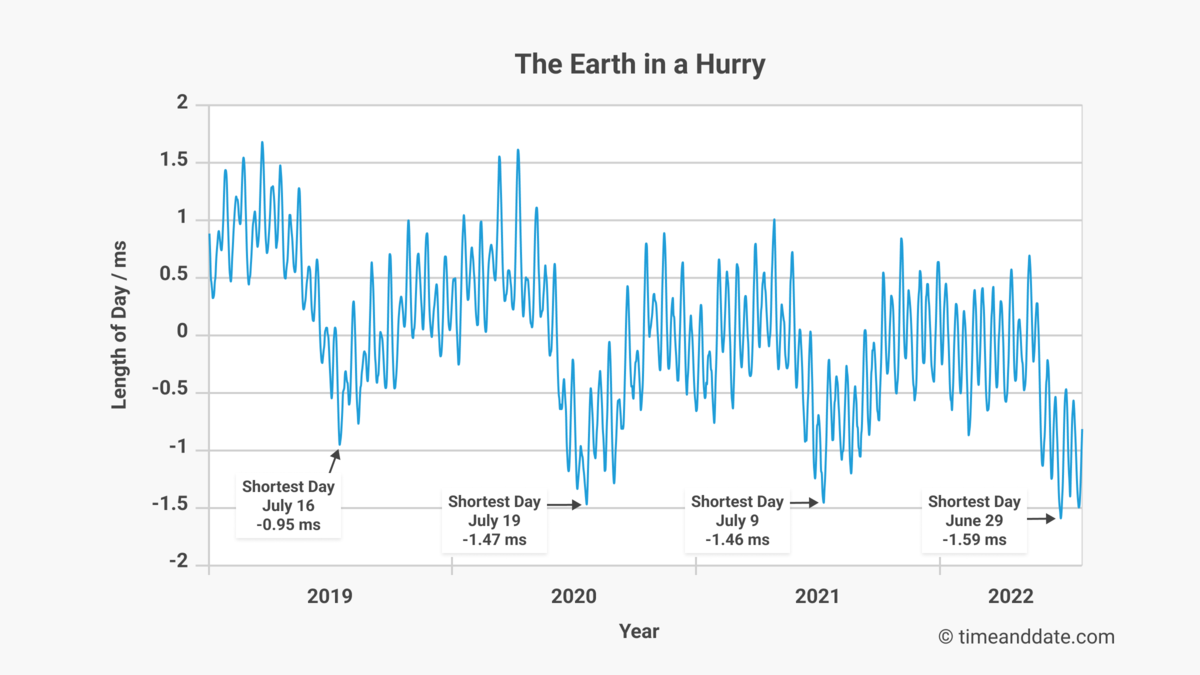
Start Up No.1852: Twitter demands Musk details, TikTok’s moderator hell, another giant crypto hack, EV sounds, and more


Is the explanation for men’s liking for pricey watch that they like fiddly things? Or collections? CC-licensed photo by Mohammad Fahmi Mohd Shah on Flickr.

You can sign up to receive each day’s Start Up post by email. You’ll need to click a confirmation link, so no spam.

A selection of 9 links for you. Rewind. I’m @charlesarthur on Twitter. Observations and links welcome.


Elon Musk associates named in Twitter subpoena • The Washington Post

Elizabeth Dwoskin and Faiz Siddiqui:

»

In a subpoena Twitter issued on Monday, its legal team asked for information about a who’s who of Silicon Valley elite, including investors Chamath Palihapitiya, David Sacks, Steve Jurvetson, Marc Andreessen, Jason Calacanis and Keith Rabois, among others. Some of the figures have not been previously named as having any involvement in the deal, suggesting the breadth of Twitter’s search for information to support its legal attempt to force Musk to go through with his deal to buy the company.

Twitter declined to comment. Palihapitiya, Sacks, Calacanis, Jurvetson and Rabois did not immediately respond to requests for comment. Musk and two of his attorneys did not immediately respond to a request for comment.

A flood of document requests issued over the weekend and into Monday marks the latest twist in the contentious and fast-evolving court case between the social media service and Musk, who is trying to pull out of his bid to take over the company.

After Musk said he was exiting the deal last month — accusing Twitter of not being forthright about the amount of spam and bots on its service — Twitter sued Musk in a Delaware business court, known as a Chancery Court. Musk in turn countersued Twitter on Friday. Twitter also issued subpoenas over the weekend to a group of banks involved in the deal, including Credit Suisse and Morgan Stanley.

The subpoena obtained by The Post includes extensive requests for communications, including “checklists, timelines, presentations, decks, organizational calls, meetings, notes, recordings” related to the deal’s financing.

«

The discovery of Musk’s planning is going to be wonderful. He may not have quite realised what this was going to entail. (The trial isn’t until October, so lots of time for discovery.)
unique link to this extract


A factory line of terrors: TikTok’s African content moderators review horrific videos • Business Insider

Rosie Bradbury and Majd Al-Waheidi :

»

It was only a few hours into her shift when the horror streamed through her screen. Imani, 25, a content moderator for TikTok in Morocco, saw a young man throw a cat into the air before impaling it on a sword. The moderator, who worked out of a small one-bedroom house in Casablanca, was shocked.

“I love cats,” she said. “I’d never imagined I’d see such a scene in real life. It’s not a movie. It’s not a joke. It’s real,” she continued.

Two years later, the video is still etched in her mind, she said. Whenever she thinks of it, she tries to distance herself from the memory. “I created a wall between my job and my life. I didn’t think about my job outside my shift. I had a baby to take care of,” she said.

Imani worked for TikTok’s growing Middle East and North Africa division through Majorel, an outsourcing firm in Luxembourg, and was tasked with reviewing some of the most gruesome content on the platform, including suicides and child-abuse material.

Though she had a bachelor’s degree in English, she struggled to find work during the first months of the pandemic. Imani and her husband, a technician, could barely support their infant daughter. In September 2020, when she was offered the job at Majorel, despite the meager pay of $2 an hour, she thought it was a godsend. The ability to work remotely also meant she could take care of her child.

Imani didn’t know then that the work would be so psychologically damaging, she said, and she still feels the effects of the job today.

But she isn’t alone. Nine current and former content moderators in Morocco who worked on Majorel’s TikTok contract described experiences of severe psychological distress as a result of their jobs.

«

The whole job of human content moderation will surely be seen in the near future as a form of paid abuse. If ever there was a job that cried out to be automated all the way, it’s this one.
unique link to this extract


Nomad crypto bridge loses $200 million in ‘chaotic’ hack • The Verge

Corin Faire:

»

After a few quiet months, it’s happened again: another blockchain bridge hack with losses in the hundreds of millions of dollars.

Nomad, a cryptocurrency bridge that lets users swap tokens between blockchains, is the latest to be hit after a frenzied attack on Monday, which left almost $200 million of its funds drained.

The hack was acknowledged by the Nomad project’s official Twitter account on Monday, August 1st, initially as an “incident” that was being investigated. In a further statement released early Tuesday morning, Nomad said that the team was “working around the clock to address the situation” and had also notified law enforcement.

In another Twitter thread, samczsun — a researcher at the crypto and Web3 investment firm Paradigm — explained that the exploit was made possible by a misconfiguration of the project’s main smart contract that allowed anyone with a basic understanding of the code to authorise withdrawals to themselves.

“This is why the hack was so chaotic,” samczsun wrote. “[Y]ou didn’t need to know about Solidity or Merkle Trees or anything like that. All you had to do was find a transaction that worked, find/replace the other person’s address with yours, and then re-broadcast it.”

A further post-mortem from blockchain security auditing firm CertiK noted that this dynamic created its own momentum, where people who saw funds being stolen using the above method were able to substitute their own addresses to replicate the attack. This led to what one Twitter user described as “the first decentralized crowd-looting of a 9-figure bridge in history.”

«

Why does this keep happening, ask people in only industry where this keeps happening.
unique link to this extract


Why are men obsessed with watches? • The Guardian

Jeremy Langmead, in 2009:

»

It wasn’t so long ago that your father would hand you a gold-plated watch on your 21st birthday and that would be that. It never crossed a man’s mind that he might need to add another two or three by the time he hit 30. And it certainly never crossed his mind that when he reached 40 he might be grateful to receive a smart wooden box with different felt-lined compartments in which to keep his “collection” of watches.

The fact that men are still buying and cherishing quality timepieces is of great comfort to an industry that, in the early 1970s, thought its time, if you will excuse the pun, had come. The invention of the quartz watch (in analog or digital form) in 1967 might initially have been hailed a great technological achievement, but it wasn’t long before it was also seen as the biggest challenge the traditional timepiece had faced since the wristwatch first became popular at the end of the first world war. The fact that a cheap Casio with a flashing LED time display was what every young hipster soon craved, coupled with the economic doldrums in which the world found itself in the 1970s, spelled disaster.

It took a few years of navel-gazing and re-evaluating what a watch was truly for before, in the mid-1980s, a few forceful and inventive characters in the industry came back with a design philosophy and marketing programme that brought the sector back from the brink. These horological pioneers decided that watches would not merely be timekeepers, they would be mini-masterpieces that showcased extreme craftsmanship, represented tradition, incorporated technology and embraced innovation. They would effectively be a Savile Row suit, Ferrari sports car, Mayfair member’s club and Nasa spaceship rolled into one package that could sit neatly on your wrist.

«

Langmead also comments that “A watch is a Porsche that you can take to meetings – and it doesn’t harm the planet either.” Readers offered lots of commentary to my question yesterday about why the hell it is that (some) men will spend wild amounts of money. It seems to be a combination of completionist nerdery, jewellery (this piece was categorised under “Men’s jewellery” in The Guardian’s system).

There’s also sentimental value, as this Hodinkee piece suggests. Particular thanks to Serge, JFC and Chris for their input.
unique link to this extract


What should a nine-thousand-pound electric vehicle sound like? • The New Yorker

John Seabrook:

»

for pedestrians distracted by their phones, [vehicle] engine sounds are everyday lifesavers, as the tiger’s distant roar was for napping early humans. Except that the predators are motor vehicles—and the new ones are virtually silent.

In response to this threat, Congress passed the 2010 Pedestrian Safety Enhancement Act, a law that few Americans paid attention to at the time, and that took almost 10 years to implement. As a result of the legislation, every electric vehicle (EV) and hybrid manufactured since 2020 and sold in the US must come equipped with a pedestrian-warning system, also known as an acoustic vehicle alerting system (AVAS), which emits noises from external speakers when the car is travelling below 18.5mph. (Similar regulations apply in Europe and Asia.)

Automakers have enlisted musicians and composers to assist in crafting pleasing and proprietary alert systems, as well as in-cabin chimes and tones. Hans Zimmer, the film composer, was involved in scoring branded sounds for BMW’s Vision M Next car. The Volkswagen ID.3’s sound was created by Leslie Mándoki, a German-Hungarian prog-rock/jazz-adjacent producer. The Atlanta-based electronic musician Richard Devine was brought in to help in making the Jaguar I-Pace’s voltaic purr.

Some automakers cooked up sounds entirely in-house. The Porsche Taycan Turbo S has one of the boldest alerts: you’re in Dr. Frankenstein’s lab as he flips the switch to animate the monster. Engineers in the Audi Sound Lab made the lower frequencies of the Audi E-Tron GT Quattro’s alert by algorithmically mixing different tones produced by recording an electric fan through a long metal pipe; the full alert references the sumptuous soundscapes of the film “Tron” and its sequel.

«

I think the sounds must explain the quiet, eerie whooshing and wheezing that I sometimes hear from (the surprisingly large number of) EV/hybrids in the town where I live as they tootle along.

The (long) article doesn’t mention how loud AVAS have to be, so I checked: between 56 and 75 decibels, which is between “moderate rainfall” and “a dishwasher in operation”.
unique link to this extract


Open data in the water industry • Ofwat

»

Open data means making data freely available to everyone to access, use and share, unless there’s a really strong justification for not doing that. Data and the people, processes and technology that support it – are important assets – like  water pipes and treatment works.  

Data is essential for developing insight, making informed decisions and improving services. The use of open data could transform water and wastewater service delivery by increasing transparency, increasing efficiency, enhancing customer experience, and stimulating innovation. 

Working alongside the water industry, consumer groups and the Open Data Institute, Ofwat has sought to understand the benefits of open data and how it could be used to help address some of the challenges the water sector faces: climate change, the need to protect the environment, responding to changing customer demands and protecting the most vulnerable.  

«

Ofwat is the UK’s regulator for the privatised water industry. It’s calling this scheme, seeking more open data from the water industry, H2Open. Full marks for the naming, though the fact that it began this initiative 15 years after Michael Cross and I began the Free Our Data campaign at Guardian Technology, which sought to get exactly this sort of scheme everywhere, is a teeny bit dispiriting. (Lots of other public bodies got on board within a few years.) But better late than never.
unique link to this extract


Why there are no nuclear airplanes • The Atlantic

Christian Ruhl:

»

The Italian American physicist Enrico Fermi had introduced the idea of nuclear flight as early as 1942, while serving on the Manhattan Project to build the atomic bomb. As World War II drew to a close, the United States began work to realize Fermi’s dream of nuclear-powered flight. From 1946 until 1961, vast teams of engineers, strategists, and administrators toiled in a whirl of blueprints, white papers, and green bills in an attempt to get the idea off the ground.

The advantages of nuclear-powered airplanes mirrored those of nuclear submarines. Nuclear submarines did not need to surface for fuel, and nuclear airplanes would not need to land. A 1945 proposal at the Department of War (now the Department of Defense) promised, “With nuclear propulsion, supersonic flight around the world becomes an immediate possibility.” A secret Atomic Energy Commission memorandum now held in the Eisenhower Presidential Library explained the promise of nuclear flight in a more measured tone. Nuclear energy “should make possible ranges of one or more times around the world with a single loading of the reactor.” The idea of a nuclear-powered bomber became a strategic dream for the military; it could stay aloft for days to cover any number of targets throughout the world, before returning to the United States without refueling.

…But nuclear power came with its own problems. The reactor would have to be small enough to fit onto an aircraft, which meant it would release far more heat than a standard one. The heat could risk melting the reactor—and the plane along with it, sending a radioactive hunk of liquid metal careening toward Earth.

The problem of shielding pilots from the reactor’s radiation proved even more difficult. What good would a plane be that killed its own pilots?

To protect the crew from radioactivity, the reactor needed thick and heavy layers of shielding. But to take off, the plane needed to be as light as possible. Adequate shielding seemed incompatible with flight.

«

Assume they solved the heat problem, but not the shielding/weight one. What smart solution did the USAF come up with in the late 1950s (before advanced autopilots) that could have made the Flying Nuke reality?
unique link to this extract


Should Apple snoop on your iPhone? • The Spectator

Sam Leith on the backing that Apple’s “CSAM scanning before photos get uploaded to iCloud” proposal:

»

here’s where the practical, or instrumental, argument comes in. Would using AI to scan every iPhone photo album for illegal images not, at a minimal cost to privacy in principle, potentially achieve the tremendous good of catching some of the cruellest and most depraved users of child abuse images? Well, yes, it might. That’s not a trivial case.

But reluctant as I am to deploy a thin-end-of-the-wedge argument: this is the thin end of a wedge. First they came for the nonces, as Pastor Niemoller did not say. You could by the same token argue that any number of different crimes could be prevented by the simple expedient of giving the government (or, God help us, private companies) unlimited powers of surveillance. Most of us, at some point along this continuum, accept that the fact privacy can protect the guilty is a price we pay for its value in giving us freedom. I seem to remember God took roughly that view when he gave us all the capacity to choose between good and evil for ourselves.   

In his latest novel The Every, Dave Eggers imagines a tech company that programs its Alexa-type devices to listen to every domestic conversation – and if its AI detects phrases or tones of voice that are associated with domestic violence, to send the police round. Eggers, who is by bent against that sort of soft totalitarianism, is honest enough to admit that that case is the one ‘that keeps me up at night’: ‘The justification will be: there’s 10 million cases of domestic violence in the US each year,’ he said when I interviewed him about it. ‘Surveillance cameras would put a dent in that. How do you justify not having it? You could make an argument, well, OK, sure, domestic violence is catastrophic but privacy is more important. I don’t think it’s a powerful argument for most people.

«

Eggers excels at finding the reductio ad absurdum (or expansio ad absurdum?) scenario that makes you pause. Leith’s piece is neatly balanced; why, you might finish it thinking that technology can’t actually solve social questions on its own.
unique link to this extract


Craig Wright wins ‘only nominal damages’ of £1 in bitcoin libel case • The Guardian

Dan Milmo:

»

For years Craig Wright has claimed that he is the mythical figure who created bitcoin. But a legal bid by the Australian computer scientist to defend his assertion that he is Satoshi Nakamoto resulted in a pyrrhic victory and a tarnished reputation on Monday.

A high court judge ruled Wright had given “deliberately false evidence” in a libel case and awarded him £1 in damages after he sued a blogger for alleging that his claim to be the elusive Nakamoto was fraudulent.

“Because he [Wright] advanced a deliberately false case and put forward deliberately false evidence until days before trial, he will recover only nominal damages,” wrote Justice Chamberlain.

Wright had sued blogger Peter McCormack over a series of tweets in 2019, and a video discussion broadcast on YouTube, in which McCormack said Wright was a “fraud” and is not Satoshi. The issue of Nakamoto’s identity was not covered by the judge’s ruling because McCormack had earlier abandoned a defence of truth in his case.

Wright claimed that his reputation within the cryptocurrency industry had been “seriously harmed” by McCormack’s claims. He said he had been invited to speak at numerous conferences after the successful submission of academic papers for blind peer review, but 10 invites had been withdrawn following McCormack’s tweets. This included alleged potential appearances at events in France, Vietnam, the US, Canada and Portugal.

…The judge noted that there was “no documentary evidence” that Wright had a paper accepted at any of the conferences identified in the earlier version of his libel claim, nor that he received an invitation to speak at them except possibly at one, and that any invitation was withdrawn.

…He concluded: “Dr Wright’s original case on serious harm, and the evidence supporting it, both of which were maintained until days before trial, were deliberately false.”

«

After Rebekah Vardy v Coleen Rooney last week, this is the bitcoin version. Two judges, one in the US and now this one in the UK, have decided they’re deeply unimpressed by Wright’s testimony. The judgment is hilarious, especially in its nitpicking precision about how Wright tried to slalom around the facts about the academic papers.
unique link to this extract


• Why do social networks drive us a little mad?
• Why does angry content seem to dominate what we see?
• How much of a role do algorithms play in affecting what we see and do online?
• What can we do about it?
• Did Facebook have any inkling of what was coming in Myanmar in 2016?

Read Social Warming, my latest book, and find answers – and more.


Errata, corrigenda and ai no corrida: none notified

Start Up No.1851: AlphaFold predicts protein universe, data centres slow housing build, endemic monkeypox?, and more


The supply of secondhand pricey watches has suddenly boomed following the crypto crash. Coincidence? Vendors think not. CC-licensed photo by Seko Fotografía on Flickr.

You can sign up to receive each day’s Start Up post by email. You’ll need to click a confirmation link, so no spam.

A selection of 9 links for you. Tickety-boo. I’m @charlesarthur on Twitter. Observations and links welcome.


‘The entire protein universe’: AI predicts shape of nearly every known protein • Nature

Ewen Callaway:

»

From now, determining the 3D shape of almost any protein known to science will be as simple as typing in a Google search.

Researchers have used AlphaFold — the revolutionary artificial-intelligence (AI) network — to predict the structures of more than 200 million proteins from some 1 million species, covering almost every known protein on the planet.

The data dump is freely available on a database set up by DeepMind, the London-based AI company, owned by Google, that developed AlphaFold, and the European Molecular Biology Laboratory’s European Bioinformatics Institute (EMBL–EBI), an intergovernmental organization near Cambridge, UK.

“Essentially you can think of it covering the entire protein universe,” DeepMind chief executive Demis Hassabis said at a press briefing. “We’re at the beginning of new era of digital biology.”

The 3D shape, or structure, of a protein is what determines its function in cells. Most drugs are designed using structural information, and the creation of accurate maps of proteins’ amino-acid arrangement is often the first step to making discoveries about how proteins work.

DeepMind developed the AlphaFold network using an AI technique called deep learning, and the AlphaFold database was launched a year ago with more than 350,000 structure predictions covering nearly every protein made by humans, mice and 19 other widely studied organisms. The catalogue has since swelled to around 1 million entries.

“We’re bracing ourselves for the release of this huge trove,” says Christine Orengo, a computational biologist at University College London, who has used the AlphaFold database to identify new families of proteins. “Having all the data predicted for us is just fantastic.”

This really is one of the great breakthroughs by AI, but it could take years for its effect to be felt in the outside world. Also, it’s 23TB for the entire database, which is going to mean lots of local storage (plus updates) or lots of pricey cloud storage.

Even so, in some ways this is as crucial as the first genome sequencing. Another British (DeepMind) success.
unique link to this extract


Debt-ridden water giants at risk from rate rises • The Sunday Times

Jon Yeomans:

»

Net debt in the water sector topped £56bn last year, according to Ofwat. One of the most indebted firms, Thames Water, took steps to shore up its finances last month with the injection of £1.5bn of fresh equity from shareholders.

Last year, Southern Water was taken over by Australian bank Macquarie after coming close to bankruptcy. Last week, it became the first big water company to implement a hosepipe ban because of the dry conditions across England.

Scrutiny of [the UK’s 25] water companies has grown after a damning report by the Environment Agency earlier this month recommended that company directors be jailed if they fail to meet their responsibilities to clean up rivers. Emma Boyd, the agency’s chairwoman, said performance on pollution had “hit a new low”, adding: “Company directors let this happen. We plan to make it too painful for them to continue like this.”

The warning on rates comes as the Bank is this week expected to raise rates from 1.25% by as much as half a percentage point, as it seeks to tame inflation that is running at 9.4%.

Ofwat was granted new powers last year to enforce greater financial resilience in the water sector. It said its proposals on curbing payouts to water company owners “will reinforce the link between performance and dividends”. The proposals will remain open for consultation until September 29.

The regulator has already attracted strong resistance from water utilities after floating its ideas at the end of last year. In one response to the proposals, Thames Water warned that tighter rules on dividends could have “unintended consequences — by making it more challenging to attract equity” from investors.

«

Ofwat’s page on the (privatised in 1989) water companies financial resilience has a spreadsheet which is faintly worrying: gearing (the debt/equity ratio) averages 72%. For a monopoly that could be OK, except the rate they can charge is fixed, so rising interest rates mean a squeeze where they can’t raise costs: investment or dividends must slow.
unique link to this extract


Housing development in England under threat as electricity capacity nears limits • Financial Times

George Hammond:

»

New housing development in London and the south-east of England is at risk as electricity networks near capacity and upgrades are stalled, according to experts, despite the UK government forecasting increased demand for power almost a decade ago.

Electricity demand has fallen in recent years as homes have become more efficient, but it is forecast to rise as drivers adopt electric vehicles and homeowners install heat pumps, placing additional demands on local networks.

Three boroughs in west London have paused development because there is no spare capacity for new connections to the electricity grid until 2035, the Financial Times reported on Thursday.

Experts on Friday warned the problem could spread as national efforts to hit net zero carbon emissions boost electricity consumption, unless networks are quickly upgraded to withstand extra demand.

“The truth is, the overall electricity system is creaking a bit,” said Guy Newey, formerly energy adviser to two Conservative business secretaries and now boss of Energy Systems Catapult, an independent research centre.

Warning that power outages were likely without upgrades, he added: “If we’re serious about net zero targets we have to build ahead of need, otherwise you’ll keep getting stories like west London.”

«

But how could it be that west London, which has all sorts of space to its west, could be struggling?

»

In Hillingdon, Ealing and Hounslow, the network has come under strain far faster than expected because a series of data centres, which can consume as much energy as thousands of homes, have been connected.

According to the Energy Networks Association, which represents network operators, the volume of new requests for connections from data centres in the past two years alone has equalled the entire area’s electricity demand.

«

unique link to this extract


Axie Infinity has left Filipino gamers despondent and in debt • TIME

Andrew Chow and Chad De Guzman:

»

amerson Orias was working as a line cook last year in the rural Philippines when his friend told him he could make way more money playing a new video game.

Orias was earning about 4,000 pesos a month (about $80, a little less than half the national minimum wage) making takoyaki—Japanese octopus balls. His friend told him he and others were pocketing up to $600 a month playing Axie Infinity, a game fueled by cryptocurrency and NFTs.

Orias, now 26, desperately needed an escape hatch from his financial woes: his mother had had a stroke and required medication, and electricity and grocery bills were stacking up. So he plunged into Axie, doing battle with cartoon monsters for hours deep into the night. He soon began earning cryptocurrency, which he converted into pesos, allowing him to take better care of his mother and his home. At the same time, thousands of young people in the Philippines were jumping headlong into the game. For a brief moment at the peak of crypto’s astonishing 2021 boom, these young Filipino players were fulfilling a longtime dream of crypto’s most ardent evangelists: that “play-to-earn” blockchain games like Axie could lead the way to a more equitable, opportunity-rich global economy.

Fourteen months later, most Filipino players, including Orias, have exited the game nursing anger and anxiety—and, in some cases, thousands of dollars down. Orias grew to hate playing the game. It was boring and stressful, he says, a common refrain among the dozen players TIME interviewed for this story. “I felt fatigued all the time. I became more aggressive in every aspect of my life,” he says.

«

Data point:

»

The game initially made a huge impact in the Philippines. At one point, players there made up 40% of the game’s user base.

«

An indenturing scheme developed inside the Philippines, which is what created the indebtedness. Same as so many schemes for earning money or whatever in games.
unique link to this extract


It may be too late to stop monkeypox becoming endemic in the US and Europe • Daily Beast

David Axe:

»

Monkeypox is spreading fast all over the world, especially in the United States and Europe. With cases doubling every two weeks or so, there’s a growing risk that monkeypox will become a permanent problem in countries where, before, outbreaks were rare and small.

The pox is, in other words, close to becoming endemic in a lot of new places. If that happens, it might become very difficult to eradicate. Monkeypox, which causes a fever and rash and is fatal in a very small number of cases, will become yet another disease that people have to worry about all the time.

For the pox, there are two paths to endemicity. If the virus infects enough people fast enough to outpace authorities’ efforts to trace transmission and vaccinate at-risk individuals, it might become endemic in people. “We are getting close to this already,” James Lawler, an infectious disease expert at the University of Nebraska Medical Center, told The Daily Beast.

The good news with this kind of endemicity is that it doesn’t have to be permanent. Reversing human endemicity is hard, yes—but it’s possible. “If it’s just spreading in humans it can be controlled—eventually—through vaccination and natural immunity,” Amesh Adalja, a public health expert at the Johns Hopkins Center for Health Security, told The Daily Beast.

But monkeypox was originally a “zoonotic” animal virus. It circulates in rodent and monkey species in West and Central Africa, where outbreaks in the human population are frequent.

If the pox finds a home in some animal species in North America or Europe—say, squirrels, rats, or prairie dogs—it’ll be all but impossible to eradicate regionally.

«

This other article says it has 50 mutations, far more than you’d expect for its type. Possibly it’s an example of immune escape from immunocompromised hosts, as we’ve seen with SARS-Cov-2. (Thank G for the links.)
unique link to this extract


The crypto market collapse has flooded the luxury watches from brands like Rolex • Bloomberg

Andy Hoffman:

»

The collapse in cryptocurrencies is easing supply of the most sought after watches on the second-hand market, depressing prices for hard-to get-Patek Philippe and Rolex models.

The supply of trophy watches such as the Rolex Daytona or Patek Nautilus 5711A “is now much larger,” online-watch trading platform Chrono24 said in an emailed statement. 

The recent swoon in cryptocurrency valuations “has directly impacted pricing of luxury watches from brands like Rolex and Patek Philippe,” said the company, which is based in Karlsruhe, Germany, and has more than half a million watches listed for sale on its website.

The price decline for the most sought after models is the latest indication that the once soaring second-hand luxury watch market is starting to lose pace. Surging valuations for crypto currencies had minted a new class of luxury buyers, leading to an unprecedented price increase for models particularly from brands like Rolex, Audemars Piguet and Patek. Now that many digital tokens have been hammered, these consumers are going into reverse.

«

Never have understood the desire to have a super-pricey watch. They’re not just premium, as in well-made; they’re super-expensive but without any further functionality than others. And of course less functionality than a smartwatch, which you could upgrade multiple times for the price of one of those. Feel free to point me to someone explaining this.
unique link to this extract


Meta officially cuts funding for US news publishers • Axios

Sara Fischer:

»

Meta on Tuesday began telling its news partners in the US that the company no longer plans to pay publishers for their content to run on Facebook’s News Tab, sources tell Axios.

As the company moves forward with sweeping changes to the Facebook experience, news has become less of a priority.

Meta’s VP of media partnerships, Campbell Brown, told staffers the company was shifting resources away from its news products to support more creative initiatives, the Wall Street Journal reported.

Facebook brokered a slew of three-year deals with publishers in 2019. At the time, the company was ramping up its investment in news and hired journalists to help direct publisher traffic to its new tab for news.

The deals were worth roughly $105m in the US, sources told Axios. In addition to that, the company spent around $90m on news videos for the company’s video tab called “Watch.”

“A lot has changed since we signed deals three years ago to test bringing additional news links to Facebook News in the US. Most people do not come to Facebook for news, and as a business it doesn’t make sense to over-invest in areas that don’t align with user preferences,” a Facebook spokesperson told Axios.

«

Back and forth it goes: Facebook does like news, it doesn’t like news, although it loves video more and more (until it pauses and doesn’t because friends and family users don’t make much video). It’s like a slow-motion abusive relationship.
unique link to this extract


The dirty carbon secret behind solid state memory drives • Discover Magazine

»

Swamit Tannu at University of Wisconsin in Madison and Prashant Nair at the University of British Columbia in Vancouver have measured the carbon footprint per gigabyte of these devices across their entire lifetimes and, unexpectedly, it turns out that SSDs are significantly dirtier. “Compared to SSDs, the embodied [carbon] cost of HDDs is at least an order of magnitude lower,” say the researchers.

Tannu and Nair come to their conclusion by adding up the amount of carbon emitted throughout the estimated 10-year lifespans of these devices. This includes the carbon emitted during manufacture, during operation, for transportation and for disposal.

The carbon emitted during operation is straightforward to calculate. To read and write data, HDDs consume 4.2 Watts versus 1.3W for SSDs. The researchers calculate that a 1 terabyte HDD emits the equivalent of 159 kilograms of carbon dioxide during a 10-year operating lifespan. By comparison, a 1 terabyte SSD emits just 49.2 kg over 10 years.

But SSDs are significantly more carbon intensive to manufacture. That’s because the chip fabrication facilities for SSDs operate at extreme temperatures and pressures that are energy intensive to maintain. And bigger memories require more chips, which increases the footprint accordingly.

All this adds up to a significant carbon footprint for SSD manufacture. Tannu and Nair calculate that manufacturing a 1 terabyte SSD emits the equivalent of 320 kg of carbon dioxide. By comparison, a similar HDD emits just 40 kg.

So the lifetime footprint for a 1 terabyte SSD is 369.2 kg of carbon dioxide equivalent versus 199 kg for an HDD. So HDDs are much cleaner.

That’s a counterintuitive result with important implications. At the very least, it suggests that computer manufacturers and cloud data storage operators should reconsider the way they use SSDs and HDDs.

«

I suspect the cloud companies (at the least) won’t, because the operation output is so low. Manufacturing output is, as so often, someone else’s problem – the manufacturer’s?
unique link to this extract


Astrobiologists suggest the Earth itself may be an intelligent entity • Futurism

Tony Ho Tran:

»

A group of researchers have posed a fascinating — and downright mind bending — thought experiment: If a planet like Earth can be “alive,” can it also have a mind of its own?

The team published a paper exploring this question in the International Journal of Astrobiology. In it, they present the idea of “planetary intelligence,” which describes the collective knowledge and cognition of an entire planet.

…The researchers point to evidence that underground networks of fungi can communicate to suggest that large-scale networks of life could form a vast invisible intelligence that profoundly alters the condition of the entire planet.

One of the primary species driving that change at the moment, they point out, are humans — and currently, from the climate to the plastic crisis, we may well be irrevocably changing the environmental balance.

“We don’t yet have the ability to communally respond in the best interests of the planet,” Adam Frank, professor of physics at the University of Rochester and coauthor of the paper, said in a press release about the paper. 

The researchers believe that such thought experiments can help humans to understand their impact on the Earth and serve as a guide on how to better it. Interestingly, they also believe that it could aid in the search for aliens too.

“We’re saying the only technological civilizations we may ever see — the ones we should expect to see — are the ones that didn’t kill themselves, meaning they must have reached the stage of a true planetary intelligence,” Frank said. 

«

So it’s “may” as in “could be”. All very Solaris, isn’t it?
unique link to this extract


• Why do social networks drive us a little mad?
• Why does angry content seem to dominate what we see?
• How much of a role do algorithms play in affecting what we see and do online?
• What can we do about it?
• Did Facebook have any inkling of what was coming in Myanmar in 2016?

Read Social Warming, my latest book, and find answers – and more.


Errata, corrigenda and ai no corrida: none notified