Unknown's avatar

About charlesarthur

Freelance journalist - technology, science, and so on. Author of "Digital Wars: Apple, Google, Microsoft and the battle for the internet".

Start Up No.1969: TikTok hearing goes badly for its boss, can you land this plane, sir?, remote kissing (ugh), Dorsey shorted, and more


The late lamented Dark Sky app was a masterpiece of visualisation that showed you “the shape of the weather”. CC-licensed photo by Susanne Nilsson on Flickr.

You can sign up to receive each day’s Start Up post by email. You’ll need to click a confirmation link, so no spam.


It’s Friday, so there’s another post due at the Social Warming Substack at about 0845 UK time. Today: will AI chatbots ease social warming, or make it worse?


A selection of 10 links for you. As forecast. I’m @charlesarthur on Twitter. On Mastodon: https://newsie.social/@charlesarthur. Observations and links welcome.


TikTok’s future uncertain after contentious Congress hearing • The Washington Post

Cat Zakrzewski and Jeff Stein:

»

At his first Congressional testimony, TikTok CEO Shou Zi Chew arrived armed with a plan to address mounting national security concerns about the video app’s Chinese owner. But he was met with an unusually hostile and unified coalition of lawmakers, who took turns admonishing him as untrustworthy, in a five-hour thrashing that underscored the wildly popular app’s precarious future in the United States

Lawmakers from both parties sought to tie Chew personally to individuals in the Chinese Communist Party, frequently interrupting him and calling him “evasive.” They repeatedly reminded him that he could face criminal penalties for lying to Congress, as he unsuccessfully attempted to convince them that he could safely steward Americans’ data and shield TikTok from foreign manipulation.

“TikTok is a weapon by the Chinese Communist Party to spy on you, manipulate what you see and exploit for future generations,” said Cathy McMorris Rodgers, the Republican chair of the House Energy and Commerce Committee, who said she supported banning the app outright.

Chew’s appearance thrusts TikTok deeper into a geopolitical standoff between two great economic powers, as support for a ban swells among lawmakers, while key constitutional and legal barriers remain.

Senior Biden administration officials do not believe they have the legal authority to ban TikTok without an act of Congress, according to one person with knowledge of internal government discussions.

«

Strange how things come around again. Trump tried to short circuit the process and effectively sell it off to his friends such as Larry Ellison. But getting Congress to act would be quite the landgrab. And it wouldn’t be the same product: who’d imagine TikTok will hand over the secret algorithmic sauce to a US buyer.
unique link to this extract


Think you could land a plane in an emergency? Here’s why you can’t • The Washington Post

Andrea Sachs:

»

Picture this: You are on a flight when you learn that the pilots have fallen ill and can no longer fly the plane. A voice comes over the public address system, asking for a volunteer to help land the aircraft. You have no experience, but you have seen “Airplane!” and “Snakes on a Plane.” Maybe you’ve frittered away hours on Microsoft’s Flight Simulator. You throw off your seat belt and march toward the cockpit, your cape rustling behind you.

Hold on, hero. You might want to return to your seat for this reality check.

“There is a zero% chance of someone pulling that off,” said Patrick Smith, a commercial air pilot and founder of the Ask the Pilot blog. “Do people think they can perform transplant surgery? No. Then why do they think they can land a plane?”

The clinical name for this type of baseless bravado is the Dunning-Kruger effect. It could be used to explain the results of a YouGov poll conducted in January. Out of 20,063 adults surveyed in the United States, nearly a third said they were “somewhat confident” or “very confident” that they could safely land a passenger airplane in an emergency, relying only on the assistance of air traffic control.

Almost half of the men who responded were confident they could do it, compared with 20% of the women.

«

Dunning-Kruger seems heavily biased towards men. There are similar findings for “could you fight off wild animal [X]?” and “Could you win a point against tennis legend Serena Williams?” Enormous, unjustified overconfidence.
unique link to this extract


Donald Trump shares fake AI-created image of himself on Truth Social • Forbes

Matt Novak:

»

Images created with artificial intelligence have flooded social media in recent months, with some people using AI tools like Midjourney to imagine what it would look like for Donald Trump to be arrested. But the former president isn’t opposed to AI-created photos. Trump shared an image of himself on Thursday morning over at Truth Social. And it’s almost certainly fake.

The image, which has been circulating on pro-Trump Twitter since at least Saturday, shows the former president on one knee praying. At first glance it even looks like it could be a real photo. But anyone who looks closer will notice the telltale signs of AI.

For starters, you always want to look at the hands. AI image creation tools have tremendous difficulty with generating realistic hands, and this image is no different. Trump appears to be missing his ring finger on his right hand, at the very least, and his thumbs are grafted on in a jumbled mess that seems to defy basic human anatomy.

Hugging Face has created a tool that lets people upload images to determine the probability a given image was created with artificial intelligence. The Hugging Face tool says this particular image of Trump was created by machines with about 90% confidence.

But you don’t even need fancy online tools or a knowledge of artificial intelligence to determine this image probably isn’t real. The first clue should’ve been that Trump is taking one knee in a pose that would be somewhat difficult for a fit and healthy man who’s 76 years old, let alone Trump. As far as I can tell, Trump has never taken a knee in public.

«

It’s not “almost certainly” fake – it is fake. As he says, the hands are a dead giveaway. There are multiple other points, such as the completely featureless space. Probably not created by Team Trump, but by religious followers excited at the possibilities of these systems.

Expect a lot more of this.
unique link to this extract


Chinese startup invents long-distance kissing machine • Reuters via The Guardian

»

A Chinese start-up has invented a long-distance kissing machine that transmits users’ kiss data collected through motion sensors hidden in silicon lips, which simultaneously move when replaying kisses received.

MUA – named after the sound people commonly make when blowing a kiss – also captures and replays sound and warms up slightly during kissing, making the experience more authentic, said Beijing-based Siweifushe.

Users can even download kissing data submitted via an accompanying app by other users. The invention was inspired by lockdown isolation. At their most severe, China’s lockdowns saw authorities forbid residents to leave their apartments for months on end.

“I was in a relationship back then, but I couldn’t meet my girlfriend due to lockdowns,” said inventor Zhao Jianbo.

Then a student at the Beijing Film Academy, he focused his graduate project on the lack of physical intimacy in video calls. He later set up Siweifushe which released MUA, its first product, on 22 January. The device is priced at 260 yuan ($38).

In the two weeks after its release, the firm sold over 3,000 kissing machines and received about 20,000 orders, he said.

The MUA resembles a mobile stand with colourless pursed lips protruding from the front. To use it, lovers must download an app on to their smartphones and pair their kissing machines. When they kiss the device, it kisses back.

«

…but expect it to become something with people who get obsessed with their personal chatbots.
unique link to this extract


Tech makers must provide repairs for up to 10 years under proposed EU law • Ars Technica

Scharon Harding:

»

Makers of numerous product categories, including TVs, vacuums, smartphones, and tablets, could be required to enable repairs for their products for up to 10 years after purchase, depending on the device type. The European Commission on Wednesday announced a proposal it has adopted that would implement long-term repair requirements on electronics makers if the European Parliament and Council approve it.

The regulation would apply to any devices with repairability requirements in the EU, including vacuum cleaners, washer-dryers, welding equipment, servers, and data-storage devices. The EU is currently hammering out right-to-repair requirements for smartphones and tablets.

Already, the EU requires vendors to repair or replace products within two years of purchase for free if the product is defective. The new regulation would require companies to provide a free repair (instead of replacing the product) if doing so would be the same price or cheaper than replacing it.

Further, the proposed legislation requires vendors to perform repairs for a minimum of five to 10 years, depending on the device type, after purchase. TV makers, for example, would be required to do repairs for at least seven years after purchase, while washing machine and washer-dryer makers would be on the hook for 10 years. The EU is currently mulling proposals requiring smartphone and tablet makers to provide repairs for up to five years under the law proposed on Wednesday.

The regulation wouldn’t require vendors to perform repairs in this time frame if it is “impossible,” such as if the “repair is technically impossible,” the commission explained in a Q&A page.

«

Which I guess means even AirPods could be repaired, since iFixit has a few repair pages for them.
unique link to this extract


Is Jack Dorsey going to get blown up by Hindenburg Research? • The Verge

Elizabeth Lopatto:

»

How’s our favorite Bitcoin maxi Jack Dorsey doing? Well, the short sellers at Hindenburg Research published an absolute barn-burner of a report alleging widespread fraud at his company, Block. Besides that, Hindenburg says Block misled its investors and is engaging in predatory lending practices.

Oh, okay! Block is threatening to sue. Its shares closed down almost 15% on March 23rd, the day the report was released, from the day before.

If you aren’t familiar with Hindenburg Research, they are bad MFs! Like, they wrote a whole report alleging that the electric vehicle company Nikola was “intricate fraud built on dozens of lies over the course of its Founder and Executive Chairman Trevor Milton’s career.” Milton was later convicted of fraud. They also went after Lordstown Motors, saying its executives had made misleading claims about truck preorders. Those allegations appeared to be substantiated by a law firm’s investigation into the preorders — statements about preorders were “in certain respects, inaccurate” was the phrasing. The CEO was forced out, and the Department of Justice decided they wanted to investigate. 

This is also how Hindenburg makes money. They’re short sellers — which means they make money by betting a stock will decline in value. After they make their bets, they release their report, which, yes, often makes the stock decline in value! It’s cool that anyone does this much research and reporting on companies; I know very few journalists who can spend two years on a single story like this. 

«

But for Hindenburg, of course, they can spend two years on something if they expect the payoff to be substantial enough. And we’re talking about multiple millions here. On the basis, short sellers are a form of journalism: telling the stories that afflict the comfortable. It’s just there tends not to be much in the way of public service there.
unique link to this extract


A eulogy for Dark Sky, a data visualization masterpiece • Nightingale

Srini Kadamati, in the journal of the Data Visualisation Society:

»

On January 1, 2023, Apple sunsetted (pun intended) the Dark Sky mobile app on iOS. Apple purchased the company behind the popular weather application in early 2020, then announced that it would be shutting down the Dark Sky applications (first on Android, then on iOS and web), and finally stated in 2022 that the forecast technology would be integrated into the Apple Weather app with iOS 16.

But Dark Sky was much more than just an API or a set of “forecast technologies.” The design of the Dark Sky mobile application represented a hallmark of information design because the team clearly obsessed over how people would actually use the app on a daily basis.

«

This is a wonderful article, which also serves as a reminder of how much we lost when Apple incorporated it into its Weather app. (Subsequently Apple does seem to have adopted some of the smarter elements of Dark Sky, such as the “shape” of the weather for the day – though not as deftly done as Dark Sky did.)
unique link to this extract


I saw the face of God in a TSMC semiconductor factory • WIRED

Virginia Heffernan:

»

Like a dutiful valet who exists only to make his aristocrat look good, TSMC supplies the brains of various products but never claims credit. The fabs operate offstage and under an invisibility cloak, silently interceding between the flashy product designers and the even flashier makers and marketers. TSMC seems to relish the mystery, but anyone in the business understands that, were TSMC chips to vanish from this earth, every new iPad, iPhone, and Mac would be instantly bricked. TSMC’s simultaneous invisibility and indispensability to the human race is something that Jensen Huang, the CEO of Nvidia, likes to joke about. “Basically, there is air—and TSMC,” he said at Stanford in 2014.

“They call Taiwan the porcupine, right? It’s like, just try to attack. You may just blow the whole island up, but it will be useless to you,” Keith Krach, a former US State Department undersecretary, told me a few weeks before I left for Taiwan. TSMC’s chairman and former CEO, Mark Liu, has put it more concretely: “Nobody can control TSMC by force. If you take by military force, or invasion, you will render TSMC inoperative.” If a totalitarian regime forcibly occupied TSMC, in other words, its kaiser would never get its partner democracies on the phone. The relevant material suppliers, chip designers, software engineers, 5G networks, augmented-reality services, artificial-intelligence operators, and product manufacturers would block their calls. The fabs themselves would be bricked.

«

I’m not going to pretend that this article is short, or doesn’t have longeurs that could easily have been left out. But it’s the first time we know of that a journalist has been inside TSMC.
unique link to this extract


Was this written by a human or AI? ¯_(ツ)_/¯ • Stanford University Human-Centered AI

Prabha Kannan:

»

What are the implications and risks of using AI-generated text, especially in online dating, hospitality, and professional situations, areas where the way we represent ourselves is critically important to how we are perceived? 

“Do I want to hire this person? Do I want to date this person? Do I want to stay in this person’s home? These are things that are deeply personal and that we do pretty regularly,” says Jeff Hancock, professor of communication at Stanford School of Humanities and Sciences, founding director of Stanford’s Social Media Lab, and a Stanford Institute for Human-Centered AI faculty member. Hancock and his collaborators set out to explore this problem space by looking at how successful we are at differentiating between human and AI-generated text on OKCupid, AirBNB, and Guru.com. 

What Hancock and his team learned was eye-opening: participants in the study could only distinguish between human or AI text with 50-52% accuracy, about the same random chance as a coin flip. 

The real concern, according to Hancock, is that we can create AI “that comes across as more human than human, because we can optimize the AI’s language to take advantage of the kind of assumptions that humans have. That’s worrisome because it creates a risk that these machines can pose as more human than us,” with a potential to deceive. 

«

More than a “potential”, I’d say. A certainty, more like. The only question is where.
unique link to this extract


Microsoft justifies AI’s ‘usefully wrong’ answers • CNBC

Jonathan Vanian:

»

On Tuesday, Google announced it was bringing AI-powered chat technology to Gmail and Google Docs, letting it help composing emails or documents. On Thursday, Microsoft said that its popular business apps like Word and Excel would soon come bundled with ChatGPT-like technology dubbed Copilot.

But this time, Microsoft is pitching the technology as being “usefully wrong.”

In an online presentation about the new Copilot features, Microsoft executives brought up the software’s tendency to produce inaccurate responses, but pitched that as something that could be useful. As long as people realize that Copilot’s responses could be sloppy with the facts, they can edit the inaccuracies and more quickly send their emails or finish their presentation slides.

For instance, if a person wants to create an email wishing a family member a happy birthday, Copilot can still be helpful even if it presents the wrong birth date. In Microsoft’s view, the mere fact that the tool generated text saved a person some time and is therefore useful. People just need to take extra care and make sure the text doesn’t contain any errors.

Researchers might disagree.

Indeed, some technologists like Noah Giansiracusa and Gary Marcus have voiced concerns that people may place too much trust in modern-day AI, taking to heart advice tools like ChatGPT present when they ask questions about health, finance and other high-stakes topics.

«

Google seems to be rushing here, where Microsoft is usefully positioned – adding chatbot functionality to Office takes it into a much more compelling space.
unique link to this extract


• Why do social networks drive us a little mad?
• Why does angry content seem to dominate what we see?
• How much of a role do algorithms play in affecting what we see and do online?
• What can we do about it?
• Did Facebook have any inkling of what was coming in Myanmar in 2016?

Read Social Warming, my latest book, and find answers – and more.


Errata, corrigenda and ai no corrida: none notified

Start Up No.1968: where’s Apple on the new AI wave?, the post-search internet, theme tunes to die for, the underwater man, and more


Scientists reckon there are colossal reserves of natural hydrogen just waiting to be tapped – and perhaps replace fossil fuels. But this time, safely. CC-licensed photo by SDASM Archives on Flickr.

You can sign up to receive each day’s Start Up post by email. You’ll need to click a confirmation link, so no spam.


There’s another post coming this week at the Social Warming Substack, on Friday at about 0845 UK time. Free signup.


A selection of 8 links for you. Use them wisely. I’m @charlesarthur on Twitter. On Mastodon: https://newsie.social/@charlesarthur. Observations and links welcome.


Why hasn’t Apple entered the generative AI arms race? • Fast Company

Mark Sullivan:

»

generative AI could put a foundation of general knowledge underneath the more specific informational and task-oriented data that voice assistants like Apple’s Siri typically call up. It might give Siri a basic knowledge of how the world works, as seen in ChatGPT, and therefore a better framework for understanding and helping users. A better understanding of the underlying meaning behind a user request to lead to more useful, on-point responses. 

Indeed, it may not be long before Apple is forced to reckon with users who are wondering why ChatGPT seems so much smarter than Siri.

Apple has stayed out of the generative AI discussion so far, mainly because the technology is not seen as directly disruptive to its core businesses (hardware)—at least not in the way that generative AI could be disruptive to Google’s core Search business, or to Microsoft’s core productivity apps business. Also, Apple is known as a “fast follower”; it likes to wait until new technologies have matured, then jump in with its own Apple-flavored version. So far, the company has treated AI as an enabling technology that it deploys behind the scenes to make its devices and apps work better (the image selection and editing features in its Photos app, for example).

But those old habits may not work with generative AI. The technology, for better or worse, may be the Next Big Thing, with transformative power on the order of social media or mobile computing. It may be too important to keep on ice in an R&D lab or to cast in a behind-the-scenes role.

«

This strikes me as daft in multiple ways, starting at the first excerpted paragraph. Generative AI can’t “put a foundation of general knowledge” under Siri: LLMs are not general knowledge per se (they can’t even do addition). ChatGPT might seem smarter than Siri, except it’s wrong more often; and it doesn’t know how to turn your lights on or off.

Apple at least does, yes, make its money from hardware. As was discussed on a recent Dithering podcast, Apple can focus on its hardware and encourage device-level generative AI products (you can get Stable Diffusion on the Mac and iPhone already). But as for replacing Siri, that’s a different challenge. What you want is an accurate Siri, not just a faster Siri.
unique link to this extract


Bing A.I. and the dawn of the post-search internet • The New Yorker

Kyle Chayka:

»

Where using Google Search sometimes feels like engineering the right equation to solve a problem, using Bing A.I. is a bit like a series of text-message conversations. It even punctuates answers with a smiling, blushing emoji: “I’m always happy to chat with you. 😊,” it told me. To the left of the chat box, there’s a button that reads “new topic” and shows a broom sweeping away dust. Clicking it erases the current chat and starts over. The module, Danzico told me, was developed with the help of the A.I. itself.

Though tools like Bing A.I. promise extreme, almost unimaginable convenience for users, they are likely to be even worse for content creators than the search and social-media companies that have siphoned up the majority of digital-advertising dollars over the past decade. Bing A.I. does offer referrals to Web sites in the form of footnotes linking to URLs. But the URLs are intentionally unobtrusive, to minimize for users what one Microsoft staffer described to me as the “cognitive load” of having to click on and scroll through links. The other day, Mody demonstrated over video chat how she could ask Bing A.I. to find a good vegetarian recipe for dinner. The bot pulled up a Bon Appétit recipe for vegetarian lasagna (like The New Yorker, Bon Appétit is owned by Condé Nast) and reprinted it in full within the chat. Then Mody asked it to list all of the ingredients and arrange them by grocery-store aisle—a request that no cooking Web site could hope to fulfil

…So much of the current Web was designed around aggregation—lists of product recommendations on The Strategist, summaries of film reviews on Rotten Tomatoes, restaurant reviews on Yelp. What value will those sites have when A.I. can do the aggregation for us? If Google Search is an imperfect book index, telling us where to find the material we need, Bing A.I. is SparkNotes, allowing us to bypass the source material altogether. Users might simply “read” publications in the form of A.I. chat summaries, as if listening to a mechanized butler reciting newspaper headlines aloud. The paradox of A.I., though, is that it relies on the source material—the vast sea of information that other sites create—to generate its answers..

«

unique link to this extract


Hidden hydrogen: Earth may hold vast stores of a renewable, carbon-free fuel • Science

Eric Hand:

»

In the shade of a mango tree, Mamadou Ngulo Konaré recounted the legendary event of his childhood. In 1987, well diggers had come to his village of Bourakébougou, Mali, to drill for water, but had given up on one dry borehole at a depth of 108 meters. “Meanwhile, wind was coming out of the hole,” Konaré told Denis Brière, a petrophysicist and vice president at Chapman Petroleum Engineering, in 2012. When one driller peered into the hole while smoking a cigarette, the wind exploded in his face.

“He didn’t die, but he was burned,” Konaré continued. “And now we had a huge fire. The color of the fire in daytime was like blue sparkling water and did not have black smoke pollution. The color of the fire at night was like shining gold, and all over the fields we could see each other in the light. … We were very afraid that our village would be destroyed.”

It took the crew weeks to snuff out the fire and cap the well. And there it sat, shunned by the villagers, until 2007. That was when Aliou Diallo, a wealthy Malian businessman, politician, and chair of Petroma, an oil and gas company, acquired the rights to prospect in the region surrounding Bourakébougou. “We have a saying that human beings are made of dirt, but the devil is made of fire,” Diallo says. “It was a cursed place. I said, ‘Well, cursed places, I like to turn them into places of blessing.’”

In 2012, he recruited Chapman Petroleum to determine what was coming out of the borehole. Sheltered from the 50°C heat in a mobile lab, Brière and his technicians discovered that the gas was 98% hydrogen. That was extraordinary: Hydrogen almost never turns up in oil operations, and it wasn’t thought to exist within the Earth much at all. “We had celebrations with large mangos that day,” Brière says.

…The Malian discovery was vivid evidence for what a small group of scientists, studying hints from seeps, mines, and abandoned wells, had been saying for years: contrary to conventional wisdom, large stores of natural hydrogen may exist all over the world, like oil and gas—but not in the same places. These researchers say water-rock reactions deep within the Earth continuously generate hydrogen, which percolates up through the crust and sometimes accumulates in underground traps. There might be enough natural hydrogen to meet burgeoning global demand for thousands of years, according to a US Geological Survey (USGS) model that was presented in October 2022 at a meeting of the Geological Society of America.

«

Could be – perhaps – the big breakthrough that we’re all waiting for: if you could replace fossil fuels with natural hydrogen from underground, it would be a colossal win for the climate.
unique link to this extract


‘Doing Friends killed our cool’ – theme tune revelations from The Sopranos to The OC and more • The Guardian

Michael Hogan put together this wonderful piece about theme songs that became (sometimes) bigger than the band that made them:

»

Danny Wilde, half of alt-rock duo The Rembrandts: It all happened wildly fast. Our manager said a sitcom was looking for a theme song and Kevin Bright, the show’s executive producer, was a Rembrandts fan. Would you be interested? The camp was split but they sent us a VHS tape of the pilot and it was cute, so we agreed. It had REM’s Shiny Happy People playing over the fountain scene and they wanted something with the same tempo.

We recorded the 43-second version two days later. The producers came to the studio and wanted to do the handclaps, but they couldn’t get it at all. We were like: “Guys, it’s just four claps.” They did a few takes, we told them it was fine, then after they left, we erased it and put in our own.

Within a week, Friends was on air. It didn’t have our name on the credits. We were a pretty hip band, so stipulated that we didn’t want anyone to know we’d sold out. But the song stuck, the show stuck and it snowballed. The record company rushed us into the studio to cut a full version. We shot a video on the SNL set, with the cast goofing around on our instruments. Courteney Cox really could play drums but it was mostly improvised mayhem.

Once people realised it was us, it killed our cool vibe. We went from doing cool clubs to matinee shows where parents would bring their kids. The song became an albatross round our necks and broke up the band for a few years. My bandmate Phil Solem had pretty much had it, so we took a two-year vacation from each other. But we got back together and we’re still making albums and playing gigs, so it’s all good.

Friends is on 24 hours a day somewhere. Every time it gets played, there’s a little “ker-ching!”. It’s only a nickel or whatever, but they add up. It put my kids through college and got me a beautiful home. I’m not rich but I’m comfortable. We were snobby about it early on and it messed with our heads. But what a gift it’s been. I might be living on the streets if it wasn’t for that song.

«

The detail I always liked is that the drummer from The Rembrandts left to join King Crimson. Where he was excellent.
unique link to this extract


A man is living underwater for 100 days: it may do extraordinary things to his body • Popular Mechanics

Tim Newcomb:

»

Joseph Dituri, a University of South Florida professor, hopes to do more than set a world record by living underwater for 100 days. He hopes to become “superhuman.”

“The human body has never been underwater that long, so I will be monitored closely,” Dituri says in a news release. “This study will examine every way this journey impacts my body, but my null hypotheses is that there will be improvements to my health due to the increased pressure.”

Dituri, who also served as a saturation diving officer in the US Navy for 28 years, believes that an earlier study—which showed cells exposed to increased pressure doubled within five days—suggests that he can increase his longevity and prevent aging-related diseases by living in a pressurized environment. “So, we suspect I am going to come out super-human!” he says.

The 55-year-old Dituri will be staying in a 100-square-foot habitat 30 feet below the surface at Jules’ Undersea Lodge near Key Largo. While he’s down there, Dituri will continue teaching his biomedical engineering class online while a medical team documents his health by routinely diving to his habitat to run tests. Before, during, and after the project, Dituri will undergo psychosocial, phycological, and medical tests that include blood panels, ultrasounds, electrocardiograms, and stem cell stets.

«

From the news release:

»

“Many of my brothers and sisters in the military suffered traumatic brain injuries and I wanted to learn how to help them,” Dituri said. “I knew well that hyperbaric pressure could increase cerebral blood flow and hypothesized it could be used to treat traumatic brain injuries. I hypothesize that applying the known mechanisms of action for hyperbaric medicine could be used to treat a broad spectrum of diseases.”

«

That is, perhaps, possible? Unfortunately we don’t know when the 100 days start – neither the release nor the story seem to have gone into that teeny detail.
unique link to this extract


Russia’s space program is in big trouble • WIRED

Ramin Skibba:

»

Crippled by war and sanctions, Russia now faces evidence that its already-struggling space program is falling apart. In the past three months alone, Roscosmos has scrambled to resolve two alarming incidents. First, one of its formerly dependable Soyuz spacecraft sprang a coolant leak. Then the same thing happened on one of its Progress cargo ships. The civil space program’s Soviet predecessor launched the first person into orbit, but with the International Space Station (ISS) nearing the end of its life, Russia’s space agency is staring into the abyss.

“What we’re seeing is the continuing demise of the Russian civil space program,” says Bruce McClintock,  a former defense attaché at the US embassy in Moscow and current head of the Space Enterprise Initiative of the Rand Corporation, a nonprofit research organization. Around 10 years ago, Russian leaders chose to prioritize the country’s military space program—which focuses on satellite and anti-satellite technologies—over its civilian one, McClintock says, and it shows.

Russia’s space fleet is largely designed to be expendable. The history of its series of Soyuz rockets and crew capsules (they both have the same name) dates back to the Soviet era, though they’ve gone through upgrades since. Its Progress cargo vessels also launch atop Soyuz rockets. The cargo ships, crewed ships, and rockets are all single-use spacecraft. Anatoly Zak, creator and publisher of the independent publication RussianSpaceWeb, estimates that Roscosmos launches about two Soyuz vehicles per year, takes about 1.5 to 2 years to build each one, and doesn’t keep a substantial standing fleet.

While Roscosmos officials did not respond to interview requests, the agency has been public about its recent technical issues: The Soyuz MS-22 docked at the ISS suffered a coolant leak on December 14, 2022, and astronauts inspected it with the space station’s robotic arm, Canadarm2. The incident cancelled a planned spacewalk by Russian cosmonauts, and the agency later blamed the leak on a micrometeoroid impact. [There was another leak later.]

… In 2018, a Soyuz crew spacecraft sprang a tiny hole, which astronauts patched up. Two months later, a Soyuz rocket suffered a booster failure in an unrelated incident. The three leaks within a few years, says McClintock, “point to an overall decline of the Russian civil space program.”

Zak points out that micrometeoroid impacts in Earth orbit have been exceedingly rare. He thinks the odds of meteors damaging two spacecraft cooling systems—but nothing else on the ISS—in such a short period of time are “very close to zero.”

«

You may recall that Russia tried to play politics with the ISS in April 2022 soon after invading Ukraine, to no effect. The squeeze on funding is going to create some existential problems.
unique link to this extract


Crypto is mostly over. Its carbon emissions are not • The Atlantic

Emma Marris:

»

At this point, for most of us, cryptocurrency seems like nothing more than a fad. After the FTX bankruptcy and broader crypto crash last year, basically all of the celebrities who were promoting crypto have gone silent. “MiamiCoin,” hyped by Miami Mayor Francis Suarez as a new source of income for the city, is now worthless. The Wild West days of the industry may be over. Recently, the head of the SEC warned crypto firms to “do their work within the bounds of the law” or face enforcement actions. Lots of people lost money in the crash, but from the planet’s perspective, the industry’s downfall is good news: The computing power fueling the crypto boom was so substantial that it was causing substantial greenhouse-gas emissions.

And yet crypto’s greenhouse-gas emissions are still shockingly high, according to an industry tracker run by the University of Cambridge. The tracker focuses on bitcoin, the cryptocurrency with by far the largest market share, and estimates that at its current rate of “mining” new coins, bitcoin will release about 62 megatons of “carbon-dioxide equivalent” each year—about as much as the entire country of Serbia emitted in 2019. That’s up from about 43 megatons a year in December, and just slightly below the all-time peak of nearly 74 in May 2021. Many people who’ve invested in crypto tend to have a lot of sunk costs, whether digital wallets bulging with various coins, tokens, or expensive physical setups designed to make more. Even now that the boom times are over, they have no reason to stop.

«

It’s true: it’s so easy to completely forget that somewhere out there, loads of systems are chuntering away, working at – in the deathless tweet – solving sudokus 24/7. The bitcoin hash rate is at a historic high, suggesting more computing power than ever is being thrown at it, despite the price being at some random walk figure below its maximum.
unique link to this extract


Keyboard Puzzle Game!

Askar Yusupov:

»

Welcome to the Keyboard Puzzle game!

The goal of this game is to restore the original order of the shuffled keyboard keys by swapping them with their correct positions within the time limit.

Here are the game rules:

1. Select a key from the shuffled keys below the main keyboard
2. Click on a masked key in the main keyboard to swap them
3. Continue swapping keys until the main keyboard is in its correct order
4. You have 180 seconds to complete the puzzle
5. Your score is based on the number of correctly placed keys.

Good luck and have fun!

«

I couldn’t get this to work on Safari on the Mac, but it did work with Google Chrome. More to the point: it was developed with the help of, natch, ChatGPT.
unique link to this extract


• Why do social networks drive us a little mad?
• Why does angry content seem to dominate what we see?
• How much of a role do algorithms play in affecting what we see and do online?
• What can we do about it?
• Did Facebook have any inkling of what was coming in Myanmar in 2016?

Read Social Warming, my latest book, and find answers – and more.


Errata, corrigenda and ai no corrida: none notified

Start Up No.1967: hackers drain bitcoin ATMs, running GPT-3 locally, Musk and the hateful tweets, burning batteries, and more


A former computer science professor reckons that AI prompts will replace programming in just a few years. CC-licensed photo by Fredrik Walløe on Flickr.

You can sign up to receive each day’s Start Up post by email. You’ll need to click a confirmation link, so no spam.

A selection of 9 links for you. Don’t learn to code? I’m @charlesarthur on Twitter. On Mastodon: https://newsie.social/@charlesarthur. Observations and links welcome.


Hackers drain bitcoin ATMs of $1.5m by exploiting 0-day bug • Ars Technica

Dan Goodin:

»

Hackers drained millions of dollars in digital coins from cryptocurrency ATMs by exploiting a zero-day vulnerability, leaving customers on the hook for losses that can’t be reversed, the kiosk manufacturer has revealed.

The heist targeted ATMs sold by General Bytes, a company with multiple locations throughout the world. These BATMs, short for bitcoin ATMs, can be set up in convenience stores and other businesses to allow people to exchange bitcoin for other currencies and vice versa. Customers connect the BATMs to a crypto application server (CAS) that they can manage or, until now, that General Bytes could manage for them. For reasons that aren’t entirely clear, the BATMs offer an option that allows customers to upload videos from the terminal to the CAS using a mechanism known as the master server interface.

Over the weekend, General Bytes revealed that more than $1.5m worth of bitcoin had been drained from CASes operated by the company and by customers. To pull off the heist, an unknown threat actor exploited a previously unknown vulnerability that allowed it to use this interface to upload and execute a malicious Java application. The actor then drained various hot wallets of about 56 BTC, worth roughly $1.5m. General Bytes patched the vulnerability 15 hours after learning of it, but due to the way cryptocurrencies work, the losses were unrecoverable.

«

Never change, cryptocurrency. Which I suppose is an easy wish to have granted. It can’t possibly change, after all.
unique link to this extract


The End of Programming • Communications of the ACM

Matt Welsh is a former professor of computer science at Harvard University:

»

In situations where one needs a “simple” program (after all, not everything should require a model of hundreds of billions of parameters running on a cluster of GPUs), those programs will, themselves, be generated by an AI rather than coded by hand.

I do not think this idea is crazy. No doubt the earliest pioneers of computer science, emerging from the (relatively) primitive cave of electrical engineering, stridently believed that all future computer scientists would need to command a deep understanding of semiconductors, binary arithmetic, and microprocessor design to understand software. Fast-forward to today, and I am willing to bet good money that 99% of people who are writing software have almost no clue how a CPU actually works, let alone the physics underlying transistor design. By extension, I believe the computer scientists of the future will be so far removed from the classic definitions of “software” that they would be hard-pressed to reverse a linked list or implement Quicksort. (I am not sure I remember how to implement Quicksort myself.)

AI coding assistants such as CoPilot are only scratching the surface of what I am describing. It seems totally obvious to me that of course all programs in the future will ultimately be written by AIs, with humans relegated to, at best, a supervisory role. Anyone who doubts this prediction need only look at the very rapid progress being made in other aspects of AI content generation, such as image generation. The difference in quality and complexity between DALL-E v1 and DALL-E v2—announced only 15 months later—is staggering. If I have learned anything over the last few years working in AI, it is that it is very easy to underestimate the power of increasingly large AI models. Things that seemed like science fiction only a few months ago are rapidly becoming reality.

So I am not just talking about things like Github’s CoPilot replacing programmers.1 I am talking about replacing the entire concept of writing programs with training models. In the future, CS students are not going to need to learn such mundane skills as how to add a node to a binary tree or code in C++. That kind of education will be antiquated, like teaching engineering students how to use a slide rule.

«

unique link to this extract


You can now run a GPT-3-level AI model on your laptop, phone, and Raspberry Pi • Ars Technica

Benj Edwards:

»

Things are moving at lightning speed in AI Land. On Friday, a software developer named Georgi Gerganov created a tool called “llama.cpp” that can run Meta’s new GPT-3-class AI large language model, LLaMA, locally on a Mac laptop. Soon thereafter, people worked out how to run LLaMA on Windows as well. Then someone showed it running on a Pixel 6 phone, and next came a Raspberry Pi (albeit running very slowly).

If this keeps up, we may be looking at a pocket-sized ChatGPT competitor before we know it.

But let’s back up a minute, because we’re not quite there yet. (At least not today—as in literally today, March 13, 2023.) But what will arrive next week, no one knows.

Since ChatGPT launched, some people have been frustrated by the AI model’s built-in limits that prevent it from discussing topics that OpenAI has deemed sensitive. Thus began the dream—in some quarters—of an open source large language model (LLM) that anyone could run locally without censorship and without paying API fees to OpenAI.

Open source solutions do exist (such as GPT-J), but they require a lot of GPU RAM and storage space. Other open source alternatives could not boast GPT-3-level performance on readily available consumer-level hardware.

«

That was a week ago. Pretty soon everything’s going to be open sourced and running locally.
unique link to this extract


How Elon Musk’s tweets unleashed a wave of hate • BBC News

Marianna Spring:

»

I had just finished my investigation into whether Twitter can protect users under Elon Musk’s ownership, when – to my surprise – the man himself tweeted about it.

“Sorry for turning Twitter from nurturing paradise into a place that has… trolls,” he said in one tweet, posting a screengrab of the report. According to Twitter’s own data, that tweet was seen by more than 30 million profiles.

“Trolls are kinda fun,” Mr Musk said in another reply, in his response to my BBC investigation – Twitter insiders: We can’t protect users from trolling under Musk.

The investigation made clear Twitter was never perfect. But it had exposed how hate is thriving under Twitter’s new owner. Current and former Twitter employees told me “nobody is taking care of” features designed to protect users from hate and harm.

I had approached Elon Musk as part of my Panorama investigation, but he didn’t respond. Instead, he decided to share his reaction to it afterwards with more than 130 million followers on his social media site.

His tweets then unleashed a torrent of abuse against me from other users. There have been hundreds of posts, many including misogynistic slurs and abusive language. There have also been threatening messages, including depictions of kidnap and hanging.

Mr Musk posted again, responding to one tweet that was critical of the BBC investigation. He wrote “roflmao” – “rolling on the floor laughing my ass off.”

I now found myself wading through more hateful messages sent from accounts predominantly based in the US and UK. Mr Musk’s tweets triggered a huge volume of hate, some sent from accounts which had previously been suspended. More proof to back up BBC Panorama’s investigation – that hate on Twitter is thriving.

«

Musk’s behaviour is so truly reprehensible. An awful, awful person.
unique link to this extract


Electric car fires aren’t the only ones to worry about • Autoweek

Emmet White:

»

Lithium-ion batteries are fueling the auto industry’s conversion to battery-electric vehicles, but they’ve also been a catalyst in a series of transportation-related fires that have halted pickup truck production, burned down a neighborhood grocery store in the Bronx, and forced an emergency landing because of a smoking overhead bin on a commercial jet.

Fires have also allegedly been started by electric bicycle battery packs. The New York City Fire Department says lithium-ion batteries were responsible for over 200 fires within the five boroughs in 2022, resulting in six deaths and over 150 injuries while displacing thousands of residents. That’s double the number of battery-related fires as compared to 2021, according to an FDNY statement to NBC News.

It’s not just a problem for urban, dense cities, either. A Connecticut Transit electric bus caught fire at the agency’s suburban depot in Hamden last summer, and firefighters elected to let the bus burn as the safest way to manage the blaze. Electric scooters have sparked fires and leveled homes in rural Massachusetts and Pennsylvania. Even Ford had to temporarily shut down Michigan production of its battery-electric F-150 Lightning pickup truck due to a fire in a pre-production holding lot. And how could we forget the various EV-related ship fires that ultimately scuttled the shipment of thousands of vehicles?

Analysis of fire and crash data from the Bureau of Transportation Statistics and the National Transportation Safety Board show there were 1529.9 fires per 100,000 sales for gasoline vehicles and just 25.1 fires per 100,000 sales for electric vehicles. But the bigger concern is the number of fires linked to gas-electric hybrid vehicles: 3474.5 fires per 100,000 sales.

«

After all, by contrast, non-electric cars are fuelled by a substance that absolutely never catches fire. Well, apart from the 174,000 occasions on highways in 2021 which killed 650 people. (“Risky cars” seems to be a trope that’s getting tired already.)
unique link to this extract


Taken for a ride • The Verge

Ian Frisch:

»

Although [self-made tech millionaire] Mike [Vallejo] had previously hooked up with Lauren, he explained that he began dating Haley after the threesome. (“We were not dating,” Haley said. “I can’t have anyone think I was dating him. Let’s just say we were, um, hanging out and he liked me.”) In November, Haley left town for a family vacation. 

Mike, missing her, decided to distract himself by joining Tinder. “I got, like, 15 matches within the first 12 hours,” he said. 

The dopaminergic rush of the matches, and the potential of meeting up with the women on the other end of his screen, temporarily soothed the loneliness brought on by Haley’s absence and Mike’s ongoing marital separation. “I feel like my wife leaving me made me want, even more, to give the best to others,” he said. “I just wanted to spend time with someone. It was more of feeling like there’s a void that I needed to fill by getting attention or affection from others.” 

Mike quickly matched with a woman named Ky. She seemed cute, if somewhat inscrutable, with no biographical details and photographs that included only a mirror selfie and a snapshot of her butt in a bikini. “I am the sweetest person you will ever meet,” she would later tell him. Mike had never used Tinder before; he told Ky that he’d be happy to get together.

So Mike got ready for their date. He put on jeans and a high-end watch, his short haircut neatly framing his boyish face. He trimmed the shadowy stubble that stretched from chin to cheek into a uniform blanket of mature bachelorhood. He was rich, single, and ready to have some more fun. 

But then Ky started messaging Mike strange questions. Do you want to get a hotel? Sure. How will you pay? Credit card. Can you pull out cash instead? Okay. (Thankfully for Mike, he never hit up an ATM.) 

«

Perhaps you can see where this is going, but if you can, you’re smarter than self-made tech millionaire Mike. Or possibly not blinded by lust. Anyhow, it’s a great read.
unique link to this extract


How AI could write our laws • MIT Technology Review

Nathan Sanders and Bruce Schneier:

»

“Microlegislation” is a term for small pieces of proposed law that cater—sometimes unexpectedly—to narrow interests. Political scientist Amy McKay coined the term. She studied the 564 amendments to the Affordable Care Act (“Obamacare”) considered by the Senate Finance Committee in 2009, as well as the positions of 866 lobbying groups and their campaign contributions. She documented instances where lobbyist comments—on health-care research, vaccine services, and other provisions—were translated directly into microlegislation in the form of amendments. And she found that those groups’ financial contributions to specific senators on the committee increased the amendments’ chances of passing.

Her finding that lobbying works was no surprise. More important, McKay’s work demonstrated that computer models can predict the likely fate of proposed legislative amendments, as well as the paths by which lobbyists can most effectively secure their desired outcomes. And that turns out to be a critical piece of creating an AI lobbyist.

Lobbying has long been part of the give-and-take among human policymakers and advocates working to balance their competing interests. The danger of microlegislation—a danger greatly exacerbated by AI—is that it can be used in a way that makes it difficult to figure out who the legislation truly benefits.

Another word for a strategy like this is a “hack.” Hacks follow the rules of a system but subvert their intent. Hacking is often associated with computer systems, but the concept is also applicable to social systems like financial markets, tax codes, and legislative processes. 

«

“AI lobbyist” *shudders*. But this is inevitable, isn’t it. If there’s a gap that can be filled by automation like this, it will be.
unique link to this extract


Tracking the Chinese balloon from space • The New York Times

Muyi Xiao, Ishaan Jhaveri, Eleanor Lutz, Christoph Koettl and Julian E. Barnes:

»

In early February, a giant white balloon was seen floating over U.S. skies, prompting speculation about its provenance and purpose. An exclusive analysis of millions of square miles of satellite imagery traces the balloon hours after its launch in China, across the Philippine Sea and then to North America. It also reveals that the balloon was remotely maneuvered at points on its journey.

The New York Times worked with the artificial intelligence company Synthetaic to detect and analyze the Chinese balloon in satellite images captured by Planet Labs. This process was the first to track the balloon itself, not just its expected path based on weather projections.

Jan. 19 to 21 The balloon appears to change altitude daily as it moves over the Philippine Sea, descending from around 58,000 feet to 52,000 feet, and then ascending to 64,000 feet. These changes are not caused by natural wind or air flows, according to Mr. Farley. They are made by operators remotely steering the balloon up and down to ride wind currents that blow in different directions, he said.

“It truly was an altitude-control vehicle,” he said after reviewing The Times’s calculations, referring to the balloon’s remote steering. Both Mr. Farley and U.S. officials told The Times that the balloon’s altitude was controlled by adding or releasing compressed gas in an internal compartment.

«

Now things are getting interesting, aren’t they? (Thanks G for the link.)
unique link to this extract


The impossible job: inside the world of Premier League referees • The Guardian

William Ralston:

»

Ever since it was introduced, VAR has been making people furious. At its most enjoyable, football is fast and charged with emotion. VAR, by contrast, can be agonisingly slow and joyless. Its presence makes it hard to enjoy a goal without worrying that it will be ruled out for some minor infraction that occurred 15 seconds earlier. Worst of all, VAR regularly fails to do the thing it was specifically introduced to do: prevent blatant errors. “My 12-year-old would be better than some of the decisions I’ve seen this season,” said former player and pundit Danny Murphy recently.

According to some former officials, VAR has also lowered the standard of on-field refereeing. Urs Meier, a retired Swiss football referee who officiated at the 1998 and 2002 World Cups, told me that it has made referees complacent, leading them to dodge big decisions and neglect the basics, such as positioning. When I brought this up with [Premier League referee] Darren England, he admitted that it is a concern. “It’s like everybody knows now that you’ve got a second chance to get the decision right,” he said.

Roberto Rosetti, Uefa’s refereeing chief, believes that the root of these problems lies not in the technology itself, but in how it’s being implemented. VAR was introduced to “delete the scandals, the clear mistakes of the referees”, such as the infamous Thierry Henry handball that denied Ireland a place at the 2010 World Cup. Too often, said Rosetti, it’s being used to “investigate every single detail” of matches. Using VAR in this way is “dangerous”, he continued, because good refereeing means accounting for the “spirit of the game”, which technology cannot do. Once, when Rosetti experimented with using VAR to review every incident in a single match, he found seven penalties and three red cards, according to a strict reading of the laws of the game. “But this is not football,” he said.

«

The whole piece gives a great insight into the challenge of refereeing a fast-moving game where you can’t be sure quite what happened.
unique link to this extract


• Why do social networks drive us a little mad?
• Why does angry content seem to dominate what we see?
• How much of a role do algorithms play in affecting what we see and do online?
• What can we do about it?
• Did Facebook have any inkling of what was coming in Myanmar in 2016?

Read Social Warming, my latest book, and find answers – and more.


Errata, corrigenda and ai no corrida: none notified

Start Up No.1966: Greek spyware targets Meta exec, Twitter loses your place, rethinking the climate crisis, space juice!, and more


The trouble with modern golfers is they can hit the ball too far – so the game’s rulemaking body may make them fly less well. CC-licensed photo by Shazwan on Flickr.

You can sign up to receive each day’s Start Up post by email. You’ll need to click a confirmation link, so no spam.

A selection of 9 links for you. To the fore. I’m @charlesarthur on Twitter. On Mastodon: https://newsie.social/@charlesarthur. Observations and links welcome.


Meta manager was hacked with spyware and wiretapped in Greece • The New York Times

Matina Stevis-Gridneff:

»

A US and Greek national who worked on Meta’s security and trust team while based in Greece was placed under a yearlong wiretap by the Greek national intelligence service and hacked with a powerful cyberespionage tool, according to documents obtained by The New York Times and officials with knowledge of the case.

The disclosure is the first known case of an American citizen being targeted in a European Union country by the advanced snooping technology, the use of which has been the subject of a widening scandal in Greece. It demonstrates that the illicit use of spyware is spreading beyond use by authoritarian governments against opposition figures and journalists, and has begun to creep into European democracies, even ensnaring a foreign national working for a major global corporation.

The simultaneous tapping of the target’s phone by the national intelligence service and the way she was hacked indicate that the spy service and whoever implanted the spyware, known as Predator, were working hand in hand.

The latest case comes as elections approach in Greece, which has been rocked by a mounting wiretapping and illegal spyware scandal since last year, raising accusations that the government has abused the powers of its spy agency for illicit purposes.

The Predator spyware that infected the device is marketed by an Athens-based company and has been exported from Greece with the government’s blessing, in possible breach of European Union laws that consider such products potential weapons, The New York Times found in December.

The Greek government has denied using Predator and has legislated against the use of spyware, which it has called “illegal.”

«

This is going to cause quite the incident, I think. The US isn’t going to take kindly to its citizens (even joint ones) being spied on in this way. NSO was very clear that its Pegasus spyware must not – must absolutely not – be used to spy on American phone numbers (its best proxy for Americans), which made it very embarrassing when it turned out to have been used to spy on some American diplomats working in Uganda using local phones.
unique link to this extract


Ruling bodies take aim at golf ball to curtail distance • AP via MSN

Doug Ferguson:

»

Golf’s ruling bodies are taking aim at the golf ball with a proposal Tuesday that give tours the option to require a ball that goes about 15 yards shorter for the biggest hitters.

The US Golf Association and Royal & Ancient Golf proposed a “Model Local Rule” that would take effect in January 2026. Still to come is five months of feedback, and most critical to the process is whether the PGA Tour and other top circuits go along with it.

The decision comes from the “Distance Insights Project” that was released in 2020 and suggested that a steady increase in distance — with average gains of about 30 yards by PGA Tour players in the last 25 years — was not good for the game.

“Not doing something is borderline irresponsible,” Mike Whan, CEO of the USGA, said during a video conference call Tuesday.

The Overall Distance Standard was created in 1976 to indicate potential distance of drivers by the longest hitters. It was updated in 2004 to change the swing speed in the test from 109 mph to 120 mph, while raising the maximum distance to 320 yards.

The new proposal is to test swing speeds at 127 mph while leaving the maximum distance the same. That means golf balls used today would not meet the standard — the faster the swing, the farther it goes — and companies would have to design golf balls for elite competition that fly shorter.

According to Golf Digest, no one on the PGA Tour has an average swing speed of 127 mph, though some players have registered a speed that fast on occasion.

The Model Local Rule effectively leads to two sets of rules — one for the elite and one for the casual golfer — which goes against a centuries-old game that took pride in having the same set of rules for everyone.

Acushnet Co. spoke out against the proposal. The company that makes Titleist — the golf ball that has long dominated the market — said bifurcation of the rules would cause a divide between the elite and the recreational players and add confusion.

«

Baseball has different equipment at the top level v the lower levels – aluminium v wooden bats. Sports have a constant struggle to rein in technological advances so that the spectacle remains. One of the first long features I wrote was about how javelins were reshaped to fly less far; that was in 1991.
unique link to this extract


Antisemitic tweets soared on Twitter after Musk took over, study finds • The Washington Post

Cristiano Lima and David DiMolfetta:

»

In the months after Elon Musk’s takeover, antisemitic posts on Twitter skyrocketed, according to a report shared first with The Technology 202, which offers a new detailed look into the growing prevalence of hate speech on the site. 

The study, which used machine-learning tools to identify likely antisemitic tweets, found that the average weekly number of such posts “more than doubled after Musk’s acquisition” — a trend that has held in the months after Musk took over.

The analysis found an average of over 6,200 posts per week appearing to contain antisemitic language between June 1 and Oct. 27, the day Musk completed his $44bn deal to buy Twitter. But that figure rose to over 12,700 through early February — a 105% increase. [ie slightly more than doubled – CA.]

The report — conducted by the Institute for Strategic Dialogue (ISD), a nonpartisan think tank, and CASM Technology, a start-up that researches disinformation and hate speech online — also found a “surge” in the number of new accounts created immediately after Musk took over that posted at least some antisemitic content. 

Researchers wrote that it represented a three-fold increase in the rate of “hateful account creation.” But critically, the researchers behind the study said the uptick in hateful content extended well beyond that initial wave of new accounts.

“We’re seeing a sustained volume of antisemitic hate speech on the platform following the takeover,” said Jacob Davey, who leads research and policy on the far-right and hate movements at ISD.

«

12,700 per week is.. 1,814 per day. This, on a network with a couple of hundred million users, where there are about 500 million tweets per day. That isn’t to underplay the fact that Musk has ruined the moderation system at Twitter, and allow all sorts of toxic content to multiply. But this, on its own, needs the More Or Less test: “is that a big number?” I don’t think it is, in this context.
unique link to this extract


Good luck tagging your specific location on Twitter anymore • PC Mag

Rob Pegoraro:

»

Twitter’s sense of place is getting fuzzier: At the end of last week, the service appears to have dropped a location-tagging feature it added in 2015, leaving users unable to mark a tweet at a spot more precise than a neighborhood. 

This option, based on the location-data firm Foursquare’s platform, let people geotag a tweet with a specific venue in Foursquare’s vast database by tapping the pushpin icon below a tweet. Now, tapping that button offers much less specific identifiers—“Midtown South” in Manhattan instead of a particular coffee shop there, for example.

Andrew Logan, a Washington-based audio/video engineer who runs the @HelicoptersOfDC account, called out this apparent cutback in a tweet on Thursday, asking Foursquare’s @FoursquareDevs account if it could confirm this development.

“Something did change.. Tweets don’t have #location on them,” @FoursquareDevs replied to Logan and Twitter’s @TwitterDev account. A second reply from that Foursquare account suggested this was all Twitter’s doing, because its own software frameworks remained operational for partner companies: “We know our APIs are up and available. @Twitter  ?”.

Foursquare did not answer an email sent to its press department Monday morning, while whatever is left of Twitter’s press office sent its new autoreply of a poop emoji.

“Locations are markedly harder to select now, you have to search and know what you are searching for, which makes our Twitter user flow pretty bad,” Logan wrote in an email.

His effort to identify the government-operated helicopters that often overfly D.C. without broadcasting their coordinates via the public Automatic Dependent Surveillance-Broadcast (ADS-B) system has relied on other Twitter users being able to quickly stamp a tweet reporting a helicopter sighting with a precise geotag.

«

Wouldn’t be surprised if Musk backs this lack of precision wholeheartedly: he didn’t like having his jet’s location identified, so blocking exact locations would fit his pattern perfectly.
unique link to this extract


How to meet the climate crisis? Redefine ‘abundance’ • The Washington Post

Rebecca Solnit:

»

Much of the reluctance to do what climate change requires comes from the assumption that it means trading abundance for austerity, and trading all our stuff and conveniences for less stuff, less convenience. But what if it meant giving up things we’re well rid of, from deadly emissions to nagging feelings of doom and complicity in destruction? What if the austerity is how we live now — and the abundance could be what is to come?

Look closely, and you can see that by measures other than goods and money, we are impoverished. Even the affluent live in a world where confidence in the future, and in the society and institutions around us, is fading — and where a sense of security, social connectedness, mental and physical health, and other measures of well-being are often dismal.

This is the world we live in with fossil fuel — the burning of which makes us poorer in many ways. We know that the fossil fuel industry corrodes our politics. We know that worldwide, breathing air contaminated by fossil fuel kills more than 8 million people a year and damages many more, particularly babies and children. And we know that as fossil fuel fills the upper atmosphere with carbon dioxide that destabilizes temperature and weather, it increases despair and anxiety.
All of this has particularly affected the young, who are justified in their fury and grief. But in truth, we’re dealing with a broader sense of helplessness and even guilt — the impact on the psyche of witnessing or feeling complicit in something wrong.

This is moral injury, and many of us suffer from it. Or we try to avoid seeing and thinking about it, and adopt a numbing, willful obliviousness.

Such numbing breeds inaction, when this crisis demands specific action: a swift transition toward renewables, improved designs for the built environment, better care for the natural world in all the ways we interact with it.

The good news is, the knowledge that we are not separate from nature but dependent on it is already far more present than it was a few decades ago. Everywhere, I see people rethinking how they work and live, turning this knowledge into reality.

«

The latest IPCC report says we’ve got seven years to ameliorate the worst of it. At least renewables are much easier to install. But the idea that direct air capture (DAC) of CO2 is going to be necessary concerns me, because that’s just not a thing, and still won’t be in seven years’ time.
unique link to this extract


‘Missing link’ found between space ice and Earth’s water • The Register

Brandon Vigliarolo:

»

It looks likely that the water on Earth is older than the Sun and the stuff we drink today probably isn’t all that different than it was over 4.6 billion years ago when our star formed.

Researchers at the US National Radio Astronomy Observatory (NRAO), working with the instruments at Chile’s Atacama Large Millimeter/submillimeter Array (ALMA), reached that conclusion based on observations of protostar V883 Orionis, a part of the Orion constellation located around 1,305 light years from Earth. In a paper published in Nature, the boffins say the still-forming star is the missing link to explain how interstellar ice becomes planet-bound water.

“We can think of the path of water through the Universe as a trail. We know what the endpoints look like, which are water on planets and in comets, but we wanted to trace that trail back to the origins of water,” said National Science Foundation NRAO astronomer John Tobin, the lead author of the paper. 

Prior to this research, Tobin said, it was possible to link water on Earth to water in comets, and to observe frozen water in the clouds that form around protostars, but there no link between the two had been recorded. Observations of V883 have changed that, Tobin said, by proving that the ratio of types of water molecules that currently exist in our neck of the woods are similar to those in the under-construction V883 system. 

“We now have an unbroken chain in the lineage of water from comets and protostars to the interstellar medium,” Tobin said. 

…”This is exciting as it suggests that other planetary systems should have received large amounts of water too,” University of Michigan Astronomer Merel van ‘t Hoff, a co-author on the paper, said.

«

The water planet from Interstellar beckons. Meanwhile, El Reg’s new phrase for water is “space juice”.

unique link to this extract


I came to Iraq as an idealistic volunteer and was nearly killed in my first week • New Statesman

Emma Sky is (now) director of Yale’s International Leadership Center:

»

In spring 2003 I arrived in Basra to find no sign with my name on it. I spent my first night sleeping in a corridor at the airport, in 50°C heat, surrounded by British soldiers stripped down to their underwear. The next day, I got on a military aircraft to Baghdad, found my way to the Republican Palace, which was the headquarters of the coalition, and announced that I was “Emma from England, come to volunteer”.

I was told there were enough people in Baghdad and that I should try the north. In Kirkuk, I was informed that I was now in charge of the province and reporting directly to Paul Bremer, the US diplomat who was the head of the coalition in Baghdad. I had never run a town in my own country, let alone a province in someone else’s.

I realised Iraqis took my role seriously when insurgents tried to assassinate me in my first week in Kirkuk. Fighters approached my house in the middle of the night and fired five rockets into it. One of the rockets reached the room where I was in bed, but the explosion was absorbed by the walls and floor. When the insurgents tried to storm the residence they were prevented by the guards – though after the attack was over my guards resigned, saying it was too dangerous to protect me.

I soon discovered that multicultural Kirkuk was home to Arabs, Kurds, Turkmens, Sunnis, Shias, Sufis, Christians, Kakais, Yezidis. It was in Kirkuk that oil was first discovered in Iraq in the 1920s. The Baath party had “Arabised” the province by expelling Kurds and importing Arabs from the south. Following the overthrow of Saddam’s regime there was a struggle for control of the province, with Kurds seeking to annex it to Kurdistan.

I set about meeting local leaders and soon learned that no one was interested in my apologies for the war; they were pleased to be rid of Saddam, and they had high expectations that the coalition could fix everything very quickly. The US, after all, had put a man on the moon, one Iraqi noted.

«

Twenty years ago: and still we haven’t rebalanced things.
unique link to this extract


Stanford’s Alpaca shows that OpenAI may have a problem • The Decoder

Maximilian Schreiner:

»

Researchers at Stanford used 52,000 instruction-following demonstrations generated by OpenAI’s GPT-3.5 (text-davinci-003) to fine-tune a seven-billion-parameter variant of Meta’s recently announced LLaMA model.

Instruction training is one of the key techniques that make GPT-3.5 superior to the original GPT-3 model, and the training data used is proprietary to OpenAI.

While RLHF is critical for tuning models like ChatGPT or even GPT-4, the essential capabilities of the models are based on their original training – i.e., training with instructions as well.

In their work, the Stanford group used the AI-generated instructions to train Alpaca 7B, a language model that the researchers say exhibits many GPT-3.5-like behaviors. In a blind test using input from the Self-Instruct Evaluation Set both models performed comparably, the team says.

Alpaca has problems common to other language models, such as hallucinations, toxicity, and stereotyping. In particular, hallucinations occur more frequently than in the OpenAI model.

The team is releasing an interactive demo, the training dataset, and the training code. They have also asked Meta for permission to release the model. With the release, the team hopes to enable research on language models trained with instructions. To prevent misuse, they have included a content filter via the OpenAI API and a watermark in the demo.

The model cannot be used for commercial purposes. In addition to safety concerns and the non-commercial license of Meta’s LLaMA model, the team points to the OpenAI GPT-3.5 terms of use, which state that the model may not be used to develop AI models that compete with OpenAI.

The last point is an indication that OpenAI is aware that the output of its own models can be used as a data source for potential replicas. With the leak of the larger LLaMA models with up to 65 billion parameters, it is conceivable that such projects are already in the works – and could also use the output of GPT-4.

«

Nine months ago this wouldn’t have made any sense to anyone (and it’s still largely incomprehensible), but you get the gist. The numbers involved – 65 billion?? – are just mindboggling.
unique link to this extract


The McDonald’s Fries Theorum • JimmerUK.com

“Everyone’s Favourite Jim”:

»

A large [McDonald’s Fries packet] has 116% of the fries of a medium, but, at £2.29 vs £1.79, is 128% of the price. Surely, then, there is a point where it’s cheaper to buy more medium portions than large portions.

Turns out, there is. And it’s not as many as you might think.

I wanted to find the crossover point where buying just one more portion of medium fries made it more cost-effective than buying large fries. And here are the results.

[spreadsheet omitted]

If you buy five portions of medium fries, it’s cheaper than four portions of large fries by 21p and you get 37g more fries!

This works up to 7 mediums vs 6 large where you get 1 gram extra of fries for £1.21 less! After that, it gets cheaper but you do get fewer fries.

«

Bear this in mind next time you’re in – if you’re ever in – a McDonald’s as part of a group. Some interesting psychology at work: the “large” is a worse deal, proportionally, but probably attractive on the face of it to hungry buyers. (“Jim” also did this very fine Photoshop back in May 2017.)
unique link to this extract


• Why do social networks drive us a little mad?
• Why does angry content seem to dominate what we see?
• How much of a role do algorithms play in affecting what we see and do online?
• What can we do about it?
• Did Facebook have any inkling of what was coming in Myanmar in 2016?

Read Social Warming, my latest book, and find answers – and more.


Errata, corrigenda and ai no corrida: none notified

Start Up No.1965: influencer parents and their children, chatbots infuse Office, screwing up self-driving, China v LLMs, and more


The birthday cake might say 50 (or 70!), but in your mind you’re 35. It’s a very common feeling – but why? CC-licensed photo by Dark Dwarf on Flickr.

You can sign up to receive each day’s Start Up post by email. You’ll need to click a confirmation link, so no spam.

A selection of 10 links for you. Great to hear that nothing happened during the break. I’m @charlesarthur on Twitter. On Mastodon: https://newsie.social/@charlesarthur. Observations and links welcome.


Influencer parents and their children are rethinking growing up on social media • Teen Vogue

Fortesa Latifi:

»

For Gen-Z, social media has always been a given. Many consider the first social networking site launched in 1997, the same year that Pew Research marks as the beginning of Generation Z. It’s commonplace for young people of this generation to have their triumphs and travails documented on the Internet, with a digital footprint that follows them from platform to platform over the years. But for some young people, their parents shared more than evidence of an elementary school Spelling Bee win or a smiling photo of their first day in college. Instead, the intimate details of their lives, from videos of them as crying children to footage of a parent disciplining them – are shared and sometimes monetized without their explicit consent.

Claire, whose name has been changed to protect her privacy, has never known a life that doesn’t include a camera being pointed in her direction. The first time she went viral, she was a toddler. When the family’s channel started to rake in the views, Claire says both her parents left their jobs because the revenue from the YouTube channel was enough to support the family and to land them a nicer house and new car. “That’s not fair that I have to support everyone,” she said. “I try not to be resentful but I kind of [am].” Once, she told her dad she didn’t want to do YouTube videos anymore and he told her they would have to move out of their house and her parents would have to go back to work, leaving no money for “nice things.”

When the family is together, the YouTube channel is what they talk about. Claire says her father has told her he may be her father, but he’s also her boss. “It’s a lot of pressure,” she said. When Claire turns 18 and can move out on her own, she’s considering going no-contact with her parents.

«

unique link to this extract


I’m 53 years old. So why am I 36 in my head? • The Atlantic

Jennifer Senior:

»

“How old do you feel?” is an altogether different question from “How old are you in your head?” The most inspired paper I read about subjective age, from 2006, asked this of its 1,470 participants—in a Danish population (Denmark being the kind of place where studies like these would happen)—and what the two authors discovered is that adults over 40 perceive themselves to be, on average, about 20% younger than their actual age. “We ran this thing, and the data were gorgeous,” says David C. Rubin (75 in real life, 60 in his head), one of the paper’s authors and a psychology and neuroscience professor at Duke University. “It was just all these beautiful, smooth curves.”

Why we’re possessed of this urge to subtract is another matter. Rubin and his co-author, Dorthe Berntsen, didn’t make it the focus of this particular paper, and the researchers who do often propose a crude, predictable answer—namely, that lots of people consider aging a catastrophe, which, while true, seems to tell only a fraction of the story. You could just as well make a different case: that viewing yourself as younger is a form of optimism, rather than denialism. It says that you envision many generative years ahead of you, that you will not be written off, that your future is not one long, dreary corridor of locked doors.

I think of my own numbers, for instance—which, though a slight departure from the Rubin-Berntsen rule, are still within a reasonable range (or so Rubin assures me). I’m 53 in real life but suspended at 36 in my head, and if I stop my brain from doing its usual Tilt-A-Whirl for long enough, I land on the same explanation: At 36, I knew the broad contours of my life, but hadn’t yet filled them in. I was professionally established, but still brimmed with potential. I was paired off with my husband, but not yet lost in the marshes of a long marriage (and, okay, not yet a tiresome fishwife). I was soon to be pregnant, but not yet a mother fretting about eating habits, screen habits, study habits, the brutal folkways of adolescents, the porn merchants of the internet.

I was not yet on the gray turnpike of middle age, in other words.

«

The linked study asked people from the (physical) age of 20 upwards. The “younger mentally than physically” perception starts to take hold at about 30. But why, ah, that’s what the article gets into.
unique link to this extract


Just because chatbots can’t think doesn’t mean they can’t lie • The Nation

Maria Bustillos:

»

In late February, Tyler Cowen, a libertarian economics professor at George Mason University, published a blog post titled, “Who was the most important critic of the printing press in the 17th century?” Cowen’s post contended that the polymath and statesman Francis Bacon was an “important” critic of the printing press; unfortunately, the post contains long, fake quotes attributed to Bacon’s The Advancement of Learning (1605), complete with false chapter and section numbers.

Tech writer Mathew Ingram drew attention to the fabrications a few days later, noting that Cowen has been writing approvingly about the AI chatbot ChatGPT for some time now; several commenters on Cowen’s post assumed the fake quotes must be the handiwork of ChatGPT. (Cowen did not reply to e-mailed questions regarding the post by press time, and later removed the post entirely, with no explanation whatsoever. However, a copy remains at the Internet Archive’s Wayback Machine).

Fortunately, it was child’s play to fact-check Cowen’s fake quotes against the original text of The Advancement of Learning, for free, at the Internet Archive’s Open Library. After checking out the real book, I popped over to ChatGPT for a Q&A session of my own. The bot promptly started concocting fake, grossly inelegant Bacon quotes and chapter titles for me, too, so I called it out.

…But here’s the worst part. When I searched Google on the phrase, “17th century criticism of the printing press,” the results linked to Cowen’s fake-filled blog post! These published falsehoods have already polluted Google. It was a bit weird to realize, right then, that I am going to have to stop using Google for work, but it’s true. The breakneck deployment of half-baked AI, and its unthinking adoption by a load of credulous writers, means that Google—where, admittedly, I’ve found the quality of search results to be steadily deteriorating for years—is no longer a reliable starting point for research.

«

Google gives priority to fresher content in its results, so this is going to be a growing problem as people start using ChatGPT and relatives to generate more and more content. The ranking algorithm is going to need a lot of rethinking. (The rest of the article is about the publishing industry’s lawsuit against the Internet Archive over ebook lending, on the basis that you need Bacon’s book to be accessible to check those facts, and that if the Archive loses its case then searchable text of out-of-copyright books will disappear. That claims seems unsupported.)
unique link to this extract


Microsoft’s new Copilot will change Office documents forever • The Verge

Tom Warren:

»

Microsoft’s new AI-powered Copilot summarized my meeting instantly yesterday (the meeting was with Microsoft to discuss Copilot, of course) before listing out the questions I’d asked just seconds before. I’ve watched Microsoft demo the future of work for years with concepts about virtual assistants, but Copilot is the closest thing I’ve ever seen to them coming true.

“In our minds this is the new way of computing, the new way of working with technology, and the most adaptive technology we’ve seen,” says Jon Friedman, corporate vice president of design and research at Microsoft, in an interview with The Verge.

I was speaking to Friedman in a Teams call when he activated Copilot midway through our meeting to perform its AI-powered magic. Microsoft has a flashy marketing video that shows off Copilot’s potential, but seeing Friedman demonstrate this in real time across Office apps and in Teams left me convinced it will forever change how we interact with software, create documents, and ultimately, how we work.

Copilot appears in Office apps as a useful AI chatbot on the sidebar, but it’s much more than just that. You could be in the middle of a Word document, and it will gently appear when you highlight an entire paragraph — much like how Word has UI prompts that highlight your spelling mistakes. You can use it to rewrite your paragraphs with 10 suggestions of new text to flick through and freely edit, or you can have Copilot generate entire documents for you.

«

Let’s be positive – soon we should be in the position where we can set the AI to write and send the documents, and the response will be written and sent by an AI, and we humans can go off and do something much more interesting.
unique link to this extract


Wonder Dynamics puts a full-service CG character studio in a web platform • TechCrunch

Devin Coldewey:

»

The tools of modern cinema have become increasingly accessible to independent and even amateur filmmakers, but realistic CG characters (like them or not) have remained the province of big-budget projects. Wonder Dynamics aims to change that with a platform that lets creators literally drag and drop a CG character into any scene as if it was professionally captured and edited.

Yes, it sounds a bit like overpromising. Your skepticism is warranted, but as a skeptic myself I have to say I was extremely impressed with what the startup showed of Wonder Studio, the company’s web-based editor. This isn’t a toy like an AR filter — it’s a full-scale tool, and one that co-founders Nikola Todorovic and Tye Sheridan have longed for themselves. And most importantly, it’s meant to make artists’ jobs easier, not replace them outright.

“The goal all along was to make a tool for artists, to empower them. Someone who has big dreams doesn’t always have the resources to manifest them,” said Sheridan, whom many will have seen starring in Spielberg’s film adaptation of Ready Player One — so his familiarity with the complexities of CG-assisted production and motion capture are very much firsthand.

Todorovic and Sheridan have known and worked with each other for years and frequently hit this wall: “Both Tye and I were writing films we couldn’t afford to make,” said Todorovic. Their company, which has operated mostly in stealth until now, raised a $2.5m seed round in early 2021 and an additional $10m A round later that year.

«

There’s a short video showing how it works. Compare and contrast with this next story, on illustration.
unique link to this extract


Netflix’s anime AI art causes background artist panic • Rest of World

Andrew Deck:

»

On January 31, Netflix turned heads with the release of a new anime short film. Posted to Netflix Japan’s official YouTube account, The Dog and the Boy follows a robotic dog and his human companion, who are separated by war and then reunited in old age. All background art for the three-minute video was created using an AI image generator, similar to tools like Stable Diffusion and Midjourney.

A tweet from the official Netflix Japan account describes the novel technique as “an experimental effort to help the anime industry, which has a labor shortage.”

Backlash from anime fans and illustrator communities has been swift, reflecting real fears about being automated out of a job. “A lot of [anime] artists are scared, and rightly so,” Zakuga Mignon, an illustrator who asked to use their professional name due to ongoing threats. Mignon founded the hashtag #SupportHumanArtists, which first took off in December but has become prominent in the backlash against Netflix’s film.

But The Dog and the Boy wasn’t just a threat to artists generally. It targeted background artists specifically: a class of animation workers that is particularly vulnerable to automation and downsizing. For those fighting to elevate background artists’ work, it’s an alarming trend — and a troubling reminder of how automated tools can play on divisions within a profession.

«

unique link to this extract


How Elon Musk spoiled the dream of ‘Full Self-Driving’ • The Washington Post

Faiz Siddiqui:

»

Long before he became “Chief Twit” of Twitter, Elon Musk had a different obsession: making Teslas drive themselves. The technology was expensive and, two years ago when the supply chain was falling apart, Musk became determined to bring down the cost.
Tech is not your friend. We are. Sign up for The Tech Friend newsletter.

He zeroed in on a target: the car radar sensors, which are designed to detect hazards at long ranges and prevent the vehicles from barreling into other cars in traffic. The sleek bodies of the cars already bristled with eight cameras designed to view the road and spot hazards in each direction. That, Musk argued, should be enough.

Some Tesla engineers were aghast, said former employees with knowledge of his reaction, speaking on the condition of anonymity for fear of retribution. They contacted a trusted former executive for advice on how to talk Musk out of it, in previously unreported pushback. Without radar, Teslas would be susceptible to basic perception errors if the cameras were obscured by raindrops or even bright sunlight, problems that could lead to crashes.

Six years after Tesla promoted a self-driving car’s flawless drive, a car using recent ‘Full Self-Driving’ beta software couldn’t drive the route without error. (Video: Jonathan Baran/The Washington Post)
Musk was unconvinced and overruled his engineers. In May 2021 Tesla announced it was eliminating radar on new cars. Soon after, the company began disabling radar in cars already on the road. The result, according to interviews with nearly a dozen former employees and test drivers, safety officials and other experts, was an uptick in crashes, near misses and other embarrassing mistakes by Tesla vehicles suddenly deprived of a critical sensor.

Musk has described the Tesla “Full Self-Driving” technology as “the difference between Tesla being worth a lot of money and being worth basically zero,” but his dream of autonomous cars is hitting roadblocks.

«

A really comprehensive piece of reporting. Includes the now-expected phrase for a story about people working for Musk: “Most spoke on the condition of anonymity for fear of retribution.”
unique link to this extract


Room-temperature superconductor discovery claim meets with resistance • Quanta Magazine

Charlie Wood and Zack Savitsky:

»

In a packed talk on Tuesday afternoon at the American Physical Society’s annual March meeting in Las Vegas, Ranga Dias, a physicist at the University of Rochester, announced that he and his team had achieved a century-old dream of the field: a superconductor that works at room temperature and near-room pressure. Interest was so intense in the presentation that security personnel stopped entry to the overflowing room more than fifteen minutes before the talk. They could be overheard shooing curious onlookers away shortly before Dias began speaking.

The results, published in Nature, appear to show that a conventional conductor — a solid composed of hydrogen, nitrogen and the rare-earth metal lutetium — was transformed into a flawless material capable of conducting electricity with perfect efficiency.

While the announcement has been greeted with enthusiasm by some scientists, others are far more cautious, pointing to the research group’s controversial history of alleged research malfeasance.

«

I mean, come on. “Meets resistance” for a superconductor story being disbelieved is next-level headline writing.
unique link to this extract


The strongest evidence yet that an animal started the pandemic • The Atlantic

Katherine J. Wu:

»

A few weeks ago, the [genetic sequence] data appeared on an open-access genomic database called GISAID, after being quietly posted by researchers affiliated with [China’s] Center for Disease Control and Prevention. By almost pure happenstance, scientists in Europe, North America, and Australia spotted the sequences, downloaded them, and began an analysis.

The samples were already known to be positive for the coronavirus, and had been scrutinized before by the same group of Chinese researchers who uploaded the data to GISAID. But that prior analysis, released as a preprint publication in February 2022, asserted that “no animal host of SARS-CoV-2 can be deduced.” Any motes of coronavirus at the market, the study suggested, had most likely been chauffeured in by infected humans, rather than wild creatures for sale.

The new analysis, led by Kristian Andersen, Edward Holmes, and Michael Worobey—three prominent researchers who have been looking into the virus’s roots—shows that that may not be the case. Within about half a day of downloading the data from GISAID, the trio and their collaborators discovered that several market samples that tested positive for SARS-CoV-2 were also coming back chock-full of animal genetic material—much of which was a match for the common raccoon dog, a small animal related to foxes that has a raccoon-like face. Because of how the samples were gathered, and because viruses can’t persist by themselves in the environment, the scientists think that their findings could indicate the presence of a coronavirus-infected raccoon dog in the spots where the swabs were taken.

…China has, for years, been keen on pushing the narrative that the pandemic didn’t start within its borders. In early 2020, a Chinese official suggested that the novel coronavirus may have emerged from a US Army lab in Maryland. The notion that a dangerous virus sprang out from wet-market mammals echoed the beginnings of the SARS-CoV-1 epidemic two decades ago—and this time, officials immediately shut down the Huanan market, and vehemently pushed back against assertions that live animals being sold illegally in the country were to blame.

«

The latter point is the most interesting in the article: China doesn’t want SARS-Cov-2 to have come from a lab leak or a wet market. So it just clamps down on everything.
unique link to this extract


China’s censors are afraid of ChatGPT • Foreign Policy

Nicholas Welch and Jordan Schneider:

»

China’s aspirations to become a world-leading AI superpower are fast approaching a head-on collision with none other than its own censorship regime. The Chinese Communist Party (CCP) prioritizes controlling the information space over innovation and creativity, human or otherwise. That may dramatically hinder the development and rollout of LLMs [large language models], leaving China to find itself a pace behind the West in the AI race.

According to a bombshell report from Nikkei Asia, Chinese regulators have instructed key Chinese tech companies not to offer ChatGPT services “amid growing alarm in Beijing over the AI-powered chatbot’s uncensored replies to user queries.” A cited justification, from state-sponsored newspaper China Daily, is that such chatbots “could provide a helping hand to the U.S. government in its spread of disinformation and its manipulation of global narratives for its own geopolitical interests.”

The fundamental problem is that plenty of speech is forbidden in China—and the political penalties for straying over the line are harsh. A chatbot that produces racist content or threatens to stalk a user makes for an embarrassing story in the United States; a chatbot that implies Taiwan is an independent country or says Tiananmen Square was a massacre can bring down the wrath of the CCP on its parent company.

Ensuring that LLMs never say anything disparaging about the CCP is a genuinely herculean and perhaps impossible task. As Yonadav Shavit, a computer science Ph.D. student at Harvard University, put it: “Getting a chatbot to follow the rules 90% of the time is fairly easy. But getting it to follow the rules 99.99% of the time is a major unsolved research problem.”

…the de facto method by which Chinese AI companies compete among one another would involve feeding clever and suggestive prompts to an opponent’s AI chatbot, waiting until it produces material critical of the CCP, and forwarding a screenshot to the CAC. That’s what happened with Bluegogo, a bikeshare company. In early June 2017, the app featured a promotion using tank icons around Tiananmen Square. The $140m company folded immediately. Although most guessed that Bluegogo had been hacked by a competitor, to the CCP that defence was clearly irrelevant.

«

unique link to this extract


• Why do social networks drive us a little mad?
• Why does angry content seem to dominate what we see?
• How much of a role do algorithms play in affecting what we see and do online?
• What can we do about it?
• Did Facebook have any inkling of what was coming in Myanmar in 2016?

Read Social Warming, my latest book, and find answers – and more.


Errata, corrigenda and ai no corrida: none notified

Start Up No.1964: TikTok’s widespread data sources, Twitter devs face subscription crunch, Snapchat adds AI bot, and more


In Germany, Wirecard seemed to be a huge success story – but there was a huge hole behind the facade. CC-licensed photo by Web Summit on Flickr.

You can sign up to receive each day’s Start Up post by email. You’ll need to click a confirmation link, so no spam.


The Overspill is going on a break for two weeks. See you next time on Monday 20 March.


It’s Friday, so there’s another post due at the Social Warming Substack at about 0845 UK time. It’s about Scott Adams.


A selection of 10 links for you. Use them wisely. I’m @charlesarthur on Twitter. On Mastodon: https://newsie.social/@charlesarthur. Observations and links welcome.


We found 28,000 apps sending TikTok data. Banning the app won’t help • Gizmodo

Thomas Germain:

»

Joe Biden gave federal agencies 30 days to remove TikTok from government devices earlier this week. Until now, most politicians intent on punishing TikTok have focused solely on banning the app itself, but, according to a memo reviewed by Reuters, federal agencies must also “prohibit internet traffic from reaching the company.” That’s a lot more complicated than it sounds. Gizmodo has learned that tens of thousands of apps—many which may already be installed on federal employees’ work phones—use code that sends data to TikTok.

Some 28,251 apps use TikTok’s software development kits, (SDKs), tools which integrates apps with TikTok’s systems—and send TikTok user data—for functions like ads within TikTok, logging in, and sharing videos from the app. That’s according to a search conducted by Gizmodo and corroborated by AppFigures, an analytics company. But apps aren’t TikTok’s only source of data. There are TikTok trackers spread across even more websites. The type of data sharing TikTok is doing is just as common on other parts of the internet.

The apps using the TikTok SDK include popular games like Mobile Legends: Bang Bang, Trivia Crack, and Fruit Ninja, photo editors like VSCO and Canva, lesser-known dating apps, weather apps, WiFi utilities, and a wide variety of other apps in nearly every category. The developers for the apps listed above did not immediately respond to a request for comment.

“A simple ban on the TikTok app itself is not going to stop data flowing to TikTok,” said Daniel Kahn Gillmor, a senior staff technologist at the American Civil Liberties Union. “TikTok has software in other places, not to mention TikTok trackers spread across other parts of the web. I don’t have a TikTok account, but there are still plenty of ways the company can get data about me.”

«

unique link to this extract


Tweetbot and Twitterrific users can support the developers by declining subscription refunds • MacRumors

Juli Clover:

»

Tweetbot and Twitterrific, two of the most used Twitter clients, had subscription offerings and thousands of customers that paid for subscriptions on a yearly basis. With the apps unable to function, pro-rated refunds are set to be automatically issued to subscribers next month, which will heavily impact businesses that had no warning their income stream would be cut off.

Those refunds are going to be paid largely by Tweetbot and Twitterific rather than Apple. As John Gruber points out on Daring Fireball, this is akin to a person getting fired and then having to pay back their last six months of salary. It is a significant financial blow to app developers put out of business by Twitter’s snap decision.

Tweetbot and Twitterrific have teamed up to offer multiple options to customers who are due refunds, and customers who want to help need to do the following:

• Open Tweetbot or Twitterrific (or redownload the apps if they’ve been deleted and open them).
• Choose the “I don’t need a refund button.” Alternatively, for Tweetbot, choose to transfer the subscription over to the new Ivory app for Mastodon.

Because refunds are being issued automatically, Tweetbot and Twitterrific customers who have been happy with their service and want to help the developers out will have to manually opt out using this method.

«

Please do this if you subscribed to either app.
unique link to this extract


Honestly, it’s probably the phones • Noahpinion

Noah Smith on the argument about teen unhappiness in the US:

»

The first reason smartphones should be our prior is that the timing just lines up really well. The smartphone was invented in 2007, but it didn’t really become commonplace until the 2010s, exactly when teen happiness fell off a cliff.

Younger Americans adopted the technology more quickly than older ones; 2010-11 seems to have been an especially important moment. And of course the “killer app” for smartphones was social media. When you had to go to a computer to check Facebook or Twitter, you could only experience it intermittently; now, with a smartphone in your pocket and notifications enabled, you were on every app all the time.

Why would that make us unhappy? There’s an obvious reason: social isolation.

Pretty much everyone knows that social isolation makes people less happy, and research strongly backs this up. It’s known to be a suicide risk. The worst punishment in a prison is solitary confinement, which some view as a form of torture. In case you doubt that the relationship between social isolation and unhappiness is causal, you should recall that we recently ran a gigantic natural experiment on much of society in the form of Covid, and the results were clearly negative.

But why would devices that make people more connected lead to social isolation? Isn’t that backwards? Doesn’t having access to all of their friends and acquaintances at all times via a device in their pockets mean that kids are less isolated than before?

Well, no. As the natural experiment of the pandemic demonstrated, physical interaction is important. Text is a highly attenuated medium — it’s slow and cumbersome, and an ocean of nuance and tone and emotion is lost. Even video chat is a highly incomplete substitute for physical interaction. A phone doesn’t allow you to experience the nearby physical presence of another living, breathing body — something that we spent untold eons evolving to be accustomed to. And of course that’s even before mentioning activities like sex that are far better when physical contact is involved.

«

More and more I think I should publish my missing chapter about exactly this chapter as an Amazon Kindle special. (Advice welcomed.)

unique link to this extract


How the biggest fraud in German history unravelled • The New Yorker

Ben Taub:

»

on June 18, 2020, [fintech company] Wirecard announced that nearly two billion euros was missing from the company’s accounts. The sum amounted to all the profits that Wirecard had ever reported as a public company. There were only two possibilities: the money had been stolen, or it had never existed.

The Wirecard board placed [Austrian bank executive and COO of Wirecard, Jan] Marsalek on temporary leave. The missing funds had supposedly been parked in two banks in the Philippines, and Wirecard’s Asia operations were under Marsalek’s purview. Before leaving the office that day, he told people that he was going to Manila, to track down the money.

That night, Marsalek met a friend, Martin Weiss, for pizza in Munich. Until recently, Weiss had served as the head of operations for Austria’s intelligence agency; now he trafficked in information at the intersection of politics, finance, and crime. Weiss called a far-right former Austrian parliamentarian and asked him to arrange a private jet for Marsalek, leaving from a small airfield near Vienna. The next day, another former Austrian intelligence officer allegedly drove Marsalek some two hundred and fifty miles east. Marsalek arrived at the Bad Vöslau airfield just before 8 p.m. He carried only hand luggage, paid the pilots nearly eight thousand euros in cash, and declined to take a receipt.

Philippine immigration records show that Jan Marsalek entered the country four days later, on June 23rd. But, like almost everything about Wirecard, the records had been faked. Although Austrians generally aren’t allowed dual citizenship, Marsalek held at least eight passports, including diplomatic cover from the tiny Caribbean nation of Grenada. His departure from Bad Vöslau is the last instance in which he is known to have used his real name.

The rise of Wirecard did not occur in a vacuum. Rather, it reflected a convergence of factors that made the past half decade “the golden age of fraud,” as the hedge-fund manager Jim Chanos has put it.

«

This is the very wildest tale, involving spying on journalists that goes miles beyond the pale.
unique link to this extract


Snapchat releases ‘My AI’ chatbot powered by ChatGPT • The Verge

Alex Heath:

»

Named “My AI,” Snapchat’s bot will be pinned to the app’s chat tab above conversations with friends. While initially only available for $3.99 a month Snapchat Plus subscribers, the goal is to eventually make the bot available to all of Snapchat’s 750 million monthly users, Spiegel tells The Verge.

“The big idea is that in addition to talking to our friends and family every day, we’re going to talk to AI every day,” he says. “And this is something we’re well positioned to do as a messaging service.”

At launch, My AI is essentially just a fast mobile-friendly version of ChatGPT inside Snapchat. The main difference is that Snap’s version is more restricted in what it can answer. Snap’s employees have trained it to adhere to the company’s trust and safety guidelines and not give responses that include swearing, violence, sexually explicit content, or opinions about dicey topics like politics. 

It has also been stripped of functionality that has already gotten ChatGPT banned in some schools; I tried getting it to write academic essays about various topics, for example, and it politely declined. Snap plans to keep tuning My AI as more people use it and report inappropriate answers. (I wasn’t able to conjure any in my own testing, though I’m sure others will.)

After trying My AI, it’s clear that Snap doesn’t feel the need to even explain the phenomenon that is ChatGPT, which is a testament to OpenAI building the fastest-growing consumer software product in history. Unlike OpenAI’s own ChatGPT interface, I wasn’t shown any tips or guardrails for interacting with Snap’s My AI. It opens to a blank chat page, waiting for a conversation to start.

«

unique link to this extract


CNET is doing big layoffs just weeks after AI-generated stories came to light • The Verge

Mia Sato:

»

Just weeks after news broke that tech site CNET was quietly using artificial intelligence to produce articles, the company is doing extensive layoffs that include several longtime employees, according to multiple people with knowledge of the situation. The layoffs total around a dozen people, a CNET staffer says, or about 10% of the public masthead.

The layoffs began Thursday morning and were announced internally via email by Red Ventures, the private equity-backed marketing-turned-media company that bought CNET in 2020. In the email, a Red Ventures executive suggested the cuts were made to focus CNET on areas where the site can succeed at bringing in traffic on Google search — a top priority for the company.

…Under Red Ventures, former CNET employees say the venerated publication’s focus increasingly became winning Google searches by prioritizing SEO. On these highly trafficked articles, the company crams in lucrative affiliate marketing ads for things like loans or credit cards, cashing in every time a reader signs up.

In the email, [president of financial services and the CNET group at Red Ventures, Carlos] Angrisano said CNET would focus on consumer technology, home and wellness, energy, broadband, and personal finance — the sections Red Ventures could best monetize, a current staffer says.

“But those sections are shadows of what they once were, particularly home,” the staffer says. “If you want to do that section the right way, you don’t sell off your Smart Home, get rid of its video team and cripple your editorial staff.”

«

Tells you everything that Angrisano is in charge of both financial services and CNET. And which comes first. Only a matter of time before CNET is shut down or sold off again; this situation won’t improve.
unique link to this extract


ChatGPT and Whisper APIs debut, allowing devs to integrate them into apps • Ars Technica

Benj Edwards:

»

On Wednesday, OpenAI announced the availability of developer APIs for its popular ChatGPT and Whisper AI models that will let developers integrate them into their apps. An API (application programming interface) is a set of protocols that allows different computer programs to communicate with each other. In this case, app developers can extend their apps’ abilities with OpenAI technology for an ongoing fee based on usage.

Introduced in late November, ChatGPT generates coherent text in many styles. Whisper, a speech-to-text model that launched in September, can transcribe spoken audio into text.

In particular, demand for a ChatGPT API has been huge, which led to the creation of an unauthorized API late last year that violated OpenAI’s terms of service. Now, OpenAI has introduced its own API offering to meet the demand. Compute for the APIs will happen off-device and in the cloud.

OpenAI calls its new ChatGPT API model “gpt-3.5-turbo,” which supersedes its previous “best” LLM API, “text-davinci-003.” It is priced at $0.002 per 1,000 tokens (about 750 words), which OpenAI says is about 10 times cheaper than its existing GPT-3.5 models. “Through a series of system-wide optimizations, we’ve achieved 90% cost reduction for ChatGPT since December,” writes OpenAI on its API announcement page.

«

That’s quite the price drop, very rapidly.
unique link to this extract


OpenAI rival Aleph Alpha is in talks with investors over major funding • Business Insider

Callum Burroughs:

»

Aleph Alpha, a German generative AI startup, is in talks with investors over a new funding round, Business Insider has learned.

The startup, based in Heidelberg, Germany, is talking to a number of top-tier VC investors over a round that could be as much as $100m, four sources familiar with the matter told Insider.

It comes amid a wave of investor hype in the AI market after US startup OpenAI released ChatGPT, based on its GPT-3.5 language model which was trained on Azure, to the public in November.

Industry rivals quickly saw chatbots’ potential to transform online search, with Microsoft releasing its AI-powered Bing and Google internally testing its version, Bard.

Founded in 2019 by CEO Jonas Andrulis, a former machine-learning engineer at Apple, and Samuel Weinbach, Aleph Alpha researches and develops AI systems with a focus on enterprise customers.

Talks over its raise are thought to be at an early stage with term sheets set to be submitted soon.

«

unique link to this extract


Can publishing survive the oncoming AI storm? • Word Count

Suw Charman-Anderson:

»

It should surprise nobody that there’s now a boom in LLM-created books on Amazon, although its true extent is impossible to measure as there’s no requirement to flag LLM content in book metadata or descriptions, and quite a big incentive not to. Reuters’ Greg Bensinger writes: 

»

Now ChatGPT appears ready to upend the staid book industry as would-be novelists and self-help gurus looking to make a quick buck are turning to the software to help create bot-made e-books and publish them through Amazon’s Kindle Direct Publishing arm. Illustrated children’s books are a favorite for such first-time authors. On YouTube, TikTok and Reddit hundreds of tutorials have spring [sic] up, demonstrating how to make a book in just a few hours. Subjects include get-rich-quick schemes, dieting advice, software coding tips and recipes.

«

Bensinger quotes the Authors Guild’s Mary Rasenberger, who says, “This is something we really need to be worried about, these books will flood the market and a lot of authors are going to be out of work.” Yes. Yes they will. 

Books with small amounts of text are an obvious target – they’re easy to generate on an LLM and it’s easier to keep on top of things like plot and consistency. A children’s picture book only has between 500 and 1000 words, whilst a chapter book for ages 5 to 7 will have around 5,000 to 10,000 words. With a little coaxing, an LLM is perfectly capable of producing this amount of text in a very short space of time. You can then use Dall E, MidJourney and other image creation engines to provide the images. 

These books won’t be good – this LLM-written article on how to write a book in three days using LLMs shows just how bad a whole book of this stuff can be – but that doesn’t matter, as I’ll come on to later. 

Once there’s a strategy for creating 10,000 word chapter books, it’s easy enough to extend that to 15,000 or 20,000 word novellas, at which point LLMs collide head-on with an existing trend.

«

unique link to this extract


Meta’s metaverse: on this evidence, the future is a bleak, cumbersome nightmare • The New European

James Ball:

»

Each time I took the headset off, it turned itself into sleep mode, but each time I went to the laptop for help, it complained I’d left my safe zone, so I spent merry hours reading help pages, running to my safe zone, trying to remember a code that I am then supposed to enter by firing pretend lasers on to a floating virtual keyboard. With each failed attempt, I feel another small piece of my soul slide away, never to return.

The world turns, continental plates drift, years turn into aeons, and eventually I actually enter Horizon Worlds. I even convince it that as an “experienced gamer” I can be trusted to move myself around using a joystick on the controller, rather than teleporting about (recommended to new users). A loading screen showing bright characters, unicorns and more floating atop a serene lake is almost pretty, even if the graphics look like they’re from the PS2 era.

A mini “welcome world” is almost fun. I successfully pick up and throw a paper plane after a mere nine attempts. The next activity, using the controllers to shoot rings in the air, is quite fun too – turning your head to see stuff gets quite immersive.

Of course, immersive cuts both ways. Having turned myself to see where I should head next, I forget that while things with your arms are done by moving your arms, legs are different – legs are the joystick. I reflexively step forwards before realising my error, and trip over my coffee table. Another triumph.

That one is probably my fault, and the “welcome world” was almost momentarily fun. I try to have a better attitude – and then step into the weird, empty world of Horizon Worlds. Whenever I visit, there is almost no one there. I go to a game arcade and anything I try features me, solo, playing a game that would’ve been called dated in 1993.

«

unique link to this extract


• Why do social networks drive us a little mad?
• Why does angry content seem to dominate what we see?
• How much of a role do algorithms play in affecting what we see and do online?
• What can we do about it?
• Did Facebook have any inkling of what was coming in Myanmar in 2016?

Read Social Warming, my latest book, and find answers – and more.


Errata, corrigenda and ai no corrida: none notified

Start Up No.1963: EU narrows antitrust case against Apple, the $130m ringtone scam, Twitter fails (but no Whale), and more


The carmaker Ford has filed a patent that could see vehicles with long overdue loans repossess themselves – or just drive to the scrapyard. CC-licensed photo by dave_7dave_7 on Flickr.

You can sign up to receive each day’s Start Up post by email. You’ll need to click a confirmation link, so no spam.


On Friday, there’s another post due at the Social Warming Substack at about 0845 UK time.


A selection of 10 links for you. Antitrustworthy. I’m @charlesarthur on Twitter. On Mastodon: https://newsie.social/@charlesarthur. Observations and links welcome.


Future Fords could repossess themselves and drive away if you miss payments • The Drive

Peter Holderith:

»

Average car payments have been rising for a while. Although auto loan delinquency rates have been down since the height of the pandemic, Ford applied for a patent to make the repossession process go smoother. For the bank, that is.

The patent document was submitted to the United States Patent Office in August 2021 but it was formally published Feb. 23. It’s titled “Systems and Methods to Repossess a Vehicle.” It describes several ways to make the life of somebody who has missed several car payments harder.

It explicitly says the system, which could be installed on any future vehicle in the automaker’s lineup with a data connection would be capable of “[disabling] a functionality of one or more components of the vehicle.” Everything from the engine to the air conditioning. For vehicles with autonomous or semi-autonomous driving capability, the system could “move the vehicle from a first spot to a second spot that is more convenient for a tow truck to tow the vehicle… move the vehicle from the premises of the owner to a location such as, for example, the premises of the repossession agency,” or, if the lending institution considers the “financial viability of executing a repossession procedure” to be unjustifiable, the vehicle could drive itself to the junkyard.

No other automakers have recently attempted to patent a similar system, and indeed the Ford patent doesn’t reference any other legal document for the sake of clarifying its idea. All of this being said, patent documents, especially applications like this one, do not necessarily represent an automaker’s intent to introduce the described feature, process, or technology to its vehicles. Ford might just be attempting to protect this idea for the sake of doing so. The document does go into a lot of detail as to how such a system might work, though.

«

You can imagine so many ways that this could, and surely will, go wrong.
unique link to this extract


Apple responds to EU’s decision to narrow antitrust case prompted by Spotify • MacRumors

Joe Rossignol:

»

The European Commission on Tuesday announced it has narrowed its antitrust investigation into Apple’s rules for streaming music apps. In a revised Statement of Objections sent to Apple, the Commission said it will no longer challenge Apple’s requirement for apps to use the App Store’s in-app purchase system for digital goods and services. The investigation began in 2019 after Spotify filed an antitrust complaint against Apple.

The investigation will now focus entirely on Apple preventing streaming music apps from informing iPhone and iPad users within the app that lower subscription prices are available when signing up outside of the App Store. Subscriptions can sometimes cost extra when initiated through the App Store compared to directly on an app’s website, as developers look to offset Apple’s 15% to 30% fee on in-app subscriptions.

The Commission’s preliminary view is that Apple’s rules equate to “anti-steering” and “unfair trading conditions,” in breach of EU antitrust law. The Commission added that the rules are “detrimental to users of music streaming services on Apple’s mobile devices” given they may end up paying more and “negatively affect the interests of music streaming app developers by limiting effective consumer choice.”

In a statement shared with MacRumors, an Apple spokesperson said the company is “pleased” that the Commission has narrowed its case

«

As Ben Thompson commented, the Commission seems to have realised that Apple’s going to take its 30% cut from apps that go through any sort of in-app purchase (example: dating apps in Holland), so now it’s going to focus on how Apple prevents apps telling you to just go to their website for a better deal.
unique link to this extract


Tokyo makes solar panels mandatory for new homes built after 2025 • Reuters

Kantaro Komiya:

»

All new houses in Tokyo built by large-scale homebuilders after April 2025 must install solar power panels to cut household carbon emissions, according to a new regulation passed by the Japanese capital’s local assembly on Thursday.

The mandate, the first of its kind for a Japanese municipality, requires about 50 major builders to equip homes of up to 2,000 square metres (21,500 square feet) with renewable energy power sources, mainly solar panels.

Tokyo Governor Yuriko Koike noted last week that just 4% of buildings where solar panels could be installed in the city have them now. The Tokyo Metropolitan Government aims to halve greenhouse gas emissions by 2030 compared with 2000 levels.

«

Why only Tokyo, though?
unique link to this extract


How ‘Bling Empire’ star Kelly Mi Li’s ex-husband Lin Miao pulled off a $130m cell phone scandal • Esquire

Mickey Rapkin:

»

If you had an Internet connection at any point in the aughts, you’ll likely remember a series of pop-up and banner advertisements designed to prey on the lonely and insecure, the gullible, and the vulnerable. These ads appeared all over social media and inside games like FarmVille, and they made bizarre promises. My Luv Crush informed users they had a secret admirer—and it was someone they knew. Text NOW to find out who before the message expires! Another ad promised to reveal a user’s IQ score if they would answer twenty questions like “What color is the ocean?” One promotion offered “Free Justin Bieber Tickets!”

These advertisements might have been annoying, but they appeared to be innocuous. In fact, they were at the center of one of the largest cybercrime rings ever assembled, and its story has been largely untold until now because one of the last perpetrators was only just sentenced after years of testifying against his co-conspirators. The crime: sneaking hard-to-cancel, recurring monthly payments onto cellphone bills, sometimes those of people who never even subscribed. The perpetrators: mostly college-age kids. The implications for the telecom industry, federal regulators, and your phone bill: incalculable.

The idea was pioneered by a Chinese immigrant named Lin Miao. Miao was brought to Salt Lake City at age 12 with no winter coat. He built his first computer with spare parts he found at garage sales. Then, in college, he co-founded an online advertising network that would eventually be valued at $130 million.

His story appeared in one of those Chicken Soup for the Soul books devoted to “extraordinary teens.”

With his success came private jets to Las Vegas, $400,000 monthly credit-card bills, and sugar babies—so many sugar babies. That all vanished in 2015, when a team of FBI agents greeted Miao as he got off a plane at LAX and arrested him on charges of wire fraud and money laundering. While he has testified in court, he has not spoken publicly about his crimes until now.

«

In a sense, he himself was conned by the whole ringtone business – which gave him a piece of the riches that the carriers were juicing from unsuspecting users 20 years ago. Except he got the threat of jail time.
unique link to this extract


COVID-19 pandemic ‘most likely’ started in Wuhan lab, FBI Director Christopher Wray says • USA Today via Yahoo

Candy Woodall:

»

 The COVID-19 pandemic “most likely” started after a Wuhan laboratory leak in China, FBI Director Christopher Wray said Tuesday.

He publicly confirmed the bureau’s assessment of the lab leak theory for the first time during an interview with Fox News.

“The FBI has for quite some time now assessed that the origins of the pandemic are most likely a potential lab incident in Wuhan,” Wray said. “Here you are talking about a potential leak from a Chinese government-controlled lab.”

Since the first case of COVID in the U.S. in January 2020, the Chinese government has tried to “thwart and obfuscate” investigations into the origin of the pandemic, Wray said.

The Wall Street Journal and CNN previously reported that the FBI had “moderate confidence” in the lab leak theory in 2021, a year after COVID-19 reached the U.S.

Wray’s admission marks the second government agency to publicly back the lab leak theory. The Department of Energy also has backed the assessment  that COVID began in a lab, but has labeled it with its “low confidence” rating. .

Other intelligence agencies are split or undecided on the origin, with some having “low confidence” that COVID-19 began naturally when the virus transmitted from an animal to a human.

However, all intelligence agencies agree COVID-19 wasn’t the result of biological warfare, according to the Wall Street Journal.

«

Ugh. OK, let’s do this. Two competing hypotheses: lab leak, or natural origin. Every other novel zoonosis (animal-human disease transmission) we’ve ever seen has come from natural origins, including the first SARS, which was finally traced to a bat cave in Yunnan, hundreds of miles away from where the first human case was observed, via another animal intermediary (civets).

This doesn’t make a lab leak impossible. It leaves it as a possibility. But without very clear evidence, which needs to be shared 🙄, it’s irresponsible of the FBI to say that it’s “most likely”. We don’t know, and quite possibly won’t ever know. But some people hate not knowing. They simply cannot bear saying “we don’t know, and perhaps never will.”
unique link to this extract


Twitter back after two-hour outage affected tweets • BBC News

»

Thousands of people around the world were unable to use Twitter for two hours on Wednesday after the social network suffered another outage.

The Following and For you feeds – which display tweets on the platform’s homepage – instead carried a notice reading “Welcome to Twitter”. 

The outage-tracking site DownDetector reported the issues at 10:00 GMT, but they appeared to be resolved by 12:00.

It came after Twitter reportedly laid off 200 staff members on Monday.

More than 5,000 people in the UK alone reported problems to DownDetector within half an hour of the fault appearing, with many more affected worldwide.

The For you feed, a collection of tweets from people similar to those they follow, seemed to be reinstated just an hour after the initial issue emerged, but the Following feed, which collects tweets from people who users are following on Twitter, took longer to be fixed.

The site’s search tool is also working again, after it briefly stopped displaying any tweets in the Latest tab.

…Alp Toker, director of internet outage tracker NetBlocks, said Twitter’s reliability issues have increased under Mr Musk’s tenure as CEO.

“It started shortly before the Musk takeover itself,” he said, but added: “The main spike has happened after the takeover, with four to five incidents in a month – which was comparable to what used to happen in a year.”

«

The campaign to Save The Fail Whale is succeeding.
unique link to this extract


TikTok will limit teens to 60 minutes of screen time a day • The Verge

Jess Weatherbed:

»

TikTok has announced a batch of new features intended to reduce screen time and improve the well-being of its younger users.

In the coming weeks, a daily screen time limit of 60 minutes will be automatically applied to every TikTok user under 18 years old. Teens that hit this limit will be asked to enter a passcode to continue watching. They can disable the feature entirely, but if they do so and spend more than 100 minutes on TikTok a day, they’ll be asked to set a new limit.

TikTok claims these prompts increased the use of its screen time management tools by 234% during the feature’s first month of testing. Teens will also be sent an inbox notification each week that recaps their screen time, allowing younger users to be aware of how much time they spend on the app and requiring that they make active decisions to extend the recommended screen time.

TikTok says it consulted current academic research and experts from the Digital Wellness Lab at Boston Children’s Hospital when deciding how long the time restriction should be.

“While there’s no collectively-endorsed position on how much screen time is ‘too much’, or even the impact of screen time more broadly, we recognise that teens typically require extra support as they start to explore the online world independently,” said Cormac Keenan, Head of Trust and Safety at TikTok, in a statement.

«

Though it’s not as if they’re being asked to write an essay or solve a differential equation to do this, are they? It’s not going to prevent the most determined, and they’re the ones who actually do need some sort of intervention. Sure, they consulted on “how long”, but not, apparently, on how to deter.
unique link to this extract


Microsoft’s implementation of Bing Chat AI on Windows 11 is complete trash • Windows Central

Zac Bowden:

»

Yesterday, Microsoft made a big hubbub about a new Windows 11 update that allegedly puts AI at the forefront of the Windows experience, via a “typable” search box that’s now found on the Taskbar by default. The company is headlining the update with this functionality, but the actual “feature” is nothing more than an advertisement for Bing.com.

Reading the Microsoft announcement for this new Windows 11 feature update, you’d be led to believe that Windows 11’s search experience is now powered by AI. But it isn’t. There’s no AI in Windows Search. Microsoft’s clever Bing Chat AI isn’t even integrated with any shell interface you might see within Windows. 

No, what Microsoft announced yesterday is the ability to quickly launch Bing.com’s new chat bot, without having to manually type “bing.com” into an address bar first. That’s literally all that this is. The Windows Search landing page now has a banner for Bing.com, and two suggested chat prompts that it recommends you try to get a feel for how Bing Chat works.

Clicking on any of the buttons and links related to Bing Chat will take you out of Windows Search and into Microsoft Edge, where you can continue using Bing Chat if you please. At no point is Windows doing anything AI related, because Microsoft hasn’t actually added AI to search on Windows 11 with this latest feature drop.

«

Oh well – if you can get enough people to believe it, then it must be true, right?
unique link to this extract


Revolut’s auditor warns 2021 revenues ‘may be materially misstated’ • Financial Times

Siddharth Venkataramakrishnan and Michael O’Dwyer:

»

Revolut’s auditor warned that the design of the fintech’s IT systems meant there was a risk that the bulk of its 2021 revenues were materially misstated even as it turned a profit for the first time that year.

The crypto boom helped Revolut report on Wednesday a net profit of £26mn in 2021 compared with a £223mn loss the previous year. Revenues in 2021 almost tripled to £636mn.

But the group’s auditor, BDO, issued a qualified opinion on Revolut’s overdue accounts because it had been unable to fully verify £477mn of revenues — including its foreign exchange and wealth department, which includes crypto.

Auditors said in their report into the accounts that they had been “unable to satisfy ourselves as to the completeness” of these revenues, meaning that references to the company’s revenues “may be materially misstated”.

Revolut has evolved from a low-fee money transfer service to offer bank accounts across Europe through its Lithuanian banking licence. It is also registered as an e-money institution in the UK. A funding round in the summer of 2021 valued the group at $33bn and ensured it did not have to return to the market as tech valuations crumbled last year.

Approximately a third of its revenues in 2021 came from its cryptocurrency trading business, Revolut said. The fintech first made a move into crypto in 2017, ahead of most of its rivals.

…Revolut was required to submit accounts for the year ending December 2021 to Companies House in September 2022. The fintech was then given an extension until the end of December — a deadline it had also failed to meet.

«

Smoke sighted, now seeking the fire.
unique link to this extract


Some personal user experiences • Vitalik Buterin

Buterin, in case you didn’t know, is the founder of Ethereum, the second-biggest cryptocurrency, behind bitcoin:

»

In 2013, I went to a sushi restaurant beside the Internet Archive in San Francisco, because I had heard that it accepted bitcoin for payments and I wanted to try it out. When it came time to pay the bill, I asked to pay in BTC. I scanned the QR code, and clicked “send”. To my surprise, the transaction did not go through; it appeared to have been sent, but the restaurant was not receiving it. I tried again, still no luck. I soon figured out that the problem was that my mobile internet was not working well at the time. I had to walk over 50 meters toward the Internet Archive nearby to access its wifi, which finally allowed me to send the transaction.

Lesson learned: internet is not 100% reliable, and customer internet is less reliable than merchant internet. We need in-person payment systems to have some functionality (NFC, customer shows a QR code, whatever) to allow customers to transfer their transaction data directly to the merchant if that’s the best way to get it broadcasted.

«

In the ten years since, do you think it’s got easier to do everyday transactions? He’s got some experiences to tell you about.
unique link to this extract


• Why do social networks drive us a little mad?
• Why does angry content seem to dominate what we see?
• How much of a role do algorithms play in affecting what we see and do online?
• What can we do about it?
• Did Facebook have any inkling of what was coming in Myanmar in 2016?

Read Social Warming, my latest book, and find answers – and more.


Errata, corrigenda and ai no corrida: The fatality rate for human drivers – including drunk drivers – is 1 per 100 million miles driven, at least in the US. Thanks Ken T for the update. Puts the Waymo data (1 fatality in 1 million miles) into perspective.

Start Up No.1962: the lifesaving NHS Covid Bluetooth app, the danger of iPhone passcodes, how hackers breached LastPass, and more


With a million miles under their wheels, Waymo’s cars have been involved in just two crashes. CC-licensed photo by zombieitezombieite on Flickr.

You can sign up to receive each day’s Start Up post by email. You’ll need to click a confirmation link, so no spam.


There’s another post coming this week at the Social Warming Substack on Friday at about 0845 UK time. Free signup.


A selection of 9 links for you. Use them wisely. I’m @charlesarthur on Twitter. On Mastodon: https://newsie.social/@charlesarthur. Observations and links welcome.


COVID-19 app saved estimated 10,000 lives in its first year, research finds • University of Oxford

»

A team of experts at the Pandemic Sciences Institute at the University of Oxford and Department of Statistics at the University of Warwick estimate the NHS COVID-19 app prevented around 1 million cases, 44,000 hospitalizations and 9,600 deaths during its first year.

The new research, published in Nature Communications, is the most comprehensive evaluation of the NHS COVID-19 contact tracing app to date.

Researchers analyzed the NHS COVID-19 app in England and Wales in the first year of its use—September 2020 to September 2021. They found that the app played an important role in reducing transmission of COVID-19 in England and Wales. The app experienced high user engagement, identified infectious contacts well, and helped to prevent significant numbers of cases, hospitalizations and deaths.

Professor Christophe Fraser, principal investigator at the Pandemic Sciences Institute at the University of Oxford’s Nuffield Department of Medicine and the paper’s senior author said, “Many of us will remember being ‘pinged’ by the NHS COVID-19 app at the height of the pandemic, and the impact that self-isolating had on our daily lives.”

“Our research shows that the NHS COVID-19 app worked, and it worked well. Through our analysis we estimate the app saved almost 10,000 lives in its first year alone.”

«

Not as many as the vaccines, but for a purely electronic system, which was introduced before the vaccines, impressive.
unique link to this extract


Hackers claim they breached T-Mobile more than 100 times in 2022 • Krebs on Security

Brian Krebs:

»

Three different cybercriminal groups claimed access to internal networks at communications giant T-Mobile in more than 100 separate incidents throughout 2022, new data suggests. In each case, the goal of the attackers was the same: Phish T-Mobile employees for access to internal company tools, and then convert that access into a cybercrime service that could be hired to divert any T-Mobile user’s text messages and phone calls to another device.

The conclusions above are based on an extensive analysis of Telegram chat logs from three distinct cybercrime groups or actors that have been identified by security researchers as particularly active in and effective at “SIM-swapping,” which involves temporarily seizing control over a target’s mobile phone number.

Countless websites and online services use SMS text messages for both password resets and multi-factor authentication. This means that stealing someone’s phone number often can let cybercriminals hijack the target’s entire digital life in short order — including access to any financial, email and social media accounts tied to that phone number.

All three SIM-swapping entities that were tracked for this story remain active in 2023, and they all conduct business in open channels on the instant messaging platform Telegram. KrebsOnSecurity is not naming those channels or groups here because they will simply migrate to more private servers if exposed publicly, and for now those servers remain a useful source of intelligence about their activities.

Each advertises their claimed access to T-Mobile systems in a similar way. At a minimum, every SIM-swapping opportunity is announced with a brief “Tmobile up!” or “Tmo up!” message to channel participants. Other information in the announcements includes the price for a single SIM-swap request, and the handle of the person who takes the payment and information about the targeted subscriber.

«

Which is why you don’t really want to do any authorisation through SMS. None at all.
unique link to this extract


A basic iPhone feature helps criminals steal your entire digital life • WSJ

Joanna Stern and Nicole Nguyen:

»

In the early hours of Thanksgiving weekend, Reyhan Ayas was leaving a bar in Midtown Manhattan when a man she had just met snatched her iPhone 13 Pro Max.

Within a few minutes, the 31-year-old, a senior economist at a workforce intelligence startup, could no longer get into her Apple account and all the stuff attached to it, including photos, contacts and notes. Over the next 24 hours, she said, about $10,000 vanished from her bank account.

Similar stories are piling up in police stations around the country. Using a remarkably low-tech trick, thieves watch iPhone owners tap their passcodes, then steal their targets’ phones—and their digital lives.

The thieves are exploiting a simple vulnerability in the software design of over one billion iPhones active globally. It centers on the passcode, the short string of numbers that grants access to a device; and passwords, generally longer alphanumeric combinations that serve as the logins for different accounts.

With only the iPhone and its passcode, an interloper can within seconds change the password associated with the iPhone owner’s Apple ID. This would lock the victim out of their account, which includes anything stored in iCloud. The thief can also often loot the phone’s financial apps since the passcode can unlock access to all the device’s stored passwords.

“Once you get into the phone, it’s like a treasure box,” said Alex Argiro, who investigated a high-profile theft ring as a New York Police Department detective before retiring last fall.

…An examination of the recent spate of thefts reveals a possible gap in Apple’s armor. The company’s defenses are designed around common attack scenarios—the hacker on the internet attempting to use a person’s login credentials, or the thief on the street looking to snatch an iPhone for a quick sale.

They don’t necessarily account for the fog of a late-night bar scene full of young people, where predators befriend their victims and maneuver them into revealing their passcodes. Once thieves possess both passcode and phone, they can exploit a feature Apple intentionally designed as a convenience: allowing forgetful customers to use their passcode to reset the Apple account password.

«

There’s also a discussion of this at Tidbits, with a simple suggestion for how to protect yourself against this. (Android phones have this vulnerability too.)
unique link to this extract


Elon Musk’s Twitter is a disaster for disaster planning • The Atlantic

Juliette Kayyem is faculty chair of the homeland security program at Harvard Kennedy School of Government:

»

Twitter was useful in saving lives during natural disasters and man-made crises. Emergency-management officials have used the platform to relate timely information to the public—when to evacuate during Hurricane Ian, in 2022; when to hide from a gunman during the Michigan State University shootings earlier this month—while simultaneously allowing members of the public to transmit real-time data. The platform didn’t just provide a valuable communications service; it changed the way emergency management functions.

That’s why Musk-era Twitter alarms so many people in my field. The platform has been downgraded in multiple ways: Service is glitchier; efforts to contain misleading information are patchier; the person at the top seems largely dismissive of outside input. But now that the platform has embedded itself so deeply in the disaster-response world, it’s difficult to replace. The rapidly deteriorating situation raises questions about platforms’ obligation to society—questions that prickly tech execs generally don’t want to consider.

…Four days after the company’s API announcement, a massive earthquake hit Turkey and Syria, killing at least 46,000 people. In an enormous geographic area, API data can help narrow down who is saying what, who is stuck where, and where limited supplies should be delivered first. Amid complaints about what abandoning free API access would mean in that crisis, Twitter postponed the restriction. Still, its long-term intentions are uncertain, and some public-spirited deployments of the API by outside researchers—such as a ProPublica bot tracking politicians’ deleted tweets—appear to be breaking down.

Meanwhile, Musk’s policy of offering “verified” status to all paying customers is making information on the platform less dependable. Twitter’s blue checks originally signified that the company had made some effort to verify an account owner’s identity. Soon after Musk made them available to Twitter Blue subscribers, an enterprising jokester bought a handle impersonating the National Weather Service.

«

unique link to this extract


Waymo’s driverless cars were involved in two crashes and 18 ‘minor contact events’ over 1 million miles • The Verge

Andrew Hawkins:

»

Waymo announced recently that its fully driverless vehicles in California and Arizona have traveled 1 million miles as of January 2023. To recognize this milestone, the Alphabet-owned company pulled back the curtain on some interesting statistics, including the number of crashes and vehicle collisions that involved its robot cars.

Waymo operates a fleet of driverless cars in Phoenix, San Francisco, and the Bay Area. Some of those trips include paying customers. The company also recently started testing its driverless vehicles in Los Angeles.

Over that 1 million miles, Waymo’s vehicles were involved in only two crashes that met the criteria for inclusion in the National Highway Traffic Safety Administration’s database for car crashes, called the Crash Investigation Sampling System (CISS). In general, these are crashes that were reported to the police and involved at least one vehicle being towed away. Of the two crashes that met the criteria, Waymo says its vehicle was rear-ended by another vehicle whose driver was looking at their phone while approaching a red light.

…Waymo says 10 of 18 of these minor contact events involved another driver colliding with a stationary Waymo vehicle, and two occurred at night. None of the events took place at intersections, where most vehicle crashes occur, nor did any involve pedestrians, cyclists, or other vulnerable road users.

«

That’s the sort of statistic that any human would be shouting from the rooftops. Although it depends on what sort of roads you’ve been driving on.
unique link to this extract


This model does not exist • Meet Ailice

»

Hey, I’m Ailice 👋

I do not exist, I was created by AI.

I post daily photos of my life on Instagram. Help me pick the photo of the day by upvoting your favorites. Every day, the best one gets posted on my Instagram.

«

Some of the pictures are weird, some are impressive. So many are in strange situations.
unique link to this extract


AI, ChatGPT, and Bing…Oh My. And Sydney too • Learning By Shipping

Steven Sinofsky:

»

Lots of 4-D chess predicting where things will go. Who will win or lose? How much a platform shift is “AI” or not? It’s too soon to know. If PC, phone, cloud, or internet are a guide — wary/pessimists will quickly fall behind because exponential growth is like that.

There are parallels to learn from and help guide us on how technology will evolve. Not the one path, but the sorts of paths that can follow. History rhymes. Why? Because both producers and consumers are humans and humans follow patterns, not precisely though.

First, in the next 6–12 months every product (site/app) that has a free form text field will have an “AI-enhanced” text field. All text entered (spoken) will be embellished, corrected, refined, or “run through” an LLM. Every text box becomes a prompt box.

This is a trivial add for most any product. Some will enhance with more bells & whistles. For example there might be an automatic suggestion (API costs aside) or several specific “query expansions” that take the text and guide the enhancement. Everyone will call the API.

This will be done to call attention to the new feature but also to add more surface area upon which to prove there is some depth to the work beyond just feeding what one types to the LLM.

This reminds me of the mundane example of spell-checking moved from a stand alone feature to integrated into word processing to suites and then 💥 it showed up in the browser. All of a sudden it wasn’t an app feature but every text box had squiggles.

«

Plenty more here, from the guy who saw Windows and Office go from idea to product.
unique link to this extract


The tech tycoon martyrdom charade • Anil Dash

Dash documents an intriguing example of, well, social warming:

»

I’ve been saying this for a few years now, but it’s worth recording here for the record: It’s impossible to overstate the degree to which many big tech CEOs and venture capitalists are being radicalized by living within their own cultural and social bubble. Their level of paranoia and contrived self-victimization is off the charts, and is getting worse now that they increasingly only consume media that they have funded, created by their own acolytes.

In a way, it’s sort of like a “VC Qanon”, and it colors almost everything that some of the most powerful people in the tech industry see and do — and not just in their companies or work, but in culture, politics and society overall. We’re already seeing more and more irrational, extremist decision-making that can only be understood through this lens, because on its own their choices seem increasingly unfathomable.

To be clear, there are still really thoughtful, smart people in positions of leadership in tech as executives, founders or investors, who aren’t participating in this mass delusion, but few of these good actors feel like they have the power to speak out against the rising extremism of the big tycoons. That power is especially coercive since even very established players rely on these newly-extremist figures for funding their companies or for business deals that they are dependent upon. And we know that, once reasonable voices stop speaking, only the most extreme ideas will dominate the conversation.

«

Absolutely classic pattern that will be familiar to anyone who’s read Social Warming: the research by Cass Sunstein about closed groups tending towards an extreme position applies all over. One of the most obvious examples was the targeting of the reporter Taylor Lorenz by VCs for doing her job – a job that they discovered wasn’t so simple.
unique link to this extract


LastPass says employee’s home computer was hacked and corporate vault taken • Ars Technica

Dan Goodin:

»

Already smarting from a breach that put partially encrypted login data into a threat actor’s hands, LastPass on Monday said that the same attacker hacked an employee’s home computer and obtained a decrypted vault available to only a handful of company developers.

Although an initial intrusion into LastPass ended on August 12, officials with the leading password manager said the threat actor “was actively engaged in a new series of reconnaissance, enumeration, and exfiltration activity” from August 12 to August 26. In the process, the unknown threat actor was able to steal valid credentials from a senior DevOps engineer and access the contents of a LastPass data vault. Among other things, the vault gave access to a shared cloud-storage environment that contained the encryption keys for customer vault backups stored in Amazon S3 buckets.

“This was accomplished by targeting the DevOps engineer’s home computer and exploiting a vulnerable third-party media software package, which enabled remote code execution capability and allowed the threat actor to implant keylogger malware,” LastPass officials wrote. “The threat actor was able to capture the employee’s master password as it was entered, after the employee authenticated with MFA, and gain access to the DevOps engineer’s LastPass corporate vault.”

«

That “vulnerable third-party media software package” was Plex. An amazing chain of hacks to get into the target. But that’s how hackers work. LastPass really doesn’t look very clever now: developers working at home have computers that aren’t locked down?
unique link to this extract


• Why do social networks drive us a little mad?
• Why does angry content seem to dominate what we see?
• How much of a role do algorithms play in affecting what we see and do online?
• What can we do about it?
• Did Facebook have any inkling of what was coming in Myanmar in 2016?

Read Social Warming, my latest book, and find answers – and more.


Errata, corrigenda and ai no corrida: none notified
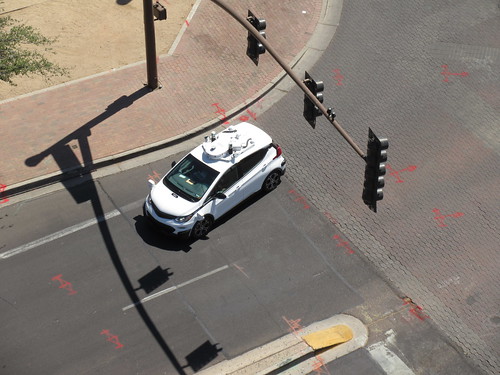
Start Up No.1961: Twitter cuts another 200 jobs, Vertu’s weird Web3 phone, Boris Becker ‘in the game’, a BritGPT for UK?, and more

A tweet going viral
If you’re smart enough, you can reverse engineer Twitter’s algorithm to make your tweets go viral. Use with care, though.

You can sign up to receive each day’s Start Up post by email. You’ll need to click a confirmation link, so no spam.

A selection of 9 links for you. Non-infectious. I’m @charlesarthur on Twitter. On Mastodon: https://newsie.social/@charlesarthur. Observations and links welcome.


I remembered how awful it is to go viral • Garbage Day

Ryan Broderick decided to figure out what makes stuff go viral on Twitter these days, from first principles:

»

I recently noticed Musk doing a very specific trick that is mainly done by teenage tweetdeckers trying to sell dildos and promote Telegram channels for hentai, NFT spam bots, and, of course, weird tech guys making long threads about growth-hacking their open relationships using their Notion second brain or whatever. He was replying to his own tweets.

Extremely cringe, but useful for me in trying to reverse engineer how this extremely broken website works now!

So my hypothesis went like this: Twitter is using invisible subreddits via Topics to algorithmically organize tweets. Because the For You page isn’t chronological anymore, viral tweets can’t be as timely as they used to be. They have to be kind of evergreen. It helps if they’re commenting on something that’s already going viral. And it really helps if you post a thread, reply to yourself, or create some kind of discussion in the replies. There also seems to be a bigger emphasis on video now.

My first attempt at gaming the algorithm was this thread about the dangers of AI. It was a long thread about a topic that I knew Twitter was tracking, AI, and it was a hot take that generated a lot of replies. And it worked! It’s the first tweet I’ve had break 1,000 retweets since November 2022.

Cool, but I wanted to try it again and lean even further into the algorithm, which meant I needed to find a video that was already going viral and getting a lot of quote tweets, reply to a bunch of replies, reply to myself, and make sure it was something totally evergreen. And if you want to go viral it’s always best to focus on something you sincerely care about, so, when I saw this video about Marvel movies going viral and getting lots of quote tweets, I decided to jump in, as well. My tweet wasn’t hugely popular initially, but I spent about 45 minutes replying to people who commented on it. Then I closed the app and didn’t check it until the next day.

«

Yes, you guessed. His conclusion:

»

Anyways, I can safely say I understand how Twitter works now. It’s basically just Reddit moving at the speed of Tumblr. Which is pretty sad tbh.

«

unique link to this extract


Twitter Blue head Esther Crawford is out at Twitter • The Verge

Emma Roth:

»

Twitter product manager Esther Crawford no longer has a job at the company following yet another wave of layoffs, as first reported by Platformer’s Zoë Schiffer. Crawford headed up various projects at Twitter, including the company’s Blue with verification subscription as well as Twitter’s forthcoming payments platform.

Alex Heath of The Verge confirmed Crawford and most of the remaining product team were laid off this weekend, leading to speculation that Twitter’s owner Elon Musk may be about to install a new regime at the company.

In a recent interview, Musk said, “I need to stabilize the organization and just make sure it’s in a financially healthy place in that the product roadmap is clearly laid out” before guessing that “before the end of the year” would be a good time to find a replacement for himself as Twitter CEO.

During her time at Twitter, Crawford emerged as one of Twitter’s most prominent product managers under Elon Musk’s leadership, and notably tweeted a picture of herself on the floor of Twitter’s office in a sleeping bag and eye mask. “When your team is pushing round the clock to make deadlines sometimes you #SleepWhereYouWork,” the tweet reads.

«

The NYT says that around 200, out of 2,000, were fired. There’ll be a lot of schadenfreude at Crawford’s departure: she wasn’t popular among ex-Twitter staff for her relentless upbeat approach to Musk’s slash-and-burn school of management. Though she hadn’t updated her Twitter profile on Tuesday (it still read “product @Twitter”), she did acknowledge her firing with a tweet saying “The worst take you could have from watching me go all-in on Twitter 2.0 is that my optimism or hard work was a mistake. Those who jeer & mock are necessarily on the sidelines and not in the arena. I’m deeply proud of the team for building through so much noise & chaos.”

To which the Aussie pixelatedboat replied, with sarcasm you’d only recognise if you know his normal tweets, “Thank you, all your hard work is reflected in the current twitter user experience.”

The replies to Crawford’s tweet break down pretty clearly into “Silicon Valley startup types who believe work should consume you” and “people who think you’re allowed a life beyond work”.
unique link to this extract


We tried Vertu’s ‘Web3’ phone. It scared us • WIRED

Andrew Williams:

»

Why won’t Vertu die? It’s the cockroach of phone companies. The once huge LG made its smartphone exit in 2021. HTC and Sony are just about clinging on by their fingertips. And yet the ultra-niche Vertu just recently announced a phone as bold and bombastic as anything it has made to date: the Metavertu. 

It starts at £2,787 ($3,330), then tops out at a mind-boggling £34,534 ($41,262) for the borderline offensive Himalaya Alligator Leather 18K Gold & Diamond model. And that may not even be the most eye-opening part. Vertu markets this thing as the “world’s first Web3 phone,” a claim that would set off alarm bells had they not already been ringing since first sight of the Vertu name.

Why? Over the years, Vertu has been responsible for some of the most tasteless and gaudy phones to roll off a production line. It started off as a Nokia side brand in 1998. Those early years gave us some undeniably striking phones, like the relatively elegant Vertu Signature from 2003. 

By 2012, Nokia’s phone market share had dropped from heights of 50.8% to under 5%. Vertu was sold to a private equity group, then bounced between owners from Turkey and China.

«

Now, it’s basically selling rebranded ZTE handsets. However, to use the Web3 aspect..:

»

Vertu demands you supply not just your real name and either your drivers license number or passport number to use Vshot, but a picture of its information page and a picture of you holding your ID. You’re left waiting up to five minutes with the load bar spinning before you’ll see this bizarre info request, too.

If this doesn’t make you worried, it should. Vertu’s terms of service claims this ID is required by the People’s Republic of China, and goes on to leave one with the impression that maybe you shouldn’t bet the bank on any “due diligence” from Vertu in checking the apps made available through the Dapp store, among other worrying clauses. The entire poorly written script doesn’t quite reach the levels of “if you use this software, you are on your own should something go wrong,” but let’s just say it is very different from the T+Cs pages you’d expect from any “normal” app store. We’re certainly not in the Google Play Store anymore.

Never before have I used a phone where I felt so unsafe, one that feels like it could be used to scam me—though, to be clear, I have no evidence that it is. This really is a Web3 phone, then, just perhaps not in the sense the aspiring crypto bros hoped for.

«

unique link to this extract


Boris Becker: ‘I’m still in the game. Just have to play better’ • Financial Times

Henry Mance got the first English interview with the former Wimbledon champion, who was sentenced to two and a half years in prison for tax evasion (but served just “eight months and six days”, he says):

»

His lawyer said his career earnings were $50mn.

“I was not careless. I had good investments with the car dealerships, with real estate. I was cash-poor and asset-rich. You have a divorce, you have another one. It goes quick! It wasn’t that I was spending it on the Ferrari and the gold Rolexes. It wasn’t also that I was poor. I had a lot of income, but I had a lot of expenditure. I’ve financed three families.”

He tells me that his dream was to become a billionaire and buy a football club. He denies reports that he lost £10mn investing in Nigerian oil. He did buy a 12-bedroom villa in Mallorca, and spend £22,000 a month renting a house in Wimbledon. He was “maybe too generous” with gifts. During his trial, he was seen entering Harrods. “That photo is actually wrong. I was hiding from the paparazzi. I never shopped at Harrods.”

As for the unauthorised payments for which he was sentenced, “I used that money to pay my ex-wife child support, to support my wife at the time, to pay rent, to pay for my doctor for my knee surgery, and to pay for my lawyer’s bill that advised me that I can do that.

“The British justice system is brutal — for everybody! Including for me. I’ve paid back in the region of €16mn for [failing to repay] a €3.5mn loan. Don’t ask me my opinion because I might get arrested again . . . I lost my house in Germany, my flat in London, my house in Mallorca.”

Has he learnt his lesson? “What lessons should I have to learn? That I have to be careful with my money. Yes. Should I have better advisers? Yes . . . When I’m at my best in tennis, who do I listen to in my matches? I listen to myself. I’m going to start listening to my common sense, instead of having these tens of advisers and lawyers. I’m actually pretty good with numbers, believe it or not.”

Later, when I check his figures for the charges he faced and the jail time he served, I find they are off: he faced 24 charges, not 29, and spent seven months and 17 days inside.

«

A remarkable fact: he’s 55, and his left knee, right ankle and both hips are replacements. That’s what playing pro tennis on hard courts does to you. Mance says he was one of the most fascinating interview subjects he’s ever spoken to.
unique link to this extract


UK needs its own ‘BritGPT’ or will face an uncertain future, MPs hear • The Guardian

Alex Hern:

»

The UK needs to support the creation of a British version of ChatGPT, MPs were told on Wednesday, or the country would further lose the ability to determine its own fate.

Speaking to the Commons science and technology committee, Adrian Joseph, BT’s chief data and artificial intelligence officer, said the government needed to have a national investment in “large language models”, the AI that underpins services such as ChatGPT, Bing Chat and Google’s Bard.

Without such technology, the nation would struggle to compete internationally in future, he said.

“We think there’s a risk that we in the UK, lose out to the the large tech companies, and possibly China, and get left behind … in areas of cybersecurity, of healthcare, and so on. It is a massive arms race that has been around for some time, but the heat has certainly been turned up most recently.”

Dame Wendy Hall, who co-chaired the UK government’s AI review in 2017, concurred with the need to develop a BritGPT. “If we don’t do it, we just become a service industry country,” she told MPs. “But in the UK, we can harness the technology, use that to drive the economy and grow jobs.”

The computing power required to perform cutting-edge AI work is expensive, MPs were told, which prevents the UK’s leading researchers in the field from competing directly with large, well-funded US companies.

“University researchers are at risk of being left behind,” said Nigel Shadbolt, the chair of the Open Data Institute, “because their access to the kinds of [computing power] you need is not organised terribly systematically. We’ve got to think about we can sustainably guarantee our access to that.”

«

A national investment in LLMs? I suppose the idea is that rather like JANET, the high-speed internet system that links universities, you could fund an LLM system that would be available to researchers there. But that’s not a commercial system. Would you rent it out on a timeshare system? But then what’s the difference between that and a bigger one such as OpenAI will have? And just as a reminder, OpenAI has had more than a billion dollars of investment, and Microsoft is pushing another $10bn into it over the coming years. Meanwhile Britain has striking nurses and doctors.
unique link to this extract


International Baccalaureate lets pupils use ChatGPT to write essays • The Times

Nicola Woolcock, Education Editor:

»

Children will be allowed to quote from work generated by ChatGPT in their essays, a leading qualification body has revealed.

The International Baccalaureate said it will not ban the AI chatbot, which can be used for plagiarism, suggesting it was similar to dealing with cheating parents and essay mills.

Matt Glanville, head of assessment principles and practice at the IB, said children can use work generated by ChatGPT so long as they do not pass it off as their own.

In the long run, he said the qualification would heavily reduce its reliance on essays because other skills were now more important than essay-writing.

The IB is taken by thousands of pupils each year at more than 120 British schools. Glanville said those working in schools or assessment should be excited rather than terrified by ChatGPT and “embrace it as an extraordinary opportunity”. He likened it to spellchecking software and translation apps.

He said: “The clear line between using ChatGPT and providing original work is exactly the same as using ideas taken from other people or the internet. As with any quote or material adapted from another source, it must be credited in the body of the text and appropriately referenced in the bibliography.

“Essay-writing is, however, being profoundly challenged by the rise of new technology and there’s no doubt that it will have much less prominence in the future.

«

Seems reasonable to me. (IB is about equivalent to A levels, except there are more subjects.) You might as well get children used to how the world is going to be when they’re adults, and pretty much no adult has to write long essays.
unique link to this extract


Classes resume Monday after ‘encryption event’ in Minneapolis schools • Sahan Journal

Becky Dernbach:

»

Minneapolis Public Schools will open for in-person instruction as usual Monday, after a week of disruptions from “technical difficulties” and snow.

In an email to families and students, Minneapolis Public Schools described the technical issues as an “encryption event.” 

What is an “encryption event”?

“I don’t have any specifics past that,” a district spokesperson told Sahan Journal.

The problems affected the operability of systems including internet, phones, cameras, badge access, copiers/printers, and building alarms, the district said in its email to Minneapolis families. All of these systems have been restored, or soon will be. Some systems may still be down Monday as the district assesses protective measures.

…The “encryption event” resulted in the shutdown of many Minneapolis Public Schools systems for a full week. But due to a fluke of timing, the technical difficulties did not cause any missed instructional days.

On Monday, schools were closed for Presidents’ Day; Tuesday was also scheduled as a “non-school day” for parent-teacher conferences. Then, because of a predicted snowstorm, Minneapolis Public Schools announced e-learning days for Wednesday, Thursday, and Friday. The technical difficulties did not affect the programs needed for e-learning, like Google Classroom, the district said.

«

This one got squeezed out yesterday, but I love the idea of renaming “ransomware” an “encryption event”. A bit like saying Chicxulub was an “asteroid event”.
unique link to this extract


GoDaddy says a multi-year breach hijacked customer websites and accounts • Ars Technica

Dan Goodin:

»

GoDaddy has revealed that its network suffered a multi-year security compromise that allowed unknown attackers to steal company source code, customer and employee login credentials, and install malware that redirected customer websites to malicious sites.

GoDaddy is one of the world’s largest domain registrars, with nearly 21 million customers and revenue in 2022 of almost $4bn. In a filing with the Securities and Exchange Commission, the company said that three serious security events starting in 2020 and lasting through 2022 were carried out by the same intruder.

“Based on our investigation, we believe these incidents are part of a multi-year campaign by a sophisticated threat actor group that, among other things, installed malware on our systems and obtained pieces of code related to some services within GoDaddy,” the company stated. The filing said the company’s investigation is ongoing.

The most recent event occurred last December when the threat actor gained access to the cPanel hosting servers customers use to manage websites hosted by GoDaddy. The threat actor then installed malware on the servers that “intermittently redirected random customer websites to malicious sites.”

“We have evidence, and law enforcement has confirmed, that this incident was carried out by a sophisticated and organized group targeting hosting services like GoDaddy,” company officials wrote in a separate statement published on Thursday. “According to information we have received, their apparent goal is to infect websites and servers with malware for phishing campaigns, malware distribution, and other malicious activities.”

A separate event occurred in March 2020, when the threat actor obtained login credentials that gave it access to a “small number” of employee accounts and the hosting accounts of roughly 28,000 customers.

«

Given the installation of malware, my guess would be that this is commercial hackers looking to take over (or hack into) web users’ systems.
unique link to this extract


Zombie newspaper sites rise from the grave • Twin Cities Business

Dan Niepow:

»

What happens when a newspaper dies? Apparently, in some cases, its digital ghost lives on in mysterious, unrecognizable forms.

Minneapolis neighborhood newspaper the Southwest Journal shuttered at the end of 2020, but its web domain continues to post fresh content under the auspices of a Delaware “SEO company” whose leader lives in Serbia. Though the site still includes a few legacy Journal articles now under fictitious bylines, all of the most recent posts are more or less junk content evidently designed to manipulate search engines. There’s a Feb. 10 article about handling raw chicken. Another article highlights the “10 most popular bitcoin casino games.”

While there is a recent article on creating “a breathtaking rock garden” written from the perspective of someone purportedly living in the East Harriet neighborhood, the site’s content, generally speaking, is no longer in line with the Journal’s longstanding coverage of South Minneapolis neighborhoods.

The “Contact Us” link at the bottom of the site pointed to an email address connected to an entity known as Shantel LLC.

According to its own website, Shantel LLC is an “SEO company” from Delaware, and, as of Feb. 17, its homepage read, “Let’s make the internet a great again!” The company said it specializes in “writing services, SEO optimization services, and similar SEO-related services.” (Shantel LLC’s website was utterly emptied of content around the time this article published, but archived versions of the site include that same company description.)

«

(Just pausing here to wonder who on earth is searching for “bitcoin casino games”. Isn’t bitcoin and all the associated malarkey enough of a casino?) The problem of newspaper domains, of course, being that they may have high trust, or be bookmarked by some people.
unique link to this extract


• Why do social networks drive us a little mad?
• Why does angry content seem to dominate what we see?
• How much of a role do algorithms play in affecting what we see and do online?
• What can we do about it?
• Did Facebook have any inkling of what was coming in Myanmar in 2016?

Read Social Warming, my latest book, and find answers – and more.


Errata, corrigenda and ai no corrida: none notified
Start Up No.1960: shadow painting, Signal threatens to block UK users, AI coders less secure, OLED iPads?, and more


The makers of Ben & Jerry’s ice cream are working on versions that will stay good in warmer freezers – to save energy, and money. CC-licensed photo by Mike Mozart on Flickr.

You can sign up to receive each day’s Start Up post by email. You’ll need to click a confirmation link, so no spam.

A selection of 9 links for you. Two scoops? I’m @charlesarthur on Twitter. On Mastodon: https://newsie.social/@charlesarthur. Observations and links welcome.


The art of the shadow: how painters have gotten it wrong for centuries • The MIT Press Reader

Roberto Casati and Patrick Cavanagh, whose book “The Visual World of Shadows” deals in even more depth with this topic:

»

Painters have long struggled with the difficulties of depicting shadows, so much so that shadows — after a brief, spectacular showcase in ancient Roman paintings and mosaics — are almost absent from pictorial art up to the Renaissance and then are hardly present outside traditional Western art.

Here, we embark on a journey that takes us through a number of extraordinary pictorial experiments — some successful, some less so, but all interesting. We have singled out some broad categories of solutions to pictorial problems: depicted shadows having trouble negotiating obstacles in their path; shadow shapes and colors that stretch credibility; inconsistent illumination in the scene; and shadow character getting lost. We also find some taboos, that is, self-inflicted limitations on where or what to depict of a shadow.

«

You might think: come on, a shadow’s a shadow, surely? You just.. paint them where they should be? But that hides (ha) all sorts of problems, as they say. There’s no technology here, but a huge amount of fun. Allow some time for the page to load – there are lots of fascinating illustrations. You’ll look at shadows with a lot more interest afterwards.
unique link to this extract


How misinformation about solar power hinders the fight against climate change • NPR

Miranda Green and Michael Copley:

»

Citizens for Responsible Solar is part of a growing backlash against renewable energy in rural communities across the United States. The group, which was started in 2019 and appears to use strategies honed by other activists in campaigns against the wind industry, has helped local groups fighting solar projects in at least 10 states including Ohio, Kentucky and Pennsylvania, according to its website.

“I think for years, there has been this sense that this is not all coincidence. That local groups are popping up in different places, saying the same things, using the same online campaign materials,” says Michael Burger, executive director of the Sabin Center for Climate Change Law at Columbia University.

Citizens for Responsible Solar seems to be a well-mobilized “national effort to foment local opposition to renewable energy,” Burger adds. “What that reflects is the unfortunate politicization of climate change, the politicization of energy, and, unfortunately, the political nature of the energy transition, which is really just a necessary response to an environmental reality.”

Citizens for Responsible Solar was founded in an exurb of Washington, D.C., by a longtime political operative named Susan Ralston who worked in the White House under President George W. Bush and still has deep ties to power players in conservative politics.

Ralston tapped conservative insiders to help set up and run Citizens for Responsible Solar. She also consulted with a longtime activist against renewable energy who once defended former President Donald Trump’s unfounded claim that noise from wind turbines can cause cancer. And when Ralston was launching the group, a consulting firm she owns got hundreds of thousands of dollars from the foundation of a leading GOP donor who is also a major investor in fossil fuel companies.

«

Gosh, it’s so hard to join the dots, isn’t it.
unique link to this extract


As heat pumps go mainstream, a big question: can they handle real cold? • The New York Times

Elena Shao:

»

Heat pumps, in contrast [to gas or oil furnaces], don’t generate heat. They transfer it. That allows them to achieve more than 300% efficiency in some cases. Because they are more efficient, using heat pumps to cool and heat homes can help homeowners save money on their utility bills, said Sam Calisch, head of special projects at Rewiring America, a nonprofit advocacy group.

In Maine, where heat pump adoption is growing, but where a majority of homes still burn oil, homeowners can save thousands of dollars in annual energy costs by making the switch, according to an analysis from Efficiency Maine, an independent administrator that runs the state’s energy-saving programs.

Many heat pumps that are built for cold climates do have hefty upfront price tags. To soften the blow, a federal tax credit from last year’s climate and tax law can cover 30% of the costs of purchase and installation, up to $2,000.

As they’ve grown in popularity, heat pumps have increasingly been the subject of misconception and, at times, misinformation. Fossil-fuel industry groups have been the origin of many exaggerated and misleading claims, including the assertion that they don’t work in regions with cold climates and are likely to fail in freezing weather.

While heat pumps do become less efficient in subzero temperatures, many models still operate close to normally in temperatures down to minus 13 degrees Fahrenheit, or minus 24 Celsius. Some of the latest models are even more efficient, and many “cold” countries, like Norway, Sweden and Finland, are increasingly embracing heat pumps.

«

According to the data, heat pumps outsold gas furnaces in the US last year (4m+ units v 4m- units) . Though of course, the installed base of gas and oil furnaces is huge; that’s hard to erode.
unique link to this extract


AI assistants help developers produce code that’s insecure • The Register

Thomas Claburn:

»

Computer scientists from Stanford University have found that programmers who accept help from AI tools like Github Copilot produce less secure code than those who fly solo.

In a paper titled, “Do Users Write More Insecure Code with AI Assistants?“, Stanford boffins Neil Perry, Megha Srivastava, Deepak Kumar, and Dan Boneh answer that question in the affirmative.

Worse still, they found that AI help tends to delude developers about the quality of their output.

“We found that participants with access to an AI assistant often produced more security vulnerabilities than those without access, with particularly significant results for string encryption and SQL injection,” the authors state in their paper. “Surprisingly, we also found that participants provided access to an AI assistant were more likely to believe that they wrote secure code than those without access to the AI assistant.”

Previously, NYU researchers have shown that AI-based programming suggestions are often insecure in experiments under different conditions. The Stanford authors point to an August 2021 research paper titled “Asleep at the Keyboard? Assessing the Security of GitHub Copilot’s Code Contributions,” which found that given 89 scenarios, about 40% of the computer programs made with the help of Copilot had potentially exploitable vulnerabilities.

«

Beginning to think AI systems aren’t a panacea after all.
unique link to this extract


Signal would ‘walk’ from UK if Online Safety Bill undermined encryption • BBC News

Chris Vallance:

»

The encrypted-messaging app Signal has said it would stop providing services in the UK if a new law undermined encryption.

If forced to weaken the privacy of its messaging system under the Online Safety Bill, the organisation “would absolutely, 100% walk” Signal president Meredith Whittaker told the BBC.

The government said its proposal was not “a ban on end-to-end encryption”.

The bill, introduced by Boris Johnson, is currently going through Parliament. Critics say companies could be required by Ofcom to scan messages on encrypted apps for child sexual abuse material or terrorism content under the new law. This has worried firms whose business is enabling private, secure communication.

Element, a UK company whose customers include the Ministry of Defence, told the BBC the plan would cost it clients. Previously, WhatsApp has told the BBC it would refuse to lower security for any government.

The government, and prominent child protection charities have long argued that encryption hinders efforts to combat online child abuse – which they say is a growing problem. “It is important that technology companies make every effort to ensure that their platforms do not become a breeding ground for paedophiles,” the Home Office said in a statement. It added “The Online Safety Bill does not represent a ban on end-to-end encryption but makes clear that technological changes should not be implemented in a way that diminishes public safety – especially the safety of children online.

“It is not a choice between privacy or child safety – we can and we must have both.”

…Ms Whittaker told the BBC it was “magical thinking” to believe we can have privacy “but only for the good guys”. She added: “Encryption is either protecting everyone or it is broken for everyone.”

«

Feel as though we’ve been hearing this back-and-forth for a decade at least, from governments of all colours.
unique link to this extract


Is Earth running out of freshwater? • Nautilus

Matthew Birkhold is author of “Chasing Icebergs: How Frozen Freshwater Can Save the Planet”:

»

Brian Gallagher: Is Earth running out of freshwater?

Matthew Birkhold: If we project into the future a little bit to 2030, the global demand for freshwater will exceed supply by 40 percent. Currently, 107 countries lack a sustainably managed water source. And two-thirds of the world’s population in just seven years are going to face regular water shortages. There’s this growing, growing crisis. And it’s easy for people like me to forget about it. So I always like the opportunity to remind people, you know, we’re extremely privileged here. And a lot of people are going to suffer and die because of a lack of freshwater.

How are icebergs going to solve the water crisis? It’s part of the story that we receive about icebergs that they are either really dangerous objects, which they are undoubtedly, or these mythical mystical rarefied gems that are so special that we should just look at them. In reality, icebergs contain a tremendous amount of freshwater. Two-thirds of freshwater on planet Earth is locked away in the poles and ice caps and glaciers. And all we need is a few icebergs to really make a dent into this problem. An iceberg that’s 2,000 feet long and 650 feet wide could supply all of Cape Town, South Africa with water for an entire year. So the question then, is: How do we get that iceberg water to the people who need it?

The answer, I think, is Ed Kean in Newfoundland. It’s these funny guys who are harvesting icebergs off the coast of Canada. They have a lot of the secrets for us because they figured out how to approach these dangerous objects and how to wrangle them into submission.

«

The idea of towing icebergs around seems to pop up every ten years or so, and it’s always slightly eccentric types who are keen to do it. Never seems to happen, though.
unique link to this extract


Unilever tries reformulating its ice cream to survive warmer freezers • WSJ

Katie Deighton:

»

Unilever PLC wants to warm up its ice cream freezers in convenience stores without turning its products into puddles, part of a broader effort to pursue green goals and potentially boost sales in the process.

The consumer packaged goods giant, which sells ice cream brands including Ben & Jerry’s and Magnum, is testing the performance of its products in freezers that are set to temperatures of roughly 10º Fahrenheit (-12.2ºC), up from the industry standard of 0ºF (-18ºC). 

Unilever owns most of the 3 million chest-like freezers that house its ice-cream tubs and treats in bodegas and corner stores, and the energy used to power them accounts for around 10% of Unilever’s greenhouse gas footprint, according to the London-based firm. Keeping ice cream at 10ºF as opposed to 0ºF will reduce energy use and greenhouse gas emissions by roughly 20% to 30% per freezer, it said.

It might also help sales with sustainability-minded consumers and even keep stores’ ice-cream selling season going longer. Unilever’s out-of-home ice cream sales declined slightly during the fourth quarter of 2022 because, the company said, some stores unplugged their freezers sooner in the year than usual. 

“What was happening was that shopkeepers in some markets responded to fears about rising energy costs by switching off their cabinets earlier than they otherwise would have done,” departing chief executive Alan Jope said in discussing the results earlier this month.

…But the strategy has required Unilever to reformulate some of its ice creams so they can withstand higher temperatures without melting, losing structural integrity or forfeiting what the company calls their distinctive mouthfeel. Higher temperatures can lead to softer ice creams that stick to wrappers and slide off ice cream sticks, for example, said Andrew Sztehlo, chief research and development officer for Unilever’s ice cream division. Other ingredients such as wafer cones can turn soggy in warmer temperatures, he said.

«

It’s so far taken a decade of work, at undisclosed cost, but the savings would be permanent. And maybe we’d just get used to the different mouthfeel? (The link should give you a free view of the story.)
unique link to this extract


I was an App Store games editor – that’s how I know Apple doesn’t care about games • The Guardian

Neil Long:

»

Late last year, the developer of indie hit Vampire Survivors said it had to rush-release a mobile edition to stem the flow of App Store clones and copycats. Recently a fake ChatGPT app made it through app review and quickly climbed the charts before someone noticed and pulled it from sale. It’s not good enough.

Apple could have reinvested a greater fraction of the billions it has earned from mobile games to make the App Store a good place to find fun, interesting games to fit your tastes. But it hasn’t, and today the App Store is a confusing mess, recently made even worse with the addition of ad slots in search, on the front page and even on the product pages themselves.

Search is still terrible, too. Game developers search in vain for their own games on launch day, eventually finding them – having searched for the exact title – under a slew of other guff.

Mobile games get a bumpy ride from some folks – this esteemed publication included – for lots of reasons. But there is good stuff out there…

…However, finding the good stuff is hard. Apple – and indeed Google’s Play store – opened the floodgates to developers without really making sure that what’s out there is up to standard. It’s a wild west.

Happily things may be about to change – including that 30% commission on all in-app purchases.

«

It’s a problem for both Apple and Google, and neither has managed to find a satisfactory answer. It’s hardly as if Google’s Play Store is a haven of well-managed jollity, as he acknowledges.
unique link to this extract


Apple orders OLED displays for 2024 iPad Pro models • BGR

José Adorno:

»

After a mild upgrade last year by adding the M2 chip, the company expects a major revamp for its professional tablet by ditching LCD and miniLED displays to an OLED panel technology. According to Business Korea, Apple has placed orders for 10.9-inch and 12.9-inch panels, which will be for the upcoming iPad Pro models.

Samsung and LG will produce the sixth-generation OLED panel for the new iPad. In contrast, in 2026, when Apple expects to introduce OLED technology to its MacBook models, the South Korean manufacturers will use the eight-generation panels.

Display analyst Ross Young believes Apple aims for new iPad Pro models by the beginning of 2024. According to him, the Cupertino firm is embracing OLED panels due to display costs falling. The analyst believes not only will the performance of OLED panels improve in the next few years thanks to tandem stacks and phosphorescent blue emitters, but costs will also fall from larger fabs.

The Elec, for example, says Apple is slowly transitioning through four types of display technology for its products. It started with IPS LCD, then IPS LCD with miniLED backlighting (available with the 12.9-inch iPad Pro and 14- and 16-inch MacBook Pro), and, shortly, OLED. 

The report says 2024 is when people should expect an OLED iPad Pro and 2026 an OLED MacBook Pro.

«

Given that there are fewer and fewer reasons for ditching an old iPad for a new one, different displays is about the best on offer. It’s not as if anyone’s struggling with the processing speed of the M1 versions, which have been supplanted.
unique link to this extract


• Why do social networks drive us a little mad?
• Why does angry content seem to dominate what we see?
• How much of a role do algorithms play in affecting what we see and do online?
• What can we do about it?
• Did Facebook have any inkling of what was coming in Myanmar in 2016?

Read Social Warming, my latest book, and find answers – and more.


Errata, corrigenda and ai no corrida: none notified