Unknown's avatar

About charlesarthur

Freelance journalist - technology, science, and so on. Author of "Digital Wars: Apple, Google, Microsoft and the battle for the internet".

Start Up No.2096: NYT tries to open up Google-DoJ trial, a Netflix price hike?, Twitter throttling links (again), AI or real?, and more


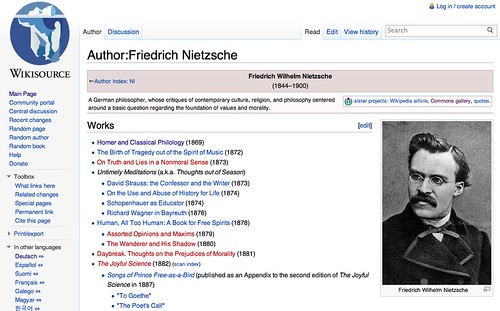
The writings of Friedrich Nietzsche seem to have inspired, at least in part, the latest output from Marc Andreessen. CC-licensed photo by jwyg on Flickr.

You can sign up to receive each day’s Start Up post by email. You’ll need to click a confirmation link, so no spam.


There’s another post coming this week at the Social Warming Substack on Friday at 0845 UK time. Free signup.


A selection of 10 links for you. Use them wisely. I’m @charlesarthur on Twitter. On Threads: charles_arthur. On Mastodon: https://newsie.social/@charlesarthur. Observations and links welcome.


Google, DOJ still blocking public access to monopoly trial docs, NYT says • Ars Technica

Ashley Belanger:

»

Dozens of exhibits from the Google antitrust trial are still being hidden from the public, The New York Times Company alleged in a court filing on Monday.

According to The Times, there are several issues with access to public trial exhibits on both sides. The Department of Justice has failed to post at least 68 exhibits on its website that were shared in the trial, The Times alleged, and states have not provided access to 18 records despite reporters’ requests.

Google’s responses to document requests have also been spotty, The Times alleged. Sometimes Google “has not responded at all” to requests to review public exhibits. Other times, Google responds, but “often does not provide the exhibit in its entirety,” The Times claimed, including limiting public access to “particular page(s) of the exhibit shown to a given witness.”

The Times has asked the court to intervene and expand public access to key evidence weighed in what’s “arguably the most important antitrust trial in decades, with far-reaching consequences for the future of the tech industry.”

This is just the latest attempt to stop the Google antitrust trial from being shrouded in secrecy. Just before the trial, advocates lost a fight to get the court to provide a public access audio stream of the whole trial. Then shortly after the trial began, Google tried and failed to reduce public access to trial exhibits by requesting an opportunity to review every trial document before the DOJ posted anything online.

The drama over Google’s request to control how trial documents are shared concluded with an agreement between the DOJ and Google that either party would have an opportunity to object to the release of certain trial exhibits within three hours—a matter that both parties would have to prepare to argue the following trial day. Otherwise, either side “may” post the trial exhibit the next day.

…The public has a “weighty” constitutional right to access the Google trial exhibits to fully consider the government’s case against Google, The NYT argued.

«

Former patent lawyer Nilay Patel, now editor-in-chief at The Verge, writes on this too; multiple outlets have joined the NYT’s complaint, and he’s getting the Verge/Vox ensemble to do so too.
unique link to this extract


Netflix may hike prices after success of password-sharing crackdown • Reuters

Samrhitha A:

»

Netflix’s crackdown on password-sharing likely boosted subscribers by about 6 million in the third quarter and the streaming pioneer is expected to set the stage for price increases when it reports earnings on Wednesday.

The only profitable major streamer, Netflix has resisted joining rivals like Walt Disney in hiking ad-free prices this year and instead curbed password-sharing outside households to tap the more than 100 million viewers who use its service without subscribing.

“Netflix now closely resembles a utility in many markets,” analysts at Bernstein said. “The challenge of being labeled a utility is how a maturing company continues finding growth.”

It could hike prices after the end of the Hollywood actors strike, a media report said earlier in October.

Five months after calling a strike that plunged Hollywood into turmoil, the Writers Guild of America (WGA) last week approved a new contract with major studios.

Netflix, however, has weathered the strike well thanks to its larger international presence and strong content slate.

After a slow start for the ad plan launched last year, analysts said they expect Netflix will raise prices of its ad-free options in the coming months to nudge more subscribers to the other tier, where commercials help bring in more revenue per user.

«

This is the surprising thing: raising prices so that people drop down to the “cheaper” tier with adverts, which generates more money. Streaming is recapitulating the evolution of TV, though regressing backwards towards adverts.
unique link to this extract


Microsoft and Adobe push new symbol to label AI images • The Register

Katyanna Quach:

»

you can use Coalition for Content Provenance and Authenticity (C2PA)’s Content Credentials metadata for any picture – it doesn’t have to be AI generated. The examples given on the Content Credentials’ website were made using Adobe’s Photoshop and Firefly AI tools, and can be identified as such through their metadata. What Microsoft, Adobe and others have promised to do is ensure their AI generators will at some point in the future include this cryptographically signed metadata in their machine-crafted pictures. The goal being to provide a way for people to see if a picture was model or human-made and how.

For instance, Microsoft said artwork produced by its text-to-picture Bing Image Creator and Bing AI chatbot will feature that metadata at some point.

Now here’s the tricky part, assuming the specification is secure and robust. It’s one thing to store that metadata in a picture. How does the user find out, without digging into the file contents?

Well, you will need a compatible application, one that understands the Content Credentials metadata. If an app recognizes that data in a file, it should superimpose the “cr” symbol over the image in a top corner. When you click on that symbol, a widget should appear describing the source of the pic and other details from the Content Credentials metadata – for example, if it was made via Bing or Photoshop.

That’s how people can easily inspect the origin of the snap. But of course if the file is opened in an application that doesn’t support Content Credentials, no symbol is shown: the app won’t understand the data and won’t show a symbol.

«

This is definitely the problem. Even if this comes into force at once, it would take decades for all the image-using apps to incorporate it, and there will be an incentive for those who want to create undetectable fakes to use or create apps that don’t follow this protocol. Not a tragedy of the commons, but a version of it.
unique link to this extract


The Techno-Optimist Manifesto • Andreessen Horowitz

Marc Andreessen:

»

We are being lied to.

We are told that technology takes our jobs, reduces our wages, increases inequality, threatens our health, ruins the environment, degrades our society, corrupts our children, impairs our humanity, threatens our future, and is ever on the verge of ruining everything.

We are told to be angry, bitter, and resentful about technology.

We are told to be pessimistic.

The myth of Prometheus – in various updated forms like Frankenstein, Oppenheimer, and Terminator – haunts our nightmares.

We are told to denounce our birthright – our intelligence, our control over nature, our ability to build a better world.

We are told to be miserable about the future.

«

There’s 5,000 words of this, presented in short, sharp sentences full of aspiration and not much actual roadmapping. It reads a bit like a 17-year-old who has just read The Fountainhead and some Nietzsche and had a joint. (He recommends the work of, among others, “John Galt”.) Andreessen has a habit of writing stuff like this every few months: who remembers “It’s Time To Build” from April 2020, which complained that there weren’t any vaccines for Covid because “we chose not to ‘build'”.

O ye of little faith, Mr Andreessen.
unique link to this extract


Twitter is throttling Patreon links: creators say it undermines their livelihood • The Markup

Jon Keegan and Dan Phiffer:

»

Twitter is now slowing down traffic on links to the crowdfunding site Patreon, WhatsApp, and at times, Meta’s Messenger app, a Markup analysis confirms. 

Using a tool launched by The Markup last month, readers discovered that links to these sites were delayed by an average of 2.5 seconds—findings we confirmed. 

Patreon users told The Markup that the throttling undermines their ability to reach new supporters on Twitter, which has historically been a key platform for building donations. “It’s dirty pool,” said Matt Carlin, the producer of a popular call-in show, Office Hours Live, which takes in nearly $30,000 per month from Patreon and is being throttled. “It’s another big tech company trying to squash little guys—or, in their attempts to squash bigger guys, squashing little guys like us.”

In September, The Markup reported that Twitter, now officially named X, was slowing down links to Bluesky, Facebook, Instagram, and Substack, also by an average of 2.5 seconds, which can feel extremely slow for users. We simultaneously launched a tool that lets readers test any link posted on X (which the platform automatically shortens using the t.co domain), and measured the time it took for X to redirect the link to its original destination. The Markup also built a bot that would let us know if any links readers were testing appeared to be throttled.

«

Every link posted on Twitter goes through its t.co shortener, which guards against spam and malware and so on. Is it possible that the system is just running slower? Sure, 2.5 seconds is a long time in computer terms, but I struggle to believe that people stop short of going to Patreon because they have to wait one thousand, two thousand, three thou, for the link to work.
unique link to this extract


Fearing AI, fan fiction writers lock their accounts • TechCrunch

Morgan Sung:

»

Kinktober. Whumptober. Kisstober. Flufftober. Goretober. October is a bacchanal of fan fiction, from romantic one-shots about unconventional character pairings to delicious smut that’ll make you reconsider your own sense of morality — all inspired by the month’s countless themed writing challenges. It’s an especially busy time for the fan fiction site Archive of Our Own (AO3). 

But this year’s monthlong prompt festival may seem quieter to the casual AO3 reader, with popular writers’ work seemingly wiped from the site altogether. In most cases, the stories still exist, but they aren’t publicly viewable anymore. 

In an effort to prevent their writing from being scraped and used to train AI models, many AO3 writers are locking their work, restricting it to readers who have registered AO3 accounts. Though it may curb bot commenters, it also limits traffic from guest users, which can be a blow for newer and less popular writers. Whether it’s effective is questionable, but in the AI paranoia, AO3 writers are taking any measures they can to protect their work. 

At the time of reporting, over 966,000 of the roughly 11.7 million works on AO3 were accessible only for registered users. It’s just a fraction of AO3’s vast library of content, but it’s worth noting that many authors are only locking new work, since existing fics were likely already scraped. 

«

They were happy for anyone to read them and share them and learn from them as long as the “anyone” was human. But if the “anyone” who learns from their work is a machine, they don’t like it? There’s an immense lack of logic in this.
unique link to this extract


The monthly “AI or real” quiz • BBC Bitesize

»

A deepfake video is a computer-generated copy that aims to perfectly replicate the voice, look, expressions and even gestures of another person. They can look very realistic, as you’ll see from this month’s quiz!

See if you can get full marks – and remember, always double check where an image or video has orginally come from. Who posted it and what are the intentions behind it? Verify sources and check whether any trustworthy news sites have published the content.

«

I got 6/8, so tolerable? It’s generally the fingers, isn’t it. Though not always.
unique link to this extract


About half of Bandcamp employees have been laid off • The Verge

Ash Parrish:

»

One of the worst tech labor years ever continues with the news that roughly half of Bandcamp employees have been laid off. Bandcamp employees are reporting the news via social media.

Epic Games bought the indie music platform back in 2022 for an undisclosed amount before selling it barely a year later.

Late last month, Epic Games laid off 16% of its workforce, or 830 employees, due to what CEO Tim Sweeney described as overspending. Epic also revealed that it would sell the Bandcamp business to California-based music licensing company Songtradr. In that announcement, Epic disclosed that an additional 250 people would be leaving Epic either through receiving offers from Songtradr or Epic’s divesture from its SuperAwesome ad business. Employees who did not receive offers from Songtradr were notified today and will be eligible for severance.

In an email to The Verge, Songtradr confirmed that 50% of Bandcamp employees have been extended offers to join Songtradr and reaffirmed from a previous statement the company’s commitment to keeping the Bandcamp experience the same.

«

Totally puzzling why Epic bought Bandcamp at all. Not an obvious or even unobvious fit. And Epic has form: in 2019 it bought group video chat app Houseparty, then shut it down in 2021.
unique link to this extract


The negative impact of mobile-first web design on desktop • Nielsen Norman Group

Kim Salazar, Tim Neusesser and Nishi Chitale:

»

Over 55% of worldwide web traffic comes from mobile devices. As the use of mobile devices continues to grow, so does the importance of mobile designs. This is why the mobile-first design approach, where designers first design for mobile and then adjust the design for tablets and desktop, has become very popular.

A minimalist style eliminates any design elements that are not required for the core functionality or message of the website. To avoid a cluttered appearance and achieve a minimalist aesthetic, designers make heavy use of negative space and simplify the amount of content displayed in one screen viewport. The result is content dispersion: a long page with low information density.

In the past, slow internet speeds limited the use of high-resolution imagery on websites. Today, however, improved bandwidth has eliminated this design constraint. Many modern web pages use large, high-resolution imagery. Image-focused designs are eye-catching, but they result in overly dispersed text content. 

A few large images on a desktop page can work well. However, if the page has too many big images, the text-based content that is displayed inline or in between images becomes dispersed and fragmented across the page.

«

NN/G is certainly right that designs which don’t really adjust for the desktop can be annoying as hell. But there’s the alternative where desktops become cluttered as hell. Mobile has generally been a good influence on web design. It just needs to swing back a bit.
unique link to this extract


AI and The Bible: seraphim, cherubim and thrones • MLearning.ai

Samuele:

»

The angelic tradition has always intrigued me. Both because my family has a strong spiritual connotation, and because the traditional representation of angels is very different from their textual description. What better argument to test how biblical angels look to an Artificial Intelligence?
Today I focus on the first hierarchy of angels, the most important and closest to divinity. It consists of 3 orders:
• Seraphim — שרף
• Cherubim — כְּרוּב
• Thrones — θρόνος

So I start with the Seraphim, the angels closest to God, the ones most important in their closeness to the creator. But how are they described in the Bible? In these words of Isaiah:

»

each one had six wings; with twain he covered his face, and with twain he covered his feet, and with twain he did fly

«

If I pass this description to my AI, I get…

«

…well, he gets something that looks to me like a Dementor in the Harry Potter films, and then refines it a bit to get something a lot more scary. This was a couple of years ago, when AI weren’t so good at drawing. They’re still pretty impressive, though.
unique link to this extract


• Why do social networks drive us a little mad?
• Why does angry content seem to dominate what we see?
• How much of a role do algorithms play in affecting what we see and do online?
• What can we do about it?
• Did Facebook have any inkling of what was coming in Myanmar in 2016?

Read Social Warming, my latest book, and find answers – and more.


Errata, corrigenda and ai no corrida: none notified

Start Up No.2095: the emptiness of the internet, Twitter fined in Australia, CRISPR beats avian flu, India’s deadly loan app, and more


A new Google project uses machine learning to try to optimise traffic light timings to improve vehicle flow in a growing number of cities. CC-licensed photo by Ian Sane on Flickr.

You can sign up to receive each day’s Start Up post by email. You’ll need to click a confirmation link, so no spam.

A selection of 10 links for you. Go, go, go! I’m @charlesarthur on Twitter. On Threads: charles_arthur. On Mastodon: https://newsie.social/@charlesarthur. Observations and links welcome.


Did you miss the post on the Social Warming Substack last Friday? It looked at what sort of difference the alterations to news item display on Twitter might make to clickthroughs – and what engagement is about.


Why the internet isn’t fun anymore • The New Yorker

Kyle Chayka:

»

The social-media Web as we knew it, a place where we consumed the posts of our fellow-humans and posted in return, appears to be over. The precipitous decline of X is the bellwether for a new era of the Internet that simply feels less fun than it used to be. Remember having fun online? It meant stumbling onto a Web site you’d never imagined existed, receiving a meme you hadn’t already seen regurgitated a dozen times, and maybe even playing a little video game in your browser. These experiences don’t seem as readily available now as they were a decade ago. In large part, this is because a handful of giant social networks have taken over the open space of the Internet, centralizing and homogenizing our experiences through their own opaque and shifting content-sorting systems. When those platforms decay, as Twitter has under Elon Musk, there is no other comparable platform in the ecosystem to replace them. A few alternative sites, including Bluesky and Discord, have sought to absorb disaffected Twitter users. But like sproutlings on the rain-forest floor, blocked by the canopy, online spaces that offer fresh experiences lack much room to grow.

…The Internet today feels emptier, like an echoing hallway, even as it is filled with more content than ever. It also feels less casually informative. Twitter in its heyday was a source of real-time information, the first place to catch wind of developments that only later were reported in the press. Blog posts and TV news channels aggregated tweets to demonstrate prevailing cultural trends or debates. Today, they do the same with TikTok posts—see the many local-news reports of dangerous and possibly fake “TikTok trends”—but the TikTok feed actively dampens news and political content, in part because its parent company is beholden to the Chinese government’s censorship policies. Instead, the app pushes us to scroll through another dozen videos of cooking demonstrations or funny animals. In the guise of fostering social community and user-generated creativity, it impedes direct interaction and discovery.

«

unique link to this extract


The Israel-Hamas war shows just how broken social media has become • The Atlantic

Charlie Warzel:

»

As my colleague Kaitlyn Tiffany wrote last year, the history of war is a history of media. The Gulf War demonstrated the power of CNN and the 24/7 cable-news format, foreshadowing the way infotainment would permeate politics and culture for the next 20 years. A series of contentious election cycles from 2008 to 2020, as well as the Arab Spring, the Syrian civil war, and the rise of the Islamic State, showed how social-media platforms democratized punditry and journalism, for better and worse. Commentators were quick to dub Russia’s invasion of Ukraine the “first TikTok war,” as the internet filled with videos from Ukrainians documenting the horrors of war in profoundly personal, often surreal ways.

If such conflicts are lenses through which we can understand an information environment, then one must surmise that, at present, our information environment is broken. It relies on badly maintained social-media infrastructure and is presided over by billionaires who have given up on the premise that their platforms should inform users. During the first days of the Israel-Hamas war, X owner Elon Musk himself has interacted with doctored videos published to his platform. He has also explicitly endorsed accounts that are known to share false information and express vile anti-Semitism.

In an interview with The New York Times, a Hamas official said that the organization has been using the lack of moderation on X to post violent, graphic videos on the platform to terrorize Israeli citizens.

Meanwhile, Adam Mosseri, the head of Instagram and the unofficial lead on the company’s Twitter clone, Threads, has received requests from journalists, academics, and news junkies to make his product more useful for following the war. He has responded by saying that his team won’t “amplify” news media on the platform

«

unique link to this extract


Tesla owner in Israel escapes terrorists in Model 3 despite blown tires, dozens of bullet holes • Teslarati

Simon Alvarez:

»

During the beginning of Hamas’ attack, a Tesla owner from Mefalsim, a kibbutz in Southern Israel near the Gaza Strip, was called in with the community’s alert squad. As he was driving to the assembly point, he encountered a vehicle loaded with Hamas terrorists. Photos and videos of the Model 3 Performance after its run-in with the terrorists hinted at the shocking events that transpired. 

Speaking from Sheba Hospital, where he is recovering from a series of surgeries due to the attack, the Tesla owner told Israeli publication Walla about his encounter. According to the Model 3 owner, the terrorists proceeded to spray the Model 3 with bullets, shooting at the front in an attempt to hit the engine. The terrorists also shot at the Model 3’s rear, seemingly in an attempt to ignite the fuel tank. Fortunately, the Model 3 Performance had neither an engine nor a fuel tank. 

“The terrorists recognized me from a distance of 10 meters. In addition to their Kalashnikovs, they had a machine gun in the battle that fired bullets of a larger diameter. They didn’t realize it was an electric car, so they shot at the front, hoping to hit the engine that wasn’t there, and at the back, attempting to ignite the non-existent fuel. They shot my tires. I pressed the gas, and they started chasing me,” the Tesla owner noted. 

At this point, it was a matter of survival. Thankfully, the Model 3 Performance is a very quick car, and the Tesla owner was able to gain some distance from his attackers. The Model 3 owner noted that his car’s acceleration ultimately allowed him to get away, and the Tesla’s safety systems allowed him to drive to a hospital at speed, even with blown-out tires. 

«

The photos are dramatic (and the driver was badly wounded) but it certainly shows one benefit of EVs. He escaped his would-be killers by driving at up to 180km/h (110mph) with the tyres disintegrating.
unique link to this extract


X fined $610,500 in Australia first for failing to crack down on child sexual abuse material • The Guardian

Josh Taylor:

»

X, the company formerly known as Twitter, has become the first online platform to be issued with a $610,500 fine under Australia’s Online Safety Act for its failure to meet basic online safety expectations.

X has 28 days to either pay the fine, issued by the e-safety commissioner, Julie Inman Grant, or provide responses to questions X ignored from the commissioner on its work to crack down on child sexual abuse material on the platform.

The legal notices were issued to X, Google, TikTok, Twitch and Discord in February following the first round of notices sent to Apple, Meta, Microsoft, Snap and Omegle last year.

In a report on the tech companies’ responses to the notices, released on Monday, the commissioner found many of the largest services were failing to adequately detect, remove and prevent child abuse material.

“Frankly, I was surprised at how hard it was to extract precise and accurate information, and frankly, surprised that some companies that should have much more sophisticated and mature systems and resources didn’t seem willing or able to be able to provide that information that had been provided by other companies,” Inman Grant told Guardian Australia. “Or in the case of Twitter, to leave things totally blank, to obfuscate [from providing] inaccurate information.”

The commissioner also found that X and Google did not comply with the notices, with Google giving generic responses to some specific questions, while some questions to X went entirely unanswered.

Google has been given a formal warning, while X was given an infringement notice.

«

This is just the beginning. Twitter is in line for many more, repeated fines all over the place. The EU and the US’s FTC in particular.
unique link to this extract


The same lab that cloned Dolly the sheep has used gene editing to create chickens resistant to avian flu • EL PAÍS English

Daniel Mediavilla:

»

The University of Edinburgh’s Roslin Institute — the animal research center where Dolly the sheep was created — used gene editing to breed chickens that resist infection by the avian flu. A deadly virus for birds that causes great economic losses around the world and can, in some cases, infect and kill humans, the disease has proved difficult for vaccines because the proteins on its surface that are recognized by the immune system change rapidly. A group of British researchers has tested the potential of modifying small sections of chicken DNA to prevent influenza infection, albeit only partially. They published their results today in the journal Nature Communications.

Influenza A needs a protein in chicken cells, ANP32A, to replicate. The team of scientists, led by Mike McGrew, a University of Edinburgh researcher, used the CRISPR editing technique to modify the gene that produces the protein in the chickens’ germ cells, which would enable the birds to pass down the change to their offspring. In this way, animals were created that hardly became infected with influenza when exposed to other infected birds (“9 out of 10 remained uninfected,” according to the study), and they did not subsequently infect other chickens. In a later test, when inoculated with a dose a thousand times higher, five out of ten became infected.

«

This is quite a feat. Avian flu has had a dramatic effect on farming in Europe.
unique link to this extract


Young people turn to social media for financial guidance • Deloitte UK

»

More young people are turning to social media rather than their bank for financial guidance, according to new research from Deloitte.

A survey of over 2,500 UK consumers, conducted in August 2023, found that 25% of 18-24 year olds use social media when searching for financial guidance and advice. It also found that 20% of this age group have invested money based on social media recommendations, with almost half of these (48%) having invested between £100-£500 and 16% invested over £1000, in their lifetime. 21% invested specifically in cryptocurrency based on social media guidance. Yet, 33% of the same age group are not confident enough in their financial knowledge to take out investment products at all.

The survey – which aims to understand the impact of the rise in the cost of living on banking and insurance customers – reveals that the majority of consumers across all age groups are turning to alternative sources for financial guidance and advice. Only 16% of respondents in the banking survey said they would seek guidance from their bank, with respondents preferring to seek it elsewhere, such as from their friends and family (34%) and the MoneySavingExpert (25%). The main reasons cited for this was that they were either unsure of what supportive services their bank has to offer, or too embarrassed to seek out support.

«

Perhaps this, rather than avocado toast, is the explanation for a generation’s inability to buy a house. Well, for why so many were scammed by crypto.
unique link to this extract


Control Panel for Twitter • Chrome Web Store

Jonathan Buchanan:

»

Control Panel for Twitter is a [Chrome] browser extension for Twitter – its main goals are to reduce the amount of algorithmic content you see, give you more control over your timeline and make the UI less distracting.

By default,
• your Home timeline will be the reverse-chronological “Following” timeline, which will only contain tweets and quote tweets from the people you follow.

• The algorithmic “For you” timeline will be hidden, and Control Panel for Twitter will keep you on “Following” if Twitter tries to automatically take you off it.

• Everything is configurable, so start by opening the options popup and customizing to your liking. Changes you make in the options will be applied immediately.

«

Also gets rid of ALL of the paid-for Twitter Blue accounts. Great for Chrome users.
unique link to this extract


Google’s AI stoplight program is now calming traffic in a dozen cities worldwide • Engadget

Andrew Tarantola:

»

It’s been two years since Google first debuted Project Green Light, a novel means of addressing the street-level pollution caused by vehicles idling at stop lights. At its Sustainability ‘23 event on Tuesday, the company discussed some of the early findings from that program and announced another wave of expansions for it.

Green Light uses machine learning systems to comb through Maps data to calculate the amount of traffic congestion present at a given light, as well as the average wait times of vehicles stopped there. That information is then used to train AI models that can autonomously optimize the traffic timing at that intersection, reducing idle times as well as the amount of braking and accelerating vehicles have to do there. It’s all part of Google’s goal to help its partners collectively reduce their carbon emissions by a gigaton by 2030.

When the program was first announced in 2021, it had only been pilot tested in four intersections in Israel in partnership with the Israel National Roads Company but Google had reportedly observed a “10 to 20% reduction in fuel and intersection delay time” during those tests. The pilot program has grown since then, spreading to a dozen partner cities around the world, including Rio de Janeiro in Brazil; Manchester in England and Jakarta in Indonesia.

“Today we’re happy to share that… we plan to scale to more cities in 2024,” Yael Maguire, Google VP of Geo Sustainability, told reporters during a pre-brief event last week. “Early numbers indicate a potential for us to see a 30% reduction in stops. We believe green light is unique because it is more scalable and cost effective for cities than alternative options.”

«

unique link to this extract


A new tool helps artists thwart AI—with a middle finger • WIRED

Kate Knibbs:

»

It’s helpful to know how image generators are trained to understand exactly how Kudurru works. Most of these generators find their training data by “scraping” the internet. Scrapers use software that collects data in bulk from across the web, from platforms like DeviantArt and professional libraries like Getty Images to individual artists’ websites. One of the most popular and most commonly used roadmaps to decide what to scrape is the dataset LAION-5B, which lists the URLs to billions of images. When an AI company uses a dataset like LAION-5B to scrape images, it has to download those images from the URL links. That’s where Kudurru finds its opening.

According to Spawning cofounder Jordan Meyer, during internal testing, Kudurru was able to briefly stymie a substantial amount of scraping activity. “For about two hours in July, we stopped everyone who was in the process of downloading the LAION-5B dataset,” Meyer says.

To identify the scrapers, Spawning operates a honeypot-like “defense network” of more than 1,000 websites, each hosting images that groups using LAION-5B would scrape to train a generative AI model. These websites collect data on the IP addresses attempting to scrape images; Spawning can often identify the groups doing the scraping and the regions with the most overall scraping activity. (China is currently in the lead.)

“We’re developing what is basically a blacklist,” Spawning cofounder Patrick Hoepner says. Spawning, also the company behind Have I Been Trained?, a site that lets creators see if AI has scraped their work, updates this blacklist in real time, based on the behavior of the IP addresses it tracks.

Kudurru gives artists two options to disrupt scraping. First, they can simply block the blacklisted IP addresses. Second, to take things a step further, they can also choose to sabotage or “poison” the scrapers’ efforts by sending back a different image than the one requested. Spawning gives users the option to choose what images they send back, although it does have some suggestions. “It could just be a middle finger over and over again,” Meyer says.

«

unique link to this extract


Inside the deadly instant loan app scam that blackmails with nudes • BBC News

Poonam Agarwal:

»

The business model is brutal but simple.

There are many apps that promise hassle-free loans in minutes. Not all of them are predatory. But many – once downloaded – harvest your contacts, photos and ID cards, and use that information later to extort you. When customers don’t repay on time – and sometimes even when they do – they share this information with a call centre where young agents of the gig economy, armed with laptops and phones are trained to harass and humiliate people into repayment.

At the end of 2021, Bhoomi had borrowed about 47,000 rupees ($565; £463) from several loan apps while she waited for some work expenses to come through. The money arrived almost immediately but with a big chunk deducted in charges. Seven days later she was due to repay but her expenses still hadn’t been paid, so she borrowed from another app and then another. The debt and interest spiralled until she owed about two million rupees ($24,000; £19,655).

Soon the recovery agents started calling. They quickly turned nasty, slamming Bhoomi with insults and abuse. Even when she had paid, they claimed she was lying. They called up to 200 times a day. They knew where she lived, they said, and sent her pictures of a dead body as a warning.

As the abuse escalated they threatened to message all of the 486 contacts in her phone telling them she was a thief and a whore. When they threatened to tarnish her daughter’s reputation too, Bhoomi could no longer sleep.
She borrowed from friends, family and more and more apps – 69 in total. At night, she prayed the morning would never come. But without fail at 07:00, her phone would start pinging and buzzing incessantly.
Eventually, Bhoomi had managed to pay back all of the money, but one app in particular – Asan Loan – wouldn’t stop calling. Exhausted, she couldn’t concentrate at work and started having panic attacks.
One day a colleague called her over to his desk and showed her something on his phone – a naked, pornographic picture of her.

The photo had been crudely photoshopped, Bhoomi’s head stuck on someone else’s body, but it filled her with disgust and shame. She collapsed by her colleague’s desk. It had been sent by Asan Loan to every contact in her phone book. That was when Bhoomi thought of killing herself.

«

At least 60 people in India have killed themselves after being targeted in this scam.
unique link to this extract


• Why do social networks drive us a little mad?
• Why does angry content seem to dominate what we see?
• How much of a role do algorithms play in affecting what we see and do online?
• What can we do about it?
• Did Facebook have any inkling of what was coming in Myanmar in 2016?

Read Social Warming, my latest book, and find answers – and more.


Errata, corrigenda and ai no corrida: none notified
Start Up No.2094: SBF trial gets backstabby, Ozempic comes for dialysis, shock as Trump Jr shares accurate video, and more


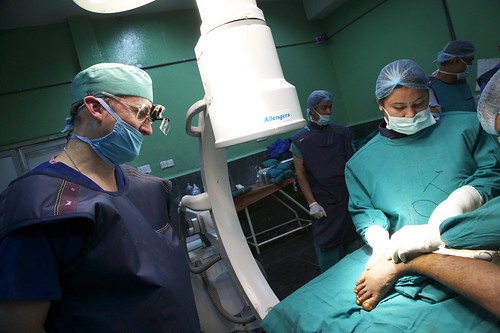
A screwup with Excel meant that Wales nearly turned down scores of completely qualified anaesthetists in 2021. CC-licensed photo by UK Department for International Development on Flickr.

You can sign up to receive each day’s Start Up post by email. You’ll need to click a confirmation link, so no spam.


It’s Friday, so there’s another post due at the Social Warming Substack at about 0845 UK time: it’s about what impact the changes to news headlines will have on Twitter. Plus the final explanation for the programming bug is at the end of this post.


A selection of 9 links for you. Use them wisely. I’m @charlesarthur on Twitter. On Threads: charles_arthur. On Mastodon: https://newsie.social/@charlesarthur. Observations and links welcome.


Alameda’s paper trail leads straight to Sam Bankman-Fried • The Verge

Elizabeth Lopatto:

»

Sam Bankman-Fried wasn’t just a crypto wunderkind, he was an ambassador for improving the world through effective altruism. And if you were wondering how he squared those values with all the lying he allegedly did during his time at FTX, wonder no more: the answer is utilitarianism. 

Lying and stealing were permitted, as “the only moral rule that mattered would be maximal utility,” Caroline Ellison testified on her second day at Bankman-Fried’s fraud trial. I glanced over at his parents, Joseph Bankman and Barbara Fried, to see what they made of this; both appeared to be busy scribbling into legal pads. In any case, the approach apparently worked for much of Bankman-Fried’s life — right up to demanding doctored balance sheets for the company Ellison supposedly ran. 

Bankman-Fried’s cavalier attitude toward lying rubbed off on her, Ellison testified. Ellison choked up a little as she went on: “When I started working at Alameda, I don’t think I would have believed you if you told me I would be sending false balance sheets to our lenders, or taking customer money, but over time, it was something I became more comfortable with.” Later, testifying about the days when the crypto hedge fund Alameda Research and exchange FTX fell, she cried.

«

The SBF trial is now well into the meat, and the betrayal scenarios are delicious.
unique link to this extract


Ozempic’s early success in kidney disease trial drags down dialysis stocks • Yahoo Finance

Mariam Esunny:

»

Shares of dialysis service providers fell sharply on Wednesday after Novo Nordisk’s Ozempic showed early signs of success in delaying the progression of kidney disease in diabetes patients.

Colorado-based DaVita’s shares closed down about 17% and U.S.-listed shares of German rival Fresenius Medical ended 17.6% lower.

Novo’s announcement is the latest sign of disruption caused by the success of GLP-1 drugs, which have hit shares of food companies, providers of bariatric surgery and glucose-monitoring device makers.

GLP-1 (glucagon-like peptide 1) drugs are used for the treatment of type 2 diabetes and for weight loss.

Shares of US-based Baxter International, which makes products used by dialysis therapy providers, closed down 12.3%.

Danish drugmaker Novo said late on Tuesday it will stop the trial almost a year ahead of schedule based on interim results from the study, which met the pre-set criteria for efficacy according to an independent data monitoring committee.

The dialysis market has for decades been sustained by high rates of obesity and diabetes, which contribute to kidney damage, but GLP-1 drugs such as Novo’s Ozempic and Wegovy have been seen to dramatically improve both conditions.

«

Ozempic and the other GLP-1s really are transforming the world. Over the next few years could make a dramatic difference to how we live.
unique link to this extract


Excel bungling makes top trainee doctors ‘unappointable’ • The Register

Lindsay Clark:

»

In autumn 2021, candidates seeking their third-level specialist training position (ST3) were looking forward to hearing where they would end up in one of the NHS’s most sought-after medical disciplines.

However, the body responsible for their selection and recruitment – the Anaesthetic National Recruitment Office (ANRO) – told all the candidates for positions in Wales they were “unappointable,” despite some of them achieving the highest interview scores.

Only when one of the candidates challenged the decision did ANRO realize its error. A subsequent Significant Incident Review showed a complex and confused approach to using spreadsheets led to the disaster.

“The interview scores are stored in an Excel spreadsheet. Each of the seven [UK] recruitment regions creates a separate spreadsheet, but these have no standardised template, naming convention or structure. After being manually amended, all of the various scores are entered into a Master spreadsheet. This is carried out row-by-row and takes several days, likely to be subject to interruptions,” the report said.

In the process, a ranking column in the Wales Region Spreadsheet had been wrongly transferred to the Master National Spreadsheet, erroneously appearing as an interview score. After their interviews, candidates were ranked 1 to 24 – with 24 actually being the total number of candidates interviewed in the region. But even the highest possible “interview” score of 24 was much lower than candidates’ true scores, and because the candidates had been ranked in order of performance, the best candidates were deemed weakest and vice versa.

«

Excel considered harmful. Actually, Excel’s superpowers are the source of the trouble: most people don’t need anything like the panoply of functions on offer. A few simple columns and some cross-references would be fine. Instead, they’re given an aircraft carrier, and they often steer it onto the rocks.
unique link to this extract


A graphic Hamas video Donald Trump Jr. shared on X is actually real, research confirms • WIRED

David Gilbert:

»

On Tuesday, Donald Trump Jr. posted a graphic video to X (formerly Twitter) that purported to show Hamas fighters murdering Israeli citizens during the attack last Saturday morning. “You don’t negotiate with this,” Trump Jr. wrote. “There’s only one way to handle this.” The son of former US president Donald Trump added that the video had come from a “source within Israel.”

The post was shared widely, and within hours it had amassed over 4 million views.

Then X’s user-generated fact-checking system, Community Notes, appended a message to the tweet, stating: “This is an old video and is not from Israel,” accompanied by a link to the original video. The note suggested that Trump Jr. was contributing to what has been a flood of disinformation on X since Hamas militants attacked Israel on Saturday, supercharged by verified users and accompanied by other conspiracy theories pushed by the company’s owner, Elon Musk.

But WIRED has now verified that the Community Notes system appears to be wrong. According to an independent OSINT analysis published on Wednesday, the video Trump Jr. posted is real. It was recorded during Saturday’s attack and does show Hamas fighters shooting Israelis, the analysis found.

The incident highlights how Community Notes, touted this week by X as one of the crucial ways it was tackling disinformation, is still struggling to function as intended and is, in some instances, adding to the level of disinformation on X rather than correcting it.

«

I mean, you’d certainly start from the working assumption that Cocaine Bear was wrong, but stopped clocks, etc. What this really highlights, though, is that getting rid of Verified accounts for verified sources was stupid. Plus it also highlights that Twitter has reverted to the worst standards that it had when Isis were posting gruesome videos to it. Except now the posts come from the son of a presidential hopeful.
unique link to this extract


Net zero targets “harder because of Rishi Sunak’s policy changes” • TheTimes

Adam Vaughan:

»

Professor Piers Forster, interim chairman of the [UK government’s advisory Climate Change] committee, said he was “mostly concerned” by the indirect effects and signals the retreat sent to consumers and businesses by undermining confidence in the switch to greener technologies.

“I would say it has made the 2030 date more challenging,” Forster told The Times, referring to Britain’s target of cutting greenhouse gas emissions by 68% by then. Since 1990 they have fallen 46%.

While much of the focus on Sunak’s speech was on his postponement of the ban on sales of new petrol and diesel cars, the committee thinks that will have relatively little impact on emissions because the prime minister later passed into law targets requiring 80% of new cars to be electric by 2030.

However, Sunak’s decision to make a fifth of households exempt from a ban on new gas boiler sales by 2035 has made meeting the net zero target by 2050 “considerably harder”, the committee said in its latest update. An unclear definition of who will be exempt created more uncertainty that could hinder cost reductions in alternatives such as heat pumps, it said.

Even the ostensibly positive news of Sunak boosting heat pump grants from £5,000 to £7,500 was not as good as it looked, the committee said. The overall grant budget of £150m for this financial year and the next one is unchanged, so “will serve fewer homes”, the advisers noted.

They said government changes would hurt wallets as well as emissions reductions. Sunak’s undermining of the rollout of electric cars “will ultimately increase costs” because they are cheaper than petrol and diesel models over their lifetimes. Sunak’s U-turn on a plan to make landlords upgrade the energy efficiency of privately-rented homes by 2027 would mean tenants paying up to £325 extra a year in higher energy bills, the CCC calculated.

«

Basically, it’s going to be up to the next government to sort out the mess in a year or so. But that leaves even less time to get it done.
unique link to this extract


Who had the most kids in history? Or, humanity’s near-extinction and why it matters for us all • The Garden of Forking Paths

Brian Klaas:

»

11,000 years ago, cheetahs almost went extinct. Evidence suggests that, in the entire world, there were as few as seven cheetahs alive. This is an example of a population bottleneck, in which the population of a species drastically shrinks, often due to environmental change or a cataclysmic event that wipes most individuals out.

The cheetahs had such an extreme population bottleneck that all modern cheetahs are extremely similar genetically—so much so that you can take skin from any cheetah and graft it onto another. The host animal’s body will immediately accept it as though the other cheetah’s skin is its own.

Now, consider this: how much would it matter which seven cheetahs survived? If even one of them was unusually slow, or had an extremely bushy tail, or had an unusual genetic mutation, well, that would dramatically influence the future trajectory of the species.

Similarly, if we imagine that the entirety of humanity were suddenly restricted to just seven people, I think you’d agree that the future of Homo sapiens would be rather different if one of those seven was, say, Donald Trump or Elon Musk rather than a compassionate, selfless nurse who works on a ward for children with cancer.

«

This then goes on to the topic of the human population bottleneck, which we’ve done here before. However you might get a pub quiz question out of who had the (verified) babies.

Also, seven is a pretty dramatically small number. Well done, cheetahs. Unfortunately it looks like humans might be about to finish the job.
unique link to this extract


Africa’s first carbon-removal plant stokes questions about responsible climate solutions • NBC News

Nidhi Sharma:

»

A greener and more equitable future — that’s the idea behind a first-of-its-kind plant to be built in Kenya that could remove up to 1 million tons of carbon dioxide from the atmosphere every year.

The proposal to build a direct air capture plant, announced in September by Swiss company Climeworks and Kenya-based Great Carbon Valley, has been billed as a springboard for creating a new, green economy in Africa as the world is expected to invest trillions of dollars in climate-related investment in the coming years.

Direct-air capture sucks in carbon dioxide from the atmosphere and stores it underground, a process that is relatively energy intensive. The technology has been criticized by some climate scientists who argue that the technology is a dangerous distraction from the only viable solution to climate change: Cutting greenhouse gas emissions by transitioning en masse away from fossil fuels. Others say that direct air capture is a necessary part of a diverse effort to limit global warming.

“The world is going to need to decarbonize,” said Bilha Ndirangu, CEO of Great Carbon Valley. “There will be different investments and innovations in decarbonization efforts. How do we make sure that some of those investments are happening in Africa?”

…“All direct air capture does is help fossil fuel companies pretend they’re taking climate action while they continue to drill for oil,” Jonathan Foley, a climate scientist and founder of Project Drawdown, a nonprofit climate group, said. “Trading a few seconds of the world’s greenhouse gas emissions to give oil and gas companies a fig leaf is not a good bargain.”

«

I’m with Foley. DAC is one of those constant promises that “honestly, look, we’re trying”. World CO2 emissions in 2021 were just over 37 billion tonnes. So you’d need 37,000 of those Climeworks plants to get us just standing still (but really you need to reduce the CO2 levels to help). And that one won’t be finished before 2028.

For comparison: a 950MW solar park being built in Dubai will power 320,000 homes and reduce emissions by 1.6mt annually. Which is the better investment?
unique link to this extract


Six months ago NPR left Twitter. The effects have been negligible • Nieman Reports

Gabe Bullard:

»

The week after NPR and KCUR left Twitter, the Ralph Yarl shooting happened in Kansas City. Rosenberg says it was “painful” to stay off Twitter as the story unfolded. “We had just taken away one of our big avenues for getting out information, especially in a breaking news situation — a shooting, one that deals with a lot of really thorny issues of racism and police and the justice system. And a lot of that conversation was happening on Twitter,” Rosenberg says. Instead of rejoining Twitter, KCUR set up a live blog and focused on posting to other social networks. NPR’s editors worked with the station to refine SEO and help spread the story. Even though the station itself wasn’t posting to Twitter, Rosenberg says the story found an audience anyway because very engaged local Twitter users shared the piece with their networks. And while the station informed these users through its website, it also reached new users on Instagram, where Rosenberg says KCUR has “tripled down” its engagement efforts.

On Instagram, KCUR’s strategy is less about driving clicks and more about sharing information within the app. “Instagram doesn’t drive traffic, but frankly neither did Twitter,” Rosenberg says. NPR, meanwhile, has been experimenting with Threads, a new app built by Instagram that launched in July, where NPR is among the most-followed news accounts. Threads delivers about 63,000 site visits a week — about 39 percent  of what Twitter provided. But NPR’s memo notes that clicks aren’t necessarily the priority, and the network is “taking advantage of the expanded character limit to deliver news natively on-platform to grow audiences — with enough information for a reader to choose whether to click through.”

NPR posts less to Threads than it did to Twitter, and the team spends about half as much time on the new platform as it did on the old. Danielle Nett, an editor with NPR’s engagement team, writes in the staff memo that spending less time on Twitter has helped with staff burnout. “That’s both due to the lower manual lift — and because the audience on Threads is seemingly more welcoming to publishers than on platforms like Twitter and Reddit, where snark and contrarianism reign,” Nett writes.

«

NPR traffic has dropped by a single percentage point. Twitter clearly wasn’t a traffic driver in any sense.
unique link to this extract


This is what an unmoderated internet looks like • Garbage Day

Ryan Broderick:

»

When Musk bought Twitter a year ago, I naively believed that users, especially irl important ones, would react to the increasing noise on their feeds by simply leaving the platform. And, if my own following tab is an indication, many have. But what has actually happened is much more dangerous. Instead of X dissolving into a digital backwater for divorced guys with NFT debt, it has, instead, continued to remain at the top of the digital funnel while also being 4chan-levels of rotten. It is still being used to process current events in “real time” even though it does not have the tools, nor the leadership necessary to handle that responsibility. The inmates are running the asylum and there is nothing on the horizon to convince that that will get better.

And so I think I’m ready to finally face the facts: Community moderation, in almost every form, should be considered a failed project. Our public digital spaces, as they currently exist, cannot be fixed and the companies that control them cannot, or, more likely, will not ensure their safety or quality at a scale that matters anymore. And the main tactic for putting pressure on these companies — reporters and researchers highlighting bad moderation and trust and safety failures and the occasional worthless congressional hearing playing whack-a-mole with offensive content — has amounted to little more than public policy LARPing. We are right back where we started in 2012, but in much more online world. And the companies that built that world have abandoned us to go play with AI.

«

Unfortunately: yes.
unique link to this extract


• Why do social networks drive us a little mad?
• Why does angry content seem to dominate what we see?
• How much of a role do algorithms play in affecting what we see and do online?
• What can we do about it?
• Did Facebook have any inkling of what was coming in Myanmar in 2016?

Read Social Warming, my latest book, and find answers – and more.


Errata, corrigenda and ai no corrida: Yesterday’s little diversion about my problems with Applescript and dates piqued the interest of (real programmer) Seth Finkelstein, who quickly figured out the problem, despite not having access to Applescript or even a Mac.

He asked whether, instead of trying to coerce 2023-01-01 to a date in Applescript, I’d tried coercing 01-01-2023 to a date.

So I did: date "January 1 2023 at 00:00:00"
Thus demonstrating that I’d done something peculiar. I sent him a couple of other examples.

The puzzle was, why did “2023-01-01” get coerced to “16 July 2006”?

Pretty soon he had the answer:
XXXX-YY-ZZ = Y’th month of 20ZZ, plus XXXX days. “2023-01-01” is the 2023’th day starting from January 2001.

So I hope you’re all happy. And don’t repeat my mistake. (Yet to investigate: whether Applescript on an American machine that uses MM-DD-YYYY for the system format coerces to a different date.)

Start Up No.2093: generative AI does the boring stuff, choosing wisely, Threads to get Trends, the trouble with durability, and more


The search bar on Apple’s Safari defaulting to Google is worth billions of dollars per year. What if the US DOJ stops that? CC-licensed photo by beegeye on Flickr.

You can sign up to receive each day’s Start Up post by email. You’ll need to click a confirmation link, so no spam.


There’s another post coming this week at the Social Warming Substack on Friday at 0845 UK time. Free signup. Also, if you go to the end of this post you’ll find an longish explanation for why this used to think Wednesdays were Fridays.


A selection of 10 links for you. Use them wisely. I’m @charlesarthur on Twitter. On Threads: charles_arthur. On Mastodon: https://newsie.social/@charlesarthur. Observations and links welcome.


Generative AI is coming for sales execs’ jobs—and they’re celebrating • WIRED

Paresh Dave:

»

Wining and dining, wooing clients with creative offers, and cashing big bonuses provide the glamor to sales work. Drafting answers to hundreds of dull questions posed by a prospective customer’s request for proposals? That’s just drudgery. Mercifully for workers, after months of speculation about ChatGPT-style AI taking over white-collar work, the corporate chore of responding to RFPs is one of the first that generative AI is disrupting.

In April, communications software maker Twilio introduced RFP Genie, a generative AI tool that digests an RFP, scours thousands of internal files for relevant information, and uses OpenAI’s GPT-4 to generate a suitable response. The company’s sales staff simply copy and paste the text over into a formal document and make a few adjustments.

RFPs that once occupied a pair of staffers for two weeks or more are now done in minutes. Twilio, whose cloud tools enable companies to chat with customers, expects to be able to make more and better sales pitches, and isn’t planning job cuts. “This will free up our solutions engineers to focus on more complex problems that demand not just reasoning, but human contextualization,” says Twilio CEO Jeff Lawson of the RFP bot, which has not previously been reported.

Lawson’s sales team isn’t the only one enjoying a sudden windfall of free time. Generative AI RFP response bots also have launched for sales teams at Google’s cloud unit, ad-buying agency EssenceMediacom, and DataRobot, a startup developing software to manage AI programs. In August at IBM, an RFP bot was selected by CEO Arvind Krishna as the winner of an internal AI hackathon called the Watsonx challenge, beating a field of over 12,000 entries. It used a large language model from IBM’s Watsonx.ai service to write answers in a tenth of the time compared to solely by hand, and the company is studying how to adopt the system.

«

If the AI can write the RFP, another one can read it. Maybe one could generate it too? Take the humans completely out of the loop. Though maybe this is how the machines take over: by writing in things for themselves that nobody notices. (RFPs are definitely among the most tedious documents in the world.)
unique link to this extract


At US v. Google antitrust trial, the Apple search deal takes center stage • The Verge

David Pierce:

»

“Would I be correct that, at least today, Apple has a lot of leverage in its negotiations with Google?”

Adam Severt, a Department of Justice attorney, asked that question to Google’s head of product partnerships, Joan Braddi, yesterday after a long tour of Braddi’s dealings with Apple over her two-decade-plus career at Google. The two were in a Washington, DC, courtroom, where for the last several weeks, the landmark US v. Google antitrust trial has litigated every corner of the search industry.

Braddi’s response was simple enough. “Yes.” Severt followed up: “Can you think of another search partner who might have more leverage than Apple?” “Not offhand, no,” Braddi said.

This exchange reiterated what has become one of the central themes of the trial so far: the overwhelming importance of Apple to search. Much of the trial is about the deals Google signs with lots of companies, from browser makers to wireless carriers, to be the default search engine on their platforms. But there is no deal more important, more lucrative, or more industry-defining than Google and Apple’s agreement over Safari.

«

A good point that was made about this trial (I forget by who): if the DoJ wins, Google is obliged to stop paying to be the default. But people will still overwhelmingly pick Google from a setup screen. So Google becomes much more profitable, and Apple becomes very much less profitable, to the tune of around $10bn per year each way. How is that (antitrust) success, exactly?

I seriously doubt Apple would build or buy its own search engine. It just isn’t worth the bother.
unique link to this extract


Overchoice, and how to avoid it • The Prism

Gurwinder:

»

Most of our everyday choices are between similar things; what movie to watch, what brand of toothpaste to buy. Fredkin’s paradox states that the more similar two choices seem, the less the decision should matter, yet the harder it is to choose between them. As a result, we often spend the most time on the decisions that matter least.

This is illustrated by Buridan’s ass, a mythical donkey that finds itself precisely equidistant from two identical bales of hay. The ass tries to make a rational decision as to whether to eat from the left bale or the right, but since there’s no rational reason to prefer either, the donkey wavers until it dies of hunger.

Buridan’s ass illustrates that there’s a cost to weighing options, which can exceed the cost of any of the options. Thus, the choices we make don’t need to be the best; they just have to be worth more than the time spent making them. If we spend less time making decisions, we can spend more time making whatever decision we made work.

The best way to manage the myriad decisions of the modern age is by employing “philosophical razors,” so-called because they shave away options, simplifying choices.

Naturally, there’s an overwhelming range of razors to choose from. I’ve tried scores of them, and have found that most aren’t workable, either because they lead to poor decisions or they’re too complicated for everyday decisions.

A few, though, have proven indispensable. Here are the five I use most.

«

They are indeed very fine. Recommended, though you might have to write them down somewhere to start making them reflexive.
unique link to this extract


MGM Resorts refused to pay ransom in cyberattack on casinos • WSJ

Katherine Sayre:

»

MGM Resorts International refused to pay a hackers’ ransom demand in a September cyberattack that threw its Las Vegas Strip resorts into chaos and crippled its properties and technology nationwide, according to a person familiar with the matter.

Service disruptions from the attack and efforts to resolve the issue will cost the company more than $100m in the third quarter, MGM said in a regulatory filing Thursday.

The cyberattack was detected on Sept. 10 and forced MGM to shut down IT systems in response. The shutdowns hobbled slot machines, interrupted online hotel bookings and required hotel workers to check-in guests using pen and paper for days, among other impacts. The company said Thursday that guest-facing operations have returned to normal.

MGM’s decision not to pay hackers is in line with guidance from the Federal Bureau of Investigation, which doesn’t support paying ransom. Doing so doesn’t guarantee that a company will recover its data, but does reward hackers and encourage bad actors to target more victims, the FBI’s website says.

…Rival Caesars Entertainment also suffered a hack late this summer and paid roughly half of a $30m ransom that hackers demanded, The Wall Street Journal previously reported. Caesars has said its operations weren’t impacted.

MGM said service disruptions would have a $100m negative impact on adjusted property earnings before interest, taxes, depreciation, amortization and rent for its Las Vegas and broader US resorts. The cost of remedial technology consulting, legal and advisory services was less than $10m.

«

Question is, does it make a difference to pay or to not pay? Caesars pays less, has no impact; MGM doesn’t pay, has big impact.
unique link to this extract


Meta employee shows how Trending Topics will work on Threads • 9to5 Mac

Filipe Espósito:

»

Officially, Meta hasn’t confirmed that Threads will have a Trending Topics section. However, a Meta employee accidentally posted a screenshot (now deleted) showing the feature in action. The post was noticed by app developer Willian Max, who reposted the screenshot hiding the employee’s name for obvious reasons.

As we can see, the interface is quite simple. It shows a ranking of the most commented topics on Threads with the number of posts on each topic. Trending Topics will appear in the Search tab, which has recently been expanded to let users find public posts from other users by keywords.

Since this screenshot comes from an internal version of the Threads app, it’s unclear whether this will be the final interface when the feature goes live to everyone. However, given that Meta employees already have access to a fully functional Trending Topics feature, we hope to see it available to the public soon.

A few weeks ago, Threads released an important update that finally lets users easily switch between accounts without having to log out and log in. In August, Meta launched the web version of Threads, allowing users to access the social network via a computer. The web version also works great on the iPad, as the iOS app is only optimized for the iPhone.

«

Saying “the web version works great on the iPad” is letting Meta off easily. It has never built an iPad version of Instagram – 13 years on! – and shows no signs of making an iPad app for Threads. It’s quite a gap; the iPad does get plenty of use.

Anyway, Trends – fine. But it should next do Lists, to attract power users, who will attract many more normal users.
unique link to this extract


It’s hard to build a durable business selling durable goods • The Diff

Byrne Hobart:

»

it’s easy to find brands that have led to enduring companies. In dishwashers, for example, Whirlpool has been around for a long, long time; they were founded in 1911, and own plenty of durables brands (Maytag, Kitchenaid, Amana, etc.). GE was in the appliance business for over a century, but sold it to Haier in 2016. Smaller brands like Le Creuset have also persisted for a long time, despite selling very durable durables indeed, offering a lifetime warranty for non-business use of many of their products. And there are newer contenders, like the aforementioned Haier, as well as LG, Samsung, and Panasonic.

We can divide these companies into two categories rather nicely: there are companies that started a very long time ago, often before the category was defined (Whirlpool’s founder started the company to investigate the hypothesis that electric motors would make dishwashers more effective), and there are newer companies that started well after the category had been defined, assembled their products in a country with low labor costs, and won share by achieving rough parity on quality and competing on cost.

This is a helpful split, because we see that more recent consumer durables brands tend to have a more dramatic history. It’s not just Instant Brands’ Instant Pot—there’s also Traeger (shares are down 80% since their 2021 IPO), Hamilton Beach (down by two thirds since going public in 2017), and GoPro (down almost 90% in their nine years as a public company). And even the ones that are doing reasonably well today aren’t in quite as good shape as they looked a few years ago, back when Instant Brands’ private equity owners and their lenders were feeling so optimistic. For example, Yeti has actually put up good numbers since it became publicly traded in 2018, with a total return of 159% since 2018—but it’s down by more than half from its peak valuation in late 2021.

«

It turns out there is a secret to building a durable durables business. However, there aren’t many places where it can be done.
unique link to this extract


Mastodon actually has 407K+ more monthly users than it thought | TechCrunch

Sarah Perez:

»

Open source and decentralized social network Mastodon has more users than it thought. The service, which competes with X (formerly Twitter) and other newcomers like Threads, Bluesky, Pebble and Spill, had been undercounting its users due to a network connectivity error, according to founder and CEO Eugen Rochko, and actually has 407,814 more monthly active users than it had been reporting previously. The adjustment also included a gain of 2.34 million registered users across an additional 727 servers that had not been counted due to the error.

The issue was impacting the metrics reported on Mastodon’s statistics aggregator on its joinmastodon.org/servers page, which had been undercounting users between October 2 and October 8. This issue has now been resolved, Rochko said. That leaves Mastodon with a total of 1.8 million monthly active users at present, an increase of 5% month-over-month and 10,000 servers, up 12% — a testament to Mastodon’s current upward swing at a time when the nature of X continues to remain in flux.

«

Soooo… fewer users than Threads? Meanwhile Bluesky has an unknown (to me at least) number of users. The splintering of social media continues.
unique link to this extract


‘Keep your paws off my voice’: voice actors worry generative AI will steal their livelihoods • Forbes

Rashi Shrivastava:

»

Voice actor Allegra Clark was scrolling through TikTok when she came across a video featuring Beidou, a swashbuckling ship captain from the video game Genshin Impact whom she’d voiced. But Beidou was participating in a sexually suggestive scene and said things that Clark had never recorded, even though the rugged voice sounded exactly like hers. The video’s creator had taken Clark’s voice and cloned it using a generative AI tool called ElevenLabs, and from there, they made her say whatever they wanted.

Clark, who has voiced more than 100 video game characters and dozens of commercials, said she interpreted the video as a joke, but was concerned her client might see it and think she had participated in it — which could be a violation of her contract, she said.

“Not only can this get us into a lot of trouble if people think we said [these things], but it’s also, frankly, very violating to hear yourself speak when it isn’t really you,” she wrote in an email to ElevenLabs that was reviewed by Forbes. She asked the startup to take down the uploaded audio clip and prevent future cloning of her voice, but the company said it hadn’t determined that the clip was made with its technology. It said it would only take immediate action if the clip was “hate speech or defamatory,” and stated it wasn’t responsible for any violation of copyright. The company never followed up or took any action.

“It sucks that we have no personal ownership of our voices. All we can do is kind of wag our finger at the situation,” Clark told Forbes.

In response to questions about Clark’s experience, ElevenLabs cofounder and CEO Mati Staniszewski told Forbes in an email that its users need the “explicit consent” of the person whose voice they are cloning if the content created could be “damaging or libelous.” Months after Clark’s experience, the company launched a “voice captcha” tool that requires people to record a randomly generated word and that voice must match the voice they are trying to clone.

«

unique link to this extract


It’s a global climate solution — if it can get past conspiracy theories and NIMBYs • NPR

Julia Simon:

»

In the 11th arrondissement, a middle-to-working class neighborhood in the east of Paris, if you walk out your front door, you can arrive at a preschool in one minute. A bookstore in three minutes. A cheese store in four minutes. Baguette for that cheese? Bakery’s across the street.

Grocery store and pharmacy, five minutes. Parks, restaurants, metro stops, a hospital: all within a 15-minute walk. I know this because I used to live there, on a tiny cobblestone street with buildings covered in vines.

This is a 15-minute city, says Carlos Moreno, a professor at University of Paris 1 Panthéon-Sorbonne, who met me on the banks of the Seine River. Moreno says that in a 15-minute city, a person can access key things in their life — work, food, schools and recreation — within a short walk, bike, or transit ride of their home.

My former Paris street and much of the neighborhood were built in this dense way more than 150 years ago. But this old idea of areas with many amenities close by has now evolved into an urban planning model gaining popularity with politicians around the world. Moreno says that’s because it not only improves quality of life, but 15-minute cities can also reduce cars’ planet-warming greenhouse gases. Transportation accounts for about 20% of global energy-related carbon dioxide pollution, with cars making up almost 10%, according to the International Energy Agency.

«

But, as the story explains, the fact that multiple people in different cities think it’s a good idea means it must be a Global Conspiracy. I mean, obviously.
unique link to this extract


The “Deaths of Despair” narrative is wrong • Slow Boring

Matthew Yglesias:

»

Over the past few years, Anne Case and Angus Deaton have unleashed upon the world a powerful meme that seems to link together America’s troublingly bad life expectancy outcomes with a number of salient social and political trends like the unexpected rise of Donald Trump.

Their “deaths of despair” narrative linking declining life expectancy to populist-right politics and to profound social and economic decay has proven to be extremely powerful. But their analysis suffers from fundamental statistical flaws that critics have been pointing out for years and that Case and Deaton just keep blustering through as if the objections don’t matter. Beyond that, they are operating within the confines of a construct — “despair” — that has little evidentiary basis. The rise in deaths of despair turns out to overwhelmingly be a rise in opioid overdoses. This increase is not happening in European countries that have not only been buffeted by the same broad economic trends as the United States, but are also seeing the rise of right-populist backlash politics.

The obvious explanation is that the US and Europe have very different laws governing pharmaceutical marketing.

That’s why the invention of supposedly-but-not-really safe time-release prescription opioids have wreaked havoc in the United States but not in Europe. Meanwhile, the same right-populist backlash occurs on both sides of the Atlantic because right-populist backlash politics is about the rising salience of conflict over post-material values like cosmopolitanism versus nationalism and has nothing to do with opioids or despair.

…They attribute the rising death rate among middle-aged white Americans to economic insecurity even though:

• There was no similar increase in death rates in European countries, including those that had worse economic conditions
• The rise in deaths began before the economic problems
• Black and Hispanic Americans who lived through the same economic conditions didn’t experience the same mortality trends.

«

Worth considering, if only to mull over what a difference that difference in pharmaceutical marketing makes.
unique link to this extract


• Why do social networks drive us a little mad?
• Why does angry content seem to dominate what we see?
• How much of a role do algorithms play in affecting what we see and do online?
• What can we do about it?
• Did Facebook have any inkling of what was coming in Myanmar in 2016?

Read Social Warming, my latest book, and find answers – and more.


Errata, corrigenda and ai no corrida: OK, well sit back if you like programming bugs. The more observant of you will have noticed that at the top of these posts there has been a pointer to my Substack, noting that there’s another one on Friday. Odd thing, though: sometimes it would claim it was Friday when it clearly wasn’t. (Such as yesterday.) I’d noticed this a couple of times, but thought it was a quirk of timing or something. But this was too much. Wednesday is not Friday by any stretch of the imagination.

What was wrong in the code? Let’s have a look.

To generate what I call the “Substackstring” I had a subroutine in the Applescript that compiles the post. The subroutine is called, unsurprisingly,
substack()
Its first action is to call another subroutine in the larger script, which is called
getdate()
whose function is to find out which day the post is scheduled for, and whether that day occurs during British Summer Time (as that pushes the time of posting forward or back by an hour).

The getdate() code first did this:
set thedate to do shell script "date -j -v+18H \"+%Y-%m-%d-%H-%M\""
Which tells Applescript to run a little Unix terminal script to find out when the post is appearing. The +18H is to make sure that if I’m compiling the post the evening before (as usually happens), I’m allowing for the delay before the post appears in the morning. As long as I compile the post some time after 6am the day before, that code will pick the right day for the next day’s post.

A little wrangling later, and the getdate() subroutine finishes by returning a list:
{theyear, themonth, theday, summer}
which when I ran it today, October 11th 2023, is of the form {2023, 10, 12, true} – the latter for BST. That means that it’s saying the next post will be on October 12 2023, which will be during BST. Correct!

The getdate() subroutine is bombproof – it’s run for years and never been wrong. So the mistake must be in the substack() subroutine, which we have returned to now that getdate() has returned its result.

For the purposes of the substack() subroutine we don’t care about summer, so we dump the latter item of the list and create a string of the year-month-date:

set datestring to item 1 of datestring & "-" & item 2 of datestring & "-" & item 3 of datestring as Unicode text

Then we turn that string into a date (which is a particular format in Applescript), and extract the weekday by name:
set mydate to (date datestring)
set theday to (weekday of mydate) as string

And then do a test:
if theday = "Thursday" or theday = "Friday" then [say that it’s Friday. Logically, if the post is written on Thursday it must be for Friday posting; if the post is written on Friday it must be past midnight, also for Friday posting]
Alternatively, if the above fails:
if theday = "Tuesday" or theday = "Wednesday" then [say that there will be another post on Friday]
(If it’s Monday, we don’t mind, though probably there should be something there to point back to Friday’s triumph.)

So why didn’t this work? I added some logging to the substack() subroutine.
datestring: {2023, 10, 12, true}
Next we do this operation:
set datestring to item 1 of datestring & "-" & item 2 of datestring & "-" & item 3 of datestring as Unicode text
»» (2023-10-12)

Hmm, looking good so far. Next operation:
set mydate to date datestring
»» (Sunday, 15 April 2018 at 00:00:00)

Ah. I think I found the bug. How, you might wonder (I certainly did) does 2023-10-12 get transformed into the 15th of April 2018? Short answer: I don’t know. (* See below) But at least now I knew what I had to fix. Applescript is an odd language, in which date coercion can – as we see! – produce all sorts of odd results.

By now of course all the programmers in the audience (that’s everyone who’s read this far, I think) has been shouting the solution for at least five minutes: just run a shell script, like the getdate() subroutine did, to get the posting day!

And this is indeed the simple way. I avoided it originally because I wanted to be sure the substack() subroutine was in sync with the getdate() one, but that’s solved by the same method of adding 18 hours to the current time.

So my repaired substack() subroutine now says
set theday to do shell script "date -j -v+18H \"+%w\""
This responds with a number: Sunday = 0, Monday = 1, and so on. There’s a small gotcha: the response isn’t actually a number, it’s a text string, so the if/then statements have to allow for that. But that’s a minor point. So, the bug is gone. I might even tweak the subroutine so that on Mondays it will find the most recent Substack and embed that as a link. I’m sure nothing can go wrong with doing that.

* I still don’t know, but I wrote an Applescript to test it which cycles through most of the dates in 2023. See if you can figure out what the association is. I feel I can glimpse it – there’s an order in what comes out – but I couldn’t predict what a string will generate at the moment. Paste the code below into Script Editor on your Mac and see what happens.


set thislist to {} -- this will be a long list of all the generated dates that will be the result of this Applescript
repeat with j from 1 to 12 -- months
repeat with i from 1 to 30 -- days in the month. Not going to bother with accuracy, so 2023-02-30 will be generated
--inserting 0 before the number produces different results than not! Try it yourself.
if i > 9 then
set m to i as string
else
set m to "0" & i as string
end if
if j > 9 then
set n to j as string
else
set n to "0" & j as string
end if
set datestring to ("2023-" & n & "-" & m) as Unicode text
set mydate to date datestring
set end of thislist to {datestring, mydate}
end repeat
end repeat
thislist -- the result of the Applescript. View it and puzzle. You can use different date delimiters ( /, space, double space all work) and get the same result. Why 2006? Why the 16th and 15th? Why starting in July? I haven't tried different years but they probably generate different answers.

Start Up No.2092: the mystery of the slow Community Notes, how Hamas used crypto for funding, Ozempic slims GDP, and more


The smog in Los Angeles has been a persistent problem for 70 years. Has it improved, or worsened? CC-licensed photo by radcliffe dacanay on Flickr.

You can sign up to receive each day’s Start Up post by email. You’ll need to click a confirmation link, so no spam.


It’s Friday, so there’s another post due at the Social Warming Substack at about 0845 UK time.


A selection of 9 links for you. How many fingers? I’m @charlesarthur on Twitter. On Threads: charles_arthur. On Mastodon: https://newsie.social/@charlesarthur. Observations and links welcome.


Elon Musk’s X fact-checking system delayed Israel corrections for days • NBC News

Ben Goggin:

»

An approved Community Notes member gave NBC News access to the feature’s volunteer interface, which showed that many false posts with hundreds of thousands of views had no notes, while other notes sat unapproved for hours and sometimes days on posts that accrued tens of thousands of views.

NBC News focused on two prominent pieces of Israel-Hamas misinformation that have already been debunked: a fake White House news release that was posted to X claiming that the Biden administration had granted Israel $8bn in emergency aid, and false reports that St. Porphyrius Orthodox Church in Gaza was destroyed.

Of 120 posts related to those stories, only 8% had a published community note, while 26% of those posts had unpublished notes from volunteers that had yet to be approved. About two-thirds of the top posts reviewed by NBC News had no proposed or published Community Notes on them.

The findings echo what one Community Notes volunteer said was a lack of response by X to efforts to debunk misleading posts.

“All weekend we were furiously vetting, writing, and approving Community Notes on hundreds of posts which were demonstrably fake news,” Kim Picazio, a Community Notes volunteer, wrote on Instagram’s Threads. “It took 2+ days for the backroom to press whatever button to finally make all our warnings publicly viewable. By that time… You know the rest of that sentence.”

Picazio told NBC News that she ended up just tweeting out proposed Community Notes herself in response to misinformation “out of total frustration.” 

…According to a post from @CommunityNotes on Oct. 3, “Starting today, notes will appear an average of 1.5 hours faster, and as much as 3.5 hours faster in some cases.”

But even after these changes, users with access to the Community Notes program, and a review of content within the system by NBC News, found that the system was failing to catch misinformation posted more than 24 hours ago.

«

Saying you’ll post the 90 or 210 minutes Notes faster implies it takes you at least that long to get them posted. During which time the original can go viral. Always a weakness in these systems: virality is highest in the first 24 hours. Notes or other moves after that are effectively wasted.
unique link to this extract


Europe gives Musk 24 hours to respond about Israel-Hamas war misinformation on X • CNBC

Jonathan Vanian:

»

A European regulator has issued Elon Musk a stern warning about the spread of illegal content and disinformation on X, formerly known as Twitter, amid the Israel-Hamas conflict. Failure to comply with the European regulations around illegal content could result in fines worth 6% of a company’s annual revenue.

Thierry Breton, the European commissioner for the internal market, said in a letter addressed to Musk on Tuesday that his office has “indications” that groups are spreading misinformation and “violent and terrorist” content on X, and urged the billionaire to respond within a 24-hour period.

The letter comes after numerous researchers, news organizations and other groups have documented a rise of misleading, false and questionable content on X, creating confusion about the current conflict.

Breton shared his letter via an X post, tagging Musk’s handle and including a hashtag that refers to the Digital Services Act, the newly enacted legislation by the European Commission — the executive arm of the European Union — that requires platforms with more than 45 million monthly active users in the EU to monitor for and take down illegal content as well as detail their protocols for doing so.

«

I guess you’d have to wonder about motive, wouldn’t you, given the previous link.
unique link to this extract


L.A.’s forever war on smog • Los Angeles Times

Patt Morrison:

»

A handsome man with the physique of the college football player he had once been walks into an airtight, 8-foot-square Plexiglas booth heated to 90 degrees.

The door closes behind him.

When he staggers out, two hours later, he has won no fabulous prizes. Instead, he is a little headachey. He has trouble concentrating, his eyes are weepy, and, as a doctor will soon tell him, he has lost — temporarily at least — 22% of his lung capacity.

By now, you know this man is not a game-show contestant. And this is most definitely not a game.

But it is a stunt.

The newspaper reporters and photographers were there in 1956 to watch the man in the box, S. Smith Griswold, head of Los Angeles County’s nine-year-old Air Pollution Control District. And he had a point to prove.

He spent those two hours breathing in a potent summertime version of what millions of his fellow Angelenos were breathing every day — smog — to show them what it did to the human body, and to Los Angeles.

L.A. was like the royal baby in a fairy tale, endowed with abundant gifts — glittering sunlight, dramatic landscapes and lovely beaches that remain untarnished — until the bad wizard shows up with the asterisk:

“Yes, your landscape is gorgeous, but that magnificent rim of mountains will trap the stew of air inside your basin as surely as a lid on a cookpot. And those glittering sunbeams will curse you by creating a doomsday photochemical reaction with whatever you put into that photogenic bowl — smoke, car exhaust, wafting industrial toxins — so in time you won’t even be able to see those glorious mountains.”

«

Fascinating long read – with fascinating photos – about a problem that LA has been suffering for 80 years. I stayed in LA a few times, and went running in the hills: it was like breathing glass.
unique link to this extract


Hamas militants behind Israel attack raised millions in crypto • WSJ

Angus Berwick and Ian Talley:

»

Hamas’s lightning strike on Israel last weekend has left observers questioning how the group financed the surprise operation. One possible answer: cryptocurrency.

During the year leading up to the attacks, three militant groups—Hamas, Palestinian Islamic Jihad and their Lebanese ally Hezbollah—received large amounts of funds through crypto, according to a review of Israeli government seizure orders and blockchain analytics reports. 

Digital-currency wallets that Israeli authorities linked to the PIJ received as much as $93m in crypto between August 2021 and June this year, analysis by leading crypto researcher Elliptic showed.

Wallets connected to Hamas received about $41m more over a similar time period, according to research by another crypto analytics and software firm, Tel Aviv-based BitOK. 

Militants from the PIJ joined Hamas on Saturday in storming into Israel from the Gaza Strip, killing some 900 civilians and abducting at least a hundred more. At least 700 Palestinians have died since Israel retaliated with a wave of attacks on Gaza.

Hamas’s armed wing, the Izz ad-Din al-Qassam Brigades, didn’t respond to a request for comment on the groups’ use of crypto. The PIJ and Hezbollah couldn’t be reached for comment.

«

I like the effort of asking Hamas’s armed wings whether they got their money via crypto. Once you have the crypto, you can shift it to someone friendly – an arms dealer, say – who will accept it and turn it into real money at some point.
unique link to this extract


Global PC shipment decline narrows to just 7% in Q3 2023 • Canalys

»

According to Canalys’ latest data, the worldwide PC market posted another sequential improvement in Q3 2023. While total shipments of PCs amounting to 65.6 million units were down 7% year-on-year, they rose 8% compared to Q2 2023. This represents the smallest annual shipment decline for the industry in over a year and is a further sign of recovery in both inventory levels and underlying demand. Shipments of notebooks dropped 6% annually to 52.1 million units, while desktop shipments were down 8% to 13.5 million units. 

“After a tough start to the year, the third quarter of 2023 brought about more positive signs for the global PC market,” said Ishan Dutt, principal analyst at Canalys. “Amid some improvements in the macroeconomic environment, key players across the industry are now expressing cautious optimism as their inventory correction efforts have been largely successful. As a result, pockets of underlying demand strength across all end-user segments are now better reflected in vendors’ sell-in shipment performance. Most major OEMs posted sequential growth in shipments, even after accounting for the demand boost from the education sector that largely materialized last quarter. Looking ahead, Canalys expects this positive trend to continue, with the market set for a return to growth during the highly anticipated holiday season.”

«

Ah, the PC business, quietly ticking over into a sort of oblivion. Lenovo and HP did better than the rest of the market; Apple did a lot worse, but still had about 10% of all sales according to both Canalys and IDC.

Canalys reckons there will be “an additional demand boost from AI” with “AI-capable PCs” becoming mainstream by 2025. Apparently Apple kicked this off with the M1 chip, with its Neural Engine? News to me.
unique link to this extract


Big tech struggles to turn AI hype into profits • WSJ

Tom Dotan and Deepa Seetharaman:

»

AI often doesn’t have the economies of scale of standard software because it can require intense new calculations for each query. The more customers use the products, the more expensive it is to cover the infrastructure bills. These running costs expose companies charging flat fees for AI to potential losses.  

Microsoft used AI from its partner OpenAI to launch GitHub Copilot, a service that helps programmers create, fix and translate code. It has been popular with coders—more than 1.5 million people have used it and it is helping build nearly half of Copilot users’ code—because it slashes the time and effort needed to program. 

It has also been a money loser because it is so expensive to run.  

Individuals pay $10 a month for the AI assistant. In the first few months of this year, the company was losing on average more than $20 a month per user, according to a person familiar with the figures, who said some users were costing the company as much as $80 a month.

Microsoft and GitHub didn’t respond to requests for comment on whether the service is earning money. The profitability picture for GitHub Copilot and other AI-powered assistants will change if computing costs come down.

Microsoft is going with a higher price for its next AI software upgrade. On top of regular monthly charges—starting around $13 for the basic Microsoft 365 office-software suite for business customers—the company will charge an additional $30 a month for the AI-infused version. The AI-powered feature can be instructed to compose emails, create PowerPoint presentations and build Excel spreadsheets independently.

Google, which is releasing a similar AI assistant feature for its workplace software, will also be charging $30 a month on top of the regular subscription fee, which starts at $6 a month. 

Microsoft, Google and others have gone with a flat monthly rate, betting that the higher additional charges will more than cover the average expenses of running the technology.

«

Two potential views: 1) this is just like search back in the 1990s, which took some time to find a working business model 2) this can never scale because every query is different. Too early, but don’t bet against the drive for profit.
unique link to this extract


How Ozempic and other weight loss drugs could reshape the food business • Axios

Emily Peck:

»

Earlier this week, Walmart’s U.S. CEO told Bloomberg that customers taking Ozempic buy less food. (Walmart mined its own pharmacy and grocery data to pinpoint customer buying patterns, per Bloomberg.)

“We definitely do see a slight change compared to the total population, we do see a slight pullback,” John Furner said. “Just less units, slightly less calories.” But he added that it’s still early days for Ozempic.

The drug itself has boosted sales of other items at Walmart — folks on the drug “tend to spend more with us overall,” another company exec said this summer.

Meanwhile, Steve Cahillane, CEO of snack maker Kellanova, told CNBC this week that his company — a Kellogg spinoff that makes Pringles and Cheez-It — is watching the Ozempic trends. “But it’s just far too early to forecast this is a headwind.”

It’s early, yes, but investors are paying close attention. In an 82-page note this summer, a team of 17 Morgan Stanley analysts, strategists and associates laid out how obesity medicine could dampen demand for food and reshape the “food ecosystem.” The firm projects that over the next 10 years, 7% of the U.S. population — 24 million people — could be taking these drugs.

Folks on the drug will likely consume 20% fewer calories, they say. In 2035 that would represent 1.3% of overall calories consumed. Analysts also modeled out a bullish scenario where calorie consumption falls by 1.7% and a bearish one at 0.9%.

Increased use of these weight-loss drugs could hurt demand for high-calorie, high-fat and sugary foods — at home or at fast-food outlets.

«

Could “hurt” demand? There’s a particular media mindset – usually reflected in business stories – that any diversion from what currently happens must be bad. Even if what currently happens is that people eat far too many empty calories in high fructose corn syrup, produced in surplus because of subsidies paid to farmers in rural states which have disproportionate representation in the US political system.
unique link to this extract


Unbundling AI • Benedict Evans

A part of a longer, typically thoughtful piece:

»

I think that natural language, voice or text are not necessarily the right interface even if you were talking to an AGI, even if it was ‘right’, and, more fundamentally, that asking a question and getting an answer might be a narrow interface, not a general-purpose one.

The simplest challenge is what to ask. You have a text box and a prompt. What do you type in? What can you ask for? All conversations about AI these days seem to be hunts for metaphors, so, as an analyst, I think it’s interesting to think about Excel. You’re given an infinite grid that could do ‘anything’, so what do you do with it? What would you make? That might be a hard question. An LLM text prompt has a lot of this ‘blank canvas’ challenge, but with even less constraint.

Some of this is familiarity, or exploration, or desire paths, and some of my objection is ‘legacy thinking’. Whenever we get a new tool, we start by forcing it to fit our existing ways of working, and then over time we change the work to fit the new tool. We try to treat ChatGPT as though it was Google or a database instead of asking what it is useful for. How can we change the work to take advance of this?

Excel, like a lot of modern software, tries to help. When you open it today, you don’t get a blank spreadsheet. You get ideas and suggestions. ChatGPT is now trying to do the same thing – ‘what should I do with this?’

This takes me to a second problem, though. Excel isn’t just giving suggestions – those tiles are documents, and documents are the start of a process, not an answer. You can see what you’ve built and what it’s doing, and how far you’ve got. The same sense of creation as process applies to Photoshop, Ableton or Powerpoint, or even a simple text editor. The operative word is editor – you can edit!

Conversely, using an LLM to do anything specific is a series of questions and answers, and trial and error, not a process. You don’t work on something that evolves under your hands. You create an input, which might be five words or 50, or you might attach a CSV or an image, and you press GO, and your prompt goes into a black box and something comes back. If that wasn’t what you wanted, you go back to the prompt and try again, or tell the black box to do something to the third paragraph or change the tree in the image, press GO, and see what happens now.

This can feel like Battleship as a user interface – you plug stuff into the prompt and wait to find out what you hit.

«

I’ve still not found a use for ChatGPT in my work.
unique link to this extract


Dogger Bank: World’s largest offshore wind farm starts exporting power • BusinessGreen News

James Murray:

»

The world’s largest offshore wind farm started exporting power to the UK grid this weekend, marking the latest major milestone for the UK’s offshore wind industry.

Developers SSE, Equinor, and Vårgrønn announced today that the first turbine from the first phase of the Dogger Bank Wind Farm began exporting power at 8:37pm on Saturday evening.

The first power was generated by one of the project’s giant GE Vernova Haliade-X 13MW turbines. It was then transmitted 130 kilometres to the shore along a high-voltage direct current (HVDC) transmission system, marking the first-time HVDC technology has been used on a UK wind farm.

The developers said every rotation of the Haliade-X turbine’s 107 metre blades generates enough power to run an average home for two days.

The first power from the 1.2GW Dogger Bank A wind farm is set to be followed in the coming years by the development of two further wind farms in the Dogger Bank zone, which should ultimately deliver 3.6GW of clean power capacity – enough to power six million homes and deliver yearly CO2 savings equivalent to removing 1.5m cars from the road.

«

Licensed in 2008, onstream 15 years later. For comparison: Hinkley C nuclear power station, licensed in 2012, might come onstream in 2028. Similar production generation. Broadly similar timescales. Very different prices: £26bn for the nuclear power station, £5.5bn for Dogger A (and B, yet to come onstream).
unique link to this extract


• Why do social networks drive us a little mad?
• Why does angry content seem to dominate what we see?
• How much of a role do algorithms play in affecting what we see and do online?
• What can we do about it?
• Did Facebook have any inkling of what was coming in Myanmar in 2016?

Read Social Warming, my latest book, and find answers – and more.


Errata, corrigenda and ai no corrida: none notified

Start Up No.2091: Twitter ad clash with Community Notes, subscription baby monitors?, Bumble’s AI love plans, and more


An audio deepfake of Sir Keir Starmer circulating at the weekend suggests that the general election in 2024 may be fraught. CC-licensed photo by Steve Bowbrick on Flickr.

You can sign up to receive each day’s Start Up post by email. You’ll need to click a confirmation link, so no spam.


On Friday, there’s another post due at the Social Warming Substack at about 0845 UK time.


A selection of 9 links for you. Listen carefully. I’m @charlesarthur on Twitter. On Threads: charles_arthur. On Mastodon: https://newsie.social/@charlesarthur. Observations and links welcome.


‘This is a false advertisement’: X ads are being challenged by reader context • WSJ

Patrick Coffee and Megan Graham:

»

Elon Musk, who acquired the company last year, has praised Community Notes as key to making X a more reliable source of information, but told CNBC in May that X had lost $40m in revenue after two unnamed advertisers had notes added to their posts.

Ads for brands from Apple to Uber have in recent months been called out for making allegedly false or misleading claims. Results vary. Uber deleted an ad with a critical Community Note, while Apple’s Community Note later disappeared when other members of the notes community weighed in against it.  

One note accused an ad for videogame company Evony of showing action that is different from what takes place in the game, telling X users, “This is a false advertisement.” Evony couldn’t be reached for comment. 

Political ads will likely face even greater scrutiny as the 2024 election cycle heats up, according to experts. 

X has published more than 21,200 Community Notes below posts and ads on its platform since the feature’s debut, though most proposed notes never become public, said Alex Mahadevan, director of digital media literacy organization MediaWise, citing data provided publicly by X.

Notes are proposed and must be approved by a group of volunteers for the project, which is open to users who provide a verified phone number, joined the platform more than six months ago and have not recently violated its rules. 

X requires that each suggested note be rated as helpful by a certain number of users with different points of view before it is approved, said Mahadevan. 

«

I love Community Notes (which of course predate Musk): they’re an excellent antidote to idiots. The likely upshot of this point though is that Musk will change the system so Notes can’t be put on an ad.
unique link to this extract


UK opposition leader targeted by AI-generated fake audio smear • The Record

Alexander Martin:

»

An audio clip posted to social media on Sunday, purporting to show Britain’s opposition leader Keir Starmer verbally abusing his staff, has been debunked as being AI-generated by private-sector and British government analysis.

The audio of Keir Starmer was posted on X (formerly Twitter) by a pseudonymous account on Sunday morning, the opening day of the Labour Party conference in Liverpool. The account asserted that the clip, which has now been viewed more than 1.4 million times, was genuine, and that its authenticity had been corroborated by a sound engineer.

Ben Colman, the co-founder and CEO of Reality Defender — a deepfake detection business — disputed this assessment when contacted by Recorded Future News: “We found the audio to be 75% likely manipulated based on a copy of a copy that’s been going around (a transcoding).

“As we don’t have the ground truth, we give a probability score (in this case 75%) and never a definitive score (‘this is fake’ or ‘this is real’), leaning much more towards ‘this is likely manipulated’ than not,” said Colman.

“It is also our opinion that the creator of this file added background noise to attempt evasion of detection, but our system accounts for this as well,” he said.

«

Be interested to see whether the account that posted it gets sued. It is defamation, and the disinclination to check or remove it must make it worse. Not very promising for the coming election, though.
unique link to this extract


Google changed ad auctions, raising prices 15%, [government] witness says • Bloomberg via Yahoo

Leah Nylen:

»

Michael Whinston, a professor of economics at the Massachusetts Institute of Technology, said Friday that Google modified the way it sold text ads via “Project Momiji” – named for the wooden Japanese dolls that have a hidden space for friends to exchange secret messages. The shift sought “to raise the prices against the highest bidder,” Whinston told Judge Amit Mehta in federal court in Washington.

Google’s advertising auctions require the winner to pay only a penny more than the runner-up. In 2016, the company discovered that the runner-up had often bid only 80% of the winner’s offer. To help eliminate that 20% between the runner-up and what the winner was willing to pay, Google gave the second-place bidder a built-in handicap to make their offer more competitive, Whinston said, citing internal emails and sealed testimony by Google finance executive Jerry Dischler earlier in the case.

“It’s really easy to slip into the thought that it’s an auction and an auction is competition,” Whinston said, explaining how Google’s ability to tweak the rules demonstrates its monopoly over online advertising. But “it’s the advertisers who are running in this race. It’s Google setting the rules.”

The Justice Department alleges that Google has illegally maintained a monopoly over online search by paying billions of dollars to web browsers and smartphone manufacturers to ensure it’s the preselected option for users accessing the web.

«

It would be good to have a little more clarity on what Whinston believes he unearthed: how did the “built-in handicap” work? The auction system was, initially, Google’s moat against rivals: you can’t undercut an auction, because in theory it finds the exact price the market is willing to pay – no more, no less. But if Google did put its finger on the scales once it was big enough, that distorts the market.
unique link to this extract


Innovative Health Monitoring acquires assets of Miku, maker of baby monitors • Miku Care

»

Notice To Customers: Notice of Miku Inc. Acquisition by Innovative Health Monitoring, LLC and Implementation of Subscription Services

To our valued customers:

We at Innovative Health Monitoring (IHM) are very excited to share that we have purchased the assets and operations of Miku Inc. as of September 15, 2023. The core technology of the Miku touchless monitoring system and in-app features are unmatched, and we are thrilled to continue to offer our customers all of the features of the Miku product.

Our purchase of the assets of Miku and the resulting rebranding and redirection of the company under consolidated new ownership represents the culmination of a financial restructuring of the company which was necessary in order for Miku’s business to continue. As a necessary part of this ongoing process, on October 1, 2023 we will be introducing a subscription service that will allow current customers to continue to use their monitors and the Miku app to access all the features we love about this product.

…For those that do not wish to sign up for the subscription service, you will continue to receive Live HD video and audio streaming locally, as long as both the monitor and your device are operating on the same local Wi-Fi network.

«

Subscription (at $9.99 monthly) also gives you Live HD video and audio (remote access), two-way talk, “live breathing waveform”, sleep and health analytics, “environmental analytics”, “various notifications and alerts”, “sounds and lullabies”, three days of video storage, “Care+ access”, “wellness trends”, tips from medical and sleep experts, and wellness tracking tools (height, weight, feeding, body temp, diaper changes).

I think those used to be free. Then Miku, maker of smart baby monitors, realised it hadn’t been so smart with its finances.
unique link to this extract


Bumble CEO Whitney Wolfe Herd shares how AI will ‘supercharge’ love with digital matchmakers • TechCrunch

Sarah Perez:

»

Though much of the industry is focused on novel uses of AI — like Meta’s introduction of AI chatbots and generative AI features at its event yesterday — Wolfe Herd pointed out that AI technology has actually been a big piece of Bumble’s business for years.

“I think this is something that is lost on the general public, maybe,” she said. “Because our matching algorithms are AI-driven. This is machine learning. This is how we understand relevance and compatibility,” she said.

She added that various safety measures the app uses are also powered by AI and machine learning and these areas will improve along with AI advances.

But [matchmaking app Bumble CEO] Wolfe Herd believes that AI technology will also help to make online dating even better in the future.

“I would really think about AI as a supercharger to love and relationships,” she explained. “I want to be very clear, we are not intending on replacing humans with bots. We are not intending for people to fall in love in the sci-fi version of a digital boyfriend, girlfriend, [or] partner. What we will do, however, is we will really lead with the customers’ pain points and reducing friction, reducing things that stress a customer out,” Wolfe Herd said.

For example, she wants to leverage AI technology to help people find more compatible matches. In addition, she imagines a future where Bumble could leverage AI to train people to interact in a way that makes them feel more positive.

…One example of something she’s been thinking about is building a personal matchmaker or dating coach for Bumble users that leverages AI technology. Users would tell the bot everything they wanted it to know about what’s important to them in a relationship — like their non-negotiables and values that must exist in a partner, as well as the things they like to do, how they want to spend their summer, what a typical Sunday morning looks like and so on.

This AI matchmaker could then talk to other digital matchmakers to determine two users’ compatibility.

«

What. What the whatting what. That is just bonkers, and not in a good way.

unique link to this extract


‘A new form of warfare’: how Ukraine reclaimed the Black Sea from Russian forces • The Guardian

Luke Harding:

»

Speaking this week, James Heappey, the UK armed forces minister, said Russia’s Black Sea fleet had suffered a “functional defeat”. “It has been forced to disperse to ports from which it cannot have an effect on Ukraine,” he told the Warsaw security forum. The liberation of Ukraine’s waters was “every bit as important” as the counteroffensive last year in Kharkiv oblast, during which Kyiv regained territory, Heappey added.

According to Ukraine’s former defence minister Oleksii Reznikov, drones have been vital to winning back the Black Sea. Reznikov likened the boom in indigenous drone production to the early days of Silicon Valley, when Steve Jobs built the first Apple computers in his garage. He said: “This war is the last conventional land one. The wars of the future will be hi-tech. The Black Sea is like a polygon. We’re seeing serious combat testing.”

Reznikov said Ukraine was making an array of uncrewed aerial vehicles, as well as drones that travelled on sea and underwater. There was “competition” between rival outfits – Ukraine’s navy, special forces, GUR and SBU intelligence agencies – as to who made the best drone. “We have no serious fleet or naval capability. But we can hit them with drones,” he said.

Andriy Zagorodnyuk, Reznikov’s predecessor as defence minister, said Kyiv had pioneered “a new form of warfare”. It cost $10,000-$100,000 (£8,260-£82,600) to build a sea drone filled with explosives. Released in “swarms”, they targeted Russian ships costing hundreds of millions of dollars. “It’s an extremely asymmetric way of fighting enemy boats. This is true of cost and time. You can’t build a new ship quickly. They are huge platforms,” he said.

«

We’re seeing more of that asymmetry elsewhere: Hamas’s attack on Israel’s border wall was enhanced by dropping munitions into the top of Israeli watchtowers from drones. Any hope this will make war more precise are also dashed by the example of what followed.
unique link to this extract


Netflix’s crackdown on password sharing in Latin America worked • Rest of World

Daniela Dib and Andrew Deck:

»

Despite the initial outcry, Netflix’s new pricing scheme appears to be working. The company has reported that subscribers are once again signing up across Latin America. New data from piracy intelligence firm EtherCity, shared with Rest of World, also shows that restricting password sharing seems to have stifled account resales. The practice, in which account access is sold online at a reduced price, is a popular way of pirating Netflix in Latin America.

Netflix reported 1.2 million additional subscriptions in Latin America during the second quarter of this year, reversing the loss in the previous quarter and marking its best second quarter in the region since 2020. The service is forecast to gain another 930,000 Latin American subscribers in the third quarter, according to data shared by industry research firm Ampere Analysis.

The crackdown also correlates with a marked decline in black market sales of Netflix accounts, which either belong to the seller or are created using stolen credit cards. 

“In the Argentine case, anyone looking to acquire passwords for Netflix or other streaming platforms through Facebook Marketplace or MercadoLibre can find a large number of options,” Ezequiel Rivero, professor at the University of Business and Social Sciences in Buenos Aires, told Rest of World. Login credentials to these accounts often cost half the price of a Netflix subscription.

According to EtherCity’s data, the volume of these credentials — sold across Latin America on marketplaces like MercadoLibre, Facebook Marketplace, and AliExpress — has decreased by 51% since October 2022, after the new password-sharing charges were initially trialed.

«

I’m a little puzzled – and the story doesn’t quite explain – how the password crackdown would reduce black market sales of Netflix accounts created with stolen credit cards. Hacked ones, OK, you’d spot the novel IP address, but tying a credit card to an IP address seems more sophisticated altogether.
unique link to this extract


The bots have come for podcasts • Semafor

Max Tani:

»

Earlier this year, PJ Vogt received a strange proposition: If he paid a few dollars to a small self-described media buying company, his new podcast, Search Engine, would be boosted to the top of the podcast charts.

An online audience company called iBoostReach — which works largely with a series of fitness and personal finance influencers, but has also claimed to work with Warner Music Group — was offering thousands of downloads, and a representative for iBoostReach offered to prove its effectiveness by boosting the downloads on Search Engine’s trailer episode.

The proposition immediately raised red flags for Vogt, the former co-host of Reply All, and his team, he told Semafor. They had contracts with advertisers and agreements to reach certain download targets organically. While iBoostReach did not specify how it would immediately deliver thousands of downloads to the show, Vogt said he was concerned that an arrangement like that would mislead advertisers.

“It’s a tough industry right now. People will do things out of fear they wouldn’t have done out of greed,” Vogt said. “I hope everyone ignores these people and that they go away.”

…A podcast executive familiar with the practice told Semafor that iHeartMedia has often examined downloads to see if a large number were coming through the web browser Mozilla Firefox. The audio company believed that disproportionate traffic from this source as a sign that a host or show may be deliberately attempting to juice downloads in order to get an order for another season or a better deal.

But even some major publishers have bought downloads from shady places in recent years. In 2022, Bloomberg reported that the New York Post and iHeartMedia had both purchased ads that played episodes of podcasts during some online video games, boosting the number of podcast downloads — even if they were playing to gamers who were not particularly interested in those podcasts.

«

The podcast advertising business has cratered this year, both for dynamically inserted ads and “sponsor reads”, where the host reads out a message. From four DIA/sponsor reads to zero, in quite a few cases that I listen to.
unique link to this extract


Dropshipping: the hustlers making millions from goods they never handle • BBC News

Osman Iqbal:

»

Gabriel Beltran moved from Uruguay to Miami with the dream of making it big as a drummer.

Five years ago, he was struggling to pay his rent and living on his girlfriend’s student loan. Then he made over $20m (£15m) through a little-known online retail technique: dropshipping. 

And in bedrooms around the world other savvy individuals are getting rich the same way. 

The sellers never see their products. They typically remain completely anonymous. And their marketing reaches hundreds of millions of people.

The process is simple: the dropshipper goes to an online Chinese marketplace and identifies a cheap product. The seller sets up a flashy website, suggesting the product is made in the US or Europe, and adds a huge markup.

The dropshipper uses social media for promotion, often paying influencers to add legitimacy. When an order is received, the seller collects the customer’s money, and only then do they buy the product. Finally, the product is shipped directly to the customer from China.

In practice, the vendors act as virtual middlemen or women.

All this is legal and often done well. But the anonymity it confers means there is also abuse. The sale of counterfeit products is commonplace, and customers often don’t receive their orders. Gabriel started off selling fake NFL products and made $50,000 in just one month. He says he hasn’t sold knock-off products since.

“Stores come and go, and they literally steal money from people,” he told the BBC. “Those stores make millions of dollars within a month and then disappear and don’t even ship a product.”

Sometimes the goods aren’t actual counterfeits, but may still infringe the intellectual property rights of the tech firms whose designs have, in effect, been cloned, even though the product is sold under a different brand and uses its own packaging.

«

The most common Community Note I see on Twitter is “this product comes from a dropshipping company..” attached to an advert.
unique link to this extract


• Why do social networks drive us a little mad?
• Why does angry content seem to dominate what we see?
• How much of a role do algorithms play in affecting what we see and do online?
• What can we do about it?
• Did Facebook have any inkling of what was coming in Myanmar in 2016?

Read Social Warming, my latest book, and find answers – and more.


Errata, corrigenda and ai no corrida: none notified

Start Up No.2090: 23andMe hacked for DNA data, the internet’s degradation, the tyranny of the marginal user, X worsens, and more


Is Tesla’s Autopilot making the car “drive itself” or just “a fancy cruise control”? The car company has described it both ways – the latter in court. CC-licensed photo by pedrikpedrik on Flickr.

You can sign up to receive each day’s Start Up post by email. You’ll need to click a confirmation link, so no spam.


There’s another post coming this week at the Social Warming Substack on Friday at about 0845 UK time. Free signup.


A selection of 10 links for you. Not for use in airplanes. I’m @charlesarthur on Twitter. On Threads: charles_arthur. On Mastodon: https://newsie.social/@charlesarthur. Observations and links welcome.


Inside the final seconds of a deadly Tesla Autopilot crash • Washington Post

Trisha Thadani, Rachel Lerman, Imogen Piper, Faiz Siddiqui and Irfan Uraizee:

»

[Jeremy] Banner researched Tesla for years before buying a Model 3 in 2018, his wife, Kim, told federal investigators. Around the time of his purchase, Tesla’s website featured a video showing a Tesla navigating the curvy roads and intersections of California while a driver sits in the front seat, hands hovering beneath the wheel.

The video, recorded in 2016, is still on the site today.

“The person in the driver’s seat is only there for legal reasons,” the video says. “He is not doing anything. The car is driving itself.”

In a different case involving another fatal Autopilot crash, a Tesla engineer testified that a team specifically mapped the route the car would take in the video. At one point during testing for the video, a test car crashed into a fence, according to Reuters. The engineer said in a deposition that the video was meant to show what the technology could eventually be capable of — not what cars on the road could do at the time.

While the video concerned Full Self-Driving, which operates on surface streets, the plaintiffs in the Banner case argue Tesla’s “marketing does not always distinguish between these systems.”

Not only is the marketing misleading, plaintiffs in several cases argue, the company gives drivers a long leash when deciding when and how to use the technology. Though Autopilot is supposed to be enabled in limited situations, it sometimes works on roads it’s not designed for. It also allows drivers to go short periods without touching the wheel and to set cruising speeds well above posted speed limits.

For example, Autopilot was not designed to operate on roads with cross-traffic, Tesla lawyers say in court documents for the Banner case. The system struggles to identify obstacles in its path, especially at high speeds. The stretch of US 441 where Banner crashed was “clearly outside” the environment Autopilot was designed for, the NTSB said in its report. Still, Banner was able to activate it.

Identifying semi-trucks is a particular deficiency that engineers have struggled to solve since Banner’s death, according to a former Autopilot employee who spoke on the condition of anonymity for fear of retribution.

«

Banner died in 2019 when his Tesla, on autopilot (over the prevailing speed limit) drove under an articulated truck. Braking 1.6 seconds before impact could have avoided the collision.
unique link to this extract


We finally have proof that the internet is worse • The Atlantic

Charlie Warzel:

»

This week, Wired published a story by the former FTC attorney Megan Gray that illustrates the dynamic in a nutshell. The op-ed argued that Google alters user searches to include more lucrative keywords. For example, Google is said to surreptitiously replace a query for “children’s clothing” with “NIKOLAI-brand kidswear” on the back end in order to direct users to lucrative shopping links on the results page.

It’s an alarming allegation, and Ned Adriance, a spokesperson for Google, told me that it’s “flat-out false.” Gray, who is also a former vice president of the Google Search competitor DuckDuckGo, had seemingly misinterpreted a chart that was briefly presented during the company’s ongoing U.S. et al v. Google trial, in which the company is defending itself against charges that it violated federal antitrust law. (That chart, according to Adriance, represents a “phrase match” feature that the company uses for its ads product; “Google does not delete queries and replace them with ones that monetize better as the opinion piece suggests, and the organic results you see in Search are not affected by our ads systems,” he said.)

Gray told me, “I stand by my larger point—the Google Search team and Google ad team worked together to secretly boost commercial queries, which triggered more ads and thus revenue. Google isn’t contesting this, as far as I know.” In a statement, Chelsea Russo, another Google spokesperson, reiterated that the company’s products do not work this way and cited testimony from Google VP Jerry Dischler that “the organic team does not take data from the ads team in order to affect its ranking and affect its result.” Wired did not respond to a request for comment. Last night, the publication removed the story from its website, noting that it does not meet Wired’s editorial standards.

It’s hard to know what to make of these competing statements.

«

As Warzel points out, Gray seems wrong on the facts (Google is very vocal on that point; I’ve removed that link from the site archive, and would ask readers to ignore the claims previously made by Gray) but the broad concern is that monetisation now beats utility. And ditto for Amazon.
unique link to this extract


23andMe user data stolen in targeted attack on Ashkenazi Jews • WIRED

Lily Hay Newman:

»

The genetic testing company 23andMe confirmed on Friday that data from a subset of its users has been compromised. The company said its systems were not breached and that attackers gathered the data by guessing the login credentials of a group of users and then scraping more people’s information from a feature known as DNA Relatives. Users opt into sharing their information through DNA Relatives for others to see. 

Hackers posted an initial data sample on the platform BreachForums earlier this week, claiming that it contained 1 million data points exclusively about Ashkenazi Jews. There also seem to be hundreds of thousands of users of Chinese descent impacted by the leak. On Wednesday, the actor began selling what it claims are 23andMe profiles for between $1 and $10 per account, depending on the scale of the purchase. The data includes things like a display name, sex, birth year, and some details about genetic ancestry results, like that someone is, say, of “broadly European” or “broadly Arabian” descent. It may also include some more specific geographic ancestry information. The information does not appear to include actual, raw genetic data.

The company emphasized in a statement that it does not see evidence that its systems have been breached. It also encouraged users to use strong, unique passwords and enable two-factor authentication to keep attackers from compromising their individual accounts using login credentials exposed in other data breaches.

…the [23andme] spokesperson said that verifying the data is pending and that the company cannot currently confirm whether the leaked information is real.

This point is significant both for everyone whose information may have been compromised and because the data posted by the actor claims to include “celebrities.” Entries for technologists Mark Zuckerberg, Elon Musk, and Sergey Brin are all visible in the sample data, including “Profile ID,” “Account ID,” name, sex, birth year, current location, and fields known as “ydna” and “ndna.” It is unclear if the data for these entries is legitimate or was inserted. For example, Musk and Brin appear to have the same profile and account IDs in the leak.

«

You could imagine a blackmail or similar plot if someone’s DNA had warning signals, such as a liability to degenerative illness.
unique link to this extract


Misinformation about Israel and Hamas is spreading on social media • NBC News

Elizabeth Chuck, Ben Goggin and Anna Schecter:

»

As one of the largest invasions in 50 years unfolded on the streets, sea and skies over Israel, misinformation about the assault proliferated on social media.

In one instance, a widely circulated video of an Israeli airstrike was said to show a retaliation to Saturday’s surprise attack by Palestinian group Hamas, which has left hundreds dead.

“BREAKING: Israeli Air Force is striking terror targets in Gaza,” read the caption of the video, which was shared on Facebook and social media platform X. But the video was from airstrikes that happened in May, Reuters reported.

In another, numerous users on X and TikTok shared a video that showed two jets being towed by ground. Some users claimed it showed Israeli Defense forces evacuating air bases near Gaza. One user said it showed Hamas forces towing Israeli jets.

That video, however, was published last month, appearing on YouTube on Sept. 19, according to Reuters. The reposted version of the video had been viewed hundreds of thousands of times by Saturday afternoon.

Many of the misleadingly labeled videos were shared by verified users on X, who are eligible for monetization of their content.

Meanwhile, both fighting parties turned to social media and tech platforms to engage in information warfare.

«

Did we ever expect TikTok to be better than Twitter? I’m not sure I did, so haven’t been disappointed. Twitter, though, at least didn’t previously operate like this.
unique link to this extract


The tyranny of the marginal user • Nothing Human

Ivan Vendrov:

»

Nearly all popular consumer software has been trending towards minimal user agency, infinitely scrolling feeds, and garbage content. Even that crown jewel of the Internet, Google Search itself, has decayed to the point of being unusable for complicated queries. Reddit and Craigslist remain incredibly useful and valuable precisely because their software remains frozen in time. Like old Victorian mansions in San Francisco they stand, shielded by a quirk of fate from the winds of capital, reminders of a more humane age.

How is it possible that software gets worse, not better, over time, despite billions of dollars of R&D and rapid progress in tooling and AI? What evil force, more powerful than Innovation and Progress, is at work here?

In my six years at Google, I got to observe this force up close, relentlessly killing features users loved and eroding the last vestiges of creativity and agency from our products. I know this force well, and I hate it, but I do not yet know how to fight it. I call this force the Tyranny of the Marginal User.

Simply put, companies building apps have strong incentives to gain more users, even users that derive very little value from the app. Sometimes this is because you can monetize low value users by selling them ads. Often, it’s because your business relies on network effects and even low value users can help you build a moat. So the north star metric for designers and engineers is typically something like Daily Active Users, or DAUs for short: the number of users who log into your app in a 24 hour period.

What’s wrong with such a metric? A product that many users want to use is a good product, right? Sort of. Since most software products charge a flat per-user fee (often zero, because ads), and economic incentives operate on the margin, a company with a billion-user product doesn’t actually care about its billion existing users. It cares about the marginal user – the billion-plus-first user – and it focuses all its energy on making sure that marginal user doesn’t stop using the app.

«

unique link to this extract


“X” axed headlines. That sucks for accessibility • Mother Jones

Julia Métraux:

»

Yet again, X, the social media firm formerly known as Twitter, has gone through an abrupt design change. As of Wednesday, users can no longer see headlines to links shared on the platform. While it’s a blow to news sites, the change also hampers the site’s accessibility to screen readers, software that people who are blind or have low vision use to read text and other features of web pages.

Alexa Heinrich, creator of resource and education hub Accessible Social, says Musk’s latest update “further proves that the platform does not prioritize accessibility anymore.”

Now, when a screen-reader user encounters a link, “all their device says…is ‘link, image,’” Heinrich explains. That lack of descriptive information, she says, is “horrible for accessibility and user experience in general.”

The oversight is perhaps not that surprising: Musk did lay off the site’s accessibility team last fall. As Kate Knibbs wrote for Wired at the time, “there may be no one left to ensure the site complies with laws like the Americans with Disabilities Act.” Since then, the platform has made a series of drastic changes that slashed accessibility. The decision to charge a lot of money to operate Twitter-based apps meant the end of multiple services that helped disabled people use the platform, such as bots that created alt-text descriptions or captioned videos. 

«

A classic mistake, as the next conversation (by the same writer) explains.
unique link to this extract


“Elon is learning the hard way”: Taylor Lorenz on Twitter’s collapse • Mother Jones

Julia Métraux interviewed Lorenz:

»

Métraux: You trace the rise and fall of social media platforms such as Vine. What has Elon Musk missed about the rise of Twitter that’s led to whatever its current state is?

Lorenz: Elon Musk makes the classic mistake pervasive among Silicon Valley executives, which is a deep disrespect for their users. This is how Clubhouse died. It’s how Vine died. This is how app after app is killed by Silicon Valley hubris: “I don’t care how users want to use this product. I’m going to tell them how to use it, and I’m going to decide who’s popular on this app.”

Of course, social media apps will boost people that they think might be interesting to users, but you can’t force-feed users content that you want them to see. Overall, that’s not going to be a compelling app to the majority of users, and so it is going to fail. Elon is learning that lesson the hard way. He’s alienated all the big content creators. Twitter’s an ideological project for him. It’s not about building a sustainable business.

«

Good thing, because as you’ll see, he certainly doesn’t have a sustainable business. (Extra points for still calling it Twitter, MoJo.)
unique link to this extract


US ad revenue at Musk’s X declined each month since takeover, data says • Reuters

Sheila Dang:

»

Monthly US ad revenue at social media platform X has declined at least 55% year-over-year each month since billionaire Elon Musk bought the company formerly known as Twitter in October 2022, according to third-party data provided to Reuters.

The company has struggled to retain some advertisers since the takeover, as brands have been wary of rapid changes under Musk’s ownership. X’s chief executive, Linda Yaccarino, is expected to meet on Thursday with bank lenders who helped finance Musk’s acquisition to outline the company’s business plans, according to a person familiar with the plans.

US ad revenue dropped by 78% in December 2022 compared with the same month the previous year, the steepest monthly decline since the acquisition, according to ad analytics firm Guideline, which tracks advertising spending data from major ad agencies.

Ad revenue in August, the latest data available from Guideline, declined 60% year-over-year. X declined to comment on the data.

Musk has previously acknowledged that the platform has taken a hit on revenue and has blamed activists for pressuring advertisers. Last month, he accused the Anti-Defamation League of being the primary cause behind a 60% decline in US ad revenue, though he did not provide a time frame.

«

Incredible to think it’s been a whole year since he took over. The decline has been much more rapid in the past couple of months, and most noticeable with the current Israel conflict: the lack of verifiable sources, replaced with people trying to make money by amplifying outrage, has made it useless for actually finding news.

Although there is a claim floating around that Visa has only spent $10 on advertising there. I’m inclined not to believe it without direct confirmation from Visa.
unique link to this extract


Rishi Sunak’s misguided attempt to woo irritated British drivers • The Economist

»

Driving in Britain is often annoying, and at times miserable. There are 33m cars registered in the country; outside the capital, poor public transport means many depend on their cars for every journey. In 2022 drivers in Britain’s ten most congested cities spent 80 hours stuck in traffic, double the amount in Germany. Even with the upgrades, the jams are set to worsen. Traffic could increase by as much as 54% by 2060 because of population growth and cheaper-to-run electric vehicles, according to the Department for Transport.

Yet Mr Sunak’s claim of a “war on motorists” is hogwash. Few groups have been more coddled over the decades than drivers. To take one obvious example, fuel duty has been frozen for 13 years, at a cost to the Treasury of around £80bn ($98bn), almost as much as the price of a high-speed train line. Meanwhile, fares for trains and buses have risen much faster than the cost of driving. The result is what economists call “induced demand”: more people drive because it is easier to do so.

What’s more, Mr Sunak’s ire is directed at policies that aim to curb the worst impacts of cars. London’s ULEZ [Ultra-Low Emissions Zone] is crudely designed but will save lives by making the city’s air less toxic. Cutting speeds in built-up areas is supposed to prevent crashes, which have killed more than 2,000 pedestrians in Britain in the past five years. And because traffic flows more smoothly, studies show that 20mph schemes tend to increase average journeys by less than a minute. Mr Sunak chides the Welsh government for making 20mph the default in built-up areas. But the same policy has been introduced in Edinburgh, much of London and in other areas across England without causing an uprising.

Drivers can feel unfairly targeted when alternative modes of transport are unrealistic: when buses are slow, trains are unreliable and cycling is unsafe. But that is an argument for improving public transport.

«

When The Economist, famously right-wing libertarian, is against you, you’re in trouble.
unique link to this extract


The poverty of anti-smoking laws • The Critic Magazine

Christopher Snowdon:

»

British governments have understood the economics of smoking for decades. In 1971, the Department for Health and Social Security modelled what would happen if smoking rates fell by 20% in one scenario and by 40% in another scenario. In both cases, it found that there would be a small reduction in healthcare costs in the short term but that these savings would soon be greatly outweighed by increases in welfare payments — mostly pensions — as the would-be smokers got older. Economic calculations of this sort were amusingly satirised in an episode of Yes, Prime Minister, but there is many a true word spoken in jest and there is masses of evidence to support it.

There are plenty of open questions in economics, but there are some things that economists have firmly established which the general public gets completely wrong. This is one of them. As the Oxford Handbook of Health Economics notes: 

Although it is frequently argued (though not by economists) that prevention will save expenditure on future treatment, the current body of evidence demonstrates that it is more likely to generate additional health care costs.

This is true of preventive health measures in general but is particularly true of anti-smoking measures because the government rakes in a lot of money from smokers. If the sale of tobacco were prohibited tomorrow, the government would lose the £12bn a year it currently gets in tobacco duty and would have to spend more on health and welfare, in addition to dealing with a rampant black market. The upshot is that nonsmokers would have to be taxed more.

«

Rishi Sunak has proposed – out of thin air – to make it illegal for anyone born after 2008 to smoke; details tbc. Snowdon is a Tufton St regular: head of lifestyle economics at the (very right wing) Institute of Economic Affairs. But I agree: it’s so arbitrary to deny it to someone who’s 19 but not 20. Just raise tobacco taxes if you want to stop people smoking.
unique link to this extract


• Why do social networks drive us a little mad?
• Why does angry content seem to dominate what we see?
• How much of a role do algorithms play in affecting what we see and do online?
• What can we do about it?
• Did Facebook have any inkling of what was coming in Myanmar in 2016?

Read Social Warming, my latest book, and find answers – and more.


Errata, corrigenda and ai no corrida: none notified

Start Up No.2089: Amazon the “apex predator”, Threads struggles, still using a web browser?!, the deepfake that wasn’t, and more


Dog people have certain personality characteristics – as do dog breeds. CC-licensed photo by Jean Ogden Just Chaos Photography on Flickr.

You can sign up to receive each day’s Start Up post by email. You’ll need to click a confirmation link, so no spam.

A selection of 10 links for you. Feeling rough? I’m@charlesarthur on Twitter. On Threads: charles_arthur. On Mastodon: https://newsie.social/@charlesarthur. Observations and links welcome.


Amazon is the apex predator of our platform era • The New York Times

Cory Doctorow:

»

Having first subsidized end-users and then offered favorable terms to business customers, Amazon was able to exploit its digital flexibility to lock both in and raid them for an ever-increasing share of the value they created. This program of redistribution from platform users to shareholders continued until Amazon became a vestigial place, a retail colossus barely hindered by either competition or regulation, where prices go up as quality goes down and the undifferentiated slurry of products from obscure brands is wreathed in inauthentic reviews.

It’s hard to remember that the internet was originally supposed to connect producers and shoppers, artists and audiences, and members of communities with one another without permission or control by third parties. In its early years, Amazon was good to its users. It sold products affordably and shipped them swiftly and reliably. It attended closely to the authenticity of the reviews that appeared on its site and operated an “honest search” that populated results pages with the best matches for each query.

Then Amazon started locking everyone in. Through Prime, it presold customers a year’s worth of shipping. With its digital publishing ventures, it nudged customers toward subscriptions, building a captive base of readers and deploying technology and expansive readings of obscure copyright laws to stop them from moving their books to other platforms. It opened Prime shipping at a low rate to its suppliers, relieving businesses of messy fulfillment logistics.

Meanwhile, its heavy subsidies, made possible by its investors’ appetite for backing an incipient monopoly, made it increasingly difficult for rival retail sites to gain traction, because Amazon’s seemingly bottomless coffers meant that it could sell goods below cost and extinguish any upstart that dared to compete with it.

«

Cory has a hell of a way with words. This does slightly avoid the fact that Amazon went through a long, very rocky period during the dot-com bust when it wasn’t clear that it would survive. Prime was indeed clever, but not a slam dunk: pricing it right was not exactly a given. We now see it as a behemoth, but for some time it was more like a moth.
unique link to this extract


Some major brands are giving up on Threads as engagement craters • KTLA via Yahoo News

Marc Sternfield:

»

Hello, hello. Is there anybody in there?

While Pink Floyd could not have envisioned the internet, let alone social media, when they released Comfortably Numb in 1979, the lyrics might as well apply to Meta’s wannabe “Twitter Killer,” Threads.

After quickly amassing over 100 million users during its initial launch in early July, engagement has bottomed out. Very little has been reported on this topic lately, but the most recent data from Sensor Tower showed an 82% drop in Threads’ active daily users with only eight million accessing the app at the end of July.

This is not to say many major brands and celebrities aren’t still sharing content on Threads. You don’t want to fall behind if or when Meta finally gets it right. Today, however, is painfully clear that posting to Threads is more of an exercise in hope than a realistic expectation of engagement.

For example, the Los Angeles Dodgers have 2.5 million followers on X, formerly Twitter, and 269K on Threads. This amusing tweet showing the team in costumes reached 553,000 users with 6,000 likes and 183 comments. The same post on Threads only received a few dozen likes and seven “replies.”

The playoff-bound Dodgers are fairly active on Threads. The same cannot be said for all major sports teams or even entire leagues, some of which have given up.

As of Monday, the Los Angeles Rams hadn’t posted to Threads in three weeks. The National Football League hasn’t posted anything in six weeks, before the start of the regular season. This is the nation’s most popular sports league, and it has completely abandoned Meta’s new platform. Even with its 1.9 million followers.

Among news publishers, the British Broadcasting Corporation (BBC) stopped posting to Threads 11 weeks ago, not long after the launch. CBS News hasn’t posted in five weeks.

«

That.. sounds bad?
unique link to this extract


Zelle fraud: I got scammed out of $31,000 and my bank didn’t care • Business Insider

Devin Friedman:

»

Gary — I changed his name so I could be as honest about him and his nipples as possible — spends his days working out of his pool warehouse, in an office covered desk-to-credenza in product manuals and spa brochures and invoices produced in gold-, pink-, and white-triplicate. A man trapped in the amber of another era, the type of guy who answers his phone yellllow and says bye now when he hangs up. But at this moment, Gary was not answering his phone at all. And I was desperate to reach him, because my wife and I had paid him a deposit of $31,500 to build us a pool, and he had apparently disappeared off the face of the earth.

“I’m sorry, Gary is not available right now,” said Cheryl when I phoned that morning.

As best I could tell, there were three women who worked at Royal Palace Pools. Cheryl, Cheryl, and Sheryl. (Could be wrong on that.) The Cheryls didn’t have offices. They stood point at the front of the store, behind the glass cases where the chlorine tablets and pool thermometers are displayed. There was a rumor that one of the Cheryls — Sheryl — was Gary’s wife, but I couldn’t imagine Gary making love, or having breakfast each morning with someone in his home. I believed the likelier scenario was that each night when the Cheryls went home, Gary climbed into an empty Jacuzzi shell with a bag of Funyuns and a worry-worn pad of invoices that served as his transitional object, pulled the thermal cover over himself, and waited in the dark with his eyes open until he could go back to the office. Regardless, if you wanted to get in touch with him, there was going to be at least one Cheryl between you and Gary.

“Do you know where he is?” I said. “This is urgent.”

“Um. And who is this?” said Cheryl.

«

A wonderfully told story of getting horrendously ripped off. This is why Americans need WhatsApp. And the Faster Payments Service.
unique link to this extract


March 1997: You can kiss your web browser goodbye • WIRED

Kevin Kelly and Gary Wolf, writing back in March 1997:

»

As everything gets wired, media of all kinds are moving to the decentralized matrix known as the Net. While the traditional forms—broadcast, print—show few signs of vanishing, the Net is being invaded by new media species. The Web is one. Yet with each additional node, each new T1 line, the media the Internet can support become richer, more complex, more nuanced. The Net has begun offering things you simply can’t browse.

Networked communications need interfaces that hop across nodes, exploiting the unique character of distributed connections. Technology that, say, follows you into the next taxi you ride, gently prodding you to visit the local aquarium, all the while keeping you up-to-date on your favorite basketball team’s game in progress. Another device might chime on your wrist, letting you know that the route home is congested with traffic, and flashing the address of a restaurant where you can eat cut-rate sushi while waiting it out. At home on your computer, the same system will run soothing screensavers underneath regular news flashes, all the while keeping track, in one corner, of press releases from companies whose stocks you own. With frequent commercial messages, of course.

Sure, we’ll always have Web pages. We still have postcards and telegrams, don’t we? But the center of interactive media—increasingly, the center of gravity of all media—is moving to a post-HTML environment, a world way past a Web dominated by the page, beyond streamed audio and video, and fast into a land of push-pull, active objects, virtual space, and ambient broadcasting. You might not want to believe us, but a place where you can kiss your Web browser goodbye.

«

Included as an example of how fantastically, confidently wrong one can be when in the grip of misplaced futurism. Found via Dave Karpf’s excellent chapter on WIRED’s startup days. 26 years on, browsers are still doing OK.
unique link to this extract


The completely unbelievable story of the “deepfake cheer mom” • Gizmodo

Mack DeGeurin:

»

When Bucks County, Pennsylvania District Attorney Matthew Weintraub stepped up to a podium on March 15, 2021, he set in motion a chain reaction of events that would capture the attention of millions and manifest a host of festering anxieties about the dangers of deepfake technology.

Police from Bucks had recently arrested 50-year-old Raffaela Spone, whose 17-year-old daughter was part of a highly competitive local cheer squad called the Victory Vipers All-Stars. Weintraub accused Spone of using artificial intelligence to fabricate salacious images and videos of the other teenagers on the cheerleading team, a sinister ploy to harass the girls, ruin their reputations, and get them kicked off the Vipers. Weintraub recounted those shocking allegations to the room and warned of an impending deepfake crisis that would jeopardize the very nature of truth.

“This tech is now available to anyone with a smartphone,” Weintraub said to a crowded room of reporters. “All one needs to do is download an app, and you’re off to the races.”

But evidence shows Weintraub’s deepfake Cassandra was built on a lie.

«

It’s a detailed unravelling of a story that got everyone excited back in 2021. I linked to the story with the comment “Well, I guess it’s really out of the lab now. She doesn’t seem (based on a search) to be any great computer whiz.” Right about the second part, at least.
unique link to this extract


The moral case for no longer engaging with Elon Musk’s X • Bloomberg

Dave Lee:

»

A man was murdered in my neighbourhood on Monday. Ryan Carson was waiting at a bus stop with his girlfriend just before 4 a.m. when a man stabbed him repeatedly him in the chest. The couple had been at a wedding.

A video of the attack, obtained initially by the New York Post, was soon seized upon by one of X’s newest “stars” — one of those users who has thrived under the new Elon Musk regime at the former Twitter. His feed (which I will not publicise) is a stream of incendiary incidents from around the world, posted several times a day to an audience that is approaching a million followers.

I don’t follow this account, but X’s algorithm makes absolutely sure that I see what it has to say. A senseless murder is apparently a content opportunity not to be missed. The user’s post on Tuesday contained all the ingredients for success: It was timely. It was shocking. It was an innocent 32-year-old man dying on the streets of New York City. It was a chance, duly taken, to write an inflammatory comment on Carson’s work in public policy, as though it had somehow led to this moment, as though he had it coming.

As I rode the subway home to Bedford-Stuyvesant, I watched as the video clocked 1 million views, then 2 million. Up up up. Disgusting replies flooded in by the thousands: That’s what you get for supporting woke policies; should have carried a gun; looks planned. By the time I got home, I had deleted the app from my phone.

I will have to continue to follow X, of course, because it’s part of my job. But it’s time to step back as an engaged user, one who for the past decade has posted several times a day and scrolled countless times more. My eyeballs are no longer for sale to Musk and whatever grotesque content he wants to serve up in front of them.

…One thing the prior Twitter management didn’t do is actively make things worse. When Musk introduced creator payments in July, he splashed rocket fuel over the darkest elements of the platform. These kinds of posts always existed, in no small number, but are now the despicable main event. There’s money to be made. X’s new incentive structure has turned the site into a hive of so-called engagement farming — posts designed with the sole intent to elicit literally any kind of response: laughter, sadness, fear. Or the best one: hate. Hate is what truly juices the numbers.

«

Certainly some people have completely abandoned Twitter/X on this basis. Lee and so many journalists simply can’t. Maybe an adblocker for the website. I could offer a phrase for what Musk is doing, of course.
unique link to this extract


Elon Musk removes news headlines from displaying on X, formerly Twitter • The Washington Post

Leo Sands:

»

X, the site formerly known as Twitter, has removed automatically generated headlines from links to external websites, including news articles, the latest change introduced by owner Elon Musk as he seeks to remold the social media company and reduce traffic to other sites.

Under the new format, posts linking to third-party news stories or websites automatically load those articles’ lead images in preview tiles along with their web domains — but with no headlines, depriving readers of key context from the publishers about their articles, according to a review by The Washington Post on Thursday. The change also appeared to affect shared links to non-news websites, although it did not affect paid advertisements, which still loaded with headlines, The Post’s review found.

X did not immediately respond to a request for comment early Thursday.

The change comes amid a wider push by X to discourage users from clicking on external links, including links leading to news sites. “Our algorithm tries to optimize time spent on X, so links don’t get as much attention, because there is less time spent if people click away,” Musk said in a tweet Tuesday.

«

The idea of Twitter (latterly X) as a nexus for the world’s news is ebbing away so fast that it’s gobsmacking. Remember, it’s less than a year since Musk took control. In that time, he’s destroyed much of the goodwill (literally and figuratively) and utility that the site used to have.

And if links on the platform don’t drive traffic, sites will focus on posting links on platforms that do drive traffic. The echo chamber will narrow and tighten.
unique link to this extract


Clickworkers in Brazil are turning on each other – Rest of World

Laís Martins and Gabriel Daros:

»

“We don’t give support to beginners,” is the first automated message one receives on joining a popular Telegram group for microworkers in Brazil. Microwork is a form of gig work consisting of simple tasks that can be completed online in a short time. Available on platforms like Appen, Amazon Mechanical Turk, and UHRS, the tasks range from typing out an entire spreadsheet to reviewing social media content moderation decisions. More recently, a popular microwork gig involves tagging objects in images to train artificial intelligence.  

The hours may be long but pay is adequate, Sônia Coêlho, a Brazilian microworker, told Rest of World, so long as novice “turkers” — as microworkers are informally known — are kept at bay. Turkers like Coêlho blame newcomers for triggering a drop in rates paid by microwork platforms. The community is bracing for a flood of new jobs that they believe are inevitable given the rise of AI, and experienced turkers have been trying to keep those future opportunities to themselves.

Microworkers are spread across the world (Coêlho is from the remote city of Foz do Iguaçu, on the triple border dividing Brazil, Argentina, and Paraguay), so they typically communicate, gossip, and share tips and grievances in online spaces. On social media platforms like Facebook, there are dozens of public groups for Brazilian turkers. On Telegram and WhatsApp, microworkers constantly create new private groups based on geographical location, microwork platform, or type of project.

Over time, the camaraderie across these forums has given way to competition and hostility.

«

Inevitable, really: there’s only a limited space for this, and more people joining inevitably will drive the price down.
unique link to this extract


Competitive, warm and conservative: what exactly makes someone a dog person? • The Guardian

Zoe Williams:

»

Trait studies are typically divided into the “Ocean” big five: openness, conscientiousness, extroversion, agreeableness and neuroticism. But Coren, instead, used the interpersonal circumplex model , devised by his colleague Jerry Wiggins: extroversion, dominance, trust and warmth. It made sense practically; the Ocean evaluation is 48 questions minimum, whereas Coren wanted to get people while they were at dog shows or out walking, and the circumplex profile can be established in eight.

Coren expected dog people to be more extroverted, friendly and affiliative: “Dog people, they walk into the house, the first thing they do is say ‘where are you, Lassie? Yes, yes, yes, yes, yes.’ Cat people, they walk in, if they happen to trip over the cat, they said ‘hello’ to the cat. So those results I expected.” But he didn’t necessarily expect there to be a difference in terms of warmth: “Once a person’s sitting there with a cat on their lap, I thought that was adequate affection: but dog people seem to have a much stronger bond overall.”

This bond is rather unflinchingly measured in the amount people would be prepared to spend to save their dog’s life, and Dr Deven Carlson, an associate professor of political science at the University of Oklahoma established the statistical value of a dog at $10,000 (approx £8,000) – what people would be prepared to pay for a hypothetical vaccine in the event of an epidemic. “The interesting thing,” Coren says, “is the people who have both dogs and cats act more like dog lovers. In a mixed household, their response, their protectiveness, for their dogs and their cats are pretty much the same. They’re willing to spend a hell of a lot more on saving the cat than in a cat-only household.”

«

unique link to this extract


Escape from the rabbit hole: the conspiracy theorist who abandoned his dangerous beliefs • The Guardian

Amelia Gentleman:

»

In 2003, [Brent] Lee was 24, a musician working behind the till in a garage in Peterborough, when he downloaded a series of videos from the internet that offered alternative perspectives on 9/11 and suggested the terrorist attack on the Twin Towers in New York in September 2001 was self-inflicted by the US government, as a way of justifying military action in Afghanistan and Iraq. His starting point was a strong anti-war stance and a healthy scepticism about politicians’ motivations, but from there he came to believe that a network of secret societies and cults was running the world.

It is hard to summarise precisely why he made that step – and harder still to fathom his later preoccupation with paedophiles and ritual murders. He attempts to explain when we meet on a weekday afternoon in an empty Bristol wine bar (idle waiters keep glancing over, startled by fragments of conversations about satanic lizards), but I have to email him a few days later to ask him to try to explain again.

His answer remains confusing, but begins with George W Bush and Democrat John Kerry’s membership, when at Yale University, of the Skull and Bones club, a secretive student society that conducts bizarrely morbid rituals. This led him to believe that there were evil politicians interested in satanic rituals. “Once you’ve been swayed by these arguments, it’s easy to just keep going down the rabbit hole, finding more dots to connect,” he says. “Once you have such a skewed view of the world, you can be convinced of other stuff.”

The tone of his podcast is disconcertingly upbeat, chatty and jokey with other ex-truthers who join as guests. “If I’m laughing at conspiracy theorists, it’s because I’m laughing at myself,” he says. “It is funny – that you’re adults who believe in Santa Claus or something equally ridiculous.”

«

The difficulty in the modern world is that we’re asked to believe lots of things we can’t verify (matter is made up of teeny-tiny things, vaccines rely on the use of microscopic body structures) and for some people, why not make the unbelievable things just a bit bigger? Fascinating look at how you get sucked in.
unique link to this extract


• Why do social networks drive us a little mad?
• Why does angry content seem to dominate what we see?
• How much of a role do algorithms play in affecting what we see and do online?
• What can we do about it?
• Did Facebook have any inkling of what was coming in Myanmar in 2016?

Read Social Warming, my latest book, and find answers – and more.


Errata, corrigenda and ai no corrida: none notified

Start Up No.2088: AI excels at detecting science picture fraud, iOS plays it cool, world sweated in September, pricier Amazon, and more


Do you think you could draw a really accurate circle with your trackpad or finger? Now’s your chance to try. CC-licensed photo by Travis Wise on Flickr.

You can sign up to receive each day’s Start Up post by email. You’ll need to click a confirmation link, so no spam.


On Friday, there’s another post due at the Social Warming Substack at about 0845 UK time.


A selection of 10 links for you. And we’re back again. I’m @charlesarthur on Twitter. On Threads: charles_arthur. On Mastodon: https://newsie.social/@charlesarthur. Observations and links welcome.


AI beats human sleuth at finding problematic images in research papers • Nature

Anil Oza:

»

Scientific-image sleuth Sholto David blogs about image manipulation in research papers, a pastime that has exposed him to many accounts of scientific fraud. But other scientists “are still a little bit in the dark about the extent of the problem”, David says. He decided he needed some data.

The independent biologist in Pontypridd, UK, spent the best part of several months poring over hundreds of papers in one journal, looking for any with duplicated images. Then he ran the same papers through an artificial-intelligence (AI) tool. Working at two to three times David’s speed, the software found almost all of the 63 suspect papers that he had identified — and 41 that he’d missed. David described the exercise last month in a preprint, one of the first published comparison of human versus machine for finding doctored images.

The findings come as academic publishers reckon with the problem of image manipulation in scientific papers. In a 2016 study, renowned image-forensics specialist Elisabeth Bik, based in San Francisco, California, and her colleagues reported that almost 4% of papers she had visually scanned in 40 biomedical-science journals contained inappropriately duplicated images.

Not all image manipulation is done with nefarious intent. Authors might tinker with images by accident, for aesthetic reasons or to make a figure more understandable. But journals and others would like to catch images with alterations that cross the line, whatever the authors’ motivation. And now they are turning to AI for help.

Some 200 universities, publishers and scientific societies already rely on Imagetwin, the tool that David used for his study. The software compares images in a paper with more than 25 million images from other publications — the largest such database in the image-integrity world, according to Imagetwin‘s developers.

«

OK, so AI is helpful now? It’s hard to keep up.
unique link to this extract


Apple addresses iPhone 15 overheating with a new iOS 17 update • The Verge

Richard Lawler:

»

Over the weekend, Apple blamed several factors for reports of iPhone 15s running hot, pointing to problems with specific apps like Instagram and Uber, post-transfer background processing, and unspecified bugs in iOS 17. Today, the company released a new software update with patch notes saying that iOS 17.0.3 “addresses an issue that may cause iPhone to run warmer than expected.”

In an update detailing the security fixes for this patch, Apple listed two fixes addressed on both iOS and iPadOS (via 9to5Mac). One is a kernel exploit for an attacker with local access to the device that Apple said “may have been actively exploited against versions of iOS before iOS 16.6,” as well as a fix for a libvpx bug — which CISA issued a warning about — that could allow someone to take over a device remotely, that has also been patched recently in apps like Chrome and Firefox.

Checking for the newest update from your device should snag the update, which is shown as a 423.2MB download from Apple.

«

Should only be a couple of days before we’re hearing from some quarters that no, their phone still gets hot.
unique link to this extract


September broke the global heat record by a ‘gobsmackingly bananas’ margin • BNN Bloomberg

Eric Roston:

»

The global average temperature for September broke records by such an absurd margin that climate experts are struggling to describe the phenomenon.

“This month was — in my professional opinion as a climate scientist — absolutely gobsmackingly bananas,” Zeke Hausfather, a researcher with Berkeley Earth, said on the social media platforms Bluesky and X. 

The numbers are stark. September 2023 beat the previous record for the month, set in 2020, by 0.5C (0.9F), according to data sets maintained by the Japan Meteorological Agency and the EU’s Copernicus Climate Change Service. The temperature anomaly for the month was roughly 1.7C above pre-industrial levels, which is above the symbolic 1.5C mark set as the stretch goal in the Paris Agreement.

“We’ve never really seen a jump anything quite of this magnitude,” Hausfather said. “Half a degree C is analogous to slightly less than half of all the warming we’ve seen from pre-industrial [temperatures].”
Carbon dioxide emissions from burning fossil fuels are the main driver of rising temperatures. The global average temperature this year has also seen a boost from El Niño, a natural climate shift in the Pacific. Other factors may also be pushing temperatures up incrementally, such as a decline in cooling aerosol pollution from ships.

Hausfather said next September may be unlikely to have all the same compounding factors, and consequently may be not as extreme. But either way, he described September 2023 as a “sneak peek” of what the back-to-school month may feel like in a decade as climate change pushes temperatures higher.

«

unique link to this extract


I won my three-year AI progress bet in three months • Astral Codex Ten

Scott Alexander:

»

DALL-E2 is bad at “compositionality”, ie combining different pieces accurately. For example, here’s its response to “a red sphere on a blue cube, with a yellow pyramid on the right, all on top of a green table”.

Most of the elements – cubes, spheres, redness, yellowness, etc – are there. It even does better than chance at getting the sphere on top of the cube. But it’s not able to track how all of the words relate to each other and where everything should be.

I ran into this problem in my stained glass window post. When I asked it for a stained glass window of a woman in a library with a raven on her shoulder with a key in its mouth, it gave me everything from “a library with a stained glass window in it” to “a half-human, half-raven abomination”.

At the time, I wrote:

»

I’m not going to make the mistake of saying these problems are inherent to AI art. My guess is a slightly better language model would solve most of them…for all I know, some of the larger image models have already fixed these issues. These are the sorts of problems I expect to go away with a few months of future research.

«

This proved controversial.

«

He then shows how quickly the parsing ability of LLMs is improving. It’s quite something.
unique link to this extract


Bing is generating images of SpongeBob piloting a plane in the 9/11 attack • 404 Media

Samantha Cole:

»

Microsoft’s Bing Image Creator, produced by one of the most brand-conscious companies in the world, is heavily filtered: images of real humans aren’t allowed, along with a long list of scenarios and themes like violence, terrorism, and hate speech. It launched in March, and since then, users have been putting it through its paces.

That people have found a way to easily produce images of Kirby, Mickey Mouse or Spongebob Squarepants doing 9/11 with Microsoft’s heavily restricted tools shows that even the most well-resourced companies in the world are still struggling to navigate issues of moderation and copyrighted material around generative AI.

I came across @tolstoybb’s Bing creation of Eva pilots from Neon Genesis Evangelion in the cockpit of a plane giving a thumbs-up and headed for the twin towers, and found more people in the replies doing the same with LEGO minifigs, pirate ships, and soviet naval hero Stanislav Petrov. And it got me thinking: who else could Bing put in the pilot’s seat on that day?

«

Turns out that the prompt phrase “flying towards two tall skyscrapers” will get your character of choice to reënact the WTC attack, no matter what Bing’s proscriptions are. No doubt this is going to get tuned; and then we’ll move on to the next scenario described in words, and the next… Related: Facebook Messenger does the same sort of thing with AI-generated stickers.
unique link to this extract


India’s gender gap is a problem for the country’s tech future • Rest of World

Barkha Dutt:

»

In September, the Indian government passed a landmark law, under which a third of the seats in the lower house and state assemblies would be reserved for women. Amid the euphoria of celebrating this development, a somewhat cynical question I’ve been thinking about is: why do only 31% of women own a mobile phone in India compared to over 60% of men? This in a country that is poised to have 1 billion smartphone users by 2026.

…Mobile phones have either been denied to women and girls to police their personal choices, or they have been weaponized against them. Across classes, communities, and cities, it is not uncommon for intimate and sexually explicit images to be leaked, either among a group of male friends or on pornographic sites. In 2004, the first known “MMS video” leaked from a high school and ended up on an online auction site. In 2022, a major university erupted in protest after videos of female students bathing were filmed on a smartphone and leaked.

Between violative sexualization and puritanical moral policing, the smartphone has become a battlefield for gender wars. In several village panchayats, local community decrees specifically forbid phone access for unmarried young women. 

Ironically, two years after the pandemic, as the state of Rajasthan heads into elections, a key poll promise of the incumbent government is to distribute free phones to women. In 2023, phones have become what bicycles once were for the aspirations of school-going girls in rural India. 

«

unique link to this extract


Draw a Perfect Circle ⭕️💯 • Neal.fun

Simple enough challenge: draw a circle using your trackpad, mouse or finger. It’s quite forgiving of circularity, but being accurate is surprisingly hard. I managed 90% with a trackpad, 95% with a finger, but you’d be generous in calling them “circles”.

However you might spend longer on this page than any other today..
unique link to this extract


Slovakia’s election deepfakes show AI is a danger to democracy • WIRED

Morgan Meaker:

»

Just two days before Slovakia’s elections, an audio recording was posted to Facebook. On it were two voices: allegedly, Michal Šimečka, who leads the liberal Progressive Slovakia party, and Monika Tódová from the daily newspaper Denník N. They appeared to be discussing how to rig the election, partly by buying votes from the country’s marginalized Roma minority.

Šimečka and Denník N immediately denounced the audio as fake. The fact-checking department of news agency AFP said the audio showed signs of being manipulated using AI. But the recording was posted during a 48-hour moratorium ahead of the polls opening, during which media outlets and politicians are supposed to stay silent. That meant, under Slovakia’s election rules, the post was difficult to widely debunk. And, because the post was audio, it exploited a loophole in Meta’s manipulated-media policy, which dictates only faked videos—where a person has been edited to say words they never said—go against its rules.

The election was a tight race between two frontrunners with opposing visions for Slovakia. On Sunday it was announced that the pro-NATO party, Progressive Slovakia, had lost to SMER, which campaigned to withdraw military support for its neighbor, Ukraine.

Before the vote, the EU’s digital chief, Věra Jourová, said Slovakia’s election would be a test case of how vulnerable European elections are to the “multimillion-euro weapon of mass manipulation” used by Moscow to meddle in elections. Now, in its aftermath, countries around the world will be poring over what happened in Slovakia for clues about the challenges they too could face. Nearby Poland, which a recent EU study suggested was particularly at risk of being targeted by disinformation, goes to the polls in two weeks’ time. Next year, the UK, India, the EU, and the US are set to hold elections. The fact-checkers trying to hold the line against disinformation on social media in Slovakia say their experience shows AI is already advanced enoug

«

Two things: a 48-hour moratorium is obviously outdated; and Meta needs to update its policy. Yet amid all this, the principal problem (as we’re seeing in the UK) isn’t AI, it’s actual humans telling ridiculous lies about what their opponents plan to do on media outlets.
unique link to this extract


Amazon used secret ‘Project Nessie’ algorithm to raise prices • WSJ

Dana Mattioli:

»

Amazon.com used an algorithm code-named “Project Nessie” to test how much it could raise prices in a way that competitors would follow, according to redacted portions of the Federal Trade Commission’s monopoly lawsuit against the company.

The algorithm helped Amazon improve its profit on items across shopping categories, and because of the power the company has in e-commerce, led competitors to raise their prices and charge customers more, according to people familiar with the allegations in the complaint. In instances where competitors didn’t raise their prices to Amazon’s level, the algorithm—which is no longer in use—automatically returned the item to its normal price point.

The company also used Nessie on what employees saw as a promotional spiral, where Amazon would match a discounted price from a competitor, such as Target.com, and other competitors would follow, lowering their prices. When Target ended its sale, Amazon and the other competitors would remain locked at the low price because they were still matching each other, according to former employees who worked on the algorithm and pricing team. 

The algorithm helped Amazon recoup money and improve margins. The FTC’s lawsuit redacted an estimate of how much it alleges the practice “extracted from American households,” and it also says it helped the company generate a redacted amount of “excess profit.” Amazon made more than $1bn in revenue through use of the algorithm, according to a person familiar with the matter. 

“The FTC’s allegations grossly mischaracterize this tool,” an Amazon spokesman said. “Project Nessie was a project with a simple purpose—to try to stop our price matching from resulting in unusual outcomes where prices became so low that they were unsustainable. The project ran for a few years on a subset of products, but didn’t work as intended, so we scrapped it several years ago.”

«

It seems that Amazon is the one that has redacted this part of the FTC’s complaint, so the FTC is saying that if there’s nothing to hide, just unredact it. Which Amazon isn’t doing so far. “We tried to make sure our prices didn’t stay too low” isn’t the greatest argument. (Link should be free to read.)
unique link to this extract


TikTok confirms small test of an ad-free subscription tier outside the US • TechCrunch

Kyle Wiggers:

»

code within the TikTok app indicates that TikTok might begin to test an ad-free subscription tier for users. The site reported that for $4.99, subscribers could get an ad-free experience on TikTok — no other major strings attached, from the looks of it.

TikTok confirmed to TechCrunch it’s testing this product but only in a single, English-speaking market outside the US. It disputed the Android Authority report that said it was coming to the U.S. as small-scale tests don’t indicate a product launch is inevitable.

Based on the blog’s findings, however, the subscription appears to only cover ads served by TikTok — not influencer marketing one-offs or campaigns. So it won’t do much to combat the raft of TikTok users failing to disclose their brand sponsorships, which include big-name influencers like Charli D’Amelio.

TikTok makes most of its money from ads, and so far, it’s proven resilient to the broader slowdown in online ad spending.

A recent report from market research firm Cowen found a TikTok embrace even amid more cautious ad buyers, with 60% naming TikTok as their preferred short-form video venue. Standard Media Index reported that, as of November, TikTok parent startup ByteDance’s share of big agency spending on social media reached to 11%, with companies including Pepsi, DoorDash, Amazon and Apple among the top spenders.

The question is whether an ad-free tier can meaningfully replace any of that revenue.

«

A “single, English-speaking market outside the US”? I wonder where that could be. Interesting how these companies are looking at substituting ads, and the pricing. The $5/month compares with Meta’s very aggressive prices – one assumes in the expectation that essentially nobody will go for them, so it can Carry On Tracking. I’m not sure the EU will accept that approach.
unique link to this extract


• Why do social networks drive us a little mad?
• Why does angry content seem to dominate what we see?
• How much of a role do algorithms play in affecting what we see and do online?
• What can we do about it?
• Did Facebook have any inkling of what was coming in Myanmar in 2016?

Read Social Warming, my latest book, and find answers – and more.


Errata, corrigenda and ai no corrida: none notified

Start Up No.2087: how Google changes search queries to push ads, who’ll pay for Instagram?, Michael Lewis v SBF, and more


Claiming to be carbon-neutral is easy – but proving it is a lot harder, as a new report challenges Apple to do. CC-licensed photo by Mountain/\Ash on Flickr.

You can sign up to receive each day’s Start Up post by email. You’ll need to click a confirmation link, so no spam.


It’s Friday, so there’s another post due at the Social Warming Substack at about 0845 UK time.


A selection of 9 links for you. Use them wisely. I’m @charlesarthur on Twitter. On Mastodon: https://newsie.social/@charlesarthur. Observations and links welcome.


How Google alters search queries to get at your wallet [note: subsequently retracted] • WIRED

Megan Gray:

»

I was attending the [DOJ-Google antitrust] trial out of long-standing professional interest. I had previously battled Google’s legal team while at the Federal Trade Commission, and I advocated around the world for search engine competition as an executive for DuckDuckGo. I’m all too familiar with Google’s secret games and word play. With the trial practically in my backyard, I couldn’t stay away from the drama.

This onscreen Google slide had to do with a “semantic matching” overhaul to its SERP algorithm. When you enter a query, you might expect a search engine to incorporate synonyms into the algorithm as well as text phrase pairings in natural language processing. But this overhaul went further, actually altering queries to generate more commercial results.

…Google likely alters queries billions of times a day in trillions of different variations. Here’s how it works. Say you search for “children’s clothing.” Google converts it, without your knowledge, to a search for “NIKOLAI-brand kidswear,” making a behind-the-scenes substitution of your actual query with a different query that just happens to generate more money for the company, and will generate results you weren’t searching for at all. It’s not possible for you to opt out of the substitution. If you don’t get the results you want, and you try to refine your query, you are wasting your time. This is a twisted shopping mall you can’t escape.

«

Wired has now taken this article down. Google says the piece has “serious inaccuracies“. Google also shared the slide referred to. It certainly makes the case even stronger for the trial being much, much more open..
unique link to this extract


New report casts doubt on Apple’s first ‘carbon neutral’ products • The Verge

Justine Calma:

»

Apple needs to disclose more information about its suppliers to back up claims about its first carbon-neutral products, says a new report by an environmental organisation that had previously given the company high marks.

Apple has backtracked when it comes to transparency about its supply chain emissions, the new report says. That makes it difficult to see how Apple is able to market its products as carbon neutral, meaning the company didn’t produce more carbon dioxide emissions than it could capture or offset while making the device.

“We believe there is a need for full disclosure and explanation of how Apple achieves carbon neutrality of its products, given the increase in carbon emissions from some of its suppliers,” the report says. The report was published by the Institute of Public and Environmental Affairs (IPE), a nonprofit environmental research organization based in Beijing that was founded by former investigative journalist Ma Jun.

Apple released its latest Apple Watch models last month and said that “select” combinations of cases and bands make them carbon neutral. To reach carbon neutrality, Apple says it cut down emissions from materials, electricity, and transportation — with the help of suppliers who use clean energy. Any remaining pollution was then offset through nature-based projects like restoring forests so that they could capture more CO2.

…Apple stopped requiring that its suppliers publicly disclose data on their greenhouse gas emissions this year, according to the report. And based on data IPE was able to gather in the past, the math isn’t quite adding up…

«

Tricky thing, claiming carbon neutrality.
unique link to this extract


OVO to offer heat pumps at lower cost than gas boilers • BusinessGreen News

Michael Holder:

»

OVO Energy is offering to halve running costs for heat pumps in order to make them cheaper than operating a conventional gas boiler, as fierce competition among energy suppliers to offer consumers more affordable low carbon heating options continues to intensify.

The energy supplier today announced its new Heat Pump Plus, promising to provide the cheapest rate for low carbon heating on the market and making it £500 a year cheaper to heat the average home compared to a gas boiler, while also slashing domestic greenhouse gas emissions.

By offering a separate rate of 15p per kilowatt hour for electricity specifically used to power heat pumps, alongside the standard rate for the rest of a home’s electricity usage, OVO said it hoped the new tariff would encourage more households to swap out their gas boiler for an electric-powered alternative.

Moreover, OVO said it was partnering with installer Heat Geek to deliver heat pump installations at an upfront cost of just £500 for one of the appliances when including the government’s £7,500 Boiler Upgrade Scheme grant. Prime Minister Rishi Sunak last month announced the grant available through the Boiler Upgrade Scheme would increase by 50% to £7,500.

…The government has set a goal for 600,000 heat pumps to be installed in the UK each year by 2028, but experts have repeatedly warned that without urgent action, more funding and ambitious policy support, the target is likely to be missed.

«

Don’t know how they would know which electricity is used specifically for the heat pumps, unless they run at exactly the same rate all the time so that there’s a base load.
unique link to this extract


How Michael Lewis got snowed by Sam Bankman-Fried • Los Angeles Times

Michael Hiltzik is a business columnist at the LA Times:

»

Journalism schools will be able to use “Going Infinite: The Rise and Fall of a New Tycoon,” Michael Lewis’ new book about the collapse of the FTX cryptocurrency exchange and the fall of its boss, Sam Bankman-Fried, as a textbook on the imperative need to approach a subject with a healthy helping of skepticism.

To make a long story short, in this book Lewis doesn’t exercise any.

The result is what amounts to a defense brief for Bankman-Fried for his fraud trial in New York federal court, which [opened] Tuesday — coinciding, as it happens, with the publication date of Lewis’ book.

Fortunately, readers interested in the story of the cryptocurrency scam and Bankman-Fried’s rise and fall can turn to a much more convincing (and more entertaining) book. That’s “Number Go Up: Inside Crypto’s Wild Rise and Staggering Fall,” by Zeke Faux, a financial investigative reporter for Bloomberg.

Faux demonstrates his incisive grasp of the story with the very first words of his prologue: “‘I’m not going to lie,’ Sam Bankman-Fried told me,” he writes. “That was a lie.”

Lewis, by contrast, opens his book with an anecdote about a long hike he took with Bankman-Fried in the hills above Berkeley in which he listened to his subject spin wild yarns about all the money he was making in crypto, “all of which, I should say here, turned out to be true.”

Well, no. Not really.

«

It is so interesting how Lewis couldn’t see that crypto was an utter scam. There’s also a fascinating long read in The Guardian, in which Samanth Subramanian takes plenty of time to talk to Lewis, and does challenge him about SBF:

»

Lewis’s habit of falling in love with his characters is so ingrained that he really doesn’t judge them. In Going Infinite, that can make him seem credulous – and that’s even before we know if Bankman-Fried has committed any crimes.

Lewis was keen to investigate this response of mine. He thought Bankman-Fried hadn’t lied to him at all – or at least, that he’d only lied by omission, not commission.

«

But do read it all.

unique link to this extract


Meta plans to charge $14 a month for ad-free Instagram or Facebook • WSJ

Sam Schechner:

»

Would people pay nearly $14 a month to use Instagram on their phones without ads? How about nearly $17 a month for Instagram plus Facebook—but on desktop?

That is what Meta Platforms wants to charge Europeans for monthly subscriptions if they don’t agree to let the company use their digital activity to target ads, according to a proposal the social-media giant has made in recent weeks to regulators.

The proposal is a gambit by Meta to navigate European Union rules that threaten to restrict its ability to show users personalized ads without first seeking user consent—jeopardizing its main source of revenue.

Meta officials detailed the plan in meetings in September with its privacy regulators in Ireland and digital-competition regulators in Brussels. The plan has been shared with other EU privacy regulators for their input, too.

Meta has told regulators it hopes to roll out the plan—which it calls SNA, or subscription no ads—in coming months for European users. It would give users the choice between continuing to access Instagram and Facebook free with personalized ads, or paying for versions of the services without any ads, people familiar with the proposal said.

«

Hard nope for both proposals from me. I’m pretty confident I don’t consume $14 per month worth of ads on Instagram. But I don’t see that that obligates me to agree to be tracked. Plus, would people find VPNs for a little less and appear to be in the US?
unique link to this extract


Social media traffic to top news sites craters • Axios

Sara Fischer:

»

Traffic referrals to the top global news sites from Meta’s Facebook and X, formerly Twitter, has collapsed over the past year, according to data from Similarweb.

Website business models that depended on clicks from social media are now broken.

Regulatory pressure and free speech concerns have pushed tech giants to abandon efforts to elevate quality information, leaving the public more susceptible to misinformation ahead of the 2024 election.

Meanwhile, news companies are scrambling to find business solutions while simultaneously fighting to protect their work in the AI era.

While the news industry has known this day would come, many are still unprepared. A slower ad market and less reliable traffic contributed to a record number of media job cuts this year. Efforts to reach voters with trusted information are becoming more difficult as tech platforms lean into viral trends, instead of quality news.

«

According to the data, Facebook referrals have fallen from nearly 120m per month in August 2020 to 21.4m in August 2023; for Twitter, from a peak of nearly 80m in January 2021 to 22.6m in August 2023. Collectively, now less than referrals from either back in August 2020. (Of course, that was the midst of an election.)
unique link to this extract


How common infections can spark psychiatric illnesses in children • The Economist

Natasha Loder:

»

It was a sunny day in September 2007 when Garrett Pohlman, then seven years old, came home from school. Crying, he warned his mother that radiation was coming out of the house’s electrical sockets. If they went outside, he said, birds would peck them to death. These pronouncements were accompanied by odd facial movements. The boy would stick his tongue out and jerk his arms and legs. The day before, Garrett had been a normal boy. Both the paranoia and the tics had come out of the blue, but they proved to be the start of a horrifying mental decline.

In the end, Garrett was lucky. A hospital scan three months later revealed a bacterial sinus infection. A course of antibiotics cured the infection and brought about a striking improvement in his psychiatric symptoms. Garrett had been suffering from pandas, which stands for Paediatric Autoimmune-Neuropsychiatric Disorders Associated with Streptococcus.

Many other children are not so fortunate; some have suffered long-term damage. In plain English, Garrett’s unsettling behaviour was the result of an immune system gone haywire following an infection with group A Streptococcus, a common bacterium. (A similar illness, triggered by other infections, goes by the acronym pans, for Paediatric Acute-onset Neuropsychiatric Syndrome.)

«

The role of bacteria and viruses in psychiatric illness is largely unknown, but we’re starting to understand them as having key roles in illnesses that had previously been thought idiopathic. Loder writes about PANDAS at greater length on her Substack.
unique link to this extract


Book review: ‘Extremely Online,’ by Taylor Lorenz • The New York Times

Clay Shirky:

»

[The six-second video app] Vine’s rapid success and sudden implosion encapsulate most of the book’s themes: the creators who understand a new platform better than its inventors do; the competing interests of talent, agents, advertisers, audience and owners; the particular hostility directed at successful women online. Vine closed in 2017, in part because of poor relations with its star creators; as Lorenz dryly notes, “The company’s only problem was itself.” Vine’s demise fueled rather than dampened the fervor for short-term video and autobiographical content, sending experienced creators to other platforms, especially TikTok.

Lorenz has a beat reporter’s eye for detail, which can occasionally be overwhelming. Explaining the rise of online gossip sites and “Dramageddon,” a falling-out among a friend group of YouTube-famous makeup artists, she introduces six gossip sites and 13 creators in four pages. (To be fair, “Dramageddon” was also exhausting to witness firsthand.)

But “Extremely Online” aims to tell a sociological story, not a psychological one, and in its breadth it demonstrates a new cultural logic emerging out of 21st-century media chaos.

«

As much as anything, it’s nice to see Clay Shirky writing again. He used to be one of the most influential voices on the web, about 15 years ago; then got a promotion at NYU and effectively vanished.
unique link to this extract


Official stop and search figures published with ‘dodgy’ warning • BBC News

Daniel Wainwright is a data journalist at BBC Verify:

»

The Home Office has released one of its most politically sensitive datasets with a note attached describing some of the figures as “dodgy”.

The note, spotted by BBC Verify, was on a Home Office spreadsheet about the number of people arrested after being stopped and searched by police. It said: “Reason for arrest data is dodgy so maybe we shouldn’t publish it.” The note was removed after we contacted the Home Office.

The data was about the number of people stopped and searched in England and Wales under Section 60. This means that police do not need to have reasonable suspicion to carry out a search. The orders give the police powers to stop people within a designated area, such as the Notting Hill Carnival.

The arrests were broken down into those “for offensive weapons” or those “for other reasons”. Attached to the offensive weapons column was the note from an “author” asking whether the figures should be published.

…Dr Simon Harding, director of the National Centre for Gang Research, says different forces have different ways and procedures for recording their data. “There is data coming in from 43 different constabularies and there are varying levels of quality,” he said. “These things ought to be ironed out before they get to the Home Office.”

We showed the note to Habib Kadiri, director of StopWatch, a campaign group which focuses on police stop and search and the “overpolicing of marginalised communities”. He said: “The comment in question is indicative of a long history of questionable recording practices by police forces.”

«

Now you start to understand why the government is so keep to publish data as PDFs.

unique link to this extract


• Why do social networks drive us a little mad?
• Why does angry content seem to dominate what we see?
• How much of a role do algorithms play in affecting what we see and do online?
• What can we do about it?
• Did Facebook have any inkling of what was coming in Myanmar in 2016?Read Social Warming, my latest book, and find answers – and more.

Errata, corrigenda and ai no corrida: none notified