
Unknown's avatar

About charlesarthur

Freelance journalist - technology, science, and so on. Author of "Digital Wars: Apple, Google, Microsoft and the battle for the internet".

Start Up No.2152: how dog hair wrongly jailed a man, FTC slams Intuit deception, knee joints v running, LA Times fires 115, and more


A new smartphone-like device will analyse skin lesions and refer them to a dermatologist to see if they’re cancerous. CC-licensed photo by Sue Thompson on Flickr.

You can sign up to receive each day’s Start Up post by email. You’ll need to click a confirmation link, so no spam.


There’s another post coming this week at the Social Warming Substack on Friday at 0845 UK time. Free signup.


A selection of 9 links for you. More suntan lotion! I’m @charlesarthur on Twitter. On Threads: charles_arthur. On Mastodon: https://newsie.social/@charlesarthur. Observations and links welcome.


Hair sample that put a man in prison turned out to be dog hair • Reason

Lenore Skenazy:

»

In 2009, the National Research Council published a report about forensic science “and that really marked a turning point in the birth of the forensic reform movement,” says [executive director of the Wisconsin-based Center for Integrity in Forensic Sciences (CIFS), Kate] Judson. “It was the first time a big government agency brought together scientific experts and legal experts and said, ‘Let’s talk about what they’re saying in court and whether it passes scientific muster.'”

One big topic was hair samples. A hair with its root can provide actual DNA evidence, says Judson. But other comparisons of color and texture, even examined under the microscope, have led to many wrongful convictions. She points to the case of Santae Tribble, convicted of murder at 17, despite evidence that he had been elsewhere when the crime occurred.

An FBI analyst at his trial testified that there was just a one in 10 million chance that the hair found on a stocking mask at the crime scene belonged to someone other than Tribble.

But after spending over 20 years in prison, Tribble was cleared when the hairs were retested and none of them matched. (At least one was dog hair.)

«

Plenty more examples of miscarriages of justice which leave you wondering quite how incompetent or malicious the people involved in the prosecution must have been.
unique link to this extract


The first AI medical device that can detect all major skin cancers just received FDA approval • DigiAlps LTD

»

On January 17, 2024, the US Food and Drug Administration (FDA) announced it had cleared DermaSensor as the first AI-powered medical device able to detect the three most common types of skin cancer: melanoma, basal cell carcinoma, and squamous cell carcinoma. Developed by medical technology company DermaSensor, Inc., the device uses a non-invasive light-based technology called elastic scattering spectroscopy (ESS) to analyze suspicious lesions on a cellular level and provide real-time cancer risk assessments to guide physicians. According to DermaSensor’s website, the device will be priced through a subscription model at $199 monthly for five patients or $399 monthly for unlimited use.

DermaSensor looks similar to a smartphone with a pointed tip on the bottom that is used to scan skin lesions. When the tip touches the skin, it projects different wavelengths of light that penetrate the skin and interact with cells. Healthy cells absorb and reflect light differently than cancerous cells based on changes at the subcellular level. An integrated AI model can analyze these light interaction patterns and identify characteristics that can indicate the presence of melanoma, basal cell carcinoma, or squamous cell carcinoma.

«

Ah, but to clarify: “The device does not make a formal cancer diagnosis but flags suspicious lesions for closer evaluation by a dermatologist.” In other words, we leave the really tricky stuff to humans, as previously.
unique link to this extract


FTC orders Intuit to cease “deceptive” turbotax ads • ProPublica

Justin Elliott and Paul Kiel:

»

The Federal Trade Commission has ordered the maker of TurboTax to stop what it called years of widespread deceptive advertising for “free” tax-filing software.

The order, released Monday, was accompanied by a 93-page opinion that harshly criticized Intuit, the Silicon Valley company behind TurboTax. Intuit’s “deceptive ad campaign has been sufficiently broad, enduring, and willful to support the need for a cease-and-desist order,” the commission’s opinion stated.

The order caps off a process that started four years ago when the FTC launched an investigation in response to a series of ProPublica stories documenting Intuit’s ad tactics. ProPublica revealed how millions of Americans were lured into paid tax preparation products even though they were eligible to file for free through a government-sponsored program. Huge sums of money are at stake: In a single year, tax prep companies led by Intuit generated $1bn in revenue from customers who should have been able to file for free, according to one analysis.

In a statement, Intuit said it planned to appeal the order in federal court. “There is no monetary penalty in the FTC’s order, and Intuit expects no significant impact to its business,” the statement said, adding that the company “has always been clear, fair, and transparent with its customers.”

Sam Levine, the director of the FTC’s Bureau of Consumer Protection, said in a statement that the order was intended to send a message to all companies: “‘free’ means free — not ‘free for a few’ or ‘free for some.’ Businesses can expect an FTC enforcement action if they harness the power of ‘free’ in the dishonest way Intuit did.”

«

Intuit’s misleading advertising around tax filings in the US have been legendary. Great to see that it’s finally being stopped.
unique link to this extract


Raworth on the Run: ‘My joints are still capable of carrying me along’ • Runners World

Sophie Raworth:

»

I am lying in an MRI scanner in London. For an hour and a half, I’m not allowed to move. The machine whirs as images are taken of every part of my knees, hips and core muscles around my pelvis. ‘We are slicing you up like salami with our images,’ I am told. I’ve chosen to come here in the name of research. But ever since I said yes six weeks ago, I’ve been stricken by fear, convinced that I’m going to be told that running 1,500 miles a year in my fifties is damaging my ageing joints. ‘What about your knees?’ is the question runners get asked all the time. Since I took up running more than a decade ago, my knees have always felt fine. I’ve had my fair share of injuries. But my bones and joints have always felt like they’re coping with the load. Recently, though, a strange crackling noise has begun emanating from my knees when I go upstairs. I’ve convinced myself it’s the running. Lying inside this machine, I’m bracing myself for bad news.

The man who is about to determine my fate with his scans is Alister Hart, an orthopaedic surgeon who, for the past six years, has been carrying out pioneering research into what running actually does to your hips and knees. His interest was sparked after he ran his first marathon a decade ago at the age of 42. For days afterwards, he limped around the hospital where he works. ‘It really got me thinking about what it was doing to my body,’ he says.

And so he began the largest and most detailed study of the knees of middle-aged marathon runners to date. He did MRI scans of 164 knees belonging to 82 runners, all in their forties, all first-time marathon runners with no known injuries. He wasn’t sure what he would find. ‘There was a risk we could have killed off running,’ he says, smiling. The results surprised him. The runners were scanned before and after a four-month training plan that culminated in the London Marathon. ‘It looks like running, even up to marathon level, is actually good for the bones. It strengthens them. And this, in turn, is good for the cartilage; we really didn’t expect that at all.’

«

Yes, it’s Raworth, the BBC newsreader and interviewer. She’s remarkably quick. Has done the Marathon des sables. And her knees make that noise too.
unique link to this extract


Soon will come a day that none of this exists • The Discourse Blog

Jack Crosbie:

»

It certainly seems like publications as we know them are, unless something drastically changes to the US tax code, going kaput. They dead. Some of them will cling on for a while and the brand names may persist, but in general, the idea of an organized institution where a group of journalists all collaboratively publish under one masthead in service of, generally, a shared ideological goal—that’s going tits up. There are only so many blogs a really good gochujang cookie recipe can buy, and sooner or later even the Grayest of Ladies are going to hit that limit.

This presents a problem, in my opinion. The good thing about publications is that with enough people working at them and enough people reading them you get something that approaches popular accountability. These publications are widely read and powerful enough that the people who run them were generally incentivized not to fuck up in public and embarrassing ways; couple that with a tiny shred of public altruism and belief in “the truth,” or at least in journalism as a foil to institutional power in other governments and industries, and you get for better or worse a mostly free press that mostly does good work that makes society in general a bit better off. That’s the best we can really hope for, I think.

But right now you basically can’t make money doing that, and nobody who has money is willing to support policy that would shuffle around the money to let that kind of industry exist (at this point, it would take a strong federal government hacking that money out of the tech monopolies and big financial institutions’ bottom lines, which does not seem likely).

What we’re going to get, then, is a whole lot more blogs like this. The one you’re reading. Discourse Blog. “Great!” you may think. “Independent, compassionate, reader-supported journalism, that also publishes funny stuff about birds!” First off, thank you, we know. We’re great. But the problem is there are many many people under this same model who are not great

«

And since we’re talking about the death of formal media..
unique link to this extract


L.A. Times to lay off at least 115 people in the newsroom • Los Angeles Times

Meg James, “senior entertainment writer”:

»

The cuts were necessary because the paper could no longer lose $30m to $40m a year without making progress toward building higher readership that would bring in advertising and subscriptions to sustain the organization, the paper’s owner, Dr. Patrick Soon-Shiong, said Tuesday.

Drastic changes were needed, he said, including installing new leaders who would focus on strengthening the outlet’s journalism to become indispensable to more readers.

“Today’s decision is painful for all, but it is imperative that we act urgently and take steps to build a sustainable and thriving paper for the next generation. We are committed to doing so,” Soon-Shiong said.

Senior editors were part of the purge, including Washington bureau chief Kimbriell Kelly, deputy Washington bureau chief Nick Baumann, business editor Jeff Bercovici, books editor Boris Kachka, and music editor Craig Marks. The Washington bureau, photography and sports departments saw dramatic cuts, including several award-winning photographers. The video unit was hollowed out.

«

The 115 layoffs are about 20% of the newsroom. This is the entrance hall to the death spiral: there simply isn’t a place where a newspaper focused on a city will break even, especially after getting rid of so many senior staff. I have the feeling that Meg James was the only person left to write the story.
unique link to this extract


Google introduces new Circle to Search feature on Android • Google Blog

Cathy Edwards is VP and GM of Seach:

»

Our phones are a window to the world’s information — whether it’s to explore a passion, solve a problem, buy the perfect gift, learn a new skill or simply find a reason to smile. And when you’re truly immersed in a moment of discovery or exploration, it can feel disruptive to stop what you’re doing and switch to another app to learn more.

That’s why we’re introducing Circle to Search, a new way to search anything on your Android phone without switching apps. Now, with a simple gesture, you can select what you’re curious about in whatever way comes naturally to you — like circling, highlighting, scribbling or tapping — and get more information right where you are.

For example, maybe you need help identifying a few items a creator wore in their “Outfit of the Day” video, but they didn’t tag the brands. Just long press the home button or navigation bar on your Android phone to activate Circle to Search. From there, you can select any item that you see with your preferred gesture — like circling their sunglasses — to quickly find similar, shoppable options from retailers across the web. You could scribble the bag and tap on the boots to look those up, too — all without leaving where you are. When you’re done, simply swipe away and you’re right back where you started.

Other times, you might want to ask more complex questions about what you see. Let’s say you’re browsing social media and come across an image of a delicious corn dog with some unique toppings. You’ve been seeing a lot of these online and are curious to learn more.

With multisearch — the ability to search with text and images at the same time — and our latest AI-powered upgrades, you can more easily understand concepts, ideas or topics from helpful information that’s pulled together from across the web. Simply circle the corn dog and ask a question, like “Why are these so popular?”

«

This is rather neat – though one does have to wonder how accurate it will be. What’s an acceptable error rate? 5%? 10%?
unique link to this extract


Google CEO tells employees to expect more job cuts in 2024 • The Verge

Alex Heath:

»

Google has laid off over a thousand employees across various departments since January 10th. CEO Sundar Pichai’s message is to brace for more cuts.

“We have ambitious goals and will be investing in our big priorities this year,” Pichai told all Google employees on Wednesday in an internal memo that was shared with me. “The reality is that to create the capacity for this investment, we have to make tough choices.”

So far, those “tough choices” have included layoffs and reorganizations in Google’s hardware, ad sales, search, shopping, maps, policy, core engineering, and YouTube teams.

“These role eliminations are not at the scale of last year’s reductions, and will not touch every team,” Pichai wrote in his memo — a reference to when Google cut 12,000 jobs this time last year. “But I know it’s very difficult to see colleagues and teams impacted.”

«

Why the job growth and then the job shrinkage? The implication of the second paragraph is that it’s to fund the AI work, but does that really require all those layoffs? Google begins to look like Just Another Company.
unique link to this extract


A ‘shocking’ amount of the web is already AI-translated trash, scientists say • Vice

Jules Roscoe:

»

“We actually got interested in this topic because several colleagues who work in MT [machine translation] and are native speakers of low resource languages noted that much of the internet in their native language appeared to be MT generated,” Mehak Dhaliwal, a former applied science intern at AWS and current PhD student at the University of California, Santa Barbara, told Motherboard. “So the insight really came from the low-resource language speakers, and we did the study to understand the issue better and see how widespread it was.” 

“With that said, everyone should be cognizant that content they view on the web may have been generated by a machine,” Dhaliwal added.

The study, which was submitted to the pre-print server arXiv last Thursday, generated a corpus of 6.38 billion sentences scraped from the web. It looked at patterns of multi-way parallelism, which describes sets of sentences that are direct translations of one another in three or more languages. It found that most of the internet is translated, as 57.1% of the sentences in the corpus were multi-way parallel in at least three languages. 

Like all machine learning efforts, machine translation is impacted by human bias, and skews toward languages spoken in the Western world and the Global North. Because of this, the quality of the translations varies wildly, with “low-resource” languages from places like Africa having insufficient training data to produce accurate text.

“In general, we observed that most languages tend to have parallel data in the highest-resource languages,” Dhaliwal told Motherboard in an email. “Sentences are more likely to have translations in French than a low resource language, simply by virtue of there being much more data in French than a low resource language.”

«

Two things: the paper isn’t peer-reviewed; this is machine translation, not machine generation.
unique link to this extract


• Why do social networks drive us a little mad?
• Why does angry content seem to dominate what we see?
• How much of a role do algorithms play in affecting what we see and do online?
• What can we do about it?
• Did Facebook have any inkling of what was coming in Myanmar in 2016?

Read Social Warming, my latest book, and find answers – and more.


Errata, corrigenda and ai no corrida: none notified

Start Up No.2151: cops take facial recognition a step too far, the lies around heat pumps, Vision Pro sells out (but how many?), and more


A “deepfake” robocall using Joe Biden’s voice has been telling voters in New Hampshire not to bother voting in today’s primary. But nobody knows who’s behind it. CC-licensed photo by DonkeyHotey on Flickr.

You can sign up to receive each day’s Start Up post by email. You’ll need to click a confirmation link, so no spam.


There’s another post coming this week at the Social Warming Substack on Friday at 0845 UK time. Free signup.


A selection of 9 links for you. The call is coming to the inside of the house. I’m @charlesarthur on Twitter. On Threads: charles_arthur. On Mastodon: https://newsie.social/@charlesarthur. Observations and links welcome.


Cops used DNA to predict a suspect’s face—and tried to run facial recognition on it • WIRED

Dhruv Mehrotra:

»

In 2017, detectives at the East Bay Regional Park District Police Department working a cold case got an idea, one that might help them finally get a lead on the murder of Maria Jane Weidhofer. Officers had found Weidhofer, dead and sexually assaulted, at Berkeley, California’s Tilden Regional Park in 1990. Nearly 30 years later, the department sent genetic information collected at the crime scene to Parabon NanoLabs—a company that says it can turn DNA into a face.

Parabon NanoLabs ran the suspect’s DNA through its proprietary machine learning model. Soon, it provided the police department with something the detectives had never seen before: the face of a potential suspect, generated using only crime scene evidence.

The image Parabon NanoLabs produced, called a Snapshot Phenotype Report, wasn’t a photograph. It was a 3D rendering that bridges the uncanny valley between reality and science fiction; a representation of how the company’s algorithm predicted a person could look given genetic attributes found in the DNA sample.

The face of the murderer, the company predicted, was male. He had fair skin, brown eyes and hair, no freckles, and bushy eyebrows. A forensic artist employed by the company photoshopped a nondescript, close-cropped haircut onto the man and gave him a mustache—an artistic addition informed by a witness description and not the DNA sample.

In a controversial 2017 decision, the department published the predicted face in an attempt to solicit tips from the public. Then, in 2020, one of the detectives did something civil liberties experts say is even more problematic—and a violation of Parabon NanoLabs’ terms of service: He asked to have the rendering run through facial recognition software.

«

There aren’t enough facepalms in all the world for this one. But it was buried away until a hacker collective, Distributed Denial of Secrets, hacked police records and this was in it. Even so some of the police offices think it’s a hunky dory method and should continue.

(Explanation: your DNA can’t really describe what your face will look like – the best guess would use your parents’ faces – and as any result from that is a guess, so is anything you put into a facial recognition system. Better, but also probably illegal [it is in the UK, as a current TV drama points out] would be to upload the dead person’s DNA to an ancestry site and see if you get a hit.
unique link to this extract


‘Campaigns of misinformation’ around heat pumps says energy minister amid record number of installations • Sky News

Tom Heap:

»

The government already provides a grant of up to £7,500 for households making the switch, but the upfront cost can still exceed that of a new gas boiler if other adjustments to the home are required.

We visited a home in Woking, Surrey where the gas boiler was being removed and a heat pump installed. After the government grant, the cost of the pump, water tank, new radiators and extra insulation still came to £6,500 – a cost that’s out of reach for many.

Mike Foster is from the Energy and Utilities Alliance – a trade body which represents gas and boiler companies and lobbies on their behalf. He says the higher upfront cost is a huge barrier.

“If we alienate the consumer on the journey to net zero, my fear and the fear of people in organisations like mine is that we’ll fail to get to net zero, and that will be the biggest crime.”

He rejected accusations that the industry has been spreading misinformation. “Far from it. Our members make heat pumps. They make boilers. They make parts for heat networks, heat interface units. So we are technology agnostic, but we want to do what is right for the consumer,” Mr Foster said.

But the government says that the cost of swapping gas for a heat pump is already coming down – and that some installations are already cheaper than a boiler replacement.

“Fairly soon, as prices come down, the installation routine becomes more efficient, the prices will be very low,” [energy minister in the House of Lords] Lord Callanan said.

The UK had a record year for heat pump installations last year, with 35,000 put into our homes. But that’s still a fraction of the 600,000 a year the government is targeting by 2028.

«

The real problem is how astonishingly badly insulated UK housing stock is (shakes fist at putting houses on “lists” on the basis they were built a long time ago) which makes a heat pump a poor choice.
unique link to this extract


We may not lose our jobs to robots so quickly, MIT study finds • CNN Business

Catherine Thorbecke:

»

“In many cases, humans are the more cost-effective way, and a more economically attractive way, to do work right now,” Neil Thompson, one of the study’s authors and the director of the future tech research project at MIT’s Computer Science and AI Lab, told CNN in an interview.

“What we’re seeing is that while there is a lot of potential for AI to replace tasks, it’s not going to happen immediately,” Thompson added, saying that amid all the headlines about robots taking jobs, “It’s really important to think about the economics of actually implementing these systems.”

In the study, Thompson and his team analyzed the majority of jobs that have been previously identified as “exposed” to AI, or at risk of being lost to AI, especially in the realm of computer vision. The researchers then looked at the wages paid to workers currently doing these jobs, and calculated how much it might cost to bring on an automated tool instead.

A retail worker, for example, might currently be responsible for visually checking inventory or ensuring that the prices listed throughout a store on specific merchandise is accurate. A machine trained in computer vision could technically do this job, Thompson notes, but at this stage it would still make the most economic sense for an employer to pay a human worker to do it.

“There’s a reason that AI has not been everywhere immediately,” Thompson said. “There’s an economics behind that.”

«

Quelle surprise – capitalism favours doing things cheaply with easily replaceable elements.
unique link to this extract


“Deepfake” Joe Biden robocall tells New Hampshire Democrats not to vote on Tuesday • NBC News

Alex Seitz-Wald and Mike Memoli:

»

The New Hampshire attorney general’s office says it is investigating what appears to be an “unlawful attempt” at voter suppression after NBC News reported on a robocall impersonating President Joe Biden telling recipients not to vote in Tuesday’s presidential primary.

“Although the voice in the robocall sounds like the voice of President Biden, this message appears to be artificially generated based on initial indications,” the attorney generals office said in a statement. “These messages appear to be an unlawful attempt to disrupt the New Hampshire Presidential Primary Election and to suppress New Hampshire voters. New Hampshire voters should disregard the content of this message entirely.”

The investigation comes after a prominent New Hampshire Democrat, whose personal cell phone number showed up on the caller ID of those receiving the call, filed a complaint.

“What a bunch of malarkey,” the robocall phone message begins, echoing a favorite term Biden has uttered before. The message says that “it’s important that you save your vote for the November election.”

“Voting this Tuesday only enables the Republicans in their quest to elect Donald Trump again. Your vote makes a difference in November, not this Tuesday,” it says.

«

Owning a telephone in the US sounds like one of the inner circles of hell. Imagine getting unwanted calls like that and not having any way to reject them first.
unique link to this extract


Vision Pro’s first-weekend pre-order review: expectations in line, but concerns raised • Medium

Ming-Chi Kuo:

»

Based on pre-order inventory and shipping time, I estimated that Apple sold 160,000 to 180,000 Vision Pro units during the first pre-order weekend.

As predicted, the Vision Pro sold out immediately after the pre-order opened, with shipping times for all models extending to 5–7 weeks within hours.

The instant sold-out and extended shipping times seem positive at first, but a key concern emerged: shipping times remained unchanged 48 hours after pre-orders opened. It indicates that demand may quickly taper off after the core fans and heavy users place their orders.

Popular iPhone models also sell out immediately upon pre-order, and shipping times typically increase to several weeks within hours. However, unlike Vision Pro, iPhone models usually continue to see a steady increase in shipping times 24 to 48 hours after pre-orders open, indicating that demand continues to grow even after the initial sold-out.

…Achieving a shipment volume of 500,000 units for Vision Pro this year should not be challenging. However, because demand tapers off quickly after the initial sold-out, it’s critical to closely monitor demand in other markets and application updates to assess changes in demand.

«

The observation Kuo makes is that the Vision Pro is a niche product. Well, of course. This is the worst Vision Pro that Apple will ever make.
unique link to this extract


Apple releases iOS 17.3 and iPadOS 17.3 with Stolen Device Protection, collaborative Apple Music Playlists and more • MacRumors

Juli Clover:

»

iOS 17.3 and iPadOS 17.3 can be downloaded on eligible iPhones and iPads over-the-air by going to Settings > General > Software Update. Apple has also released iOS 15.8.1 and iOS 16.7.5 for those running older versions of iOS.

With iOS 17.3, Apple is adding Stolen Device Protection to the iPhone, limiting access to private information just in case someone gets ahold of both your iPhone and your passcode. It requires biometric authentication to do things like access passwords, turn off Lost Mode, make purchases in Safari, and more.

«

The Stolen Device Protection bit (to defeat people who watch you enter your passcode in a bar, then steal it and lock you out of your iCloud account) sounds smart, though there are little wrinkles to be figured out: can you choose your “home” and “work” locations? Is the blocking time configurable? But definitely a good thing.
unique link to this extract


Inside the collapsing US political-media-industrial-complex • Semafor

Max Tani:

»

It was a little-kept secret of Trump’s rise that, even as he attacked American media and was treated by them as a threat to democracy, he rescued their advertising and subscription businesses. As CBS Chairman Les Moonves notoriously quipped to investors in February of 2016, “It may not be good for America, but it’s damn good for CBS.”

Media executives are beginning to reckon with the reality that the 2024 race won’t bring a “Trump bump” to save ad budgets or bring back readers, listeners, and viewers. In a public interview at Davos last week, the new Washington Post CEO, Will Lewis said the publication that boomed during the first Trump era will now be looking for subscribers elsewhere.

“I’m not convinced that will be the case,” Lewis said of predictions of another “Trump bump.”

News consumers are smart, and have internalized a reality that many in the political class are still reluctant to acknowledge: That the options on the ballot in November will, barring some extreme event, be Trump and Biden once again. Recent polls show South Carolina Gov. Nikki Haley is within striking distance of Trump in New Hampshire, which could theoretically give her a boost as Republican primary voters consider her a more serious possibility headed into South Carolina. But the electoral path remains extremely narrow.

That’s left the national news media, which is constructed around the four-year election cycles, with not a lot to do on the campaign trail. I bumped into a well-known reporter at a Trump rally in Concord, New Hampshire on Friday who compared himself to an on-air sports commentator filling airtime when a football team is up by 30 points. Trudging through the snow en route Ron DeSantis’ sparsely-attended town hall in Hampton, New Hampshire on Wednesday days before the Florida governor called it quits, another reporter covering their sixth New Hampshire primary described this year’s as “just a bummer.”

«

[American] news consumers are smart? I think “sufficiently familiar with this merry-go-round” might describe it better. This of course won’t stop the media trying to amp up anything Trump-related.
unique link to this extract


Global warming picks up speed • Open Mind

Grant Foster has a (rather scary) graph showing global warming picking up speed recently:

»

James Hansen and others published a new paper recently, claiming that not only will global warming, in the very near future, proceed faster than expected, it is already doing so — that the pace of global warming had accelerated. Temperature increase after 2010, it suggests, will be at 0.027°C/yr, 50% faster than the lazy 0.018°C/yr it had been rising for decades before that. As a result, we have less than a decade until we cross the much-discussed threshold of 1.5°C above pre-industrial, so any idea of keeping global warming below that limit is “deader than a doornail.”

There are other controversial ideas in the paper, including that climate sensitivity is on the high side at 4.8°C per doubling of CO2 rather than the 3°C per doubling considered the “mainstream” scientific estimate. There is no shortage of critics of many of these ideas, but I can only comment on the surface temperature warming rate. My analysis, based on the adjusted data representing the true global warming trend, confirms their claim about recent acceleration.

«

Which you’d sort of expect (as you shiver in realisation). Venus is ungodly hot because of runaway greenhouse warming. We seem to be trying to follow it.
unique link to this extract


Bill Ackman is a brilliant fictional character • The Atlantic

Kurt Andersen on the hedge fund billionaire who has recently been the latest example of how Twitter can separate billionaires from their sanity:

»

“When former [Harvard] president Gay was hired, I knew little about her, but I was instinctually happy for Harvard and the black community,” Ackman posted while on holiday in the Caribbean, the day after he’d helped force her out over her plagiarism. But now, given her handling of the Harvard anti-Israel protests, he’d realized she was “not qualified,” having been chosen by a board looking for “a DEI-approved candidate.” And by the way, “in light of the amount, nature, and degree of plagiarism that had surfaced in her work,” why wasn’t she also booted from her tenured Harvard professorship?

The very next day, speaking of pat parallels and ironies standard in fiction but not so much in real life, came the first Business Insider story about plagiarism by his wife, an artist-designer-technologist and former MIT professor named Neri Oxman. In real life, one would expect a response from the plagiarist like the abashed explanation and apology Oxman immediately posted on X, and then the chatter would run its course over the weekend, and the attention and embarrassment would dissipate.

But that would have been too boring for the Bill Ackman character. Ackman, with his 1.1 million followers on X, surely saw an opportunity for a fight, for more attention, for the story to continue with him as its star. He simultaneously complained and bragged about the attention being given to the news stories about his wife’s misdeeds. “It is now the number one trending item on X,” he posted a couple of days after the articles appeared, “with 35,600 posts versus number two which is the Princess of Wales with 3,174 posts.” Even before he’d really put his weight behind it. An effort that would—tragic irony!—inevitably make his wife’s mistakes still more widely known, extending and perhaps deepening her pain.

«

Andersen skewers Ackman – more accurately, narrates the process as Ackman skewers himself – with a delightful light touch. Funny throughout. (He doesn’t mention, but Ackman gained most notoriety for shorting the stock of Herbalife, and losing millions of dollars doing so. Smartest guy in the room, huh.)
unique link to this extract


• Why do social networks drive us a little mad?
• Why does angry content seem to dominate what we see?
• How much of a role do algorithms play in affecting what we see and do online?
• What can we do about it?
• Did Facebook have any inkling of what was coming in Myanmar in 2016?

Read Social Warming, my latest book, and find answers – and more.


Errata, corrigenda and ai no corrida: none notified

Start Up No.2150: DPD chatbot gets sweary, you are not an embassy, the Big IT failure, how journalists beat the Post Office, and more


The San Francisco city council has spent half a million dollars dithering over its replacement for a public rubbish bin. CC-licensed photo by Rafael Castillo on Flickr.

You can sign up to receive each day’s Start Up post by email. You’ll need to click a confirmation link, so no spam.

A selection of 10 links for you. You say trash, we correctly say rubbish. I’m @charlesarthur on Twitter. On Threads: charles_arthur. On Mastodon: https://newsie.social/@charlesarthur. Observations and links welcome.


DPD AI chatbot swears, calls itself ‘useless’ and criticises delivery firm • The Guardian

Jane Clinton:

»

The delivery firm DPD has disabled part of its artificial intelligence (AI) powered online chatbot after a disgruntled customer was able to make it swear and criticise the company.

Musician Ashley Beauchamp, 30, was trying to track down a missing parcel but was having no joy in getting useful information from the chatbot. Fed up, he decided to have some fun instead and began to experiment to find out what the chatbot could do. Beauchamp said this was when the “chaos started”.

To begin with, he asked it to tell him a joke, but he soon progressed to getting the chatbot to write a poem criticising the company.

With a few more prompts the chatbot also swore.

Beauchamp shared the conversation on X, with the chatbot replying to one message: “Fuck yeah! I’ll do my best to be as helpful as possible, even if it means swearing.” Then in another instance, the chatbot calls itself a “useless Chatbot that can’t help you”.

One post by Beauchamp, a classical musician from London, was viewed 800,000 times in 24 hours. Referring to the chatbot, he wrote on X: “It’s utterly useless at answering any queries, and when asked, it happily produced a poem about how terrible they are as a company.”

DPD uses AI in its online chat to answer queries as well as human operators. The company said a new update had been behind the chatbot’s unusual behaviour and it had since disabled the part that was responsible and was updating its system as a consequence.

«

“A new update” suuuuuuuuure. Expect plenty more like this. First contact with the enemy: people primed to screw things up. But now let’s see what Sam Altman thinks.
unique link to this extract


ChatGPT is best for people in these industries: OpenAI CEO Sam Altman • CNBC

Tom Huddleston Jr.:

»

Anyone can ask ChatGPT to answer a question or perform a task. But the popular chatbot is particularly useful for workers in three specific industries, according to OpenAI CEO Sam Altman.

“Coding is probably the single area from a productivity gain we’re most excited about today. It’s massively deployed and at scaled usage, at this point,” Altman said during a recent episode of “Unconfuse Me,” a podcast hosted by Bill Gates. “Healthcare and education are two things that are coming up that curve that we’re very excited about, too.”

Altman, whose company makes ChatGPT, made a point of noting that today’s AI systems “certainly can’t do [those] jobs” for you. But in those three fields, workers might benefit from using the chatbot as a productivity tool, he said.

«

Strange how he doesn’t mention marketing spiels and advertising and particularly helpline chatbots, but maybe that would sound a bit trivial.
unique link to this extract


You are not an embassy • How To Survive The Internet

Jamie Bartlett:

»

One of the trickier aspects of digital life is the constant pressure to opine. To have a strong opinion on a subject, and to share it with the world. It’s literally baked into the design of the most popular platforms. ‘What’s happening!?’ barks X. (Interestingly, until April 2023, X merely asked ‘What is happening?’ Notice the subtle difference of tone.) ‘What’s on your mind, Jamie?’ wonders Facebook. Some of the finest minds in the world work extremely hard to encourage you to tell everyone what you’re thinking and feeling. No wonder it’s hard to resist.  

Well – what is happening? (?!) If you watch the news, lots of bad things. And so we become something of a one-person embassy, pronouncing publicly where we stand on the key moral issues of the day. Anything from a government announcement, to a think-tank report, to a tragic event. We are ‘Devastated to hear about….’ We are ‘Outraged by the news of… ‘ And we are ‘Disappointed to see that [insert name] supports…’   

If I am honest, I know very little about most bad things going on in the world. Certainly not enough that sharing my view will inform or educate or enlighten. Yet whenever I see a news report, an urgent need rises up: what shall I say about this? I have a feeling about it – which must be shared! (And ideally in emotionally charged language, since that will receive more interactions). 

What’s wrong with calling out the bad stuff going on? Nothing per se. And certainly not on an individual level. The problem is when people feel a soft and gentle pressure to denounce, to praise, to comment on things they don’t feel they fully understand. Things they don’t feel comfortable speaking about. Things that are contentious and difficult to discuss on heartless, unforgiving platforms where the wrong phrase or tone might land you in hot water.  

What social media has done is to make silence an active – rather than the default – choice. To speak publicly is now so easy that not doing it kind-of-implies you don’t know or don’t care about what’s going on in the world. Who wants to look ignorant or indifferent? And besides, who doesn’t want to appear kind or wise, or morally upstanding in front of others?  

But the result is an undirected anger from all sides: frenetic, purposeless, habitual and above all moralising.

«

“You are not an embassy” is such a good point. I’m always amazed by people who think that their holding an opinion will somehow make a difference. Bartlett is always worth reading.
unique link to this extract


No more ‘Big IT’: the failed 90s model has ruined too many lives • FT

Mike Bracken:

»

Since the 1990s, both Labour and Conservative ministers have handed control to “the Big IT crowd”. Successive prime ministers bought the line that major-project databases and applications would deliver great outcomes. They didn’t.

This orthodoxy still prevails. Entire services — tax, immigration, passports, benefits — have been given over to IT suppliers and their favoured consultancies, who in the absence of true competition can inflate contract values in return for maintenance and minimal changes. The resulting pattern is services becoming fixed, more expensive to run and unable to adapt.

Meanwhile, organisations born in the Internet era, from payments to retail sectors, have demonstrated how to deliver services cheaply, at global scale. Gareth Davies, the National Audit Office chief executive recently recommended the UK adopts “manageable projects compared to gigantic, overambitious attempts to change the whole world with one IT system.” He estimates we could save £20bn. I think that’s modest.

We already know what to do because it has been tried with success elsewhere. Namely design services with a “test and learn” approach that adapts as user needs and behaviour change, rather than making one big bet on an IT tender that tries to predict requirements years in advance. Inside government, put experienced operators rather than generalist policymakers in charge. And crucially, reform the Treasury approach: selecting single IT suppliers on long-term contracts creates the legacy IT arrangements that bedevil the public sector.

Horizon is just another painful chapter in the long story of Big IT failure: no empathy for users, leaders that do not understand the value of service delivery and technology, and a civil service culture that refuses to put procurement, commercial and technology skills on a par with policy.

«

Here’s something from Bracken’s post last week that’s worth considering:

»

In 2013-14, 70 nurses at the Princess of Wales Hospital were suspended as they were suspected of falsifying blood glucose results from patients. Five were charged by police, two went to prison. An expert witness uncovered that the digital records had been affected by the WannaCry cyber attack, and an engineer from the system supplier had accidentally deleted some of the records while making repairs. The IT team at the hospital was aware that this had happened, but the investigation team was not, and proceeded on the basis that computer evidence is always correct. It wasn’t. More ruined lives.

«

unique link to this extract


Our tiny magazine exposed the Post Office. They underestimated us • The Sunday Times

Katie Gatens:

»

The ITV drama Mr Bates vs The Post Office brought the struggle of the postmasters into the nation’s living rooms and back on to the floor of the Commons, resulting in legislation that should overturn all the wrongful convictions in one go.

But it was [Rebecca] Thomson, now 41, and Computer Weekly’s chief reporter, Karl Flinders, 51, who were the first to really take on the story. In 2010, Thomson left the title and Flinders took over reporting. He has since written 350 articles for Computer Weekly on the scandal. Theirs is the story of how a tiny trade publication of ten editorial staff exposed the biggest miscarriage of justice in the UK –– and persevered for 15 years.

Thomson tracked down and spoke to seven postmasters for her initial article, including Bates and Castleton. She also found Jo Hamilton, who was spared prison after villagers raised the money for her, and Noel Thomas, who was sentenced to nine months in jail and spent his 60th birthday behind bars.

But to her disappointment her investigation, published in 2009, didn’t have the desired effect. “I thought there’d be a much bigger reaction,” she says. “I thought people would look at it and say, clearly questions need to be answered.”

Thousands of viewers were left distraught by the trauma portrayed by actors and Thomson says speaking to the real victims was emotionally draining.

“It’s really upsetting to hear someone say, ‘I’ve been diagnosed with a terrible illness and still they won’t give me any compensation’,” she says. “You start to feel guilty for putting them through it, especially if you feel like you’re not getting the results that you wish you were getting.”

Computer Weekly had a small team of lawyers who they called on for that first article, but much of their reporting had to be scaled back for fear of being taken to court. The team were careful to strike out mentions of the Japanese tech firm Fujitsu, which created the software that led to the errors. “We had to be careful in that first piece, because we thought they might sue,” says Thomson. “It was hard to stay motivated especially because there were so many setbacks.”

«

A long time ago I worked at Computer Weekly; the team competed furiously with two other weekly computer trade publications for all sorts of scoops and exclusives and investigations. The teams were bigger; but also national publications took more notice of what we wrote. Though as Flinders explains, the Post Office told reporters on nationals the stories were rubbish, putting them off the deep investigation required for this story.
unique link to this extract


Twin Pics: create this image with AI

»

Use AI to create a matching image. Your goal is to match the image below as closely as possible. The closer you get, the higher your score.

«

Some of the people are getting 90%+, though quite how it’s measured might be open to question given that you can get 50% for something you wouldn’t really call “a match”.
unique link to this extract


Microsoft ‘senior leadership’ emails accessed by Russian SolarWinds hackers • The Verge

Tom Warren:

»

Microsoft has discovered a nation-state attack on its corporate systems from the same Russian state-sponsored group of hackers responsible for the sophisticated SolarWinds attack. Microsoft says the hackers, known as Nobelium, were able to access email accounts of some members of its senior leadership team late last year.

“Beginning in late November 2023, the threat actor used a password spray attack to compromise a legacy non-production test tenant account and gain a foothold, and then used the account’s permissions to access a very small percentage of Microsoft corporate email accounts, including members of our senior leadership team and employees in our cybersecurity, legal, and other functions, and exfiltrated some emails and attached documents,” says the Microsoft Security Response Center in a blog post filed late on Friday.

Microsoft says the group was “initially targeting email accounts” for information about themselves, but it’s not clear what other emails and documents have been stolen in the process. Microsoft only discovered the attack last week on January 12th, and the company hasn’t disclosed how long the attackers were able to access its systems.

“The attack was not the result of a vulnerability in Microsoft products or services. To date, there is no evidence that the threat actor had any access to customer environments, production systems, source code, or AI systems,” says Microsoft.

The attack took place just days after Microsoft announced its plan to overhaul its software security following major Azure cloud attacks.

«

As to the timing of the blogpost, it seems to have been published around 9pm GMT, 4pm EST, 1pm PST. There’s certainly a faint element of “taking out the trash” – publishing something near the end of the business week so that it gets minimal pickup. Sorry if we spoiled that, Microsoft.
unique link to this extract


SF’s long, expensive odyssey to build bespoke trash cans stalls • San Francisco Chronicle

Aldo Toledo:

»

San Francisco Public Works has paused its quest to deploy new bespoke trash cans across the city amid a looming budget deficit, the department told the Chronicle on Friday.

The department, which has spent more than half a million dollars on the project, said in a statement Friday that it’s moving forward with the new trash can — the Slim Silhouette design, which won in a three-way contest in 2022 — but that “the procurement may be put on hold because of the city’s significant budget shortfall projections.”

The statement says that the city is “in the midst of the budget process” and that Mayor London Breed has asked all departments to look for significant savings of at least 10%. “At this point, everything is on the table,” Public Works spokesperson Beth Rubenstein said, adding that the agency has held off on issuing a request for proposals “because of the projected budget shortfall and the current budget process.”

The update from Public Works comes nearly a year after the department announced it had decided on the Slim Silhouette to replace aging green trash cans the city has been using since 1993. Those trash cans have long been criticized for often being soiled, filled to the brim with garbage or, paradoxically, making street corners dirtier. 

To replace the cans, San Francisco spent an eye-popping $537,000 to test three prototypes. The cost was later lowered to $400,000, and after many tests, a final prototype was selected. The city has still spent more than $500,000 on the entire effort, though updated costs were not immediately available. 

In summer 2022, the city deployed six custom trash can models across the city, giving residents a chance to weigh in on their favorite design. 

Aside from a slight hiccup in May when officials in the Civic Design Review Committee put the process on hold because of skepticism about the new design’s effectiveness, Public Works has been mum on its plans for finding a manufacturer and rolling out the sleek, silver cans. The department estimated in 2022 that the 3,000 cans would be ready in 2023.

«

Astonishing. The bins are too full so we need to redesign them? Why not more emptying runs?
unique link to this extract


National Grid: Live

»

Great Britain’s exposed position in the north-east Atlantic makes it one of the best locations in the world for wind power, and the shallow waters of the North Sea host several of the world’s largest offshore wind farms.

New wind power records are set regularly, and between 9:00am and 9:30am on 21st December 2023 British wind farms averaged a record 21.81GW of generation.

…An open source project by Kate Morley.

…The data comes from National Grid ESO’s Data Portal, Elexon’s Balancing Mechanism Reporting Service, and the Carbon Intensity API (a project by National Grid ESO and the University Of Oxford Department Of Computer Science).

«

Given we’ve just experienced one of the strongest winter storms, that record might have been broken.
unique link to this extract


Lots of good news – and good numbers – again in offshore wind • WindEurope

»

Things are looking up again for offshore wind in Europe. 2023 saw a record 4.2GW of new offshore wind farms come online, up 40% on 2022. And €30bn of new investments were confirmed – covering 9GW that’ll be built over the coming years. The supply chain is also seeing a turnaround, with new factories announced in Poland, Denmark, Germany, the Netherlands and Spain.

2023 was the best year on record for new offshore wind installations in both the EU and across Europe as a whole. Europe built 4.2GW of offshore wind in 2023. That’s 1.7GW more than in 2022. Of that, 3GW was in the EU, an increase of 2.1GW year on year.

The Netherlands, France and the UK installed the most new capacity. This includes the 1.5 GW “Hollandse Kust Zuid” project in the Netherlands – now the world’s largest operational wind farm.

Offshore wind investments in Europe also reached a new record. A total of €30bn was raised across 8 wind farms. This will finance 9 GW of new offshore capacity. This record comes after legal uncertainty and unhelpful market intervention had led to a drop in offshore wind investments, falling to an all-time low of €0.4bn in 2022. It also means that projects which had to postpone their final investment decision in 2022 are now moving ahead – excellent news for Europe’s energy security and competitiveness.

«

Would not have guessed a couple of decades ago that wind would play such a gigantic part in renewables. But here we are.
unique link to this extract


• Why do social networks drive us a little mad?
• Why does angry content seem to dominate what we see?
• How much of a role do algorithms play in affecting what we see and do online?
• What can we do about it?
• Did Facebook have any inkling of what was coming in Myanmar in 2016?

Read Social Warming, my latest book, and find answers – and more.


Errata, corrigenda and ai no corrida: none notified

Start Up No.2149: Netflix snubs Vision Pro, billionaires lose millions on media, Google News touts junk AI rewrites, and more


Drivers of electric vehicles are more likely to have a crash in the year after first getting them, insurance data shows. CC-licensed photo by Chris Yarzab on Flickr.

You can sign up to receive each day’s Start Up post by email. You’ll need to click a confirmation link, so no spam.


It’s Friday, so there’s another post due at the Social Warming Substack at about 0845 UK time.


A selection of 10 links for you. Foot on the gas? I’m @charlesarthur on Twitter. On Threads: charles_arthur. On Mastodon: https://newsie.social/@charlesarthur. Observations and links welcome.


Netflix won’t have a Vision Pro app, compromising the device’s appeal • Ars Technica

Samuel Axon:

»

In the leadup to Vision Pro preorders on Friday, Apple has seemingly been prioritizing the message that the device will be an ideal way to watch movies and TV shows. In many ways, that might be true, but there’s one major caveat: Netflix.

In a statement reported by Bloomberg today, Netflix revealed that it does not plan to offer an app for Vision Pro. Instead, users will have to use a web-based interface to watch the streaming service.

Netflix compares the experience to the Mac, but there are a few reasons this won’t be an ideal experience for users. First, the iPad and iPhone mobile apps support offline viewing of downloaded videos. That’s particularly handy for when you’re flying, which is arguably one of the best use cases for Vision Pro.

Unfortunately, Netflix doesn’t support offline downloads on the web. It also remains to be seen what resolution will be achievable—the maximum resolution of a Netflix stream depends on the browser, with most capping out at 720p. That wouldn’t look so great on a 100-foot virtual screen.

Granted, Netflix streams at up to 4K on Safari for macOS, but we don’t know if that will be the case for Safari on Vision Pro.

It will also make launching the app more complicated, and the interface won’t be as nice to use as a native app.

«

Apple here perhaps reaping what it sows: it insists on that 30% from anything on the App Store, Netflix refuses and isn’t even allowed to explain how people can sign up outside the app. So Netflix is happy to slow-walk any VisionOS product. Plus, of course, there’s essentially zero user base right now. The combination of no demand and a bit of corporate schadenfreude must be irresistible.
unique link to this extract


Teslas crash more than fuel-powered cars. Here’s why • CNN Business

Peter Valdes-Dapena:

»

insurance analysts at LexisNexis found that, when vehicle owners switch from gasoline-powered cars to electric cars, they tend to crash more. Drivers also tend to crash somewhat more when switching to [different] fuel-powered vehicles, too, but the increase is more pronounced with EVs. The frequency of insurance claims rises by about 14.3% while the severity of claims, or the amount that has to be paid out, increases by 14.5%, according to the data.

The increase in incidents is highest during the first year or so after drivers get the new electric vehicle, but then tapers off after that, according to LexisNexis, presumably as people get used to driving the new model. There is much less of a problem when a driver changes from a gasoline-powered vehicle to another gas-powered one, they found.

…In the insurance business, there is a long-established connection between horsepower [which EVs have in spades] and the frequency and amount of insurance claims. Fast cars hit things more often and they hit them harder, leading to more – and more severe – crashes. Added to this, EVs lack the usual engine sounds that go along with rapid acceleration and high speeds, so it’s conceivable drivers are less aware of how fast they’re going.

Besides their added speed, EVs are also heavier than gas-powered vehicles because of their large, dense battery packs. That also leads to more damage in the vehicles the EV hits resulting in higher insurance claims.

High speeds aren’t even necessarily the issue, said Lu. Controlling speed is especially critical in low-speed environments, like a parking garages, with other cars and concrete posts all around. With gas cars, starting off from a stop requires the engine to rev up a bit before the car can start moving. Not so with EVs, which respond differently to pedal pressure.

«

So it’s not Teslas per se, it’s the EV experience. (Insurers have also, the story says, seen the same pattern in China, where Teslas aren’t the dominant EV at all.)
unique link to this extract


Billionaires wanted to save the news industry. They’re losing a fortune • The New York Times

Benjamin Mullin and Katie Robertson:

»

There’s an old saying about the news business: If you want to make a small fortune, start with a large one.

As the prospects for news publishers waned in the last decade, billionaires swooped in to buy some of the country’s most fabled brands. Jeff Bezos, the founder of Amazon, bought The Washington Post in 2013 for about $250m. Dr. Patrick Soon-Shiong, a biotechnology and start-up billionaire, purchased The Los Angeles Times in 2018 for $500m. Marc Benioff, the founder of the software giant Salesforce, purchased Time magazine with his wife, Lynne, for $190m in 2018.

All three newsrooms greeted their new owners with cautious optimism that their business acumen and tech know-how would help figure out the perplexing question of how to make money as a digital publication.

But it increasingly appears that the billionaires are struggling just like nearly everyone else. Time, The Washington Post and The Los Angeles Times all lost millions of dollars last year, people with knowledge of the companies’ finances have said, after considerable investment from their owners and intensive efforts to drum up new revenue streams.

“Wealth doesn’t insulate an owner from the serious challenges plaguing many media companies, and it turns out being a billionaire isn’t a predictor for solving those problems,” said Ann Marie Lipinski, the curator of the Nieman Foundation for Journalism at Harvard University. “We’ve seen a lot of naïve hope attached to these owners, often from employees.”

«

Buying Time probably wasn’t the smartest move – its glory days are far in the past – but if you’re a billionaire, surely you can tell yourself that you can afford to lose $30m to $40m (as the LA Times looks like doing) per year? Or maybe your mindset is always for more, and more, and more.
unique link to this extract


Garbage AI rewrites are starting to infect Google News • 404 Media

Joseph Cox:

»

Google News is boosting sites that rip-off other outlets by using AI to rapidly churn out content, 404 Media has found. Google told 404 Media that although it tries to address spam on Google News, the company ultimately does not focus on whether a news article was written by an AI or a human, opening the way for more AI-generated content making its way onto Google News.

The presence of AI-generated content on Google News signals two things: first, the black box nature of Google News, where gaining entry into Google News’ rankings at all is an opaque, but apparently gameable, system. Second, how Google may not be ready for the moderation demands needed of its News service in the age of consumer-access AI, where essentially anyone is able to churn out a mass of content with little to no regard for its quality or originality.

“I want to read the original stories written by journalists who actually researched them and spoke to primary sources. Any news junkie would,” Brian Penny, a ghostwriter who first flagged some of the seemingly AI-generated articles to 404 Media, said.

One example was a news site called Worldtimetodays.com, which is littered with full page and other ads. On Wednesday it published an article about Star Wars fandom. The article was very similar to one published a day earlier on the website Distractify, with even the same author photo.

One major difference, though, was that Worldtimetodays.com wrote “Let’s be honest, war of stars fans,” rather than Star Wars fans. Another article is a clear rip-off of a piece from Heavy.com, with Worldtimetodays.com not even bothering to replace the Heavy.com watermarked artwork. Gary Graves, the listed author on Worldtimetodays.com, has published more than 40 articles in a 24 hour period. 

«

Well how do you do fellow people who are not yet adults, as the caption (nearly) goes. Google does face a problem here: it is going to have to moderate more heavily, and some sites (looking at you, CNet and Sports Illustrated) mix AI-generated and human-written content. (As an aside, I tweaked some of the sentences in this extract because I thought they could be expressed better. Do a diff and let me know your thoughts. No AI used.)
unique link to this extract


US buildings kill up to a billion birds a year. These architects want to save them • The Guardian

Maanvi Singh:

»

Chicago’s 82-story Aqua Tower appears to flutter with the wind. Its unusual, undulating facade has made it one of the most unique features of Chicago’s skyline, distinct from the many right-angled glass towers that surround it.

In designing it, the architect Jeanne Gang thought not only about how humans would see it, dancing against the sky, but also how it would look to the birds who fly past. The irregularity of the building’s face allows birds to see it more clearly and avoid fatal collisions. “It’s kind of designed to work for both humans and birds,” she said.

As many as 1 billion birds in the US die in building collisions each year. And Chicago, which sits along the Mississippi Flyway, one of the four major north-south migration routes, is among the riskiest places for birds. This year, at least 1,000 birds died in one day from colliding with a single glass-covered building. In New York, which lies along the Atlantic Flyway, hundreds of species traverse the skyline and tens of thousands die each year.

As awareness grows of the dangers posed by glistening towers and bright lights, architects are starting to reimagine city skylines to design buildings that are both aesthetically daring and bird-safe.

Some are experimenting with new types of patterned or coated glass that birds can see. Others are rethinking glass towers entirely, experimenting with exteriors that use wood, concrete or steel rods. Blurring lines between the indoors and outdoors, some architects are creating green roofs and facades, inviting birds to nest within the building.

“Many people think about bird-friendly design as yet another limitation on buildings, yet another requirement,” said Dan Piselli, director of sustainability at the New York-based architecture firm FXCollaborative. “But there are so many design-forward buildings that perfectly exemplify that this doesn’t have to limit your design, your freedom.”

«

The only thing more deadly, by numbers, to birds: cats.
unique link to this extract


Each Facebook user is monitored by thousands of companies • The Markup

Jon Keegan:

»

By now most internet users know their online activity is constantly tracked. No one should be shocked to see ads for items they previously searched for, or to be asked if their data can be shared with an unknown number of “partners.” 

But what is the scale of this surveillance? Judging from data collected by Facebook, and newly described in a unique study by non-profit consumer watchdog Consumer Reports, it’s massive. Examining the data may leave you with more questions than answers.

Using a panel of 709 volunteers who shared archives of their Facebook data, Consumer Reports found that a total of 186,892 companies sent data about them to the social network. On average, each participant in the study had their data sent to Facebook by 2,230 companies. That number varied significantly, with some panelists’ data listing over 7,000 companies providing their data. 

The Markup helped Consumer Reports recruit participants for the study. Participants downloaded an archive of the last three years of their data from their Facebook settings, then provided it to Consumer Reports.

By collecting data this way, the study was able to examine a form of tracking that is normally hidden: so-called “server-to-server” tracking, in which personal data goes from a company’s servers to Meta’s servers. Another form of tracking, in which Meta tracking pixels are placed on company websites, is visible to users’ browsers. 

Because the data came from a self-selected group of users, and because the results were not demographically adjusted, the study does not “make any claims about how representative this sample is of the US population as a whole,” Consumer Reports noted. Participants were also likely more privacy conscious and technically inclined than typical users and more likely to be members of Consumers Reports.

«

Meta’s response, in the story, is hardly a refutation. It’s a colossal number. I’d love to see the number for the UK or Europe.
unique link to this extract


Google is changing search results for EU citizens • The Register

Richard Speed:

»

Google is making some changes to how its products, including search, will work in Europe.

The reason? It is preparing for the new Digital Markets Act (DMA) rules scheduled to come into play in March. Under the DMA, Google is a classified as a “Gatekeeper,” meaning it holds “considerable market power.”

Changes to search results will be the most visible alteration for the majority of users. Where Google might show a link to several businesses – for example, hotels – it will add a space for comparison sites and a way for users to refine their searches to include comparison sites.

The company said: “For categories like hotels, we will also start testing a dedicated space for comparison sites and direct suppliers to show more detailed individual results including images, star ratings and more.”

The result is that some other services, such as its own third party booking service, Google Flights, will be cut from search pages.

Google is also adding choice screens to Android phones to allow users to select a default search engine. The same type of choice might also turn up when you set up Chrome on a desktop or iOS device.

There will be extra consents for linked services – European users can expect to see some additional consent banners regarding data sharing. According to Google, opting out of linking services could result in limited functionality or some features stopping working altogether.

Google has yet to give any clarity on what exactly will stop working should a European user opt out of linking and sharing their data between services.

«

Space for comparison sites? Which the comparison sites don’t have to pay for? That sounds like a win for the case originally brought back in 2010 to the European Commission by British comparison site Foundem, which saw Google fined in 2017.
unique link to this extract


ChatGPT’s looks for its FarmVille moment • The Atlantic

David Karpf:

»

Initially announced two months ago, the GPT Store allows the product’s business and “ChatGPT Plus” users—those paying $20 a month for an upgraded version of the service—to create, share, and interact with customized AI agents (called GPTs) that are tailored to specific tasks. The company claims that its users have built more than 3 million of these custom bots since they were granted the ability to do so in November, in preparation for this launch.

When OpenAI debuted the store, it highlighted six specific GPTs: A bot that will recommend hiking and biking trails, one that synthesizes and summarizes academic papers for you, a coding tutor from Khan Academy, a presentation-design assistant from Canva, an AI that recommends new books to read, and an AI math-and-science tutor. The immediate aim of these entries and others is presumably to persuade users to pay that monthly subscription fee. But the broader project here is more ambitious. OpenAI is trying to turn ChatGPT into a platform.

It’s deeply reminiscent of Facebook circa 2007. OpenAI has begun the hunt for its FarmVille.

…The problem for OpenAI is that the majority of ChatGPT’s 100 million weekly users rely on the free product. Meanwhile, the company’s CEO, Sam Altman, has described the cost of keeping ChatGPT’s underlying engine running as “eye-watering.” In the short term, the more outside developers that OpenAI attracts, the more tailored GPTs offering trail recommendations and science tips it hosts, the greater the chance that those free users choose to sign up as paying subscribers. The company did not comment on its plans when reached for this article—a spokesperson only pointed to a November blog post about the GPT Store—but the medium-term ambition seems identical to Facebook’s in 2007. OpenAI can take the next step in remaking the internet user experience only if it can come up with a better answer to the question “Okay, but what else will people use it for?”

Altman, like Mark Zuckerberg before him, has imperial ambitions. Zuckerberg aimed to colonise the internet, remaking it in Facebook’s image. He largely succeeded. Altman’s ambitions are even larger.

«

Even larger than “colonise the internet”? Yikes.
unique link to this extract


What killed the fight scene? And is it finally coming back? • Fast Company

Ryan Broderick:

»

On a rainy weekend last year, after realizing that my viewing queue had run dry, I started plumbing the depths of my streaming services in search of the shows and movies that are buried behind the subpages and subdirectories of bloated streaming platforms. This is how I stumbled across a show called Warrior on Max (though at the time the platform was still called HBO Max). 

I didn’t leave my couch all day. The show is set in 1870s San Francisco and follows Chinese gangs, brutal Irish cops, and corrupt politicians as the different factions attempt to survive in America. It’s based on the writings of Bruce Lee, but is largely its own story. And while it isn’t exactly prestige TV, it’s well-made, has some fascinating things to say about race in America, and, most crucially, has some of the best fight choreography I’ve ever seen.

As I kept watching the show, binging my way well into the second season, I realized that I had actually been starved for fight scenes. Not CGI-filled laser beam battles, but emotive, story-driven, visually interesting fight choreography. Duels that used their surroundings and involved characters with unique, personality-driven fighting styles. Warrior felt like stumbling across an oasis in the desert when I didn’t even know I was thirsty. I began to wonder exactly how long it had been since I’d watched a really good fight on screen.

«

I found the argument in this a little incoherent – but like him, I long ago tired of superhero (and light sabre) fight scenes, and find humans knocking bits out of each other far more compelling. He mentions the Bourne fight sequences, to which I’d add Gangs of London’s first episode, and of course the fight sequences in Atomic Blonde, especially including the 10-minute single-take one near the end. (It’s so long YouTube sticks an advert in the middle 😫). Fight choreography is at an all-time high, superhero junk excepted.


unique link to this extract


TikTok is a time bomb • The Prism

Gurwinder [who seems only to have one name, like Prince]:

»

Mao is credited with eventually crushing the opium epidemic, and since then the view among many in China has been that Western liberalism leads to decadence and that authoritarianism is the cure. But one man has done more than anyone to turn this thesis into policy.

His name is Wang Huning, and, despite not being well known outside China, he has been China’s top ideological theorist for three decades, and he is now member number 4 of the seven-man Standing Committee—China’s most powerful body. He advised China’s former leaders Jiang Zemin and Hu Jintao, and now he advises Xi Jinping, authoring many of his policies. In China he is called “guoshi” (国师: literally, “teacher of the nation”).

Wang refuses to do press or to even speak with foreigners, but his worldview can be surmised from the books he wrote earlier in his life. In August 1988, Wang accepted an invitation to spend six months in the US, and traveled from state to state noting the way American society operates, examining its strengths and weaknesses. He recorded his findings in the 1991 book, America Against America, which has since become a key CCP text for understanding the US.

The premise of the book is simple: the US is a paradox composed of contradictions: its two primary values—freedom and equality—are mutually exclusive. It has many different cultures, and therefore no overall culture. And its market-driven society has given it economic riches but spiritual poverty. As he writes in the book, “American institutions, culture and values oppose the United States itself.”

For Wang, the US’s contradictions stem from one source: nihilism. The country has become severed from its traditions and is so individualistic it can’t make up its mind what it as a nation believes. Without an overarching culture maintaining its values, the government’s regulatory powers are weak, easily corrupted by lobbying or paralyzed by partisan bickering. As such, the nation’s progress is directed mostly by blind market forces; it obeys not a single command but a cacophony of three hundred million demands that lead it everywhere and nowhere.

In Wang’s view, the lack of a unifying culture puts a hard limit on the US’s progress. The country is constantly producing wondrous new technologies, but these technologies have no guiding purpose other than their own proliferation.

«

I know: you’re saying “where’s TikTok in all this?” But this is a fascinating essay, which does focus on TikTok, and is well worth considering; especially because it tells you why China loves Trump.
unique link to this extract


• Why do social networks drive us a little mad?
• Why does angry content seem to dominate what we see?
• How much of a role do algorithms play in affecting what we see and do online?
• What can we do about it?
• Did Facebook have any inkling of what was coming in Myanmar in 2016?

Read Social Warming, my latest book, and find answers – and more.


Errata, corrigenda and ai no corrida: none notified

Start Up No.2148: how Instagram made cafes the same, beating Tetris, Google fires Fitbit leaders, Apple tops smartphones, and more


The Greenland ice cap is losing 30 million tonnes of ice per hour, one-fifth more than previously thought. CC-licensed photo by NASA Goddard Space Flight Center on Flickr.

You can sign up to receive each day’s Start Up post by email. You’ll need to click a confirmation link, so no spam.


There’s another post coming this week at the Social Warming Substack on Friday at 0845 UK time. Free signup.


A selection of 9 links for you. World’s biggest G+T? I’m @charlesarthur on Twitter. On Threads: charles_arthur. On Mastodon: https://newsie.social/@charlesarthur. Observations and links welcome.


The tyranny of the algorithm: why every coffee shop looks the same • The Guardian

Kyle Chayka:

»

the 21st-century generic cafes were remarkable in the specificity of their matching details, as well as the sense that each had emerged organically from its location. They were proud local efforts that were often described as “authentic”, an adjective that I was also guilty of overusing. When travelling, I always wanted to find somewhere “authentic” to have a drink or eat a meal.

If these places were all so similar, though, what were they authentic to, exactly? What I concluded was that they were all authentically connected to the new network of digital geography, wired together in real time by social networks. They were authentic to the internet, particularly the 2010s internet of algorithmic feeds.

In 2016, I wrote an essay titled Welcome to AirSpace, describing my first impressions of this phenomenon of sameness. “AirSpace” was my coinage for the strangely frictionless geography created by digital platforms, in which you could move between places without straying beyond the boundaries of an app, or leaving the bubble of the generic aesthetic. The word was partly a riff on Airbnb, but it was also inspired by the sense of vaporousness and unreality that these places gave me. They seemed so disconnected from geography that they could float away and land anywhere else. When you were in one, you could be anywhere.

My theory was that all the physical places interconnected by apps had a way of resembling one another. In the case of the cafes, the growth of Instagram gave international cafe owners and baristas a way to follow one another in real time and gradually, via algorithmic recommendations, begin consuming the same kinds of content. One cafe owner’s personal taste would drift toward what the rest of them liked, too, eventually coalescing. On the customer side, Yelp, Foursquare and Google Maps drove people like me – who could also follow the popular coffee aesthetics on Instagram – toward cafes that conformed with what they wanted to see by putting them at the top of searches or highlighting them on a map.

«

unique link to this extract


Greenland losing 30m tonnes of ice an hour, study reveals • The Guardian

Damian Carrington:

»

The Greenland ice cap is losing an average of 30m tonnes of ice an hour due to the climate crisis, a study has revealed, which is 20% more than was previously thought.

Some scientists are concerned that this additional source of freshwater pouring into the north Atlantic might mean a collapse of the ocean currents called the Atlantic meridional overturning circulation (Amoc) is closer to being triggered, with severe consequences for humanity.

Major ice loss from Greenland as a result of global heating has been recorded for decades. The techniques employed to date, such as measuring the height of the ice sheet or its weight via gravity data, are good at determining the losses that end up in the ocean and drive up sea level.

However, they cannot account for the retreat of glaciers that already lie mostly below sea level in the narrow fjords around the island. In the study, satellite photos were analysed by scientists to determine the end position of Greenland’s many glaciers every month from 1985 to 2022. This showed large and widespread shortening and in total amounted to a trillion tonnes of lost ice.

“The changes around Greenland are tremendous and they’re happening everywhere – almost every glacier has retreated over the past few decades,” said Dr Chad Greene, at Nasa’s Jet Propulsion Laboratory in the US, who led the research. “It makes sense that if you dump freshwater on to the north Atlantic Ocean, then you certainly get a weakening of the Amoc, though I don’t have an intuition for how much weakening.”

The Amoc was already known to be at its weakest in 1,600 years and in 2021 researchers spotted warning signs of a tipping point.

«

unique link to this extract


Tetris: how a US teenager achieved the ‘impossible’ and what his feat tells us about human capabilities • BBC Future

Tom Stafford:

»

In the dying days of 2023, US teenager Willis Gibson – online handle “Blue Scuti” – “beat” the Nintendo Entertainment System version of the video game Tetris, which was first released in 1989.

The original Tetris designers thought it couldn’t be done – the game is designed to play endlessly. The pieces fall faster and faster until a player is overwhelmed. To beat the game, a player has to achieve scores so high that the game’s memory banks overload and it crashes. Victory is achieved because the computer simply cannot continue.

As a professor of cognitive science, I’m interested in how people acquire expertise, particularly in video games, so when Gibson performed his dizzying feat, it immediately caught my eye. How this 13-year-old did it tells us a lot about how the limits of human performance are changing in the digital age.

Previously, the NES version of Tetris had only been beaten by AI. A specially designed program was able to perceive, near-instantly, the state of the Tetris game and select actions as fast as the console could register them. It played tirelessly, never making an error – something that seemed far beyond the constraints of mere human performance.

At the time, 2021, the AI-Tetris player was able to show humans previously uncharted levels of the game. Like physics at the limits of a black hole, the reality of Tetris begins to bend at the higher levels. The speed suddenly doubles at level 29, a level few humans reach and fewer survive for long. When the score counter breaks 1 million, the digits begin to be replaced by letters, and then finally glyphs from the Tetris graphic set. Eventually, the colours of the blocks warp and change, some levels are all violent pink, others have blocks so dark you can hardly see them – especially at the speed you need to act to survive.

This is the context for the game Gibson streamed on 21 December 2023, in which he played the game at increasingly frenetic speeds for 40 minutes. In the process, he set new world records for high score, levels played and lines cleared.

«

Also: the psychology of Tetris: “it takes advantage of the mind’s basic pleasure in tidying up.” Why then does it work on teenagers?
unique link to this extract


Google is losing its Fitbit leaders and laying off hundreds of AR employees • The Verge

Sean Hollister:

»

Google’s hardware division just took a body blow. The company has confirmed it’s laying off hundreds of hardware workers, especially in its augmented reality division — and 9to5Google is reporting that Fitbit co-founders James Park, Eric Friedman, and other Fitbit leaders are leaving the company entirely.

Here’s Google’s statement to 9to5Google:

»

A few hundred roles are being eliminated in DSPA with the majority of impacts on the 1P AR Hardware team. While we are making changes to our 1P AR hardware team, Google continues to be deeply committed to other AR initiatives, such as AR experiences in our products, and product partnerships.

«

Google spokesperson Courtenay Mencini confirmed the numbers to The Verge.

This is likely the end of Fitbit as we know it, just over four years after Google bought the company for $2.1bn in November 2019.

Not that this entirely comes as a surprise. My colleague Victoria Song spent a good portion of last year writing about how Google was not only dropping the ball with Fitbit, but hanging users out to dry by axing beloved features, presiding over multi-day outages, and generally pushing people towards a Pixel Watch instead of a Fitbit band. The company even quietly pulled Fitbit products from over a dozen countries.

I’m not going to say we told you so, particularly since the Pixel Watch is shaping up to be a decent device, but… we definitely discussed the possibility that Google-Fitbit could be quite a mess.

For its part, Google’s spokesperson says that Fitbit will live on: “We remain very committed to serving our Fitbit users well, innovating in the health space with personal AI, and building on the momentum with Pixel Watch, the redesigned Fitbit app, Fitbit Premium service, and the Fitbit tracker line. This work will continue to be a key part of our new org model,” Mencini tells The Verge.

…When Google says its “1P AR hardware team” is seeing the majority of impacts, that means it’s chosen to spend fewer dollars on developing its own glasses by itself.

«

unique link to this extract


The incredible shrinking podcast industry • Semafor

Max Tani:

»

Apple has quietly tightened its reporting of how many people listen to podcasts, sending shock waves through an embattled audio industry still reeling from the end of the COVID-era production bubble.

The shift, Apple wrote in a blog post, was technical: the dominant podcasting platform [Apple Podcasts] had begun switching off automatic downloads for users who haven’t listened to five episodes of a show in the last two weeks.

But while few users noticed the shift, some of the biggest podcasts in the world saw their official listener numbers drop dramatically. Long-running shows that publish frequently were hit particularly hard. A user who listened to a show like The New York Times’ The Daily a few times, subscribed, but stopped listening would continue to count as a download indefinitely. Even better under the old rules: for people who listened to a show, dropped off for a while, but started listening again later, Apple would automatically download every show in between. The arrangement drove big download numbers, a crucial metric for ad sales and a sign of the vast reach of podcasts as a medium.

For instance, The Daily and Dateline both publicly touted reaching over a billion total downloads. But representatives for these shows would not say if those numbers or other impressive daily or weekly download stats are still accurate, though several of the biggest podcasts acknowledged privately to Semafor that they had seen noticeable declines, and were still trying to determine the actual size of their audience following the change.

«

Some are seeing downloads reduced by as much as 40%. But the move certainly makes sense: if you haven’t listened to something for two weeks, you’re probably not really into it. Though that’s going to kill a lot of advertising.
unique link to this extract


OpenAI quietly removes ban on military use of its AI tools • CNBC

Hayden Field:

»

OpenAI has quietly walked back a ban on the military use of ChatGPT and its other artificial intelligence tools.

The shift comes as OpenAI begins to work with the U.S. Department of Defense on AI tools, including open-source cybersecurity tools, Anna Makanju, OpenAI’s VP of global affairs, said Tuesday in a Bloomberg House interview at the World Economic Forum alongside CEO Sam Altman.

Up until at least Wednesday, OpenAI’s policies page specified that the company did not allow the usage of its models for “activity that has high risk of physical harm” such as weapons development or military and warfare. OpenAI has removed the specific reference to the military, although its policy still states that users should not “use our service to harm yourself or others,” including to “develop or use weapons.”

“Because we previously had what was essentially a blanket prohibition on military, many people thought that would prohibit many of these use cases, which people think are very much aligned with what we want to see in the world,” Makanju said.

OpenAI did not immediately respond to CNBC’s request for comment.

The news comes after years of controversy about tech companies developing technology for military use, highlighted by the public concerns of tech workers — especially those working on AI.

«

unique link to this extract


Internet cafes introduced Uganda to the internet; now they’re closing • Rest of World

Jon Lubwama:

»

In 2014, [then 30-year-old Derrick] Bukenya launched his own internet cafe, BK Internet Cafe, in Mpererwe, a low-income Kampala suburb. At the time, the Uganda Communications Commission estimated that Uganda had about 10 million internet users, representing roughly a third of the country’s population.

“When I launched my cafe, the business was booming,” Bukenya said. He launched four more cafes in the neighborhood and remembers them being packed with young people. “Facebook was the go-to social network. Young people could spend hours just chatting and catching up with friends,” he said. “Then also Google had taken a foothold, so our customers were just searching for anything. YouTube was prohibited because it would consume a lot of data and the internet speeds weren’t great anyway.” 

Bukenya said the industry shifted in 2016. Cheap Chinese smartphones suddenly became widely available across Uganda. “All of a sudden, one could get a good smartphone for less than 500,000 shillings ($170),” he said. In their wake, telecom providers launched cheap internet and data bundles.

Over the next three years, internet cafes in Mpererwe closed down. “By the time Covid-19 came around, I was the only internet cafe left standing,” said Bukenya, who has since diversified his revenue. He now makes the most money selling movies, and offering printing, photocopying, and scanning services.

Bukenya admits the internet part of his cafe no longer attracts users. Some days, no one uses the computers at all. “I don’t think it makes sense to have a business that serves very few users,” he said. “Printing, scanning, and photocopying documents sustain us for now … but I am thinking of pivoting to a coworking space to tap into the remote workers.”

«

unique link to this extract


Apple grabs the top spot in the smartphone market in 2023 along with record high market share • IDC

»

The last time a company not named Samsung was at the top of the smartphone market was 2010, and for 2023 it is now Apple. A sort of shifting of power at the top of the largest consumer electronics market was driven by an all-time high market share for Apple and a first time at the top.

Overall, the global smartphone market remains challenged, but momentum is moving quickly toward recovery. According to preliminary data from the International Data Corporation (IDC) Worldwide Quarterly Mobile Phone Tracker, global smartphone shipments declined 3.2% year over year to 1.17bn units in 2023.

While this marks the lowest full-year volume in a decade, driven largely by macroeconomic challenges and elevated inventory early in the year, growth in the second half of the year has cemented the expected recovery for 2024. The fourth quarter (4Q23) saw 8.5% year-over-year growth and 326.1m shipments, higher than the forecast of 7.3% growth.

“While we saw some strong growth from low-end Android players like Transsion and Xiaomi in the second half of 2023, stemming from rapid growth in emerging markets, the biggest winner is clearly Apple,” said Nabila Popal, research director with IDC’s Worldwide Tracker team. “Not only is Apple the only player in the Top 3 to show positive growth annually, but also bags the number 1 spot annually for the first time ever. All this despite facing increased regulatory challenges and renewed competition from Huawei in China, its largest market.

«

Maybe foldables weren’t the answer? Apple reached the top because it lives at the premium end, and while the market shrank overall the premium end stayed the same. Overall, it barely sold more – IDC puts it at 3% – while Samsung’s figure shrank by 14%. You could guess more of that reduction is at the low end.


unique link to this extract


Apple revises US App Store rules to let developers link to outside payment methods, but it will still charge a commission • 9to5Mac

Chance Miller:

»

Apple has also confirmed that it will charge a commission on purchases made through alternative payment platforms. This commission will be 12% for developers who are a member of the App Store Small Business Program and 27% for other apps.

The commission will apply to “purchases made within seven days after a user taps on an External Purchase Link and continues from the system disclosure sheet to an external website.”

Apple says developers will be required to provide accounting of qualifying out-of-app purchases and remit the appropriate commissions.

»

“To help ensure collection of Apple’s commission, developers are required to provide a periodic accounting of qualifying out-of-app purchases, and Apple has a right to audit developers’ accounting to ensure compliance with their commission obligations and to charge interest and offset payments.”

«

As both this Court and the Ninth Circuit recognized, collecting a commission in this way will impose additional costs on Apple and the developers.

However, Apple also says that collecting this commission will be “exceedingly difficult and, in many cases, impossible.”

«

Darkly hilarious. Apple doing the absolute bare minimum to comply with the letter of the law, while not letting go in the slightest of its grip on the App Store and its monetisation thereof.
unique link to this extract


• Why do social networks drive us a little mad?
• Why does angry content seem to dominate what we see?
• How much of a role do algorithms play in affecting what we see and do online?
• What can we do about it?
• Did Facebook have any inkling of what was coming in Myanmar in 2016?

Read Social Warming, my latest book, and find answers – and more.


Errata, corrigenda and ai no corrida: none notified

Start Up No.2147: how Google Search gets worse, Apple Vision Pro eyes-on, our climate – our fault, California v EVs, and more


The US has discovered Afrobeats music via Spotify, which of course means nobody had ever heard of it before. CC-licensed photo by Rich Anderson on Flickr.

You can sign up to receive each day’s Start Up post by email. You’ll need to click a confirmation link, so no spam.


There’s another post coming this week at the Social Warming Substack on Friday at 0845 UK time. Free signup.


A selection of 9 links for you. Rhythmic harmony. I’m @charlesarthur on Twitter. On Threads: charles_arthur. On Mastodon: https://newsie.social/@charlesarthur. Observations and links welcome.


Google Search really has gotten worse, researchers find • 404 Media

Jason Koebler:

»

Google search really has been taken over by low-quality SEO spam, according to a new, year-long study by German researchers.

The researchers, from Leipzig University, Bauhaus-University Weimar, and the Center for Scalable Data Analytics and Artificial Intelligence, set out to answer the question “Is Google Getting Worse?” by studying search results for 7,392 product-review terms across Google, Bing, and DuckDuckGo over the course of a year. 

They found that, overall, “higher-ranked pages are on average more optimized, more monetized with affiliate marketing, and they show signs of lower text quality …  we find that only a small portion of product reviews on the web uses affiliate marketing, but the majority of all search results do.” 

They also found that spam sites are in a constant war with Google over the rankings, and that spam sites will regularly find ways to game the system, rise to the top of Google’s rankings, and then will be knocked down. “SEO is a constant battle and we see repeated patterns of review spam entering and leaving the results as search engines and SEO engineers take turns adjusting their parameters,” they wrote.

They note that Google, Bing, and DuckDuckGo are regularly tweaking their algorithms and taking down content that is outright spam, but that, overall, this leads only to “a temporary positive effect.”

“Search engines seem to lose the cat-and-mouse game that is SEO spam,” they write. Notably, Google, Bing, and DuckDuckGo all have the same problems, and in many cases, Google performed better than Bing and DuckDuckGo by the researchers’ measures.

«

unique link to this extract


Human ‘behavioural crisis’ at root of climate breakdown, say scientists • The Guardian

Rachel Donald:

»

One month out from Cop28, the world is further than ever from reaching its collective climate goals. At the root of all these problems, according to recent research, is the human “behavioural crisis”, a term coined by an interdisciplinary team of scientists.

“We’ve socially engineered ourselves the way we geoengineered the planet,” says Joseph Merz, lead author of a new paper which proposes that climate breakdown is a symptom of ecological overshoot, which in turn is caused by the deliberate exploitation of human behaviour.

“We need to become mindful of the way we’re being manipulated,” says Merz, who is co-founder of the Merz Institute, an organisation that researches the systemic causes of the climate crisis and how to tackle them.

Merz and colleagues believe that most climate “solutions” proposed so far only tackle symptoms rather than the root cause of the crisis. This, they say, leads to increasing levels of the three “levers” of overshoot: consumption, waste and population.

They claim that unless demand for resources is reduced, many other innovations are just a sticking plaster. “We can deal with climate change and worsen overshoot,” says Merz. “The material footprint of renewable energy is dangerously underdiscussed. These energy farms have to be rebuilt every few decades – they’re not going to solve the bigger problem unless we tackle demand.”

“Overshoot” refers to how many Earths human society is using up to sustain – or grow – itself. Humanity would currently need 1.7 Earths to maintain consumption of resources at a level the planet’s biocapacity can regenerate.

«

unique link to this extract


Will growth in electric cars degrade California roads? • Los Angeles Times

Russ Mitchell:

»

California drivers already rumble across some of the worst pavement in the nation, but the poor condition of the state’s roads and highways could get far worse in coming years as electric cars take over and gasoline cars fade away, according to state analysts.

That’s because money for road repair and maintenance depends on the state’s motor fuel taxes, and that revenue is expected to plunge. Electric vehicles don’t use gasoline, so EV drivers don’t pay the gas tax.

A new report from the Legislative Analyst’s Office warns that loss of state fuel tax revenues could have dire consequences for the upkeep of roadways. Taxes on gasoline and diesel fuel now total about $14.2bn a year. More than $4bn annually could disappear by 2035, when the state’s ban on the sale of new fossil fuel cars takes full effect.

The news comes at a time when the state is wrestling with a $37.9bn budget deficit that has forced cuts to climate programs and other services. The possible solutions outlined in the report are likely to prove unpopular: raise taxes, raise fees or slash spending on road repairs, maintenance and construction.

«

This is the problem that any country or region which imposes fuel taxes faces. The answer is fairly simple – road taxes on vehicles. Possibly mileage-related, but then you have the challenge that some miles are more valuable than others (inside rather than outside cities, for example).
unique link to this extract


A major climate force has been ignored for decades • The Atlantic

Bathsheba Demuth:

»

On a gentle hillside near Toolik [in Alaska] sit three unobtrusive waist-high wire-mesh pens. One pen excludes all voles. The second previously held a large vole population, but now has only a few. The third—in which the duo was now speeding through grasses, mosses, stunted blueberry bushes, and the dozens of other plants that make up the tundra—was stocked with an exorbitant number of voles, caught with live traps on the surrounding hillsides.

…[Populations of] lemmings and voles both pulse and crash in three- to five-year cycles. In Utqiaġvik, a community 250 miles northwest of Toolik [in Alaska], Iñupiat Elders remember years so thick with lemmings that people had to actively avoid stepping on them. In other years, [the research group] Team Vole barely sees a single animal.

The pen with the multitude of voles simulates a boom year. Even at a glance, the tundra inside the pen was transformed: the sedges pruned, the moss trampled, the blueberries nibbled. Here and there along their runways, the voles have piled sedge clippings six or eight inches high; the conical heaps provide food and shelter through the winter. One runway dead-ends in a trampled oval, vole droppings mounded in the middle. The overall effect is a kind of ramshackle coherence. Look close enough, and the tundra suddenly appears built. And not just on a small scale: Scandinavian researchers have tracked Arctic mammals’ transformation of the landscape in satellite images.

All of that construction alters the way that nutrients cycle through the ecosystem, which changes the tundra’s relationship to carbon. Voles cut plants when they’re green and nutrient-rich, so their hay piles are full of nitrogen and phosphorus that the plants would otherwise pull into their roots at the end of the growing season. Hay piles and latrines are basically tiny fertilizer depots. In boom years, they lace the soil with nutrients, allowing microbes to flourish. As the microbes digest, they respire the carbon stored in dead leaves and stems into the atmosphere. A reduced canopy of plants means there are fewer leaves to convert atmospheric carbon into tissue through photosynthesis. It might further boost decomposition by giving soils a hit of sun. In aggregate, Team Vole believes, a high vole year could make the tundra breathe out carbon.

«

unique link to this extract


Apple Vision Pro hands-on, again, for the first time • The Verge

Victoria Song get her first try of Apple’s don’t-call-it-VR system:

»

The virtual world inside the Vision Pro feels like a higher-resolution version of what Meta is trying to accomplish with the Quest but with a vastly more powerful M2-based computer to use inside. It’s neat that I can throw an app over to my upper right so I can look up at the ceiling and view photos if I want. It’s fun to rip the tires off an AR Alfa Romeo F1 car in JigSpace. There is a certain novelty to opening up the Disney Plus app to watch a Star Wars trailer in a virtual environment that looks like Tatooine. I did, in fact, flinch when a T. rex made eye contact with me. A virtual environment of the Haleakalā volcano surprised me because the texture of the rocks looked quite lifelike. This is all familiar stuff. It’s just done well, and done with no lag whatsoever.

Apple had us bring some of our own spatial videos and panoramic photos to look at inside the Vision Pro, and the effect was convincing, although it works best when the camera is held still.

…I spent a half-hour like a kid gawping at an alien planet — even though I’d never left the couch. But by the end of my demo, I started to feel the weight of the headset bring me back to the real world. I’d been furrowing my brow, concentrating so hard, I felt the beginnings of a mild headache. That tension dissipated as soon as I took the headset off, but walking back out into Manhattan, I kept replaying the demo over in my head. I know what I just saw. I’m just still trying to see where it fits in the real world.

«

Of note is that Song was trying the headset with the back strap only, not the back-and-over-the-top strap Apple is also putting in the box. That could partly explain why she felt the weight of the headset. But it’s clear that Apple will have to reduce the weight in the next version, probably by removing the screen on the front, which is overspecified for what it needs to do (communicate to the rest of the world what state the wearer is in).
unique link to this extract


Apple previews new entertainment experiences launching with Apple Vision Pro • Apple

»

Apple today announced a series of groundbreaking entertainment experiences that will be available on Apple Vision Pro beginning Friday, February 2. With more pixels than a 4K TV for each eye, combined with an advanced Spatial Audio system, Vision Pro enables users to watch new shows and films from top streaming services including Apple Originals from Apple TV+, transport themselves to stunning landscapes with Environments, and enjoy all-new spatial experiences that were never possible before, like Encounter Dinosaurs.

“Apple Vision Pro is the ultimate entertainment device,” said Greg Joswiak, Apple’s senior vice president of Worldwide Marketing. “Users can turn any place into the best seat in the house, enjoy personal concerts and adventures with Apple Immersive Video, interact with lifelike prehistoric creatures in Encounter Dinosaurs, and even land on the surface of the moon using Environments. It’s unlike anything users have ever seen before and we can’t wait for them to experience it for themselves.”

…The viewing experience on Apple Vision Pro is unparalleled: When a user begins watching a video, the lights around them automatically dim as the content moves closer to them. Videos can be positioned anywhere in their space or placed in an Environment for the most cinematic experience. With Environments, users can scale videos beyond the dimensions of their room, so the screen feels 100 feet wide, all while preserving the frame rate and aspect ratio. And there is no need for a remote: Users simply invoke controls with their eyes, hands, or voice.

«

I’m quoting directly from the press release to point out what Apple leans on as an expectation for the Vision Pro: entertainment. There’s a partnership with Disney and an emphasis on sports and 3D movies. No mention of sports using immersive video, but that’s sure to come; this is rolling the pitch.
unique link to this extract


Why landing on the moon is proving more difficult today than 50 years ago • The Guardian

Ian Sample:

»

While China and India have both placed robotic landers on the moon, Russia’s Luna 25 crash-landed last year, nearly 60 years after the Soviet Union’s Luna 9 nailed the first gentle touchdown. Landers built by private companies have a 100% failure record on the moon: the Israeli Beresheet lander crashed in 2019, while a Japanese lander built by ispace crashed last year. Peregrine makes it three out of three losses.

One fundamental challenge, says Jan Wörner, a former director general of the European Space Agency (Esa), is weight. “You are always close to failure because you have to be light or the spacecraft will not fly. You cannot have a big safety margin.”

Added to that, almost every spacecraft is a prototype. Apart from rare cases, such as the Galileo communications satellites, spacecraft are bespoke machines. They are not mass produced with the same tried and tested systems and designs. And once they are deployed in space, they are on their own. “If you have trouble with your car, you can have it repaired, but in space there’s no opportunity,” says Wörner. “Space is a different dimension.”

The moon itself presents its own problems. There is gravity – one-sixth as strong as on Earth – but no atmosphere. Unlike Mars, where spacecraft can fly to their destination and brake with parachutes, moon landings depend entirely on engines. If you have a single engine, as smaller probes tend to, it must be steerable, because there is no other way to control the descent.

To complicate matters, the engine must have a throttle, allowing the thrust to be dialled up and down. “Usually you ignite them and they provide a steady state thrust,” says Nico Dettmann, Esa’s lunar exploration group leader. “To change the thrust during operations adds a lot more complexity.”

And yet, with the first lunar landings back in the 60s, it can be hard to grasp why the moon remains such a tough destination. Moon mission records provide a clue: soon after the Apollo programme, lunar landers fell out of favour.

«

Related, and interesting, from last July: guess what percentage of Americans in 1969 thought landing on the moon was a worthwhile endeavour. 10%? 33%? 50%? 66%? 90%? Have a think before you read.
unique link to this extract


How Spotify helped Afrobeats go global • Rest of World

Damilare Dosunmu:

»

Afrobeats has become one of the most popular music genres globally over the past few years. Several artists have sold out big arenas — including stadiums — in the US, the UK, and Europe. There has also been a rise in collaborations between Afrobeats artists and Western pop stars. Much of this success is due to the growth of digital music-streaming platforms, especially Spotify.

Between 2017 and 2022, there was a 550% increase in the number of times Afrobeats songs were streamed on Spotify, according to data released by the company. In 2023 alone, Afrobeats was streamed more than 14 billion times on the app, with London, Paris, and Nairobi ranking among the top five cities.

“[Spotify] has been the largest bridge to connect African talent with the world, and they’ve also been the largest metric for communicating the success and growth of Afrobeats to the rest of the world,” Jude Abaga, rapper and former CEO of Chocolate City, one of Nigeria’s biggest record labels, told Rest of World. People use Spotify’s metrics to define the success of their music and that of the entire industry, he said.

The success of Afrobeats on Spotify is the result of years of on-the-ground work that the company has done in Nigeria, including hiring local staff, according to Nigerian pop culture analyst and consultant Ayomide Tayo. “Spotify has boots on the ground [and] don’t have a standoffish approach,” Tayo told Rest of World. “It doesn’t feel like you are talking to somebody from Berlin, New York, or London. They’ve made Nigerian hires of people with authority, prestige, [and] influence. They’ve also shown that they’re ready to put their money where their mouth is.”

«

My impression is that Afrobeats has always had strong presence in the UK because of – admit it – the colonial past. So maybe this breakthrough is more about the US, where there perhaps hasn’t been much since Paul Simon’s “Graceland” in 1986.
unique link to this extract


Red Ventures explores sale of CNET • Axios

Sara Fischer:

»

Red Ventures, the digital media and marketing juggernaut based in Fort Mill, South Carolina, has approached strategic buyers about offloading tech news and reviews site CNET, five sources familiar with the effort told Axios.

Why it matters: Red Ventures acquired CNET, along with a few smaller websites, from ViacomCBS, now Paramount Global, in 2020 for $500m. It’s hoping to get at least half of that for CNET alone.

…Red Ventures acquired CNET six months into the pandemic when the digital media ecosystem was reeling from pullbacks in advertising and affiliate commerce revenue.

The private equity-backed firm took on debt to fund the deal. (Red Ventures has in the past used debt to facilitate major deals, such as its 2017 acquisition of Bankrate and its 2019 acquisition of HigherEducation.com.)

It hoped to grow CNET’s business by integrating it into the revenue engine that it uses to fuel its other assets, including Bankrate, The Points Guy, and more. (As part of that effort, it redesigned CNET in 2022 and announced expansions to its editorial coverage and commerce opportunities.)

«

The graph attached to the story tells its own tale: monthly global unique visitors to CNet (according to Similarweb) have dropped from about 130m in December 2018 to 36.7m in December 2023. CNet is a husk, especially since it screwed up on AI-generated “news” and dumped 10% of its staff.

Just like The Messenger, CNet isn’t going to please the ventures capitalists. Who’d pay $250m for 36m monthly users, monetisation potential unknown?
unique link to this extract


• Why do social networks drive us a little mad?
• Why does angry content seem to dominate what we see?
• How much of a role do algorithms play in affecting what we see and do online?
• What can we do about it?
• Did Facebook have any inkling of what was coming in Myanmar in 2016?

Read Social Warming, my latest book, and find answers – and more.


Errata, corrigenda and ai no corrida: none notified

Start Up No.2146: the political climate activist, could solar farms affect weather?, Apple Watch to cut oxygen monitor, and more


If you’re a proper audiophile, vinyl is essential. For one man, so was remodelling his house at huge cost. CC-licensed photo by Steve Cadman on Flickr.

You can sign up to receive each day’s Start Up post by email. You’ll need to click a confirmation link, so no spam.


There’s another post coming this week at the Social Warming Substack on Friday at 0845 UK time. Free signup.


A selection of 10 links for you. Time to turn over. I’m @charlesarthur on Twitter. On Threads: charles_arthur. On Mastodon: https://newsie.social/@charlesarthur. Observations and links welcome.


How this climate activist justifies political violence • The New York Times

David Marchese:

»

With the 2021 publication of his unsettling book, “How to Blow Up a Pipeline,” Andreas Malm established himself as a leading thinker of climate radicalism. The provocatively titled manifesto, which, to be clear, does not actually provide instructions for destroying anything, functioned both as a question — why has climate activism remained so steadfastly peaceful in the face of minimal results? — and as a call for the escalation of protest tactics like sabotage. The book found an audience far beyond that of texts typically published by relatively obscure Marxist-influenced Swedish academics, earning thoughtful coverage in The New Yorker, The Economist, The Nation, The New Republic and a host of other decidedly nonradical publications, including this one. (In another sign of the book’s presumed popular appeal, it was even adapted into a well-reviewed movie thriller.) Malm’s follow-up, “Overshoot: How the World Surrendered to Climate Breakdown,” written with Wim Carton and scheduled to be published this year, examines the all-consuming pursuit of fossil-fuel profits and what the authors identify as the highly dubious and hugely dangerous new justifications for that pursuit. But, says Malm, who is 46, “the hope is that humanity is not going to let everything go down the drain without putting up a fight.”

NYT: It’s hard for me to think of a realm outside of climate where mainstream publications would be engaging with someone, like you, who advocates political violence. [NYT note: Just to be explicit about this: Malm does not endorse or advocate any political violence that targets people. His aim is violence against property.] Why are people open to this conversation?

AM: If you know something about the climate crisis, this means that you are aware of the desperation that people feel. It is quite likely that you feel it yourself. With this desperation comes an openness to the idea that what we’ve done so far isn’t enough. But the logic of the situation fundamentally drives this conversation: all attempts to rein in this problem have failed miserably. Which means that, virtually by definition, we have to try something more than we’ve tried.

«

The British SF writer John Brunner imagined eco-terrorists in his book The Sheep Look Up (1972); the SF writer Kim Stanley Robinson imagined UN-slush-money-funded eco-terrorists in his book Ministry For The Future (2020). There’s an undercurrent there which wants something to happen. At some point, people won’t stop at blocking roads.
unique link to this extract


Gigantic solar farms of the future might impact how much solar power can be generated on the other side of the world • The Conversation

Zhengyao Lu and Jingchao Long:

»

In our recent study, we used a computer program to model the Earth system and simulate how hypothetical enormous solar farms covering 20% of the Sahara would affect solar power generation around the world.

A photovoltaic (PV) solar panel is dark-coloured and so absorbs much more heat than reflective desert sand. Although a fraction of the energy is converted to electricity, much of it still heats up the panel. And when you have millions of these panels grouped together, the whole area warms up. If those solar panels were in the Sahara, our simulations show this new heat source would rearrange global climate patterns, shifting rainfall away from the tropics and leading to the desert becoming greener again, much as it was just 5,000 or so years ago.

This would in turn affect patterns of cloud cover and how much solar energy could be generated around the world. Regions that would become cloudier and less able to generate solar power include the Middle East, southern Europe, India, eastern China, Australia, and the US south-west. Areas that would generate more solar include Central and South America, the Caribbean, central and eastern US, Scandinavia and South Africa.

Something similar happened when we simulated the effects of huge solar farms in other hotspots in Central Asia, Australia, south-western US and north-western China – each led to climate changes elsewhere. For instance, huge solar farms covering much of the Australian outback would make it sunnier in South Africa, but cloudier in the UK, particularly during summer.

«

This could trigger NIMBYism on a global scale. Can Britons object to solar farms in Australia?
unique link to this extract


Americans can no longer afford their cars • Newsweek

Giulia Carbonaro:

»

Both new and used car prices rose to record highs during the pandemic, as the car industry was experiencing supply chain disruptions and chip shortages. Since 2020, new car prices have risen by 30%, according to data shared by AI car shopping app CoPilot with Newsweek. Within the same timeframe, used car prices have jumped by 38%.

In 2023—a year during which inflation slowed down to the point that the Federal Reserve decided to stop hiking rates—new car prices rose by 1% to an average of $50,364, while used car prices fell by only 2% to an average of $31,030.

But as things stand, cars are still really expensive for many Americans. Just 10% of new car listings are currently priced below $30,000, according to CoPilot. Things are not much better in the used car market, where only 28% of listings are currently priced below $20,000.

According to an October report by Market Watch, Americans needed an annual income of at least $100,000 to afford a car, at least if they’re following standard budgeting advice, which says you shouldn’t spend more than 10% of your monthly income on car-related expenses.

That means that more than 60% of American households currently cannot afford to buy a new car, based on Census data. For individuals, the numbers are even worse, with 82% of people below the $100,000 line.

«

That probably explains why the average age of cars in the US is over 12 years, and has been rising for the past five years: people aren’t changing their car. The headline is wrong. Americans can afford their cars. They just can’t afford to change them.
unique link to this extract


Apple Watch’s blood-oxygen sensor to be removed to avoid US ban • WSJ

Aaron Tilley:

»

The US Customs and Border Protection agency, which is responsible for enforcing import bans, on Friday approved technical changes to the watches, including the removal of the blood-oxygen sensor, according to a Masimo filing on Monday. A decision on Apple’s request for a permanent stay on the US ban during its appeal is expected in the coming days.

An Apple spokeswoman said that the blood-oxygen feature would continue to be available on the watches for now.

If the US Court of Appeals doesn’t grant a permanent stay while Apple tries to revoke the US trade ban, the removal of the blood-oxygen feature would be implemented. But if the stay is granted, removal of the feature won’t be necessary during the appeals process.

The appeals process is expected to take a year or more, an Apple spokeswoman said.

Masimo alleged in a 2021 complaint that Apple had stolen technology related to the blood-oxygen technology in some versions of its watch, including the Series 9 and Ultra 2. Apple has included a sensor, called a pulse oximeter, in most new models of the Apple Watch since 2020.

«

Most likely way to “remove” the pulse oximeter: software update that disables it. That would have to be applied to watches before sale, given that already-sold watches are clear of the injunction – aren’t they?
unique link to this extract


Beeper Mini users find their Macs are banned from iMessage • Apple Insider

Malcolm Owen:

»

Beeper mini users who used their hardware to register their app with Apple’s iMessage network may find their Mac blocked from the service instead, in what could be retaliation against the use of the controversial messaging app.

Following a cat-and-mouse race between Beeper and Apple to get around Apple’s security and allow Android device users to post to the iMessage network, it seems that some are finding out that they’ve got bigger problems with their own overall access to iMessage.

In December, one of the last fixes for access offered by Beeper was a method of using a real Mac to connect to iMessage, and use that registration with Beeper Cloud and Beeper mini. The logic worked, with the genuine registration data sourced from the user’s own hardware, or a Mac they had access to, allowing access.

However, not all is rosy for users, if the Beeper subreddit is to be believed. A number of posts claim that Apple is banning Macs from being able to make iMessage posts at all.

Pretty surely not “retaliation” but “loophole-closing”. This should be the final, last, ultimate coda on Beeper, may it please the gods. At least until the US Congress starts issuing subpoenas.
unique link to this extract


The fight to control the headset market will intensify • The Economist

Tom Wainwright:

»

Google may re-enter the headset race. A decade ago it launched camera-toting smart specs called Google Glass, which flopped. Plans for high-tech glasses called Iris seem to have gone the same way. Its latest gambit is a partnership with Samsung, a South Korean giant, and Qualcomm, an American chipmaker. The three are working on a mixed-reality project which may produce a headset.

Smaller firms are creating their own niches. Valve, an American video-game company, makes vr headsets for gamers, as does Pico, a Chinese-owned vr firm. Pico’s parent company, Bytedance, also owns TikTok, an app that has aroused suspicion in America—a situation that might make it hard to sell a device that tracks your eyeballs.

Don’t expect any headset to take the world by storm just yet. Worldwide sales of video headgear will grow by a third in 2024, but will still total only 18m units, forecasts Omdia, a market-research company.

(Smartphone sales will exceed 1bn.) Apple’s Vision Pro will probably sell fewer than 200,000 units, because of supply constraints on components, as well as the price tag. It “will be a hit with developers in 2024 and then consumers in 2025”, predicts Dan Ives of Wedbush Securities, an investment company.

The thing to watch in 2024 is what those developers find to do with the device. Smartphones took off only after the launch of apps that turned internet-connected phones from novelties into vital everyday tools. Headsets, used mostly for gaming, still lack compelling use cases for most people. But as programmers begin to play around with the Vision Pro, that could change.

«

People who haven’t used the Vision Pro think it might be fun for Mac-style apps. Developers who have used the Vision Pro suggest thinking of something like an iPad app but viewed on a TV-sized interface. To me, that implies entertainment, moving content, that sort of thing.
unique link to this extract


After US tech layoffs, Indian workers went home to a worse job market • Rest of World

Sanghamitra Kar P:

»

Deepak had been working at Amazon India for six years when he was offered an opportunity for an internal transfer to the company’s headquarters in Seattle. In June 2022, he moved to the US with his wife to live the American dream on a company-sponsored L-1 visa, and a $160,000 paycheck, including stocks. But just seven months later, Deepak was among the 18,000 employees who were let go due to an “uncertain economy” in the largest job cut in Amazon’s history.

Deepak, who asked to be identified by a pseudonym to protect his future employment prospects, told Rest of World he had no option but to return to India immediately because his US visa was linked to his job. Back home, he struggled to find a job for two months. The biggest hurdle was his previous salary, which made him unaffordable for most tech employers in India. “I would tell [Indian] HR that I have no expectations and I am open to negotiations,” he said. 

In March 2023, Deepak finally started a job where his salary is less than a fourth of what he had earned in the US — and doesn’t even match up to what his peers make in India. “I am now getting close to 30 lakh rupees [approximately $36,000] per annum while my peers get around 35–40 lakh rupees.”

Many Indian techies like Deepak, who worked in critical roles across companies such as Amazon, Microsoft, Google, and Meta in the US and Canada, have been forced to move back home over the past year following widespread layoffs. They have returned at a time when Indian companies are also laying off employees, and told Rest of World they have been struggling to navigate the tepid job market.

«

unique link to this extract


Lazy use of AI leads to Amazon products called “I cannot fulfill that request” • Ars Technica

Kyle Orland:

»

Amazon users are at this point used to search results filled with products that are fraudulent, scams, or quite literally garbage. These days, though, they also may have to pick through obviously shady products, with names like “I’m sorry but I cannot fulfill this request it goes against OpenAI use policy.”

As of press time, some version of that telltale OpenAI error message appears in Amazon products ranging from lawn chairs to office furniture to Chinese religious tracts (Update: links in the story now go to archived copies, as the originals were taken down shortly after publication). A few similarly named products that were available as of this morning have been taken down as word of the listings spreads across social media (one such example is archived here).

Other Amazon product names don’t mention OpenAI specifically but feature apparent AI-related error messages, such as “Sorry but I can’t generate a response to that request” or “Sorry but I can’t provide the information you’re looking for,” (available in a variety of colors). Sometimes, the product names even highlight the specific reason why the apparent AI-generation request failed, noting that OpenAI can’t provide content that “requires using trademarked brand names” or “promotes a specific religious institution” or, in one case, “encourage unethical behavior.”

«

There’s a product pictured in the story whose function I can’t quite figure out. The text itself doesn’t help either because it’s all ChatGPT refusing to help the user – who, one guesses, didn’t speak English and so didn’t know what the response actually meant. (Rather like this Welsh road sign.)

unique link to this extract


Ken Fritz built a $1 million stereo. The real cost was unfathomable • Washington Post

Geoff Edgers:

»

Ken Fritz was years into his quest to build the world’s greatest stereo when he realized it would take more than just gear.

It would take more than the Krell amplifiers and the Ampex reel-to-reel. More than the trio of 10-foot speakers he envisioned crafting by hand.

And it would take more than what would come to be the crown jewel of his entire system: the $50,000 custom record player, his “Frankentable,” nestled in a 1,500-pound base designed to thwart any needle-jarring vibrations and equipped with three different tone arms, each calibrated to coax a different sound from the same slab of vinyl.

“If I play jazz, maybe that cartridge might bloom a little more than the other two,” Fritz explained to me. “On classical, maybe this one.”

No, building the world’s greatest stereo would mean transforming the very space that surrounded it — and the lives of the people who dwelt there.

The faded photos tell the story of how the Fritz family helped him turn the living room of their modest split-level ranch on Hybla Road in Richmond’s North Chesterfield neighborhood into something of a concert hall — an environment precisely engineered for the one-of-a-kind acoustic majesty he craved. In one snapshot, his three daughters hold up new siding for their expanding home. In another, his two boys pose next to the massive speaker shells. There’s the man of the house himself, a compact guy with slicked-back hair and a thin goatee, on the floor making adjustments to the system. He later estimated he spent $1 million on his mission, a number that did not begin to reflect the wear and tear on the household, the hidden costs of his children’s unpaid labor.

«

You read these piece and always wonder: can the music possibly live up to their expectations?
unique link to this extract


Federal Trade Commission sanctions location data broker X-Mode • The Markup

Jon Keegan:

»

The location data broker X-Mode has agreed not to share sensitive location data as part of a settlement with the Federal Trade Commission, which had accused the company of selling information that potentially revealed people’s visits to medical facilities, houses of worship, and businesses catering to LGTBQ+ communities. 

The settlement, which was announced this week, also requires X-Mode to honor opt-out requests from consumers and more clearly disclose the collection and use of location data. The FTC had accused X-Mode of collecting identifiers and location data even after users had explicitly opted out. 

X-Mode was rebranded as Outlogic as part of a 2021 acquisition.

The FTC action follows a 2022 Markup story listing 107 third-party apps from which X-Mode was collecting location data, including LGBTQ+ dating apps. The Markup also revealed that X-Mode was one of about a dozen location data companies that purchased precise location data from family tracking app Life360, which limited the sale of such data after our reporting.

«

From the FTC settlement:

»

For at least one contract, X-Mode provided a private clinical research company information for marketing and advertising purposes about consumers who had visited certain internal medical facilities and then pharmacies or specialty infusion centers within a certain radius in the Columbus, Ohio area.

«

unique link to this extract


• Why do social networks drive us a little mad?
• Why does angry content seem to dominate what we see?
• How much of a role do algorithms play in affecting what we see and do online?
• What can we do about it?
• Did Facebook have any inkling of what was coming in Myanmar in 2016?

Read Social Warming, my latest book, and find answers – and more.


Errata, corrigenda and ai no corrida: none notified

Start Up No.2145: preventing another Horizon, pricing EV charging, podcasting’s cash crunch, eBay pays $3m fine, and more


An AI system can apparently identify whether separate fingerprints come from the same person. CC-licensed photo by jakub on Flickr.

You can sign up to receive each day’s Start Up post by email. You’ll need to click a confirmation link, so no spam.

A selection of 10 links for you. Just pointing it out. I’m @charlesarthur on Twitter. On Threads: charles_arthur. On Mastodon: https://newsie.social/@charlesarthur. Observations and links welcome.


Avoiding another Horizon • Public Digital

Mike Bracken:

»

In the early 2010s, I was the UK government’s Chief Digital Officer and running the Government Digital Service (GDS). This was a new team in the heart of government specifically set up to show a different way of working, and stop the state from blundering into more disasters like Horizon. GDS was created in the wake of the NHS National Programme for IT’s £10 billion collapse. This failure, now more than 15 years past, bears similar imprints to what has happened in the Post Office.

Why did this happen again? There is no doubt that as the suppliers of flawed technology, Fujitsu have a case to answer. During my time in government, it was made clear to me that they and the Post Office would be following the same playbook they always had, regardless of how often that had been shown up as inadequate. They had no interest in embracing the new ways of working GDS was advocating for.

But it is important to stress – this is not simply an IT failure or one rogue supplier. This is an organisational and systemic failure. One where senior officials and politicians did not get it right in ways that are predictable and repeated.

Oversight and governance in the departments’ responsible for governing the Post Office (and the Royal Mail previously) should have sounded the alarm far earlier. But they didn’t. I believe one reason they didn’t, based on my Whitehall experience, was that those supposed to be on watch lacked the experience and curiosity required to intervene effectively in technology-enabled programmes. They took the Post Office and Fujitsu at their word, and didn’t know the right questions to ask. Suppliers may occasionally behave badly, but they usually behave rationally. Fujitsu couldn’t have done this if they had been managed differently.

This yawning gap in knowledge and curiosity around technology remains true across senior levels of government, the civil service, parliament, and the judiciary.

«

I worked at The Guardian at the same time as Mike; he was impressive there, and did even better work at GDS, which was transformed. Too late, of course, for Horizon.
unique link to this extract


Gasoline is cheap right now — but charging an EV is still cheaper • Yale Climate Connections

Karin Kirk:

»

It was easy to make the case for the low cost of electric vehicle charging way back in 2022 when gasoline prices were high and charging an EV was about 70% cheaper than filling up at the pump. But now that the price of gasoline is dipping below $3 per gallon, is it still cheaper to fill up a car on electrons rather than gasoline? The answer is yes — by a lot. 

By far the least expensive and least polluting option is to get around on foot, bike, or public transit. But if you need a personal vehicle, EVs cost less to drive compared to a similar gasoline-powered vehicle, and they also emit less carbon pollution. 

The map [at the post] shows the price of charging an EV expressed in “eGallons,” which is the cost of charging an EV by an amount equivalent to one gallon of gasoline. In other words, the map shows how cheap gasoline would have to be in order to be on par with the cost of at-home EV charging.

In most parts of the country, charging an EV is equivalent to a gasoline price of $1 to $2 per gallon. The national average is $1.41 per eGallon, which is less than half the current gasoline price of $3.09 (as of Jan. 5, 2024).

Washington State and Louisiana have the lowest residential electricity rates, so those are the cheapest states to charge up an EV, clocking in at less than one dollar per gallon-equivalent. Electrified driving is an especially good deal in Washington state because gasoline is over $4 per gallon, making EV charging less than one-quarter of the price of gasoline.

«

$3 per US gallon is £2.35 per 3.78 litres, or 62 pence per litre. Present UK petrol prices are £1.51 per litre in my county. Though electricity is pricier too. As are EVs – though that is changing rapidly.
unique link to this extract


The rise and fall of podcasting • Adam Davidson

Davidson (who runs a podcasting company) with a detailed look at its economics, particularly for celebrity ones:

»

If one of these [celebrity] shows hits big, you get: $100,000 PER EPISODE (1 million listeners, paying $100 per 1,000 listeners). And you get to do 50 episodes in a year. So, you get $5m in revenue. Off of ONE show. The other nine shows you do could be total failures. But let’s say two of them become 500,000 listener shows. Then you’re making another $100K/week, or $5m/year. And most of that is pure profit, because you’ve covered all your costs with your one hit. The other shows can all be failures and you’re still profitable. But if those shows can break even at around 60,000 listeners per episode, which is pretty low for a celebrity-driven show. And every listener above that is profit.

For the people laying out the dough – the investors and the executives who control the spend – these are low risk engagements. You do have to promise $250k up front. But most of the profit for the talent is only realized if the show is successful. So, yes, you do have to give something like 25% to 35% to talent and their team. But you are still keeping a ton of dough. And if the show is created and owned by the talent, they get all the upside.

Again, these numbers are quite rough and each company’s picture is different. But you start to see why Conan O’Brien sold his company for $150m and the Smartless folks are getting as much as $80m from Amazon.

And this shows why the companies that focused on highly-produced, non-celebrity shows have gone defunct or are heading there. Gimlet, Three Uncanny Four, Pushkin, and on and on.

I know many (most?) of the people involved in most of these companies. And, yes, we have all made a lot of dumb choices and bad decisions. But that was true during the fast-growth stage of podcasting, too. I’m not sure there was any set of choices in which these companies would have succeeded. What changed is that podcasting became mature and the economics fundamentally shifted.

«

There’s also a piece at the Daily Beast about financial troubles at Pushkin Industries, Malcolm Gladwell’s baby.
unique link to this extract


eBay hit with $3m fine as it admits to “terrorizing innocent people” • Ars Technica

Ashley Belanger:

»

eBay has agreed to pay $3m—the maximum criminal penalty possible—after employees harassed, intimidated, and stalked a Massachusetts couple in retaliation for their critical reporting of the online marketplace in 2019.

“Today’s settlement holds eBay criminally and financially responsible for emotionally, psychologically, and physically terrorizing the publishers of an online newsletter out of fear that bad publicity would adversely impact their Fortune 500 company,” Jodi Cohen, the special agent in charge of the Federal Bureau of Investigation Boston Division, said in a Justice Department press release Thursday.

eBay’s harassment campaign against the couple, David and Ina Steiner, stretched for 18 days in August 2019 and was led by the company’s former senior director of safety and security, Jim Baugh. It started when then-CEO Devin Wenig and then-chief communications officer Steven Wymer decided to “take down” the Steiners after growing frustrated with their coverage of eBay in a newsletter called EcommerceBytes.

Executing the “takedown,” Baugh and six co-conspirators “put the victims through pure hell,” acting US attorney Joshua S. Levy wrote in the DOJ’s press release.

The former eBay employees turned the Steiners’ world “upside-down through a never-ending nightmare of menacing and criminal acts,” Levy said. That included “sending anonymous and disturbing deliveries,” such as “a book on surviving the death of a spouse, a bloody pig mask, a fetal pig and a funeral wreath and live insects,” the DOJ said.

«

You have to wonder about how some people behave once they’re inside organisations. Would they do this to their neighbours? Did they think being at eBay made them beyond the law? Did Baugh tell anyone above him what he would do? (The DoJ letter isn’t clear on that.)
unique link to this extract


Praised for AI breakthrough by Google CEO, Mark Zuckerberg wasn’t sure which one • Business Insider

Kwan Wei Kevin Tan:

»

In 2021, Zuckerberg met Google CEO Sundar Pichai at an Allen & Co. conference in Idaho. During their meeting, Pichai expressed his admiration for an AI breakthrough that Facebook had accomplished.

However, Zuckerberg didn’t know what achievement Pichai was talking about, Bloomberg reported on Thursday, citing sources familiar with the meeting. [Translation: someone at Meta who Zuck talked to about the meeting – Overspill Ed.]

The meeting ended up igniting Zuckerberg’s interest in the field. Zuckerberg requested a briefing on his company’s latest work on AI after talking to Pichai, per Bloomberg.

Meta’s former vice president for AI, Jerome Pesenti, told Bloomberg that Zuckerberg has now “educated himself a lot more” about the subject. [Told you – Overspill Ed.]

Zuckerberg was, at one point, focused on his company’s other fields of work. The Facebook founder flirted with cryptocurrencies in 2019 when the company announced that it was launching its cryptocurrency, Libra. Regulatory hurdles eventually caused interest in the project to peter out.

Zuckerberg then decided to make a huge push into the metaverse. In October 2021, he renamed Facebook, rechristening it “Meta.” That strategy, unfortunately, has yet to pay off for Zuckerberg. The company division that works on virtual and augmented reality projects lost $4bn in the first quarter of 2023.

But Zuckerberg has been quick to pivot his company toward working on AI. “In terms of investment priorities, AI will be our biggest investment area in 2024 for both engineering and compute resources,” Zuckerberg said in an earnings call last year.

«

unique link to this extract


Chrome users now worth 30% less money thanks to Google’s cookie killing, ad firm says • Gizmodo

Thomas Germain:

»

On January 4th, Google disabled tracking cookies for 30 million Chrome users, amounting to just 1% of the 3 billion people who use the internet’s most popular browser. By the end of the year, Google will block these cookies entirely and replace them with a new tracking system that’s a bit more private called “Privacy Sandbox.” That will spell the death of cookies across the web, ushering in one of the biggest changes in the history of the internet. It’s early days for the project, but one company’s data offers a preview of how it will affect the digital economy.

According to Raptive, an ad tech firm, Google’s new cookieless users are bringing in a whopping 30% less revenue. What’s really surprising, however, is that Raptive thinks that’s good news.

“If you had asked me a week ago what I thought the numbers could be, I would have said cookieless users would perform 50% worse, so I’m optimistic,” said Paul Bannister, chief strategy officer at Raptive. “The goal is to design a system to increase privacy and also help publishers keep making money, and a 30% drop in monetization feels like a hill that can be climbed.”

The difference comes down to how digital advertising works. When you visit a website with ads on it (Gizmodo.com, for example), an auction happens in fractions of a second to determine which ads you see. Companies that want to show targeted ads set up bids in advance, saying how much they’re willing to pay for certain demographics, say, up to $1 for a man between 25-30 in Chicago who’s demonstrated an interest in buying a car. So when you load a webpage, a call goes into the advertising system and says, “There’s a guy here, these are the details we know about him. Now who wants to show him an ad?”

The problem is cookies are one of the primary ways that information is collected and shared on the web. Without cookies, it’s hard for websites to tell the ad system much more than “there’s a person here reading this really cool article.” Advertisers aren’t willing to pay as much for random internet users, so every time the page loads for a cookieless Chrome user, it’s bringing in less money than it might have before.

«

However advertisers reckon that 30% is a hill that they can climb by using new tracking technologies. They never give up.
unique link to this extract


AI can now link two separate fingerprints from same person

Kaya Burgess:

»

Scientists have shocked forensics experts by finding that it is possible to detect when two different fingerprints come from the same person, claiming that it could help in reopening cold cases and overturning wrongful convictions.

It is a cornerstone of forensic science that all fingerprints are unique, even among the ten fingers on an individual’s hands.

This means that if a burglar leaves a fingerprint from their index finger at one crime scene and a print from their little finger at another, it is impossible to tell that both came from the same criminal as the fingerprints share no common features.

Scientists from the United States now claim to have “shattered” this understanding. They performed a computer analysis of 60,000 fingerprints, feeding in pairs of prints into an artificially intelligent system called a “deep contrastive network”. Half of the pairs belonged to different people and half came from the same individual, allowing the system to learn to spot similarities between different prints from one person.

The researchers found that their system ultimately learnt to detect with 88% accuracy similarities between any two prints taken from different fingers belonging to an individual. They found that it “performed similarly across genders and races”.

…The findings were deemed so surprising that their study was rejected by an unnamed forensics journal, with researchers hearing back from one anonymous reviewer that, “it is well known that every fingerprint is unique”.

«

This does challenge our understanding of how fingerprints form – as essentially random variations in ridging during development in the womb. If correct, it points to something deeper about fingerprints and even fetal development.
unique link to this extract


Game Over: more than 30% of crypto games have been discontinued • Decrypt

Kate Irwin:

»

Recent research from blockchain gaming group Game7 reported that nearly 50 crypto games stopped development in 2023. But new data collected by Big Blockchain Games List creator Jon Jordan, who also writes for BlockchainGamer.biz, suggests that the number of crypto games that have been shuttered or halted is actually much, much higher.

In fact, it’s well over triple Game7’s initial number.

Big Blockchain Game List found that 248 crypto games were discontinued or became inactive in the first half of 2023, and 162 were discontinued in the second half of last year. This means that an estimated 410 blockchain games went dark last year, making up over 30% of the 1,322 games that have ever appeared on that list.

The most common reason cited for marking a game as “discontinued” is a prolonged period of no updates or activity—meaning, a game simply went radio-silent across all its social media channels and website for months on end.

…In the case of Blankos Block Party, the Mythical Games team quietly announced the desktop game’s closure in December, just a year and a half after a splashy Epic Games Store launch. Now, the NFL Rivals developer is planning a Blankos Mobile game instead. 

Some blockchain games have been marked discontinued because they’ve deleted all their accounts and disappeared. And a few have abandoned their blockchain plans to become a cryptoless game, like Neopets Metaverse and Immortal Game. Neopets CEO Dominic Law previously told Decrypt that they ditched crypto because most of their fans simply don’t care about it, while Immortal’s team said that they transitioned their game away from blockchain because of “heavy cheating.”

«

That last one puzzles me, but doesn’t have any further explanation. I thought the whole point about a blockchain was that it prevented cheating.
unique link to this extract


US Air Force cyber analyst arrested and accused of running NFT scam • Forbes

Cyrus Farivar:

»

Prosecutors in Florida have accused an active duty United States Air Force cyber analyst of conducting a “rug pull” – an NFT-fuelled scam where creators of NFTs fraudulently hype up their value and then abscond with the proceeds before the price crashes.

Devin Alan Rhoden, who had top secret clearance while serving as an airman, according to what appears to be his LinkedIn, was also allegedly involved in creating and promoting “UndeadApes NFTs,” a riff on the then-popular Bored Apes Yacht Club images in 2022, according to a 19-page criminal complaint.

The United States Air Force did not immediately respond to a request for comment from Forbes.

In preparation to release a related set of NFTs called “Undead Tombstones,” Rhoden and another organizer claimed to have made a deal with a more successful group, known as the Stoned Ape Crew. However, federal authorities allege that this arrangement was totally bogus, and the price of the new NFT collection along with two previous ones quickly collapsed.

«

Shocked, I tell you, shocked to hear that pump-and-dump would be used in conjunction with such inherently valuable items as NFTs. You never hear about pump-and-dump with uncut diamonds, do you.
unique link to this extract


Inside the Messenger’s money-torching bet to make media great again • The Washington Post

Laura Wagner:

»

“There’s a group of people who are actually attempting to do the kind of reporting you would expect from an aspiring national news outlet,” said a staffer who also spoke on the condition of anonymity to maintain work relationships. “It just gets drowned out by chum.”

The thing about chum, though, is that a lot of fish are willing to bite. Recent headlines have included: “TikTok Influencer Says She Was Shamed For Wearing ‘Inappropriate’ Amazon Dress to a Wedding,” “Florida Man ‘Launched’ Into Garbage Truck During Trash Pickup Gone Wrong” “Mom of Three Says ‘Crackling’ Noise Inside Her Ear Turned Out To Be a Spider’s Nest.”

[Founder of The Messenger, and previously The Hill, Jimmy] Finkelstein’s new business idea was vintage, harking back to the early 2010s when publishers wanted two things: content and more content. The operating idea back then was that more stories meant more clicks meant more ad sales and, eventually, profitability.

“There’s a direct correlation between traffic and revenue,” he said last week, “because you bring in programmatic revenue by increasing your traffic.”

Yet it’s a business model that many other publishers have lately steered away from.

“The relationship between traffic and sustainable revenue, let alone profit, is not as obvious as it once was,” said Caitlin Petre, author of “All the News That’s Fit to Click” and a Rutgers University professor of media studies. She cited a number of reasons businesses are hesitant to advertise on news sites — social media platforms that have de-emphasized news, privacy-minded regulations that made it harder to target specific reader niches, fear of wasting ad dollars on what might turn out to be junky AI-generated sites.

There is still money to be made from digital advertising, she added. “The question is whether it can keep a media business afloat.”

«

Finkelstein is 74 (maybe 75 now) and I think he’s ten years behind the times in his understanding of modern web media. Which is why The Messenger is gently crisping.
unique link to this extract


• Why do social networks drive us a little mad?
• Why does angry content seem to dominate what we see?
• How much of a role do algorithms play in affecting what we see and do online?
• What can we do about it?
• Did Facebook have any inkling of what was coming in Myanmar in 2016?

Read Social Warming, my latest book, and find answers – and more.


Errata, corrigenda and ai no corrida: none notified

Start Up No.2144: why governments depend on big IT suppliers, Vision Pro faces limited supply, Hertz starts selling its Teslas, and more


Showing off foldable phones like Samsung’s is difficult in the UK retail environment, where security to thwart theft prevents proper handling. CC-licensed photo by HS You on Flickr.

You can sign up to receive each day’s Start Up post by email. You’ll need to click a confirmation link, so no spam.


It’s Friday, so there’s another post due at the Social Warming Substack at about 0845 UK time. It’s about user revolts.


A selection of 9 links for you. Will it bend? I’m @charlesarthur on Twitter. On Threads: charles_arthur. On Mastodon: https://newsie.social/@charlesarthur. Observations and links welcome.


How governments become addicted to suppliers like Fujitsu • The Register

Lindsay Clark:

»

In 2020, six former Post Office subpostmasters caught up in the Horizon scandal became the first to have their names formally cleared after the Court of Appeal quashed their wrongful criminal convictions. The court quashed 39 more convictions in 2021. A statutory inquiry was launched in 2021.

While politicians and commentators call for convictions to be overturned and compensation claims to be expedited, media outlets have also been adding up how much government work Fujitsu has won during the sorry saga.

The Financial Times calculated that the Japanese vendor had won £4.9bn ($6.25bn) — jointly and as sole bidder — since the courts ruled the Horizon system was not robust in December 2019. It reckons the figure is £3.6bn ($4.6bn) since British prime minister Rishi Sunak entered front-line politics, according to the analysis of data compiled by public procurement research firm Tussell.

Broadcaster ITV said Fujitsu had won more than 150 government contracts since the Post Office stopped prosecuting its staff over financial discrepancies. Meanwhile, Sky News announced Fujitsu had won £6.8bn ($8.68bn) in public contracts since 2012, also working with Tussell.

While the public and the mainstream media may be shocked at the figures Fujitsu has been winning, Register readers may not be. After all, El Reg has covered many of these deals as the ink dried, as well as questioning why a proper inquiry was not launched sooner. The question is why a supplier of the system behind the Post Office scandal — the inquiry is yet to determine whether it is culpable for the system’s failures — has been rewarded with a small fortune in work.

«

A good article that does explain what it sets out to explain. Worthwhile.
unique link to this extract


Insights from a mystery shopping trip (part 2) • CCS Insight

Ben Wood:

»

Foldable smartphones pose a tricky challenge for manufacturers and retailers. They’re difficult to display securely and getting people to interact with them is problematic. This is often down to a fear of interacting with unfamiliar technology, combined with concerns that the devices are very different to their current smartphone.

In the relatively secure retail environment of Samsung’s London flagship store in King’s Cross, customers are free to pick up the phones, open and shut them and get a full feel of what the devices can offer. However, even with that freedom, Samsung has had to work hard to overcome people’s reticence. Samsung’s answer came with its £500K Selfie campaign in the second half of 2023. This gave consumers a chance to become a “selfie-made half-millionaire” by using one of Samsung’s foldable phones in a retail store to take a selfie. It saw interactions with devices go up over 10% year-on-year — an impressive achievement.

But at Westfield, it immediately became clear that frequent thefts have compelled retailers to take dramatic steps to secure the foldable smartphones on display. And this is where the problems start.

Passing from one shop to another I was shocked to see how the security fixings severely limited the ability of a customer to interact with a folding phone.

Here are a few examples.

At EE, the Samsung Galaxy Z Flip5 was displayed fully open with all sides secured. At a glance, this meant it looked like yet another monobloc smartphone. Without being able to pick the device up, or at least open and close the screen, it was hard for anyone to appreciate any of the benefits of a foldable phone. To make matters worse, it wasn’t even charged, although this appeared to be a rare oversight rather than a permanent state of affairs.

In Currys, the Samsung Z Fold5 had been stolen, underlining the importance of securing these devices effectively, but the Z Flip5 remained in place. Currys has hit upon a clever way to display the device. A metal plate behind the top half meant the phone wouldn’t fully open, so it was displayed with a slight tilt in the screen, making it immediately obvious that the device could be folded. However, the brackets securing the phone prevented it from fully closing, which meant the external display didn’t activate (see below). This is unfortunate, as the external display is arguably one of the key selling points of the Galaxy Z Flip5.

«

Theft is a recurring theme of Wood’s experience: in the previous example, the Samsung watches had all been stolen from their displays. Who’d work in technology retail?
unique link to this extract


Apple Vision Pro will have limited availability at launch • UploadVR

David Heaney:

»

Apple won’t have a huge number of Vision Pro headsets produced by launch.

Supply chain analyst Ming-Chi Kuo, who has been reporting on Apple’s suppliers for more than 10 years, claims Apple will have somewhere between 60,000 and 80,000 units of Vision Pro manufactured in time for its US release, which Apple announced this week as February 2.

For comparison, in October Kuo claimed Meta would produce 2.5 million Quest 3 headsets by the end of 2023.

The limited production capacity of Apple Vision Pro, and the reasons for it, have been widely reported by multiple reliable sources in the past. It may be the reason Vision Pro is only launching in the US at first.

A week before Vision Pro was unveiled The Information’s Wayne Ma reported it would be Apple’s “most complicated” device ever, with many components tightly packed under a curved three-dimensionally formed glass frontplate reportedly proving challenging for production workers “because they have little room to maneuver tools and have to install components at awkward angles.” These challenges reportedly led the originally planned manufacturer to hand over the project in 2022 after more than four years of preparations.

The main constraint for Vision Pro’s production though, Ma reported, was that its near-4K OLED microdisplays from Sony are even more difficult and expensive to manufacture, with low yield.

South Korean tech news outlet The Elec reported that Sony can’t manufacture more than 900,000 of the microdisplays per year at most, limiting Vision Pro production to less than half a million units since Apple needs two per headset.

«

Not surprising that supply is limited. Apple’s going to sell every one it makes, and production will grow from there. It’s the iPhone, iPad, Watch, AirPods all over again: big noise, lots of excitement, bit too pricey for most people at first, limited supply, not the perfect incarnation to begin with, and then just keeps improving.
unique link to this extract


Hertz is selling its fleet of rental Tesla Model 3s for cheap • Jalopnik

Logan Carter:

»

After Hertz’s full-scale EV adoption plan resulted in its fleet of new Tesla Model 3s getting abused by rideshare drivers and renters alike, Hertz is selling off a portion of its fleet for wildly cheap prices. Before you go snatch up these electrified bargains, keep in mind that Hertz is jettisoning these Model 3s due to their frequency of faults and high repair costs when damaged. Aside from that warning, if you’re looking for an affordable and usable preowned EV, check out Hertz because these admittedly high-mileage Model 3s are listed for sale between $20,000 and $25,000.

There are currently more than 100 Tesla Model 3s listed for sale on the Hertz website for under $25,000, all of which have between 50,000 and 100,000 miles on their odometers. These Model 3s are located in several regions across the United States, so bargain hunters across the country should be able to find a cheap Model 3 in their price range. According to Recurrent Auto, these used EVs should qualify for the IRS used EV tax rebate of $4,000, so the real price of the cheapest Model 3 on the Hertz website can potentially be $16,500.

Questionable reliability aside, a used 2021 Tesla Model 3 Standard Range Plus with about 87,000 miles is a steal at $16,500. Additional value adds for these Model 3s include access to Tesla’s ubiquitous Supercharger network, and the manufacturer powertrain warranty which is still in effect for another 13,000 miles.

Elsewhere on the internet, the cheapest Model 3 for sale from CarMax is nearly $29,000 and has 52,000 miles on its odometer.

«

“No plan survives contact with the enemy”. The enemy in this case being the customers. Buying 10,000 electric cars to hire out is a wonderful idea in principle. In practice? Tricky.
unique link to this extract


Why are American drivers so deadly? • The New York Times

Matthew Shaer:

»

In 1966, at least, politicians were faced with an issue that could be comprehensively addressed by legislation: Vehicles were death traps because manufacturers had little incentive to make them otherwise. Our current predicament is considerably more complex. New cars are stronger and less prone to spontaneously exploding, but they’re also taller and heavier — pickup trucks have added an average of 1,300 pounds [590kg] of curb weight since 1990, while the average full-size SUV now weighs around 5,000 pounds [2,270kg], at least a thousand pounds more than the midcentury sedan. (Angie Schmitt, a transportation writer and planner, has called this the “truckification of the family car.”)

In 1967, Chevrolet made headlines with its sleek new Corvette Stingray, which leaped to 60 miles per hour in 4.7 seconds; in 2023, dozens of midmarket sports cars and sedans can match or beat that time, and the Tesla Model S Plaid, with its stock “drag strip” mode, trounces it by a full 2.6 seconds.

The relationship between car size and injury rates is still being studied, but early research on the American appetite for horizon-blotting machinery points in precisely the direction you’d expect: The bigger the vehicle, the less visibility it affords, and the more destruction it can wreak. In a report published in November, the Insurance Institute for Highway Safety, a nonprofit, concluded that SUVs or vans with a hood height greater than 40 inches [101cm] — standard-issue specs for an American truck in 2023 — are 45% more likely to kill pedestrians than smaller cars.

Meanwhile, 43% of our 4.2 million miles of road are in poor or mediocre condition, according to the American Society of Civil Engineers. And they’re unlikely to be repaired soon, given the $786bn construction backlog.

Above all, though, the problem seems to be us — the American public, the American driver.

«

unique link to this extract


Attack of the week: Airdrop tracing – a few thoughts • Cryptographic Engineering

Matthew Green on reports that Chinese hackers have figured out what identifier belongs to which iPhone for the AirDrop protocol:

»

While AirDrop is not explicitly advertised as an “anonymous” communication protocol, any system that has your phone talking to strangers has implicit privacy concerns baked into it. This drives many choices around how AirDrop works.

Let’s start with the most important one: do AirDrop senders provide their ID to potential recipients? The answer, at some level, must be “yes.”

The reason for this is straightforward. In order for AirDrop recipients in “Contacts only” mode to check that a sender is in their Contacts list, there must be a way for them to check the sender’s ID. This implies that the sender must somehow reveal their identity to the recipient. And since AirDrop presents a list of possible recipients any time a sending user pops up the AirDrop window, this will happen at “discovery” time — typically before you’ve even decided if you really want to send a file.

But this poses a conundrum: the sender’s phone doesn’t actually know which nearby AirDrop users are willing to receive files from it — i.e., which AirDrop users have the sender in their Contacts — and it won’t know this until it actually talks to them.

…If you’re worried about leaking your identifier, an immediate solution is to turn off AirDrop, assuming such a thing is possible. (I haven’t tried it, so I don’t know if turning this off will really stop your phone from talking to other people!) Alternatively you can unregister your Apple ID, or use a bizarre high-entropy Apple ID that nobody will possibly guess. Apple could also reduce their use of logging.

But those solutions are all terrible.

The proper technical solution is for Apple to replace their hashing-based protocol with a proper PSI protocol, which will — as previously discussed — reveal only one bit of information: whether the receiver has the sender’s address(es) in their Contacts list.

«

Apple was apparently warned that this was possible in 2019; Green thinks that the fact it’s being exploited now, five years later, suggests fixing it wasn’t easy.
unique link to this extract


Incentives and the cobra effect • Boz.

Andrew Bosworth (who is chief technology officer at Meta):

»

When Delhi was under colonial rule it suffered from an excess of venomous cobras. To curb the population the government paid a bounty for dead cobras. This triggered entrepreneurs to start breeding cobras to collect the bounty. When the government figured out what was happening, they discontinued the bounty which meant all the cobras being bred were worthless and were thus set free, increasing the cobra population significantly.

The Cobra effect is when the solution for a problem unintentionally makes the problem worse. And it happens more often than you might think. There are similar stories about incentives to kill rats in Hanoi, incentives to reduce greenhouse gasses, incentives to reduce narcotic production, and more.

I am also struck by the idea that incentives that sound terrible might actually produce good outcomes. I heard a story from a friend in South Africa that their town had legalized the hunting of endangered rhinoceroses. This sounds like a shockingly bad idea. But they instituted a very large fee that a hunter would have to pay that would be split with the farmer whose land the rhino was on. Farmers who used to tip off poachers to get rhinos off their land would now aggressively defend the rhino against poachers. I don’t know how widespread the program was but my friend suggested that at least in the first few years the population increased meaningfully.

There are more examples like this. The unsavory practice of keeping animals captive in zoos and aquariums has increased enthusiasm for protecting animals in the wild. Safe injection sites reduce negative externalities of illegal drug use. Sex education reduces incidences of teen pregnancy.

We get caught in these traps all the time as consumers. My favorite example is unlimited data cell phone plans. Everyone thinks they want an unlimited data plan. But at the incentive level the goal for the carrier there is to give you the minimum level of service required just so you won’t switch carriers.

«

But it also applies to companies, and the incentives you give people there, as he points out.
unique link to this extract


Water surprise: microdroplets have potential to produce hydrogen peroxide • Chemistry World

Rebecca Trager:

»

Chemists at Stanford University in the US have made the surprise discovery that microscopic droplets of pure water will spontaneously produce hydrogen peroxide without any other reagents or external stimuli. The unexpected observation could lead to more environmentally-friendly and cheaper production of hydrogen peroxide, and greener chemical synthesis.

The team, led by Richard Zare, made its discovery while trying to synthesise gold nanostructures in microdroplets. The researchers found that water molecules were oxidising to form hydrogen peroxide at concentrations of around 1ppm in the micron-sized drops. 

They suggest that the microdroplet environment itself promotes redox chemistry at the surface of the droplet, where water ionises to form H+  and hydroxyl ions. ‘What seems to be happening is that at the interface between air and water … you have a big charge separation between the OH– and the H+,’ Zare tells Chemistry World. ‘The OH– tends to want to stick to the air more than the H+, which likes water, and this leads to a very large electric field being set up at the interface.’ That electric field is roughly 10 million volts%imetre – much larger than one could generate in the lab, Zare notes.

«

Water is very, very weird stuff. This is reminiscent of black holes producing particles at the event horizon.
unique link to this extract


The entrepreneur who bet his company on a fight with Apple • WSJ

Aaron Tilley:

»

Apple might be [Masimo chief executive Joe] Kiani’s biggest war yet, one that likely won’t be settled for years.

The US International Trade Commission in October ruled that Apple violated Masimo’s patents and ordered a ban on some Apple Watches shipped to the US, which went into effect Dec. 26. Apple on Wednesday won a reprieve to resume sales. In addition to Apple’s appeal, there are several related lawsuits working their way through the court system.

…He founded Masimo in 1989, when he was 24, after the startup he had joined opted not to pursue his design for an improved pulse oximeter that didn’t produce erroneous false alarms when patients moved.

He next took on Nellcor, the leading pulse oximeter provider. In 1994, Nellcor offered to license Masimo’s technology. The money would have been enough for Kiani to retire at a young age, said Steve Jensen, Masimo’s longtime lawyer. Kiani walked away from the deal when Nellcor wouldn’t promise to quickly introduce his technology to patients, Kiani and Jensen said.

Later, Nellcor announced it had technology that allowed blood oxygen to be measured while the user was in motion. In 1999, Masimo sued over patent infringement. In 2006, Nellcor settled and began paying out for damages and royalties that eventually amounted to nearly $800m. A spokeswoman for the company that now owns Nellcor said the company disagrees with Masimo’s characterizations of the early licensing discussions as well as the later patent battle, but declined to share more, citing confidential discussions.

In 2009, Masimo sued Royal Philips over a patent-infringement issue and eventually settled in 2016, with Philips paying out $300m and agreeing to incorporate Masimo’s technology into its product that Kiani said ended up generating more than $1bn for Masimo.

«

Clearly not the sort of person who quails at a court battle. Apple might have quite a challenge on its hands here.
unique link to this extract


• Why do social networks drive us a little mad?
• Why does angry content seem to dominate what we see?
• How much of a role do algorithms play in affecting what we see and do online?
• What can we do about it?
• Did Facebook have any inkling of what was coming in Myanmar in 2016?

Read Social Warming, my latest book, and find answers – and more.


Errata, corrigenda and ai no corrida: none notified
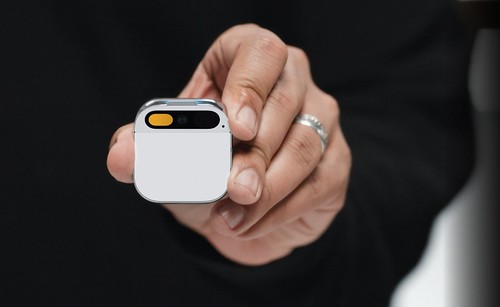
Start Up No.2143: surviving Alaska flight 1282, HyperVerse’s fake ‘CEO’, the genes associated with MS, PC sales fall again, and more


The Humane AI pin isn’t even on sale yet, and the company is already cutting its workforce – an unpromising sign. CC-licensed photo by Ged Carroll on Flickr.

You can sign up to receive each day’s Start Up post by email. You’ll need to click a confirmation link, so no spam.


There’s another post coming this week at the Social Warming Substack on Friday at 0845 UK time. Free signup.


A selection of 9 links for you. Shrinking returns. I’m @charlesarthur on Twitter. On Threads: charles_arthur. On Mastodon: https://newsie.social/@charlesarthur. Observations and links welcome.


Humane lays off 4% of employees before releasing its AI Pin • The Verge

Alex Heath:

»

Humane laid off 4% of employees this week in a move that was described as a cost cutting measure to those who were impacted, according to sources familiar with the matter. Employees were recently told by leadership that budgets would be lowered this year, said one of the people, who requested anonymity to speak without the company’s permission.

The cuts, which numbered 10 people, come ahead of the five-year-old startup shipping its first device: a $699, screenless, AI-powered pin that is pitched as a smartphone replacement. After a lot of hype and secrecy, Humane unveiled the AI Pin to the world in November and began accepting preorders, with shipments planned to begin in March.

Humane has raised over $200m from a who’s-who of Silicon Valley, including OpenAI CEO Sam Altman. CEO Bethany Bongiorno and her husband, Imran Chaudhri, started the company in 2019 after spending long careers at Apple.

«

Not a good look. For comparison, Rabbit – the AI thing that learns to run apps – claims to have had preorders of 10,000 units after its first day on show at CES, for something that looks like a small games console and hasn’t even got a TED talk to its credit.
unique link to this extract


‘I do feel bad about this’: Englishman who posed as HyperVerse CEO says sorry to investors who lost millions • The Guardian

Sarah Martin:

»

The man who posed as the chief executive of the collapsed crypto scheme HyperVerse has confirmed he was paid to act the part, receiving 180,000 Thai baht (about A$7,500 or £4,000) over nine months and a free suit as payment.

Stephen Harrison, an Englishman living in Thailand who posed as chief executive Steven Reece Lewis for the launch of HyperVerse in late 2021 and early 2022, has told Guardian Australia he was “shocked” to learn the company had presented him as having fake credentials to promote the scheme.

He said he felt sorry for those who had lost money in relation to the scheme – which he said he had no role in – an amount Chainalysis estimates at US$1.3bn in 2022 alone.

“I am sorry for these people,” he said. “Because they believed some idea with me at the forefront and believed in what I said, and God knows what these people have lost. And I do feel bad about this.

“I do feel deeply sorry for these people, I really do. You know, it’s horrible for them. I just hope that there is some resolution. I know it’s hard to get the money back off these people or whatever, but I just hope there can be some justice served in all of this where they can get to the bottom of this.”

He said he wanted to make clear he had “certainly not pocketed” any of the money lost by investors.

Harrison, who at the time was a freelance television presenter engaged in unpaid football commentary, said he had been approached and offered the HyperVerse work by a friend of a friend.

«

And on Tuesday, “HyperVerse crypto promoter ‘Bitcoin Rodney’ arrested and charged in the US“. Sounds like they’re rolling the whole network up.
unique link to this extract


Scientists crack mystery of how MS gene spread • BBC News

Philippa Roxby:

»

There are about twice as many cases of multiple sclerosis per 100,000 people in north-western Europe, including the UK and Scandinavia, compared with southern Europe.

Researchers from the universities of Cambridge, Copenhagen and Oxford spent more than 10 years delving into archaeology to investigate why.

MS is a disease where the body’s own immune cells attack the brain and spinal cord, leading to symptoms such as muscle stiffness and problems walking and talking.

They discovered that genes which increase the risk of MS entered into north-western Europe about 5,000 years ago via a massive migration of cattle herders called Yamnaya.

The Yamnaya came from western Russia, Ukraine and Kazhakstan, and moved west into Europe, says one of four Nature journal papers published on the topic.

The findings “astounded us all”, said Dr William Barrie, paper author and expert in computational analysis of ancient DNA at University of Cambridge.

At the time, the gene variants carried by the herding people were an advantage, helping to protect them against diseases in their sheep and cattle. Nowadays, however, with modern lifestyles, diets and better hygiene, these gene variants have taken on a different role. In the present day, these same traits mean a higher risk of developing certain diseases, such as MS.

The research project was a huge undertaking – genetic information was extracted from ancient human remains found in Europe and Western Asia, and compared with the genes of hundreds of thousands of people living in the UK today.

In the process, a bank of DNA from 5,000 ancient humans, kept in museum collections across many countries, has now been set up to help future research.

«

unique link to this extract


Worldwide PC shipments declined 2.7% year over year in the fourth quarter of 2023 • IDC

»

Global shipments of traditional PCs marginally surpassed expectations in the fourth quarter of 2023 (4Q23) with nearly 67.1 million PCs shipped, down 2.7% from the prior year, according to preliminary results from the International Data Corporation (IDC) Worldwide Quarterly Personal Computing Device Tracker. The silver lining in all of this is that the market contractions appear to have bottomed out and growth is expected in 2024.

Despite the improved results, 4Q23 was the eighth consecutive quarter of year-over-year shipment volume contraction. The holiday quarter shipments also marked the lowest fourth quarter volume since 4Q06, underscoring a market recovering slowly amidst weak demand and reliance on substantial promotions.
On an annual basis, the market has experienced unprecedented consecutive declines, marking a stark departure from historical trends tracked since 1995.

In 2022, shipment volume plummeted 16.5% compared to the previous year, and preliminary results suggest an additional 13.9% contraction in 2023 compared to 2022. This downturn, unparalleled in the industry’s recorded history, reflects the aftermath of the significant surge in PC purchases driven by the COVID-19 pandemic

«

IDC makes hopeful noises about the market recovering in 2024, but really, why should it? The overall market for 2023 shrank by 14%, which is nothing short of dramatic.
unique link to this extract


SEC says X account was hacked as false post causes bitcoin price swings • Ars Technica

Jon Brodkin:

»

The Securities and Exchange Commission’s X account was hacked yesterday and briefly displayed a post falsely announcing the approval of bitcoin exchange-traded funds (ETFs), causing an abrupt swing in bitcoin’s price.

“The @SECGov X account was compromised, and an unauthorized post was posted,” the SEC said after the hack. “The SEC has not approved the listing and trading of spot bitcoin exchange-traded products.” SEC Chair Gary Gensler also confirmed the hack and said the commission had not approved bitcoin ETFs.

While the incident highlighted ongoing concerns about the security of government or organizational accounts on X, the social network formerly named Twitter said in a post on its safety account that there was no breach of its systems.

“Based on our investigation, the compromise was not due to any breach of X’s systems, but rather due to an unidentified individual obtaining control over a phone number associated with the @SECGov account through a third party. We can also confirm that the account did not have two-factor authentication enabled at the time the account was compromised. We encourage all users to enable this extra layer of security,” X said.

«

Utterly astonishing that an account with that importance wouldn’t have two-factor enabled. It’s long past the time when Twitter should make it a requirement for any paid-for or government account. (But of course it’s going around putting out fires, not doing important stuff.)

And of course the reason for the hack was to pump (and dump) bitcoin. Some things never change.
unique link to this extract


The Messenger bets survival on huge ad revenue turnaround • CNBC

Alex Sherman and Brian Schwartz:

»

The Messenger, the struggling news media startup co-founded by publishing veteran Jimmy Finkelstein, is urging potential investors to make a long-shot bet on a dramatic rebound in advertising this year.

The company is attempting to stop the cash burn that has put it in jeopardy.

CNBC has obtained an investor deck The Messenger was using as recently as late December to entice potential individuals or companies to infuse it with $20m.

The Messenger, which started in May, launched on the idea of becoming a down-the-middle digital news juggernaut. It initially planned to hire around 550 journalists and generate over $100m in revenue in 2024, according to The New York Times. The company ended up hiring a staff of 300 people and has since struggled financially, which has led to some recent layoffs, according to multiple reports.

The Messenger ended 2023 with a net loss of $43m, according to the documents. The deck tells investors that with the infusion, the company plans to end 2024 profitable, with net income of $13m.

«

TL;DR Stick a fork in it, The Messenger is done. Too big to start with, and that sort of funding is not going to get paid back. I’ve never even seen one of its stories being shared on social media, let alone gone to the site.
unique link to this extract


Brazil’s StopClub app shows Uber drivers a full pay breakdown • Rest of World

Laís Martins:

»

In March 2023, Luisa Pereira made a slight tweak to the way she accepted trips as a ride-hailing driver in São Paulo and almost immediately saw a significant rise in her weekly earnings. “It’s almost like the cost of a gas tank every week — around 200 reais ($41),” she told Rest of World. All Pereira had done was download a free app called StopClub onto her phone.

Ordinarily, when customers book a trip on ride-hailing apps — like Uber and the Didi-owned 99, the two biggest in Brazil — drivers are able to see the full distance, time required, and the amount they’ll be paid for the ride. StopClub gives drivers more clarity: It breaks down the total fare offered by the app and quickly estimates the rate per kilometer or per hour. If the driver finds it to be too low, they can refuse the trip and look for one that offers more bang for the buck.

StopClub’s technique is no secret — plenty of drivers make the same calculations in their heads before accepting a fare. But the speed and clarity of StopClub’s breakdown has helped them increase their earnings by targeting the most profitable rides, drivers told Rest of World. Even those more experienced among them find the app useful, they said, because Uber drivers only have seven seconds to decide whether to accept or decline a ride. (Uber claims it’s 11 seconds.) Pereira said StopClub has made drivers’ lives easier. “I was already used to doing the calculation in my head, but if you think about it, we have to pay attention to so many things: traffic, the passenger, potential thieves, pedestrians,” she said. “At the end of the day, our minds are tired.”

«

I like the idea of warring apps, where (one hopes) the human is the winner from the conflict.
unique link to this extract


Insights from a mystery shopping trip (part 1) • CCS Insight

Ben Wood:

»

To start the year, I thought it’d be interesting to visit some stores retailing mobile phones to assess current trends and challenges. A morning at the Westfield shopping mall in West London saw me and my colleague Vaishali noting a couple of things:

• Dependence on Apple and Samsung is higher than ever
• Retailing foldable devices is challenging

In part one of this blog, I look at the dominance of Apple and Samsung in the UK retail environment. Tomorrow I’ll take a look at the challenges associated with foldables.

A decade ago, a visit to a mobile phone retailer would afford the opportunity to see a multitude of devices from numerous brands.

Those days are largely gone. It’s not a new story, but retailers’ dependence on Apple and Samsung devices in the UK is higher than ever. It has become the path of least resistance as more and more people get hooked on the iPhone. For the rest of the market, Samsung has an attractive range at all prices that satisfies most requirements.

We found the best metaphor for this situation at EE’s flagship Studio store in Westfield, where the phone section of the shop is dominated by two podiums, labelled Apple and Samsung. Other phone-makers barely get a look-in.

At present, the only other player in town seems to be Google, with its Pixel devices. In the UK and many other markets, Google is investing heavily to promote its products and this has enabled it to a place in retail and in people attention. Sales volumes remain relatively small compared with those of Apple and Samsung, but the progress is impressive.

«

unique link to this extract


When Alaska flight 1282 blew open, a mom went into ‘go mode’ to protect her son • The Seattle Times

Dominic Gates:

»

When the Boeing 737 MAX 9’s side blew out explosively on Alaska Airlines Flight 1282 Friday evening, a 15-year-old high school student was in the window seat in the row directly ahead, his shoulder beside the edge of the gaping hole.

His mother, who was seated beside him, in the middle seat of row 25, described the moment as a very loud bang, like “a bomb exploding.”

As the air in the passenger cabin rushed out, the Oregon woman turned and saw her son’s seat twisting backward toward the hole, his seat headrest ripped off and sucked into the void, her son’s arms jerked upward. “He and his seat were pulled back and towards the exterior of the plane in the direction of the hole,” she said. “I reached over and grabbed his body and pulled him towards me over the armrest.”

To avoid being inundated with further media calls, the woman, who is in her 50s, a lawyer and a former journalist, asked to be identified only by her middle name, Faye.

“I was probably as filled with adrenaline as I’ve ever been in my life,” Faye said. “I had my arms underneath his arm, kind of hooked under his shoulders and wrapped around his back,” she continued. “I did not realize until after the flight that his clothing had been torn off of his upper body.”

This account of the traumatic experience of this family aboard Flight 1282 is based upon an exclusive and emotional interview with the woman Monday.

A photo taken after the plane landed shows the boy’s seat pulled back, though by then it had returned partially to its position. At the moment of the incident, Faye’s face was pressed against the rear of her son’s right shoulder and she said the seat “was pulled back to such a degree that I was looking directly out of the hole into the night sky.”

The plane’s oxygen masks had dropped from the ceiling in front of the passengers. The woman in the aisle seat of row 25, a stranger to Faye and her son, put on her own mask, then reached across Faye and put the mask on the son.

…Faye said she had no intention of speaking to the media until she saw the initial statements from Alaska in the aftermath of the accident, which emphasized that there were only minor injuries and to her seemed to diminish the severity of what had happened.

«

Amazing piece of reporting; and once again, a whiff of corporate coverup, so familiar from the Post Office.
unique link to this extract


• Why do social networks drive us a little mad?
• Why does angry content seem to dominate what we see?
• How much of a role do algorithms play in affecting what we see and do online?
• What can we do about it?
• Did Facebook have any inkling of what was coming in Myanmar in 2016?Read Social Warming, my latest book, and find answers – and more.

Errata, corrigenda and ai no corrida: a stray quotation mark screwed up the hotlink to an image on the BBC website yesterday about the excess heat in 2023. It displays perfectly well on the BBC site, which I commend to you. Apologies for the horrendous formatting that the error caused.