
Unknown's avatar

About charlesarthur

Freelance journalist - technology, science, and so on. Author of "Digital Wars: Apple, Google, Microsoft and the battle for the internet".

Start Up No.1481: Facebook to cull vaccine misinformation, Twitter mulls subscriptions, iOS to allow Spotify as default music stream, and more


Let’s talk about Blade Runner. No particular reason. But who needs a reason? CC-licensed photo by kaytaria on Flickr.

You can sign up to receive each day’s Start Up post by email. You’ll need to click a confirmation link, so no spam.

A selection of 11 links for you. Frosty. I’m @charlesarthur on Twitter. Observations and links welcome.

Hacker tried to poison Florida city’s water supply, police say • Vice


Jason Koebler and Joseph Cox:
»

On Monday officials from Pinellas County in Florida announced that an unidentified hacker remotely gained access to a panel that controls the City of Oldsmar’s water treatment system, and changed a setting that would have drastically increased the amount of sodium hydroxide in the water supply.

During a press conference, Pinellas County Sheriff Bob Gualtieri said that a legitimate operator saw the change and quickly reversed it, but signaled that the hacking attempt was a serious threat to the city’s water supply. Sodium hydroxide is also known as lye and can be deadly if ingested in large amounts.

“The hacker changed the sodium hydroxide from about one hundred parts per million, to 11,100 parts per million,” Gualtieri said, adding that these were “dangerous” levels. When asked if this should be considered an attempt at bioterrorism, Gualtieri said, “What it is is someone hacked into the system not just once but twice … opened the program and changed the levels from 100 to 11,100 parts per million with a caustic substance. So, you label it however you want, those are the facts.”

…”The person who remotely accessed the system for about three to five minutes, opening various functions on the screen,” Gualtieri said during the press conference. “One of the functions opened by the person hacking into the system was one that controls the amount of sodium hydroxide in the water.”

Gualtieri said that on Friday at 8am a plant operator at the Oldmar’s water treatment facility noticed someone remotely accessing the system that he was monitoring. The system was deliberately set up with a piece of remote access software so that “authorized users could troubleshoot system problems from other locations,” Gualtieri added.

«

The astonishing thing here is that they had a system allowing remote access and hadn’t considered that hacking is just access you didn’t expect.
unique link to this extract


Facebook says it plans to remove posts with false vaccine claims • The New York Times


Mike Isaac:
»

Facebook said on Monday that it plans to remove posts with erroneous claims about vaccines from across its platform, including taking down assertions that vaccines cause autism or that it is safer for people to contract Covid-19 than to receive the vaccinations.

The social network has increasingly changed its content policies over the past year as the coronavirus has surged. In October, the social network prohibited people and companies from purchasing advertising that included false or misleading information about vaccines. In December, Facebook said it would remove posts with claims that had been debunked by the World Health Organization or government agencies.

Monday’s move goes further by targeting unpaid posts to the site and particularly Facebook pages and groups. Instead of targeting only misinformation around Covid vaccines, the update encompasses false claims around all vaccines. Facebook said it consulted with the World Health Organization and other leading health institutes to determine a list of false or misleading claims around Covid and vaccines in general.

In the past, Facebook had said it would only “downrank,” or push lower down in people’s News Feeds, misleading or false claims about vaccines, making it more difficult to find such groups or posts. Now posts, pages and groups containing such falsehoods will be removed from the platform entirely.

«

Years and years and years too late. Notable though how Facebook has now decided that it can arbitrate on truth, having for years insisted that it was neutral on topics like Holocaust denial and, yes, lies about vaccines.
unique link to this extract


Bloomberg: Apple and Hyundai hit the brakes on Apple Car production negotiations • 9to5Mac


Chance Miller:
»

Over the last weeks, a handful of reports have indicated that Apple would be teaming up with Hyundai for the production of Apple Car. Now, a new report from Bloomberg suggests that the two companies have recently paused their discussions.

Hyundai made a bold statement last month when it confirmed that it was in talks with Apple about a potential partnership for Apple Car. Almost immediately after issuing the first statement, Hyundai backtracked and published a new statement without a mention of Apple.

After Hyundai’s initial statement, a handful of different reports corroborated that Apple and Hyundai were in talks about the electric, self-driving Apple Car. Most recently, reports suggested that Apple would be working with Hyundai subsidiary Kia Motors through a potential $3.6 billion investment.

A new report from Bloomberg, however, says that Hyundai and Apple have hit the brakes on their negotiations. One reason for the paused negotiations is that Apple is “upset” over Hyundai’s pre-announcement of the deal.

«

Classic: leak about having a deal with Apple, and suddenly you don’t have a deal with Apple. Been the same for the past 25 years.
unique link to this extract


European touring made Radiohead the band we are. Brexit must not destroy it • The Guardian


Colin Greenwood is the bassist with Radiohead:
»

In December 2018, I was lucky enough to play three sold-out shows with the brilliant young Belgian artist Tamino. The gigs were at the Ancienne Belgique, a largish venue in the heart of Brussels’ club and cafe centre. Tamino’s music takes in influences as wide as Jacques Brel and Tim Buckley, as well as the 90s Seattle scene and his Egyptian heritage. It’s been a privilege to work with him. I grabbed my bass in Oxford, jumped on the Eurostar and spent three nights playing with him and his band, staying in a small hotel across the road. No visas, no carnet, just the freedom of music.

What will playing in Europe be like now, after Brexit? I spoke to several old friends who’ve had years of experience planning Radiohead tours. Adrian, our touring accountant, said it will be more clunky and expensive. Before Brexit, a carnet (a list of goods going in and out of the country) was just needed for Norway and Switzerland. Now it would be more like playing South America, where each country has its systems for dealing with “third countries” like us. Adrian said a £10,000 guitar would need a carnet that would cost about £650 plus VAT. The costs of travel and accommodation are already high, and the extra paperwork and expenses would rise quickly for a touring orchestra.

There’s also that ugly word, cabotage – the rights for transport movement – with trucks carrying the gear from the UK only allowed two drop-offs in the EU before having to return to Britain, making a multi-city tour impossible with a UK tour bus or truck fleet. Another of our accountants, Steph, assured me that we would have people to sort it all out, and sent me an email for an online conference about what Brexit means for the music industry: an opportunity to charge artists and touring productions for dealing with the shiny new red tape.

«

The problem is going to be for small bands trying to get their start. The cost will be prohibitive.
unique link to this extract


Tesla’s bitcoin buy is a reckless, destructive troll • The New Republic


Jacob Silverman:
»

In a Monday morning SEC filing, Tesla revealed that it had purchased $1.5bn worth of Bitcoin, adding itself to a roster of companies and investment funds that have poured billions into the preeminent cryptocurrency in the last year. Tesla said it would also start accepting Bitcoin as payment for its cars.

The news caused Bitcoin’s price to shoot up about 13% in early trading, but more than any short-term profits, it represents the culmination of a months-long campaign by Bitcoiners to get Musk to embrace Bitcoin and its attendant worldview, a messianic vision of a decentralized currency network leading to economic emancipation, with consumers free of the shackles of politics and central banks. Whether Musk actually believes Bitcoiner rhetoric—or, like any troll, is merely doing it for the lulz—is less important than what it represents: one of tech’s most celebrated companies making a huge commitment to its most controversial commodity.

The Bitcoin buy is also a clear indictment of Tesla’s, and Musk’s, image as an environmentally conscious innovator. There are few speculative assets more harmful to the climate than Bitcoin, which consumes a colossal amount of electricity. In an added irony, the SEC filing showed that Tesla had continued its long-standing practice of selling carbon credits. In 2020, Tesla sold about $1.58bn worth of these credits—almost exactly the value of the Bitcoin purchased. It appears that to bulk up its paltry balance sheet (Tesla is a perennial money-loser), the company sold environmental credits and then funneled the proceeds into the digital equivalent of burning coal.

«

It really does give the lie to Musk’s claims about wanting to improve the environment. The filing doesn’t say exactly how many bitcoin Tesla bought (apparently approved by the Audit Committee). This article from September shows how much energy bitcoin consumes – pointlessly, to create the digital equivalent of diamonds. Except diamonds have actual uses.
unique link to this extract


Twitter mulls subscription product, tipping for generating revenue • Bloomberg


Kurt Wagner:
»

The majority of Twitter’s revenue comes from targeted advertising, which serves up promoted posts aimed at specific groups of users. That business has grown in recent years at a slower pace than competitors like Facebook Inc. and Snap Inc., and Twitter’s slice of the digital ad market globally remains at at a lackluster 0.8%, according to EMarketer.

Twitter, the thinking goes, would benefit from a separate revenue stream that isn’t as reliant on brand advertising. The company’s user base in the US, its most valuable market, has also started to plateau, meaning it can’t rely on simply adding users to juice revenue.

To explore potential options outside ad sales, a number of Twitter teams are researching subscription offerings, including one using the code name “Rogue One,” according to people familiar with the effort. At least one idea being considered is related to “tipping,” or the ability for users to pay the people they follow for exclusive content, said the people, who asked not to be named because the discussions are internal. Other possible ways to generate recurring revenue include charging for the use of services like Tweetdeck or advanced user features like “undo send” or profile-customization options.

Subscriptions have always offered a tantalizing alternative to advertising, but social networks have traditionally stayed free as a way to encourage user growth and engagement, which is then subsidized with paid marketing posts. Still, Twitter chief financial officer Ned Segal said on a call with investors last year that a subscription option of some kind would offer sales “durability,” and recurring revenue is more consistent than advertising spending.

«

None of these sounds like really compelling things to do – Tweetdeck, perhaps, for corporate users. Tipping sounds more like Substack does with email, though that could generate some revenue too. But none sounds like a boil-the-ocean scheme that would dramatically increase revenue.
unique link to this extract


Siri now allows setting a default music streaming service on iOS 14.5 • The 8-Bit


Taha Broach:
»

Apple launched the initial beta versions of iOS 14.5 to developers and public beta testers last week. Among the list of new features, Apple has also introduced a new functionality within Siri that enables the virtual assistant to set a default music streaming service aside from Apple Music.

First noted by users on Reddit, the first time you ask Siri to play a song on iOS 14.5, it offers an option to choose between different music streaming apps. The third-party music streaming apps should be installed on your iPhone in order for Siri to be able to set them as default.

For instance, if you chose Spotify as the default app, the next time you say “Hey, Siri, play The Lazy Song,” Siri will play it on Spotify instead of Apple Music.

Siri will also set a music streaming app as default if you ask it to play from that specific app for the first time. For example, “Hey, Siri, play The Lazy Song on Spotify.”

«

This is being interpreted as Apple seeking to evade antitrust trouble by not making Apple Music the default, but Spotify’s complaint in Europe is more about the App Store and the 15% (or 30%) cut Apple takes and the barriers to telling people how to sign up in a way that’s advantageous to Spotify rather than Apple.

But I do think Apple is increasingly confident about its position; so much so that it doesn’t worry about defaults any more; that won’t harm its installed base. (Might even help it.)
unique link to this extract


The (lithium-ion) battery is ready to power the world • WSJ


Russell Gold and Ben Foldy:
»

Electric vehicles are currently the main source of demand for battery cells. As demand grows and costs fall further, batteries will become even more disruptive across industries. Batteries recently scored a win at General Motors, which said it hoped to phase out gasoline- and diesel-powered vehicles from its showrooms world-wide by 2035.

The battery boom could erode demand for crude oil and byproducts such as gasoline—as well as for natural gas, which is primarily used in power plants. While mining materials and manufacturing batteries produce some greenhouse gas emissions, analysts believe shifting to batteries in the auto and energy sectors would reduce emissions overall, boosting efforts to tackle climate change.

US power plants alone produce about a quarter of the country’s emissions, while light-duty vehicles such as cars and vans contribute another 17%.

The rise of rechargeable batteries is now a matter of national security and industrial policy. Control of the minerals and manufacturing processes needed to make lithium-ion batteries is the 21st-century version of oil security.

The flow of batteries is currently dominated by Asian countries and companies. Nearly 65% of lithium-ion batteries come from China. By comparison, no single country produces more than 20% of global crude oil output.

…To meet expected demand, global output of lithium, a silvery metal also used to make nuclear bombs and treat bipolar disorder, has nearly tripled in the past decade, according to Benchmark. Lithium is mostly mined in Australia and Chile, where it is found in underground brine deposits, although efforts to increase U.S. output from mines in Nevada and North Carolina are gaining attention from investors.

«

Following on from yesterday’s article about renewables creating change in world politics, the point about China and batteries is an important one. Swapping one authoritarian regime that produces the energy we need for another?
unique link to this extract


From the Archives: ‘Blade Runner’ went from Harrison Ford’s ‘miserable’ production to Ridley Scott’s unicorn scene, ending as a cult classic • Los Angeles Times


Kenneth Turan, the LA Times’s film critic, in a piece first published in September 1992:
»

Though Dick’s novel was set in 1992, the script had updated things to 2020 (finally changed to 2019 so it didn’t sound so much like an eye chart). Scott, who’d been attracted to the film because of a chance to design a city-oriented future, knew he wanted to avoid “the diagonal zipper and silver-hair syndrome” a la “Logan’s Run.” Based on his experiences with urban excess in New York and the Orient, “Blade Runner” was going to be the present only much more so, “Hong Kong on a bad day,” Scott says, a massive, teeming, on-the-verge-of-collapse city that the director at one point was going to call “San Angeles.”

“This was not a science-fiction film so much as a period piece,” Paull explains. “But it would be 40 years from now, not 40 years ago.”

The key design concept came to be called retrofitting, the idea being that once cities start to seriously break down, no one would bother to start new construction from scratch. Rather, such essentials as electrical and ventilation systems would simply be added onto the exteriors of older buildings, giving them a clunky, somehow menacing look. Progress and decay would exist hand in hand, and the city’s major buildings, like the massive, Mayan-inspired pyramid that houses the Tyrell Corp., would tower miles above the squalor below.

«

There’s all sorts of fascinating detail in this deeply researched article about this iconic film. And the only reason that anyone ever knew there was a director’s cut (the original version before the studio got involved) was that it was mistakenly screened at a showing of the film for fans. (Thanks Richard G for the pointer.)
unique link to this extract


Next-hour precipitation rolling out in Weather app in UK and Ireland • MacRumors


Juli Clover:
»

Multiple MacRumors readers in the UK and Ireland have noticed that the built-in Weather app now supports next-hour precipitation readings, a feature that appears to have rolled out recently.

Next-hour precipitation details have been available in the United States and Canada since the launch of iOS 14, but had not expanded to other countries prior to this week. The new precipitation charts appear to be showing up for those running both iOS 14.4 and iOS 14.5.

Apple added next-hour precipitation to the Weather app after its acquisition of Dark Sky in March 2020. Precipitation charts offer minute-by-minute weather predictions based on precise location.

Update: Dutch website iCulture reports that the precipitation feature is appearing in The Hague, suggesting rollout is happening in the Netherlands and France, too.

«

I noticed this over the weekend (checking for snow). The Dark Sky API for other apps won’t be turned off until the end of this year, but it seems a safe assumption that Apple will wrap all of Dark Sky’s features into the Weather app by the time iOS 15 comes out, most likely in September.
unique link to this extract


Some friendly reminders about day trading • A Wealth Of Commonsense


Ben Carlson, ruminating on the stories about some who made money on GameStop:
»

There will always be winners and losers in the stock market, even for those who aren’t day-trading. This is simply the zero-sum nature of transacting in a market like this. For every buyer, there has to be a seller and vice versa.

But day-traders face a much higher hurdle rate than long-term investors for a couple of reasons:

Day trading is hard. I know, I know, no one likes to hear about the pitfalls of day-trading when it seems so fun and lucrative. But I would be remiss if I didn’t share some statistics as a cautionary tale for those who feel like they’re earning easy money trading stocks right now and assume it will always be like this.

A study of Brazilian futures traders found 97% of individuals who traded in the market for more than 300 days lost money on their trades.

Research on individual day traders in Taiwan over a 15 year period from 1992 to 2006 showed even the most experienced day traders lose money and surprisingly even those traders who lose consistently continue to trade despite their losses.

The SEC studied the habits of retail FX traders and discovered, “approximately 70% of customers lose money every quarter and on average 100% of a retail customer’s investment is lost in less than 12 months.”

Another study of eToro day-traders found nearly 80% of them lost money over a 12-month period with a median loss of 36%.

Are there people who can become successful day-traders? Of course.

Are the odds in your favor? Nope.

The only guarantee when day-trading is taxes. I’m sure some people are trading in tax-deferred accounts but not at Robinhood. All Robinhood accounts are taxable at the moment. And adding taxes to the mix increases your hurdle rate substantially since short-term gains are taxed at a higher rate than long-term gains.

«

unique link to this extract


Errata, corrigenda and ai no corrida: none notified
Start Up No.1480: why renewables will reshape world politics, how many scam apps are there?, the Democrats’ bad internet bill, and more


Apple’s AirPods have done the same trick as the iPod, cornering the market. But how? CC-licensed photo by tua ulamac on Flickr.

You can sign up to receive each day’s Start Up post by email. You’ll need to click a confirmation link, so no spam.

A selection of 10 links for you. Yes, back again. I’m @charlesarthur on Twitter. Observations and links welcome.

How the race for renewable energy is reshaping global politics • Financial Times

Leslie Hook and Henry Sanderson:

»

as the energy system changes, so will energy politics. For most of the past century, geopolitical power was intimately connected to fossil fuels. The fear of an oil embargo or a gas shortage was enough to forge alliances or start wars, and access to oil deposits conferred great wealth. In the world of clean energy, a new set of winners and losers will emerge. Some see it as a clean energy “space race”. Countries or regions that master clean technology, export green energy or import less fossil fuel stand to gain from the new system, while those that rely on exporting fossil fuels — such as the Middle East or Russia — could see their power decline.

Olafur Ragnar Grimsson, the former president of Iceland and chair of the Global Commission on the Geopolitics of Energy Transformation, says that the clean energy transition will birth a new type of politics. The shift is happening “faster, and in a more comprehensive way, than anyone expected”, he says. “As fossil fuels gradually go out of the energy system . . . the old geopolitical model of power centres that dominate relations between states also goes out the window. Gradually the power of those states that were big players in the world of the fossil-fuel economies, or big corporates like the oil companies, will fritter away.”

In Australia, a growing lobby is pushing for the country to become a “renewable superpower” thanks to its abundant wind and solar resources. [Chair of Fortescue Metals Group, the Australian billionaire Andrew] Forrest is an investor in a project called the Sun Cable, which hopes to lay an electric cable all the way to Singapore. He believes the country’s future is at stake. “The impact on the Australian economy, if we get this right, could be nothing short of nation-building,” he says.

New power structures will emerge along with the transition. “The [old] levers of control, a lot of them will dissipate and simply cease to exist,” says Thijs Van de Graaf, associate professor at Ghent University and lead author of an influential 2019 report from the International Renewable Energy Agency (Irena). “This is a completely new constellation, so we cannot think just like the old days,” he adds. “There is a new class of energy exporters that may emerge on the global scene.”

«

I believe the Saudis are trying to invest in solar at a colossal rate with the same intention – to be a dominant energy provider as renewables take over.
unique link to this extract


Porn app network scamming iPhone users for $2.6m per month, says Apps Exposed • Forbes

John Koetsier:

»

Dozens of porn apps are scamming iPhone owners and generating an estimated $2.6m in monthly revenue, according to anonymous tipster Apps Exposed.

“In total they are generating $2,626,000 (estimated data for December 2020) a month by breaking the App Store Guidelines and scamming their users with prerecorded videos, fake push notifications, bait and switch prices and hired girls to do naked cam shows to keep the user as much as possible inside the app,” the group says.

«

This is the October 2019 release from Apps Exposed, which counted 1,370 “scam apps”. There’s also this thread from the end of January.

There’s basically a cottage industry pointing to these scam apps. But with more than a million apps on the App Store, the scope of the problem comes into view: scams are perhaps 0.1% of the total apps on there. Even if there are five or ten times as many as Apps Exposed found, that’s up to 1%. And they probably don’t get updated much, so they won’t pop up in app review.

Finding them therefore becomes the proverbial needle in a haystack. Apple has begun removing some of the ones highlighted in this article. But that leaves almost the same number still running. The modern-day Sisyphus doesn’t roll a rock, but searches for scam apps.
unique link to this extract


Don’t expect the ‘Apple Car’ to have a steering wheel, analyst says • AppleInsider

Mike Peterson:

»

The fully autonomous “Apple Car” — which will likely lack a steering wheel — could be a major competitor to Tesla and other electric vehicle makers, Morgan Stanley automotive analysts said.

In a note to investors seen by AppleInsider, Morgan Stanley Auto & Shared Mobility analyst Adam Jones shared some thoughts on the implications of Apple’s entry into the car market.

For one, Jones notes how high Apple’s reported $3.6bn investment is. That’s “a lot of money to invest into one car factory,” and Jones adds that the investment only appears to be Apple’s portion.

Users who are expecting a traditional automotive experience may want to think again. “Don’t expecting steering wheels,” Jones said.

“We have a hard time imagining Apple entering the automotive market with a vehicle design that involves human intervention in the driving process,” Jones writes. “Just our view but an Apple car with a steering wheel is like an iPhone with physical buttons and a coiled rubber cord connected to a wall. If we’re right, then this could really turbocharge investor appreciation on the AV timeline.”

«

It’s OK, you can use a wheel from one of your older cars. It’s an environmental measure.

(More honestly, I think the analysts are smoking something powerful.)
unique link to this extract


Now it’s the Democrats’ turn to destroy the open internet: Mark Warner’s 230 reform bill is a dumpster fire of cluelessness • Techdirt

Mike Masnick:

»

Senator Mark Warner has introduced his new Section 230 reform bill, called the SAFE TECH Act (“Safeguarding Against Fraud, Exploitation, Threats, Extremism, and Consumer Harms Act” co-sponsored by Senators Mazie Hirono and Amy Klobuchar), and it is one of the worst Section 230 bills I’ve seen. It is difficult to explain just how bad this bill is concisely, because it has so many bad ideas crammed into one single bill. It’s as if none of these three Senators or their staff spoke to anyone who actually understands how the internet works, or how content moderation/trust and safety works. It’s stunning in the ignorance it displays.

About the only good thing I’ll say about it, is that (unlike most bills) at least Warner released a redline version to show how it would actually (massively) change Section 230. He also put out an incredibly disingenuous FAQ that flat out lies about… nearly everything. We’ll go through that in a bit.

Basically, this bill takes nearly every single idea that people who want there to be less speech online have had, and dumped it all into one bill. There’s a lot in there, and nearly all of it is bad. Last week I wrote about a draft bill in the House that suggested carving out civil rights law from Section 230. In my analysis of that bill, I noted that it appeared to come from a well meaning place, but was simply misguided. This bill, which also includes a carveout for civil rights law, does not come from a well meaning place. The drafters of the bill are either malicious or ignorant. It’s not a good look for Senators Warner, Hirono, and Klobuchar.

«

Then again, there’s clueless stuff on the east side of the Atlantic too from Conservative MPs, who have been in power for ten years yet act surprised by the power of tech companies and the weakness of laws.
unique link to this extract


She wanted a ‘freebirth’ with no doctors. Online groups convinced her it would be OK • NBC News

Brandy Zaraodzny:

»

As well as she can figure, it started with the podcasts. 

Judith worked at a flower shop. The daily drive was an hour outside of town, time she filled by listening to podcasts. When she got pregnant, she devoured episodes of “The Birth Hour” and “Indie Birth,” popular programs on which women shared their childbirth stories, which ranged from hospital to home births. But it was the “Free Birth Podcast” that really spoke to Judith.

Billed as “a supportive space for people who are learning, exploring and celebrating their autonomous choices in childbirth,” the podcast features Emilee Saldaya, 35, a Los Angeles freebirth advocate and founder of the Free Birth Society. The group has 46,000 followers on Instagram, and its podcast hit a million downloads last year.

On the podcast, Saldaya interviews mothers about their freebirth stories. These women reminded Judith of herself; they were college educated, spiritual, creative types who spoke about their births in powerful, radical terms: as euphoric events that happened in bathtubs, in nature or in their own beds, surrounded by their partners and family. Women in these podcasts weren’t listening to doctors but to their bodies. They weren’t lying on their backs waiting for someone to pull a baby from them but bringing their babies into the world with their own two hands. 

Judith tore through some 70 episodes. She relistened to her favorites, one of which featured a woman who had given birth by candlelight in an off-the-grid yurt in the California mountains with only her husband and a dog she called her “midwolf.” 

While she listened, Judith would daydream, imagining herself as a future guest on the podcast. 

«

This is very much a tale of what happens when you don’t involve experts, but instead have lots of people who know very little but are very enthusiastic. (I’m tempted to say Dunning-Kruger applies, but…)
unique link to this extract


The capitalist case for overhauling Twitter • NY Mag

Scott Galloway:

»

Twitter is already a landmark company culturally, and with some robust management, it could be appraised as one. Value is created on the platform every second. Influencers build followings, businesses find customers, ideas are generated and shaped. But Twitter, in a misguided posture of neutrality, lets all this economic activity flow across its platform and neither cultivates nor harvests it. The opportunity for Twitter — and the fiduciary obligation for its management — is to command the space that it occupies.

At the heart of my proposed revamp is a subscription model that charges accounts with followers over a certain threshold. Of course, millions of casual Twitter users provide the company with its scale, and I am not proposing the company charge them. Rather, the company should recognize that many people and organizations derive enormous value from Twitter at little or no cost. My 345,000-follower account is an important tool in my professional life and a window into the communities I care about. I’d pay a subscription fee if Twitter thought to ask for it. And I believe @KimKardashian (nearly 69 million followers) would pay more.

This isn’t just a money grab. Subscription encourages a firm to reorient its business around its users — who provide the bulk of the content that brings people to the platform, after all — and build premium features that justify collecting premium revenue. Even many casual users would likely pay a fee for better analytics, control over their feeds (such as the ability to switch easily between work and personal modes), and enhanced profile pages. The lack of innovation in the core Twitter product has been a weakness for years, but now it presents an opportunity to support a subscription fee.

«

Mmm. I don’t think this would work. But Twitter could certainly turn itself into a more profitable network by enabling more transactions of all sorts, by having many more credit cards attached to accounts (though it would need to improve its security first). Also – Galloway owns $10m in Twitter stock? Either he was a really early investor, or he made some remarkable investments a long time back. (Via John Naughton.)
unique link to this extract


Kate Bingham: why the UK strategy on Covid vaccines has been a great success • la Repubblica

Fascinating interview with the woman venture capitalist who helped the UK get near the front of the queue:

»

Q: Did you mainly work with institutions like Oxford and Cambridge?
“Oh no. I did not mind where the vaccines came from and in fact, the only vaccine we secured, the only UK based vaccine is Oxford/AstraZeneca. We also secured rights to the UK/French vaccines from GSK/Sanofi and Valneva. As far as I was concerned, geography didn’t matter. I was only interested in securing the best vaccines. For example BioNTech: Sean Marett, who is the chief business officer, was somebody I had backed in one of my companies before. I’ve known him for, I don’t know, 15, 20 years. So it’s very easy for me to just pick up the phone and had lunch with him a year or two ago when he was in London, easy for me to pick up the phone and have those conversations. I don’t think this was anything to do with the UK being better or anything. I think that is the wrong narrative. I think it’s just a different strategy.”

“The UK had a very strategic approach, which was to secure vaccines quickly. And the European approach seems to be more sort of a more typical procurement approach, which was more about making sure you got the best value for money for your vaccines. It wasn’t related to Brexit and is not related to people being better or more experienced. I think there’s plenty of very, very, very good people obviously in the EU and in fact, you know, if you look at the companies are, you know, BionTech his exceptional, CureVac is exceptional. Sanofi is fantastic. Lots of good companies there.”

Q: You are more happy to take a risk in this country?
“Maybe. I don’t know. Our actual upfront cost was 900 million pounds. It’s in the public accounts committee transcript. But yes, we were willing to write off the upfront money which was largely for manufacturing if actually those vaccines failed.”

«

Shows the value of experts. I’d like to see a similar interview for Israel, which got ahead of everyone.
unique link to this extract


Why haven’t other true wireless earbuds taken off like Apple’s AirPods? • Android Authority

Jon Fingas:

»

There’s no way to sugarcoat this — much of the competition to Apple’s AirPods just isn’t that great.

You’ll certainly find high-quality options like Samsung’s Galaxy Buds Pro or Sony’s WF-1000XM3. However, the market is saturated with a legion of look-at-me earbuds that explicitly mimic Apple’s AirPods design. The true wireless buds from Huawei, OnePlus and Xiaomi (among many others) have some cosmetic differences, but they’re clearly riding on Apple’s coattails. And if you can afford the real thing, you probably won’t buy the knockoff.

Regardless of uniqueness, all of these competitors face a larger problem: they don’t fundamentally improve on the basic buds-plus-case concept Apple popularized with AirPods. They may sound better or last longer on battery, but there aren’t revolutionizing technology upgrades that would have AirPods buyers thinking twice. Even the Galaxy Buds Pro, as sophisticated as they are, sit in Apple’s shadow.

And that’s just not good enough when AirPods have such a commanding sales lead. While these rivals do bring AirPods-like capabilities to Android users, someone seriously considering a pair of AirPods might not bat an eye at the alternatives unless they’re either cost-conscious or insist on feature parity for Android. Why take a chance on a rival when Apple is a known quantity?

«

Apple took half the market for wireless earbuds in 2020, according to Strategy Analytics. Always interested by analysis like this on Android sites, which grudgingly accept that Apple derives a huge advantage in user experience from its integrated approach. See also: Windows sites doing writeups about the iPod in 2005, except they usually insisted Microsoft was just about to come up with a strategy that would kill the iPod dead.
unique link to this extract


The Arctic threat that must not be named • War on the Rocks

Sharon Burke:

»

The Arctic, as the National Climate Assessment [released by the Trump administration in 2018] puts it, is on the “front line” of this change. The region is warming more than twice as fast as the rest of the globe, and possibly as much as seven times as fast, based on measurements Norway has taken at Svalbard Airport for the last 120 years. According to the National Snow and Ice Data Center, the Arctic has lost more than a million square miles of ice at its seasonally lowest point since the beginning of satellite records in 1979. That is an area more than twice the size of Alaska, the largest state in America. This is not a projection, it is not a mathematical model, and it is not disputed science. These are conditions that we can see and measure through satellite imagery and through physical observations from buoys and other devices.

While Arctic explorers have long looked for a sea route through the area, often with disastrous results, this is the first time in human history that a truly navigable ocean is opening up in the region. That new sea lane could cut two weeks off the transit time between Asia and Europe, one of the drivers for China’s interest. That thaw will also mean access to trillions of dollars of resources that were trapped under the ice before, including oil, gas, and rare earth elements, a lure for all the littoral countries and for China as well. Ironically, the great thaw will also likely mean an acceleration of global climate change, as the reflective ice disappears and methane trapped under the ice is released. That is likely to happen regardless of whether nations control greenhouse gas emissions, given that a certain amount of warming is already locked in.

«

unique link to this extract


GameStop and the Truth Wars • City Journal

Bruno Maçaes, with what could be the last word on the subject (until the next stock madness):

»

The same processes that have been undermining the sense of a shared reality in American politics over the last few years are now doing so in financial markets. As the tech entrepreneur Sam Lessin pointed out, when wealth moved from physical assets to abstract digital records with no existence in physical space, economic elites acquired a new kind of power: the ability to shape reality and do it safe from prying eyes. Several hedge-fund managers told Reuters that the idea to short GameStop had long been a favorite at exclusive “idea dinners,” where fund managers swap their best trades. Now the mob has learned how to play the same game. The Redditors were not interested in GameStop stock insofar as it represented a company that sells items to turn a profit in the physical world. To them, the stock was merely a token to use in certain applications—for example, a short squeeze. And if enough people agree that this token is a store of value, then it becomes a store of value, even if by chance the underlying company were to disappear. Think of Bitcoin, a financial asset with no cash flows.

The Reddit traders—the mob—do not seem to have any philosophy of valuation. Does that make them immoral? Some, hilariously, have argued precisely that on network television. Albert Edwards, a global strategist at Société Générale, said that the Federal Reserve “should hang its head in shame” for having presided over scenes of “a retail mob feasting off each hedge fund kill.” Does this make the retailers naïve? Maybe, though many increased their net worth from $50,000 to $20m or $30m. What it really shows is that they understand the secret of modern capitalism—a secret that until now has been reserved for a happy few.

«

unique link to this extract


Errata, corrigenda and ai no corrida: none notified

Start Up No.1479: Twitter untouched by Trump’s absence, the price of abusing Chris Whitty, improving Fitness+, and more


Magic Leap’s AR glasses were a flop. What’s Apple going to do that’s different? CC-licensed photo by Collision Conf on Flickr.

You can sign up to receive each day’s Start Up post by email. You’ll need to click a confirmation link, so no spam.

A selection of 11 links for you. Another one down. I’m @charlesarthur on Twitter. Observations and links welcome.

Banning Trump didn’t change how much people use Twitter, new data shows • Big Technology

Alex Kantrowitz:

»

For as long as Donald Trump was president, there was a common misconception that Twitter’s fate was tied to his. That without his presence, Twitter would lose truckloads of users and engagement, and it was therefore beholden to him. Now that Twitter’s banned Trump though, the data shows he had no discernable impact on how much people used it.

Daily use of Twitter has remained remarkably consistent after it banned Trump last month, according to new data from mobile research company Apptopia. Across January, Twitter barely registered a blip in the number of times people used its app. The day of the ban itself is impossible to pick out when looking at the trend line.

“It is not easy for one person to have a noticeable impact on such large social network apps,” Adam Blacker, Apptopia’s VP of insights and global alliances, told me. “Cultural events are seen much better in the data than any singular person’s situation.”

The new data, first published here, can finally put to rest the notion that Twitter kept Trump on its service to boost engagement and make money from ads. Despite Trump’s numerous run-ins with its rules, Twitter kept his account live as a matter of principle.

…Twitter declined to comment. But it didn’t dispute the data. Apptopia pulls data from 125,000 apps on iOS and Android, along with publicly available sources, to reach its conclusions. Its data didn’t show any meaningful change in Twitter downloads, sessions, or time spent after the ban.

«

The graph on usage is pretty much a straight line. There’s absolutely zero decline. (Or increase.)
unique link to this extract


Apple’s rumored VR headset could cost $3,000, feature 8K displays and over a dozen cameras • The Verge

Chaim Gartenberg:

»

It’s no secret Apple is hard at work on augmented and virtual reality devices, with a report from Bloomberg in January claiming Apple is working on an ultra-high-end, pricey headset that could hit stores in 2022. Now, a new report from The Information sheds new light on what to expect from the potential headset, including a rendering — said to be based on “internal Apple images of a late-stage prototype from last year” — of what the device might actually look like.

The Information’s report corroborates several details from Bloomberg’s, including the fabric mesh material that the company is said to be using in order to lighten the weight of the device — and the high price tag. The new report claims the price could reach approximately $3,000, considerably higher than most other standalone VR headsets, like the $299 Oculus Quest 2.

The alleged design also appears to borrow cues from a variety of other Apple devices, including swappable Apple Watch-style headbands and a HomePod-esque mesh fabric.

There are also new details on the actual hardware for the rumored device, which is said to offer both VR and mixed reality applications, thanks to over a dozen cameras (for tracking hand movement) and LIDAR sensors (for mapping rooms, similar to AR effects on the iPad Pro and iPhone 12 Pro). It is also said to feature dual 8K displays with eye-tracking technology that could offer resolution far beyond any current commercial VR headsets on the market today.

«

I don’t believe lots of these details. 8K screens? Three thousand dollars? The design looks ridiculous too. Remember how before it launched, people thought the iPad would cost $1,000 (perhaps helped along by Apple dropping hints). There’s no way the price would have been decided for this device so far ahead of launch, either.

Let’s not forget that Microsoft and, mirabile dictu, Magic Leap have collectively burned through billions to achieve pretty much zero effect with mixed-reality headsets. The VR market is bigger, but only just, at the $500-and-below mark. This still feels like a bizarre side project.
unique link to this extract


Mother of boy who filmed himself abusing Chris Whitty takes away his PlayStation • Daily Mail Online

Vivek Chaudhary:

»

The mother of a teenager who abused Chris Whitty in the street has revealed how she was ‘horrified’ at her son’s rudeness, has taken away his PlayStation and is making him apologise to the Government’s Chief Medical Officer.

She told MailOnline it was her 15-year-old son who filmed himself repeatedly accusing Prof Whitty of ‘lying’ to the nation about the pandemic that has claimed 100,000-plus lives.

The 47-year-old housewife and mother-of-two revealed she had told her eldest son to make another video apologising to him.

She also said she had reprimanded him by taking away his games console but she was not grounding him because ‘he is already suffering enough because of the lockdown’.

The teenager, who is fond of making short films and has posted several on YouTube, lives with his mother and father – a former warehouse worker – and 12-year-old brother in a council flat in Westminster, not far from where he accosted Mr Whitty.

«

This is so perfect. And the impossibility of grounding someone during lockdown. Although wouldn’t the greater punishment have been to take away his phone and let him have the PlayStation?
unique link to this extract


September 2019: Deezer plans 2020 user-centric payment system pilot launch – if it can get rightsholders to sign up • Music Business Worldwide

Murray Stassen, nearly 18 months ago:

»

Deezer has launched a new website and social media campaign to publicly champion a user-centric payment system (UCPS) and is planning to launch a pilot in France early next year – if it can get rightsholders onboard.

Speaking to journalists at a briefing in Paris last week, the company said that it has a “technical solution in place”, the implementation of which “does not require significant investment” and is now in talks with rightsholders and French policy makers to rally support for the new system.

Music companies that support Deezer’s UCPS proposal so far include Because Music, Wagram Music, Play Two, Idol, Tot ou tard, Outhere Music, #NP, Believe Distribution Services, Six et Sept, International Artist Organization of Music, FELIN, UPFI, MMF France and GAM.

Over 40 labels globally have agreed to Deezer’s UCPS, including the majority of French labels, but there are notable major absentees from the list of partners shared by the company.

Deezer, which has 14 million monthly active users, is majority owned by Access Industries, the full owner of Warner Music Group.

The streaming sector currently uses a market share model based on overall market share to calculate payments, which means that artists get a percentage of total royalties based on the percentage of total plays their music accounts for across the whole service.

This system sees top streaming artists and genres get paid a disproportionate amount of money compared to smaller and more niche acts and genres, argues Deezer.

«

Despite having that apparent number of backers, there’s been absolutely zippo movement on this since. (Thanks to .Albert Cuesta who pointed me to this, and has written on the topic [in Spanish.) Is it because it would be difficult to implement? I guess the feeling is that there’s little to be gained, since people assume this is how it works anyway, and artists don’t have enough leverage to make it happen.
unique link to this extract


Are Telegram and Signal the next misinformation hot spots? •The New York Times

A conversation between Brian Chen and Kevin Roose, who reports on misinformation at the NYT:

»

Chen: So the migration is heading toward Signal and Telegram. The apps offer “end to end encryption,” which is a jargony way to describe messages that get scrambled to become indecipherable to anyone except for the sender and the recipient.

The obvious benefit is that people are ensured privacy. The possible downside is that it’s tougher for the companies and law enforcement to hold misinformation spreaders and criminals accountable because their messages won’t be accessible.
So what’s your take? Are you concerned?

Roose: Honestly, not really?

It’s obviously not great for public safety that neo-Nazis, far-right militias and other dangerous groups are finding ways to communicate and organize, and that those ways increasingly involve end-to-end encryption. We’ve seen this happen for years, going all the way back to ISIS, and it definitely makes things harder for law enforcement agencies and counterterrorism officials.

At the same time, there’s a real benefit to getting these extremists off mainstream platforms, where they can find new sympathizers and take advantage of the broadcast mechanics of those platforms to spread their messages to millions of potential extremists.

The way I’ve been thinking about this is in a kind of epidemiological model. If someone is sick and at risk of infecting others, you ideally want to get them out of the general population and into quarantine, even if it means putting them somewhere like a hospital, where there are a lot of other sick people.

«

I think the same: putting them into smaller groups reduces the trouble they can cause among the untouched. Facebook is the exact opposite.
unique link to this extract


Riddle Of The Sphinx II: Sustained Release Riddlin’ • Astral Codex Ten

Scott Alexander:

»

I was driving down to LA when the cops pulled me over. “You have to turn back sir, the Sphinx here eats any traveler who can’t answer her riddle.”

“I’ve trained my whole life for this” I said, and stepped on the gas. Soon I saw a Sphinx lounging in the middle of the road. When she spotted me, she asked: “What has braces, crowns, and retainers, but is not teeth?”

“A medieval king in armor. My turn. What has pupils, irises, and whites, but is not an eye?”

“A gardening class during apartheid. How is a river like the Federal Reserve?”

“It maintains liquidity despite rushes on the banks. What has wings, but cannot fly – fins, but cannot swim – and heels, but cannot walk?”

“Helsinki General Hospital.” The Sphinx licked her lips. “But tell me, how is Lord Nelson like a cigar?”

«

It continues, and it’s built around a terrific little joke at the end. True comic timing.
unique link to this extract


No, Captain Tom wasn’t raising money for the NHS • Odds and Ends of History

James O’Malley:

»

Sir Captain Tom Moore has died, which is sad. He was, it appears, a nice man who ascended to hero status after going almost as viral as the pandemic during the last year of his life. Why? He walked lengths (not laps, as pedants point out) of his garden and in the end, this one simple act of charity raised £32.9m. That’s around £39m once gift aid is taken into account*. A great achievement that should be widely celebrated.

But for what cause was he raising money? According to many viral tweets over the last year and in the wake of his death, he was raising money for the NHS. An act that is damning of the government for not funding the NHS properly.

However, Captain Tom did not, in fact, raise money for the NHS.

Contrary to the emerging mythology, Captain Tom’s cash was not to pay for the ventilators and PPE used in intensive care wards. Nor was he paying the salaries of the heroic doctors and nurses working on the frontlines. The NHS is, after all, funded mostly by the government. A combination of general taxation and National Insurance.

Captain Tom was in reality raising money for a group called NHS Charities Together, which is a central node for dishing out charitable cash to reportedly around 250 smaller charities that all have links to the NHS hospitals and trusts and the like.

And because the pandemic has been dragging on for so damn long now, we in fact already know some of what Captain Tom’s money has been spent on.

…(*Though I guess, amusingly, gift aid is basically a tax write-off, so claiming the gift aid is a bit like taking a chunk of cash, a proportion of which would ordinarily go to the NHS, and spending it on NHS Charities instead…)

«

The “raising money for the NHS” line was repeated quite a lot, though not by larger news organisations. Many people though didn’t hear the second words in “NHS Charities” though.
unique link to this extract


Apple Fitness+ could be a great workout solution but it’s missing these 10 key features • Pocket Lint

Britta O’Boyle:

»

Apple Fitness+ joined the plethora of at-home fitness apps in December 2020, competing with the likes of Fiit, Peloton and even individual trainers like Joe Wicks and Bradley Simmonds.

The subscription service offers a number of studio-style workouts, across several activity types, though unlike others, it has been designed around the Apple Watch.

While it offers good foundations though, it is lacking features compared to its competition. Here’s what we think is missing and keeping it from greatness.

«

Pretty good analysis (things like better feedback methods, targeting, streaks and so on). Though don’t forget that Fitness+ is only a few months old. Depending who’s in charge of it, they might update this quickly or… not so quickly. But as this article shows, there’s plenty of space for Apple to expand into.
unique link to this extract


Revealed: Brits who fuelled ‘vicious’ conspiracy theory by Trump supporters

Duncan Campbell:

»

Just before Trump took office in 2017, US government intelligence assessed that Russian government hackers had worked to help him win. Court documents reveal that Butowsky fought back by hiring investigators and encouraging Fox TV to broadcast fabricated claims that a murdered Democratic Party employee, Seth Rich, with his brother Aaron, stole the emails and confidential files from the Democratic National Committee (DNC) and gave them to WikiLeaks. These baseless claims broadcast by Fox, if believed, would have exculpated the Russian government of having worked to rig Trump’s election.

Fox quickly withdrew its claims. Butowsky and Matt Couch, a far-right activist, carried on until this month. Couch also ran the America First Media Group. All claimed that the Rich family was “in possession of material evidence indicating that Seth Rich downloaded the DNC emails, sent them to WikiLeaks, and requested payment”.

Rich, a voter rights specialist, died after being shot in a north Washington street near his home on 10 July 2016, while fighting off what police considered a botched robbery. His brutal killing was quickly exploited by Trump extremists and Russian propagandists.

But before Trump left Washington in disgrace on 20 January 2021, Butowsky and Couch became the last names in a long list of US right-wing media and conspiracy theory promoters to apologise unreservedly for publishing lies about the Rich family, and so helping cover up Russia’s role in the hacking.

The Rich family has now received a stream of full retractions, as well as millions of dollars in compensation for intentional emotional harm, for what court documents described as “death threats and vicious online harassment”.

«

unique link to this extract


Parler CEO says he was fired as platform neared restoring service • WSJ

Jeff Horwitz and Keach Hagey:

»

John Matze, the former CEO, said he was fired on Friday by the company’s board as the platform was within days of restoring service to its roughly 15 million users. He said the board is currently controlled by conservative political donor Rebekah Mercer.

“Over the past few months, I’ve met constant resistance to my product vision, my strong belief in free speech and my view of how the Parler site should be managed,” he said in a statement. “For example, I advocated for more product stability and what I believe is a more effective approach to content moderation.”

Dan Bongino, a conservative talk-show host who has invested in Parler, responded with a Facebook video saying that Mr. Matze bore responsibility for “really bad decisions” that led to Parler being taken offline as well as problems with the app’s stability.

“John decided to make this public, not us, “ Mr. Bongino said. “We were handling it like gentlemen.”

The immediate impact on Parler’s efforts to restore service to its roughly 15 million users isn’t clear, though a person familiar with the company said that Mr. Matze had created Parler’s original code. Mr. Matze told the Journal that the site had overcome most of the hurdles to restoring service both through its website and for people who had previously downloaded its app.

“Anybody who still had the app could have gotten on it” when service is restored, he said. “But no new accounts.”

Mr. Matze said that before he was fired he had been seeking to adjust the platform’s moderation rules in ways that would allow Parler to return to Google’s and Apple Inc.’s app stores.

«

Feels like Parler’s owners are intentionally sabotaging its return. Do they not like the moderation? Or the monster they’ve created?
unique link to this extract


Pandemic drove sales of 4G and 5G-enabled PCs to new record in 2020 • Strategy Analytics

»

Global sales of cellular-enabled mobile PCs reached more than 10 million units for the first time in 2020 as home workers sought improved connectivity in response to the closure of office facilities during the COVID-19 pandemic. According to the latest analysis from Strategy Analytics’ Connected Computing Devices program, global shipments increased by 70% to 10.1 million, the highest ever annual total. North America accounted for nearly half of 3G-, 4G- and 5G-enabled PC shipments, while Europe and Asia-Pacific accounted for 45%. The report, Notebook PC Cellular Connectivity Shipment and Installed Base Forecast, estimates that more than 26 million cellular-enabled PCs are now in use worldwide, an increase of 25% in twelve months.

«

That’s 10 million in total annual sales of around 300 million last year. It’s hardly gigantic; if anything, more people being at home would probably have suppressed sales. Bigger question whether those modems are active.
unique link to this extract


Errata, corrigenda and ai no corrida: I’ve emailed the BBC’s More Or Less programme (which looks into questions about statistics, data and more) to ask them to figure out whether the Dunning-Kruger effect is real or not. More news as we get it.

Start Up No.1478: how cyberattacks became commonplace, maybe Dunning-Kruger *is* real?, Spotify’s payment problem, and more


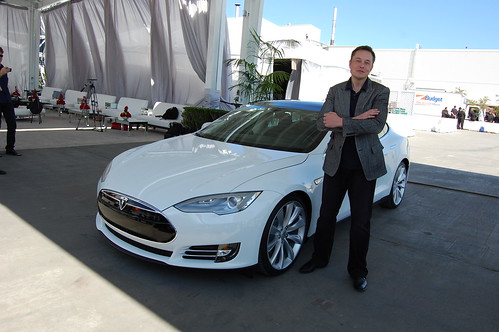
Apple is reportedly close to a $3.6bn deal with Kia, which will make cars for it. What will they look like, though? CC-licensed photo by Eric Rice on Flickr.

You can sign up to receive each day’s Start Up post by email. You’ll need to click a confirmation link, so no spam.

A selection of 10 links for you. What’s the sound of an electric vehicle revving? I’m @charlesarthur on Twitter. Observations and links welcome.

The next cyberattack is already under way • The New Yorker

Jill Lepore reviews Natasha Perlroth’s book “This Is How They Tell Me the World Ends: The Cyberweapons Arms Race”, about cyberattacks at government level:

»

By 2015, Russians were inside the State Department, the White House, and the Pentagon. The hackers didn’t turn things off; they just sat there, waiting. Beginning in 2014, in anticipation of the 2016 election, they fomented civil unrest through fake Twitter and Facebook accounts, sowing disinformation. They broke into the computers of the Democratic National Committee. As with the Sony attack, the press mostly reported the gossip found in the e-mails of people like John Podesta. All the while, as Perlroth emphasizes, Russian hackers were also invading election and voter-registration systems in every state in the country. Donald Trump’s response, once he was in office, was to deny that the Russians had done anything at all, and to get rid of the White House cybersecurity coördinator.

In the spring of 2017, still unknown hackers calling themselves the Shadow Brokers infiltrated the N.S.A.’s zero-day archive, a box of digital picklocks. They walked into the cyber equivalent of Fort Knox, and cleaned the place out. But it was worse than that, because they stole cyberweapons, the keys to the kingdom.

«

unique link to this extract


The Dunning-Kruger effect probably is real • Medium

Benjamin Vincent is a lecturer in psychology at the University of Dundee:

»

The fact that the self-perceived ability of those with low ability is higher than expected based on actual test scores has been used to argue that low ability participants over-estimate their ability by a lot. Similarly, the fact that the perceived ability of those with high ability is lower than expected based on test scores has been used to argue that high ability participants underestimate their ability by a little.

Recently however, simulations have shown that this basic result can be generated when no over- or under-estimation effect exists (Ackerman, Beier, & Bowen, 2002; Nuhfer, Cogan, Fleisher, Gaze, & Wirth, 2016). This was recently echoed in a blog post by Jonathan Jarry. In that blog post, a plot (created by Patrick McKnight) was used to argue that the Dunning-Kruger effect was not real.

If the claims of over-and under-estimation biases are based upon quartile plots, and this basic pattern of results can be generated from simulated null models with no bias, then this is worrying. It suggests that the Dunning-Kruger effect is artifactual, being the result of measurement error alone. But is this the case?

Not being satisfied with someone else’s plot (with no code to inspect) I thought I’d create my own data generating model. This model can be considered as a noise + bias model where each participant has a true ability, x, and their subjective ability score is a noisy estimate of their true ability + some bias.

«

OK well the previous one said it isn’t, so now I’m confused. I think I’ll have to refer it to Tim Harford at the BBC’s More Or Less program.
unique link to this extract


Report: Apple to invest $3.6bn in carmaker Kia to manufacture its Apple Car • BGR

Chris Smith:

»

Korean media has reported that Apple is about to invest $3.6bn in Hyundai affiliate, Kia, with plans to have its first car models out in 2024. The Reuters report said that Apple was targeting production for 2024.

Korean language site Donga reported that Apple Car production would take place at the Kia Georgia plant, with the contract to be signed as soon as February 17th. The report notes that the date might be changed so Hyundai Motor Group Chairman Chung Eui-sun can attend the formal event. Apple certainly has the cash to afford such massive investments. Apple purchased Beats for $3bn in 2014, in what’s its biggest acquisition so far. Apple buys smaller companies regularly, without making splashes about the smaller acquisitions.

Apple’s $3.6bn investment would go towards building manufacturing facilities that would only serve the Apple Car line, the report notes. Kia would mass-produce 100,000 units per year starting with 2024, but the production can be expanded to 400,000 units annually.

The report notes that Hyundai might be the best partner Apple could seek in the industry. The company just launched its own electric car platform, the E-GMP announced in early December, has a production facility in the US, and can meet Apple’s demands to have a car ready by 2024. An association with Apple would also benefit Hyundai, even though the Apple Car would compete directly against Hyundai electric vehicles.

«

The comparison with Beats is a smart one. This would of course only be a beginning investment. For another comparison, Tesla’s capital expenditure is about $2bn annually; around $15bn since 2008, and sold about 1.5m cars.
unique link to this extract


Introducing Birdwatch, a community-based approach to misinformation • Twitter Blog

Keith Coleman is Twitter’s VP of Product:

»

Birdwatch allows people to identify information in Tweets they believe is misleading and write notes that provide informative context. We believe this approach has the potential to respond quickly when misleading information spreads, adding context that people trust and find valuable. Eventually we aim to make notes visible directly on Tweets for the global Twitter audience, when there is consensus from a broad and diverse set of contributors.

In this first phase of the pilot, notes will only be visible on a separate Birdwatch site. On this site, pilot participants can also rate the helpfulness of notes added by other contributors. These notes are being intentionally kept separate from Twitter for now, while we build Birdwatch and gain confidence that it produces context people find helpful and appropriate. Additionally, notes will not have an effect on the way people see Tweets or our system recommendations.

«

Only available in the US, so I can’t tell you what it’s like. Rather hard to see how it can scale, though.
unique link to this extract


New study cracks the case of why food sticks to center of nonstick pans • Ars Technica

Jennifer Ouellette:

»

sometimes food still gets stuck to the center of a frying pan, even with a nonstick coating. Researchers at the Czech Academy of Sciences were curious about why this might be the case, and they decided to experiment. They videotaped sunflower oil in a nonstick pan coated with ceramic particles being heated, and they noted the speed at which a suspicious dry spot formed in the oil and grew. They performed similar experiments with Teflon-coated pans.

According to co-author Alexander Fedorchenko, a physicist at the Czech Academy of Sciences, food getting stuck to the center of the pan “is caused by the formation of a dry spot in the thin sunflower oil film as a result of thermocapillary convection.” It’s a variant of the so-called Marangoni effect—after Italian physicist Carlo Marangoni—which is responsible for both wine tears and the infamous “coffee ring effect,” which has also generated much interest among physicists.

As we’ve reported previously, British physicist James Thomson (elder brother to Lord Kelvin) first noticed wine tears in 1855. The effect is most notable in wines (or other spirits like rum) with alcohol content at least as high as 13.5 percent. That’s because alcohol has a lower surface tension than water. If you spread a thin film of water on your kitchen counter and place a single drop of alcohol in the center, you’ll see the water flow outward, away from the alcohol. The difference in the alcohol concentrations creates a surface-tension gradient, driving the flow.

«

Lockdown really is forcing us to find all sorts of distractions, isn’t it.
unique link to this extract


Apple urged to root out rating scams as developer highlights ugly cost of enforcement failure • TechCrunch

Natasha Lomas following up on Kosta Eleftheriou’s complaint about a fake app ripping off his IP:

»

Fake reviews are pretty much a universal experience across the Internet — whether you’re trying to buy stuff on Amazon, looking at places to visit on Tripadvisor or trying to find a local dentist with the help of reviews on Google Maps (in short; don’t) — given how many platforms now incorporate user reviews.

But the issue does look especially toxic for Apple.

A core part of the USP for its App Store is the claim that Apple’s review process sums to a higher quality, more trustworthy experience than alternative marketplaces that aren’t so carefully overseen.

So a failure to do more to enforce against review scams and rating manipulations risks taking a lot more shine off Apple’s brand than Cupertino should be comfortable with.

Simply put: Consumers expect a higher standard from Apple. That’s why they’re willing to pay a premium for its products. Under-resourcing App Store review and enforcement thus looks like a false economy — not least because it risks driving quality developers like Eleftheriou away.

«

Eleftheriou had some followup on his own thread: some success, but a lot yet to do.
unique link to this extract


Is the Google Fitbit deal the end of Wear OS? • Android Authority

C Scott Brown:

»

If in seven years with zero distractions Google couldn’t make the Wear OS platform shine, what would change now that Fitbit is on board?

The way I see it, there are three potential outcomes for Wear OS now.

Outcome 1: Google abandons Wear OS entirely
This might be the most likely outcome. The so-called Google Graveyard gets bigger and bigger every year. Platforms and products are in the graveyard that you would never have thought would have ended up there. Google Play Music, Hangouts, Cloud Print, Inbox, and even Chrome Apps are all dead or are confirmed to die soon.

With Wear OS essentially stagnant and owning a dismal market share, it would have been a textbook case of future Google Graveyard material even before the Fitbit acquisition. With Fitbit on team Google now, my money is on Wear OS heading off into the sunset. It might not happen this year or even the next, but I feel it’s an inevitability now.

Outcome 2: Google and Fitbit merge Wear OS and Fitbit OS
People like to dump on Wear OS a lot, but it’s actually got quite a lot going for it. Its app library is robust (certainly much more so than Fitbit’s) and its openness allows for plenty of innovation. That all being said, it’s also incredibly resource-heavy which makes battery life and memory management very bad.

Since Wear OS’s big strength is in apps and Fitbit’s big weakness is a lack thereof, merging the two software systems together would seem like a good match. However, this might just be an extension of Google killing off Wear OS. In other words, it would certainly be easier for Fitbit OS to stay as the platform for Fitbit devices rather than porting a reconfigured Wear OS/Fitbit OS hybrid. This is especially true when you remember that Fitbit makes fitness trackers, too, which simply wouldn’t be able to handle Wear OS.

So, in essence, this wouldn’t be that much different from the previous potential outcome…

Outcome 3: Wear OS and Fitbit OS exist simultaneously
This is the most unlikely possibility.

«

Google is amazing at being first into a hardware category and then screwing it up. See also: Google Glass.
unique link to this extract


Spotify adds subscribers with focus on podcasts • WSJ

Anne Steele:

»

At the end of the fourth quarter, Spotify had 345 million monthly active users, up 27% from a year earlier and at the high end of the company’s guidance. Paying subscribers, its most lucrative type of customer, grew to 155 million, up 24% from the same period a year earlier and above expectations.

Average revenue per user for the subscription business in the quarter fell 8% to €4.26, the equivalent of $5.13, as the company continued to attract new subscribers via discounted plans and charge lower prices in new markets such as India and Russia. In October, Spotify raised the price of its family plan in seven markets, a move the company said didn’t affect churn or customer intake. In February, it extended price increases to another 25 markets, including in Europe, Latin America and Canada.

Revenue from subscriptions rose 15% from the year before, to €1.89bn. Advertising revenue jumped 29% to €281m, growing for a second consecutive quarter after sliding in the first half of the year amid pandemic headwinds. Advertising, historically less than 10% of Spotify’s top line, accounted for 13% of revenue. It has become a growth area as the company expands its podcast business.

…The company posted a loss of €125m, or 66 European cents a share, compared with a loss of €209m, or €1.14 a share, the year before.

«

So profitability (or less loss) improves because people listen to podcasts. But allocation of revenues to music artists still isn’t done in the way it should be: your monthly payment isn’t apportioned between the artists you listen to, but instead is all lumped into one basket and then shared according to the aggregate of what all of Spotify’s users listen to. That needs to be fixed, because it’s a key way in which it differs from recorded music before when you used to buy the music you wanted to listen to.
unique link to this extract


Analysis: car makers face screen test to judge safety • Autocar


»

The danger of drivers becoming distracted by ever larger in-car touchscreens is becoming the focus of potential new legislation as countries grapple with the reasons why road deaths and accidents are no longer falling but plateauing.

Currently, there is little in the way of regulation surrounding the design of infotainment systems and both safety experts and legislators are worried car makers are losing sight of the distraction factor in their rush to add ever more functions via the touchscreen.

Just how distracting they can be was revealed in a 2020 study by the UK’s TRL (formerly the Transport Research Laboratory). It found that operating features within Apple CarPlay and Android Auto significantly increased driver reaction times to an emergency event, even more so than texting or driving under the influence of alcohol or cannabis.

The results were an eye-opener to Neale Kinnear, head of behavioural science at TRL and organiser of the study. He had expected significant distraction but the length of time drivers took their eyes off the road for certain events went beyond his predictions.

“I was surprised by the extent,” he told Autocar. “Items such as choosing a music track, for example, on Spotify took up to 20 seconds. We just don’t have any way of understanding the impact of that on safety in the real world.”

«

Of course while you were choosing the track you’d be allowing your self-driving vehicle to, well, self-drive itself, wouldn’t you? (Thanks, Mark Gould, for the link.)
unique link to this extract


GameStop stock tipster Roaring Kitty reveals he lost $13m in one day • The Independent

James Crump:

»

The Reddit user whose stock market tips have been credited with inspiring the GameStop trading frenzy has revealed that the value of his shares fell by $13m (£9.5m) in one day.

Keith Gill, 34, who is known as Roaring Kitty on YouTube and DeepF*****gValue on Reddit, said that he lost more than $13m on Tuesday as share prices plummeted.

He shared the information on Reddit’s WallStreetBets forum, where the tipster has been regularly sharing updates on his investment, with many users refusing to sell their GameStop shares until he does.

Mr Gill, who is known for wearing a bandana in his YouTube videos, has 50,000 shares and 500 call options in the gaming merchandise retailer, which he bought for $53,000 (£38,382) in June 2019.

The value of his stake fell significantly on Tuesday after the share price for GameStop dropped by around 60%, and followed a fall of about $5.2m (£3.8m) on Monday.

Despite the dramatic drop over the first two days of this week, Mr Gill still has a profit of $7.6m (£5.5m) from his initial investment. He has not sold any of his shares in the company.

Following his advice, Reddit users carried out a short squeeze last month and saw the Gamestop share price rise to a high of $483 (£353), before dropping to $90 (£65) on Tuesday.

«

So of course he didn’t actually lose that money, since it was only a notional profit. He hasn’t yet made any money; it’s in a possibly liquid stock. The big social media stock excitement is over. Until the next, unexpected time, of course.
unique link to this extract


Errata, corrigenda and ai no corrida: re Wikipedia, Paul Clarke observes: “I’m not sure Wikipedia’s escape from the mire has been as much to do with lack of an algorithm, as it has the tremendous amount of friction that lies in the path of a would-be regular contributor. Everything from sign-up, to interface, to the bewildering hierarchy of insiders and their culture, mitigates against short-term off-the-cuff troublemaking. I think. I often think how much easier they could make it to participate; and then realise why that might not be a great design choice.

“The decline in friction is behind so much of the badness. One reason IMHO that Instagram has maintained a relatively healthier (I know I know) culture is just the simple act of restricting search to hashtags and usernames, not free text. That simple bit of friction makes it so much harder to track down and pick on a random stranger who’s voiced something you disagree with. Tiny bit of engineering. Significant difference. Twitter [by contrast] hasn’t just removed friction, it’s done spectacular bits of engineering to apply actual grease to the cog…”

Start Up No.1477: Bezos steps aside, more App Store scams, anti-Navalny synthetic fakes, IBM’s blockchain heads to zero, and more


The next iOS update will unlock your phone if you’re wearing a facemask – and an Apple Watch CC-licensed photo by Marco Verch on Flickr.

You can sign up to receive each day’s Start Up post by email. You’ll need to click a confirmation link, so no spam.

A selection of 11 links for you. Not stepping aside. I’m @charlesarthur on Twitter. Observations and links welcome.

Email from Jeff Bezos to employees • About Amazon

Bezos is moving to become executive chairman and handing over the CEO reins to Andrew Jassy:

»

Today, we employ 1.3 million talented, dedicated people, serve hundreds of millions of customers and businesses, and are widely recognized as one of the most successful companies in the world.

How did that happen? Invention. Invention is the root of our success. We’ve done crazy things together, and then made them normal. We pioneered customer reviews, 1-Click, personalized recommendations, Prime’s insanely-fast shipping, Just Walk Out shopping, the Climate Pledge, Kindle, Alexa, marketplace, infrastructure cloud computing, Career Choice, and much more. If you get it right, a few years after a surprising invention, the new thing has become normal. People yawn. And that yawn is the greatest compliment an inventor can receive.

I don’t know of another company with an invention track record as good as Amazon’s, and I believe we are at our most inventive right now. I hope you are as proud of our inventiveness as I am. I think you should be.

As Amazon became large, we decided to use our scale and scope to lead on important social issues. Two high-impact examples: our $15 minimum wage and the Climate Pledge. In both cases, we staked out leadership positions and then asked others to come along with us. In both cases, it’s working. Other large companies are coming our way. I hope you’re proud of that as well.

I find my work meaningful and fun. I get to work with the smartest, most talented, most ingenious teammates. When times have been good, you’ve been humble. When times have been tough, you’ve been strong and supportive, and we’ve made each other laugh. It is a joy to work on this team.

«

As someone quipped, he’s leaving to spend less time with Congress. Amazon’s at an odd inflexion point, bigger and more powerful than ever, but also facing employee unrest.
unique link to this extract


Thread by @keleftheriou: how subscriptions create scams on the App Store •Thread Reader App

Kosta Eleftheriou is the developer of a Watch app which puts a keyboard on your watch:

»

The App Store has a big problem👇

You: an honest developer, working hard to improve your IAP [in-app purchase] conversions.
Your competitor: a $2M/year scam running rampant.

«

There have been so many stories like this one (which is well worth reading) – Eleftheriou points to some – that it’s still amazing Apple isn’t wiping these out left and right. If it is, it should say so.
unique link to this extract


Inauthentic Instagram accounts with synthetic faces target Navalny protests • Medium

Digital Forensic Research Lab:

»

Prior to the January 23 protests, Navalny’s team announced plans for mass gatherings across Russia, publishing a list of cities, specific locations in those cities, and times. Moscow’s Red Square was not on the list of locations — the main protests in Moscow were planned for Pushkinskaya Square, which is approximately a 20-minute walk from Red Square. On the day of the protests, Russian authorities blocked Red Square, in a likely attempt to prevent demonstrators from approaching the Kremlin.

Immediately prior to the protests, posts geotagged Red Square on Instagram appeared to be flooded with content unrelated to the location. Geotags allow users to search for locations on the platform to see what kind of content was posted from the specific area. Search results display the latest posts geotagged with that particular location. In this case, Russian users might have been searching for the Red Square geotag to check for developments related to the January 23 protests, despite the Square not being the official demonstration location for these particular protests.

From January 17 onward, Instagram serach results for Red Square returnined the same type of images: profile pictures of various individuals. The DFRLab has determined these images are generated by StyleGAN, a type of neural network that can generate synthetic faces.

«

Notable that the systems for spotting synthetic faces are getting better. Of course, there’s quite a clue when you’re looking at accounts like these, where your first suspicion is that they’re fake.
unique link to this extract


IBM Blockchain is a shell of its former self after revenue misses, job cuts: sources • CoinDesk

Ian Allison:

»

IBM has cut its blockchain team down to almost nothing, according to four people familiar with the situation.

Job losses at IBM escalated as the company failed to meet its revenue targets for the once-fêted technology by 90% this year, according to one of the sources.

“IBM is doing a major reorganization,” said a source at a startup that has been interviewing former IBM blockchain staffers. “There is not really going to be a blockchain team any longer. Most of the blockchain people at IBM have left.”

IBM’s blockchain unit missed its revenue targets by a wide margin for two years in a row, said a second source. Expectations for enterprise blockchain were too high, they said, adding that IBM “didn’t really manage to execute, despite doing a lot of announcements.”

A spokesperson for IBM denied the claims.

“Our blockchain business is doing well, thank you,” Holli Haswell, a director of public relations at IBM, said via email.

«

Not quite a denial about the shrinking job numbers – which the story puts at about 100 departures. Missing revenue targets by 90% is quite a miss. Enterprise blockchain seems to be Not A Thing.
unique link to this extract


iPhone Face ID will soon work with masks – but only if you’re wearing an Apple Watch • Pocket-Lint

Dan Grabham:

»

Your Face ID iPhone will soon be able to unlock even if you’re wearing a mask. However, there’s a catch in that it will only do this if you’re wearing an Apple Watch that’s paired with the phone and unlocked.

One problem with having to wear face masks over your mouth and nose is that facial recognition doesn’t really work with them. That’s been a particular problem with newer iPhones (iPhone X, XS, XR, 11, 12) that rely on Face ID.

But that’s about to change with the next iteration of iOS 14, version 14.5. It’s now out as a developer beta for those who have access and will be publicly available over the coming weeks. iOS 14 was first released back in September.

Apple tells us that Face ID works just as you would expect with the new software. Your Apple Watch will give you some haptic feedback to let you know your iPhone has been unlocked. This is similar behaviour to using the Apple Watch to unlock your Mac which has been available for some time. Once again your Watch will need to be in close proximity to your iPhone.

«

So your iPhone unlocks your Watch, and then your Watch unlocks your iPhone. Apple only ever expected to do the first one. So it’s taken a little while to figure out the protocol.
unique link to this extract


NYU researchers find no evidence of anti-conservative bias on social media • The Verge

Kim Lyons:

»

The report from NYU’s Stern Center for Business and Human Rights says not only is there no empirical finding that social media companies systematically suppress conservatives, but even reports of anecdotal instances tend to fall apart under close scrutiny. And in an effort to appear unbiased, platforms actually bend over backward to try to appease conservative critics.

“The contention that social media as an industry censors conservatives is now, as we speak, becoming part of an even broader disinformation campaign from the right, that conservatives are being silenced all across American society,” the report’s lead researcher Paul Barrett said in an interview with The Verge. “This is the obvious post-Trump theme, we’re seeing it on Fox News, hearing it from Trump lieutenants, and I think it will continue indefinitely. Rather than any of this going away with Trump leaving Washington, it’s only getting more intense.”

The researchers analyzed data from analytics platforms CrowdTangle and NewsWhip and existing reports like the 2020 study from Politico and the Institute for Strategic Dialogue, all of which showed that conservative accounts actually dominated social media. And they drilled down into anecdotes about bias and repeatedly found there was no concrete evidence to support such claims.

Looking at how claims of anti-conservative bias developed over time, Barrett says, it’s not hard to see how the “anti-conservative” rhetoric became a political instrument. “It’s a tool used by everyone from Trump to Jim Jordan to Sean Hannity, but there is no evidence to back it up,” he said.

«

Truly the most boring disinformation campaign is right-wingers complaining of being censored or ignored. Before social media, the Conservatives in the UK used it about the BBC (that it was biased against them, they were being ignored, and so on). It’s never true.
unique link to this extract


The writing’s on the wall for Google Stadia – The Verge

Sean Hollister:

»

After 14 months, Google has decided it doesn’t want to be a game company anymore. Where once it had its own cloud-based console, controller, and the promise of homegrown triple-A games, it no longer wants to build its own games as of last Monday.

And though a Google spokesperson emphasizes that the company continues to “remain committed to Stadia as a platform,” it’s looking increasingly likely that platform won’t be a service where you sign up with Google to buy and rent cloud games.

Stadia boss Phil Harrison announced that Google was shutting down the company’s game studios in a memo today, and I think the exact wording of that memo is extremely telling. Go read it for yourself. I’ll wait.

Did you see the part about how Stadia is now a platform for Google’s partners? It’s pretty hard to miss: Harrison brings it up no fewer than five times in four paragraphs. In all but the very last paragraph, “partners” — not gamers — come first.

This suggests Google has realized an important truth: Stadia, like so many of Google’s other businesses, is optimally one where you aren’t the customer. The paying customers, if Google can get them, are game publishers themselves, and possibly ISPs that would like to deliver a cable-like bundle of games to go along with their cable-like bundles of shows.

Today, Harrison defines Stadia as a “technology platform for industry partners” — which suggests to me that he’s talking about turning Stadia into a white-label cloud gaming service.

«

That wouldn’t be such a bad future for Stadia. Or the white label version of it. Google doesn’t need to be in the game space. Perhaps this was the plan all along, or perhaps it just realised quite quickly that being a game studio wasn’t really going to fit with all its other interests. People are describing it as Google not having any idea what it’s up to, but quite possibly it did, and this is a smart way to utilise its cloud processing facilities without the pain of game hits and misses.
unique link to this extract


Wikipedia’s new code of conduct targets harassment and misinformation • Engadget

K Holt:

»

The Wikimedia Foundation has announced the first Universal Code of Conduct to tackle misinformation and harassment on Wikipedia. The foundation says that the rules clearly spell out what behavior is acceptable.

The code explicitly prohibits Wikipedia users from deliberately adding false or biased information to articles, as well as harassing others on and off the platform. The use of slurs and stereotypes, doxxing, hate speech and threats of violence are all banned. In addition, the rules aim to stop the abuse of power, privilege or influence.

Editors are encouraged to assume edits were carried out in good faith, help newcomers and give credit where it’s due to show mutual respect for other users. The foundation also underscored its commitment to “creating spaces that foster diversity of thought, religion, sexual orientation, age, culture, and language to name a few.”

«

They seem like obvious things? I suppose though that having a code of conduct means that you can point to it when you ban someone for breaching it. Notable though that Wikipedia, by virtue of not using algorithmic targeting, has managed to stay largely free of the decline we’ve seen on social networks.
unique link to this extract


Brexit witness archive: Philip Hammond • UK in a changing Europe

This is an interview about Brexit, as seen from inside the Tory administration that first triggered the referendum and then tried to figure out how the hell to do it. This is an interview with Philip Hammond, who was foreign secretary to David Cameron and then Chancellor to Theresa May – about whom he is repeatedly quite stingingly rude, in that British way. He’s also entertainingly rude about David Davis, who was one of the negotiators, and that’s worth quoting:

»

David Davis in particular had this very crude 1980s approach to negotiation. I know David quite well, I knew him before I went into politics – David’s backstory is that he was the trouble-shooter for Tate & Lyle. When there was a problem, they sent David Davis. Shut down a refinery, fire a load of people, get rid of the troublemakers: the bare-knuckle fighter. That’s how he liked to see himself. David Davis’ approach to negotiation is you slap it on the table, you lean across, and you eyeball them. If they don’t give way immediately, you say, ‘I’ll see you round the back.’ That was always his view on this. ‘We’ve got the money, they want our money, so we wave a cheque at them then we stick it in our back pocket and we say, ‘Right, show us what you’ve got’. In the end, they’ll want our money. They’ll want access to our market. How long is this going to take, 15 minutes? Give me 15 minutes in a room with these people. I’ll sort them out.’ That was his view of the world, and it was widely shared among the Brexiteers.

So they always assumed that this was entirely discretionary and we could just threaten to withhold it. That would give us this huge bargaining leverage. It never did.

«

unique link to this extract


Tesla to recall 135,000 U.S. vehicles under pressure from auto safety regulators • Reuters

David Shepardson:

»

Tesla Inc has agreed to recall 134,951 Model S and Model X vehicles with touchscreen displays that could fail and raise the risk of a crash after US auto safety regulators sought the recall last month, according to a recall posted on a government website Tuesday.

The National Highway Traffic Safety Administration (NHTSA) made the unusual recall request in a formal Jan. 13 letter to Tesla, saying it had tentatively concluded the 2012-2018 Model S and 2016-2018 Model X vehicles pose a safety issue. Automakers usually agree to voluntary fixes before the auto safety agency formally seeks a recall.

The agency said touchscreen failures posed significant safety issues, including the loss of rearview or backup camera images, exterior turn-signal lighting, and windshield defogging and defrosting systems that “may decrease the driver’s visibility in inclement weather.”

…Tesla acknowledged the problem but said if the display was not working, “the driver can perform a shoulder check and use the mirrors. If the screen is not visible to control the climate control and defroster settings, the driver will be able to manually clear the windshield.”

«

So the thing that’s the big selling point – the touchscreen – Tesla says is just an optional add-on? Mixed messaging to say the least.
unique link to this extract


Facebook knew calls for violence plagued ‘Groups,’ now plans overhaul • WSJ

Jeff Horwitz:

»

Facebook executives were aware for years that tools fueling Groups’ rapid growth presented an obstacle to their effort to build healthy online communities, and the company struggled internally over how to contain them.

The company’s data scientists had warned Facebook executives in August that what they called blatant misinformation and calls to violence were filling the majority of the platform’s top “civic” Groups, according to documents The Wall Street Journal reviewed. Those Groups are generally dedicated to politics and related issues and collectively reach hundreds of millions of users.

The researchers told executives that “enthusiastic calls for violence every day” filled one 58,000-member Group, according to an internal presentation. Another top Group claimed it was set up by fans of Donald Trump but it was actually run by “financially motivated Albanians” directing a million views daily to fake news stories and other provocative content.

Roughly “70% of the top 100 most active US Civic Groups are considered non-recommendable for issues such as hate, misinfo, bullying and harassment,” the presentation concluded. “We need to do something to stop these conversations from happening and growing as quickly as they do,” the researchers wrote, suggesting measures to slow the growth of Groups at least long enough to give Facebook staffers time to address violations.

… In a 2020 Super Bowl ad, it celebrated amateur-rocketry buffs, bouldering clubs and rocking-chair enthusiasts—brought together through Groups.

Nina Jankowicz, a social media researcher at the Woodrow Wilson Center in Washington, D.C., said she became alarmed after hearing a Facebook representative advise a European prime minister’s social-media director that Groups were now the best way to reach a large audience on the platform.

“My eyes bugged out of my head,” said Ms. Jankowicz, who studies the intersection of democracy and technology. “I knew how destructive Groups could be.”

«

unique link to this extract


Errata, corrigenda and ai no corrida: @Reynolds, who has direct experience working in the NHS, has a followup about Terence Eden’s suggestion on using LinkedIn to bug senior execs: “I always advise people having trouble with the NHS start by threatening to go to the Trust PALS department. And then go to PALS if that doesn’t solve the problem. Patient Advice and Liason Service short circuits the whole Org chart.”

Start Up No.1476: might Dunning-Kruger be fake?, SolarWinds hack hits US court system, what LinkedIn is really good for, and more


Tesla has copied an element of the KITT Knight Rider car – unfortunately, the least ergonomic one. CC-licensed photo by Dan Thornton on Flickr.

You can sign up to receive each day’s Start Up post by email. You’ll need to click a confirmation link, so no spam.

A selection of 10 links for you. Mostly harmless. I’m @charlesarthur on Twitter. Observations and links welcome.

The Dunning-Kruger effect is probably not real • Office for Science and Society, McGill University

Jonathan Jarry:

»

I want the Dunning-Kruger effect to be real. First described in a seminal 1999 paper by David Dunning and Justin Kruger, this effect has been the darling of journalists who want to explain why dumb people don’t know they’re dumb. There’s even video of a fantastic pastiche of Turandot’s famous aria, Nessun dorma, explaining the Dunning-Kruger effect. “They don’t know,” the opera singer belts out at the climax, “that they don’t know.”

I was planning on writing a very short article about the Dunning-Kruger effect and it felt like shooting fish in a barrel. Here’s the effect, how it was discovered, what it means. End of story.

But as I double-checked the academic literature, doubt started to creep in. While trying to understand the criticism that had been leveled at the original study, I fell down a rabbit hole, spoke to a few statistics-minded people, corresponded with Dr. Dunning himself, and tried to understand if our brain really was biased to overstate our competence in activities at which we suck… or if the celebrated effect was just a mirage brought about by the peculiar way in which we can play with numbers.

…In 2016 and 2017, two papers were published in a mathematics journal called Numeracy. In them, the authors argued that the Dunning-Kruger effect was a mirage. And I tend to agree.

The two papers, by Dr. Ed Nuhfer and colleagues, argued that the Dunning-Kruger effect could be replicated by using random data.

«

😱😱😱

unique link to this extract


Feds want to talk to Tesla about the Model S ‘yoke’ steering wheel • Roadshow

Sean Szymkowski:

»

The National Highway Traffic Safety Administration told Roadshow on Friday it has reached out to Tesla following the news of its planned yoke-style steering wheel for the refreshed Model S electric sedan. The government agency did not say if the automaker has been in touch with regulators since it debuted the radical new wheel.

Tesla this week revealed the refreshed flagship sedan, along with a revamped Model X SUV, with the steering yoke grabbing eyeballs across the internet. Roadshow’s Editor-in-Chief Tim Stevens has laid out why the design is a likely safety risk, but US regulators will certainly get to the bottom of it. NHTSA told Roadshow that on first glance it “cannot determine if the steering wheel meets Federal Motor Vehicle Safety Standard.” If Tesla’s in violation of the standards, the yoke will have to go.

«

I heard this being discussed on the most recent Accidental Tech Podcast, not having seen the wheel (it’s basically a rectangle), and couldn’t believe that Tesla could have been so stupid. But apparently it has. In user interface terms, it’s, well, a car crash. There isn’t even a stalk for triggering the turn indicators, and the buttons that do it are now on the steering wheel on the same side for both right and left. Unbelievable that any of this could get through a usability test of any sort.
unique link to this extract


Russian hack brings changes, uncertainty to US court system • Associated Press

Maryclaire Dale:

»

Trial lawyer Robert Fisher is handling one of America’s most prominent counterintelligence cases, defending an MIT scientist charged with secretly helping China. But how he’ll handle the logistics of the case could feel old school: Under new court rules, he’ll have to print out any highly sensitive documents and hand-deliver them to the courthouse.

Until recently, even the most secretive material — about wiretaps, witnesses and national security concerns – could be filed electronically. But that changed after the massive Russian hacking campaign that breached the U.S. court system’s electronic case files and those of scores of other federal agencies and private companies.

The new rules for filing sensitive documents are one of the clearest ways the hack has affected the court system. But the full impact remains unknown. Hackers probably gained access to the vast trove of confidential information hidden in sealed documents, including trade secrets, espionage targets, whistleblower reports and arrest warrants. It could take years to learn what information was obtained and what hackers are doing with it.

It’s also not clear that the intrusion has been stopped, prompting the rules on paper filings. Those documents are now uploaded to a stand-alone computer at the courthouse — one not connected to the network or Internet. That means lawyers cannot access the documents from outside the courthouse.

«

This hack is putting the US back years. It’s amazing.
unique link to this extract


Abusing LinkedIn for better customer service • Terence Eden’s Blog

From 2019, but Eden says he’s still using it:

»

When I have a complaint about a company, and regular customer services just can’t fix it, I cheat. I send a connection request [on LinkedIn, not Twitter] to the CEO, or head of customer service, or anyone senior who looks like they might actually hold some sway.

After a month of my energy company sending me incorrect bills, and several hours on hold, I cracked and connected to someone senior there.

A few messages later, it was all sorted.

Similarly, when an employer’s payroll company started messing me around, I went straight to the top. In this case, an executive had posted several times about their “award winning” team. So I left comments on their post asking if my poor experience with their company was typical of their service. Within a moment, I had a response.

«

Smart understanding of the real dynamics of the social networks.
unique link to this extract


Analysis: Robinhood and Reddit protected from lawsuits by user agreement, Congress • Reuters

Tom Hals:

»

Robinhood is not legally bound to carry out every trade and the lawsuits will not succeed without evidence the company restricted trading for an improper reason, such as to favor certain investors, according to several legal experts.

The user agreement on Robinhood’s website says it “may at any time, in its sole discretion and without prior notice to Me, prohibit or restrict My ability to trade securities.”

Adam Pritchard, a professor at the University of Michigan Law School, said the lawsuits are very unlikely to gain traction.

“The contract says they can do it,” Pritchard said of the company’s decision to restrict trading. “That seems to be a big stumbling block to the breach of contract claim.”

«

You knew it would be in there somewhere, and so it is.
unique link to this extract


How I learned to stop worrying and love Twitter’s Trump ban • The New York Times

Farhad Manjoo:

»

instead of worrying about the precedent Twitter set by “permanently suspending” the president, I lament all that might have been if Trump had been banned sooner. And I believe there’s only one lesson Silicon Valley’s luminaries should take away from Trump’s calamitous time on Twitter — it is a cautionary tale about all that can go wrong when digital innovation is stretched far beyond its original purpose.

Twitter was never meant to be used the way Trump used it, as an all-purpose bullhorn for governing a superpower, and as a result the company often found itself having to create special rules just for the president. Ordinary users might be punished for harassment or threats of violence, for instance, but Twitter gave “world leaders” like Trump special permission to behave badly. The company reversed course only after Trump’s supporters stormed the Capitol; Trump’s tweets following the riot risked “further incitement of violence,” it said.

Trump’s case may be unique, for now, but why risk a replay? If I ran the company I’d push to make sure Twitter can never be used the way Trump used it.

The rule need not be partisan. Something far simpler would suffice: heads of state should not be allowed to tweet. The most powerful person in the world’s most visible lever on power should not be 280-character chunks of tossed-off thoughts published instantly, without review, on a medium run by a private company whose secret algorithms are designed to encourage outrage and reward cheap dunks.

«

Trump was an exception, but not a lone one. The benefit of this is that at least it doesn’t require any judgement by Twitter. Feels a bit brutal to lump Jacinda Ardern in with Trump, though.
unique link to this extract


We spoke to a guy who got his dick locked in a cage by a hacker • Vice

Lorenzo Franceschi-Bicchierai:

»

Sam Summers was sitting at home with his penis wrapped in an internet-connected chastity cage when he got a weird message on the app that connects to the device. Someone told him they had taken control and they wanted around $1,000 in Bitcoin to give control back to Summers. 

“Initially, I thought it was my partner doing that,” Summers told Motherboard in a phone call. “It sounds silly, but I got a bit excited by it.” 

But when Summers called his partner, she told him it wasn’t her, even after he told her their safe word. That’s when he realized he had gotten hacked. His penis was locked in the cage, and he had no way out.

“Oh, shit, it’s real,” Summers said. “I started looking at the thing. There’s no manual override at all. It’s a chastity belt, I guess it kind of shouldn’t [have an override.] But when it’s a digital thing like that, it should have a key or something. But it obviously didn’t.”

«

A topic that I covered a while back, but here’s the interview with a victim. Appropriate that it should appear in Vice.
unique link to this extract


‘Carbon-neutrality is a fairy tale’: how the race for renewables is burning Europe’s forests • The Guardian

Hazel Sheffield:

»

To investigate the subsidised European pellet trade and its impact on Baltic forests, we uploaded boundary files for Estonia’s Natura 2000 zones to Global Forest Watch, an online platform for monitoring forests, and found that per-hectare tree cover loss (the removal of the tree canopy rather than outright deforestation) in these areas accelerated after 2015. That was when the government adjusted park conservation rules to allow clear-cutting of up to one hectare at a time in some nature reserves.

Across Estonia, between 2001 and 2019, Natura 2000 areas lost more than 15,000 hectares (37,000 acres) of forest cover, an area more than twice the size of Manhattan. The last five years account for 80% of that loss. Further alterations to rules in other Estonian national parks are planned.

This acceleration appears to be taking a toll on bird species like the black grouse, woodlark and others. Woodland birds are declining at a rate of 50,000 breeding pairs a year, according to national records.

The clearances are also damaging the ability of Baltic forests to store carbon, and could be undermining climate goals by reducing the chance for Estonia and Latvia to achieve net-zero greenhouse gas emissions.

In a country where the overwhelming majority of people say they regard nature as sacred, logging has led to protests or what the Estonian media calls the “forest war”. Residents of Saku, a small town 16 miles south of Tallinn, successfully fought to save an area of forest that was scheduled to be cut down this year by RMK, the state forest management company, which manages around half of Estonian forests

«

unique link to this extract


Here’s a way to learn if facial recognition systems used your photos • The New York Times

Cade Metz and Kashmir Hill:

»

When tech companies created the facial recognition systems that are rapidly remaking government surveillance and chipping away at personal privacy, they may have received help from an unexpected source: your face.

Companies, universities and government labs have used millions of images collected from a hodgepodge of online sources to develop the technology. Now, researchers have built an online tool, Exposing.AI, that lets people search many of these image collections for their old photos.

The tool, which matches images from the Flickr online photo-sharing service, offers a window onto the vast amounts of data needed to build a wide variety of A.I technologies, from facial recognition to online “chatbots.”

“People need to realize that some of their most intimate moments have been weaponized,” said one of its creators, Liz O’Sullivan, the technology director at the Surveillance Technology Oversight Project, a privacy and civil rights group. She helped create Exposing.AI with Adam Harvey, a researcher and artist in Berlin.

«

unique link to this extract


Why webcams aren’t good enough • Reincubate

Jeff Carlson:

»

Primarily this is about size: webcams are designed as small devices that need to fit onto existing monitors or laptop lids, so they use small camera modules with tiny image sensors. These modules have been good enough for years, generating accolades, so there’s little incentive to change. The StreamCam appears to have a better camera and sensor, with an aperture of f/2.0; aperture isn’t listed for the other cameras.

Contrast this technology with the iPhone, which also includes small camera modules by necessity to fit them into a phone form factor. Apple includes better components, but just as important, incorporates dedicated hardware and software solely to the task of creating images. When you’re taking a photo or video with an iOS device, it’s processing the raw data and outputting an edited version of the scene.

Originally, Logitech’s higher-end webcams, such as the C920, also included dedicated MPEG processing hardware to decode the video signal, but removed it at some point (without changing the model numbers or otherwise indicating the change except for an undated blog post). The company justified the change because of the power of modern computers, stating, “there is no longer a need for in-camera encoding in today’s computers,” but that just shifts the processing burden to the computer’s CPU, which must decode raw video instead of an optimized stream. It’s equally likely Logitech made the change to reduce component costs and no longer pay to license the H.264 codec from MPEG LA, the group that owns MPEG patents.

That brings us to the other factor keeping webcam innovation restrained: manufacturers aren’t as invested in what has been a low margin business catering to a relatively small niche of customers.

«

Easy to forget that for most PC companies, making PCs isn’t actually a high-margin business: when I looked into it in detail in 2014, the top five PC companies were making operating margins of about $15 per PC sold. No hurry to spend more than that extra on the webcam. (Link via John Naughton.)
unique link to this extract


Errata, corrigenda and ai no corrida: none notified

Start Up No.1475: how vengeful people ruin online reputations, the fake Huawei influencers, ransomware gang shuts down, and more


We have a definitive explanation for why RobinHood blocked purchases of Gamestop stock, despite demand. CC-licensed photo by Dicoplio Family on Flickr.

You can sign up to receive each day’s Start Up post by email. You’ll need to click a confirmation link, so no spam.

A selection of 11 links for you. Part 2 of 12. I’m @charlesarthur on Twitter. Observations and links welcome.

A vast web of vengeance • The New York Times

Kashmir Hill on a man who found himself defamed online, and while digging in to :

»

Mr. Babcock stared at the photo in shock. He hadn’t seen it in decades, but he recognized it instantly. The woman’s name was Nadire Atas; this was her official work portrait from 1990, when she worked in a Re/Max real estate office the Babcock family owned outside Toronto. She had initially been a star employee, but her performance deteriorated, and in 1993 Mr. Babcock’s father had fired her. Afterward, she had threatened his father, according to an affidavit filed in a Canadian court.

Mr. Babcock felt lightheaded. A memory came back to him: When his mother died in 1999, the family had received vulgar, anonymous letters celebrating her death. A neighbor received a typed letter stating that Mr. Babcock’s father “has been seen roaming the neighbourhood late at night and masturbating behind the bushes.” The Babcocks had suspected Ms. Atas, who was the only person who had ever threatened them. (Ms. Atas denied making threats or writing the letters.)
Decades later, it appeared that she was still harboring her grudge — and had updated her methods for the digital age.

…These situations — where one angry person targets a large group of perceived enemies — are not uncommon. Maanit Zemel, a lawyer who specializes in online defamation, represents a group of 53 people who have filed a lawsuit saying they were attacked online by Tanvir Farid after he failed to get jobs at their companies. (Mr. Farid’s lawyer declined to comment.)

For victims, these sorts of attacks “can literally end their life and their career and everything,” Ms. Zemel said.

«

You don’t have to read much further before you begin wondering about a mental health test for people who want to post stuff on the internet.

unique link to this extract


Inside a pro-Huawei influence campaign • The New York Times

Adam Satariano:

»

First, at least 14 Twitter accounts posing as telecommunications experts, writers and academics shared articles by Mr. Vermulst and many others attacking draft Belgium legislation that would limit “high risk” vendors like Huawei from building the country’s 5G system, according to Graphika, a research firm that studies misinformation and fake social media accounts. The pro-Huawei accounts used computer-generated profile pictures, a telltale sign of inauthentic activity.

Next, Huawei officials retweeted the fake accounts, giving the articles even wider reach to policymakers, journalists and business leaders. Kevin Liu, Huawei’s president for public affairs and communications in Western Europe, who has a verified Twitter account with 1.1 million followers, shared 60 posts from the fake accounts over three weeks in December, according to Graphika. Huawei’s official account in Europe, with more than five million followers, did so 47 times.

The effort suggests a new twist in social media manipulation, said Ben Nimmo, a Graphika investigator who helped identify the pro-Huawei campaign. Tactics once used mainly for government objectives — like Russia’s interference in the 2016 American presidential election — are being adapted to achieve corporate goals.

«

The use of AI-generated faces for this stuff is so prevalent. Of course, computer networks can’t detect them because the adversarial networks used to generate them spend half their time trying to detect fakes. Huawei hasn’t acknowledged this being its own work.
unique link to this extract


Exclusive: China’s Huawei in talks to sell premium smartphone brands P and Mate – sources • Reuters

Julie Zhu, Yingzhi Yang and David Kirton:

»

China’s Huawei Technologies Co Ltd is in early-stage talks to sell its premium smartphone brands P and Mate, two people with direct knowledge of the matter said, a move that could see the company eventually exit from the high-end smartphone-making business.

The talks between the world’s largest telecommunications equipment maker and a consortium led by Shanghai government-backed investment firms have been going on for months, the people said, declining to be identified as the discussions were confidential.

Huawei started to internally explore the possibility of selling the brands as early as last September, according to one of the sources. The two sources were not privy to the valuation placed on the brands by Huawei.

Shipments of Mate and P Series phones were worth $39.7bn between Q3 2019 and Q3 2020, according to consultancy IDC.

However, Huawei has yet to make a final decision on the sale and the talks might not conclude successfully, according to the two sources, as the company is still trying to manufacture at home its in-house designed high-end Kirin chips which power its smartphones.

«

unique link to this extract


China smartphone market declines 11% in 2020 as Huawei unable to revive supply • Canalys

»

The smartphone market in Mainland China finished 2020 with 84 million units shipped in Q4 2020, declining 4% year-on-year. That meant for the full year, the China market declined 11% to arrive at just over 330 million units, as market recovery was stalled by the rapid deterioration of Huawei’s performance as a result of US sanctions.

For Q4 2020, Huawei (including Honor) managed to ship 18.8 million units, and its market share declined to 22% from 41% in Q3 2020. Oppo rose rapidly into second place, shipping 17.2 million smartphones, growing 23% year-on-year. Vivo also showed strong year-on-year growth at 20%, and came in third at 15.7 million units. Apple also reported its best performance in China in recent years, shipping more than 15.3 million units in Q4, with 18% market share, up from 15% in Q4 2019. Xiaomi completed the top five, shipping 12.2 million units, growing 52% year-on-year.

«

Huawei’s loss very much Apple’s gain, especially as it was one of those years when also had a new phone design, which always helps sales.
unique link to this extract


FonixCrypter ransomware gang releases master decryption key • ZDNet

Catalin Cimpanu:

»

The cybercrime group behind the FonixCrypter ransomware has announced today on Twitter that they’ve deleted the ransomware’s source code and plan to shut down their operation.

As a gesture of goodwill towards past victims, the FonixCrypter gang has also released a package containing a decryption tool, how-to instructions, and the ransomware’s master decryption key.

These files can be used by former infected users to decrypt and recover their files for free, without needing to pay for a decryption key.

Allan Liska, a security researcher for threat intelligence firm Recorded Future, has tested the decrypter at ZDNet’s request earlier today and verified that the FonixCrypter app, instructions, and master key work as advertised.

“The decryption key provided by the actors behind the Fonix ransomware appears to be legitimate, thought it requires each file to be decrypted individually,” Liska told ZDNet.

“The important thing is that they included the master key, which should enable someone to build a much better decryption tool,” he added.

«

All of this is very mysterious: why would an otherwise successful gang suddenly shut up shop and release their source code? Suggestions rolling around are that they’re either worried about imminently getting their collars felt; or they got hacked by a rival group.
unique link to this extract


Suspected Russian hack extends far beyond SolarWinds software, investigators say • WSJ

Robert McMillan and Dustin Volz:

»

Close to a third of the victims didn’t run the SolarWinds software initially considered the main avenue of attack for the hackers, according to investigators and the government agency digging into the incident. The revelation is fueling concern that the episode exploited vulnerabilities in business software used daily by millions.

Hackers linked to the attack have broken into these systems by exploiting known bugs in software products, by guessing online passwords and by capitalizing on a variety of issues in the way Microsoft’s cloud-based software is configured, investigators said.

Approximately 30% of both the private-sector and government victims linked to the campaign had no direct connection to SolarWinds, Brandon Wales, acting director of the Cybersecurity and Infrastructure Security Agency, said in an interview.

The attackers “gained access to their targets in a variety of ways. This adversary has been creative,” said Mr. Wales, whose agency, part of the U.S. Department of Homeland Security, is coordinating the government response. “It is absolutely correct that this campaign should not be thought of as the SolarWinds campaign.”

«

Think they’re stuck with the name. This seems to be a much, much, much bigger deal than anyone realised, which probably means that this will pretty much be the last we hear of it. It’s going to be one for the espionage world.
unique link to this extract


The machine stops • The New Yorker

Oliver Sacks wrote this in 2014, before he died, but it wasn’t published until February 2019:

»

A few years ago, I was invited to join a panel discussion about information and communication in the twenty-first century. One of the panelists, an Internet pioneer, said proudly that his young daughter surfed the Web twelve hours a day and had access to a breadth and range of information that no one from a previous generation could have imagined. I asked whether she had read any of Jane Austen’s novels, or any classic novel. When he said that she hadn’t, I wondered aloud whether she would then have a solid understanding of human nature or of society, and suggested that while she might be stocked with wide-ranging information, that was different from knowledge. Half the audience cheered; the other half booed.

Much of this, remarkably, was envisaged by E. M. Forster in his 1909 story “The Machine Stops,” in which he imagined a future where people live underground in isolated cells, never seeing one another and communicating only by audio and visual devices. In this world, original thought and direct observation are discouraged—“Beware of first-hand ideas!” people are told. Humanity has been overtaken by “the Machine,” which provides all comforts and meets all needs—except the need for human contact. One young man, Kuno, pleads with his mother via a Skype-like technology, “I want to see you not through the Machine. . . . I want to speak to you not through the wearisome Machine.”

He says to his mother, who is absorbed in her hectic, meaningless life, “We have lost the sense of space. . . . We have lost a part of ourselves. . . . Cannot you see . . . that it is we that are dying, and that down here the only thing that really lives is the Machine?”

This is how I feel increasingly often about our bewitched, besotted society, too.

«

Douglas Adams described this first. (The sad thing is that we can’t have any new Douglas Adams aphorisms.)
unique link to this extract


China is now sending Twitter users to prison for posts most Chinese can’t see • WSJ

Chun Han Wong:

»

Chinese authorities have sentenced more than 50 people to prison in the past three years for using Twitter and other foreign platforms—all blocked in China—allegedly to disrupt public order and attack party rule, according to a Wall Street Journal examination of court records and a database maintained by a free-speech activist.

The growing use of prison sentences marks an escalation of China’s efforts to control narratives and strangle criticism outside China’s cloistered internet. In the past, the suppression of views on foreign social media was enforced mostly through detentions and harassment, rarely by imprisoning people, human-rights activists say.

Courts records cited offending speech ranging from criticism of state leaders and the Communist Party to discussions of Hong Kong, the northwestern region of Xinjiang, and the democratically ruled island of Taiwan, which Beijing claims as its territory. Among those whose Twitter accounts remained online or whose followings were cited in court records, their followers typically numbered in the hundreds or low thousands, though one had fewer than 30 followers when he was detained.

…Later that month, three men dressed as neighborhood volunteers showed up at Mr. Zhou’s apartment, saying they wanted to discuss pandemic controls. When he opened the door, the men rushed in along with seven uniformed police officers, pressed him onto the ground, and then took him away for interrogation about his Twitter use, he said.

Even though Mr. Zhou said he had only about 300 followers when he was detained, a local court ruled in November that he had egregiously damaged social order and handed him a nine-month prison sentence. “I felt helpless and indignant,” he said.

«

unique link to this extract


Financial presentation of Alzheimer disease and related dementias • JAMA Network

»

Question: are Alzheimer disease and related dementias (ADRD) associated with adverse financial outcomes in the years before and after diagnosis?

Findings: In this cohort study of 81,364 Medicare beneficiaries living in single-person households, those with ADRD were more likely to miss bill payments up to six years prior to diagnosis and started to develop subprime credit scores 2.5 years prior to diagnosis compared with those never diagnosed. These negative financial outcomes persisted after ADRD diagnosis, accounted for 10% to 15% of missed payments in our sample, and were more prevalent in census tracts with less college education.

Meaning: Alzheimer disease and related dementias were associated with adverse financial events starting years prior to clinical diagnosis.

«

A comment on that page from someone who used to work in consumer fraud says that this matches what they see exactly: the inability to spot a scam often precedes a clear onset of Alzheimer’s by a handful of years.
unique link to this extract


What’s happening with RobinHood? By @compound248 on Twitter • Thread Reader App

»

Dear Media,

What’s happening with RobinHood?

A quick primer.

This is a “plumbing” issue. It is esoteric, even for those on Wall Street.

A very long thread on how the toilet is clogged

«

This is also well-explained if you’re prepared to concentrate. Key points are that if you think you’re “buying” stock in RobinHood, actually you’re not – RobinHood owns it. And systems put in place to prevent a repeat of the Lehman Brothers domino effect is what got RobinHood into trouble.

Plus it was made even worse by margin trading on options, which have the ability to make things calamitous rather than just awful. RobinHood itself finally added a “you probably won’t understand this” blogpost to explain things, but the thread above is better.
unique link to this extract


Robinhood, in need of cash, raises $1bn from its investors • The New York Times

Kate Kelly, Erin Griffith, Andrew Ross Sorkin and Nathaniel Popper:

»

On Thursday, Robinhood was forced to stop customers from buying a number of stocks, like GameStop, that were heavily traded this week. To continue operating, it drew on a line of credit from six banks amounting to between $500m and $600m to meet higher margin, or lending, requirements from its central clearing facility for stock trades, known as the Depository Trust & Clearing Corporation.

Robinhood still needed more cash quickly to ensure that it didn’t have to place further limits on customer trading, said two people briefed on the situation, who asked to remain anonymous because the negotiations were confidential.

Robinhood, which is privately held, contacted several of its investors, including the venture capital firms Sequoia Capital and Ribbit Capital, which came together on Thursday night to offer the emergency funding, five people involved in the negotiations said.

“This is a strong sign of confidence from investors that will help us continue to further serve our customers,” Josh Drobnyk, a Robinhood spokesman, said in an email. Sequoia and Ribbit declined to comment.

«

Robinhood’s PR is absolutely awful. It talks with marbles in its mouth. The message on the app – “let the people trade” – is simple. But everything is much more complicated than it makes out, and that hurts it as soon as the complexity begins intruding.
unique link to this extract


Errata, corrigenda and ai no corrida: none notified

Start Up No.1474: Tim Cook knocks Facebook, Oversight Board rules (badly) on Myanmar, Guardian’s regex style guide, and more


There are plenty of legal call centres in India, such as this one – but also others dedicated to scamming people. CC-licensed photo by International Labour Organization ILO on Flickr.

You can sign up to receive each day’s Start Up post by email. You’ll need to click a confirmation link, so no spam.

A selection of 10 links for you. See? Another one done. I’m @charlesarthur on Twitter. Observations and links welcome.

Who’s making all those scam calls? • The New York Times

Yudhijit Bhattacharjee:

»

I flew to India at the end of 2019 hoping to visit some of the call centers that L. had identified as homes for scams. Although he had detected many tech-support scams originating from Delhi, Hyderabad and other Indian cities, L. was convinced that Kolkata — based on the volume of activity he was noticing there — had emerged as a capital of such frauds. I knew the city well, having covered the crime beat there for an English-language daily in the mid-1990s, and so I figured that my chances of tracking down scammers would be better there than most other places in India.

I took with me, in my notebook, a couple of addresses that L. identified in the days just before my trip as possible origins for some scam calls. Because the geolocation of I.P. addresses — ascertaining the geographical coordinates associated with an internet connection — isn’t an exact science, I wasn’t certain that they would yield any scammers.

But I did have the identity of a person linked to one of these spots, a young man whose first name is Shahbaz. L. identified him by matching webcam images and several government-issued IDs found on his computer. The home address on his ID matched what L. determined, from the I.P. address, to be the site of the call center where he operated, which suggested that the call center was located where he lived or close by. That made me optimistic I would find him there. In a recording of a call Shahbaz made in November, weeks before my Kolkata visit, I heard him trying to hustle a woman in Ottawa and successfully intimidating and then fleecing an elderly man in the United States.

«

I first wrote about this scam system more than 10 years ago. It was obvious then that it was a multi-million pound scam; this NYT article shows that it’s still going strong, and more organised than ever.
unique link to this extract


Tim Cook condemns Facebook business model, says valuing engagement over privacy leads to ‘polarization’ and ‘violence’ • 9to5Mac

Michael Potuck:

»

Tim Cook touched on a variety of concerning issues Apple sees when it comes to privacy and security across the technology industry. He reiterated the point that in many cases, people aren’t customers anymore but rather the product that businesses are selling to advertisers: “As I’ve said before, if we accept as normal and unavoidable that everything in our lives can be aggregated and sold, we lose so much more than data, we lose the freedom to be human. And yet, this is a hopeful new season, a time of thoughtfulness and reform.”

Cook praised GDPR for being the most concrete progress in consumer privacy and security and said it’s time for the US and the rest of the world to pass similar legislation: “Together, we must send a universal, humanistic response to those who claim a right to users’ private information about what should not and will not be tolerated.”

Cook made the point that advertising thrived for decades without invading personal privacy. And detailed Apple’s recent privacy features like privacy nutrition labels and the upcoming iOS 14 ad tracking transparency feature.

While Cook didn’t call out Facebook by name, he condemned its business model that any engagement is good engagement and capturing as much user data as possible.

«

Apple and Facebook are the Cold War of tech.
unique link to this extract


Yael Eisenstat on Facebook and “free speech” • Galley By CJR

Eisenstat was formerly a CIA officer, and worked for a few months at Facebook: she had thought she was being hired to oversee political advertising, but instead found herself shunted into a non-job. So she complained, and then resigned. Here she’s in conversation with Mathew Ingram:

»

The problem is, in part, that Facebook let Trump violate their policies and stoke division and distrust for so long, that now we’re asking this huge question about whether they were right to de-platform him, as opposed to why did they allow him to violate their policies for so long? Had they held him to the same standard as the rest of us, we might not have ever made it to this dramatic moment where they had to de-platform him.

Let’s remember this: Facebook has policies that they apply to the rest of us, and we are put in “Facebook jail” or kicked off if we violate them. They have selectively held certain politicians and elite voices to a different standard. So if the question is simply about whether Trump violated Facebook’s policies and should be judged strictly on that… then yes, I think they did the right thing. But if we are looking at it in the larger context of what it will mean for global speech and norms, and who holds the power over how speech is treated, then it is much more complicated. Unfortunately, there’s no hot take on this. It’s not a simple “yes” or “no”.

«

She’s very smart on the topic.
unique link to this extract


Facebook to downplay politics on its platform • Axios

Sara Fischer:

»

Facebook CEO Mark Zuckerberg on Wednesday said the company will dial back on pushing political groups and content to users.

Facebook is hoping to dim intense political pressure from conservatives and liberals by backing away from arguments it’s long made that political speech is vital to free expression.

On a call to investors, Zuckerberg said that the company will stop providing recommendations for users to join civic and political groups on a long-term basis.

The company had done so temporarily leading up to the US election last year. Zuckerberg said Facebook plans to extend this policy globally as well.

Facebook also plans to take steps to reduce the amount of political content in the News Feed, although Zuckerberg didn’t provide any details about how it plans to do so.

He said users don’t want politics and fighting to take over their experience on the app.

“There has been a trend across society that a lot of things have become politicized and politics have had a way of creeping into everything,” Zuckerberg said. “A lot of the feedback we see from our community is that people don’t want that in their experience.”

«

Really. Only four or five years too late. And after all the insistence that hardly anyone saw politics.
unique link to this extract


Case Decision 2020-002-FB-UA • Facebook Oversight Board

»

On October 29, 2020, a user in Myanmar posted in a Facebook group in Burmese. The post included two widely shared photographs of a Syrian toddler of Kurdish ethnicity who drowned attempting to reach Europe in September 2015.

The accompanying text stated that there is something wrong with Muslims (or Muslim men) psychologically or with their mindset. It questioned the lack of response by Muslims generally to the treatment of Uyghur Muslims in China, compared to killings in response to cartoon depictions of the Prophet Muhammad in France. The post concludes that recent events in France reduce the user’s sympathies for the depicted child, and seems to imply the child may have grown up to be an extremist.

Facebook removed this content under its Hate Speech Community Standard.

Key findings
Facebook removed this content as it contained the phrase “[there is] something wrong with Muslims psychologically.” As its Hate Speech Community Standard prohibits generalized statements of inferiority about the mental deficiencies of a group on the basis of their religion, the company removed the post.

The Board considered that while the first part of the post, taken on its own, might appear to make an insulting generalization about Muslims (or Muslim men), the post should be read as a whole, considering context.

«

This is an astonishingly bad decision. In my forthcoming book, an entire chapter looks at Facebook’s effect on Myanmar, where the (majority) Buddhists often discriminate against the (tiny minority) Muslims. Facebook posts which dehumanise or demean Muslims raise the social temperature in the country, where there was a genocide which Facebook was partly blamed for in 2017. Anything that ignores that context and allows demeaning posts risks making things worse.

If this is going to be typical of the Oversight Board’s decisions, best to dissolve it now.
unique link to this extract


How we made Typerighter, the Guardian’s style guide checker • The Guardian

Jonathon Herbert:

»

The Guardian’s style guide was originally published in 1928 as a physical book, and is available to everyone on our website. Over time, it’s grown bigger and more complex, containing guidelines on important topics that we want to get right. Last year, for example, we updated it to more accurately describe the environmental crisis facing the world. In short, our style guide is ever-expanding, and it changes to reflect our times and values. How do journalists writing and editing content keep up to date?

I’m a software engineer on the Guardian’s Editorial Tools team. Two years ago, the team were introduced to Max Walker, who had been working on an answer to that question. As a subeditor on the Features desk, Max had begun writing regular expressions – short sequences of characters to search for patterns in text (regex) – to help spot copy that didn’t match parts of the style guide. He’d begun work on them about a year before, and had written a script to apply them to copy as it appeared on our website.

Led across the office by our product manager David Blishen, we peered over Max’s shoulder at the litany of corrections his regexes had picked up. There were lots. Somebody asked Max how many rules he’d written. “Oh”, he said. “About 13,000.”

«

This is a terrific story, and so familiar to anyone who’s tried to introduce some sort of technology into a newsroom – including the period in the middle when they develop the tool, and nobody uses it. But they ended up with a system that applies the Guardian’s style guide to copy in the in-browser system used for content management.
unique link to this extract


Has science solved the Dyatlov Pass incident, one of history’s greatest adventure mysteries? • National Geographic

Robin George Andrews:

»

In what has become known as the Dyatlov Pass incident, ten members of the Urals Polytechnic Institute in Yekaterinburg—nine students and one sports instructor who fought in World War II—headed into the frigid wilderness on a skiing and mountaineering expedition on January 23, 1959.

One student with joint pain turned back, but the rest, led by 23-year-old engineering student Igor Dyatlov, continued on. According to camera film and personal diaries later found on the scene by investigators, the team made camp on February 1, pitching a large tent on the snowy slopes of Kholat Saykhl, whose name can be interpreted as “Dead Mountain” in the language of the region’s Indigenous Mansi people.

When a search team arrived at Kholat Saykhl a few weeks later, the expedition tent was found just barely sticking out of the snow, and it appeared cut open from the inside. The next day, the first of the bodies was found near a cedar tree. Over the next few months, as the snow thawed, search teams gradually uncovered more spine-chilling sights: All nine of the team members’ bodies were scattered around the mountain’s slope, some in a baffling state of undress; some of their skulls and chests had been smashed open; others had eyes missing, and one lacked a tongue.

Each body was a piece in a grim puzzle, but none of the pieces seemed to fit together. A criminal investigation at the time blamed their deaths on an “unknown natural force,” and the Soviet bureaucracy kept the case quiet. The lack of detail about this shocking event, an apparent massacre that transpired in a deeply secretive state, gave rise to dozens of long-lived conspiracy theories, from clandestine military tests to Yeti attacks.

«

Normally a headline ending with a questionmark is answered “no”, but in this case it’s pretty certainly “yes”. The solution involves crash test dummies and Pixar.
unique link to this extract


Game. Stop. • Margins by Ranjan Roy and Can Duruk

Ranjan Roy:

»

A year ago I wrote about how ZIRP, or cheap capital, had completely distorted financial markets at all levels. Last summer, I wrote about how Robinhood sells order flow to giants like Citadel and its traders are “the gravy”. I theorized how people sitting at home, spending more time on social media, was adding a new level of distortion into financial markets. I argued George Soros’s reflexivity theory was being realized in so many weird and new ways because of social platform dynamics. I freaking described in detail how a Gamma Squeeze works.

A month ago, I wrote how the only way I could describe my feeling towards these markets was one of exasperated exuberance. And just last week I wrote about how cheap capital via zero interest rates combined with social platform dynamics have created a completely distorted market economy that rewards grifting above all else.

I promise you this is not some weak attempt to get you to read my older pieces. I’m trying to convey how the events of the past two days are so ridiculously in my headspace that my head feels like it’s about to explode. A lot of people have been messaging me to try to help explain what’s going on. Given everything I listed above, I wish I could provide everyone with a simple explanation.

All I can say to anyone who’s simply market-curious and wants to try to understand what’s going on. Don’t.

«

Roy is a former trader (he got out because he thought it was so unfair to the small investor – honest). His writeups are the best things around for understanding all this madness. (Also The Margins is free! Subscribe!)
unique link to this extract


Robinhood blocks purchase of GameStop, AMC, and BlackBerry stock • The Verge

Chaim Gartenberg:

»

Robinhood has added new limits to its app to restrict users from buying or trading any of the popular Reddit r/WallStreetBets stocks, including GameStop ($GME), AMC ($AMC), BlackBerry ($BB), Bed Bath & Beyond ($BBBY), Nokia ($NOK), and more. Users will still be allowed to close out existing positions but won’t be able to buy more of the stocks. The company is citing “recent volatility” in the market as the reasoning behind the change.

»

We continuously monitor the markets and make changes where necessary. In light of recent volatility, we are restricting transactions for certain securities to position closing only, including $AMC, $BB, $BBBY, $EXPR, $GME, $KOSS, $NAKD and $NOK. We also raised margin requirements for certain securities.

«

«

But hedge funds could, though other “traditional brokers” who deal with individual investors also mysterious put a stop on buying because of “unprecedented” trading activity. Guess the stock market knows the internet has arrived. And that’s led to American politicians calling a hearing about what’s going on.

Not too clever to call your app Robinhood and then turn tail as soon as it starts living up to its namesake.
unique link to this extract


Robinhood hit with class action suit after trying to shut down WallStreetBets’ GameStop uprising • Daily Beast

Arya Hodjat:

»

The financial trading app Robinhood is been hit with a federal class action lawsuit after it restricted trades to stocks popular on the Reddit forum r/WallStreetBets, sending Redditors and app users into a meltdown.

The lawsuit, filed in the Southern District of New York on Thursday, alleges that the app “purposefully, willfully, and knowingly removing the stock ‘GME’ from its trading platform in the midst of an unprecedented stock rise, thereby deprived [sic] retail investors of the ability to invest in the open-market and manipulating the open-market.”

Robinhood, which describes itself as “democratizing finance for all” allows users to buy and sell stock, without a commission fee. A Robinhood spokesperson declined to comment on the lawsuit on Thursday, instead pointing to a Thursday blog post on its website.

“We continuously monitor the markets and make changes where necessary. In light of recent volatility,” the statement read. “We are restricting transactions for certain securities to position closing only.”

«

They’re all really going to want to go over the fine print over the end-user licence agreement. I bet there’s a bit of squeaky bum time among the Robinhood lawyers.
unique link to this extract


Errata, corrigenda and ai no corrida: none notified

Start Up No.1473: r/wallstreetbet wins (and loses), Facebook hoes back, Unix v time, can Biden buy electric?, sudo’s big bug, and more


The world relies on TSMC for chips. Now, what if China invades Taiwan? CC-licensed photo by Kaiping Wen on Flickr.

You can sign up to receive each day’s Start Up post by email. You’ll need to click a confirmation link, so no spam.

A selection of 10 links for you. Not a variation. I’m @charlesarthur on Twitter. Observations and links welcome.

The world is dangerously dependent on Taiwan for semiconductors • Bloomberg

Alan Crawford, Jarrell Dillard, Helene Fouquet, and Isabel Reynolds:

»

Taiwan, which China regards as a province, is being courted for its capacity to make leading-edge computer chips. That’s mostly down to Taiwan Semiconductor Manufacturing Co., the world’s largest foundry and go-to producer of chips for Apple Inc. smartphones, artificial intelligence and high-performance computing.

Taiwan’s role in the world economy largely existed below the radar, until it came to recent prominence as the auto industry suffered shortfalls in chips used for everything from parking sensors to reducing emissions. With carmakers including Germany’s Volkswagen AG, Ford Motor Co. of the U.S. and Japan’s Toyota Motor Corp. forced to halt production and idle plants, Taiwan’s importance has suddenly become too big to ignore.

U.S., European and Japanese automakers are lobbying their governments for help, with Taiwan and TSMC being asked to step in. Chancellor Angela Merkel and President Emmanuel Macron discussed the potential for shortages last year and agreed on the need to accelerate Europe’s push to develop its own chip industry, according to a French official with knowledge of the matter.

The auto industry’s pleas illustrate how TSMC’s chip-making skills have handed Taiwan political and economic leverage in a world where technology is being enlisted in the great power rivalry between the US and China – a standoff unlikely to ease under the administration of Joe Biden.

Taiwan’s grip on the semiconductor business – despite being under constant threat of invasion by Beijing – also represents a choke point in the global supply chain that’s giving new urgency to plans from Tokyo to Washington and Beijing to increase self-reliance.

By dominating the US-developed model of outsourcing chip manufacture, Taiwan “is potentially the most critical single point of failure in the entire semiconductor value chain,” said Jan-Peter Kleinhans, director of the technology and geopolitics project at Berlin-based think tank Stiftung Neue Verantwortung.

«

It’s not beyond possibility that China invades Taiwan and thus has a chokehold on the world’s chip industry. I’d love to know what the US military’s game plan is in that eventuality.
unique link to this extract


An “angry mob” on Reddit is pushing up GameStop’s stock price and pissing off a bunch of Wall Street firms • Buzzfeed News

Amber Jamieson:

»

By encouraging everyday investors, also known as retail investors, to buy up GME stock and increase its price, hedge funds would have to sell out in order to cut their losses from having shorted the stock, which increases the stock price even further.

“Hedge funds are getting their asses kicked by the retail investor,” Lindzon said.

He noted that millennial investors have been sharing information across Reddit and social networks for years, but the sheer number of them now means they are a force to be reckoned with. “It’s like the velociraptors in Jurassic Park; they get smarter, and eventually they hop the fence,” he said.

The moment has also been a chance for young investors — many of whom have flocked to investing since the pandemic was declared, causing the stock market to jump, helped in part by free brokerage apps such as Robinhood — to flip the bird at established Wall Street firms.

…Their actions are having a very real impact on those hedge funds. Two firms announced they were investing over $2bn into Melvin on Monday — “an emergency influx of cash,” as the Wall Street Journal described it — aimed at stabilizing the fund.

But not all the young investors on WSB are making money from GameStop’s rise.

On Monday, David — a 25-year-old who works in corporate finance for a private tech company in the Bay Area and lives in the Midwest but asked that his last name not be used in this story — bought about $14,000 in GME stock after reading about it on WSB.

…He bought about $7,000 worth of stock priced at $115 on Monday morning. After watching it rise, he bought another $7,000 at $155 — except that ended up being the stock’s highest point that day.

David panicked as he realized he was possibly about to lose 15% of his total portfolio. He sold all of his GME investment and only lost about $600 in total. If he hadn’t sold them just moments after buying them, by the end of the day he would have been down around $10,000 (although he would have been up by the end of Tuesday).

«

It’s going to be a fight between “the market can stay irrational longer than you can stay solvent” v “the big guys can stay solvent longer than you can hold your nerve”.
unique link to this extract


Facebook apologises for flagging Plymouth Hoe as offensive term • The Guardian

Steven Morris:

»

Plymouth Hoe is one of the most well-known sites in the UK’s seafaring history, the spot where Sir Francis Drake reputedly finished a game of bowls before heading out to fight the Spanish Armada.

But Facebook has found itself in hot water after challenging some posts from local people who innocently mentioned the Hoe, mistakenly thinking they were using a misogynist term.

The social media company has apologised for its mistake and promised to take steps to ensure residents and visitors can use the term in relation to the Devon landmark.

It has argued that some words can be slurs or offensive if used in certain ways and certain contexts, but not in others – but admitted it was at fault in this case.

The problem emerged when some Plymouth Facebook users spotted that their posts were coming under unexpected scrutiny.

«

Bet this is down to some machine learning software getting a bit excitable. A Scunthorpe classic.
unique link to this extract


UNIX and Time • revidwerd

Drew Diver references yesterday’s linked article on Why the iPhone Timer Lies (a little) :

»

I recently finished Jaron Lanier’s book You Are Not A Gadget which sort of makes sense of the above issue:

»

There’s a core design feature in UNIX called a “command line interface.” In this system, you type instructions, you hit “return,” and the instructions are carried out.* A unifying design principle of UNIX is that a program can’t tell if a person hit return or a program did so. Since real people are slower than simulated people at operating keyboards, the importance of precise timing is suppressed by this particular idea. As a result, UNIX is based on discrete events that don’t have to happen at a precise moment in time. The human organism, meanwhile, is based on continuous sensory, cognitive, and motor processes that have to be synchronized precisely in time..

…I have an iPhone in my pocket, and sure enough, the thing has what is essentially UNIX in it. An unnerving element of this gadget is that it is haunted by a weird set of unpredictable user interface delays. One’s mind waits for the response to the press of a virtual button, but it doesn’t come for a while. An odd tension builds during that moment, and easy intuition is replaced by nervousness. It is the ghost of UNIX, still refusing to accommodate the rhythms of my body and my mind, after all these years.

«

«

So in the spirit of The Chain (on RadMac), can you link to this? (You’ll either get the reference of you won’t.)
unique link to this extract


Magic Leap founder Rony Abovitz creates startup Sun and Thunder to build synthetic beings • VentureBeat

Dean Takahashi:

»

Former Magic Leap CEO Rony Abovitz has started a new company called Sun and Thunder to focus on AI characters and interactive storytelling.

In an interview with GamesBeat, Abovitz said the company represents a fusion of technology, intellect, and art. The aim is to create “synthetic beings” and tell stories within worlds made possible by “spatial computing,” or the kind of mixed reality experiences that Abovitz has tried to create in his prior company Magic Leap. Abovitz will talk about his new startup today at our GamesBeat Summit: Into the Metaverse conference in a session entitled Notes From Our Science Fiction Future.

«

Promising area. So were AR headsets once. And perhaps in the future. Magic Leap managed to burn a gigantic amount of money being in what might be the right place at definitely the wrong time.
unique link to this extract


A game designer’s analysis of QAnon • Medium

Rabbit Rabbit:

»

I am a game designer with experience in a very small niche. I create and research games designed to be played in reality. I’ve worked in Alternate Reality Games (ARGs), LARPs, experience fiction, interactive theater, and “serious games”. Stories and games that can start on a computer, and finish in the real world. Fictions designed to feel as real as possible. Games that teach you. Puzzles that come to life all around the players. Games where the deeper you dig, the more you find. Games with rabbit holes that invite you into wonderland and entice you through the looking glass.

When I saw QAnon, I knew exactly what it was and what it was doing. I had seen it before. I had almost built it before. It was gaming’s evil twin. A game that plays people. (cue ominous music)

QAnon has often been compared to ARGs and LARPs and rightly so. It uses many of the same gaming mechanisms and rewards. It has a game-like feel to it that is evident to anyone who has ever played an ARG, online role-play (RP) or LARP before. The similarities are so striking that it has often been referred to as a LARP or ARG. However this beast is very very different from a game.

«

I promise, no more QAnon stuff unless something very, very important happens with it. (Thanks to Sean Mulcahy for the link.)
unique link to this extract


Oklahoma trying to return its $2m stockpile of hydroxychloroquine • The Frontier

Dylan Goforth:

»

The Oklahoma Attorney General’s Office has been tasked with attempting to return a $2m stockpile of a malaria drug once touted by former President Donald Trump as a way to treat the coronavirus.

In April, Gov. Kevin Stitt, who ordered the hydroxychloroquine purchase, defended it by saying that while it may not be a useful treatment for the coronavirus, the drug had multiple other uses and “that money will not have gone to waste in any respect.”

But nearly a year later the state is trying to offload the drug back to its original supplier, California-based FFF Enterprises, Inc, a private pharmaceutical wholesaler. 

Alex Gerszewski, a spokesman for Oklahoma Attorney General Mike Hunter, told The Frontier this week that the AG’s office was working with the state health department “to try to figure out a solution.”

Gerszewski said Hunter’s office had gotten involved at the request of the Oklahoma State Department of Health.

Stitt was criticized last year for the $2m purchase, a move viewed by some as a partisan move to curry favor with conservatives who were defending Trump amid criticism of his own support of the drug. But Stitt defended the purchase at the time by likening it to the race early last year to procure personal protective equipment for Oklahomans, believing it was better to have the hydroxychloroquine stockpile and not need it, rather than to later learn the drug was useful but not have it.

«

Those “multiple other uses” never materialised, huh. It would be nice to think that the desire to lie will go away in US politics, but perhaps it will only be doing stupid things suggests by a stupid person that will stop.

Also, what do we think the HCL is worth now – one-tenth the original price, now it’s shown not to be an effective Covid treatment?
unique link to this extract


Biden’s plan to replace government fleet with electric vehicles will take forever • Axios

Joann Muller:

»

President Biden’s plan to replace the government’s fleet of 650,000 cars and trucks with electric vehicles assembled in the US by union workers is easier said than done.

The populist “Buy American” message sounds good, but the vehicles Biden wants are still several years away and his purchase criteria would require an expensive overhaul of automakers’ manufacturing strategies, not to mention a reversal of fortune for labour organizers long stymied by Tesla and other non-union companies.

Right now, not a single model fits the president’s criteria: battery-powered, made in America, by union workers.

• Tesla produces the vast majority of EVs in the US, and all of its models contain at least 55% American-made parts, according to federal data. But Tesla doesn’t have a union and CEO Elon Musk has run afoul of federal labor laws.
• General Motors’ Chevrolet Bolt is the only US-built EV made by union labor. But it’s made mostly with parts imported from Korea. Just 24% of the content is considered domestic.
• The Nissan Leaf, another popular EV, is made in Tennessee. But the factory is non-union and only 35% of the parts are domestic.

«

Might be a race between Nissan and GM, since I can’t imagine Tesla wanting to unionise, nor to fulfil the USG requirement. But achieving it would be a second-term thing, it seems.
unique link to this extract


Apple says iOS 14.4 fixes three security bugs ‘actively exploited’ by hackers • TechCrunch

Zack Whittaker:

»

Apple has released iOS 14.4 with security fixes for three vulnerabilities, said to be under active attack by hackers.

The technology giant said in its security update pages for iOS and iPadOS 14.4 that the three bugs affecting iPhones and iPads “may have been actively exploited.” Details of the vulnerabilities are scarce, and an Apple spokesperson declined to comment beyond what’s in the advisory.

It’s not known who is actively exploiting the vulnerabilities, or who might have fallen victim. Apple did not say if the attack was targeted against a small subset of users or if it was a wider attack. Apple granted anonymity to the individual who submitted the bug, the advisory said.

Two of the bugs were found in WebKit, the browser engine that powers the Safari browser, and the Kernel, the core of the operating system. Some successful exploits use sets of vulnerabilities chained together, rather than a single flaw.

«

Apple’s caginess about this is unusual. Might be something to do with the next link…
unique link to this extract


Sudo vulnerability allows attackers to gain root privileges on Linux systems (CVE-2021-3156) • Help Net Security

Zeljka Zorz:

»

A vulnerability (CVE-2021-3156) in sudo, a powerful and near-ubiquitous open-source utility used on major Linux and Unix-like operating systems, could allow any unprivileged local user to gain root privileges on a vulnerable host (without authentication).

“This vulnerability is perhaps the most significant sudo vulnerability in recent memory (both in terms of scope and impact) and has been hiding in plain sight for nearly 10 years,” said Mehul Revankar, Vice President Product Management and Engineering, Qualys, VMDR, and noted that there are likely to be millions of assets susceptible to it.

Also dubbed Baron Samedit (a play on Baron Samedi and sudoedit), the heap-based buffer overflow flaw is present in sudo legacy versions (1.8.2 to 1.8.31p2) and all stable versions (1.9.0 to 1.9.5p1) in their default configuration.

«

As Alex Hern points out, the flaw in the code was introduced in July 2011, which means a) it’s on gazillions of machines b) has survived all the people looking at it since then, thus offering an empirical disproof to the “many eyes make bugs shallow” premise. (Though how many eyes have looked at the source code?) Very reminiscent of Heartbleed, which was a flaw in OpenSSL that was introduced in 2012, but spotted in 2014.

If I had a suspicious mind, I’d wonder if some person or group had cleverly gone around various crucial open source projects after 2010 introducing subtle but exploitable flaws, knowing that very few people would review the code, or understand what to look for if they did.
unique link to this extract


Errata, corrigenda and ai no corrida: none notified

Start Up No.1472: reddit v the hedge funds, will offices charge EVs?, Twitter buys newsletter company, iPhone timers lie!, and more


When Adobe killed Flash, it halted China’s Dalian rail system in its tracks – because it relied on Actionscript. CC-licensed photo by shankar s. on Flickr.

You can sign up to receive each day’s Start Up post by email. You’ll need to click a confirmation link, so no spam.

A selection of 10 links for you. Use them wisely. I’m @charlesarthur on Twitter. Observations and links welcome.

This is personal. For all of us. • reddit/wallstreetbets

User benaffleks:

»

his is a big moment. A tug of war between tradition and the future.
Hedge fund managers live in the past, and continue to look down upon the retail investors. They truly believe that we, the average retail investors, don’t know anything about finances or the market (which may be true), and we’re just gambling our money away.

We don’t know any better. WE NEED HEDGE FUND MANAGERS TO TELL US WHAT TO DO! SAVE US!

This is the world they want to live in. This was the past.

Remember that scene from the Sopranos, where Tony’s wife calls to buy 5000 shares of Webonics, after she was manipulated emotionally to so? Institutions and hedge funds want us to be stuck in that world.

They’re scared of the future. They’re scared because, so much information is available for free now. There’s no more fees for trading. We have large communities that discuss stocks and trading openly.

We can think and make decisions for ourselves, which scares the FUCK out of old school institutions and hedge funds.

Fuck them all. This affects every single one of you, whether or not you’re holding $GME.

«

The Sopranos reference puts a certain age on the writer, but /wallstreetbets is ramping Gamestop’s stock price up wildly in the expectation that it will make a hedge fund go bust. (I think not – the fund will surely have been smart enough to have unwound its short position when it saw that it was up against an army, won’t it?) Some of the denizens have made multimillion-dollar profits in the couple of days. (Ah, but try to liquidate your stockholding and see how it goes.)

Stock markets still aren’t a game for amateurs, but we now have something like the gentlemen players of the Victorian era: good enough at it and not really in it for the money.
unique link to this extract


How charging in buildings can power up the electric-vehicle industry • McKinsey

Zealan Hoover, Florian Nägele, Evan Polymeneas, and Shivika Sahdev:

»

More than 250 new models of battery electric vehicles (BEV) and plug-in hybrid electric vehicles (PHEV) will be introduced in the next two years alone, and as many as 130 million EVs could be sharing roads the world over by 2030.1 To support these numbers, significantly expanded charging is required—and it will not be cheap. In fact, an estimated $110bn to $180bn must be invested from 2020 to 2030 to satisfy global demand for EV charging stations, both in public spaces and within homes.

While EV charging stations in private residences are quite common today, on-site commercial charging will need to become a standard building feature in the next ten years to meet consumer demand. Across the three most advanced EV markets—China, the EU-27 plus the United Kingdom, and the United States—charging in residential and commercial buildings is the dominant place for the foreseeable future and will remain key to scaling the industry. Yet without upgrading buildings’ electrical infrastructure, there simply will not be enough accessible EV chargers to satisfy demand. Further complicating matters, EV charging at scale requires careful planning of a building’s electrical-distribution system as well as local electric-grid infrastructure.

«

But if we’re not going to offices any more.. I guess we’re all charging at home? Also the cost implied in this suggests that you’re not getting a free charge at the office. (Via Benedict Evans.)
unique link to this extract


Twitter acquiring newsletter publishing company Revue • Axios

Sara Fischer:

»

Twitter on Tuesday said it has acquired Revue, a newsletter platform for writers and publishers.

The deal marks Twitter’s first step into building out long-form content experiences on Twitter, and its first foray into subscription revenue.

While deal terms weren’t disclosed, Twitter presumably didn’t break the bank to acquire Revue. The five-year-old Dutch company has 6 employees and has raised only around $318,000, according to Crunchbase.

Twitter will be acquiring the team and plans to expand it once onboard.

Revue offers free and paid newsletter options. The free version lets writers send newsletters to up to 50 people. The paid version lets them email up to 40,000 people.

Revue takes a 6% cut of paid newsletter revenues as a part of its transaction fee. Twitter says it will be lowering that cut to 5%.

Twitter says it welcomes all creators to join the platform, including experts, curators, journalists, publishers and more.

«

Now that would be a hell of a way to find a lot of subscribers for your newsletter. And the cut it takes is half what Substack does.
unique link to this extract


Why the iPhone Timer app displays a fake time • Luka Shermann

»

Javascript likes to use milliseconds when dealing with time, 1000ms equals 1s. Here [on the page] is an example of a 5s countdown that starts at 5000ms and uses the setInterval() function to deduct 10ms every 10ms, simple enough. Milliseconds are converted to seconds by dividing by 1000 and rounding down like so: Math.floor(milliseconds / 1000)

The timer jumps to 4s right when hitting start and once the timer switches to 0s there are still 1s to go. This makes a lot of sense when counting up, for example, 10:00 is displayed during the first minute of 10 AM, not 10:01, always rounding down. But for a countdown timer, this is counterintuitive. It is easier to understand if the timer has a fractional seconds display.

Now the timer displays 0.9s seconds instead of 0s to show clearly that there is still time left on the clock. However, I didn’t want to show fractional seconds for my timer.

Now I was curious how my iPhone solves this conundrum. So I set my iPhone timer to 5 seconds.

After I click “Start” the iPhone timer shows 5s, not 4s like in the example above. But it switches to 4s before a full second expired. It then counts proper seconds until it reaches 0s which, again, is not a full second. And if you tap “Pause” just after it jumped to 0s it will promptly jump back to 1s to show you that there is, in fact, still some time left on the countdown.

«

The amount of attention that has to go into stuff like this is remarkable. To make a digital artefact behave like an analogue one, you have to first realise how its behaviour is different.
unique link to this extract


Bets, bonds, and kindergarteners • Jefftk

Jeff Kaufman:

»

Bets and bonds are tools for handling different epistemic states and levels of trust. Which makes them a great fit for negotiating with small children!

A few weeks ago Anna (4y) wanted to play with some packing material. It looked very messy to me, I didn’t expect she would clean it up, and I didn’t want to fight with her about cleaning it up. I considered saying no, but after thinking about how things like this are handled in the real world I had an idea. If you want to do a hazardous activity, and we think you might go bankrupt and not clean up, we make you post a bond. This money is held in escrow to fund the cleanup if you disappear. I explained how this worked, and she went and got a dollar:

Then: [she played and had a wild time with the packing material]

When she was done playing, she cleaned it up without complaint and got her dollar back. If she hadn’t cleaned it up, I would have, and kept the dollar.

Some situations are more complicated, and call for bets. I wanted to go to a park, but Lily (6y) didn’t want to go to that park because the last time we had been there there’d been lots of bees. I remembered that had been a summer with unusually many bees, and it no longer being that summer or, in fact, summer at all, I was not worried. Since I was so confident, I offered my $1 to her $0.10 that we would not run into bees at the park. This seemed fair to her, and when there were no bees she was happy to pay up.

Over time, they’ve learned that my being willing to bet, especially at large odds, is pretty informative, and often all I need to do is offer.

«

I really wish I’d read this (or thought of this) when my children were small. It’s a terrific way to create incentives and indicate trust. You could argue that it makes children too focused on money. But the amounts are trivial and it’s more about creating a framework for expectations. (Via John Naughton.)
unique link to this extract


Gay dating app “Grindr” to be fined almost €10m ($11.7m) • None Of Your Business (Noyb)

»

In January 2020, the Norwegian Consumer Council and the European privacy NGO noyb.eu filed three strategic complaints against Grindr and several adtech companies over illegal sharing of users’ data. Like many other apps, Grindr shared personal data (like location data or the fact that someone uses Grindr) to potentially hundreds of third parties for advertisment.

Today, the Norwegian Data Protection Authority upheld the complaints, confirming that Grindr did not recive valid consent from users in an advance notification. The Authority imposes a fine of 100m NOK (€9.63m or $11.69m) on Grindr. An enormous fine, as Grindr only reported a profit of $31m in 2019 – a third of which is now gone.

«

unique link to this extract


Research Data Agreement • SOCIAL SCIENCE ONE

Harvard University’s Institute for Quantitative Social Science:

»

Today, we are a big step closer to providing society with insights and information about how social media impacts elections and democracy. After months of work, we can report that on behalf of Social Science One we have completed negotiations over the principles to govern the relationship between researchers (and their universities) and Facebook as articulated in a new Research Data Agreement. Signing this agreement enables approved researchers to obtain legal, trusted, secure, and privacy-protected access to Facebook data under the Social Science One framework.

As we negotiated this agreement, we consulted with attorneys from the general counsel offices, the offices of sponsored research, and offices for technology development at our universities and half a dozen others, in addition to our own independent legal counsel.  The unprecedented nature of this partnership and the special data access researchers will receive has led to the inclusion of a few unusually restrictive provisions researchers may not have encountered before. If you are granted access to the data, we suggest you talk to attorneys at your university to understand this further and make an informed decision, but here is a summary a few of the key provisions and how we think about them.

One area to highlight is the document’s so-called “open science” provision, which requires that researchers agree not to seek patent protection for any invention that results from access to Facebook’s confidential information. Facebook’s goal for this provision is to ensure that research results arising from access to Facebook confidential information can be made available to others for future research and that researchers cannot use Facebook data under this research program to patent technology that could limit the benefits to the research community or restrict Facebook’s ability to conduct business.

«

That’s a big step forward. And does mean that they will be able to see how election ads were targeted.
unique link to this extract


Close the borders now – there won’t be a second chance • CapX

Alex Morton:

»

Nothing would give me greater pleasure right now than a holiday somewhere warm. I suspect that this is true of many. But this option has to remain off the table for some time to come. At present, border controls are being discussed in the same breath as school reopening at half term or Easter, or when pubs could serve again. But this totally misses the point: if a vaccine resistant strain arises in the UK then this will undo every single hope of a return to normality – no schools, restaurants, pubs, family visits, offices or anything. We will be back to square one just with a crippled economy and compliance exhaustion.

The success or failure of this Government hinges on how fast the UK returns to normality, with people allowed to behave as usual and Covid deaths and serious cases remaining low. The UK’s success in rolling out vaccines could massively boost this country. But if lax border controls allow a new strain that is vaccine resistant to enter, or escape, there will be severe implications across a number of fronts:

• Economic costs: this would require at least another six months of lockdown
• The Union: a new strain in England could mean internal UK borders
• Social and health costs: lockdown could collapse with severe ramifications
• Global leadership: the UK would be seen to have failed and jeopardised other nations
• The Conservative party would, put simply, risk collapse.

The risk is real.

«

Daily Struggle: stop Covid or destroy Tories?
That’s quite the dilemma.
unique link to this extract


QAnon’s ‘meme queen’ marches on • The New York Times

Kevin Roose:

»

Ms. Gilbert used to get push notifications on her phone every time Q posted a new message. But Q, who once sent dozens of updates a day, has essentially vanished from the internet in recent weeks, posting only four times since the November election. The sudden disappearance has caused some believers to start asking questions. Chat rooms and Twitter threads have filled with impatient followers wondering when the mass arrests will begin, and if Q’s mantra — “trust the plan” — is just a stalling tactic.

But Ms. Gilbert isn’t worried. For her, QAnon was always less about Q and more about the crowdsourced search for truth. She loves assembling her own reality in real time, patching together shards of information and connecting them to the core narrative. (She once spent several minutes explaining how a domino-shaped ornament on the White House Christmas tree proved that Mr. Trump was sending coded messages about QAnon, because the domino had 17 dots, and Q is the 17th letter of the alphabet.)

When she solves a new piece of the puzzle, she posts it to Facebook, where her QAnon friends post heart emojis and congratulate her.

This collaborative element, which some have likened to a massively multiplayer online video game, is a big part of what drew Ms. Gilbert to QAnon and keeps her there now.

“I am really good at putting symbols together,” she said.

«

We’re all really good at deluding ourselves that we’re really good at putting symbols together.
unique link to this extract


When Adobe stopped Flash content from running it also stopped a Chinese railroad • Jalopnik

Jason Torchinsky:

»

I have a little experience with Flash and its programming language, ActionScript, from some past lives. My goofy hoax Kyrgyzstani dead-goat-polo arcade machine’s code was written in Flash/ActionScript, and I pissed away most of my money in the early 2000s trying to start a webcasting company that used a Flash-based player. So, I know it can actually be made to do all kinds of interesting things.

Hell, YouTube used to run on Flash until 2015. It wasn’t all stupid little web games but, that said, I can’t for the life of me fathom why anyone would want to run a freaking railroad network on it, with physical, multi-ton moving railcars full of human beings on it.

So, when Adobe finally killed Flash-based content from running, this Tuesday Dalian’s railroad network found itself ground to a halt for 20 hours.

The railroad’s technicians did get everything back up and running, but the way they did this is fascinating, too. They didn’t switch the rail management system to some other, more modern codebase or software installation; instead, they installed a pirated version of Flash that was still operational. The knockoff version seems to be known as “Ghost Version.”

«

unique link to this extract


Errata, corrigenda and ai no corrida: none notified