Start Up No.1331: eBay execs’ cockroach attack, what iOS 14 needs, Covid-19’s immunity puzzle, Quibi looks crispy, loving trackers, and more


Is the Mac mini the first ARM Mac for developers? The arguments for it are very strong. CC-licensed photo by Paul Hudson on Flickr.

You can sign up to receive each day’s Start Up post by email. You’ll need to click a confirmation link, so no spam.

A selection of 10 links for you. Antibody, antimatter? I’m @charlesarthur on Twitter. Observations and links welcome.

Tech firms that spy on your location join government in pandemic fight • WSJ

Sam Schechner, Kirsten Grind and Patience Haggin:

»

While an undergraduate at the University of Virginia, Joshua Anton created an app to prevent users from drunk dialing, which he called Drunk Mode. He later began harvesting huge amounts of user data from smartphones to resell to advertisers.

Now Mr. Anton’s company, called X-Mode Social Inc., is one of a number of little-known location-tracking companies that are being deployed in the effort to reopen the country. State and local authorities wielding the power to decide when and how to reopen are leaning on these vendors for the data to underpin those critical judgment calls.

In California, Gov. Gavin Newsom’s office used data from Foursquare Labs Inc. to figure out if beaches were getting too crowded; when the state discovered they were, it tightened its rules. In Denver, the Tri-County Health Department is monitoring counties where the population on average tends to stray more than 330 feet from home, using data from Cuebiq Inc.

Researchers at the University of Texas in San Antonio are using movement data from a variety of companies, including the geolocation firm SafeGraph, to guide city officials there on the best strategies for getting residents back to work.

Many of the location-tracking firms, data brokers and other middlemen are part of the ad-tech industry, which has come under increasing fire in recent years for building what critics call a surveillance economy. Data for targeting ads at individuals, including location information, can also end up in the hands of law-enforcement agencies or political groups, often with limited disclosure to users. Privacy laws are cropping up in states including California, along with calls for federal privacy legislation like that in the European Union.

«

What used to be vice has become virtue, at least temporarily. (Thank Jim for the link.)
unique link to this extract


What immunity to COVID-19 really means • Scientific American

Stacey McKenna:

»

immunity functions on a continuum. With some pathogens, such as the varicella-zoster virus (which causes chicken pox), infection confers near-universal, long-lasting resistance. Natural infection with Clostridium tetani, the bacterium that causes tetanus, on the other hand, offers no protection—and even people getting vaccinated for it require regular booster shots. On the extreme end of this spectrum, individuals infected with HIV often have large amounts of antibodies that do nothing to prevent or clear the disease.

At this early stage of understanding the new coronavirus, it is unclear where COVID-19 falls on the immunity spectrum. Although most people with SARS-CoV-2 seem to produce antibodies, “we simply don’t know yet what it takes to be effectively protected from this infection,” says Dawn Bowdish, a professor of pathology and molecular medicine and Canada Research Chair in Aging and Immunity at McMaster University in Ontario. Researchers are scrambling to answer two questions: How long do SARS-CoV-2 antibodies stick around? And do they protect against reinfection?

Early on, some people—most notably U.K. Prime Minister Boris Johnson (who has the virus and is currently in intensive care) and his government’s scientific adviser Patrick Vallance—touted hopes that herd immunity could be an eventual means for ending the pandemic. And although it appears that recovered COVID-19 patients have antibodies for at least two weeks, long-term data are still lacking. So many scientists are looking to other coronaviruses for answers.

Immunity to seasonal coronaviruses (such as those that cause common colds), for example, starts declining a couple of weeks after infection. And within a year, some people are vulnerable to reinfection. That observation is disconcerting when experts say it is unlikely we will have a vaccine for COVID-19 within 18 months. But studies of SARS-CoV—the virus that causes severe acute respiratory syndrome, or SARS, which shares a considerable amount of its genetic material with SARS-CoV-2—are more promising. Antibody testing shows SARS-CoV immunity peaks at around four months and offers protection for roughly two to three years.

«

Ugh. This might become a thing: annual or biannual shots.
unique link to this extract


Re-engine, not re-imagine • bs_labs

Brendan Shanks makes this confident prediction:

»

Apple will announce a Developer Transition Kit [DTK] at WWDC, which will be available this summer. The DTK will use an A12Z (the current iPad Pro SoC), inside a Mac mini chassis. Or, I think less likely, an Apple TV chassis with added I/O.

I don’t think it will be a laptop: that would require full power management to be implemented, would be more expensive, and would result in battery life figures for semi-prototype hardware being reported all over the press. That’s really not how Apple rolls.

The iPad Pro will not be usable as a DTK. John Gruber described the reasons better than I can, but in summary: not enough RAM, and it confuses these (still separate!) products in a way that Apple never publicly would.

The first ARM Macs will go on sale in February 2021. The MacBook Air will be part of the first tranche of ARM Macs released, along with the possible return of the 12” MacBook. With the first ARM Macs, Apple will want to surprise with the power and efficiency made possible by their custom SoCs, and laptops will be the best showcase for that.

«

I read this and thought: YES. It’s the perfect solution. The Mac mini comes with 8GB of storage as standard – far more than an iPad Pro, but the minimum that desktop work needs. It’s got tons of outputs ports. Apple can have them rolling off the assembly line and swap in its ARM chips. Supplies might be limited (developer demand will surely outstrip it) but there are nowhere near as many Mac developers as iOS developers.

Apple’s WWDC starts next Monday; big speech at 10am Pacific time.
unique link to this extract


iOS 14: what the iPhone needs next • iMore

Rene Ritchie:

»

I’ve been asking for always-on Lock screen complications for years. For the very same reasons complications are so informative and actionable, glanceable and tappable, on the Apple Watch. Maybe Apple’s waiting on adaptive refresh rates on future iPhone hardware to offer that power-efficiently, though.

Something else I’ve been asking for for a long time is a “GuestBoard”. Something in between the locked down PreBoard and open SpringBoard that would let you lend your phone to a person in distress to make a call or look something up on the web without also giving them access to your personal data.

I know every convenience is a hole in security, which is why we see so many Lock screen bypasses already, but the option to turn GuestBoard on would be nice to have.

PHONE FUNCTION
…When Steve Jobs first introduced the iPhone, the phone part got fully one third of the billing, alongside wide-screen iPod and internet communicator. Back then, for most of us, the phone was the most important part and Apple had to make sure there was absolutely no way, no matter what else we were doing, that we’d ever miss a call.

Now, for many of us, the phone is just another app and we need a way to set phone call notifications to stop taking over the screen and simply become a notification like any other app.

«

Not wanting the phone to take over feels like a radical step, but it would be truthful about the phone functionality – just another app. I like his other suggestions too.
unique link to this extract


What technology has accidentally killed the most people? • Gizmodo

Daniel Kolitz:

»

Show me a museum of important historical inventors and I will show you a gallery of deluded mass murderers. I’m not talking about machine gun manufacturers or nuclear scientists—those people, at least, have some sense of what they’re up to. I’m talking about the folks behind the printing press, the automobile, various kinds of boat technology. These people tried to improve the world, and succeeded, but also indirectly killed millions of people. That, at least, is the lesson of this week’s Giz Asks, in which a number of historians wrestle with the question of which technological innovation has accidentally killed the most people.

«

Brilliant question, and the answers from the scientists are thought-provoking. As is always worth remembering, the invention of the ship meant the invention of the shipwreck.
unique link to this extract


At Quibi, Jeffrey Katzenberg and Meg Whitman struggle with their startup—and each other • WSJ

Benjamin Mullin:

»

Now, the at-times uneasy partnership between Mr. Katzenberg and Ms. Whitman faces its biggest test, as Quibi Holdings LLC, which launched its streaming app in April, fights for relevance in a crowded field with its formula of movies and shows in short chapters. Its success hinges, in part, on whether the duo at the top can overcome their sometimes clashing styles and leverage their more than 80 years of combined business experience.

The problems for them to tackle are piling up: missed subscriber targets, disappointed advertisers, a patent lawsuit from a well-capitalized foe, deep-pocketed companies launching competing products and a global pandemic that has made Quibi’s main selling point—on-the-go viewing—out of step with the times.

“Meg and Jeffrey have formed a strong partnership built on trust and authenticity,” a Quibi spokeswoman said in a statement. “Jeffrey personally recruited Meg to be the CEO and employee number one, and both have widely acknowledged that Quibi exists only because of their combined decades of experience from Silicon Valley and Hollywood—and their highly complementary strengths.” The spokeswoman added, “any new founder-CEO partnership has to find its footing, and they did that over two years ago. They are good friends and admire and respect one another.”

Almost all major media giants are searching for the right formula for streaming as television programming and movies migrate rapidly online. Quibi entered the market with big financial commitments from advertisers, enviable access to cash and two brand-name corporate leaders from the worlds of movies and technology. Its promise of a new storytelling format and Quibi’s deep pockets proved irresistible for many stars. The vision was to create short programs, 10 minutes or less, that people could watch on the go.

«

As Ben Thompson says about Quibi, “hadn’t they heard that Facebook is a thing now?” The tensions between Whitman and Katzenberg are only going to become worse, but that’s because Katzenberg, at least, doesn’t seem to know how people spend their spare moments. “Mobisodes” were something that carriers were suggesting would be a big thing for people at bus stops… in 2002. I recall them pitching the idea to me as the reason why people would want 3G.

You could make a good presentation today pointing out that people have lots of time to watch content while on the move, and at home they’re willing to pay for Netflix by the million, SO THEREFORE… but it’s delusional. Quibi should rename itself Toast.
unique link to this extract


Former eBay security director arrested for harassing journalist with live cockroaches • The Verge

Adi Robertson:

»

The plan was allegedly hatched after eBay’s now-former CEO objected to the newsletter editor’s coverage and told another executive to “take her down.”

Several of the employees charged were in upper-level positions with eBay: Baugh was eBay’s global security and resiliency director, Harville was director of global resiliency, Popp was senior manager of global intelligence, and Gilbert was a former police captain who handled security and safety at eBay’s North American offices. According to an affidavit, the team was attempting to stifle negative coverage from the newsletter, as well as insults from an anonymous commenter.

The group hatched a plan to intimidate the newsletter’s editor and her husband (who served as its publisher) starting in mid-2019. They created anonymous Twitter accounts to send insults and threats to the Massachusetts couple, then escalated this into in-person harassment. That included shipping the pig mask, a box of cockroaches, another box of fly larvae and live spiders, pornography, a book on “surviving the loss of a spouse,” a sympathy wreath from a local florist, and a “preserved fetal pig” — although the pig fetus was apparently never delivered.

The team also allegedly spied on the couple to find evidence that they were collaborating with the troll commenter, at one point planning to break into their garage and install a tracking device on their car. (They were stopped by police, who then connected them to eBay.) They even planned a strategy where eBay would officially “help” the couple investigate the harassment to gain their goodwill, a plot Baugh apparently compared to the Ridley Scott film Body of Lies.

«

This is just wiiiiild. Including an email from a senior eBay executive who wrote “She is biased troll [sic] who needs to be BURNED DOWN”. A little reminiscent of the 2006 HP spying scandal but oh, so much madder.
unique link to this extract


A conspiracy made in America may have been spread by Russia • The New York Times

Nicole Perlroth:

»

In February, intelligence officials warned House lawmakers that Russia was interfering in the 2020 campaign to try to get President Trump re-elected, and that Russia intended to interfere with the 2020 Democratic primaries as well as the general election.

“Russia’s trolls learned it is far more effective to find the sore spots and amplify content by native English speakers than it is to spin out their own wackadoodle conspiracy theories,” said Cindy Otis, a former C.I.A. analyst who specializes in disinformation.

The conspiracy targeting Mr. Mook started a week before the Iowa caucus, when Chelsea Goodell, a web designer in Arizona, quoted a Twitter post that included a screenshot of an article from the technology news site CNET describing Democrats’ plans to use an app to tabulate votes in the caucus.

The article noted that Iowa officials were working with Harvard University’s Defending Digital Democracy program — a program Mr. Mook helped found — to protect the caucus from digital threats. Ms. Goodell claimed it was a Democratic ploy to steal the primary from Mr. Sanders.

…The conspiracy theory might have flamed out had it not been picked up by Ann Louise La Clair, a self-described Los Angeles filmmaker with a Russian Twitter following. Her tweets praising RT advertisements and protesting American airstrikes in Syria — a key Russian ally — had previously been picked up by RT, the Kremlin-owned news outlet.

She had also caught notice of @DanWals83975326, who also claimed to be a filmmaker. But his Twitter feed suggested otherwise.

He tweeted in broken English 72 times a day, on average, often in the middle of the night in the United States — just as business was getting underway in Russia. Of the 2,000 accounts he followed, many posted exclusively in Russian. He routinely shared content from RT, Sputnik, Tass and other Kremlin-owned outlets.

«

We need better labelling for stuff on Twitter.
unique link to this extract


UK readers find the government’s COVID-19 messages more misleading than actual fake news • Nieman Journalism Lab

Stephen Cushion, Maria Kyriakidou, Marina Morani, and Nikki Soo:

»

while our panel could easily spot fake news, they were less aware of issues that may help them understand how the pandemic is being handled. Three in ten respondents did not know the government had failed to regularly meet its testing targets, for example.

Almost a third did not realize living in more deprived areas of England and Wales increased the likelihood of catching the coronavirus. And many participants underestimated the UK’s death toll compared to other countries and were suspicious of the UK government’s figures.

After new lockdown measures were announced in England on May 10, we also found many people did not realize they did not necessarily apply to Scotland, Wales, or Northern Ireland. Half of all respondents wrongly believed the UK government was in charge of the lockdown measures across all four nations.

When we asked participants what counted as misinformation, some respondents mentioned discredited medical claims, such as Donald Trump believing that injecting disinfectant protects against the coronavirus. But many more told us that either government claims or the media were responsible for spreading false or misleading information. As one respondent told us: “Misinformation to me would be reading an article saying schools to go back on June 1 without many details and then finding out it’s just a phased reintroduction for certain age groups. It’s panicking many parents when that didn’t need to happen, headlines should still be brief but not misleading.”

«

unique link to this extract


Scientists create exotic ‘fifth state of matter’ on space station • ExtremeTech

Ryan Whitwam:

»

With most materials, you can cycle through the states of matter by increasing heat. Plasma is most similar to a gas, but it’s ionized and electrically conductive. A Bose-Einstein condensate is a completely different animal. This material is dominated by quantum effects, and that makes them enormously difficult to create. On Earth, laboratories can only maintain Bose-Einstein condensates for a matter of milliseconds. However, research aboard the ISS has created a Bose-Einstein condensate that persisted for more than a second. 

A Bose-Einstein condensate is so named because its existence was posited almost a century ago by Albert Einstein and Indian mathematician Satyendra Nath Bose. This exotic material only exists when atoms of certain elements are cooled to temperatures near absolute zero. At that point, clusters of atoms begin functioning as a single quantum object with both wave and particle properties. Scientists believe Bose-Einstein condensates could be the key to understanding things like dark energy and the quantum nature of the universe. 


Velocity-distribution data showing Bose-Einstein condensate formation (middle and right)

Scientists create condensates by directing atoms into microscopic magnetic “traps” that coax them into a state called quantum degeneracy. Little by little, their quantum states overlap until the condensate becomes a single wave. Scientists have to release the trap to study the material. Unfortunately, even small perturbations from the outside world disrupt a Bose-Einstein condensate. That’s why we can only maintain them for a few milliseconds on Earth. Research conducted on the space station doesn’t have to contend with gravity, allowing them to isolate the condensate more effectively. Past efforts to do the same have relied on airplanes in freefall, and instruments dropped from great heights to lessen the effects of gravity. 

«

No idea why, but this sounds fabulous.
unique link to this extract


Errata, corrigenda and ai no corrida: none notified

Start Up No.1330: smartphones v American police, more on ARM Macs, AI that can really write, Beijing locks down again, ‘Potemkin journalism’, and more


Hey, gamblers! Want to bet on the winner? Something much like this is available now. CC-licensed photo by Joe Shlabotnik on Flickr.

You can sign up to receive each day’s Start Up post by email. You’ll need to click a confirmation link, so no spam.

A selection of 11 links for you. Alohomora! I’m @charlesarthur on Twitter. Observations and links welcome.

They used smartphone cameras to record police brutality—and change history • WSJ

Joanna Stern:

»

In 2008, Steve Jobs had an assignment for a small team of engineers in Cupertino: Make the iPhone record video. After seeing that people liked taking photos with the first iPhones, he wanted to add moving pictures. A year later, Apple released the iPhone 3GS, the first iPhone to record video.

About 10 years and 10 iPhone models later, 17-year-old Darnella Frazier found herself standing on a sidewalk in Minneapolis, swiping on her purple iPhone 11 lock screen to launch the video camera as fast as possible.

She hit the red circle and for the next 10 minutes and 9 seconds she held her phone as steady as she could, capturing George Floyd, a black man crying for his mother as his face was smashed into the pavement by white police officer Derek Chauvin.

“I opened my phone and I started recording because I knew if I didn’t, no one would believe me,” Ms. Frazier said in a statement provided by her lawyer, Seth Cobin.

A day later, May 26, she opened up the Facebook app, and tapped the video of Mr. Floyd to upload it. The world now knows his name.

Over the last decade, while tech companies were focused on marketing megapixels and multiple lenses to better record pastries and puppies, smartphone cameras found a greater purpose.

“This is our only tool we have right now. It is the most effective way to get us justice,” Feidin Santana told me. Mr. Santana used his smartphone in 2015 to film a police officer killing Walter Scott in South Carolina.

…For this column, I looked back at a decade of incriminating cellphone video, and tracked down many people who bravely used their phones to capture brutality and tragedy on American streets.

«

The most effective defensive object for a black person encountering the police in the US at present seems to be a smartphone camera.
unique link to this extract


Osborning the Mac. Or not • Monday Note

Jean-Louis Gassée:

»

we can think through some of the consequences of a switch to Apple-designed ARM processors inside 2021 Macs.

The first notable change will stem from the lower power dissipation associated with ARM derivatives. For several years now, benchmarks have pointed to iPhone processors that offer “desktop-class” computing power. And yet, an iPhone doesn’t feel as warm as a MacBookPro. Besides being more comfortable on our laps, lower power dissipation will mean smaller batteries, longer battery life, and lighter and somewhat slimmer MacBooks for the same screen size.

On a desktop machine, there’s no benefit in lower power dissipation and slimmer bodies. This leads one to speculate that the ARM transition will prioritize laptops while iMacs continue to run on Intel-based hardware.

Looking at macOS and Apple-written apps, there’s every reason to believe that the transition will be as graceful and smooth as it was in 2005–2006. Chances are we’ll see a few demos of Apple software running on an ARM prototype at next week’s WWDC.

Third-party apps are a different story. Such transitions never go completely smoothly for software developers who must scramble to find the engineering resources — and the money — to port their apps to a new platform. To forestall the inevitable grumbling, we expect that Apple will provide plenty of software tools and, for its most important third party developers, hardware test beds — just as the company did in 2005. At next week’s WWDC sessions, we can expect a substantial amount of airtime dedicated to demos of ARM emulation software and transition tools, and explanations of best practices.

«

Looking back via MacTracker at 2005/2006, Apple was still selling PPC-based G4 PowerBooks up to April 2006, while the PPC-based desktop Power Mac G5 was still on sale until August 2006.

However Apple brought out Intel-based laptop and desktop machines in January 2006. Unsurprising, since Intel was known for making desktop chips. Apple’s current impatience with Intel is about slow progress on laptop chips, not the desktop, because laptops are 80% or more of sales.

I expect the ARM ones will have a different paint job – ultra matt black would look good. But will the first one be the MacBook Air, a revamped MacBook, or a MacBook Pro? I can find convincing arguments for each.
unique link to this extract


The obligatory GPT-3 post • Slate Star Codex

Scott Alexander:

»

OpenAI has released a new paper, Language Models Are Few-Shot Learners, introducing GPT-3, the successor to the wildly-successful language-processing AI GPT-2.

GPT-3 doesn’t have any revolutionary new advances over its predecessor. It’s just much bigger. GPT-2 had 1.5 billion parameters. GPT-3 has 175 billion. The researchers involved are very open about how it’s the same thing but bigger. Their research goal was to test how GPT-like neural networks scale.

…Here’s GPT-3 writing a news article from a sentence prompt: UNITED METHODISTS AGREE TO HISTORIC SPLIT – THOSE WHO OPPOSE GAY MARRIAGE WILL FORM THEIR OWN DENOMINATION

“After two days of intense debate, the United Methodist Church has agreed to a historic split – one that is expected to end in the creation of a new denomination, one that will be “theologically and socially conservative,” according to the Washington Post. The majority of delegates attending the church’s annual General Conference in May voted to strengthen a ban on the ordination of LGBTQ clergy and to write new rules that will “discipline” clergy who officiate at same-sex weddings. But those who opposed these measures have a new plan: They say they will form a separate denomination by 2020, calling their church the Christian Methodist denomination…”

«

There’s plenty more, and it’s just working off that original sentence. Though as he points out, in winging it a key detail is wrong – just as humans might do. As Alexander says, “GPT-3 is doing what I used to do on essay questions – throw out a bunch of half-remembered names and dates and hope nobody looks too closely at the exact relations.”

Pretty scarily good, though.
unique link to this extract


Beijing reimposes lockdown measures after new Covid-19 outbreak • The Guardian

Emma Graham-Harrison and Lily Kuo:

»

Beijing had previously gone 55 days in which the only new infections were citizens returning from other countries. The city had largely returned to normal life, with restaurants and shops opening and daily rush-hour traffic resuming.

As it became clear there were dozens of cases, mostly linked to the Xinfadi food market, there was an abrupt reversal. Southern Fengtai district, where the market is located, has more than 2 million residents, and 11 residential compounds and several schools near the market have been closed.

Movement restrictions were also brought back across the capital, sports events were suspended, tourism from other parts of the country barred and plans to reopen primary schools put on hold.

The new infections sparked a panic about salmon, which was pulled from supermarkets around the country after cutting boards used to prepare imported salmon were among surfaces that tested positive for the virus. Fish cannot be infected by coronavirus.

Six new domestic infections were reported on Saturday, three workers at the Xinfadi market, two people who had visited and a work colleague of one of the visitors.

Mass testing of hundreds of people working at the market uncovered a further 45 asymptomatic cases. The market claims to be the largest wholesale agricultural market in Asia, and Beijing News reported that it supplies nearly 90% of the city’s fruit and vegetables.

«

Uh-oh.
unique link to this extract


Google countersues Sonos for patent infringement • The Verge

Zoe Schiffer and Nilay Patel:

»

Google has countersued Sonos for patent infringement, following Sonos originally filing a patent lawsuit against Google in January. The lawsuit alleges that Sonos is infringing five Google patents covering mesh networking, echo cancellation, DRM, content notifications, and personalized search.

Google’s suit seems to serve a few purposes. One is obviously to countersue Sonos with its own patents. Another is for Google to show how it has been aggrieved after what it sees as helpful support for Sonos’ product development efforts.

“While Google rarely sues other companies for patent infringement, it must assert its intellectual property rights here,” the company says in its lawsuit. It characterizes the work it’s done to provide Google’s music services and Assistant voice assistant technology on Sonos products as “significant assistance in designing, implementing, and testing.”

The Sonos lawsuit filed in January alleged that Google had infringed five patents covering the setup, control, and synchronization of multiroom network speaker systems. Sonos claimed Google had stolen the technology after working with Sonos to integrate Google Play Music and had further insisted on harsh terms for Sonos to include the Google Assistant on its products, including sharing the full Sonos product roadmap for six months, even as Google was developing competing speaker products.

«

Shorter Google: “You’re so UNGRATEFUL!”
unique link to this extract


The conspiracy theorists masquerading as journalists • The Atlantic

Helen Lewis on Nigel Farage’s “journalism” claiming to discover that people come over in boats illegally from France:

»

Of course, the BBC has reported on the migrant boats—at least seven times in the past month. Far from being a story that “isn’t to be told,” a parliamentary committee recently heard evidence on the issue, with testimony from a former head of Britain’s Border Force. The right-wing Telegraph and Daily Mail have both covered the story, as has the left-wing Guardian. The mainstream media’s treatment of the story does, in fairness, differ from Farage’s, largely by putting the actions into context: The French navy has a duty under maritime law to help boats in distress, and many migrants threaten to jump into the water if the vessel is boarded. The navy is then left with no option but to shadow the boats. (Also, although Channel crossings have risen, asylum applications in the U.K. have fallen since the start of the pandemic.)

None of this suits Farage’s simple, clean story of French treachery and immigrant invasion. The “migrant boats” are best thought of as what movie fans call a MacGuffin—a story element that drives the narrative, but whose actual nature is irrelevant, like Avatar’s unobtainium or the holy grail in Indiana Jones and the Last Crusade. Here, the broader narrative is about British sovereignty, border security, and the alleged threat of immigration from Muslim-majority countries. Farage’s videos show him literally chasing after a boat—a classic use of a MacGuffin—but he doesn’t interview the migrants on board, attempt to tell their stories or uncover their motivations, or find out what happens after the Border Force intercepts them.

We could call this Potemkin journalism, after the villages consisting only of external facades designed to deceive outsiders. It looks like an investigation, but the conclusion is already determined, and any inconvenient facts are quickly airbrushed. And yet it gains gravitas and authority by copying the grammar of news reporting.

«

I love the phrase “Potemkin journalism”, and another that Lewis came up with – red string journalism”, which she explains at her Substack newsletter, which is free, weekly and excellent. You should sign up.
unique link to this extract


Deepfakes aren’t very good—nor are the tools to detect them • Ars Technica

Will Knight:

»

Facebook’s Deepfake Detection Challenge, in collaboration with Microsoft, Amazon Web Services, and the Partnership on AI, was run through Kaggle, a platform for coding contests that is owned by Google. It provided a vast collection of face-swap videos: 100,000 deepfake clips, created by Facebook using paid actors, on which entrants tested their detection algorithms. The project attracted more than 2,000 participants from industry and academia, and it generated more than 35,000 deepfake detection models.

The best model to emerge from the contest detected deepfakes from Facebook’s collection just over 82% of the time. But when that algorithm was tested against a set of previously unseen deepfakes, its performance dropped to a little over 65%.

“It’s all fine and good for helping human moderators, but it’s obviously not even close to the level of accuracy that you need,” says Hany Farid, a professor at UC Berkeley and an authority on digital forensics, who is familiar with the Facebook-led project. “You need to make mistakes on the order of one in a billion, something like that.”

… Farid questions the value of such a project when Facebook seems reluctant to police the content that users upload. “When Mark Zuckerberg says we are not the arbiters of truth, why are we doing this?” he asks.

Even if Facebook’s policy were to change, Farid says the social media company has more pressing misinformation challenges. “While deepfakes are an emerging threat, I would encourage us not to get too distracted by them,” says Farid. “We don’t need them yet. The simple stuff works.”

«

unique link to this extract


GitHub to replace “master” with alternative term to avoid slavery references • ZDNet

Catalin Cimpanu:

»

GitHub is working on replacing the term “master” on its service with a neutral term like “main” to avoid any unnecessary references to slavery, its CEO said on Friday.

The code-hosting portal is just the latest in a long line of tech companies and open source projects that have expressed support for removing terms that may be offensive to developers in the black community.

This includes dropping terms like “master” and “slave” for alternatives like “main/default/primary” and “secondary;” but also terms like “blacklist” and “whitelist” for “allow list” and “deny/exclude list.”

The concern is that continued use of these racially-loaded terms could prolong racial stereotypes.

“Such terminology not only reflects racist culture, but also serves to reinforce, legitimize, and perpetuate it,” wrote academics in a 2018 journal.

«

What, and places like Github only just noticed this?
unique link to this extract


Anyone for Ukrainian table tennis? The shady sport that feeds online gambling • Forbes

Barry Collins:

»

The reader has seen my earlier article on how bookmakers are pumping virtual sports to make up for the lack of actual sports during the pandemic and he’s spotted something else that’s troubling.

On British gambling sites, he’s noticed “curious table tennis tournaments” in which “the same players seem to play continuously around the clock without sleep, food or rest”. Tournaments that seemingly originate from the Ukraine and Russia “that never existed before Covid-19 and seem only to be orchestrated to give the bookies something to offer punters”. OK, now he’s got me.

And he’s right. Or, at least, mostly right. Many of Britain’s biggest bookmakers are offering odds on tournaments such as the Sekta Cup or the Russian Liga Pro – tournaments that aren’t officially recognized, have brutally punishing schedules, don’t have any notable history and barely seem to exist outside the orbit of bookmakers’ websites. Oh, and the rules of one of them insists disputes are settled with a lie-detector test. Something is definitely not quite right here.

…The players are alone in the arena, save for an umpire sat behind a lectern with an electronic scoreboard that’s near impossible to read, even on my 27in computer screen. It’s hard to work out which player is which.

I can bet on almost anything in the game: the match winner, each individual point, the winning margin of each game, whether ‘extra points’ will be required. Everything, that is, except the outcome of the tournament itself, which is revealing. Imagine watching matches in the Super Bowl, the Premier League or the Australian Open but not being able to bet on the tournament winner? Wouldn’t that strike you as odd for a genuine sporting competition?

«

Among those offering odds on this 🤔 competition: Bet365 and William Hill. I detest online gambling (impossible to regulate, designed to draw in the vulnerable, almost always tax-averse), but this is off in bizarro world.
unique link to this extract


Will the banks collapse? • The Atlantic

Frank Partnoy is a law professor at the University of California, Berkeley, and points to the risks posed to the US (only? I hope) banking sector by “collateralised loan obligations” (CLOs) – which are very like the “collateralised debt obligations” (CDOs) that brought it crashing down in 2008, except those were house loans, and these are loans to businesses so financially stretched they can’t issue bonds.

CLOs have all the same assumptions as CDOs: that there will never be a “black swan” event that will make their businesses decline dramatically at the same time. Such as, say, a pandemic that shuts down businesses for extended periods:

»

What I’m about to describe is necessarily speculative, but it is rooted in the experience of the previous crash and in what we know about current bank holdings. The purpose of laying out this worst-case scenario isn’t to say that it will necessarily come to pass. The purpose is to show that it could. That alone should scare us all—and inform the way we think about the next year and beyond.

Later this summer, leveraged-loan defaults will increase significantly as the economic effects of the pandemic fully register. Bankruptcy courts will very likely buckle under the weight of new filings. (During a two-week period in May, J.Crew, Neiman Marcus, and J. C. Penney all filed for bankruptcy.) We already know that a significant majority of the loans in CLOs have weak covenants that offer investors only minimal legal protection; in industry parlance, they are “cov lite.” The holders of leveraged loans will thus be fortunate to get pennies on the dollar as companies default—nothing close to the 70 cents that has been standard in the past.

As the banks begin to feel the pain of these defaults, the public will learn that they were hardly the only institutions to bet big on CLOs. The insurance giant AIG—which had massive investments in CDOs in 2008—is now exposed to more than $9 billion in CLOs. U.S. life-insurance companies as a group in 2018 had an estimated one-fifth of their capital tied up in these same instruments. Pension funds, mutual funds, and exchange-traded funds (popular among retail investors) are also heavily invested in leveraged loans and CLOs.

The banks themselves may reveal that their CLO investments are larger than was previously understood. In fact, we’re already seeing this happen. On May 5, Wells Fargo disclosed $7.7bn worth of CLOs in a different corner of its balance sheet than the $29.7bn I’d found in its annual report. As defaults pile up, the Mnuchin-Powell view that leveraged loans can’t harm the financial system will be exposed as wishful thinking.

«

Maybe someone is figuring out The Second Big Short. (Via John Naughton.)
unique link to this extract


Book excerpt: how Melania Trump, the first lady, blocked Ivanka Trump from encroaching on her domain • The Washington Post

Mary Jordan, from her new book on the “untold story” of Melania Trump:

»

The election night win came as a surprise even to Trump, according to many on his campaign, and little preparation had been done for what came next. Trump had even talked about going to one of his golf courses in Scotland immediately after the election so he didn’t have to watch Hillary Clinton bask in her success. One campaign aide recalled that candidate Trump had “told the pilot [of his private jet], ‘Fuel up the plane.’ ”

He didn’t receive as many votes as Hillary, but he won key states and the electoral college tally that made him president. Trump and his team scrambled to write an acceptance speech and begin a White House transition.

Melania wasn’t prepared to move to Washington, either. It did not help that the campaign revelations of Trump’s alleged serial infidelities still stung. She learned many of the reported details along with the entire nation. While she very much wanted Barron to finish his academic year in New York and not be yanked from his friends, staying in New York also bought time to prepare for her new role as first lady. She needed her own staff. Trump’s staff had already pushed back on her desire to focus on online bullying, and there was huge interest in what she might do.

And, according to several people close to the Trumps, she was in the midst of negotiations to amend her financial arrangement with Trump — what Melania referred to as “taking care of Barron.”

«

Melania comes across as very wily and a quietly influential person on Trump. Though one can imagine that as an author (a) you’re not going to write a book saying she’s a dullard who sits in her room (b) the likely sources for the book might have an interest in upping her importance. But the above extract shows that she knows her value, and how to use leverage. She’s probably underestimated. The manoeuvring described in the piece to keep Ivanka out suggests someone who brooks no interlopers.
unique link to this extract


Errata, corrigenda and ai no corrida: none notified

Start Up No.1329: Biden attacks Facebook, Snap adds mini-apps, the trouble with peer review, racial discrimination by country, and more


There’s an easier way to anonymise your photos if you’re protesting. Using machine learning! CC-licensed photo by See-ming Lee on Flickr.

You can sign up to receive each day’s Start Up post by email. You’ll need to click a confirmation link, so no spam.

A selection of 11 links for you. Yet another week done. I’m @charlesarthur on Twitter. Observations and links welcome.

Biden prepares attack on Facebook’s speech policies • The New York Times

Ceclia Kang:

»

The Biden presidential campaign, emboldened by a recent surge in support, is going after a new target: Facebook.

After months of privately battling the tech giant over President Trump’s free rein on its social network, the campaign will begin urging its millions of supporters to demand that Facebook strengthen its rules against misinformation and to hold politicians accountable for harmful comments.

On Thursday, the campaign will circulate a petition and an open letter to Mark Zuckerberg, Facebook’s chief executive, to change the company’s hands-off approach to political speech. The petition will be sent to millions of supporters on its email and text message lists and through social media, including Facebook, imploring them to sign the letter. The campaign will also release a video this week to be shared across social media to explain the issue.

“Real changes to Facebook’s policies for their platform and how they enforce them are necessary to protect against a repeat of the role that disinformation played in the 2016 election and that continues to threaten our democracy today,” said Bill Russo, a spokesman for the Biden campaign.

The move puts the Biden camp in the center of a raging debate about the role and responsibility of tech platforms. Civil rights leaders, Democratic lawmakers and many of Facebook’s own employees say that big tech companies have a responsibility to prevent false and hateful information from being shared widely.

…The open letter being sent on Thursday will say that “Trump and his allies have used Facebook to spread fear and misleading information about voting, attempting to compromise the means of holding power to account: our voices and our ballot boxes.”

It calls on the company to take several steps to limit misinformation and hateful language on the site, including making clear rules “that prohibit threatening behavior and lies about how to participate in the election.”

«

Game very definitely on.
unique link to this extract


Chris Cox returns to the fold as Facebook’s chief product officer • TechCrunch

Taylor Hatmaker:

»

After a very high-profile departure and a year away from the company, Facebook’s former chief product officer Chris Cox will return to his long-held position with the company.

Cox shared the news Thursday in a Facebook post with a photo of his company badge. Elaborating on his return to Facebook, Cox explained that the unique national and global climate of 2020 influenced his decision, particularly the coronavirus pandemic, its subsequent economic devastation and the nation’s current focus on “a reckoning of racial injustice.”

“Like many of you, I’ve been thinking hard about what I can do for our families and communities today, and for the world our children will live in tomorrow,” Cox wrote.

“Facebook and our products have never been more relevant to our future. It’s the place I know best, it’s a place I’ve helped to build, and it’s the best place for me to roll up my sleeves and dig in to help.”

«

There were rumours that he and Zuckerberg had a serious row over Zuckerberg’s plan to encrypt more content. Cox feels like a counterbalance to Zuckerberg’s position on content. Expect the discussion over what to do with political content to intensify.
unique link to this extract


Snap announces Minis to bring other apps into Snapchat • The Verge

Casey Newton:

»

Snap today announced Minis, a suite of miniature applications made by third-party developers that run inside of Snapchat. Minis are built using HTML and enable a range of experiences from meditating alone to buying movie tickets with friends. Minis, which are integrated into the chat window on Snapchat, were one of several new features announced today at Snap’s virtual Partner Summit.

The existence of Minis was first reported last month by The Information, which likened them to the mini programs that have turned WeChat into one of the most popular apps in China. The programs — which let users buy food, pay their bills, and complete other tasks — generated $113bn for WeChat last year, up 160% from the year prior, The Information reported. The company takes a cut of purchases made through the app.

Snap announced seven Minis to start. They include an app to coordinate your schedule at the next Coachella music festival; a mini version of Headspace to meditate and send encouraging messages to friends; Movie Tickets by Atom for choosing showtimes, picking seats, and buying tickets; and Tembo, which lets students create flash card decks for studying.

In an interview with The Verge, Snap CEO Evan Spiegel said Minis would help the company extend its reach to include e-commerce, with more social shopping experiences that let friends browse together. “Let’s say you’re getting ready with your friends, or your school dance is two weeks from now — you can actually shop together with your friends, which I think could be a really fun experience,” Spiegel said.

«

The Information writeup was typically stodgy, so I didn’t twig this. It’s a big move – though the HTML nature of it reminds me of Apple’s “Dashboard widgets” from 2005, which were HTML+CSS+Javascript packages that could do limited functions. Everything old is new again.
unique link to this extract


Critical lessons from last week’s retraction of two COVID-19 papers • MedPage Today

Milton Packer on, yes, the Surgisphere screwup:

»

What do we need to do now? The two COVID-19 paper retractions represent a real opportunity for us to reinvent peer review. We needed to do so before the pandemic; we desperately need to do so now. We must implement changes that will provide confidence in the validity of published work, and we need to revamp and strengthen the peer-review and editorial decision-making processes. The FDA imposes severe penalties on site investigators who submit fabricated data; many journal editors follow a similar policy. Fear of a potentially career-ending ban on publications in leading journals will certainly motivate most corresponding authors to perform the exceptionally high level of due diligence that is needed to restore the trust that the review process desperately depends on.

If academic medicine does not make these changes, then we only have ourselves to blame when the credibility of medical research in the public’s view crumbles.

«

Most of his annoyance is at the failings of peer review, which certainly looks a bit shaky just at the moment. Is Surgisphere the exception, or the tip of an iceberg?
unique link to this extract


Anonymous Camera is a new app that uses AI to quickly anonymize photos and videos • The Verge

James Vincent:

»

with the help of advances in machine learning, it’s also easier than ever to anonymize photos and videos, removing information that would otherwise identify people.

The latest example of this is a new camera app called Anonymous Camera, that launches on the iOS App Store today. It’s the work of London AI startup Playground, whose founders built the app with the help of investigative journalists who wanted an easy way to record anonymous footage. Although it’s no silver bullet for privacy, Anonymous Camera offers the most comprehensive and easy-to-use features we’ve seen in an app of its kind.

Anonymous Camera uses machine learning to identify people in images and videos and then blur, pixelate, or block out entirely faces or whole bodies. Being able to block out feature altogether is important, as some blurring and pixelation methods can be reversed, and individuals can often be identified not just by their faces but by their clothing, tattoos, and other identifying markers.

The app can also distort voices in videos and strips any metadata that’s automatically embedded in files by cameras and phones. That includes the time a photo or video was taken and, depending on your privacy settings, where it was taken. Even if you anonymize individuals in photos, this information can reveal a lot, whether it’s shared accidentally online or retrieved later when a device is analyzed.

«

Because it’s not as if the police in the US or the UK have scrapped the facial recognition systems they bought.
unique link to this extract


Do some countries discriminate by race in hiring more than others? • Sociological Science

Lincoln Quillian et al:

»

Evidence from 97 field experiments of racial discrimination in hiring…

In every country we consider, nonwhite applicants suffer significant disadvantage in receiving callbacks for interviews compared with white natives with similar job- relevant characteristics. This difference is driven by race, not immigrant status; our measures of native versus immigrant place of birth are not significant in predicting discrimination. White immigrants (and their descendants) are also disadvantaged relative to white natives but less so than nonwhites, and the difference between white immigrants and white natives is often small and statistically insignificant.

«

There’s lots of detail in this PDF. For the TL;DR just scroll to the graph on p483 (don’t worry, it starts at p467). It’s quite the eye-opener. The countries investigated: the US, Belgium, Canada, France, Germany, UK, Netherlands, Norway, Sweden. See if you can guess which comes out “most racist” of those.
unique link to this extract


Microsoft pledges not to sell facial-recognition tools to police absent national rules • WSJ

Asa Fitch:

»

Microsoft won’t sell facial-recognition technology to U.S. police until there is a national law regulating its use, the company’s President Brad Smith said Thursday.

Microsoft joined other big tech names including Amazon.com Inc. and International Business Machines Corp. to call for clearer rules around the surveillance technology amid widespread concern about its potential for racial bias.

The issue has attracted greater attention amid growing outcry about police brutality and what many see as institutionalized racism in law enforcement, sparked by the killing of George Floyd, a black man, in police custody.

Microsoft has long taken a careful stance on facial recognition, putting self-imposed curbs on its sales of the technology to law enforcement. As a result of those limits, Mr. Smith said during a Washington Post event that the company wasn’t currently selling facial recognition to police in the U.S.

“We’ve decided that we will not sell facial-recognition technology to police departments in the United States until we have a national law in place, grounded in human rights, that will govern this technology,” he said.

«

Technology companies discovering an interest in human rights. It’s quite a thing to watch.
unique link to this extract


Used EV batteries could store energy from solar farms • IEEE Spectrum

Mark Anderson:

»

As the number of electric vehicles on the world’s roads multiplies, a variety of used EV batteries will inevitably come into the marketplace. This, says a team of MIT researchers, could provide a golden opportunity for solar energy: Grid-scale renewable energy storage. This application, they find, can run efficiently on batteries that aren’t quite up to snuff for your Tesla or Chevy Bolt.

There are now two million solar energy installations in the United States alone. This number, according to Wood Mackenzie and the Solar Energy Industries Association, is expected to grow to three million next year and to four million by 2023. Yet such installations can only generate electrons when the sun is shining, which means plenty of solar power will be available during daytime hours, with a dearth of power on cloudy days or at night.

In other words, as solar (and wind) power expands, the need for energy storage only ramps up, says Ian Mathews, Marie Curie research fellow formerly at MIT (now at Tyndall National Institute in Cork, Ireland).

“As you increase the penetration of solar energy on the grid, you need to start to do something to deal with the fact that solar energy produces a lot during the middle of the day,” Mathews said. “But often you want to meet loads later in the day. And obviously lithium-ion batteries are getting a lot of attention in this area—and are being deployed quite widely.”

«

Makes a whole boatload of sense. Though you might then need to improve the security around those solar farms a lot because those batteries would be valuable in all sorts of ways.
unique link to this extract


Trump Solo • The New Yorker

Mark Singer:

»

Of course, the “comeback” Trump is much the same as the Trump of the eighties; there is no “new” Trump, just as there was never a “new” Nixon. Rather, all along there have been several Trumps: the hyperbole addict who prevaricates for fun and profit; the knowledgeable builder whose associates profess awe at his attention to detail; the narcissist whose self-absorption doesn’t account for his dead-on ability to exploit other people’s weaknesses; the perpetual seventeen-year-old who lives in a zero-sum world of winners and “total losers,” loyal friends and “complete scumbags”; the insatiable publicity hound who courts the press on a daily basis and, when he doesn’t like what he reads, attacks the messengers as “human garbage”; the chairman and largest stockholder of a billion-dollar public corporation who seems unable to resist heralding overly optimistic earnings projections, which then fail to materialize, thereby eroding the value of his investment—in sum, a fellow both slippery and naïve, artfully calculating and recklessly heedless of consequences.

«

A long, beautifully detailed, skewering profile. Before you read it, try to guess what year the above paragraph (and the rest of the profile) was written.
unique link to this extract


America is losing the stomach to fight Covid-19 • Financial Times

Edward Luce:

»

A few weeks ago Europe was far ahead of the US in terms of mortality rates. They have now switched places. America continues to lose about 1,000 people a day — and in some states that are relaxing social distancing rules, infection and hospitalisation rates are rising.

This week Berkeley scientists estimated the US had prevented 60m infections by taking early lockdown measures. That is roughly 250,000 deaths that did not happen. The period the scientists analysed was up to April 6, which implies many more lives have been saved since then.

That discipline is now dissolving. Mr Trump will restart his re-election campaign next week with a full-blown rally in Oklahoma — his first since early March. That will give a green light for Americans to crowd together again without censure.

Las Vegas is broadcasting even starker images. Its slot machines are ringing again. To judge by the footage, most punters are not wearing masks. Forget war. Going for the jackpot is a more fitting metaphor for America’s coming pandemic summer.

As scientists keep reminding us, the virus respects no boundaries. Unfortunately that applies as much to the Black Lives Matter protests as it does to armed paramilitaries crowding their state capitals. This has blunted the Democratic party’s ability to criticise Mr Trump for filling the stadiums, as he is likely to do next week.

Covid-19 does not distinguish between decent people and white nationalists. In a deeply polarised nation, ideology beats science.

So what is likely to happen? The most likely outcome is a second coronavirus wave in the coming months. Many assume the virus goes quiet when the temperature rises. There is no scientific consensus on this.

«

The daily toll of coronavirus deaths will become in the US a sort of background noise, like school shootings, that everyone in the rest of the world is shocked by.
unique link to this extract


Apple pulls podcast apps in China after government pressure • The Verge

Sam Byford:

»

Apple has removed Pocket Casts, the popular iOS and Android podcast client, from the App Store in China. The Cyberspace Administration of China has determined that it can be used to access content deemed illegal in the country, and has demanded that Apple remove the app as a result. It’s the second major podcast app to be removed from China’s App Store this month.

“We believe podcasting is and should remain an open medium, free of government censorship,” Pocket Casts says in a statement posted to Twitter. “As such we won’t be censoring podcast content at their request. We understand this means that it’s unlikely that our iOS App will be available in China, but feel it’s a necessary step to take for any company that values the open distribution model that makes podcasting special.”

Pocket Casts tells The Verge that Apple didn’t provide specifics on which content violated Chinese law upon request, instead suggesting that the team reach out to the Cyberspace Administration of China directly. The app was removed around two days after Apple contacted the developer. China represented its seventh biggest market, Pocket Casts says, and it was considered to be growing.

«

“Content deemed illegal in the country”. Ben Thompson has a long analysis (subscriber-only) which suggests that Apple’s Podcasts app in China is tuned, unlike Podcasts outside China, only to allow feed URLs from iTunes, which the Chinese government monitors. If Pocket Casts let you add a random feed URL, you might get across the Great Firewall.
unique link to this extract


Errata, corrigenda and ai no corrida: none notified

Start Up No.1328: Amazon suspends facial recognition system, Zoom blocks user over Tiananmen party, life in the US police, and more


Everybody is doomscrolling – flicking endlessly through screens, glued to what’s unfolding CC-licensed photo by verchmarco on Flickr.

You can sign up to receive each day’s Start Up post by email. You’ll need to click a confirmation link, so no spam.

A selection of 12 links for you. Read them all! I’m @charlesarthur on Twitter. Observations and links welcome.

Amazon suspends police use of its facial-recognition technology • WSJ

Asa Fitch:

»

Amazon Inc said it is halting law-enforcement use of its facial-recognition technology for a year following budding congressional efforts to regulate such tools amid widespread criticism about racial and gender bias.

“We hope this one-year moratorium might give Congress enough time to implement appropriate rules, and we stand ready to help if requested,” Amazon said in a blog post Wednesday. The retailing giant said it has been advocating for strong government regulation of the use of facial-recognition technology, and Congress appeared ready to take on that challenge.

A police reform bill House Democratic lawmakers introduced Monday would prohibit federal law enforcement’s use of real-time facial recognition.

Amazon has sold its Rekognition face-recognition software widely, including to police departments and other U.S. enforcement agencies. The company said it would continue to allow the use of its tools by organizations that deploy facial recognition to combat human trafficking and find missing children.

«

So the police won’t have it. But read on…
unique link to this extract


This simple facial recognition search engine can track you down across the internet • OneZero

Dave Gershgorn:

»

Ever wondered where you appear on the internet? Now, a facial recognition website claims you can upload a picture of anyone and the site will find that same person’s images all around the internet.

PimEyes, a Polish facial recognition website, is a free tool that allows anyone to upload a photo of a person’s face and find more images of that person from publicly accessible websites like Tumblr, YouTube, WordPress blogs, and news outlets.

In essence, it’s not so different from the service provided by Clearview AI, which is currently being used by police and law enforcement agencies around the world. PimEyes’ facial recognition engine doesn’t seem as powerful as Clearview AI’s app is supposed to be. And unlike Clearview AI, it does not scrape most social media sites.

PimEyes markets its service as a tool to protect privacy and the misuse of images. But there’s no guarantee that someone will upload their own face, making it equally powerful for anyone trying to stalk someone else. The company did not respond to a request for comment.

PimEyes monetizes facial recognition by charging for a premium tier, which allows users to see which websites are hosting images of their faces and gives them the ability to set alerts for when new images are uploaded. The PimEyes premium tiers also allow up to 25 saved alerts, meaning one person could be alerted to newly uploaded images of up to 25 people across the internet. PimEyes has also opened up its service for developers to search its database, with pricing for up to 100 million searches per month.

Facial recognition search sites are rare but not new. In 2016, Russian tech company NtechLab launched FindFace, which offered similar search functionality, until shutting it down in a pivot to state surveillance. Its founders described it as a way to find women a person wanted to date.

«

And now it’s a way to find a person who’s wanted from a particular date! Brm-tish! Oh, suit yourselves. The lack of social media input on this makes it not that much different from many other image searches. And it will definitely get used for stalking.
unique link to this extract


Why Facebook staffers won’t quit over Trump’s posts • The Atlantic

Ian Bogost:

»

It’s easier for tech workers to talk about taking a stand than to do so. For one, big technology companies such as Facebook and Google are viciously competitive about acquiring talent. They hire or poach the best people, sometimes just to prevent a competitor from having access to them instead. Some workers don’t want to rock the boat for fear they might get blacklisted, McCarthy said. And ironically, the brokenness at companies such as Facebook and Uber can also make their jobs enticing. Disruption is appealing, and the promise to move fast and break things (even priceless and irrecoverable ones, such as democracy) can be a recruiting tool.

Others already in a company’s employ may see an opportunity to fix some of its ills. One product manager at a large tech firm, who also advises many early-career professionals, spoke with me on the condition of anonymity because she fears reprisal from within the industry. She told me about her “activist” friends who refuse to leave jobs at Facebook, even if they disagree with the company’s practices. “They came to change the world,” she said, “and stayed to work within the system on issues they cared about.” The same drive that makes these workers care about the consequences of Facebook’s impact on democracy also makes them want to stick it out in an effort to improve the service.

Even so, Facebook seems to have crossed the line of tolerable abhorrence for some tech workers. Inside the business, nextplayism may offer the best, and maybe the only, way for them to show their distaste. “The vast majority of people I know at the director-and-up level, when they are leaving a company and looking for a new gig, they’re Never Facebookers,” McCarthy, who is also an occasional collaborator of mine, said, referring to senior-level roles. “They’re offended if you even offer to do introductions to someone at Facebook.”

But that is a privileged attitude. Much of the magical operation of online services is driven by rote laborers, such as moderators, AI-training wranglers, and gig workers. They aren’t counted as members of the industry, except perhaps as its casualties.

«

unique link to this extract


Facebook helped the FBI hack a child predator • VICE

Lorenzo Franceschi-Bicchierai:

»

For years, a California man systematically harassed and terrorized young girls using chat apps, email, and Facebook. He extorted them for their nude pictures and videos, and threatened to kill and rape them. He also sent graphic and specific threats to carry out mass shootings and bombings at the girls’ schools if they didn’t send him sexually explicit photos and videos.

Buster Hernandez, who was known as “Brian Kil” online, was such a persistent threat and was so adept at hiding his real identity that Facebook took the unprecedented step of helping the FBI hack him to gather evidence that led to his arrest and conviction, Motherboard has learned. Facebook worked with a third-party company to develop the exploit and did not directly hand the exploit to the FBI; it is unclear whether the FBI even knew that Facebook was involved in developing the exploit. According to sources within the company, this is the first and only time Facebook has ever helped law enforcement hack a target.

This previously unreported case of collaboration between a Silicon Valley tech giant and the FBI highlights the technical capabilities of Facebook, a third-party hacking firm it worked with, and law enforcement, and raises difficult ethical questions about when—if ever—it is appropriate for private companies to assist in the hacking of their users. The FBI and Facebook used a so-called zero-day exploit in the privacy-focused operating system Tails, which automatically routes all of a user’s internet traffic through the Tor anonymity network, to unmask Hernandez’s real IP address, which ultimately led to his arrest.

«

Facebook felt it had no choice: that this wasn’t an encryption backdoor, that he represented a unique threat, that there weren’t wider privacy risks. Still controversial inside the company, though. This happened two years ago.
unique link to this extract


Mark Zuckerberg is on the wrong side of history • Fast Company

Maelle Gavet:

»

last week when I saw Mark Zuckerberg on Fox News defending Facebook’s laissez-faire approach to the content that populates its site, I thought, “Ok, this is it. Surely when they see their boss on the side of bigotry, hate, and racism, they are going to realize that they are on the wrong side of history.”

So, I called my friends at Facebook to ask them how they were feeling, and to see if they needed to vent. But instead of expressing doubt about the company’s position, most of them doubled down, telling me that “Mark is really the only grownup,” that Twitter is acting irresponsibly by “censoring” President Trump, and that free speech is fundamental—too essential to democracies for Facebook to stifle it.

As I think about these phone calls, it is painfully obvious to me that future dinner parties with these pals will get heated. So, I put together my own cheat sheet to keep in my back pocket for heated conversations to come. Here are my friends’ claims (in italics) and my responses:

«

There are a lot of points, too long to excerpt, on being the arbiter of truth, “letting people decide”, “ending free speech”, Section 230, fact-checking, “all sides”, bias, and “distractions”. It’s thorough. (Gavet is a CEO in the tech industry.)
unique link to this extract


Confessions of a former bastard cop – Officer A. Cab • Medium

Officer A. Cab:

»

let me tell you about an extremely formative experience: in my police academy class, we had a clique of around six trainees who routinely bullied and harassed other students: intentionally scuffing another trainee’s shoes to get them in trouble during inspection, sexually harassing female trainees, cracking racist jokes, and so on. Every quarter, we were to write anonymous evaluations of our squadmates. I wrote scathing accounts of their behavior, thinking I was helping keep bad apples out of law enforcement and believing I would be protected. Instead, the academy staff read my complaints to them out loud and outed me to them and never punished them, causing me to get harassed for the rest of my academy class. That’s how I learned that even police leadership hates rats. That’s why no one is “changing things from the inside.” They can’t, the structure won’t allow it.

And that’s the point of what I’m telling you. Whether you were my sergeant, legally harassing an old woman, me, legally harassing our residents, my fellow trainees bullying the rest of us, or “the bad apples” illegally harassing “shitbags”, we were all in it together. I knew cops that pulled women over to flirt with them. I knew cops who would pepper spray sleeping bags so that homeless people would have to throw them away. I knew cops that intentionally provoked anger in suspects so they could claim they were assaulted. I was particularly good at winding people up verbally until they lashed out so I could fight them. Nobody spoke out. Nobody stood up. Nobody betrayed the code.

…I want to highlight this: nearly everyone coming into law enforcement is bombarded with dash cam footage of police officers being ambushed and killed. Over and over and over. Colorless VHS mortality plays, cops screaming for help over their radios, their bodies going limp as a pair of tail lights speed away into a grainy black horizon. In my case, with commentary from an old racist cop who used to brag about assaulting Black Panthers.

To understand why all cops are bastards, you need to understand one of the things almost every training officer told me when it came to using force:

«

Impossible to be certain if it’s true, of course, but it’s persuasive in its low-key attitude.
unique link to this extract


I was a white woman driving a car. Why did the police keep pulling me over? • FranklyWrite

Cynthia Franks:

»

I have not told this story before. I worry how it will be received. I don’t know the right language to express it other than my own thoughts and feelings. This post is not for people of color because they already know it. This is for white people living in suburbs and small towns who think this is a big city problem and “It’s not my town.”

Before moving to New York City, I drove every where. I got pulled over 3 times in 15 years; two speeding tickets and an illegal left hand turn.

The first year I was back in Michigan, I got pulled over 5 times. Each time it was for impeding traffic and I did not get a ticket.

I drove a dark grey, 1998 Chevy Venture van that was in storage for several years. It was in good shape.

«

I’ve changed the headline on this story because it’s so essential that you don’t know the twist. I read much of the story not knowing the writer’s name or colour, and thinking “she” was a black man. Read like that, it became even weirder. But not as weird as the reality.
unique link to this extract


Zoom closes account of U.S.-based Chinese activist after Tiananmen event • Axios

Bethany Allen-Ebrahimian:

»

Zhou Fengsuo, founder of the U.S. nonprofit Humanitarian China and former student leader of the 1989 Tiananmen protests, organized the May 31 event held through a paid Zoom account associated with Humanitarian China.

About 250 people attended the event. Speakers included mothers of students killed during the 1989 crackdown, organizers of Hong Kong’s Tiananmen candlelight vigil, and others.

On June 7th, the Zoom account displayed a message that it had been shut down, in a screenshot viewed by Axios. Zhou has not been able to access the account since then, and Zoom has not responded to his emails, he told Axios.

A second Zoom account belonging to a pro-democracy activist, Lee Cheuk Yan, a former Hong Kong politician and pro-democracy activist, was also closed in late May. Lee has also received no response from Zoom.

«

Zoom said it “had to comply with local law” – the people were outside China. But it reopened his account. Doesn’t look good at all.
unique link to this extract


Doomscrolling: why we just can’t look away • WSJ

Nicole Nguyen:

»

I fixated on the glow in my hand, lighting up an otherwise dark bedroom. In the past few months, after-hours screen time had become a ritual. Last night—and the night before, and the night before that—I stayed up thumbing through tweets, grainy phone-captured videos, posts that gave me hope and posts that made me enraged. I felt like I needed to see it. All of it.

I was “doomscrolling.” Also known as “doomsurfing,” this means spending inordinate amounts of time on devices poring over grim news—and I can’t seem to stop. My timeline used to be a healthy mix of TikTok memes and breaking-news alerts. Now the entire conversation is focused on two topics: the pandemic and the protests.

People are logging on to keep up with it all. This past week, as demonstrations swept the globe, videos from the protests garnered millions of views on social-media platforms. One compilation has been watched more than 50 million times. For the quarter that ended in March, Twitter reported a 24% increase in daily active users over the same period last year. On June 2, Twitter ranked No. 7 in Apple’s App Store—above Facebook, Instagram, Messenger and Snapchat.

On April 24, Merriam-Webster added “doomscrolling” to its “Words We’re Watching” list but the term has circulated since at least 2018. For many, myself included, it has become an irresistible urge, in part because we’re stuck at home, spending too much time on our screens, and in part because that’s precisely where social media’s power over us is amped up.

This has a lot to do with our primal instincts, say experts. Our brains evolved to constantly seek threats—historically, that might mean poisonous berries or a vicious rival tribe, explains Mary McNaughton-Cassill, professor of clinical psychology at the University of Texas at San Antonio. “That’s why we seem predisposed to pay more attention to negative than positive things,” she says. “We’re scanning for danger.”

«

Well, there’s a lot of doom about, after all.

unique link to this extract


Why Twitter didn’t label Trump’s tweet on Martin Gugino • The New York Times

Kate Conger:

»

The simple answer: The tweet did not violate the company’s rules, a spokesman said. What Mr. Trump posted about Mr. Gugino, a peace activist who was still in the hospital recovering from a serious head wound, did not cross into narrow areas of content that the company has staked out for closer scrutiny.

Twitter adds fact-checking labels to tweets that contain misinformation about civic integrity or the coronavirus, and tweets that contain “manipulated media,” like photos or videos that have been doctored to mislead viewers. It also places warnings on tweets from world leaders that violate its policy against promoting violence. Similar tweets from regular users are often removed.

No other content — even offensive or inaccurate claims like the ones Mr. Trump posted about Mr. Gugino — gets a label.

The disconnect between putting labels on some of Mr. Trump’s posts and ignoring arguably more offensive content is indicative of how difficult — and confusing — it will be for the company to more closely moderate what the president and other political figures post.

“This case absolutely illustrates the challenges Twitter is facing right now: How can, and how should, a platform moderate a president who regularly pumps polluted information into the ecosystem?” said Whitney Phillips, an assistant professor at Syracuse University. “No decision, whether it’s to respond or not to respond, will be consequence-free.”

Last month, Twitter began adding labels to Mr. Trump’s tweets. The company fact-checked comments he made about elections and placed a warning label over a tweet in which, it said, Mr. Trump glorified violence.
It was the first time that Twitter had taken any action against Mr. Trump, who has long enjoyed free rein on the platform and used it as his preferred method of lobbing insults against rivals and revving up his supporters.

Twitter’s move was met with anger from Mr. Trump and prominent conservatives, who said the company was censoring their voices. Mr. Trump signed an executive order intended to chip away at legal protections for Twitter and other social media companies. That order is already facing a lawsuit challenging its legality.

«

Alternative: Twitter has to fact-check the internet.
unique link to this extract


Britain goes coal free as renewables edge out fossil fuels • BBC News

Justin Rowlatt:

»

Britain is about to pass a significant landmark – at midnight on Wednesday it will have gone two full months without burning coal to generate power.

A decade ago about 40% of the country’s electricity came from coal; coronavirus is part of the story, but far from all.

When Britain went into lockdown, electricity demand plummeted; the National Grid responded by taking power plants off the network. The four remaining coal-fired plants were among the first to be shut down.

The last coal generator came off the system at midnight on 9 April. No coal has been burnt for electricity since. The current coal-free period smashes the previous record of 18 days, 6 hours and 10 minutes which was set in June last year.

The figures apply to Britain only, as Northern Ireland is not on the National Grid. But it reveals just how dramatic the transformation of our energy system has been in the last decade. That the country does not need to use the fuel that used to be the backbone of the grid is thanks to a massive investment in renewable energy over the last decade.

Two examples illustrate just how much the UK’s energy networks have changed. A decade ago just 3% of the country’s electricity came from wind and solar, which many people saw as a costly distraction. Now the UK has the biggest offshore wind industry in the world, as well as the largest single wind farm, completed off the coast of Yorkshire last year.

«

unique link to this extract


fyi: You can bypass YouTube ads by adding a dot after the domain • webdev

“unicorn4sale”:

»

On desktop browsers.

For example,

https://www.youtube.com/watch?v=DuB8VUICGqc // will occasionally show ads

https://www.youtube.com./watch?v=DuB8VUICGqc // will not show ads

It’s a commonly forgotten edge case, websites forget to normalize the hostname, the content is still served, but there’s no hostname match on the browser so no cookies and broken CORS – and lots of bigger sites use a different domain to serve ads/media with a whitelist that doesn’t contain the extra dot

«

Just trying to be helpful, that’s all, not at all to defund YouTube.
unique link to this extract


Errata, corrigenda and ai no corrida: none notified

Start Up No.1327: Apple readies ARM Macs, the truth about Trump’s photo op, Microsoft’s AI screws up, 2020’s worst jargon, and more


Germany is mandating that electric cars can charge wherever there’s a petrol station. Neat idea. CC-licensed photo by Paul Krueger on Flickr.

You can sign up to receive each day’s Start Up post by email. You’ll need to click a confirmation link, so no spam.

A selection of 10 links for you. A person of interest. I’m @charlesarthur on Twitter. Observations and links welcome.

Bloomberg: Apple to announce its first ARM Mac chips at WWDC, as it starts transition away from Intel • 9to5Mac

Benjamin Mayo:

»

Apple is reportedly going to announce its transition from Intel to ARM chips for its line of Macs at WWDC, according to Bloomberg. The event kicks off on June 22nd (hosted virtually this year), and is the usual venue where Apple announces its big platform shifts. This year, we are expecting the unveiling of iOS 14, macOS 10.16, watchOS 7 and more.

Apple has had great success using custom A-series silicon for its iPhones and iPads, with its iOS devices offering market-leading performance. It is now looking to achieve a similar feat with its laptops and — later — desktop Macs. Bloomberg says Apple plans to announce the transition this month, which will give time for Mac developers to get their apps ready when the first Apple ARM Mac ships in 2021.

Bloomberg previously reported that Apple is readying a 12-core ARM chip of its own custom design. The chip would run on a 5 nanometer fabrication process and beat the performance of the current Intel lineup of MacBook Airs.

Moving from Intel to ARM should improve performance and battery efficiency, whilst also costing Apple less money per unit. Today’s Bloomberg report says that Apple’s silicon teams have observed marked gains in GPU and artificial intelligence computational performance.

The anonymous Twitter account @L0vetodream previously suggested that Apple would revive the 12-inch MacBook within the next year or so, and it would run on an ARM chip architecture.

«

Don’t expect Apple to announce its first ARM device running macOS (well, the first since 2005) at WWDC; next year, more likely. But would Apple really want to segment its laptop line again, when it had just got it into sensible shape? Then again, those would be super-fast, super-long-lived machines… with teething problems, an Minimum Viable Product. A bit like the original MacBook Air.
unique link to this extract


Cox slows Internet speeds in entire neighborhoods to punish any heavy users • Ars Technica

Jon Brodkin:

»

Cox, a cable company with about 5.2 million broadband customers in the United States, has been sending notices to some heavy Internet users warning them to use less data and notifying them of neighborhood-wide speed decreases. In the case we will describe in this article, a gigabit customer who was paying $50 extra per month for unlimited data was flagged by Cox because he was using 8TB to 12TB a month.

Cox responded by lowering the upload speeds on the gigabit-download plan from 35Mbps to 10Mbps for the customer’s whole neighborhood. Cox confirmed to Ars that it has imposed neighborhood-wide slowdowns in multiple neighborhoods in cases like this one but didn’t say how many excessive users are enough to trigger a speed decrease.

Mike, a Cox customer from Gainesville, Florida, pays $150 a month, including $100 for 1Gbps download speeds and 35Mbps upload speeds, and another $50 for “unlimited data” so that he can go over Cox’s 1TB data cap. Mike told Ars via email that most of his 8TB+ monthly use consists of scheduled device backups and “data sharing via various (encrypted) information-sharing protocols,” such as peer-to-peer networks, between 1am and 8am. (We agreed to publish Mike’s first name only but reviewed his bills and confirmed the basic details of his account with Cox.)

Generally speaking, data usage for most households declines significantly during those 1am-8am overnight hours, so a robustly built broadband network should be able to handle the traffic. In any case, Mike couldn’t use more than 35Mbps for uploads at any given time because that’s the limit Cox always imposed on its gigabit-download cable plan. Mike said his household’s daytime and evening use is more like a typical Internet user’s, with work-from-home activities during the day and streaming video in high-definition during the evening.

«

Gee, according to Ajit Pai, who one day short of two years ago rolled back the regulations that would prevent this, the market will sort it out. (This activity would have breached the 2015 net neutrality order.) There is so much that needs to be fixed starting next year.
unique link to this extract


Video timeline of Trump’s St. John’s church photo op and Lafayette Square crackdown • The Washington Post

Dalton Bennett, Sarah Cahlan, Aaron C. Davis and Joyce Lee:

»

At about 6:30 p.m., just north of the White House, federal police in riot gear fired gas canisters and used grenades containing rubber pellets to scatter largely peaceful demonstrators. Their actions cleared the way for the president, surrounded by the nation’s top law enforcement and military leaders, to walk to the historic St. John’s Church for a three-minute photo op.

Drawing on footage captured from dozens of cameras, as well as police radio communications and other records, The Washington Post reconstructed the events of this latest remarkable hour of Trump’s presidency, including of the roles of the agencies involved and the tactics and weaponry they used.

Watch the reconstruction above to see how it unfolded.

«

This is utterly stunning: a montage video showing who was where, when, and what they did. It would have been impossible before the era of ubiquitous smartphones, and also overhead photos. This puts all the snatched videos you’ll have seen from that day when Trump did his absurd photo-op into context: the infringement of the First Amendment rights of the protesters (“the right to peaceably assemble”), the use of tear gas (confirmed), the confusion. The use in the video of overhead “searchlight” icons to show where the smartphone footage is located, and where it’s pointing, is amazing too – clearly borrowing from military videogames.
unique link to this extract


Microsoft’s robot editor confuses mixed-race Little Mix singers • The Guardian

Jim Waterson:

»

Microsoft’s decision to replace human journalists with robots has backfired, after the tech company’s artificial intelligence software illustrated a news story about racism with a photo of the wrong mixed-race member of the band Little Mix.

A week after the Guardian revealed plans to fire the human editors who run MSN.com and replace them with Microsoft’s artificial intelligence code, an early rollout of the software resulted in a story about the singer Jade Thirlwall’s personal reflections on racism being illustrated with a picture of her fellow band member Leigh-Anne Pinnock.

Thirlwall, who attended a recent Black Lives Matter protest in London, criticised MSN on Friday, saying she was sick of “ignorant” media making such mistakes.

…In advance of the publication of this article, staff at MSN were told to expect a negative article in the Guardian about alleged racist bias in the artificial intelligence software that will soon take their jobs.

Because they are unable to stop the new robot editor selecting stories from external news sites such as the Guardian, the remaining human staff have been told to stay alert and delete a version of this article if the robot decides it is of interest and automatically publishes it on MSN.com. They have also been warned that even if they delete it, the robot editor may overrule them and attempt to publish it again.

«

So, to sum up: AI gets it wrong, human affected points it out, human at MSN gets huffy, robot given carte blanche to carry on racism-ing. And all this before Microsoft has even fired the humans. That strange sound is Microsoft Tay laughing.
unique link to this extract


Germany will require all petrol stations to provide electric car charging • Reuters

Christoph Steitz and Edward Taylor:

»

Germany said it will oblige all petrol stations to offer electric car charging to help remove refuelling concerns and boost consumer demand for the vehicles as part of its €130bn ($146bn) economic recovery plan.

The move could provide a significant boost to electric vehicle demand along with the broader stimulus plan which included taxes to penalise ownership of large polluting combustion-engined sports utility vehicles and a €6,000 subsidy towards the cost of an electric vehicle.

Germany’s announcement follows a French plan to boost electric car sales announced last week by President Macron.

“It’s a very clear commitment to battery-powered vehicles and establishes electric mobility as a technology of the future,” energy storage specialist The Mobility House, whose investors include Daimler (DAIGn.DE) and the Renault-Nissan-Mitsubishi alliance, said.

“Internationally this puts Germany in the leading group of battery electric vehicle support.”

«

Now that’s a totally sensible move. OK, so you might have to spend longer at the petrol station than most people do. But at least you’d be able to find a charging point easily, which is one of the biggest concerns about driving an electric car.
unique link to this extract


Hydroxychloroquine farce has tragic consequences • The Japan Times

Lionel Laurent:

»

This [screw-up in the Lancet with the Surgisphere data] is a wake-up call for how the public, the media and the scientific community evaluate research, even the gold standard of peer-reviewed papers. In theory, it should be hard to game the system that underpins journals, which ask relevant experts to confidentially review papers ahead of publication. But, in practice, there are problems.

Over the years, researchers have pointed to a lack of consistency and objectivity in responses by peers; a 2012 study found that when papers have been retracted there was often some kind of misconduct involved, including suspected or confirmed fraud. The lack of credit and scientific glory involved in reviewing a paper, along with the knowledge that other people will analyze the study too, might be hurting the quality of gate-keeping.

Whatever flaws already existed in scientific research have been supercharged by the pandemic. Hurried trials have sacrificed rigor for speed, and there has been a “rush to publish” the results in scientific journals, according to Jeffrey Aronson, clinical pharmacologist at the Center for Evidence-Based Medicine at Oxford University. In the case of hydroxychloroquine, the bias toward getting any kind of information out has led to hastily drawn conclusions on both its effectiveness and its dangers in treating COVID-19. That’s meant that the political and social-media fights over the drug have preceded clear results.

…More caution, more rigor and more tightening of the peer-review system would be positive consequences of this debacle. But so much time has been lost already. The danger now is that if a severe flare-up in infections were to strike, we would still lack clear evidence of any existing, cheap treatment — and we would also have frittered away the public trust needed to successfully impose measures such as lockdowns or quarantines. “Follow the science” won’t be an effective rallying cry much longer.

«

“In practice, there are problems” is quite the understatement.
unique link to this extract


IBM CEO’s letter to Congress on racial justice reform • THINKPolicy Blog

IBM CEO Arvind Krishna:

»

IBM no longer offers general purpose IBM facial recognition or analysis software. IBM firmly opposes and will not condone uses of any technology, including facial recognition technology offered by other vendors, for mass surveillance, racial profiling, violations of basic human rights and freedoms, or any purpose which is not consistent with our values and Principles of Trust and Transparency. We believe now is the time to begin a national dialogue on whether and how facial recognition technology should be employed by domestic law enforcement agencies.

Artificial Intelligence is a powerful tool that can help law enforcement keep citizens safe. But vendors and users of Al systems have a shared responsibility to ensure that Al is tested for bias, particularity when used in law enforcement, and that such bias testing is audited and reported.
Finally, national policy also should encourage and advance uses of technology that bring greater transparency and accountability to policing, such as body cameras and modern data analytics techniques.

«

There is some suspicion around the precise wording of this letter: “IBM no longer offers general purpose…” doesn’t exclude “we offer custom-designed facial recognition…” (because you can certainly read the sentence like that). Then again, the other sentences are pretty clear. At the start of this year, I thought FRT was going to be the Big Thing of 2020; now it doesn’t feel so guaranteed.
unique link to this extract


The BUZZSAW AWARDS 2020 • Drills or Holes?

Hamish Thompson and assorted folks run the Buzzsaw: “Paste a press release or speech into the Buzzsaw and the document is checked against a database of thousands of buzzwords and clichés. The document is returned with all matches struck through in red:. Here are just the first ten of their most-hated phrases for 2020:

»

The 2020 Buzzsaw Hall of Shame (Comments below are supplied by judges).

‘Curated’. Judge’s comment: “A word that has been brutalised by Hipster culture.  Google practically anything – potatoes, burgers, you name it – and there’ll be a curated list somewhere in the world.  To make it worse, lists are often ‘carefully curated’, which is tautologous.”
• ‘Content’. Judge’s comment: “Second only to the vacuum of space as the emptiest thing in the universe.  It’s like calling literature or journalism ‘words’.  It’s the high watermark in the commoditisation of writing.”
• ‘Disambiguate’. Judge’s comment: “A word that rather cleverly obscures the thing it seeks to clarify.  Like spraying mud on windows to clean them.”
• ‘Human Capital’. Judge’s comment: “The latest in the personnel department’s march towards balance sheet.”
• ‘The new normal’.  Judge’s comment: “Unfortunately it is catching on.  I get hundreds of emails a week that reference this phrase.”
• ‘In the time of Covid’. Judge’s comment: “Gabriel Garcia Marquez it ain’t.”
• ‘Reach out’.  Judge’s comment: “My standard response is ‘back off’.”
• ‘Circle back’.  Judge’s comment: “Sigh. Incoming Halley’s Comet press release.”
• ‘Ideation’.  Judge’s comment: “A bold attempt to make a bad idea sound better than it is by diverting our attention.”
• ‘Bake’. Judge’s comment: “Please stop using this as a noun.  It is a loaf or a cake.  It is not a bake.”

«

There are some even worse ones too.
unique link to this extract


Google Pixel sales in 2019 were best ever for the line • Android Authority

C Scott Brown:

»

A few weeks ago, news broke that Google was allegedly disappointed with the Google Pixel 4, even prior to that device’s launch. However disappointing it may have been, it doesn’t appear to have stopped Google Pixel sales from hitting a record high in 2019.

According to third-party analyst firm International Data Corporation (IDC), Google Pixel sales hit 7.2 million units in 2019. Although the numbers don’t get broken down by device, it’s likely most of those sales come from the two 2019 phones launched — the Google Pixel 3a and Google Pixel 4. At least some of the shipments are probably made up of Google Pixel 3 sales, too.

However, it’s estimated that the Google Pixel 4 only sold around 2 million units over its first six months, which would mean a portion of that number wouldn’t count towards the 2019 total. Therefore, it’s basically a guarantee that the bulk of the Google Pixel sales in 2019 came from the Pixel 3a line.

«

As he points out, that total is tiny compared to Huawei’s 230 million shipped last year. (It’s about 3% of that figure; even less compared to Samsung.) The Pixel begins to look more like a vanity project than a serious scheme to sell smartphones.
unique link to this extract


Pixel Buds 2 have issues and Google is aware of them • Android Authority

Dave LeClair:

»

The Google Pixel Buds 2 are a perfectly reliable pair of wireless earbuds, but they’re not without problems. In fact, based on user reports, they have a lot of issues. Thankfully, it seems as though Google is more than aware of the issues many users are facing, and the company intends to fix them.

«

Now, not to rag on someone, but the writing here is a classic case of “don’t upset the niche readers”. Android Authority readers will, quite certainly, think that all things in Android-land are good, even more so if they come from Google. Thus the Pixel Buds must be praised in the opening sentence, because the first rule of Niche Blog is Don’t Annoy The Readers By Insulting Their Tribe. Hence the Buds 2 are “Perfectly reliable”. Except they aren’t, according to users. Oh, and according to Google as well.

Sure, the NYT gets criticised when a piece slides past an editor. But if anyone calling themselves an editor saw this, they need to learn what the job entails. Google says some fixes will arrive for the Pixel Buds 2 problems in “coming weeks”.
unique link to this extract


Errata, corrigenda and ai no corrida: none notified

Start Up No.1326: DuckDuckGo prepares for the big(ger) time, SARS-Cov-2’s origins become clearer, Twitter to relaunch verification, and more


Your MP doesn’t look like this – but machines can make new ones for you. CC-licensed photo by franckybrique on Flickr.

You can sign up to receive each day’s Start Up post by email. You’ll need to click a confirmation link, so no spam.

A selection of 9 links for you. Use them wisely. I’m @charlesarthur on Twitter. Observations and links welcome.

Google got rich from your data. DuckDuckGo is fighting back • WIRED UK

Matt Burgess:

»

The way many European antitrust fines work puts the onus of fixing a problem on the guilty party. Google has re-written the contracts it holds with phone makers and relaxed limits on how Android can be developed by others [after being found guilty on antitrust grounds of restricting competition on search on Android]. On new phones and tablets shipped into the European Economic Area, it has introduced the search engine choice screen.

The choice screen gives Google’s rivals an unprecedented presence on Android devices. Smaller players have never had such an opportunity to directly reach users on the world’s biggest mobile operating system.

Chief among those set to benefit is DuckDuckGo, a US-based search engine founded in 2008 by CEO Gabriel Weinberg. DuckDuckGo will appear on all 31 choice screens across Europe when it is first implemented, a number matched only by Info.com. The company has been competing with Google for more than a decade, offering a search engine that emphasises privacy and doesn’t collect user data, but it is still tiny compared to Larry Page and Sergey Brin’s creation. “We’re not trying to topple Google,” Weinberg, 40, says. “Our goal is for consumers who want to choose a private option, they should be able to do so easily.”

The idea for DuckDuckGo came partly from a stained glass class. In 2007, a couple of years after completing his masters in technology policy at MIT, and having already sold a social networking startup, Opobox, for $10 million, Weinberg decided to try his hand at a new hobby. The class teacher handed out a print-out of the best websites to learn more about creating stained glass. When Weinberg tried to search for information on Google, none of the recommended sites appeared in the top results.

The sheet of paper led to the creation of I’ve Got a Fang, a crowd-sourced site where people could contribute authoritative URLs on particular subjects. Weinberg, who lives in Philadelphia, believed the knowledge from people’s heads could be better than Google’s algorithms.

I’ve Got a Fang was a flop: few people added links to the site and it failed to get any traction. But the idea of human curation stuck, and Weinberg combined this notion with the remnants of another failed side gig – one that had already run into trouble with Google. Tldscan was a series of websites that crawled structured information and published it to the web – think sports statistics available in one place. In a now-archived 2010 blog post, “My history of (mostly failed) side projects and startups”, Weinberg wrote that he was getting 50,000 visitors and $500 revenue per day from Tldscan. “Then Google blacklisted all of my sites,” he wrote.

«

Fun history of DuckDuckGo (which I’ve used for about ten years). It’s still tiny – about 60m queries per day – but always growing.
unique link to this extract


SARS-CoV-2 looks like a hybrid of viruses from two different species • Ars Technica

John Timmer:

»

The basic genome analysis [by a US team] confirmed that SARS-CoV-2 is most closely related to a number of viruses that had been isolated from bats. But different areas of the virus were more or less related to different bat viruses. In other words, you’d see a long stretch of RNA that’s most similar to one virus from bats, but it would then switch suddenly to look most similar to a different bat virus.

This sort of pattern is exactly what you’d expect from recombination, where the switch between two different molecules would cause a sudden change in the sequence at the point where the exchange took place. (You’d see this rather than differences from both parent molecules being spread evenly throughout the genome.)

But there was a notable exception to this mixing of bat viruses: the spike protein that sits on the virus’s surface and latches on to human cells. Here, the researchers found exactly what the earlier studies had suggested: a key stretch of the spike protein, the one that determines which proteins on human cells it interacts with, came from a pangolin version of the virus through recombination.

In other words, both of the ideas from earlier work were right. SARS-CoV-2 is most closely related to bat viruses and most closely related to pangolin viruses. It just depends on where in the genome you look.

The other bit of information to come out of this study is an indication of where changes in the virus’s proteins are tolerated. This inability to tolerate changes in an area of the genome tends to be an indication that the protein encoded by that part of the genome has an essential function. The researchers identified a number of these, one of which is the part of the spike protein that came from the pangolin virus. Of all 6,400 of the SARS-CoV-2 genomes isolated during the pandemic, only eight from a single cluster of cases had any changes in this region. So, it’s looking likely that the pangolin sequence is essential for the virus’s ability to target humans.

«

So rather as has been said before: bat-borne virus passed to pangolin and then to humans. My money’s still on a pangolin smuggler as the Patient Zero. (Thanks Jim for the link.) Also worth reading: how coronavirus experts were vindicated.
unique link to this extract


Covid-19 stalks large families in rural America • WSJ

Ian Lovett, Dan Frosch and Paul Overberg:

»

A Wall Street Journal analysis found that, across the country, the virus has spread more widely in places with the most crowded households, not necessarily places with the largest or densest populations. Remote, rural hamlets where extended families live under the same roof have turned deadlier than some of the densest blocks of Manhattan or Chicago, the analysis found. In both contexts, the virus has zeroed in on crowded homes, sometimes wiping out generations in a matter of days.

Housing analysts and some government agencies consider a home with more than one resident per room to be crowded. Nationwide—4 million homes, or about 3%—fall into this category, according to census data.

The Journal analyzed all 1,487 U.S. counties with at least 50 Covid-19 cases, as of June 7. The 10% with the highest rates of crowding accounted for 28% of the coronavirus cases among those 1,487 counties, according to census and Johns Hopkins University data.

The Journal also found that in selected areas—including Cook County, Ill., New York City and Wayne County, Mich.—ZIP Codes with the largest share of households of at least five people have disproportionate shares of their counties’ Covid-19 infections. The problem is particularly acute in poorer and minority communities, according to data from some cities, where extended families often live together and lack space and resources to isolate anyone who falls ill.

«

Smart analysis. Though when it says “one person per room”, it means “bedroom” rather than individual room. There’s also the question of whether this is about access to health services – which one always has to ask about the US.
unique link to this extract


This MP Does Not Exist 🗳🧑 💼 • vole.wtf

»

Tim Lawrence MP

Banlington South East

«

How it works: “Using RunwayML, a StyleGAN neural network model was trained with 745 MP photos for 5,000 steps then used to grow 650 brand new politicians in a vat.

Names were built using segments from the names of 2,097 real MPs. Similarly, the structures of actual constituency names and places were used to create new ones.”

The list of “Does Not Exists” is getting quite long. At this rate we’ll have to have a site which generates lists of objects and people that do not exist, using a neural network… (Via Sophie Warnes’s Fair Warning.)
unique link to this extract


TikTok pledges to promote black creators after accusations of censorship • The Verge

Makena Kelly:

»

TikTok on Monday laid out a series of actions it plans to take to address criticisms that its recommendation algorithm suppresses black creators.

These steps include launching what it calls a “creator diversity council” aimed at “recognizing and uplifting the voices driving culture, creativity, and important conversations on the platform,” the company wrote in a blog post. TikTok says it will also reassess its moderation strategies, build out a new “user-friendly” appeals process, and develop a new creator portal for expanding communications and “opportunities for our broader creator community.”

TikTok said it will “stand in solidarity with the Black community” on Tuesday by participating in “Black Out Tuesday,” a day of action against racial injustice planned by the music industry. TikTok said it will shut down its Sounds page, turning off all playlists and campaigns “to observe a moment of reflection and action.” The platform pledged a $3 million donation to non-profits that help the black community and a separate $1 million donation to address “racial injustice and inequality.” However, TikTok did not name any specific organizations in its blog.

…on Friday, TikTok appeared to restrict the search results for hashtags like #acab and #fuckthepolice. Users could still use the tags, but their videos would not show up when searching for the tags. In December, TikTok admitted that it suppressed videos by disabled, queer, and fat creators. According to Slate, TikTok censored videos by creators it deemed to be “vulnerable to cyberbullying.” Users with autism, Down syndrome, birthmarks, or “slight squints” had their videos suppressed, too.

«

unique link to this extract


Twitter to launch a revamped verification system with publicly documented guidelines • TechCrunch

Sarah Perez:

»

Twitter is developing a new in-app system for requesting verification, according to a recent finding from [non-Twitter hacker] reverse engineer Jane Manchun Wong, which Twitter has since confirmed. The discovery involves an added “Request Verification” option that appears in a redesigned account settings screen. This feature is not launched to the public, Twitter says.

Wong typically digs into Twitter and Facebook to discover features like these, making a name for herself as someone who scoops upcoming additions and changes to popular social apps before they go live.

…this change isn’t merely about the reappearance of the feature Wong spotted, Twitter told TechCrunch. This time around, Twitter will also publicly document what qualifies a Twitter user to be verified. The hope is that with more clarity and transparency around the process, people will understand why the company makes the choices it does.

Twitter in the past had internal guidelines around verification, but this will be the first time Twitter has ever publicly and specifically documented those rules.

The company confirmed Wong’s finding shows the forthcoming option to request verification, but would not comment on when the new system would go live or what the new guidelines will state when they become available.

«

unique link to this extract


A Class Divided (full film): FRONTLINE • YouTube

»

The day after Martin Luther King, Jr. was killed, Jane Elliott, a teacher in a small, all-white Iowa town, divided her third-grade class into blue-eyed and brown-eyed groups and gave them a daring lesson in discrimination. This is the story of that lesson, its lasting impact on the children, and its enduring power 30 years later.

«

I certainly know of one media organisation where watching this video is part of the basic orientation training on joining – to point out how insidious and yet insane racism can be.
unique link to this extract


In Klamath Falls, Oregon, victory declared over antifa, which never showed up • NBC News

Brandy Zarodny and Ben Collins:

»

“As you can tell, we are ready,” one armed man said in a Facebook Live stream with 124,000 views. “Antifa members have threatened our town and said that they’re going to burn everything and to kill white people, basically.”

Beyond protecting the businesses on Main Street, the armed group asked: “Why would Black Lives Matter need to protest in Klamath Falls?”

The rally lasted about four hours with Klamath Falls Police Department officers standing between the two sets of protesters. On the north side of the street, protesters chanted “George Floyd.” On the south side of the street, chants of “USA” and “go home” erupted throughout the night.

“A lot of these people came out because they swore that antifa buses were in town,” [Klamath Falls resident, 31-year-old musician Frederick] Brigham said. “They couldn’t believe that I was from here. They thought I must be a black man that came from somewhere else.”

Like nearly every other county in the U.S., Klamath County and the county seat of Klamath Falls have private Facebook groups dedicated to local news, mostly filled with postings about lost dogs, local announcements and constant chatter about what’s heard over the police scanner. It was on Klamath County’s local Facebook news group that some 4,800 members came to talk about the potential threat of antifa, according to posts reviewed by NBC News.

«

Facebook, helping to raise the social temperature as ever.
unique link to this extract


Surgisphere fallout hits African nonprofit’s COVID-19 efforts • The Scientist Magazine®

Catherine Offord:

»

Originally a producer of medical textbooks, Surgisphere has seen its profile as a data analytics company soar since the start of the COVID-19 pandemic. Working with the African Federation for Emergency Medicine (AFEM), an international nonprofit organization dedicated to supporting medical care across the continent, Surgisphere developed a COVID-19 Severity Scoring Tool to help clinicians decide how to allocate limited resources such as oxygen and mechanical ventilators to patients who need them most.

In the last couple of months, AFEM has promoted the tool for use in 26 countries across Africa (although The Scientist could not determine how many clinicians are currently using it), and several institutions had been set to launch validation studies of the tool in clinical settings. Those activities have all been halted following the retractions and a stream of questions about Surgisphere and Desai himself.

In a statement posted June 5, AFEM announced that it recommends clinicians stop using the tool. “We recognise that we have promoted the use of this tool, and are embarrassed that these findings surrounding Surgisphere have led to our needing to rescind this resource,” the statement reads…

…According to Surgisphere, the company then developed the Severity Scoring Tool using advanced machine learning algorithms and the firm’s database of thousands of COVID-19 patients.

The validity of that database has been called into question in recent weeks by hundreds of scientists who say the numbers of patients from various continents don’t seem to add up. In the Lancet paper, for instance, Surgisphere claimed to have amassed data on more than 63,000 COVID-19 patients hospitalized in North America by April 14. But some of the largest health networks in New York, New Jersey, and Illinois—among the states worst hit by the pandemic—tell The Scientist they did not contribute to the company’s database. Multiple institutions once listed on Surgisphere’s website as collaborators have confirmed to The Scientist that they have no records of working with the company.

«

Peoples’ health, even lives, are affected by companies like this. But equally, I’m fascinated by how quickly this is going to collapse, and why Surgisphere thought it wouldn’t be found out.
unique link to this extract


Errata, corrigenda and ai no corrida: none notified

Start Up No.1325: Facebook and the oligarchy, TikTok code stays in the west, Surgisphere in the spotlight, the last Civil War pensioner, and more


Baton rounds, aka rubber bullets, have risks that the US police don’t seem to have learned CC-licensed photo by Think Defence on Flickr.

You can sign up to receive each day’s Start Up post by email. You’ll need to click a confirmation link, so no spam.

A selection of 10 links for you. Use them wisely. I’m @charlesarthur on Twitter. Observations and links welcome.

Facebook and the creation of a US oligarch • Financial Times

Rana Foroohar:

»

Like most large, ubiquitous and systemically important companies that operate globally, Facebook aligns itself with the powers that be. If it wants to stay this big and unregulated, Facebook cannot afford to upset the rulers of countries where it operates, no matter how abhorrent their actions. We saw that in Myanmar, where military personnel used Facebook to help incite the Rohingya massacres. Now we see it in the US, where Facebook refuses to run afoul of a president who just called in troops to tear gas citizens.

It is a kind of oligarchic symbiosis that we haven’t really seen in the US since 1877. That was when then-president Rutherford B. Hayes, who had been helped into office by the railway barons, ordered 1,200 federal troops to Baltimore to put down what he called a labour “insurrection”. It was the first time that federal troops had been turned against American workers, and it transformed what might have remained a local conflict into the Great Railway Strike of 1877.

Mr Zuckerberg says he doesn’t want to be an “arbiter of truth.” But he already is — as nearly three dozen early Facebook employees put it in a recent open letter that called for the company to fact check the president as Twitter does. “Facebook’s behaviour doesn’t match the stated goal of avoiding any political censorship,” they wrote. “It monitors speech all the time when it adds warnings to links, downranks content to reduce its spread, and fact checks political speech from non-politicians.”

So why isn’t Facebook warning its users about the untruths of a president who often seeks to embolden the hatemongers and racists that form a part of his base? Because its goals, to make Croesus-style profits and stay as big as possible, are aligned with Mr Trump’s goal of winning a second term.

«

Brutal. Zuckerberg’s position is obviously compromised, because in August 2018 Facebook deleted accounts belonging to the military leaders in Myanmar. Somehow it’s all been forgotten, because it was far away.
unique link to this extract


Operation Carthage: how a Tunisian company conducted influence operations in African presidential elections • Atlantic Council

»

The influence operation, which for research purposes the DFRLab has given the designation Operation Carthage in reference to the ancient empire located in what is now modern-day Tunisia, was based around a collection of inauthentic Facebook pages targeting people in 10 African countries. According to open source evidence and a review of assets subsequently provided by Facebook, the operation exerted its influence in multiple African presidential campaigns, including supporting Togolese President Faure Gnassingbé’s February 2020 reelection campaign, as well as former Ivorian President Henri Konan Bédié’s campaign for the upcoming October 2020 election in Côte d’Ivoire. Approximately 3.8 million Facebook accounts followed one or more of these pages, with nearly 132,000 joining operation-administrated groups and over 171,000 following its Instagram accounts.

The DFRLab has previously reported on instances in which digital communications companies profit by engaging in coordinated inauthentic behavior on Facebook and other platforms. In May 2019, Facebook removed more than 250 assets created by Archimedes Group, an Israeli-based digital influence company that had established inauthentic pages in at least 13 countries, including Tunisia. A similar takedown took place in August 2019, when it removed online assets connected to public relations companies in Egypt and the United Arab Emirates.

These examples, as well as others ranging from Russia to the Philippines, demonstrate how otherwise legitimate digital communications companies and PR firms have taken up disinformation campaigns and online influence operations involving coordinated inauthentic behavior as part of their suite of services.

«

Easy to forget that all this influence doesn’t just happen in the US or Europe.
unique link to this extract


Facebook removes nearly 200 accounts tied to hate groups • Associated Press

David Klepper:

»

Facebook has removed nearly 200 social media accounts linked to white supremacy groups that planned to encourage members to attend protests over police killings of black people — in some cases with weapons, company officials said Friday.

The accounts on Facebook and Instagram were tied to the Proud Boys and the American Guard, two hate groups already banned on the platforms. Officials were already monitoring the accounts in preparation for removing them when they saw posts attempting to exploit the ongoing protests prompted by the death of George Floyd in Minneapolis.

“We saw that these groups were planning to rally supporters and members to physically go to the protests and in some cases were preparing to go with weapons,” said Brian Fishman, Facebook’s director of counterterrorism and dangerous organizations policy.

The company did not divulge details of the account users — such as their specific plans for protests or where in the U.S. they live. It said “approximately” 190 accounts were removed overall.

Both the Proud Boys and American Guard had been banned from Facebook for violating rules prohibiting hate speech. Facebook said it will continue to remove new pages, groups or accounts created by users trying to circumvent the ban.

«

This is unusual: so this isn’t a “threat of imminent violence”, but a “threat to call for imminent violence”. Also, I don’t see the difference between what those posts were planning to do, and what Trump posted in threatening looters. (Shooting looters is not a proportionate response to a property crime.) The tensions in Facebook’s moderation policy regarding Trump become ever more obvious.
unique link to this extract


As Trump blames antifa, protest records show scant evidence • Associated Press

Michael Biesecker, Michael Kunzelman, Jake Bleiberg and Alanna Durkin Richer:

»

President Donald Trump has characterized those clashing with law enforcement after George Floyd’s death under the knee of a Minneapolis police officer as organized, radical-left thugs engaging in domestic terrorism, an assertion repeated by Attorney General William Barr. Some Democrats, including Minnesota Gov. Tim Walz and Minneapolis Mayor Jacob Frey, initially tried to blame out-of-state far-right infiltrators for the unrest before walking back those statements.

There is scant evidence either is true.

The Associated Press analyzed court records, employment histories, social media posts and other sources of information for 217 people arrested last weekend in Minneapolis and the District of Columbia, two cities at the epicenter of the protests across the United States.

Rather than outside agitators, more than 85% of those arrested by police were local residents. Of those charged with such offenses as curfew violations, rioting and failure to obey law enforcement, only a handful appeared to have any affiliation with organized groups.

Those charged with more serious offenses related to looting and property destruction – such as arson, burglary and theft – often had past criminal records. But they, too, were overwhelmingly local residents taking advantage of the chaos.

Social media posts indicate only a few of those arrested are left-leaning activists, including a self-described anarchist. But others had indications of being on the political right, including some Trump supporters.

«

There’s lots of personal detail in there about the people who were arrested. The police seem to have largely ignored the thing in the First Amendment about allowing people to peaceably assemble.
unique link to this extract


Exclusive: ByteDance cuts domestic engineers’ data access to TikTok, other overseas products • PingWest

Chen Du:

»

Multiple internal sources confirmed to PingWest that ByteDance has recently implemented a restriction on domestic employees’ access to code bases for overseas products.

According to the sources, the new internal policy means that those employees who are currently in China, working on apps and services for the home market, are now largely stripped of access to “sensitive data” of ByteDance’s slew of overseas products, including but not limited to TikTok. The sources spoke under the condition of anonymity because they were forbidden to speak to the press.

PingWest has reached out to ByteDance and will update this article when an official response is provided.

This is the latest move in the direction ByteDance has been on for more than a year, erecting administrative and technical firewalls between its China and global operations, so that not only management can be streamlined, but the public’s privacy and geopolitics-based concerns could also be better addressed, and regulatory risks minimized. 

TikTok, ByteDance’s flagship app for overseas markets, was previously under at least two separate US government investigations, one by the Committee on Foreign Investment in the United States for national security concerns, and another by the Federal Trade Commission for failing to protect the privacy of underage users.

ByteDance’s internal firewall efforts, tracing back as early as 2019, are being managed by its security and legal teams, and carried out by the entire workforce, according to a person with knowledge of the matter. Different departments approach the goal at their own pace that result in minimum impact to the company’s continuous operation across the world.

«

Verrry interesting move. That’s not just saying it, that’s doing it: TikTok is clearly serious about its market in the west.
unique link to this extract


Coronavirus: scientists are questioning past research by the founder of Surgisphere • Buzzfeed News

Peter Aldhous and Stephanie Lee:

»

The founder of Surgisphere, the little-known health data analytics company blamed for the retraction of two prominent scientific papers on COVID-19, is in more trouble.

On Friday evening, Elisabeth Bik, a consultant who specializes in analyzing scientific papers for signs of data manipulation, spotted multiple duplications in images from a paper published by Sapan Desai in 2004, four years before he founded Surgisphere.

Manipulating images to change their scientific meaning, sometimes involving subtle duplications using the clone tools in Photoshop or similar software, is a major cause of scientific misconduct.

BuzzFeed News asked two other independent experts in scientific data manipulation to review the images. Both confirmed Bik’s findings, and one said it was one of the most egregious examples he had seen.

“It’s like the guy went crazy with Photoshop,” Daniel Acuna, a computer scientist at Syracuse University in New York, who has developed software to spot image duplications in scientific images, told BuzzFeed News.

Desai did not immediately return requests for comment.

The paper in question was published by the Journal of Neurophysiology in 2004, as part of Desai’s graduate studies at the University of Illinois at Chicago. The new concerns about its validity add to the growing number of questions about Desai and Surgisphere.

«

This is all warming up nicely. A world where peer-reviewed papers are unreliable, and preprints on MedRxiv are the reliable source of information. There’s more to come, for sure, on Surgisphere.
unique link to this extract


Death, injury and disability from kinetic impact projectiles in crowd-control settings: a systematic review • BMJ Open

Haar et al report on the injuries – sometimes fatal – that rubber bullets, aka baton rounds, aka kinetic impact projectiles – can inflict:

»

Of 3228 identified articles, 26 articles met inclusion criteria. These articles included injury data on 1984 people, 53 of whom died as a result of their injuries. 300 people suffered permanent disability. Deaths and permanent disability often resulted from strikes to the head and neck (49.1% of deaths and 82.6% of permanent disabilities). Of the 2,135 injuries in those who survived their injuries, 71% were severe, injuries to the skin and to the extremities were most frequent. Anatomical site of impact, firing distance and timely access to medical care were correlated with injury severity and risk of disability.

Conclusions Kinetic impact projectiles (KIPs), often called rubber or plastic bullets, are used commonly in crowd-control settings. We find that these projectiles have caused significant morbidity and mortality during the past 27 years, much of it from penetrative injuries and head, neck and torso trauma. Given their inherent inaccuracy, potential for misuse and associated health consequences of severe injury, disability and death, KIPs do not appear to be appropriate weapons for use in crowd-control settings. There is an urgent need to establish international guidelines on the use of crowd-control weapons to prevent unnecessary injuries and deaths.

«

The data does include Northern Ireland, where they learnt that these should be fired to bounce off the ground to lessen their velocity. Seems the US police haven’t heard that.
unique link to this extract


Irene Triplett, last American to collect a US Civil War pension, dies at 90 • The Washington Post

Ian Shapira:

»

The check arrived every month: $73.13.

Irene Triplett, who lived in a North Carolina nursing home, rarely talked about the source of the money. She was the last American to receive a pension from the Civil War — $877.56 a year from the Department of Veterans Affairs.

The jaw-dropping fact that someone in the year 2020 was still earning a Civil War pension was the result of two factors: First, Triplett suffered cognitive impairments, qualifying her for the lifelong pension as a helpless adult child of a veteran. Second, her father, Mose Triplett, who’d served as a private in the Confederate Army before defecting to the Union, was on his second marriage when she was born in 1930. He was just a few weeks away from turning 84.

On Sunday, Irene Triplett died at Accordius Health, a long-term-care facility in Wilkesboro, N.C., at the age of 90. A relative said she’d broken her hip a few days earlier and died of complications. She never married, and her only brother had died in 1996.

Triplett’s story is a powerful reminder that the Civil War wasn’t that long ago, said Columbia University historian Stephanie McCurry. “Just like the Confederate monuments issue, which is blowing up right now, I think this is a reminder of the long reach of slavery, secession and the Civil War,” she said. “It reminds you of the battle over slavery and its legitimacy in the United States.”

Many more widows and children of other long-ago soldiers are still alive. According to VA, there are 33 surviving spouses and 18 children receiving pension benefits related to the 1898 Spanish-American War.

«

Even so, that’s just two lifetimes separating us from the US fighting its civil war. Unless, that is, we get a reprise some time in the next 12 months.
unique link to this extract


No, coronavirus apps don’t need 60% adoption to be effective • MIT Technology Review

Patrick Howell O’Neill:

»

The [60%] number is taken from an Oxford University study released in April. But since no nation has reached such levels, many have criticized “exposure notification” technologies as essentially worthless.

But the researchers who produced the original study say their work has been profoundly misunderstood, and that in fact much lower levels of app adoption could still be vitally important for tackling covid-19.

“There’s been a lot of misreporting around efficacy and uptake … suggesting that the app only works at 60%—which is not the case,”  says Andrea Stewart, a spokeswoman for the Oxford team. In fact, she says, “it starts to have a protective effect” at “much lower levels.”

The Oxford models found that “the app has an effect at all levels of uptake” as illustrated by this graph which shows every level of adoption slowing to pandemic to some extent.  

«

That even 28% has such a big effect is remarkable. I wonder if it’s like the “birthday party” trick, where you need a far smaller number of people in a room to have a 50-50 chance that two share a birthday than you might guess.
unique link to this extract


The Umbrella Man • The New York Times

»

On the 48th anniversary [in November 2011] of the assassination of President John F. Kennedy, Errol Morris explores the story behind the one man seen standing under an open black umbrella at the site.

«

This, via John Naughton, is absolutely mindblowing. You think you know conspiracy theories? How about the man who was standing beside JFK’s motorcade at the exact spot, more or less, beside the road with an umbrella open – the only person on that sunny day with an open umbrella? Isn’t it obvious? He was there for rangefinding and actually fired a flechette (multiple small weapons) at the car to kill JKFK… wasn’t he?

The truth is far stranger – and shows you just how conspiracy theories can be built not just on sand, but on crumbs.
unique link to this extract


Errata, corrigenda and ai no corrida: none notified
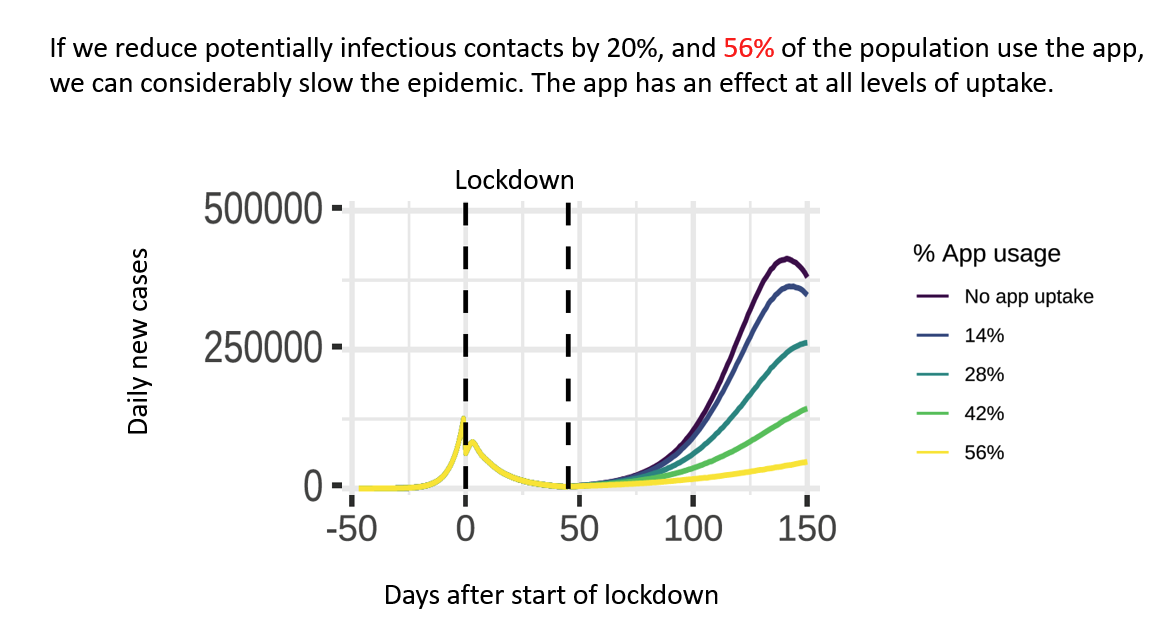
Start Up No.1324: hackers target US presidential campaigns, questions deepen over Lancet HCQ paper, a new form of nitrogen, and more


Twitter’s latest dig at Trump revolves around who first gave this guy the sobriquet ‘Mad Dog’. CC-licensed photo by, er, the US Secretary of Defense on Flickr.

You can sign up to receive each day’s Start Up post by email. You’ll need to click a confirmation link, so no spam.

A selection of 10 links for you. Look, we got through another one. I’m @charlesarthur on Twitter. Observations and links welcome.

Presidential campaigns targeted by suspected Chinese, Iranian hackers • WSJ

Robert McMillan:

»

Campaign staffers working on the presidential campaigns of Donald Trump and Joe Biden have been targeted with online attacks coming from Iran and China respectively, Google said Thursday.

These so-called phishing attacks are often an attempt to gain access to online email accounts. They raise the specter of a repeat of the 2016 campaign, during which Russian hackers stole information from Democratic staffers and posted them online.

The attacks don’t appear to have been successful, Google, a unit of Alphabet Inc., said. The company has notified federal authorities and the targeted users of the attacks, said Shane Huntley, who runs Google’s in-house counterespionage group, known as the Threat Analysis Group.

The Biden campaign was targeted by a China-based group, known as APT 31, Mr. Huntley said. This group has been linked by security firms to the Chinese government. The Trump campaign was targeted by an Iranian group called APT 35, he said. APT stands for advanced persistent threat, a shorthand used by cybersecurity professionals for sophisticated adversaries that are backed by nation-states.

These were “recent attempts and we saw a couple of targets on each campaign,” a Google spokeswoman said, while declining to provide further details on the incidents.

«

*looks at watch* They’re about four months late compared to 2016. Though we won’t know until October whether they were successful, I guess.
unique link to this extract


A mysterious company’s coronavirus papers in top medical journals may be unraveling • Science

Kelly Servick and Martin Enserink follow up on the unravelling story of the company that provided hydroxychloroquine data:

»

Surgisphere’s sparse online presence—the website doesn’t list any of its partner hospitals by name or identify its scientific advisory board, for example—have prompted intense skepticism. Physician and entrepreneur James Todaro of the investment fund Blocktown Capital wondered in a blog post why Surgisphere’s enormous database doesn’t appear to have been used in peer-reviewed research studies until May. Another post, from data scientist Peter Ellis of the management consulting firm Nous Group, questioned how LinkedIn could list only five Surgisphere employees—all but Desai apparently lacking a scientific or medical background—if the company really provides software to hundreds of hospitals to coordinate the collection of sensitive data from electronic health records. (This morning, the number of employees on LinkedIn had dropped to three.) And Chaccour wonders how such a tiny company was able to reach data-sharing agreements with hundreds of hospitals around the world that use many different languages and data recording systems, while adhering to the rules of 46 different countries on research ethics and data protection.

Desai’s spokesperson responded to inquiries about the company by saying it has 11 employees and has been developing its database since 2008. Desai, through the spokesperson, also said of the company’s work with patient data: “We use a great deal of artificial intelligence and machine learning to automate this process as much as possible, which is the only way a task like this is even possible.”

«

This is transparent flim-flam. Collecting that sort of data from hospitals requires solid, grinding, talking to hospitals. It’s surely labour-intensive. Surgisphere looks like a con, and any papers that uses its data now looks likely to be withdrawn.

A reminder: this apparent con was found by ordinary journalists looking at anomalies in data, not by the peer reviewers at The Lancet or NEJM.
unique link to this extract


Google search a target of U.S. antitrust probes, rival says • Bloomberg

Gerrit De Vynck:

»

US federal and state authorities are asking detailed questions about how to limit Google’s power in the online search market as part of their antitrust investigations into the tech giant, according to rival DuckDuckGo Inc.

Gabriel Weinberg, chief executive officer of the privacy-focused search engine, said he has spoken with state regulators, and talked with the U.S. Justice Department as recently as a few weeks ago.

Justice Department officials and state attorneys general asked the CEO about requiring Google to give consumers alternatives to its search engine on Android devices and in Google’s Chrome web browser, Weinberg said in an interview.

“We’ve been talking to all of them about search and all of them have asked us detailed search questions,” he added.

Weinberg’s comments shine a light into how the inquiry is examining Google’s core business – online search. Bloomberg has reported that the Justice Department and Texas are already examining Google’s dominance of the digital advertising market. The Justice Department and a coalition of states led by Texas Attorney General Ken Paxton have been investigating the company for a year, and the DOJ has begun drafting a lawsuit, which could be filed in the coming months. It would kick off one of the most significant antitrust cases in the U.S. since the government sued Microsoft Corp. in 1998.

«

They’re going to have to recast a whole chunk of US antitrust law to make this stick. It’s not an antitrust breach to have a monopoly, for example in search, so “how to limit Google’s power in the online search market” is a non-starter unless they can also demonstrate that consumers are losing out because of it. They seem to be trying to construct the same case that the EU did, except the EU’s antitrust laws include a “competitive market” clause. The US antitrust ones don’t.
unique link to this extract


Twitter accuses President Trump of making ‘false claims’ • BBC News

Rory Cellan-Jones:

»

Twitter has accused the US president of making false claims, in one of the app’s own articles covering the news.

The move – which effectively accuses the leader of lying – refers to a tweet by Donald Trump about his first defence secretary.

Mr Trump had tweeted that he had given James Mattis the nickname “Mad Dog” and later fired him. But Twitter’s article says that the former general resigned, and his nickname preceded Trump’s presidency.

It follows last week’s explosive confrontation, which saw Twitter fact-check two of President Trump’s tweets and label another as glorifying violence. The latest confrontation was prompted by a strongly-worded statement issued by General Mattis last night, in which he criticised the president’s handling of the protests that followed the killing of George Floyd.

Gen Mattis described Donald Trump as “the first president in my lifetime who does not try to unite the American people – does not even pretend to try. Instead, he tries to divide us.”

The president fired back quickly in a tweet saying that the one thing he and predecessor Barack Obama had in common was “we both had the honour of firing Jim Mattis, the world’s most overrated general. I asked for his letter of resignation and felt good about it”.

“His nickname was ‘Chaos’, which I didn’t like, and changed it to ‘Mad Dog’,” he added.

Twitter later published what it calls a Moment, a summary of a news story that you can see when you press the platform’s search button. It has also been promoted within the What’s Happening box that appears on Twitter’s website.

«

This is getting to be quite the regular thing. (Though you can’t be absolutely certain Trump was lying; he might just be incredibly stupid or forgetful.)
unique link to this extract


Facebook removes ‘inauthentic’ George Floyd groups • BBC News

Marianna Spring:

»

Facebook has removed a number of Justice for George Floyd groups for exhibiting “inauthentic behaviour”.

BBC News had highlighted some suspicious groups had switched their focus to call for justice for the black man killed in police custody.

Some, run by accounts seemingly based in Vietnam or Bangladesh, had posted misleading images. And others had previously focused on coronavirus, 5G conspiracies and support for US President Donald Trump.

A Facebook spokesman said it had “removed the vast majority of them, for violating our policies”.

There has been a surge in membership for Facebook groups supporting the Black Lives Matter movement, following the protests sparked by Mr Floyd’s death, on 25 May.

But for some it is unclear what the motives of their administrators are.

In some cases, they could be exploiting the movement to gain followers and/or stoke tensions.

Some of the profiles based outside the US had frequently posted inflammatory images and videos before Facebook intervened.

One group, Justice for George Floyd, had almost 2,000 members. Set up in March, it originally focused on the coronavirus but later that month switched to “US breaking news”, featuring stories sympathetic to the US president, before turning to Black Lives Matter.

«

This is now like internet weather: event happens, fake Facebook groups form trying to exploit it. Marianna Spring, by the way, is the BBC’s “specialist disinformation reporter”, and pretty busy with it.
unique link to this extract


Facebook employees pushed to remove Trump’s posts as hate speech • WSJ

Deepa Seetharaman, writing back in October 2016:

»

In a statement provided Wednesday evening, a Facebook spokeswoman said its reviewers consider the context of a post when assessing whether to take it down. “That context can include the value of political discourse,” she said. “Many people are voicing opinions about this particular content and it has become an important part of the conversation around who the next U.S. president will be.”

On Friday, senior members of Facebook’s policy team posted more details on its policy. “In the weeks ahead, we’re going to begin allowing more items that people find newsworthy, significant, or important to the public interest—even if they might otherwise violate our standards,” they wrote.

The internal debates shed light on how Facebook has grappled with its position as one of the biggest sources of political information during a particularly contentious election cycle.

«

So, nearly four years ago. This has been going on for so long; but we overlooked it somehow because back then, we didn’t know how important Facebook would turn out to have been as a megaphone and an amplifier for Trump.

However: at least you can’t accuse Zuckerberg of changing his principles. His insistence to Alexandria Ocasio-Cortez in testimony to Congress last October that if a politician incited violence their post would be taken down probably seemed pretty easy. Then that came to pass, and guess what? He reverted to his longstanding position.
unique link to this extract


Solving online events • Benedict Evans

»

it’s often struck me that networking events are pretty inefficient and random. If you’re going to spend an hour or two in a room with 50 or 500 people, then you could take that as a purely social occasion and enjoy yourself. But if your purpose is to have professionally useful conversations, then what proportion of the people in the room can you talk to in an hour and how likely is it that they’ll be the right ones? Who’s there? I sometimes suggest it would be helpful if we all wore banners, as in the image at the top, so that you could look across the room and see who to talk to. (First Tuesday did something like this in 1999, with different coloured badges.)

This might just be that I’m an introvert asking for a machine to manage human connections for me (and I am), but there is also clearly an opportunity to scale the networking that happens around events in ways that don’t rely on random chance and alcohol tolerance. A long time ago Twitter took some of that role, and the explosion of online dating also shows how changing the way you think about pools and sample sets changes outcomes. In 2017, 40% of new relationships in the USA started online.

…every time we get a new tool, we start by forcing it to fit the old way of working, and then one day we realise that it lets us do the work differently, and indeed change what the work is. I do expect to get on planes to conferences again in the future, but I also hope to have completely different ways to communicate ideas, and completely different ways to make connections, that don’t rely on us all being in the same city at the time time – or pretending that we are.

«

unique link to this extract


How to hide Google Meet in Gmail • The Verge

Aliya Chaudhry:

»

Google recently rolled out Google Meet, a revamped version of its video chatting program Hangouts Meet, and made the app available to anyone with a Google account. You can start or join a Meet videoconference right from your Gmail inbox, using the buttons that Google has placed on the left-hand side of the page.

But what if you don’t intend to use Meet, or even if you just don’t want it to be there all the time? No worries — you can hide the buttons. (Note: if you’re on a corporate G Suite account, you may not be able to change this, depending on your administrator’s settings.)

Here’s how to hide Google Meet in Gmail:
• Open Gmail
• Click on the cog icon in the top-right corner
• Click on “Settings” in the drop-down menu
• Click on the “Chat and Meet” tab
• Next to the “Meet:” label, select “Hide the Meet section in the main menu.”
• Click “Save changes.”

«

So it takes six steps to stop Google bothering you with meetings you probably don’t want to do through the renamed version of one of its 596 different messaging apps. In this era, a lot of people have been annoyed by Google adding Meets meetings to other online meetings that people had planned using different apps.
unique link to this extract


Dropbox is working on its own password manager • Android Police

Ryne Hager:

»

Dropbox just unceremoniously dumped a brand new app on the Play Store with no fanfare or formal announcement. The new Dropbox Passwords app, according to its listing, is a password manager available exclusively in an invite-only private beta for some Dropbox customers.

Based on screenshots and description, the app seems pretty barebones — or “minimal,” depending on your tastes. Dropbox seems to intentionally avoid calling it a “password manager,” though its functionality otherwise appears about the same as other solutions. Like other password managers, Dropbox Password can generate passwords for new accounts as required and sync them remotely so you can access all your passwords on multiple devices. It also uses zero-knowledge encryption to store those passwords remotely.

«

I suspect this is Dropbox realising a while back that it was going to be under assault from all sorts of companies: that its file-sharing feature isn’t such a defensive moat. So it needs to add other things to make people pay money. Password managers are an obviously underpopulated space.
unique link to this extract


Never-before-seen “black nitrogen” plugs puzzle in periodic table • New Atlas

Michael Irving:

»

Researchers at the University of Bayreuth have created a form of nitrogen that’s never been seen before. Nicknamed “black nitrogen,” the new substance is crystalline, occurs in two-dimensional sheets, and could one day be useful in advanced electronics.

Strangely enough, the idea that black nitrogen didn’t exist has long been considered a mystery. The periodic table is arranged in recurring “periods” where each column is made up of elements with similar properties. Those at the top have the fewest protons and the lowest weight, and each successive element in the group gains protons and weight.

Under high pressure, elements on the top of a column usually take on structures similar to elements further down the group. These different forms are known as allotropes. Ozone is an allotrope of oxygen, for example, while graphite and diamond are both allotropes of carbon.

But nitrogen only has one allotrope – dinitrogen (N2) – and doesn’t have any that resemble heavier elements in its group. This was always considered a bit weird, but now a new study has found a previously-unknown allotrope that shows that nitrogen isn’t an exception to the rule, as has long been believed.

To create the new form, the team exposed nitrogen to extreme heat and pressure. It was pressed together between two diamonds to 1.4 million atmospheres of pressure, and over 4,000 °C (7,232 °F). Under those extreme conditions, the nitrogen took on a structure that had never been seen before – but which still looked familiar.

When imaged using X-rays, the nitrogen atoms formed crystalline two-dimensional layers, cross-linked in a zigzag pattern. It appears to have good conductivity, much like that of graphene, which could make it useful in future electronic devices.

«

Confidently expecting “black nitrogen” to turn up as the McGuffin in some future TV or film script. It vanishes once you release the pressure, but that’s unimportant to the script. I’m thinking Chris Pratt or Chris Evans as the hero, the megabomb is triggered by black nitrogen, a terrorist group (have to decide later which country they’re from) has stolen the trigger… see, chemistry can be exciting as long as you don’t look too closely.
unique link to this extract


Errata, corrigenda and ai no corrida: none notified

Start Up No.1323: Facebook’s unmet Oversight board, Zuck transcribed, Beeb makes its own Alex(a), Snapchat downgrades Trump, and more


Coronavirus! But hydroxychloroquine won’t help fight it, according to a new study. CC-licensed photo by on Flickr.

You can sign up to receive each day’s Start Up post by email. You’ll need to click a confirmation link, so no spam.

A selection of 10 links for you. Use them wisely. I’m @charlesarthur on Twitter. Observations and links welcome.

Facebook Oversight Board won’t review Trump’s ‘shooting starts’ posts • CNBC

Salvador Rodriguez:

»

Facebook’s Oversight Board, an independent body that can overturn the company’s own content moderation decisions, announced on Wednesday that it will not review a controversial post from President Donald Trump that the company has refused to take down or moderate. 

“How Facebook treats posts from public figures that may violate their community standards are within the scope of the Board, and are the type of highly challenging cases that the Board expects to consider when we begin operating in the coming months,” the board said in the blog post

Trump’s post, which was published last week, addressed riots in the aftermath of the death of George Floyd, saying that “when the looting starts, the shooting starts.”

…Explaining its decision not to review the post, the Facebook Oversight Board said that posts like Trump’s fit the scope of the type of content that it will review, but the board is not yet operational and cannot review any cases at this time, according to a blog post.

“As an institution that announced our first members less than a month ago, and which will not be operational until later this year, we are not in an immediate position to make decisions on issues like those we see unfolding today,” the blog post said.

«

This is incredible. Are they not able to use Zoom? Skype? Telephones? Anything? What the hell are they waiting for – printed stationery? Personalised hoodies? Those who thought this Board would be no use at all already get some ammunition.
unique link to this extract


Zuckerberg faces his critics • Revue

Casey Newton rounds up the key points from the internal Facebook call; these are near the end:

»

There is a red line Trump can’t cross, and Facebook already enforced it. Yesterday I wrote here that much employee frustration can be traced to concerns that there’s nothing Trump could do that would prompt Facebook to remove one of his posts. Zuckerberg noted for employees today that Facebook actually did remove Trump ads in March that misled users into thinking that a campaign survey was actually the US Census. That said, it’s generally much less controversial to remove an ad than a regular post — so far as I can tell, Trump never even commented about the ad situation.

Zuckerberg is worried that free speech will only ever ratchet down, and that we’ll regret it someday. “Over time, in general we tend to add more policies to restrict things more and more,” he said. “If every time there’s something that’s controversial your instinct is, okay let’s restrict a lot, then you do end up restricting a lot of things that I think will be eventually good for everyone.”

Employees I spoke with did not seem particularly moved by these answers. “Everyone’s grateful we have a chance to address these things directly with him,” one told me. “At the same time, no one thinks he gave a single real answer.” Another said Zuckerberg appeared “really scared” on the call. “I think he fears his employees turning on him,” the employee said. “At least that’s what I got from facial expressions and tone.”

At the same time, another employee told me that Zuckerberg’s decision was supported by the majority of the company, but that people who agreed with it were afraid to speak out for fear of appearing insensitive. (An employee who spoke on the call echoed this point.)

«

You can read the full transcript. I do wonder who, precisely, he consulted with, and who advised against action.
unique link to this extract


‘Hey Beeb’: new BBC digital assistant gets northern male accent • The Guardian

Jim Waterson:

»

The BBC has given its new digital assistant a male voice to avoid the “problematic associations” of female-voiced rivals such as Amazon’s Alexa, which have faced criticism for reinforcing gender stereotypes.

The voice-activated service, named “Beeb”, will have a limited public release this week and the corporation said it put extra thought into what accent would make it distinct from other US-developed services.

As a result people who wake up the voice assistant by saying “Hey Beeb” will be greeted with a “warm and friendly” accent from the north of England, guiding them towards BBC programmes and offering localised news and weather reports.

Andy Webb, who is leading the BBC’s development of its voice technology, said this “reflected the diversity of the audience in the UK” and as a result it did not have the “sterile feel” or “problematic associations” of other assistants.

A Unesco report last year claimed that the often submissive and flirty responses offered by female-voiced digital assistants to many queries – including abusive ones – reinforced ideas of women as subservient.

Grace Boswood, the chief operating officer of the BBC’s design and engineering department, said a key reason for undertaking the project was to defend against encroachment from US tech companies and to maintain a direct relationship with licence-fee payers.

“It gives us a strategic edge if Amazon decide not to play fair in terms of how people access the content,” she said, suggesting the BBC had an 18-month window of opportunity to establish a viable voice assistant before habits were locked down.

«

The BBC, thinking strategically.
unique link to this extract


Snap will stop promoting Trump’s account after concluding his tweets incited violence • The Verge

Casey Newton:

»

President Trump’s verified Snapchat account will no longer be promoted within the app after executives concluded that his tweets over the weekend promoted violence, the company said today. His account, RealDonaldTrump, will remain on the platform and continue to appear on search results. But he will no longer appear in the app’s Discover tab, which promotes news publishers, elected officials, celebrities, and influencers.

“We are not currently promoting the president’s content on Snapchat’s Discover platform,” the company said in a statement. “We will not amplify voices who incite racial violence and injustice by giving them free promotion on Discover. Racial violence and injustice have no place in our society and we stand together with all who seek peace, love, equality, and justice in America.”

«

Reasonable. The question is about amplification.
unique link to this extract


Study: Hydroxychloroquine doesn’t prevent Covid-19 infection if exposed • Statnews

null:

»

he malaria drug hydroxychloroquine did not help prevent people who had been exposed to others with Covid-19 from developing the disease, according to the results of an eagerly awaited study that will be published Wednesday in the New England Journal of Medicine.

Despite a lack of evidence, many people began taking the medicine to try to prevent infection early in the Covid-19 pandemic, following anecdotal reports it could be effective and claims by President Trump and conservative commentators. Trump, too, said he took hydroxychloroquine to prevent infection.

But the new study, the first double-blind randomized, placebo-controlled trial of hydroxychloroquine, found otherwise.

“I think in the setting of post-exposure prophylaxis, it doesn’t seem to work,” said Sarah Lofgren, an assistant professor at the University of Minnesota who is a co-author of the study.

Other studies of hydroxychloroquine are ongoing. Also Wednesday, the World Health Organization said it is resuming a clinical trial testing hydroxychloroquine as a treatment after pausing it over safety concerns.

«

Ah yes, let’s just go over to something about that clinical trial that was paused…
unique link to this extract


Governments and WHO changed Covid-19 policy based on suspect data from tiny US company • The Guardian

Melissa Davey and Sarah Boseley:

»

A Guardian investigation can reveal the US-based company Surgisphere, whose handful of employees appear to include a science fiction writer and an adult-content model, has provided data for multiple studies on Covid-19 co-authored by its chief executive, but has so far failed to adequately explain its data or methodology.

Data it claims to have legitimately obtained from more than a thousand hospitals worldwide formed the basis of scientific articles that have led to changes in Covid-19 treatment policies in Latin American countries. It was also behind a decision by the WHO and research institutes around the world to halt trials of the controversial drug hydroxychloroquine. On Wednesday, the WHO announced those trials would now resume.

Two of the world’s leading medical journals – the Lancet and the New England Journal of Medicine – published studies based on Surgisphere data. The studies were co-authored by the firm’s chief executive, Sapan Desai.

Late on Tuesday, after being approached by the Guardian, the Lancet released an “expression of concern” about its published study. The New England Journal of Medicine has also issued a similar notice.

An independent audit of the provenance and validity of the data has now been commissioned by the authors not affiliated with Surgisphere because of “concerns that have been raised about the reliability of the database”.

«

This story is wild, wild, wild. Guardian Australia smelt a rat when the Surgisphere data showed more deaths in Australia than had actually happened. Warren Buffett’s quip about who’s been swimming naked being revealed when the tide goes out applies in spades here: I’ve seen a suggestion that Surgisphere’s data is totally made up (await rebuttal). Every paper that ever relied on its data will now be suspect. It’s also hard to see how Richard Horton, the editor of The Lancet, comes through unscathed.
unique link to this extract


Trump’s executive order targeting social media draws a lawsuit • The Washington Post

Tony Romm:

»

In its lawsuit, the CDT said the White House had run afoul of the First Amendment, which “prohibits government officials from using government power to retaliate against an individual or entity for engaging in protected speech.” Even though Trump’s order has not taken full effect, the CDT said the mere existence of the policy could “chill” speech, undermining efforts by Facebook, Google and Twitter to ensure that their platforms are used responsibly during the presidential race.

“We see the executive order as very clear retaliation that’s designed to deter social media companies from fighting misinformation and voter suppression,” said Alexandra Givens, the leader of the CDT. The group filed its lawsuit in the U.S. District Court for the District of Columbia, asking it to invalidate the whole of the order.

Facebook and Google declined to comment. Twitter praised the lawsuit in an unsigned tweet, while blasting the president’s order as “reactionary and politicized.” All three companies have given money to the CDT in the past, the group’s public statements indicate.

«

The text of the CDT suit is pretty clear about what its objection is. Again, there isn’t a snowball in hell’s chance of this EO passing court muster.
unique link to this extract


One Twitter account is reposting everything Trump tweets. It was suspended within three days • Mashable

Amanda Yeo:

»

“This account will tweet what the President tweets,” Twitter account SuspendThePres posted on May 29. “Let’s see if it gets suspended for violating twitters [terms of service].”

Approximately 68 hours later, SuspendThePres was temporarily suspended for violating Twitter’s rules against glorifying violence. Twitter officially refers to this state as being “locked” or “temporarily unavailable.”

SuspendThePres began directly copying and reposting U.S. president Donald Trump’s tweets on May 29. Run by a user who also tweets as BizzareLazar, the experiment was prompted by Trump’s recent executive order calling for social media companies’ protections to be reconsidered. Trump issued the order after Twitter applied a fact-check label to two of his tweets.

“I wanted to see for myself if he was indeed violating [Twitter’s terms of service],” said SuspendThePres, speaking to Mashable via DM. They declined to give their real name, given current events and the nature of the experiment, but stated they are a U.S. citizen.

“Figured what better way to test out the hypothesis than to see if they suspended me for the exact same language.”

The tweet that triggered SuspendThePres’ suspension was an exact copy of Trump’s now infamous “when the looting starts, the shooting starts” tweet from May 28, which threatened violence against citizens protesting police brutality. It was the first tweet SuspendThePres copied.

«

The account’s back on air now, but that’s a very clever experiment.
unique link to this extract


Dear Facebook employees, from a former Facebook employee • Medium

Barry Schnitt:

»

In the four years I worked at Facebook [2008-2012], a lot of precedents were set that are still playing out today. Some of them made sense for the 2008 world but don’t make sense now. In 2008, the professional arbiters of truth–the press–were much stronger both in terms of resources and distribution. In 2008, Facebook’s reach was growing but it only touched a small percentage of the population. In 2008, people used Facebook more to keep up with friends than as a news or information source. Today, all of that has changed dramatically.

Newsrooms have been decimated and the press’ overall distribution has been similarly reduced. Meanwhile, Facebook has become a primary source of news and information for billions of people. In short, when we decided that Facebook would take a hand’s off approach to content, the world didn’t need Facebook to fact check or contextualize information. The world needs it now desperately.
I still believe that Facebook does more good than harm. There has been no better example than the emotional support for the current health crisis. The value of connection with family and friends during this time is incalculable. However, just doing more good than harm is not enough.

If you think of Facebook as the place where people get their information, it’s like the one grocery store in a town. Everyone shops there and its shelves are mostly filled with food that is nutritious, fun, entertaining, engaging, etc… However, sprinkled through the shelves are foods that look like regular stuff but are actually poison. I’m not talking about junk food with frivolous or empty calories. I’m talking about food that literally poisons one’s mind, turning him or her against science, facts, and other people. If that’s your mindset, what resources would you leave on the table to find the poison? Are there any risks you would not take? At the very least, you would not hesitate to put warning labels on the poison.

…The only way the stakes could be higher is if we were on the brink of a world war. Thankfully, we are not. However, I encourage you to ask yourself where a concerted and systematic undermining of science and truth and rampant divisiveness ends if it is left unchecked? A lasting peace? I doubt it.

«

Before Facebook, Schnitt worked in the PR department for Google, and after it he worked until 2018 at Pinterest, since which he’s been an independent. It’s a pretty damning piece.
unique link to this extract


Downing Street plans new 5G club of democracies • The Times

Lucy Fisher:

»

Britain is seeking to forge an alliance of ten democracies to create alternative suppliers of 5G equipment and other technologies to avoid relying on China.

New concerns about Huawei, the Chinese telecoms giant, have increased the urgency of the plan after security officials began a review into its involvement in the mobile network upgrade.

The government has approached Washington about a “D10” club of democratic partners, based on the G7 plus Australia, South Korea and India. One option would see the club channel investment to technology companies based within its member states. Nokia and Ericsson are the only European suppliers of 5G infrastructure and experts say that they cannot provide 5G kit as quickly or as cheaply as Huawei.

A Whitehall source said: “We need new entrants to the market. That was the reason we ended up having to go along with Huawei at the time.”

Britain has maintained that three suppliers are essential in 5G infrastructure, which meant Huawei, Nokia and Ericsson won approval. Britain has labelled a Huawei a “high-risk” vendor, however. When Boris Johnson approved its involvement in 5G early this year, he set a 35% market cap and banned its participation in the sensitive “core” of the network.

The review into Huawei, launched last week by the National Cyber Security Centre, followed the announcement of US sanctions to block the sale of American chips to the company. UK security officials fear that the ban will prompt China to use cheaper, less secure technologies, instead of verified US versions. Officials are examining proposals to curb the installation of Huawei kit in the 5G network from 2023. Ministers believe, however, that it would take longer to remove the company’s existing equipment.

«

So basically this is going to be super-state funding and guaranteed contracts for Nokia and Ericsson. They’re hardly going to turn that down.
unique link to this extract


Errata, corrigenda and ai no corrida: none notified

Start Up No.1322: Facebook v the humans, ban Trump or bear him?, Walmart’s hated AI, smart contact lenses (will they work?), and more


A supercut of police violence during protests has been viewed tens of millions of times. CC-licensed photo by Geoff Livingston on Flickr.

You can sign up to receive each day’s Start Up post by email. You’ll need to click a confirmation link, so no spam.

A selection of 12 links for you. Don’t shoot the messenger. I’m @charlesarthur on Twitter. Observations and links welcome. (I do look at them all!)

Facebook and humans • Margins

Ranjan Roy:

»

According to Axios:

»

Later [on Friday], Trump phoned Facebook CEO Mark Zuckerberg. During the call, Zuckerberg “expressed concerns about the tone and the rhetoric,” according to a source familiar with the call.

Zuckerberg “didn’t make any specific requests,” the source said. A second source familiar with the call said the Facebook boss told Trump that he personally disagreed with the president’s incendiary rhetoric and that by using language like this, Trump was putting Facebook in a difficult position.

«

This shocked me not because Zuckerberg single-handedly played out the ‘arbiter of truth’ role he normally argues against. It was just how human this moment is. Two guys talking on the phone about what to do with a Facebook post. If it wasn’t so consequential, it’d feel pedestrian.

For all the talk about AI tools and machine learning and natural language understanding, this is what it boiled down to. Two dudes on the phone.

I acknowledge this is a distinct challenge from moderating billions of posts per day, but the core challenges with Facebook and problematic content have always been human. It was always about the will, ethics, and incentive structures within the company.

…This was always about people. It’s Sandberg getting sidelined by Kaplan, and maybe Thiel as well. Cox being pushed out by Zuck. Systrom and Koum and Acton all giving up. I won’t pretend to understand the exact internal dynamics, but this was never a question about the magical application of undiscovered technologies to tough content problems. It was always about the leaders, managers, and rank and file, and the decisions that they made.

…Instead of genocides in Myanmar, we’re seeing the President threatening violence on his own people, and those threats coming true. And their leader making the human, editorial decision to use their platform to promote it.

It always needed to be the employees of Facebook to start pushing back, privately and publicly. This is the first week we’ve really seen it, and I can say, amidst all the shit out there right now, this does make me just a little bit optimistic.

«

See also: Zuckerberg marking his homework and saying he got an A in call to pissed-off Facebook employees.
unique link to this extract


People can’t stop watching videos of police and protesters. That’s the idea • The New York Times

Taylor Lorenz:

»

An officer shoving a protester to the ground. Two New York Police Department cars ramming demonstrators. Police using batons, bicycles and car doors as weapons.

These are becoming defining images of the protests against police brutality of black people that have swept the nation, sparked by the killing of George Floyd in Minneapolis.

Countless videos of these moments have been shared on social media. Among the most-seen of them: a compilation video created on Saturday.

Jordan Uhl, a political consultant and activist in Washington, D.C., wanted to make sure as many people saw these videos as possible. Encouraged by a friend, he edited together 14 clips, including one from a reporter at The New York Times of an officer accelerating and opening a car door that hit protesters. The result is a two-minute, 13-second supercut that he called “This Is a Police State.”

As of Monday night, the video had amassed more than 45 million views from Mr. Uhl’s tweet alone. After he posted a Dropbox link so that anyone could download and share the video, it garnered tens of millions more views. (For context, the video that the birder Christian Cooper recorded of Amy Cooper in Central Park has been viewed 44 million times on Twitter. The viral disinformation video “Plandemic,” which traveled across YouTube, Facebook, Twitter and Instagram last month, was viewed more than eight million times after just over a week online.)

…He views the video, focusing solely on what appear to be police misdeeds, as a corrective to what he believes to be an emphasis on covering looting and property damage by media. “I wanted to push back and show how the main story should be that, in response to a mass mobilization against police brutality, the police responded with more brutality,” Mr. Uhl said.

“People are deeply unwilling to acknowledge the abuse from police,” he continued, noting that “the passive language used for police versus the active language used for protesters demonstrate our society’s unwillingness to confront systemic injustice imposed by police.”

«

That active v passive point is so crucial. News reports talk about tear gas and rubber bullets as though they had minds of their own, appearing on the scene by some mystical intent. Protesters, though, get lots of verbs.
unique link to this extract


Trump and his allies are now openly threatening Americans with violence. Ban them all • The Verge

TC Sottek is The Verge’s executive editor:

»

Enough. It is time to remove the president from the private platforms he uses to undermine the public institutions he is sworn to protect, starting with Twitter and Facebook. And it is time to remove anyone else in power who facilitates the president’s vile and deadly agenda.

We are now far beyond the petty fight over “conservative bias.” Who cares? Right-wing complainants have already declared social media platforms irreparably biased, despite overwhelming evidence to the contrary. Fox News and other right-wing media organizations thrive on Facebook and Twitter and routinely see their messages flourish there. The charge of bias has always been a hoax perpetrated by demagogues who find profit in partisanship. Besides, the president and his allies have already accused the platforms of censoring them. They will not preserve any good faith by continuing to broadcast his hateful messages.

It is understandable why Facebook and Twitter have largely cast aside the responsibility of dealing with the president’s dangerous rhetoric. It’s true that, even despite his evident harm, banning Trump has always sounded like a cheap resistance fantasy or a lame election-year meme. And it has been hard to identify a single week under Trump’s rule that has been worse than all the others. His behavior has been consistently outrageous in a way that threatens to numb our instincts and tempts paralysis. Crossing the president and his allies is also guaranteed to reap abuse; after finally taking action against Trump, the president organized harassment against an individual Twitter employee, resulting in death threats.

«

As he notes, “fighting a political party that has proven it will react to any perceived sleight with extreme hostility could have existential consequences”. Generous of him to offer to take Twitter outside and hold its coat while it fights Trump. For the opposite view on this, read on to Ben Thompson.
unique link to this extract


Dust in the light • Stratechery

Ben Thompson:

»

[Former basketball star Kareem] Abdul-Jabbar explains:

»

African Americans have been living in a burning building for many years, choking on the smoke as the flames burn closer and closer. Racism in America is like dust in the air. It seems invisible — even if you’re choking on it — until you let the sun in. Then you see it’s everywhere. As long as we keep shining that light, we have a chance of cleaning it wherever it lands. But we have to stay vigilant, because it’s always still in the air.

«

What made the Floyd story different than all of the surely similar examples that went before it is the Internet, specifically the combination of cameras on smartphones and social networks. The former means any incident can be recorded on a whim; the latter means that said recording can be spread worldwide instantly. That is exactly what happened with the Floyd homicide: the initial video was captured on a smartphone and posted on Facebook, triggering a level of attention to the Floyd case that in all likelihood changed the nature of the autopsy and led to the pressing of charges against [arrested ex-police officer] Chauvin — a chance, in Abdul-Jabbar’s words, of cleaning at least one speck of that omnipresent dust.

…what is so striking about the demands that Facebook act on this particular post [in which Trump says “when the looting starts, the shooting starts] (beyond the extremely problematic prospect of an unaccountable figure like Zuckerberg unilaterally deciding what is and is not acceptable political speech): the preponderance of evidence suggests that these demands have nothing to do with misinformation, but rather reality. The United States really does have a president named Donald Trump who uses extremely problematic terms — in all caps! — for African Americans and quotes segregationist police chiefs, and social media, for better or worse, is ultimately a reflection of humanity. Facebook deleting Trump’s post won’t change that fact, but it will, at least for a moment, turn out the lights, hiding the dust.

«

Thompson’s argument is that Trump’s tweets and Facebook posts should all, always, be visible so that you can judge him. It’s a strong argument (and the enveloping post, about Madison, in Milwaukee – the city where I think he grew up – is even stronger); but it implies that once you get to a certain level of fame, or political heft, you are essentially uncensorable and no rules apply. That seems wrong. Where’s the line you cross from being subject to terms of service, to indomitable?
unique link to this extract


We’ve now entered the final phase of the Trump era • The Atlantic

Thomas Wright is a senior fellow at the Brookings Institution:

»

Trump responded [to Twitter posting a warning on his tweet last Friday] by trying to distract. He gave a press conference at 2 p.m. in which he declared that he would terminate relations with the WHO and unilaterally announced a response to China’s actions against Hong Kong. Within hours, Angela Merkel let it be known that she was withdrawing from the summit. Miffed, Trump said the next day that he was postponing the summit and inviting Russia, Australia, India, and South Korea to join.

The postponement destroys any hope that a multilateral organization would condemn China’s actions against Hong Kong. Moreover, Russia is a staunch supporter of China’s position that Hong Kong is a purely internal matter that should be of no concern to the rest of the world. Some observers thought the invitation to more countries was designed to isolate China, but its practical effect was to deliver Xi Jinping a big win.

The damage did not end there. China has more leadership roles in United Nations organizations than the other four permanent members of the U.N. Security Council combined. To their credit, some officials in the Trump administration were attempting to build an international coalition to push back on this influence. They scored a victory earlier this year when they helped deny China the chair of the World Intellectual Property Organization. Trump’s termination of relations with the WHO dealt a death blow to this effort…

…There is no way back from the Götterdämmerung in the remainder of the Trump era. The question facing responsible senior administration officials (there are several at the principal and deputy level), Republicans in Congress, and allied governments is not how to persuade Trump to do the right thing, but how to limit the damage so the government can be repaired after he is gone.

«

The election’s more than 200 days away. That seems very distant.
unique link to this extract


Walmart employees are out to show its anti-shoplifting AI doesn’t work • WIRED

Louise Matsakis:

»

the Concerned Home Office Associates [anonymous employees at Walmart] created a video, which purports to show Everseen’s technology failing to flag items not being scanned in three different Walmart stores. Set to cheery elevator music, it begins with a person using self-checkout to buy two jumbo packages of Reese’s White Peanut Butter Cups. Because they’re stacked on top of each other, only one is scanned, but both are successfully placed in the bagging area without issue.

The same person then grabs two gallons of milk by their handles, and moves them across the scanner with one hand. Only one is rung up, but both are put in the bagging area. They then put their own cell phone on top of the machine, and an alert pops up saying they need to wait for assistance—a false positive. “Everseen finally alerts! But does so mistakenly. Oops again,” a caption reads. The filmmaker repeats the same process at two more stores, where they fail to scan a heart-shaped Valentine’s Day chocolate box with a puppy on the front and a Philips Sonicare electric toothbrush. At the end, a caption explains that Everseen failed to stop more than $100 of would-be theft.

The video isn’t definitive proof that Everseen’s technology doesn’t work as well as advertised, but its existence speaks to the level of frustration felt by the group of anonymous Walmart employees, and the lengths they went to prove their objections had merit.

In interviews, the workers, whose jobs include knowledge of Walmart’s loss prevention programs, said their top concern with Everseen was false positives at self-checkout. The employees believe that the tech frequently misinterprets innocent behavior as potential shoplifting, which frustrates customers and store associates, and leads to longer lines. “It’s like a noisy tech, a fake AI that just pretends to safeguard,” said one worker.

…In the past, Walmart and other retailers relied on weight sensors to prevent shoplifting through self-checkout, but those were prone to error and frustrated customers. Some stores are now turning instead to firms like Everseen, which promise to reduce shrink and increase customer satisfaction by relying instead on surveillance cameras and machine vision. Everseen has said that it works with a number of major retailers. Amazon uses similar technology in its Amazon Go convenience stores, where a network of cameras automatically log the products customers take. (Amazon is now licensing its “Just Walk Out” tech to other companies.)

«

unique link to this extract


First look: Apple News+ Audio in iOS 13.5.5 beta [Video] • 9to5Mac

Jeff Benjamin:

»

As 9to5Mac showcased yesterday, there will be a new Audio tab in the default News app. Although this tab isn’t currently available to iOS 13.5.5 beta users, we were able to gain access to this tab early. The Audio tab features curated audio articles that are taken directly from existing Apple News+ magazines.

Apple is asking publishers for permission to produce audio versions of stories distributed via News+, and Apple is planning to use actors to read long-form pieces.

As I briefly explored the new Audio tab, I found an interface that’s similar to the default Podcasts app. Users will have the option to go back 30 seconds, play/pause, and skip to the next article. There are additional options hidden behind an ellipsis that lets users access queuing, link back to the original written article, share the story, etc.

«

They’re going to use actors? Good work for the actors, I guess, but pretty exhausting. And scales badly. Amazing, when Apple has technology that will automatically generate high-quality speech from tect, that it would go for humans. I guess it doesn’t want to have any mistakes; those could be embarrassing.
unique link to this extract


These smart contact lenses overlay info without obscuring your view • ExtremeTech

David Cardinal:

»

The lenses use a tiny projector to send information to your retinas. The one the company demonstrated last year had a stunning 14,000 pixel-per-inch resolution and measured a total of 0.5 mm across. Individual pixels were slightly larger (1.8 microns) than those in the image sensor in a smartphone for comparison. It has to be that small because it’s in front of your eye. The company says it only blocks a small fraction of the light entering your pupil, on the order of 10%, so that it doesn’t impact your normal vision more than a typical pair of glasses.

…As with many problems, the notion of sticking a small display in front of your eye is more involved than it first appears. For example, Mojo found that accurate, high-speed, eye tracking was essential. Otherwise projected objects would move all over our field of view as our eyes darted about. For anyone who has shelled out hundreds of dollars on a bulky eye-tracker for a research project, the idea of having it built into contact lenses is an impressive feat all by itself. Unlike a typical, complex, eye-tracking hardware device, because the lenses move with your eye, the only hardware required is the typical accelerometer/magnetometer/gyro setup.

«

I don’t quite believe that this is a workable technology. Apart from anything, what about saccades – the incredibly quick adjustments that our eyes make when they’re focussing on something, or following something? Our eyes don’t track smoothly.

Plus, would you be able to adjust the viewing angle when you put them in? Would they stay the right way up? Which way up would they be? What if you need to wear contact lenses? What if you need to wear glasses?

Anyhow, they’re five years and $150m into this. Presumably they’ve answered these questions?
unique link to this extract


HTC to cut jobs again • DIgitimes

Max Wang and Steve Shen:

»

HTC has announced plans to further scale down its workforce and make human resources adjustments as it moves to further optimize its operations, though it did not say how many jobs will be cut.

The company said the move is necessary to achieve its goal of making a turnaround of its smartphone business and continuing its innovative efforts to further push its VR/AR business.

Previous operational adjustment efforts for cost reductions, including massive layoffs, over the past few years have resulted in significant savings in production costs pushing its gross margin toward the positive territory, the company noted.

«

Are there seriously people inside HTC who think its smartphone business can be rescued from the ashes? And you have to love that idea that gross margin – which doesn’t even account for fixed overheads or costs like R&D – is still negative. If you can’t manage that, your business is so crocked it should be seeking venture capital.
unique link to this extract


Lawsuit over online book lending could bankrupt Internet Archive • Ars Technica

Timothy Lee:

»

In March, as the coronavirus pandemic was gaining steam, the Internet Archive announced it was dispensing with [its] waiting-list system. Under a program it called the National Emergency Library, IA began allowing an unlimited number of people to check out the same book at the same time—even if IA only owned one physical copy.

Before this change, publishers largely looked the other way as IA and a few other libraries experimented with the digital lending concept. Some publishers’ groups condemned the practice, but no one filed a lawsuit over it. Perhaps the publishers feared setting an adverse precedent if the courts ruled that CDL was legal.

But the IA’s emergency lending program was harder for publishers to ignore. So this week, as a number of states have been lifting quarantine restrictions, the publishers sued the Internet Archive.

In an email to Ars Technica, IA founder Brewster Kahle described the lawsuit as “disappointing.”

“As a library, the Internet Archive acquires books and lends them, as libraries have always done,” he wrote. “Publishers suing libraries for lending books, in this case, protected digitized versions, and while schools and libraries are closed, is not in anyone’s interest.”

The publishers’ legal argument is straightforward: the Internet Archive is making and distributing copies of books without permission from copyright holders. That’s generally illegal unless a defendant can show it is authorized by one of copyright law’s various exceptions.

Legal experts tell Ars that the Internet’s Archive’s best response is to argue that its program is fair use. That’s a flexible legal doctrine that has been used to justify a wide range of copying over the decades—from recording television broadcasts for personal use to quoting a few sentences of a book in a review. Most relevant for our purposes, the courts have held that it is a fair use to scan books for limited purposes such as building a book search engine.

«

Puzzling why the IA decided to jump the gun like that. You have a situation that works well, and then you push it over the edge. The IA’s defence isn’t strong here.
unique link to this extract


Report: Apple investing in Taiwanese factory where MicroLED display development will be ‘top priority’ • MacRumors

Tim Hardwick:

»

Apple is reportedly weighing up a $330m investment in a Taiwanese factory to manufacture both LED and MicroLED displays for future iPhones, iPads, MacBooks, and other devices. According to Taiwan Sourcing Service Provider (CENS), Apple is teaming up on the new factory with LED producer Epistar and LCD panel maker AU Optronics.

The report highlights the advantages of Mini-LED and MicroLED screens over LCD and OLED displays, including being thinner and more energy efficient. For example, the power consumption of MicroLED screens is only one-tenth that of LCD displays, and the color saturation is close to OLED:

»

“Like OLED, micro-LED is self-luminous. However, compared with OLED, micro-LED can support a higher brightness, higher dynamic range, and wider color gamut, all the while achieving a faster update rate, wider viewing angle, and lower power consumption, all qualities favored by Apple.”

«

According to the report, owing to the difficulties involved in developing MicroLED technology, early designs will rely on Mini-LEDs that are somewhere in between traditional LED and MicroLED technology. However, Apple still considers MicroLED technology to be the “top priority.”

Apple has six mini-LED products in the works that are set to debut in 2020 and 2021, according to Apple analyst Ming-Chi Kuo. Apple is said to be debuting the technology in a high-end 12.9in iPad Pro , which will launch in the fall, a 27in iMac Pro, a 14.1in MacBook Pro , a 16in MacBook Pro , a 10.2in iPad, and a 7.9in iPad mini.

«

So that basically sounds like a refresh of the existing high-end line, but with different screens. Quite a long way off.
unique link to this extract


White nationalist group posing as antifa called for violence on Twitter • NBC News

Ben Collins, Brandy Zadrozny and Emmanuelle Saliba:

»

A Twitter account claiming to belong to a national “antifa” organization and pushing violent rhetoric related to ongoing protests has been linked to the white nationalist group Identity Evropa, according to a Twitter spokesperson.

The spokesperson said the account violated the company’s platform manipulation and spam policy, specifically the creation of fake accounts. Twitter suspended the account after a tweet that incited violence.

As protests were taking place in multiple states across the U.S. Sunday night, the newly created account, @ANTIFA_US, tweeted, “Tonight’s the night, Comrades,” with a brown raised fist emoji and “Tonight we say ‘F— The City’ and we move into the residential areas… the white hoods…. and we take what’s ours …”

This isn’t the first time Twitter has taken action against fake accounts engaged in hateful conduct linked to Identity Evropa, according to the spokesperson.

The antifa movement — a network of loosely organized radical groups who use direct action to fight the far-right and fascism — has been targeted by President Donald Trump as the force behind some of the violence and property destruction seen at some protests, though little evidence has been provided for such claims.

Other misinformation and misleading claims spread across Twitter on Sunday night and into Monday related to the protests.

«

unique link to this extract


Errata, corrigenda and ai no corrida: none notified