Start Up No.904: blocking the monopolies, users shun Facebook, VR market swoons, what AI?, and more


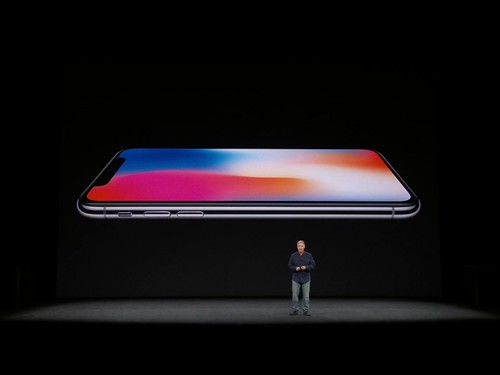
People didn’t miss having a home button on the iPhone X – so say farewell. Photo by Mark Mathosian on Flickr.

You can sign up to receive each day’s Start Up post by email. You’ll need to click a confirmation link, so no spam.

A selection of 12 links for you. That’s what they are. I’m @charlesarthur on Twitter. Observations and links welcome.

I am part of the resistance inside the Trump administration • The New York Times

A “senior official” in the Trump admin – whose identity has been verified, but not published, by the NYT – writes about what’s going on:

»

It may be cold comfort in this chaotic era, but Americans should know that there are adults in the room. We fully recognize what is happening. And we are trying to do what’s right even when Donald Trump won’t.

The result is a two-track presidency.

Take foreign policy: In public and in private, President Trump shows a preference for autocrats and dictators, such as President Vladimir Putin of Russia and North Korea’s leader, Kim Jong-un, and displays little genuine appreciation for the ties that bind us to allied, like-minded nations.

Astute observers have noted, though, that the rest of the administration is operating on another track, one where countries like Russia are called out for meddling and punished accordingly, and where allies around the world are engaged as peers rather than ridiculed as rivals.

On Russia, for instance, the president was reluctant to expel so many of Mr. Putin’s spies as punishment for the poisoning of a former Russian spy in Britain. He complained for weeks about senior staff members letting him get boxed into further confrontation with Russia, and he expressed frustration that the United States continued to impose sanctions on the country for its malign behavior. But his national security team knew better — such actions had to be taken, to hold Moscow accountable.

This isn’t the work of the so-called deep state. It’s the work of the steady state.

Given the instability many witnessed, there were early whispers within the cabinet of invoking the 25th Amendment, which would start a complex process for removing the president. But no one wanted to precipitate a constitutional crisis. So we will do what we can to steer the administration in the right direction until — one way or another — it’s over.

«

Seems like the Woodward book has triggered something. (There are 1,212 people this could be.)
link to this extract


The monopoly-busting case against Google, Amazon, Uber, and Facebook • The Verge

Russell Brandom:

»

Antitrust crusaders have built up serious momentum in Washington, but so far, it’s all been theory and talk. Groups like Open Markets have made a strong case that big companies (especially big tech companies) are distorting the market to drive out competitors. We need a new standard for monopolies, they argue, one that focuses less on consumer harm and more on the skewed incentives produced by a company the size of Facebook or Google.

Someday soon, those ideas will be put to the test, probably against one of a handful of companies. For anti-monopolists, it’s a chance to reshape tech into something more democratic and less destructive. It’s just a question of which company makes the best target.

To that end, here’s the case against four of the movement’s biggest targets, and what they might look like if they came out on the losing end.

«

A good read. Blocking acquisitions is quite a big part of it.
link to this extract


What current iPhone X users tell us about the opportunity for the new models • Tech.pinions

Carolina Milanesi:

»

When looking at the features individually, 79% of the sample was very satisfied with the Swipe-based gesture UI and 65% was very satisfied with Face ID. The ambivalence on Siri comes across clearly when looking at how the sample was distributed: 33% was somewhat satisfied, 27% was neither satisfied nor dissatisfied and another 21% was somewhat dissatisfied. While this is not great for Apple it is not all bad news either. Users clearly don’t see Siri as a purchase driver or positive differentiator, but they also do not see it as detrimental to their overall experience.

Satisfaction is a very good indicator, but we really wanted to get to how users felt about some of the changes implemented on the iPhone X, so we asked if they agreed or disagreed with some very specific statements.

70% of the panel strongly disagrees that they “miss the home button from previous iPhone models”. Another 14% said they somewhat disagree.

Because some people think differently about the Home Button and Touch ID we wanted to make sure we asked about both. Some users think of Touch ID as an enabler for Apple Pay and authentication across the board, while they think of the Home Button as the “control center” to navigate the iPhone. We asked whether they agreed or disagree with the statement “ I miss having Touch ID on my iPhone”. Here while the overall sentiment remains positive it was a little more muted with 50% saying they strongly disagreed and 21% saying they somewhat disagree.

«

People didn’t mind the lack of a home button, and got used to the gesture-based interface quickly. Same for me: after a few days, you don’t notice it, and going back to a button-based phone seems weird and retrograde.
link to this extract


Inside the world of Eddy Cue, Apple’s services chief • The Information

Aaron Tilley:

»

In 2012, Mr. Cue took on even more responsibility when Mr. Cook fired Scott Forstall, then a senior vice president of the iOS software powering iPhones. Mr. Forstall had overseen the launch of Apple Maps, which was panned due to misplaced landmarks, distorted satellite images and other problems. With Mr. Forstall gone, Mr. Cue took over Apple Maps and Siri, the intelligent assistant that launched as a major feature of the iPhone 4S the prior year.

From the moment he gained responsibility for Siri, Mr. Cue seemed to lack much interest in it, according to people who worked on the project. When Siri team members presented Mr. Cue with technical data around the performance of the assistant—an area of frequent criticism of the technology—Mr. Cue appeared bored and seemed to fall asleep in at least two meetings, said a former Apple employee who was present…

…One obstacle for Mr. Cue, in his meetings with television executives, was that he didn’t encounter the kind of desperation that made it possible for Apple to sign all the major record labels, then being ravaged by piracy, to iTunes. Cord-cutting—people dumping their cable and satellite subscriptions—had not yet emerged as a problem. “Apple kept wanting to use the same playbook, and it’s not going to work in the video world,” said a former Apple executive who worked on video.

Around four years ago, Mr. Cue oversaw development of a version of Apple TV that could integrate with cable services, with the goal of replacing set-top boxes distributed by the likes of Comcast and Time Warner Cable, said a former Apple employee. The Apple TV box—with a coaxial cable port for plugging into cable networks and software to handle the combination of live and on-demand video—never launched due to disagreements with the potential cable partners. Apple engineers involved in the product were dispirited, said a former employee.

«

There’s a huge amount of fluff in this piece (at least, if you know anything about Apple; these two items are about the only new elements in it.
link to this extract


Many US Facebook users have changed privacy settings or taken a break • Pew Research Center

»

Just over half of Facebook users ages 18 and older (54%) say they have adjusted their privacy settings in the past 12 months, according to a new Pew Research Center survey. Around four-in-ten (42%) say they have taken a break from checking the platform for a period of several weeks or more, while around a quarter (26%) say they have deleted the Facebook app from their cellphone. All told, some 74% of Facebook users say they have taken at least one of these three actions in the past year.

The findings come from a survey of U.S. adults conducted May 29-June 11, following revelations that the former consulting firm Cambridge Analytica had collected data on tens of millions of Facebook users without their knowledge.

«

Personally, I haven’t used Facebook for more than a couple of minutes a month during this year. Twitter, I’m on all the time. I guess it depends what you’re looking to get out of a platform.
link to this extract


Goldman drops bitcoin trading plans for now: Business Insider • Reuters

»

Goldman Sachs Group is ditching plans to open a desk for trading cryptocurrencies as the regulatory framework for crypto remains unclear, Business Insider reported on Wednesday, citing people familiar with the matter.

In recent weeks, Goldman executives have concluded that many steps still need to be taken, most of them outside the bank’s control, before a regulated bank would be allowed to trade cryptocurrencies, the financial news website reported.

“At this point, we have not reached a conclusion on the scope of our digital asset offering,” Goldman Sachs spokesperson Michael DuVally told Reuters.

Major cryptocurrencies plunged on the news. Bitcoin fell nearly 5% to touch a five-day low at $6,985 on the Luxembourg-based Bitstamp exchange. Ethereum slid 9%, Litecoin 7.1% and Ripple 7.7%.

«

“For now”. I couldn’t find the original BI article, so I guess we’ll have to take this on faith.
link to this extract


Germany still aims for ‘fair taxation’ of internet companies, says German Finance Ministry • Reuters

Michael Nienaber and Tom Körkemeier:

»

Germany has long been cool on proposals from the European Commission which would make firms with significant digital revenues in Europe pay a 3% tax on their turnover on various online services in the European Union. That would bring in an estimated 5bn euros ($5.78bn).

The Bild report said finance ministry officials recommended that profits should continue to be taxed only where a company’s headquarters are based. All other options would bring disadvantages to Germany’s export-oriented industry, it said.

The finance ministry spokesman said the newspaper had “very selectively” cited from an internal document in which officials had simply summarized various models and proposals.

“Such reports are common practice to inform the head of the ministry,” the spokesman said, adding that Scholz was still weighing his options.

Scholz remains convinced that large digital companies must make a “fair contribution” to the financing of public goods, in particular by preventing them from avoiding taxation by shifting profits and through tax optimization, the spokesman said.

French Finance Minister Bruno Le Maire called on Scholz and other European counterparts to make a decision soon.

“We need to have decided on this matter by January 2019,” Le Maire told television broadcaster LCI, adding politicians would be judged on their actions in next May’s European elections.

«

Probably not many votes in not levying taxes on them, so you can imagine it’s just a question of figuring out how.
link to this extract


Despite a sharp decline in VR headset shipments in Q2 2018, market outlook remains positive • IDC

»

Worldwide shipments of virtual reality (VR) headsets were down 33.7% year over year in the second quarter of 2018 (2Q18), according to the International Data Corporation (IDC) Worldwide Quarterly Augmented and Virtual Reality Headset Tracker. IDC expects this to be a temporary setback as the VR market finds its legs. The arrival of new products, such as the Oculus Go and HTC Vive Pro, and new brands, combined with the need for greater headset fidelity all point to a positive outlook for the quarters ahead.

Screenless viewers brought a lot of attention to VR in the early days as the entire market was artificially propped up by brands like Samsung, Alcatel, and Google that bundled the headsets with smartphones. However, since then, the screenless viewer category has declined substantially, shrinking from 1 million headsets in 2Q17 to 409,000 in 2Q18. This category was the largest contributor to the decline in shipments for the overall VR headset market.

Tethered VR headsets declined 37.3% in 2Q18 largely because major brands like Oculus and Sony were unable to maintain the momentum established during a period of price reductions in 2Q17. As a result, the two brands managed to ship 102,000 and 93,000 headsets respectively in 2Q18. The category leader, HTC, shipped close to 111,000 headsets (excluding the standalone Vive Focus) thanks to the growing popularity of the Viveport subscription service as well as the launch of the Pro headset.

«

I would not have guessed HTC would be the category leader in VR headset sales.
link to this extract


I’ve seen the future of consumer AI, and it doesn’t have one • The Register

Andrew Orlowski went to IFA, the poor lad:

»

If ever there was a solution looking for a problem, it’s ramming AI into gadgets to show of a company’s machine learning prowess. For the consumer it adds unreliability, cost and complexity, and the annoyance of being prompted.

How is this so? There are clearly some use cases where, empirically, the statistical predictions made by neural networks has improved the output – speech recognition is a clear example. There are 44 English phonemes: overlapping nets help add valuable context that produce more accurate guesses (and remember, this is all about guessing). And then… there are some use cases that aren’t improved. These turn out to be quite numerous.

In Berlin, I saw two desperate armies converging on the battlefield of consumer AI: white-goods manufacturers looking to add value and margin, and technology companies looking to get into new areas of consumer electronics. LG and Samsung are both, with decades of white goods and tech behind them. As you might expect, both are smitten by AI, LG even more so than its bigger rival, and their vast floor space touted this loudly.

For LG it’s a fairly indiscriminate application of AI – with everything rebranded “ThinQ” and fairly limited in what it can do.

LG, Google and Innit trumpeted a smart kitchen. How is it smart? Well, there’s “voice control, step-by-step guided cooking, and automated expert cook programs”. We learn that “consumers may have had to open up six or seven apps to get the help they need cooking, including nutrition information, recipes, shopping lists, how-to videos, and remote control apps for various devices”, but now they can “enjoy a single elegant journey”.

How is it smart, though?

For example, LG says, if a fridge “knows” there’s a chicken in it, you select a recipe and the oven comes on to start roasting. Most of my very limited number of chicken recipes were learned years ago, however, and when I’m browsing for new ideas, I don’t necessarily want to start cooking right away. And perhaps like me you need to clear the oven of ancient metalware and possibly flammable material before it’s safe to turn on. I wondered how many fires AI will start?

I suppose a connected oven will tell you, and hopefully the fire brigade, that your house is on fire. The AI at the smart insurer can then hike your premiums.

«

He isn’t wrong.
link to this extract


Google wants to kill the URL • WIRED

Lily Hay Newman:

»

Porter Felt and her colleague Justin Schuh, Chrome’s principal engineer, say that even the Chrome team itself is still divided on the best solution to propose. And the group won’t offer any examples at this point of the types of schemes they are considering.

The focus right now, they say, is on identifying all the ways people use URLs to try to find an alternative that will enhance security and identity integrity on the web while also adding convenience for everyday tasks like sharing links on mobile devices.

“I don’t know what this will look like, because it’s an active discussion in the team right now,” says Parisa Tabriz, director of engineering at Chrome. “But I do know that whatever we propose is going to be controversial. That’s one of the challenges with a really old and open and sprawling platform. Change will be controversial whatever form it takes. But it’s important we do something, because everyone is unsatisfied by URLs. They kind of suck.”

The Chrome team has been thinking about URL security for a long time. In 2014, it tried out a formatting feature called the “origin chip” that only showed the main domain name of sites to help ensure that users knew which domain they were actually browsing on. If you wanted to see the full URL, you could click the chip and the rest of the URL bar was just a Google search box. The experiment garnered praise from some for making web identity more straightforward, but it also generated criticism. Within a few weeks of showing up in a Chrome pre-release, Google paused the origin chip rollout.

“The origin chip was Chrome’s first foray into the space,” Porter Felt says. “We discovered a lot about how people think about and use URLs. [But] frankly, the problem space proved harder than we expected. We’re using the feedback that we received back in 2014 to inform our new work.”

«

Bear this in mind as a marker in the sand. How do you improve URLs? All the attempts that have been made (have more domains, add “https” in front of them, make them longer, make them shorter) have come back to the place they used to be.
link to this extract


Blood-testing firm Theranos to dissolve • WSJ

John Carreyrou:

»

In the wake of a high-profile scandal, the company will formally dissolve, according to an email to shareholders. Theranos will seek to pay unsecured creditors its remaining cash in coming months, the email said.

The move comes after federal prosecutors filed criminal charges against Theranos founder Elizabeth Holmes and the blood-testing company’s former No. 2 executive, alleging that they defrauded investors out of hundreds of millions of dollars and defrauded doctors and patients.

The executives have denied the charges and face a coming criminal trial.

The dissolution process was precipitated by the fact that Theranos breached a covenant governing a $65 million loan it received from Fortress Investment Group last year. Under the loan terms, Fortress was entitled to foreclose upon the company’s assets if its cash fell beneath a certain threshold.

In the email to shareholders, sent Tuesday, Theranos General Counsel and Chief Executive Officer David Taylor said the company is trying to negotiate a settlement with Fortress that would give the New York private-equity firm ownership of the company’s patents but leave its remaining cash—estimated at about $5 million—for distribution to other unsecured creditors.

«

The letter to stockholders begins “I write with difficult news about the future of the Company.” It’s not difficult news – it’s bad news. Taylor also says that the company owes “at least” $60m to unsecured creditors, meaning they’ll get about 8c per dollar.

Appropriate of course that it’s Carreyrou writing this article, as it was his painstaking reporting which set the whole implosion off. I expect he’ll be there when the office furniture is auctioned off and the doors finally close. Ahab was never so happy.
link to this extract


Evernote lost its CTO, CFO, CPO and HR head in the last month as it eyes another fundraise • TechCrunch

Ingrid Lunden:

»

This is the second major revamp of the startup’s leadership team in a little over two years. In March 2016, the company lost its founding CTO and made a number of other appointments amid a wave of departures and other big changes.

Chris O’Neill, who joined as CEO after long-time leader Phil Libin stepped away from the role, had already shuttered a number of unprofitable operations that Evernote had launched in an attempt to grow the company, including the closure of its accessories business, and several other app efforts such as some versions of Skitch and its Food app. (Today, it has three smartphone apps, its flagship Evernote app, Skitch and Scannable for digitising business cards, receipts and other paper-based items; plus handwriting recognition app Penultimate for tablets.)

In the years since then, Evernote has been somewhat quiet, but there have been other significant changes and divestments. In June, Evernote announced that it would spin out its Chinese operations and become a minority shareholder. Yinxiang Biji, as it’s called, accounted for 10% of Evernote’s revenues. And some of the company’s movement has been problematic: a controversial change in the company’s privacy policy, which would have made it possible for employees in the company to read a user’s notes in the app, got quickly reassessed and altered as people publicly slammed the company.

«

Sounds like a company in trouble. Formerly valued in unicorn territory, having received $290m in funding, it’s now proving that not everything goes up relentlessly.
link to this extract


Errata, corrigenda and ai no corrida: none notified

Start Up No.903: Amazon hits a trillion, ‘busybody’ journalism?, Twitter v Dorsey, seeing around corners, and more


Huawei is caught up in another benchmarking row. Photo by Rob Pegoraro on Flickr.

You can sign up to receive each day’s Start Up post by email. You’ll need to click a confirmation link, so no spam.

A selection of 9 links for you. Smaller than a trillion. I’m @charlesarthur on Twitter. Observations and links welcome.

A retail revolution turns 10 • The New York Times

Gary Rivlin:

»

Ten years ago this week, Amazon.com made its Internet premiere when Mr. Bezos opened a Web site he audaciously called “Earth’s Biggest Bookstore.” Amazon sold only a half-million dollars’ worth of books in the first six months, but was soon posting the kind of gaudy growth rates that impress Wall Street: sales hit $15.7m in 1996 and $147.8m in 1997.

Yet the more familiar story of Amazon in the second half of the 1990’s was the rate at which it burned through cash. In 1999, for example, its revenue hit $1.6m, but it still lost $719m.

To stay aloft, Amazon, based in Seattle, borrowed more than $2bn from banks, but according to regulatory filings, at one point in 2000 it had barely $350m of cash on hand. “After raising billions of dollars,” Mr. Anderson said, “that’s pretty close to hitting the ground.”

Then Mr. Bezos, like the movie hero who saves the day with only moments to spare, turned things around. He shut some distribution centers and laid off one-seventh of his work force. In 2003 – its ninth year of operations, and seven years after going public – Amazon finally turned a profit.

“You have to give Jeff credit,” [Mark] Anderson [published of The Strategic News Service] said. “His goal was to turn Amazon into the Wal-Mart of the online world and, eureka, he’s done it.”

But, he added, it’s time for Mr. Bezos to do as the founders of so many other technology companies have done before him: find a professionally trained chief executive with a deep background in operations to take the reins.

«

Yes, it’s old. From July 2005. And where’s the Strategic News Service, now that Amazon has passed $1 trillion in market cap? Still going. Not worth a trillion, though.
link to this extract


Institutions challenged by vloggers and busybody journalism • NY Mag

Max Read:

»

what vloggers like [Tim] Pool and [Laura] Southern offer over Cops is something that resembles a social relationship. YouTube’s star system has been built on a particularly intimate parasociality: Viewers maintain often intense, but almost entirely one-sided, relationships with the vloggers who record and publish their lives. Tim Pool may not be your actual friend, but he can feel like a friend, and watching his videos can feel like spending time with a friend. “The media,” meanwhile — didn’t they fail to predict Trump? Who are you going to trust, when it comes to shaping your worldview?

Given this, it’s not surprising to find Ngo’s column among the op-eds, always the most parasocial of the newspaper sections. (What is a regular beloved newspaper columnist if not a YouTube star without a channel?) The first person of [Andy] Ngo’s piece [in which he wanders around London as a tourist claiming it shows “failed multiculturalism”] attempts — like a YouTuber’s “Hey guys!” — to establish the kind of trustworthiness that his readers might have difficulty finding in the more institutional writing of the Journal’s reported news. The flip side of this sociability is that outside of the descriptions of his day-to-day activity in London, there are not many facts — certainly very few of the kind that might provide a broader perspective on the question of multiculturalism’s success or failure. What is more important is what Ngo saw, and what is most important is how he felt.

It’s in this focus on the individual reporter’s feelings, I think, that the new busybody journalism distinguishes itself. The experiential journalism that precedes it may be formally similar, but it was almost always rendered in the context of larger institutions — magazines like McClure’s, or later Rolling Stone or Mother Jones or even Vice — that could provide editorial support. Busybody journalism of the kind performed by Pool and Southern positions itself entirely against journalistic institutions, which it regards as hopelessly corrupt, and in giving up on those institutions gives up on their backstops and strictures — processes, like, for example, fact-checking.

«

Ah, that last clause. Zinggg!
link to this extract


Inside Twitter’s long, slow struggle to police bad actors • WSJ

Georgia Wells and Kirsten Grind:

»

in policing content on the site and punishing bad actors, Twitter relies primarily on its users to report abuses and has a consistent set of policies so that decisions aren’t made by just one person, its executives say.

Yet, in some cases, Mr. Dorsey has weighed in on content decisions at the last minute or after they were made, sometimes resulting in changes and frustrating other executives and employees, according to people familiar with the matter.

Understanding Mr. Dorsey’s role in making content decisions is crucial, as Twitter tries to become more transparent to its 335 million users, as well as lawmakers about how it polices toxic content on its site…

… in November 2016, when the firm’s trust and safety team kicked alt-right provocateur Richard Spencer off the platform, saying he was operating too many accounts. Mr. Dorsey, who wasn’t involved in the initial discussions, told his team that Mr. Spencer should be allowed to keep one account and stay on the site, according to a person directly involved in the discussions.

Twitter says Mr. Dorsey doesn’t overrule staffers on content issues. The company declined to make Mr. Dorsey available.

“Any suggestion that Jack made or overruled any of these decisions is completely and totally false,” Twitter’s chief legal officer, Vijaya Gadde, said in a statement. “Our service can only operate fairly if it’s run through consistent application of our rules, rather than the personal views of any executive, including our CEO.”

In the coming weeks, the company plans to start showing users a picture of a tombstone in the place of a tweet that has been taken down as a way to signal that a user has violated a company policy, rather than a notice saying the tweet is unavailable.

«

This doesn’t get that far inside Twitter’s long, slow struggle, to be honest, but I think folk inside Twitter are circling the wagons very tightly right now, so it’s an achievement to get anything out. There isn’t quite a smoking gun on Dorsey in this story, and it’s unclear even which way the gun might be pointing.
link to this extract


Bob Woodward’s new book reveals a ‘nervous breakdown’ of Trump’s presidency • The Washington Post

Philip Rucker and Robert Costa:

»

A central theme of the book is the stealthy machinations used by those in Trump’s inner sanctum to try to control his impulses and prevent disasters, both for the president personally and for the nation he was elected to lead.

Woodward describes “an administrative coup d’etat” and a “nervous breakdown” of the executive branch, with senior aides conspiring to pluck official papers from the president’s desk so he couldn’t see or sign them.

Again and again, Woodward recounts at length how Trump’s national security team was shaken by his lack of curiosity and knowledge about world affairs and his contempt for the mainstream perspectives of military and intelligence leaders.

At a National Security Council meeting on Jan. 19, Trump disregarded the significance of the massive U.S. military presence on the Korean Peninsula, including a special intelligence operation that allows the United States to detect a North Korean missile launch in seven seconds vs. 15 minutes from Alaska, according to Woodward. Trump questioned why the government was spending resources in the region at all.

“We’re doing this in order to prevent World War III,” Defense Secretary Jim Mattis told him.

After Trump left the meeting, Woodward recounts, “Mattis was particularly exasperated and alarmed, telling close associates that the president acted like — and had the understanding of — ‘a fifth- or sixth-grader.’ ”

«

Just on the Korea thing, I highly recommend a book called “The 2020 Commission“, which is a future history about a world where a series of errors, helped by the fifth-grader, leads to North Korea firing off nuclear weapons. Very readable, quite scary, by Jeffrey Lewis, a former US Department of Defense staffer. He knows his stuff.
link to this extract


Cressida Dick calls for fast legal access to social media accounts • The Guardian

Ben Quinn:

»

The head of Scotland Yard has called for police to be able to quickly access material from social media companies after the suspect in the murder of 13-year-old Lucy McHugh was jailed for withholding his Facebook password.

The Metropolitan police commissioner, Cressida Dick, was speaking after Stephen Nicholson pleaded guilty last week to a charge under the Regulation of Investigatory Powers Act and was sentenced to 14 months’ imprisonment.

Asked if Hampshire police should have been denied the data they had requested, Dick said it was not the first time a police service had approached a social media firm looking for evidence “and had to go through either a very protracted procedure, or has found that it’s impossible to do so”.

She said, during an interview on LBC Radio: “I absolutely think that in certain instances – and it sounds like this is one – law enforcement in the UK ought to have vital evidence which might bring someone to justice. There are complex and practical things for them, and legal things, which I do respect. It’s not as straightforward as it sounds, but I think that’s where we should be.”

Nicholson twice refused to give detectives his Facebook password while being questioned on suspicion of murder and sexual activity with a child. Police were facing difficulties in trying to obtain the messages from Facebook, Southampton crown court was told by prosecutors.

«

The UK law will change and make it easier for the police to get this sort of detail next year. It’s not quite part of the end-to-end encryption row, but you can see the waters getting higher, ever so subtly.
link to this extract


Huawei & Honor’s recent benchmarking behaviour: a cheating headache • Anandtech

Andrei Frumusanu and Ian Cutress:

»

As part of our phone comparison analysis, we often employ additional power and performance testing on our benchmarks. While testing out the new phones, the Honor Play had some odd results. Compared to the Huawei P20 devices tested earlier in the year, which have the same SoC, the results were also quite a bit worse and equally weird.

Within our P20 review, we had noted that the P20’s performance had regressed compared to the Mate 10. Since we had encountered similar issues on the Mate 10 which were resolved with a firmware update pushed to me, we didn’t dwell too much on the topic and concentrated on other parts of the review.

Looking back at it now after some re-testing, it seems quite blatant as to what Huawei and seemingly Honor had been doing: the newer devices come with a benchmark detection mechanism that enables a much higher power limit for the SoC with far more generous thermal headroom. Ultimately, on certain whitelisted applications, the device performs super high compared to what a user might expect from other similar non-whitelisted titles. This consumes power, pushes the efficiency of the unit down, and reduces battery life.

This has knock-on effects, such as trust, in how the device works. The end result is a single performance number is higher, which is good for marketing, but is unrealistic to any user with the device. The efficiency of the SoC also decreases (depending on the chip), as the chip is pushed well outside its standard operating window. It makes the SoC, one of the differentiating points of the device, look worse, all for the sake of a high benchmark score…

…Huawei stated that they have been working with industry partners for over a year to find the best tests closest to the user experience. They like the fact that for items like call quality, there are standardized real-world tests that measure these features that are recognized throughout the industry, and every company works towards a better objective result. But in the same breath, Dr. Wang also expresses that in relation to gaming benchmarking that ‘others do the same testing, get high scores, and Huawei cannot stay silent’.

He states that it is much better than it used to be, and that Huawei ‘wants to come together with others in China to find the best verification benchmark for user experience’. He also states that ‘in the Android ecosystem, other manufacturers also mislead with their numbers’, citing one specific popular smartphone manufacturer in China as the biggest culprit, and that it is becoming ‘common practice in China’.

«

Ah yes, the Yossarian argument. “What if everyone did that?” “Then I’d be a fool not to!”
link to this extract


iPhone won’t embed Touch ID in the display anytime soon, says Kuo • 9to5Mac

Zac Hall:

»

Fingerprint recognition still has benefits over Face ID in certain situations, however, so should we expect Touch ID to be part of future iPhone screens? Reliable supply chain analyst Ming-Chi Kuo doesn’t think so.

In a new research note shared today, Kuo argues that Fingerprint On Display, or FOD, technology will grow 500% in 2019 as Android phones continue to adopt the technology, but Kuo says Apple won’t be embedding Touch ID in new iPhones next fall.

In-screen Touch ID hasn’t been rumored for the iPhone XS this year, and rumors that Apple was working on the technology last summer have been denied.

Kuo argues that Apple’s facial recognition technology as a biometric security solution is serving the iPhone line well. Android phones instead will serve as the testbed for steadily improving Fingerprint On Display technology.

Kuo says that limiting factors so far have included support for high-end OLED screens and not mid-range LCD screens, but that is changing and fueling adoption.

«

Samsung might put FOD into the Galaxy S10 next year, Kuo reckons. Interested to see to what extent the next version of Face ID improves over last year’s.
link to this extract


The new science of seeing around corners • Quanta Magazine

Natalie Wolchover:

»

While vacationing on the coast of Spain in 2012, the computer vision scientist Antonio Torralba noticed stray shadows on the wall of his hotel room that didn’t seem to have been cast by anything. Torralba eventually realized that the discolored patches of wall weren’t shadows at all, but rather a faint, upside-down image of the patio outside his window. The window was acting as a pinhole camera — the simplest kind of camera, in which light rays pass through a small opening and form an inverted image on the other side. The resulting image was barely perceptible on the light-drenched wall. But it struck Torralba that the world is suffused with visual information that our eyes fail to see.

“These images are hidden to us,” he said, “but they are all around us, all the time.”

The experience alerted him and his colleague, Bill Freeman, both professors at the Massachusetts Institute of Technology, to the ubiquity of “accidental cameras,” as they call them: windows, corners, houseplants and other common objects that create subtle images of their surroundings. These images, as much as 1,000 times dimmer than everything else, are typically invisible to the naked eye. “We figured out ways to pull out those images and make them visible,” Freeman explained.

The pair discovered just how much visual information is hiding in plain sight. In their first paper, Freeman and Torralba showed that the changing light on the wall of a room, filmed with nothing fancier than an iPhone, can be processed to reveal the scene outside the window. Last fall, they and their collaborators reported that they can spot someone moving on the other side of a corner by filming the ground near the corner. This summer, they demonstrated that they can film a houseplant and then reconstruct a three-dimensional image of the rest of the room from the disparate shadows cast by the plant’s leaves. Or they can turn the leaves into a “visual microphone,” magnifying their vibrations to listen to what’s being said.

«

Quanta is an impressive site if you’re into science at all.
link to this extract


Samsung unveiling a foldable smartphone this year • CNBC

Arjun Kharpal:

»

Samsung will unveil details of a foldable smartphone later this year, the CEO of its mobile division told CNBC, amid rumors that such a device was in the works.

DJ Koh said that “it’s time to deliver” on a foldable device after consumer surveys carried out by Samsung showed that there is a market for that kind of handset.

Speaking to CNBC, Koh was tight-lipped on how the folding screen could work but ran through the design thinking of the upcoming smartphone, particularly how Samsung is trying to differentiate the experience from a tablet once it is unfolded.

“You can use most of the uses … on foldable status. But when you need to browse or see something, then you may need to unfold it. But even unfolded, what kind of benefit does that give compared to the tablet? If the unfolded experience is the same as the tablet, why would they (consumers) buy it?,” Koh said at the IFA electronics show in Berlin last week.

“So every device, every feature, every innovation should have a meaningful message to our end customer. So when the end customer uses it, (they think) ‘wow, this is the reason Samsung made it’.”

The device may sound similar to a traditional flip phone which relied on a hinge to connect the two parts of the handset. But Samsung is likely to focus on creating an actual screen that bends. The Wall Street Journal reported in July that an upcoming foldable smartphone would use a single screen.

«

He’s going to reveal details of the phone later this year? Not the phone? Wow, it’s almost as if Samsung is trying to distract from the launch of another phone. The Galaxy Note?
link to this extract


Errata, corrigenda and ai no corrida: none notified

Start Up No.902: fear of a blank algorithm, Five Eyes v encryption, TSMC nabs alleged secrets thief, Google is 20!, and more


Overused – and probably useless. Photo by nchenga on Flickr.

You can sign up to receive each day’s Start Up post by email. You’ll need to click a confirmation link, so no spam.

A selection of 10 links for you. Use them wisely. I’m @charlesarthur on Twitter. Observations and links welcome.

Franken-algorithms: the deadly consequences of unpredictable code • The Guardian

Andrew Smith takes a deep dive:

»

some HFT firms were allowing the algos to learn – “just letting the black box try different things, with small amounts of money, and if it works, reinforce those rules. We know that’s been done. Then you actually have rules where nobody knows what the rules are: the algorithms create their own rules – you let them evolve the same way nature evolves organisms.” Non-finance industry observers began to postulate a catastrophic global “splash crash”, while the fastest-growing area of the market became (and remains) instruments that profit from volatility. In his 2011 novel The Fear Index, Robert Harris imagines the emergence of AGI – of the Singularity, no less – from precisely this digital ooze. To my surprise, no scientist I spoke to would categorically rule out such a possibility.

All of which could be dismissed as high finance arcana, were it not for a simple fact. Wisdom used to hold that technology was adopted first by the porn industry, then by everyone else. But the 21st century’s porn is finance, so when I thought I saw signs of HFT-like algorithms causing problems elsewhere, I called Neil Johnson [a physicists specialising in complexity who studied stock market volatility] again.

“You’re right on point,” he told me: a new form of algorithm is moving into the world, which has “the capability to rewrite bits of its own code”, at which point it becomes like “a genetic algorithm”. He thinks he saw evidence of them on fact-finding forays into Facebook (“I’ve had my accounts attacked four times,” he adds). If so, algorithms are jousting there, and adapting, as on the stock market. “After all, Facebook is just one big algorithm,” Johnson says.

“And I think that’s exactly the issue Facebook has. They can have simple algorithms to recognize my face in a photo on someone else’s page, take the data from my profile and link us together. That’s a very simple concrete algorithm. But the question is what is the effect of billions of such algorithms working together at the macro level? You can’t predict the learned behavior at the level of the population from microscopic rules. So Facebook would claim that they know exactly what’s going on at the micro level, and they’d probably be right. But what happens at the level of the population? That’s the issue.”

«

link to this extract


Statement of Principles on Access to Evidence and Encryption • Australian Government Department of Home Affairs

»

The Governments of the United States, the United Kingdom, Canada, Australia and New Zealand are committed to personal rights and privacy, and support the role of encryption in protecting those rights. Encryption is vital to the digital economy and a secure cyberspace, and to the protection of personal, commercial and government information.

However, the increasing use and sophistication of certain encryption designs present challenges for nations in combatting serious crimes and threats to national and global security. Many of the same means of encryption that are being used to protect personal, commercial and government information are also being used by criminals, including child sex offenders, terrorists and organized crime groups to frustrate investigations and avoid detection and prosecution.

Privacy laws must prevent arbitrary or unlawful interference, but privacy is not absolute. It is an established principle that appropriate government authorities should be able to seek access to otherwise private information when a court or independent authority has authorized such access based on established legal standards. The same principles have long permitted government authorities to search homes, vehicles, and personal effects with valid legal authority.

The increasing gap between the ability of law enforcement to lawfully access data and their ability to acquire and use the content of that data is a pressing international concern that requires urgent, sustained attention and informed discussion on the complexity of the issues and interests at stake. Otherwise, court decisions about legitimate access to data are increasingly rendered meaningless, threatening to undermine the systems of justice established in our democratic nations.

«

The five governments at the top are the “Five Eyes” – which share intelligence intensively to solve cross-border espionage, terror and other malicious plots. One can see them here wishing to return the world to the late 1990s period when the US wouldn’t allow the export of “military encryption” – anything more than 40-bit, roughly speaking. The leaking of Phil Zimmermann’s Pretty Good Privacy source code across national borders ended that. And code is speech, so it can’t be held back at the US border.

Unfortunately for the Five Eyes, this isn’t about privacy. It’s courts against mathematics, and maths always wins. It is possible to build end-to-end encrypted apps. Nothing can stop that. If you ban them on iOS (easy-ish), they’ll be created, published and used on Android. This toothpaste is out of the tube.
link to this extract


Deep Angel and the Aesthetics of Absence • Deep Angel

Deep Angel is an MIT project which uses AI to subtract objects from pictures, rather than adding fakes:

»

If the future of media is manipulation, then the antidote to this future is a Zen kind of emptiness. Not “nothingness” nor a “void,” but rather the non-limitation and nondefinition of the infinite. With Deep Angel’s artificial intelligence, you become an active participant in the chaos of media creation. You can erase objects from photographs. Like Joseph Stalin, you can treat history as a malleable fiction, disappear unwanted artifacts, and develop a new world order. But, be careful. Once you know how to erase history, your view on history might change. The reassuring illusion of photography as fact will vanish. Seemingly paradoxically, a truth emerges from the revelations of falsehoods…

…Deep Angel is powered by a neural network architecture that builds upon Mask R-CNN and Deep Fill to create an end-to-end targeted object removal pipeline.

«

link to this extract


Why the world is full of buttons that don’t work • CNN Style

Jacopo Prisco:

»

In London, which has 6,000 traffic signals, pressing the pedestrian button results in a reassuring “Wait” light. But that doesn’t necessarily mean that the “green man” — or “pedestrian stage,” in traffic signal design terminology — will appear any sooner.

“We do have some crossings where the green light comes on automatically, but we still ask people to press the button because that enables accessible features,” said Glynn Barton, director of network management at Transport for London, in a phone interview.

These features, such as tactile paving and audible traffic signals, help people with visual impairments cross the road and are only activated when the button is pressed. As for the lights, a growing number of them are now integrated into an electronic system that detects traffic and adjusts intervals accordingly (giving priority to buses if they’re running late, for example), which means that pressing the button has no effect.

Others, meanwhile, only respond to the button at certain times of day.

“But, in the majority of cases, pressing the button will call the pedestrian stage,” said Barton.
Close the door?

So what about the most jabbed button of them all: the “close door” in elevators? If you live in the US, it almost certainly doesn’t work.

“To put it simply, the riding public will not be able to make the doors close any faster using that button,” said Kevin Brinkman of the National Elevator Industry in an email.

But there’s a very good reason for this: the Americans with Disabilities Act of 1990. “This legislation required that an elevator’s doors remain open long enough for anyone with disability or mobility issues, such as using crutches or a wheelchair, to get on board the cab safely,” said Brinkman.

So, unless the allotted boarding time has been reached, pressing the button will do nothing. It’s only there for firefighters, emergency personnel and maintenance workers, who can override the delay with a key or a code.

«

They’re called “placebo buttons”, of course.
link to this extract


TSMC ex-employee charged with trade secrets theft • Digitimes

Jessie Shen:

»

A Taiwan Semiconductor Manufacturing Company (TSMC) employee has been charged with stealing secrets from the pure-play foundry.

Surnamed Chou, the former TSMC deputy manager of technology stands accused of copying confidential documents regarding the foundry’s 16nm and 10nm node processes and related facilities, and trying to take the data with him to a new job in China, according to Taiwan’s Hsinchu District Prosecutors’ Office.

Chou had resigned from TSMC, ready to join Shanghai Huali Microelectronics (HLMC) when he was arrested, the office said. Chou has now been indicted for breach of trust.

«

link to this extract


The baroness, the ICO fiasco, and enter Steve Wozniak • FT Alphaville

Jemima Kelly on an $80m ICO [initial coin offering] scheme kicked off by Conservative peer Michelle Mone and businessman boyfriend Doug Barrowman, who with their four board members apparently have “a track record of over 300 [not a typo] years in business”; it didn’t go quite as planned:

»

We spoke to several of EQUI’s bounty-hunters [online boosters who write encouraging social media messages and push ICOs, for money] and were shown Telegram messages. When they complained about the amount there were getting paid or the way they were being treated, EQUI threatened them with lawyers if they “bad-mouthed” the company. One Telegram message sent to a group of bounty hunters said “police can track you down if you threaten & track and bad mouth our brand name”; another sent the same day said “you are all so stupid”.

EQUI declined to comment on the messages. That a peer of the realm’s business appears to have threatened criminal consequences for people encouraged to take part in its unregulated investment scheme is, if nothing else, a bad look.

One bounty-hunter, Maksim Koselev, a 29-year-old Russian warehouse worker, told us he had spent about 10 to 15 minutes per day, seven days a week, promoting EQUI online for the months during which the ICO was running, which included writing two promotional articles about the company in Russian. He’s worked as a bounty-hunter for more than 100 ICOs, he said, and apart from the exit scams — where those raising money disappear with the funds they have raised — this is the worst experience he’s ever had. He, and others, said bounty-hunters should have been paid 2% of the $7m Equi raised, particularly given that EQUI is still planning to raise money from investors. He told us: “We’ve been thrown out of the window with this… This is not the way you talk, even to bounty-hunters. They treat people like nothing.”

Our experience of interacting with EQUI has also been a bit… strange. When we contacted the company via its website we were replied to by Baroness Mone’s press officer, who offered us a “deal on an exclusive”. When we asked some questions about the bounty-hunters’ complaints, we were told that “anything that is written that is defamatory to EQUI or our founders we will take severe action”.

«

One has to congratulate Kelly on picking her way through the thickets of this story while avoiding defamation. Well, one hopes so on the latter.
link to this extract


Whose name should be on the laws of physics for an expanding universe? • Ars Technica

Krzysztof Bolejko:

»

The expansion of the universe was one of the most mind-blowing discoveries of the 20th century.

Expansion here means that the distance between galaxies in general increases with time, and it increases uniformly. It does not matter where you are and in which direction you look at, you still see a universe that is expanding.

When you really try to imagine all of this, you may end up with a headspin or even worse. The rate at which the universe is currently expanding is described by the Hubble Law, named after Edwin Hubble, whose 1929 article reported that astronomical data signify the expansion of the universe.

But Hubble was not the first. In 1927, Georges Lemaître had already published an article on the expansion of the universe. His article was written in French and published in a Belgian journal.

Lemaître presented a theoretical foundation for the expansion of the universe and used the astronomical data (the very same data that Hubble used in his 1929 article) to infer the rate at which the universe is expanding.

In 1928, the American mathematician and physicist Howard Robertson also published an article in Philosophical Magazine and Journal of Science, where he derived the formula for the expansion of the universe and inferred the rate of expansion from the same data that were used by Lemaître (a year before) and Hubble (a year after).

Robertson did not know about Lemaître’s work.

«

“Hubble-Lemaître’s Constant” doesn’t quite trip off the tongue. Bet it gets called the HLC if this passes.
link to this extract


From Android to iPhone: Some things were good, but I’ll never switch • Android Authority

C. Scott Brown:

»

With this experiment, I wanted to take away the safety net. I wanted to dive into the Apple ecosystem head-first and see if it’s as clunky and bad as I thought it was.

Here are the rules I placed on myself:

• I used an iPhone 8 Plus (Rose Gold, if it matters) on the latest version of iOS (11.4.1) from Sunday morning to the following Sunday morning — a full seven days.
• During that time, I could not even touch my Android daily driver: a OnePlus 5. I had to touch some other Android phones here and there because I work for Android Authority, so it’d be hard not to.
• Anything I could do on the iPhone I did on the iPhone. That means texting, messaging, phone calls, music, internet searches, and more.
• I relied on Apple apps as much as possible and only used the default settings and setup whenever I could.

Over the course of the week, I installed third-party apps like Facebook, Starbucks, Amazon, Slack, and so on. I tried my best to use every basic feature of the phone at least once, including things like Apple Pay, the Apple App Store, Apple Maps, and Apple News.

Be forewarned: both Apple and Android criticism is coming your way.

«

It’s a fair and interesting comparison. But his principal complaint – his real showstopper complaint – is about notification grouping (which is what Android users have disliked about iOS for years). Strange to test iOS less than two weeks before Apple will release a version which will change notification grouping. Sure, who’d expect him to know that? Except he mentions it.
link to this extract


Google at 20: how a search engine became a literal extension of our mind • The Conversation

Benjamin Curtis is a lecturer in philosophy and ethics:

»

Make no mistake about it, this is a seismic shift in human psychology, probably the biggest we have ever had to cope with, and one that is occurring with breathtaking rapidity – Google, after all, is just 20 years old, this month. But although this shift has some good consequences, there are some deeply troubling issues we urgently need to address.

Much of my research spans issues to do with personal identity, mind, neuroscience, and ethics. And in my view, as we gobble up Google’s AI driven “personalised” features, we cede ever more of our personal cognitive space to Google, and so both mental privacy and the ability to think freely are eroded. What’s more, evidence is starting to emerge that there may be a link between technology use and mental health problems. In other words, it is not clear that our minds can take the strain of the virtual stretch. Perhaps we are even close to the snapping point.

“Where does the mind stop and the rest of the world begin?”

This was the question posed in 1998 (coincidentally the same year Google was launched) by two philosophers and cognitive scientists, Andy Clark and David Chalmers, in a now famous journal article, The Extended Mind. Before their work, the standard answer among scientists was to say that the mind stopped at the boundaries of skin and skull (roughly, the boundaries of the brain and nervous system).

But Clark and Chalmers proposed a more radical answer. They argued that when we integrate things from the external environment into our thinking processes, those external things play the same cognitive role as our brains do. As a result, they are just as much a part of our minds as neurons and synapses. Clark and Chalmers’ argument produced debate, but many other experts on the mind have since agreed.

«

Is anyone doing a “I went a week without a search engine” story to celebrate Google’s 20versary? Seems like an obvious story to demonstrate this effect. I think anyone would find it difficult (search engines are all around us) and painful (we don’t realise how heavily we rely on search).
link to this extract


Fortnite on PlayStation doesn’t have cross-platform play with other consoles because they are worse, explains Sony boss • The Independent

Andrew Griffin:

»

Sony has been embroiled in controversy since earlier this year when the game was released for Nintendo Switch and it said that PlayStation players would not be able to play with them. What’s more, players found that once they had logged in on their PlayStation, they could not log in to the same account on other platforms, despite both options being available for Xbox and PC players.

Gamers have continued to protest that the restrictions are unfair. But Sony has been clear that it will not change the policy.

Speaking at the IFA technology show in Berlin, Sony chief executive Kenichiro Yoshida said he felt playing on the PlayStation 4 was the best experience for gamers and therefore should not be compromised.

“On cross-platform, our way of thinking is always that PlayStation is the best place to play. Fortnite, I believe, partnered with PlayStation 4 is the best experience for users, that’s our belief,” he said, according to Press Association.

“But actually, we already opened some games as cross-platform with PC and some others, so we decide based on what is the best user experience. That is our way of thinking for cross-platform.”

Fortnite has amassed more than 125 million players since the launch of its battle royale mode last year, with many choosing to play on mobile devices such as their phone or tablet.

«

PlayStation players are second-class citizens in this, and that rankles with them. Sony can bluster, but this is dangerous: if Fortnite survives at the top for a year or even two, that could have a significant effect on its perception with the upcoming generation.
link to this extract


Errata, corrigenda and ai no corrida: none notified

Start Up No.901: Google hits tech scammers, Firefox to block trackers, do AI cameras work?, and more


Transporting bauxite (here as a slurry) in a ship can be really dangerous. Photo by Norsk Hydro ASA on Flickr.

You can sign up to receive each day’s Start Up post by email. You’ll need to click a confirmation link, so no spam.

A selection of 13 links for you. Well, some of us are labouring. I’m @charlesarthur on Twitter. Observations and links welcome.

Mystery of the cargo ships that sink when their cargo suddenly liquefies • The Conversation

»

Think of a dangerous cargo and toxic waste or explosives might come to mind. But granular cargoes such as crushed ore and mineral sands are responsible for the loss of numerous ships every year. On average, ten “solid bulk cargo” carriers have been lost at sea each year for the last decade.

Solid bulk cargoes – defined as granular materials loaded directly into a ship’s hold – can suddenly turn from a solid state into a liquid state, a process known as liquefaction. And this can be disastrous for any ship carrying them – and their crew.

In 2015, the 56,000-tonne bulk carrier Bulk Jupiter rapidly sunk around 300km south-west of Vietnam, with only one of its 19 crew surviving. This prompted warnings from the International Maritime Organisation about the possible liquefaction of the relatively new solid bulk cargo bauxite (an aluminium ore).

A lot is known about the physics of the liquefaction of granular materials from geotechnical and earthquake engineering. The vigorous shaking of the earth causes pressure in the ground water to increase to such a level that the soil “liquefies”. Yet despite our understanding of this phenomenon, and the guidelines in place to prevent it occurring, it is still causing ships to sink and taking their crew with them.

Solid bulk cargoes are typically “two-phase” materials as they contain water between the solid particles. When the particles can touch, the friction between them makes the material act like a solid (even though there is liquid present). But when the water pressure rises, these inter-particle forces reduce and the strength of the material decreases. When the friction is reduced to zero, the material acts like a liquid (even though the solid particles are still present).

A solid bulk cargo that is apparently stable on the quayside can liquefy because pressures in the water between the particles build up as it is loaded onto the ship.

«

There’s a terrific part of the book The Martian which involves a similar calamity. The science of this is pretty scary: you wouldn’t want to be on a ship with something thixotropic like this.
link to this extract


The Top 10: Mnemonics • The Independent

John Rentoul:

»

This list started with “X is a cross”, by which Tom Chivers remembers which is the X-axis and which is the Y on a graph. “My son’s been told ‘Y to the sky’ which seems to work as well,” said Funkadelic Horse. Thanks to Stephen Tall and Xlibris1 for drawing this to my attention.

1. How I wish I could calculate pi. The number of letters gives the first seven digits of pi: 3.141592… Thanks to Andrew Ruddle, who said piphilology is the word for the invention and study of mnemonics for pi. 

«

And nine more excellent ones, none of which is Richard Of York Gave Battle In Vain, or Norwich. The periodic table elements (first 18) is especially clever.
link to this extract


Tech-support scams prompt Google to act • WSJ

Samarth Bansal and Rob Barry:

»

The move comes after a Wall Street Journal investigation found fraudsters were exploiting Google’s advertising system by purchasing search ads and masquerading as authorized service agents for companies such as Apple.

For instance, the first result in a recent Google search for the phrase “Apple tech support” showed a link to Apple.com and a toll-free number, with the suggestion: “Get instant help from our experts.” The Journal found that the phone number didn’t belong to Apple and instead led to a call center that engages in tech-support scams.

Responding to questions about the ads earlier this week, a Google spokeswoman told the Journal the company was committed to removing bad ads, and last year removed more than 100 such ads per second for violating company policies.

On Friday, Google announced a more stringent crackdown on tech-support ads. “We’ve seen a rise in misleading ad experiences stemming from third-party technical support providers and have decided to begin restricting ads in this category globally,” Google’s global product policy director David Graffsaid on the company’s blog.

Google plans to roll out a verification program “to ensure that only legitimate providers of third-party tech support can use our platform to reach consumers,” Mr. Graff wrote…

…A 2018 study found 72% of sponsored ads on major search engines related to technical support queries led to scam websites.

These scams are on the rise: Microsoft Corp. , which receives around 12,000 complaints about tech support scams every month, reported a 24% increase in such complaints through 2017. The Federal Trade Commission registered 45,000 complaints about online tech support fraud in 2016, which the agency estimates is only a fraction of the true total.

«

I first wrote about these scammers back in 2010, and they’d been going for a while even then. Also, how exactly is Google going to “verify” that a company is legit, and that it won’t just sell its database to a scam group?
link to this extract


Changing our approach to anti-tracking • Firefox Future Releases

Nick Nguyen:

»

Anyone who isn’t an expert on the internet would be hard-pressed to explain how tracking on the internet actually works. Some of the negative effects of unchecked tracking are easy to notice, namely eerily-specific targeted advertising and a loss of performance on the web. However, many of the harms of unchecked data collection are completely opaque to users and experts alike, only to be revealed piecemeal by major data breaches. In the near future, Firefox will — by default — protect users by blocking tracking while also offering a clear set of controls to give our users more choice over what information they share with sites.

Over the next few months, we plan to release a series of features that will put this new approach into practice through three key initiatives…

«

This will look similar to Safari’s tracker blocking and cookie blocking. If that gives them an advantage in page load speeds, then Google is either going to have to find some magic way to speed up Chrome. Assuming, that is, that the speed difference is brought to peoples’ attention, and that Chrome doesn’t have other elements that people find preferable. Would anti-tracking plus speed be enough to make people change?

link to this extract


Can Beethoven send takedown requests? A first-hand account of one German professor’s experience with overly broad upload filters • Wikimedia Foundation

Ulrich Kaiser:

»

The first video I uploaded to YouTube promoted the website where my digitized copies of public domain recordings are available to download. In this video, I explained my project, while examples of the music played in the background. Less than three minutes after uploading, I received a notification that there was a ContentID claim against my video. ContentID is a system, developed by YouTube, which checks user uploaded videos against databases of copyrighted content in order to curb copyright infringement. This system took millions of dollars to develop and is often pointed to as a working example of upload filters by rights holders and lawmakers who wish to make such technology mandatory for every website which hosts user content online. However, these claims ignore the widespread reports of its often flawed execution.

In fact, when I replied to the claim on my introductory video stating that the claimant’s own website said that the date of the recording’s first publication was in 1962, and thus it was in the public domain, the claim was withdrawn with no further ado. This interaction sparked a curiosity in me: were other users uploading public domain music to YouTube receiving similar requests?

I decided to open a different YouTube account “Labeltest” to share additional excerpts of copyright-free music. I quickly received ContentID notifications for copyright-free music by Bartok, Schubert, Puccini and Wagner. Again and again, YouTube told me that I was violating the copyright of these long-dead composers, despite all of my uploads existing in the public domain.

«

That’s both the composition and the performance in the public domain. ContentID isn’t perfect, but you can see how it might fail to distinguish a performance from 1964 and 1962. That’s pretty granular.
link to this extract


Electric vehicles in California: their day will come, and might come suddenly • Bloomberg

Nathaniel Bullard:

»

In the first half of the year, vehicles with a battery were more than 10% of new vehicle sales in California. The model mix includes hybrids like the Toyota Prius that have no electric charging plugs, as well as plug-in hybrids and pure electric cars with no combustion engine at all.

The data reveal three trends. The first is the steady erosion of hybrid market share, which is down from seven% of new sales in 2013 to four% in the first half of 2018. That’s noteworthy, and so is the fact that battery electric vehicles are now more popular than plug-in hybrids.

In 2017, the plug-in electric car market is now more than six% of new car sales in California. It’s not a big number — but it will get bigger, and it’s worth asking, “how much bigger?”

My colleague Colin McKerracher suggested we look at Norway for guidance on how much bigger California’s electric car market could be. 

It took Norway about a decade to reach six% electric vehicle sales but then only five years to go from 6% to 47%. Norway is a special case, given that the country has generous incentives that aren’t replicated elsewhere. It does show, though, that inflection points occur, and when they do, markets can change quickly.

«

Isn’t that why we call them inflection points?
link to this extract


AI camera shootout: LG V30S vs Huawei P20 Pro vs Google Pixel 2 • Android Authority

Robert Triggs tries out the “AI” photo tweaks for colour profiles and post-processing (and has lots of photos to prove it):

»

it’s a mixed bag across all of the devices we tested. LG and Huawei’s tweaks ranged from subtle to overbearing. Most of the time, it’s preferable to leave the AI setting off. Many of the changes could be imitated at leisure afterwards if you really want them. Google’s HDR+ implementation is very different and clearly helps to compensate for the rare occasions when the camera’s exposure is a little off. It also offers improved dynamic range over other cameras, but this sometimes comes at the cost of drab colors. Overall, it’s the most subtle and consistent of the technologies.

LG definitely offers the most basic AI camera technology of the three. It does little more than color profile and filter switching. Google’s HDR+ is much more useful for general image enhancements. Huawei’s P20 Pro appears to do a bit of both.

Getting an AI camera to even detect the desired scene can be tricky, as there is only a limited range of options to pick from. LG’s software spits out plenty of words for what it’s looking at, but often this won’t result in a change of settings. Huawei’s is similarly finicky, struggling to tell the difference between Flowers and Greenery settings, and constantly switching in and out of the Blue Sky option. Google’s tech is better in this regard because it’s always available should you need it, but often subtle enough not to be missed if it doesn’t trigger.

«

To me, the AI photos look worse in pretty much every case.
link to this extract


India’s biometric database is creating a perfect surveillance state — and US tech companies are on board • Huffington Post

Paul Blumenthal and Gopal Sathe:

»

Microsoft, which uses Aadhaar in a new version of Skype to verify users, declined to talk about its work integrating products with the Aadhaar database. But Bill Gates, Microsoft’s founder, has publicly endorsed Aadhaar and his foundation is funding a World Bank program to bring Aadhaar-like ID programs to other countries. Gates has also argued that ID verification schemes like Aadhaar in itself don’t pose privacy issues. Microsoft CEO Satya Nadella has repeatedly praised Aadhaar in both his recent book and a tour across India.

Amazon did not respond to a request for comment, but according to a BuzzFeed report, the company told Indian customers not uploading a copy of Aadhaar “might result in a delay in the resolution or no resolution” of cases where packages were missing.

Facebook, too, failed to respond to repeated requests for comment, though the platform’s prompts for users to log in with the same name as their Aadhaar card prompted suspicions from users that it wanted everyone to use their Aadhaar-verified names and spellings so they could later build in Aadhaar functionality with minimal problems.

A spokesman for Google, which has its own payments platform in India called Tez, told HuffPost that the company has not integrated any of its products with Aadhaar. But there was outrage earlier in August when the Aadhaar helpline was added to Android phones without informing users. Google claimed in a statement to the Economic Times this happened “inadvertently” 

But the same features that are set to make tech companies millions are are also the ones that threaten the privacy and security of millions of Indians.

“As long as [the data] is being shared with so many people and services and companies, without knowing who has what data, it will always be an issue,” said Srinivas Kodali, an independent security researcher. “They can’t protect it until they encrypt it and stop sharing data.”

«

You thought that democracies didn’t do surveillance databases?
link to this extract


The broken promise of Android Treble • BirchTree

Matt Birchler:

»

Google surprised everyone when they announced the Android Pie (then just Android P) beta would be on more than just Google’s own phones this year. The full list was:

• Sony Xperia XZ2
• Xiaomi Mi Mix 2S
• Nokia 7 Plus
• Oppo R15 Pro
• Vivo X21
• OnePlus 6
• Essential PH‑1
Not a bad list! I mean it would be nice for Samsung, Motorola, LG, or HTC to be on the list, as these are all very niche phones in the US, but it’s certainly progress.

So here were are a month after Android Pie was released, so let’s look at how many of these beta phones have been updated to Pie. After all, they were running the beta all summer, so they should be ready to go, right?

Phone Status
Sony Xperia XZ2: Coming in November 2018
Xiaomi Mi Mix 2S: Unknown, but alpha build leaked online
Nokia 7 Plus: Coming in September 2018
Oppo R15 Pro: Unknown, no announcements
Vivo X21: ”Q4 2018” so likely close to the end of the year
OnePlus 6: Q4 2018, so likely also by December
Essential PH‑1: Released same day as Pixel devices

I have 2 things to say about this:

One, this is a sad showing by these companies who were involved in the official Android Pie beta. They’ve had Pie in beta since May and they were not able to have it ready when Google released Pie to the world. A month after launch and we’re still looking at October through “someday” on most of these phones.

«

Android OS updating is still like hunting the snark.
link to this extract


Why California’s privacy law won’t hurt Facebook or Google • WIRED

Ex-Facebook ads person Antonio Garcia Martinez:

»

To understand why the CCPA won’t impact Facebook in any meaningful way requires understanding (at a high level, not to worry) how Facebook’s ads ecosystem treats data and outside partners. Unlike much of the ad-tech world, Facebook lives in a walled garden where no data leaves and very little enters. When an advertiser wants to retarget you, it exchanges your contact information with Facebook, both sides agreeing to a pseudonym for you, before placing you in one or more targeting buckets (“shoe shoppers,” for example). For Facebook’s most powerful and invasive micro-targeting, almost no data is shared between advertiser and publisher, and data middlemen are largely absent. Which is why, if you download your data from Facebook, the juiciest information is in the least remarkable section: “Advertisers Who Uploaded a Contact List With Your Information.” Users and journalists fixate on the supposed creepiness of Facebook having a call log for you, for example, but the real targeters are buried in that list of companies sharing contact information. The CCPA won’t change this.

So who is impacted by the CCPA?

«

Essentially, companies you’ve never heard of but which inveigle themselves into your browser and all your activities all the time.
link to this extract


Chinese smartphone makers are winning in India — the fastest growing market • VentureBeat

Manish Singh:

»

India’s smartphone market is currently a key battleground for a number of phone makers from China, Taiwan, and South Korea. As the smartphone shipments slow in many parts of the globe, India’s handset market continues to grow. July saw 42 different smartphone models launched in the nation, up from 25 models during the same period last year, research firm Counterpoint told VentureBeat.

Most of the new handsets are from Chinese smartphone makers, many of whom see India as their most important market.

Leading the charge is Xiaomi, which last year ended Samsung’s five-year-streak as the top phone vendor in the nation. The period between April and June of this year was the fourth consecutive quarter for Xiaomi as the top vendor in India, according to IDC. Xiaomi (29.7% market share as of Q2) has aggressively undercut the offerings of its rivals by selling inexpensive but high-quality smartphones in India. A spokesperson for the company said that India is currently its most important market.

In the second quarter of this year, four of the top five smartphone makers were Chinese, according to IDC. In addition to Xiaomi, that number includes Oppo (7.6% market share), Vivo (12.6%), and Transsion (5%). Together with other Chinese phone makers such as Lenovo, the group held two-thirds of the local smartphone market in the second quarter, IDC said in a report published last month. Less than three years ago, the aggregate market share of these companies was under 15% in India.

«

Apple is pretty much invisible there, with about 1% of the market. Possible clue: India is really, really price-conscious, and per-capita GDP is $1,940.
link to this extract


Tesla, software and disruption • Benedict Evans

Evans considers what parts of Tesla’s IP might give it disruptive power: batteries, motors, software, “experience”, or autonomous driving:

»

Tesla’s first bet is that it will solve the vision-only problem before the [rivals’] other sensors get small and cheap, and that it will solve all the rest of the [self-driving] autonomy problems by then as well. This is strongly counter-consensus. It hopes to do it the harder way before anyone else does it the easier way. That is, it’s entirely possible that [Google’s] Waymo, or someone else, gets autonomy to work in 202x with a $1000 or $2000 LIDAR and vision sensor suite and Tesla still doesn’t have it working with vision alone. 

The second bet is that Tesla will be able to get autonomy working with enough of a lead to benefit from a strong winner takes all effect – ‘more cars means more data means better autonomy means more cars’. After all, even if Tesla did get the vision-only approach working, it doesn’t necessarily follow that no-one else would. Hence, the bet is that autonomous capability will not be a commodity. 

This takes us back to the data. Tesla clearly has an asset in the data it can collect from the 200k+ Autopilot 2 cars it’s already sold. On the other hand, Waymo’s cars have driven 8m miles, doubling in the last year or so. Tesla’s have driven more (without LIDAR, but set that aside), but how much do you need? 

This is really a question about all machine learning projects: at what point are there diminishing returns as you add more data, and how many people can get that amount of data? It does seem as though there should be a ceiling for autonomy – if a car can drive in Naples for a year without ever getting confused, how much more is there to improve? At some point you’re effectively finished. So, how many cars do you need before your autonomy is as good as the best on the market? How many companies might be able to reach that? Is this 100 or a thousand cars driving for a year, or 1 million cars? And meanwhile, machine learning itself is changing quickly – one cannot rule out the possibility that the amount of data you need might shrink dramatically. 

So: it’s possible that Tesla gets SLAM working with vision, and gets the rest of autonomy working as well, and its data and its fleet makes it hard for anyone else to catch up for years. But it’s also possible that Waymo gets this working and decides to sell it to everyone.

«

This article is quite hard to extract from, but that’s pretty much the nut. Evans says he started out writing it as a comparison of Tesla and Netflix, but Tesla is too particular in so many ways.
link to this extract


Global smartwatch shipments grew 37%yoy in q2 2018, apple watch series 1 the most popular model.

»


Looking at the different smartwatch platforms, Research Analyst, Flora Tang, added, “Proprietary platforms continue to dominate the smartwatch market. The smartwatch engine is mostly powered by Apple’s watchOS or Fitbit OS or Samsung’s lone adoption of Tizen OS and different flavors of RTOS implementations and all are closed platforms. Hybrid watches which are mostly non-touch smartwatches based on proprietary platforms and sensors, mostly from Swiss watchmakers declined 22% YoY.

The shift to Androidwear OS still hasn’t happened like we have seen in Android for smartphones. This is partly due to lesser focus, less intuitive UI and selective smartwatch OEM partnerships by Google over the last few years for Androidwear OS. Google hopes to change this with the upcoming launch of wear OS 2.0 based watches but will need a complete overhaul of the UI, powerful integration of key Android experiences and by striking key partnerships.”

«

But look at Android’s share. That’s tiny. Of course its problem is, and remains, that most Android phone OEMs have tried and given up on watches because they lack the scale and expertise to make them profitably, while traditional high-end watch makers are a bit wary.
link to this extract


Errata, corrigenda and ai no corrida: a word was missing from Friday’s post. If you didn’t miss it, don’t worry, If you did, it was quite obvious, wasn’t it?

Start Up No.900: iPhone and Watch images leak, what Trump told Kim, Magic Leap tried out, consumer genomics is coming for you, and more


Apple’s got a shiny shindig coming up in September. Photo by Shinya Suzuki on Flickr.

You can sign up to receive each day’s Start Up post by email. You’ll need to click a confirmation link, so no spam.

A selection of 11 links for you. Also: Friday! I’m @charlesarthur on Twitter. Observations and links welcome.

How Facebook has flattened human communication • Medium

David Auerbach is a writer and software engineer:

»

The conclusions and impact of data analyses more often flow from the classifications under which the data has been gathered than from the data itself. When Facebook groups people together in some category like “beer drinkers” or “fashion enthusiasts,” there isn’t some essential trait to what unifies the people in that group. Like Google’s secret recipe, Facebook’s classification has no actual secret to it. It is just an amalgam of all the individual factors that, when summed, happened to trip the category detector. Whatever it was that caused Facebook to decide I had an African-American “ethnic affinity” (was it my Sun Ra records?), it’s not anything that would clearly cause a human to decide that I have such an affinity.

What’s important, instead, is that such a category exists, because it dictates how I will be treated in the future. The name of the category — whether “African American,” “ethnic minority,” “African descent,” or “black” — is more important than the criteria for the category. Facebook’s learned criteria for these categories would significantly overlap, yet the ultimate classification possesses a distinctly different meaning in each case. But the distinction between criteria is obscured. We never see the criteria, and very frequently this criteria is arbitrary or flat-out wrong. The choice of classification is more important than how the classification is performed.

Here, Facebook and other computational classifiers exacerbate the existing problems of provisional taxonomies. The categories of the DSM dictated more about how a patient population was seen than the underlying characteristics of each individual, because it was the category tallies that made it into the data syntheses. One’s picture of the economy depends more on how unemployment is defined (whether it includes people who’ve stopped looking for a job, part-time workers, temporary workers, etc.) than it does on the raw experiences and opinions of citizens.

«

His “laws of internet data”, set out in this piece (which is an extract from his forthcoming book BITWISE), are terrific too.
link to this extract


Exclusive: Apple Watch Series 4 revealed — massive display, dense watch face, more • 9to5Mac

Zac Hall:

»

In addition to discovering exclusive iPhone XS details today, 9to5Mac can exclusively share the first look at the new Apple Watch Series 4. This is the new Apple Watch that we believe Apple will unveil at its special event announced earlier today.

The biggest change is the all-new edge-to-edge display. Apple has been rumored to be working on ~15% bigger displays for both sizes of Apple Watch — that rumor has been confirmed in the images we’ve discovered. As expected, Apple has achieved this by dramatically reducing the bezel size around the watch display.

In addition to taking the display edge-to-edge, we’re also looking at a brand new watch face capable of showing way more information than the current faces offered. The analog watch face shows a total of eight complications around the time and within the clock hands. While we haven’t seen a new digital face yet, it’s likely that Apple has designed more new watch faces to take advantage of the larger display.

«

I like the complications (the extra bits on the watch face). And that’s definitely a bigger display, though the same size body (you can tell from the watch strap).

Love to know where they found the marketing images, since they’re insisting these are not mockups.
link to this extract


Exclusive: this is ‘iPhone XS’ — design, larger version, and gold colors confirmed • 9to5Mac

Guilherme Rambo:

»

Earlier today Apple officially announced when and where it will hold its next big event. Apple’s September 12th event is expected to include the introduction of three new iPhones, and 9to5Mac can exclusively share the first look at both new 5.8in and 6.5in OLED iPhones: the iPhone XS.

We believe that the new 5.8-inch and 6.5-inch iPhones will both be called iPhone XS. We also believe iPhone XS will come in a new gold color option not previously offered on the new design. Apple leaked its own gold version of the iPhone X through the FCC, but it has not been available to purchase.

Other details are still to be determined, but we can report with certainty that iPhone XS will be the name, the OLED model will come in two sizes including a larger version, and each will be offered in gold for the first time.

«

Follow the link: they definitely look like phones. They have nice wallpaper though.
link to this extract


Exclusive: Trump told Kim Jong Un in Singapore he’d declare end to Korean War • Vox

Alex Ward:

»

President Donald Trump told North Korean leader Kim Jong Un during their Singapore summit in June that he’d sign a declaration to end the Korean War soon after their meeting, according to multiple sources familiar with the negotiations.

But since then, the Trump administration has repeatedly asked Pyongyang to dismantle most of its nuclear arsenal first, before signing such a document.

That decision is likely what has led to the current stalemate in negotiations between the two countries — and the increasingly hostile rhetoric from North Korea.

“It makes sense why the North Koreans are angry,” one source told me. “Having Trump promise a peace declaration and then moving the goalposts and making it conditional would be seen as the US reneging on its commitments.”

Here’s the background: North Korea invaded South Korea in 1950, which started the war. The United States, as part of a United Nations force, intervened on behalf of South Korea, and China later intervened on behalf of the communist North. It was a bloody conflict that ultimately killed some 5 million soldiers and civilians.

Fighting ceased in 1953, but the warring parties only signed an armistice — a truce — which means the war technically continues to this day. Both Koreas still have troops and weaponry at or near the border, known as the Demilitarized Zone. This is one major reason North Korea has oriented its foreign policy around how to deter a future attack by the United States and South Korea, mostly by developing a strong nuclear program that includes around 65 nuclear warheads and missiles that can reach all parts of the US mainland…

…in the agreement Kim and Trump signed after their summit, two items about establishing peace between the two countries came before a denuclearization commitment, which helps explain why North Korea thinks a peace declaration should come before nuclear concessions.

But Secretary of State Mike Pompeo has repeatedly asked Pyongyang to hand over 60 to 70% of its nuclear warheads within six to eight months.

«

Trump is such an idiot. He thought he could get the most paranoid nuclear dictator in the world to fall for a bait-and-switch? So that’s the end of that. North Korea will go back to underground trading with China, Russia and Iran.
link to this extract


Video game music is just as good an introduction to classical music for children as a concert, arts chief says • Daily Telegraph

Camilla Turner:

»

James Williams, managing director at the Royal Philharmonic Orchestra (RPO), said that computer games are an important  “access point” for youngsters to experience classical music for the first time.

“I think exposure to orchestral music in all its forms is a fantastic thing,” he said. “It is encouraging to hear that there are platforms and opportunities for young people to engage with orchestral music, albeit in different mediums.  It is about sparking their interest.

“What we are finding is once we have lit that fire there is a real desire to carry that journey on and explore.If [computer games] are the trigger and the catalyst that can only be a really positive thing.”

The RPO commissioned a survey where children aged six to 16 were asked about how they encounter classical music. Just under one in six (15%) said they listen to classical music “when it’s part of a computer game I’m playing”, compared to just 11% who said “when I go to music concerts”.

The most popular ways in which children experience classical music were via film soundtracks, followed by television, according to the YouGov poll.

Mr Williams said that computer game music is now “recognised as an art form in its own right”, with some “very prestigious” composers involved.

“This is a very big industry now, all the major gaming companies commission their own music and they often have their own in house composers,” Mr Williams told The Daily Telegraph. “The church and the royal court were the two major sponsors of music hundreds of years ago. Now music is being created in different enterprises and genres.”

«

My teen boys listen to video game music even if they aren’t playing. It’s a complete genre.
link to this extract


Why Google doesn’t rank right-wing outlets highly • The Atlantic

Alexis Madrigal:

»

Many right-wing outlets are embedded inside advocacy groups, like the Heritage Foundation’s The Daily Signal. Others are tiny blogs without the human resources to do original reporting: According to its staff page, HotAir, which Bolyard cited, has four editors (one of whom is pseudonymous). Even The Blaze, another outlet Bolyard cited, is reportedly down to fewer than 50 employees; the august Weekly Standard looks to have an editorial staff of only 35. Still other right-wing media organizations don’t adhere to the standards of journalism as the mainstream media recognizes them, peddling conspiracy theories or engaging in ethically questionable “reporting” practices or vowing to “break down the barriers between news and opinion, journalism and political participation.” Left-leaning outlets like Salon and DailyKos likewise shouldn’t expect to compete with The New York Times on Google placement.

All media outlets have to reckon with the power of opaque platforms, and there is plenty to critique about Google’s attempts to rank news stories, let alone URLs. The company’s concept of “relevance,” for example, is caught in a strange loop between what people want and what people think it provides: Google sees pages as relevant if people engage with them, but people trust Google to serve up relevant things, so they engage with what Google shows them…

…But even if the methodology is flawed, Google applies it equally to all the media organizations in its news universe. It might not be a “free” marketplace of ideas, but it is a marketplace with fairly well-known and nonpartisan rules. If right-wing sites aren’t winning there, maybe Google isn’t the problem.

«

Ooh, the marketplace of ideas. Right-wing organisations don’t losing in marketplaces.
link to this extract


Apple buys startup focused on lenses for AR glasses | Reuters

»

Apple has acquired a startup focused on making lenses for augmented reality glasses, the company confirmed on Wednesday, a signal Apple has ambitions to make a wearable device that would superimpose digital information on the real world.

Apple confirmed it acquired Longmont, Colorado-based Akonia Holographics. “Apple buys smaller companies from time to time, and we generally don’t discuss our purpose or plans,” the iPhone maker said in a statement.

Akonia could not immediately be reached for comment. The company was founded in 2012 by a group of holography scientists and had originally focused on holographic data storage before shifting its efforts to creating displays for augmented reality glasses, according to its website…

…Akonia said its display technology allows for “thin, transparent smart glass lenses that display vibrant, full-color, wide field-of-view images.” The firm has a portfolio of more than 200 patents related to holographic systems and materials, according to its website.

Akonia also said it raised $11.6m in seed funding in 2012 and was seeking additional funding. It was unclear whether that funding ever materialized or who the firm’s investors were.

«

Ah yes, augmented reality. We now go over to report on progress with the latest AR headset, from Magic Leap. Over to Geoff Fowler. Geoff?
link to this extract


Magic Leap’s $2.3bn augmented-reality gear meets actual reality and stumbles • The Washington Post

Geoffrey Fowler got his hands on one:

»

we’re not going to be staring down at phone screens forever, ignoring family members and walking into traffic. Apple and other tech companies are eying AR as a phone replacement, too. AR glasses have wider potential than virtual-reality gear, which effectively blindfolds you. The Magic Leap goggles, called Lightware, are translucent. When you wear them, it looks like a virtual world is painted on top of the real one — a creature is running around your desk; a web browser window is hanging on your wall.

There is, no doubt, a lot to be worked out for a new kind of computing device. But I’m surprised Magic Leap is not further along on the basics — or even just some experiences to make you go “whoa.” The Magic Leap One cannot be dismissed as just a prototype. Not only is it for sale, the company has announced a partnership to, at some point, bring a product to AT&T stores for demonstrations. Magic Leap says this first version is for “creators” and programmers.

Most curious: The company blamed some of my challenges on an improper fit of its headgear. My fit had been set up by an agent Magic Leap sends to deliver all purchases. I was left wondering how it will ever sell the product to millions if hardware calibration is that delicate…

…Google Glass was sunk, in part, by how it made its owners look. The Magic Leap One looks like a prop from “Mad Max: Fury Road” — very cool if you’re looking for a futuristic costume, but not something you would wear walking down the street. (Magic Leap doesn’t recommend wearing it outdoors, anyway.)

The design also introduces social problems. Though you can see the people around you, they have no idea what you’re looking at — if you’re paying attention, or even if you’re recording them. This information imbalance also contributed to Google Glass’s woes.

«

link to this extract


Consumer genomics will change your life, whether you get tested or not • Genome Biology

Razib Khan and David Mittelman:

»

These enormous numbers of genotyped consumers will generate massive returns on scale, allowing for greater innovation and insight. If hundreds of millions of consumers contribute to genetic databases, then the power of genealogical algorithms to infer matches will increase, until the likelihood of matching a relative, if you have close relatives (at least in the United States), will converge upon total certainty. Public databases such as GEDMatch now include data from one million samples, sufficient to predict a 90% chance of finding at least one third-cousin relative. Even with this ‘small’ database, consumers will almost certainly find relatives, and many of them. Genealogy has proved itself to be a sector with an affluent and passionate consumer base, as evidenced by the multibillion dollar valuation of the Ancestry online database thanks to millions of discretionary subscriptions.

The huge numbers of genotypes provided by consumers are valuable for genealogy, but as the numbers of genotypes increase into the millions, the data become even more valuable for trait prediction and medical applications. The large sample sizes allow for greater statistical power to detect genome-wide associations, which may be useful in linking genomic markers to functional traits and clinical phenotypes. 23andMe, for example, has amassed a database with sample numbers in the millions with which they are now working to obtain genotype–phenotype associations. The analysis of rare variations becomes immensely powerful when sample sizes approach a hundred million genotypes, and medicine could be truly personalized when such massive information reservoirs are available. We simply do not know what we might be able to do until we hit those sample sizes, as that is still unexplored territory.

«

It’s the medical applications that are the most interesting, along with rapid DNA testing – even for a few genes which could affect your response to particular drugs, for example. The cross-matching that’s possible once you get a large enough population could, as they say, open up whole new territories.
link to this extract


Smart speakers: 43% of german users can’t imagine life without one • Strategy Analytics

»

7% of German residents now claim to use a smart speaker, and 43% of those users agree that they “can’t imagine living without” one. 61% say that smart speakers have “greatly improved the way I use technology at home,” and 68% agree that “smart speakers are much more useful than I thought they would be.” The results suggest that smart speakers are set to become widely established in German homes in the next few years. The online survey was carried out with 1000 users of smart speakers in Germany in July/August 2018.

Other key findings from the research include:

• German users are already purchasing multiple smart speakers to be used in different parts of the home
• The average number of smart speakers owned by each household is 1.96.
• The most popular location for smart speakers in Germany is the living room (71%), followed by the kitchen (29%) and the bedroom (27%)
• The most popular uses of smart speakers are listening to music from a streaming music service and getting weather information – 46% of users do this at least once a day
• 85% of German users are satisfied with their smart speaker overall. The least satisfying aspects of smart speakers are their security and their ability to answer any sort of question
David Watkins, Director, Smart Speakers at Strategy Analytics says: “Smart speakers may have come to the German market later than some other countries but this research suggests that they are likely to become just as popular. Application developers can now begin to work with these new platforms safe in the knowledge that they are quickly becoming established and that the number of users across the country will continue to grow rapidly.”

Strategy Analytics research suggests that shipments of smart speakers in Germany will reach 6.1M units in 2018, an increase of 185%. In Q2 2018 Amazon had a market share of 58%, followed by Google with 31%.

«

link to this extract


The new Sonos Amp is coming to save your old speakers • The Verge

Chris Welch went to see Sonos’s new $600 just-an-amp:

»

There will certainly be consumers who immediately go out and buy the Amp. But by and large, it’s going to be a powerful hub for high end audio dealers, installers, and integrators. The Connect:Amp became an essential piece of kit for people who make a career out of upgrading homes to be smarter and more automated. These folks undertake the challenge of outfitting every room with the best entertainment and music options money can buy. And then they bring order to everything so that it works under one unified system — from the likes of Crestron or Control4 — to make tech as convenient as possible for a client. They hide the wires and tuck all the necessary components into a neatly-organized rack. Our Home of the Future series sheds some light on the complexity of all this.

For Sonos, catering to these integrators can result in their clients purchasing thousands of dollars worth of the company’s products and spending years locked into the Sonos ecosystem. The goal is for the Amp to take the Connect:Amp’s place in the brain of a connected home. Because then it’s a central fixture that stays there for who knows how long. It’s a worthwhile business effort — especially when you remember that Sonos and its partners are increasingly trying to sell bundles of multiple speakers to people with cash burning a hole in their pocket. The Amp opens up even more lucrative bundle possibilities for Sonos and the many businesses that are part of the installed solutions channel.

«

Until I read Welch’s piece, I was puzzled by who Sonos was aiming at with something at that price which isn’t a speaker (though those are also coming next year). This makes it clear.
link to this extract


Errata, corrigenda and ai no corrida: none notified
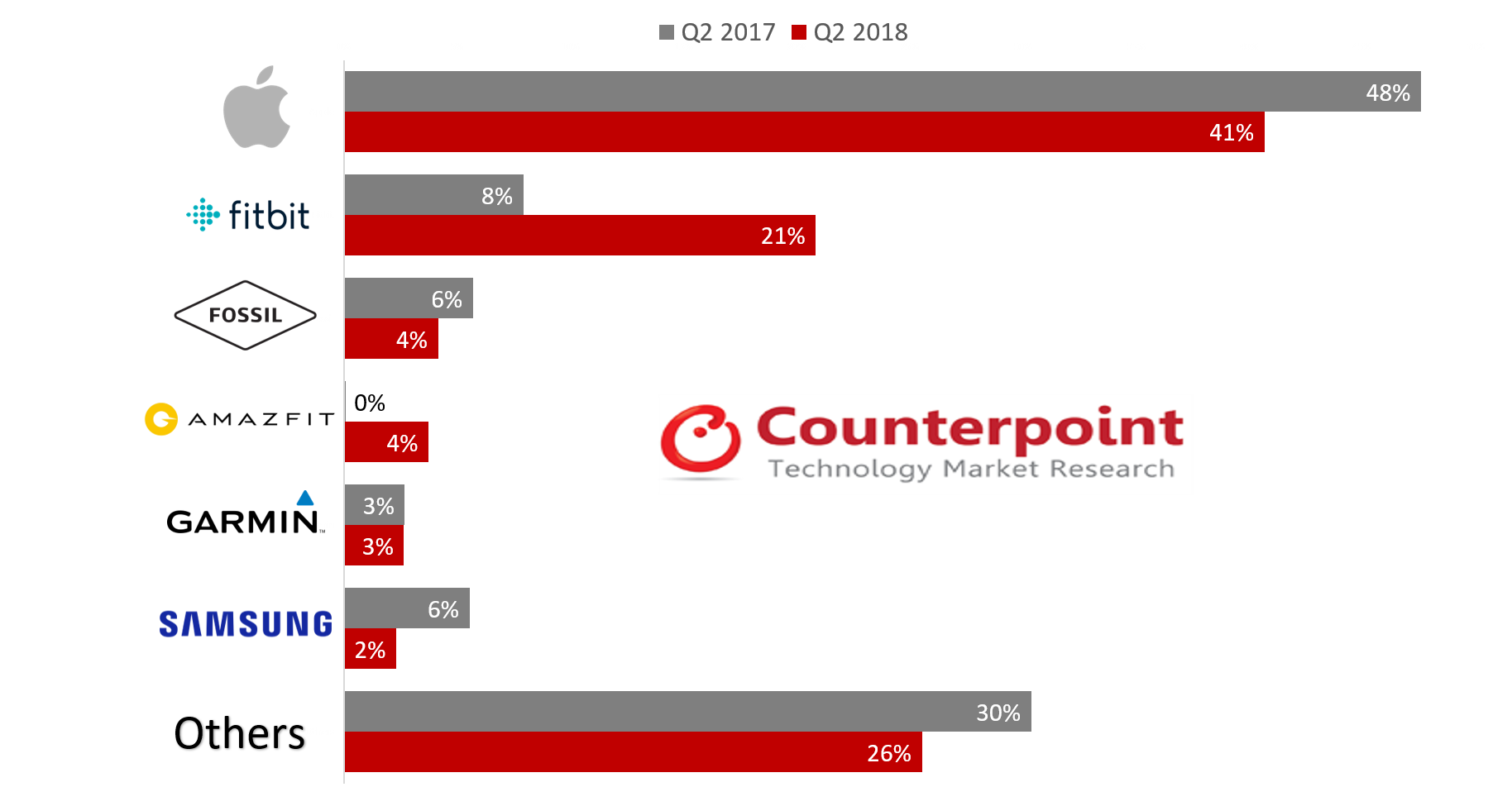
Start Up No.899: FTC prods backpack crowdfunder, WearOS redesigned, Miami’s freshwater problem, Amazon’s tennis trouble, and more


This is basically all homeopathy uses. You’d think they could avoid poisoning people. Photo by Petras Gagilas on Flickr.

You can sign up to receive each day’s Start Up post by email. You’ll need to click a confirmation link, so no spam.

A selection of 12 links for you. It’s the weather. I’m @charlesarthur on Twitter. Observations and links welcome.

The FTC is investigating a crowdfunding campaign that disappeared with more than $700K • The Verge

Ashley Carman:

»

The Federal Trade Commission might have a renewed interest in justice for crowdfunding backers. Emails seen by The Verge show that the agency is investigating at least one crowdfunding campaign gone bad — the iBackPack — which raised more than $700,000 across both Indiegogo and Kickstarter.

The backpack’s creator, Doug Monahan, marketed the device as a Wi-Fi-enabled, battery-packed backpack that would power gadgets on the go and provide a local hot spot for wearers’ friends. It launched on Indiegogo in 2015 and Kickstarter in 2016. Years later, the backpack has yet to ship, although some backers did receive “beta” device accessories, like batteries and cables, some time ago. Monahan’s two previous campaigns never reached their funding goals, but they were eventually used to market the iBackPack.

These backers tell The Verge that an FTC agent began reaching out to them this week in an effort to research the campaign…

…The iBackpack backers believe Monahan sold their information to other crowdfunding companies, as evidenced by communications they’ve had with some of these groups. They’ve also been told that the years-long delays had to do with undefined battery issues, including possible lithium-ion battery explosions. Monahan last posted an update to Kickstarter and Indiegogo in March 2017.

One backer said he was told by the FTC agent over email that the agency will “always try to recover any money we can for consumers when we file cases in court. Unfortunately, if the money has already been spent by the company or individual there is no money to recover.”

The website for iBackPack no longer functions, nor does the listed email address, and Monahan is completely incommunicado. The backers hope the FTC can find him and recover their funds, or at least bring his ill-fated campaign to light.

«

Monahan’s going to have to change his name if he wants to survive in the modern world. Searches on his name in future will be brutal.
link to this extract


Homeopathic company expands recall as FDA warns of “life-threatening” infections • Ars Technica

Beth Mole:

»

On Tuesday, the agency issued its own alert about King Bio’s products and offered a scathing perspective of the company’s manufacturing standards and business.

In the agency’s alert, FDA Commissioner Scott Gottlieb was quoted as saying: “We take product-quality issues seriously, and when we see substandard conditions during the course of our inspections—in this case conditions that are leading to high levels of microbial contamination with the potential to harm the public—we act swiftly to try to ensure the products are removed from circulation.”

The alert went on to note that, in a recent FDA inspection of King Bio’s manufacturing facility, the agency discovered that “several” microbial contaminants had turned up in the company’s products, including the bacteria Burkholderia multivorans. This is an opportunistic pathogen that causes severe illnesses in people with compromised immune systems and is a rare but emerging cause of meningitis. The FDA added that it also found evidence indicating “recurring microbial contamination associated with the water system used to manufacture drug products.”

After King Bio issued the expanded recall on August 22, the FDA immediately notified the company that it needed to do more. “The FDA contacted King Bio on August 23, 2018 and recommended the company again expand its recall to include all products that use water as an ingredient, including drug products for humans and animals,” the agency explained in the alert.

«

Amazing: how can a company that (basically) sells water screw something like this up so colosally?
link to this extract


Huge Wear OS redesign is coming, check out how it works in these GIFs • Android Authority

C. Scott Brown:

»

The updated Wear OS will put more of an emphasis on getting to important information at the time it matters most to you. It also brings smarter health tracking and coaching (in tandem with the newly updated Google Fit) and more proactive help from Google Assistant.

Google hopes that these new features will help you get the most out of every minute of every day.

In the Wear OS redesign, you can easily see your notifications as well as quickly get to settings and functions that you use often. By swiping up on the screen you’ll see a stream of notifications along with Google Assistant-powered smart replies you can easily send with a quick tap.

Swiping down from the top of your watch face will bring up handy shortcuts to most important apps, like Google Pay, Find my Phone, and more.

«

So, basically, a lot closer to Apple’s WatchOS.

link to this extract


Miami’s other water problem • Bloomberg

Christopher Flavelle:

»

As developers built out Southeast Florida, they found that instead of connecting each new home to the local sewer system, it was often easier to install septic tanks. Miami-Dade has about 90,000. “It was the magic carpet for quick, cheap development in Florida,” says Brian Lapointe, a research professor at Florida Atlantic University who focuses on the role of septic tanks in water contamination. These tanks are typically used in rural areas where homes are too far apart to justify connecting them to a central sewage system—but also in places where residential construction happens faster than municipal infrastructure development. Septic tanks trap solid waste, which is supposed to be pumped out, while the liquid stuff drains into the soil, where gravity and time filter out bacteria and whatever else is in it before it reaches groundwater. In Southeast Florida, that groundwater is especially close to the surface—and rising.

The state requires at least two feet of dry soil between the bottom of the drainage field and the top of the water table, but Lapointe says that during the wet season, the groundwater in parts of southern Florida already comes above that two-foot threshold. More intense flooding and rainstorms will swell the water table further, on top of the gains caused by sea level rise, sending partially treated human waste into the aquifer. That waste can contain E. coli bacteria, which cause diarrhea, vomiting, and even kidney failure. High levels of nitrates, another component of untreated waste, cause what’s called blue baby syndrome, in which infants’ blood can no longer carry sufficient oxygen.

Lapointe adds that one of the ways researchers track septic-tank contamination is by tracking the levels of acetaminophen in the groundwater. “People’s medications are coming with that septic-tank effluent.” The wonders of the human digestive system are many and varied, containing any number of other bacteria and viruses—“all these other organic compounds that may or may not be affected by the treatment at the utility plant,” he says.

How long does Miami have before the water table overwhelms the septic system? Officials, including the South Miami mayor, worry that the point of failure is closer than people realize. Says Stoddard, “I’m convinced that some of those septic systems are working by force of habit rather than by the laws of physics.”

«

And this is only one of multiple ways that Flavelle describes in which south Florida’s water supply is overwhelmed and liable to pollution. But who wants to pay taxes for better services?
link to this extract


With expectations of a positive second half of 2018 and beyond, smartphone volumes poised to return to growth • IDC

»

Android’s smartphone share will hover around 85% share throughout the forecast. Volumes are expected to grow at a five-year CAGR of 2.4%, with shipments approaching 1.41bn in 2022. Among the more interesting trends happening with Android shipments is that average selling prices (ASPs) are growing at a double-digit pace. IDC expects Android ASPs to grow 11.4% in 2018 to $262, up from $235 in 2017.

IDC expects this upward trajectory to continue through the forecast, but at a more tempered low single-digit rate from 2019 and beyond. This is a sign of many OEMs slowly migrating their user base upstream to the slightly more expensive handsets. Overall this is a positive sign that consumers are seeing the benefits of moving to a slightly more premium device than they likely previously owned. The broad range of colors, screen sizes, features, and brands are a large catalyst for this movement.

For iOS, iPhone volumes are expected to grow by 2.1% in 2018 to 220.4m in total. IDC is forecasting iPhones to grow at a five-year CAGR of 2.0%, reaching volumes of 238.5m by 2022. With larger screen iOS smartphones coming up for launch in the second half of 2018, IDC has shifted greater volumes into the 6in to sub-7in screen size forecast for iOS. Products are on schedule to begin shipping in the third quarter and ramping up into the fourth quarter of 2018, with volumes growing to account for half of all iPhones shipped by 2022.

«

The OS market is a complete duopoly; 85% Android, 15% iOS. And IDC sees it continuing that way. Apple gets the money, Android gets the volume.
link to this extract


Amazon suspends reviews of US Open coverage after deluge of complaints • The Guardian

Mark Sweney:

»

Amazon’s $40m five-year deal to broadcast the US Open to UK tennis fans – its first exclusive broadcast of a sports event – was meant to showcase the Silicon Valley giant’s streaming prowess and prove it can match traditional broadcasters and become a credible home for live sport.

The company, which has successfully streamed NFL matches in the US, has pulled out all the stops, including setting up its own studio at Flushing Meadows and drafting in former players such as Jim Courier, Greg Rusedski, Annabel Croft and Mark Petchey.

However, the internet giant has been inundated with complaints about a host of problems including the picture and sound quality of its streaming service and an inability to record matches. Almost 90% of the 650 reviews posted by subscribers to its £5.99 Prime Video service, home to its US Open coverage, gave Amazon just 1 or 2 stars.

“There is no replay option, no ability to record [and] the picture quality is very poor,” said one unhappy tennis fan. “It’s like going back in time 25 years.”

Others urged Amazon to “give tennis back to Sky and Eurosport”, which both used to broadcast the US Open in the UK before Amazon snapped up the exclusive rights.

«

Total 765 complaints by the time it suspended them; 627 of them 1-star. The five-star ones insist that it’s just about download speed, and ignore the fact that ITV and Eurosport had coverage of every court – not just three or four. Someone’s getting fired at Amazon.
link to this extract


Announcing LTE Beacon for asset tracking • Estimote

»

Today we are proud to announce another revolutionary IoT device. Once again, we chose to leverage emerging IoT technologies (LTE M1 and NB-IoT) and have designed and productized a new device we call the “Estimote LTE Beacon.”

It’s a small, wireless beacon that can compute both its precise indoor and outdoor position. It can talk directly to the cloud and last multiple years on a battery.
Estimote LTE Beacons are designed primarily to seamlessly locate assets and vehicles when they move between indoor and outdoor environments. Their secure firmware/cloud software is crafted to provide true “proof of location” and “proof of delivery.”

Since the device is fully programmable using JavaScript, it can also support other creative use-cases — for example, it can act as a remotely managed iBeacon or a gateway used to configure other Bluetooth beacons.

The best way to think of this new IoT device is to imagine it as a small smartphone, but without a screen. It can last years between charges and the cost is similar to a beacon. It has cellular LTE connectivity, built-in GPS, and Bluetooth radio. And it is also possible to create and download apps that run on the LTE beacon.

«

Apparently a use for this will be for Hilton and other hotel chains so that housekeepers can push it as a panic button: it’s accurate to a metre.
link to this extract


Russia secretly ran news websites in eastern Europe • Buzzfeed News

Holger Roonemaa and Inga Springe:

»

Russian state media created secret companies in order to bankroll websites in the Baltic states — a key battleground between Russia and the West — and elsewhere in Eastern Europe and Central Asia.

The scheme has only come to light through Skype chats and documents obtained by BuzzFeed News, Estonian newspaper Postimees, and investigative journalism outlet Re:Baltica via freedom of information laws, as part of a criminal probe into the individual who was Moscow’s man on the ground in Estonia.

The Skype logs and other files, obtained from computers seized by investigators, reveal the secrets and obfuscating tactics used by Russia as it tries to influence public opinion and push Kremlin talking points.

The websites presented themselves as independent news outlets, but in fact, editorial lines were dictated directly by Moscow. Raul Rebane, a leading strategic communications expert in Estonia, said that this scheme and others like it are “systemic information-related activities on foreign territory. In other words — information warfare.”

He said that Russian propaganda networks in the Baltics had been operating for years but had become more intense recently. “The pressure to turn [Estonia] from facing the West to facing the East has grown.”

Long before Russian interference in the 2016 US election became one of the biggest stories in the world, and Kremlin disinformation campaigns became a household issue, Moscow faced accusations of trying to influence public opinion in the Baltic states of Lithuania, Latvia, and Estonia, which are all members of NATO.

The revelations about the websites in the Baltic states provide a rare and detailed inside look into how such disinformation campaigns work, and the lengths to which Moscow is willing to go to obscure its involvement in such schemes.

«

link to this extract


Don’t pretend Facebook and Twitter’s CEOs can’t fix this mess • WIRED

Ellen Pao (who was, for a time, CEO of Reddit):

»

Companies can address harassment without hurting their platforms. Taking down shitty content works, and research supports it. When we took down unauthorized nude photos and revenge porn, nothing bad happened. The site continued to function, and all the other major sites followed. A few months later, we banned the five most harassing subreddits. And we saw right away that if we kept taking down the replacement sites, they would eventually disappear. University researchers who studied the impact of the ban report that it successfully shut down the content and changed bad behavior over time on the site—without making other sites worse.

If you’re a CEO and someone dies because of harassment or false information on your platform—even if your platform isn’t alone in the harassment—your company should face some consequences. That could mean civil or criminal court proceedings, depending on the circumstances. Or it could mean advertisers take a stand, or your business takes a hit.

Today, I don’t see a single CEO or even board member who is willing (or perhaps able) to step up and say: “Enough. I’m willing to focus on quality and user experience. I am willing to take a hit on quantity to create a real place for meaningful conversation and to end harassment, misinformation, and the goal of engagement at any cost.” We need to fill this vacuum of leadership.

«

Of course, advertisers are happy to ignore the consequences too; let’s not forget that. They’re the ones who can ultimately make these free-to-use services really think about what they’re doing. If companies were pulling multi-million campaigns and making a noise about it, perhaps that would do it. Though we’ve seen that with YouTube, and little changed.
link to this extract


The rise of giant consumer startups that said no to investor money • Recode

Jason Del Rey:

»

When Moiz Ali launched his startup Native, the maker of a natural deodorant brand, he couldn’t help but be self-conscious when mingling with other Bay Area entrepreneurs.

“In Silicon Valley, it’s often embarrassing when you haven’t raised money,” Ali told Recode recently. “When I’d go to parties or dinners, entrepreneurs would talk about how many employees they had. But for me, it was just me.”

Native eventually secured $550,000 from professional and individual investors, a relative pittance in the startup world where $100 million funding rounds and billion dollar valuations are discussed in a way that could sound like the norm.

For Ali, the limited funds meant cautious spending on marketing, a staff size that never rose above 10 and, even rarer, the need to turn a profit on each sale. In the earliest days, Ali and his small team also followed up with every disappointed customer — an education that eventually led to what’s called “product-market fit,” or the creation of a good that a large number of people in a certain market want.

So when Native sold to Procter & Gamble last year for $100 million in cash — just two-and-a-half years after launching — Ali could laugh last; he still owned more than 90% of his business and was worth a fortune. As important to him, he kept a strong grip on the brand’s destiny by remaining its CEO.

«

In a way, this story is unintentionally hilarious: as though a new tribe had been discovered, which Doesn’t! Take! Venture! Capital! Funding! When in reality, working your way up from “small and profitable” to “big and profitable” has been a favoured business approach since forever. All that’s slightly tweaked is that “direct-to-consumer” can use the web to expand their sales base, and follow up with happy (or sad) customers.
link to this extract


Nest x Yale smart lock now supports Google Assistant voice commands • Android Central

Joe Maring:

»

This is the first time any voice commands have been available for the Nest x Yale, and with Google Assistant support, you’ll be able to check the status of the lock, lock your door, and add it to any of your Assistant Routines. For example, if you add the Nest x Yale lock to a Routine titled “Goodnight”, you can turn off your lights, set an alarm, and lock all your doors with just one command.

All of these controls should prove to be mighty convenient, but take note that you won’t be able to unlock your door using Google Assistant. This was done as a sort of security precaution, and if you ask us, is a smart move on Nest’s part. Nest says you’ll be able to use Assistant commands for the Nest x Yale on both Google Home speakers and smartphones.

«

As it happens I wasn’t asking you, Joe, but it’s staringly obvious that you don’t want a door that can be unlocked using voice control. We don’t even need to go into why.

Meanwhile, the “Goodnight” routine is undoubtedly a clever idea, and those of a nervous disposition might like to be able to be sure whether the door is locked or unlocked. Baby steps, but that’s the way to make the smart home really work.
link to this extract


Fitbit heart data reveals its secrets • Yahoo Finance

David Pogue:

»

Before you freak out: Fitbit’s data is anonymized. Your name is stripped off, and your data is thrown into a huge pool with everybody else’s. (Note, too, that this data comes only from people who own Fitbits — who are affluent enough, and health-conscious enough, to make that purchase. It’s not the whole world.)

Most of what you’re about to read involves resting heart rate. That’s your heart rate when you’re still and calm. It’s an incredibly important measurement. It’s like a letter grade for your overall health. “The cool thing about resting heart rate is that it’s a really informative metric in terms of lifestyle, health, and fitness as a whole,” says Scott McLean, Fitbit’s principal R&D scientist.

For one thing — sorry, but we have to go here — the data suggests that a high resting heart rate (RHR) is a strong predictor of early death. According to the Copenhagen Heart Study, for example, you’re twice as likely to die from heart problems if your RHR is 80, compared with someone whose RHR is below 50. And three times as likely to die if your RHR is over 90.

Studies have found a link between RHR and diabetes, too. “In China, 100,000 individuals were followed for four years,” says Hulya Emir-Farinas, Fitbit’s director of data science. “For every 10 beats per minute increase in resting heart rate, the risk of developing diabetes later in life was 23% higher.”

So what’s a good RHR? “The lower the better. It really is that simple,” she says. Your RHR is probably between 60 and 100 beats a minute. If it’s outside of that range, you should see a doctor. There could be something wrong.

…Fitbit’s data confirms a lot of what cardiologists already know. But because the Fitbit data set is ridiculously huge, it unearthed some surprises, too.

“I was a researcher in my past life,” says McLean. “You would conduct an experiment for 20 minutes, then you’d make these huge hypotheses and conclusions about what this means for the general population. We don’t have to do that. We have a large enough data set where we can confidently make some really insightful conclusions.”

«

Some of it really is counterintuitive – such as these on heart rate by age, and against BMI.

It would be great to be able to analyse this data in more detail – but Fitbit’s not making it public.
link to this extract


Errata, corrigenda and ai no corrida: none notified

Start Up No.898: estimating Apple’s wearables biz, Japan’s drone farmhands, the oldest blockchain, Facebook’s rating you, and more


What happens to water before it becomes ice? Scientists tried to figure it out with code. Photo by welshmackem on Flickr.

You can sign up to receive each day’s Start Up post by email. You’ll need to click a confirmation link, so no spam.

A selection of 10 links for you. That’s how it goes. I’m @charlesarthur on Twitter. Observations and links welcome.

Yahoo, bucking industry, scans emails for data to sell advertisers • WSJ

Douglas MacMillan, Sarah Krouse and Keach Hagey:

»

Yahoo’s owner, the Oath unit of Verizon Communications Inc., VZ -0.36% has been pitching a service to advertisers that analyzes more than 200 million Yahoo Mail inboxes and the rich user data they contain, searching for clues about what products those users might buy, said people who have attended Oath’s presentations as well as current and former employees of the company.

Oath said the practice extends to AOL Mail, which it also owns. Together, they constitute the only major U.S. email provider that scans user inboxes for marketing purposes.

The strategy bucks a recent Silicon Valley trend toward more data privacy and shows an industry divided on where to draw the line between user protections and technologies that many advertisers crave.

«

ComScore data in the article shows that by this year only 17% of Yahoo users have an active email account, compared to 21% for Microsoft and 63% for Google. All changed since 2012 (on the desktop) when it was roughly 33-33-33 for all.

Yahoo is like an object circling a black hole’s event horizon: it’s taking forever to actually fall in, yet its fate is certain. There’s simply no way for it to climb back out to be relevant.
link to this extract


The world’s oldest blockchain has been hiding in the New York Times since 1995 • Motherboard

Daniel Oberhaus:

»

14 years before Bitcoin was invented, Haber and Stornetta created their own timestamping service called Surety to put their scheme into action.

Surety’s main product is called “AbsoluteProof” that acts as a cryptographically secure seal on digital documents. Its basic mechanism is the same described in Haber and Stornetta’s original paper. Clients use Surety’s AbsoluteProof software to create a hash of a digital document, which is then sent to Surety’s servers where it is timestamped to create a seal. This seal is a cryptographically secure unique identifier that is then returned to the software program to be stored for the customer.

At the same time, a copy of that seal and every other seal created by Surety’s customers is sent to the AbsoluteProof “universal registry database,” which is a “hash-chain” composed entirely of Surety customer seals. This creates an immutable record of all the Surety seals ever produced, so that it is impossible for the company or any malicious actor to modify a seal. But it leaves out an important part of the blockchain equation: Trustlessness. How can anyone trust that Surety’s internal records are legit?

Instead of posting customer hashes to a public digital ledger, Surety creates a unique hash value of all the new seals added to the database each week and publishes this hash value in the New York Times. The hash is placed in a small ad in the Times classified section under the heading “Notices & Lost and Found” and has appeared once a week since 1995.


An example of Surety’s hashes
in the New York Times from 2009.
Image: Surety

«

link to this extract


What Dropbox dropping Linux support says • TechRepublic

Puzzled 20-year Linux-on-the-desktop user Jack Wallen, on Dropbox’s decision to drop Linux support except unencrypted ext4 (or ext4 with LUKS encryption):

»

For a company to support Linux, they have to consider supporting:

• Multiple file systems
• Multiple distributions
• Multiple desktops
• Multiple init systems
• Multiple kernels
If you’re an open source developer, focusing on a single distribution, that’s not a problem. If you’re a company that produces a product (and you stake your living on that product), those multiple points of entry do become a problem. Let’s consider Adobe (and Photoshop). If Adobe wanted to port their industry-leading product to Linux, how do they do that? Do they spend the time developing support for ext4, btrfs, Ubuntu, Fedora, GNOME, Mate, KDE, systemd? You see how that might look from the eyes of any given company?

It becomes even more complicated when companies consider how accustomed to the idea of “free” (as in beer) Linux users are. Although I am very willing to pay for software on Linux, it’s a rare occasion that I do (mostly because I haven’t found a piece of must-have software that has an associated cost). Few companies will support the Linux desktop when the act of supporting means putting that much time and effort into a product that a large cross-section of users might wind up unwilling to pay the price of admission.

«

Gee, it’s as if he’s catching on. Not mentioned: that Linux has less than 5% of the desktop market. About 0.8% of the desktop, according to Wikipedia’s statistics, which we can probably take as a proxy for the web.
link to this extract


How Facebook failed the Rohingya in Myanmar • Buzzfeed News

Megha Rajagopalan, Lam Thuy Vo and Aung Naing Soe:

»

Facebook once regarded itself as a largely neutral platform for content. But the company has reevaluated this notion amid calls from the UN and other groups to take greater responsibility for what users post — especially calls for violence.

BuzzFeed News’ analysis shows how widespread the problem of hate speech is on Facebook’s platform. A review of more than 4,000 posts by politicians from the Arakan National Party found that 1 in 10 of the posts — made between March 2017 and February 2018 — contained hate speech as defined by Facebook’s own public community standards. The ANP is the most popular party in Rakhine state, which was home to hundreds of thousands of Rohingya before they were expelled last year. It says it represents the interests of the ethnic Rakhines, the dominant group in the state, which is also the home of the Rohingya and other groups.

Posts by members of Rakhine state’s parliament compared Rohingya to dogs, said Muslim women were too ugly to rape, falsely stated Rohingya torched their own houses for a payout from NGOs, and accused Muslims of seeking to become the dominant group in the state by having too many children. Some even told Muslims to get ready to be killed. Some of the most popular posts identified by BuzzFeed News as hate speech garnered 3,400 reactions or were shared up to 9,500 times. Asked about the posts, Tun Aung Kyaw, general secretary and spokesperson for the ANP, said he had never seen members of the party MPs post about other religions on Facebook, despite the evidence. “As general secretary of the party, I have never seen my party members post hate speech online,” he said.

«

link to this extract


Chromebook • AVC

Fred Wilson:

»

I have not used desktop software for probably a decade now. The browser is how I do all of my desktop computing. Paying up for a full blown computer when all I need is a browser seems like a waste.

And there are some security things that appeal to me about a Chromebook. I like the ability to do two factor authentication on signing into the device, for example.

I am curious what advice those of you who use Chromebooks have for me.

I like to use a desktop style setup vs a laptop unless I am traveling. So the Acer Chromebase and Chromebox look interesting to me.

But I am hearing great things about the Pixelbook and am wondering if I should start there.

I am also curious how one uses a Password Manager on a Chromebook. That’s the one desktop app that I regularly use.

«

Is he saying that he doesn’t run spreadsheets, or doesn’t run serious spreadsheets? One would expect a venture capitalist to be a heavy user of Excel, but that won’t run (in depth) on a Chromebook.
link to this extract


Facebook is rating the trustworthiness of its users on a scale from zero to 1 • The Washington Post

Elizabeth Dwoskin:

»

Facebook has begun to assign its users a reputation score, predicting their trustworthiness on a scale from zero to 1.

The previously unreported ratings system, which Facebook has developed over the past year, shows that the fight against the gaming of tech systems has evolved to include measuring the credibility of users to help identify malicious actors.

Facebook developed its reputation assessments as part of its effort against fake news, Tessa Lyons, the product manager who is in charge of fighting misinformation, said in an interview. The company, like others in tech, has long relied on its users to report problematic content — but as Facebook has given people more options, some users began falsely reporting items as untrue, a new twist on information warfare for which it had to account.

It’s “not uncommon for people to tell us something is false simply because they disagree with the premise of a story or they’re intentionally trying to target a particular publisher,” Lyons said.

A user’s trustworthiness score isn’t meant to be an absolute indicator of a person’s credibility, Lyons said, nor is there is a single unified reputation score that users are assigned. Rather, the score is one measurement among thousands of new behavioral clues that Facebook now takes into account as it seeks to understand risk.

«

link to this extract


The farmhand drone • CCS Insight

Raghu Gopal:

»

In Japan, several companies are competing to develop high-tech drones for crop spraying and other advanced uses. They’re working to fill a void that small-scale farmers in rural parts of the country are facing: a serious shortage of manpower. As the population ages and younger people move to urban areas, the agricultural sector is being left to tackle acute labour shortages. The drones perform arduous tasks and offer a solution to address the demographic shifts.

Nileworks, founded in 2015, is a company based in Tokyo that designs and manufactures drone technology for the agricultural industry. It builds an automated drone equipped with multiple rotors for spraying crops, and uses image processing and information technology to guide the machine to perform optimally.

The company claims its drone has the ability to recognise the shape of a field and spray at a height of just 30 cm above the ground, thereby reducing drift and wastage. The device can apply pesticides and fertilizer to a rice field in about 15 minutes, a job that takes more than an hour by hand and normally requires farmers to lug around heavy tanks. Nileworks will promote its flying machine to rice farmers in Japan when it launches the product commercially in 2019. It is also hoping to release the device in neighbouring Asian countries as other drone makers enter the market for agricultural drones.

«

Agriculture is really an obvious, and high-utility, application. (Heat-sensing cameras can also look at crops as they grow and spot the areas in distress, for example.)
link to this extract


From eight Apple management clues, a surprisingly clear(-ish) two-year window Into Apple’s wearables business • AAPL Tree

The quietly anonymous author of this blog has pulled a number of subtle clues from Apple management financial calls to put together these quite surprising summaries:

»

I know, just a simple revenue chart’s kinda boring, and seems like an anticlimactic way to end a connect-the-dots Apple financial “research” post. So, sure, I can throw out some things that jumped out at me and add extra (entertainment) value.

(1) The last eight quarters of Apple Wearables added around $17bn of revenue, and the trailing four quarters represent a combined ~60% growth rate over the prior four-quarter period. Not only is that considerably better than the 37% or so combined growth from all of Other Products in that same period of time, it also implies that Other Product Non-Wearables is a relatively unexciting business for Apple in comparison. Yes, it’s an extrapolation of an extrapolation with all that implies, but non-Wearables revenue growth over the same period looks to be mid-single digits, making it abundantly clear what set of products is breathing life into this revenue category.

(2) Apple Wearables, over the trailing four quarters, is approaching two-thirds of Other Products Revenues. “Clue 8” alone was all that was needed to arrive at this conclusion, but it’s a fun observation nonetheless given the semi-symmetry with iPhone, which tends to represent more than 60% of total Apple revenues in any given quarter.

(3) Bet you didn’t know this one – Apple Wearables, on a trailing-four-quarters basis, has quietly surpassed iPod’s all-time annual revenue record: $9.15bn, set in FY 2008, if memory serves.

«

He even reckons you could break out the Watch/non-Watch wearables data, given some of the clues to be found. Of course one thing Apple has now that it didn’t when it began the iPod is scale. In 2001 it was a tiny company, relatively. When it launched the Watch, it was already gigantic. That doesn’t make the Watch or iPod less of a success; just shows that this stuff is all relative.

Also: this is an Apple News link (it’s the only sort he offers), so if you’re reading on an iOS device it’ll try to open it in Apple News. I couldn’t find an original site URL for it.
link to this extract


The war over supercooled water • Physics Today

Ashley Smart:

»

[Renowned chemist David Chandler] and a graduate student, David Limmer [from UCal Berkeley], had used simulations to explore what happens when liquid water is cooled far below its freezing point. It was well known that pristine water—free of dust and other impurities on which ice crystals can nucleate—can be supercooled tens of degrees below 0 °C without freezing. But below what’s called the homogeneous nucleation temperature, around –40 °C, the liquid crystallizes almost instantly, no matter the purity. Chandler and Limmer wanted to know what that deeply supercooled water looks like in the instant before it freezes. What they found was seemingly unremarkable: at every temperature and pressure, the liquid basically resembled ordinary water.

To Princeton University’s Pablo Debenedetti, however, that result was mind-boggling. Two years earlier, Debenedetti and his coworkers had done their own simulations of supercooled water, at temperatures and pressures similar to those Chandler described. The Princeton simulations had revealed something far more intriguing. Yes, the liquid could take a high-density form that resembled water. But it could also take a low-density form, with the molecules arranged into airy hexagons reminiscent of those in ice. The water could morph back and forth between those two forms in much the same way it morphs between ice and liquid, or liquid and vapor.

In his 20-minute presentation, attended by many of the biggest names in condensed-matter theory, Chandler was essentially declaring that the Princeton team had gotten it wrong. “It was a matter of people saying, ‘Who are you going to believe, Chandler or Debenedetti?’” recalls Angell. “And Chandler carried the bigger stick.”

Over the next seven years, the perplexing discrepancy would ignite a bitter conflict, with junior scientists caught in the crossfire. At stake were not only the reputations of the two groups but also a peculiar theory that sought to explain some of water’s deepest and most enduring mysteries. Earlier this year, the dispute was finally settled. And as it turns out, the entire ordeal was the result of botched code.

«

Now go back to the first paragraph, and the second: ah yes, that word “simulations”. With so much science now relying on code, journals surely should insist on the publication of the source code used to reach conclusions. (Though read the comments on the story too, which point out that often it’s impossible, because many use commercial code – and Matlab isn’t going to publish its source.)

And yes, the whole story is a bit like a novella in the leadup to Kurt Vonnegut’s Cat’s Cradle.
link to this extract


Globalfoundries gives up on advanced chip production technology • Bloomberg

Ian King:

»

Globalfoundries, one of the world’s largest semiconductor makers, has dropped out of the race to develop the most advanced production technology, a move that will increase the electronic industry’s reliance on Taiwan Semiconductor Manufacturing Co (TSMC).

The Milpitas, California-based company, which has plants in New York state, Dresden, Germany, and Singapore, said it’s shifting resources to improving and extending existing techniques and giving up on developing 7 nanometer technology. That’s the latest way to cram as many transistors as possible onto a silicon wafer – how the industry has improved electronic components for decades. The new strategy will require an unspecified number of job cuts.

The move further reduces the number of companies trying to build cutting-edge semiconductors and adds to concern that the industry is struggling to deliver advances that underpin all modern electronics. Globalfoundries, owned by the government of Abu Dhabi, is the second-largest manufacturer of chips designed by other companies, a market dominated by TSMC.

The logic of the move is simple for company chief executive officer Tom Caulfield: stop pouring the majority of its research and equipment budget into work that may never pay off and instead invest in current technology that many customers will continue to use for years. Most companies that want advanced production also want it in enormous volume, something Globalfoundries can’t handle. That narrows its list of potential customers, the CEO said.

«

And then there were… fewer. AMD used to be Globalfoundries’ biggest customer but is also going to TSMC now – and only Samsung and Intel are bigger by revenue, but TSMC has 52% of the third-party market; Globalfoundries was second-biggest with 10%. (IC Insights has a good breakdown for 2017: TSMC completely dominates.)
link to this extract


Errata, corrigenda and ai no corrida: none notified

Start Up No.897: Oregon’s weed problem, the battle over Sidewalk, Magic Leap trashed, UN condemns Myanmar and Facebook, and more


Fortnite on Android avoids Google’s Play Store – but turned out to have a big security hole. Photo by portalgda on Flickr.

You can sign up to receive each day’s Start Up post by email. You’ll need to click a confirmation link, so no spam.

A selection of 10 links for you. Asbestos-free. I’m @charlesarthur on Twitter. Observations and links welcome.

Oregon grew more cannabis than customers can smoke. Now shops and farmers are left with mountains of unwanted bud • Willamette Week

Matt Stangel and Katie Shepherd:

»

Three years into Oregon’s era of recreational cannabis, the state is inundated with legal weed.

It turns out Oregonians are good at growing cannabis—too good.

In February, state officials announced that 1.1 million pounds of cannabis flower were logged in the state’s database.

If a million pounds sounds like a lot of pot, that’s because it is: Last year, Oregonians smoked, vaped or otherwise consumed just under 340,000 pounds of legal bud.

That means Oregon farmers have grown three times what their clientele can smoke in a year.

Yet state documents show the number of Oregon weed farmers is poised to double this summer—without much regard to whether there’s demand to fill.

The result? Prices are dropping to unprecedented lows in auction houses and on dispensary counters across the state.

Wholesale sun-grown weed fell from $1,500 a pound last summer to as low as $700 by mid-October. On store shelves, that means the price of sun-grown flower has been sliced in half to those four-buck grams.

For Oregon customers, this is a bonanza. A gram of the beloved Girl Scout Cookies strain now sells for little more than two boxes of actual Girl Scout cookies.

But it has left growers and sellers with a high-cost product that’s a financial loser. And a new feeling has descended on the once-confident Oregon cannabis industry: panic.

«

How surprising that if you allow a weed to grow unchecked, it grows unchecked.
link to this extract


Myanmar’s military accused of genocide in damning UN report • The Guardian

Hannah Ellis-Petersen:

»

Individuals singled out for investigation and prosecution for genocide and crimes against humanity included Min Aung Hlaing, the commander-in-chief of the Tatmadaw, who has openly stated his intention to solve “the long-standing Bengali problem”.

“There is sufficient information to warrant the investigation and prosecution of senior officials in the Tatmadaw chain of command, so that a competent court can determine their liability for genocide in relation to the situation in Rakhine state,” the report said.

Minutes after the report was released, Facebook removed 18 accounts and 52 pages associated with the Myanmar military, including that of Min Aung Hlaing. It comes in the wake of months of criticism of the company for failing to combat the spread of hate speech on Facebook in Myanmar. The Tatmadaw have often used their Facebook pages to spread disinformation and anti-Rohingya sentiment, such as photos of dismembered children posted to Min Aung Hlaing’s page, claiming they were killed by “Muslim terrorists”.

“We want to prevent them from using our service to further inflame ethnic and religious tensions,” the company said. The pages and accounts that were removed had a total of almost 12 million followers.

The UN mission called for Myanmar, formerly known as Burma, to be investigated by the international criminal court (ICC).

«

Let’s hope that this, the first time Facebook has been implicated in a genocide, is also the last.
link to this extract


All three iPhones coming this fall will reportedly have edge-to-edge displays • Ars Technica

Valentina Palladino:

»

As September approaches, so too does the release of new iPhones from Apple. A report from Bloomberg provides a few more details about the new smartphones that we can expect from the tech giant this fall, along with insight into Apple’s overall strategy. The main rumors still stand: Apple is expected to debut three new iPhones in September with the goal of diversifying its product line with various device sizes and prices to attract new customers.

The report suggests Apple will reveal a new high-end iPhone with a display close to 6.5in, which would make it the largest iPhone ever. It would also be the second iPhone to have an OLED display, a premium feature to be carried over from last year’s iPhone X. This handset will have a glass back, stainless steel edges, and the ability to show two apps side by side in split-screen.

Apple will update the current iPhone X with a faster processor and an upgraded camera. Otherwise, last year’s flagship $1,000 smartphone should remain unchanged.

The third iPhone model will sit in between the 5.8in iPhone X and the new, 6.5in high-end smartphone in size, measuring 6.1in diagonally. This will be the affordable model that has been rumored for quite some time, featuring a cheaper LCD screen instead of an OLED panel. It will also come in multiple colors and have aluminum edges instead of the stainless steel ones found on the other two iPhone models. Constructing this handset with an LCD panel and aluminum will keep costs down, allowing Apple to keep the price of this model lower than the others.

«

Probably two and a bit weeks off the release now.
link to this extract


Toronto’s Sidewalk Labs is facing accusations of an Orwellian takeover • The Washington Post

Brian Barth:

»

In October 2017, Sidewalk Labs, a Google-affiliated company looking to make urban life more streamlined, economical and green by infusing cities with sensors and data analytics, announced plans to build the world’s first neighborhood “from the Internet up” on 12 acres of the Toronto waterfront, an area known as Quayside. Sidewalk aims to, for example, build an “advanced microgrid” to power electric cars, design “mixed-use” spaces to bring down housing costs, employ “sensor-enabled waste separation” to aid recycling and use data to improve public services.

The company’s long-term vision is to expand to the adjacent Port Lands, a valuable 800-acre tract of industrial waterfront. And from there, as Prime Minister Justin Trudeau said at a press conference to unveil the project, to “other parts of Canada and around the world.” Quayside will be “a testbed for new technologies,” Trudeau declared in rousing tones. “Technologies that will help us build smarter, greener, more inclusive cities.” The media was then treated to a series of utopic renderings of a futuristic neighborhood featuring driverless buses, green-roofed condos and carefree children
running barefoot amid butterflies.

Wylie, however, has zero tolerance for smart city PR-speak. “The smart city industry is a Trojan horse for technology companies,” she told The WorldPost. “They come in under the guise of environmentalism and improving quality of life, but they’re here for money.”

Wylie’s resume is filled with positions in IT, government consultancies and corporate development. More recently, she’s worked part-time as a professor while volunteering for various “open data” and “civic tech” initiatives. Last November, she launched Tech Reset Canada (TRC) with three other activist-entrepreneurs — all women.

The group describes itself as “pro-growth” and “pro-innovation” but questions whether a top-down smart city project by an American tech behemoth is really in the best interests of Toronto’s citizens. “This is a story about governance, not urban innovation,” Wylie said. “There is nothing innovative about partnering with a monopoly.”

«

Sidewalk is a mostly unnoticed attempt by Google to control the “smart city”. There’s also opposition to it in London, coordinated by a group including Adrian Short.
link to this extract


Epic’s first Fortnite Installer allowed hackers to download and install anything on your Android phone silently • Android Central

Andrew Martonik:

»

Google has just publicly disclosed that it discovered an extremely serious vulnerability in Epic’s first Fortnite installer for Android that allowed any app on your phone to download and install anything in the background, including apps with full permissions granted, without the user’s knowledge. Google’s security team first disclosed the vulnerability privately to Epic Games on August 15, and has since released the information publicly following confirmation from Epic that the vulnerability was patched.

In short, this was exactly the kind of exploit that Android Central, and others, had feared would occur with this sort of installation system…

…The problem, as Google’s security team discovered, was that the Fortnite Installer was very easily exploitable to hijack the request to download Fortnite from Epic and instead download anything when you tap the button to download the game. It’s what’s known as a “man-in-the-disk” attack: an app on your phone looks for requests to download something from the internet and intercepts that request to download something else instead, unbeknownst to the original downloading app. This is possible purely because the Fortnite Installer was designed improperly — the Fortnite Installer has no idea that it just facilitated the malware download, and tapping “launch” even launches the malware.

«

Ben Thompson had a good rundown about this on his Stratechery newsletter (subscribers only) where he points out that this is both the downside of Android’s openness (vulnerability) and its upside (you can install anything from anywhere). Epic Games, Fortnite’s maker, wasn’t too pleased about this.
link to this extract


WhatsApp has a fake news problem—that can be fixed without breaking encryption • Columbia Journalism Review

Himanshu Gupta and Harsh Taneja:

»

WhatsApp changed its terms of service in August 2016 to say that it would be sharing phone number and metadata attributes such as last seen with Facebook (but not chat messages since they are end-to-end encrypted). To a TechCrunch enquiry, Facebook said the sharing of data would lead to “better friend suggestions” and “more relevant ads” for a WhatsApp user if s/he is using Facebook. Kashmir Hill of Gizmodo wrote that Facebook may be using the metadata information from WhatsApp for improving its “People You May Know” feature:

In 2014, it(Facebook) bought WhatsApp, which would theoretically give it direct insight into who messages who. Facebook says it doesn’t currently use information from WhatsApp for People You May Know, though a close read of its privacy policy shows that it’s given itself the right to do so.

Therefore, even if WhatsApp can’t actually read the contents of a message, it can access the unique cryptographic hash of that message (which it uses to enable instant forwarding), the time the message was sent, and other metadata. It can also potentially determine who sent a particular file to whom. In short, it can track a message’s journey on its platform (and thereby, fake news) and identify the originator of that message.

«

They reckon that Facebook could look at the metadata for attachments – which is often how fake news spreads – and identify and control its spread. The first part at least should be feasible. Notable that it now also says if a message has been forwarded multiple times; but I don’t think that would stem fake news’s virality. It tends to give it status. (Ditto on Twitter: retweets and likes aren’t veracity.)
link to this extract


Firefox Test Pilot • Advance

»

The Advance Test Pilot experiment is a collaboration between Laserlike and Mozilla.

In addition to the data collected by all Test Pilot experiments, here are the key things you should know about what is happening when you use Advance:

Sensitive Data: After installation, Laserlike will receive your web browsing history. No data is sent if you are in private browsing or pause mode, the experiment expires, or you disable it. Laserlike also receives your IP addresses, dates/timestamps, and time spent on webpages. This data is used to index URLs publicly visible on the web.

Controls: The settings allow you to request what data Laserlike receives about you from this experiment. You can also delete cookies, web browsing history, and related Laserlike account information.

Technical and Interaction Data: Both Mozilla and Laserlike will receive clickthrough rates and time spent on recommended content; data on how you interact with the sidebar and experiment; and technical data about your OS, browser, locale.

«

It’s going to send your web browsing history to a third party?!
link to this extract


Magic Leap is a tragic heap • The Blog of Palmer Luckey

The aforesaid Palmer Luckey:

»

Tracking is bad. There is no other way to put it. The controller is slow to respond, drifts all over the place, and becomes essentially unusable near large steel objects – fine if you want to use it in a house made of sticks, bad if you want to work in any kind of industrial environment. Magnetic tracking is hard to pull off in the best of cases, but this is probably the worst implementation I have seen released to the public…

…I will keep this part short. I hope Magic Leap does cool stuff in the future, but the current UI is basically an Android Wear watch menu that floats in front of you. The menus are made of flat panels that can only be interacted with through the previously discussed non-clickable trackpack. Eye tracking and rotation/position of the controller are ignored, as is headlook. You can toss Windows 8 style application windows all over the place, floating in space or even attached to walls! That is nifty, mostly useless, and also exactly what Microsoft started showing off about three years ago. It is some of the worst parts of phone UI slammed into some of the most gimmicky parts of VR UI, and I hope developers create better stuff in the near future…

…I gathered some order numbers from friends and compared their order times, and I am pretty confident about predicting first-week sales. Unfortunately, they changed the system shortly after I tweeted about it. Based on what I do know, it looks like they sold about 2,000 units in the first week, with a very heavy bias towards the first 48 hours. If I had to guess, I would put total sales at well under 3,000 units at this point. This is unfortunate for obvious reasons – I know over a hundred people with an ML1, and almost none of them are AR developers.

«

You’re thinking: Palmer Luckey.. rings a bell? Yup, the founder of Oculus, the VR company bought by Facebook.
link to this extract


1,464 Western Australian government officials used ‘Password123’ as their password. Cool, cool • The Washington Post

»

Somewhere in Western Australia, a government IT employee is probably laughing or crying or pulling their hair out (or maybe all of the above). A security audit of the Western Australian government released by the state’s auditor general this week found that 26% of its officials had weak, common passwords — including more than 5,000 including the word “password” out of 234,000 in 17 government agencies.

Yikes.

The legions of lazy passwords were exactly what you — or a thrilled hacker — would expect: 1,464 people went for “Password123” and 813 used “password1.” Nearly 200 individuals used “password” — maybe they never changed it to begin with?

Almost 13,000 used variations of the date and season, and almost 7,000 included versions of “123.”

«

The old favourites are the best.
link to this extract


The rise of dismal science fiction • Slate

Annalee Newitz:

»

When I was writing my novel Autonomous, I wanted to explore a future where automation has ushered in a world whose economy is built in part on indentured servitude. So I met with economist and Bloomberg columnist Noah Smith, who immediately started world building like a fiction writer. He suggested that I imagine that people in the 22nd century have lost the right to work or live wherever they like, unless they pay for the privilege. As a result, work itself becomes pay-to-play, and people without money have no choice but to sign indenture contracts.

I wasn’t aiming to create a metaphor. I was trying to be as literal as possible about how easy it would be to slide backward into the savagery of a slave economy. By incorporating the ideas of a working economist, I hoped to offer readers a believable thought experiment about the real-life dangers of unchecked capitalism.

Economists wouldn’t mind doing a little more consulting work for fiction writers. Just as physicists love to complain about terrible science in space operas, Smith had a lot of gripes about all the unrealistic economic ideas in current pop culture. (The Iron Bank’s investment policy in Game of Thrones was a particular target of scorn.) Nobel-winning economist Paul Krugman, a science-fiction fan, told me that it “would be nice” if he could be consulted on fantasy economics once in a while, too.

He just might get his wish. As long as the economy continues to be a source of tremendous anxiety, it’s going to fill our fantasies with alien currencies and demonic financial instruments. Maybe by confronting our problems in metaphors and thought experiments, we equip ourselves to solve them in the real world.

«

link to this extract


Errata, corrigenda and ai no corrida: none notified

Start Up No.896: is Google hiding Maps reviews?, TripAdvisor’s power struggle, what’s a pro Mac mini?, the press release hackers, and more


Norway has plastic bottle recycling sorted. A little nudge is the answer. Photo by Jennifer Cowley on Flickr.

You can sign up to receive each day’s Start Up post by email. You’ll need to click a confirmation link, so no spam.

A selection of 11 links for you. Even today, yes. I’m @charlesarthur on Twitter. Observations and links welcome.

Norway’s radical approach to plastic pollution leads to 97% recycling • Huffington Post

:

»

While other industrialized nations grapple with dangerously problematic plastic consumption, Norway stands out, recycling up to 97% of its plastic bottles thanks to a nationwide bottle deposit scheme.

Ingrained in the Norwegian model is the idea that the container is on loan; it’s not yours. And why would you want it when you can exchange it over the counter ― at stores, gas stations or one of the several thousand reverse vending machines in public places like schools and supermarkets ― in return for cash or store credit?

Plastic producers in Norway are subject to an environmental tax. The more of their plastic they recycle, the lower the tax. Almost all of them are signed up to the bottle deposit scheme and, if they reach a collective recycling target of above 95%, they don’t have to pay at all. Producers have collectively met that target for the last seven years.

They ensure they reach that target by attaching a deposit value ― the equivalent of around 15 to 30 cents, depending on size ― to each plastic bottle, to be redeemed when it’s returned. The high-quality plastic waste that’s collected can then be recycled into everything from textiles to packaging, including new plastic bottles.

This simple but effective system would seem like a no-brainer for the United States, where recycling rates for plastic bottles have plunged from 37.3% in 1995 to 28% today.

«

Economic “nudge” systems like this can be surprisingly effective. In the UK a “sugar tax” on drinks with high sugar content has lowered their consumption. A 5p charge on plastic bags in store chains has reduced their use enormously. This tax system worked for glass bottles in the US; it could now for plastic.
link to this extract


Google might be hiding the fact that its own reviews are shoddy • Yahoo Finance

Ethan Wolff-Mann:

»

If you Google “Chiropractor Bethesda Maryland,” you’ll see Google’s famous 10 blue links. But you’ll also see a box with a map — a snippet — at the top with local results, star ratings, and buttons for phone number and directions. Clicking further will show you reviews people left on Google Maps.

Google is ostensibly providing a service to make it easy to get what you want: a chiropractor in Bethesda.

But what if these reviews aren’t particularly good or reliable? This is a question that has come up based on the fact that Google’s library of local reviews is no longer available apart from the Maps platform or the box above search links.

If you Google the exact, unique text of a user review found through the box above in quotes, an interesting thing happens: No results are found, despite the fact that you just saw the text, provided by Google itself in the box above the reviews.

Google appears to have quietly purged its own user-generated review content from its search results.

This is significant, critics of Google say, because it obscures the fact that Google’s search engine judges the company’s own reviews poorly. Google’s search engine ranks content by relevance and quality, and Google’s review content previously showed up deep into the search results, far from the first page of links that takes most of the clicks.

A Google spokesperson disagreed that the review content was “de-indexed,” simply noting that because Google reviews don’t currently live on a web page, they are not displayed as web results.

Given that reviews once showed up in regular Google search results and now do not, it follows that the reviews were moved from a web page to the Maps platform, whose code prevents search engines from crawling it. What was once searchable is now not searchable, something Google did not explain.

As a result, Google reviews do not have to rank highly in search engines. Instead, the Google snippet — the map and reviews box above the standard search result — allows the company to capture clicks that would otherwise flow off the platform to whatever website had the best result in the algorithm made by the search team down the hall at Mountain View deemed as the best.

«

Capturing clicks that would otherwise flow off the platform is an increasingly big thing for Google, which once couldn’t wait to let people get off its site.
link to this extract


How Tripadvisor changed travel • The Guardian

Linda Kinstler:

»

As the so-called “reputation economy” has grown, so too has a shadow industry of fake reviews, which can be bought, sold and traded online. For TripAdvisor, this trend amounts to an existential threat. Its business depends on having real consumers post real reviews. Without that, says Dina Mayzlin, a professor of marketing at the University of Southern California, “the whole thing falls apart”. And there have been moments, over the past several years, when it looked like things were falling apart. One of the most dangerous things about the rise of fake reviews is that they have also endangered genuine ones – as companies like TripAdvisor raced to eliminate fraudulent posts from their sites, they ended up taking down some truthful ones, too. And given that user reviews can go beyond complaints about bad service and peeling wallpaper, to much more serious claims about fraud, theft and sexual assault, their removal becomes a grave problem.

Thus, in promising a faithful portrait of the world, TripAdvisor has, like other tech giants, found itself in the unhappy position of becoming an arbiter of truth, of having to determine which reviews are real and which are fake, which are accurate and which are not, and how free speech on their platform should be. It is hard to imagine that when CEO Stephen Kaufer and his co-founders were sitting in a pizza restaurant in a suburb of Boston 18 years ago dreaming up tripadvisor.com, they foresaw their business growing so powerful and so large that they would find themselves tangled up in the kinds of problems that vex the minds of the world’s most brilliant philosophers and legal theorists. From the vantage point of 2018, one of the company’s early mottos now seems comically naive: “Get the truth and go.”

Many of the difficult questions the company faces are also questions about the nature of travel itself, about what it means to enter unknown territory, to interact with strangers, and to put one’s trust in them. These are all things that one also does online – it is no coincidence that the some of the earliest analogies that we once used to talk about the digital world (“information superhighway”, “electronic frontier”) tended to belong to the vocabulary of travel. In this sense, the story of TripAdvisor, one of the least-examined and most relied-upon tech companies in the world, is something like a parable of the internet writ large.

«

5/5 Would read again
link to this extract


Bitcoin’s use in commerce keeps falling even as volatility eases • Bloomberg

Olga Kharif:

»

The way Bitcoin is being utilized is changing as well. Because the fees to process a transaction in Bitcoin can be steep and varied – they peaked at $54 in December, but are down to less than $1 today — not many people are using the coins for small transactions, like buying a cup of coffee. They are spending the virtual currency more to pay vendors like freelancers located overseas: For those cases, using Bitcoin can be cheaper and faster than using traditional financial services.

“In the last six months we’ve seen a large uptick in crypto companies paying their vendors in Bitcoin, including law firms, hosting companies, accounting firms, landlords and software vendors,” according to Sonny Singh, chief commercial officer of processor BitPay. His company has seen a five-fold increase in crypto companies paying their bills from last year, he said.

Bitcoin faithful continue to buy bigger-ticket items such as furniture, and still the occasional sports car. At Overstock.com Inc., crypto-based sales are up two-fold in the first half of this year versus a year ago, the company said. Top items bought with cryptocurrency include living-room furniture, bedroom furniture and laptops, according to the site.

Many people, however, are only speculating with Bitcoin or selling off small amounts to convert it into a fiat currency, and use that to pay for goods and services. Long-time advocate Graham Tonkin said he converts his Bitcoin and Ether from time to time to cover credit-card bills.

«

link to this extract


Phone numbers were never meant as ID. Now we’re all at risk • Wired

Lily Hay Newman:

»

Thomas Hardjono, a secure identities researcher at MIT’s Trust and Data Consortium, points to credit card numbers – identifiers authenticated with a chip plus a PIN or a signature. The financial industry realized decades ago that the system wouldn’t work if it wasn’t relatively easy to change credit card info after it was exposed. You can get a new credit card as needed; changing your phone number can be incredibly inconvenient. As a result, they become more and more at-risk over time.

So if you’re looking for an alternative to the phone number, start with something more easily replaceable. Hardjono suggests, for example, that smartphones could generate unique identifiers by combing a user’s phone number and the IMEI device ID number assigned to every smartphone. That number would be valid for the life of the device, and would naturally change whenever you got a new phone. If you needed to change it for whatever reason, you could do so with relative ease. Under that system, you could continue to give out their phone number without worrying about what else it might affect.

“The people in the card payment space understood a long time ago that separating people’s accounts from static attributes is important, but this definitely hasn’t happened with mobile phone numbers,” Hardjono says. “Plus SMS is a weak way to authenticate anyway, because the protocols are vulnerable. So if your phone could generate this short-term identifier that’s a combination of your physical device identifier and your phone number, it would be replaceable as a safety precaution.”

«

But… you can use apps like Google Authenticator or (better) Authy to generate a TOTP (timed one time password) on the phone or any other device you’ve authenticated, without needing an SMS. Any system is vulnerable one way or another – ask the credit card companies.
link to this extract


The terrifying, hidden reality of ridiculously complicated algorithms • Times Literary Supplement

Carl Miller:

»

With a triumphant flick of his wrist, the researcher tapped a key and the algorithm began. Twenty seconds later, the algorithm was finished. There in black and white, was an output. One, of course, that I cannot specifically describe, but an output that many of us use every day. The algorithm had produced a kind of reality, really – one that we make decisions from, that can even change our lives.

The researcher scrolled through the bundle of instructions, and changed a single one to a two. A single value. The algorithm reran, and reality popped out again, but this time, a quarter of the results had ceased to exist.

“OK,” I said, “what happened there? Why did you change it? You know the two is wrong. But how do you know the one is right?”

“That”, he said, gesticulating at the sabotaged result, “is the point. It’s a heuristic. I tried it, and it seemed to work. Then I tested it, and the result looked right. I can’t say the one is true. I can only say that it passed minimum evaluation criteria. The whole algorithm is full of parameters that could have been something else. Truth is dead,” he sighed. “There is only output.”
“Who checks these?” I asked.
“Me.”
“What about your boss?”

“You’ve seen how difficult it is to really understand. Sometimes I struggle with it, and I created it. The reality is that if the algorithm looks like it’s doing the job that it’s supposed to do, and people aren’t complaining, then there isn’t much incentive to really comb through all those instructions and those layers of abstracted code to work out what is happening.” The preferences you see online – the news you read, the products you view, the adverts that appear – are all dependent on values that don’t necessarily have to be what they are. They are not true, they’ve just passed minimum evaluation criteria.

«

link to this extract


When the Mac mini goes pro, will the pros get Mac minis? • Macworld

Dan Moren on the rumoured “pro” revamped Mac mini:

»

this is the real question for the Mac mini. What “pro” situations does Apple expect this machine to be used in? Media servers aren’t really a pro-level scenario; most Macs these days have gotten pretty adroit at handling even large video files.

No, when Apple says “pro” it usually means “creative professional.” Tasks like Photoshop, 3D modeling, visual effects, film editing, music production, and so on. But a Mac mini, with its relatively limited graphics power, doesn’t seem well-suited to almost any of those tasks—certainly not as much as an iMac Pro or the company’s forthcoming Mac Pro. So how exactly does the company position what used to be its small low-cost machine against those high-performance options?

There are a few niches—literal and figurative—for which the Mac mini is uniquely suited. Headless servers, especially rack-mounted options. Other places where space is at a premium, such as connected to a TV to for a wall-mounted display. Or all those adventurous hackers who want to figure out how to fit a Mac mini into their car, for example. It’s hard to see a MacBook Pro or an iMac being used in any of those cases. Perhaps a displayless Mac is just what the server admin called for.

But all of this raises a larger question: How does the “pro” Mac mini fit into a line-up that already includes a powerful desktop (the iMac), an even more powerful version of that desktop (the iMac Pro), and a forthcoming update to the standalone desktop powerhouse (the Mac Pro)? That’s a lot of pro machines for a company that only does a relatively small percentage of its sales to professionals.

One place the Mac mini has traditionally competed is on cost; it’s traditionally been offered at a $499 entry point, albeit for a machine without a lot of power. That’s still a viable option, as Apple doesn’t have any other computers that are that cheap. But you’re certainly not about to get a “pro” machine for $499, despite the ardent hopes of a few.

«

So we’re expecting a lot to be solved in October-ish (the likely release date for the new Macs): the naming system for the laptop line, and what the hell a pro Mac mini is.
link to this extract


How an international hacker network turned stolen press releases into $100m • The Verge

Isobel Koshiw:

»

Newswires like Business Wire are clearinghouses for corporate information, holding press releases, regulatory announcements, and other market-moving information under strict embargo before sending it out to the world. Over a period of at least five years, three US newswires were hacked using a variety of methods from SQL injections and phishing emails to data-stealing malware and illicitly acquired login credentials. Traders who were active on US stock exchanges drew up shopping lists of company press releases and told the hackers when to expect them to hit the newswires. The hackers would then upload the stolen press releases to foreign servers for the traders to access in exchange for 40% of their profits, paid to various offshore bank accounts. Through interviews with sources involved with both the scheme and the investigation, chat logs, and court documents, The Verge has traced the evolution of what law enforcement would later call one of the largest securities fraud cases in US history.

The case exemplifies the way insider trading has been quietly revolutionized by the internet. Traders no longer need someone inside a company to obtain inside information. Instead, they can turn to hackers, who can take their pick of security weaknesses: a large corporation or bank may have good in-house security, but the entities it works with — such as financial institutions, law firms, brokerages, smaller investment advisories, or, in this case, newswires — might not.

As one person involved in the press release scheme pointed out, it doesn’t matter what level of security a company has, “you’ve always got the human factor: that one employee who will click on the phishing email or is happy to exchange their password for money.”

«

Hell of a story.
link to this extract


The US EA is now allowing asbestos back into manufacturing • Archpaper

Sydney Franklin:

»

According to Fast Company, the EPA’s recently released report detailing its new framework for evaluating the risk of its top prioritized substances states that the agency will “no longer consider the effect or presence of substances in the air, ground, or water in its risk assessments.” 

This news comes after the EPA reviewed its first batch of 10 chemicals under the 2016 amendment to the 1976 Toxic Substances Control Act (TSCA), which requires the agency to continually reevaluate hundreds of potentially toxic chemicals in lieu of removing them from the market or placing new restrictions on their use. The SNUR greenlights companies to use toxic chemicals like asbestos without consideration about how they will endanger people who are indirectly in contact with them. 

Asbestos was widely used in building insulation up until it was completely banned in most countries in the 1970s. The U.S. severely restricted its use without completely outlawing it. As Fast Company covered, the Asbestos Disease Awareness Organization (ADAO) revealed in April that asbestos-related deaths now total nearly 40,000 annually, with lung cancer and mesothelioma being the most common illnesses in association with the toxin.

«

So “no longer consider the effect or presence of substances in the air, ground, or water in its risk assessments”: doesn’t that mean completely ignoring any effects? This is bizarre.
link to this extract


On wider access to culture • Stumbling and Mumbling

Chris Dillow on the effect of having access to more books and music than our forebears did:

»

There might be another consequence – a diminution of shared understandings. Until quite late into the 20th century, there was general agreement about what it meant for people to be educated. Today, this is less the case: yes, there is a “canon” in many disciplines, but there’s disagreement about what this should be. It is possible for people knowledgeable about books and music to be unable to converse with each other because they’ve few readings and listenings in common.

One reason why there are such heated debates about the state of economics (or about Marxism) is that people have very different understandings of what these are, based upon different readings. Equally, I suspect that some misunderstandings of this blog are founded not just upon my own incoherence but upon readers not having my intellectual referents, such as Roemer, Elster and MacIntyre. The misunderstanding cuts both ways: I got an email in the day job last week which I couldn’t make head or tail of despite coming from an intelligent man, because his frame of reference was so different from mine.

But here’s the thing. Although we lack shared understandings, people want them. This leads to the emergence of Adler (pdf) superstars – individuals with no more talent than others but who become famous by luck or good marketing, and this fame then prove self-sustaining as everybody talks about them. Reality TV stars, as well as some authors and singers, fit this pattern. This is one way (of several) in which we see a retreat from meritocracy.

«

link to this extract


What data scientists really do, according to 35 data scientists • HBR

Hugo Bowne-Anderson spoke to 25 of them:

»

Great strides are being made in industries other than tech. I spoke with Ben Skrainka, a data scientist at Convoy, about how that company is leveraging data science to revolutionize the North American trucking industry. Sandy Griffith of Flatiron Health told us about the impact data science has begun to have on cancer research. Drew Conway and I discussed his company Alluvium, which “uses machine learning and artificial intelligence to turn massive data streams produced by industrial operations into insights.” Mike Tamir, now head of self-driving at Uber, discussed working with Takt to facilitate Fortune 500 companies’ leveraging data science, including his work on Starbucks’ recommendation systems. This non-exhaustive list illustrates data-science revolutions across a multitude of verticals.

It isn’t all just the promise of self-driving cars and artificial general intelligence. Many of my guests are skeptical not only of the fetishization of artificial general intelligence by the mainstream media (including headlines such as VentureBeat’s “An AI god will emerge by 2042 and write its own bible. Will you worship it?”), but also of the buzz around machine learning and deep learning. Sure, machine learning and deep learning are powerful techniques with important applications, but, as with all buzz terms, a healthy skepticism is in order.

«

link to this extract


Errata, corrigenda and ai no corrida: none notified
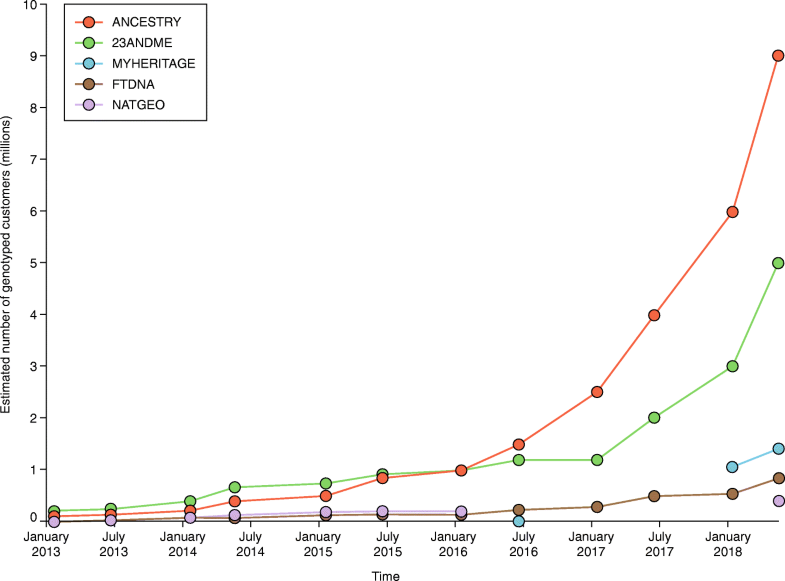
Start Up No.895: social media for good, how do you break up Facebook?, Xiaomi grows, Onavo’s no-go, cracking app stores, and more


AirPods: the new way to say Do Not Disturb. Photo by Doug Kaye on Flickr.

You can sign up to receive each day’s Start Up post by email. You’ll need to click a confirmation link, so no spam.

A selection of 9 links for you. Insomnia, fine. I’m @charlesarthur on Twitter. Observations and links welcome.

Breaking up Facebook won’t work • Yahoo Finance

Rob Pegoraro:

»

Siva Vaidhyanathan, director of the Center for Media and Citizenship at the University of Virginia and a long-time critic of Facebook’s power, agreed on the virtues of forcing Facebook to separate Instagram and WhatsApp.

“It’s really important that user behavior data from Instagram and WhatsApp don’t get mixed up with Facebook user data,” said Vaidhyanathan, who also wrote the book “Antisocial Media.” “No company should have that kind of predictive and targeting power over billions of people.”

Vaidhyanathan added that he’s professionally bound to remain among those billions: “I have to be on Facebook because I write about Facebook.”

Many Instagram users either use that network as if it were Anti-Facebook—I know far more about some friends from their “Insta” photos than their scant Facebook updates—or outright think Facebook doesn’t own it. But in the advertising sense, Instagram is tightly integrated with Facebook.

“Its advertising system is powered by a massive collection of data with algorithms that deliver very targeted advertising across all platforms,” emailed Lynette Luna, a principal analyst for the research firm GlobalData. “That means behavior from Facebook users can be applied to ads on Instagram and vice versa.”

She wrote that a forced split-up would make online ads more expensive and less efficient for businesses: “I can’t imagine that advertisers would be happy.”

As for making life harder for disinformation campaigns, a security expert doubted that a Facebook-Instagram divorce would help.

“This wasn’t just accounts on Facebook and Instagram; it was on other social media platforms as well,” said Lee Foster, manager for information operations analysis at FireEye, which recently identified 652 accounts, pages, and groups tied to Iranian and Russian influence campaigns.

«

Do we care that advertisers might not be happy? That’s not really my definition of a social concern.
link to this extract


Facebook removes data-security app from Apple Store • WSJ

Deepa Seetharaman:

»

Facebook pulled its data-security app from Apple’s app store after the iPhone maker ruled that the service violated its data-collection policies, according to a person familiar with the matter.

Apple’s decision widens the schism between the two tech giants over privacy and is a blow to Facebook, which has used data gathered through the app to track rivals and scope out new product categories, The Wall Street Journal reported last year. The app, called Onavo Protect, has been available as a free download through Apple’s app store for years, with updates regularly approved by Apple’s app-review board.

Onavo allows users to create a virtual private network that redirects internet traffic to a private server managed by Facebook. The app, which bills itself as a way to “keep you and your data safe,” also alerts users when they visit potentially malicious sites. Facebook is able to collect and analyze Onavo users’ activity to get a picture of how people use their phones beyond Facebook’s apps.

Earlier this month, Apple officials informed Facebook that the app violated new rules outlined in June designed to limit data collection by app developers, the person familiar with the situation said.

«

What puzzles me a little here is that I thought it had been known for absolutely ages that Facebook uses Onavo as an early warning system to see up-and-coming apps or features so it can copy them. The WSJ noted exactly this in August 2017. (That article was written by Seetharaman and Betsy Morris.) What’s been holding Apple back?

More generally, it’s a reminder that any VPN gets to see all the traffic that goes over your network, unless you use an encrypted connection within that. And many VPN services have been found selling user information.
link to this extract


The 30% Tax • AVC

Venture capitalist Fred Wilson on the row around the app stores’ 30% cut of sales and (some) subscriptions:

»

I was interested to see that Netflix is currently testing a bypass strategy [of making people pay for subscriptions outside Apple’s App Store]. Certainly the biggest brands like Netflix and Spotify have the market power to at least consider this approach.

If the biggest brands can condition users to bypass the app stores maybe we are seeing the beginning of a crack in the armor. It may also be possible for these big brands to bundle subscription offerings and take a piece of the action themselves.

Imagine if Netflix let you subscribe to a bunch of other services via your Netflix account which you pay for directly on the web outside of the app stores. Or imagine if Amazon offered something similar.

The economics of that relationship for a smaller company could be more attractive than the economics of the current Apple and Google channels. And most companies would likely participate in multiple channels, including the app stores, as well as sell direct.

It seems inevitable that subscription bundling is going to happen. It already does via the Apple and Google app stores but that’s a crude version of what I’m thinking is on the horizon.

Consumers have demonstrated a willingness to pay for the apps and the content they value most. The subscription business model is a terrific one that aligns the interests of a company and it’s customers. But managing dozens of subscriptions via multiple payment systems is annoying. And there should be attractive economics for both bundlers and bundled apps.

So while I’m not predicting the end of the 30% tax anytime soon, I do think we will see Apple and Google’s largest competitors build significant bypass user bases and potentially start competing with Apple and Google in the subscription bundling business.

«

So you’d go to Netflix, where you’d also sign up for… Spotify? Deezer? Hulu? Disney? Or would you buy an app directly? How’s that going to load on your phone or tablet? Ben Thompson linked to this article from his Stratechery article on Thursday, and he thinks it points to some potential for a crack in how Apple and Google manage their app stores. But for the app vendor, it shifts the problem: now they have to go through Amazon or Netflix, who have to vet their app, and yet they still want to be on Apple’s phones, or on a Google or other app store. How do they get there?

More likely to be a challenge for Google: the EC decision means it has to open up to alternate app stores. Amazon might like that opportunity.
link to this extract


Social media’s not all bad – it’s saving lives in disaster zones • The Conversation

Paul Reilly and Ioanna Tantanasi:

»

Social media was recently credited with reducing the number of casualties caused by air strikes in the Syrian civil war. The early warning system, developed by tech startup Hala Systems, uses remote sensors to detect aircraft flying over the opposition-held northern province of Idlib. Alerts are then sent via Facebook and instant messaging apps such as WhatsApp to civilians and aid workers in affected areas. These messages give relevant information such as the areas likely to come under heavy bombardment and the duration of these raids.

Since its launch in 2016, the system has reportedly reduced the number of casualties in the region caused by air strikes by as much as 27%. The system also triggers traditional air raid sirens that might actually be more effective than social media in reaching key demographics in affected areas. Nevertheless, this example shows why social media has become big news for emergency managers seeking to provide accurate and timely information to people affected by disasters.

Incidents such as Hurricane Sandy in September 2012 have shown how disaster response teams can leverage the “power of collective intelligence” given by social media. Members of the public use these platforms to share critical information that helps build a bigger picture of the situation. They also play a key role in correcting misinformation and dispelling rumours that have the potential to hinder efforts to restore critical services in affected areas.

«

I link to a lot of stories about negative effects of social media here, so it’s good to link to something more positive. The Conversation is a terrific site if you want an antidote to some of the madness in general news sites; it’s content by specialists in the topic. Paul Reilly is senior lecturer in Social Media and Digital Society, and Ioanna Tantanasi is a research associate at the University of Sheffield.
link to this extract


Australia bans China’s Huawei from 5G mobile network, angers Beijing • Reuters

Tom Westbrook and Byron Kaye:

»

Australia has banned Chinese telecoms firm Huawei Technologies from supplying equipment for a 5G mobile network, citing risks of foreign interference and hacking which Beijing dismissed as an “excuse” to tilt the playing field against a Chinese firm.

The move, following advice from security agencies, signals a hardening of Australia’s stance toward its biggest trading partner as relations have soured over Canberra’s allegations of Chinese meddling in Australian politics.

It also brings Australia in line with the United States, which has restricted Huawei and compatriot ZTE Corp from its lucrative market for similar reasons.

The government said in an emailed statement on Thursday that national security regulations typically applied to telecom carriers would now be extended to equipment suppliers.

Firms “who are likely to be subject to extrajudicial directions from a foreign government” would leave the nation’s network vulnerable to unauthorized access or interference, and presented a security risk, the statement said.

«

link to this extract


Sorry, pal, i don’t want to talk: the other reason people wear AirPods • WSJ

Rebecca Dolan:

»

Zach Miles learned a valuable lesson shortly before graduating this year from Oral Roberts University in Oklahoma. Walking across campus while wearing his AirPods earphones kept people at a distance. “If you’re not in the mood to talk to somebody, or if you’re in a hurry, it gives someone a visual signal,” he said.

Mr. Miles brought that knowledge to his working life in Colorado Springs, Colo., where his AirPods remain a shield against awkward small talk. “It’s a crutch,” admitted the 22-year-old app developer.

Apple AirPods, those white wireless earbuds, do so much more than transmit music and phone calls. Even when muted, or off, they declare: Stay away.

“It makes you look like you’re really consumed in your work,” said Hughston May, creative resident at Moxie, an advertising agency in Atlanta.

AirPods do part-time duty as a personal secretary, screening calls and potential interruptions. Ms. May says co-workers bold enough to approach her while they dangle from her ears “probably have something important to say.”

…The rules of etiquette are still evolving. Amber Rosario, a barista at Starbucks in Midtown Manhattan, finds it rude when customers wear AirPods while ordering drinks, sometimes resulting in mix-ups over their order or name.

“It’s just ridiculous,” she said. “If you weren’t on your AirPods, it probably would have been correct!”

«

If we accept this premise, is the advantage of the AirPods that they’re very visible yet also approachable – whereas other wireless ones aren’t as visible? And that over-the-ear headphones make you unapproachable? The grammar of headphones is an interesting one.
link to this extract


The Pixel 3 will be the first Pixel to get wireless charging • BGR

Chris Smith:

»

We haven’t had wireless charging on Google phones in years, with the 2014 Nexus 6 being the last Nexus phone to support it. At the time Google said that fast USB-C charging would more than make up for the lack of wireless charging.

But now, we finally have confirmation that the Pixel 3’s battery can be recharged wirelessly.

Why the sudden change of heart? Google will probably explain it all during the Pixel event later this year. But let’s remember that, last year, Apple launched the first iPhone models that do wireless charging out of the box. So it was not surprising to see rumors saying that Pixel 3 phones would also support wireless charging. After all, the Pixel 3 XL does copy the iPhone X notch, and Google copied the iPhone X navigation gestures as well in Android Pie.

After providing Pixel 3 camera samples earlier, the same @khoroshev posted on Twitter a video in which he’s placing the Pixel 3 XL on a wireless charging device.

«

Used to have wireless charging, then dropped it, now rediscovered it – even though you can argue that one was “Nexus” and the other is “Pixel” (but they’re all Google’s only phones), it’s that sort of chopping and changing that makes people switch between brands if they like a feature. Only introduce it if you’re going to keep it, unless you replace it with something better.
link to this extract


Xiaomi sold 32m smartphones in Q2 2018 • China Internet Watch

»

In Q2 2018, Xiaomi reported a high growth of 58.7% in smartphone revenues to 30.5bn yuan (US$4.61 bn), accounting for roughly two-thirds of the total revenues. Smartphone sales volume reached 32.0m units, up by 43.9% year-on-year. IoT and lifestyle products grew 104.3% year-on-year in revenues, while the global sales volume of smart TVs grew over 350% year-on-year.

Xiaomi [the full company] achieved 45.2bn yuan (US$6.82bn) in revenue, representing a growth of 68.3% year-on-year. Adjusted profit grew 25.1% to 2.1bn yuan (US$317.1m) year-on-year, according to its first results as a public company since its IPO in July.

The smartphones segment… revenues [had] year-on-year growth of 58.7%. This growth was driven by an increase in both sales volume and the average selling price (“ASP”)… Xiaomi is the fastest growing amongst the top five mobile phone companies globally, according to IDC.

«

So… that’s an ASP of US$144 on 32.0m units compared to 22.2m at $130.62 ASP in the year-before quarter. Quite successful at raising the ASP, and now substantially bigger than many erstwhile rivals (notably Lenovo, which bought its way into the wider mobile phone business by purchasing Motorola, which continues to make losses – now up to six straight years, or 24 quarters).

Three of the top five phone makers are now Chinese – Huawei, oppo/vivo (which is connected with OnePlus – they’re financial cousins), Xiaomi.
link to this extract


Michael Cohen paid a mysterious tech company $50,000 ‘in connection with’ Trump’s campaign • CNBC

Christina Wilkie:

»

Buried in the legal documents released Tuesday as part of Cohen’s guilty plea on eight felony counts, there was a new, previously unreported payment Cohen made in 2016 to help Trump: $50,000 for work that prosecutors say Cohen “solicited from a technology company during and in connection with the campaign.”

The documents do not identify which tech company Cohen paid the money to, or what, exactly, the company did for him. But the mere existence of the previously unknown payment suggests that Cohen may have been doing more for Trump, and for the Trump campaign, than simply paying off women.

Furthermore, the way that Cohen reported the $50,000 expense to the Trump Organization in January 2017 suggests the money may not have been paid out through traditional financial channels.

According to prosecutors, Cohen presented Trump executives with bank records for several of the expenses he incurred on Trump’s behalf. But for his $50,000 payment to a tech company, Cohen provided no paperwork, just a handwritten sum at the top of one of the other bank documents.

The Trump Organization would later say that the $50,000 was a “payment for tech services.” However, prosecutors say the $50,000 “was in fact related to work Cohen had solicited from a technology company during and in connection with the campaign.”

A spokesman for the Trump Organization did not respond to questions from CNBC Wednesday about the payment. Trump’s campaign, likewise, did not answer questions about whether it knew Cohen had paid a tech company $50,000 to aid in Trump’s election bid.

«

Delighted to note that we now have a Trump-Cohen-tech nexus. Cambridge Analytica or one of its offshoots, perhaps? Also: if it’s to do with the campaign, shouldn’t it have come out of the campaign finances? On that, everyone’s unclear at present.
link to this extract


Errata, corrigenda and ai no corrida: none notified