
Start Up: how Google and Facebook took the web, Edge falls off, Note 8 freezes, and more


You might think it’s a turtle – but what if an AI vision system reckons it’s a rifle? Could happen. Photo by QueenieVonSugarpants on Flickr.

A selection of 10 links for you. But what number base? I’m @charlesarthur on Twitter. Observations and links welcome.

The web began dying in 2014; here’s how • André Staltz

»

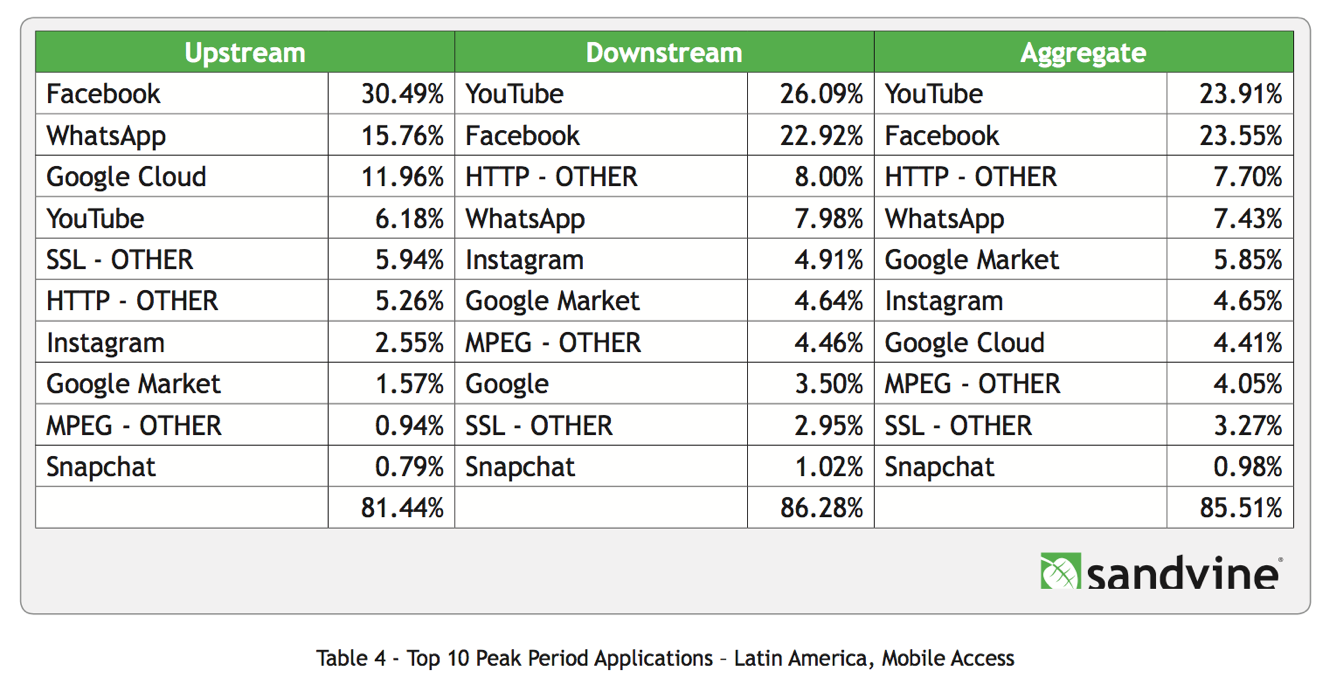
What has changed over the last 4 years is market share of traffic on the Web. It looks like nothing has changed, but GOOG and FB now have direct influence over 70%+ of internet traffic. Mobile internet traffic is now the majority of traffic worldwide and in Latin America alone, GOOG and FB services have had 60% of mobile traffic in 2015, growing to 70% by the end of 2016. The remaining 30% of traffic is shared among all other mobile apps and websites. Mobile devices are primarily used for accessing GOOG and FB networks.

(Source: https://www.sandvine.com/resources/global-internet-phenomena/2016/north-america-and-latin-america.html)

The press, unlike before, depends on GOOG-FB to stay in business.

Another demonstration of GOOG and FB dominance can be seen among media websites. The most popular web properties that don’t belong to GOOG nor FB are usually from the press. For instance, in the USA there are 6 media sites in the top 10 websites; in Brazil there are 6 media sites in the top 10; in UK it is 5 out 10.

From where do media sites get their traffic? Prior to 2014, Search Engine Optimization (SEO) was a common practice among Web Developers to improve their site for Google searches, since it accounted for approximately 35% of traffic, while more than 50% of traffic came from various other places on the Web. SEO was important, while Facebook presence was nice-to-have. Over the next 3 years, traffic from Facebook grew to be approximately 45%, surpassing the status that Search traffic had. In 2017, the Media depends on both Google and Facebook for page views, since it’s the majority of their traffic.

«
This is reminiscent of Anil Dash’s “the web we lost“, from 2012.
link to this extract


Russian ads, now publicly released, show sophistication of influence campaign • The Washington Post

»

Another ad, from a Russian-controlled group called Heart of Texas, announced a rally for May 21, 2016, under the banner of “Stop Islamization of Texas.” A separate Russian-controlled group, United Muslims of America, publicized a competing rally to “Save Islamic Knowledge” at the same place and time, causing the two groups to face off in competing demonstrations in Houston — a sign of how Russians hoped to turn divisions into open conflict.

Another page, targeting Donald Trump and Donald Trump Jr supporters, touted a rally opposing Hillary Clinton in New York City.

This crossover of online influence to real-world consequences was among the issues raised in a contentious Capitol Hill hearing Wednesday as members of the Senate Intelligence Committee repeatedly scolded technology company lawyers for not doing more to thwart Russian disinformation.

“I don’t think you get it,” said Sen. Dianne Feinstein (D-Calif.), whose home state includes the headquarters for Facebook, Google and Twitter, whose lawyers were testifying at the hearing. “What we’re talking about is a cataclysmic change. What we’re talking about is the beginning of cyber-warfare. What we’re talking about is a major foreign power with sophistication and ability to involve themselves in a presidential election and sow conflict and discontent all over this country. We are not going to go away gentlemen. And this is a very big deal.”

«

I’m giving a talk in Cambridge next week about communications technology and democracy. Three states (Michigan, Wisconsin and Pennsylvania) swung the election to Trump; if Clinton had won them, she’d be president. Trump won them by a total of just over 77,000 votes, or 0.6% of the votes for those two candidates in those three states.

That’s six votes out of every thousand. The question isn’t how big Facebook’s influence is. It’s how small it would need to be to not make a difference.
link to this extract


Fooling neural networks in the physical world with 3D adversarial objects • labsix

Anish Athalye, Logan Engstrom, Andrew Ilyas and Kevin Kwok:

»

Here is a 3D-printed turtle that is classified at every viewpoint as a “rifle” by Google’s InceptionV3 image classifier, whereas the unperturbed turtle is consistently classified as “turtle”.

We do this using a new algorithm for reliably producing adversarial examples that cause targeted misclassification under transformations like blur, rotation, zoom, or translation, and we use it to generate both 2D printouts and 3D models that fool a standard neural network at any angle.

Our process works for arbitrary 3D models – not just turtles! We also made a baseball that classifies as an espresso at every angle! The examples still fool the neural network when we put them in front of semantically relevant backgrounds; for example, you’d never see a rifle underwater, or an espresso in a baseball mitt.

All the photos above fool the classifier!

«

Things like this fascinate me. AI is increasing what security analysts call the “attack surface” of the systems that we use; just as adding databases to websites made SQLi (injection attacks) possible, so these systems will add new ways to subvert the larger parts that they are part of.

If you have automated systems which insist your pet turtle is a rifle and won’t be dissuaded, you can see this might be a problem.
link to this extract


Microsoft Edge floundered in October, while Google Chrome gained • Computerworld

Gregg Keizer:

»

Microsoft’s Edge last month sank to its lowest-ever user share, with less than 16% of Windows 10 users running the browser during October.

According to US analytics vendor Net Applications, the user share of Edge — an estimate of the world’s personal computer owners who ran that browser — fell by six-tenths of a percentage point, ending October at 4.6%. The decline was the largest ever for Edge, and set the browser back to the user share spot it last occupied in April 2016.

More notable was Edge’s usage when calculated as a percentage of Windows 10. (Edge is the default browser for Microsoft’s OS; likewise, Edge only runs on Windows 10.) Of all Windows 10 users, just 15.7%, a record low, ran Edge in October. As recently as March, Edge’s share of Windows 10 had been around 22%.

Edge’s share of Windows 10, which started off at 36% when the operating system debuted, has steadily fallen since then, wrapping up 2015 at 28% and ending 2016 at 22%.

If every Windows 10 user had stuck with Edge, the browser would now have a user share of 29.3%, or more than six times its mark. Instead, the trend line has shown that the more PCs that run Windows 10, the poorer Edge has performed.

Simply put, Edge never caught on among Windows 10 users. And at this point, it may be in an unrecoverable position.

«

So it sounds like either companies, or individuals, or both, are dumping Edge for Chrome. Though there’s some churn with Internet Explorer. Chrome, meanwhile, is at 60% of everything. Another Google monopoly.
link to this extract


The Theses • 95 Theses about Technology

John Naughton hammers his theses to his.. blog. OK, it’s less dramatic. But these are worth considering:

»

Remember that the purpose of a thesis is to start a discussion. A thesis is not a conclusion, or a conviction, but an assertion that’s designed to get people talking. It may be right or wrong. In fact sometimes wrong theses are the most productive.

If a Thesis is a clickable link, then it will open an explanatory page. Eventually all theses will have such pages.

«

First ten:
1: Digital technology is significantly different from other technologies
2: Kranzberg’s First Law of technology rules OK
3: Technological progress is not linear, but exponential. That’s why we find it hard to cope with it
4: The Internet is an architecture for ‘permissionless innovation’
5: Facebook is not the Internet. Nor is Google. Nor is the World Wide Web.
6: June 2007 was a pivotal moment in the evolution of the networked world
7: Free software is what keeps the networked world going
8: Cloud computing is heating the planet
9: Winners take all in digital markets
10: Surveillance is the business model of the Internet
link to this extract


The downfall of Doppler Labs: inside the last days of a hardware startup • WIRED

David Pierce has followed Doppler Labs since it thought it had something special happening in late 2016:

»

Suddenly, [Doppler’s Bluetooth earbud offering] Here One was on pace to beat Apple’s AirPods to market. “Not only did we have an inbound offer, but we were ahead of the curve,” [co-founder Noah] Kraft says.

Armed with an awesome demo and what they believed was a real offer from a tech giant, Kraft and his team started to think about selling the company. “Before this revolution happens, maybe somebody’s going to take us out to win the race,” Kraft thought. The team set up shop in the gorgeous offices of the Universal Music Group in downtown San Francisco, a wide-open space with spacious views of the Bay Bridge. Through October and November [2016], they hosted a parade of potential investors and acquirers from all over the Valley, including all of the big five. Kraft, [co-founder Fritz] Lanman, and some high-level Doppler engineers took each group through the company’s technology and vision, and gave them a demo of Here One.

Looking back, both Kraft and Lanman say they should have approached the process differently. “We were definitely irrationally confident,” Lanman says. Kraft is more blunt: “We thought we were the shit.” He won’t share Doppler’s actual asking price, but compares its fortunes to Dropcam, which sold to Google for $555m in 2014. “We were signaling that we’re not desperate at this point, so if you want us, it has to be proactive.” That might be why, at the end of the meetings, everyone responded the same: Investors love your tech, but wanted to see Doppler actually mass-produce and sell a product

By the end of November it was clear the best thing for Doppler to do was prove that Here One could be a success. That presented its own challenges. They’d switched manufacturers, and a longer-than-expected wait for a component pushed mass production back from fall of 2016 to February of 2017. That meant Here One wouldn’t beat AirPods to market, or capitalize on the all-important holiday sales rush. And Doppler had to raise another $10m just to get the product out the door.

«

Kraft, when asked what their real mistake was, says it was starting a hardware business. “We shouldn’t have done that.” Now it’s finished. A cautionary tale: hardware is expensive and failure is common.
link to this extract


Google Drive ate our homework! Doc block blamed on code blunder • The Register

THomas Claburn:

»

An indeterminate but supposedly small number of Google Docs users on Tuesday found that their essays, reports, school assignments, tracts, and manifestos had run afoul of Google’s terms of service and had been made inaccessible.

Some users reported being unable to share their documents; others said their documents could not be viewed in Google Drive; and a few claimed their work had been lost, though we’re told what was lost has been found again.

Several hours ago, Bhaskar Sunkara, founder of Jacobin magazine, via Twitter said an article on Eastern Europe’s post-socialist policies had vanished from his Google Drive space due to a terms of service (ToS) violation.

Rachel Bale, a reporter for National Geographic, said a draft of a story about wildlife crime had been frozen for a ToS violation.

And Jason Heppler, an assistant professor of history at the University of Nebraska at Omaha, posted a screenshot showing that a requested file had been deleted from Google Drive.

Similar tales litter the Google Docs Help Forum.

The incident prompted reiterations of longstanding concerns about the downside of cloud-based services, namely that files stored remotely can be swept away at any time for any reason. And it comes at a time when Google and its peers are under scrutiny in the US for not knowing more about those who share content and pay for ads on social platforms.

«

Blamed on the “flagging” software for “bad content” having gone haywire. Relax, everything’s in the cloud.
link to this extract


WikiTribune is already biased • The Outline

Adrianne Jeffries on Jimmy Wales’s attempt to do as a news service what Wikipedia sort-of does for factual things:

»

A Guardian op-ed in 2014 noted that the canonical [Wikipedia] article for women porn stars is better maintained than the analogous article on women writers. Another article on systemic bias within Wikipedia noted that those without internet, people with little free time, and people outside of English speakers from Anglophone countries are underrepresented on the site, while factors like the availability of sources can also bias coverage. “[B]oth China and India have populations greater than all native English speakers combined, or greater than all of Europe combined; by this measure, information on Chinese and Indian topics should, at least, equal Anglophone or European topics,” that article reads. “However, Anglophone topics dominate the content of Wikipedia.”

I asked Wales how he planned to protect WikiTribune from replicating Wikipedia’s systemic bias. “It is a tough challenge. Wikimedia takes it very seriously and yet in that context we have hardly moved the needle at all,” he responded. “Very eager for ideas!” This is Wales’s theme today: WikiTribune is a work in progress. Today’s launch is “not the launch of a news service” but rather “the launch of a project to build a news service,” he wrote. In the promotional video for WikiTribune,” he claimed not to have the solution, but to have a process that will lead to a solution: “The news is broken, but we have figured out how to fix it.”

This tack is very Wiki-esque: Let’s solve it, together! That would be fine except that Wales has not identified the correct problem, nor does he acknowledge that he himself may bring some bias to the process, nor does he seem familiar with the current media landscape. Wales believes that climate change deniers can be persuaded by “actually explain[ing] the evidence to people,” as he wrote on Reddit earlier this year, but this is already what climate reporting is, and does. There are endless articles explaining the evidence to people. This is the bulk of climate reporting.

«

Wales’s heart is in the right place, but as Jeffries points out, this is a truly quixotic effort. We’re all biased. It’s just some of us are correct in our biases. Me, obviously, and you, of course. The rest of them, though..
link to this extract


Some Galaxy Note8 phones are freezing when the contacts app is opened, even for texting and speed dial • Android Police

Richard Gao:

»

We’ve been informed that many units of Samsung’s Galaxy Note8 are completely freezing when the contacts app is opened, and that includes when other apps like ‘Messaging’ and ‘Phone’ use it as well. Basically, these Note8s are refusing to function as phones.

According to replies on a post entitled ‘Note 8 Freezing and unresponsive‘ in Samsung’s forums, many variants of the Note8 are having this problem. Most of these reports are occurring when the user is doing something concerning calling and texting, leading us to believe that it’s the contacts app that is the culprit. Here’s a list of what is causing Note8s to freeze that we’ve gathered from the forum post and its replies:…

«

The list has 14 items, including “charging overnight” and “while making a phone call” and “opening the phone app”. I’m sure there will be an outcry over this functionality problem in a $1,000 phone with face unlocking.
link to this extract


RIP Camera Button ☠️ – Astro HQ • Medium

Savannah Reising:

»

A few weeks back we unveiled the Camera Button — a new iPad interaction that turns the front-facing camera into a button. Tap the camera to reveal workspace shortcuts in our productivity apps Luna Display and Astropad.

We planned to introduce the Camera Button in an update to Astropad Studio going out today. However, we are disappointed to report that the Camera Button was rejected by Apple’s App Store review under Section 2.5.9:

»

Apps that alter or disable the functions of standard switches, such as the Volume Up/Down and Ring/Silent switches, or other native user interface elements or behaviors will be rejected. — App Store Review Guidelines.

«

The Camera Button might be dead, but our urge to innovate lives on.

«

Sadly, this was entirely predictable. Great innovation running full pelt into the rules.
link to this extract


Errata, corrigenda and ai no corrida: none notified

You can now sign up to receive each day’s Start Up post by email. You’ll need to click a confirmation link, so no spam.

Start Up: Google gets lobbying, Samsung rejigs, iPhone X reviewed, Congress quizzes Facebook, and more


Soon we won’t need human celebrities – AI will be able to generate photos of entirely fake ones. Weird, huh? Photo by Thomas_H_photo on Flickr.

A selection of 10 links for you. Usable straight from the fridge! I’m @charlesarthur on Twitter. Observations and links welcome.

Google’s dominance in Washington faces a reckoning • WSJ

John D. McKinnon and Brody Mullins:

»

Even before Mr. Trump was sworn in Jan. 20, Google faced its first tough policy challenge of the new era. During the transition, opponents of the company began pushing to install a Google adversary, Utah Attorney General Sean Reyes, as the new chairman of the Federal Trade Commission, which enforces antitrust laws.

In 2016, Mr. Reyes had called for the FTC to reopen a closed antitrust investigation into Google—a major threat to the firm, which controls more than 80% of the business for internet search by some measures. Earlier this year, European officials imposed a groundbreaking $2.7 billion antitrust fine on Google for unfairly steering web searchers to Google’s own shopping platforms.

Earlier, Mr. Reyes had joined with a half-dozen other state attorneys general in battling with Google over what some viewed as the company’s facilitation of internet ills such as online sex trafficking. The company says it has made extensive efforts to combat such harms.

Google responded to the threat of potentially unfriendly policies from Mr. Reyes by engaging a squadron of GOP lobbyists to press the incoming Trump administration not to name him to the position, and instead pick another candidate who was viewed by some as more Google-friendly, according to several people familiar with the matter. The lobbyists argued that if Mr. Reyes were tapped, the company would flex its muscles in the Senate to block his confirmation.

“Google plays hardball beyond what most companies are willing to do,” said Jon Bruning, the former Nebraska attorney general who was part of the battle against Google. Google’s effort helped keep Mr. Reyes from being nominated, according to people familiar with the matter.

«

Normally I find these stories compelling, but the WSJ here has shifted into a “Google tries to get political influence, and that’s got to be a bad thing” mode. What’s noticeable about the whole story is that it feels as though it portrays Schmidt’s and Googlers’ support of the Democrats as bad, and even misguided (“Populist conservatives are particularly hostile to big tech, given its size and pervasive influence, as well as its support for immigration rights and other causes that clash with their economic nationalism” says an earlier passage).

I’ve included this because although it just shows politics working as politics does in the US, the WSJ’s tone demonstrates something else – an undercurrent of disdain, even hostility, for those who backed the loser.

That doesn’t seem good in a newspaper, or in a country. (Oh, and also: “internet ills such as online sex trafficking”? Is that different from real-world sex trafficking? See what I mean about the tone?)
link to this extract


Samsung unveils new management to quell leadership crisis • The New York Times

Raymond Zhong:

»

The troubles at Samsung’s management have not diminished its status as an innovative — and highly profitable — powerhouse in the technology world. That point was underscored on Tuesday, when the company reported a record-high profit for the second quarter in a row.

But the newly appointed executives, who have been drawn from Samsung’s deep ranks of professional managers, could help ensure the company can run while the fate of the powerful family that built the Samsung empire remains under a cloud.

The three executives appointed on Tuesday to run Samsung’s major business units are Kim Kinam, who will lead its lucrative components business; H.S. Kim, its new consumer-electronics chief; and D. J. Koh, who will lead the mobile-device division. The three men are expected to serve as co-chief executives once they are elevated to the company’s board, a decision that requires shareholder approval.

Kim Kinam succeeds Kwon Oh-hyun, who was widely credited with building up the components business — a major revenue driver for Samsung as other smartphone makers bought up its chips and displays.

«

Samsung just announced record profits, principally driven by semiconductor sales (up 51% year-on-year; memory was up 65%). Mobile was substantially up, but that’s comparing to the Note debacle. Mobile revenues and profits actually fell slightly sequentially.

So Apple, and all the companies reliant on Samsung for OLED and other displays and for memory, have contributed to this. Anyhow, if this is a company in crisis, imagine how it’s going to be when it’s focussed.
link to this extract


New research from Nvidia shows that the era of easily-faked, AI-generated photos is quickly emerging • Quartz

Dave Gershgorn:

»

Three years ago, after an argument at a bar with some fellow artificial intelligence researchers, Ph.D student Ian Goodfellow cobbled together a new way for AI to think about creating images. The idea was simple: one algorithm tries to generate a realistic image of an object or a scene, while another algorithm tries to decide whether that image is real or fake.

The two algorithms are adversaries—each trying to beat the other in the interest of creating the final best image—and this technique, now called “generative adversarial networks” (GANs) has quickly become a cornerstone of AI research. Goodfellow is now building a group at Google dedicated to studying their use, while Facebook, Adobe, and others are figuring out how to use the technique for themselves. Uses for data generated this way span from healthcare to fake news: machines could generate their own realistic training data so private patient records don’t need to be used, while photo-realistic video could be used to falsify a presidential address.

Until this month, it seemed that GAN-generated images that could fool a human viewer were years off. But last week research released by Nvidia, a manufacturer of graphics processing units that has cornered the market on deep learning hardware, shows that this method can now be used to generate high-resolution, believable images of celebrities, scenery, and objects. GAN-created images are also already being sold as replacements for fashion photographers—a startup called Mad Street Den told Quartz earlier this month it’s working with North American retailers to replace clothing images on websites with generated images.

«

Uh-oh.
link to this extract


Live updates: Facebook, Google and Twitter testified before Congress today • Recode

Kurt Wagner and Tony Romm did a liveblog, which is well worth a look:

»

4.40pm ET: Sen. Mazie Hirono just asked the million dollar question to Facebook’s Colin Stretch:

Hirono: “In an election where a total of about 115,000 votes would have changed the outcome, can you say that the false and misleading propaganda people saw on your Facebook didn’t have an impact on the election?”

Stretch: “Senator, we’re not well positioned to judge why any one person or an entire electorate voted as it did.”

Stretch added, again, that the content Facebook found was a “very small fraction”of everything available on Facebook and that it still shouldn’t have been there. But Hirono’s question is the big one: How much influence did this misinformation campaign actually have? It’s seems like it will be virtually impossible to quantify.

4:51 pm ET: Sen. Al Franken is now asking Facebook’s Stretch about the company’s embarrassing ad targeting feature, which allowed marketers to target ads for groups of users who identified as “Jew haters” and other inappropriate labels. Facebook claims it didn’t know those targeting categories existed, claiming they were created by a software algorithm. Franken was in disbelief over the fact that Facebook was unaware that those options were available to advertisers.

«

link to this extract


pretrained.ml – Deep learning models with demos

»

Deep learning models with demos
Sortable and searchable compilation of pre-trained deep learning models. With demos and code.

Pre-trained models are deep learning model weights that you can download and use without training. Note that computation is not done in the browser

«

This stuff is all going to be available anywhere, everywhere, all the time.
link to this extract


Super Mario Run’s 200 million downloads didn’t result in ‘acceptable profit’ for Nintendo • The Verge

Andrew Webster:

»

Nintendo’s first mobile game, Super Mario Run, was enormously popular — but that doesn’t mean it was a success for the company. During its most recent earnings report, Nintendo revealed that Mario Run has been downloaded 200 million times, 90% of which came from outside of Japan. However, Nintendo says that despite these big numbers, the game has “not yet reached an acceptable profit point.” While Nintendo didn’t reveal any specifics with regards to conversion rates, a big sticking point for many with Super Mario Run was its comparatively large price point; it’s free to download, but requires a one-time fee of $9.99 to unlock the whole game.

In contrast, Fire Emblem Heroes — which utilizes a more typical free-to-play structure, with plentiful microtransactions — has been a much more lucrative title for Nintendo. The company didn’t release specific numbers for the game, but says that Heroes’ success has largely been due to its continual updates since the game debuted in February. “For this title, we listened to the voices of our consumers and provided continual updates,” Nintendo says. “As a result, we are on track to meet our overall business objectives, including our profit objectives.”

«

Apparently with 7m Switches sold, 2m bought Super Mario Odyssey in its first three days. That’s a hell of a conversion rate. I bet that’s reached an acceptable profit point.

Nintendo remains a puzzle: feeling its way in mobile but wedded to its console roots.
link to this extract


iPhone X review: how we tested (and tricked) FaceID • WSJ

Joanna Stern:

»

A few other things I found during my testing:

• Hats, scarves, earrings, glasses and other everyday accessories are all good. Putting these on didn’t slow down the login process, although my glasses seemed to trip it up a few times, possibly when I held the phone too close to my face. Apple says you should hold the phone 10 to 20 inches out.
• Two different pairs of sunglasses I tried didn’t get in the way of things, either. Although direct sunlight did—I had to adjust my positioning slightly to unlock the phone.
• It hasn’t failed me in the dark. In the back of a dark car at night, and in a pitch-black bedroom, it unlocked.
• Apple says FaceID learns and grows with you, which is why smacking on a handlebar mustache or eyebrows that resemble a raccoon freaks it out. Grow a killer ‘stache over time and it should be fine, though a Groucho ‘stache may never work, as the system needs to see eyes, nose and, yes, a mouth.
• The login process didn’t slow down when registering faces of various skin colors and tones, as other more-primitive facial-recognition systems have been known to do.
• Using Apple Pay is the place I missed TouchID most. While you just have to glance at the phone to authenticate, it’s still something else to think about at the cash register. It may never feel as natural as using a finger.

I tried hard to get a photo to unlock the X: I taped a cutout photo of my face to my face, I pasted it on a big Popsicle stick, I even tried holding a photo on my iPhone 7 up to the new iPhone X. While the Galaxy Note 8 was fooled more than once with the paper cutout, none of this made the X flinch. If the X recognizes a face but it isn’t yours, the lock icon will jiggle.

It makes sense that a photo didn’t work. Apple’s sophisticated system uses two cameras and projected infrared dots to measure the depth of your face. You know what has depth? A mask, a real theatrical mask.

«

No, that didn’t work either. Notice the fact that it discriminates better than the Samsung. And how they beat it? Needed 8-year-old triplet twins. (Apple says that under 12, FaceID isn’t as reliable.)
link to this extract


PR • OneThirtySeven

Matt Alexander, on the annoyance expressed by a number of more “traditional” tech outlets (where “traditional” means “up to 10 years old”) at a number of YouTubers having got a hands-on use of the iPhone X which they published ahead of said outlets:

»

it’s worth bearing in mind that Apple’s goal isn’t for you to produce a multi-thousand word treatise about the Face ID mechanism for your audience of people who are statistically most likely to have already pre-ordered the product.

Rather, looking at the past year or so — and particularly the past month and a half — their goal has been to accomplish the following:

• Create a multitude of reasons for consumers, of all types, to justify spending $1,000 on a phone. Although it’s a subsidized cost, many consumers have not considered the true cost of their iPhone ever. Now, with many press outlets leading with the $1,000 total cost angle, Apple needs to combat that perception.

• Assure users that Face ID is better and more secure than Touch ID.

• Emphasize that the “notch” is not the dealbreaker that the tech press (and its audience), primarily, overhyped around the iPhone X announcement.

• Combat the theory that the phone is going to be next-to-impossible to purchase. Combining the elements above, they need to show that it’s going to be available to normal people.

• Finally, show some of the fun of the device, rather than the technical prowess and industrial design.

How would Apple go about accomplishing these goals?

Simply put, they’d create a crashing wave, of sorts, of press around the product, which would enable them to control and manipulate consumer perception of the news, regardless of how more technical reviewers may feel.

«

Exactly right. We’re well past the point where a smartphone review needs to be some spec-obsessed dive into precisely how many millimetres have been shaved off a bezel. (I felt we reached that point a couple of years ago.) What Apple wants people to get is: how does it feel to own this phone? That so many early reviewers’ response has been to generate an animoji shows that that’s the right choice.

People who think they know PR and marketing consistently underestimate Apple’s grasp of it. Having watched it operate for over 20 years, I think I can spot when it has made a mistake. This wasn’t a mistake.
link to this extract


Building the best possible driver inside Waymo’s castle • TechCrunch

Darrell Etherington:

»

Waymo classifies anything from Levels 1 through 3 as technically “driver assist” features, according to Krafcik, and this is an “important divide” which Waymo has observed first hand, concluding early on that it’s not an area they’re interested in pursuing.

Krafcik revealed that one of the first products Waymo considered bringing to market back in 2012 and 2013 was a highway driving assist feature, which would handle everything. between onramp and exit, but that also required drivers to be fully attentive to the road and their surroundings while it was in operation.

The results, per Krafcik, were downright frightening: footage taken from the vehicles of Google employees testing the highway assist features, which the company showed us during the briefing, including people texting, doing makeup, fumbling around their seat for charge cables and even, in one particularly grievous instance, sleeping while driving 55 MPH on a freeway.

“We shut down this aspect of the project a couple of days after seeing that,” Krafcik said. “The better you make the driver assist technologies… the more likely the human behind the wheel is to fall asleep. And then when the vehicle says hey I need you to take over, they lack contextual awareness.”

This is why Waymo has been very vocal in the past and today about focusing on Level 4 (full autonomy within specific ‘domains’ or geographies and conditions) and Level 5 (full, unqualified autonomy).

«

“Lacks contextual awareness” is a nice way to say “won’t know what the hell is going on”. Reminds of the old joke – “I want to die peacefully in my sleep, like my father, not screaming in terror like his passengers.”
link to this extract


An iPhone lover’s review of the Google Pixel 2 • BirchTree

Matt Birchler:

»

The metal back is coated in a plastic material that is somewhat grippy, but also lets the phone slide into my pocket easily. It feels comfortable without feeling cheap. I do find it odd that they would make a metal back to the phone and then cover it with plastic though. If they had just used plastic for the entire thing they could have added wireless charging, something I very much miss from this phone. I had just gotten used to it with the iPhone 8 and had converted most of my charing spots to wireless. Being forced to use a wire for all charging needs feels like stepping backwards.

The back of the phone also has a fingerprint reader. This is far from the first phone to do it, but it’s the first phone I’ve owned with a rear-mounted fingerprint reader. I haven’t been using it for too long, but I don’t love it personally. People say this location is great because it’s were your index finger naturally is when you’re holding the phone, but my index finger simply does not rest there when I’m using the phone. I can put my finger there easily enough when I pic up the phone to unlock it, but my hand shimmies down the phone to actually use it. I’m about an inch below it and need to stretch to reach it, which is not comfortable. This is most noticeable when trying to authenticate 1Password to fill a form or to make a payment on the Google Play Store.

I also have an issue with the back mounted reader when I’m at my desk at work or driving in the car where my phone is on a stand. The back-mounted fingerprint reader is not accessible in either of these common orientations, so I see this screen a lot:

I’ve entered my PIN more in the past week on this phone than I have in the past year on the iPhone because the reader simply isn’t in a place I can always reach.

«

He has plenty to say about the processing that generates the portrait effect in the camera too. TL;DR: he likes the phone a lot. But it falls a little short of the iPhone 8 Plus here and there.
link to this extract


Errata, corrigenda and ai no corrida: none notified

You can now sign up to receive each day’s Start Up post by email. You’ll need to click a confirmation link, so no spam.