Start Up: the real fake news, the upgrade downturn, NYPD’s smart phones move, blinding cameras, and more


Mechanical reproduction rights date back to the phonograph. But is Spotify exempt? Photo by origamidon on Flickr.

You can now sign up to receive each day’s Start Up post by email. You’ll need to click a confirmation link, so no spam.

A selection of 11 links for you. Not to be used for underground tests. I’m @charlesarthur on Twitter. Observations and links welcome.

The fake-news fallacy • The New Yorker

Adrian Chen reviews a book on “the art of fake news”:

»

One lesson you get from Hemmer’s research is that the conservative skepticism of gatekeepers is not without a historical basis. The Fairness Doctrine really was used by liberal groups to silence conservatives, typically by flooding stations with complaints and requests for airtime to respond. This created a chilling effect, with stations often choosing to avoid controversial material. The technical fixes implemented by Google and Facebook in the rush to fight fake news seem equally open to abuse, dependent, as they are, on user-generated reports.

Yet today, with a powerful, well-funded propaganda machine dedicated to publicizing any hint of liberal bias, conservatives aren’t the ones who have the most to fear. As Facebook has become an increasingly important venue for activists documenting police abuse, many of them have complained that overzealous censors routinely block their posts. A recent report by the investigative nonprofit ProPublica shows how anti-racist activism can often fall afoul of Facebook rules against offensive material, while a post by the Louisiana representative Clay Higgins calling for the slaughter of “radicalized” Muslims was deemed acceptable. In 2016, a group of civil-rights activists wrote Facebook to demand that steps be taken to insure that the platform could be used by marginalized people and social movements organizing for change. There was no high-profile meeting with Zuckerberg, only a form letter outlining Facebook’s moderation practices. The wishful story about how the Internet was creating a hyper-democratic “participatory culture” obscures the ways in which it is biased in favor of power.

«

link to this extract


How Russian & alt-right Twitter accounts worked together to skew the narrative about Berkeley • Arc Digital

“Caroline O”:

»

The narrative surrounding last weekend’s protests in Berkeley took shape on social media and was picked up, at least in part, by mainstream news outlets. The result was a skewed presentation of events that was almost entirely devoid of the context in which they took place. Even more troubling: that narrative was influenced by pro-Russian social media networks, including state-sponsored propaganda outlets, botnets, cyborgs, and individual users.

In the case study below, I describe how the narrative surrounding Berkeley was picked up and shaped by Russian-linked influence networks, which saw a chance to drive a wedge in American society and ran with it. Next, I look at the individual accounts and users that were identified as top influencers on Twitter, and explore what they were posting, how they worked together to craft a narrative, and the methods they used to amplify their message. Finally, I look at how news coverage of the events in Berkeley was shaped by the skewed narrative that emerged on social media.

This is just a single case study in a larger story, but it serves as an important reminder that Russia is still exploiting social media to harm U.S. interests — and that plenty of Americans are willing to join in on the effort.

«

On Twitter as @rvawonk, she does do a lot of interesting, factual analysis.
link to this extract


Spotify: don’t compare us to Napster • Hollywood Reporter

Eriq Gardner:

»

Spotify, facing a lawsuit claiming “staggering” copyright infringement, is attempting to distinguish itself from illegal file sharing services of yore and putting an issue front and center that will likely command notice throughout the entertainment and tech sectors. Namely, in court papers filed Wednesday, Spotify argues that “streaming” implicates neither reproduction nor distribution rights under copyright law.

Bob Gaudio, a songwriter and founding member of the group Frankie Valli and the Four Seasons, is suing Spotify in the wake of the company’s proposed $43 million settlement in a class action. In Gaudio’s lawsuit, that settlement is called an “empty gesture that encourages infringement and is entirely insufficient to remedy years of illegal activity.”

Spotify, led by CEO Daniel Ek, licenses sound recordings from record labels and also has blanket licenses from the likes of ASCAP and BMI so that it may publicly perform musical compositions.

What Gaudio’s lawsuit alleges — as did the prior class action — is Spotify is violating the reproduction rights of publishers and songwriters. Those making a mechanical reproduction of a musical composition can obtain a compulsory license and bypass having to negotiate terms with publishers. However, those doing so have to follow certain protocol like sending out notices and making payments. The lawsuit claims that Spotify hasn’t done an adequate job of doing this.

«

This would be a hell of a result for Spotify if it succeeds in this argument. Somehow I doubt it will, though.
link to this extract


Upgrade downturn: why are people holding on to their old phones? • The Guardian

Sarah Butler and myself on what’s stalling the phone market:

»

A common refrain among phone owners outside the [Regent Street Apple Store] shop is to point to their handset and state: “I’ll probably wait till it breaks.” The new iPhone makes its debut on 12 September and is rumoured to have a number of new features for an Apple device, including doing away with the home button on the front of the handset, but there is a perception among mobile phone owners that the pace of technological evolution has slowed.

Phone replacement has slumped in the UK since 2013, when consumers bought a new one every 20 months. According to retailer Dixons Carphone, people now buy a new handset every 29 months.

Speaking outside the Apple store on Regent Street, Leon Allard, 31, said: “These days, especially with the iPhone, there is not a lot of difference between the phones coming out.” He added that price was also a “big thing” when considering upgrades, with the next iPhone expected to cost at least £800 in the UK.

At a nearby Carphone Warehouse branch, there was little urgency for an upgrade. Tinu Thomas, 29, said he had owned a Motorola phone for nearly four years and would probably hold on to it for another year. “I would like to say I’m a gadget freak,” he said. “I love technology but I don’t see the value in upgrading. I use my phone for Facebook, WhatsApp and voice calls and I’m still able to do all of that with my almost four-year-old phone.”

«

link to this extract


Response to NY Post article • NYPD News

Deputy commissioner of Information & Technology Jessica Tisch:

»

This Sunday, while a Post reporter was writing her story, NYPD officers used their smartphones to help respond to over 25,000 911 calls; ran 18,000 searches; and viewed 1,080 flyers of missing or wanted persons. Sunday is a slow day.

Three years ago we made the decision to bring mobility to the NYPD. At that time, neither iOS nor Android phones allowed us to cost-effectively utilize prior investment in custom Windows applications.

Moreover, we assessed that the Windows platform would be most effective at achieving our goal of securing 36,000 devices that would be used for sensitive law enforcement operations. This was of paramount importance. The devices were rolled out as tools to help officers fight crime, enhance their safety and improve policing in New York City.

The contract entered provided for the smartphones at no cost. It also allowed for the NYPD to replace the smartphones with devices of our choosing two years later, also at no cost.

We have since continually reviewed the evolution of mobile platforms. A year ago, we learned that improvements in Apple controls would allow NYPD to responsibly and cost effectively move our mobility initiative to the Apple platform. We began plans to make the transition, which will take effect this fall.

Our smartphone initiative is 45% under budget. Based on current rate of spending, we expect to stretch what was initially budgeted at two years of spending to more than four years.

«

Ah. So the phones were free, and they can be replaced for free. Microsoft took a gamble that it would be stronger by now, but instead it failed. I wrongly thought that Tisch would get fired over this, before knowing the details of the free phones.

Instead, she looks quite smart: for the cost of a few app rewrites, the NYPD doesn’t have to gamble on the mobile platform war.
link to this extract


Inside the black market where people pay thousands of dollars for Instagram verification • Mashable

Kerry Flynn:

»

“I mean if Mashable wants to pay for it, I can get you a blue check over night,” reads a recent Twitter direct message.

This is a guy who knows a guy, a middleman in the black market for Instagram verification, where anyone from a seasoned publicist to a 22-year-old digital marketer will offer to verify an account—for a price. The fee is anywhere from a bottle of wine to $15,000, according to a dozen sources who have sold verification, bought verification for someone else, or directly know someone who has done one or the other.

“These guys pay all their bills from one to two blue checks a month,” another message from the middleman added later.

The product for sale isn’t a good or a service. It’s a little blue check designated for public figures, celebrities, and brands on Instagram. It grants users a prime spot in search as well as access to special features. 

«

link to this extract


Rental camera gear destroyed by the solar eclipse of 2017 • Lens Rentals

Zach Sutton:

»

despite our warnings, we still expected gear to come back damaged and destroyed. And as evidence to our past posts of broken gear being disassembled and repaired, we figured you’d all want to see some of the gear that we got back and hear what went wrong. But please keep in mind, this post is for your entertainment, and not to be critical of our fantastic customer base. Things happen, and that’s why we have a repair department. And furthermore, we found this to be far more exciting than we were disappointed. With this being the first solar eclipse for Lensrentals, we didn’t know what to expect and were surprised with how little of our gear came back damaged. So without further ado, here are some of the pieces of equipment that we got back, destroyed by the Solar Eclipse of 2017.

The most common problem we’ve encountered with damage done by the eclipse was sensors being destroyed by the heat. We warned everyone in a blog post to buy a solar filter for your lens, and also sent out mass emails and fliers explaining what you need to adequately protect the equipment. But not everyone follows the rules, and as a result, we have quite a few destroyed sensors. To my personal surprise, this damage was far more visually apparent than I even expected, and the photos below really make it visible. 

«
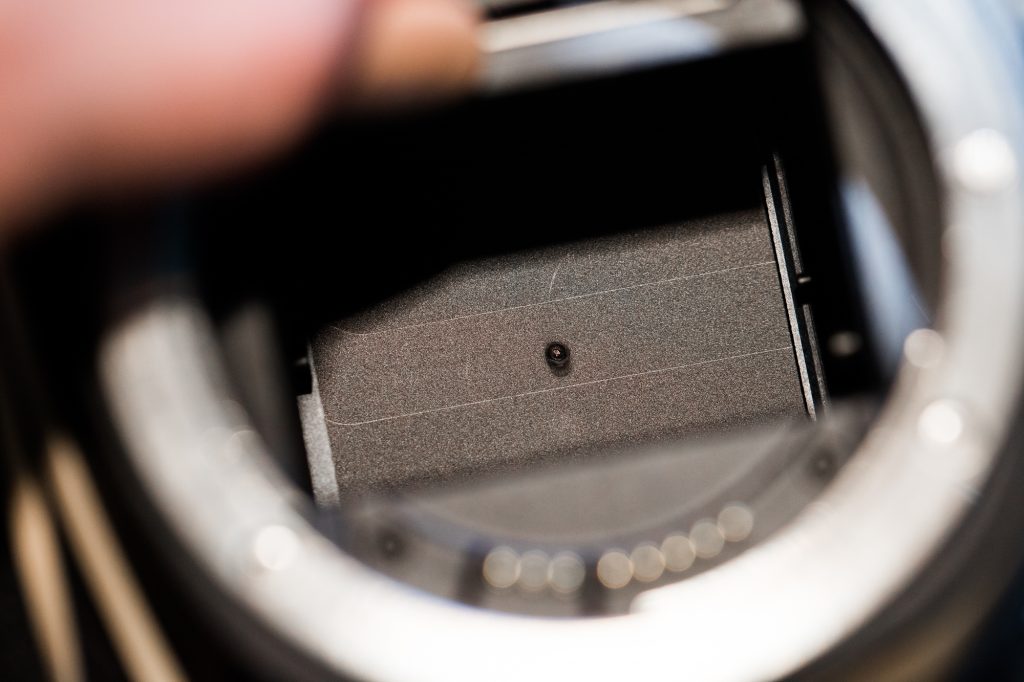
Lots more where that came from. Lesson: though many will, in any crowd there are people who won’t listen.
link to this extract


Leaked Surface Mini images provide a closer look at Microsoft’s canceled tablet • The Verge

Tom Warren:

»

Surface Mini images leaked earlier this year, and now we’re getting an even closer look at Microsoft’s canceled tablet. Evan Blass has published marketing images for the Surface Mini, revealing a red rubber case with a kickstand and full specifications. The Surface Mini was reportedly a 7.5in device with a 1440 x 1080 display, a Qualcomm Snapdragon 800 processor, 1GB of RAM, and 32GB of storage. It appears that Microsoft was planning black, red, and blue variants of the Surface Mini before its cancellation.

«

Very wise to cancel it. The vogue for mini-tablets passed in 2013 or so; phablets have eaten that market for all but kids, and this wouldn’t have appealed to kids.
link to this extract


Windows is doomed • The Week

Navneet Alang:

»

the continually rising tides of Apple and Google’s platforms will likely wash Windows away as people shift their work and play habits to opposing platforms. While many are fond of saying that you still need Windows for real work, as analyst Benedict Evans likes to point out, “the connective tissue of work needs to be rebuilt” in light of mobile, AI, and the cloud — and it’s hard to see how Windows will be a part of that as new technologies emerge in new places.

It’s not that Microsoft is oblivious to this reality. Recognizing a do-or-die scenario, Microsoft has now retrenched when it comes to Windows, putting its efforts into desktop and making Windows work on ARM, the type of chips found in iPhones and Android phones. The new, rumored goal is that using ARM will not only let Microsoft and its partners make thin, light laptops and tablets with great battery life, it will also let them create a phone that runs full Windows and can be used as a complete computer when docked into a keyboard, mouse, and monitor — and in doing so, give Microsoft a complete device to offer its millions of customers.

But this is likely just fantasy. As the deal with Amazon suggests, companies need a platform of their own to build out the vertically integration that has made Apple and Google so wildly successful. Platforms are like networks, and without the core node of mobile in a mobile-first world, Microsoft’s Windows cannot last.

«

I wouldn’t hold my breath on this one. COBOL is pretty old, and it’s still underpinning banks and transactions around the world.
link to this extract


Stop trying to kill the headphone jack • The Next Web

Abhimanyu Ghoshal:

»

Over a year ago, I wrote about how phone makers were starting to do away with headphone jacks. I’ve seen this unfortunate trend – which I hoped would just be a passing fad – continue to plague devices well into 2017, and it looks like we’re still in danger of losing one of the most essential features our phones have to offer today.

We’ve tested a wide range of phones over the past year, and found that a number of premium handsets like the the iPhone 7, the Essential Phone and Xiaomi’s Mi 6 have nixed the jack. Others, like the OnePlus 5, Samsung’s Galaxy Note 8 and the brand new LG V30, still have them. The story is similarly fragmented at the lower end of the price spectrum too.

Basically, there’s no consensus among brands, or even within them, about whether it’s a good idea to ditch the jack – but I implore hardware makers to keep it around, for all that is holy and good in the world.

For one thing, there’s no real reason to kill it off. Last year, LeEco’s president of R&D Liang Jun told The Verge that ditching the headphone jack and going USB-C only didn’t impact the manufacturing process, or help the Chinese gadget maker save space in its phone design.

If other brands believe this approach can help them make phones slimmer, I’d like to register my protest against the idea. I’m fine with a device that I can literally talk to, connect to the internet and shoot ultra-high-resolution video with being 8mm thick, thanks very much. If there’s any honest justification at all for killing the jack, I haven’t heard it yet.

«

I’ve been using an iPhone 7 for a year, and it doesn’t have a 3.5mm jack. It came with a dongle. I haven’t noticed the lack of a headphone jack port at any point, except a couple of time on a car journey where I wanted to listen to a podcast on the stereo and couldn’t (the car had Aux In, no Bluetooth). The radio worked though.

I think if there’s a dongle, it’s not a problem. If there isn’t, it could be a problem – but Bluetooth gets around a lot of things now.
link to this extract


Augmented Reality: iOS Human Interface Guidelines • Apple Developer

»

Use the entire display to engage people. Devote as much of the screen as possible to viewing and exploring the physical world and your app’s virtual objects. Avoid cluttering the screen with controls and information that diminish the immersive experience.

Create convincing illusions when placing realistic objects. Not all AR experiences require realistic virtual objects. Those that do, however, should include objects that appear to inhabit the physical environment in which they’re placed. For best results, design detailed 3D assets with lifelike textures and use the information ARKit provides to position objects on detected real-world surfaces, scale objects properly, reflect environmental lighting conditions on virtual objects, cast virtual object shadows on real-world surfaces, and update visuals as the camera’s position changes.

Consider physical constraints. Bear in mind that people may attempt to use your app in an environment that’s not conducive to an optimal AR experience. For example, they may open your app in a location where there isn’t much room to move around or there aren’t large, flat surface areas. Try to anticipate scenarios that might present challenges, and clearly communicate requirements or expectations to people up front. Consider offering varying sets of features for use in different environments.

Be mindful of the user’s comfort. Holding a device at a certain distance or angle for a prolonged period of time can be fatiguing.

«

There are a couple more – safety, gradual introduction of motion, audio and haptic feedback – and then much more. One of the key ones is going to be “handling problems”. Not long to go now.
link to this extract


Errata, corrigenda and ai no corrida: none notified

Start Up: smartphone slowdown, Facebook’s million killer, Sony chases AirPods, Cortana BFFs Alexa, and more


Your Wi-Fi router might be slowing down your network if you’re using old standards with new ones. Photo by portalgda on Flickr.

A selection of 13 links for you. But you knew that. I’m @charlesarthur on Twitter. Observations and links welcome.

Smartphone growth expected to remain positive as shipments forecast to grow to 1.7 billion in 2021 • IDC

»

According to a new forecast from the International Data Corporation (IDC) Worldwide Quarterly Mobile Phone Tracker, worldwide smartphone shipments are expected to maintain positive growth through 2021. IDC expects shipments to grow from 1.47 billion in 2016 to just over 1.7 billion in 2021. In 2016, the market experienced its first-ever single-digit growth year with shipments up just 2.5% over 2015.

IDC believes the combination of new user demand as well as a somewhat stagnant 2-year replacement cycle will be enough to keep the market at a 5-year compound annual growth rate (CAGR) of 3.3%.

“The big inflection point that everyone is watching for is when the smartphone market experiences its first year-over-year decline,” said Ryan Reith, program vice president with IDC’s Worldwide Quarterly Mobile Device Trackers.

«

Even this looks a bit optimistic if the South American economies don’t get their act together.

link to this extract


Facebook removes one million accounts every day, security chief says • CNBC

John Shinal:

»

Facebook turns off more than 1 million accounts a day as it struggles to keep spam, fraud and hate speech off its platform, its chief security officer says.

Still, the sheer number of interactions among its 2 billion global users means it can’t catch all “threat actors,” and it sometimes removes text posts and videos that it later finds didn’t break Facebook rules, says Alex Stamos.

“When you’re dealing with millions and millions of interactions, you can’t create these rules and enforce them without (getting some) false positives,” Stamos said during an onstage discussion at an event in San Francisco on Wednesday evening.

Stamos blames the pure technical challenges in enforcing the company’s rules — rather than the rules themselves — for the threatening and unsafe behavior that sometimes finds its way on to the site.

«

link to this extract


Sony WF-1000X release date, price and specs • CNET

David Carnoy:

»

Say hello to the WF-1000X, Sony’s first set of totally wireless earphones due to hit stores in September. What makes them special? Well, not their price. They’re $200, £200 or AU$399. But they are lightweight, sports friendly and have something Apple’s AirPods don’t have: active noise cancellation.

That’s right, this model is part of Sony’s new 1000X line, which includes over-the-ear and neckband-style models, all of which feature Sony’s excellent noise cancellation, as well as the ability to customize the sound via Sony’s Headphones Connect app.

Like a lot of these types of headphones, battery life isn’t great at three hours, but the earphones come with a battery case that gives you an additional two charges for a total of nine hours.

«

1) Terrible name

2) less good battery life. AirPods manage five hours per charge; the case recharges them back up; for as much as 24 hours total.

3) noise cancellation is nice, but not essential

4) pricier.
link to this extract


Fitbit well-positioned with new ionic smartwatch • Kantar Worldpanel

»

Contrary to gloomy forecasts for some vendors resulting in part from the Apple Watch attracting much of the attention and enthusiasm, activity trackers continue to hold a strong lead in the market, making up 65% of the installed base versus 35% for smartwatches. But the momentum belongs to the smartwatches, which have experienced growth rates of more than 50% year-over-year, while the base for activity trackers grew just 15% during the same period.

In the US, Fitbit dominates the overall wearables space. Nearly half (47%) of all US wearables owners have a Fitbit. While 16% of owners in the wearables category have an Apple Watch, Apple dominates the smartwatch category, with a 41% share. Apple has performed very well in terms of wearables customer satisfaction, with buyers rating the Apple Watch an 8.6 out of 10. Fitbit customers give that company a slightly lower satisfaction rating (8.2 out of 10), but Fitbit’s latest offering, the Charge 2, draws level in satisfaction with the Apple Watch, also at 8.6 out of 10…

…Unlike the rapid growth seen in demand for smartphones, there does not appear to be a significant group of potential buyers for wearables waiting in the wings. Amongst those who do not currently own a wearable, a mere 4.6% tell us they will “probably” or “definitely” purchase one in the next 12 months.

Of those that intend to purchase, 39% say they will buy a smartwatch, 30% a fitness tracker, and 31% remain undecided.

«

So about 1 in 20 looking to buy a wearable; overall, 1 in 50 looking for a smartwatch. Out of 100 million smartphone users, that would be 2m sold. Apple’s doing better than that, so either demand is falling or it’s very uneven.
link to this extract


Wi-Fi Beacon Pollution • r1ch.net

Richard Stanway:

»

All Wi-Fi routers / access points broadcast something called a “beacon” every 100 milliseconds. This contains all the data that a device needs in order to be able to join the network. From what frequencies and encryption modes are used to what kind of power saving and 802.11n parameters are supported – it’s all there. When you open up the list of wireless networks on your phone for example, the data from all the beacon frames is what’s used to fill in the list of networks. Beacon frames are broadcast constantly, even if there are no clients connected.

Unfortunately the 802.11 specification requires that beacon frames are broadcast at the slowest speed and oldest standard that the access point supports, in order to allow compatibility with old devices. This means that beacons are often sent out using 802.11b at 1 mbps, a standard which dates back to 1999 and is very slow compared to today’s 450 mbps 802.11n or 1.3gbps+ 802.11ac networks. As radio spectrum is a shared medium, no other nearby devices on the same frequency can send while a beacon is being transmitted.

Wireless devices are not supposed to begin sending until the spectrum is clear, which results in another problem when access points are in different locations (as is typically the case). A client in between two distant access points will see beacons from both of them, but the access points themselves are not aware of each other, thus creating interference when they transmit at the same time.

«

Stanway advises setting your router to support only 802.11n or 802.11ac if possible because the older standard generate more beacon frames which take up more radio airtime.
link to this extract


A tale of two industries: how programming languages differ between wealthy and developing countries • Stack Overflow Blog

David Robinson:

»

In a recent post, we saw that the traffic to Android questions (as a percentage of a country’s Stack Overflow visits) tends to be negatively correlated with a country’s GDP per capita. This may lead us to wonder if the same is true of any other tags.

When we explore major programming languages and platforms, some that stand out besides Android include PHP, Python, and R.

The amount of Android and PHP traffic is negatively correlated with a country’s income, while Python and R are positively correlated. In each case we can see exceptions (Korea uses more Android than we’d expect, and China more Python), but generally the correlations are strong. (Each has an R2 around .5-6, with p-values « 10-6 after adjusting for multiple testing).

We’ll emphasize that we’re not suggesting any causality here. We’re certainly not suggesting that programming language choice affects a country’s average income, but we’re also not saying that a country’s wealth directly influences their use of technologies. We suspect that the drivers are likely a mixture of economic and social factors (level of education, age of the software industry, level of outsourcing) that are, in general, correlated with a country’s wealth.

«

link to this extract


Hey Cortana, open Alexa: Microsoft and Amazon’s first-of-its-kind collaboration • The Official Microsoft Blog

Andrew Shuman is corporate VP of Cortana Engineering:

»

With Alexa as a guest on Cortana, Cortana users will now have another way of making their lives easier with a great shopping experience. Say you are at work, and you receive a text from your partner saying, “We’re running low on diapers.” In the future, on your Windows 10 PC, iPhone or Android phone, you could simply say, “Hey Cortana, open Alexa,” and ask Alexa to order diapers using your preferred payment method for your Amazon account.

«

Everything about this scenario is “whaaat?” Why doesn’t your partner yell for Alexa to do it? Or just order it on their phone rather than texting? Why do you ask Cortana on your (for example) Android phone rather than Google Assistant? Why get Alexa to order the nappies when you could just do it on the Amazon app?

As Neil Cybart said in his newsletter, this is – despite appearances – a coalition of weaklings: Amazon has no presence except in the home, and Microsoft has no presence… anywhere, really. (Well, Windows 10 PCs, if people really want. Except there’s no Alexa there.)
link to this extract


Ev Williams on Medium’s Spotify-ish future, why publishers left, and why he changed his mind about ads • Nieman Journalism Lab

»

Laura Hazard Owen: A lot of the publishers left, though. The Ringer, The Awl.
Williams: Some of the bigger ones have left. There are hundreds of publishers still on Medium. We talked to The Ringer and some of the others at the beginning of the year about what their plans are and what our plans are, and we made clear that anyone who is dedicated to pursuing an ad-driven business model is probably not the best fit. We’re not going to be developing or incorporating ad technology. It made sense for publishers who needed that to migrate off. There are lots of publishers who weren’t doing [advertising] and for the most part they’ve stayed, so that’s really the distinction.
There wasn’t a lot of doubt that we shouldn’t partner with people who had incompatible business models with us.

Owen: So native advertising — which you guys previously seemed to see as a promising area — is gone, too?
Williams: We’re not doing any advertising, native or not. All the advertising on Medium, pretty much, unless publishers did it themselves, has been native. We did a few native content projects with brands, both ourselves and in partnership with some of our publishers. Those deals actually worked pretty well, and we saw a path there, but it wasn’t the long-term path that we wanted to pursue.

«

It’s going to be niche at best.
link to this extract


Rethinking audio editing on mobile • Anchor app on Medium

Michael Mignano, co-founder and CEO of Anchor, a podcasting app, realised that trying to edit waveforms of sound on a mobile was a non-starter:

»

When we introduced our Anchor Videos feature a few weeks back, we started automatically transcribing audio so our users could easily convert their segments into something digestible and shareable on social media. It occurred to us that this same transcription could be leveraged to design the simple, intuitive, mobile-first experience we had been looking for. After all, when you’re trimming most audio, what are you really doing? You’re deciding which words or phrases you want to include and which you want to exclude. So that’s what we did.

Starting today, you can now edit call-ins and other people’s segments before adding them to your own station or podcast. It’s simple:

Before adding your audio, choose a starting word and an ending word, and you’re done.

We’ll discard the rest of the audio and just add the part you want your listeners to hear. It’s that easy (and it really does work great on mobile, even if you’re on the go).

We’re thrilled with this first step towards making audio easier to edit on mobile, and we can’t wait to see what new kinds of creativity this feature unlocks.

«

GOD WHAT A BRILLIANT, OVERDUE FEATURE. Even if it only transcribes approximately – a 90% correct rate is fine – this will make editing on a mobile (and even more so, on a tablet) a breeze. Available free for iOS and Android.

A boon for podcasters, and perhaps journalists looking to transcribe stuff – or radio journalists looking to create clips. Tell your friends. (I’ve got no connection with Anchor, just think it looks smart. Waveforms are a pain to edit.)
link to this extract


Kushners’ China deal flop was part of much bigger hunt for cash • Bloomberg

David Kocieniewski and Caleb Melby:

»

Jared Kushner, Donald Trump’s son-in-law and top adviser, wakes up each morning to a growing problem that will not go away. His family’s real estate business, Kushner Cos., owes hundreds of millions of dollars on a 41-story office building on Fifth Avenue. It has failed to secure foreign investors, despite an extensive search, and its resources are more limited than generally understood. As a result, the company faces significant challenges.

Over the past two years, executives and family members have sought substantial overseas investment from previously undisclosed places: South Korea’s sovereign-wealth fund, France’s richest man, Israeli banks and insurance companies, and exploratory talks with a Saudi developer, according to former and current executives. These were in addition to previously reported attempts to raise money in China and Qatar…

…The mortgage on their tower is due in 18 months. This has led to concerns that Kushner could use—or has perhaps already used—his official position to prop up the family business despite having divested to close relatives his ownership in many projects to conform with government ethics requirements. Federal investigators are examining Kushner’s finances and business dealings, along with those of other Trump associates, as they probe possible collusion between the Kremlin and the Trump campaign. Kushner has already testified twice before closed congressional committees and denies mixing family business with his official role.

This article, which describes new details of the company’s troubled finances and its overseas fundraising efforts, is based on a review of thousands of pages of financial documents and interviews with more than two dozen executives, business partners, real estate agents, deal participants and analysts. They spoke on condition of anonymity to discuss private deals. Some feared legal reprisals or other retaliation from one of the country’s most powerful families.

«

Yes, Russia is involved. The ticking clock on this will make 2019 quite interesting, if nothing dramatic happens first – which it well might.
link to this extract


We said Google was dangerously powerful, then Google proved us right • Buzzfeed

Matt Stoller worked at Open Markets – now ejected from the New America thinktank:

»

At Open Markets, we started with the same questions that most Americans have. What went wrong? Why did we allow a concentrated system of Too Big to Fail banks to crash our economy? Why can’t our industrial system reduce carbon emissions and help limit the impact of climate change?

These kinds of questions about the power of finance and industry have been debated in America for decades, and bankers and industrialists have dedicated vast amounts of their money to influencing that debate. But in recent years, a new class of corporate power has begun to shape our world, prompting a new set of questions: Why have we allowed the internet’s information monopolists to seize so much control of our digital lives? And why have they financially strangled our free press, and allowed propaganda and fake news to crawl out of the slime and influence elections?

The answer is monopoly power. The companies that hold that power, led by Google, have become massively influential in Washington — hence the fact that we’ve been thrown out of our think tank and must now set up an independent shop (CitizensAgainstMonopoly.org is our temporary website). They’re also wielding their power over the rest of corporate America — terrifying everyone from grocery store owners to carmakers and book publishers, and even the very Silicon Valley startup scene they were once a part of.

For hundreds of years, Americans realized that this kind of misuse of property in the form of monopoly power was a threat to their political liberties. We saw it for what it was: autocratic.

This was a widely held belief, on the left and on the right. Friedrich Hayek had an entire chapter on the danger of monopolies in his classic political tome The Road to Serfdom. Labor scholars warned that monopolies represented the “dictatorial and fascist trends within our own country.” President Franklin Delano Roosevelt gave a speech to Congress making this same point, and it was a speech that Hayek quoted in his book.

Fundamentally, monopoly power is political power. It lets a small group of people exercise control over a much larger group, which results in both extremes of wealth inequality and extremes of political corruption. It is why anger is bubbling up in most Western democracies, regardless of the voting system or safety net — we are all dealing with the same monopoly institutions.

What Google did, in attempting to silence my colleagues, was in fact a call to action.

«

link to this extract


In the interest of transparency, New America releases email correspondence with Barry Lynn • New America

The thinktank at the centre of the “Google leaned on them for having people critical of it” story follows up:

»

In order to provide greater clarity and context to the issues raised in the New York Times article dated Wednesday, August 30th, New America is releasing in its entirety email correspondence from its President and CEO Anne-Marie Slaughter to the former director of Open Markets, Mr. Barry Lynn.

The first email quoted in the New York Times is from June 2016, a full year ago. Subsequently, we continued to support the work of Open Markets while asking Barry to abide by institutional norms of transparency and collegiality.

The next two emails, one of which was also quoted by the New York Times today, are from this summer. They again focus on Barry’s obligations to his fellow program directors and to the institution as a whole. We would not have released them as a matter of employee confidentiality, but as they were partially released by the New York Times, we are providing them in the interest of full context and transparency.

«

This June 2016 email from Slaughter is pretty damning; it’s clear NA was compromised by its funding from Google.

There’s then a June 30 email “concerning notice and cooperation when things that one program does affects other programs”, which also says his actions of June 26 were “a breach of faith, imperiling the institution as a whole in a way that could have been avoided.”

What happened June 26? Lynn published the Open Markets piece applauding the EC finding against Google. Case closed, I think: New America caved over its fears of criticising Google. It doesn’t specify exactly how much of its funding comes from Google, but one suspects it’s a lot.
link to this extract


The dumb fact of Google money • The Atlantic

Alexis Madrigal:

»

The scale of Silicon Valley money and Washington money are so different that the introduction of the former into the latter is almost comical. You’ve got companies amassing tens of billions of dollars in cash with mechanics that are linked to particular regulatory and tax regimes. And those regimes are held up by people who measure donations in the tens or hundreds of thousands.

This is a key component of what Robert Reich (a decade ago) called supercapitalism. Many times the most efficient way to make money is to change the rules governing how that money can be made.

“Supercapitalism has not stopped at the artificial boundary separating economics from politics. The goal of the modern corporation—goaded by consumers and investors—is to do whatever is necessary to gain competitive advantage,” Reich wrote. “That includes entering any battleground where such gains can be made. Washington—and other capital cities around the world where public policies are devised—has become a competitive battleground because public policies often help some companies or industries while putting rivals at a comparative disadvantage.”

And one of the best ways to change (or freeze) policy making and regulation is to change the conversations that people are having in Washington, D.C., through funding research at think tanks.

«

link to this extract


Website readers! You can sign up to receive each day’s Start Up post by email. You’ll need to click a confirmation link, so no spam.

Errata, corrigenda and ai no corrida: none notified