Start up: Google’s Pixel plans, PINs in lights, Amazon zaps junk reviews, 4Chan near death?, and more


Factories. What are they good for? Photo by andreakw on Flickr.

You can now sign up to receive each day’s Start Up post by email. You’ll need to click a confirmation link, so no spam. Tell your friends! Forward it!

A selection of 14 links for you. Use them wisely. I’m charlesarthur on Twitter. Observations and links welcome.

The team of men behind Rachel Brewson, the fake woman whose Trump-fuelled breakup went viral • Jezebel

Anna Merlan:

»

If you were one of the people who became a little bit emotionally invested in Rachel Brewson’s breakup with her boyfriend Todd—if you felt sorry for her, or infuriated, or thought they both seemed like self-involved jerks— you may be comforted to know that she doesn’t exist.

As a tipster pointed out to Jezebel, and as we confirmed in interviews with the people who wrote her into being, “Rachel Brewson” was fake, the product of an unusually involved internet marketing scheme that managed to strew blog posts, personal essays, and social media profiles across fairly well-trafficked sections of the Internet.

Brewson wasn’t a publicity stunt, but an attempt to make money. The character was created by an (all-male) team of internet marketers interested in pushing traffic back to Review Weekly, a site that relied on various internet monetization schemes to try to generate a profit. In the process, they created a bunch of flimsy fake characters to write posts, and an unusually detailed one: Rachel. “She” got published on a few big sites—xoJane, Thought Catalog, Elite Daily—appeared on TV (where the company hired amateur actors to play her and Todd), and left a trail of profiles that remain on the internet to this day.

In the end, Review Weekly was an expensive failure, according to its owner, who chose to fire the entire staff at the end of May. The website remains online, but is no longer publishing new material.

But Rachel’s main creator, marketing consultant Kenny Hyder, says the site continues to passively generate income. And he still prides himself on what a great job his team did bringing Brewson to life.

«

If 2016 were a fish, I’d throw it back.
link to this extract


Exclusive: Yahoo secretly scanned customer emails for U.S. intelligence – sources • Reuters

Joseph Menn:

»

Yahoo Inc last year secretly built a custom software program to search all of its customers’ incoming emails for specific information provided by U.S. intelligence officials, according to people familiar with the matter.

The company complied with a classified U.S. government directive, scanning hundreds of millions of Yahoo Mail accounts at the behest of the National Security Agency or FBI, said two former employees and a third person apprised of the events.

Some surveillance experts said this represents the first case to surface of a U.S. Internet company agreeing to a spy agency’s demand by searching all arriving messages, as opposed to examining stored messages or scanning a small number of accounts in real time.

It is not known what information intelligence officials were looking for, only that they wanted Yahoo to search for a set of characters. That could mean a phrase in an email or an attachment, said the sources, who did not want to be identified.

Reuters was unable to determine what data Yahoo may have handed over, if any, and if intelligence officials had approached other email providers besides Yahoo with this kind of request.

«

Good to see Menn back on top form. On the story, in the last paragraph: bet they did. Question is whether those providers complied.
link to this extract


A personal Google, just for you • Google blog

Sundar Pichai:

»

When I look at where computing is heading, I see how machine learning and artificial intelligence are unlocking capabilities that were unthinkable only a few years ago. This means that the power of the software — the “smarts” — really matter for hardware more than ever before. The last 10 years have been about building a world that is mobile-first, turning our phones into remote controls for our lives. But in the next 10 years, we will shift to a world that is AI-first, a world where computing becomes universally available — be it at home, at work, in the car, or on the go — and interacting with all of these surfaces becomes much more natural and intuitive, and above all, more intelligent.

This is why we built the Google Assistant, which allows you to have a natural conversation between you and Google. It’s one Assistant that’s ready to help you throughout your day. The first instance appeared in our new smart messaging app Google Allo to help you in group conversations. But that’s just the beginning. We want to help you get things done in your world, across different places, contexts and situations. And that means building the Google Assistant and other amazing software into the hardware that you depend on every day.

«

link to this extract


A technical follow-up: how we built the world’s prettiest auto-generated transit maps • Medium

Anton Dubrau of Transit, which makes the Transit app:

»

Success!

[Our transit map of showing line intersections was] Pretty good for a Version 1. Much better than Google, seeing as you can more or less tease out where each line is going. We were ready to roll out Transit Maps! And then… Apple Maps happened.
In the summer of 2015, after having worked on our maps for the better part of a year, we were finally ready to release our first version of Transit Maps. Then Apple rolled out their transit maps, and they were really pretty.

They instantly raised the bar for what transit maps should look like. In our drawings and designs, the end goal was something similar to (or better than) what Apple subsequently released, but we were planning to get there after releasing our Version 1.

Compared to Apple, our proposed Version 1 was kind of mediocre. Our Designer-CEO decreed that beating Google was not good enough — we also had to at least play in the same league as Apple.

After closer scrutiny, we hypothesized that Apple was drawing their maps manually. There were huge lags between the release of new cities, and there was something strangely off about the way the maps looked — as though they were drawn by humans, not computers. This meant that although our maps weren’t quite as pretty, our algorithm was still ahead of theirs.

At this point, we also knew that the hard part was behind us.

«

link to this extract


Apple to launch trio of iPad Pros in spring 2017, including 7.9in mini model • Mac Rumors

Joe Rossignol:

»

Apple will ship three new iPad Pro models around Spring 2017, including 7.9in, 10.1in, and 12.9in models, according to Japanese blog Mac Otakara.

The report, citing “reliable sources,” said the 12.9in model will feature a True Tone display like its current 9.7in counterpart, using advanced four-channel ambient light sensors to automatically adapt the color and intensity of the display to match the light in the surrounding environment.

The 12.9in iPad Pro is also said to gain the 9.7in model’s same 12-megapixel rear-facing iSight camera and True Tone flash.

The smaller 7.9in model, which will succeed the iPad mini 4, will likewise include a Smart Connector, True Tone display, four speakers, and a 12-megapixel rear-facing iSight camera with True Tone flash, as Apple works to standardize features across its tablet lineup, according to the report.

«

A 10.1in model? Doesn’t quite ring true.
link to this extract


Pixel, Galaxy, iPhone, oh my! Why pay a premium when every phone runs the same apps? • ZDNet

Jason Perlow:

»

It isn’t as if companies like Apple, Google, Samsung, and the others vying for our attention have not been expending resources and enduring long development cycles to make better products.

They have. There are key quantitative improvements in performance between this year’s models and those of prior years. The benchmarks tell us this, as does the spec creep.

The problem is that the mobile technology has now matured to a certain level where every single product at every single price point is now more than good enough to address every consumers’ key needs in almost every conceivable use-case scenario.

The hardware has now become completely commoditized, and the capabilities of these mobile chipsets and display technology have vastly outstripped the capabilities and functionality of the software applications that run on them.

We’ve seen this before, of course. It happened to the PC industry during the 1990s and the early 2000s. The commodity desktop PCs got so powerful – with the fourth- and fifth-generation x86 CPUs and the amount of memory and disk $600 to $800 could buy. It didn’t make any sense to purchase a more expensive model since real-world performance – using the same dozen or so core business applications that everyone used – was the same.

The majority of the apps couldn’t make use of the surplus resources, and there was little or no value added to distinguish one brand of PC from another.

«

Well, slightly dependent on operating system.
link to this extract


US election: cyber attacks a certainty • UK Authority

Michael Cross:

»

Next month’s presidential election is the most divisive in living memory. It is also the one most certain to face a cyber attack – which could conceivably swing its outcome.

That’s the alarming consensus emerging in Washington DC as political commentators ponder the the consequences of a re-run over the “hanging chads” fiasco in Florida in 2000. Yet the technology picked to replace the old punchcard voting machines has its own vulnerabilities: in particular being open to invisible sabotage.

Potential attackers range from hostile governments – Russia has already attempted to alter election outcomes in Ukraine by targeting software used to aggregate votes – to foreign terrorist groups and home grown libertarian lone wolves.

In a series of reports called Hacking Elections Is Easy, the Institute for Critical Infrastructure Technology (ICIT), a US think tank, points out that cyber attack on different aspects of the election process does not require a sophisticated actors or technology.

“Any hacker with enough time, a basic ability to navigate Deepweb, and access to YouTube, can impact public perceptions, control political conversations, and undermine the democratic process,” the study warns.

«

link to this extract


Behind the Pixel: Google’s first real threat to Apple’s iPhone • Bloomberg

Mark Gurman got the behind-the-scenes preview:

»

When [former Motorola boss Rick] Osterloh, 44, came on board in mid-April, he brought Google’s hardware groups into one division, shuttering projects he didn’t see contributing to Google’s future. Now the engineers and designers from Google Glass, Chromecast and Pixel all work together. Keeping them separate, he says, made it “hard to drive toward the goal of portfolio strategy and focus.” Reflecting long-held ambitions to build an Apple-style supply chain, the hardware division now has a supply-management team, drawing on the expertise of the Nest smart-home unit acquired by Google nearly three years ago.

Google declined to say how much it’s spending on the effort. However, Jason Bremner, a former Qualcomm Inc. executive who works on Google’s hardware products, put it in context. “Part of being the seller of record means that inventory, that supply chain risk — you know, hundreds of millions of dollars on the line on any given day — that’s on Google now,” he said.

Now that Google is designing phones itself, the company can at long last put together a product roadmap going out several years. For example, last month Burke was able to see a photo taken by a Google handset that won’t debut until next fall. That “would have never happened with Nexus,” he says. Going forward, more and more of the phones’ guts will be developed in-house. Burke says the company will eventually be able to ship its own custom “silicon,” a buzzword for customized processors that make devices work better.

It’s a very different setup from Osterloh’s previous Google gig, when he ran the Motorola division. “While we were part of Google, we were very arm’s-length,” he says. Now his team gets early access to the company’s advances in machine learning and innovations from the Assistant group. The Pixel phones will also be the first to run the next version of Android, Nougat 7.1, complete with Google tie-ins like pro camera effects, instant chat support, and a service that automatically frees up phone storage via the cloud. 

«

The Pixel isn’t even vaguely a threat to the iPhone: Google can’t turn on the manufacturing capacity to compete (Apple is the second largest maker of phones, not just smartphones, in the world), and people who are likely buyers of iPhones are not likely to turn to the Pixel instead. The key threat is to Samsung and more particularly LG and Sony’s high-end would-be buyers. The problem for all the Android OEMs, including Google, is that the premium Android market is much smaller than the iPhone market (which is premium).

The penultimate paragraph though with the mention of customised silicon is the part to note. How far down that road is Google looking to go? And why?
link to this extract


Additional security and privacy risks of light sensors • Security, Privacy and Tech Inquiries

Lukasz Olejnik on how you could capture someone’s PIN in a banking app via a malicious app which captures data from the light sensor on their smartphone:

»

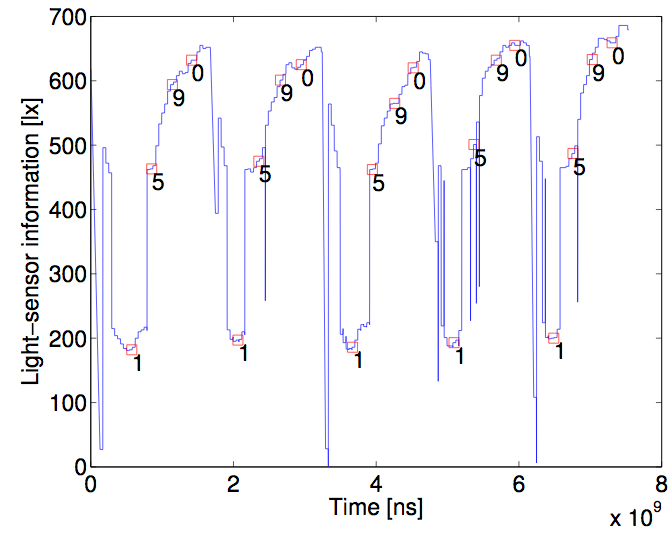
Light sensor data is not unambiguously related to PIN’s digits. It’s not that a particular PIN’s digit resembles a particular light level; the matter is more subtle. According to the report, the information leak is emanating from the user behavioral analysis. The employed threat scenario envisions users using a specialized application monitoring the typing on a touchscreen. The application is trying to trick users to reveal their use patterns (how they type) in an activity similar to PIN typing. The application tracks lighting conditions and the rate of light level change (timestamped) when the user is typing, for later analysis of the light level change rate (e.g. speed). Light level variations are typically related to subtle angle changes caused by slight differences of the way how the device is held. You know, when you type on a smartphone, it tends to move slightly.

Then, the application waits (or tricks the user to do so) for a banking application start. Lighting conditions are still monitored. But at this point, user’s use patterns (which affect the rate sensor readout changes) are already known. The research studied the mechanics of PIN deducing.

The image below (from the report) shows how particular PIN digits correlated with light level changes.

It is quite clearly seen that in this particular case, the digits 0 and 9 were related with higher light level readouts; they could be clearly distinguished from others. A machine learning algorithm would have no problems in classifying these events.

«
link to this extract


Why are politicians so obsessed with manufacturing? • NYTimes.com

Binyamin Appelbaum:

»

The manufacturing boom of the postwar years was an oddity, and there will be no repeat of the concatenation that made it happen: The backlog of innovations stored up during the Great Depression and World War II; the devastation of other industrial powers, Germany in particular, which gave the United States a competitive edge. Yet some parts of the formula that created the middle class may be possible to replicate. Unions played a large role in negotiating favorable work rules, many of which have since entered into law. Stronger unions — or federal regulators, who have increasingly replaced unions as the primary advocates for workers — could improve conditions in the service sector, too.

The enduring political focus on factory workers partly reflects the low profile of the new working class. Instead of white men who make stuff, the group is increasingly made up of minority women who serve people. “That transformation really has rendered the working class invisible,” says Tamara Draut, the author of “Sleeping Giant,” a recent book about this demographic transformation and its political consequences.

The old working class still controls the megaphone of the labor movement, in part because unions have struggled to organize service workers. Manufacturing was, logistically speaking, easier to organize. There were lots of workers at each factory, and most knew one another. Service work is more dispersed and done in smaller crews. Workers living in the same city and employed by the same retail chain, for example, would likely know only a handful of their compatriots. Fostering a sense of trust and shared purpose under these conditions is difficult.

At the same time, more and more men are plopping down on the sidelines of the economy. The Harvard economist Lawrence H. Summers estimates that by midcentury, one-third of men in their prime working years, between the ages of 25 and 54, will not be working.

«

link to this extract


Samsung’s China smartphone sales expected to be hit amid turmoil from Note 7 recall • South China Morning Post

Bien Perez, Zen Soo and He Huifeng:

»

Demand for Samsung Electronics smartphones in mainland China are expected by analysts to decline fast, as the international recall of its Galaxy Note 7 model casts a pall on the company’s sales in the world’s largest mobile phone market.

Samsung’s turmoil from its first large-scale withdrawal of a smartphone is largely predicted to benefit rivals Huawei Technologies, Oppo Electronics, Vivo, Xiaomi and Apple on the mainland, according to analysts and Chinese retailers interviewed by the South China Morning Post.

Tay Xiaohan, a senior market analyst at technology research firm IDC, said Samsung smartphone sales in the Chinese mainland “have been stagnant in the past few quarters” amid intense competition from major Chinese brands.

“The [Galaxy Note 7] global recall will further affect Samsung’s performance and reputation in China in the second half of this year,” Tay said.

«

The irony being that the models sold in China weren’t affected by the battery problem (different supplier). But some Chinese have been offended that the phones weren’t recalled – as if they didn’t matter.

However, Note 7 users are loyal. It’s all the non-Note 7 users who are the problem for Samsung.
link to this extract


Amazon bans reviews based on free or discounted products • Ars Technica

Mark Walton:

»

While Amazon isn’t removing older incentivised reviews, except for those it deems particularly excessive, it will now take action against any companies found distributing products for free in exchange for reviews. The online retail giant has taken a zero-tolerance stance to outfits found violating its rules before, suing companies that directly pay for fake reviews, and in some cases even suing the individuals that write them.

“Any attempt to manipulate Community content or features, including by contributing false, misleading, or inauthentic content, is strictly prohibited,” reads Amazon’s updated community guidelines. “If you violate our Guidelines, we may restrict your ability to use Community features, remove content, delist related products, or suspend or terminate your account… Misconduct may also violate state and federal laws, including the Federal Trade Commission Act, and can lead to legal action and civil and criminal penalties.”

The only exceptions to the new rules are books—Amazon will “continue to allow the age-old practice of providing advance review copies”—and reviews that come from the Amazon Vine program. With Vine, Amazon (not the vendor or seller) asks reviewers to post opinions about new and pre-release products and does “not incentivise positive star ratings, attempt to influence the content of reviews, or even require a review to be written.” It also limits the total number of Vine reviews displayed for each product.

«

You’ll recall that it has been a problem. Let’s see how long it takes companies to work around this one.
link to this extract


/qa/ – Winter is coming. – Question & Answer • 4chan

Hiroyuki Nishimura, who bought 4Chan a year ago:

»

Thank you for thinking about 4chan.
We had tried to keep 4chan as is.
But I failed. I am sincerely sorry.

Some notice there are no more middle ads and bottom ads on 4chan.
Ads don’t work well. So we reduced advertisement servers cost.
4chan can’t afford infrastructure costs, network fee, servers cost, CDN and etc, now.

4chan have three options.
-Halve the traffic cost
limit uploading image sizes
use slower servers.
close some boards

-Much more ads
pop-up / pop under ads
malicious ads

-More 4chan pass users
more features

«

Or read the easy explanation by Brianna Wu. TL;DR: 4Chan close to death.
link to this extract


Microsoft just killed its awful fitness tracker • Gizmodo

Michael Nunez:

»

The imminent death of Microsoft’s fitness tracker shouldn’t be much of a surprise. When the original Band was introduced in late 2014, it received mixed reviews. Experts hoped the device would be one of the first health trackers consumers used regularly. The original Microsoft Band contained 10 sensors, which was significantly more than other fitness trackers from rivals like Fitbit and Basis included at the time. Microsoft also included powerful software to help people make sense of the data. Sadly, it wasn’t enough to save the device. The official Gizmodo review said the original Microsoft Band colossally disappointing and “left plenty of room for improvement.”

It never got any better, either. When Microsoft released the Band 2 one year later, the company was entering an even more competitive marketplace.

«

Still don’t see that the new remodelled Microsoft will want to make wearables. Too competitive and too narrow a field if you don’t have other things to tie into.
link to this extract


Errata, corrigenda and ai no corrida: none notified

Start up: IoT hack code in wild, can Twitter regenerate?, fewer flicks on Netflix, Meerkat’s dead, and more


A drug addict wonders where his next hit is coming from. Photo via jairoagua on Flickr.

You can now sign up to receive each day’s Start Up post by email. You’ll need to click a confirmation link, so no spam.

A selection of 12 links for you. Use them wisely. I’m charlesarthur on Twitter. Observations and links welcome.

Behavioral Debt • Tech.pinions

Ben Bajarin:

»

Let’s use a tangible example in Facebook. Facebook would like to move into a more transactions-based model for the buying and selling of goods on their platform. Here we may likely see the messy reality of behavioral debt rear its ugly head. Consumers have built up years of behavioral debt doing a few main things on Facebook. Consumers are likely content in this reality and, when they want to buy something, they go to Amazon or some other established online merchant. Facebook wants to offer them the chance to do this on Facebook so they don’t have to leave and spend time and money somewhere else. But “you can’t teach an old dog new tricks” and I have a feeling convincing consumers to do anything more than they do today will prove quite tricky for Facebook due to the many hours/years spent building up behavioral debt in how they use Facebook.

Similarly, Intel, Microsoft, and the PC makers would all like to sell more of the 2-in-1 PC concepts. These devices are not the cheapest machines on the market but they offer better margins. The problem is, 2-in-1 PCs sell at a fraction of the volume of notebooks. What Intel and Microsoft have not yet learned is there is a massive amount of behavioral debt built up around the PC form factor. People understand it, they are comfortable with it, and they have established workflows on it. Many of you have heard me say those who grew up with a PC have a bias for it. This bias is explained by behavioral debt.

«

link to this extract


Hackers infect army of cameras, DVRs for massive internet attacks • WSJ

Drew Fitzgerald:

»

The proliferation of internet-connected devices from televisions to thermostats provide attackers a bigger arsenal of weapons to infiltrate. Many are intended to be plugged in and forgotten. These devices are “designed to be remote controlled over the internet,” said Andy Ellis, security chief at network operator Akamai Technologies Inc., some of whose clients were affected. “They’re also never going to be updated.”

Experts have long warned that machines without their own screens are less likely to receive fixes designed to protect them. Researchers have found flaws in gadgets ranging from “smart” lightbulbs to internet-connected cars. Wi-Fi routers are a growing source of concern as many manufacturers put the onus on consumers to do the updating.

Level 3 identified cameras and video recorders made by Chinese manufacturer Dahua Technology Co. as the sources of a large share of the recent attacks, but Level 3 said other devices are being roped into a new attack network currently being assembled. Hackers often hijack the machines through computers that are already infected or poorly protected Wi-Fi routers.

«

Question is, if you have a device like that, how do you protect it?
link to this extract


Regeneration ← Terence Eden’s Blog

The aforesaid Eden:

»

I’ve spent the last 15 years working in the mobile industry and, in truth, I think it is the industry that I’m leaving.

When I started out, I was the weirdo for having a touchscreen smartphone (Treo 180 represent!) – now everyone has them.

When I first began doing mobile websites, people thought it was a fad – I ended up running mobile websites with millions of users generating billions of euros.

They told me that no one wanted to wear Google Glass and… OK… I might have missed the ball on that one!

What I’m getting at is that mobile is saturated. I’m not naive enough to say Everything that can be Invented has been Invented – but we’re definitely in the “incremental improvement” stage of the industry. Short of a massive leap in power-delivery technology, the public acceptance of face-worn computers, or neural interfaces – I think the future might be *whispers* kinda dull.

Time to shake things up. Time to get out of a 15 year comfort zone. Time to change the world.

«

Looking forward to finding out what’s next, since we’ll probably all be heading there after him.
link to this extract


What the Twitter sale reveals about Twitter itself • Vanity Fair

Nick Bilton:

»

Companies aren’t just a mirror of their current leaders’ views. Companies are the result of everything that their leaders have done while they were in charge. And Twitter is the result of more than a decade of infighting at virtually every level of the institution. For a while, there was literally a new C.E.O. coming into power every couple of years. Each time a new chief took the helm, the ship was steered in a different direction. It should come as no surprise that, in addition to trolls, Twitter has become a home for ISIS and other anti-Western groups. How do you grow a start-up when some of your most powerful users quit the service on a regular basis? While Jack Dorsey might have finally returned to lead the social network that he helped create in 2006, he now finds himself running a feral product that isn’t really housebroken and is too old to be trained otherwise. Twitter, after all, was raised by dozens and dozens of former executives who were, seemingly as often as not, concerned with their own history as that of the company.

Someone very close to Twitter recently told me that if it wasn’t for all the rumors around an acquisition, the company’s stock would likely be in the low single digits.

«

link to this extract


The number of titles in the Netflix library is down 50% the past four years • Exstreamist

Tom Juel:

»

There’s no denying that the total number of titles available on Netflix is declining, but after some research, we were surprised by just how much it has decreased over the past few years.

We pulled September 2016 title counts from uNoGS in the US, showing that there are currently 5,302 titles available in the US Netflix library including movies and TV shows. What this means is that, over the past four years, the Netflix library has collapsed 50% in total title count since its peak four years ago.

While the exact number of titles available on Netflix in 2012 is unknown, sources who used to work for the streaming giant have told us it was close to 11,000 movies and TV shows. Over the years, this gradual decline has come from major content owners pulling the plug on giving Netflix distribution rights, as well as Netflix decreasing their total spend on third party content.

Instead of having to renegotiate streaming rights repeatedly for third party content, Netflix has opted to place a heavier focus on original movies and shows, a move that, while certainly appearing successful thus far, is still considered by many to be a massive gamble. Netflix has had tons of success with shows like ‘House of Cards,’ ‘Orange is the New Black,’ ‘Narcos’ and more, but the fact remains that creating original content is extremely expensive and doesn’t scale the same way content acquisition can.

Last year, we reported that Netflix originals were out-performing their television network counterparts when it came to producing quality shows, losing only to HBO. So perhaps this decline in third party content isn’t quite as bad as the numbers make it sound. There’s probably an argument that while quantity has gone down, the quality has remained strong or perhaps even gotten better.

«

link to this extract


#TrumpWon? trend vs. reality – i ❤ data • Medium

Gilad Lotan, chief data scientist at Betaworks, dug into the claims (untrue) that “#Trumpwon” began from Russian accounts, and finds a separate set of Twitter accounts which tweeted the photo:

»

What’s still unclear is who exactly photoshopped that image to make it seem like there was a Trump-Russia connection, and what else they have up their sleeves. What we’re seeing with this hashtag, is a highly organized group of interconnected accounts, dedicated to making their agenda as visible as possible.

Trending topics are helpful as they cut across information silos, gaining significant levels of attention from people who would otherwise never see your content.

The winner in this quest for attention and frame reaps huge rewards.

On the other hand, we’re seeing how false information can spread like wildfire, especially when there are enough people invested in making it true.

We have a few weeks to go, let’s see where this madness takes us!

«

link to this extract


iPhone 7 and augmented reality • Above Avalon

Neil Cybart:

»

The iPhone 7 Plus dual-system camera is able to extract more data than any other iPhone camera. When combined with software and other technologies, this data will become incredibly valuable for Apple’s augmented reality efforts. In an effort to obtain those specialized technologies, Apple has been on a buying spree for augmented reality startups including Metaio, Emotient, Polar Rose, Faceshift, PrimeSense, Flyby Media, and Perceptio. The dual-camera system found in the iPhone 7 Plus is the first step in Apple turning the iPhone into a key component of an augmented reality platform relying on much of the technology acquired these past two years. 

While the Phone will become a key part of Apple’s augmented reality platform, there will be a range of devices capable of enhancing reality through both visual and audible feedback. One reason why Apple has no other choice but to get into transportation is that automobiles will end up representing a superior use case for augmented reality.

«

link to this extract


High Hitler: how Nazi drug abuse steered the course of history • The Guardian

Rachel Cooke spoke to Norman Ohler, whose new book Blitzed explains the major – and previously overlooked – role of drugs in Germany’s second world war effort:

»

Pervitin, as it was known, quickly became a sensation, used as a confidence booster and performance enhancer by everyone from secretaries to actors to train drivers (initially, it could be bought without prescription). It even made its way into confectionery. “Hildebrand chocolates are always a delight,” went the slogan. Women were recommended to eat two or three, after which they would be able to get through their housework in no time at all – with the added bonus that they would also lose weight, given the deleterious effect Pervitin had on the appetite. Ohler describes it as National Socialism in pill form.

Naturally, it wasn’t long before soldiers were relying on it too. In Blitzed, Ohler reproduces a letter sent in 1939 by Heinrich Böll, the future Nobel laureate, from the frontline to his parents back at home, in which he begs them for Pervitin, the only way he knew to fight the great enemy – sleep. In Berlin, it was the job of Dr Otto Ranke, the director of the Institute for General and Defence Physiology, to protect the Wehrmacht’s “animated machines” – ie its soldiers – from wear, and after conducting some tests he concluded that Pervitin was indeed excellent medicine for exhausted soldiers. Not only did it make sleep unnecessary (Ranke, who would himself become addicted to the drug, observed that he could work for 50 hours on Pervitin without feeling fatigued), it also switched off inhibitions, making fighting easier, or at any rate less terrifying.

In 1940, as plans were made to invade France through the Ardennes mountains, a “stimulant decree” was sent out to army doctors, recommending that soldiers take one tablet per day, two at night in short sequence, and another one or two tablets after two or three hours if necessary. The Wehrmacht ordered 35m tablets for the army and Luftwaffe, and the Temmler factory increased production. The likes of Böll, it’s fair to say, wouldn’t need to ask their parents for Pervitin again.

«

And yes, Hitler wasn’t overlooked when it came to medication. The most stunning article you’ll read today (unless you’ve already read it).
link to this extract


Let us take a moment to mourn the BlackBerry • FT.com

Heather MacGregor is executive dean of Edinburgh Business School and the FT’s Mrs Moneypenny:

»

For my generation of working women, the BlackBerry handset, as a technological breakthrough, was every bit as liberating as the introduction of the contraceptive pill had been to a previous generation. As it could email from everywhere, you could be out of the office and still work perfectly well, allowing you to combine motherhood with a career in a way that had not been possible before. Indeed, a friend at a large US company found her BlackBerry meant that she could work part-time for 14 years — and very few people ever noticed. Suddenly flexibility was for everyone. The “always on” approach had arrived.

Others did not welcome the BlackBerry into their lives with such enthusiasm. Its highly addictive nature, which led to the “CrackBerry” nickname, meant that people rarely put the handset down when they came home in the evening. One (male) friend of mine had his BlackBerry addiction cited in his divorce as number three on his ex-wife’s list of his “unreasonable behaviour”.

In a world where digital detox retreats are the new indulgence for the well-heeled, it is hard to remember a time before we were “always on”. But let us not forget that the BlackBerry started all that.

«

link to this extract


‘Piece of crap’: Apple hit with proposed class action lawsuits over iPhone ‘touch disease’ • CBC News

Sophia Harris:

»

The suit alleges that that the underlying problem is the touchscreen controller chips in the phone’s motherboard, which are not properly secured and can malfunction with regular use.

[Lead plaintiff Rae] Wiegers says she contacted Apple numerous times about her defective phone and never got a satisfactory response.

She shared with CBC News a transcript of her online chat in August with senior adviser “Dave” from Apple Support.

In the transcript, Wiegers explained her problem, mentioned that she had read numerous similar complaints online, and even sent Dave a link to a recent blog from an online repair guide, iFixit. The blog labelled the problem “Touch Disease,” and claimed that iPhone repair shops in the U.S. were being inundated with customers looking for fixes for the defect.

Dave responded that he had no information that the problem was “known to be a manufacturing issue from Apple.”

He also reminded Wiegers that her warranty had expired and that she’d have to get the phone repaired. He recommended that she visit the Apple feedback site where she could “tell engineering to look into it.” He signed off with a 🙂 happy face.

“I just about felt like throwing my phone through the screen at him,” says Wiegers.

«

1) Not yet certified in court; this is a Canadian action. Await progress.
2) We’re in 2016 and a national publisher calls a blogpost “a recent blog”.
link to this extract


A shocking amount of e-waste recycling is a complete sham • Motherboard

Jason Koebler:

»

Until recently, I had never really thought about what happens to my old electronics. I took them to a community e-waste recycling drive, or dropped my old phone in a box somewhere, and I assumed my stuff was recycled.

An alarming portion of the time this is not actually the case, according to the results of a project that used GPS trackers to follow e-waste over the course of two years. Forty% of all US electronics recyclers testers included in the study proved to be complete shams, with our e-waste getting shipped wholesale to landfills in Hong Kong, China, and developing nations in Africa and Asia.

The most important thing to know about the e-waste recycling industry is that it is not free to recycle an old computer or an old CRT television. The value of the raw materials in the vast majority of old electronics is worth less than it costs to actually recycle them. While consumers rarely have to pay e-waste recycling companies to take their old electronics (costs are offset by local tax money or manufacturers fronting the bill as part of a legally mandated obligated recycling quota), companies, governments, and organizations do.

Or at least, in a rational market, your office would have to pay an e-waste recycler to take their old stuff. But an astounding amount of US electronics recyclers will take old machines at no cost or for pennies per pound, then sell them wholesale to scrapyards in developing nations that often employ low-salary laborers to dig out the several components that are worth anything.

«

link to this extract


Meerkat, star app of 2015, is officially dead • TechCrunch

Greg Kumparak:

»

Remember Meerkat? It came out of nowhere in early 2015 — a star of SXSW, in particular — and was on everyone’s tongue for weeks. Then came Periscope, a strikingly similar competitor built mostly in stealth mode, and word that Twitter had acquired it for nearly $100 million dollars before much of the world even knew it existed.

Suddenly, interest in Meerkat fizzled.

A year and a half later, Meerkat is dead, officially, as the company behind it shifts its efforts into a new project.

Ben Rubin, co-founder of Life On Air (the company behind Meerkat), announced this afternoon that Meerkat has been pulled from the App Store:

We just removed Meerkat from the AppStore 😔 bitter sweet moment seeing it go while celebrating @houseparty

The company itself, however, carries on: they’re now focusing on Houseparty, a group video chat application they’ve been building in secrecy for months. Houseparty lets you quickly jump into “parties” of up to 8 people simultaneously, creating drop-in-drop-out style video chats between any friends who are online at the same time. According to an article published this week by The Verge, Houseparty is already approaching its millionth user.

«

Rubin said that “broadcast wasn’t breaking as a daily habit”. Can see that it might never do, for the majority.
link to this extract


Errata, corrigenda and ai no corrida: none notified

Start up: our stupid management, Sierra’s ARM hints, Google aims at Home, Apple’s music problem, and more


Guess how many episodes it took to hook people. Logo copyright Netflix.

You can now sign up to receive each day’s Start Up post by email. You’ll need to click a confirmation link, so no spam.

A selection of 14 links for you. Come on, time to get back to work for the final three months of the year. I’m charlesarthur on Twitter. Observations and links welcome.

New Netflix data reveals when viewers commit to TV shows • WSJ

John Jurgensen:

»

Netflix has a theory about why commitment tends to come quicker for certain kinds content.

“The more visceral a series is and viewers’ response to it, the more quickly they’re going to really get attached,” says Cindy Holland, Vice President of Original Content, referring to shows with immediate action, scares or other kinds of intensity. With shows that are more subdued and character driven, she adds, “it’s like the viewer befriending the character…you take time to choose your friends.”

In its methodology, Netflix says there is no correlation between how quickly viewers commit to a series and the total size of its audience. That’s one reason the new data won’t do much to satisfy people outside the company who want the equivalent of Nielsen ratings data for Netflix shows. To that Holland has a now-familiar response: “We aren’t particularly interested in sharing things that aren’t really relevant to us and our viewers.”

For 30 popular series on the service, Netflix identified the hooked episode for a given country, and then tallied the average across more than 35 of its territories, from Argentina to the United States. Viewing patterns were often similar from country to country, which Holland says debunks “conventional wisdom that in some countries a certain kind of storytelling doesn’t perform as well as in others.”

«

link to this extract


You don’t have to be stupid to work here, but it helps • Aeon Essays

Andre Spicer on how new recruits to the workforce meet gigantic, dispiriting corporate inertia, and what that means for the future:

»

Another significant source of stupidity in firms we came across was a deep faith in leadership. In most organisations today, senior executives are not content with just being managers. They want to be leaders. They see their role as not just running their business but also transforming their followers. They talk about ‘vision’, ‘belief’ and ‘authenticity’ with great verve. All this sounds like our office buildings are brimming with would-be Nelson Mandelas. However, when you take a closer look at what these self-declared leaders spend their days doing, the story is quite different.

No matter how hard you search there is little – if any – leadership to be found. What most executives actually spend their days doing is sitting in meetings, filling in forms and communicating information. In other words, they are bureaucrats. But being a bureaucrat is not particularly exciting. It also doesn’t look very good on your business card. To make their roles seem more important and exciting than they actually are, corporate executives become leadership addicts. They read leadership books. They give lengthy talks to yawning subordinates about leadership. But most importantly they attend many courses, seminars and meetings with ‘leadership’ somewhere in the title. The content of many of these leadership-development courses would not be out of place in a kindergarten or a New Age commune. There are leadership-development courses where participants are asked to lead a horse around a yard, use colouring-in books, or build Lego – all in the name of developing them as leaders.

At least $14bn gets spent every year on leadership development in the US alone yet, according to researchers such as Jeffrey Pfeffer at Stanford, it has virtually no impact on improving the quality of leaders. In our own research, we found that most employees in knowledge-intensive firms didn’t need much leadership. People working at the coalface were self-motivated and often knew their jobs much better than their bosses did.

«

link to this extract


macOS Sierra code suggests Apple could replace Intel in Macs with custom ARM chips • iDownload

Christian Zibreg:

»

Could Apple be working on next-generation Mac hardware that would be powered by an in-house designed processor based on CPU blueprints from British fabless semiconductor maker ARM Holdings plc? That’s exactly the conclusion one could reach by looking closely at code strings in the macOS Sierra kernel, discovered by Dutch outlet TechTastic.nl.

It’s very peculiar that Apple would add support for ARM technology to macOS Sierra.

As you know, all Macs manufactured since 2005 run Intel chips. The Apple appears to be implementing support for ARM chips in the Mac operating system could mean that first ARM-based Macs might appear this year.

As TechTastic.nl states, developers no longer submit fully compiled binaries.

Instead, intermediary bit code is submitted which Apple uses to compile the binary code for the specific CPU architecture. Should Apple release an ARM-based Mac, developers wouldn’t need to re-submit their existing code nor would they need to add any ARM-specific code in order for their apps to run natively on ARM-based hardware.

“It is probably also one of the reasons why legacy applications have recently been removed from the App Store,” speculates the publication.

The macOS Sierra kernel indicates support for the ARM Hurricane family.

«

It all sounds like blather until that last line. Except ARM doesn’t have a Hurricane. So that must be an Apple codename.
link to this extract


Google Home strategy aims to use Chromecast to beat Amazon Echo • Variety

Janko Roettgers:

»

Amazon struck a deal with Sonos to leverage the Echo for voice control for existing Sonos speaker systems in August, and followed up this week with a similar deal with DTS for Wi-Fi speakers powered by the company’s Play-Fi technology. And if that wasn’t enough, Amazon has also enabled a number of smaller manufacturers to add its Alexa smart assistant directly to their speaker systems.

Google’s own negotiations with consumer electronics manufacturers could be hampered by what multiple sources have described as overly aggressive muscle-flexing. At the meeting in June, Google is said to have told home audio vendors that they won’t be allowed to add any other digital assistants than Google’s own to their hardware if they want to continue to use Google Cast. Another source told Variety of similarly far-reaching demands made in negotiations with another big consumer electronics manufacturer — demands that ultimately led to talks breaking down.

(A Google spokesperson declined to comment on plans to add Google Assistant to third-party hardware, or on the meeting in question. She did however point out that some consumer electronics manufacturers have in the past used Google Cast in addition to competing technologies like AirPlay and Bluetooth.)

In the end, Google’s plan to beat Amazon’s Echo may still hinge on the performance of Google Home. Multiple leaks suggest that Google will sell the device for $130, which is $50 less than the price of an Amazon Echo. If anything, Google has shown with the success of its $35 Chromecast that these price differences can matter.

«

Playing hardball is hardly exclusive to Google, and isn’t a bad idea.
link to this extract


AI-First, the overhype and the last mile problem • Vik’s Blog

Vik Singh is chief executive of AI startup Infer:

»

How do you get regular business users to depend on your predictions, even though they won’t understand all of the science that went into calculating them? You want them to trust the predictions, to understand how to best leverage them to drive value, and to change their workflows to depend on them.

This is the last mile problem. It is a very hard problem — and it’s a product problem, not a data scientist problem. Having an army of data scientists isn’t going to make this problem better. In fact, it may make it worse, as data scientists typically want to focus on modeling, which may lead to over-investing in that aspect versus thinking about the end-to-end user experience.

To solve last mile problems, vendors need to successfully tackle three critical components:

«

Those are: getting “predictive everywhere” with integrations; building trust; and making predictive disappear with proven use cases. Might not sound comprehensible on its own, but it makes sense in context. Infer is an example of the sort of company that nobody will have heard of, but will over the next five years insinuate its work into all sorts of daily decisions. You’ll wake up one day and its algorithms will have affected you directly.
link to this extract


Samsung Display to decrease supply of notebook panels • Digitimes

Rebecca Kuo and Adam Hwang:

»

Samsung Display, following the sale of a 5G TFT-LCD factory to China-based Truly Opto-Electronics in 2015, will shut down another 5G factory in 2017. 5G factories mainly produce notebook-use panels, meaning Samsung Display’s supply of notebook panels will continue to decrease.

According to IHS Markit, Samsung Display produced about 30 million notebook-use panels in 2015 and its output will slip to 12 million units in 2016 and further to four million units in 2017. In particular, Samsung Display’s notebook panel production shrank from 4.17 million units in the first quarter of 2016 to 2.8 million units in the second.

Among notebook vendors, HP saw the largest impact from Samsung Display’s reduced supply, with shipments to HP dropping from 1.1 million panels in the first quarter of 2016 to 350,000 units in the second. In response, HP has shifted orders to other makers

«

link to this extract


Here’s my plan to save Twitter: let’s buy it • The Guardian

Nathan Schneider:

»

When I mentioned a Twitter buyout to co-op and crowdfunding veteran Danny Spitzberg, he reminded me of the Green Bay Packers. Have you ever wondered why the small-ish city of Green Bay has held on to its really good football team? It’s because, rather than being traded around by billionaires, the team started selling shares to its fans, starting in 1923. That has resulted in sold-out games, affordable ticket prices, tasteful stadium advertising, and an all-around successful, sustainable business model for generations.

I’m sure many of us have ideas about how we could make Twitter meet our needs better. One suggestion that came my way: “actually moderating threats and hatespeech.” But what would it take to put Twitter in the hands of those who rely on it most?

Armin Steuernagel, founder and managing partner at the innovative new investment firm Purpose Fund, suggested to me that it could go down this way: assemble a company and invite investment for shares that grant dividend rights, but not voting; gather about 20% of the funds needed for the buyout, then borrow the rest, and buy. As for the voting rights, they’d be distributed according to a “ladder of engagement,” including investors and general users, but allocating more control to those who contribute the most value to the platform, such as employees and the most active users. Finally, there could be a few “golden shares” with veto rights, perhaps controlled by a foundation representing all users.

«

It’s nice to have a dream. This one will never materialise.
link to this extract


Apple’s relationship with pro music needs some mending • Create Digital Music

Peter Kim:

»

Here’s how bad this is: you show up to a gig, and out of the blue, your machine starts popping or dropping buffers or creating random distortion. That’s clear-the-floor stuff, things that could make people never want to play again. And it’s not necessary. Computers are perfectly capable of acting reliably for days at a time.

This is being reported by NI, but the cause is Apple and can impact other systems – I’ve reproduced the issues they’re describing in Serato DJ and Ableton Live, for instance, with different pieces of hardware from different vendors. People who work in support paint an ugly picture, and then anecdotal evidence is useful, because it covers a range of different situations. And it’s getting been worse through El Capitan: “OS X 10.9 (rare occurrences), OS X 10.10 (occasional occurrences) and OS X 10.11 (most occurrences, compared to the aforementioned OS versions).”

Now, it’s not uncommon to wait a few weeks when an OS comes out to make sure your complex ecosystem of software hosts, plug-ins, and hardware is compatible. But note the OS numbers – that’s years without a fix, and instead worsened regressions. That’s simply unacceptable. OS X 10.9 Mavericks is about to turn three years old (older if you count pre-release builds).

This should never have shipped in a stable OS in the first place. I can’t think of an instance of this happening on any recent build of Windows, and Microsoft doesn’t control the hardware you run on. It certainly should not have dragged on for years on a platform who has defined itself as the choice of musicians and producers.

The good news is, macOS 10.12 Sierra seems potentially to fix the problem (with AppNap functionality turned off manually, which isn’t totally ideal). More testing is needed to be sure of this.

«

It seems reasonable to expect new Apple Mac hardware this week, or by October 10 at the latest. But that’s not the whole of the problem, as Kim explains.
link to this extract


A Yahoo insider says the hacked database could be much larger • Business Insider

Paul Szoldra:

»

Yahoo has said that the breach affected at least 500 million users. But the former Yahoo exec estimated the number of accounts that could have potentially been stolen could be anywhere between 1 billion and 3 billion.

According to this executive, all of Yahoo’s products use one main user database, or UDB, to authenticate users. So people who log into products such as Yahoo Mail, Finance, or Sports all enter their usernames and passwords, which then goes to this one central place to ensure they are legitimate, allowing them access.

That database is huge, the executive said. At the time of the hack in 2014, inside were credentials for roughly 700 million to 1 billion active users accessing Yahoo products every month, along with many other inactive accounts that hadn’t been deleted.

In late 2013, Yahoo CEO Marissa Mayer said the company had 800 million monthly active users globally. It currently has more than 1 billion.

“That is what got compromised,” the executive said. “The core crown jewels of Yahoo customer credentials.”

«

link to this extract


The over-medicated population • VolteFace

Abbie Llewelyn:

»

let’s look at the issues that [interventional cardiologist Aseem] Malhotra brings up with what he calls “a collective system problem”. Firstly, there is bias in the funding of drugs research. A great deal of funding comes from pharmaceutical companies who stand to gain a profit from the industry. The way they make the most profit is to create drugs that can be used by the largest number of people for the longest amount of time, which clearly means that they aren’t necessarily funding research that is the most beneficial to patients.

It also means that most of the new drugs produced in the last 20-30 years have been near copies of existing drugs, with just tiny alterations, meaning that the clinical advantages of these drugs over what was already available is minimal. A Barral report on all internationally marketed drugs between 1974 and 1994 found that only 11% were truly innovative and multiple independent reviews since then have also concluded that around 85-90% of all new drugs provide few or no clinical advantages to patients. On top of this, many of these drugs also have serious side effects, which have a negative impact on people’s health.

«

This is a gigantic topic, but it’s underreported outside the specialist space of medics.
link to this extract


Google prepares to reject EU monopoly charges • Telegraph

James Titcomb:

»

While a response is expected in mid-to-late October, it could be delayed further as Google puts the finishing touches to its answers. The company may still offer concessions in a last-ditch attempt to seek a deal with the Commission that would lead to a reduced fine, but after several failed attempts in the past, the prospect of a truce appears unlikely.

Both sides are now believed to be prepared for a long-running battle, and any EU fine may be appealed at the European Court of Justice, a process that could take years and extend beyond Ms Vestager’s 2019 term.

The Commission’s combative stance has irritated the US government, which cleared Google of any search bias after its own investigation in 2013. Barack Obama has accused the EU of attempting to protect its own companies by reining in Silicon Valley giants.

When it responds, Google is likely to argue that it needs to place restrictions on Android to ensure the consistency of the software and that many price comparison services have benefited, not suffered, from the search engine.

«

Prepare for the PR war. There’s also (separately, for completeness) Ben Edelman has the English translation of the Russian antitrust finding against Google.
link to this extract


Thoughts On Andromeda • Naofumi Kagami

The aforesaid Kagami:

»

Unlike Microsoft which still commands the vast majority of the business personal computing market via PCs, Android tablets do not appeal to people who want to work on business documents. This is also true for the mass iPad market, and is the challenge for tablets as a whole.

It has also been often mentioned that there are very few Android apps that have been designed to take advantage of the tablet form factor. Ars Technica’s Ron Amadeo examined 200 apps from Google Play’s “Top Apps” list and found the situation to be quite dire. (To be fair, the design of this analysis experiment is not very scientific. The choice of the “top free apps” list is arbitrary, and a control experiment with a similar list for iPad is necessary.)

Of the top 200 apps:

• 19 were not compatible with the Pixel C
• 69 did not support landscape at all
• 84 were stretched-out phone apps
• 28 were, by my judgment, actual “tablet” apps

From the above, I think that it is safe to say that the markets that Andromeda is targeting (the PC and tablet markets), are the markets where Google is weakest.

«

Sounds promising.

»

The above situation is similar to the predicament where Microsoft finds itself in with respect to entering the smartphone market.

«

Sounds less promising.
link to this extract


Google’s global ad warming pushes beachfront seo property into the ocean • SEOBook

Aaron Wall, from September 2015 (but still true): I

»

t takes a lot of effort & most people are probably too lazy to do it, but if you look at the arc of Google’s patents related to search quality, many of the early ones revolved around links. Then many focused on engagement related signals. Chrome & Android changed the pool of signals Google had access to. Things like Project Fi, Gogle Fiber, Nest, and Google’s new OnHub router give them more of that juicy user data. Many of their recently approved patents revolve around expanding the knowledge graph so that they may outright displace the idea of having a neutral third party result set for an increasing share of the overall search pie.

Searchers can instead get bits of “knowledge” dressed in various flavors of ads.

This sort of displacement is having a significant impact on a variety of sites. But for most it is a slow bleed rather than an overnight sudden shift. In that sort of environment, even volunteer run sites will eventually atrophy. They will have fewer new users, and as some of the senior people leave, eventually fewer will rise through the ranks. Or perhaps a greater share of the overall ranks will be driven by money.

Jimmy Wales stated: “It is also false that ‘Wikipedia thrives on clicks,’ at least as compared to ad-revenue driven sites… The relationship between ‘clicks’ and the things we care about: community health and encyclopedia quality is not nothing, but it’s not as direct as some think.”

Most likely the relationship *is* quite direct, but there is a lagging impact. Today’s major editors didn’t join the site yesterday & take time to rise through the ranks.

«

We’re at an inflection point: internet user growth has essentially stalled, as has the installed base for smartphone users; both are growing only slowly, and only in low-income countries. So Google’s revenue and profit growth has to come from showing more ads to people one way or another, as its Other Bets aren’t pulling their weight (comparatively).
link to this extract


Those without substance suffer no wounds • Rough Type

Nicholas Carr:

»

In the 1960s, television gave candidates their bodies back, at least in two dimensions. With its jumpy cuts and pitiless close-ups, TV placed a stress on sound bites, good teeth, and an easy manner. Image became everything, as the line between politician and celebrity blurred. John Kennedy was the first successful candidate of the TV era, but it was Ronald Reagan and Bill Clinton who perfected the form. Born actors, they managed to project a down-home demeanor while also seeming bigger than life. They were made for television.

Today, with the public looking to their smartphones for news and entertainment, we’re at the start of the third technological transformation of modern electioneering. The presidential campaign is becoming just another social-media stream, its swift and shallow current intertwining with all the other streams that flow through people’s devices. This shift is changing the way politicians communicate with voters, altering the tone and content of political speech. But it’s doing more than that. It’s changing what the country wants and expects from its would-be leaders. If radio and TV required candidates to be nouns — to present themselves as stable, coherent figures — social media pushes them to be verbs, engines of activity. Authority and esteem don’t accumulate on social media; they have to be earned anew at each moment.

What’s important now is not so much image as personality. But, as the Trump phenomenon suggests, it’s a particular kind of personality that works best — one that’s big enough to grab the attention of the perpetually distracted but small enough to fit neatly into a thousand tiny media containers. It might best be described as a Snapchat personality. It bursts into focus at regular intervals without ever demanding steady concentration.

«

link to this extract


Errata, corrigenda and ai no corrida: none notified