
Links: $1m NFC hacking, illegal iPhone 6s in Korea, why Taylor Swift’s off Spotify, and more

1989 album logo
Taylor Swift’s 1989 album logo on Flickr – not Spotify. Pic by C´sar J Paiva on Flickr.

A selection of 8 links for you. Use them wisely. I’m Charles Arthur on Twitter. Point links at me or leave them in the comments.

Flaw in New ‘Secure’ Credit Cards Would Let Hackers Steal $1M Per Card | WIRED

As US banks and retailers are barreling toward a 2015 deadline to replace magnetic-stripe credit and debit cards with more secure cards that come embedded with a microchip, researchers have announced a critical flaw in the card system.

According to researchers at Newcastle University in the UK, the card system developed by VISA for use in the United Kingdom fails to recognize transactions made in non-UK foreign currencies and can therefore be tricked into approving any transaction up to 999,999.99.

What’s more, because the cards allow for contactless transactions, wherein consumers need only to have the card in the vicinity of a reader without swiping it, a thief carrying a card reader designed to read a card that’s stored in a wallet or purse could conduct fraudulent transactions without the victim ever removing their card.

I knew there was a reason I wanted to be able to decide if I wanted an NFC card. Now on sale: RFID-blocking wallets.


Why Taylor Swift got off Spotify >> Business Insider

Nicholas Carlson:

This source blamed one person: Scott Borchetta.  

Borchetta is the president and CEO of Taylor Swift’s record label, the Big Machine Label Group. 

Our source notes Borchetta is trying to sell Big Machine. Reports say he wants $200 million.

Our source says Borchetta believes the only metric that will matter to potential buyers is the number of albums the label is able to sell. Our source says Borchetta doesn’t think the number of plays Swift’s songs have on Spotify will move the needle.

The source says Borchetta believes that pulling Swift’s music off Spotify will create “scarcity” online, and drive CD sales and paid downloads.

…Swift is very popular on Spotify. 25% of Spotify listeners have streamed her songs. Her songs were on 20m playlists.

Makes sense. Some music label people think streaming music is a passing fad. By contrast, as the story says, many of Swift’s fans have never bought a CD. (Some haven’t seen one.)


Illegal subsidies return for iPhone 6 >> Korea Times

Illegal handset subsidies to lure customers into buying new iPhone models have returned to the market, rendering the new telecom law designed to prevent such practices almost ineffective.

The Korea Communications Commission (KCC), the nation’s telecom watchdog warned the three mobile carriers ― SK Telecom, KT and LG Uplus ― against such practices and pledged to enforce “tough measures if any illegality is confirmed.”

An expert pointed out more customers who paid the regular price to buy the handset will suffer disadvantages unless the government establishes strict punishment for such illegalities.

Having breached this law previously, the three carriers were previously banned from selling new handsets earlier this year – just around the time that the Samsung Galaxy S5 was launched. (They found ways around it.) South Korea doesn’t seem very good at applying the law. But it’s also telling that it’s the iPhone 6 that they’ve all chosen to breach the law for.


FBI begins secret lobbying campaign on Capitol Hill to gain access to Apple and Google encrypted customer data >> Matthew Aid

The Obama administration is ramping up its campaign to force technology companies to help the government spy on their users.

FBI and Justice Department officials met with House staffers this week for a classified briefing on how encryption is hurting police investigations, according to staffers familiar with the meeting.

The briefing included Democratic and Republican aides for the House Judiciary and Intelligence Committees, the staffers said. The meeting was held in a classified room, and aides are forbidden from revealing what was discussed.

It’s unclear whether the FBI is planning a similar briefing for Senate aides.

…The speech was prompted by new policies from Apple and Google to provide default encryption on their phones, making it impossible for the companies to give police access to photos, contact lists, and other data stored on devices.

They’re not going to get Apple and Google to reverse this, so what’s the point? To create a villain they can blame when (it’s surely when) the next terrorist attack or other outrage occurs?


Fan TV Web video settop box maker looking for buyer >> Re/code

Conventional wisdom among industry sources is that Fan’s investors, who put at least $40m into different incarnations of the company over the years, will be unlikely to get all of their money back. Some sources say the company was recently looking for something in the $15m range.

Assuming that a deal goes through with numbers like that, the logical conclusion will be that Fan failed at a tough task: selling a stylish, affordable box that integrated Web video and pay TV programming, without a big push from pay TV providers or deep-pocketed consumer tech companies. I’ve asked Fan CEO Gilles BianRosa and some of his investors for comment.

Fan has a slightly confusing corporate history; it started life as a spinout from Vuze, a BitTorrent software company. For a few years, it concentrated on video “discovery” software that was supposed to help Web video watchers find their favorite shows and movies across competing platforms, like Netflix and Apple’s iTunes.

This year, operating as Fan TV, it started selling a $149 box that was supposed to replace both conventional pay TV set-top boxes and Web video boxes like Apple TV and Roku.

Could be that price is part of the problem.


Project Ara modularized smartphone to enter commercial production in 2015 >> Digitimes

Project Ara under Google’s Advanced Technology and Projects Group (ATAP) is currently working with more than 20 partners and aims to bring its modularized smartphone into commercial production in 2015, according to industry sources.

Makers in Taiwan’s supply chain will play an important role to help realize the production of modularized phones, with related handset frames to be produced by Quanta Computer and connector boards by Foxconn Electronics, the sources noted.

Hardware partners will ship modularized parts, including displays, camera modules, CPUs, wireless modules, batteries, memory devices and cases, to consumers directly through Google’s platform.


Hands on with Microsoft Band: It’s awkward and inaccurate, but stuffed with features >> PCWorld

Jon Phillips (I guess – there’s no byline on the article, but that’s the name on the photos):

I’ve never worn an ankle bracelet like the one Lindsay Lohan had to wear while under house arrest. But after two days testing the Microsoft Band, I think I may have an idea of how constricting and confining those electronic monitors might be.

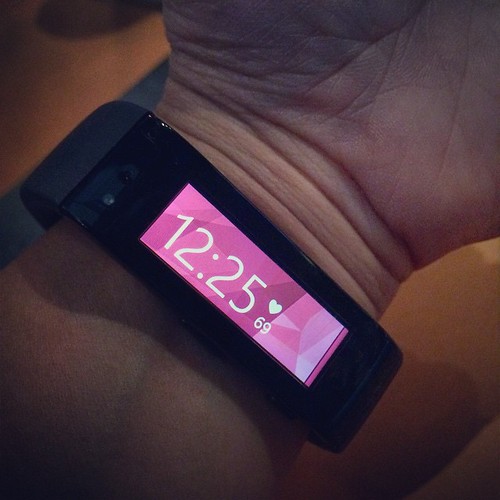
The Microsoft Band is uncomfortable to wear, and its heart-rate tracking, a marquee feature, doesn’t hold up to real-world testing. It’s a shame my first impressions are so negative, because with built-in GPS, a UV sensor, skin temperature and perspiration sensors, and a broad set of smartwatch-style notifications, the Microsoft Band promises a lot of cool features for $200.

Where the best wrist wearables are pliable and unobtrusive, the Microsoft Band is bulky and rigid, and never lets you forget you have it on.

And there’s huge variability in the heartrate monitoring. Who wants an awkward, inaccurate and pricey piece of technology on their wrist?


Dell’s life after Wall Street >> NYTimes.com

Dell has a comprehensive strategy at a time when peers like Hewlett-Packard and IBM are splitting apart and selling bits of themselves.

The new Dell has software, equipment for data storage and computer networking, services and sensors. It is developing software that measures facial expressions, voice tone, even how we individually swipe key cards. There is a device that can make a hotel room’s digital television into a secure corporate computer. A Dell tablet is the world’s thinnest and lightest, the company says, with a four-million-pixel screen and a three-dimensional camera. And, of course, there are lots of new personal computers.

But some things have not changed. Dell is using the same plan in software and services that it used with PCs and servers two decades ago: Come in with a lower-profit-margin, “good enough” version of something like networking, then make the cheap stuff better.

…But will the big reboot of Dell work? Toni Sacconaghi, a financial analyst for Sanford C. Bernstein, said Dell’s strategy will hold up as long as PCs sell well.


Comments and links welcome. Be insightful, be helpful.
Links: how two-factor gets hacked, Microsoft Band, Page’s ambition, too-smart TV?, and more

#microsoftband#band#microsoft#fitness#fitnesstracker#health
Microsoft Band. Photo by Chun Yip on Flickr.

A selection of 10 links for you. Use them wisely.

My two-factor-protected Gmail account got hacked >> Ello

On Saturday, I had tweeted about the attack. Several people retweeted me and it cast a wide net. One of those people was Mat Honan, a senior staff writer at Wired. Mat has his own history in dealing with these kinds of attacks. On Monday, he kindly reached out to me suggesting he might have some information and we arranged a phone call.

Again, specific details from this point are murky, but he suggested that I check with my cell phone provider and make sure that call-forwarding had not been enabled on my number without me knowing. Creepy, I thought.

I called, and sure enough, as of Saturday morning my number had been forwarded to a number I did not recognize. Unreal. So, as far I can tell, the attack actually started with my cell phone provider, which somehow allowed some level of access or social engineering into my Google account, which then allowed the hackers to receive a password reset email from Instagram, giving them control of the account.

All because they wanted his two-letter Instagram account handle.


I’m terrified of my new TV: why I’m scared to turn this thing on — and you’d be, too >> Brennan Center for Justice

Michael Price:

I just bought a new TV. The old one had a good run, but after the volume got stuck on 63, I decided it was time to replace it. I am now the owner of a new “smart” TV, which promises to deliver streaming multimedia content, games, apps, social media, and Internet browsing. Oh, and TV too.

The only problem is that I’m now afraid to use it. You would be too — if you read through the 46-page privacy policy.

The amount of data this thing collects is staggering. It logs where, when, how, and for how long you use the TV. It sets tracking cookies and beacons designed to detect “when you have viewed particular content or a particular email message.” It records “the apps you use, the websites you visit, and how you interact with content.” It ignores “do-not-track” requests as a considered matter of policy.

I got a new “smart” TV the other day. I just chose not to share data with Sony (that’s the TV maker). Though it doesn’t have a camera and microphone, like Price’s does.


FT interview with Google co-founder and CEO Larry Page >> FT.com

A perennial optimist when it comes to technology, [Page] argues that all that will change. Rapid improvements in artificial intelligence, for instance, will make computers and robots adept at most jobs. Given the chance to give up work, nine out of 10 people “wouldn’t want to be doing what they’re doing today”.

What of people who might regret losing their work? Once jobs have been rendered obsolete by technology, there is no point wasting time hankering after them, says Page. “The idea that everyone should slavishly work so they do something inefficiently so they keep their job – that just doesn’t make any sense to me. That can’t be the right answer.”

He sees another boon in the effect that technology will have on the prices of many everyday goods and services. A massive deflation is coming: “Even if there’s going to be a disruption on people’s jobs, in the short term that’s likely to be made up by the decreasing cost of things we need, which I think is really important and not being talked about.”

If Page is right, then there is colossal social dislocation coming, but it’s hard to imagine it being positive. If companies like his avoid paying tax, which means governments don’t have money to disburse for social benefit, what happens?


The risk In Larry Page’s moonshots >> Business Insider

Jay Yarow takes issue with the Google chief’s insistence that you need to think gigantic to achieve gigantic:

By insisting on starting at “moonshot” level of ambition, Page risks missing out on the creation of small projects that lead to the real moonshots later on.

A similar mentality plagued Steve Ballmer at Microsoft. He tended to think about revenue. He was, and still is, hesitant to pursue a new product if it wasn’t going to make lots of money. That thinking gave Google an opportunity to destroy the Windows business with Android. It gave Google an opportunity to challenge Office with Google Docs. 

Page could miss the small projects that blossom into bigger projects if he insists on starting big. And there are a lot of small projects that are posing risks to Google’s lucrative search business.


Microsoft Band second impressions >> SuperSite for Windows

Paul Thurrott:

Even after less than a day of use, it’s pretty clear that Microsoft Band is big, bulky, uncomfortable and complex enough to dissuade many from using it. Which is too bad, because there is real magic here. Both in the Band itself, which provides an unprecedented number of data-gathering sensors. And in the underlying Microsoft Health services, which are more comprehensive than anything seen in other health and fitness platforms.

First, the basics. Physically, the Band itself will prove too unwieldy for most. I’m going to try and stick it out for a variety of reasons—Microsoft Health being the biggest and most obvious—but I wish Microsoft had made a few nods towards comfort in a device that is designed to sit on your wrist 24 hours a day. I don’t notice a Fitbit while I’m playing basketball, walking, typing, or whatever, but I notice the Band when I’m just sitting here motionless. It’s … obtrusive

Yes, the screen is big and bright. But it’s also flat, and not curved for your wrist, so it sticks out in odd angles and gets caught on things all the time. It’s like wearing handcuffs, and you’re always aware that the device is there. My Fitbit disappears from my mind until I want to check on something.

These days Paul Thurrott has kinder words for Apple than he does for Microsoft. (The Band does look terrible though. A flat, not curved, screen?)


What is to blame for Samsung’s bad fortune? >> Naofumi Kagami

In the case of iOS, the OS made full use of the 64-bit hardware to enable much faster processing of photos and movies. The OS made use of the TouchID sensor, which is also now being used by the Apple Pay service. Apple has given each piece of new hardware a significant reason for existing, and that is why customers want new devices.

On the Android side, that has not been the case. Google has not moved quickly to 64-bit, it has not worked hard on corporate level security, and it has not introduced software support for biometric sensor technology. Instead, Google has introduced a lot of software technologies that enable low-powered devices to smoothly run the latest operating system. Instead of adding new features that would take advantage of new high-end hardware, they focused on making sure that the mid-range and low-end hardware would be able to run the latest operating system and to take advantage of all of its features. In summary, Google actively designed their new operating system so that Samsung would have a hard time differentiating itself…

When Andy Rubin was removed and Sundar Pichai took over, it became rather clear that instead of fighting with iOS, Android would focus on the low-end. In fact, most products that Google creates (many of which were under the supervision of Sundar) aim at the very low-end where prices are normally zero. Google Docs is a prime example of this, as is Chrome OS. Google’s strategy is to commoditize all markets except for search and advertising, by providing a good enough product for free.

Google has been chasing the next billion users with Android L. That does create problems for Samsung in trying to chase the high-end users, as Android L also makes the midrange Android phones more attractive.


Android market share tops out while Google reasserts control >> Digits – WSJ

Google’s dominance over the smartphone landscape appears to be topping out, but the company is gaining more control over the devices that run its software.

The Android mobile operating system ran 84% of smartphones shipped globally in the third quarter, according to research firm Strategy Analytics, down slightly from 85% in the second quarter.

“Android’s global smartphone market share is peaking,” said Strategy Analytics analyst Neil Mawston. “Unless there is an unlikely collapse in rival Apple AAPL +0.75% iPhone volumes in the future, Android is probably never going to go much above the 85% global market share ceiling.”

The key thing, though, is that AOSP’s share of Android fell from 39% in the second quarter to 37% in the third quarter. Do the maths, and that means that in the second quarter, “Google Android” was 51.9% of the entire market, and in the third quarter, was 52.9%. It’s not a huge change, but it’s actually progress.

But as the WSJ points out, it’s the EC’s investigation into whether Google Android ties handset makers into using its services that could be the real roadblock.


James Thomson on Twitter: “Just had a phone call from Apple…”

“Just had a phone call from Apple – decision has been reversed, no changes required to PCalc’s widget. Thanks to everybody for their support!”

Told you. I understand there were decisions running at different speeds inside Apple. The right one took slightly longer to arrive.


This Android smartphone is too thin for a headphone jack >> The Verge

Chinese phone makers have been engaged in a long-running battle to see who can produce the thinnest possible smartphone, and today Oppo has scooped the title with the scarcely believable 4.85mm-thick R5. There is a caveat to that measurement since the camera sticks out from the ultra-slim body of the phone, but this is still the first handset of its kind to fit in under half a centimeter. Oppo has done its best not to compromise a spec sheet that includes a 5.2-inch Super AMOLED display, an octa-core Snapdragon 615 processor, and 13-megapixel camera.

However the small 2,000mAh battery and the absence of a headphone jack mark significant drawbacks for the R5.

The absence of a headphone jack?


Fueled by back-to-school promotions and US growth, the worldwide tablet market grows 11.5% in the third quarter >> IDC

The worldwide tablet grew 11.5% year over year in the third quarter of 2014 (3Q14) with shipments reaching 53.8m units according to preliminary data from the International Data Corporation (IDC) Worldwide Quarterly Tablet Tracker. Marked by back-to-school promotions and US appetite for connected tablets, the third quarter also saw shipments grow sequentially by 11.2% compared to 2Q14.

“Not only is the US market one of the largest for tablets, but third quarter results also indicate that this is where the growth is,” said Jean Philippe Bouchard, IDC Research Director for Tablets. “We saw Verizon continuing to sell connected tablets at a fast pace, a strategy that we believe other carriers will replicate in following quarters. We also saw RCA enter the top 5, impacting the entire US market and worldwide ranking with one large deal linked to back-to-school and channel fill ahead of Black Friday. Those two elements resulted in the US tablet market growing at 18.5% year-over-year compared to the worldwide market growing at 11.5% annually.”

Despite a continued shipment decline for its iPad product line, Apple maintained its lead in the worldwide tablet market, shipping 12.3m units in the third quarter. Samsung held its number two position on the market with 9.9m units shipped, capturing an 18.3% market share in the third quarter.

Asus did well, based on Windows-based 2-in-1 devices (which IDC doesn’t count as PCs). RCA, though?